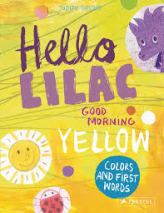
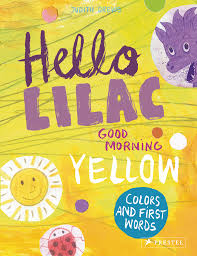
 Hello Lilac Good Morning, Yellow: Colors and First Words, by Judith Drews, (Oct. 2018, Prestel), $14.95, ISBN: 9783791373515
Ages 3-6
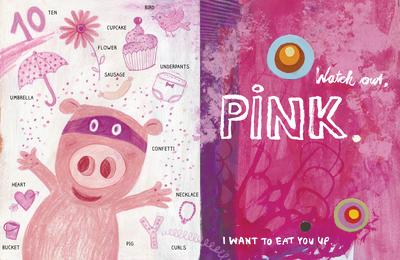
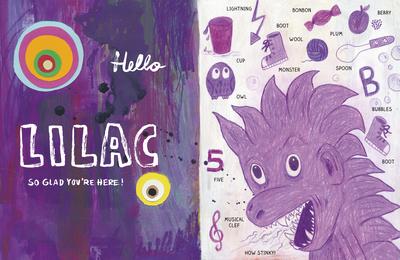
This cute book features eleven colors; one per each spread. There’s a warm greeting on one side, and objects showcasing the color on the other: “Good morning, Yellow! You glow so warm and bright”, with hand-drawn pictures of a lion, a construction helmet, lemon, and crown. It’s a lovely way to introduce colors; letting kids greet them and name a property of the color that makes them enjoyable: “Ahoy, Blue! I want to splash about in you”; “Hi, White! Where is your color?” Some object choices may leave readers scratching their heads; a syringe is included for White, and blood for Red; a screw falls under Black, which I tend to associate with Silver. I’m also not sure on how words like “trousers”, “domino tile”, and “fly agaric mushroom” are considered first words.
Overall, it’s a cute enough concept book for an additional add to collections, but there are other books that are better.


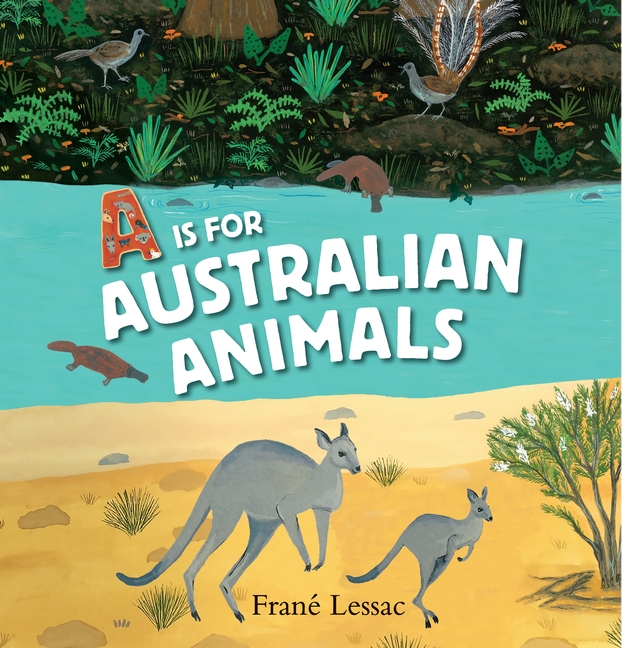
 A is for Australian Mammals, by Frané Lessac, (Aug. 2018, Candlewick Press), $16.99, ISBN: 9780763694845
Ages 7-9
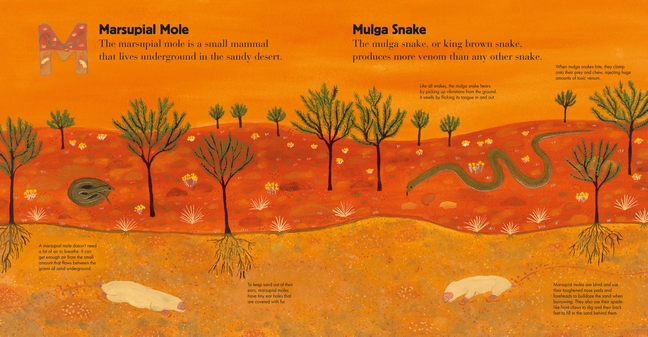
This book combines an abcedary for early readers with a geographic tour of Australia. There are 38 animals to be found here: tried and true favorites like the kangaroo, platypus, and koala are here, but there are other fantastic animals to be discovered, including the flying fox (it’s actually a huge bat); the red crab and robber crab (keep an eye on your valuables), a crayfish called the yabby, and the x-shaped crusader bug. Loaded with facts about these Australian creatures, and featuring colorful gouache illustration, this one is a hit. Pull out some cool facts to share during a science storytime or Discovery Club program. Here’s one that will go over big with the kids in my library: “In a Tasmanian devil’s poop, a wildlife biologist discovered: the head of a tiger snake, an owl’s foot, a sock, aluminum foil, half a pencil, and the knee of a pair of jeans”. Also, a koala’s fingerprints are almost identical to human’s fingerprints. Back matter includes maps of animal distribution, highlighting areas where each animal can be found on the continent. There are free, downloadable teacher’s notes available through author Frané Lessac’s website. The Educate Empower blog has some great ways to use this book across subjects, too.
This is a fun add to your natural history books, and it doubles as a concept book for learning readers who can benefit from learning about exciting new animals and their names.

 So You Want to Be an Owl?: Everything There is to Know About Owls!, by Jane Porter/Illustrated by Maddie Frost, (Jan. 2021, Candlewick Press), $16.99, ISBN: 9781536215212

 Mom Read It