Posted in picture books

Delightfully Different Fairy Tales put a modern spin on the classics

Delightfully Different Fairy Tales, by David Roberts & Lynn Roberts-Maloney, (Oct. 2020 Pavilion Children’s Books), $19.95, ISBN: 978-1843654759

Ages 4-7

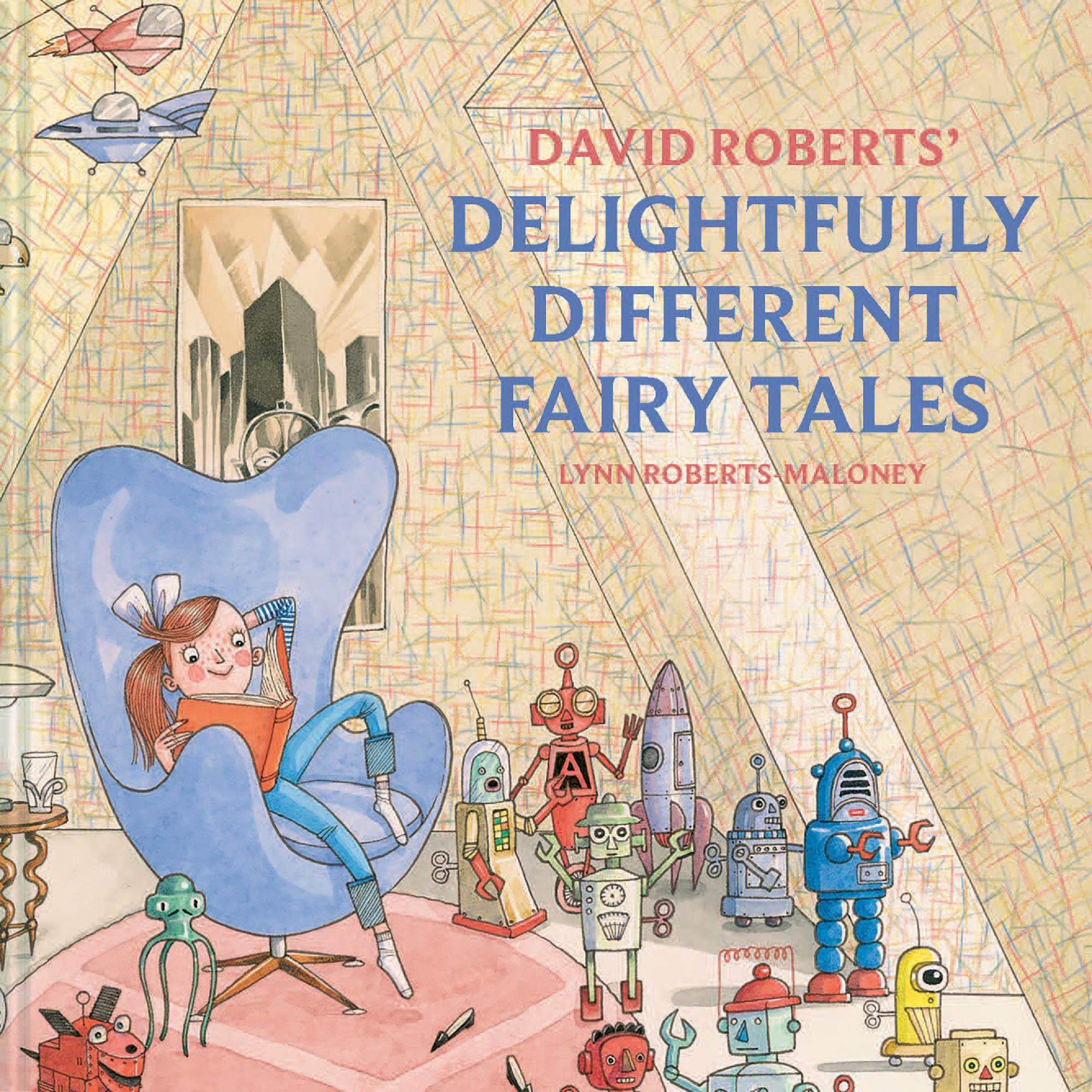
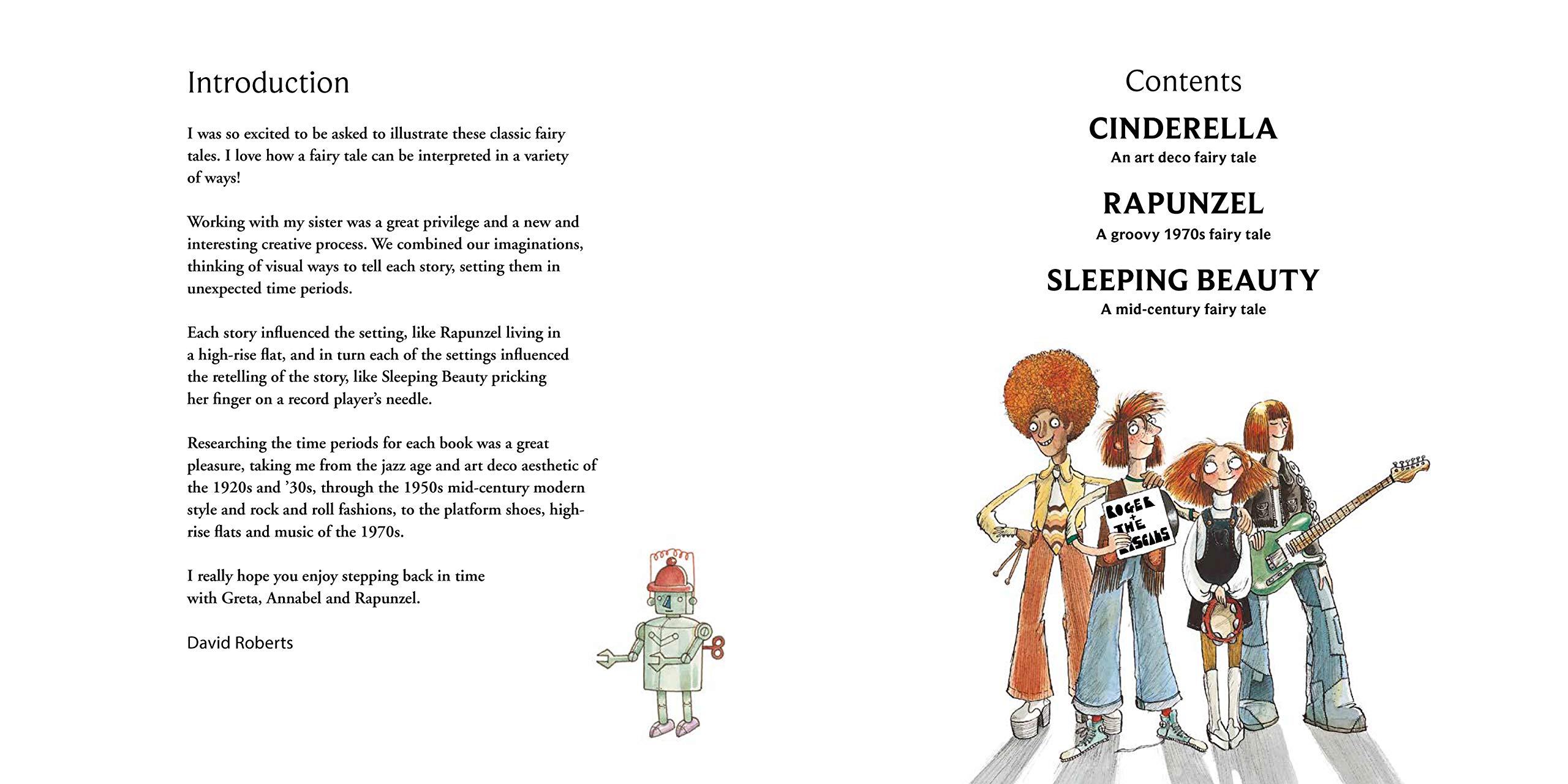
Illustrator siblings David Roberts and Lynn Roberts-Maloney have come together to put a modern, vintage spin on three classics fairy tales: Cinderella, Rapunzel, and Sleeping Beauty. Each is set in a different 20th century (give or take…): Cinderella takes place in the Roaring ’20s, Rapunzel, in the 1970s, and Sleeping Beauty, in the 1950s and beyond. The storytelling incorporates moments from each time frame, and the art – THE ART! – is filled with nods to each decade. Cinderella’s evil stepmother and stepsisters have cloches and Louise Brooks-like bobbed hair; the dressing gowns are fabulously glamourous and the headdresses are incredible. Rapunzel has that long, flower child straight hair that was so popular in the 1970s, spins David Bowie’s iconic Aladdin Sane album on her turntable and has Saturday Night Fever, Abba, and Elton John posters on her wall. Her Prince Charming is in a band called Roger and the Rascals, and he sports platform shoes of his own. Sleeping Beauty has a decidedly modern spin as Annabel, our Beauty, comes of age in the mid-20th century, pricks her finger on a turntable needle and falls into a deep sleep; her aunt turns Annabel into a rose and herself into a light, that she may shine on her through her slumber. When a young girl browses the story of Sleeping Beauty one thousand years later, she’s convinced it’s a true story, awakens Annabel, and introduces her to the sci-fi world Annabel dreamed of as a child. The artwork is gorgeous; it has a Tim Burton-meets-The Questioneers type of style that’s playful and fun to read. (Note: David Roberts is the illustrator of the Questioneers series!) Give your fairy tale fans a dose of nostalgia – or introduce them to the 20th Century – with this volume.
Posted in Middle Grade, Non-Fiction, Non-fiction, Teen, Tween Reads, Women's History

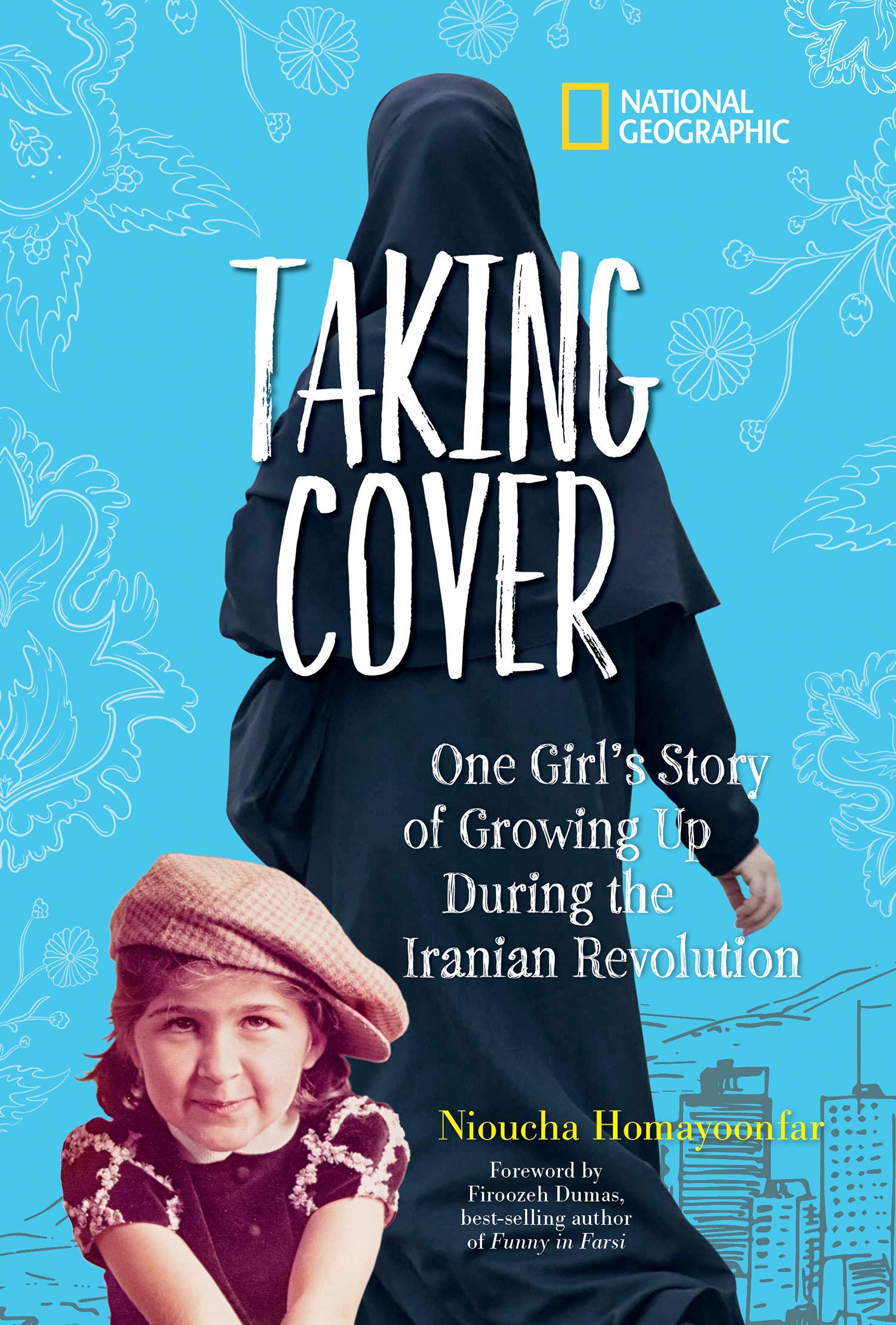
Taking Cover: Growing up during the Iranian Revolution

Taking Cover: One Girl’s Story of Growing Up During the Iranian Revolution, by Nioucha Homayoonfar, (Jan. 2019, National Geographic Kids), $18.99, ISBN: 9781426333668

Ages 10-14

Nioucha Homayoonfar’s memoir of life in Iran during the Iranian Revolution is equal parts joyful and heartbreaking. In 1976, at the age of 5, her family moves from Pittsburgh to Iran, where her father can be with his family again. For several years, Nioucha and her expat friends are educated in a progressive French-Persian school and enjoy the things most kids do, including listening to music, dancing, and swimming. But the revolution changes all that. Nioucha and her friends are segregated; they have to wear robes and hoods that cover their hair (and are threatened with burning in Hell, hanging on every visible thread of hair), and live in fear of being kidnapped by the Moral Police: a group called the Zeinab Sisters. Nioucha refers to them as The Black Crows, which brings a colorful, tongue in cheek image to mind, but these women are anything but humorous. The women patrol the streets in a van, capturing women and teens they deem immoral, hiding them in prisons, and beating them until they feel redemption is earned.

But there are wonderful moments of family and friendship in Taking Cover, too. Nioucha recalls her first Iranian Christmas, when she hopes Santa Claus will remember that she’s moved to Iran, so she’ll get her presents, and her family decorates her aunt’s house with a beautiful tree and presents. She talks about her relationship with her grandparents, who adore her and comfort her during her first sleepover away from her parents; going to concerts and driving around with her cousin, Sara, even learning French in an underground school run by her mother and her best friend’s mother. In the midst of explosions and oppression, Nioucha and her family managed to take joy where they found it.

Parallels to Persepolis are expected, and should be encouraged. Taking Cover is an excellent memoir and lead-in to Persepolis, allowing middle graders to expand their worldview and start a conversation on how the Iranian Revolution changed the world. The book includes a map of Iran and surrounding areas, and a timeline of Iranian history. There is a free, downloadable Educator’s Guide available.

Posted in Non-Fiction, Teen, Young Adult/New Adult

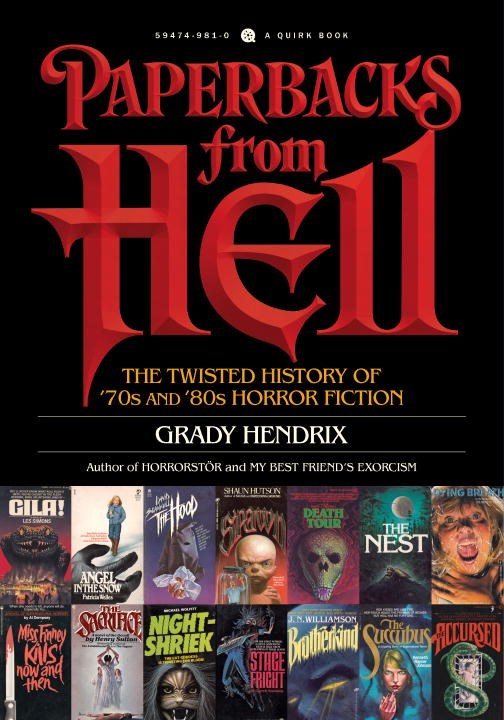
Paperbacks from Hell is a love letter to ’70s and ’80s horror fiction

Paperbacks from Hell: The Twisted History of ’70s and ’80s Horror Fiction, by Grady Hendrix, (Sept. 2017, Quirk Books), $24.99, ISBN: 9781594749810

Recommended for readers 16+

I know you may be looking at this review funny: ’70s and ’80s horror fiction? For teens now? YES. Walk with me.

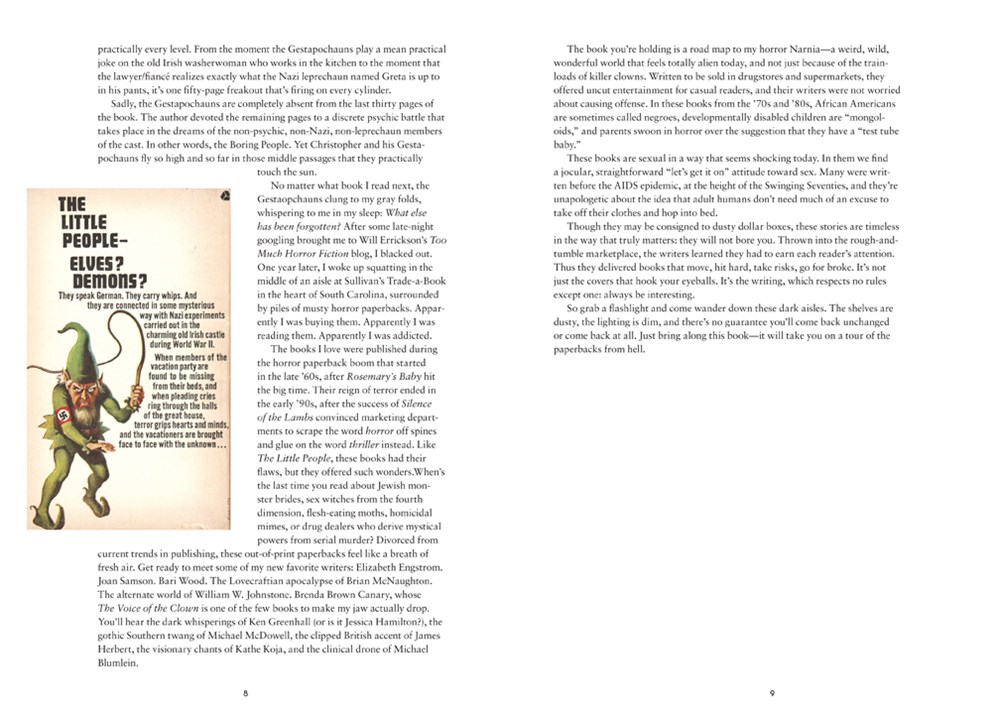
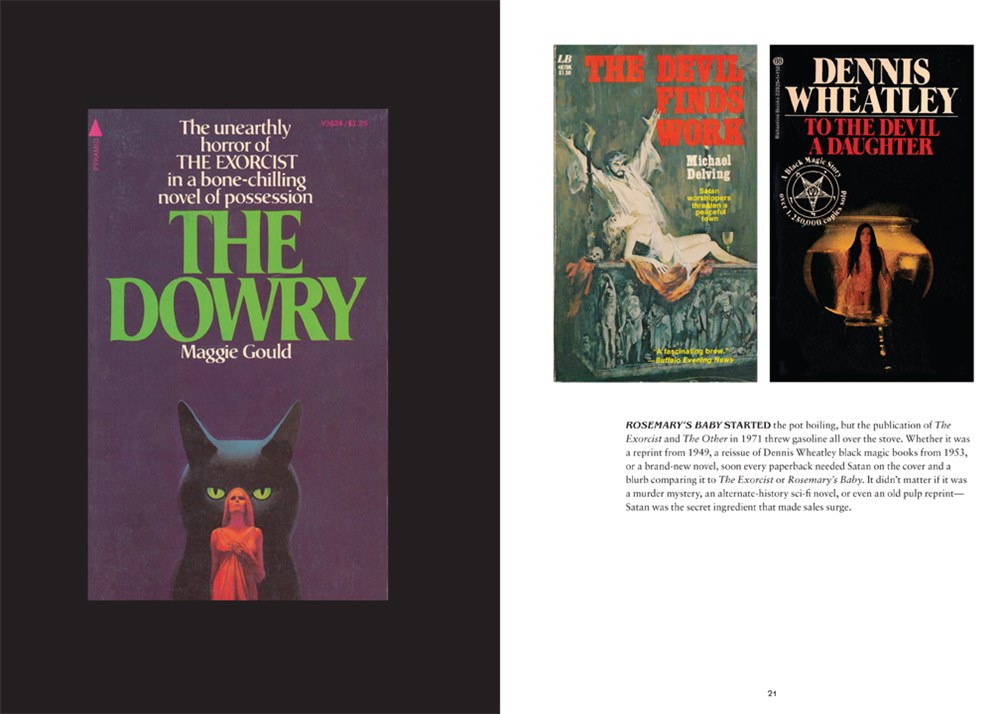
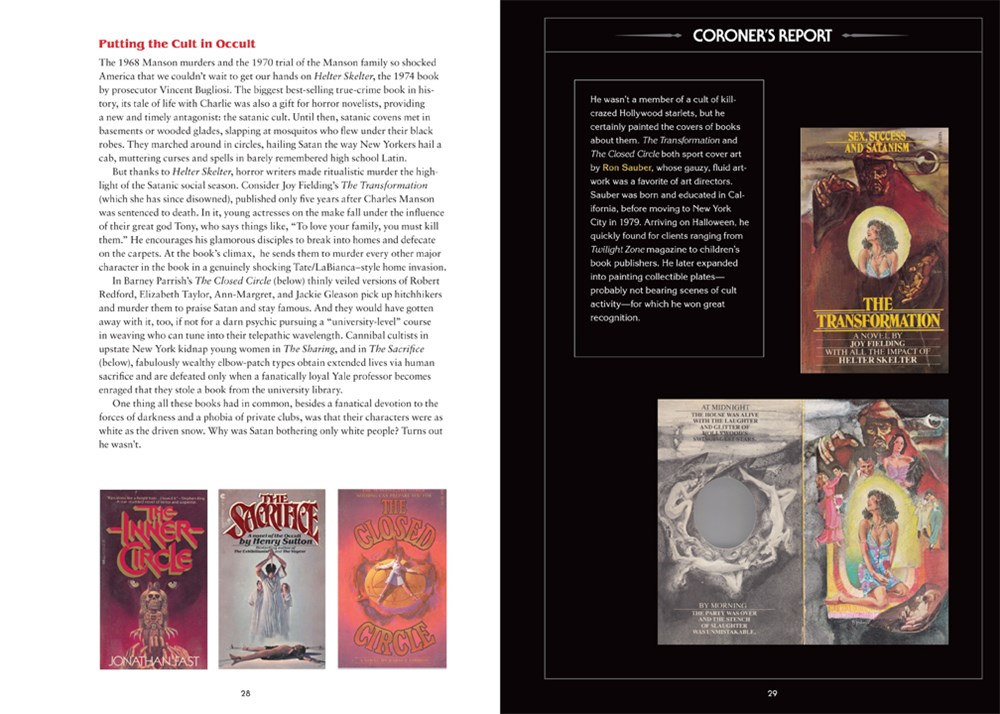
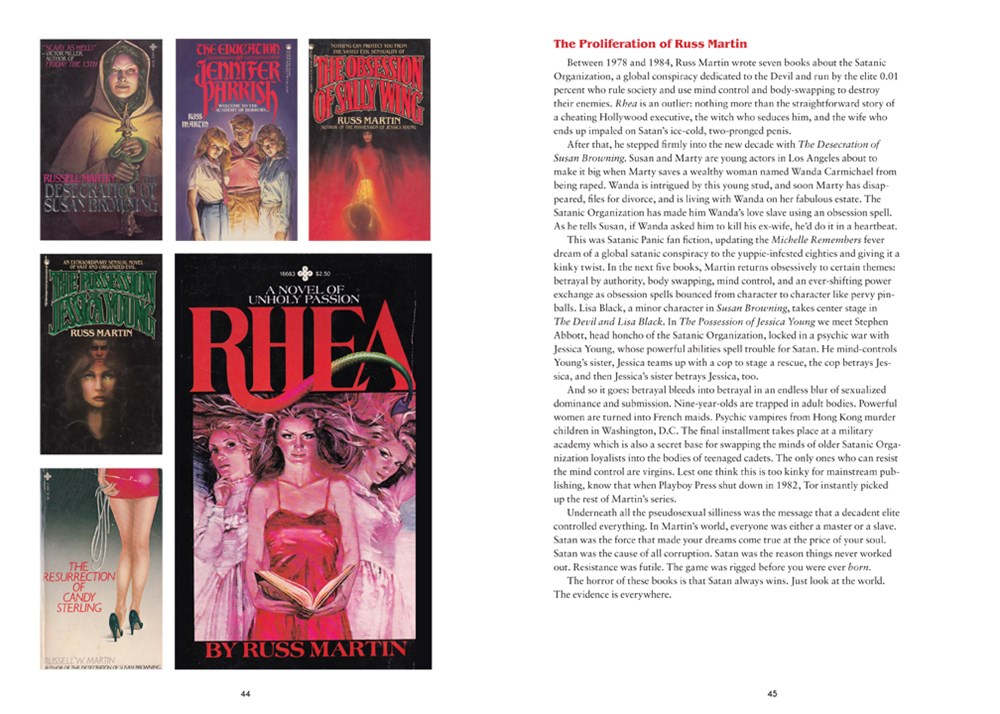
First off, Grady Hendrix is straight up hilarious. If you haven’t read Horrorstor or My Best Friend’s Exorcism, you haven’t yet been introduced to his brand of smart, snarky horror: a haunted Swedish furniture store (Horrorstor) starts out witty, and leaves you sleeping with the light on for a week. A YA novel about demonic possession in the ’80s (My Best Friend’s Exorcism) starts with insidious, creepy storytelling, takes it into sheer horror territory, and ends on the most ’80s of endings; you can practically hear the synths in your mind as you turn pages. And now, Hendrix writes a love letter to that crazy time with his retrospective of horror paperback fiction. We go back to a time when paperbacks were sold in the supermarket; when kids like me would sneak peeks at VC Andrews’ Flowers in the Attic while on line at the A&P grocery store. So many creepy children. So much Satan, with so many cultists. So many animals bent on our destruction.

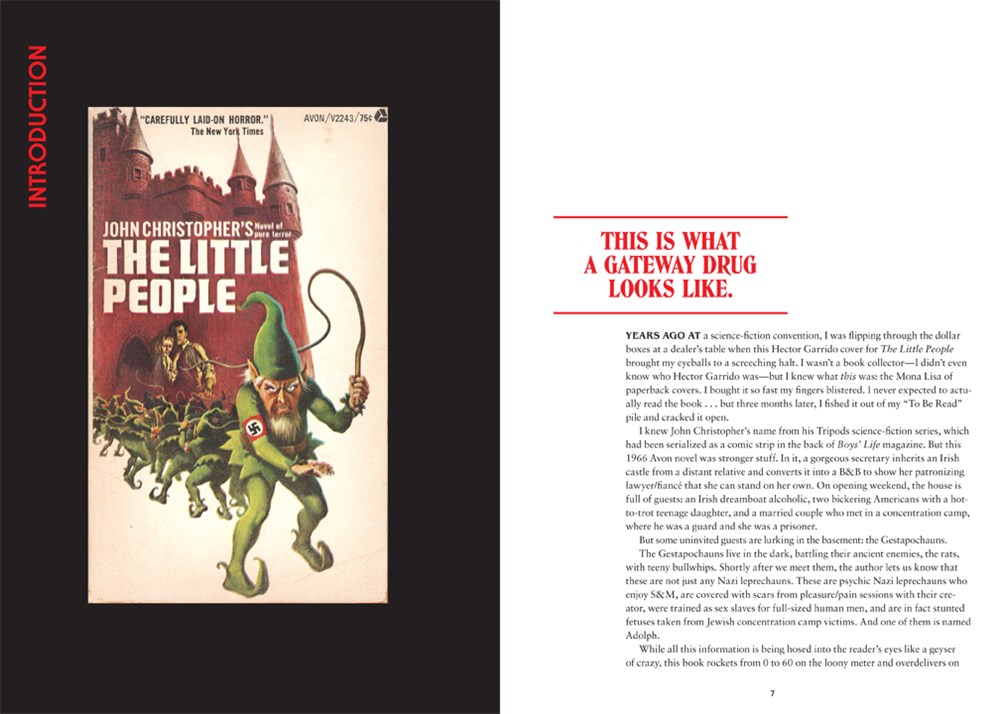
Hendrix is one of those authors that make you pause, grab a friend – or your teenager, in my case  and say, “No, wait, you have to hear this.” Multiple times. Until said teenager finally asks, “Wait a minute: Gestapochauns? There was a book about Nazi leprechauns? Are you serious?” And that, my friends, is where you hook them. You pick a section – any section – and you show them some of the covers. Then you read some of the text, because Hendrix’s knowledge about these books – in conjunction with Too Much Horror’s Will Errickson – is encyclopedic. And the teen is laughing and kind of terrified and wants to know more, all the same.


Gestapochauns are indeed a thing.


Paperbacks from Hell is perfect for us readers of a certain age, sure, but it’s also a book that connects us with our teens. We can get them on board with the craziness and the overwrought drama of the art and the stories. You can point out authors that teens will know, like VC Andrews, who’s now considered YA, and RL Stine, who was writing horror long before Goosebumps made him a household name. Let horror build a bridge between you and your teens. As my teen told me, “You grew up in a different time, Mom.” Yes, son. Yes, I did. And it was amazing.

Grab a copy and take a tour through the bookshelves of your youth, and invite your teens to make the trip with you. And while you’re at it, share your best six-word horror story with Quirk Books on Twitter by this Friday (9/22/17) and maybe you’ll win your own copy of Paperbacks from Hell! Details are here.


Posted in Fiction, Realistic Fiction, Tween Reads

Book Review: Wonderstruck, by Brian Selznick (Scholastic, 2011)

Recommended for ages 9-13

Wonderstruck tells the stories of two different people in two different time frames whose lives converge in an unexpected way. One story is told primarily through words and one through pictures; those familiar with Mr. Selznick’s Caldecott-winning The Invention of Hugo Cabret will recognize his artwork immediately.

The story, alternately told in 1927 and 1977, follows a young, girl named Rose who yearns to leave her New Jersey home and travel to New York City to see her favorite actress and a 12-year old boy, Brian, who is reeling after his mother’s sudden death. New York City, particularly the American Museum of Natural History, plays a major role in the book as we see the stories converge.

Wonderstruck relies as much on Selznick’s artwork as it does his prose in creating this story. The art is detailed and provides a comprehensive narrative on its own; his prose is simply stated and powerful. He weaves these two seemingly unconnected stories together and creates a powerful, emotional tale that readers will not want to put down. It is a love letter to New York City and a loving look at families lost and found.

 Brian Selznick’s novel, The Invention of Hugo Cabret, won the 2008 Caldecott Medal and has been made into a movie directed by Martin Scorcese. Scholastic’s Wonderstruck website offers features on American Sign Language and constellations, a link to the author’s website, and a sneak peek at the book for those visitors who haven’t gotten the book yet.