Posted in Fantasy, Fiction, Graphic Novels, Middle Grade, Teen, Tween Reads

Map of Days is a fable woven into a boy’s story

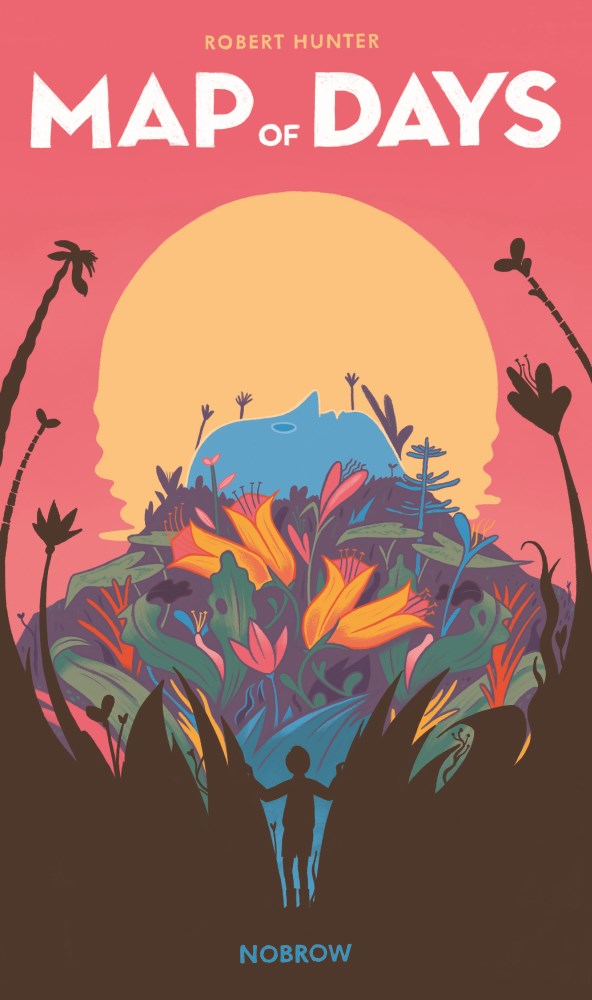
map-of-days_1Map of Days, by Robert Hunter, (March 2017  Nobrow), $18.95, ISBN: 9781910620298

Recommended for ages 10+

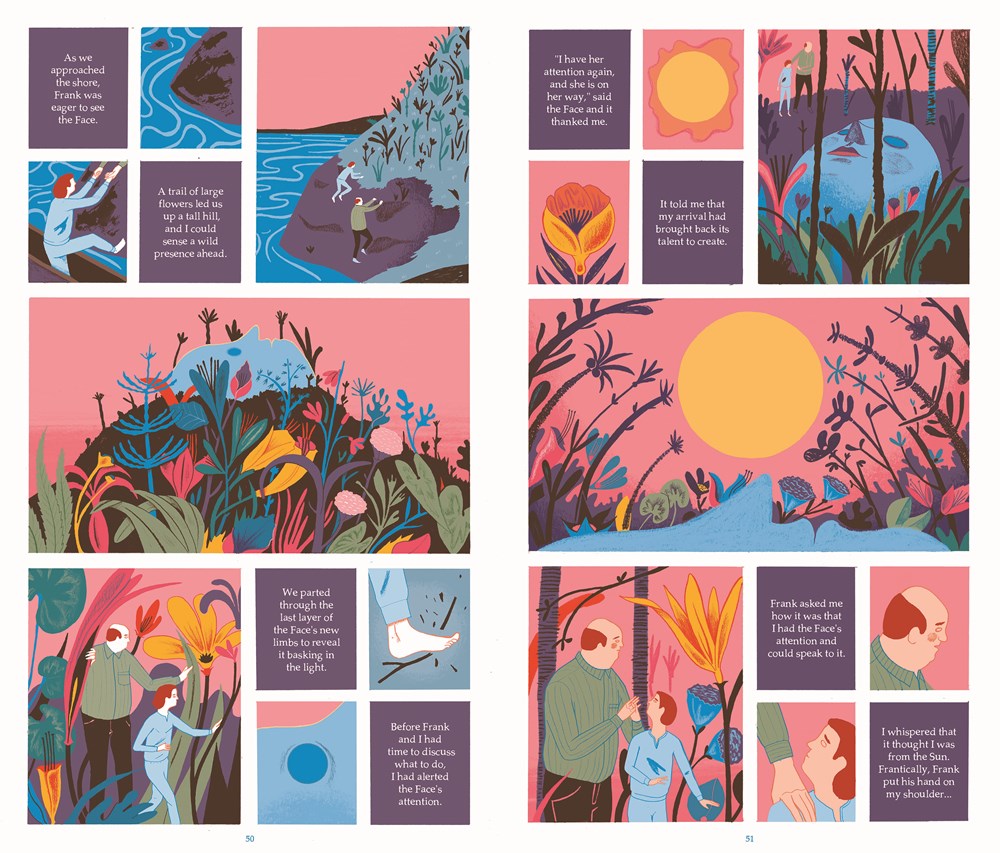
Originally published in 2013, Map of Days follows a clock-obsessed boy, who wonders where his grandfather goes when he disappears into a door on his grandfather clock. One night, the boy steps into the clock and discovers a fantastic world, where the face of Earth, the Sun, and the love story that joins the two. It’s a fable contained within a narrative, beautifully illustrated for readers of all ages. Children under the age of 10 will enjoy the colorful art, but may be lost by the story, which isn’t always linear and can be confusing.

The artwork is beautiful, and the fable of the Earth and the Sun is bittersweet. Art fans will want this book on their shelves for the sheer beauty within; fantasy fans will happily follow the boy on his journey.

Robert Hunter is a graphic novelist and illustrator who also wrote The New Ghost (2011). Find more of his illustration work at his website.


map-of-days_2


map-of-days_3


Posted in Fiction, Fiction, Middle Grade, Middle School, Tween Reads

From California Girl to Cemetery Girl: Sydney MacKenzie Knocks ‘Em Dead

25446348Sydney MacKenzie Knocks ‘Em Dead, by Cindy Callaghan, (March 2017, Aladdin Books), $17.99, ISBN: 978-1481465694

Recommended for readers 9-13

California almost-in crowder Sydney MacKenzie just got the worst news: her father sold his failing sporting goods retail business, and they’re moving to Buttermilk River Cove, Delaware: population 800. Her dad’s inherited the Lay to Rest cemetery, and they’ll be living in a Victorian house on the cemetery grounds. As if! Desperate to be the cool girl, Sydney tries putting on her best California Girl airs, but the Delaware kids are remarkably unimpressed – but they are impressed by her new digs. Movie-obsessed Sydney starts out making up a creepy history of the house, but quickly discovers that her house has some real history of its own, and sets out, with the help of her new friends, to investigate.

I just didn’t love this one. I’ve liked Cindy Callaghan’s Lost in…” series, which is light and fun, but that vibe didn’t translate as well for me here. Sydney comes off as a largely vapid social climber, even as the kids around her try to teach her that it’s not about what’s on the surface. An Underground Railroad subplot feels awkwardly attached to the book to give it more depth. It’s a quick, easy read that tween girls will likely check out for the fun cover and title, but for me, this one’s an additional purchase. I’d rather add another “Lost in…” set to my collection.

Posted in Early Reader, Fiction, Preschool Reads

A Horse Named Steve is exceptional!

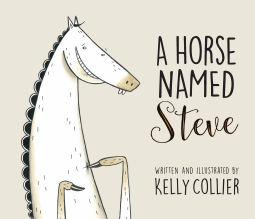
steveA Horse Named Steve, by Kelly Collier, (April 2017, Kids Can Press), $16.95, ISBN: 9781771387361

Recommended for readers 4-8

Steve is a horse that’s just fine as he is, but he thinks he can be better. He wants to be exceptional. He finds a beautiful gold horn lying on the ground in the forest, and that’s it: he’s found the pass to being exceptional! He ties the horn on his head and showboats to all of his woodland friends, who are so taken, they find items to tie on their own heads: sticks, rocks, anything they can find. But Steve accidentally loses his horn – oh no! What’s an exceptional horse to do when he loses his exceptional horn?

A Horse Named Steve is hilarious in its side commentary (notes throughout the book explain words like devastated: “that means really, really bummed”, or refer to his moods: “Mr. Mopeypants”) and its execution of an image-obsessed horse, but kids will get it: it’s not what you wear, or how you look. The commentary adds a little wink, wink, nudge, nudge humor to kids, bringing them in on the joke, and the raccoon that isn’t quite as enamored of Steve gives kids an entry point to a discussion: why doesn’t he think Steve’s so great? Do you think Steve is treating his friends with respect? What really makes our friends special?

Kelly Collier’s two-color ink and watercolor art, finished in Photoshop, is adorable and fun. Steve’s physicality plays up his ego for laughs, and there are visual jokes aplenty, especially when his golden horn slips from on top of his head to under his chin. Playing with fonts brings more humor to the page by emphasizing different words and making Steve’s very name a standout with curlicues and bolding.

You can have a lot of storytime fun with this book: make horns with your readers! For older readers, pair this one with Dr. Seuss’ The Sneetches for a good discussion on the value we place on appearances.

Posted in Fiction, Graphic Novels, Science Fiction, Teen, Young Adult/New Adult

Things aren’t right in The Spill Zone…

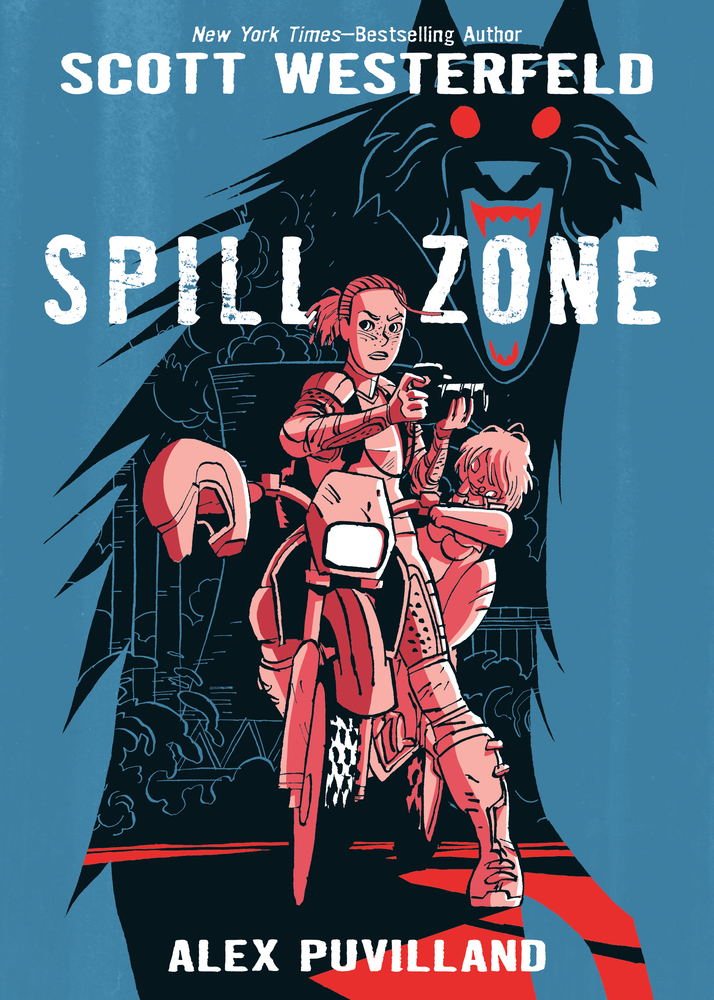
spillzone_1Spill Zone, by Scott Westerfeld/Alex Puvilland, (May 2017, First Second), $22.99, ISBN: 9781596439368

Recommended for ages 12+

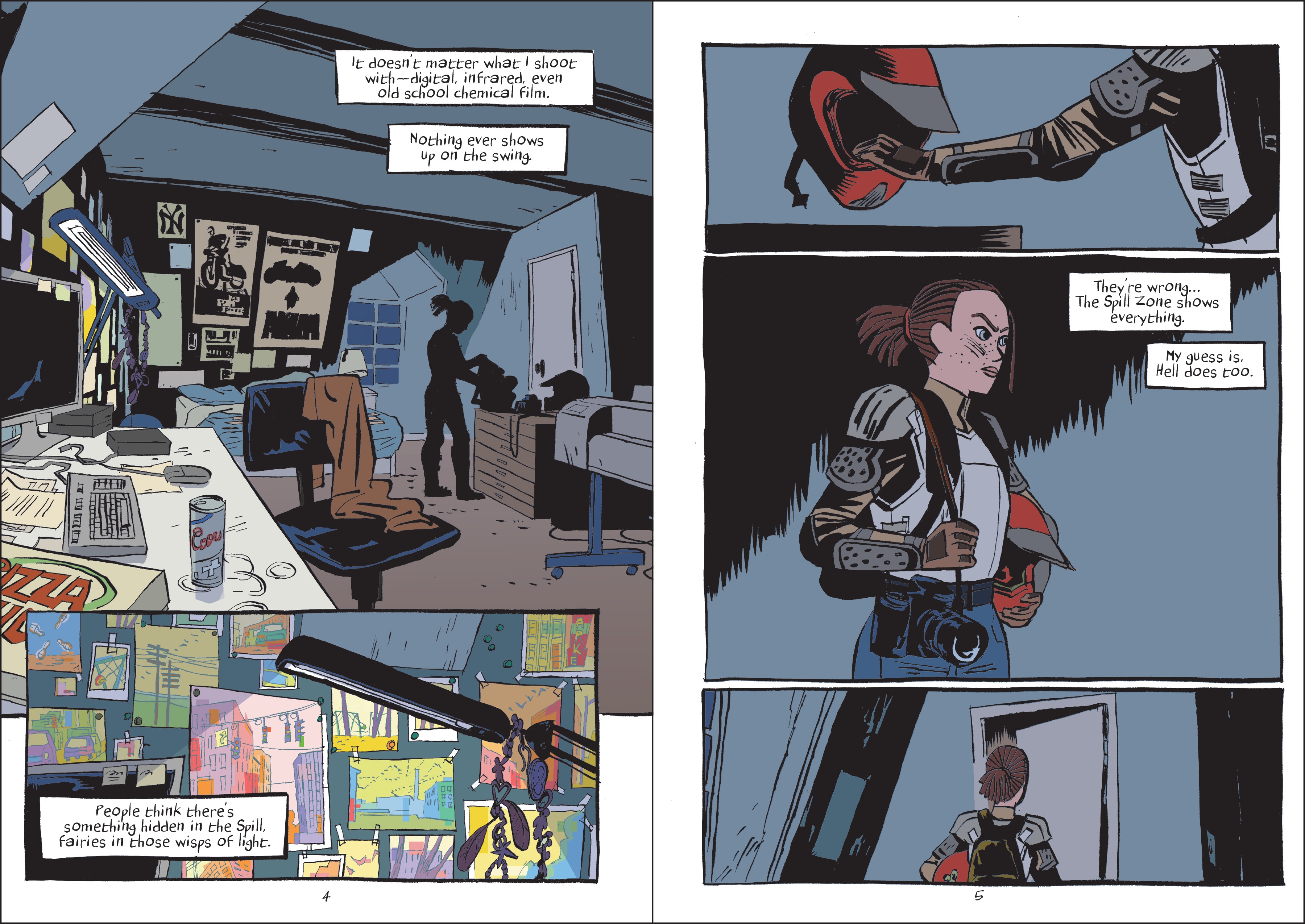
Something happened three years ago in the upstate New York city of Poughkeepsie. Now known as The Spill Zone, it’s forbidden to enter – things are different there now. There’s danger in the Spill Zone; things that just shouldn’t be. Addison and Lexa are sisters who lost their parents that night. Lexa, the younger sister, hasn’t spoken since, preferring instead to quietly communicate with her doll. Is that conversation in her head? Who knows? Addison provides for herself and her sister by sneaking into the Spill Zone at night to take photos of the bizarre images in the Zone, often risking personal safety to get the most disturbing shots. Collectors offer big money for these shots, but one collector in particular gets in touch with Addison and offers her a deal she can’t possibly turn down: a million dollars, but she has to go into the Zone hospital where her parents died.

Posted in Animal Fiction, Early Reader, Fiction, Preschool Reads, Toddler Reads

Stanley’s Store Blog Tour!

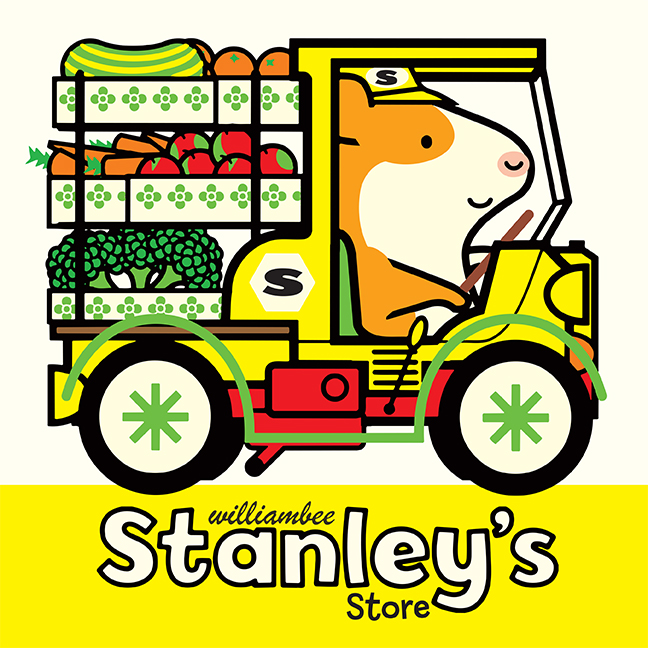
The hardest working hamster in town is back in his sixth book, Stanley’s Store (by William Bee, March 2017, Peachtree Publishers, $14.95, ISBN: 978-1-56145-868-4) . It’s a busy day at Stanley’s Store: Stanley’s got to unload fresh fruits and vegetables; Mattie helps customers pick out cheese, and there’s some excitement when Charlie doesn’t know how to control his shopping cart! Stanley’s always there to help, though, and at the end of a busy day, it’s time for him to go home.

stanley

My colleague LOVES Stanley. When we opened this library, she made darned sure we had the full line of Stanley books ready for the kids, so when I told her there was a new book coming out, she was thrilled! I sat down and read the first five books, and they’re adorable. They introduce kids to different careers (builders, business owners – stores and diners, farmers, mechanics, and mailmen) that shape their world, and provide a little look into the events of each job’s day. Stanley’s Store is a good book to read with your child and talk about your experiences at the grocery store; it’s also a good opportunity to point out safety and paying attention, illustrated by Charlie’s mishap. I love Shamus and Little Woo, a father and son duo, whose cart mysteriously fills up with cookies and sweets when Shamus’ back is turned. The story also slips in shape and color awareness, making this a great book for toddler and pre-k audiences.

Play store! Save some packaging and let your kiddos “shop” and create displays! Plastic food is huge with the kids in my library (and with my own kiddos, when they were younger) and is available everywhere. Talk about shapes and colors and talk about what foods are good for you. This could be paired with a fun flannel board activity and there are many food-related songs available to put together a fun storytime and playtime.

Posted in Early Reader, Fiction, Preschool Reads

A bedtime story that you can Whisper

whisperWhisper, by Joe Fitzpatrick/Illustrated by Marco Furlotti, (Sept. 2016, Flowerpot Press), $16.99, ISBN: 9781486709465

Recommended for readers 4-7

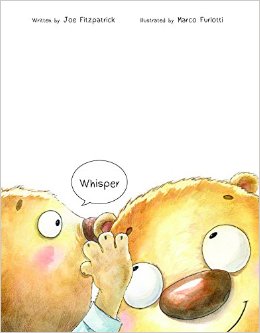
A parent and child bear read a special bedtime story together; the little bear lovingly asks for its parent to whisper the story so he’ll listen close, cuddle in, and have more fun. This rhyming story has a quiet cadence to the text that makes for a soothing bedtime read; the little bear’s requests are great for getting little ones corralled and ready for bed. The story encourages a bedtime routine through words and loving illustrations of a caregiver and child cuddling and settling in for the night.

My 4 year-old is normally a wild man by bedtime – especially if there was no nap earlier in the day – and this helped wind him down when I read it. It’s by no means a sleep guarantee, though – we read about 4 books after this one – but it’s a nice way to introduce a nighttime routine. The illustrations are largely close-ups of the bears, heads together, snuggling, making the reader feel like they’re part of the story. Neither grownup nor child is gendered, allowing any child, any caregiver, to identify with the characters. Have your little ones whisper along with you – the word is emphasized with smaller text throughout the book – for a shared reading experience. A sweet bedtime selection.

Posted in Fiction, Fiction, Middle Grade, Realistic Fiction, Tween Reads, Uncategorized

Vampires on the Run in Maine? Quinnie Boyd’s on the case!

vampires-on-the-runVampires on the Run: A Quinnie Boyd Mystery, by C.M. Surrisi, (March 2017, Carolrhoda Books), $16.99, ISBN: 9781512411508

Recommended for readers 8-12

The second outing for teen sleuth Quinnie Boyd, Vampires on the Run returns readers to the fictional town of Maiden Rock, Maine. This time, Quinnie meets her friend’s aunt and uncle, Ceil and Edgar, who are celebrated writers of a vampire series. They dress in all black, don’t venture out in the sunlight, and are very, very pale. When weirdness starts happening around Maiden Rock, Quinnie’s mental wheels start turning and she recruits Dominic, a new kid in town, to help her get to the bottom of the mystery.

Vampires on the Run is loaded with fun whodunit clues to keep readers guessing. You don’t need to read the first Quinnie Boyd book, The Maypop Kidnapping, to enjoy this newest book; there’s enough exposition to fill readers in. I liked Quinnie, her supportive yet firm parents, her friends, and the inhabitants of Maiden Rock. CM Surrisi spends a lot of time setting up the reader: so much that you kind of know the twist is coming, but it’s a good one.

Vampires on the Run is a fun, cozy mystery for middle graders with a strong cast of likable characters. Mystery readers and fiction fans will enjoy it.


Posted in Early Reader, Non-Fiction, Non-Fiction, Preschool Reads

Do you like to play? Animals do, too!

animals-doAnimals Do, Too!, by Etta Kaner/Illustated by Marilyn Faucher, (May 2017, Kids Can Press), $16.95, ISBN: 9781771385695

Recommended for ages 4-8

Do you like to dance? Do you like to play leapfrog? Play tag? Well, guess what: animals do, too! This fun book features pictures of families at play on one spread, and a corresponding spread on the next two pages, with a group of animals engaged in the same fun. The alternating question and answer format engages kids right away, and the activities that we humans do for fun, while animals do them to find food and care for their young will spark discussion with young learners.

Animals Do, Too! features animals that differ from the usual farm and jungle animals kids meet in their books. Sure, we’ve got bumblebees and frogs, but we also meet cattle egrets and marmosets, gazelles and leaf-cutter ants. A spread at the back of the book provides fast facts about each animal in the book.

There is some lovely watercolor work here, featuring lovely nature scenes. The families are enjoying one another, and the animals are playful while completing their everyday work. The parallels between humans and animals should engender interest and empathy in kids and will start some great conversations – ask the kids around you to think of animals they see every day: what does a cat do that a person does? (Stretching is a good one!) What does a dog do that a person does? (Jump and play!) You can create matching games that match the activity with the animal, for younger learners; bonus: they get to color.

The question and answer pattern of the text invites kids to interact with the text and gives them a chance to contribute before revealing the answer on the following spread. This is a good additional purchase for nature, life science, and animal collections.

Posted in Fantasy, Fiction, Horror, Middle Grade, Tween Reads

Can you escape Monsterville?

monstervilleMonsterville: A Lissa Black Production, by Sarah S. Reida, (Sept. 2016, Sky Pony Press), $16.99, ISBN: 9781510707337

Recommended for readers 9-13

Jumanji meets Goosebumps in this fun and unexpectedly touching novel. Lissa Black is not happy with her family’s decision to move out of their Manhattan apartment to a house in Freeburg, Pennsylvania, inherited when her great-aunt passes away. She’s away from her friends, her school, and the conveniences of living in New York City; she’s only got the neighbor kid, Adam, who’s set on making her appreciate life outside of the city, and this weird game, Monsterville, that she found in her aunt’s basement. Just as Lissa is set on languishing in the wilds of PA, she discovers a sad, shape-shifting goblin she calls Blue, who’s escaped from Down Under. Blue’s so sad that Lissa and Adam feed him and check in on him, but when Lissa discovers he can shape-shift, she decides to make a documentary starring Blue. But an interview with the goblin uncovers secrets that put Lissa’s family at risk. When her little sister is kidnapped and taken Down Under on Halloween, Lissa and Adam have to go in after her, and the Monsterville game is their only hope of making it back.

Lissa is hard to like at first: she’s a great older sister, but largely self-centered and snobbish at the novel’s outset. As the story progresses, and the urgency not only of Blue’s situation, but her sister’s, hits home, though, Lissa rises to the occasion and grows into a strong female character that I was rooting for. I liked her supportive, loving family and I really liked the glimpse we got of her mysterious aunt. I think a Monsterville prequel is in order, to tell her story! There was great world-building Up Above and Down Below, with Adam acting as Lissa’s – and the reader’s – guide to rural life, and the Monsterville game laying out Down Below for us before we even get there. I ended up loving this book and can’t wait to booktalk this. A film glossary at the end introduces readers to film terms, most of which show up in Monsterville – Lissa is a filmmaker, after all.

Challenge your readers to make up their own version of Monsterville! What monsters would inhabit their Down Under? What would counteract the monsters and help humans escape? This could be a great summer reading group program, just saying…

Monsterville is Sarah S. Reida’s debut novel. Find teacher resources at LissaBlackProductions.com, which also links to Sarah’s author blog and appearances.


Posted in Early Reader, Non-Fiction, Preschool Reads

Different? Same! looks at repeating patterns in nature

different-sameDifferent? Same!, by Heather Tekavec/Illustrated by Pippa Curnick, (May 2017, Kids Can Press), 416.95, ISBN: 9781771385657

Recommended for ages 3-6

Zebras gallop, bumblebees fly, lemurs leap, and a tiger prowls, but look closer: they all have STRIPES! Different? Same! celebrates the similarities among animals that would otherwise seem very different. Each spread features a group of animals that mentions a different trait, inviting readers to look closer to find the common characteristic. One animal from the previous spread shows up in each new spread – ask your eagle-eyed readers to spot them! A final spread puts all forty animals together and asks readers to search for animals with specific characteristics: who’s furry? Who would make good pets? Who would you NOT like to touch? Brief paragraphs at the end of the book explain why animals have the characteristics they do.

The digital art is very colorful and cute, creating happy, friendly animals that kids will love. The book is useful when introducing the concept of patterns to young learners and when discussing similarities and differences, which can lead to a talk on a greater scale about diversity; what makes us different, what makes us the same. This is a good additional purchase to concept collections.