Posted in Graphic Novels, Middle School, Teen, Tween Reads

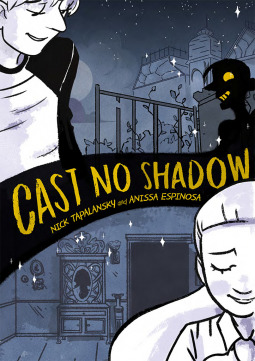
A boy deals with his grief in Cast No Shadow

Cast No Shadow, by Nick Tapalansky/Illustrated by Anissa Espinosa, (Oct. 2017, :01FirstSecond), $16.99, ISBN: 9781596438774

Recommended for ages 12+

Greg and his friends live in Lancaster, in a town that’s lately become obsessed with tourist traps. This latest one is a giant hairball. No lie. Greg is kind of an attraction on his own: he was born without a shadow. He’s normal in every other way; he just doesn’t have a shadow, which just makes him one more quirky thing in a town full of quirks. When Greg explores an abandoned mansion just outside of town, he meets Eleanor, who could be the perfect girl for him – “smart, beautiful, funny, and man, she totally gets me” – if only she weren’t dead. Eleanor is a teenage ghost, living in her family’s old mansion, and chasing out the creepy living that go in and mess up her home, but she has a soft spot for Greg.

Greg’s got a lot going on in his home life, too: his dad’s girlfriend, Joyce, has just moved in, and Greg isn’t happy about it. He doesn’t want anyone taking his dead mother’s place. As he deals with the frustration of having a new person in the house, and a girlfriend who can’t leave her haunt, something is set in motion; Greg has unwittingly set a dangerous entity loose on his town. What are the chances he can save his town, smooth over his relationship with his father and Joyce, and have a happily ever after of his own?

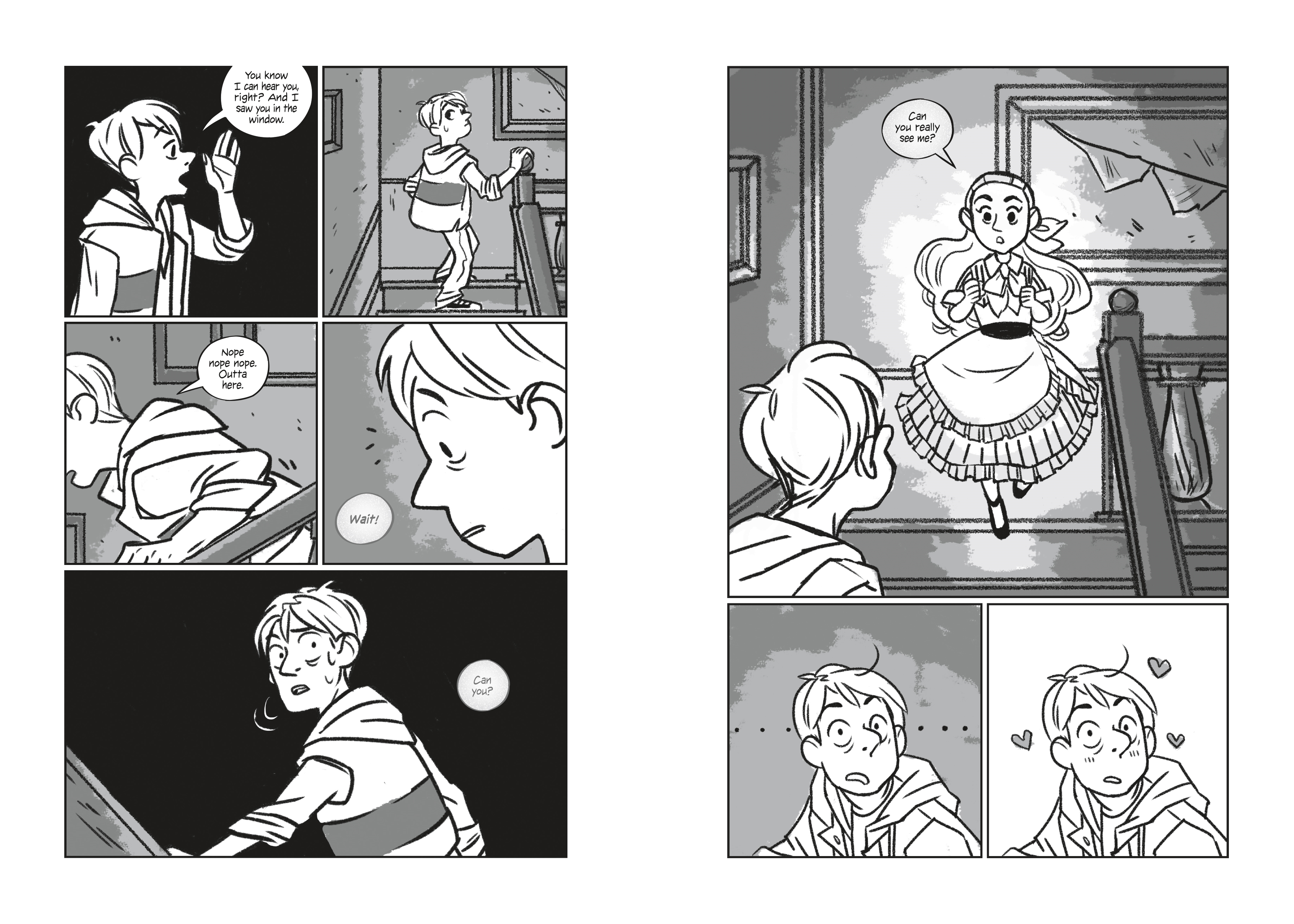
Cast No Shadow is a touching exploration into grief and loss. Greg retreats from the world to cope with his mother’s loss and his father’s subsequent relationship; aside from his female best friend, the strongest relationship that emerges in the book is with a dead girl. Greg’s suppressed feelings find another way to emerge, causing destruction and danger for everyone around him. It’s a great story to put into older tweens’ and teens’ hands, helping them cope with feelings that may be too overwhelming to confront head-on. The black, white, and gray illustrations add a nice, ghostly feel to the story and come in handy when finer plot points fall into place.
A nice addition to middle school and teen graphic novel collections, and a good secondary reference for kids dealing with grief and loss. Find more of author Nick Tapalansky’s work at his website, and illustrator Anissa Espinosa’s work at her Tumblr.

Posted in programs, Storytime

Harvest Festival Programming

The Mid-Autumn Festival starts tomorrow, October 4th, so I’ve been doing some programming with the kids here to celebrate. Yesterday, I had a Fortune Bookies workshop where we made fortune cookie bookmarks with felt. The glue didn’t hold so great – I really need to get a hot glue gun – but the moms jumped right in and made the best of a Make It Work Situation and saved the day with a few discreetly placed staples.

PictureNot one of my Fortune Bookies – this is Heidi Fiedler’s model.
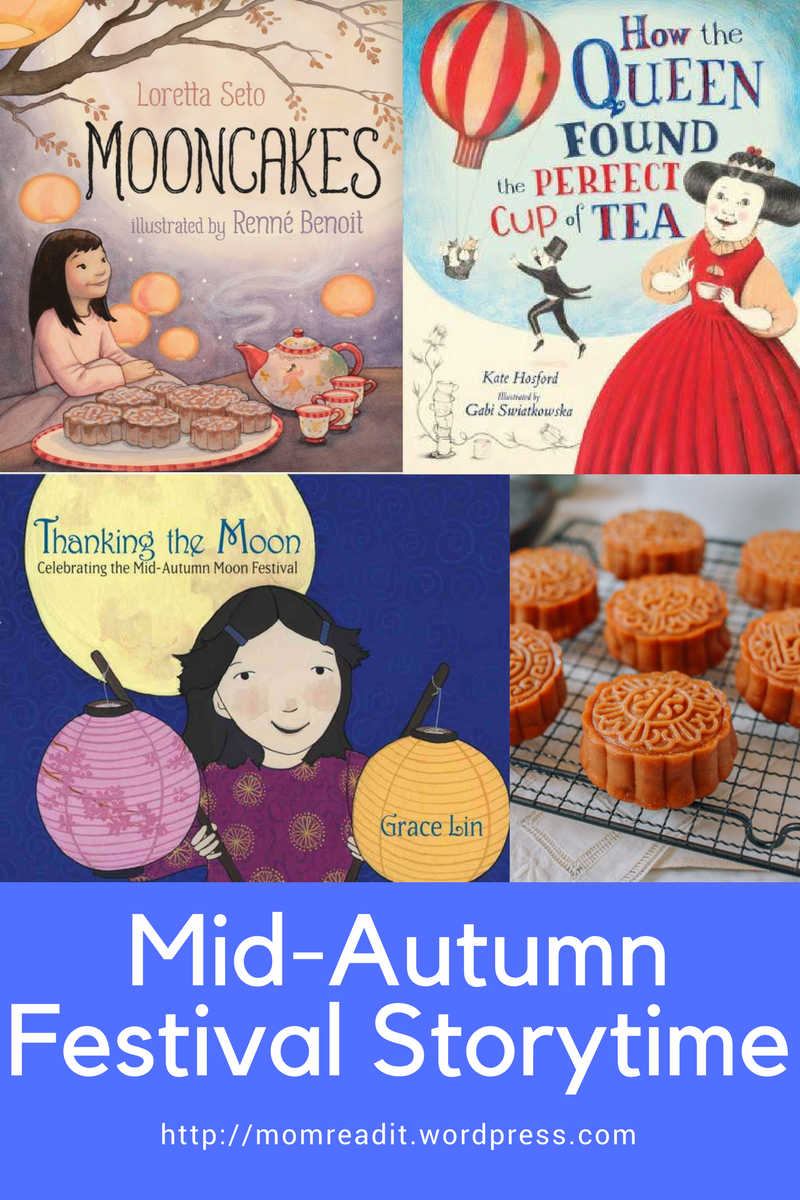
 

Today’s program was more successful. I had a tea party! Ever since reading How the Queen Found the Perfect Cup of Tea, I knew I wanted to use the story in a tea party setting. The Festival provided the perfect time. I bought some moon cakes, palmiers, and milk tea and set up a proper tea table, cutting the moon cakes up so everyone could share, laying out bags of palmiers so I’d have extra food on hand, and pouring cups of milk tea for everyone. I was able to accommodate 10 kids and 4 parents, with no leftovers and a very happy group!

The reception to How the Queen Found the Perfect Cup of Tea was good; they were engaged and interested in the different teas throughout the book. Next up was Loretta Seto’s book, Mooncakes, which I loved. It’s the story of a little girl sitting with her parents, underneath the full harvest moon, and telling the three most popular stories about the Harvest Moon: the story of Chang’E and how she flew to the moon; of how Wu Gang chops away at a tree to gain immortality, and the Jade Rabbit. This one seemed to be the biggest hit with the families as a whole. I finished up with Grace Lin’s Thanking the Moon, for my younger kiddos, and had one QH Kid say, “That’s a really short one.”

All in all, a nice little party to welcome the harvest.

Posted in Middle Grade, programs, Tween Reads

Annabelle Fisher visited me and brought some fairy tale magic with her!

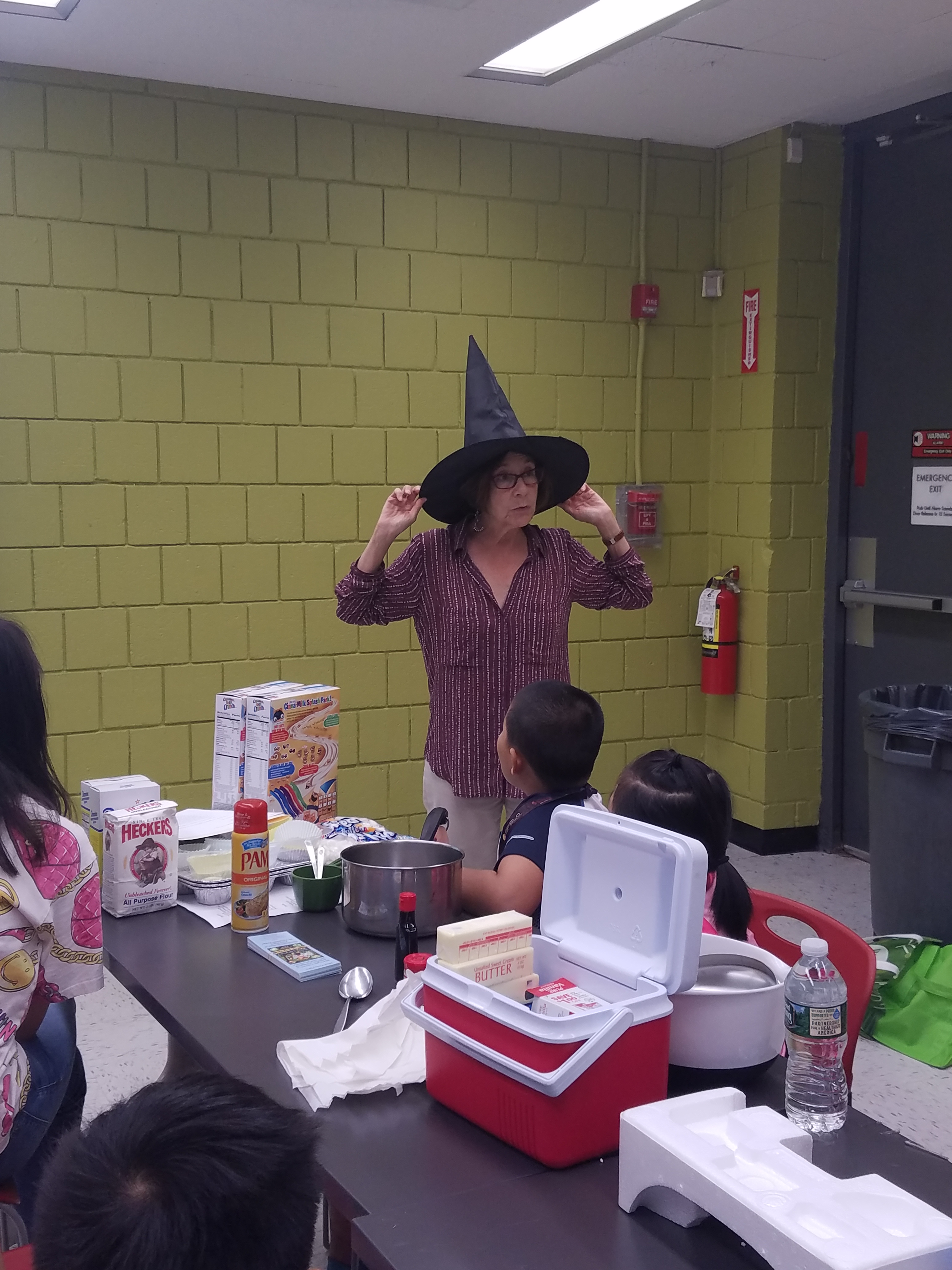
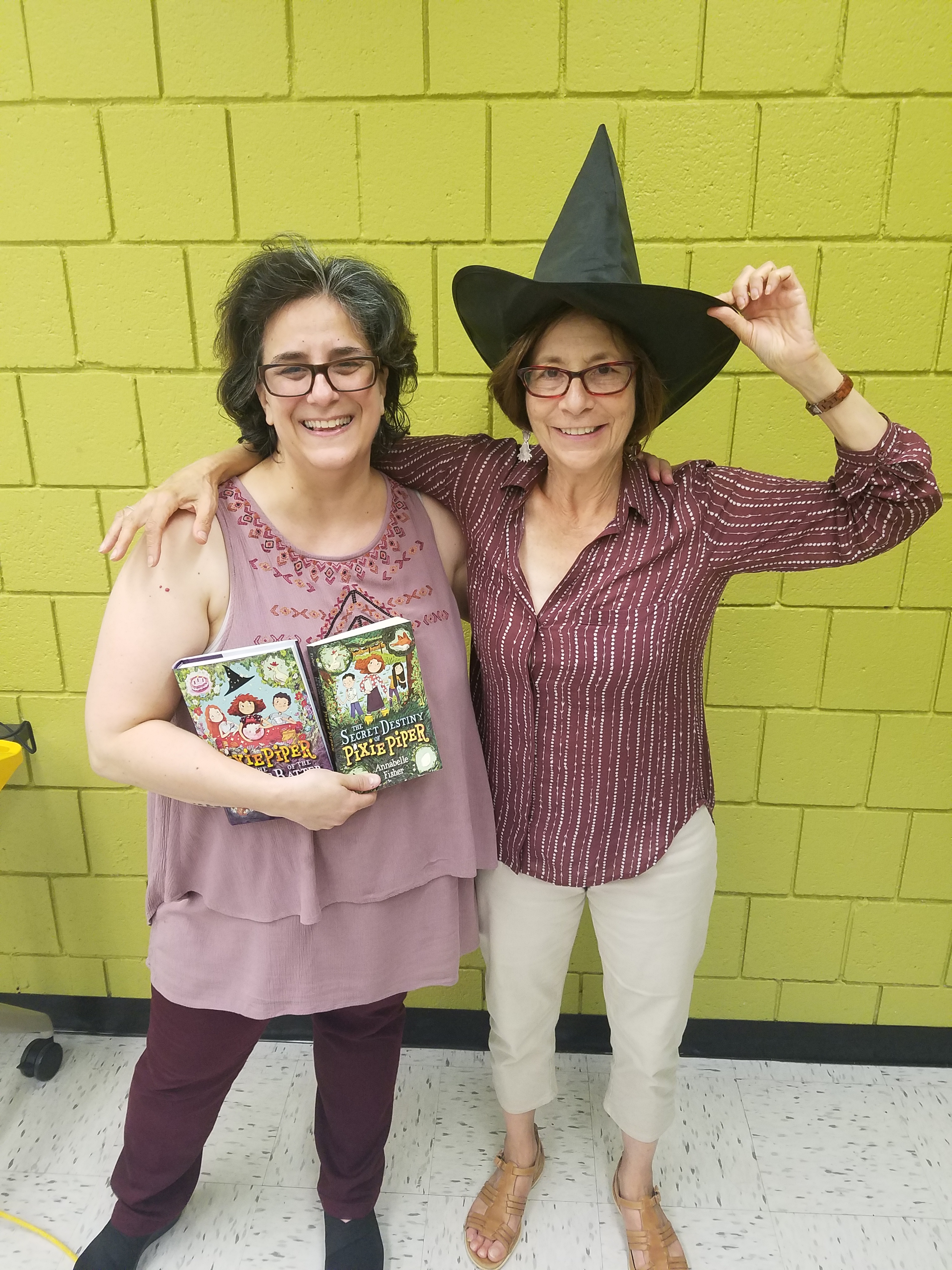
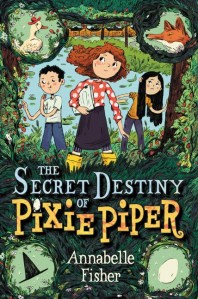
I meant to get this post up earlier, so apologies for that. When I reviewed the first Pixie Piper adventure last year, Annabelle Fisher, the series author, sent me a lovely email thanking me for my review, and offering to visit my library. I wanted to jump all over it, but for various reasons, I held off. I’ve finally settling in here, at my new library, and thought this would be a great opportunity to ask Annabelle if her offer still stood. Not only did she say yes, she offered to make no-bake snickerdoodle cupcakes with my Queensboro Kids after her author talk! She came in, we set up the room, and a gathering of kids formed outside our meeting room. Because, food. And because there was a new person in the library, too, but seriously, food. With everything set up, Annabelle donned her Mother Goose hat and we let the masses in.

I couldn’t believe how many kids crammed in for this program. We had about 23 kids in the room, and a couple of parents that wanted to see what was going on, too. First, Annabelle gave a great author talk where she engaged the kids about writing stories and even shared some photos of one of her first stories as a child – it was supposed to be a science report, but where’s the fun in that, right? She talked about the Pixie books, took the kids through a slide presentation, and then it was snickerdoodle time.

Can I just say how excited I am that I can put stickers on photos now, so I can post pictures from my programs and protect the kids’ identities?

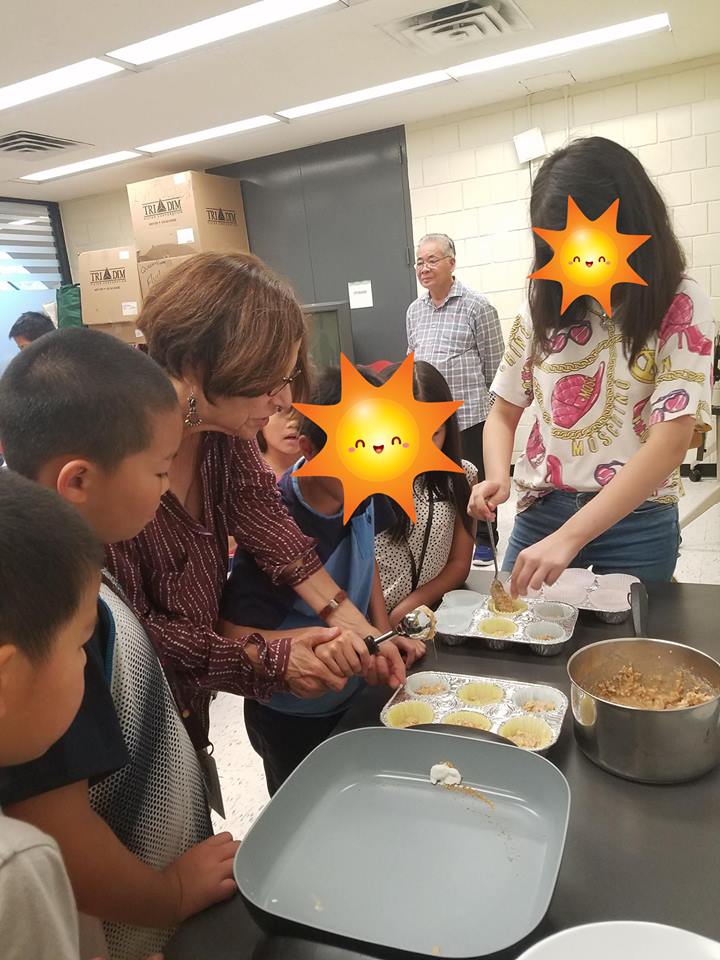
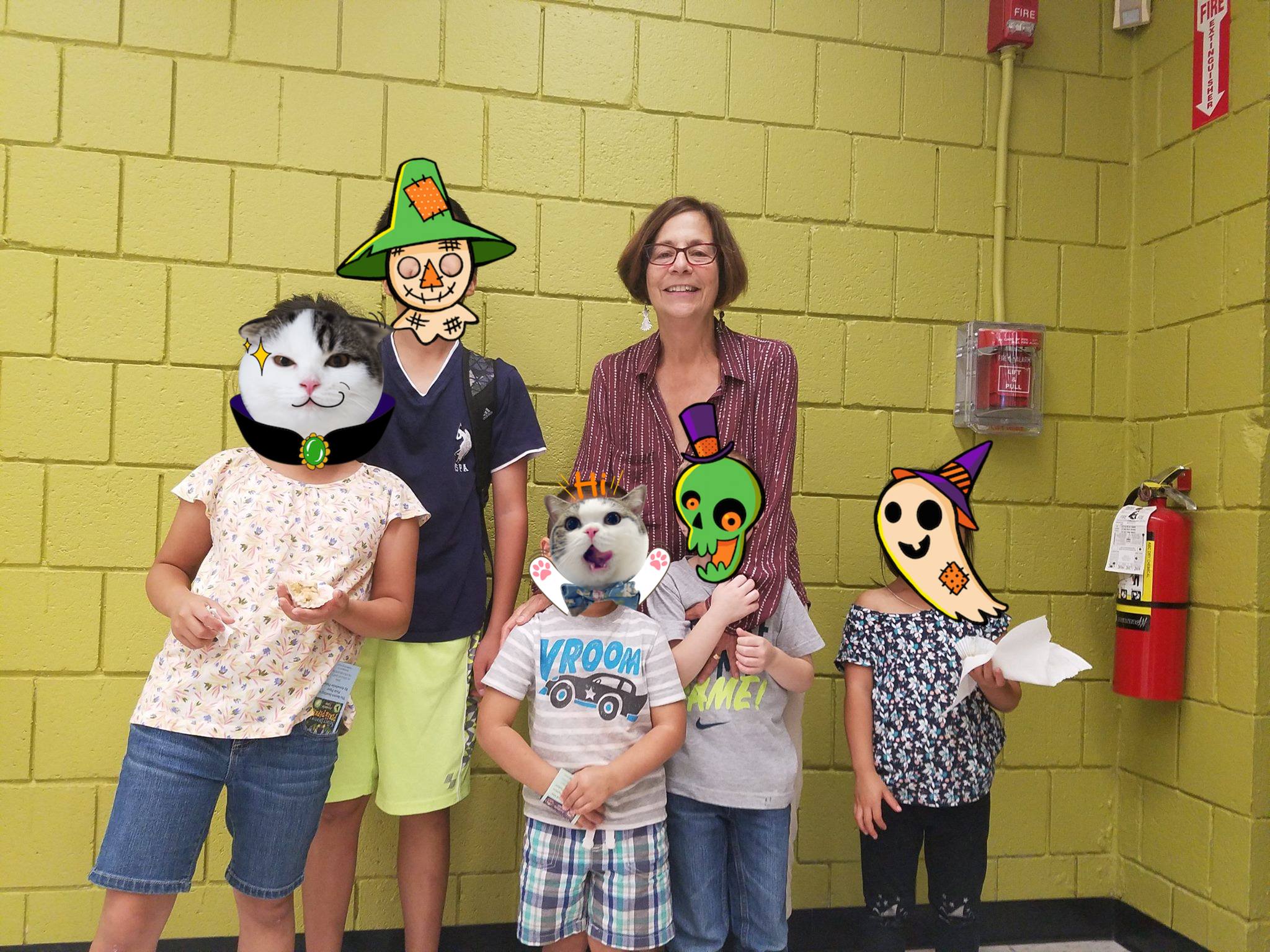
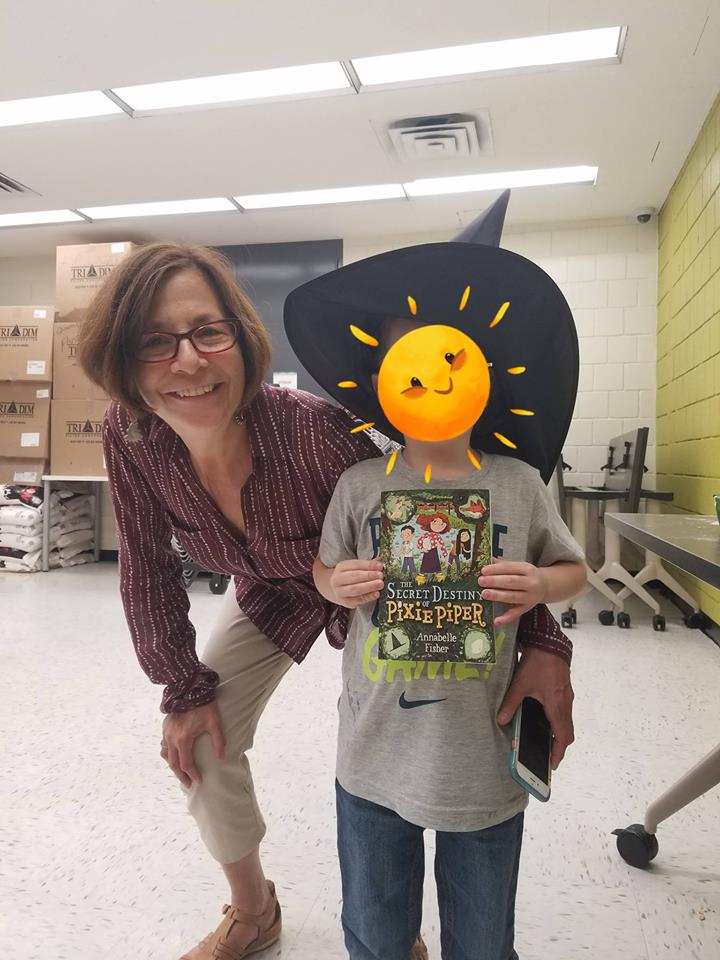
The snickerdoodle cupcakes were so easy and quick to make, and Annabelle engaged the kids right off the bat. They were thrilled, and we ended up banging out three batches of batter and frosting. It was all worth, it, though: everyone was thrilled, and left satisfied. And then, it was picture with the author time!

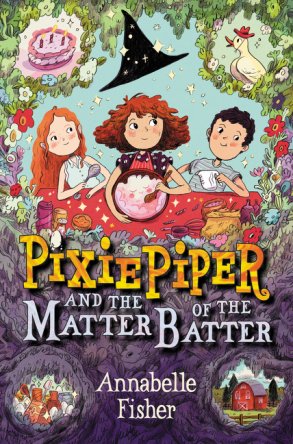
Did I get my books signed? You betcha I did! And will I finally review the second book, Pixie Piper and the Matter of the Batter? Yes, I will! Promise.


And whose library has no Pixie Piper books in at the moment, because they both went out immediately after the author visit? This gal’s! I promoted the visit with a flyer I put together, and a Pixie book display at my desk. Here’s a copy of the Pixie Piper author visit flyer, if you’re interested.

Thank you SO MUCH to Annabelle Fisher for her fantastic (and tasty) author visit!

Posted in Preschool Reads, Toddler Reads

Build that Baby STEM Library! The ABCs of Mathematics and Physics

Quantum theorist and Dad Chris Ferrie adds two more board books to his Baby University library: The ABCs of Physics and The ABCs of Mathematics!

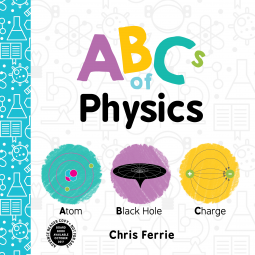
The ABCs of Physics, by Chris Ferrie, (Oct. 2017, Sourcebooks Jabberwocky), $9.99, ISBN: 9781492656241

A is for Atom; B is for Black Hole; C is for Charge… The ABCs of Physics is a bright, entertaining introduction to physics. Not your run of the mill ABCedary, The ABCs of Physics works for all ages – for babies and toddlers, it’s a pretty board book with all sorts of interesting pictures to look at. For older kids and adults, it’s an intro to physics terms and concepts. I am here to tell you, unabashedly, that I found this book fascinating. Did you know that a newton is a standard unit of force? I did NOT. I also learned that my little book scanner works thanks to photons – and you can trust and believe that I will pass on little bits of this information in my day to day at work and at home.


The ABCs of Mathematics, by Chris Ferrie, (Oct. 2017, Sourcebooks Jabberwocky), $9.99, ISBN: 9781492656289

The ABCs of Mathematics is even more little one-friendly, because it introduces basic concepts that our kids are going to be learning soon enough. A is for Addition: Addition is the mathematics of counting. D is for division: Division is the mathematics of fair sharing. It’s wonderfully to the point, and illustrations help reinforce simpler concepts like union: a Venn diagram, something that most school-age kids are familiar with, or addition, which stacks apples over numbers to illustrate the concept.

Want to close that word gap? Introduce some of these terms to your little ones. Let them explore and play with the books. Just expose them to the words and ideas in the books; if they hear it enough, it won’t be a scary thing when they hear it in school. Any book that teaches me something as much as it does my kids is a good book.

Posted in Fiction, Middle Grade, Tween Reads

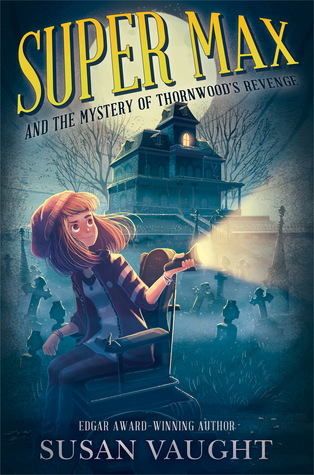
A new sleuth: Super Max and the Mystery of Thornwood’s Revenge

Super Max and the Mystery of Thornwood’s Revenge, by Susan Vaught, (Aug. 2017, Simon & Schuster/Pamela Wiseman), $16.99, ISBN: 9781481486835

Recommended for readers 9-12

Max is a 12 year-old girl living with her grandfather, Toppy, who also happens to be the chief of police in their town of Blue Creek. Her mother, an artist, lives in California, which is just fine with Max – ever since she and her mother were in the car accident that left Max wheelchair-bound at 4 years old, her mother has had trouble fitting Max into her life. She and Toppy lead a pretty happy life together; that is, if she’d stop getting in trouble for tinkering with her wheelchair to give it more power! When a cyber-bully starts a Facebook page and Twitter account slandering her grandfather and the town mayor, Max and Toppy try to blow it off, but things ramp up quickly, and the bully starts causing trouble for local businesses, too, all under the guise of an old town legend, Thornwood’s Revenge. Thornwood Manor is an abandoned mansion right next door to Toppy’s house, and it carries a lot of history with it, not all of it good. Is the bully really the ghost of Hargrove Thornwood, come to take his revenge, or is it someone with a grudge against an entire town? Max is going to get to the bottom of it.

I’m a Susan Vaught fan, so I was thrilled to read one of her middle grade books (I’ve only read her YA to date) and I’ve only read her heavier subject matter. This was good mystery reading all around. She’s got a very likable group of characters; I loved Toppy, gruff but lovable, whose disciplinary methods are creative and hilarious. Max is willful, complicated, and strong, like a middle grade heroine should be. She may be in a wheelchair, but she’s no victim: she’s an engineering whiz who loves to tinker in her eternal search for more power. Her relationship with her mother is complicated, and I liked Vaught’s exploration of that relationship. Max is driven by her desire to appear strong, not weak, not dependent; often to the point of frustrating her friends and family. She deals with her anger issues by reciting the names of Marvel and DC superheroes in alphabetical order, adding a nice geek check to the mix. I’d like to see another book or two starring Max and friends, and I think mystery fans will like this new supersleuth.


Susan Vaught is the Edgar Award-winning author of Footer Davis Probably Is Crazy (2016), and Trigger, which received three starred reviews and was an ALA Best Books for Young Adults. She is also a neuropsychologist at a state psychiatric facility, specializing in helping people with severe and persistent mental illness, intellectual disability, and traumatic brain injury. Her author website has more information about her books, essays, and links to her blog.

Posted in Preschool Reads

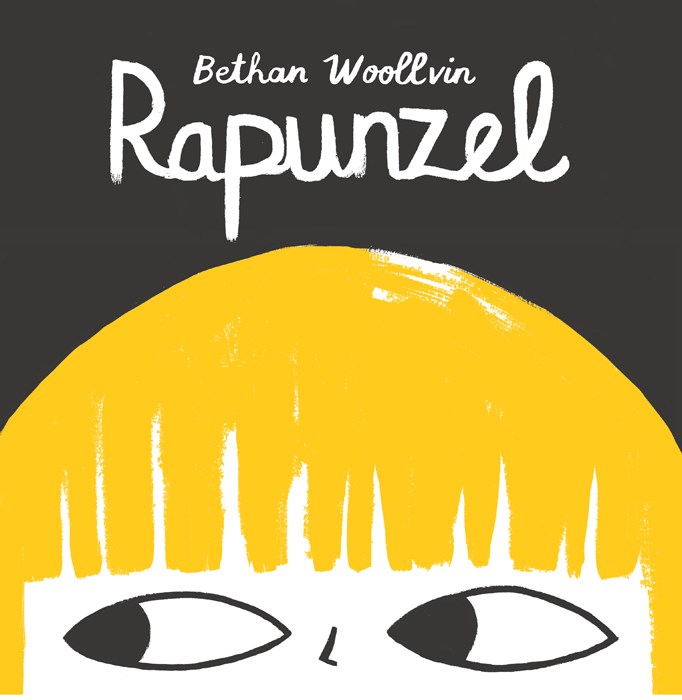
Bethan Wollvin’s Girl-Power Fairy Tales: Rapunzel

Rapunzel, by Bethan Woollvin, (Oct. 2017, Peachtree Publishers), $16.95, ISBN: 978-1-68263-003-7

Recommended for readers 3-8

Last year, Bethan Woollvin gave readers Little Red; her spin on Little Red Riding Hood. Little Red didn’t need a huntsman to help her out; she had things handled. Woollvin’s newest tale, Rapunzel, gives us another heroine who can take care of herself.

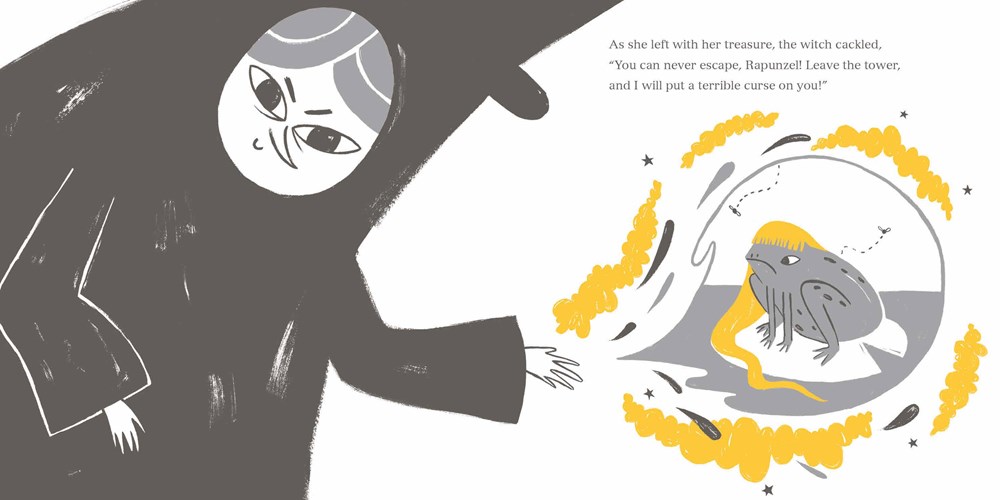
The story starts out the same: kidnapped by a witch, living in a tower, the witch climbs up her hair, snips it to sell, and threatens her. But Rapunzel isn’t worried – she’s too smart for that. She starts figuring out that if the witch can use her hair to get in, Rapunzel can use her own hair to get out. We see her exploring the forest, reading a book called, “How to Defeat Witches”, and we just know this isn’t a princess that needs saving. Heck, no prince even shows up in this story. When the witch confronts Rapunzel after discovering she’s been out, the girl takes matters into her own hands. Literally. And that, my friends, is that: Rapunzel is free and becomes the bane of witches everywhere.

I  love Woollvin’s flipped fairy tales! The two-color art stands out; it’s dramatic and bright. Where Little Red was black and red, Rapunzel is, naturally, yellow and red. The endpapers give readers the short version of the story: the opening endpapers show a witch pursuing Rapunzel through the forest, and the closing endpapers show her masked, on a horse, with two witches hiding from her this time. The art is simple, fun, and gets to the point. Readers can make their own Rapunzels and witches (or Little Reds) with printables aplenty – hold a flipped fairy tale/girl power storytime and let your readers transform!

A great add to storytime collections and fairy tale bookshelves everywhere!

Posted in Preschool Reads, Realistic Fiction

No Water No Bread delivers a powerful message

No Water No Bread, by Luis Amavisca/Illustrated by Guridi, (Oct. 2017, nubeOCHO), $15.95, ISBN: 978-84-945971-3-8

Recommended for readers 4+

Two groups of people live on either side of a barbed wire fence. One side has water. One side has bread. Neither will share their resources, flatly stating: “This is our water.” “This is our bread.” The children gather at the fence and trade bread and water, wondering, “Why are our parents like this?” They play ball over the fence, knowing that life would be much better “without the fence”. When a new group shows up, the barbed wire fence is sectioned off into yet a third area. Again, the adults hoard their resources while the children all approach the fence, ready to share, and wonder why their parents are like this.

In a day and age where some talk about building walls, No Water No Bread asks a simple, powerful question: Why are we like this? Seen through the eyes of a child, we live in a ridiculous society. We tell our children to share, yet decide that others don’t deserve basic needs if we find them lacking: if they’re from the wrong area of the world, if they’re the wrong faith, if they’re the wrong color.

Simple art and simple words deliver a powerful message that children will understand. Let’s hope that the adults do, too.

This book is a project created in Europe by NubeOcho with the support of Amnesty International Spain and Amnesty International Italy. It is also available in Spanish (ISBN: 978-84-946333-7-9).

Posted in Intermediate, Middle Grade, Non-fiction, Non-Fiction

Fairy House Cooking, for fairies and pixies and fun

Fairy House Cooking: Simple, Scrumptious Recipes & Fairy Party Fun!, by Liza Gardner Walsh, (June 2017, Down East Books), $16.95, ISBN: 978-1-60893-641-0

Recommended for readers 4-12

If there’s one magical creature whose popularity is eternal, it’s fairies. Fairy House Cooking is perfect for fairy-themed parties, playdates, or… you guessed it… library programming.

This is a beautifully constructed and photographed cookbook. It’s spiral-bound, so it may take some licks in circulation if you’re putting this in a library; it does help keep the book turned to your recipe while you’re cooking, though, so that’s a big plus, especially for developing chefs. Recipes are rated by difficulty: one fairy wing for, “you got this”, which I love. And which helps make this book perfect for younger creators (and perfect for my no-bake library programs). Two wings is a little more of a challenge – have a grownup in the room. Three wings, you definitely need a grownup and some teamwork to get the job done. Pleasantly, there’s equal time given to recipes of each difficulty level, so little ones can really make some fun recipes, like pretzel and fruit wands and nut-free bird’s nest cookies. There’s sections on safety, allergies, and cleaning up, and author Liza Gardner Walsh uses empowering words to boost kids’ confidence as they read; the words are bolded through the text and Walsh includes a special note on making mistakes, and how it’s okay. It happens. (Don’t ask me about the time I used baking soda to coat the table and roll out my holiday cookies, when I ran out of flour. Just don’t.)

Recipes are collected under five different chapter umbrellas: Fairy Mornings (breakfast foods); Foods Inspired by Fairies and Fairy Homes (featuring some of the most adorable food photography ever); Fairy Foraging (working with fruits… and flowers!); Fairy Parties (finger foods, party foods and drinks); and Recipes for the Fairies and their Friends, a section that encourages your kiddos to get out in there in the backyard and play; create something that the fairies and their friends would like to nibble on – from bird popsicles and birdseed cookies to mudpies of all types. There are recipes for fairy face paint and fairy dust, and everything here is good for the planet: the fairies wouldn’t have it any other way.

There are fun sidebars and callouts with tips to make your projects extra fun, and the photography is vibrant and colorful, with kids working together to make their recipes come together. Boys feature here, too, so make sure to make your party equal opportunity fun. A list of resources and websites links readers to more cookbooks for kids. Make a full-blown fairy day by letting kids make fairy doors, fairy wings, and any number of fairy crafts you can find. Pinterest has OODLES of ideas.

Definitely time for a fairy program at my library.

Posted in Animal Fiction, Fiction, Humor, Intermediate

Claude and Mr. Bobblysock find their way to the Big Screen

Claude on the Big Screen, by Alex. T Smith, (Oct. 2017, Peachtree Publishers), $12.95, ISBN: 978-1-68263-009-9

Recommended for readers

Claude the Dog and his best friend, Mr. Bobblysock, are back for another adventure: this time, they wander onto a movie set, save the day by filling in for the two stars, and save a classically trained gorilla actor who’s afraid of heights! Written and illustrated by Alex T. Smith, the Claude series is a fun, early chapter book series that sports two-color illustrations and a quirky sense of style. The characters and writing are flamboyant fun, with exaggerated fonts, gigantic wigs, a gorilla in a smoking jacket, and a dog in a beret. It’s dry wit for the elementary school set.

There are seven Claude books out right now. Give these to your readers that appreciate humor with a twist. Introduce them in a read-aloud, letting kids hear the tongue-in-cheek manner of the narrative. Dress up socks and have the kids make berets – have fun with Claude!

Posted in Fiction, Historical Fiction, Middle Grade, Realistic Fiction, Tween Reads

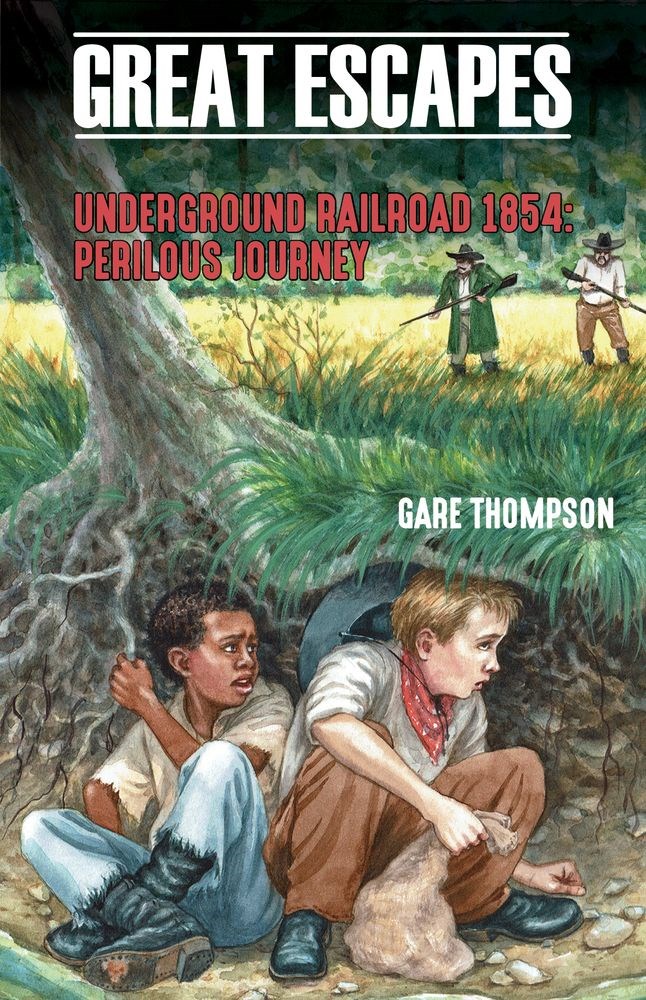
Good for historical fiction readers: Great Escapes

Underground Railroad 1854: Perilous Journey: Inspiring Tales of Courage and Friendship (Great Escapes), by Gare Thompson, (Oct. 2017, Barron’s Educational Series), $7.99, ISBN: 9781438009735

Recommended for readers 8-12

George is a plantation slave who dreams of being free. He’s singled out for abuse by the cruel overseer and threatened with being put on the auction block, like his father was. He can’t bear the thought of being separated from his sister, Ruth, and his mother, so he formulates a plan for the family to escape and seek out Moses, a mysterious woman who helps slaves to freedom. Moses – Harriet Tubman puts them in case of a white teenager, Nathan, who will take them from the deep South to New York, where they hope to find passage to Canada, but it’s not going to be easy. George doesn’t trust Nathan – he doesn’t trust anyone – and the bounty hunters are everywhere, tracking down escaped slaves. The four will have to work together and rely on the kindness of Underground Railroad stations to succeed.

Great Escapes is a fairly new historical fiction series by Barron’s Educational Series. Readers who enjoy the thrill of Lauren Tarshis’ I Survived books will dig into these readalikes, which are a little longer in page length (over 200 pages) and allow for more plot and character development. Stories emphasize working together for change while acknowledging that it’s not always an easy thing to do. Historical figures Harriet Tubman, William Still, and Frederick Douglass make appearances, and interesting facts about the Underground Railroad pop up within the narrative. My favorite? The coded messages communicated through song: songs like “Wade in the Water” told freedom seekers to get off the trail and into the water, so their scent wouldn’t be picked up by dogs. Sections on key terms, phrases used, songs sung, Underground Railroad profiles, and further resources make this a great next step for readers who are ready to take on longer books.

Underground Railroad is the second book in the Great Escapes series, the first being Mount St. Helens 1980: Fiery Eruption! I’ve been plumping up my library’s series fiction collection, and since the kids devoured my I Survived books the second they arrived, I think this will be a smart add to the collection. Like I Survived, readers can pick either Great Escapes book up never having read the other(s); they’re all separate moments in history starring different characters.