Posted in Animal Fiction, Early Reader, Fiction, Fiction, Intermediate

Ginger Green, Playdate Queen, meets The Crazy Friend!

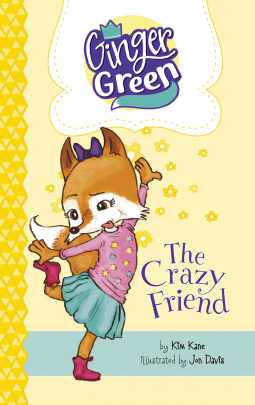
The Crazy Friend (Ginger Green), by Kim Kane/Illustrated by Jon Davis, (Apr. 2018, Capstone), $5.95, ISBN: 9781515819479

Recommended for readers 6-8

Ginger Green is the 7 year-old playdate queen! But when she invites Maisy over to play, she may have taken on more than she (or her mother) have bargained for. Maisy is out of control, and she takes Ginger’s little sister, Penny, with her! Maisy needs to figure out how to turn this playdate around, super-fast!

Every caregiver has had at least one playdate like this. Maybe it’s even your little one that strips down to his or her underwear and takes off through a friend’s house. Parents – and kids! – will sympathize with Ginger and her mom, who are taken by surprise by a playdate that is anything but expected. For parents and caregivers, The Crazy Friend provides an interesting look at kids’ behavior without knowing what’s behind it: is Maisy just a badly behaving child, or is there something more to the situation that neither Ginger nor her mom are aware of? There are some cues in the text that could lead readers to believe Maisy has some impulse control/ADHD-type behaviors. Ginger and her mom are frustrated (and I’m a little mortified that Maisy’s mom was all too quick to leave her daughter for someone else to contend with), but each decides to embrace the situation and work toward a solution that will save the playdate for everyone.

The Crazy Friend provides teachable moments and the chance for discussion. There are three short chapters, illustrated in two-color purple and white, and can easily fit in either an Easy Reader or intermediate section. There are currently four Ginger Green books available through Capstone in the US; in the author’s native Australia, there are 11.
Posted in Intermediate, Middle Grade

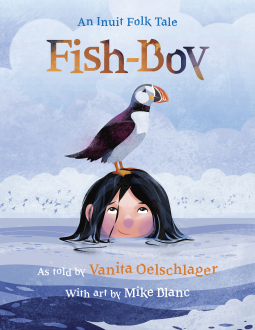
Fish-Boy spins an Inuit tale

Fish-Boy, by Vanita Oelschlager/Illustrated by Mike Blanc, (May 2018, Vanita Books), $15.95, ISBN: 9781938164200

Recommended for readers 7-10

A wise old Inuit relates the tale of Fish-Boy, a magical folk tale that explains why so many sea parrots (also known as puffins) nest on Ignaluk, a great rock in the Arctic region of North America. When the hunter Kitmesuk went out to fish one day, he discovered Fish-Boy instead: an armless boy with a fish body, lonely, and looking for a father. When the two travel to another village on a chief’s invitation, the villagers’ behavior toward them is awful – rude and combative. Fish-Boy uses magic to turn men that would harm them into sea-parrots, thus providing a strong message about being a good host.

The art allows for readers to interact with the story; the narration, plus point of view artwork, makes the reader feel like he or she is sitting around the fire, listening to the wise man tell his tale. There are bright colors, strong faces, and images that blend together, almost dreamlike, lending an imaginative feel to the story. There is a section with new words for readers, teaching points, and biographies on the author and illustrator. The endpapers provide maps of the Arctic region, helping place readers in the course of events.

I love a good folktale, and I want to get more First Nations books in my collection. This one is a definite add to my shelves. It’s good for an older reader storytime, and it’s great to display and booktalk when kids have to do projects on Native Americans – show the diversity of stories within the Nations, and introduce them to fiction as well as non-fiction so we foster discovery.

Posted in Fantasy, Teen, Young Adult/New Adult

What would you do if you could write your own story?

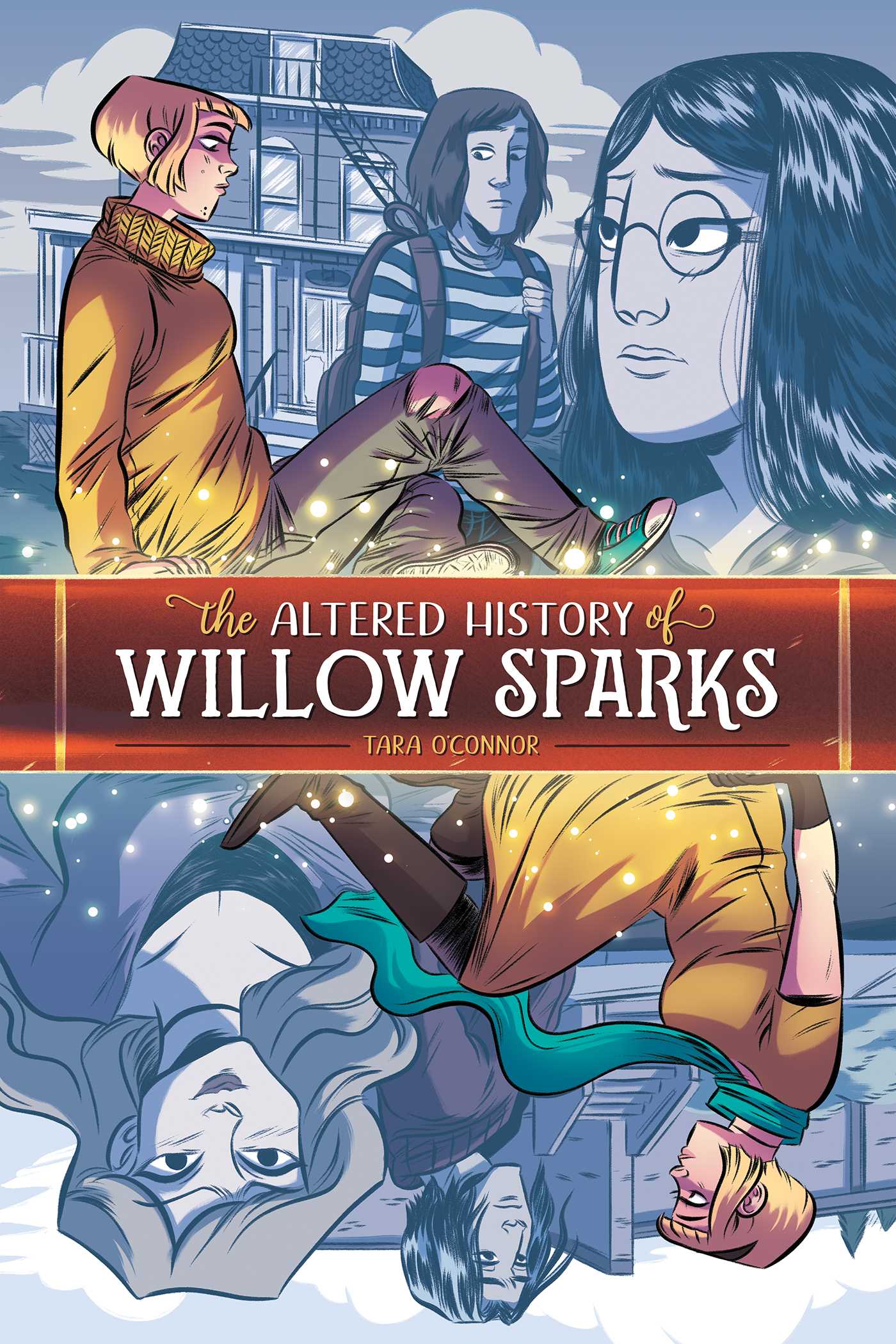
The Altered History of Willow Sparks, by Tara O’Connor, (March 2018, Oni Press), $19.99, ISBN: 9781620104507

Recommended for readers 12-16

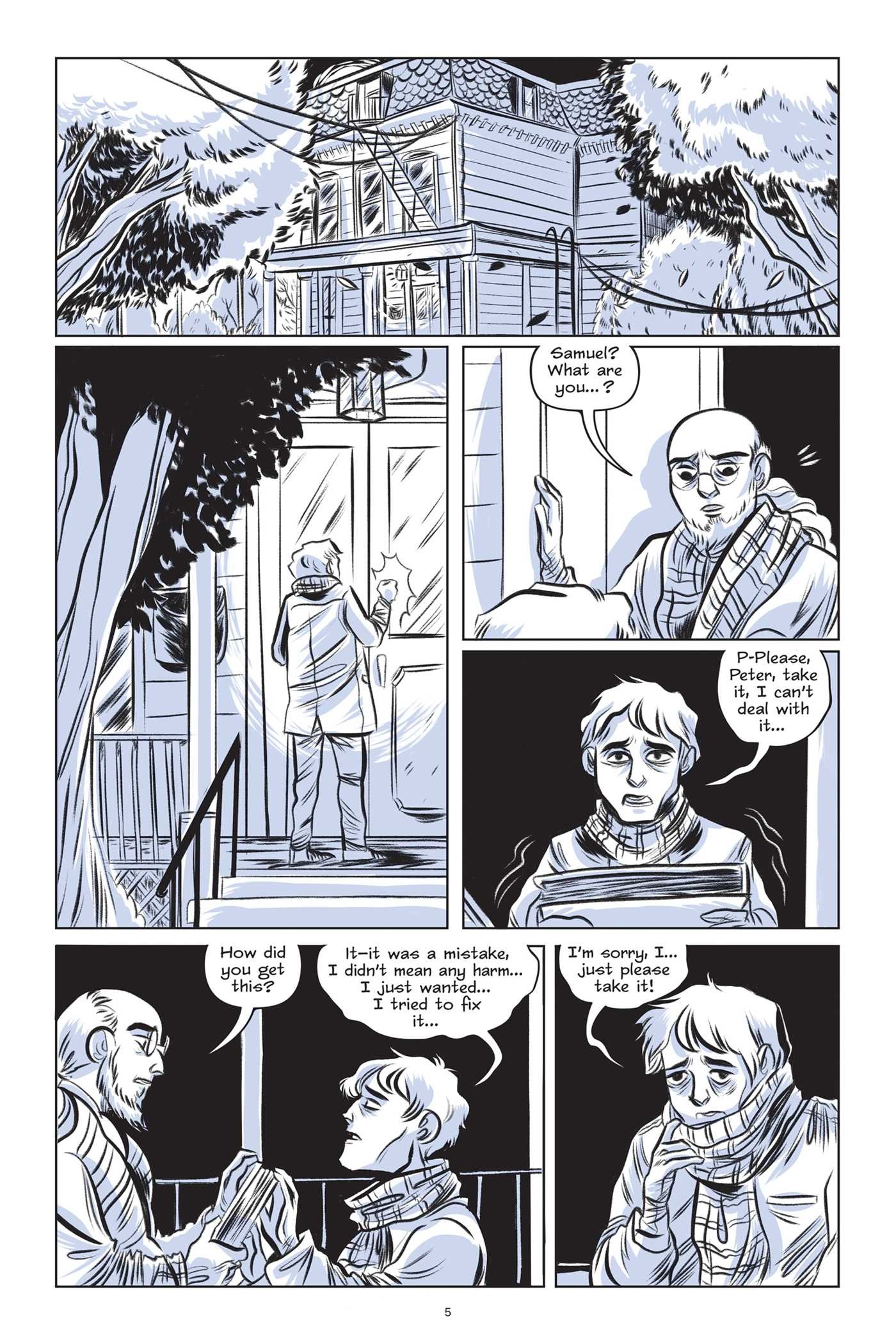
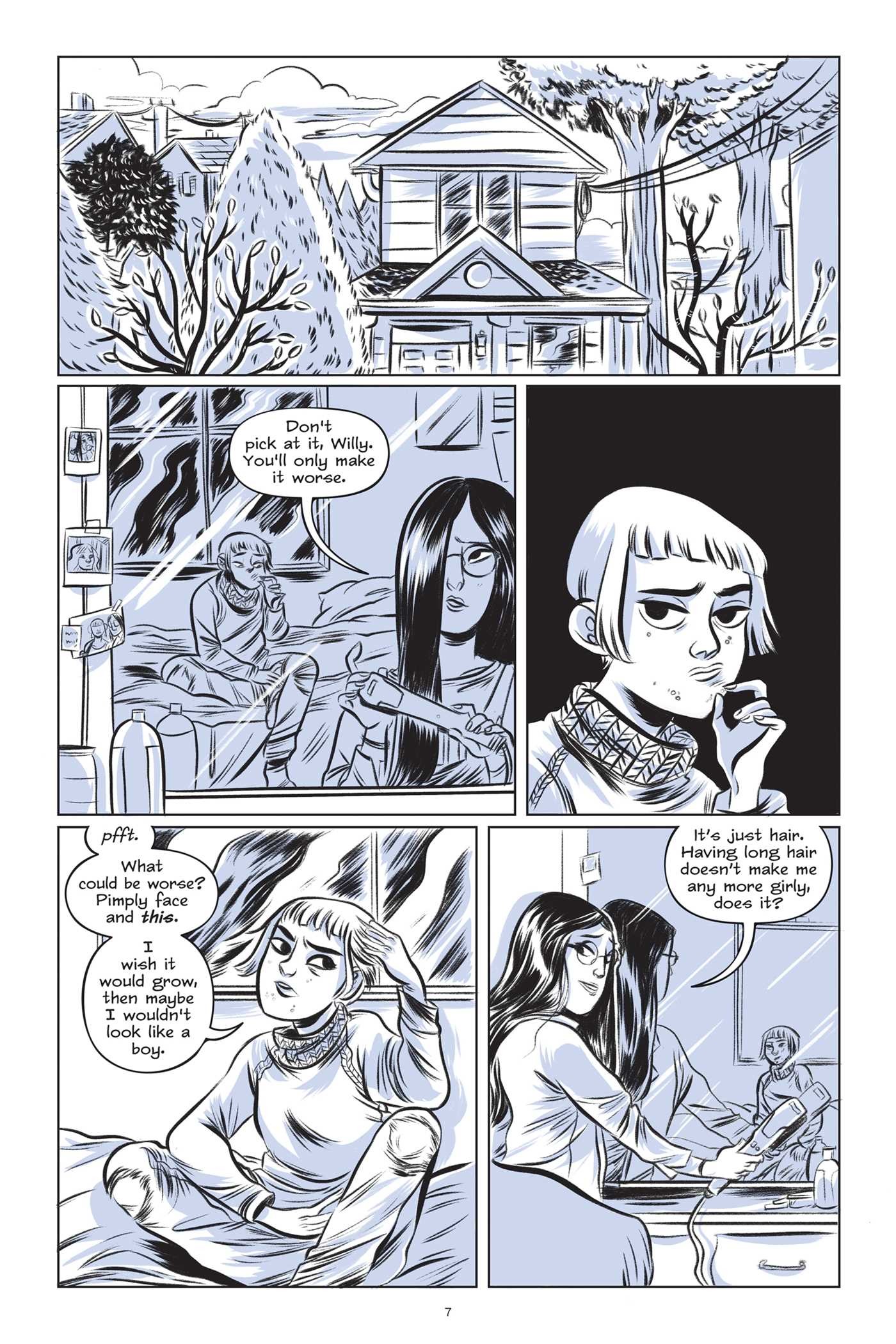
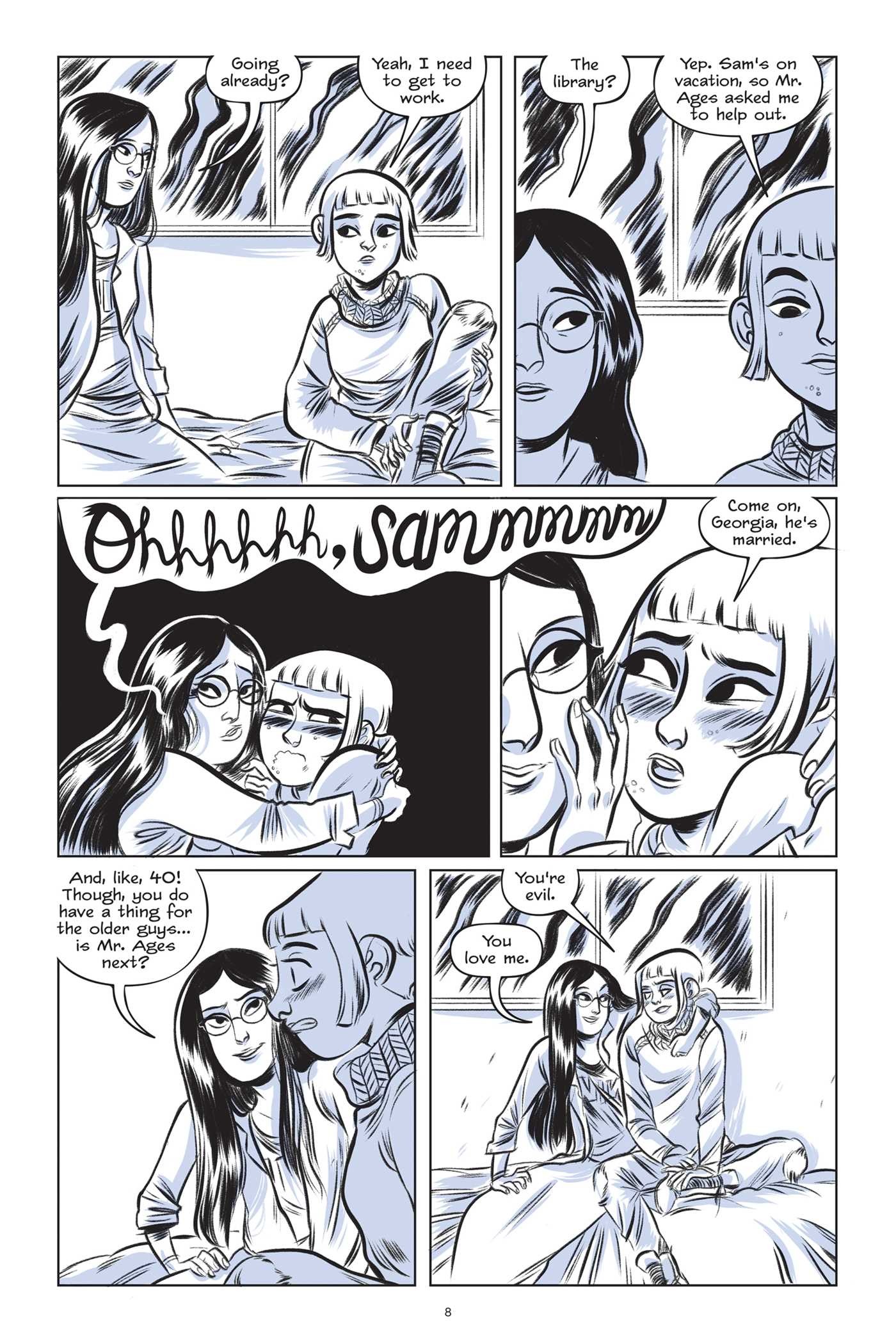
High schooler Willow Sparks is tired of being bullied by her school’s “in crowd”. Staying out of their way doesn’t seem to do anything – they find a way to go after her and tease her about her clothes, her skin, her everything. When she stumbles on a hidden library while at her public library job one night, she finds books with people’s names on them – including hers – that record every moment of their lives. She discovers that she can write her own story, and instantly, her skin clears up, her fashion gets an upgrade, and she’s getting attention – good attention – from one of the guys in the in crowd. As life improves for Willow, she grows farther away from Georgia and Gary, her best friends who’ve stuck by her. What Willow doesn’t realize is that for every give, there’s a take, and the future, whether or not Willow’s writing it, has a way of defending itself.

There’s a lot going on in this graphic novel: Willow and her transformation is the main plot, but there are subplots that get a short shrift: I’d love to have learned more about why these books exist and where they came from – it’s alluded to that other libraries have these hidden libraries; I’d love to see a book about them. (I do love the idea of a librarian being the keeper of this secret, valuable information.) Willow’s friend Georgia is moving, and George is starting the process of coming out; both of these stories are glanced over, and have the potential to be really interesting, especially when combined with the hidden histories. That said, the story is relatable, especially to teens: who wouldn’t want to be the author of their own life? Write out those potentially embarrassing moments, the bad skin, the crush(es) that didn’t work out. Start a booktalk with that idea, and watch the teens perk up.

The Altered History of Willow Sparks is a quick, enjoyable read. It starts a good discussion about the downsides of wish fulfillment, and illustrates that everything comes with a price. The realistic artwork is largely rendered in gray and white and is reminiscent of Faith Erin Hicks’ work. Booktalk with other creepy fantasy graphic novels like Hicks’ Friends With Boys, Vera Brosgol’s Anya’s Ghost, and Doug TenNapel’s Ghostopolis (the latter two skew younger in age). The book is a Spring 2018 Junior Library Guild Selection.

Posted in Uncategorized

Wild Swans is a colorful, empowered adaptation of the Grimm fairy tale

Wild Swans, retold by Xanthe Gresham Knight/Illustrated by Charlotte Gastaut, (March 2018, Barefoot Books), $9.99, ISBN: 9781782853626

Recommended for readers 7-11

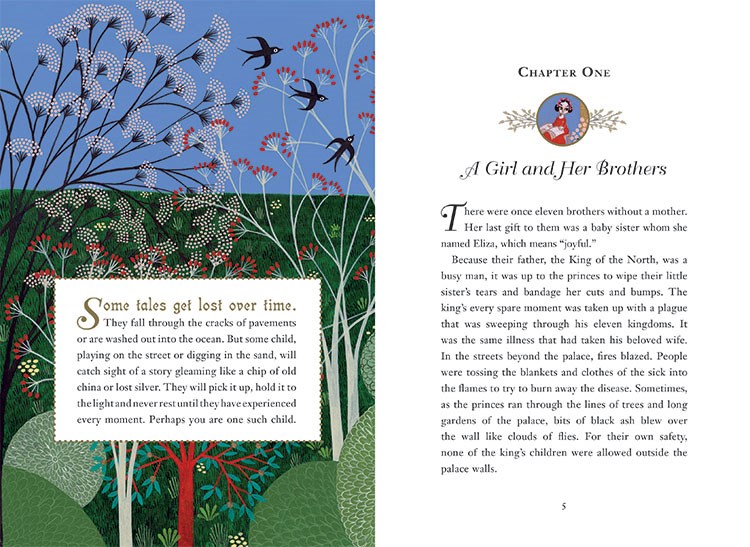
The latest adaptation of Grimm’s Wild Swans is a beautifully illustrated, empowering retelling where a young woman breaks a spell to save her brothers, and assumes her place as queen of her kingdom. Young Eliza and her eleven brothers live with their father, the king, and their stepmother, the queen, who also has a gift with magic. When a plague devastates the land, Eliza’s stepmother turns the 11 brother sinto swans, so they can fly away from the plague, and sends Eliza to a remote village, untouched by the disease. Years later, Eliza receives word that the queen was able to discover a cure, but it was too late to save herself or the king. The kingdom is in chaos, and it’s up to Eliza to cure the plague and assume the throne, bringing peace back to the land. Throughout her adventure, she’ll befriend a young king, work her fingers raw to knit special shirts for her brothers to break the spell, and hold her own against a mob of villagers who think she’s a witch. All in a day’s work for a fairy tale heroine!

The artwork is stunning. There’s vibrant and angular artwork throughout the book, with gold and black drawings pacing the text between color panels. Eliza is a brave and focused heroine who doesn’t rely on a prince or king to marry her to gain her throne – she and the young king are dear friends, committed to one another as companions. She even declines an offer to serve as his new advisor, because she’s got a kingdom of her own to run. This is a nice addition to fairy tale collections, and great for a nice, empowering read.

Posted in Preschool Reads, Realistic Fiction

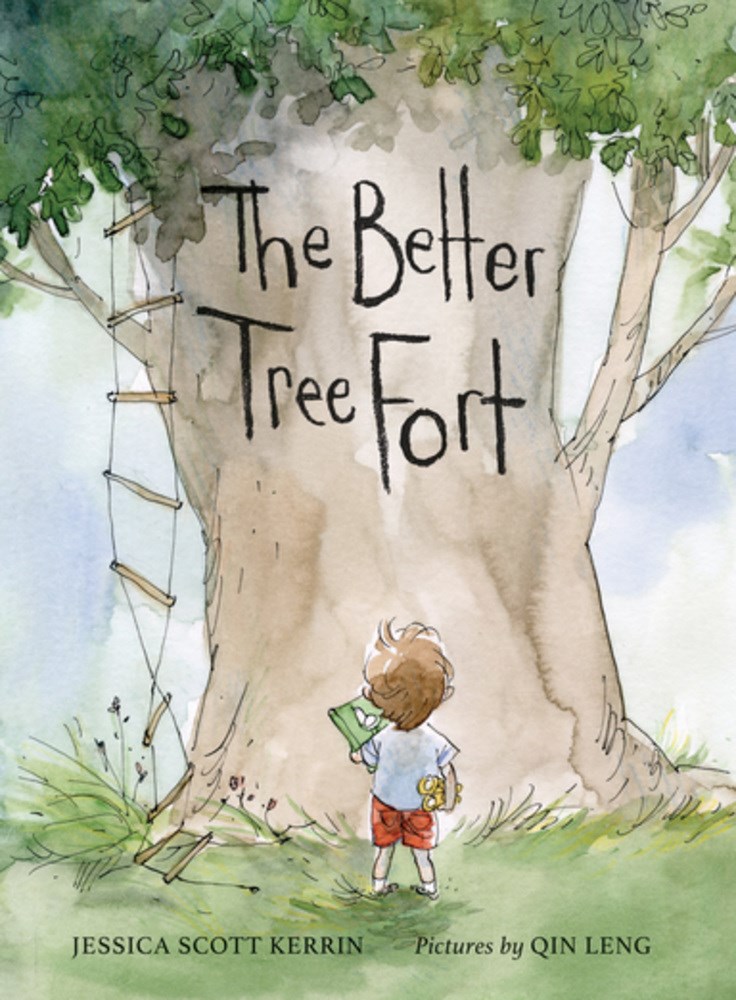
It takes love to Build a Better Tree Fort

The Better Tree Fort, by Jessica Scott Kerrin/Illustrated by Qin Leng, (March 2018, Groundwood Books), $17.95, ISBN: 9781554988631

Recommended for readers 4-8

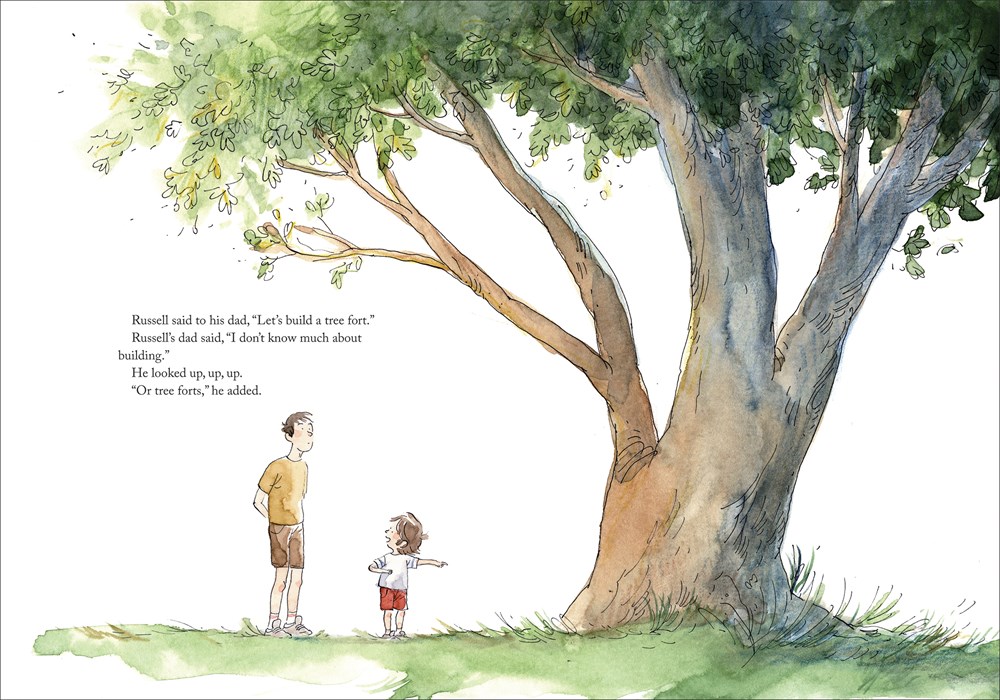
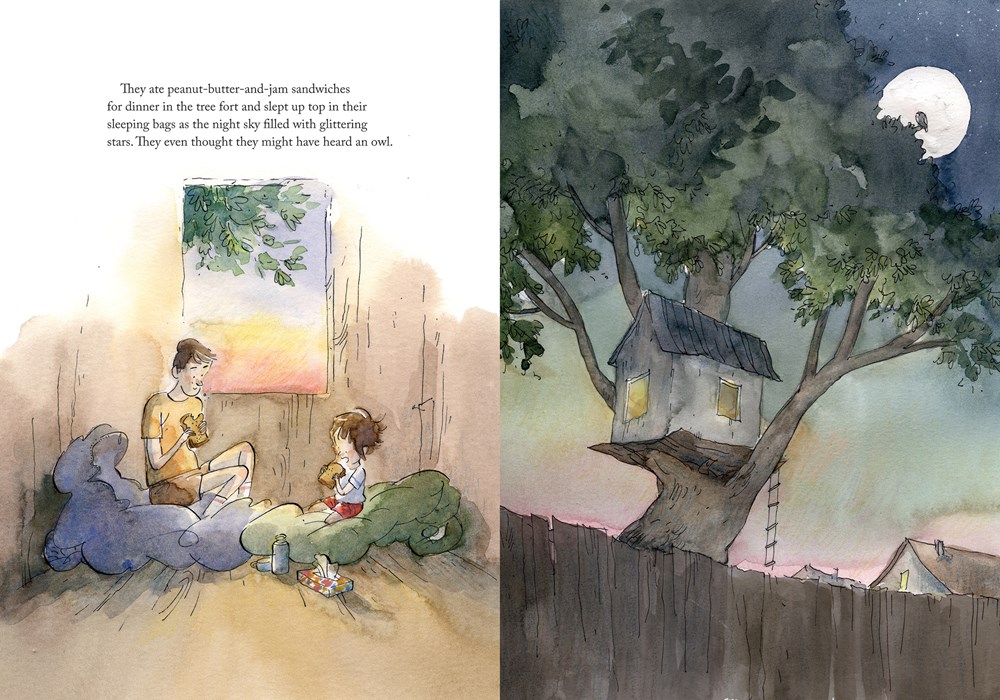
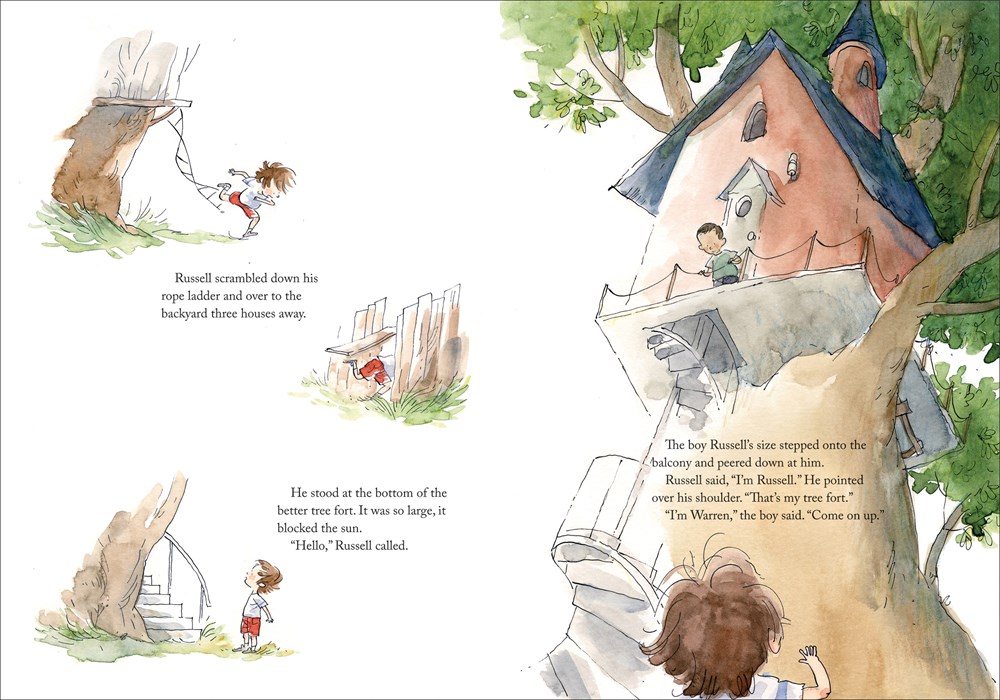
A boy named Russell and and his dad move into their new home. Russell sees the giant maple tree in their yard as a perfect spot for a tree fort, so he and his dad set to work designing it, and – after multiple trips to the lumber store – build it together. It may not look like the tree fort in Russell’s imagination, but it is perfect. He and dad eat peanut butter and jam sandwiches in the fort, unfurl their sleeping bags for a tree fort sleepover, and enjoy each other’s company in the tree fort. When Russell sees construction workers in the yard three houses over, he realizes there’s another tree fort going up, so he heads over to meet his neighbor, a boy named Warren. Warren’s tree fort has it all: a balcony, escape slide, even electricity. After all, his dad bought the plans and paid for the builders to come build it. But all Warren can focus on is what it doesn’t have (a kitchen sink). Russell heads back home to his perfect tree fort, made with his father, for some quality time.

This is a sweet story about appreciation that makes for great reading and discussion. It’s nice to see a story about the relationship between father and son – a single dad, it would appear, from the text. They create this tree fort together, building it with their own two hands, sharing the time together. Warren and his dad – who isn’t present in the story – present a foil for readers: the dad with money but no time, and the child who doesn’t appreciate what he’s got. Russell goes home to his dad, who wants to hang out with his son, in the tree fort that they made together. The experience is what counts, not the gewgaws that make it fancy. It’s a great message to communicate to kids and parents alike: spend time together. Create together.


The ink, watercolor, and pencil crayon art uses subdued colors and perspective to tell the story: the giant, overwhelming shelves at the lumber store; the chaos of materials surrounding Russell and his dad as they try to figure out how to bring the tree fort to life; the colors of the sunset as they sit in the fort, eating sandwiches and sitting on sleeping bags. It’s a great story for a storytime and one-on-one cuddle time. Talk to your readers about appreciation, and about things they do with their grownups that they enjoy: do they cook with family? Play board games, or solve puzzles? Which tree fort did they like more, and why?

Jessica Scott Kerrin is an award-winning Canadian author who writes picture and middle grade books. You can learn more at her website. Find more of Canadian illustrator Qin Leng’s beautiful artwork (including artwork from another book I adore, Shelter) at her website.

Posted in picture books, Preschool Reads

Paw Patrol: Rescue Time!

I just received a copy of a gadgety book for review: Paw Patrol’s Rescue Time!

Paw Patrol: Rescue Time!, by Cara Stevens, (Oct. 2017, Nickelodeon),
$18.99, ISBN: 978-0-7944-3867-8

Recommended for readers 3-8

This is a large-size picture book, great for lap reading; it also comes with a wrist projector that projects 10 images directly onto a wall, with a little twisty-turn at the bottom to move kids through the pictures. It’s like a ViewMaster (look it up, kids) watch, and my kindergartner immediately seized it and went to work. It works easily enough; just make sure your kiddos have the patience to let you show them how it works, especially the focus dial; I had to wrestle my son to show him how to work it, but it was all good after that.

There are two Paw Patrol stories in this 30-page book: one is a Tooth Fairy story, where Alex loses a lost tooth, and the Paw Patrol has to find it so he won’t miss out on the Tooth Fairy’s visit. The other story has the team searching for a flock of Symphony Songbirds that’s gone missing, leaving their eggs uncovered in their nests! All the favorite characters are here, including that wacky mayor and her pet chicken, Chickaletta – we watch a lot of Paw Patrol in my home, okay? – which will make fans of the Nick show very happy. Numbers throughout the book signal when to advance the projector.

This is a fun gift book – the Tooth Fairy storyline makes it a fun choice to slide under pillows for that first lost tooth, if you want to go big – and the little projector is battery-powered, so you can replace the batteries and keep the fun going. I’d split reading up, because it is wordy, and younger kids aren’t going to sit still for the entire book; read one story at a time, even a few pages at a time, if they start getting antsy. Let me run through the images on the projector and tell them to make up their own adventure; let them talk you through it. No job too big, no pup too small!

Posted in Animal Fiction, Fiction, Fiction, Graphic Novels, Intermediate, Middle Grade

Frog and Toad fans, meet Peter & Ernesto!

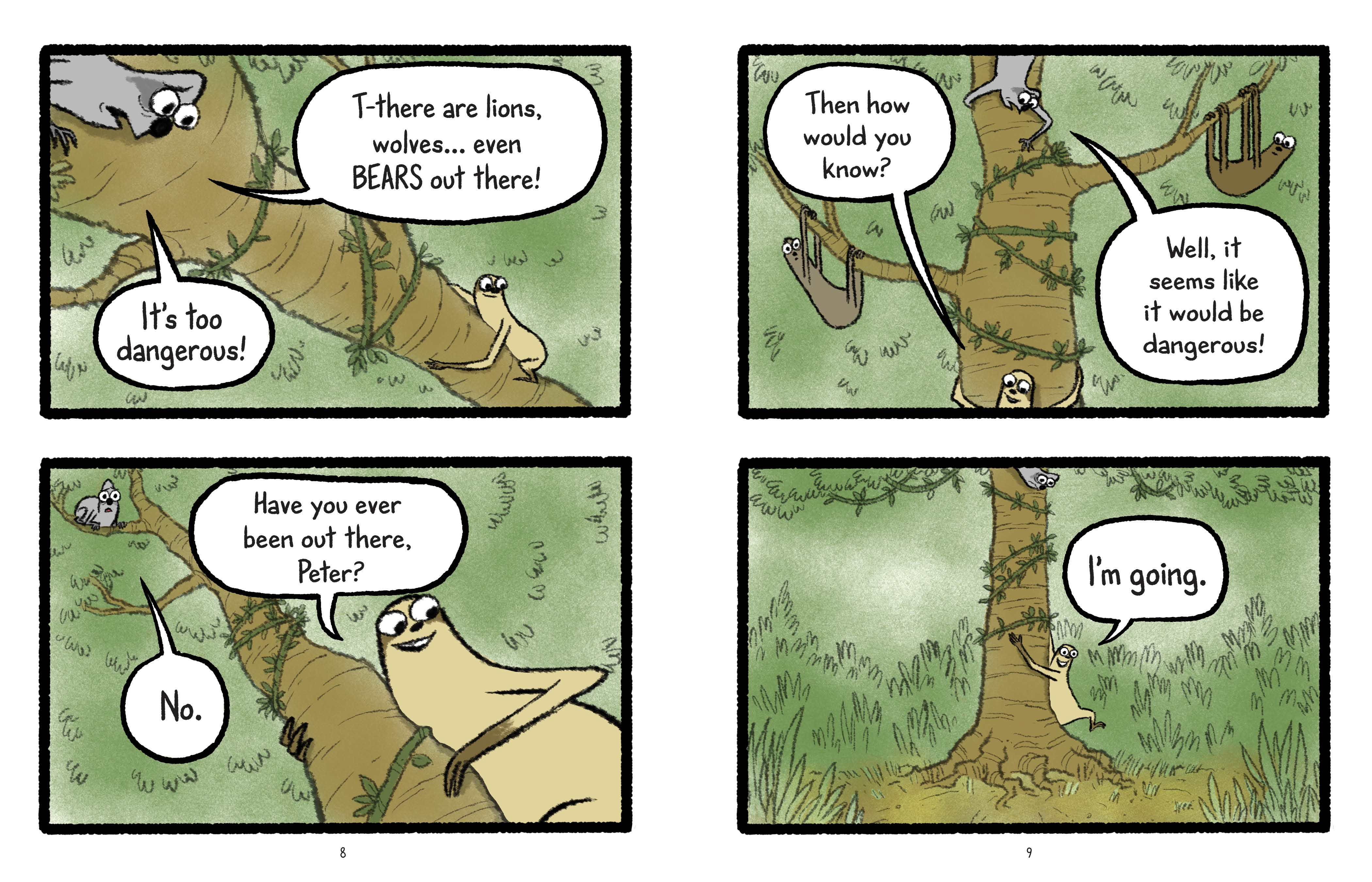
Peter & Ernesto: A Tale of Two Sloths, by Graham Annable, (Apr. 2018, First Second), $17.99, ISBN: 9781626725614

Recommended for readers 7-10

Peter and Ernesto are best friends. They’re sloths, who live in a tree and spend their days munching hibiscus and watching the clouds, naming the shapes they see in them as they go by. But Ernesto isn’t satisfied. He loves the sky, but their tree only offers one piece of it. There’s so much more sky to see! Peter is content to stay in his tree, but Ernesto needs to take a trip and see the sky from all over. Ernesto revels in his adventure, making new friends and having exciting new experiences, while Peter stays at home, worried sick over Ernesto. Despite his fear, Peter sets off in search of Ernesto, making some new friends of his own. The two friends reunite, having both learned valuable lessons: Ernesto, the value of home; Peter, the importance of expanding one’s horizons.

The friendship between Peter and Ernesto is the sweetest part of this book. Graham Annable’s one-two punch of adorable, cartoony artwork with giant, expressive eyes, and fun dialogue will be a winner with intermediate and middle grade readers. The characters’ friendship is reminiscent of Frog and Toad; two characters, each a foil for the other, and their unabashed friendship. Their reunion will make you sigh and smile; it’s that sweet. The art is adorable, and at times – like a panel where Ernesto gazes at The Northern Lights, and we see how small he is in relation to the sky – is breathtaking.

Thank goodness, Peter and Ernesto will return. I can’t wait.

Posted in Preschool Reads, Toddler Reads

Get your cute on with Animal Babies!

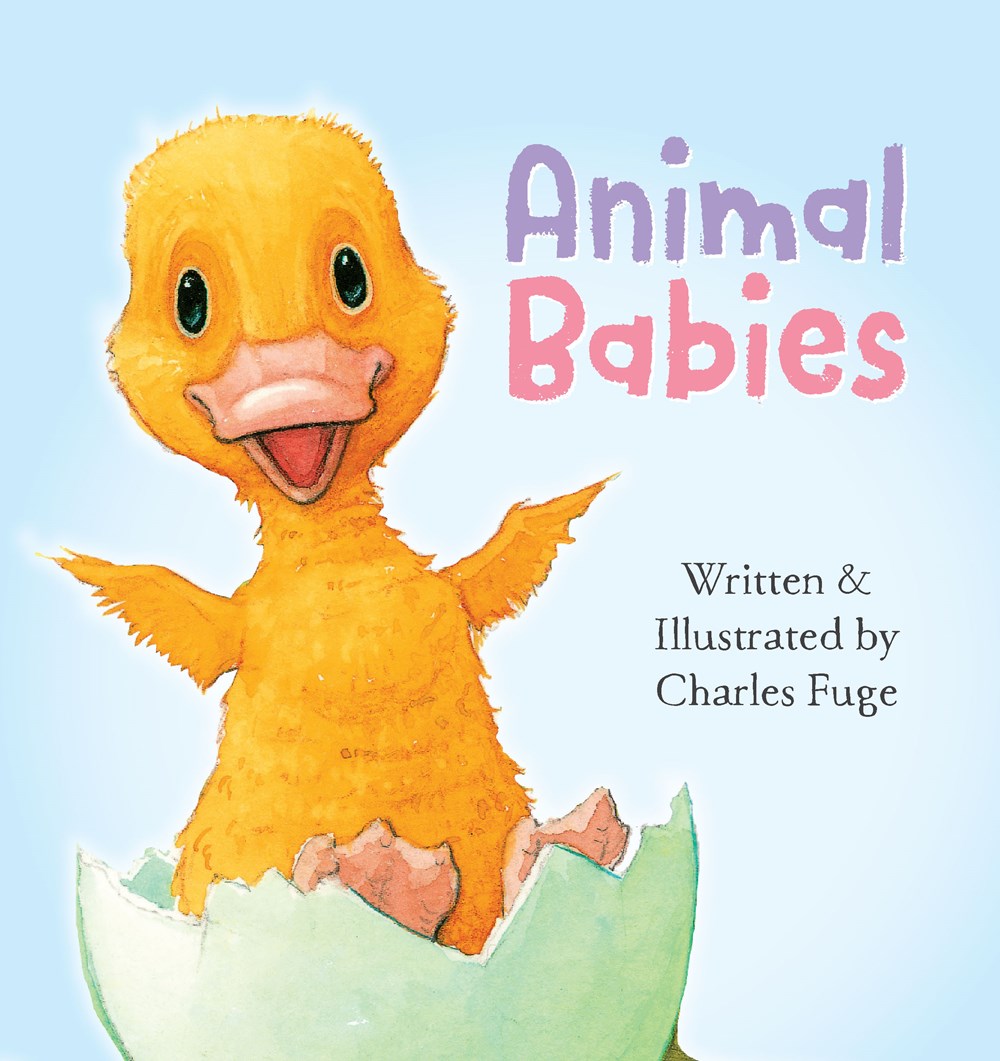
Animal Babies, by Charles Fuge, (March 2018, MoonDance Press), $8.95, ISBN: 9781633225480

Recommended for readers 0-3

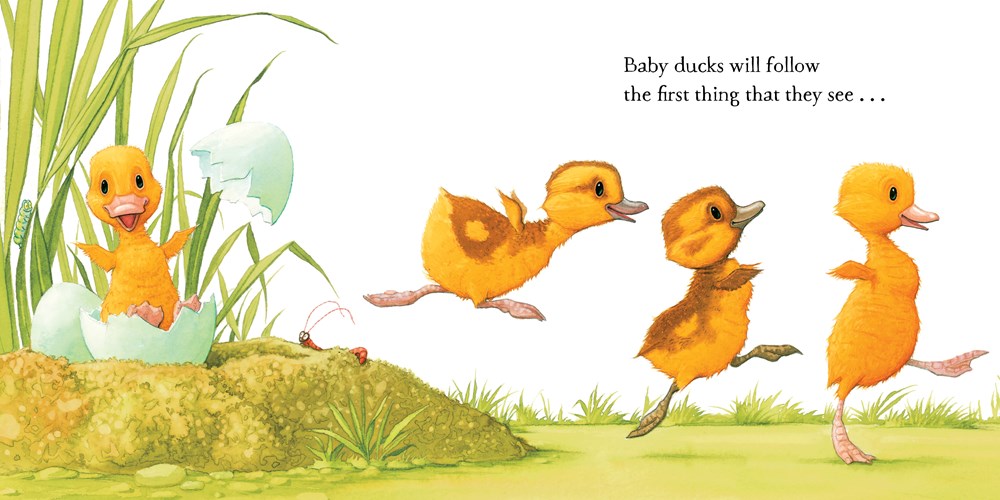
This adorable board book features squeal-worthy menagerie of baby animals, including ducklings, platypuses, koals, sloths, and meerkats. Rhyming text provides some factual info about the animals: baby ducks following the first thing they see; father seahorses having babies, and a perplexed snake, surrounded by playful meerkats who aren’t the slightest bit afraid of it. The illustrations are adorably realistic, and the text is just right for babies and toddler storytimes.

I’m always on the lookout for board books that give me a little something more than the basics, to use in my storytimes; Animal Babies will fit in nicely, letting me add some interactivity, like animal sounds, movements, and some teaching moments, while giving kids a nice cadence to follow along, thanks to rhyme. Too much cuteness! Pair with animal board books with animal sounds (I like this list from Inspiration Laboratories), and make it fun by adding some Sandra Boynton; I love Moo, Baa, La La La.  I also really enjoy Douglas Florian and Barbara Bakos’s Animals Play board book series, including Once I Was a Polliwog, Flamingos Fly, Leap, Frog, Leap, and Bears are Big.

Posted in picture books

Welcome to Seed School!

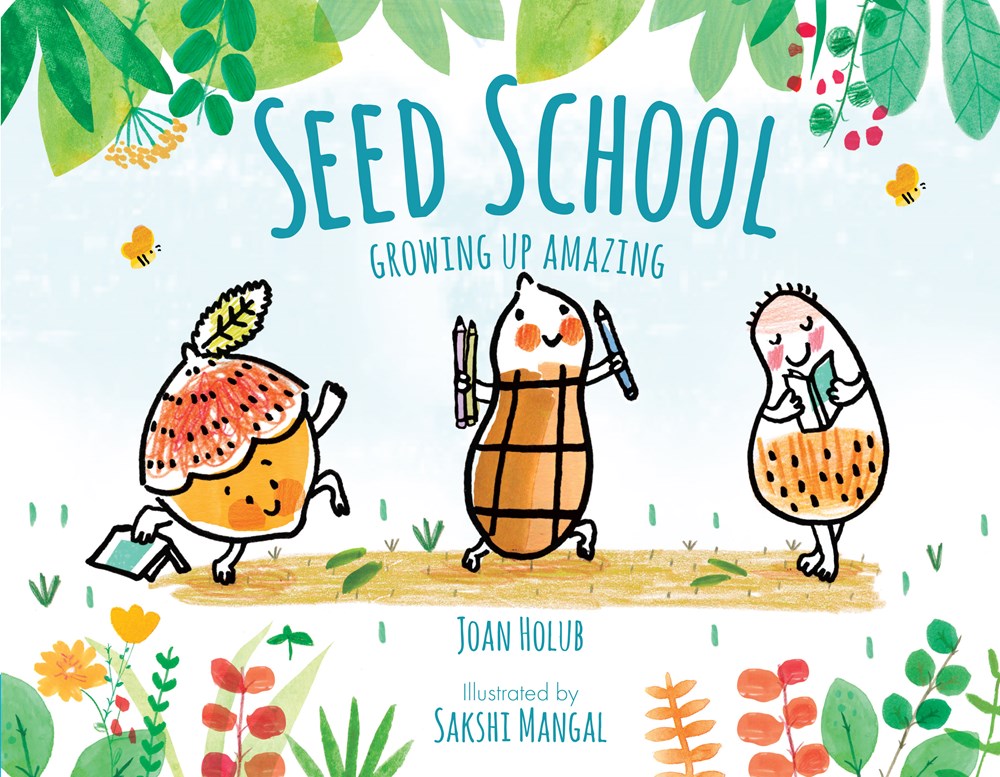
Seed School: Growing Up Amazing, by Joan Holub/Illustrated by Sakshi Mangal, (Feb. 2018, Seagrass Press), $16.99, ISBN: 9781633223745

Recommended for readers 5-8

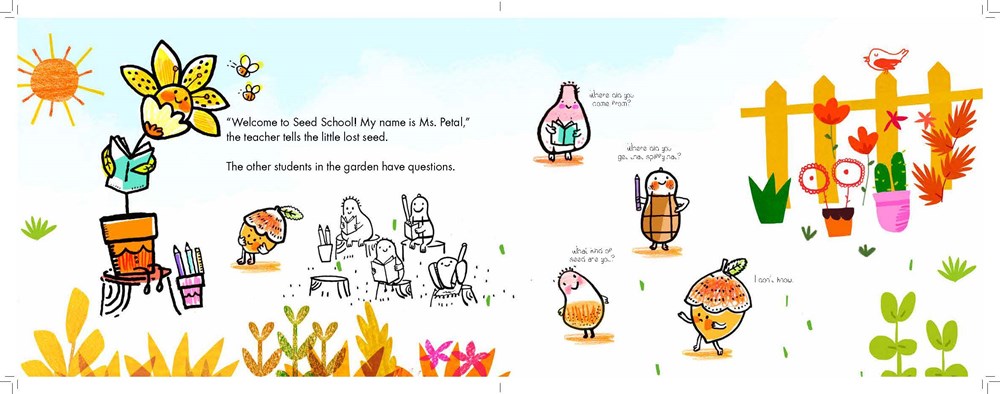
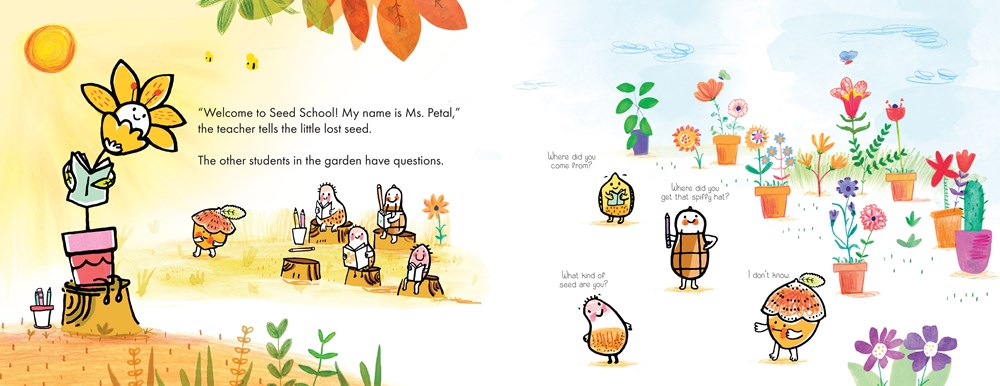
An acorn gets blown from his tree and lands in the middle of Seed School, meeting seeds that will grow up to be sunflowers, vegetables, even weeds. The acorn is a kind of cool new kid with a funny cap, and doesn’t know what it’ll be when it grows up, but has some ideas as the seeds all learn what goes into growing from seed to plant: what to do during the different seasons (love those long winter naps), the important stuff they’ll need to grow (soil, sun, water, and air), and visit the Leaf Librarian to learn about photosynthesis. They even learn a cute song about growing. When it’s graduation time, the seeds all travel – by bird, squirrel, or wind – to get ready to grow. It may take the lost little seed with the cool hat to figure out what he’s going to be, but it’ll be worth the wait.

I love just about everything Joan Holub writes, from her board books to her middle grade novels, and my library kids do, too. Her Mini-Myths series (with Leslie Patricelli) is aces with my toddlers (and was with my own toddler), and I can’t keep her series novels, like the Grimm-tastic Girls, Goddess Girls, and Heroes in Training on my shelves. A picture book about seeds growing into flowers, that’s kind of like Science Comics for early readers is going to fly! Putting nonfiction text into a cute, storytelling format guarantees that kids will learn and enjoy. Sakshi Mangal’s illustrations are just too adorable, with bold, black outlines, adorable little faces, and brightly colored nature against a stark white page. I would hang art from this book all over my nonfiction area, and I’m incorporating this book into a Science Storytime on seeds and gardens in the spring.

Seed School is a fun add to picture book collections, and can be a fun read-aloud or a one-on-one. Pair it with Eric Carle’s The Tiny Seed or Eve Bunting’s Flower Garden, or Lois Ehlert’s Planting a Rainbow and Growing Vegetable Soup. Get out some flower coloring sheets, and you’re set!

Posted in professional development

Professional Development Reading: Time for a Story

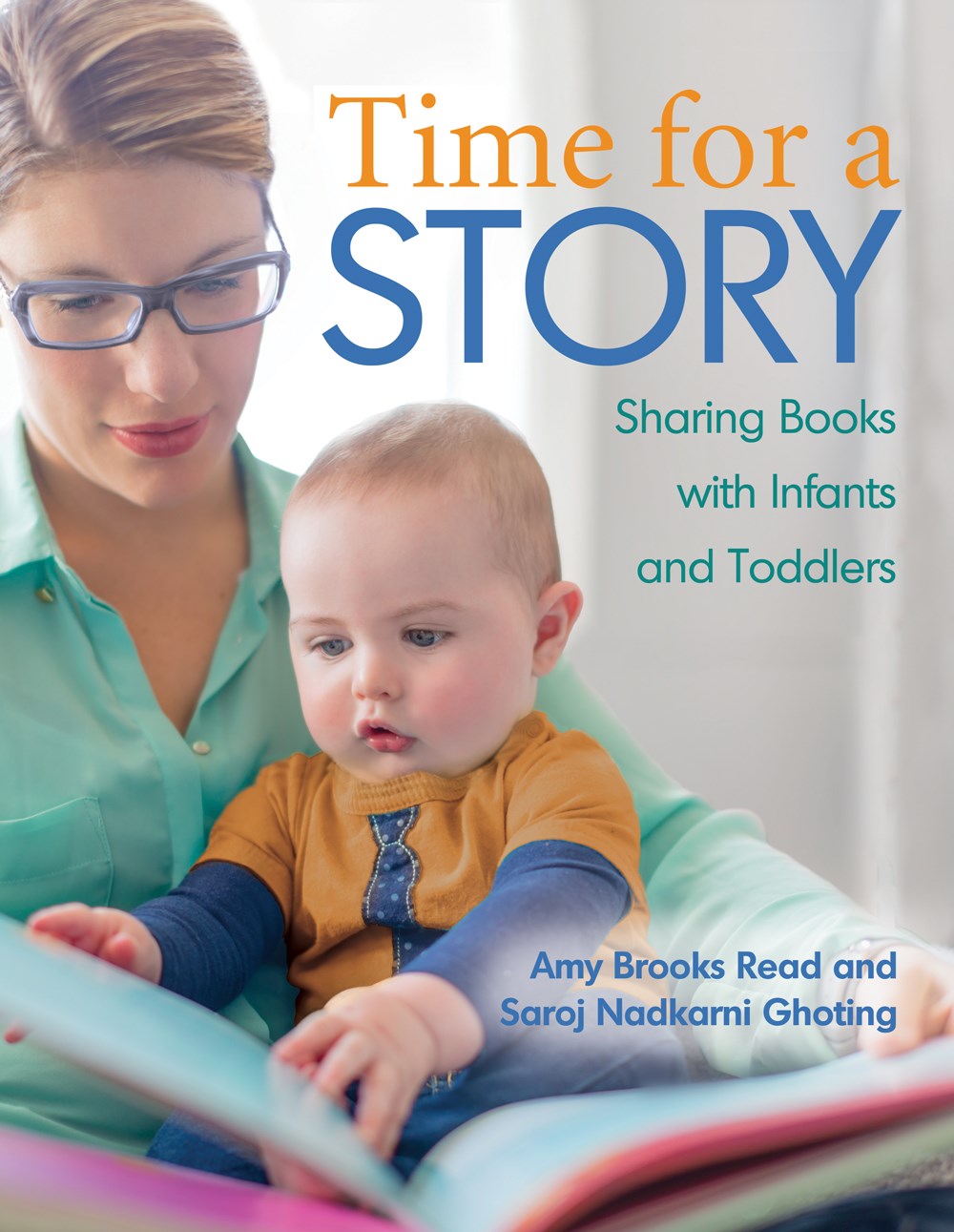
Time for a Story: Sharing Books with Infants and Toddlers, by Amy Brooks Read & Saroj Nadkarni Ghoting, (Nov. 2015, Gryphon House), $19.95, ISBN: 9780876596586

I’m always looking for new ways to learn within my profession and expand on that knowledge. And since the family finances are like, “Nuh-uh” when it comes to getting another grad degree, I’ve turned to books. There is some great stuff out there! Since I’m always in search of strengthening my storytimes, especially to babies and toddlers, I started with Time for a Story. Saroj Ghoting spoke at an in-service at my library one time, and I really liked the way she talked about storytelling and how to apply learning to storytime, so I jumped at the chance to read a book she had a hand in.

Time for a Story is a good start to digging into storytime and how to incorporate singing, play, talking, reading, and writing into any and every book you pick up. Amy Brooks Read and Saroj Ghoting have tips and reading lists ready for babies and toddlers, concentrating on the early childhood literacy and the best ways to introduce a lifelong love of reading in kids. Reading, you say? Yes, reading! Kids start making connections early – print awareness is wonderful, we all know that. Keep books all over the place for kids to develop that print awareness. Let them chew on those board books (not library books, though, PLEASE), let them hold books and turn pages. I hand out books for kids to hold onto and explore during my storytimes, so it was gratifying to read that here. I was also relieved to discover that it is okay for my kiddos to wander during storytime, and for me to keep reading – they’re still paying attention while they explore. Family Literacy Tips are great to post around your libraries and classrooms, and talk through with parents during storytime.

There are book lists and samples of ways to read different books. I appreciated the advice on reading wordless or sparsely worded books, like Peggy Rathmann’s Good Night Gorilla, because I feel like it’s an untapped resource for my storytimes.

This was a nice start to my professional development reading, with information that I will come back to. Saroj Ghoting has a very useful website where you can find resources in a multitude of languages, including Spanish and Chinese. Gryphon House has a video of Amy Brooks Read discussing storytime strategies on their website.