Posted in Fiction, Fiction, Graphic Novels, Intermediate, Middle Grade, Tween Reads

Cuentos populares de latinoamérica en español e ingles!


The Dragon Slayer: Folktales from Latin America/La matadragones: cuentos de latinoamérica, by Jaime Hernandez, (April 2018, TOON Graphics), $16.95, ISBN: 9781943145287 (English)/9781943145300 (Spanish)

Recommended for readers 6+

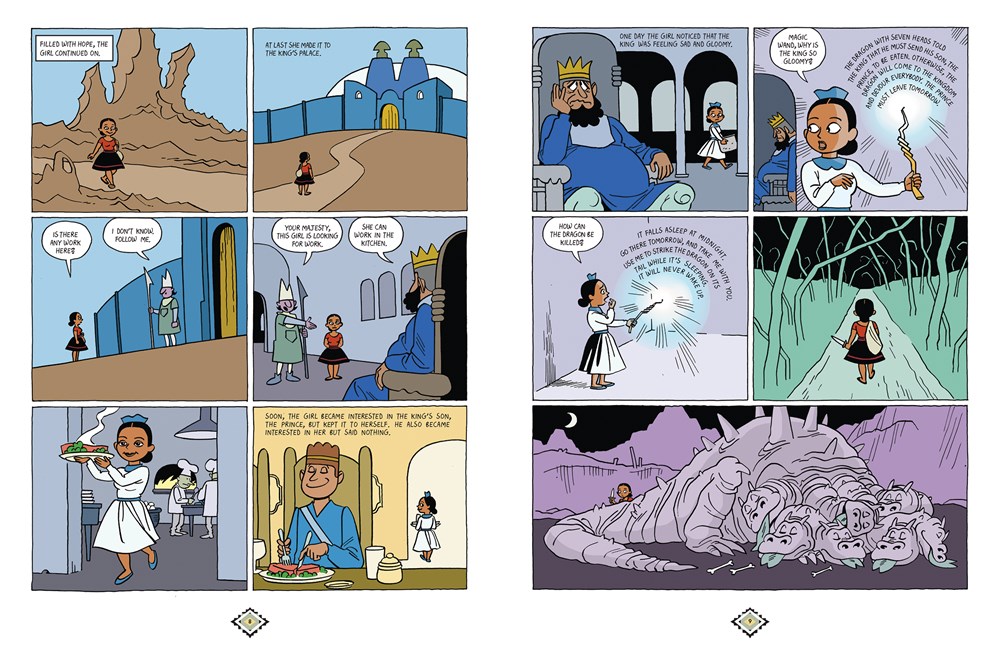
TOON Graphics has a great collection of folktales from Latin America, simultaneously published in English and Spanish. Three tales starring intelligent female characters make up this volume; as with most folk and fairy tales, each one imparts its own wisdom using the story as a vehicle. The title tale, The Dragon Slayer, sees a young woman betrayed by her two horrible sisters; an act of kindness brings a boon in the form of a magic wand, which leads her to employment at a king’s palace, where she falls in love with a prince, who she must save. Twice. It’s got the best parts of a fairy tale: dragons, magic wands and rings, ogres, and a happily ever after; it’s got a strong, smart young woman who can stand toe to toe with mythical monsters and real-life intolerance, and she saves the day AND gets the boy.
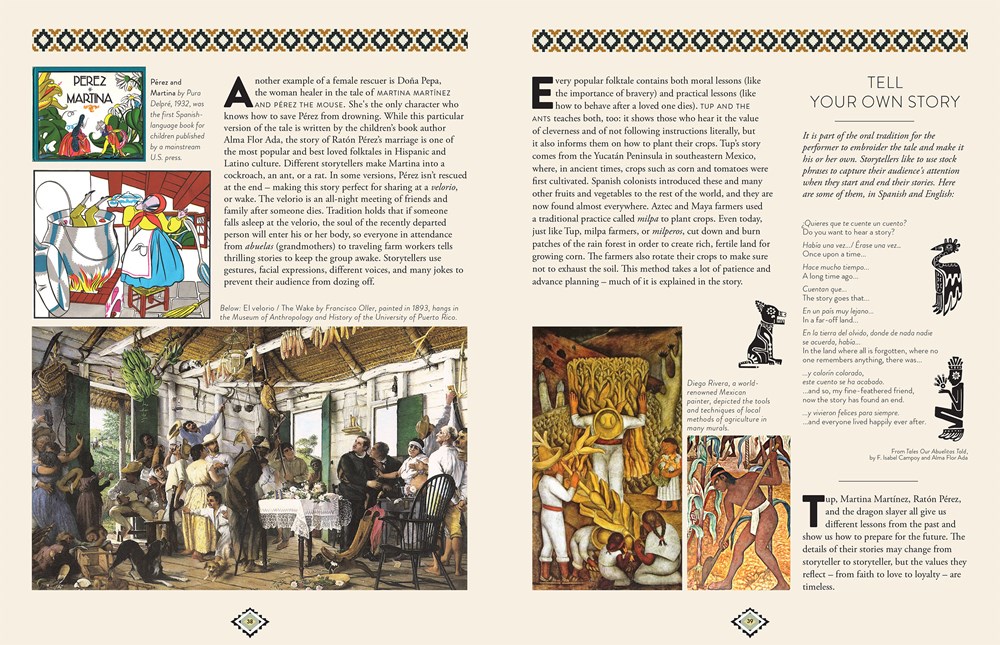
Martina Martinez and Pérez the Mouse stars Ratoncito Pérez, a popular character in Latinx folktales. This version, told by Alma Flor Ada, comes from another book, Tales Our Abuelitas Told”, and is the story of a pretty but shallow young woman, Martina, who marries Pérez after turning down other animal suitors (Martina often shows up as a cockroach in other versions of the tale). When she runs to the store to get salt for a soup, Pérez tries to sneak a taste of onion and falls into the pot! Martina discovers him in the pot and runs sobbing around the village, where birds, a fountain, and a young girl all grieve for her in various ways. It takes a wise old woman to discover that no one has actually tried to save Pérez , and rushes over to put things right again. Always respect your elders, kids! And seriously, use some common sense and try to keep your head in a situation.

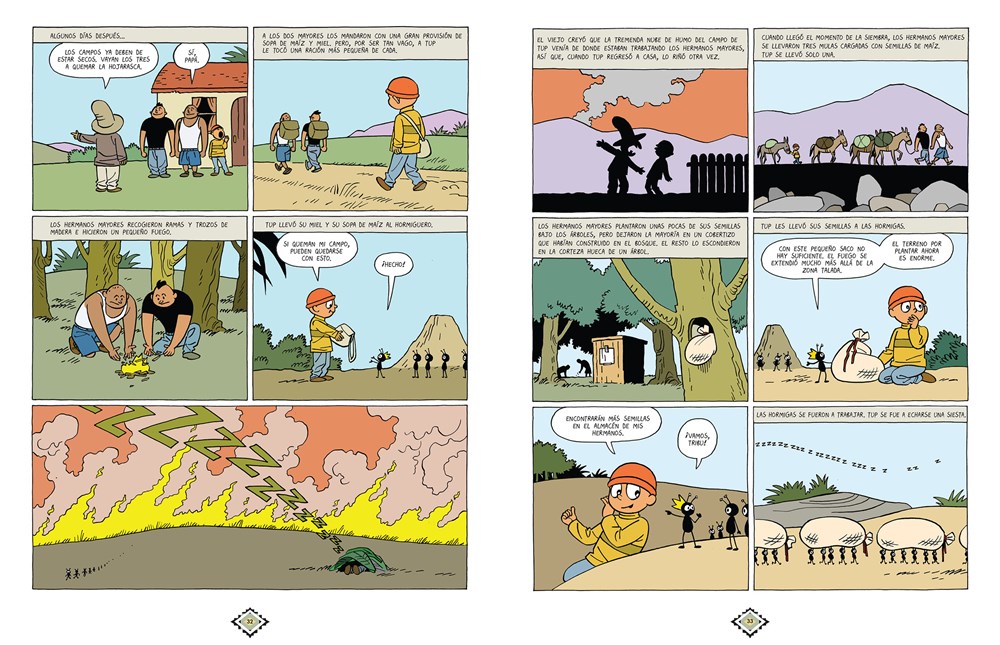
Tup and the Ants is a fun little story about the power of being smart and lazy. Tup is the youngest and laziest of three brothers, who marry three sisters. Tup’s in-laws are not thrilled with their lazy son-in-law, so when they send the three brothers out to clear the land for cornfields, they send Tup with less food to show their displeasure. Doesn’t matter: Tup finds a place to snooze, ends up meeeting a group of ants, and trades his food for their labor. This is a sweet little partnership, and pays off as the two not-so-bright brothers are hopelessly out of their league in clearing and planting a cornfield, and Tup builds his own little empire by continuing to trade food for labor. The moral of the story may be a bit ambiguous, since the lazy guy gets the accolades, but there is something to be said for knowing how to get the job done. And, as a later explanation points out, it’s a story that teaches listeners and readers about planning and undertaking a planting season.
A foreword from F. Isabel Campoy explains the power of folktales and the Latin American tradition, and features beautiful Aztec and Mayan pictograms and popular animals, like jaguars, monkeys, and dogs. An afterword goes into more detail about the origins of these three folktales, with photos and illustrations. A section on the oral tradition invites readers to personalize and create their own tales, with prompts to help them along. A strong bibliograpy includes books and online resources that will strengthen diverse folk and fairy tale collections and provide nice online resources for further research.
I absolutely love this introduction to Latin American folktales, and can only hope there’s a volume 2 somewhere down the line. This is such a great addition to folk and fairy tale collections and diverse, culturally rich collections. This would be great for a storytime for school-age kids – it’s such a fun read! – and a storytelling program.
Posted in Fantasy, Fiction, Middle Grade, Tween Reads

What memories does YOUR door hold?

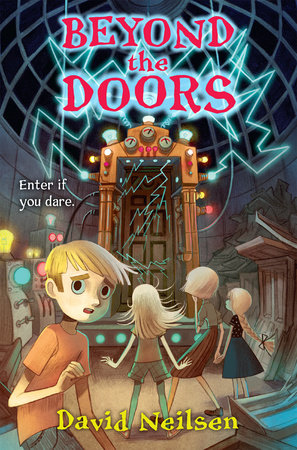
Beyond the Doors, by David Neilsen, (Aug. 2017, Crown), $16.99, ISBN: 978-1-101-93582-8

Recommended for readers 8-13

Four siblings have the weirdest, worst day of their lives when they’re pulled out of class to learn that their father is in a coma after a fire consumed their home. As their mother disappeared years ago, there’s a sobbing social worker, ready to split them up to horrors unknown, until a mystery aunt is located. Janice, Zack, Sydney, and Alexa Rothbaum are quickly shuttled off to this mysterious, scatterbrained aunt. Once the kids start exploring and settling in, they learn the bizarre secret behind their aunt’s fortress home: she’s got a machine that allows her to use doors to access the memories contained within them, and she’s searching for her father: their grandfather.

Remember Monsters, Inc? How the Monsters would go through different doors to reach different kids’ rooms? Think of it like that, but instead of using the doors to get into kids’ rooms, you stepped into the memories of the person most identified with the door. If you stepped through the door to my room from 1986, for instance, you’d see me, sprawled on my bed reading a copy of Bop! Magazine, in a room papered with Duran Duran posters, and talking to my best friend on the phone. The memories are sepia-tinged, and while you can interact to a degree with the memories, too much interaction has… consequences.

It’s a madcap adventure, with a wacky aunt, an off-the-walls social worker with a penchant for the melodramatic, and loads of family secrets to discover, but character development and world-building aren’t as rich as I’d have enjoyed. There’s quite a bit of humor and a climactic battle that’s both gruesome and thrilling, and readers will never look at a bowl of Cheerios without groaning again. Black and white illustrations keep readers invested in the story. Beyond the Doors will appeal to Series of Unfortunate Events and Mysterious Benedict Society fans; display and booktalk with The Problim Children for some fun discussions about weird siblings and families. Ask kids what doors they would like to wander into – or what their doors would have to say. It’s a great creative writing or art exercise!

Posted in Adventure, Fiction, Middle Grade, Science Fiction, Tween Reads

Art takes on a new dimension in The Maker

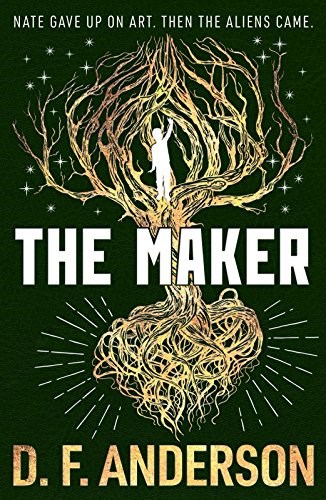
The Maker, by D.F. Anderson, (Jan. 2018, Underdog Books), $14.95, ISBN: 9780991800346

Recommended for readers 9-13

Thirteen-year-old Nate loves to draw. It’s one of his lasting connections with his father, who’s been gone for months, with no word. His mother’s boyfriend, Ted, goes at Nate whenever he gets a chance, insulting his artwork and attacking his grades; his mother is no comfort. Things change rapidly for Nate when a group of aliens show up at his window one night, telling him that he and his father are Makers: artists with the talent to bring their drawings to life. Nate’s father hasn’t abandoned them, he’s been kidnapped, and the aliens from the planet Meer are relying on Nate to help them save his father and the other kidnapped Makers before a cruel alien race wipes them out – and then heads for Earth.

The Maker has a great concept: using living beings as 3-D printers, when you think about it. By channeling their talents, Makers can give life to their drawings to create starships, cities… the sky’s the limit. The Makers connect with an energy source, mica, to give shape to their ideas; they can collaborate on large projects, or work individually to create small, detailed pieces. Readers will get into the sci-fi adventure story and relate to Nate, a kid who’s been put down to the point where he doesn’t believe in his own talent until put to the test – and then exceeds his wildest dreams. The evil parent/boyfriend situation is addressed in a neatly wrapped-up plotline. There are warring alien races, planet-eating machines to stop, and strong relationships that sci-fi and fantasy fans will enjoy, plus some moments of humor, including an evil alien who can be tortured… by pulling on his toe. Made you smile!

Add this to collections where you have sci-fi readers. Display this with some maker titles, and have a booktalk ready when kids come over and ask why it’s there.


Posted in Fantasy, Fiction, Middle Grade, Tween Reads

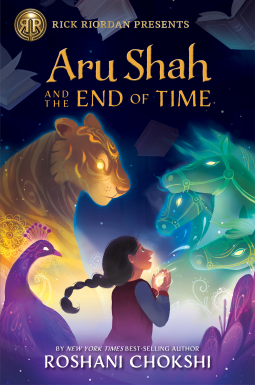
Aru Shah and the End of Time: Rick Riordan Presents with a strong debut!

Aru Shah and the End of Time, by Roshani Chokshi, (March 2018, Disney Book Group), $16.99, ISBN: 9781368012355

Recommended for readers 8-12

Rick Riordan introduces his new imprint with Aru Shah and the End of Time, author Roshani Chokshi’s adventure through Indian mythology.

Aru Shah is a 12-year-old Indian girl who has a hard time fitting in at school, so she… embellishes the truth… to keep up with her wealthy classmates. The thing is, they all know she lies, and she’s become a target of derision over it. She lives with her archaeologist mother in the Museum of Ancient Indian Art and Culture, and tells her friends that there’s a cursed lamp in the exhibits. Naturally, they show up, demanding her to prove it. Ignoring her mother’s advice to never touch the lamp, Aru lights it and unwittingly releases The Sleeper – an ancient demon – who’s going to awaken the Shiva, the god of destruction, if Aru can’t make things right in time. After discovering that Aru is the reincarnation of one of the legendary heroes, the Pandava brothers, she sets off on a mythological adventure where she’ll learn more about herself and her mother than she could ever have imagined.


I was so excited to read Aru Shah, especially after finishing Sayantani Dasgupta’s brilliant The Serpent’s Secret a couple of weeks ago. Indian mythology is an area I’ve never read much about, and it’s time that was remedied. Aru is on a quest to save her family and friends, and she’s not alone: she’s got a Pandava sister she meets on the way, and a disgraced god-turned-pigeon to guide her as she seeks out the weapons that will stop the Seeker. There’s great world-building, with humor and a sense of wonder as Aru meets gods and goddesses she thought existed only in myth; the character development is great for people unfamiliar with Indian mythology, as each god, goddess, and demon gets enough of an explanation to keep readers in the story. There’s a glossary at the end to help readers with the origin tales of Indian myths featured in the book.

You know who to give this to: the Percy Jackson/Kane Chronicles/Magnus Chase/Riordan readers who love world mythology; the kids who read Serpent’s Secret and wanted more? Now you can give them Aru Shah and tell them that Rick Riordan Presents has Mayan and Korean mythology coming up next. Aru Shah and the End of Time has starred reviews from School Library Journal, Publisher’s Weekly, and Kirkus.

Posted in picture books, Preschool Reads

Books about art for kids to love and be inspired by

I love letting kids go hog wild on artwork. I’ve had art stortyimes where kids have made their own Frida self-portraits and contributed to a Diego Rivera mural; I’ve let little ones create collage by tearing up paper and gluing them to paper in any way, shape or form that strikes their fancy, and I make coloring sheets and crayons available at my reference desk every day. It’s fun to watch how kids take a simple piece of blank paper and create something wonderful, and if I get a contribution to my art gallery – the shelves running the length of the children’s room – even better. Here are some picture books that will get your storytimes jumping; two are interactive – think Herve Tullet readalikes – and one is a multicultural, bilingual rhyming book that explores Latinx culture and imagination. Go forth and create!

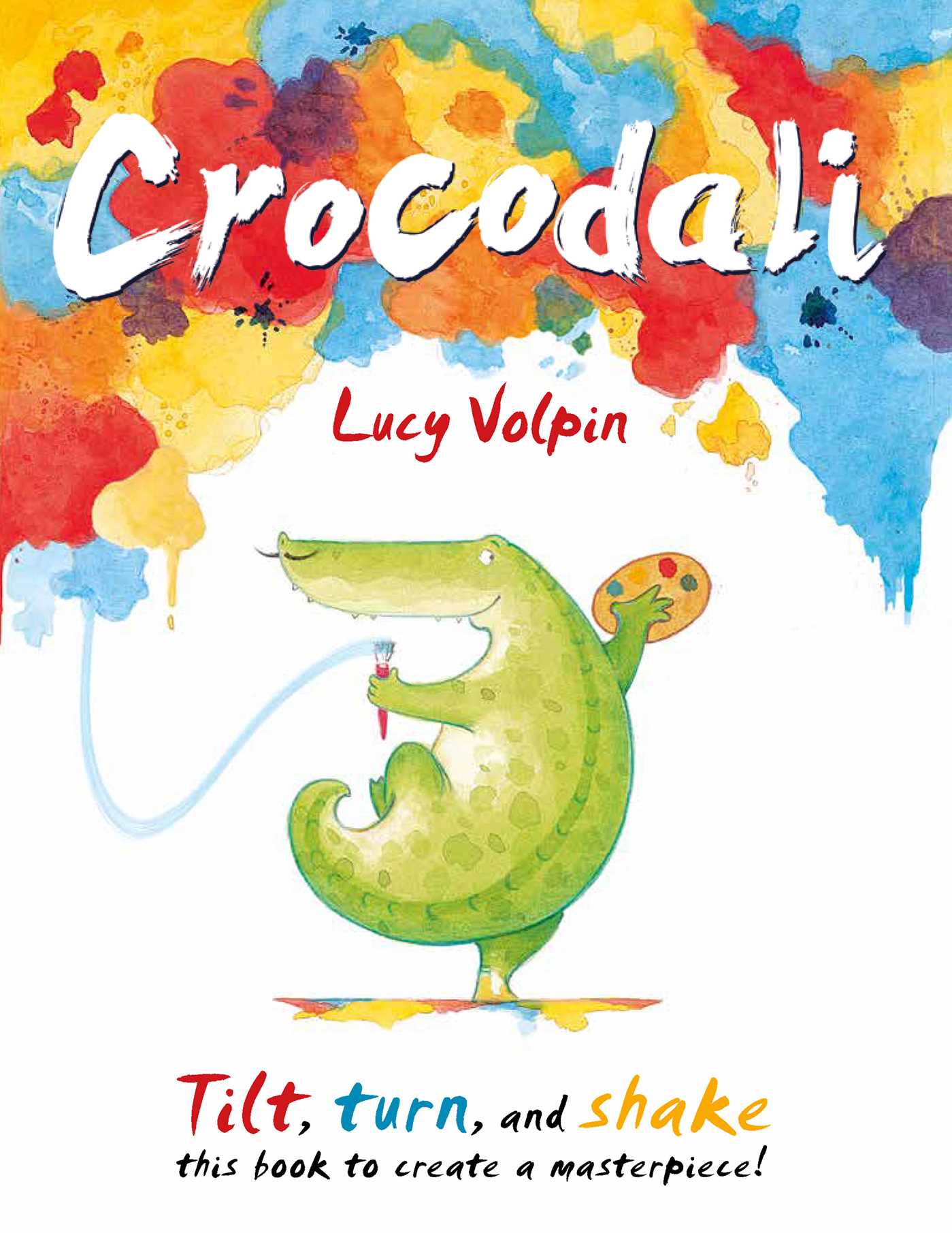
Crocodali, by Lucy Volpin, (Aug. 2017, little bee books), $16.99, ISBN: 978-1-4998-0633-5

Recommended for readers 4-8

Crocodali is the most talented painter in the whole wide world, and he’s allowing readers into his studio to help him create a new masterpiece! By tilting, turning, shaking, and rubbing pages, kids will get a kick out of seeing how they “affect” the painting with each turn of the page! Watercolor endpapers and artwork may inspire kids to create art with simple swipes of the brush, and Crocodali’s reactions – especially great for read-alouds – bring on the giggles. This has entered regular storytime rotation here at home and is great for preschooler storytimes with some time set aside afterward to let kids create their own artwork. I’d pair this one with Art & Max, by David Wiesner.


Rosa Draws, by Jordan Wray, (May 2018, words & pictures), $17.95, ISBN: 9781910277508

Recommended for readers 3-7

Rosa is a little girl who loves to draw, and has a big, vivid imagination! This adorable rhyming story introduces readers to a cat wearing a ridonkulous hat, a hungry bear, a posh goose, a peacock wearing socks, and more. Where will Rosa’s imagination take her – and readers who come along for the trip? There are bright, bold colors and wacky characters aplenty for kids to discover here; perfect for encouraging readers to create their own wacky characters after a stortyime. Positive messages about creativity and family make this a nice storytime read-aloud or cuddle time reading at home. For some extra fun, put rhyming words into a box or bag, have the kids choose a couple, and illustrate what they get. I think Lois Ehlert’s The Scraps Book would go nicely with the creative process introduced in Rosa Draws.


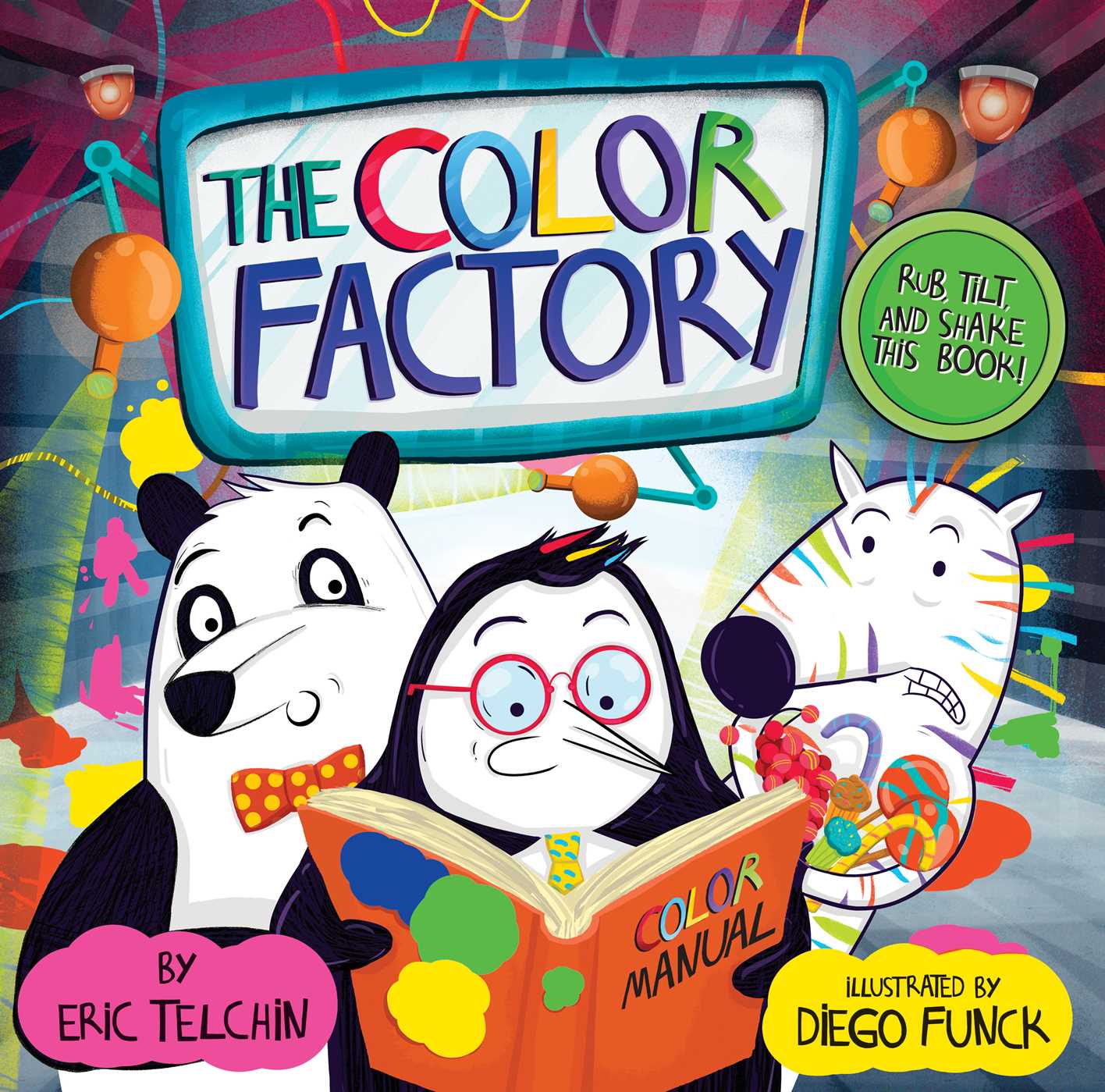
The Color Factory, by Eric Telchin/Illustrated by Diego Funck, (June 2018, little bee books), $17.99, ISBN: 9781499805567

Recommended for readers 4-8

The Color Factory has already entered regular storytime reading for me at home, with my Kindergartener demanding it on an almost daily/nightly basis. The follow-up to 2016’s The Black and White Factory (wait until my kid finds out about this one), the three animal friends are back and taking readers on a tour of their new color factory. They invite readers to help mix up new, factory-approved colors, until things go horribly wrong! Readers have to pitch in to help as the characters refer to the instruction manual, which isn’t really encouraging. Luckily, the trio – with our readers’ help – learn to accept and enjoy the exciting new colors they create. With bright, vibrant colors and loads of opportunities to “push” buttons, “mix” colors, and help save the day, kids are going to love this wacky, fun adventure. Pair this one with Herve Tullet’s Mix It Up for added interactive fun, and if you have the space, put some newspaper down, hand out old t-shirts, and let kids learn how to mix their own colors with some fingerpainting time.


A Paintbrush for Paco, by Tracey Kyle/Illustrated by Joshua Heinsz, (July 2018, little bee books), $17.99, ISBN: 9781499805444

Recommended for readers 4-8

Paco is a young boy sitting in class, doodling as he awaits recess. His drawings catch his teacher’s eye, and the excited profesor rushes Paco to the art room, where a world of color awaits him! The bilingual text flows like the beautiful, colorful artwork; I love the lyrical rhyming text that curls and wanders around each page as the world of color and imagination opens itself to Paco: “Pink, rosado. Purple, morado. A fiery orange, anaranjado. Verde, the green in a vine of ripe grapes. Rojo, the red in the matadors’ capes.” The artwork is influenced by Paco’s Latino heritage, enchanting readers with visions of mountains, family, and vibrant Mexican-inspired artwork. I love that Paco’s teacher is a positive role model that encourages his student’s talent, and I love the way the Spanish and English languages come together to tell a gorgeous story. This one is an absolute must-add for art collections and for storytime reading. Pair with Roseanne Thong’s Green is a Chile Pepper or Cynthia Weill’s concept books, published through Cinco Puntos Press, that teach concepts in Spanish and English, and feature Mexican folk art.

Posted in Fantasy, Fiction, Humor, Middle Grade, Tween Reads

The Problim Children: Seven kids, seven days of the week, and an age-old mystery

The Problim Children, by Natalie Lloyd/Illustrated by Julia Sarda, (Jan. 2018, Katherine Tegen Books), $16.99, ISBN: 9780062428202

Recommended for readers 8-12

The Problim Children is the first in a new middle grade series about seven… different siblings, each born on a different day of the week, and their adventures. We have Mona, Monday’s child, who may be fair of face, but she’s a bit macabre… Toot, Tuesday’s toddler, who has a catalog of farts for all occasions; Wendell and Thea, twins born on Wednesday and Thursday, who spend all of their time together; Friday’s child, Frida, speaks in rhyme; Sal, Saturday’s child, loves to work in his garden; and Sundae is the eternal optimist. Their parents are away, and the Problims manage to blow up their bungalow in the Swampy Woods, necessitating a move to their Grandpa Problim’s abandoned mansion in Lost Cove. The only problem? The Problims have a history with Lost Cove, and neighborhood busybody Desdemona O’pinion is determined to keep them out at all costs.

Are the Problims magic? Maybe. Are they a family with secrets? Definitely! There’s a history between the O’pinions and the Problims, and the kids get caught up in the shenanigans – while planning plenty of their own. The Problim Children is funny enough – Toot’s ability to communicate solely by fart will make this a home-run with some readers – and readers will love the idea of being left to their own devices as their parents travel the world for work. There are circus spiders, a pet pig, an intriguing mystery, and a villainess who’s right up there with the best of the mustache-twirlers. It’s a little over the top at times, but it’s fun and silly and readers who like a lighter Lemony Snicket will like this one. The Problim Children received a starred review from Booklist.

Posted in Fiction, Middle Grade, Realistic Fiction, Tween Reads

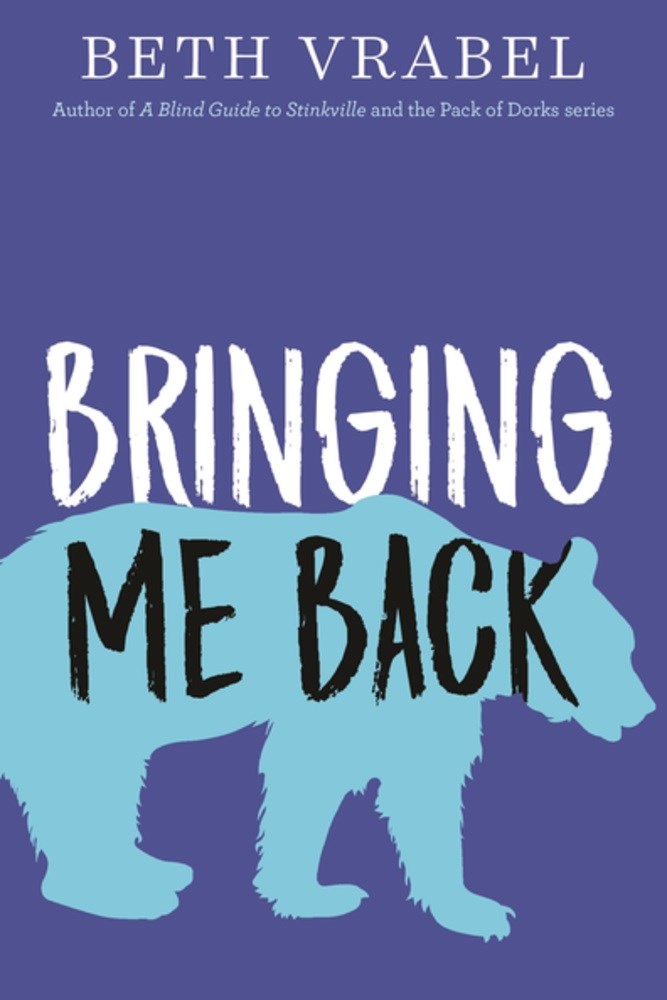
Beth Vrabel’s newest: Bringing Me Back

Bringing Me Back, by Beth Vrabel, (Feb. 2018, Sky Pony Press), $16.99, ISBN: 9781510725270

Recommended for readers 8-12

Seventh-grader Noah is having a bad year. His mother was arrested on a DUI and is serving a six-month sentence in prison; he lashed out on the football field, getting his school’s football program shut down. To say he’s persona non grata at school is putting it likely. Jeff, his mother’s boyfriend, has taken him in while Noah’s mom serves her sentence, and is trying to reach out to Noah, but Noah just sees himself as yet another burden on everyone. He’s taunted and bullied at school; even his former best friend, Landon, has joined the crowd in leaving garbage in his locker and making snide remarks during class, in the halls, wherever they see an opportunity.

And then, the bear shows up. Not much older than a cub, Noah notices the bear wandering around near the school. The school begins a fundraiser to bring back the football team, dumping buckets of Gatorade on themselves and donating money to the cause, and the bear gets her head caught in a bucket. Noah has a cause: he wants to save the bear. He’ll risk even more bullying and ridicule to do it, because now it’s him against the entire school, desperate to bring back that football team. Thankfully, he’s got a friend or two on his side. Noah’s desire to save the bear gives him a reason to keep going; the bear is bringing him back from the brink.

I’ve said it before and I’ll say it again, I’m a Beth Vrabel fangirl. She knows how to write for tweens. She tackles bullying, addiction, dysfunctional families, and social justice in Bringing Me Back, and makes it all flow seamlessly. Kids can empathize with all of the kids in this story: kids who live in areas where school sports are just as important as schoolwork; kids living with a single parent or stepparent; kids being bullied; kids who need a reason to keep going. She subtly addresses teacher bullying and the frustration of an education system that appears to be dialing it in to some students – what do you do when you’ve grown beyond your school? Bringing Me Back is a solid addition to realistic fiction shelves.

Posted in Middle Grade, Non-fiction, Tween Reads

Need a shot of creativity? Go on a Jabber Walk!

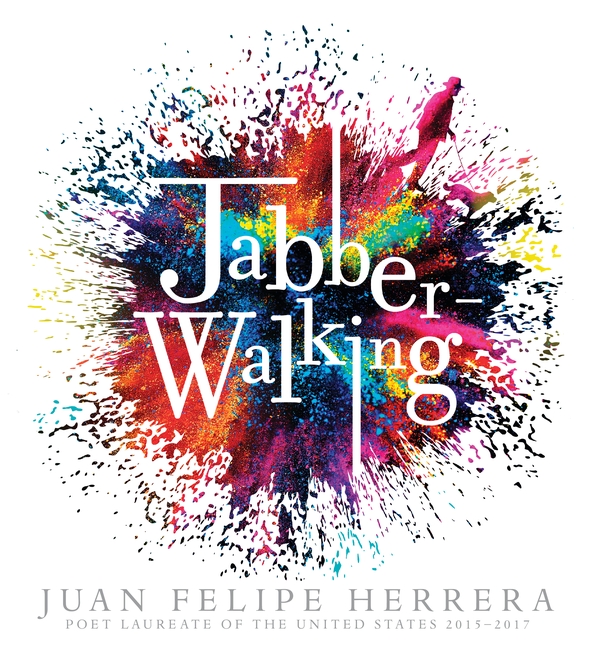
Jabberwalking, by Juan Felipe Herrera, (March 2018, Candlewick), $22.99, ISBN: 9781536201406

Recommended for readers 7-12

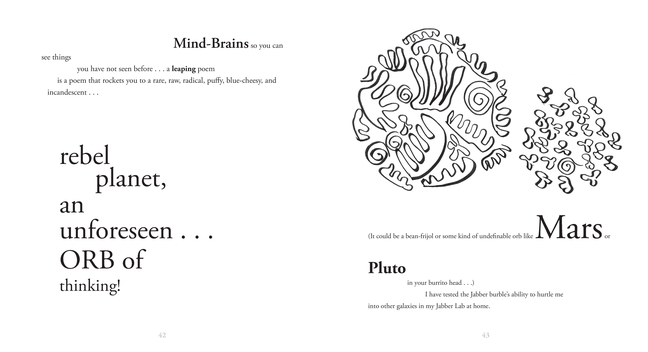
Juan Felipe Herrera, the first Mexican-American Poet Laureate in the U.S.A., encourages readers to spark their creativity by going on a Jabber Walk. Part biography, part writing guide, Jabber Walking is an effusive, silly, excitable look inside a creative mind. Herrera wants to show kids that it’s easy to get the creative juices flowing by getting moving: go Jabber Walking, and let your imagination go wild! Herrera’s Jabber Walk takes readers with him on a walk to the Library of Congress, accompanied by his Chinese Pit Bull Shar-Pei, Lotus, who loves getting into her own blue-cheesy, crazy adventures. Black and white scrawled pictures are proof that creativity and Jabber Walking aren’t limited solely to words. He asks questions to prompt thought: Do you remember a family story? How far back in time do your familiar stories take you? and introduces us to his story, starting with his father’s great escape from Mexico in the early 20th Century. We learn that Jabber poems aren’t supposed to be “too clean”: they’re “fast poems… wild poem… an unkempt, dirty, poem. A scribble, gooey, cuckoo, sweaty, puffy, blue-cheesy, incandescent poem!”

Throw the idea that you need to be linear out the window – this is the kind of book that embraces the creative process, with all of the crazy, fun, random thoughts that go into it. I’d love to see this used to teach creative writing; I’d love to start a Jabber Writing program at my library. Hmmm… Give this to kids that love to write, and give this to kids that need a gentle nudge to unleash their inner Jabber writer. Jabber Walking is too much fun, and it’s one of those books that begs for more than one reading; there’s just too much to take in on one read. Jabber Walking received a starred review from Publisher’s Weekly.

Posted in Non-fiction, Non-Fiction

Make #science even cooler with Adventures in Science

My Kindergartener and I like to hang out and relax on the weekends, but I like to make sure that doing something fun doesn’t always involve endless hours of watching Minecraft videos on YouTube (his current obsession). Thankfully, I remembered that I received an Adventures in Science: Human Body kit from the kind folks at Silver Dolphin, so out it came. The first cheer came from me, when I realized that it’s a 6+ kit, not an 8 or 10+ kit, like most of them are: my kiddo could do this! The second cheer came from the kiddo, who saw a skeleton, because I’ve got that kid. (And I’m that mom.) We cracked open the box and went to it.

Adventures in Science: The Human Body, by Courtney Acampora, (Dec. 20017, Silver Dolphin Books), $21.99, ISBN: 978-1684121298

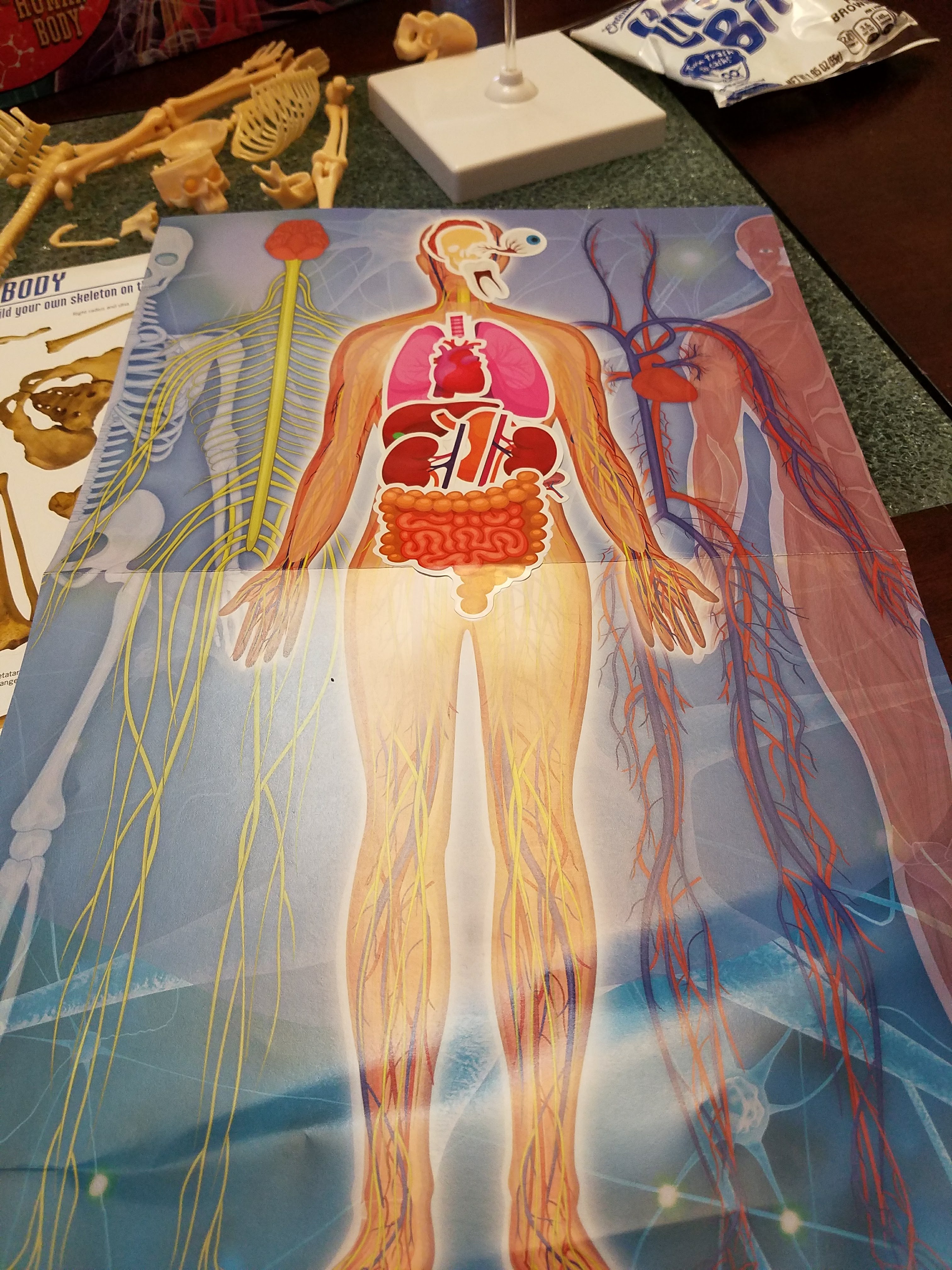
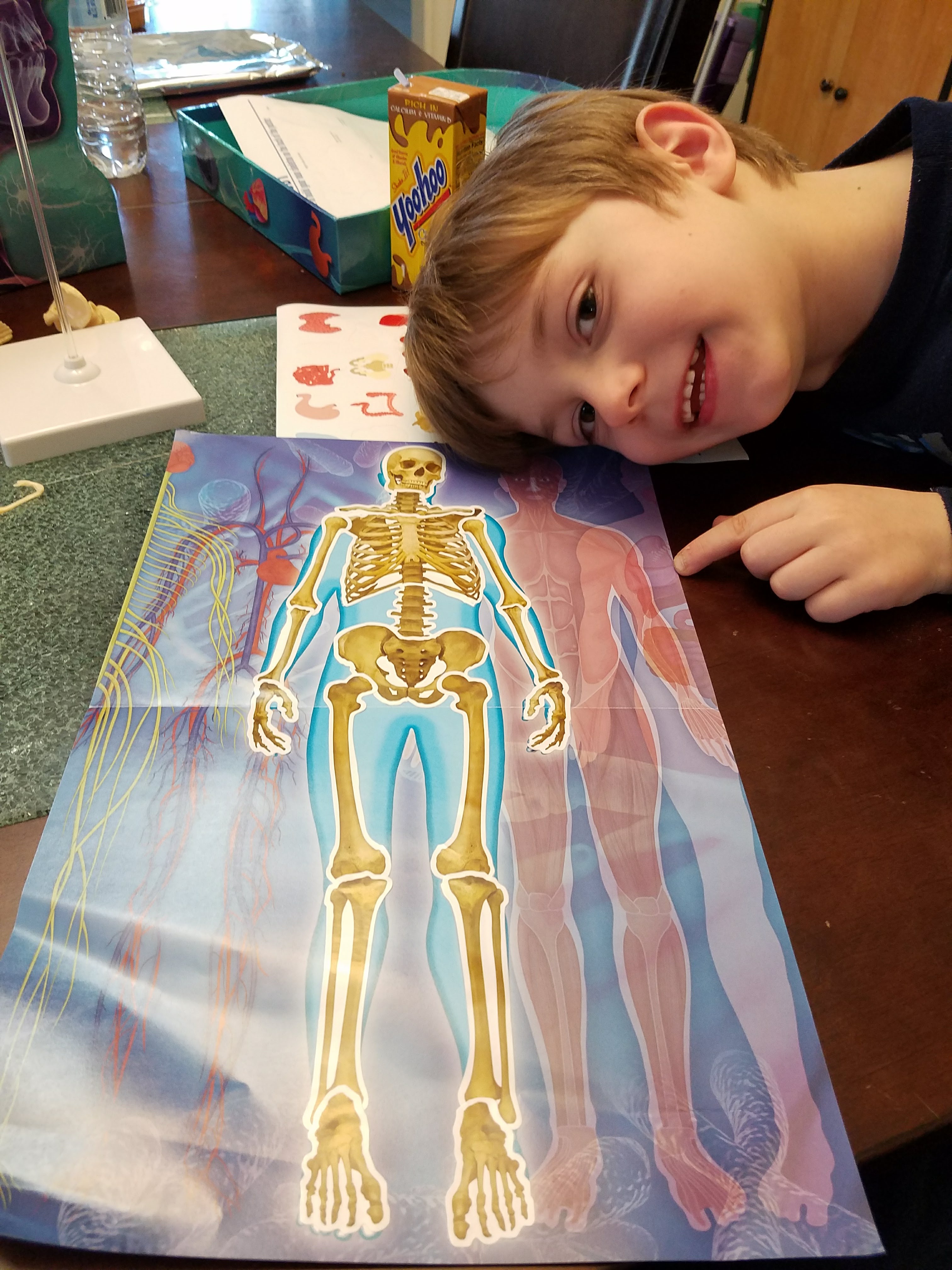
The box was full of stuff that would appeal to kids from ages 5(ish, my kiddo is going to be 6 in June) to about 10 or 11. There are two sheets of stickers; one sheet of bones, the other, of internal organs, including a set of “free play” stickers. The stickers go on a two-sided sheet with an outline of the human body; one side accommodates the organ stickers, one, the bones. There’s a separate bag for a snap-together skeleton model, playing card-sized flash cards about the body, and a booklet on the human body. Kiddo went to work on the sticker sheet, ASAP. The outlines are clear enough that he didn’t need my help at all! The only fiddly part came with the organ stickers, because so many overlap one another. We moved stuff around, covered some stuff up, and were pretty happy with the results.


I tried to read some of the flash cards to him as he was stickering, but realized that I was interested, but he was just sticking his little heart out, so I read them to myself and pointed out any cool stuff I came across. That worked for him.


Okay, next up, was the big guy: the skeleton. It’s a snap-together, and he got the skull, pelvis, and legs together pretty quickly. The really fiddly part came with the rib cage, spine, and arms. The rib cage is delicate, and the little spokes were giving us a hard time getting them in. We ultimately called in the big guns (Daddy), who made it work.


Overall, it was a fun hour spent with two cool hands-on crafts. He learned a couple of things, reinforced some facts he already knew, and ended up with a fun new skeleton to put in his room. I really like the flash cards and accompanying book, which gives a nice introduction to the human body for school-age kids; ideal for maybe around 7 or 8 years old. Younger kids will like the full-color pictures and graphics, and the book is loaded with fast fact Did You Know? boxes you can read to them. At $21.99, it’s a good gift for a curious kid. If you can get some fundraising money or program budget money together, this would be a great project for a small science group at your library; two or three kids can easily work together on one model and the posters. And they’d be pretty awesome to display.


Posted in Animal Fiction, Fantasy, Fiction, Middle Grade, Tween Reads

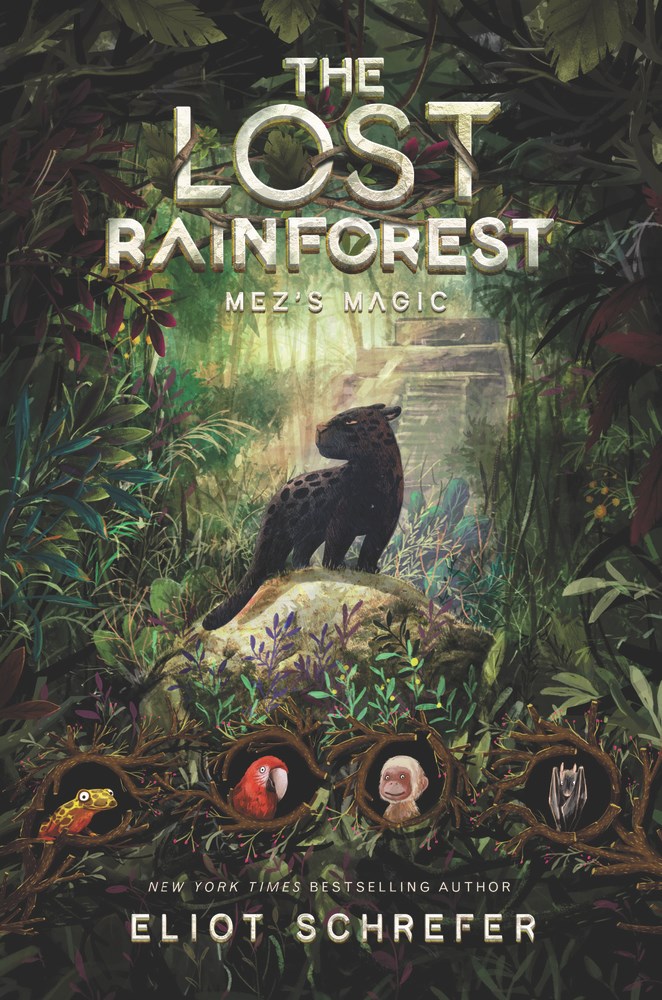
Rainforest, magic, and mystery: The Lost Rainforest – Mez’s Magic

The Lost Rainforest: Mez’s Magic, by Eliot Schrefer/Illustrated by Emilia Dziubak, (Feb. 2018, HarperCollins), $16.99, ISBN: 9780062491077

Recommended for readers 8-13

Mez is an orphaned young panther living with her sister, under the care of their aunt in the rainforest of Caldera. Panthers are nightwalkers – primarily nocturnal, they prowl in the evenings and sleep during the day. Except for Mez. Born during the eclipse, she can cross the Veil – the sleep that overcomes the animals during the day hours – and explore the daytime world. She meets a snake who tells her that she and he are gifted, eclipse-born, and they must discover other animals like them in order to save the world. Banished by her aunt after discovering Mez’s secret, she joins the search for other shadowwalkers in their quest to defeat the Ant Queen. But the Queen isn’t the only one they have to defend themselves against. They’ll encounter animals that mistrust the shadowwalkers, and cope with betrayal and mistrust even among one another.


Mez’s Magic is the first book in what looks like an exciting new animal adventure. There’s plenty for readers to love here: intrigue, adventure, and ancient magic are just a few of the ingredients. It’s a satisfying standalone, yet leaves readers waiting for more answers. There’s an animal friend for everyone here; Mez, the star of the show, is burdened with responsibility and largely naïve to the rainforest at large; Rumi is a lovable, nerdy tree frog and Lima is a talkative, sweet bat; Gogi is a capuchin monkey with an inferiority complex; Auriel is a wily snake who seems to have all the answers. The book weaves a story that addresses racism, intolerance and ignorance through the individual animal species and the concept of the shadowwalker. Black and white chapter illustrations give the reader an idea of what’s coming up, and an author’s note at the end discusses the beauty and importance of the rainforest.

Mez’s Magic received a starred review from Kirkus.