Sloth at the Zoom, by Helaine Becker/Illustrated by Orbie, (Aug. 2018, OwlKids), $17.95, ISBN: 9781771472494
Ages 3-7
Poor Sloth! She thought she was being dropped off at the Zzzzzoo, but something must have gone wrong with the paperwork: she’s been brought to the Zoom! It’s a very big difference, you see. At the Zzzzzoo, life moves along at a gentle pace; there’s time for naps in the sun, it’s relaxing, it’s all good. But at the Zoom? Whoosh! Zebras run by so fast, they leave their stripes in puddles! Parrots fly so fast, their tails draw rainbows across the sky! It’s VERY stressful, especially for poor Sloth, who wants to make friends, but no one has the time to give her. Finally, she meets Snail. Snail has time! Snail becomes Sloth’s friend, and the next thing you know, the Zoom is becoming a much nicer place to be. Sometimes, you just have to slow down and enjoy life, right?
It’s so nice to read a story that encourages life in the slow lane, isn’t it? I feel like we’re overscheduled and stressed out, our kids are overscheduled and stressed out, everyone’s got extracurricular activities, work, school, and deadlines seem to pop up everywhere, like neon signs. Kids are racing around like zebras, leaving their stripes behind, and so are we. Seeing two friends meet in the middle of this chaotic atmosphere, and bond over their shared moment of slowing down, gives hope to the rest of us, doesn’t it? Sloth at the Zoom shows readers that it’s in our hands to just stop, just slow down, and to discover the wonderful things that we often miss when we’re running by them. Slow living is contagious, too – if you slow down, someone else may, too. And that’s a good thing.
Sloth at the Zoom celebrates the Slow Living Movement, a lifestyle that puts the importance on mindfulness and embracing the slower aspects of life. There are blogs and websites dedicated to the movement, and there are books for adults and kids alike. One of my current favorites is The Slowest Book Ever, by April Pulley Sayre, which celebrates the science of slow in our world. But to start, all you really need to do is just take a deep breath and slow down.
Cuddle up with your little ones and enjoy a nice, slow read.
Good Rosie!, by Kate DiCamillo/Illustrated by Harry Bliss, (Sept. 2018, Candlewick Press), $16.99, ISBN: 9780763689797
Ages 4-7
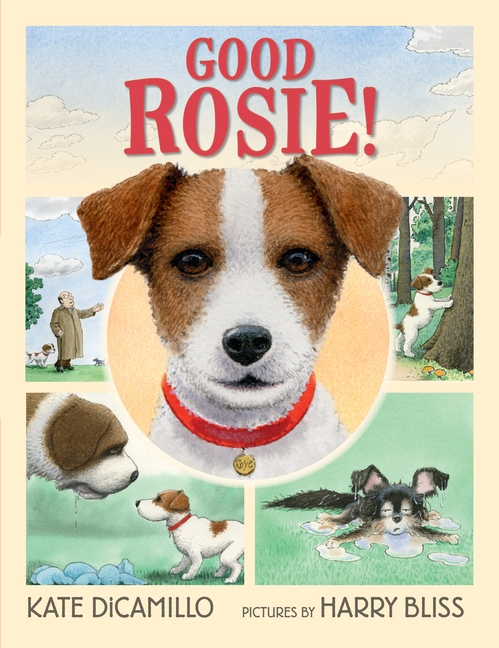
Rosie is a sweet-faced Jack Russell terrier who lives with her human friend, George. She and George have a quiet life together, and Rosie feels lonely as the two go through their daily routine. George decides to shake things up a bit, and brings Rosie to a dog park, but Rosie’s a bit nervous, overwhelmed by all the new, strange dogs there. When a big St. Bernard named Maurice lumbers over to her with his stuffed bunny, Rosie is immediately on guard. How can Rosie make some new friends?
Kate DiCamillo has the gift of words, and Harry Bliss creates hilarious and poignant moments in this comic panel-styled story about making new friends. Rosie looks into her water bowl and sees her reflection, which she thinks is another dog; when she barks at the dog, she feels lonely, because “the other dog never answers”. Later, on her walk, she barks at a dog-shaped cloud; its lack of response makes Rosie “feel lonely in an empty-silver-bowl sort of way”. It’s just wonderful writing that speaks directly to the reader, eliciting that same disappointed, lonely feeling that Rosie experiences. And then, there are moments when the art and words come together to produce moments of sheer delight, as when Maurice introduces himself to Rosie: “‘My name is, uh, Maurice,’ says a very big dog. ‘And I have a bunny.'” The words are adorable, and the size difference between Maurice and Rosie make the full-page panel come to life.
The story addresses social skills when new friends come together: Rosie is lonely, but overwhelmed when thrust into a new social setting; Maurice needs a little bit of help with his social skills (and understanding his size in relation to other dogs), and Fifi, another small dog with a sparkly collar, is excitable and jumpy, which confuses Rosie and Maurice, who don’t immediately know how to react to her. With a little help from the grownups, and some get-to-know-you time between the pups, the day at the park ends with a group of new friends who look forward to playing together again.
This is a great back to school story for kids, especially for new Pre-K or Kindergarteners, who are starting school for the first time. I love this sweet story, and so will your readers (and you). Know a kid who’s starting school, or starting a new school, soon? Cuddle up with them and let them know that if Rosie can do it, so can they. Good Rosie! has starred reviews from Publisher’s Weekly, School Library Journal, and Kirkus.
NatGeo Kids rolled out a new series of books. The Absolute Expert series helps kids become experts on a favorite, high-interest topic: current topics are Dolphins, Dinosaurs, Volcanoes, and Soccer. Experts in the field act as guides, leading readers through the info-packed books. Stunning photos, facts, and activities make each volume a great reference for science and STEM collections, and great desk references for kids who just can’t get enough of their favorite topics.
Absolute Expert: Volcanoes, by Lela Nargi and Arianna Soldati, (Aug. 2018, National Geographic Kids), $14.99, ISBN: 9781426331428
Ages 8-12
Volcanologist Arianna Soldati guides readers through a solid volume on volcanoes. Kids learn about ocean volcanoes, volcanoes in space, and deadliest eruptions (psst… Vesuvius isn’t #1!) The book explains plate tectonics and features a world map noting explosive volcanoes, and gives readers a heads-up on staying safe during a volcanic eruption, including an evacuation plan strategy exercise. Four “Get in the Flow!” sections provide activities that will take kids deeper; from building and cataloging a rock collection to creating a volcanic (soda) eruption of one’s own. Resources for further reading and an index finish up this book.
I buy all the volcano/natural disaster books I can get my hands on, because the schools here do a science unit on natural disasters, and the kids raid our libraries, usually heading for the volcano books first. I remember my first year as a librarian, hosting a class trip, and having the teacher ask me where those books were. I pointed out the shelf, and the kids swarmed me. TWO SHELVES. EMPTY. Since then, I don’t play games with my natural disaster books, and neither should you.
The writing is geared for middle grade to early middle school, with scientific terms that may send kids to the dictionaries (and good for that!) for new terms, while photos and illustrations provide a look at volcanoes in various stages of being, from quiet to very, very active. If seeing lightning hit a volcano spewing lava doesn’t inspire an awesome respect for nature, I don’t know what will.
Absolute Expert: Dinosaurs, by Steve Brusatte and Lela Nargi, (Aug. 2018, National Geographic Kids), $14.99, ISBN: 9781426331404
Ages 8-12
Paleontologist Steve Brusatte combines forces with author Lela Nargi to make dino EXPERTS out of readers. My favorite section? The little callout box that tries to unravel the mystery of T-Rex’s itty bitty arms. Turns out, they were incredibly strong, and have to have served some purpose, but what? We still don’t know, but there will be countless memes to entertain us until we do. There are details on some of the biggest and smallest dinosaurs; a dinosaur family tree that shows how dinosaurs evolved as history marched on, and a nice section dedicated to feathered dinosaurs, including the evolution of dinosaur feathers, with a picture of a fossilized archaeopteryx feather! Photos of fossils and dino digs make this a perfect volume for budding archaeologists, and beautiful illustrations help readers put faces to those bones they see in the museums. (Jurassic Park does a pretty good job of that, too, but the dinos are usually trying to eat people; this is much less threatening.) A world map spread points out where dino evidence has been found, worldwide, and four “Dig In” sections teach kids about dino tracking, offer quizzes, and invite kids to make their own dinosaur teeth and paleontologist field kits.
Do I even need to say this book is a given in your collections? It’s NatGeo, and it’s dinosaurs. Put this NatGeo dino page on your reference resources list of links: there are videos, activities, and games, and there’s a YouTube video playlist of nothing but dinosaurs! That is a program all by itself!
Absolute Expert: Dolphins, by Jennifer Swanson and Justine Jackson-Ricketts, (May 2018, National Geographic Kids), $14.99, ISBN: 9781426330100
Ages 8-12
Marine biologist Justine Jackson-Ricketts serves as the guide in this volume, taking readers deeper into the world of dolphins. A world map spread shows kids the waters where dolphins tend to spend their time. There are tips on becoming a dolphin trainer, what to do if one encounters a stranded animal, and important life lessons dolphins have to impart (“Thanks for the all the fish” is not one of them). As Justine Jackson-Ricketts’ research involves ecology, there’s substantial information on preservation and conservation of our waters and of our dolphins; the authors also shed some light onto the captivity debate. Four “Dolphin Deep Dive” sections help kids design a dolphin study, offers suggestions on how to move and like a dolphin, tests kids’ ability to find dolphin figures in everyday objects, and organize a beach clean-up. Resources for further reading and an index are included.
There are wonderful pictures of dolphins and orcas in here, sure to please animal fans and make some new ones. There are great call-out facts here – perfect for adding to projects and classroom/library displays, too! There’s good scientific writing that challenges readers, and some information on the National Geographic Pristine Seas Initiative; National Geographic’s commitment to explore and help save the last wild places in the ocean. This is a good site to keep in your reference links: there are videos taken on the Initiative’s expeditions, mission descriptions, and updated news events as they unfold. Conservation projects and ocean research projects can get a nice boost from this site.
Absolute Expert: Soccer, by Eric Zweig and Mark Geiger, (May 2018, National Geographic Kids), $14.99, ISBN: 9781426330087
Ages 8-12
Professional soccer referee Mark Geiger is here to talk soccer with author Eric Zweig. Conversation goes into supporting one’s team and the different ways fans around the world show their love, including the now-famous vuvuzela; soccer jargon and the 17 Laws of the Game. There are maps of the field and the positions’ places on the field, an explanation of the penalty cards, and a history of “the beautiful game”. A Soccer Around the World section celebrates the diversity of the game and its fans, and since this is a book on sports, there are World Cup numbers, results by nation, and a US map of MLS teams, for us Americans just getting on the soccer bandwagon. Facts and stats throughout give readers some extra street cred knowledge, and four “Get in the Game” activities encourage kids to make up their own game and offer quizzes. There are great photos and illustrations of soccer players and equipment through history, and there are callout biographies on major players throughout. The text is easily readable by middle grade and middle schoolers; this is a volume that soccer fans are going to love.
Check out the National Geographic World Cup 2018 website for vintage photos, World Cup facts, and articles on the science of sport. This 2014 National Geographic blog post, Why the World Cup is About More Than Soccer, puts into words how the sport brings people together, worldwide.
NatGeo, keeping it real for my nonfiction section.
I love using interactive books in my storytimes. They get the kids involved, engage their minds and their bodies, and they’re just a load of fun. I’ve just received two new interactive books from Bloomsbury that will be big fun for pre-k and Kindergarten readers, and that can easily be applied to lessons incorporating music time or a sensory storytime. Let’s read on.
Play This Book!, by Jessica Young/Illustrated by Daniel Wiseman,
(May 2018, Bloomsbury USA), $15.99, ISBN: 9781681195063
Ages 4-7
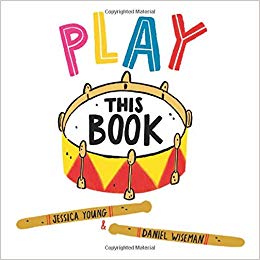
A group of friends is getting ready to put on a show, but they need some extra hands to play in their band! This rhyming story invites kids to try out their musical skills on each spread: strum a guitar, bang on a drum, tickle the ivories on a piano, or shake some maracas! Every instrument has its own sound in bold, expressive fonts. Pass the book around and let your readers take a turn on the instruments in the book, or lead a band of your own with toy instruments! A diverse group of children march across the stage playing their song, and invite readers to make their own music: take the book up on that offer, and lead your little band on a march around the room. It’s absolute fun to read, and the art is big and eye-catching. Endpapers get into the fun, with a stage bearing a “Welcome” banner in front, and a custodian cleaning up afterward.
Pet This Book!, by Jessica Young/Illustrated by Daniel Wiseman,
(May 2018, Bloomsbury USA), $15.99, ISBN: 9781681195070
Ages 4-7
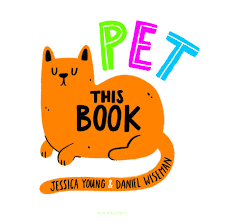
Bust out the stuffed animals and get cuddly for this fun book about the senses. A child of color (reminiscent of Doc McStuffins) invites readers right into her world, where she’s getting ready to take care of pets. Readers can pet a cat, scrub a pup in a tub, and feed a lizard a tasty treat. Each spread features a bright, boldly illustrated animal and a bold animal sounds. As with Play This Book, there’s time for a break, where kids can count to three and continue. There are no textures here for the kids to touch, but the book provides a perfect opportunity to ask kids what they think a cat, bird, or a lizard feels like. Have some textured toys available for kids to touch and explore! The rhyming text moves the book along at a fun pace, and a there’s good advice about the responsibility of caring for a pet built into the rhyme. A diverse group of kids line up with their animals to sound off. Endpapers open with a daytime scene on a farm, and close with the same group of animal friends sleeping, moon and stars in the sky.
Each book has digital art created with “Photoshop, custom brushes, and a lot of bright colors”, and kids will thoroughly enjoy it. Author Jessica Young has free, downloadable resources, including printable activity sheets for both Play This Book and Pet This Book, at her website, so make sure to visit.
These are big fun for storytimes bookshelves. Check them out.
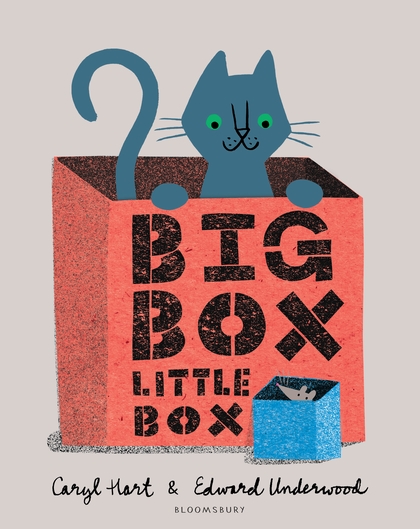
Big Box Little Box, by Caryl Hart/Illustrated by Edward Underwood, (July 2018, Bloomsbury USA), $17.99, ISBN: 9781681197869
Ages 2-6
What’s the best way to illustrate the many words to describe a box? Put a cat in the story! Big Box Little Box stars a curious cat who investigates all sorts of boxes: big and little boxes; brown and blue. The descriptive words take a fun turn when the cat stands on a box (cat box?), which immediately squashes under its weight (flat box), or when human hands designate “my box” versus “YOUR box”. As our inquisitive friend wanders through the boxes, it spies a hole in a box – and a mouse! The two run and play together, providing readers with some more fun words like “tickle”, “purr”, and “warm fur”. The endpapers show a cat and mouse romp through all sorts of boxes.
This book is a fun way to introduce adjectives to beginning readers, and ways to explore objects with younger readers. The pencil, ink, and computer-assisted collage work makes for fun, angular art, vividly colored and textured, almost inviting readers to feel the rough cardboard of the boxes under their fingertips. Lois Ehlert fans will find some similarities to the artwork, and the text is repetitive with occasional rhyme, inviting interaction.
Originally released in the UK, Big Box Little Box is a companion to Hart and Underwood’s upcoming One Shoe Two Shoes, and a fun addition to toddler and preschooler collections and concept bookshelves.
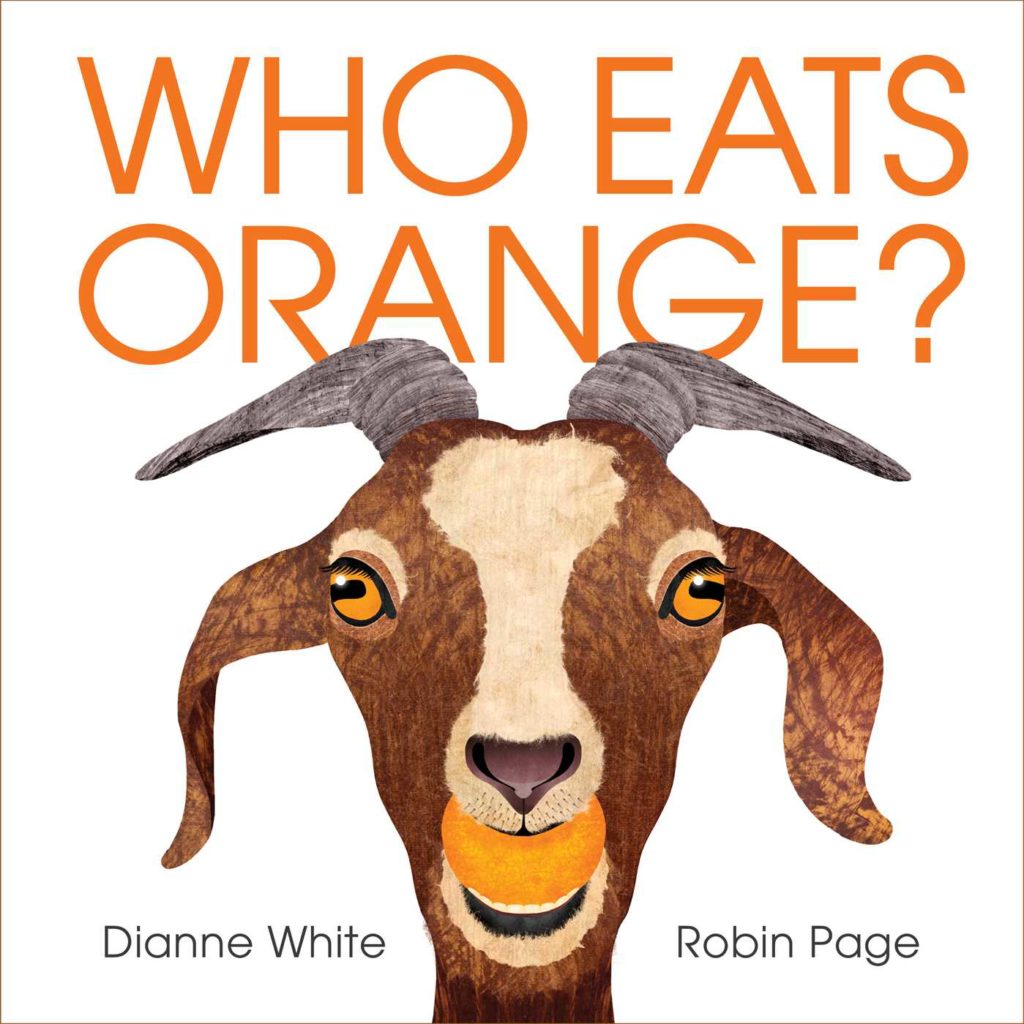
Who Eats Orange?, by Dianne White/Illustrated by Robin Page, (Aug. 2018, Simon & Schuster Kids), $17.99, ISBN: 9781534404083
Ages 3-6
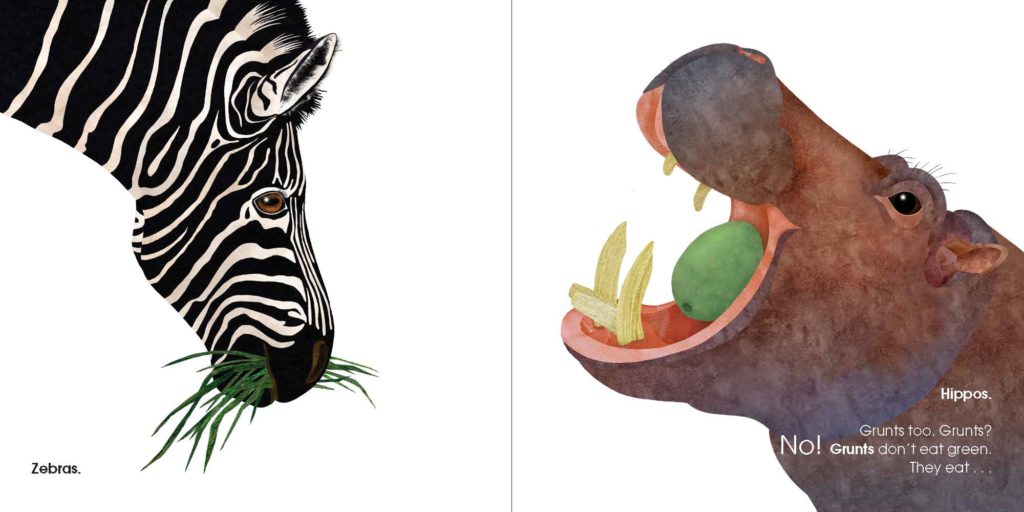
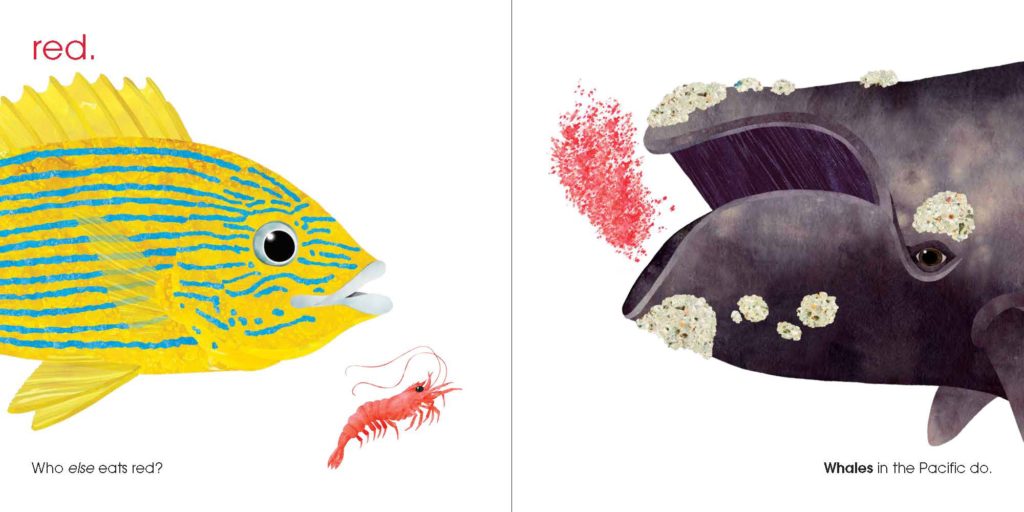
Need a fun, new concept book on your shelves? Who Eats Orange looks at the eating habits of animals from bunnies to bears. Four animals eat one color, and the fifth doesn’t – but eats a different color, which brings us into the next group of animals. There’s quite a bit of information, broken down into simple, easily understandable bites, to be found here: colors, animals and what they eat, and their habitats: “Who eats orange? Bunnies in their hutches do. / Chickens in the henhouse too. / Who else eats orange? Goats. / Pigs. Gorillas too. Gorillas? NO! The repetitive text pattern gets kids ready; they’ll learn quickly who doesn’t eat a chosen color, and join in with a hearty “NO!” when the time comes. The text brings things right back to kids, encouraging them to eat the rainbow, with a colorful spread of fruits and vegetables. The back matter organizes the animals, and their foods, by habitat (farm, Africa, ocean, forest, rainforest, tundra) and provides more information on animals and their culinary tastes.
The digital art is wonderful; reminiscent of one of my favorite realistic animal artists, Steve Jenkins. (Robin Page also dedicates the book to Steve Jenkins, which was pretty great to see.) The vivid artwork stand out against stark white backgrounds, inviting readers to imagine the roughness of a hippo or the bushy fur of a fox and marmot. The faces are gentle, with expressive eyes that will draw storytime fans right in. It’s such an interactive book, with opportunities to get the kids talking about animals, food, and color. There’s an activity kit available for download that comes with animals masks to cut out, a rainbow recipe, and writing activities.
I read Who Eats Orange, along with one of my old favorites, Who Hops?, to my 6-year-old. Who Hops? works in a similar manner, introducing different animals who hop, swim, crawl… and then one animal that obviously cannot! Anyway, we had big laughs, he pronounced Who Eats Orange “so much fun”, and laughed at me when I suggested he start eating the rainbow with me. Hey, I tried.
Who Eats Orange is way too much fun for toddlers and preschoolers! A fun add to concepts and animal collections, and a good gift book for rising preschoolers and kindergarteners.
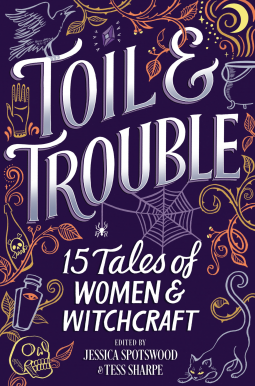
Toil and Trouble, edited by Tess Sharpe and Jessica Spotswood, (Aug. 2018, Harlequin TEEN), $18.99, ISBN: 9781335016270
Ages 13+
Did you love Radical Element, with its historical fiction tales of young women breaking conventions and being amazing? Then you’ll love Toil & Trouble, an anthology loaded with tales of women and witchcraft. And not the Hocus Pocus, “I Put a Spell on You” type of witchcraft, either: these witches are in touch with nature and themselves; they’re multicultural, they’re queer, they’re angry, and they’re very, very human. Wild Beauty‘s Anna-Marie McLemore weaves a story about faith in “Love Spells”; Brooklyn Brujahs author Zoraida Cordova writes about the wisdom of age and the passing of generations in “Divine Are the Stars”. Robin Talley’s “The Legend of Stone Mary” goes the historic route, with the legend of a dead witch haunting a local community. Elizabeth May’s “Why They Watch Us Burn” is a chilling companion story to readers of The Handmaid’s Tale, simmering with rage and rebellion. The women in these stories are never victims, even while others may try to victimize them: they own their power, no matter what the circumstances may hold.
Jessica Spotswood and Tess Sharpe have curated a strong collection of short stories written by strong authors here. There’s something for everyone in this volume, with strong, solitary characters who defend their homes to women who form a collective to survive. There are non-binary, LGBT, and cis characters, and there are characters from world cultures throughout. Characters confront big issues including sexual assault and emotional abuse. As Kirkus writes in its starred review, “No damsels in distress to be found here”. Toil and Trouble has starred reviews from Kirkus and Booklist.
He’s back! My favorite neurotic toy dinosaur is back in his second adventure!!
Sorry, Rex, it’s not you.
It’s… DEXTER DINO!
It’s Show and Tell, Dexter!, by Lindsay Ward, (Aug. 2018, Two Lions),
Ages 3-7
Dexter’s fully recovered from his experience in the pediatrician’s waiting room, and he and Jack are back together to take on a new adventure: SHOW AND TELL. But Dexter’s worried again… he wants to wow the class! Should he wear a costume? Learn an exciting new routine? OH NO! WHAT IF HE’S THE… BORING TOY? Dexter’s latest story takes on performance anxiety and worries about self-image. Thankfully, the omniscient reader is there to let Dexter know that being himself is the best way to go: and sure enough, the Dexter Dino chant makes him the most popular dino in the class and on the bus!
I have such love for this fun series and for author Lindsay Ward. Dexter is adorable, neurotic, and totally relatable. He worries about being cool enough to hang with his buddy, Jack; he worries about not being exciting enough to hold a kids’ attention, and he works through his anxiety for everyone to see, letting kids (ahem… and some adults) know that we’re not alone. By pointing out physical manifestations of what nerves can do to us: pit in the stomach, fidgety claws, awkward smiles, and all, Dexter lets readers know that we all get anxious about something, and that it’s okay. Being oneself is the best solution.
Dexter’s bright color and body postures make him awkward and lovable, and his empowering Dexter Dino chant gets an entire room up and stomping, making this PERFECT for storytimes. I tested this one out with a pre-k Kindergarten visit (they’d had a test run with Don’t Forget Dexter!), and they all jumped up and joined me for some chomping and stomping. I had a couple of kids let Dexter know it was okay, too: leave room for kid reactions when reading it out loud and watch empathy in action. My own 6-year-old was so excited to get the book in the mail, he had his own stomping party! Have a show and tell storytime, and encourage kids to talk about their cool things. Have some toys on hand for anyone who shows up empty-handed, and encourage some imagination by asking kids about what they like most about their toys and objects. Maybe you’ll get a new rhyme or two out of the experience, and don’t forget to have Dexter coloring sheets on hand!
Lindsay Ward is the author of the Dexter T. Rexter bookDon’t Forget Dexter! Though she never got to bring an orange dinosaur to Show and Tell Day, she did once take all four albums of her sticker collection. She is also the author and illustrator of Brobarians, Henry Finds His Word, and When Blue Met Egg. Her book Please Bring Balloons was also made into a play. Most days you can find Lindsay with her family, writing and sketching at her home in Peninsula, Ohio. Learn more about her at www.LindsayMWard.com or on Twitter: @lindsaymward.
Praise forIt’s Show and Tell, Dexter!
“Ward’s gentle art features cut-paper forms with residual pencil outlines, providing an ad hoc quality to the spreads. Readers prone to anxiety over big events should be tickled by the idea that a toy has concerns too.” —Publishers Weekly
“Ward’s illustrations, made with printmaking ink, colored pencil, and cut paper, wonderfully capture Dexter’s every emotion and over-the-top ideas.” —Kirkus Reviews
One lucky winner will receive a copy of both Dexter T. Rexter books–Don’t Forget Dexter! and It’s Show and Tell, Dexter!, courtesy of Two Lions (U.S. addresses). Enter the Rafflecopter giveaway.
I fell in love with author Henry Herz’s book, Mabel and the Queen of Dreams, back in 2016. It was a wonderful way to introduce some magic to bedtime, and a nod to The Bard himself. Mr. Herz has two more books coming out this September; one is a fun fable about a selfish squid, and the other, another nod to magic, this time, courtesy of a little girl named Alice.
How the Squid Got Two Long Arms, by Henry Herz/Illustrated by Luke Graber, (Sept. 2018, Pelican Publishing), $16.99, ISBN: 9781455623884
Ages 3-7
Once upon a time, a squid had a splendid silvery scarf knitted for him by his mother, but he was still cold. Rather than go home and bundle up, our little cephalopod decides to steal an octopus’ sweater and a fiddler crab’s mitten; when he tries to snatch an eel’s hat, though, he discovers that taking things without asking can only end one way: trouble! The eel grabbed one of the squid’s 10 arms, and the octopus and crab catch up to get hold of his other arm and get their clothes back! When all is said and done, the squid is still cold, and now he has two really long arms: and a sneaky fish sneaking up to steal his scarf! The straightforward story is a gentle way to reinforce that taking things that aren’t yours is wrong; a nice morality tale set in the friendly ocean. The artwork brings a dose of fun to the story, with wide-eyed marine life and exaggerated expressions (and an eel in a hunter’s cap is pretty fantastic). An author’s note provides a photo and a little bit of background on squid.
My little guy thoroughly enjoyed this story; he had a big-eyed laugh when the squid got his comeuppance, and pointed out all the animals we’d seen at the aquarium a couple of weeks before. It’s a nice add to your shelves, and a fun add to fables, stories about empathy, and books with marine life. And here are some squid coloring sheets, to enhance the storytime!
Alice’s Magic Garden, by Henry Herz/Illustrated by Natalie Hoopes, (Sept. 2018, Familius), $16.99, ISBN: 9781641700320
Ages 5+
Alice in Wonderland fans, get ready: the subtitle here, “Before the rabbit hole”, lets you know what’s going on. Once upon a time, there was a young girl named Alice, who went to the dreariest school in all of England. While escaping her awful headmistress and cruel classmates, Alice happens upon a small, walled garden, and begins tending it, caring for a few of the inhabitants: a caterpillar and a lory bird; she even chases a smiling cat away from a rabbit. Her kindness is paid back at school, when her benefactors leave her tasty treats and take care of those bullies, telling Alice that they are friends “now and forever”. There are wonderful references to the classic tale throughout the story, and readers will fall in love with the magical realism of the garden. The artwork is colorful and calming, delightful for fairy tale fans, and the story itself is all about the power of paying it forward. This one is great storytime reading, and may nudge Mabel aside as my favorite Henry Herz book. Print out some Alice in Wonderland coloring sheets, have a mad tea party, and read this one to your littles.
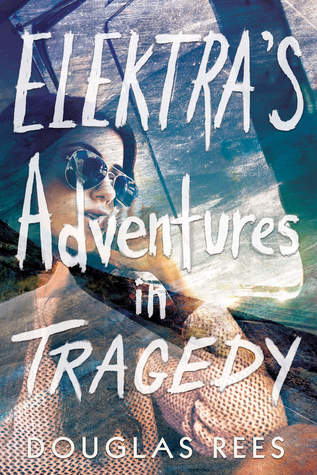
Elektra’s Adventures in Tragedy, by Douglas Rees, (May 2018, Running Press), $17.99, ISBN: 9780762463039
Ages 13+
Sixteen-year-old Elektra Kamenides was happy. She had a happy, secure life in the Mississippi college town where her father worked as a scholar on ancient Greece, and her mother, Helen, was an aspiring author. When her mother whisks Elektra and her 13-year-old sister, Thalia, out of Mississippi and away from their father, to go live on a roach-infested shack that alleges itself a houseboat in an area of California called Guadalupe Slough, Elektra is furious. Who wouldn’t be? The entire rug of her life has been pulled out from under her, and she can’t even get her father to return her calls. What is going on? Not even her sister Thalia’s endless optimism can shake Elektra, who decides she’s going to make like Odyseuss and get back to Mississippi. But like her Greek hero counterpart, the gods have other plans in store for Elektra.
Elektra’s Adventures in Tragedy peeks into the end of a marriage, a coming of age, and the strength of community. With distance, Elektra sees that the hero she made her father out to be was not necessarily the case; an emergency serves as her wakeup call to make the most of the present, and she discovers that she can survive and thrive in her new community, surrounded by her supportive neighbors. There’s good and colorful character development, including a veteran with PTSD and a Latinx family whose San Jose roots go back for generations. The cast of characters are primarily white and Latinx. There are amusing interludes at the local library, where a neighbor – and later, Elektra – takes out hundreds of books a week to keep circulation numbers strong, for the sake of keeping the library open.
I enjoyed the pace of the storytelling, the characters, the situations, and the relationships between the characters. This one is a good add to your realistic fiction collections.
 Sloth at the Zoom, by Helaine Becker/Illustrated by Orbie, (Aug. 2018, OwlKids), $17.95, ISBN: 9781771472494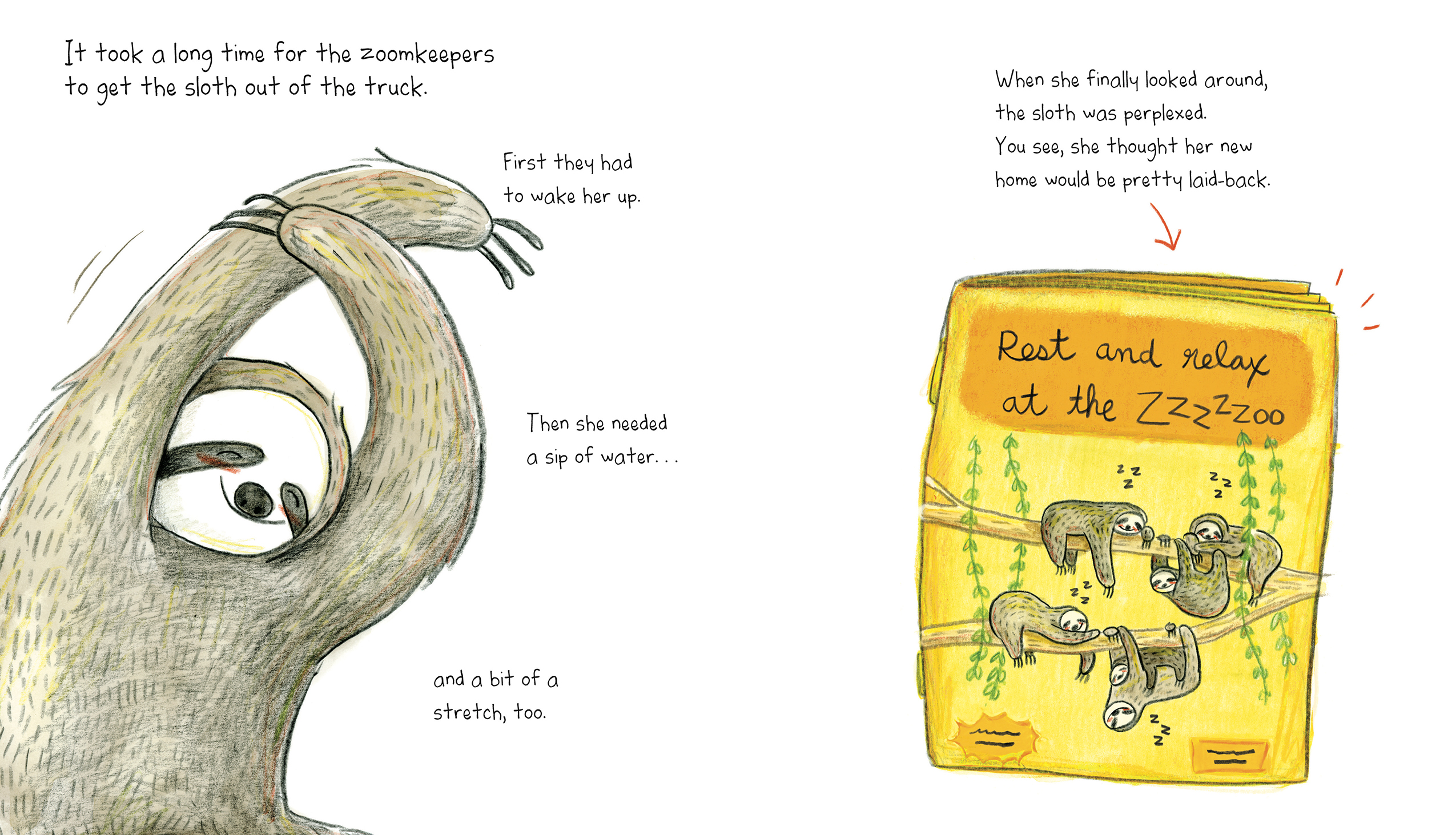













 Mom Read It