Posted in Intermediate, Middle Grade, Non-fiction, Non-Fiction

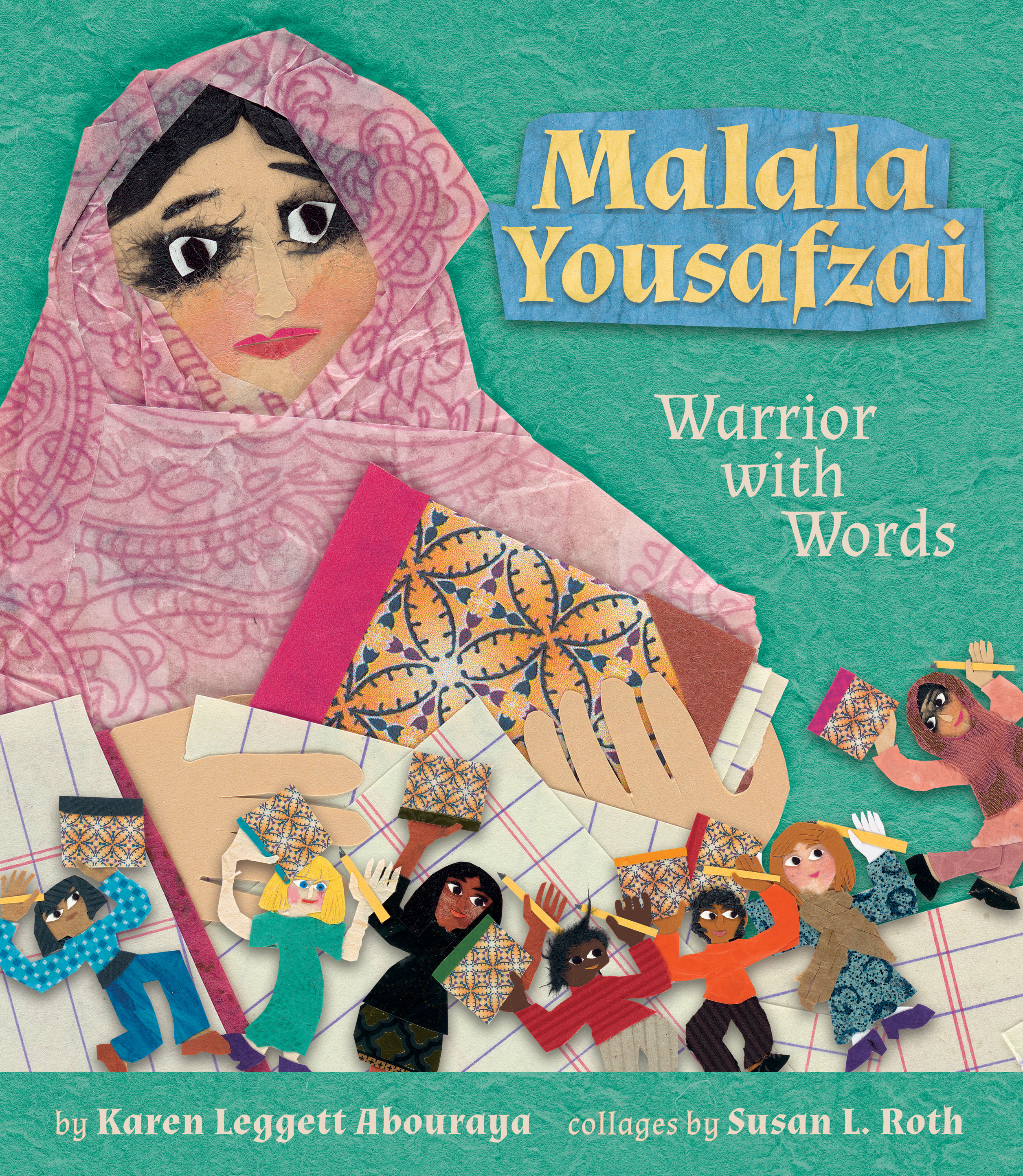
Malala Yousafzai: Warrior with Words

Malala Yousafzai: Warrior with Words, by Karen Leggett Abouraya/Illustrated by Susan L. Roth, (Jan. 2019, Lee and Low), $19.95, ISBN: 9781620148389

Ages 6-10

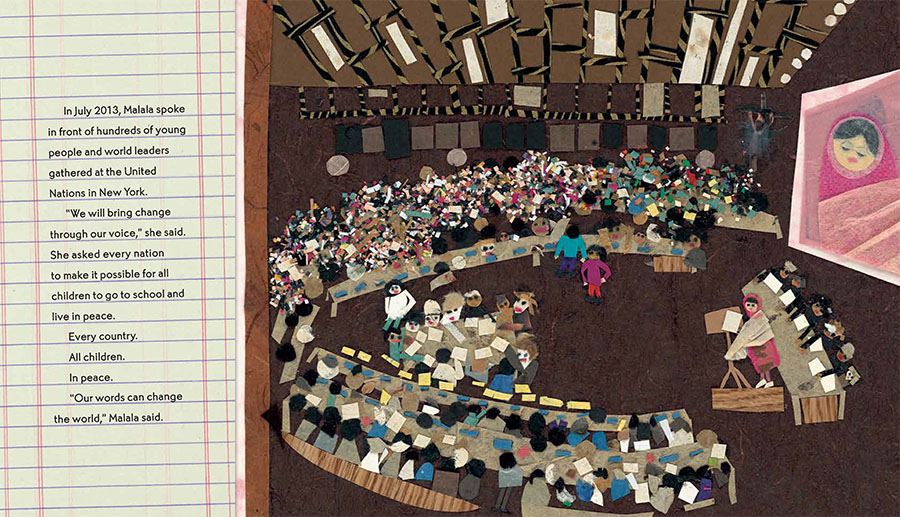
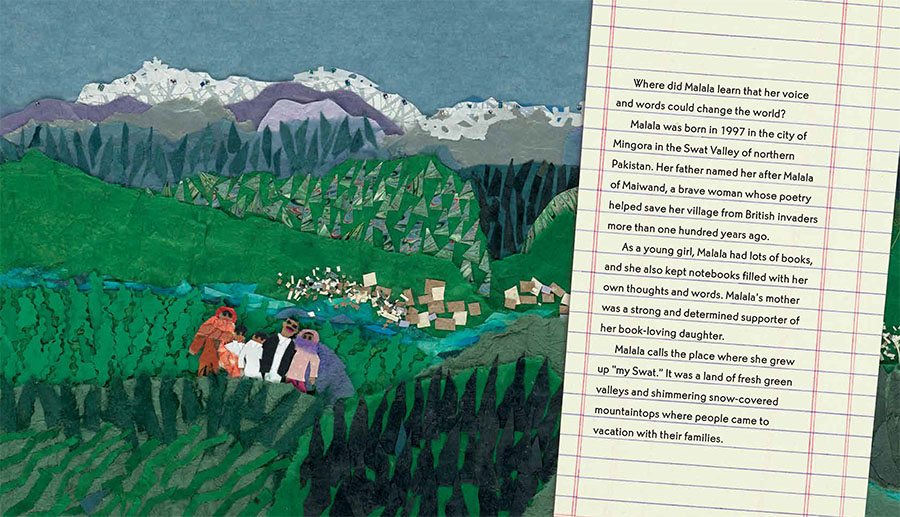
This latest biography of activist and Nobel Prize winner Malala Yousafzai speaks to younger, intermediate readers on their level: she grew up in Pakistan’s Swat Valley, lovingly referred to by Malala as “my Swat”. Her father was the principal of a school for girls, and she grew up loving books and learning. In 2007, when the Taliban came to power and tried to ban education for girls and women, Malala began blogging, under a pen name; her blog was picked up by the BBC’s website in 2009. Her family fled the Swat Valley when Pakistan’s army fought the Taliban, but they returned when the fighting was over, finding much of their home destroyed. In 2012, Malala and two friends   were shot by Taliban soldiers who boarded their school bus. She was taken to a hospital in England, and her activism became a worldwide phenomenon, speaking at the United Nations and receiving a Nobel Prize for her work.

The text is straightforward, describing the Taliban’s policies and even Malala’s shooting in plain language. The Taliban doesn’t get to take Malala’s story away from her: she shines here, with her accomplishments and her dedication to education for all being the main focus of the book. Her awards and her studies are lauded, as is her love of the color pink and her love for her family and her home. Back matter includes information on Pakistan, the Taliban, The Malala Fund, and a spotlight on youth activism and organizations.

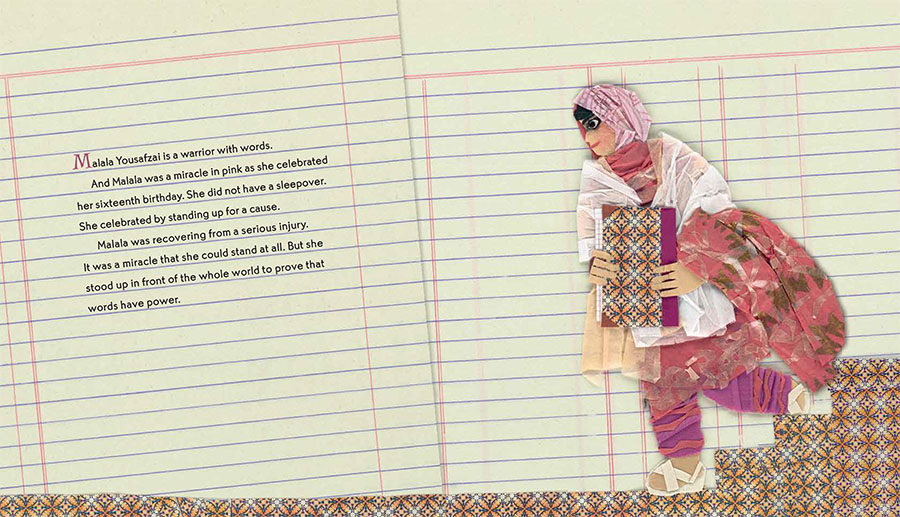
The collage art is outstanding. Most of the artwork is soft, using felts and fabrics with warm and soft colors to create Malala, her family, her world, and the diversity of the United Nations and our world; even when women must don black clothing to avoid notice by the Taliban, the crisp blacks and whites of the characters clothing are felt: soft, warm. That all changes for the two pages introducing the Taliban, which depicts them using photo art with crudely drawn, mask-like faces. It made me sit up the first time I read the book, and on subsequent readings, I realized how brilliant illustrator Susan L. Roth is. It’s a subtle, but jarring change that lets readers experience just a fraction of the discomfort, the fear, that these figures brought with them. Incredible artwork by an award-winning illustrator, and it supports and gives life to Karen Leggett Abouraya’s informative reporting. Add this to your picture book biographies.

Posted in Preschool Reads, Toddler Reads

Detectives Fox and Goat are on the case!

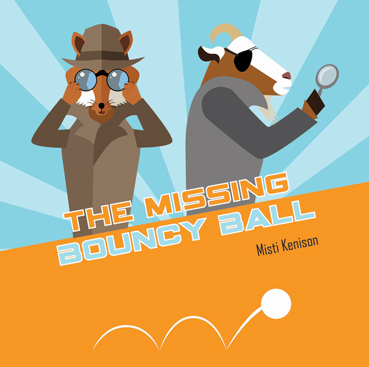
The Missing Bouncy Ball, by Misti Kenison, (Oct. 2018, Schiffer Publishing), $12.99, ISBN: 9780764356001

Ages 1-4

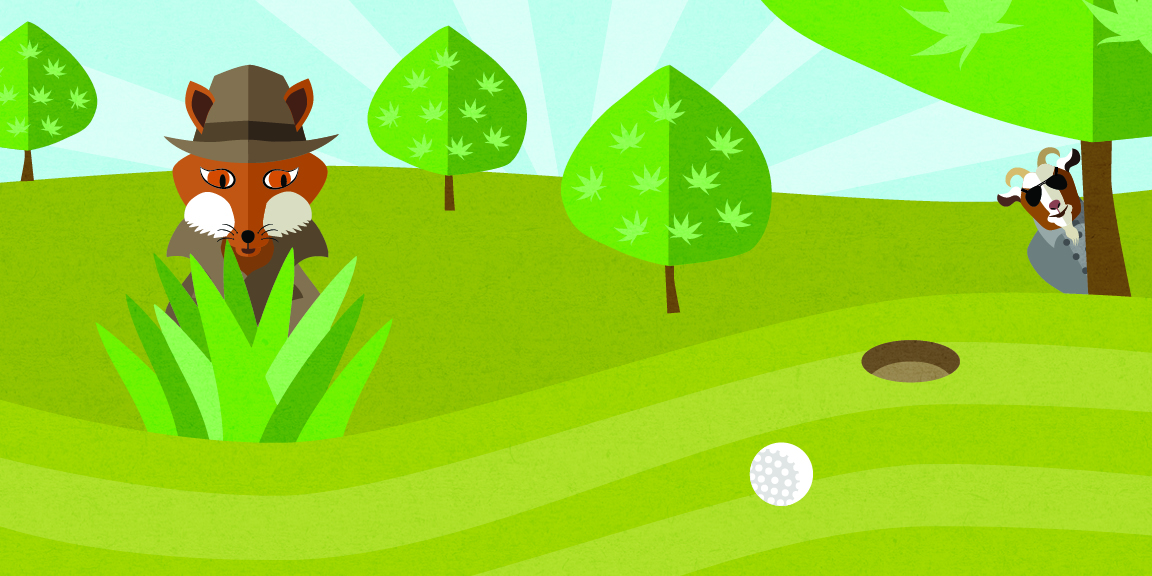
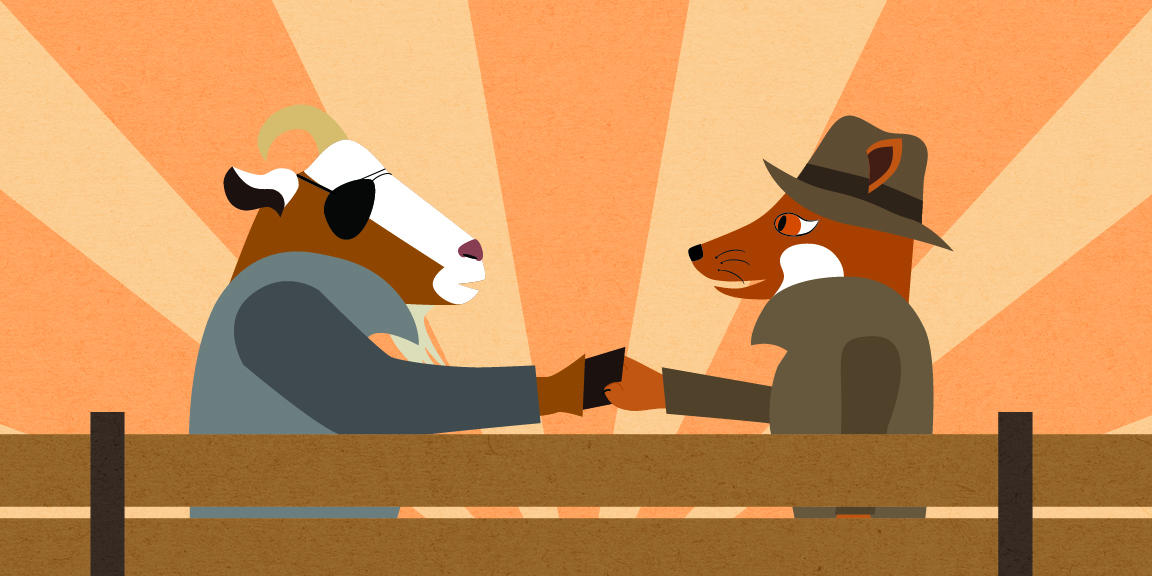
A little girl’s ball bounces out of her backpack! Luckily, Detectives Fox and Goat are on the case. They search through spreads, identifying different balls, and eliminating them from consideration by identifying properties that set them apart from the bouncy ball: color, size, shape, texture. When they reunite the bouncy ball with Emma, its owner, they congratulate one another and get ready for their next adventure.

I’ve been a fan of Misty Kenison’s Young Historians series, so when I saw her name on the Fox and Goat books, I knew I was in for something fun. I love the question and answer pattern her books take, letting readers learn to spot clues as they go. The end Bouncy Ball recaps the clues used to find the bouncy ball, reminding kids of the steps they took to arrive at the conclusion. Sharp-eyed readers will notice the bouncy ball’s location a few times through the book, too.


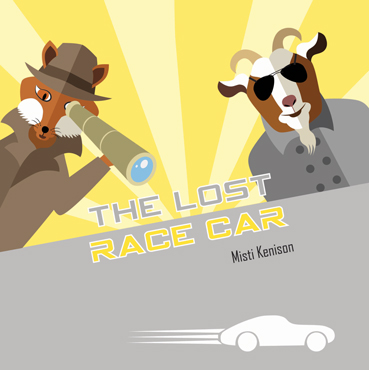
The Lost Race Car, by Misti Kenison, (Oct. 2018, Schiffer Publishing), $12.99, ISBN: 9780764355998

Ages 1-4

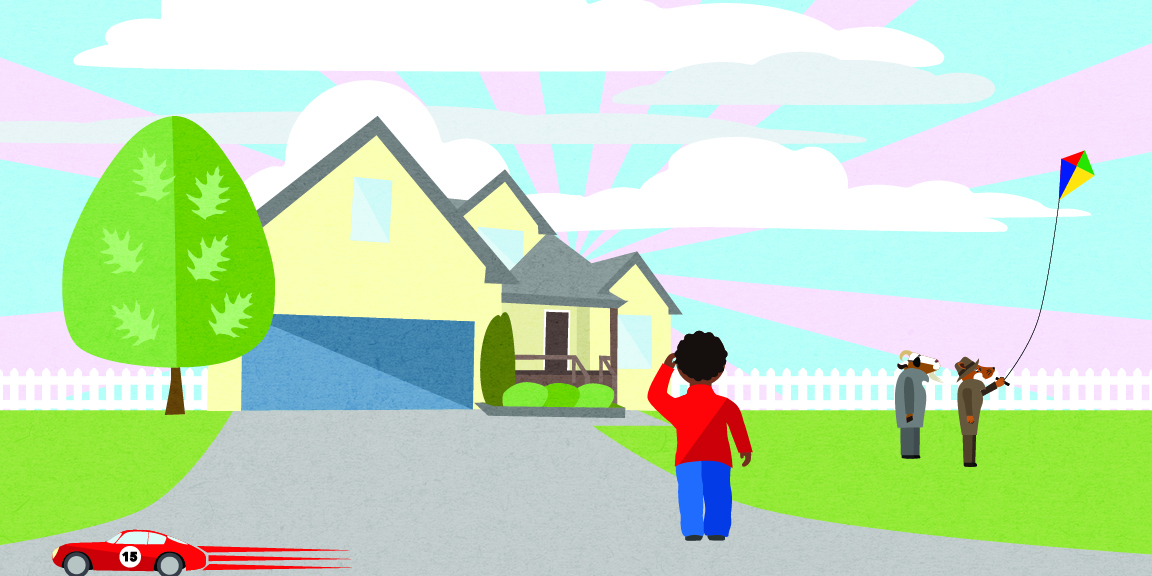
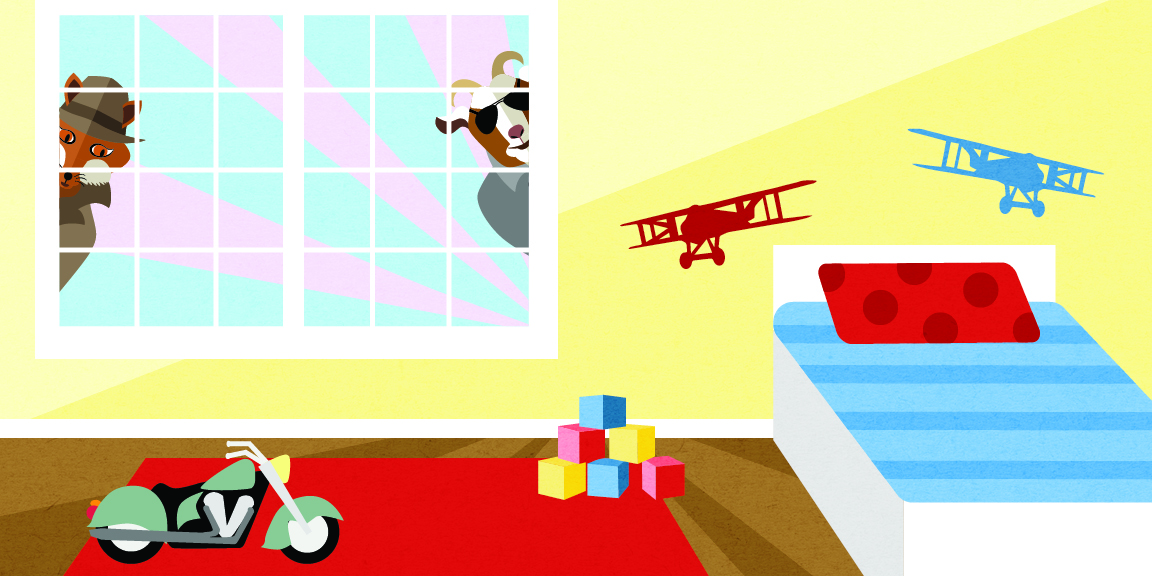
Detectives Fox and Goat return for their next great mystery: a little boy’s race car disappears! Using concept clues, the two sleuths sniff out the details to solve the case: colors, number of wheels, weight, length, and slightly more complex characteristics, like roads traveled. When they reunite Jayden with his car, they share a congratulatory fist bump and share their clues, at the end, to remind readers of the concepts used to solve the mystery.

These are such great books! The digital artwork is bright, bold, and eye-catching. The question and answer pattern to each spread invites kids to think, explore, and solve the mysteries as they go, and offers the chance to talk about other colors/textures/sizes/shapes on the pages. Once again, sharp-eyed readers will notice the race car lingering around as they get closer to solving the case.

I just read these in a Saturday storytime with a mixed group of kids: two toddlers, a first grader, and three middle graders, all of whom got a kick out of the story. The toddlers loved pointing to the cars and balls on each page; the first grader was my sharp-eyed reader who spotted the missing items as they popped up in spreads, and the first and middle graders all loved pointing out the characteristics that set them apart from the item in question. I’m looking forward to more Fox and Goat Mysteries for my toddlers and preschoolers, for sure. A nice add to concept and board book collections.


Posted in Intermediate, Non-Fiction, Preschool Reads

Pocket Bios: itty bitty picture book bios!

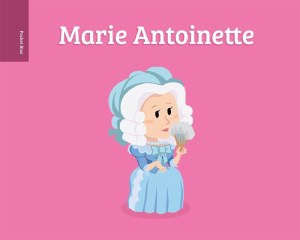
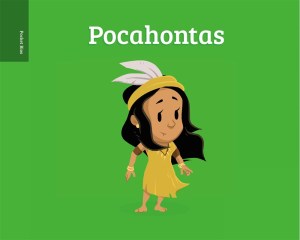
Somehow, I missed Pocket Bios until now. Introduced earlier this year, Pocket Bios are a series of pocket-sized picture book biographies. They’re filled with cute, colorful illustrations; more cartoon than realistic, and the text is fairly simple, giving big-picture facts to serve as a quick introduction to young readers. The first found of Pocket Bios drew from entertainment, sports, science, and civil rights figures, including Muhammad Ali, Charlie Chaplin, Marie Curie, and Gandhi; this next group of books includes The Buddha, Pocahontas, Marie Antoinette, and Vincent Van Gogh.

Buddha, by Al Berenger, (March 2019, Roaring Brook Press), $14.99, ISBN: 9781250168887

Ages 4-7

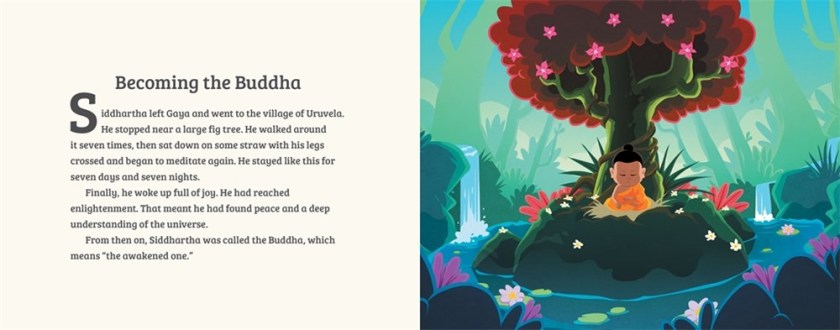
This picture book bio of Siddhartha, who would become the Buddha, the founder of Buddhism, touches on key moments in his life: his birth, youth, and marriage; his leaving the palace on his journey to find happiness, his new life as he sought and achieved enlightenment; his teaching and traveling, last days, and legacy. A timeline provides a more linear, dated glimpse at the events covered in the book, and a map shows readers important locations in Buddha’s life. People to Know offers profiles of important people in his life, including his mother and the Dalai Lama, and an illustrated “Did You Know” section offers some quick, additional facts on his life.

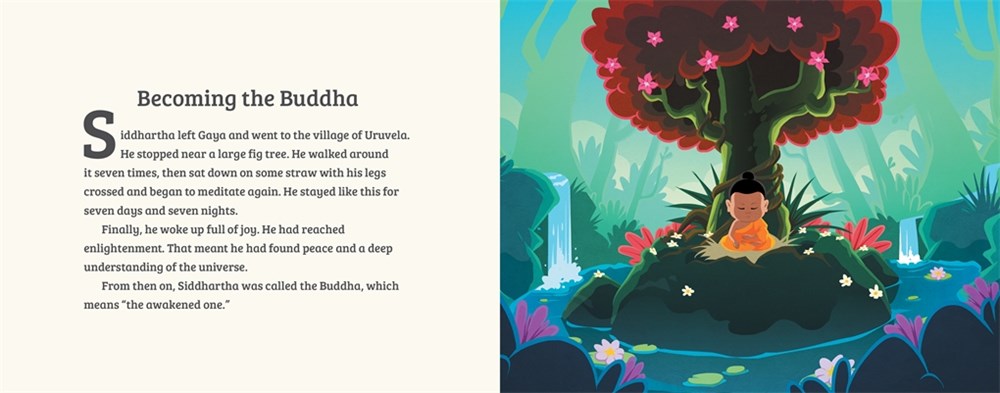
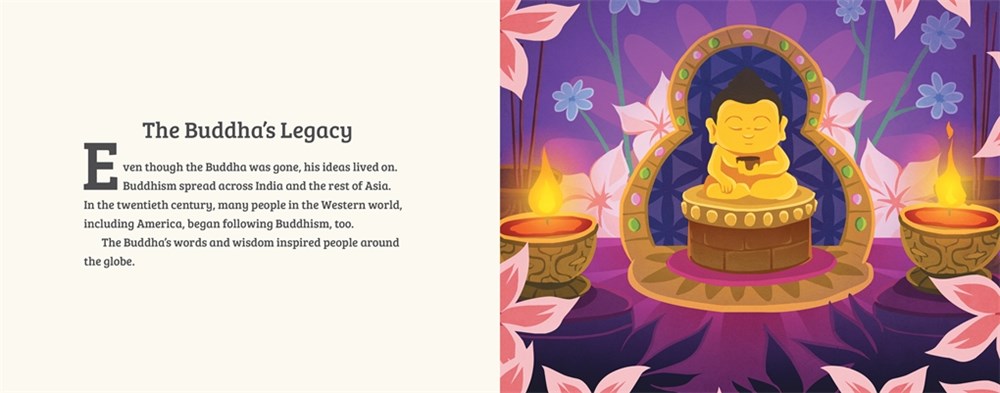
The art is rounded and bright, soft and cute, with some beautiful moments, particularly when Siddhartha fully realizes enlightenment, and as he teaches a group of students. A picture of an aging Buddha is gentle, tinged with an understanding that he will be moving on. There are some truly lovely moments to be found here.


Marie Antoinette, by Al Berenger, (March 2019, Roaring Brook Press), $14.99, ISBN: 9781250168825

Ages 4-7

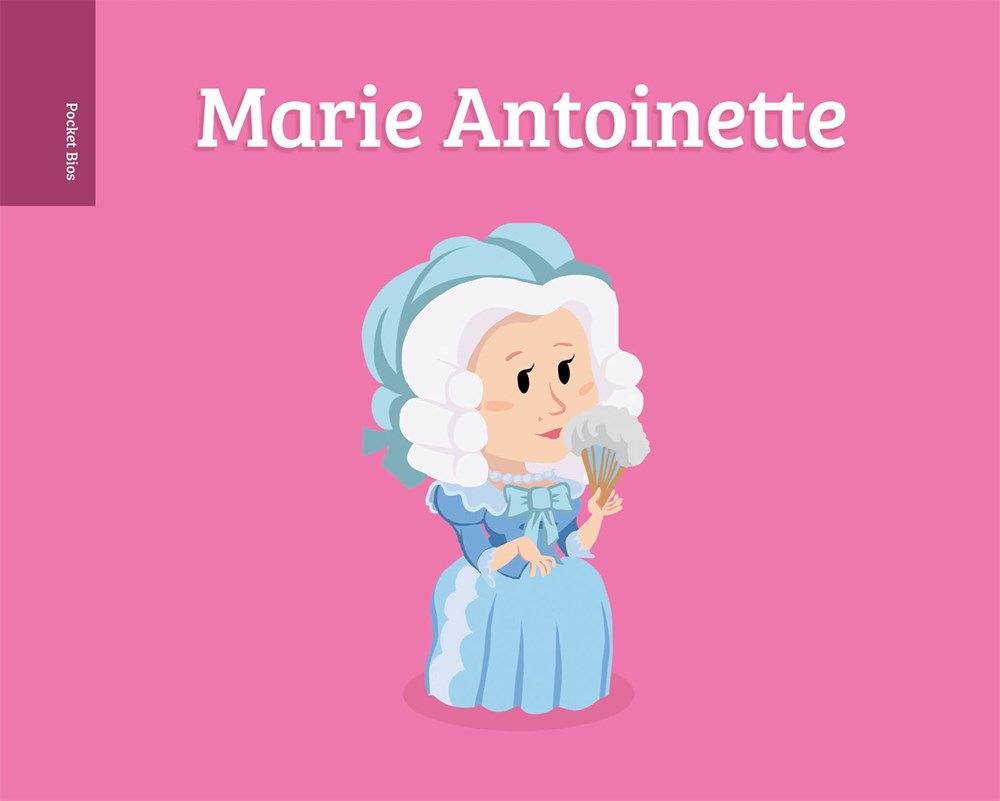
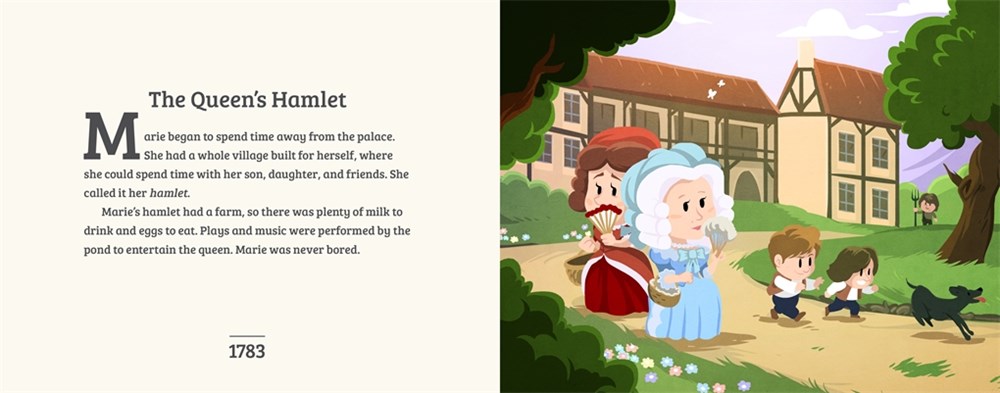
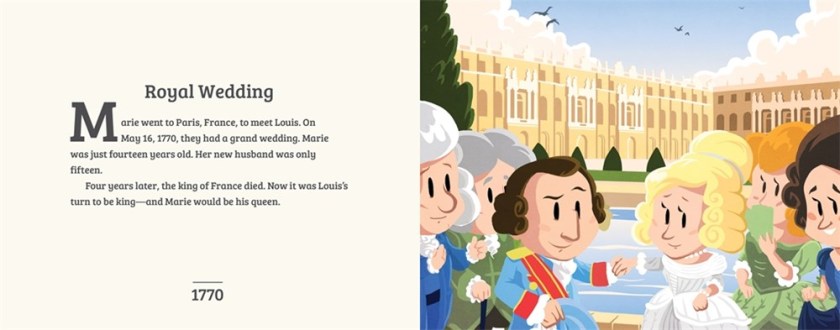
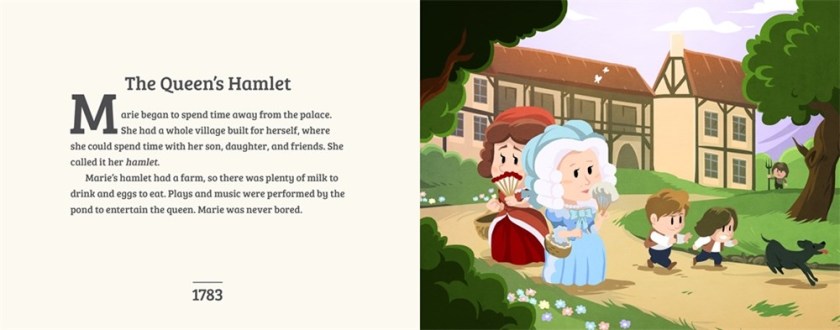
Each spread in Marie Antoinette’s Pocket Bio covers a major period in her life; the factual information on the left hand side provides the dates. We first meet her as a young princess in Vienna; move along to her 1770 wedding to Louis XVI, and then to his coronation. Then, we move into the Marie Antoinette period that everyone’s familiar with: the lavish lifestyle, depicted by a huge dinner party. As the text reminds readers, Marie Antoinette was not content in her royal duties, leading her to seek refuge at a village, built just for her, her children, and her friends. Meanwhile, revolution was in the works, and in 1789, the French Revolution began, illustrated with a French mob brandishing swords and pitchforks, outside the burning Bastille. As Marie, Louis, and their children tried to escape Paris in 1791, they were arrested and taken back to Paris, where they eventually met their ends at the guillotine – Louis, in 1793, Marie, soon after. The pictures are dramatic, loaded with shadows and flame during the Revolution; pastoral and soothing during the happier times in Marie’s life. There is a timeline, map and key of Europe in 1793, with key areas emphasized. People to Know include Marquis de Lafayette and Yolande de Polastron, one of Marie Antoinette’s close friends. Did You Know? fact to handsell the book: Marie Antoinette has some hairstyles that were four feet tall!
 

Vincent van Gogh, by Al Berenger, (March 2019, Roaring Brook Press), $14.99, ISBN: 9781250168863

Ages 4-7

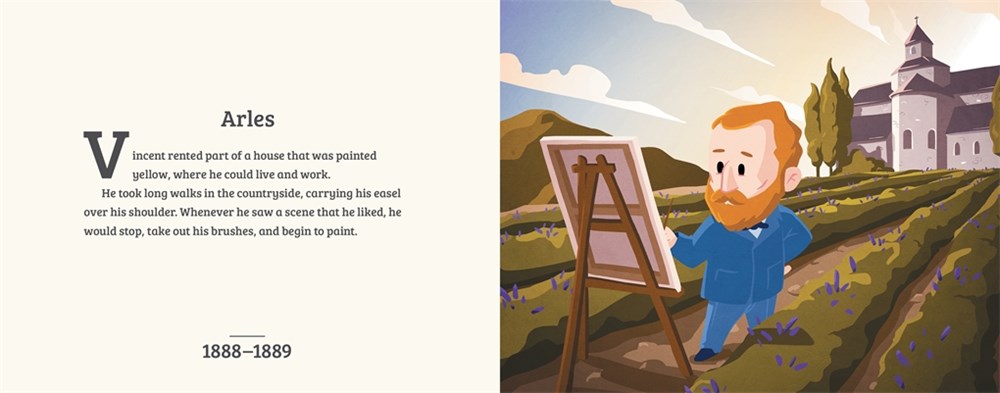
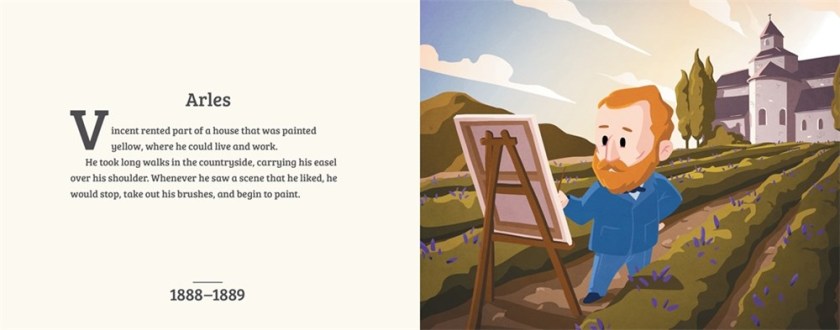
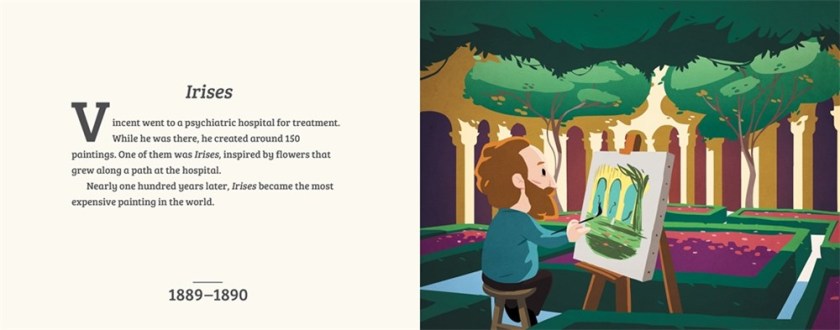
Artist Vincent Van Gogh’s biography also includes dates for the key represented moments in his life. We begin with his childhood in the Netherlands, and touches on the close relationship between van Gogh and his brother, Theo; we move onto an apprenticeship under his uncle, where he traveled to London and Paris, developing a love for art. He was a pastor in a coal-mining town from 1877-1880, and spoke out against the dangerous conditions in the mines, which influenced his painting, The Potato Eaters. From there, van Gogh embraced his love of art and began painting in 1880, after moving to Antwerp. From there, he moved to Paris, to be with Theo, but he tired of city life and relocated to Arles, where he could live and work in the countryside. The book touches on van Gogh’s struggle with mental illness and the work he created while in the hospital and under his doctor’s care. Finally, the narrative addresses his suspicious death – previously thought to be a suicide, and his posthumous fame. The timeline includes all of the moments written about in the book, and the map and key emphasize six key location in van Gogh’s life. People to know include his brother, Theo, and artist Paul Gaugin. Key Did You Know? takeaway: his most famous work, Starry Night, was painted during his time at a psychiatric hospital and he thought it was his greatest failure.
 

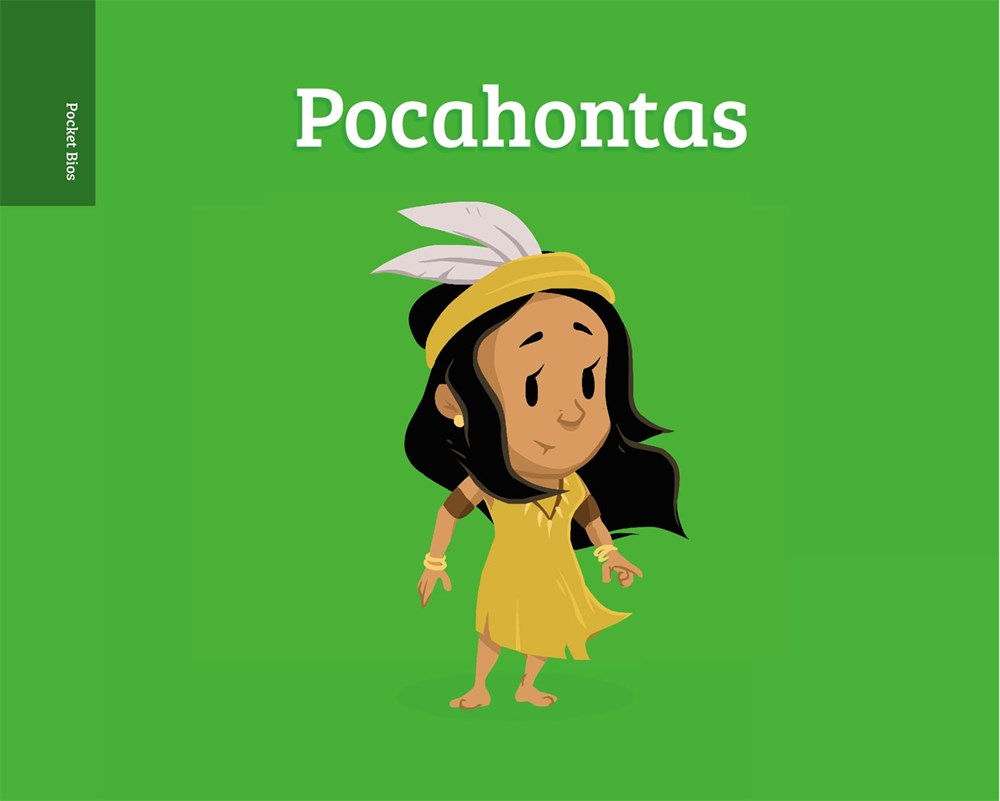
Pocahontas, by Al Berenger, (March 2019, Roaring Brook Press), $14.99, ISBN: 9781250168863

Ages 4-7

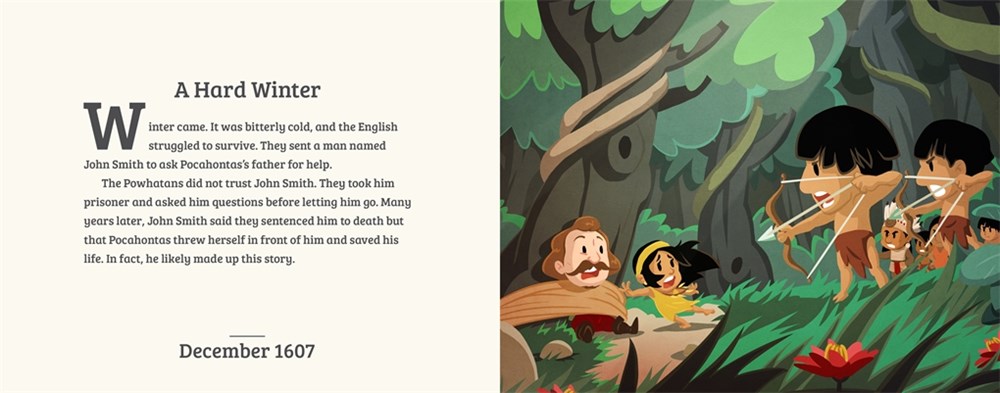
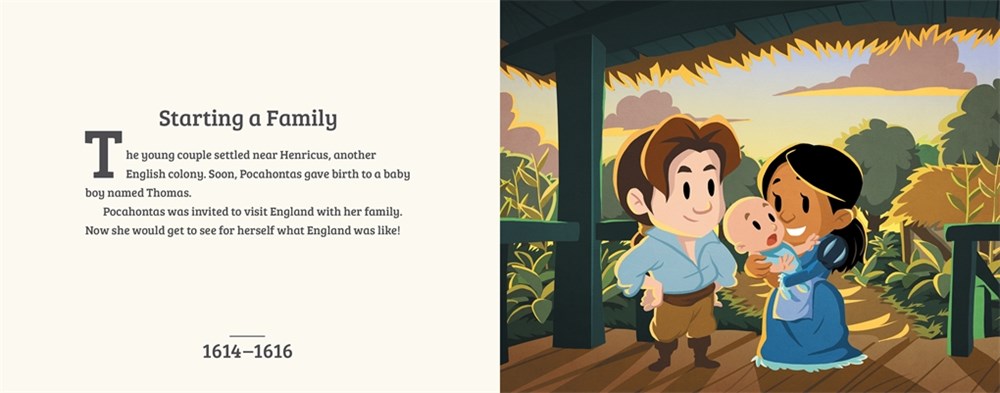
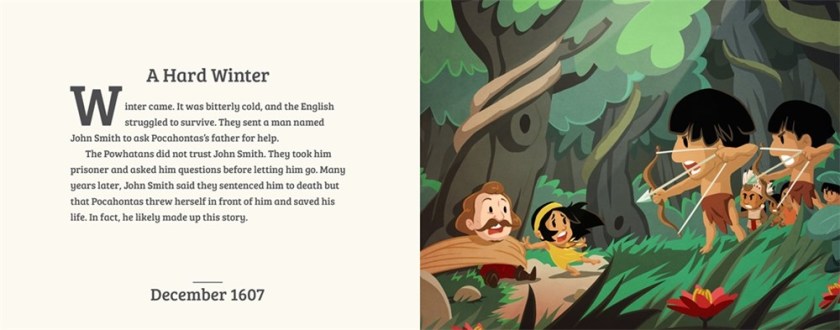
Pocahontas’ biography, also dated, starts with her years growing up in the Powhatan tribe, located where Virginia is now. The English arrived in 1607 and established the Jamestown colony; the illustration shows a young Pocahontas watching a ship dock at a newly built port. The brutal winter forced the settlers to send John Smith to ask the Powhatans for help, which led to his imprisonment. Here, the narrative diverges from the history books I grew up with (thank goodness) and points out that John Smith most likely made up the story of Pocahontas throwing herself in front of him to save him from certain death; she then becomes a friend of sorts to the Jamestown settlers, visiting them and working to keep peace between the Powhatans and the settlers. John Smith’s 1609 injury required him to head back to England – and Pochontas was told that he died on the voyage home. At this point in history, relations between the Powhatan tribe and the settlers fell apart, and they warred with one another. Pocahontas was taken prisoner and brought up English – her father refused to trade her for English prisoners – eventually marrying settler John Rolfe, converting to Christianity, and taking the English name, Rebecca. The wedding helped ease relations between the Native Americans and the settlers, and Pocahontas – now a mother of two sons – was invited to visit England. She became ill and died while traveling, and is buried in England.

There are some beautiful moments in the artwork here – a ship sailing into the golden sunlight, Pocahontas as a child, playing with other children, with a waterfall streaming in the background. There’s a timeline and illustrated map; people to know include Pocahontas’s father – not Powhatan, but Wahunsunacock, and King James I. A key Did You Know? fact reminds readers that John Smith was not the most reliable narrator.

The verdict? The Pocket Bios are a good start for younger readers, but aren’t the first resource you should seek. It’s a good series to start planting an interest in history and key people in history. Readers who enjoy Brad Meltzer’s Ordinary People Change the World series of biographies will likely enjoy these.
Posted in Uncategorized

A haunting across decades: A Promise Stitched in Time

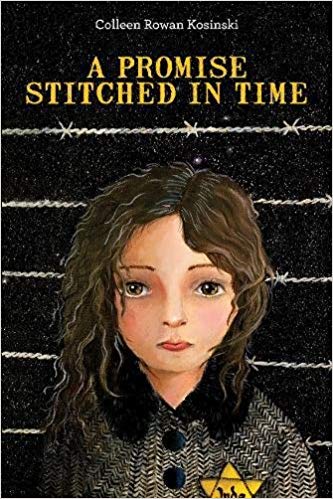
A Promise Stitched in Time, by Colleen Rowan Kosinski, (Sept. 2018, Schiffer Publishing), $12.99, ISBN: 978-0-7643-5554-7

Ages 10-13

Eighth grader Maggie McConnell is still grieving the loss of her father to cancer. The budding artist is agonizing over a project that will get her into the prestigious Peabody Academy; it was a promise she made to her father and herself. When she discovers a an old coat at her local thrift store, she’s drawn to it and buys it on the spot. Immediately, she begins having hallucinations about starving, burning chimneys, cruel voices and beatings, and terrifying dogs waiting to attack. She sees visions of a girl wearing the coat and reminding her of a promise made to a girl named Gittel. Turning to her friend Taj for help, the two try to unravel the source of the haunting. Meanwhile, Maggie is at odds with her popularity-obsessed sister, Patty, who doesn’t agree with Maggie’s choice in clothing or friends. As Maggie works toward the heart of the mystery, she discovers that Mrs. Berk, an elderly resident at a nursing home where Maggie teaches art, plays a key role.

A Promise Stitched in Time has an interesting main story that gets lost in its attempt to create a paranormal story. Having a coat haunted by a spirit of its former owner – a girl who died at Auschwitz – is an interesting concept on its own. Maggie’s father’s story seems to be more of a plot device that gets in the way, and the story’s resolution felt rushed, overcrowded in an already full narrative. It starts off strong, but ultimately left me wanting more.

Posted in picture books

Crow Not Crow, birding, and a guest post from Jane Yolen!

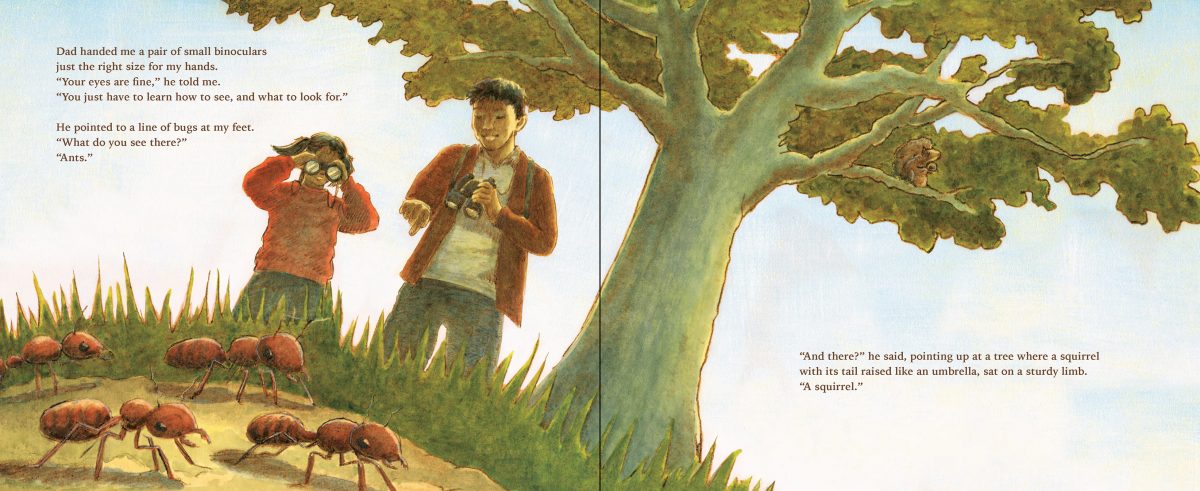
Crow Not Crow, by Jane Yolen and Adam Stemple/Illustrated by Elizabeth Dulemba, (Aug. 2018, Cornell Lab Publishing Group), $16.95, ISBN: 978-1-943-645-31-2

Ages 5-9
Hi everyone! I hope you and yours are having a wonderful holiday season. I took a few days off from blogging to enjoy the chaos that is Christmas, but I’m back, with an armful of books to talk about. Today, I’ve got a book about birding, along with a guest post by author Jane Yolen, who’s basically a superhero in our home. Let’s dig right in.

A dad and his daughter take a walk on a Fall day. She’s finally ready for her first birding walk – her brothers are all experts, but she thinks all the birds kind of look the same. Her dad teaches her a simple way to start identifying birds: Crow, Not Crow. Is it a crow? Dad asks leading questions as daughter looks on, describing identifying characteristics for the birds they encounter; he teaches her to look, really look, at colors, textures, beaks, wings – and boosts his daughter’s excitement and confidence as the story progresses. Back matter includes a section on the birds discovered in the book, split into “crow” and “not crows”. Download Cornell Lab’s Bird QR app to scan and hear bird calls for each bird.

I’ve enjoyed the Jane Yolen/Cornell Lab books. The nonfiction-fiction blend is a hit with my kids, and the artwork and words are soothing, calming, like a quiet morning. Crow Not Crow introduces birding to a young audience by giving them an accessible opening: identify a crow, note its characteristics, and go from there. Crow Not Crow teaches kids to be mindful and notice details, and creates a love and respect for nature within its pages. Elizabeth Dulemba’s color pencil artwork creates realistic, beautiful spreads with the birds taking center stage, and breathes life into a sweet story about a dad and his daughter spending a day together.

I’m thrilled that author Jane Yolen offered to write a guest post for MomReadIt! I hope you enjoy it as much as I do.

Everyone in my family is a birder, though I am the worst of them.The older I get, eyes compromised by small cataracts and Sjogren’s Syndrome, I find it harder to tell the small birds apart. LBJ’s they were dubbed—“little brown jobbies” by my husband years earlier. They seem to have gotten smaller and duller ever since. So I concentrate on crows and larger—raptors and corvids. (I am also in a band called Three Ravens, but that’s another story altogether.)

My (late) husband and our three (now grown) children were and are great birders. Not me. Though I try. In fact, I am very trying.

Not only are we bird fanatics, we are bird writers. Apart and together my family and I have published at least a dozen books about birds, starting with OWL MOON. And If you count stories and poems and songs—we are hitting somewhere north of 100. We have simply lost track.

But when Adam and I began this book—he’s the middle child with a wife and two children of his own—he professed to be bedazzled by writing a picture book. He insisted he was a song writer, a novelist, a poet, a short story writer. What did he know about picture books.

You had them read to you as a child,” I said, though in fact he was reading them himself by two-and a-half, and to his nursery school fellows by three.

I told him picture books, in their own way, are harder than all of the others and so much more of an interesting challenge. They have the line structure and lyricism of  a song or a poem. They have to have interesting characters, a plot, and an arc like a novel. They have to have a taste of adult language but be easy enough for a child (or a tired adult) to understand. They have to be about something a child is interested in. And all that has to be with every page being visual enough for an illustration.

He took a deep breath, and we began.

New York Times bestselling children’s author, Jane Yolen, and her son, Adam Stemple, have teamed up to write a gentle tale of a father introducing his daughter to the joys of bird watching. Using the simple “Crow, Not Crow” method for distinguishing one bird from another, father and daughter explore the birds near their home…and there are so many to see! After the story ends, readers learn more about all the birds that appear in the book with photographs, descriptions, and QR links to bird sounds.

Posted in Humor, picture books, Preschool Reads

Whatever you do, DON’T give the puffin a muffin!

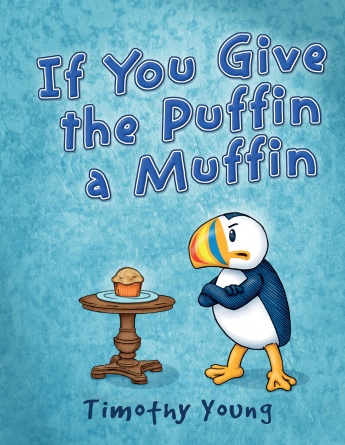
If You Give the Puffin a Muffin, by Timothy Young, (Sept. 2018, Schiffer Publishing), $16.99, ISBN: 9780764355523

Ages 4-7

If you enjoyed Timothy Young’s The Angry Little Puffin (2014), you’re going to laugh out loud at this sequel, which takes aim at some of our favorite kids’ books. With text that starts like another popular series out there – “If you give the puffin a muffin…”, the book is a vehicle for the Puffin’s dilemma. He doesn’t want a muffin; he doesn’t eat muffins; and he certainly hasn’t agreed to be the star of another book! He turns to another familiar character in the Timothy Young universe for some advice: the boy who starred in I Hate Picture Books, and Do Not Open This Box!, who suggests a magic crayon. We get laugh-out-loud visual jokes, including some suspiciously familiar children’s book icons, including penguins dressed as mice, pigs, and moose; crayons that run away; a magic door opening into a forest, where a surprised little girl drops her red crayon, and a mysterious little boy peeking out of a purple-shaded door that seems to have come from… well, nowhere. Timothy Young turns the joke on himself as the Puffin meets his author, and gives him a piece of his mind. And a muffin.

If You Give the Puffin a Muffin is funny, witty, and just plain smart.  The visual jokes make the book, and the curmudgeonly Puffin is too much fun to read and follow. The endpapers – naturally, all different types of muffins – let readers in on the joke early on. This one’s a good storytime book, and offers a fun chance to have readers spot characters and moments they recognize from other books. A fun add!

Posted in picture books, Preschool Reads

Mother Earth’s Lullaby sings us all to sleep

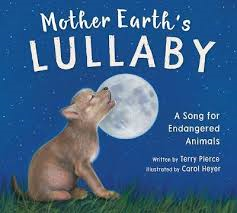
Mother Earth’s Lullaby: A Song for Endangered Animals, by Terry Pierce/Illustrated by Carol Heyer, (Oct. 2018, Tilbury House), $17.95, ISBN: 9780884485575

Ages 3-6

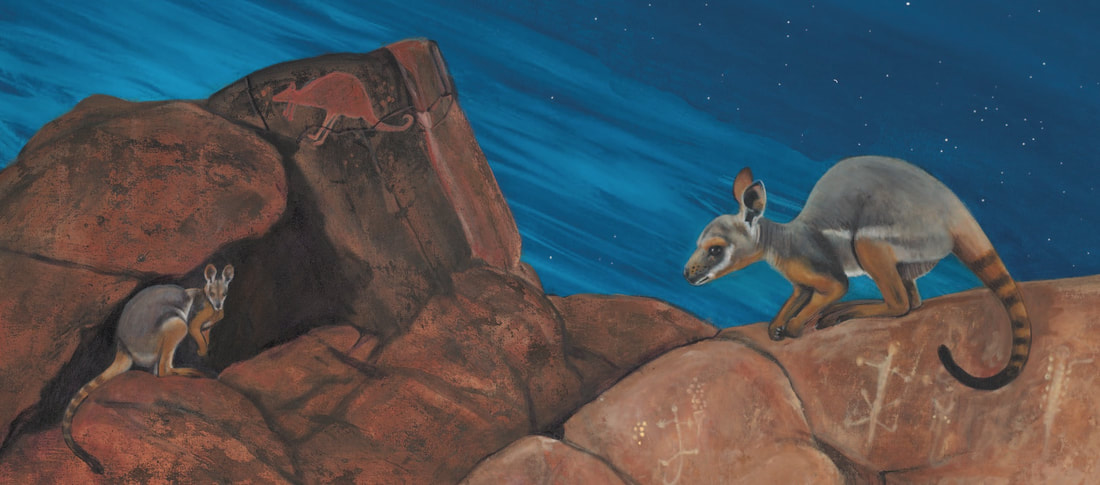
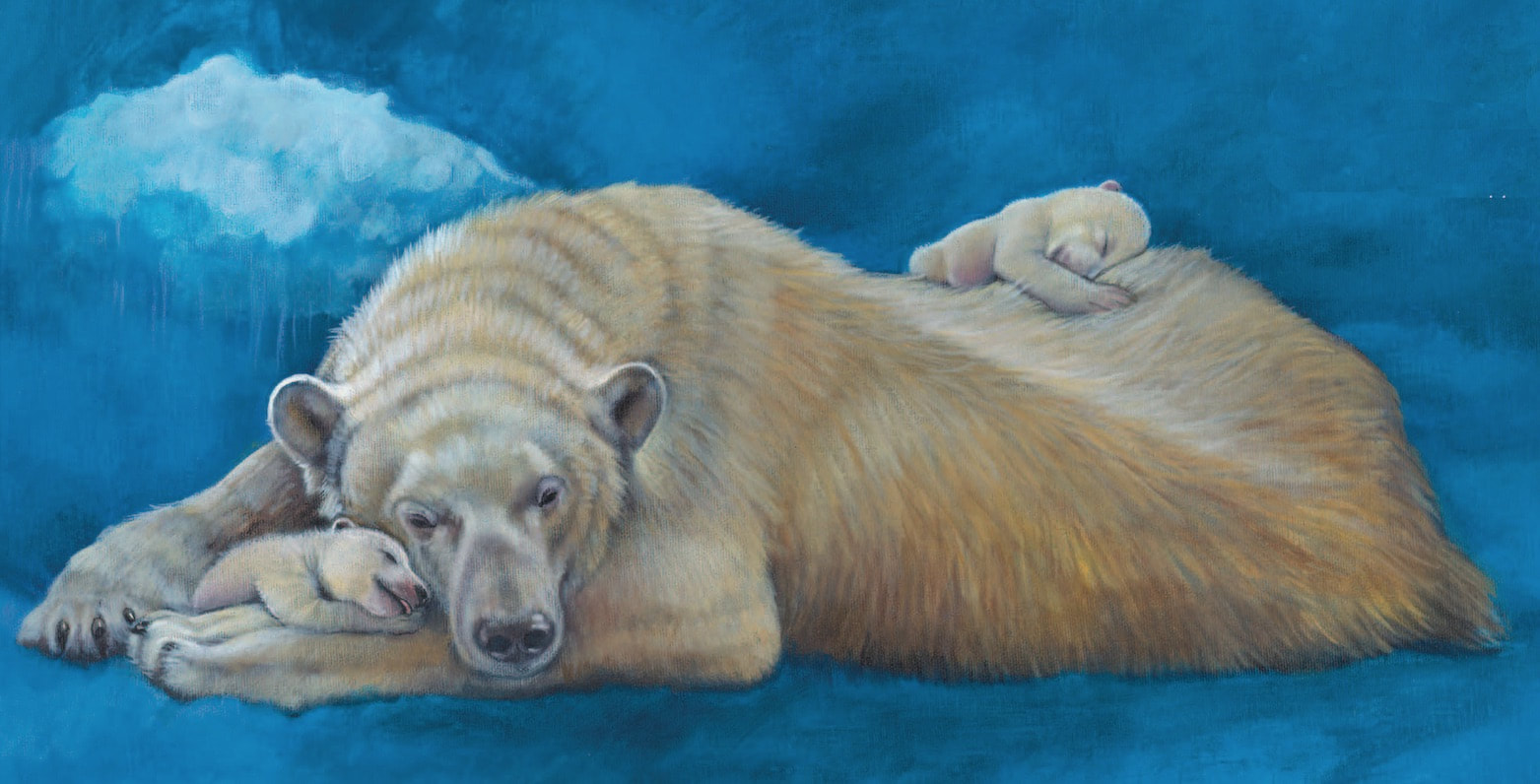
A gentle rhyme set to painted illustrations of animals parents (including humans), Mother Earth’s Lullaby leads readers through bedtime in nature. Beginning and ending with a human mother and her two children (and cat), reading a bedtime story on the couch, spreads show different animal parents with their babies: panda and cub cuddle in bamboo leaves; a condor lies over its chick; polar bear cubs cuddle on their mother in their den; owlets take refuge in a tree. But for the humans, each group of animals depicted is endangered.

The story doesn’t really focus on endangered animals, per se; it’s up to readers and educators/caregivers to explain that these animals are endangered. The story suggests that even endangered animals feel safe in their dens while they sleep, next to their parents, who care for them and keep them safe. The paintings are realistic and will appeal to readers, and the rhyme, while not always even, makes for sweet bedtime reading. Back matter includes descriptions of each featured animal, a word on endangered animals and how readers can help with recovery efforts. This one is a nice additional purchase for storytime books.

Posted in Middle Grade, Non-Fiction, Non-fiction, Tween Reads

Dinosaurs books for the arts and sciences!

The 50 State Fossils: A Guidebook for Aspiring Paleontologists, by Yinan Wang/Illustrations by Jane Levy, (Sept. 2018, Schiffer Publishing), $18.99, ISBN: 9780764355578

Ages 7-12

You know that states have their own flags. You probably even knew that states have their own trees, foods, and animals, but did you know that most states have their own fossils? It’s true! 50 State Fossils give readers a state-by-state look at each one. Maryland’s state fossil, for instance, is a Sea Snail, while Michigan’s is a Mastodon – a mammal similar to elephants and mammoths. Some state fossils are plants: Oregon’s is a Dawn Redwood, while North Dakota’s is Shipworm-Bored Petrified Wood. Each entry includes a photo and illustration of the fossil (or proposed fossil, for those states that don’t have a state fossil); a state map with a designated area where fossils can be found in that state; and a brief notation on the fossil: when the fossil dates from, when it was designated a state fossil, scientific names, and a paragraph or two about the fossil.

The State Fossils are the meat of the book, but this slim volume is packed with information for budding paleontologists: there are sections on how fossils form, how a state fossil is designated, dating fossils and the geologic time scale, and taxonomic rank.  There’s a glossary, a state-by-state breakdown of where to see fossils, and further reading. Endpapers are a colorful mix of various flora and fauna that can be found in the book.

50 State Fossils is one of those books a kid will carry to the museum to refer to while wandering through exhibits (I know I used to) and makes for a great book to give dino fans. It’s a nice add to nonfiction collections and a good gift idea.


If da Vinci Painted a Dinosaur, by Amy Newbold/Illustrated by Greg Newbold, (Oct. 2018, Tilbury House), $17.95, ISBN: 9780884486671

Ages 4-8

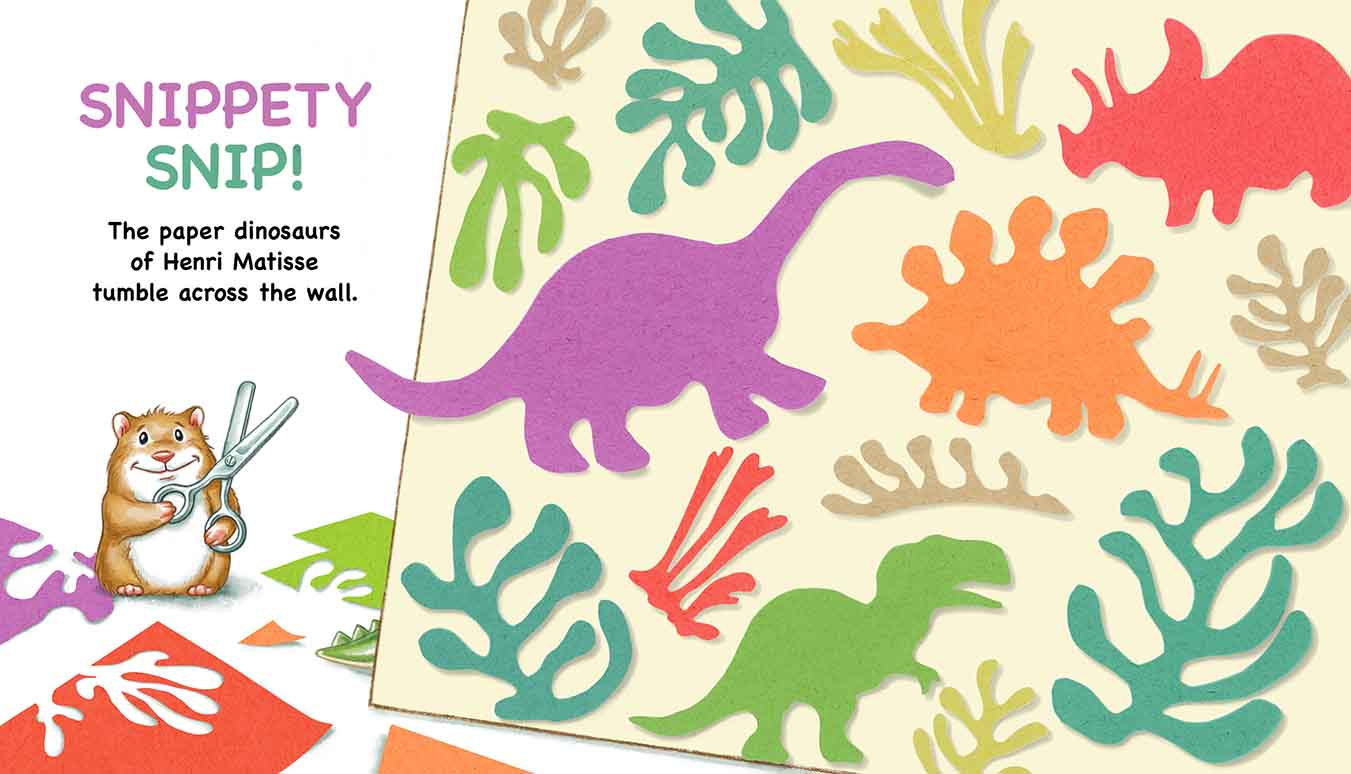
This follow up to 2017’s If Picasso Painted a Snowman is an enjoyable look at dinosaurs and art history. The hamster guide is back, escorting readers through an art gallery of different artists’ takes on dinosaurs, from a da Vinci-esque Virtruvian Dino, through Katusushika Hokusai’s giant wave (with dinosaurs wave surfing), and itty bitty dinosaurs hiding in Diego Rivera’s lilies. Who would da Vinci really paint, though, if he were painting dinosaurs? Why, Dino Lisa, of course! Readers are encouraged to copy a page sporting a blank easel and make their own dinosaur artwork, and featured artists get capsule biographies at the end, along with the dinosaur species designated to their paintings. A word from artist Greg Newbold encourages readers to draw, explore, and have fun on their own artist journeys. Endpapers inspired by Henri Matisse’s paper cutouts lead the reader in and usher them out, hopefully with a head full of ideas.

This book is just too much fun! It’s a great way to introduce art and science to kids, and begs for a program where kids can learn about artists and create their own dinosaurs. I’d have used this in my art storytime, for sure. (So maybe I need to dust that storytime off and revisit it.) Booktalk and feature in an art storytime with Lucy Volpin’s Crocdali; David Wiesner’s Art & Max; My Museum by Joanne Liu, and Henri’s Scissors by Jeanette Winter. This one’s an absolute add to collections.

Posted in picture books, Preschool Reads

Even more ways to Change the World Before Bedtime!

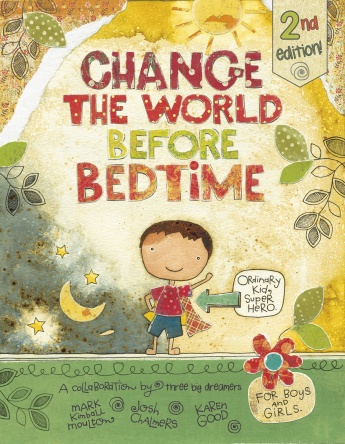
Change the World Before Bedtime (2nd Edition), a collaboration by Mark Kimball Moulton, Josh Chalmers, and Karen Good (October 2018, Schiffer Publishing). $16.99, ISBN: 9780764355813

Recommended for ages 4-8

An updated version of the 2014 book – one of my favorite go-tos for storytime and class visits – gives kids even more ways to be a positive force for change in the world. The rhyming story encourages self-care – eating healthy, dreaming your dreams, surrounding yourself with friends – to get the energy to spread happiness and goodwill by performing good deeds. The book encourages kids to make friends and include everyone; donate time and raise money to help those less fortunate, and take care of the earth by recycling and composting. Other new additions include added back matter, where kids can add their good deeds to-do list and their own “happy word” clouds; there are happy words from around the world, including Swahili, Hebrew, Haitian Creole, and Romanian. There’s a superhero cape activity that encourages kids to decorate a pillowcase cape, mapping to a spread in the book where kids wear their own superhero capes. There are suggestions for adult-kid collaboration, and updated endpapers encourage kids to make their own bookplate at the front of the book; a smiling earth says “Thank you” in a variety of different languages at the close.

The art is adorable, the message is upbeat and optimistic, and the message is clear: everyone has the ability to make positive changes in our world.

Change the World Before Bedtime is a good book to add to your activism/social justice collections. Display, booktalk, and read with The Smallest Girl in the Smallest Grade by Justin Roberts and Christian Robinson; Pass it On by Sophy Henn; 10 Things I Can Do To Help My World, by Melanie Walsh, and Maybe Something Beautiful by Isabel Campoy and Theresa Howell.

Posted in Fiction, Fiction, Intermediate, Middle Grade, Non-fiction, Non-Fiction, picture books, Preschool Reads

Last minute gift shopping? Books are easy to wrap!

Okay, the big days are coming, and you still need a gift or two – maybe your kid’s got a last-minute gift to get, or you don’t want to show up to a party empty-handed for any kids in the house. Check out some more of these gifts books for some guaranteed entertainment!

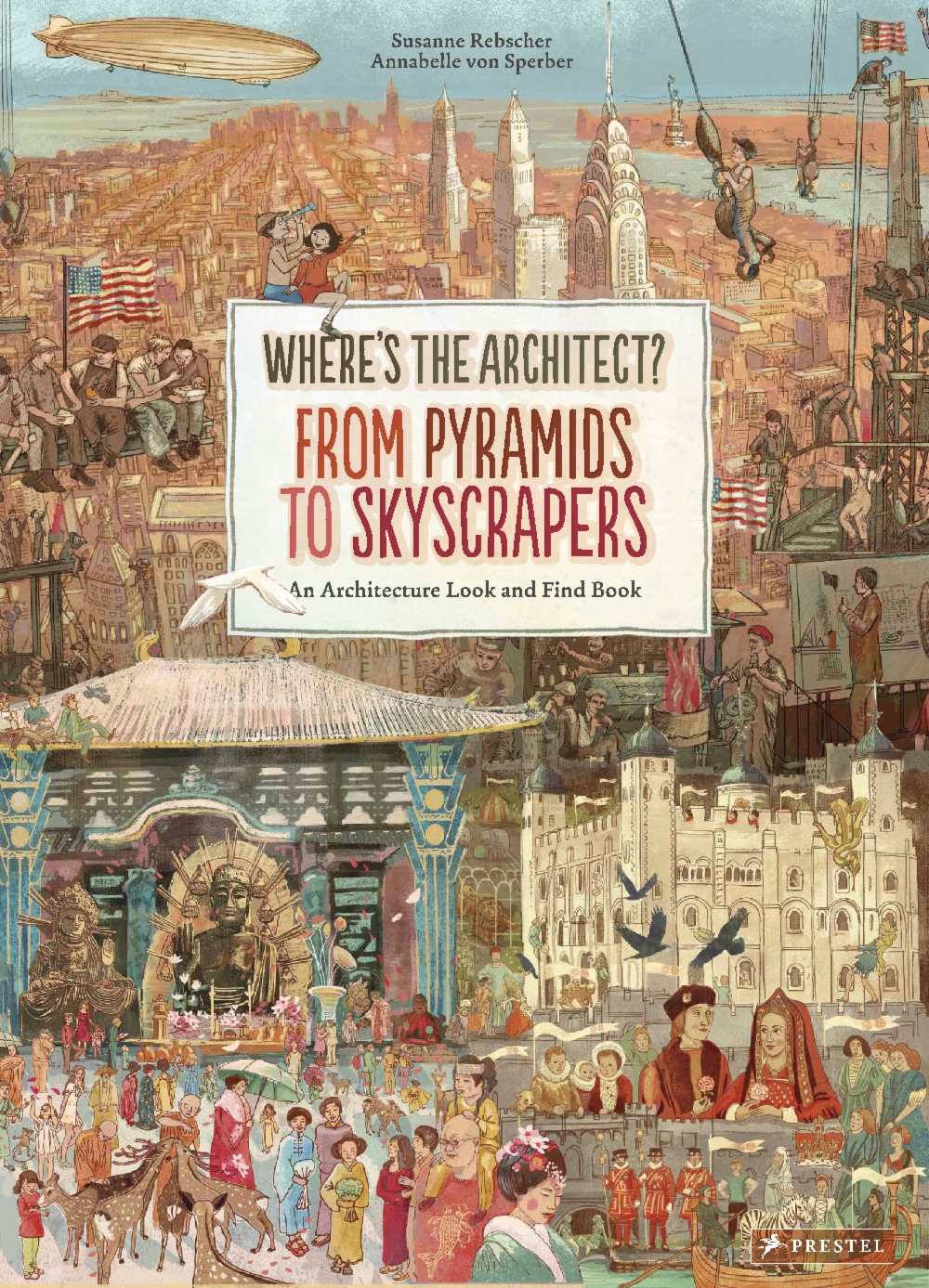
Where’s the Architect? From Pyramids to Skyscrapers: An Architecture Look and Find Book, by Susanne Rebscher/Illustrations by Annabelle von Sperber, (Oct. 2018, Prestel Publishing), $19.95, ISBN: 978-3-7913-7301-0

Ages 4-10

This one is like I Spy, but with architecture. Readers can join two kids – Ben and Mia – and two little monkey escorts on an adventure around the world! View 12 beautiful works of architecture, learn a little bit about each, and find some cool objects and people along the way. Count ravens at London’s The Tower of London; see an exhibition at the Moscow Metro, and take in a concert at Sydney’s Opera House. Artwork is full-color and there’s always something to see. Back matter offers more information on each of the structures, a timeline of construction, and a glossary of terms. Endpapers add to the fun with a world map sporting numbers for each structure’s location, and beautiful artwork featuring Ben and Mia riding a Chinese dragon. This one’s a fun gift for your seek and find fans and can pair with some Legos – let kids build their own structures!

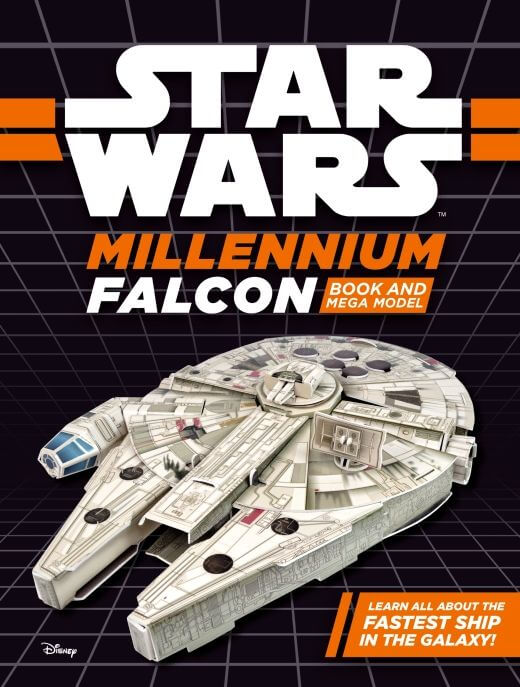
Star Wars: Millennium Falcon Book and Mega Model, (Oct. 2018, Fun Studio International), $17.99, ISBN: 978-0794442071

Ages 8-12

Okay, this is just too much fun. Build your own Millennium Falcon model with this book-model combo! Punch out the laminated stock pieces, and assemble using the attached book, which includes instructions and some Falcon history: stats on previous Falcon pilots, ports of call, and key movie moments where the ship played a big part. Activities abound here: starship Sudoku, Hoth escape maze, and draw your own spaceship. The model assembly is a little fiddly, so younger fingers will need some help from older readers. The accompanying volume is slim, but loaded with facts and fun, making this a gift Star Wars fans will love.


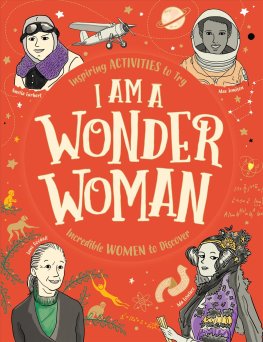
I Am a Wonder Woman: Inspiring Activities to Try, Incredible Women to Discover, by Ellen Bailey, (Sept. 2018, Portable Press), $14.99, ISBN: 978-1684125487

Ages 8-12

Activity books are a great go-to gift, and I Am a Wonder Woman is right up there, mixing a bit of nonfiction with thought-provoking, fun activities. There are profiles of 60 women who’ve made their mark on history, all with accompanying activities. Make a diary entry like Anne Frank; work on your suffragist buttons and newspaper articles with Emmaline Pankhurst and Kate Sheppard; plant a tree like Nobel Prize winner Wangari Maathai. There are familiar names here: Anne Frank, Jane Goodall, and Helen Keller; and new names, including artist Artemisia Gentileschi, whose story was recently told in the award-winning YA novel, Blood Water Paint. Two-color illustrations throughout make this a fun, smart bet for a gift book.


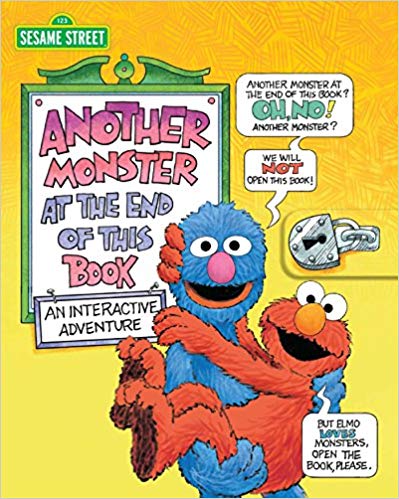
Another Monster at the End of This Book: An Interactive Adventure, by Jon Stone, (Sept. 2018, Fun Studio International), $14.99, ISBN: 978-0794441746

Ages 3-5

My favorite book of all time has been, and always will be, The Monster at the End of This Book, Starring Lovable, Furry Old Grover. I have the best memories of my mom reading this to my 4- and 5-year old self, and of the two of us giggling together as Grover’s nervous breakdown increased with each turn of the (barricaded) page, bringing us closer to the Monster at the End of the Book – which was, as you may have guessed, Grover himself. I’ve read this book to my own  kids, and added another monster to the mix, when Elmo joined Grover in 1999 for Another Monster at the End of This Book. Now, we’ve got an interactive update to Another Monster, complete with magnetic book locks, flaps to explore, and pop-ups to surprise. It’s an adorable update to a classic kids’ book, and a perfect gift for the holidays.


Happy Shopping, and Happy Holidays!