Posted in Graphic Novels, Realistic Fiction, Teen, Young Adult/New Adult

February Graphic Novels bring big feelings

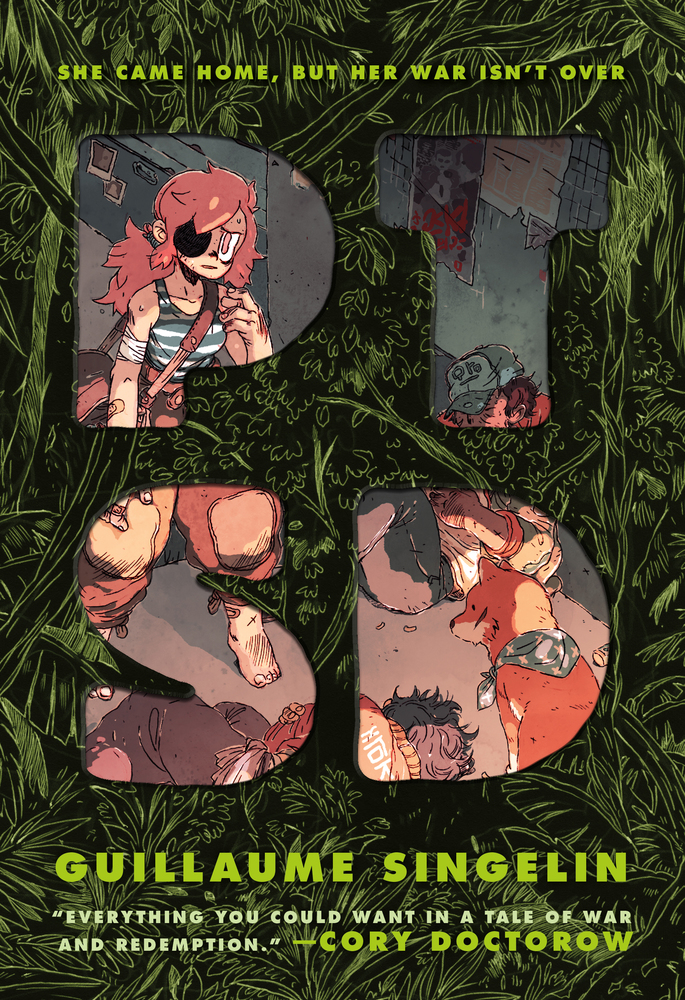
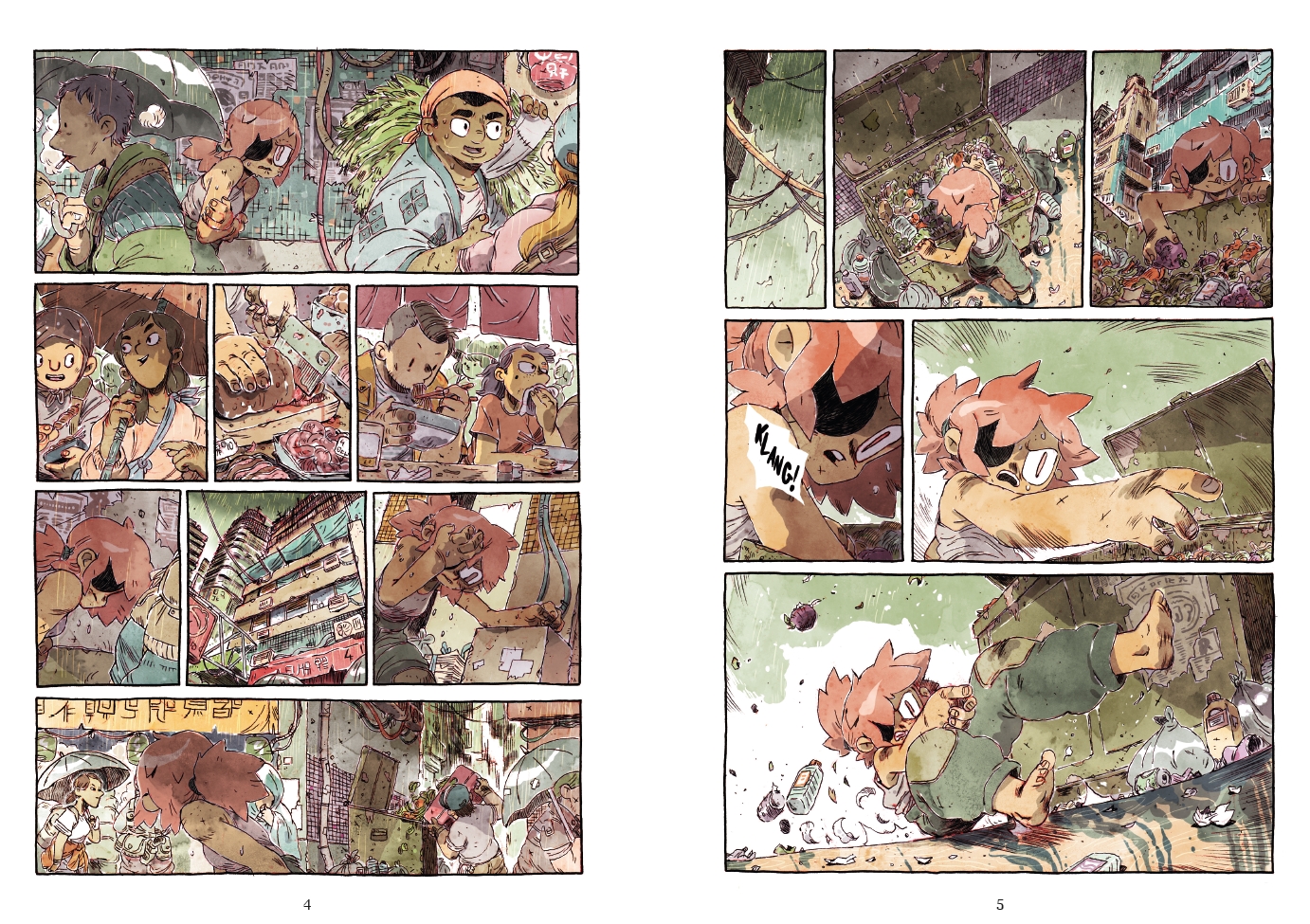
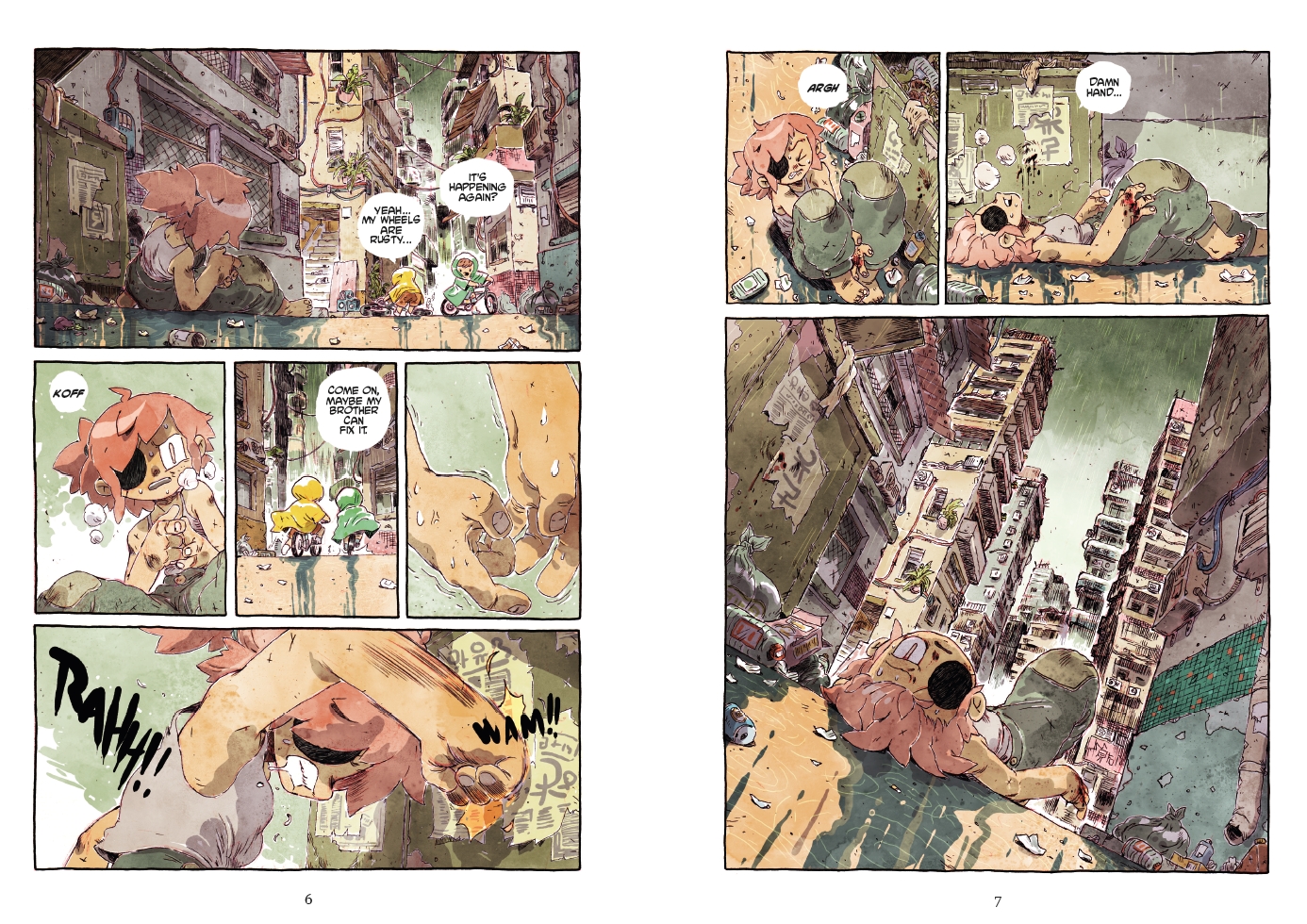
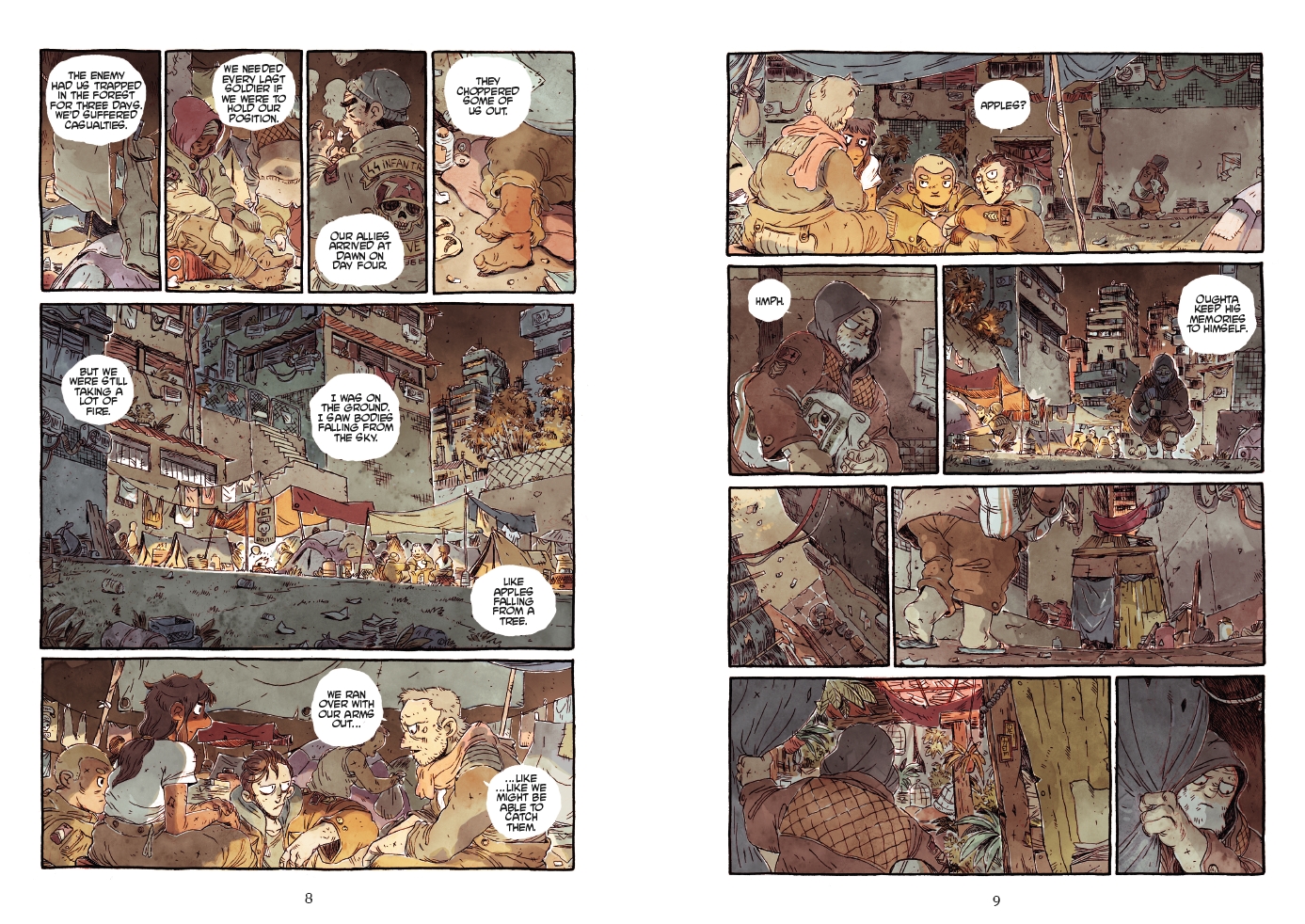
PTSD, by Guillaume Singelin, (Feb. 2019, First Second), $24.99, ISBN: 9781626723184

Ages 16+

A veteran home from an unpopular war, Jun is an outsider whose fate is similar to many of our own vets in the here and now. She’s mentally and physically broken, finding relief in the drugs she’s addicted to. When she connects with a single mom running a food booth, and a fellow vet and his dog, Red, Jun begins to heal and works toward helping her fellow vets heal.

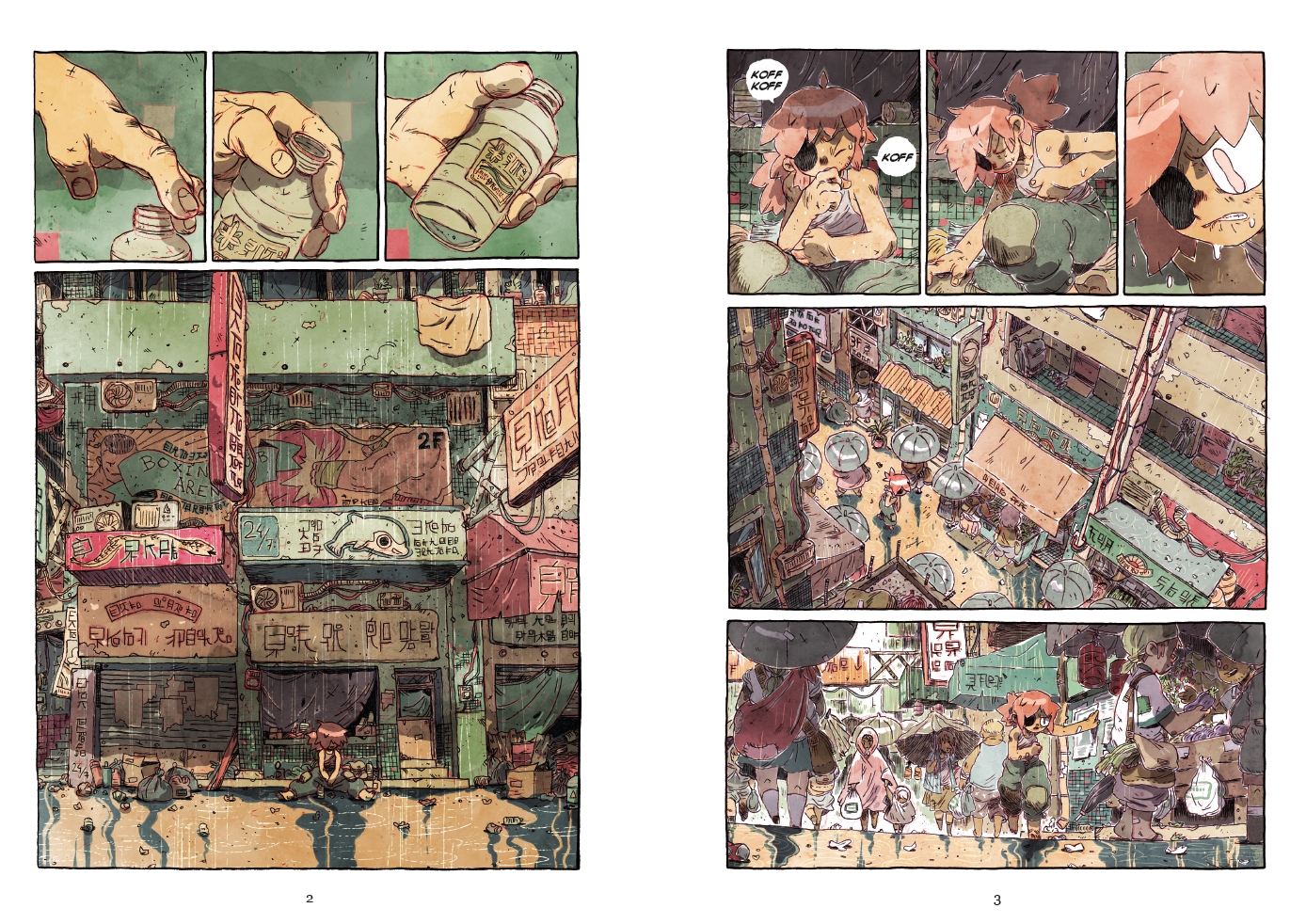
Set in a fictional, Hong Kong-inspired city, PTSD chooses a gritty, urban futuristic landscape to tell the story of a veteran who went off to fight a war, and came home to indifference. Jun gives us a chance to glimpse into a vet’s psyche: beaten down, haunted by her memories, and physically broken, she’s been left behind by the people she thought she went off to defend. She’s angry, she’s in pain, and the only thing that seems to take the edge off is drugs. Basic human kindness angers her – she initially rebuffs the woman who runs a food stand, because she’s so unused to humane gestures. Readers will see our vets reflected in Jun and her fellow homeless vets.

The story is strong, although I struggled with the artwork. The manga-inspired artwork is dark and often muddy. It’s atmospheric, but often left me struggling to figure out what was going on and where. Manga fans will snap this up, and booktalk this with books like Elizabeth Partridge’s National Book Award nominee, Boots on the Ground. This is a young adult and up-level graphic novel with language and content that may be too rough for middle grade readers.

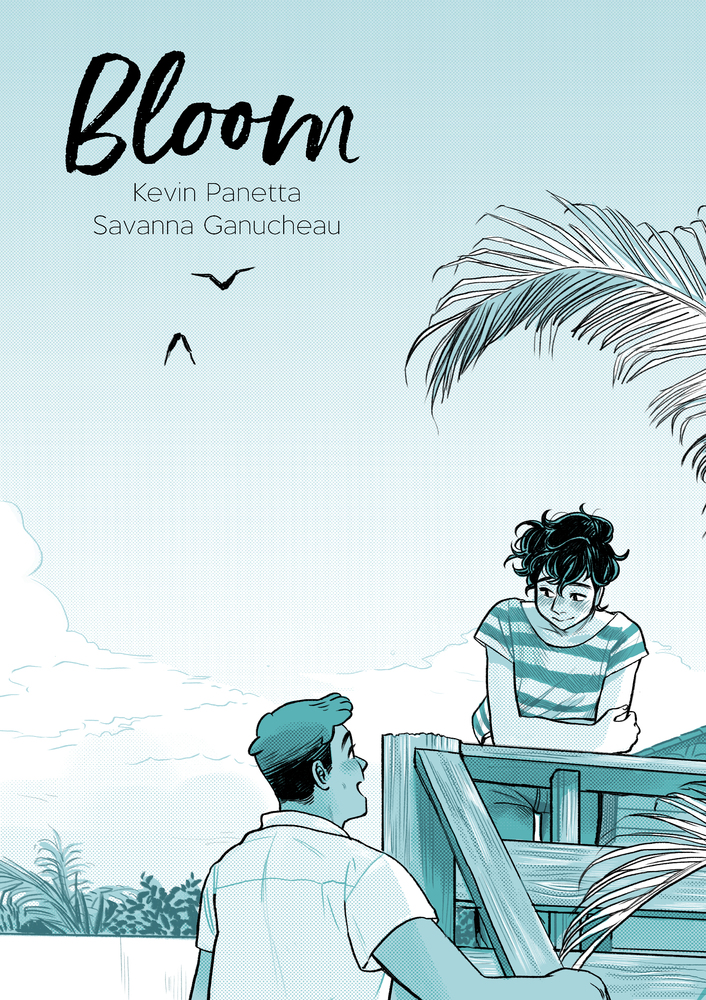
Bloom, by Kevin Panetta/Illustrated by Savanna Ganucheau, (Feb. 2019, First Second), $24.99, ISBN: 9781250196910
Ages 13+

This YA/New Adult graphic novel is a gentle love story. High school is over, and Ari can’t wait to move out of his hometown. He and his bandmates are planning on a big move to the city, where they can get more gigs and make their names – now, all Ari needs to do, is convince his dad to let him quit his job at the family bakery. At the same time, Hector comes to town to wrap up his deceased grandmother’s affairs and sell her house. He loves to bake as much as Ari is sick of it, and he ends up being the perfect replacement for the struggling bakery: even Ari’s dad loves Hector! But as Ari works side by side with Hector, getting him up to speed on the bakery, the two fall in love… until disaster hits, in more ways than one. Can Ari’s family recover when their business and home burns to the ground, and can Hector and Ari ever work out their relationship?

Created with soft blue and white artwork, Bloom is a sweet story of first love, identity, and independence. Ari can come off as pretty whiny, but his friends are even worse. Hector is the strong, silent type that pulls Ari out of himself and helps him discover who he is – and that he doesn’t need his friends in order to give him an identity. Bloom also explores consequences: Ari has to make big choices in this book, and not every choice is going to be the best one for him. It’s part of growing up, and growing up can be painful. It’s how you work through it that matters. Bloom is a good add to your YA/New Adult graphic novel collections and a love story that will give readers the warm fuzzies.
Posted in picture books, Preschool Reads

Concept Books for little learners

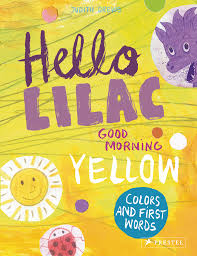
Hello Lilac Good Morning, Yellow: Colors and First Words, by Judith Drews, (Oct. 2018, Prestel), $14.95, ISBN: 9783791373515

Ages 3-6

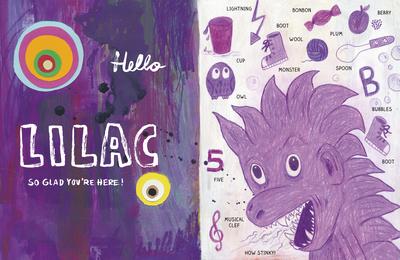
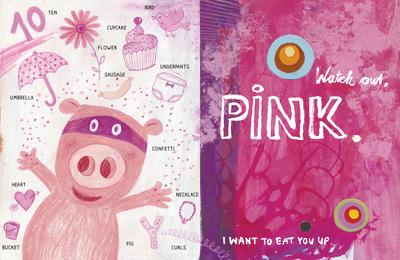
This cute book features eleven colors; one per each spread. There’s a warm greeting on one side, and objects showcasing the color on the other: “Good morning, Yellow! You glow so warm and bright”, with hand-drawn pictures of a lion, a construction helmet, lemon, and crown. It’s a lovely way to introduce colors; letting kids greet them and name a property of the color that makes them enjoyable: “Ahoy, Blue! I want to splash about in you”; “Hi, White! Where is your color?” Some object choices may leave readers scratching their heads; a syringe is included for White, and blood for Red; a screw falls under Black, which I tend to associate with Silver. I’m also not sure on how words like “trousers”, “domino tile”, and “fly agaric mushroom” are considered first words.

Overall, it’s a cute enough concept book for an additional add to collections, but there are other books that are better.


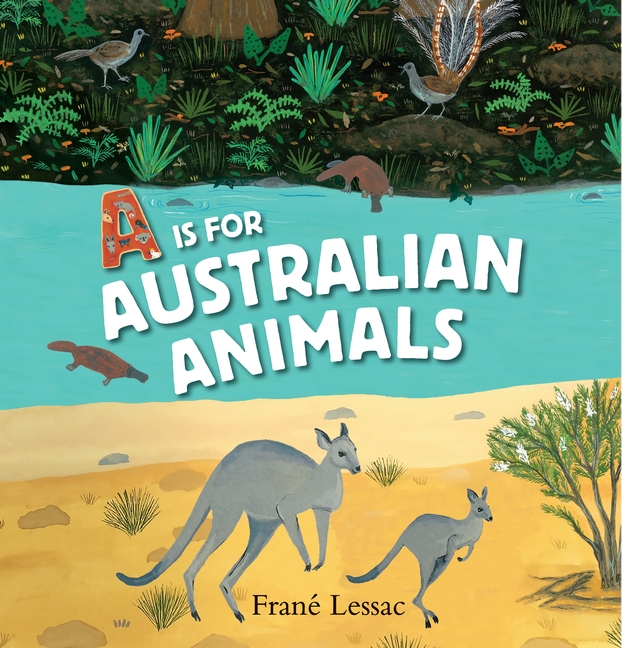
A is for Australian Mammals, by Frané Lessac, (Aug. 2018, Candlewick Press), $16.99, ISBN: 9780763694845

Ages 7-9

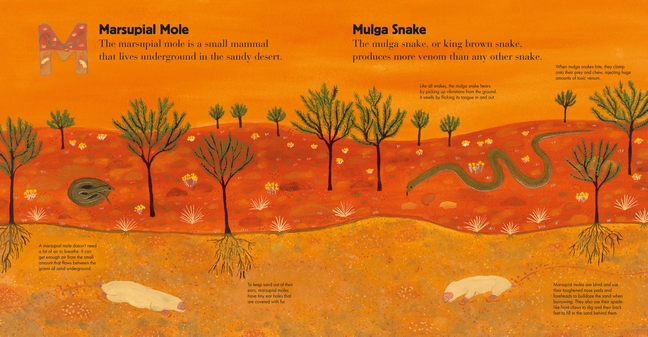
This book combines an abcedary for early readers with a geographic tour of Australia. There are 38 animals to be found here: tried and true favorites like the kangaroo, platypus, and koala are here, but there are other fantastic animals to be discovered, including the flying fox (it’s actually a huge bat); the red crab and robber crab (keep an eye on your valuables), a crayfish called the yabby, and the x-shaped crusader bug.  Loaded with facts about these Australian creatures, and featuring colorful gouache illustration, this one is a hit. Pull out some cool facts to share during a science storytime or Discovery Club program. Here’s one that will go over big with the kids in my library: “In a Tasmanian devil’s poop, a wildlife biologist discovered: the head of a tiger snake, an owl’s foot, a sock, aluminum foil, half a pencil, and the knee of a pair of jeans”. Also, a koala’s fingerprints are almost identical to human’s fingerprints. Back matter includes maps of animal distribution, highlighting areas where each animal can be found on the continent. There are free, downloadable teacher’s notes available through author Frané Lessac’s website. The Educate Empower blog has some great ways to use this book across subjects, too.

This is a fun add to your natural history books, and it doubles as a concept book for learning readers who can benefit from learning about exciting new animals and their names.


Posted in picture books, Preschool Reads

Bear parents: Just like us! Hush up and Hibernate

Hush Up and Hibernate, by Sandra Markle/Illustrated by Howard McWilliam, (Aug. 2018, Persnickety Press), $16.95, ISBN: 9781943978366

Ages 3-7

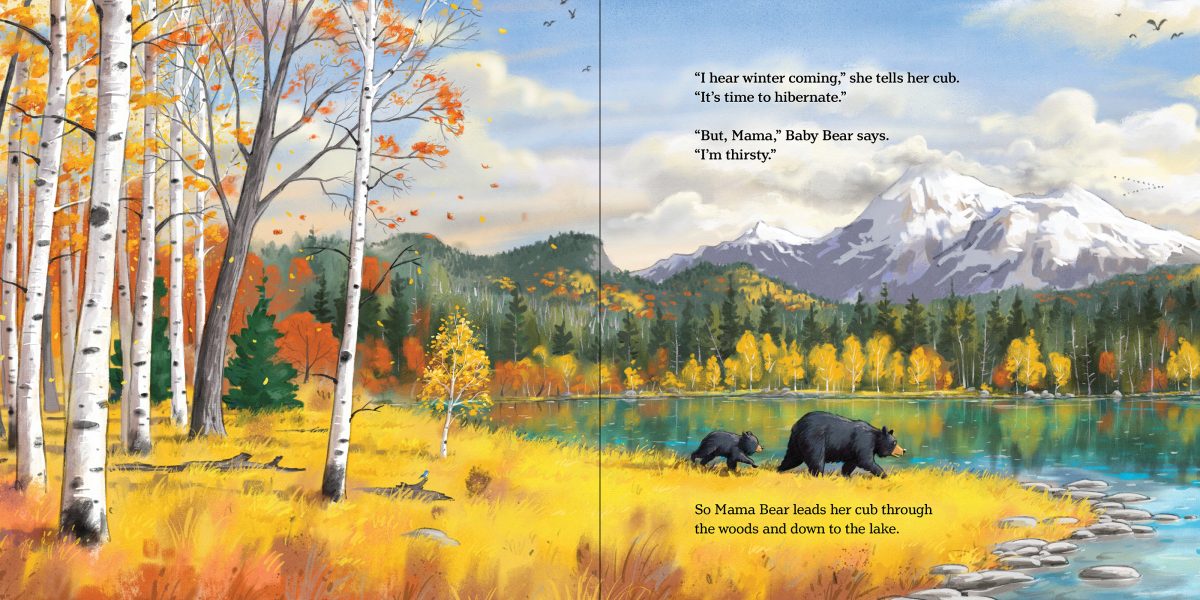
Parents and caregivers will love this one as much as their kids. Mama Bear knows that winter’s coming, and it’s time to hibernate, but Baby Bear is just not ready to go to sleep yet, and can’t understand why he can’t stay up all winter. So he asks for something to eat. And then he has to have something to drink. And then the bed is too hard. And he hasn’t said goodbye to all the other animals in the forest! Mama Bear has finally had E-NOUGH, and tells him, in no uncertain terms, that it is time for hibernating. While Baby Bear finally beds down for the winter, he manages to have the hilarious, adorable, last word.

Sandra Markle is a nonfiction maven, and Hush Up and Hibernate shows that she’s got fiction chops, too. She creates a situation that every parent and child will recognize – that bedtime back-and-forth – and makes it sweet, funny, and absolutely relatable to nature, both wild and human. What parent hasn’t said, “Okay, I’m going, bye now…” to their child, who refuses to leave with them? (My mom did it to me, and I see parents saying it to their kids at the library. We wink at each other and smile.) What parent hasn’t heard “One more hug”, “I need a glass of water”, “I need to go to the bathroom”, and “I need to say goodnight to my 100 stuffed animals/everyone in the house/the moon and each planet”?

The artwork is bold and warm, with Mama and Baby Bear’s black fur standing out against the changing seasonal colors. Expressive, big eyes let readers know what’s on each bear’s mind, and Mama Bear’s expression at the end is utterly relatable. Absolute fun for bedtime and anytime. Add this one to your collections.


Posted in Animal Fiction, picture books, Preschool Reads

Get down with Bear Moves!

Bear Moves, by Ben Bailey Smith/Illustrated by Sav Akyüz, (Oct. 2018, Candlewick), $15.99, ISBN: 9780763698317

Ages 3-7

This companion to I Am Bear (2016) gets kids up and dancing along with our favorite big, purple bear. Bear has some moves to tell you about, and this rhyming story has a beat that invites you to slip right into a rap/read. Bear – at first appearing in a white skinny tank and tidy whities – is here to dance. His squirrel and bunny assistants don’t seem too excited about the situation, but Bear won’t be denied. Hit the music and watch him bust a move; whether he’s Furry Breaking, holding a stance, doing the Running Bear, or the Robot. He finds a lady partner to tear up the floor with, but before too long, Bear is tuckered out, to the chagrin of his lady.

Big, bold colors and thick black lines make this an instant eye catcher, and the infectious rhyme makes this a storytime must. I just read this at a Saturday storytime, and the kids shrieked and giggled. You can’t sit still reading this book! Get the kiddos up and dancing; show them how to do a robot, and get them to pose in their best stance. Hilarious moments abound, including a quick snack break that takes Squirrel by surprise, and a trio of shaking booties twisting to the beat. This book is a workout and a storytime hit in one volume. An irresistible add to storytime and picture book collections.

Posted in picture books, Preschool Reads

Support Noodle Equality with Noodlephant!

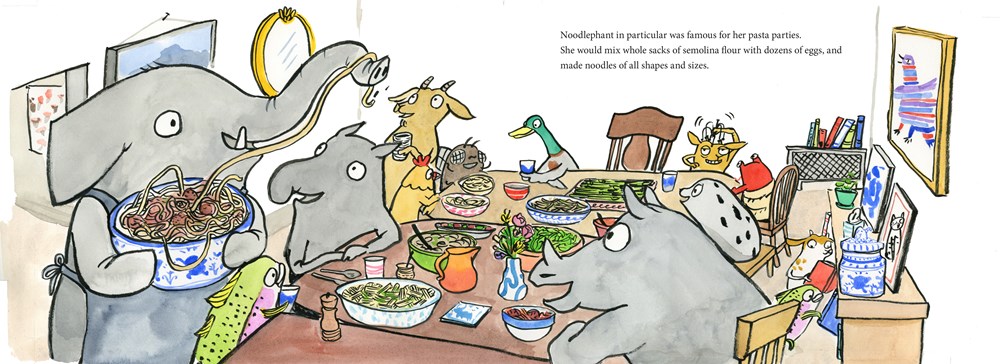
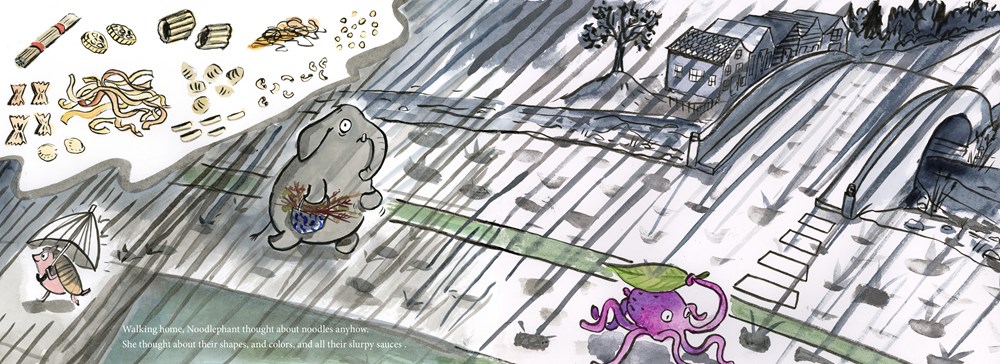
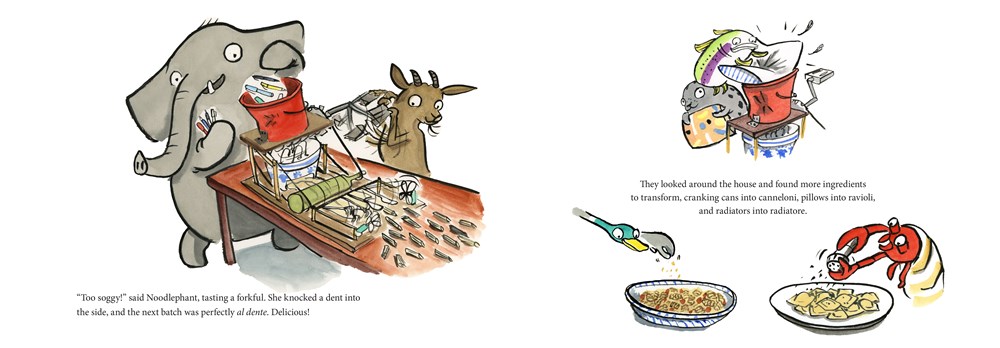
Noodlephant, by Jacob Kramer/Illustrated by K-Fai Steele, (Jan. 2019, Enchanted Lion), $18.95, ISBN: 9781592702664

Ages 4-7

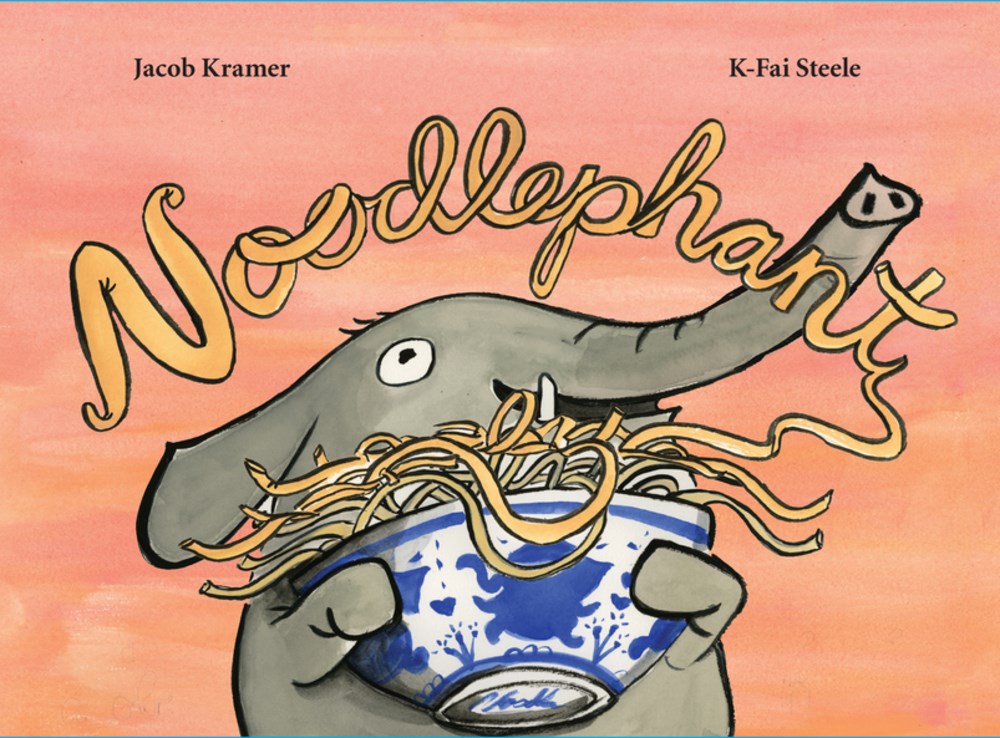
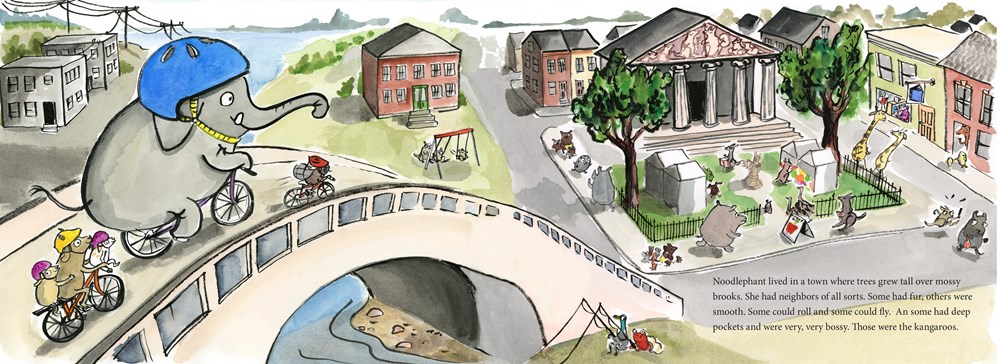
Noodlephant is an elephant who loves noodles – and she believes in sharing! Her noodle parties are all the rage, until the bossy kangaroos decide that only kangaroos get to eat noodles. Breaking the law will land offenders in “the zoo”: which isn’t a very fun place to be! Sticks and twigs don’t cut it for Noodelphant and her friends, so they invent the Phantastic Noodler, a machine that makes pasta out of anything put into it: pens turn into penne, cans into cannelloni, pillows into ravioli! The kangaroos are ready to make a bust – will kindness save the day?

Noodlephant is a fun, wacky look at creative civil disobedience and injustice. The kangaroos are oppressive and mean, forbidding other animals from enjoying anything the kangaroos deem exclusive to their little group. The pushback is creative and silly enough to get a laugh out of readers while encouraging them to think about bullying and exclusion. Occasional verse lends a subversive air that kids will understand and appreciate: “When the laws are so unjust, misbehavior is a must!” Sometimes, you just have to break the rules. K-Fai Steele’s cartoony art is bold, bright, and loaded with noodley fun.

Pair this one with Miranda Paul’s The Great Pasta Escape for a pasta-riffic storytime. A nice add to your picture book collections and a fun, discussion-provoking add to social justice storytime.


Posted in Graphic Novels, Middle Grade, Non-Fiction, Non-fiction, Teen, Tween Reads

Maker Comics: DIY your life!

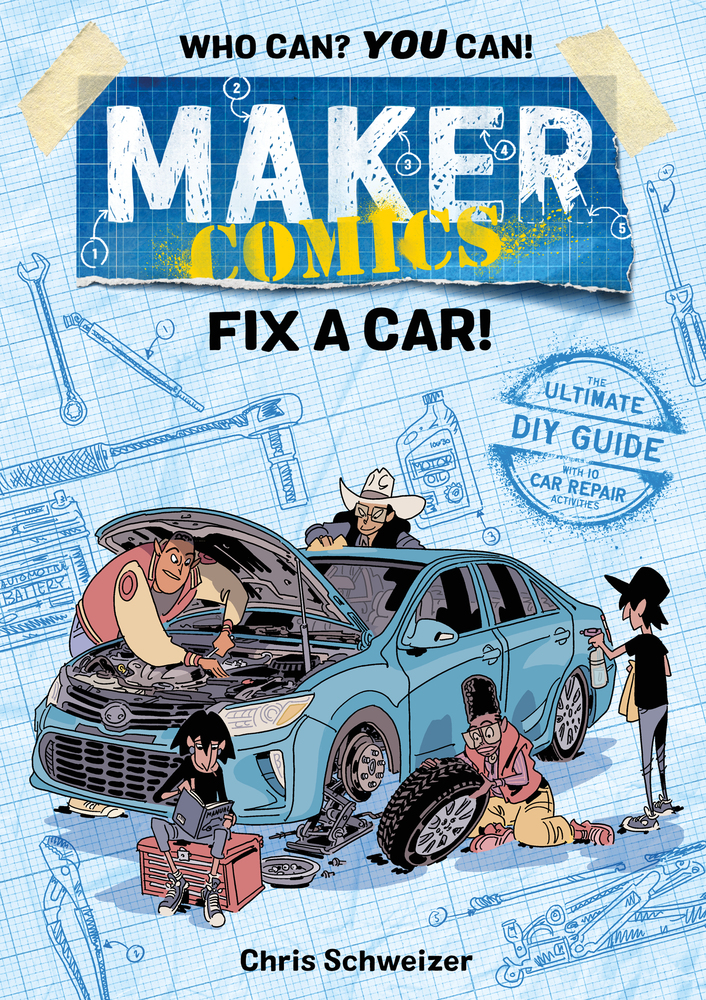
First Second has a new line of nonfiction graphic novels debuting in February: Maker Comics is a perfect DIY companion to their Science Comics series, adding a more hands-on component to the science behind everyday things. The first two titles to hit shelves are Bake Like a Pro! and Fix a Car! With the tag line, “Who Can? You Can!”, these books are ready to take readers step-by-step into the world of making and hands-on STEAM.

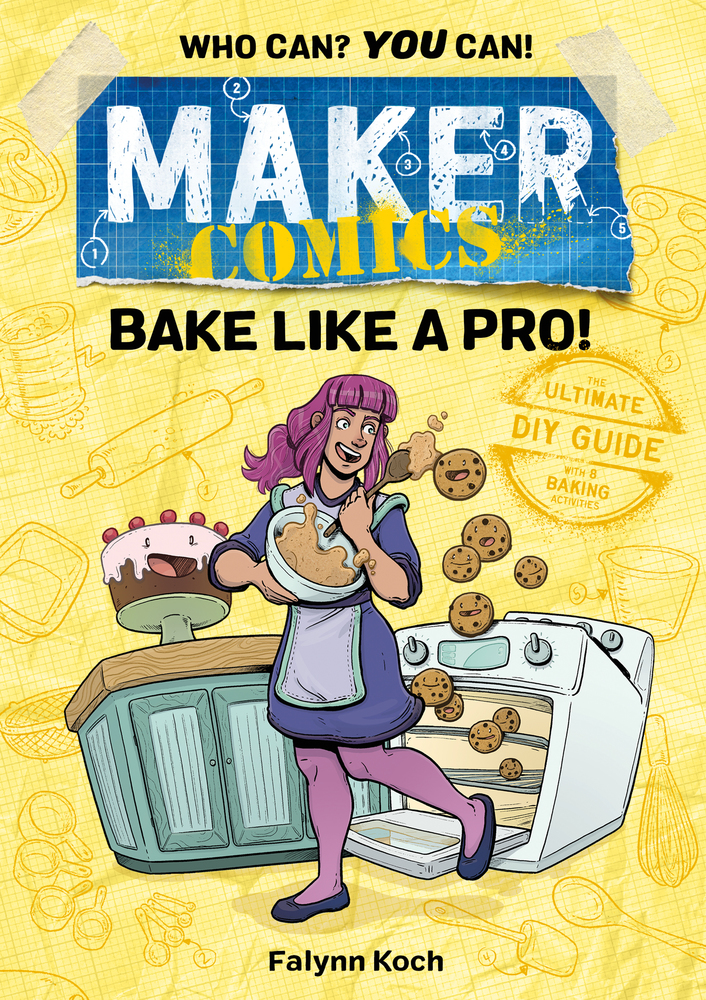
Maker Comics: Bake Like a Pro!, by Falynn Koch, (Feb. 2019, First Second), $12.99, ISBN: 9781250150066

Ages 10-14

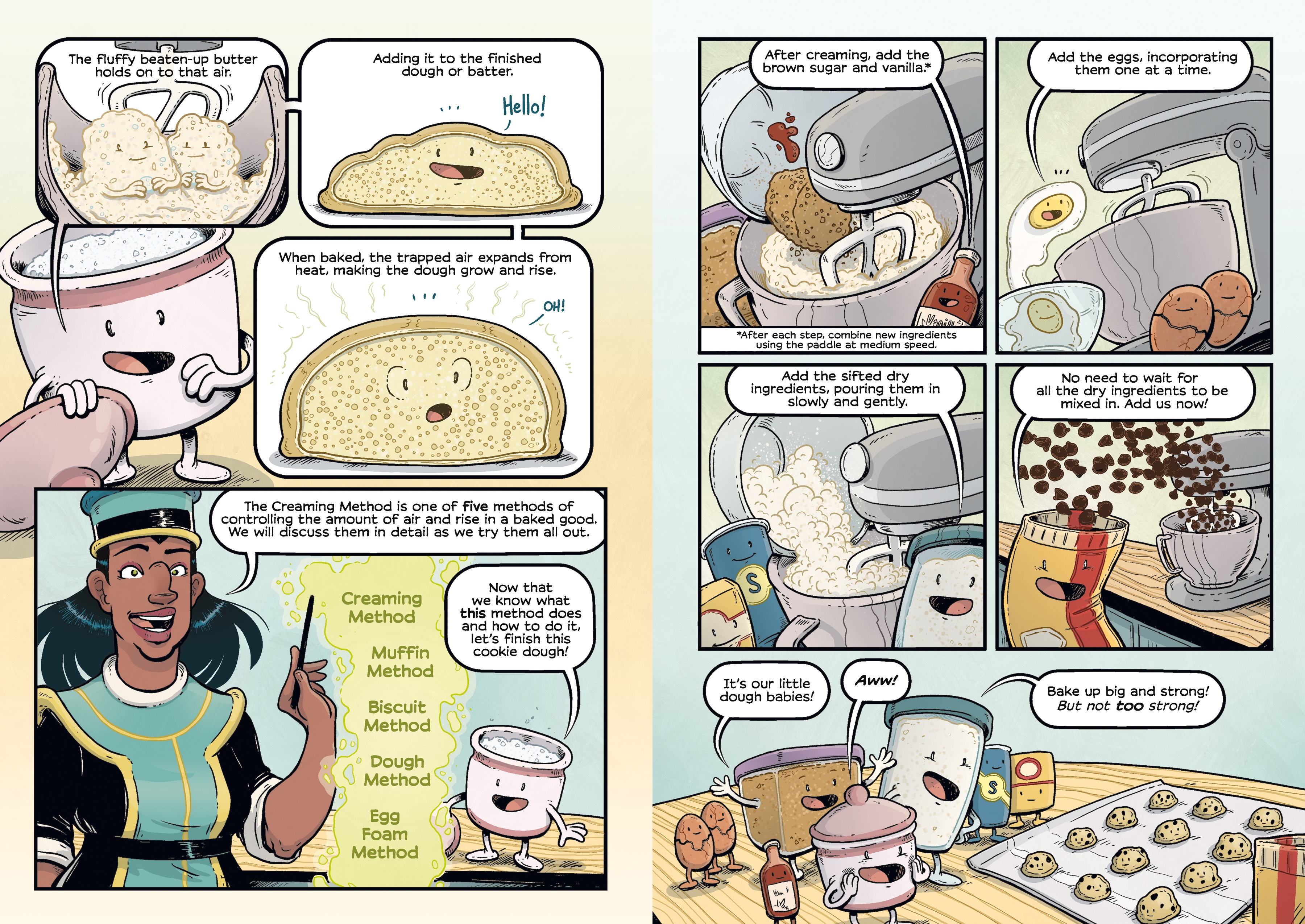
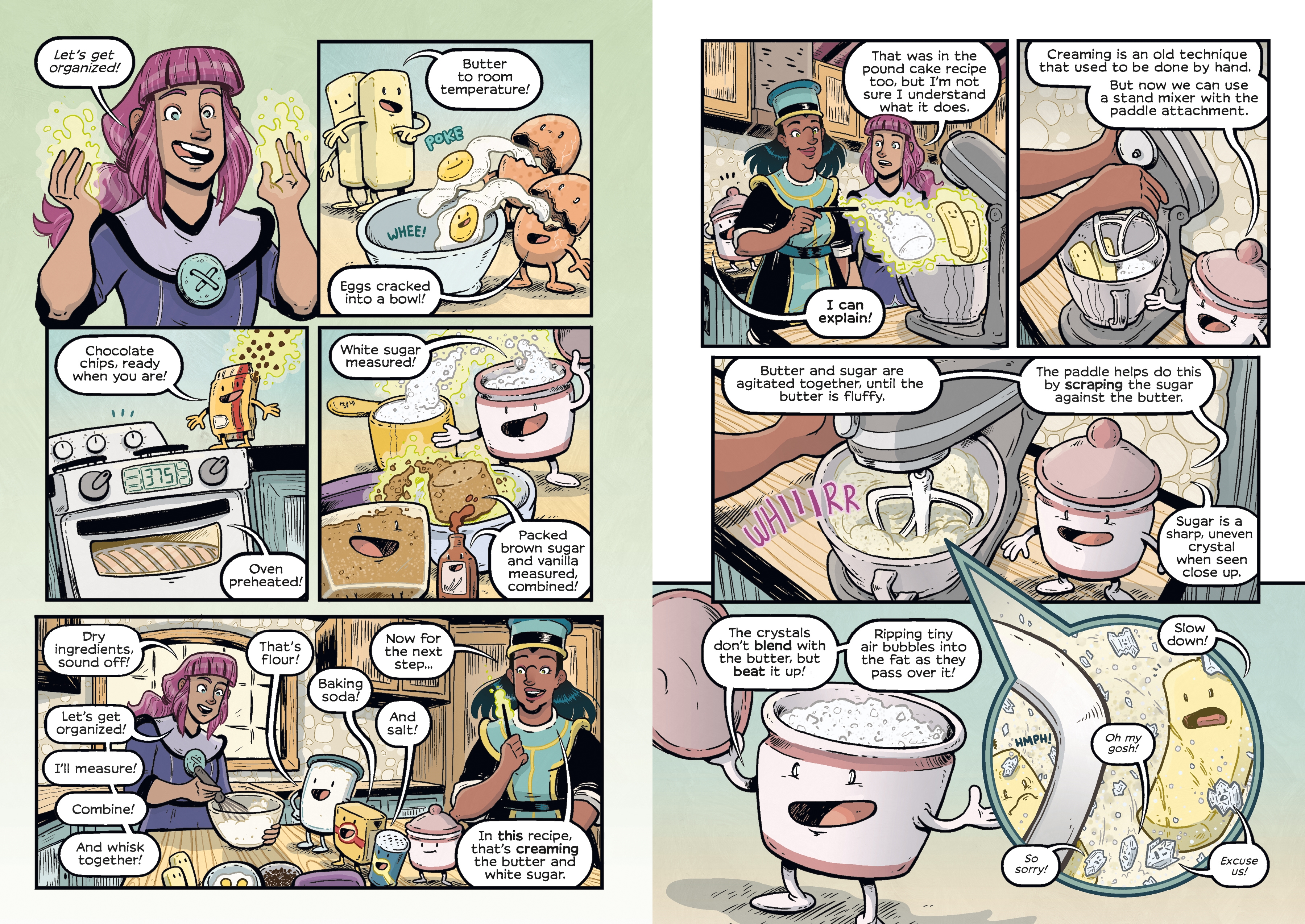
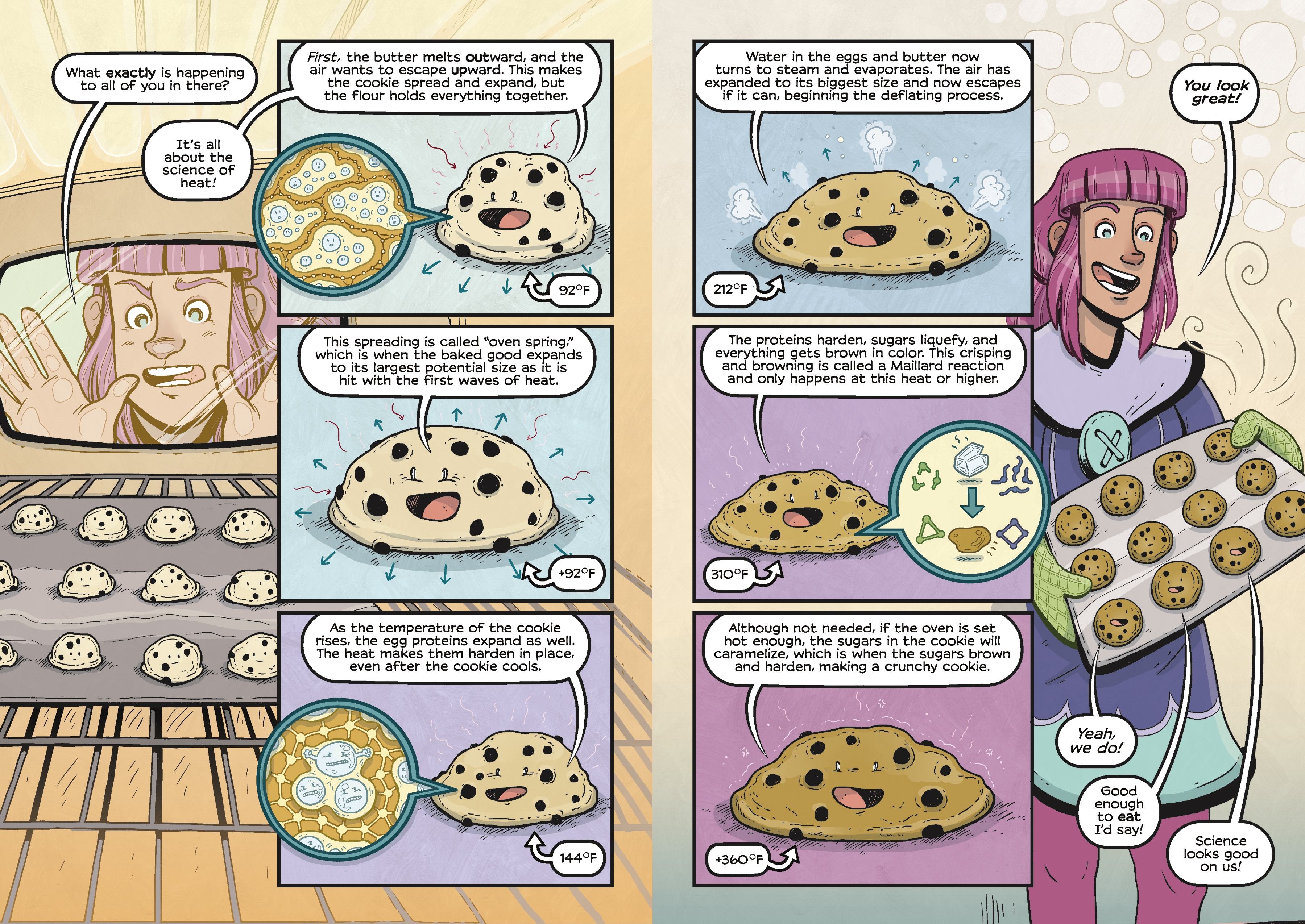
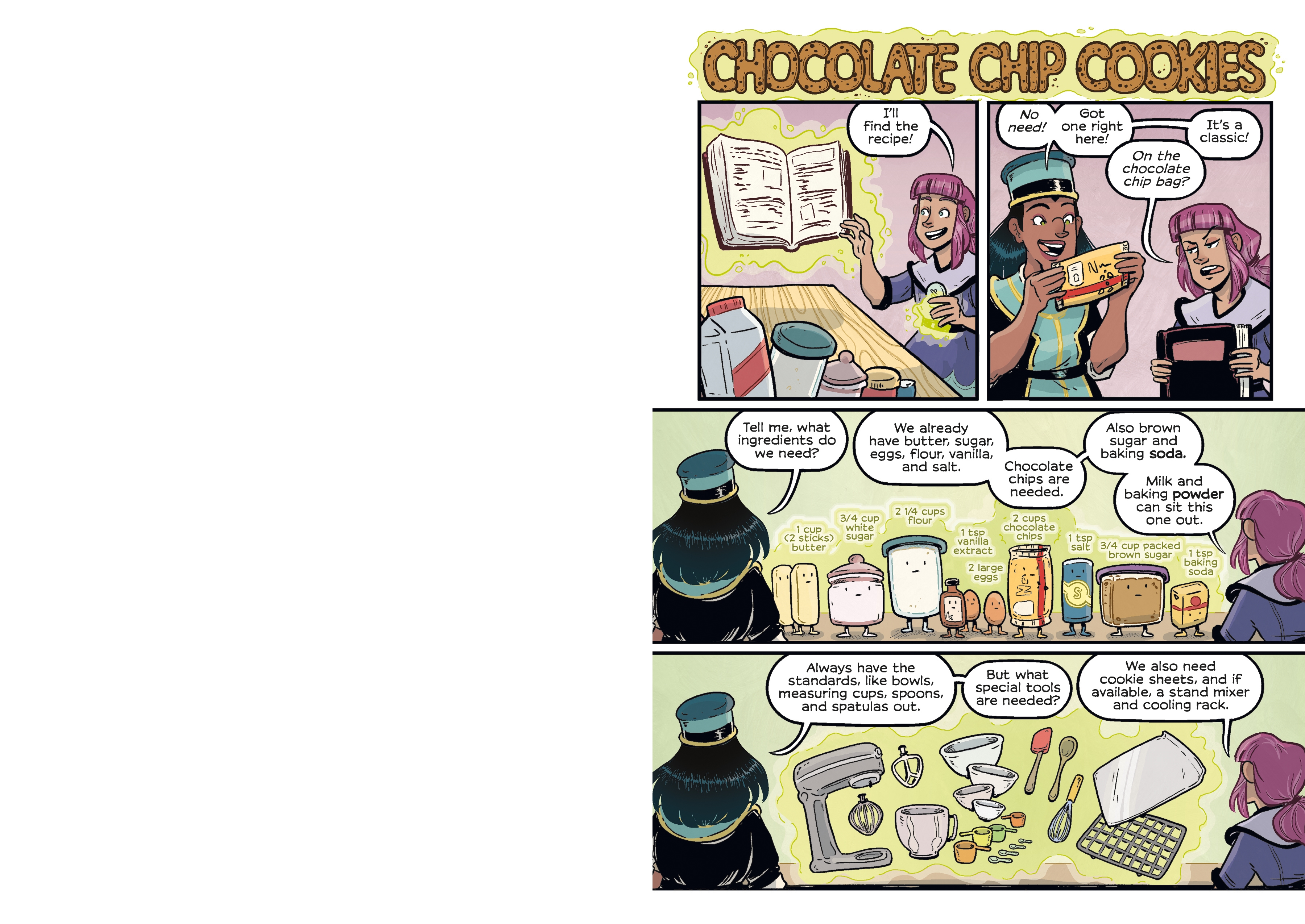
Written and illustrated by Science Comics alum Falynn Koch, Bake Like a Pro! follows a young wizard in training, Sage, as she’s apprenticed to baking master mage Korian. Sage is not thrilled with this turn of events, because she thinks baking is boring. Where’s the pyromancy? Where’s the transfiguration? But what Sage doesn’t realize yet is that baking is a magic and science all its own: it’s a delicious form of alchemy! Korian and a group of enchanted ingredients teach Sage all about the science behind baking: how to combine different proteins, fats, and liquids to craft incredible pies, cookies, breads, cookies, dough, and more.

At once a science lesson, a fantasy tale, and a recipe book for new bakers, Bake Like a Pro! is perfect for middle schoolers and upper elementary readers who are ready to take on some next-level making. There are step-by-step explanations of how ingredients come together – and what happens when ingredients go wrong (always sift the flour!), plus an illustrated walk-through for 8 different recipes, including chocolate chip cookies, cheesy biscuits, pizza dough, and sponge cake with buttercream frosting. At the end of the story, Sage proudly serves up her delicious treats to her fellow novice mages, proudly proclaiming, “Every step in baking is magic!”

Like Science Comics, there’s a quick reference at the end that puts all the major info in one place. Here, we get some helpful reminders on the six baking methods, effects of ingredients and conversion tables, bread techniques, and continued reading (including one of my favorites, I’m Just Here for the Food, by Alton Brown).

Maker Comics: Fix a Car!, by Chris Schweizer, (Feb. 2019, First Second), $12.99, ISBN: 9781250150042

Ages 10-14

Next up is Fix a Car! by Crogan’s Adventures and The Creeps author and illustrator Chris Schweizer. A group of tweens and teens meet up when they join Car Club, overseen by auto whiz Ms. Gritt. Lena, Mason, and Abner are teens with their own wheels, and twin siblings Rocky and Esther are seventh graders who  love cards and want to learn all they need to know so they can be ready when they are old enough to drive. They’re different kids with different lives and circumstances, but the one thing they have in common is a love for automobiles, and Ms. Gritt is happy to show them all they need to know.

The story smoothly moves between each character’s life outside of car club, building a relationship between characters and readers and giving kids background that they can relate to, from a stressed out teen determined to excel in all the things, to the kids working through grief over a parent. Car Club gives them all a landing place, a place to belong, and place to come together and get their hands dirty.

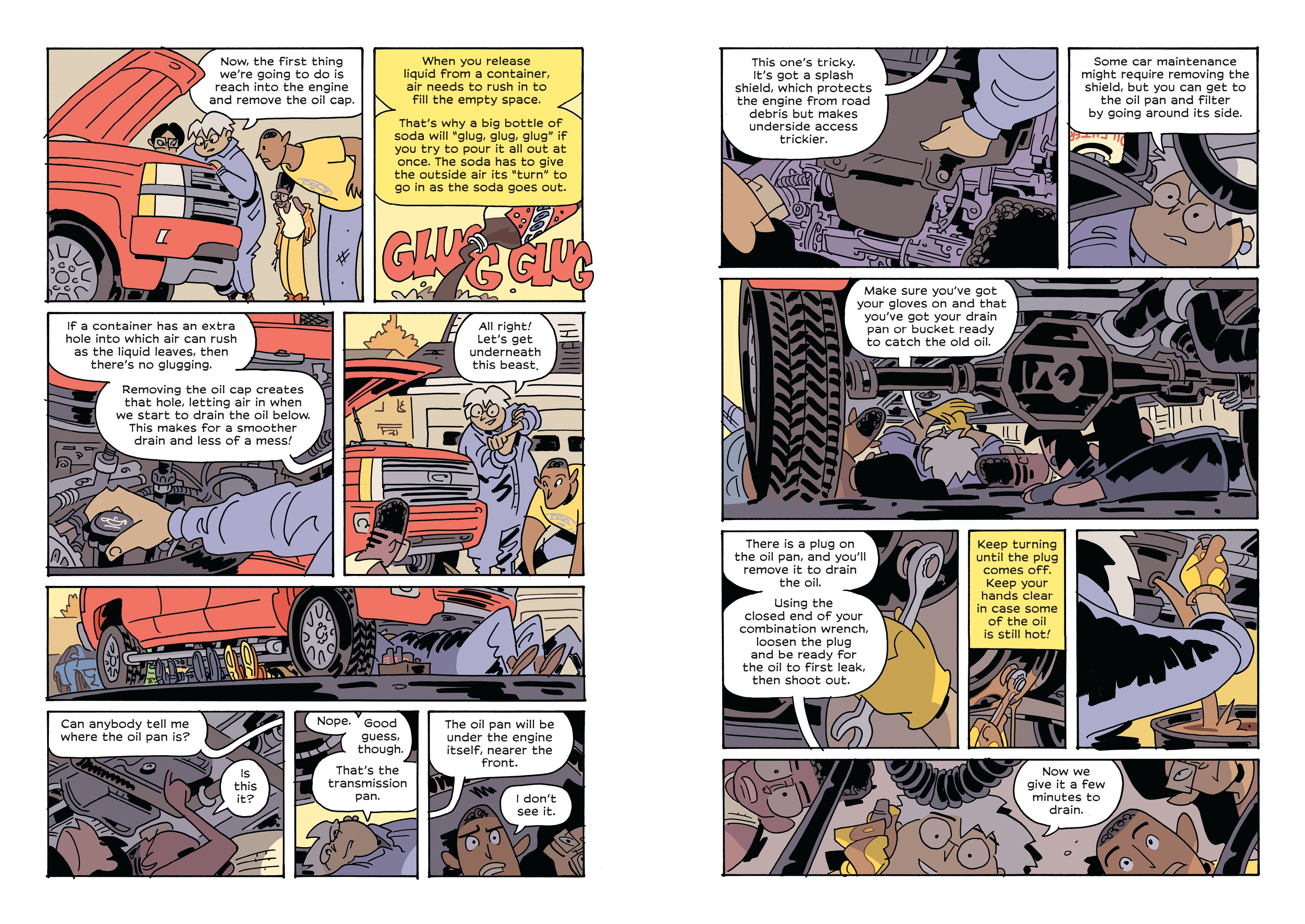
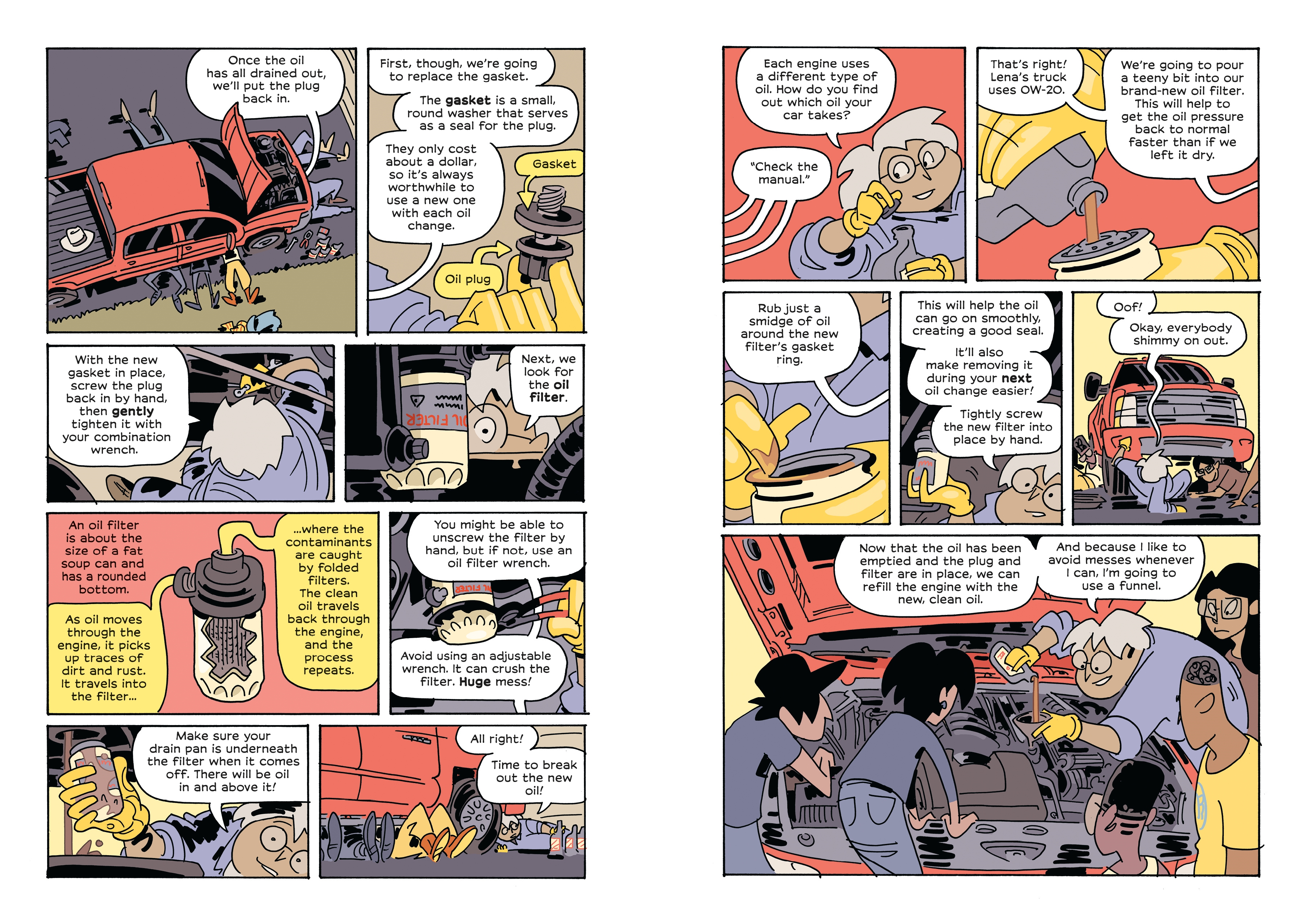
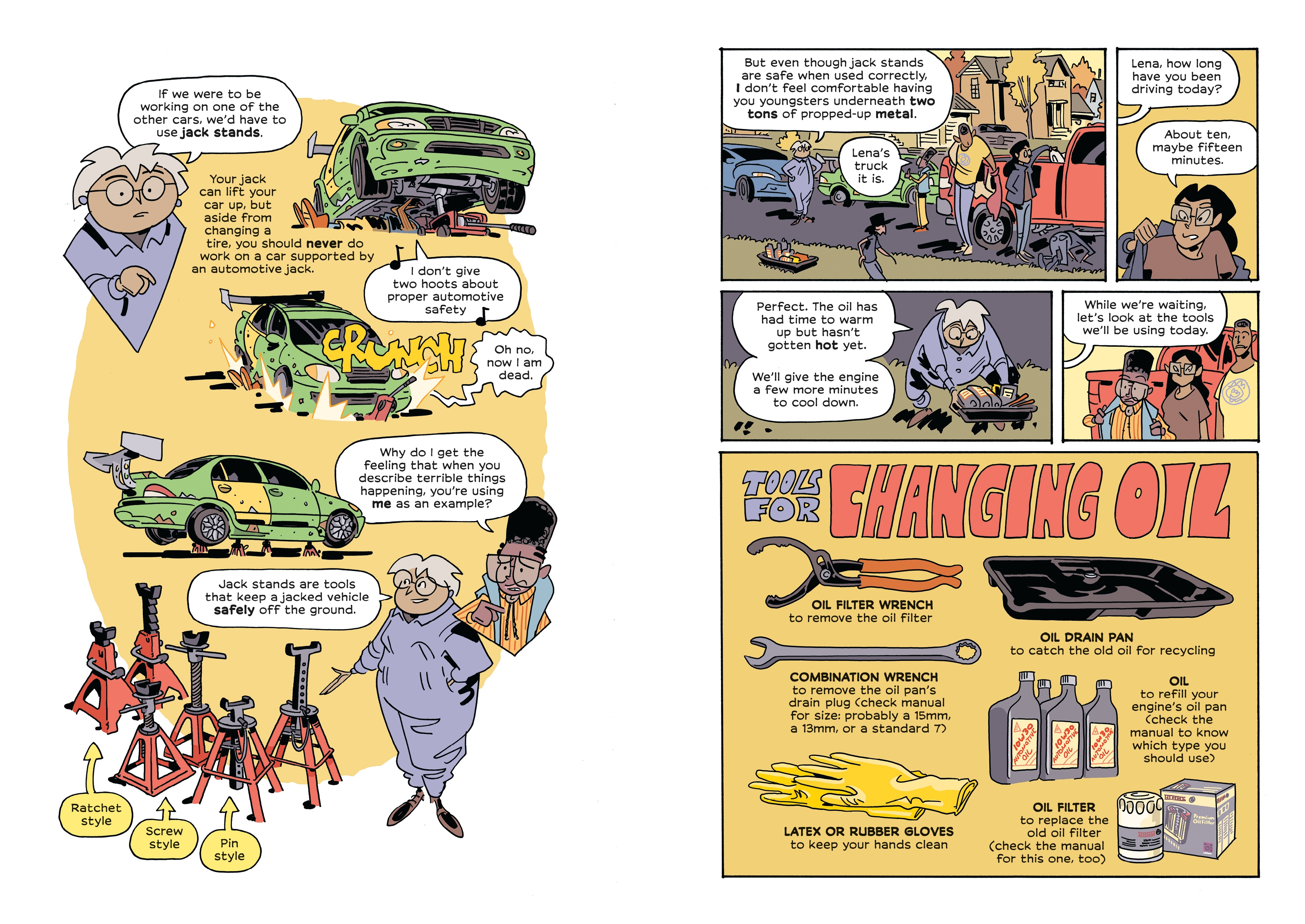
Fix a Car! is incredible in its detail: Ms. Gritt teaches her group how to check the oil and how often to check it; how to check the pressure in their tires, and how to change a tire; how to investigate a squeaky noise. Full-color diagrams introduce readers to the complex systems and inner workings of autos, and safety is paramount, with Ms. Gritt providing smart advice on how to be safe while changing a tire including how to locate a spare tire in your car and the difference between spare tires and donuts (not of the Dunkin’ variety). There are instructions on 10 different parts of auto care, including creating a portable tool kit, changing the oil, replacing a drive belt or pulley, and washing and detailing a car (bonus: adding a racing stripe). There’s a wealth of resources at the end of the book, including an author’s note on how Chris Schweizer learned to take care of his car and some further reading.

Because of the hands-on subject matter, I’d definitely include Maker Comics in my middle school collections, but the reading level works for middle grade as well. With adult supervision, I’m all for teaching younger kids to bake and learn their way around a car, so I’d consider it for either collection in a public library – many of the middle schoolers in my library go between Juvenile and YA collections – and a solid choice for middle school libraries. Create a solid graphic novel nonfiction section, and the kids will love you for it.

Posted in Intermediate, Middle Grade, Non-fiction, Non-Fiction

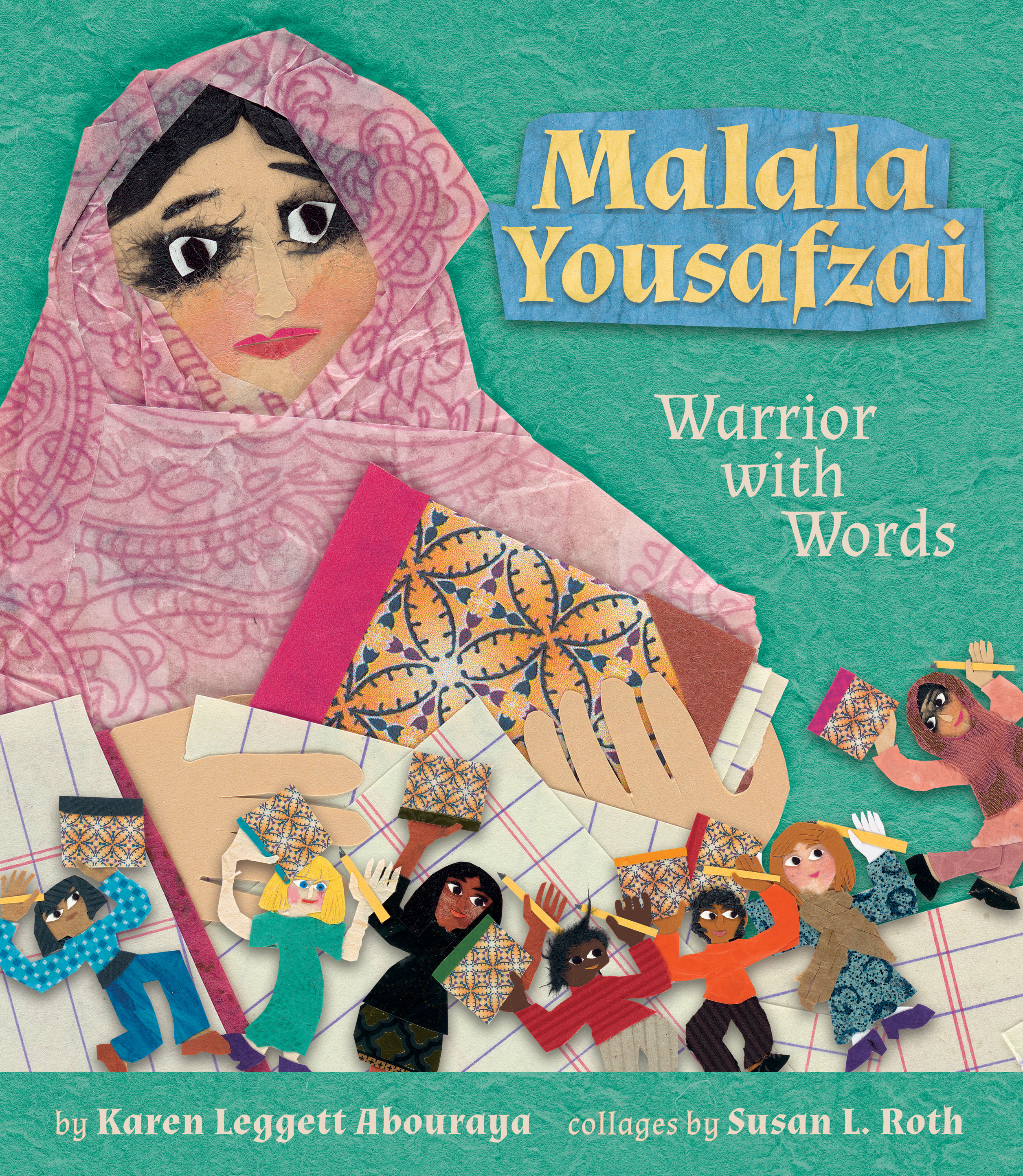
Malala Yousafzai: Warrior with Words

Malala Yousafzai: Warrior with Words, by Karen Leggett Abouraya/Illustrated by Susan L. Roth, (Jan. 2019, Lee and Low), $19.95, ISBN: 9781620148389

Ages 6-10

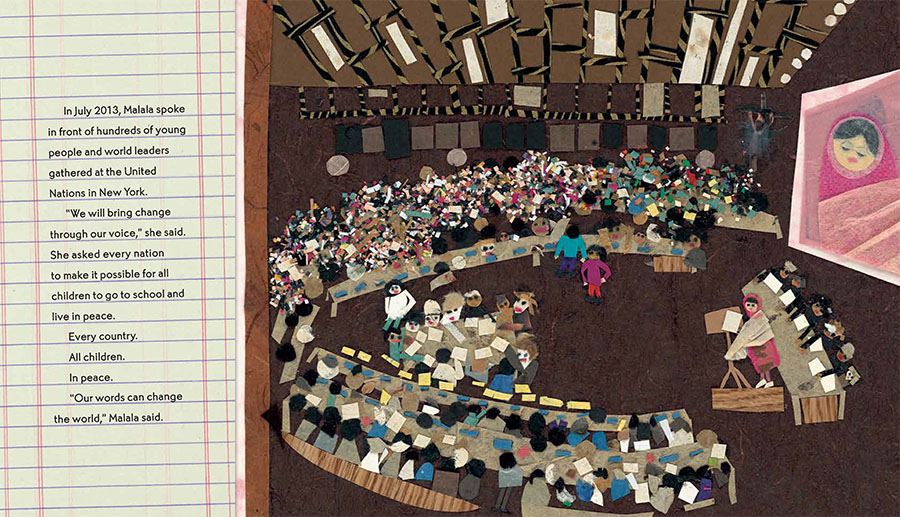
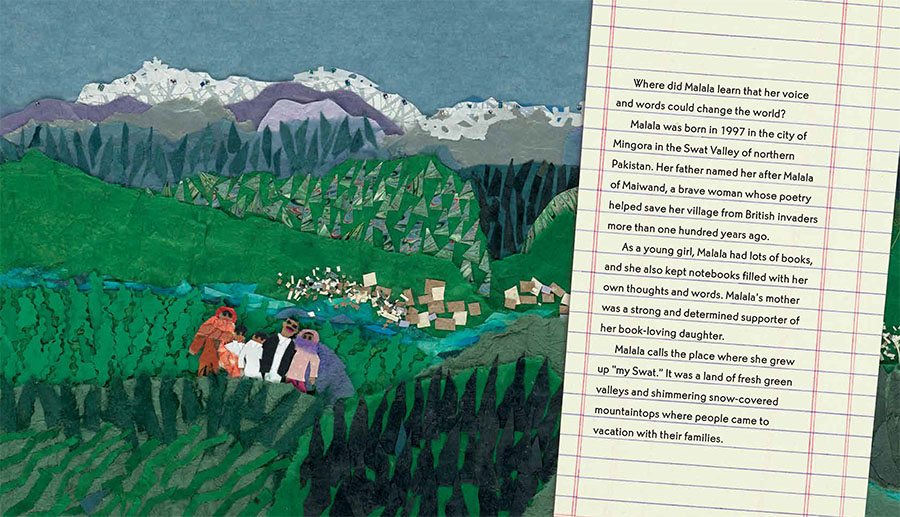
This latest biography of activist and Nobel Prize winner Malala Yousafzai speaks to younger, intermediate readers on their level: she grew up in Pakistan’s Swat Valley, lovingly referred to by Malala as “my Swat”. Her father was the principal of a school for girls, and she grew up loving books and learning. In 2007, when the Taliban came to power and tried to ban education for girls and women, Malala began blogging, under a pen name; her blog was picked up by the BBC’s website in 2009. Her family fled the Swat Valley when Pakistan’s army fought the Taliban, but they returned when the fighting was over, finding much of their home destroyed. In 2012, Malala and two friends   were shot by Taliban soldiers who boarded their school bus. She was taken to a hospital in England, and her activism became a worldwide phenomenon, speaking at the United Nations and receiving a Nobel Prize for her work.

The text is straightforward, describing the Taliban’s policies and even Malala’s shooting in plain language. The Taliban doesn’t get to take Malala’s story away from her: she shines here, with her accomplishments and her dedication to education for all being the main focus of the book. Her awards and her studies are lauded, as is her love of the color pink and her love for her family and her home. Back matter includes information on Pakistan, the Taliban, The Malala Fund, and a spotlight on youth activism and organizations.

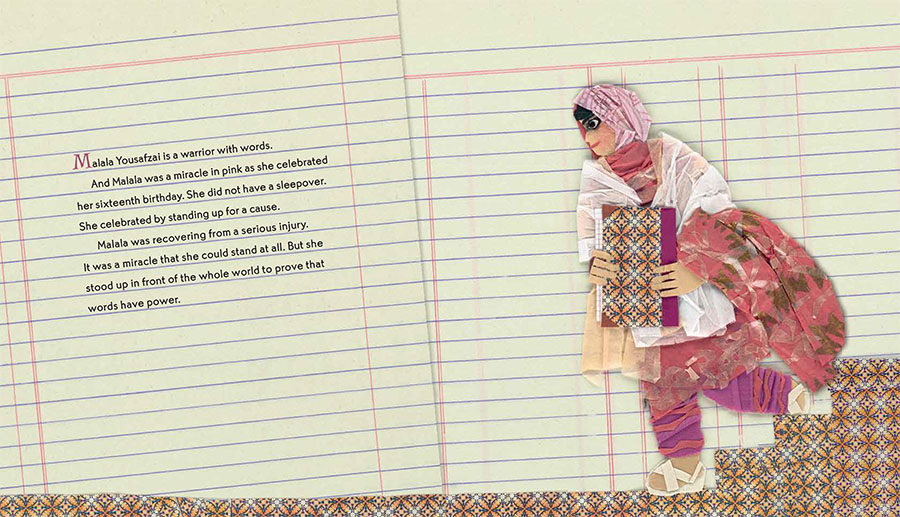
The collage art is outstanding. Most of the artwork is soft, using felts and fabrics with warm and soft colors to create Malala, her family, her world, and the diversity of the United Nations and our world; even when women must don black clothing to avoid notice by the Taliban, the crisp blacks and whites of the characters clothing are felt: soft, warm. That all changes for the two pages introducing the Taliban, which depicts them using photo art with crudely drawn, mask-like faces. It made me sit up the first time I read the book, and on subsequent readings, I realized how brilliant illustrator Susan L. Roth is. It’s a subtle, but jarring change that lets readers experience just a fraction of the discomfort, the fear, that these figures brought with them. Incredible artwork by an award-winning illustrator, and it supports and gives life to Karen Leggett Abouraya’s informative reporting. Add this to your picture book biographies.

Posted in Preschool Reads, Toddler Reads

Detectives Fox and Goat are on the case!

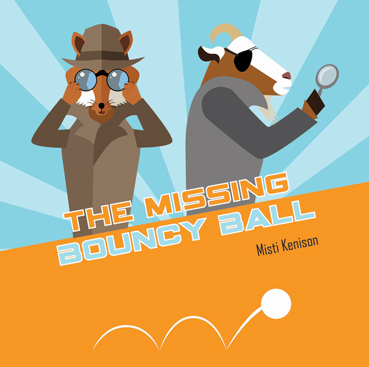
The Missing Bouncy Ball, by Misti Kenison, (Oct. 2018, Schiffer Publishing), $12.99, ISBN: 9780764356001

Ages 1-4

A little girl’s ball bounces out of her backpack! Luckily, Detectives Fox and Goat are on the case. They search through spreads, identifying different balls, and eliminating them from consideration by identifying properties that set them apart from the bouncy ball: color, size, shape, texture. When they reunite the bouncy ball with Emma, its owner, they congratulate one another and get ready for their next adventure.

I’ve been a fan of Misty Kenison’s Young Historians series, so when I saw her name on the Fox and Goat books, I knew I was in for something fun. I love the question and answer pattern her books take, letting readers learn to spot clues as they go. The end Bouncy Ball recaps the clues used to find the bouncy ball, reminding kids of the steps they took to arrive at the conclusion. Sharp-eyed readers will notice the bouncy ball’s location a few times through the book, too.


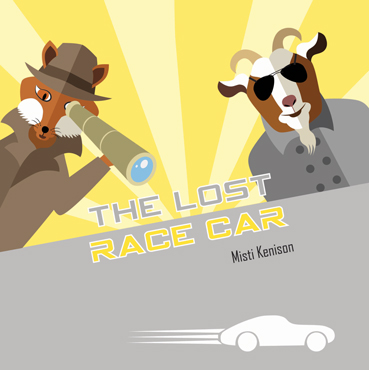
The Lost Race Car, by Misti Kenison, (Oct. 2018, Schiffer Publishing), $12.99, ISBN: 9780764355998

Ages 1-4

Detectives Fox and Goat return for their next great mystery: a little boy’s race car disappears! Using concept clues, the two sleuths sniff out the details to solve the case: colors, number of wheels, weight, length, and slightly more complex characteristics, like roads traveled. When they reunite Jayden with his car, they share a congratulatory fist bump and share their clues, at the end, to remind readers of the concepts used to solve the mystery.

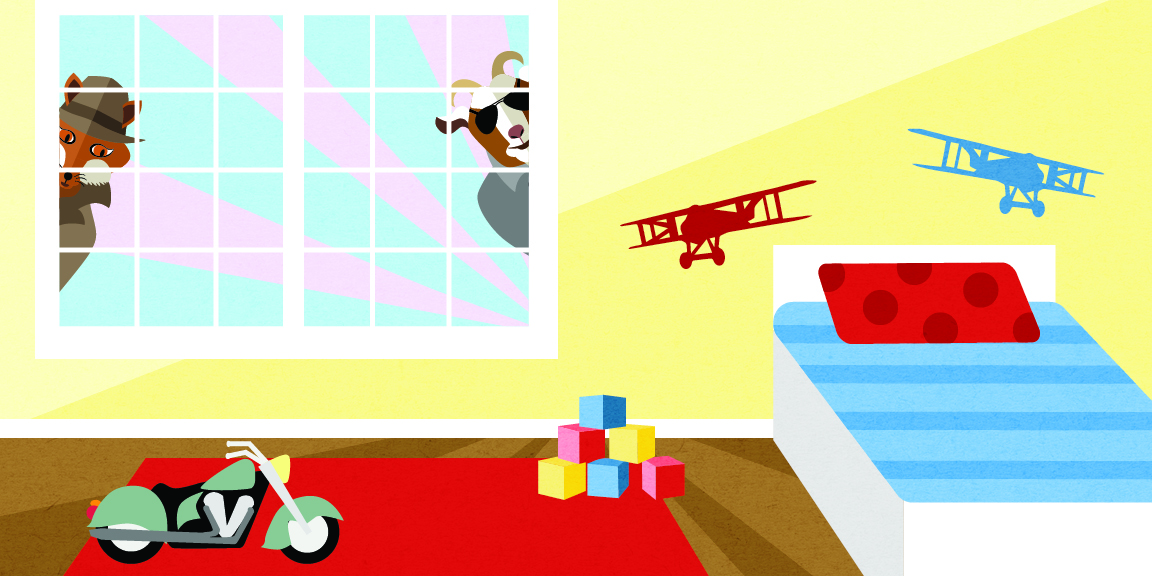
These are such great books! The digital artwork is bright, bold, and eye-catching. The question and answer pattern to each spread invites kids to think, explore, and solve the mysteries as they go, and offers the chance to talk about other colors/textures/sizes/shapes on the pages. Once again, sharp-eyed readers will notice the race car lingering around as they get closer to solving the case.

I just read these in a Saturday storytime with a mixed group of kids: two toddlers, a first grader, and three middle graders, all of whom got a kick out of the story. The toddlers loved pointing to the cars and balls on each page; the first grader was my sharp-eyed reader who spotted the missing items as they popped up in spreads, and the first and middle graders all loved pointing out the characteristics that set them apart from the item in question. I’m looking forward to more Fox and Goat Mysteries for my toddlers and preschoolers, for sure. A nice add to concept and board book collections.


Posted in Intermediate, Non-Fiction, Preschool Reads

Pocket Bios: itty bitty picture book bios!

Somehow, I missed Pocket Bios until now. Introduced earlier this year, Pocket Bios are a series of pocket-sized picture book biographies. They’re filled with cute, colorful illustrations; more cartoon than realistic, and the text is fairly simple, giving big-picture facts to serve as a quick introduction to young readers. The first found of Pocket Bios drew from entertainment, sports, science, and civil rights figures, including Muhammad Ali, Charlie Chaplin, Marie Curie, and Gandhi; this next group of books includes The Buddha, Pocahontas, Marie Antoinette, and Vincent Van Gogh.

Buddha, by Al Berenger, (March 2019, Roaring Brook Press), $14.99, ISBN: 9781250168887

Ages 4-7

This picture book bio of Siddhartha, who would become the Buddha, the founder of Buddhism, touches on key moments in his life: his birth, youth, and marriage; his leaving the palace on his journey to find happiness, his new life as he sought and achieved enlightenment; his teaching and traveling, last days, and legacy. A timeline provides a more linear, dated glimpse at the events covered in the book, and a map shows readers important locations in Buddha’s life. People to Know offers profiles of important people in his life, including his mother and the Dalai Lama, and an illustrated “Did You Know” section offers some quick, additional facts on his life.

The art is rounded and bright, soft and cute, with some beautiful moments, particularly when Siddhartha fully realizes enlightenment, and as he teaches a group of students. A picture of an aging Buddha is gentle, tinged with an understanding that he will be moving on. There are some truly lovely moments to be found here.



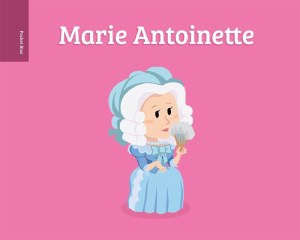
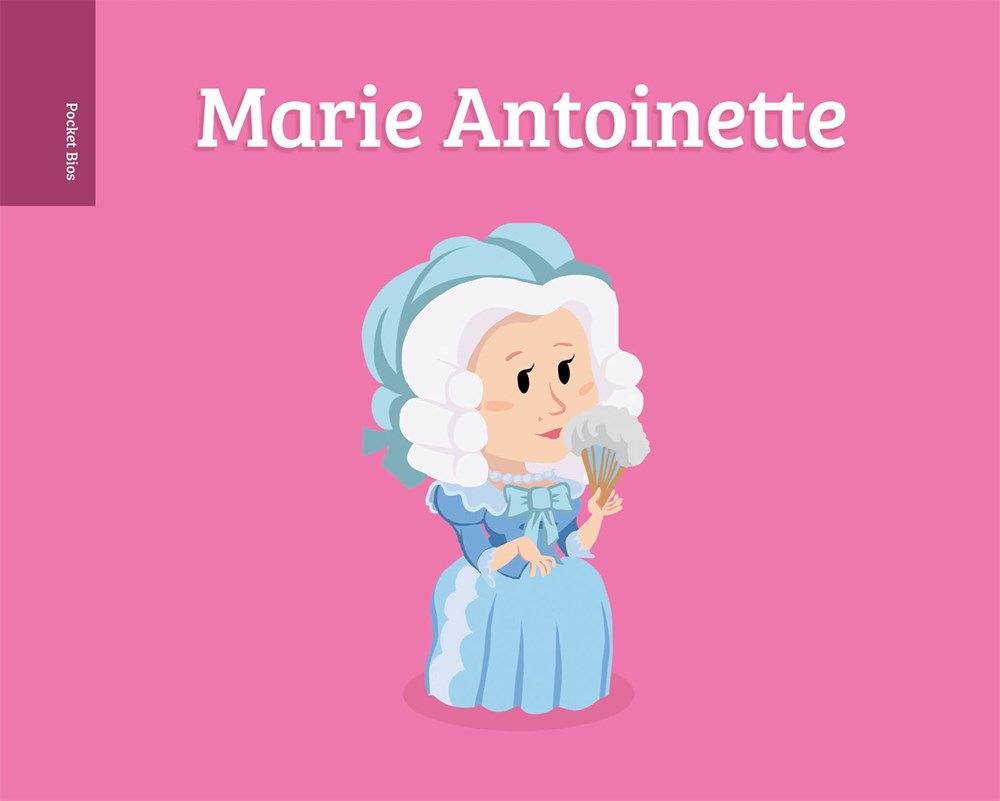
Marie Antoinette, by Al Berenger, (March 2019, Roaring Brook Press), $14.99, ISBN: 9781250168825

Ages 4-7

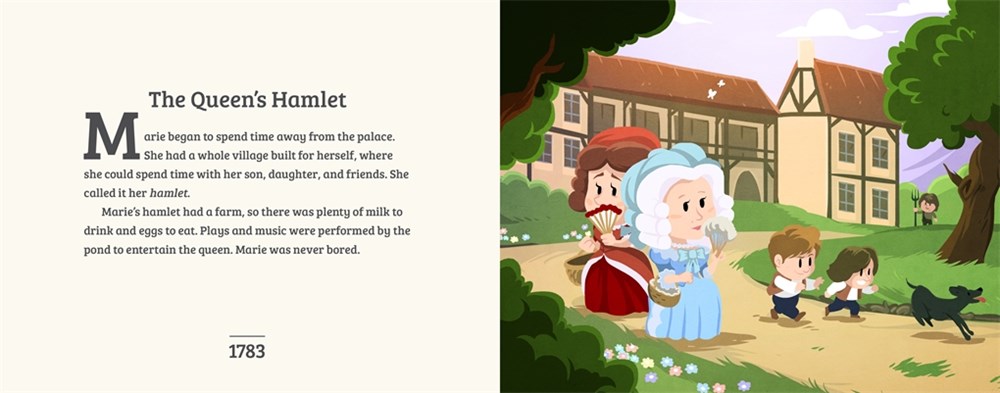
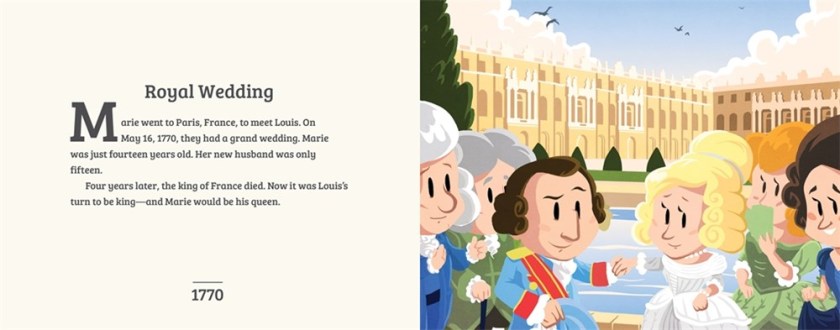
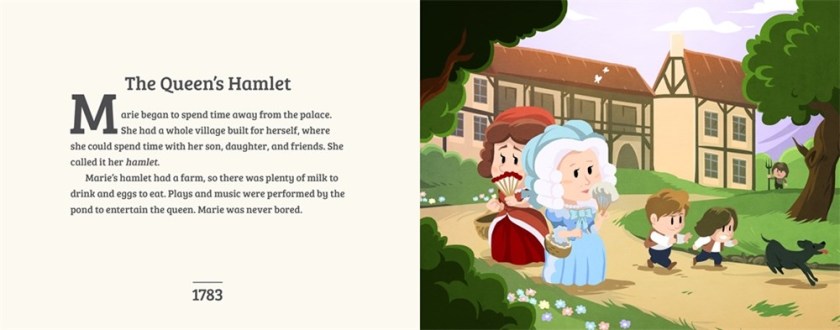
Each spread in Marie Antoinette’s Pocket Bio covers a major period in her life; the factual information on the left hand side provides the dates. We first meet her as a young princess in Vienna; move along to her 1770 wedding to Louis XVI, and then to his coronation. Then, we move into the Marie Antoinette period that everyone’s familiar with: the lavish lifestyle, depicted by a huge dinner party. As the text reminds readers, Marie Antoinette was not content in her royal duties, leading her to seek refuge at a village, built just for her, her children, and her friends. Meanwhile, revolution was in the works, and in 1789, the French Revolution began, illustrated with a French mob brandishing swords and pitchforks, outside the burning Bastille. As Marie, Louis, and their children tried to escape Paris in 1791, they were arrested and taken back to Paris, where they eventually met their ends at the guillotine – Louis, in 1793, Marie, soon after. The pictures are dramatic, loaded with shadows and flame during the Revolution; pastoral and soothing during the happier times in Marie’s life. There is a timeline, map and key of Europe in 1793, with key areas emphasized. People to Know include Marquis de Lafayette and Yolande de Polastron, one of Marie Antoinette’s close friends. Did You Know? fact to handsell the book: Marie Antoinette has some hairstyles that were four feet tall!
 

Vincent van Gogh, by Al Berenger, (March 2019, Roaring Brook Press), $14.99, ISBN: 9781250168863

Ages 4-7

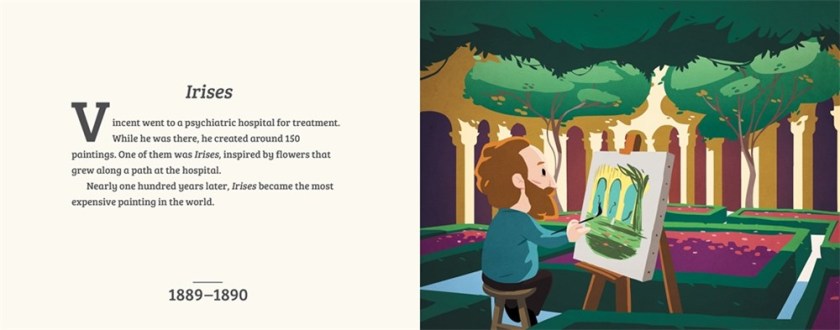
Artist Vincent Van Gogh’s biography also includes dates for the key represented moments in his life. We begin with his childhood in the Netherlands, and touches on the close relationship between van Gogh and his brother, Theo; we move onto an apprenticeship under his uncle, where he traveled to London and Paris, developing a love for art. He was a pastor in a coal-mining town from 1877-1880, and spoke out against the dangerous conditions in the mines, which influenced his painting, The Potato Eaters. From there, van Gogh embraced his love of art and began painting in 1880, after moving to Antwerp. From there, he moved to Paris, to be with Theo, but he tired of city life and relocated to Arles, where he could live and work in the countryside. The book touches on van Gogh’s struggle with mental illness and the work he created while in the hospital and under his doctor’s care. Finally, the narrative addresses his suspicious death – previously thought to be a suicide, and his posthumous fame. The timeline includes all of the moments written about in the book, and the map and key emphasize six key location in van Gogh’s life. People to know include his brother, Theo, and artist Paul Gaugin. Key Did You Know? takeaway: his most famous work, Starry Night, was painted during his time at a psychiatric hospital and he thought it was his greatest failure.

 

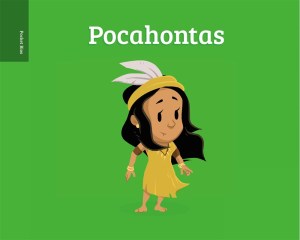
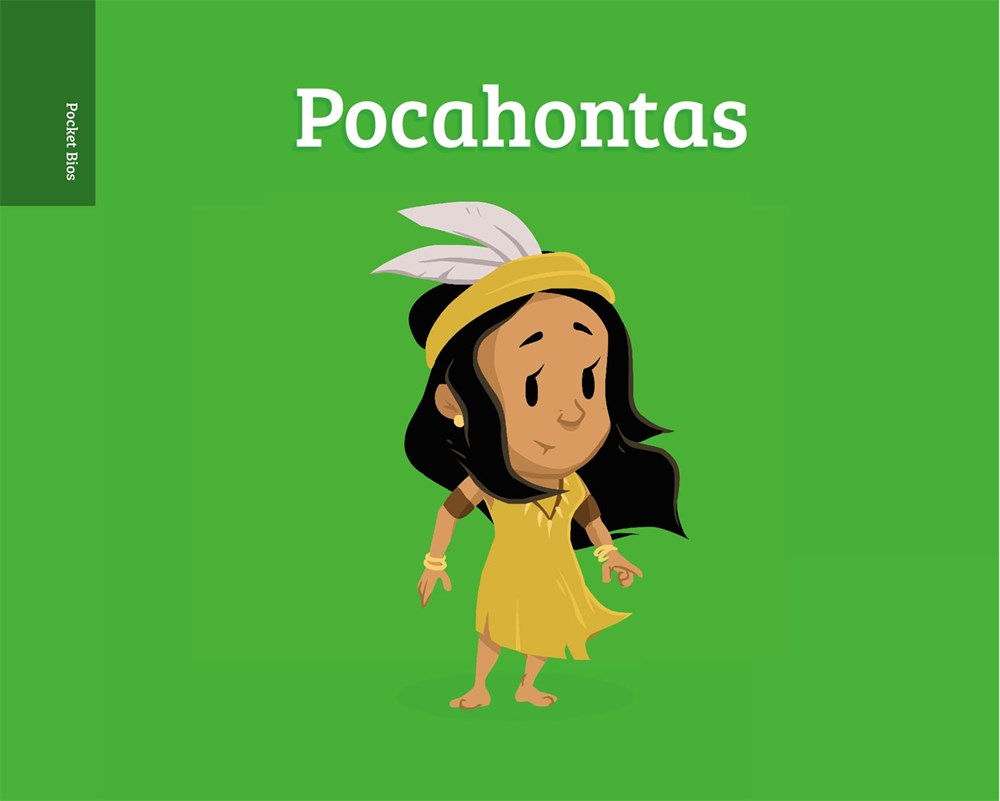
Pocahontas, by Al Berenger, (March 2019, Roaring Brook Press), $14.99, ISBN: 9781250168863

Ages 4-7

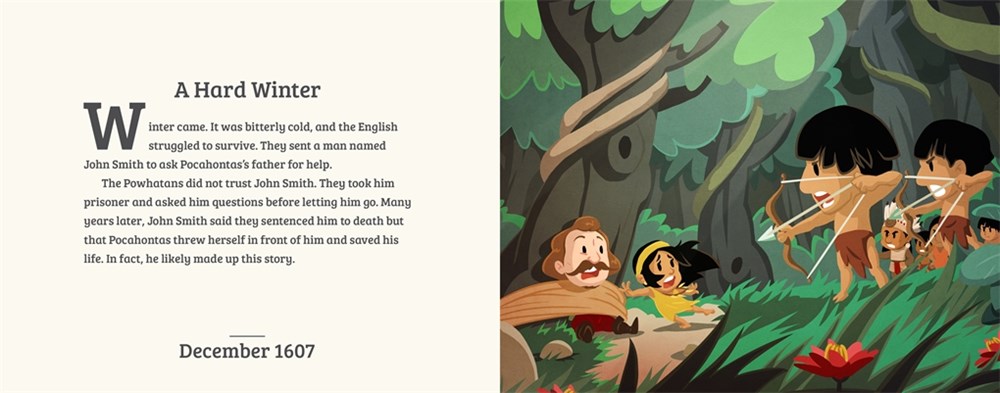
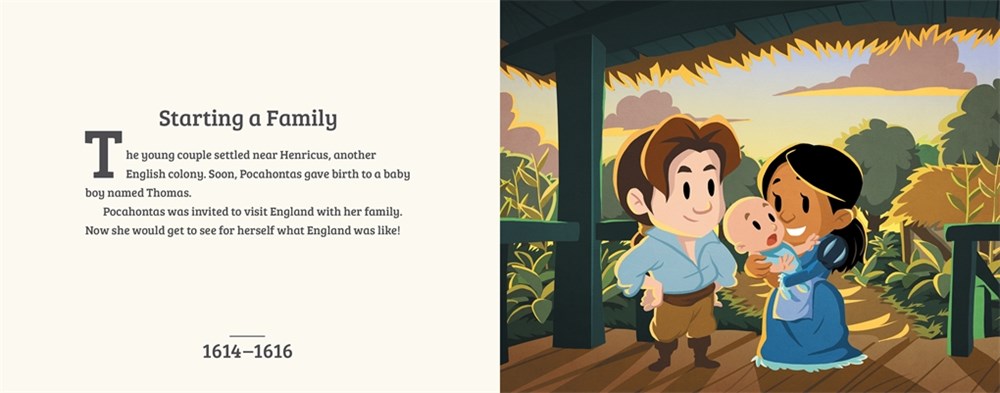
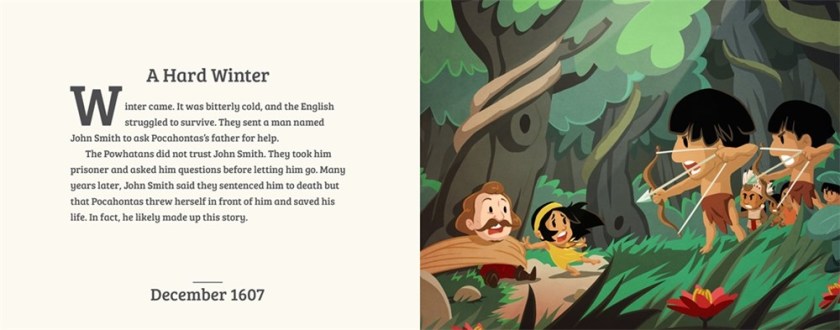
Pocahontas’ biography, also dated, starts with her years growing up in the Powhatan tribe, located where Virginia is now. The English arrived in 1607 and established the Jamestown colony; the illustration shows a young Pocahontas watching a ship dock at a newly built port. The brutal winter forced the settlers to send John Smith to ask the Powhatans for help, which led to his imprisonment. Here, the narrative diverges from the history books I grew up with (thank goodness) and points out that John Smith most likely made up the story of Pocahontas throwing herself in front of him to save him from certain death; she then becomes a friend of sorts to the Jamestown settlers, visiting them and working to keep peace between the Powhatans and the settlers. John Smith’s 1609 injury required him to head back to England – and Pochontas was told that he died on the voyage home. At this point in history, relations between the Powhatan tribe and the settlers fell apart, and they warred with one another. Pocahontas was taken prisoner and brought up English – her father refused to trade her for English prisoners – eventually marrying settler John Rolfe, converting to Christianity, and taking the English name, Rebecca. The wedding helped ease relations between the Native Americans and the settlers, and Pocahontas – now a mother of two sons – was invited to visit England. She became ill and died while traveling, and is buried in England.

There are some beautiful moments in the artwork here – a ship sailing into the golden sunlight, Pocahontas as a child, playing with other children, with a waterfall streaming in the background. There’s a timeline and illustrated map; people to know include Pocahontas’s father – not Powhatan, but Wahunsunacock, and King James I. A key Did You Know? fact reminds readers that John Smith was not the most reliable narrator.

The verdict? The Pocket Bios are a good start for younger readers, but aren’t the first resource you should seek. It’s a good series to start planting an interest in history and key people in history. Readers who enjoy Brad Meltzer’s Ordinary People Change the World series of biographies will likely enjoy these.
Posted in Uncategorized

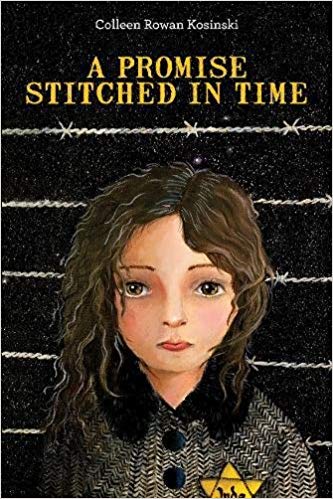
A haunting across decades: A Promise Stitched in Time

A Promise Stitched in Time, by Colleen Rowan Kosinski, (Sept. 2018, Schiffer Publishing), $12.99, ISBN: 978-0-7643-5554-7

Ages 10-13

Eighth grader Maggie McConnell is still grieving the loss of her father to cancer. The budding artist is agonizing over a project that will get her into the prestigious Peabody Academy; it was a promise she made to her father and herself. When she discovers a an old coat at her local thrift store, she’s drawn to it and buys it on the spot. Immediately, she begins having hallucinations about starving, burning chimneys, cruel voices and beatings, and terrifying dogs waiting to attack. She sees visions of a girl wearing the coat and reminding her of a promise made to a girl named Gittel. Turning to her friend Taj for help, the two try to unravel the source of the haunting. Meanwhile, Maggie is at odds with her popularity-obsessed sister, Patty, who doesn’t agree with Maggie’s choice in clothing or friends. As Maggie works toward the heart of the mystery, she discovers that Mrs. Berk, an elderly resident at a nursing home where Maggie teaches art, plays a key role.

A Promise Stitched in Time has an interesting main story that gets lost in its attempt to create a paranormal story. Having a coat haunted by a spirit of its former owner – a girl who died at Auschwitz – is an interesting concept on its own. Maggie’s father’s story seems to be more of a plot device that gets in the way, and the story’s resolution felt rushed, overcrowded in an already full narrative. It starts off strong, but ultimately left me wanting more.