Posted in Fantasy, Fiction, Middle Grade, Tween Reads

The Malamander welcomes you to Eerie-on-Sea with a HUGE GIVEAWAY!

Malamander, by Thomas Taylor/Illustrated by Tom Booth, (Sept. 2019, Walker Books US), $16.99, ISBN: 9781536207224

Ages 9-13

Winter comes to the sleepy town of Eerie-on-Sea, and Herbert Lemon – the 12-year-old Lost and Founder for the Grand Nautilus Hotel – discovers a girl about his age hiding, in his Lost and Found room, from a very angry man with a hook for a hand. Violet Parma was found abandoned as an infant in the Grand Nautilus Hotel, and she’s come back, determined to learn what would have taken her parents away from her. Is the Eerie legend of the Malamander – a part-fish, part-human creature – tied into the mystery? Everyone in town seems to know more about Herbert and Violet – and the Malamander – than they’re letting on.

I could not get enough of this first Legends of Eerie-on-the-Sea adventure! It’s got a very period feel – very British (the book was originally published in the UK), almost steampunk, but takes place in the modern day. There’s delightfully creepy, creaky worldbuilding; the Malamander itself shows up, wreathed in fog, but is far from mild-mannered, attacking if it feels threatened. There’s a fantastically oddball Book Dispensary, where selections are chosen by a mechanical mermonkey, and a cast of quirky, instantly memorable characters like the mysterious hotel proprietress, Lady Kraken; Mrs. Fossil, the eccentric beachcomber, and Jenny Hanniver, who works in the Book Dispensary. Everyone’s got a backstory, and the world-building is weird and wonderful. Kirkus calls it “H.P. Lovecraft crossed with John Bellairs”, and really, that’s the most spot-on quick take I’ve read. My advanced reader copy only had some of the illustrations in place, but from what I’ve seen, Tom Booth’s black and white artwork lends great shadow and mist to a shadowy, misty, seaside mystery; the characters have exaggerated, bold facial expressions and angular shapes, and every chapter is heralded with a load of tentacles to draw readers in. In other words, it all comes together perfectly.

I loved visiting Eerie-on-Sea, and can’t wait to take my kids (both library and the ones in my family) there for a stay. Malamander is the first in a planned trilogy, so pardon me, while I sit and wait.

Malamander is out in September, but you can read an interview with author Thomas Taylor here. You can read an excerpt and check out some postcards Herbie’s received at the Lost and Found, at the Eerie on Sea website. And I’d be remiss if I didn’t mention that GeekDad gives five reasons to read Malamander, and they’re all very good reasons.

Malamander has a starred review from Booklist.

 

Candlewick has offered a great giveaway for MomReadIt and Malamander. THREE readers will win a Malamander gift set, containing an advanced reader copy of the book and a Malamander tote bag! U.S. addresses only, please, and no P.O. boxes. Check out the Rafflecopter giveaway and enter!
Posted in Middle Grade, Non-Fiction, Non-fiction, Tween Reads

Learn about these Awesome Achievers in Technology!

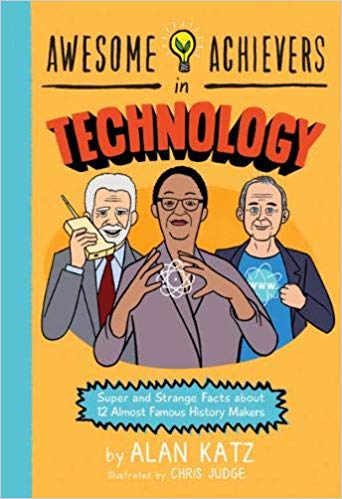
Awesome Achievers in Technology, by Alan Katz/Illustrated by Chris Judge, (Aug. 2019, Running Press), $11.99, ISBN: 9780762463367

Ages 8-12

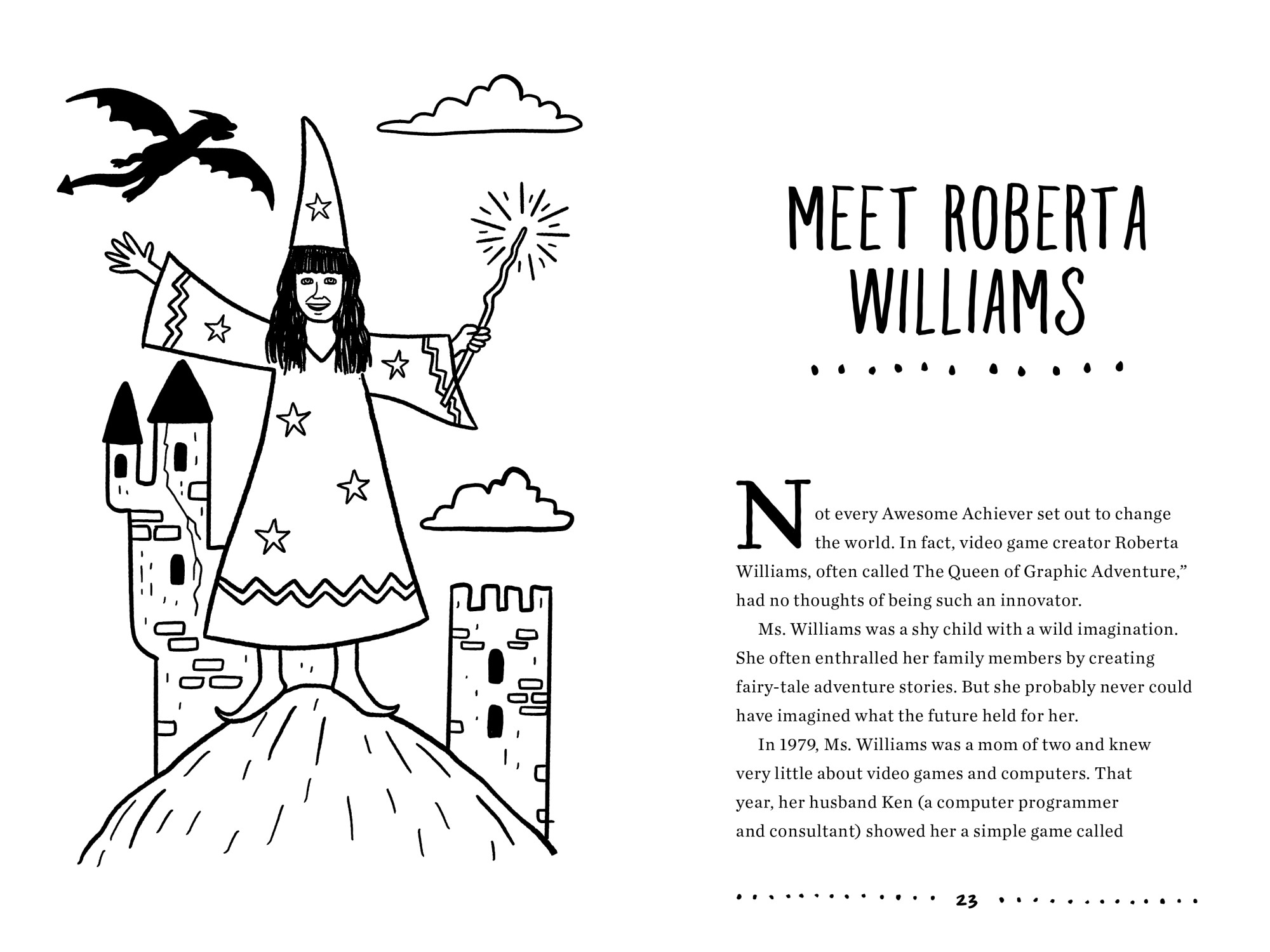
Kids have heard of the big names in Technology: Steve Jobs, Bill Gates, and, lord knows, Markus Persson (also known as Notch; Minecraft’s creator). But have they heard of Sir Tim Berners-Lee, the particle physicist who invented the World Wide Web as a way to share information with other scientists? Or Marie Van Brittan Brown, the nurse from Queens who devised the first closed circuit TV system, in conjunction with her engineer husband? Awesome Achievers in Technology is a series of short bios on some of the lesser-heralded names in technology. The book is part biography compilation, part wacky facts and silly stories, and a sprinkling of dad jokes. There are 12 profiles and 13 biographies – Adam Cheyer and Dag Kittlaus, the developers who created Siri, are included together – with black and white illustrations throughout. There are fun asides, including a “Get the couch potato back where he belongs” maze, remote control pop quiz, and wacky poems and stories from Katz’s memories.

All in all, a fun addition to biography shelves, and a good way to introduce kids to even more figures in STEM history. Awesome Achievers is going to be an ongoing series, with Awesome Achievers in Science hitting shelves on the same day as Awesome Achievers in Technology.

Posted in Fiction, Fiction, Humor, Intermediate, Middle Grade

Ophelia’s back and fabulous in the latest Snazzy Cat Caper

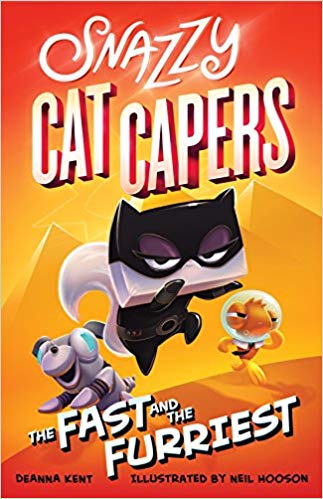
The Fast and the Furriest (Snazzy Cat Capers #2), by Deanna Kent/Illustrated by Neil Hooson, (Sept. 2019, Imprint), $13.99, ISBN: 978-1-250-14347-1

Ages 7-11

The Diva herself, Ophelia von Hairball V of Burglaria is back in her second caper, and I could not be happier! I loved the first book, and her sophomore outing is just as much fun and just as light-hearted. The queen of all cat burglars is still working with her long-suffering (senior) inventor, Oscar Fishgerald Gold, and his robot dog creation, P.U.G. In this new adventure, there’s trouble at the Furry Feline Burglary Institute (FFBI): someone has stolen an artifact from the Institute’s vault, and it could lead to disaster for the FFBI and for felines WORLDWIDE. It takes a thief to catch a thief, so Ophelia’s assigned to the case – but those mutts at the Central Canine Intelligence Agency (CCIA) are hot on her tail, and she’s going to need every trick in her marvelous designer bag to stay one fluffy tail ahead of them, not to mention all the brainpower Oscar has to design new gadgets and costumes for her every step of the way.

The Fast and the Furriest captures all the fun of the first book in the series, introduces a new mystery, and keeps some hilarious subplots going. Ophelia still has her long-simmering feud/competition with her unibrowed cousin, Pierre; she still really, REALLY wants to work alone, but Oscar finds a way to sneak on board – and thank goodness for it; and the dogs at the CCIA will stop at nothing to try and subjugate all of felinekind. The black and white graphic novel panels add directly to the story, breaking up the chunks of text and keeping kids on their toes, switching from text to graphics, and keeping them engaged and reading. In addition to the graphic novel panels, there are black and white illustrations, and each chapter begins, once again, with sage advice from Ophelia, which everyone needs to read and heed. She could write her own Little Instruction Book, in all honesty: “Be the fabulous you want to see in the world”; “Not everyone will adore what you do. That’s purr-fectly fine. Do what makes you feel shiny”; and “Don’t bother ‘overcoming’ your obstacles. Stomp them into fine dust, add glitz, and use as party confetti” are words I need to live by, and, quite frankly, I think the kids in my library do, too. I may have to start printing these up on colorful paper and hanging them up in the kids’ room.

In short, I’m fangirling hard for this intermediate/middle grade series, because we all need to lighten up and enjoy the finer things in life, just like Ophelia. Snazzy Cat Capers: The Fast and the Furriest will be on shelves in September, and what a way to welcome kids back to school.

Posted in picture books, Preschool Reads

The Itty Bitty Witch proves that being small is pretty handy!

The Itty Bitty Witch by Trisha Speed Shaskan/Illustrated by Xindi Yan, (July 2019, Two Lions), $17.99, ISBN: 978-1542041232

Ages 4-7

Betty Ann Batsworth is a little witch who can’t wait to start first grade, but she ends up being teased by some of the kids for being small and still having her kinder-broom, calling her “Itty Bitty”. The nickname makes Betty feel itty bitty on the inside, but when her teacher, Ms. Fit, tells the class that they’re going to prepare for the Halloween Dash – a big broom race – Betty is determined to win, and shuck that Itty Bitty nickname!

Coming from the kid who was ALWAYS first or second in height order, I am right there with Itty Bitty Betty. Being small is something we all have to grow into. The Itty Bitty Witch is a sweet story about overcoming childhood teasing, thinking outside the box, and determination. Betty discovers, during the course of the race, that being Itty Bitty is pretty handy – we can fit into places bigger folks can’t, after all! The digital illustration is bold, with cartoony characters and vibrant color. It’s full of teachable moments we can discuss with our kids like teasing vs. encouraging, and loving ourselves in any package.

The Itty Bitty Witch is good Halloween reading, and it’s good anytime reading. Size matters not!

Visit Xindi Yan’s illustrator page for more of her adorable artwork, and author Trisha Speed Shaskan’s author page for more info about her books.


Posted in picture books, Preschool Reads

Counting, Colors, and Animals Eating – Concept Fun!

Two fun picture books give kids the giggles while inviting them to count, call out colors, and animals!

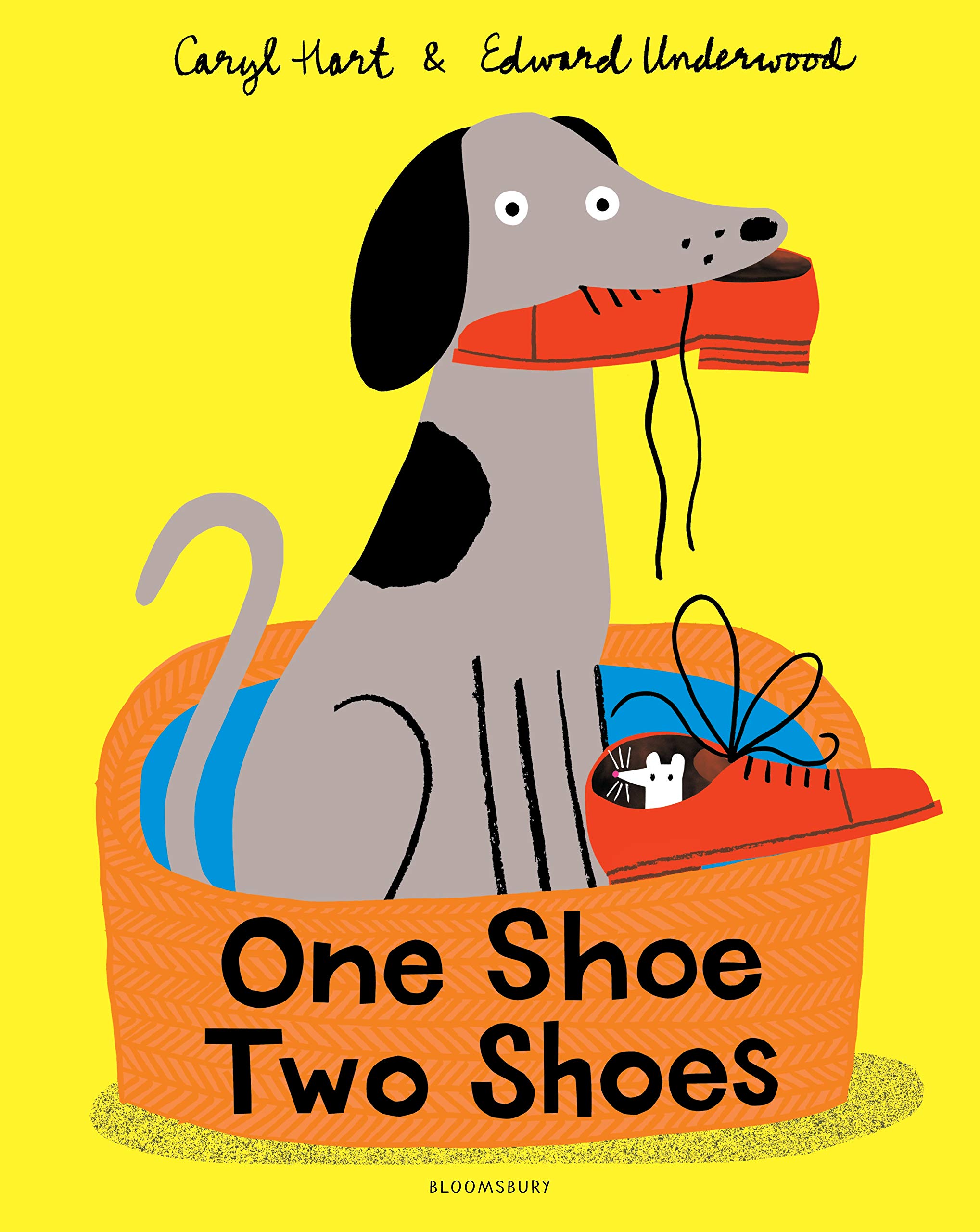
One Shoe Two Shoes, by Caryl Hart/Illustrated by Edward Underwood, (July 2019, Bloomsbury USA), $17.99, ISBN: 978-1-5476-0094-6

Ages 3-6

A dog and a bunch of curious mice explore all the shoes in their world in this adorable rhyming story. The rhyming pattern reminds me of Dr. Seuss’ classic, One Fish, Two Fish, Red Fish, Blue Fish – “Old shoes/New shoes/On their way to school shoes” – minus the wacky, new words. The pup notices shoes all around, both inside and outside the home, when…. wait! There are two mice, making a home in a pair of shoes! A few more scramble by the dog, and before you can say “shoelace”, there are 10 mice, all making their homes in various sneakers, skates, and boots.

Originally published in the UK in 2018, this is an absolutely fun concept book that would work nicely with felt board accompaniment. The pencil, ink, and digital collage artwork is bold and bright, with primary colors and bold black fonts. The endpapers are loaded with footwear. The rhyming, counting, and colors in this book make it a multitasker for concepts, making this a good add to your concept bookshelves and storytimes. Pair with Hart and Underwood’s companion picture book, Big Box Little Box for more concept fun!

Visit author Caryl Hart’s webpage for info about visits and, for aspiring writers, mentorship! Illustrator Edward Underwood features more of his artwork on his Instagram.

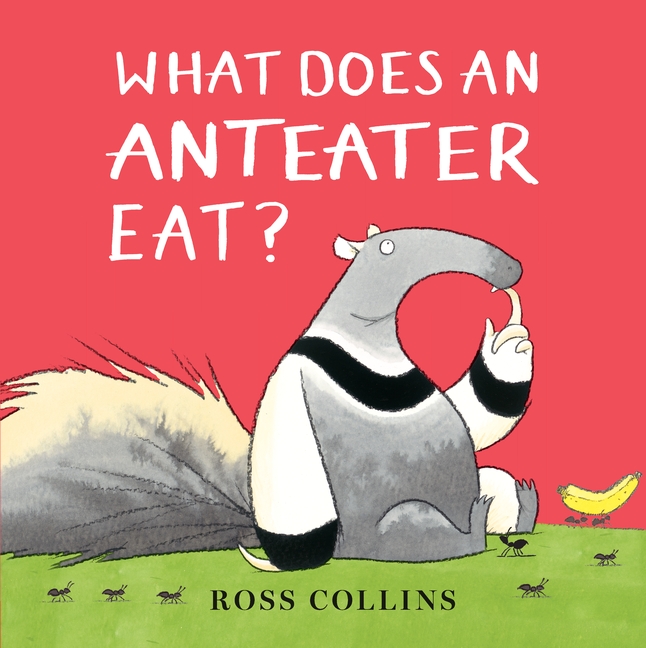
What Does an Anteater Eat?, by Ross Collins, (July 2019, Nosy Crow), $16.99, ISBN: 978-1-5362-0591-6

Ages 3-6

Anteater wakes up hungry, but there’s a bit of a problem. What does an anteater eat? He sets off to find out, asking sloths, snakes, bats, and cheetahs he encounters on his exploratory walk, all with different results. The book is one hilarious inside joke – we know what the anteater eats, and it’s a good bet that the ants scurrying across each spread in the story do, too – presented in Q&A format. The anteater asks every new animal he meets what anteaters eat, and the animals’ responses are colored by their experiences: the snake, belly bulging with its latest meal, cautions the anteater to chew its food; the cheetah hungrily eyes the anteater. The anteater’s questions are in bold font; the responses, in italics, signaling the chance in voice to your audience. The adorable, funny ending makes the book a storytime winner for toddlers and preschoolers.

Originally published in the UK in 2018, What Does an Anteater Eat? has the playfulness that make Ross Collins’ books so much fun to read. This one is another great candidate for felt board storytelling or puppet accompaniment. Collins’ artwork is cartoony and entertaining with a playful sense of joy added to each spread. The endpapers are in on the story’s joke, starting with an ant crawling across the front endpapers, and finishing with a pile of banana peels.

This one is a storytime winner. Ross Collins’ author webpage includes info about his books, and provides free, printable posters of his book covers and a few activity sheets.

Posted in Early Reader, Fiction, Fiction, Intermediate

Blog Tour: The Missing Money, by Okeoma Moronu Schreiner

Coming off a successful Kickstarter, Money Monsters: The Missing Money is here to teach kids about handling their money – and to trust that chompy ATM machine.

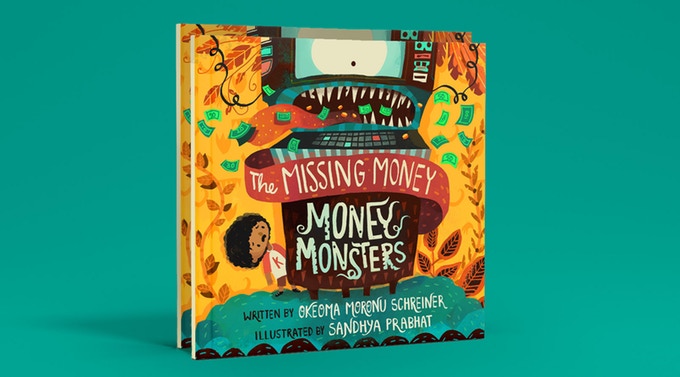
The Missing Money (Money Monsters), by Okeoma Moronu Schreiner/Illustrated by Sandhya Prabhat,
(July 2019, FinKidLit), $11.95, ISBN: 978-1733806718
Ages 4-7

Kai is a little boy who’s very excited: he has a bunch of money from his Chinese New Year red envelopes, and Dad’s promised to take him to the bank to deposit it! But – holy cow – they don’t even get into the bank when A GIANT ATM MONSTER EATS HIS MONEY! Kai is not happy about this turn of events, and puts together a plan to get his money back. When he lets his parents know, though, they’re not terribly concerned: in fact, they tell him that his money is safe and sound, and that an ATM keeps his money safe until he’s ready to use it again. They even show him a nifty phone app where he can check on his money any time he wants!

The Missing Money is an adorable introduction to money management for younger kids. “Happy Lawyer” Okeoma Moronu Schreiner is a corporate finance attorney and mom, and has a wonderful storytelling voice here. The Missing Money is a realistic, fun, and approachable way to introduce kids to money management: banks, ATMs, and bank apps! A key words section introduces new vocabulary, and conversation starters help families and caregivers start talking about money. Sandhya Prabhat’s hand-painted and digital illustrations are bright, bold, and adorable! Kai is a biracial child of color with an Asian father and brown-skinned mother, and lives in what looks like an urban environment.

A great way to start talking to our little ones about saving those pennies (and dollars). I’m looking forward to seeing other Money Monsters Ms. Schreiner and Ms. Sandhya Prabhat have in store!


A little Q&A with author Okeoma Moronu Schreiner…

How did financial literacy for young people become a passion of yours?
Before I was a personal finance junkie, I was an elementary school teacher. I guess you could say that I’ve always had a passion for translating seemingly complex concepts into fun, educational content. 

What advice do you have for parents interested in starting these financial discussions with their children?
Do it early and often. 

Why is it important to start these money talks with your children at a young age?
The earlier you start these conversations the more comfortable you’ll be having them throughout the many seasons of parenthood. Truth is that the conversations will only get tougher and tougher as your children get older so you want to develop the language and comfort before it’s too late. Your children are internalizing “stories” and beliefs about money that may not be true and have the potential of impacting their financial lives forever. If we, as parents, don’t help shape those stories and beliefs, our children will create their own. 

What are some concrete steps parents can take while their children are young to start their children out on the right financial path?
Take the time to involve them in your everyday money decisions. Whether it’s choosing between two products at the grocery store or choosing not to spend on something in order to save for a bigger goal, children will benefit from understanding how money decisions are made in everyday situations. 

Speak to them about in values, not figures. In our house, our kids know that the environment is very important to us so we’ll pay more for a product that is more sustainable and/or eco-friendly. Help your little ones understand your family’s values and how your money supports and reflects those values. 

Teach them contentment. This is a hard lesson that can take a lifetime to learn. In order to get your little one off on the right foot you can lead by example, help your children practice gratitude and teach them the value of giving. 

Posted in picture books, Preschool Reads

Buggy Books!

It’s summer, and there are bugs. Why not talk about a couple of great bug books that have hit shelves recently?

Firefly Home, by Jane Clarke/Illustrated by Britta Teckentrup, (June 2019, Nosy Crow), $14.99, ISBN: 978-1-5362-0587-9

Ages 3-6

This book is ADORABLE. It’s also perfect for a storytime readaloud, as it’s very interactive. Little Florence Firefly is lost, and there are so many bright lights around her will she ever get home? That’s up to you and your readers, because this sweet little story is loaded with reader prompts to help Florence: flapping hands to show Florence how to fly fast, turning pages, making wishes are just a few of the ways readers can help Florence get back to her home. The text is made up of short sentences, with questions on each page, inviting readers to get involved. This is just too much fun to read out loud! Brita Teckentrup’s artwork is always a pleasure to enjoy; here, her digital artwork creates a sweet little firefly with a bright yellow light, with deep nighttime blues and muted colorful flowers and leaves throughout. House, train, and streetlights are bright and bold, matching our little firefly’s light.

This one is a must-buy, must-read. Let your kids make a firefly craft with this template, and use yellow tissue paper for the tail!


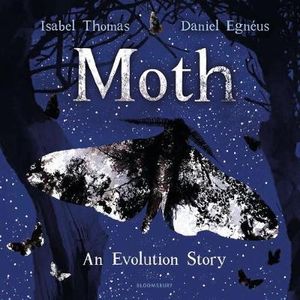
Moth: An Evolution Story, by Isabel Thomas/Illustrated by Daniel Egnéus, (June 2019, Bloomsbury Children’s Books), $18.99, ISBN: 978-1-5476-0020-5

Ages 5-8

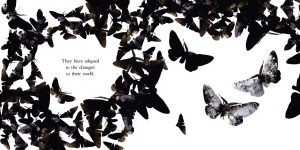
This stunning book tells the story of the peppered moth and its evolution, and humanity’s intervention in the process. Originally, peppered moths emerged as light with dark speckling; dark moths were easier to spot against trees and were easy prey. But as humans created factories and machines, spewing pollution into the air, the branches moths sought out became blackened with soot, putting light peppered moths at the mercy of birds, bats, and other predators. But wait! We’ve gotten better! We’ve cleaned up our world, and the trees and surroundings have gotten cleaner again! The moths adapted once again, passing their speckled wings onto new generations. Moth is a powerful story of change and hope for the future, seen through the evolution of a single species directly affected by us.

This is one of the most visually stunning books I’ve read this year. Mixed media illustrations create gorgeous texture, and the moths seem to emerge from the pages in an almost dreamlike fashion. The factories and towers look menacing, silhouetted against grey and black skies; as humanity works to heal the earth, hopeful blue skies break through the gloom. The art and text together create a dramatic, emotionally powerful experience. Originally released in the UK last year, Moth has just hit U.S. shelves and is perfect to supplement a unit on evolution, environmentalism, and conservation.

Posted in picture books, Preschool Reads

Go on a Big Book Adventure with two friends!

The Big Book Adventure, by Emily Ford/Illustrated by Tim Warnes, (Sept. 2018, Silver Dolphin Books), $17.99, ISBN: 978-1-68412-378-0

Ages 3-7

A pig and a fox excitedly tell each other about their reading adventures, having spent their day at a Mad Tea Party, swimming with mermaids, running from Big Bad Wolves, and more! The rhyming story communicates the transformative power of reading by placing the characters – and readers – into the middle of beloved fairy tales and exciting new adventures, including a spaceship voyage and a dragon ride. The two friends decide to share books and exchange adventures, their favorite new and old literary friends surrounding them.

The artwork is sweet and whimsical, using soft colors for the main characters and changing palettes to fit each story: bold, vibrant colors for a science fiction story; classic Alice in Wonderland artwork for the tea party; muted blues and greens for a mermaid swim. The endpapers continue the story, with the front endpapers showing Piggy sitting on a tree branch, reading; a library-like “book club” meeting place at the base of a tree, where Foxy leaves, with a wagon holding books. Membership cards for the “Maple Leaf Book Club” show Foxy and Piggy’s credentials. The back endpaper shows different literary characters – and the Maple Leaf Book Club’s owl mascot – reading.

This one is great for a library read-aloud, and a class visit storytime. I’d pair this with Nibbles the Book Monster for more fairy tale fun.

Posted in Middle Grade, Non-Fiction, Non-fiction, Tween Reads

Ocean: Secrets of the Deep is STEM fun!

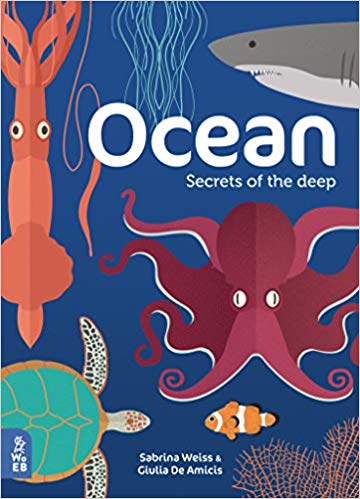
Ocean: Secrets of the Deep, by Sabrina Weiss/Illustrated by Giulia De Amicis, (April 2019, What on Earth Books), $19.99, ISBN: 97-1-9999680-7-6

Ages 7-12

We’re heading to Florida on the first road trip we’ve had in ages, so I’m all over the beachy reading right now. My little guy is excited, because his grandpa lives right by the ocean, so we’ve been enjoying this book immensely.

Ocean: Secrets of the Deep is loaded with facts and figures about the underwater world, and I am in love with the bright, bold illustrations and infographics! The information is presented in bite-size chunks that kids can easily enjoy and digest, and the minimailst artwork is bold and gorgeous. Not just a fact book, there is info about myths and legends (including one of my faves, the Kraken); sections on each of the ocean’s zones, with numbered renderings of each form of life living in each zone; animals who work together in the deep; animal sizes and sounds, and migration patterns. There are sections on environmental concerns and challenges, including overfishing, pollution, and climate change, and a call to action that encourages and empowers kids to act. A glossary and index complete this beautiful volume.

Natural history and environmental studies units would benefit from adding this book to shelves, and you can easily use Ocean in your library STEM programming. When we had our Discovery Club at my library, we did a unit on the ocean, and had the kids create their own ocean zones display on a wall in our meeting room. Print out pictures of different fish featured in Ocean, and invite the kids to color and stick their own marine life to the zones in your library or classroom! It’s a great multi-week project, if you want to spend time creating the monochromatic zones, then working on the marine life.

Ocean is absolute fun and absolutely gorgeous.

Posted in Intermediate, Non-Fiction

I Speak Peace talks mindfulness and respect for all

I Speak Peace, by Kate Carroll/Illustrated by Rainer M. Osinger, (March 2016, Ferne Press), $10.95, ISBN: 978-1-938326-46-2

Ages 6-8

I Speak Peace is a message to all from a first grade teacher who promotes peace, respect, and understanding in her classroom and wants to see that good in the world. The story is narrated by a young blond girl who talks about what peace means, and emphasizes that peace starts from within – “a feeling we have when we are calm and happy” – and how those feelings affect our outlook and how we work with others. Letting go of angry thoughts and mindful breathing come up here, teaching kids the importance of staying in touch with their own feelings. We live in a world where we may look different, speak different languages, and hold different beliefs, but we have just as much in common: we all need love; we all want to be happy; we all live on this planet, and we all need to work together to make it a better place. Kate Carroll promotes different ways of spreading peace that kids will easily recognize: smiling and listening to others; standing up for others; and being considerate are messages kids learn in their homes and classrooms, and go a long way toward making the world a better place. It’s an upbeat, positive message and it’s not that hard a message to spread. An author’s note explains how author Kate Carroll promotes peace in her classroom, and how she was moved to share her message in this contentious, high-strife society today. Kids can take a Peacemaker Pledge (nice library or classroom idea) and an original song, Peace Begins with Me, rounds out the book.

The artwork features children from different cultures and with different abilities working and playing together. The art is bright and positive, with primary colors and full-bleed pages.

I Speak Peace emphasizes an important message and makes for a good classroom, storytime, or cuddle time readaloud. I really like the Peacemaker Pledge and may put that up in my children’s room at the library at the start of the school year. You can visit Kate Carroll’s I Speak Peace page to learn more about the author and contribute your own I Speak Peace stories.