Posted in Graphic Novels, Non-Fiction, Teen, Uncategorized, Young Adult/New Adult

Open Borders presents the science and ethics of immigration

Open Borders: The Science and Ethics of Immigration, by Bryan Caplan/Illustrated by Zach Weinersmith, (Oct. 2019, First Second), $19.99, ISBN: 9781250316967

Ages 14+

It’s no secret that immigration is a hot-button – one of the hottest button – topics in current events. One one side, we have those who would welcome new immigrants, for cultural and humanitarian reasons; on the other, those who want to restrict the flow of people into the country, whether to protect the current citizenry, the culture, or the economic status quo. Economist Bryan Caplan has written Open Borders: The Science and Ethics of Immigration as a proposal to both sides. He argues in favor of open borders, noting that doing so could eliminate poverty worldwide, not spiral us deeper into it; raise the global education and skill level, and lead us – as a whole – into a new age of prosperity for all.

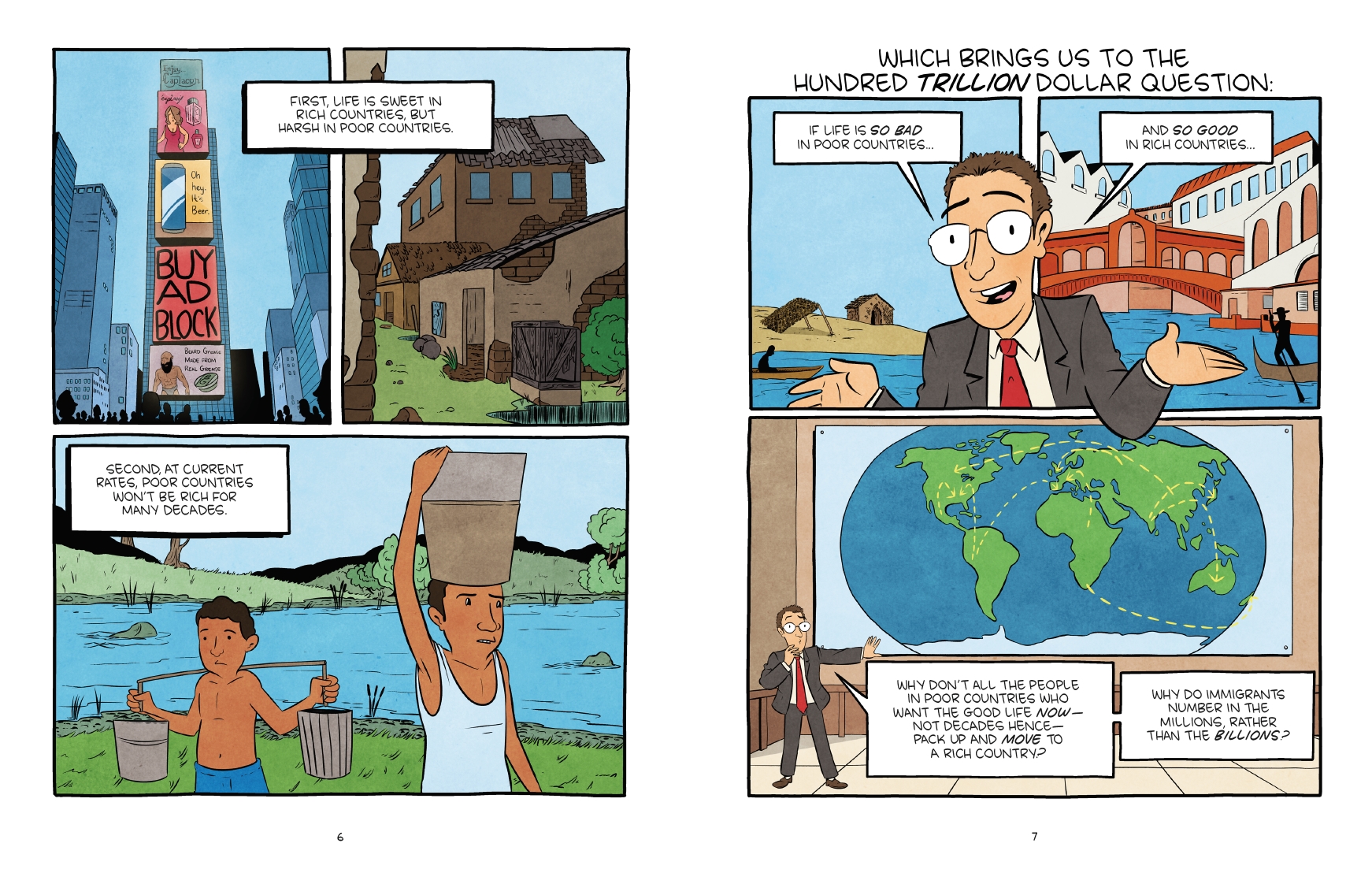
The book, masterfully illustrated by Zach Weinersmith, presents Caplan’s argument using comprehensive research, communicated with a plain-English tone and artwork that’s colorful, multicultural, and translatable to audiences who don’t have a background in economics. The book is conversational and never preachy, and Caplan takes on reasons detractors have fallen back on time and again to argue against open borders, showing, using hard numbers, why open borders may be the next best way for us to advance.

This should be used in high schools and colleges: there are lists of resources and further reading; copious notes and references, and the straight-talk explanations, with clear illustrations, will really assist students, especially those who may stumble with pages of numbers, charts, and data. Once presented in the frame of a story, with a real-life, current events situation to anchor it, the numbers take on a life and meaning.

Open Borders has a starred review from Booklist. Author Bryan Caplan’s webpage is a treasure trove of articles and information, including cartoons and role-playing resources(!).
Posted in Adventure, Animal Fiction, Fantasy, Fiction, Middle Grade, Tween Reads

What’s the secret of The Hippo at the End of the Hall?

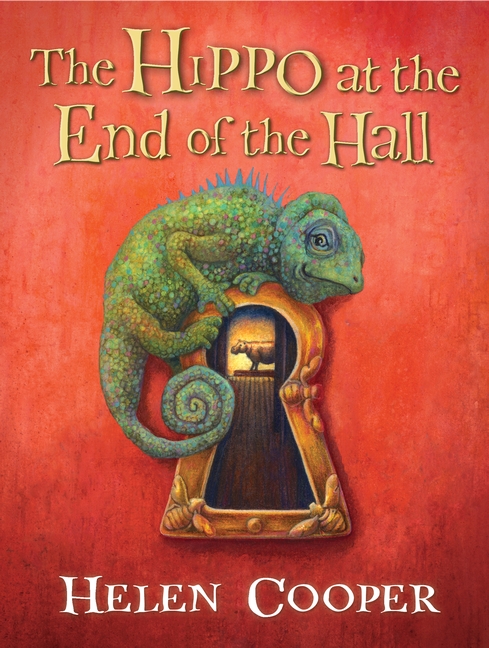
The Hippo at the End of the Hall, by Helen Cooper, (Oct. 2019, Candlewick Press), $17.99, ISBN: 9781536204483

Ages 8-12

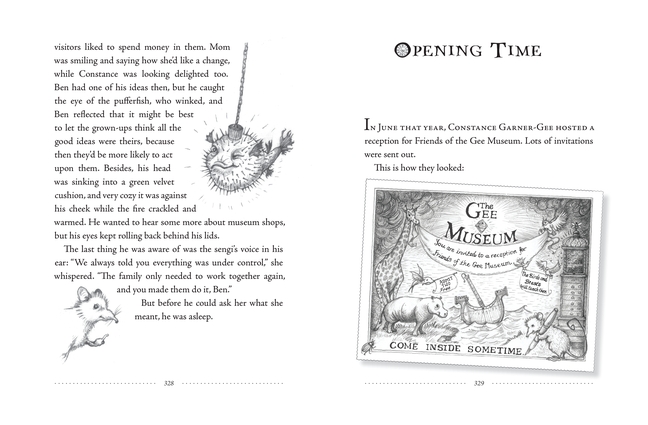
Ben has lived alone with his mom ever since his father died when he was little. When an invitation to a mysterious, odd museum called The Gee Museum arrives addressed to him, it stirs up a vague memory of time spent with his father – and sets his mother on edge, although she won’t say why. Ben goes to the old museum and meets a group of talking animals, all waiting for him. They tell him that the museum is in danger, and he’s the only one who can save it – the proprietress is old and tired of keeping it going, and the people she’s considering selling it to – a greedy landlord who’s also trying to force Ben’s mom out of business and their home, and a rival museum’s director who plans to scavenge the most valuable pieces and junk the rest – don’t have the Gee’s best interests at heart. As Ben unravels the secrets of the Gee, and the mysterious hippo and his place among all the animals, he finds answers about his father and his family that will fill a missing piece he’s lived with for too long.

The Hippo at the End of the Hall is an steadily building tale that blends the fantastic with a story of family and of memory. Ben and his mom are likable characters that stick together, even when one’s annoyed at the other: kind of like real moms and kids, right? The animals have individual personalities that set them apart from one another and bring them right into the story, and the human characters have history that’s never completely given away, yet feel fully formed and built up – Helen Cooper leaves us to wonder and imagine the wonderful adventures that took place before we joined the group. The black-and-white illustrations throughout add a vintage feel to the atmosphere, bringing the Gee Museum to life under your fingertips. Magical museums and magical creatures, two terrible baddies, and a family putting itself back together make this a book to booktalk to your Jumanji fans, your Night at the Museum fans (schedule a showing of the movies!), and your magical realism fans.

Helen Cooper is a two-time Kate Greenway medalist. This is her first novel. You can find more about Ms. Cooper, including her bibliography, at her author website.

Posted in Humor, Intermediate, Middle Grade, Non-fiction, Tween Reads

Learn how to tell the perfect joke: The Joke Machine

The Joke Machine, by Theresa Julian/Illustrated by Pat Lewis, (Oct. 2019, Odd Dot), $8.99, ISBN: 978-1-250-31864-0

Ages 7-12

The Joke Machine is one of those books that’s kind of a no-brainer for my library purchases. Joke books are huge in my library community. A book that teaches you how to build the perfect joke, and manages to squeak in some English lessons while it’s at it? That’s a book my kids need.

Set up like as a trip through a fictional Laugh Lab, The Joke Machine takes readers through 16 “rooms”, each where they’ll learn a new strategy and meet a new joke specialist. They’ll also get to know LOLA, a joke machine whose name stands for Laugh Out Loud Apparatus. There are chapters on such joke techniques as contrast, specifics, being literal, and personalizing jokes to your own sense of humor (“twizzling”), all with dozens of examples. The book contains over 500 family-friendly jokes, many of which have been tested by my second grader and me, with varying degrees of success (everything from a chuckle to “MOM, STOP” – that one was from my too-cool-for-me college student), plus quick and easy ideas for creating your own jokes.

Teaching kids the subtle art of playing with words and helping them fine-tune the magic of exaggeration? Priceless. A note on sarcasm cautions kids about hurt feelings, and encourages them to be positive and respectful when joking. Black and white line illustrations get a dose of orange to liven things up throughout.

Get ready to hear these jokes over and over again – and have some of your own ready to answer with. This one will be a popular selection.


ollow a cast of fictional funny experts into the Laugh Lab, a hilarious joke-building factory that teaches middle-grade readers how to create their own jokes, puns, silly one-liners, and more. Each chapter explores a different style of joke making, such as surprise, understatement, and exaggeration, and includes hundreds of hilarious examples.

By the end of the book, readers will have a set of tools in their joke belt to make their friends and family actually LOL.

The book includes more than 500 family-friendly jokes—plus zillions that you can create on your own!

 
Posted in picture books, Preschool Reads

Maybe shows children their incredible potential

Maybe, by Kobi Yamada/Illustrated by Gabriella Barouch, (Sept. 2019, Compendium), $17.95, ISBN: 978-1-946-87375-0

Ages 3-7

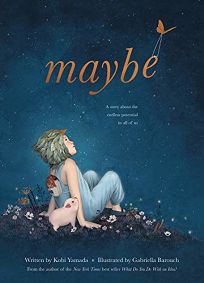
A girl and her sidekick, a small pig, take readers on an introspective journey in Maybe. Opening with the question, “Have you ever wondered why you are here?”, Kobi Yamada inspires and encourages listeners to think about what each and every one of us is here to accomplish – to invent something? to you build things?- and embrace everything life has to offer; everything we set out to do, from a place of love and the desire to be a force for good. Speak for those who cannot. Shine a light into dark places. Kobi Yamada’s words will fill readers with a sense of purpose; strengthening them against failure by acknowledging that it isn’t how one falls down, it’s how they rise. Gabrielle Barouch’s artwork explores fantastic, surreal landscapes with a hold in the corporeal world: releasing a birdcage filled with glowing butterflies into the night; watering flowers while standing in them.

Maybe is a lovely book to look at, and a book that’s filled with potential, just waiting to share it with others. Share this with your readers; read this to your class visits; let the kids know that, as Kobi Yamada says, “You already have everything it takes to do big things”.


Posted in Fiction, Middle Grade, Middle School, Realistic Fiction, Tween Reads

The Tornado takes on a tough question about bullies

The Tornado, by Jake Burt, (Oct. 2019, Feiwel & Friends), $16.99, ISBN: 978-1-250-16864-1

Ages 10-14

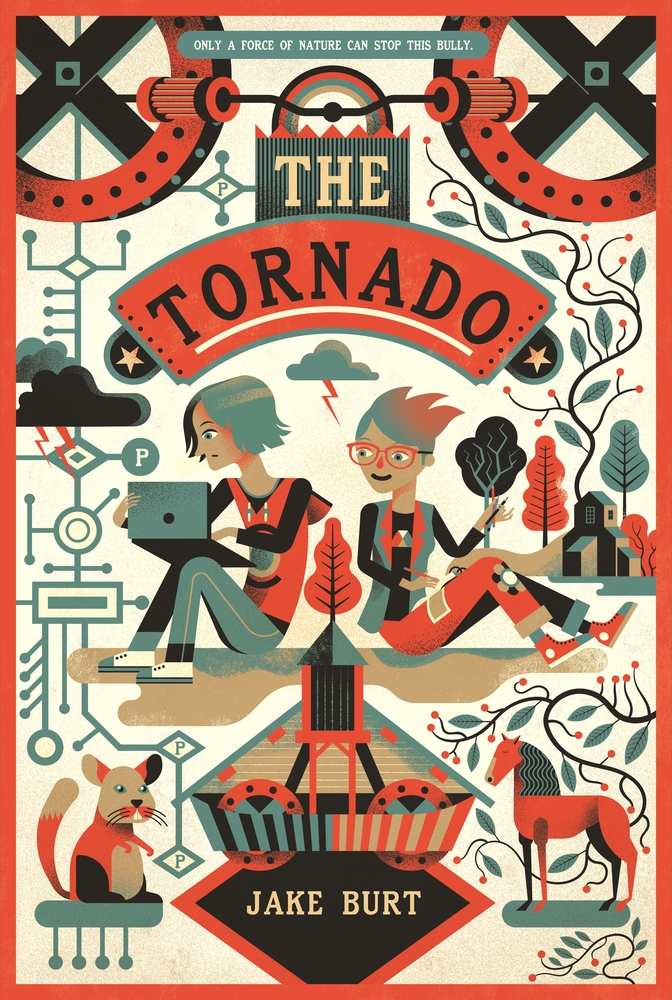
Fifth grader Bell Kirby loves systems and structure. He uses them to excel in his school’s Creator’s Club, he creates an enviable habitat for his pet chincilla, Fuzzgig, and he stays under the radar, away from the school bully, Parker Hellickson – who also happens to be the principal’s son. When Daelynn Gower shows up – a new kid in town, straight out of homeschool, with rainbow-colored hair and a personality to match – and befriends Bell, she puts all of his hard work and systems at risk. Because Daelynn can’t help but be noticed. But when Daelynn finds herself in the bully’s sights, Bell finds himself at a crossroads: back in Parker’s good graces if he stands by and lets the next kid take the abuse, or stand up for himself and his new friend.

This is a strong story about bullying, looking at it from a less examined point of view. What happens when your bully moves on to another kid? Bell struggles with this because he’s relieved, but he knows that even standing by, pretending not to see the bullying, is wrong. When he learns that he was another kid’s relief from being in Parker’s sights, he knows, even more, that he has to take a stand. It’s a topic that can contribute to a meaningful class discussion. Jake Burt gives us fully realized characters here. Bell loves building and creating things to order his world, likely influenced by his military parents, who pass that love for structure onto him: he messages with his father, who’s stationed overseas and sends him engineering puzzles to figure out; his mother, a major in the US Army, is working on her Ph.D. and is referred to as a “mad scientist” by Parker. Parker is an unrepentant bully who uses the fact that his father has his own blind spot when it comes to his son’s bullying, brushing aside repeated complaints and believing the thinnest of excuses while letting readers glimpse into a home life that may not be ideal for Parker, either. His father talks down to Bell’s mother on several occasions, and she needs to correct him about her rank in the Army on at least one occasion, noting that she outranks her husband.

Woven into this story is Bell’s interest in systems and creating, and bringing a great STEAM challenge into the plot. The Creator Club challenge for this school year is to recreate one of Leonardo DaVinci’s creations, DaVinci-era style. No Internet. No electricity. Working by candlelight and looking up information in books. It’s a great subplot about friendship, teamwork, and cooperation. There’s also some great references to The Wizard of Oz throughout the book – see how many you can find, and challenge your readers. The one question that came up for me multiple times throughout the reading: Who is the Tornado here? I don’t know about you, but I got a different answer each time I considered it.

Author Jake Burt’s website offers updates and more information about his books. John Schu has an interview with Jake Burt available at Watch.Connect.Read, and The Tornado has a starred review from School Library Journal.


Posted in Uncategorized

Reach for the Stars with Astro-Girl

Astro Girl, by Ken Wilson-Max, (Sept. 2019, Candlewick Press), $16.99, ISBN: 9781536209464

Ages 4-8

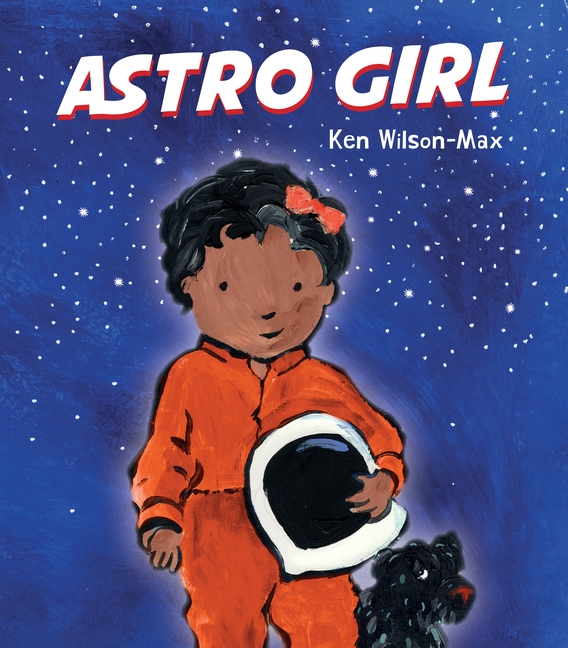
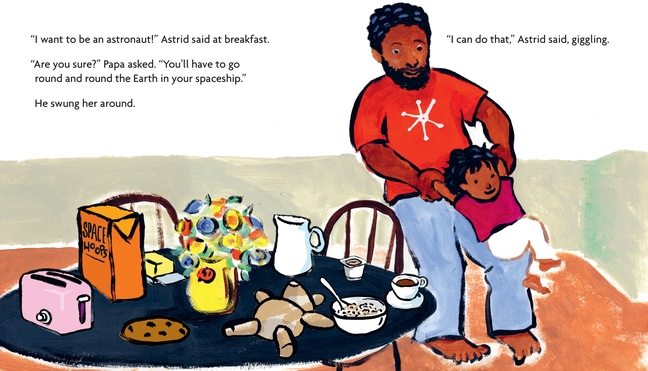
Astrid is a little girl who loves the stars and space.  She and her father act out the challenges that astronauts face in outer space, as they wait to meet Astrid’s mom, who’s coming home from a business trip… of sorts. He swings her around and around like a spaceship orbiting Earth and tosses her up in the air, defying gravity like an astronaut; she eats a cereal bar in place of astronaut food in a tube and conducts her own “experiments” by making rocket ship cookies.

I love Ken Wilson-Max’s bold, bright acrylic artwork, and Astro Girl has plenty of it. Boldly outlined, with bright, bold colors, Astro Girl is as wonderful to look at as it is to read. The story of a family of color is a great STEAM story, too: Astrid’s mom is an astronaut, and Astrid means to follow in her footsteps. Back matter includes the origin of the word “astronaut”, and brief profiles on five women who have gone into space, just like Astrid’s mom. Endpapers show a midnight blue sky, sprinkled with stars, giving kids the same desire to reach for the stars that Astrid is imbued with. The warm colors and bold outlines make this a warm book that draws readers close and talks to them, like Astrid has a secret to share with each reader.

I can’t get enough of Astro Girl, and I guarantee your readers won’t, either. The cover features Astrid, in her bright orange jumpsuit and astronaut helmet – accompanied by her dog – is a striking sight that will grab everyone’s attention. My son asked me if this was a Mae Jemison book when he saw it! Use this as an opportunity to get Mae Jemison’s name, and the names of other astronauts. You can start with the most recent all-female spacewalk:


Astro Girl is a must-have for your storytimes, and your STEM/STEAM shelves.

Posted in picture books, Preschool Reads

Join the Red Rover as it wanders Mars

Red Rover: Curiosity on Mars, by Richard Ho/Illustrated by Katherine Roy, (Oct. 2019, Roaring Brook Press), $18.99, ISBN: 978-1-250-19833-4

Ages 4-7

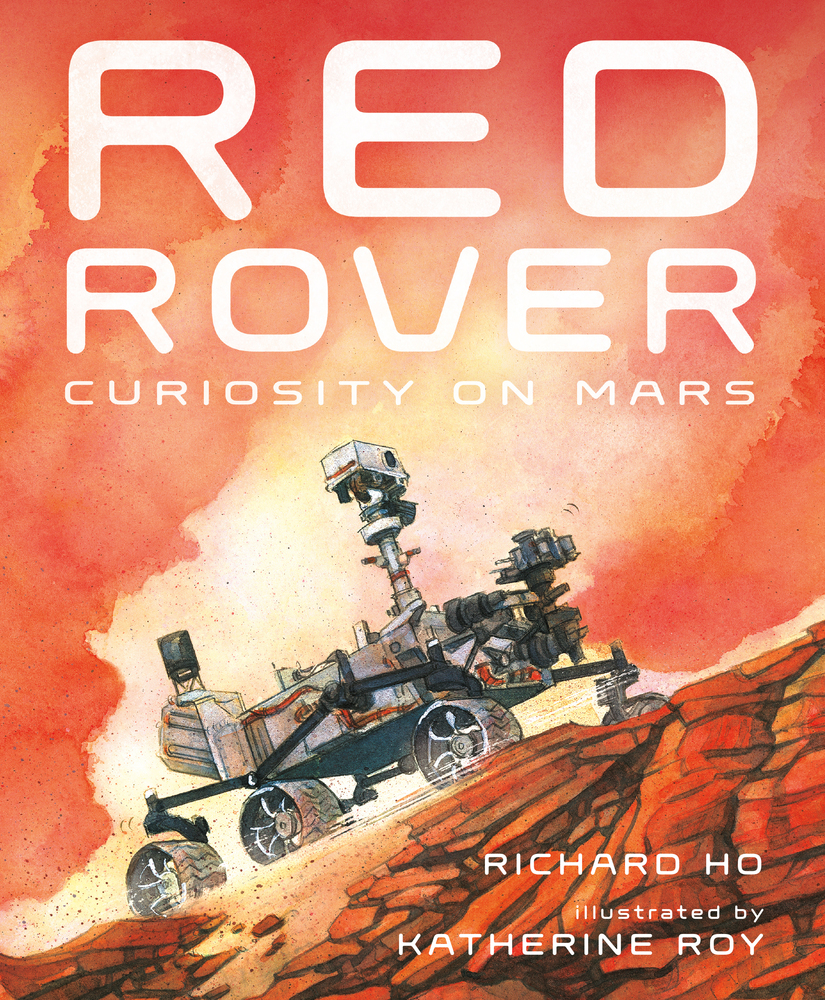
I am in love with this sweet, factual story about the Curiosity Rover, the robotic rover currently exploring Mars after landing in the Gale Crater in August, 2012. The story is straightforward, yet gives life to the Curiosity by referring to it as the “little rover” and wondering about its habits. Is it looking for water because it’s thirsty? It may seem lonely, but it has friends that came before. The narrator is the planet Mars, who seems to be watching Curiosity and its predecessors with interest. Mars states, “They call me Mars. I am not like your world”, and notes that life is hard for Curiosity: there are sand storms; the air is thin and it’s cold; it’s very, very, red. Through it all, artwork depicts the scrappy Curiosity rover, undeterred from its mission: it collects, its observes, it records. Back matter includes an annotated sketch of the Curiosity; facts about Mars, and brief profiles of the previous orbiters, landers, and rovers that have explored the planet (and that are in progress). There’s a bibliography and websites for further reading.

The story gives the Curiosity a personality of sorts, and the artwork presents a breathtaking artist’s rendering of the Red Planet. The sandstorms are chaotic, and a foldout of the red landscape is just stunning: the Curiosity stands on a cliff, overlooking the barren, beautiful world. Red Rover is a nice introduction for younger readers to the world of space exploration. If you have Wall-E fans, introduce them to Red Rover.

If you have readers who want more on Mars, Kiddle has Curiosity Facts for Kids; NASA’s Space Place has the Mars rovers broken out into trading cards with stats; and NASA’s FunZone has coloring sheets.

Posted in picture books

A tall tale about Mother Goose from Chris Raschka

Mother Goose of Pudding Lane (A Small Tall Tale), by Chris Raschka/Illustrations by Vladimir Radunsky, (Sept. 2019, Candlewick), $17.99, ISBN: 9780763675233

Ages 4-8

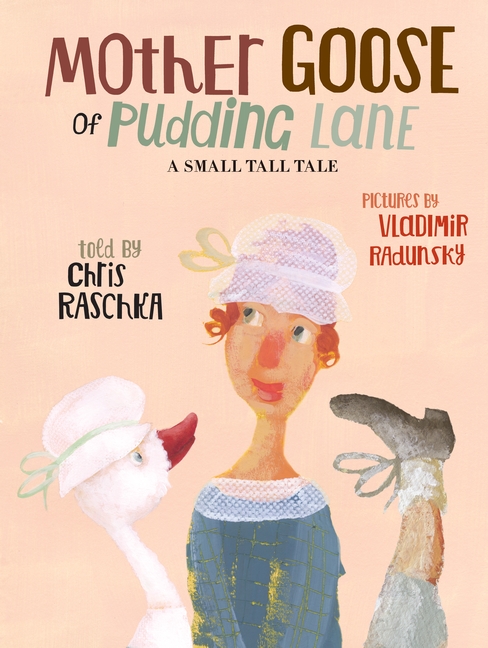
We’ve all grown up with Mother Goose: usually the British vision of a goose wearing a tall black hat, glasses down on her beak, and a shawl; sometimes, it’s a kindly old woman. But was there a real Mother Goose? Caldeott Medalist Chris Raschka and illustrator Vladimar Radunsky introduce the “real” Mother Goose: Elizabeth Foster, who, in 1692, married Isaac Goose – a widower with 10 children – in Boston and became Mother Goose. She sang songs and made up rhymes for her children (she and Isaac Goose went on to have four more children), which were published at a print shop on Pudding Lane in Boston. Although no copies of the original Mother Goose compilation exist today, we’ve all grown up with adaptations and additions to the legend. Here, Chris Raschka and Vladimir Radunksy recreate some of Mother Goose’s best-known, most beloved pieces while creating new poems and illustrations that recreate the life of Elizabeth Foster Goose, the Mother Goose of Pudding Lane.

Vladimir Radunsky’s playful, colorful gouache and pencil illustrations infuse the story with a sense of fun and joy: animals and people in colonial dress act out some of Mother Goose’s best-known rhymes, like “There Was an Old Woman Who Lived in a Shoe”, “Old King Cole”, and “Baa Baa Black Sheep”. The story of Elizabeth and Isaac Goose is told in rhyme throughout, from their courtship to their old age. Endpapers include sketch art of a young Mother Goose in front, and an alphabet rhyme reprint in back.

A sweetly done fictional biography of a beloved figure in children’s literature.

Mother Goose of Pudding Lane has starred reviews from Publisher’s Weekly and Booklist.

Posted in Middle Grade, Tween Reads

STEAM project fun: Super Robot

Super Robot, by Arnaud Roi, (Oct. 2019, Schiffer Kids), $12.99, ISBN: 9780764358302

Ages 6-12

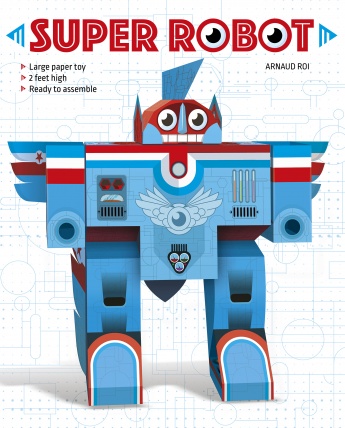
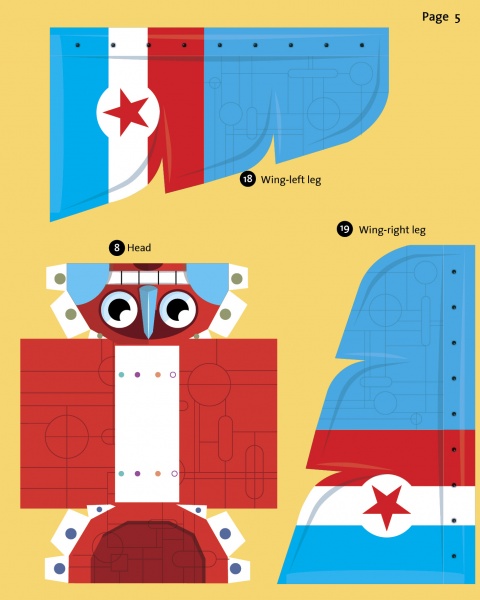
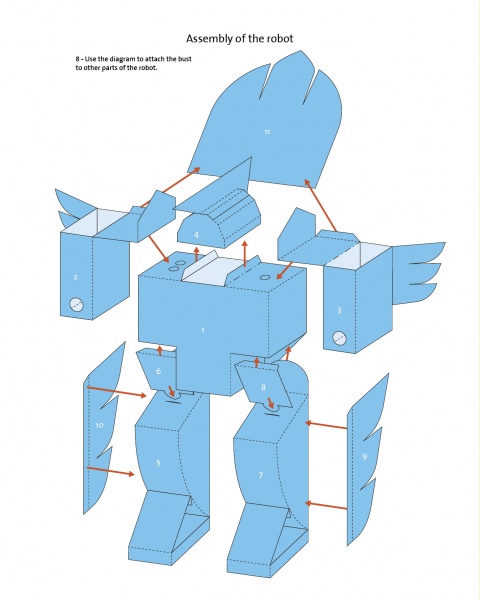
This is one of those books that makes me think back to when I had punch-out paper doll books. They’re still around, albeit a little tougher to find, so I was really excited to get a copy of Super Robot in the mail from Schiffer Kids! Artist Arnaud Roi uses his love of the 1950s aesthetic to create a vintage-looking robot that kids can punch out and put together, creating a 2-foot-high paper structure.

Assembly instructions are detailed and take readers, step-by-step, through assembly; the assembly process is helpfully illustrated so you don’t get too turned around in the building process. The paper is sturdy and scored where necessary, to help with folding and assembling. The robot is a bright, bold combination of primary colors.

Younger scientists and paper artists will need a helping hand, but bigger creators should be able to work on this, no problem. It’s a fun idea for a Discovery Club activity, and small groups can work on one robot at a time, if your budget permits you to buy a few copies. Create a robot army, or an army of one – either way, Super Robot is a fun build that get kids working with their hands.

Pair with Adam Rubin’s Robo-Sauce, one of my favorite robot books: the book transforms into a Robo-Book. Have some Legos, and some robotics books around for your readers who are ready to explore more. I recommend NatGeo Kids’ Everything Robotics and National Geographics Readers: Robots.


Posted in Animal Fiction, Fiction, Middle Grade

The Great TBR Readdown Continues: Real Hamsters Don’t Bite

Real Hamsters Don’t Bite, by Alexis Cleoford, (May 2017, Amazon Digital Services), $7.99, ISBN: 978-1548365233

Ages 8-11

My TBR read-down continues with this short novella from author Alexis Cleoford, who generously emailed me a PDF of her book, Real Hamsters Don’t Bite. It’s the first book in an humorous animal series, Mighty & Brennon. Mighty and Brennon are two housecats who are not thrilled about being sent to a “pet hotel” while their humans are on vacation. When they arrive home, Mighty – the leader – decides it’s time to strike out on and find Cat Land, a sort of paradise for cats, where they’re treated as they should be (remember, people used to worship cats: they have never forgotten this). They also stumble onto a mystery: hamsters are attacking cats! But… real hamsters don’t bite, do they?

Real Hamsters Don’t Bite is a novella – only about 50 pages – and is available via ebook or paperback through Amazon. Narrated in the first person by Mighty, the bolder cat of the two, there’s some humor and a sense of adventure. Brennon is the more cautious of the two, giving readers a nice little dramatic – and fun – foil to play off of. Black and line drawings throughout add some interest. Give Real Hamsters Don’t Bite a shot if you have animal fiction fans.