Posted in Graphic Novels, Teen, Young Adult/New Adult

DC’s new YA graphic novels star Wonder Woman and Batgirl

DC Comics has been putting out consistently good original graphic novels under their DC Ink imprint.  They’ve hired top-name YA talent, like Lauren Myracle (Catwoman), Mariko Tamaki (Harley Quinn), Kami Garcia (Raven), Danielle Paige (Mera) and Marie Lu (Batman) to tell a more human story for each of these super-teens. When I received copies of Louise Simonson’s upcoming graphic adaptation of Leigh Bardugo’s Warbringer and Sarah Kuhn’s Shadow of the Batgirl, I squealed.

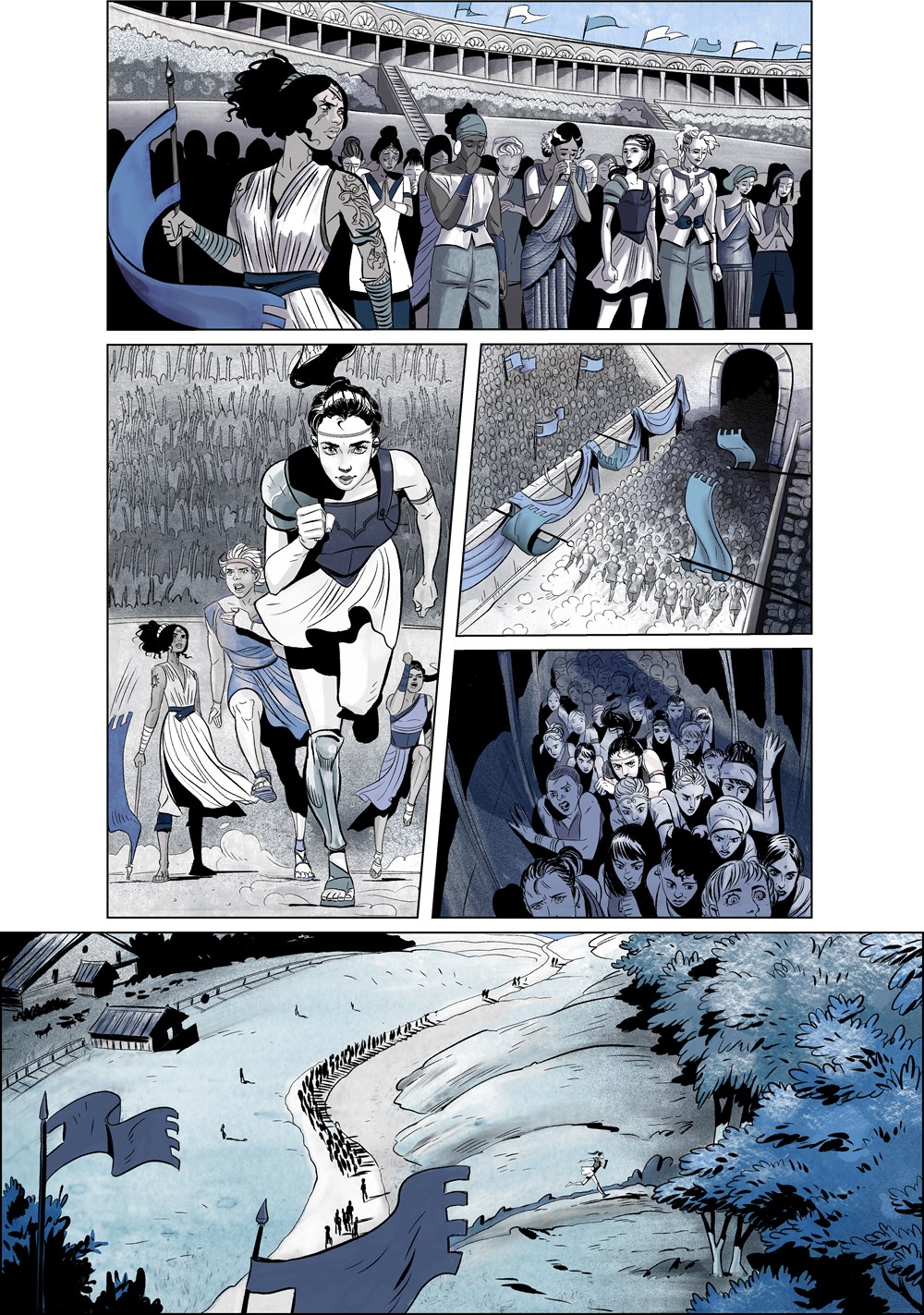
Wonder Woman: Warbringer, by Leigh Bardugo/Adapted by Louise Simonson/Illustrated by Kit Seaton, (Jan. 2020, DC Ink), $16.99, ISBN: 978-1-4012-8255-4

Ages 12+

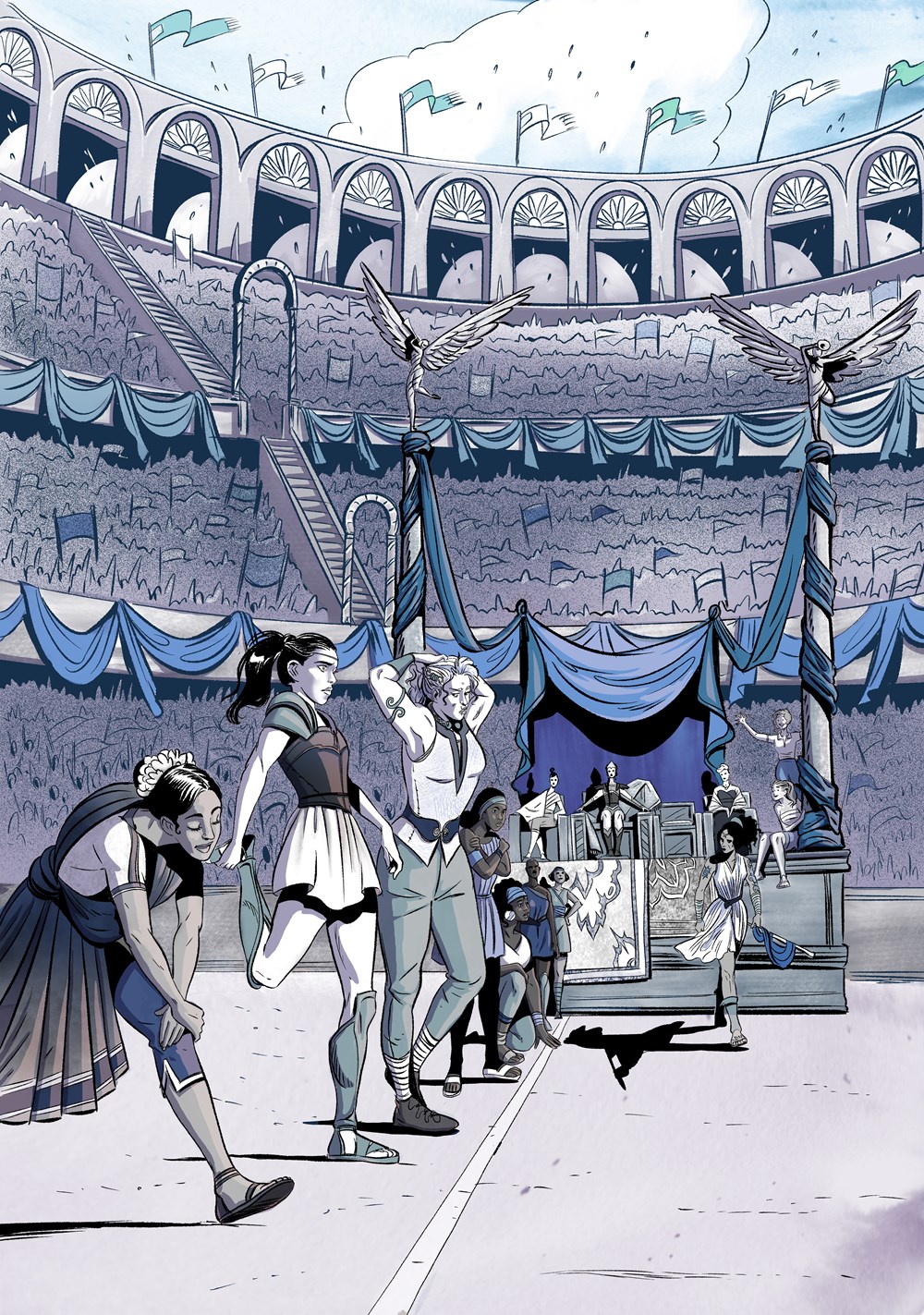
Before she was Wonder Woman, she was Diana, daughter of Hippolyta and the only inhabitant of Themiscyra to have been created, molded, given life at the behest of her mother and granted by the gods. This vision of Themyscira is more like a Valhalla for fallen female warriors: the way in is to die in battle. Because Diana’s existence differs from other residents of the island, she constantly feels she must prove herself to her Amazon sisters. The chance comes during a race – which she becomes diverted from when she sees a sinking ship and one survivor flailing in the water. The ship, from the world of Man, should not be there, but Diana can’t stand to let anyone die. She rescues a young woman named Alia Keralis, hiding her away until she can figure out what to do. But Themyscira reacts to Alia’s presence, and after consulting with the Oracle, Diana learns that Alia is a Warbringer – a descendant of Helen of Troy, and doomed to bring war, bloodshed, and misery wherever she goes – decides to bring Alia back to her world. When Diana and Alia arrive in modern-day New York, they find themselves in the middle of a struggle between factions who want the Warbringer for themselves, whether to end her line or possess her power.

Louise Simonson is a comic book legend, with Marvel and DC titles to her credit. Here, she masterfully adapts Leigh Bardugo’s novel to graphic format, focusing on Diana’s relationships: with the Amazons, with her mother, with Alia; each one fraught with tension. Diana learns to navigate these relationships while unraveling an ancient mystery in order to save the world. Literally. Kit Seaton’s artwork gives us mythic monsters, urban living, and sprawling Themyscira. There are moments where Diana’s innocence about the modern world of Man is played for laughs, like when she goes back at a guy making comments on the subway. Alia and her brother are biracial; Alia’s best friend, Nim, is Southeast Asian and bisexual.

Like the other DC Ink books, this one is a good add to your YA original graphic novels.
 

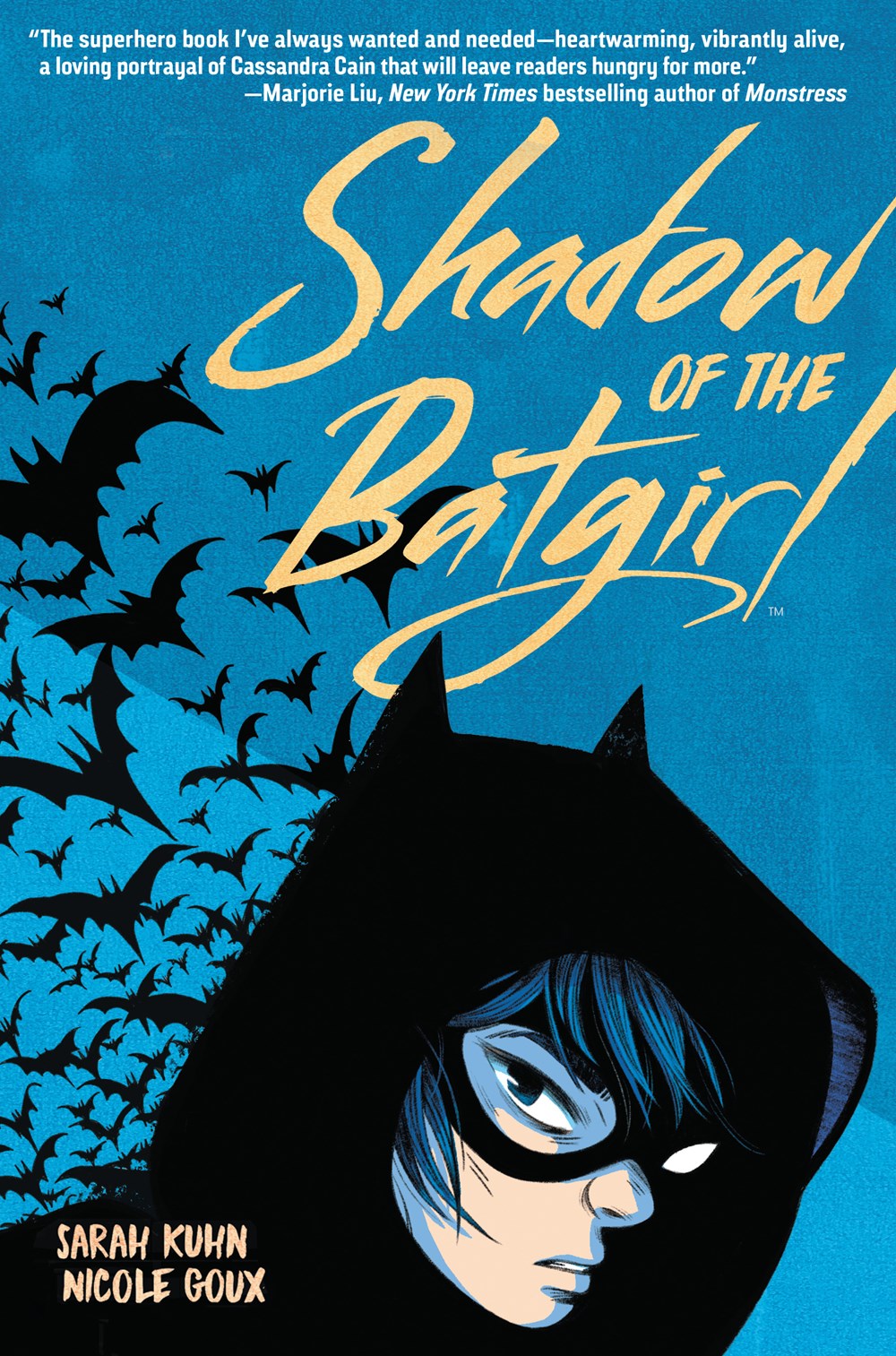
Shadow of the Batgirl: A Cassandra Cain Graphic Novel, by Sarah Kuhn/Illustrated by Nicole Goux, Feb. 2020, DC Ink), $16.99, ISBN: 978-1-4012-8978-2

Ages 12+

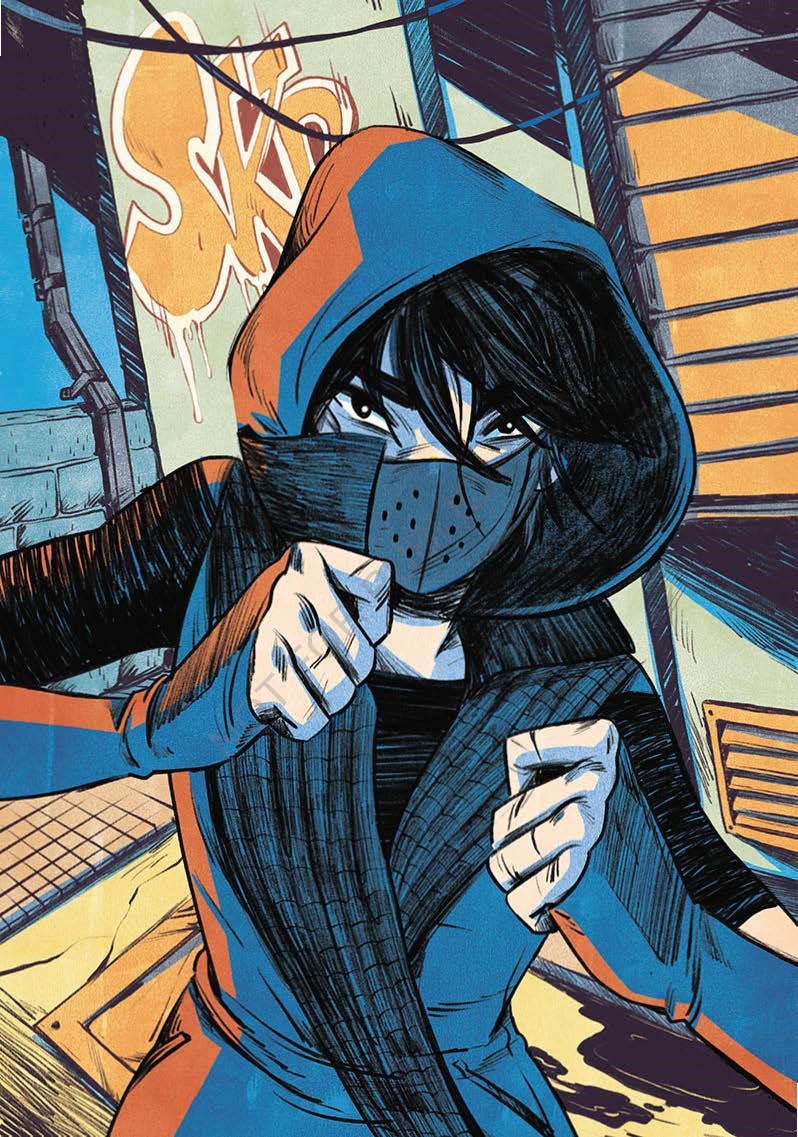
Cassandra Cain, teen assassin, is on the streets hunting her latest prey. But the dying pleas with Cain to relay a message to his daughter strikes a chord, and she goes on the run, hiding out in… a library! She sits in on a Batgirl storytime talk, delivered by my favorite comic book librarian, a wheelchair-bound Barbara Gordon, and finds herself enamored with Batgirl. Never taught to speak by her father, crime lord David Cain, she finds refuge with a local restaurant owner, Jackie Yoneyama, and eventually, Barbara Gordon herself. As Cassandra begins opening up to the two women, she also learns to speak, read, and write, and discovers that her father is wreaking havoc in Gotham City in his quest to gain control over the world’s assassins. It’s time for someone new to assume the Batgirl mantle, and Barbara knows the Cassandra has what it takes.

I am psyched that we get a Batgirl story that stars two different Batgirls! Barbara Gordon is more of an mentor/guiding force here; readers familiar with Batgirl’s history will know she’s in a wheelchair after the events of The Killing Joke. If you don’t know, it’s fine; it has no bearing on this story. Barbara has to pass on the cape and cowl, and Cassandra – an Asian-American girl who knows how to fight, and has a strong inner morality that steers her away from her cruel father. Sarah Kuhn can write great comic moments, and there a few in here, to lighten the storyline. The artwork is more colorful than I’ve seen in other DC Ink books, which tend toward two-color, with extra color for emphasis; here, we get some warm oranges when Cassandra is in the presence of Barbara and Jackie; colors tend toward cooler blues and purples when she’s struggling with her thoughts or shades of rose for other character’s memories. I loved Shadow of the Batgirl. Sarah Kuhn knows how to give readers a great superheroine origin.
Posted in Graphic Novels, Teen, Tween Reads, Young Adult/New Adult

March Graphic Novels Roundup

I haven’t done a roundup in a while, but I’m actually a little ahead of the game, so let’s do it! Here’s what’s good for March.


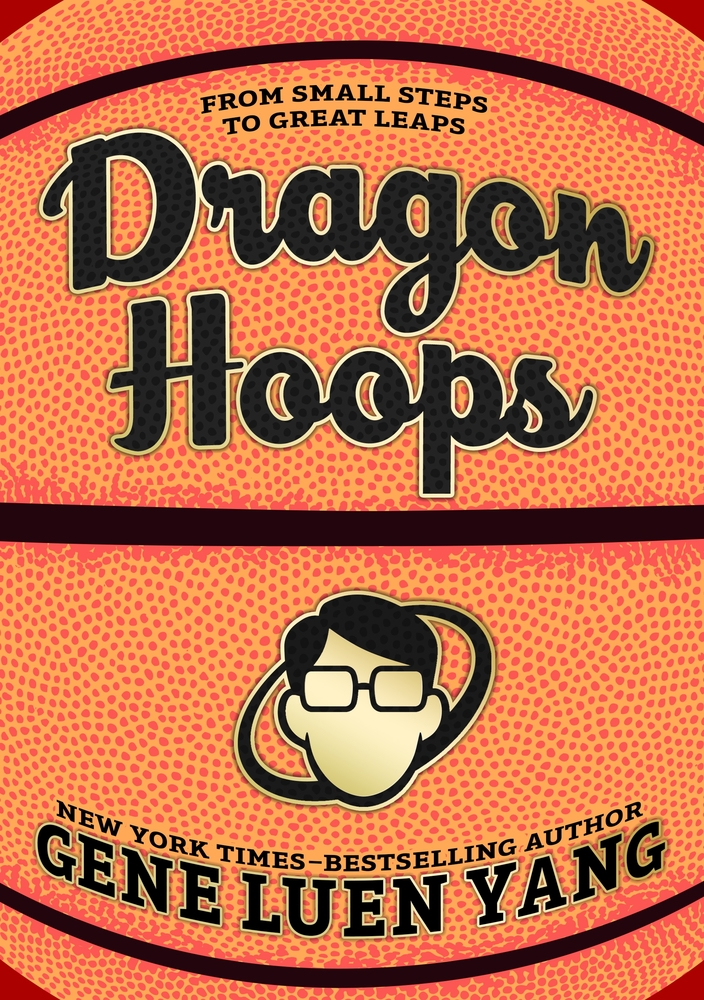
Dragon Hoops, by Gene Luen Yang, (March 2020, First Second), $24.99, ISBN: 9781626720794

Ages 12+

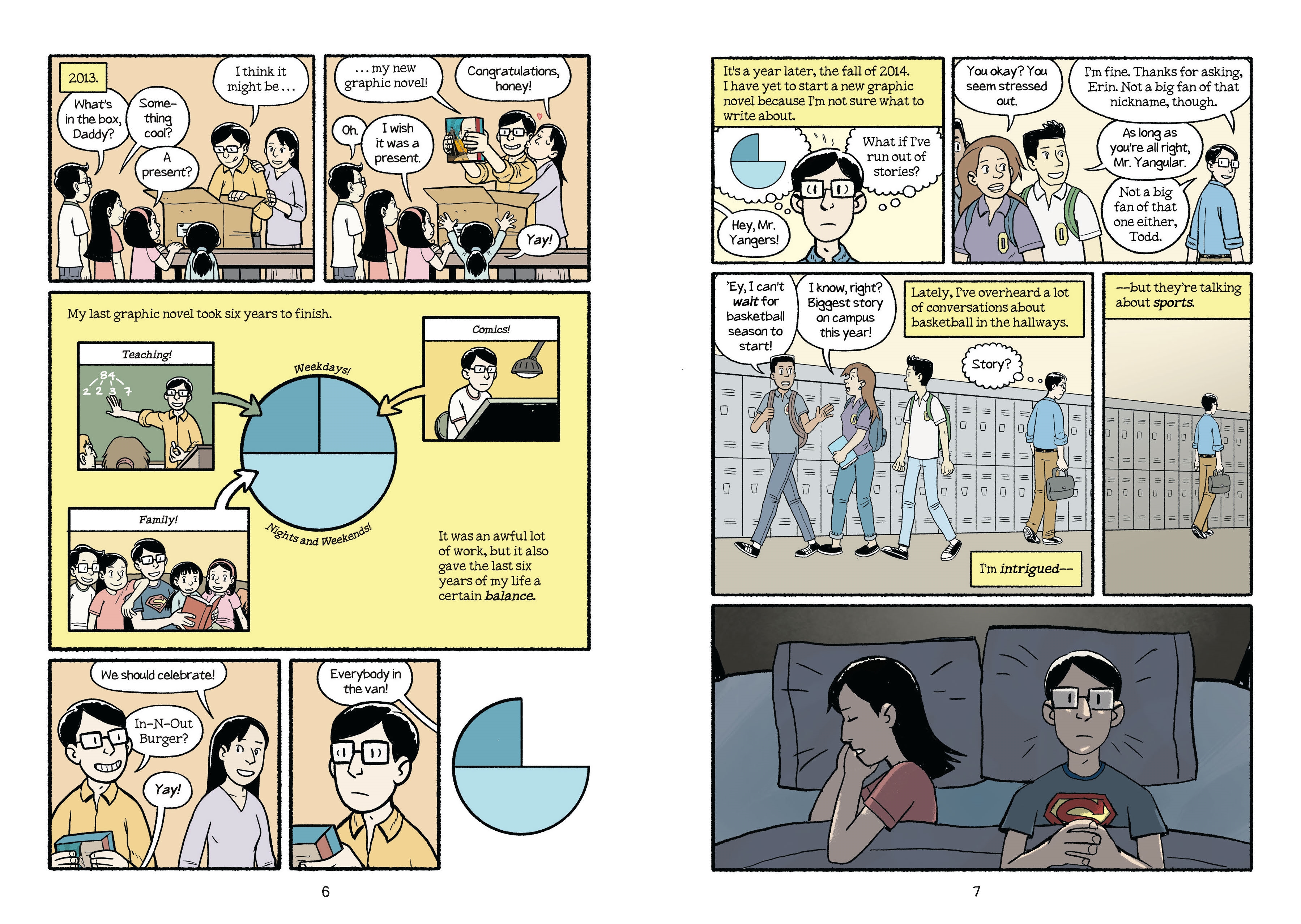
Gene Luen Yang is back, and Dragon Hoops is a memoir of a year following the basketball team during the 2014-15 season at the high school where he taught, Bishop O’Dowd High School in Oakland, California. Gene wants to write a new graphic novel – at the same time he’s being courted by DC Comics to write a new Superman story – and he’s wracking his brain, coming up with options. He isn’t really a sports guy, but he decides to explore the Bishop O’Dowd varsity basketball team, after hearing all the buzz in the school hallways. He approaches the men’s varsity coach, Lou Richie, and starts writing the story of the team, the story of the young men on the team, and the pursuit of the California State Championships.

I’m not a big sports fan, and you don’t need to be to read Dragon Hoops. It’s the story of the people behind the team, and it’s exciting to read about these diverse young men, their stories, and their drive. It’s great to see Gene Yang’s journey from someone who has zero interest in sports to becoming a rabid fan of the team, because of the connections formed with the players and Coach Lou. It’s also very much Gene Yang’s story as he struggles with a work-life balance, whether or not to take on the extra work – and excitement! – that Superman would bring, and his struggle to address a difficult chapter in Bishop O’Dowd’s history.

The artwork is realistic with a cartoony feel, and the dialogue and pacing is great. Gene Yang gets readers excited for each game, and builds relationships between reader and players/coaches by interspersing biographical chapters and pivotal games in the race for the championship. He has a powerful thread through each personal story, too: each character, including Yang, has a moment when they step outside their comfort zone to pursue something greater; something Yang uses a literal “step” to illustrate. Yang steps across the street from the classrooms to the gym to meet with Coach Lou; Coach Lou steps across the street to go from public school to Bishop O’Dowd as a teen; Sendra Berenson, the inventor of women’s basketball in in 1892 took a step into a gymnasium to teach the young women in her care a new sport she’d read about; player Jeevin Sandhu, a student and practicing Sikh, takes a step into a Catholic high school so he can play basketball. Gene Yang includes the evolution of basketball from its creation to the present, and the big role of Catholic schools in high school basketball; both things I knew nothing about and found really interesting. Back matter includes comprehensive notes and a bibliography. Catch a preview of Dragon Hoops, courtesy of EW magazine.


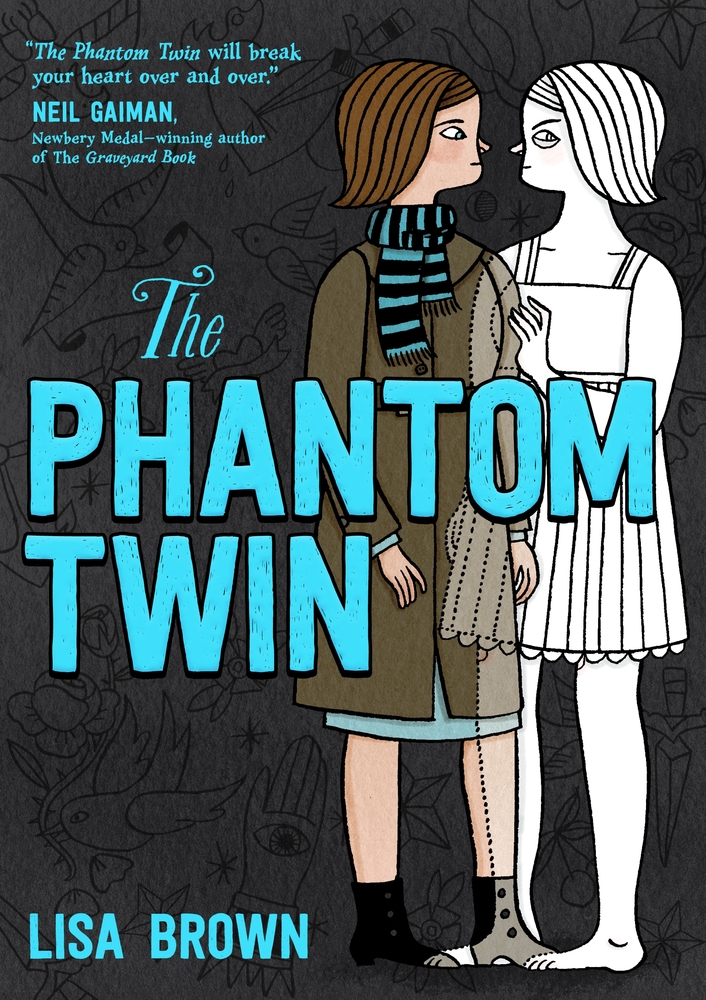
The Phantom Twin, by Lisa Brown, (March 2020, First Second), $17.99, ISBN: 9781626729247

Ages 12+

This eerie tale of twins, sideshows, and hauntings is perfect for tweens and teens who love their books on the creepier side. If you have readers who loved Neil Gaiman’s The Graveyard Book and Coraline, or loved Mary Downing Hahn’s books, this is the book to hand them.

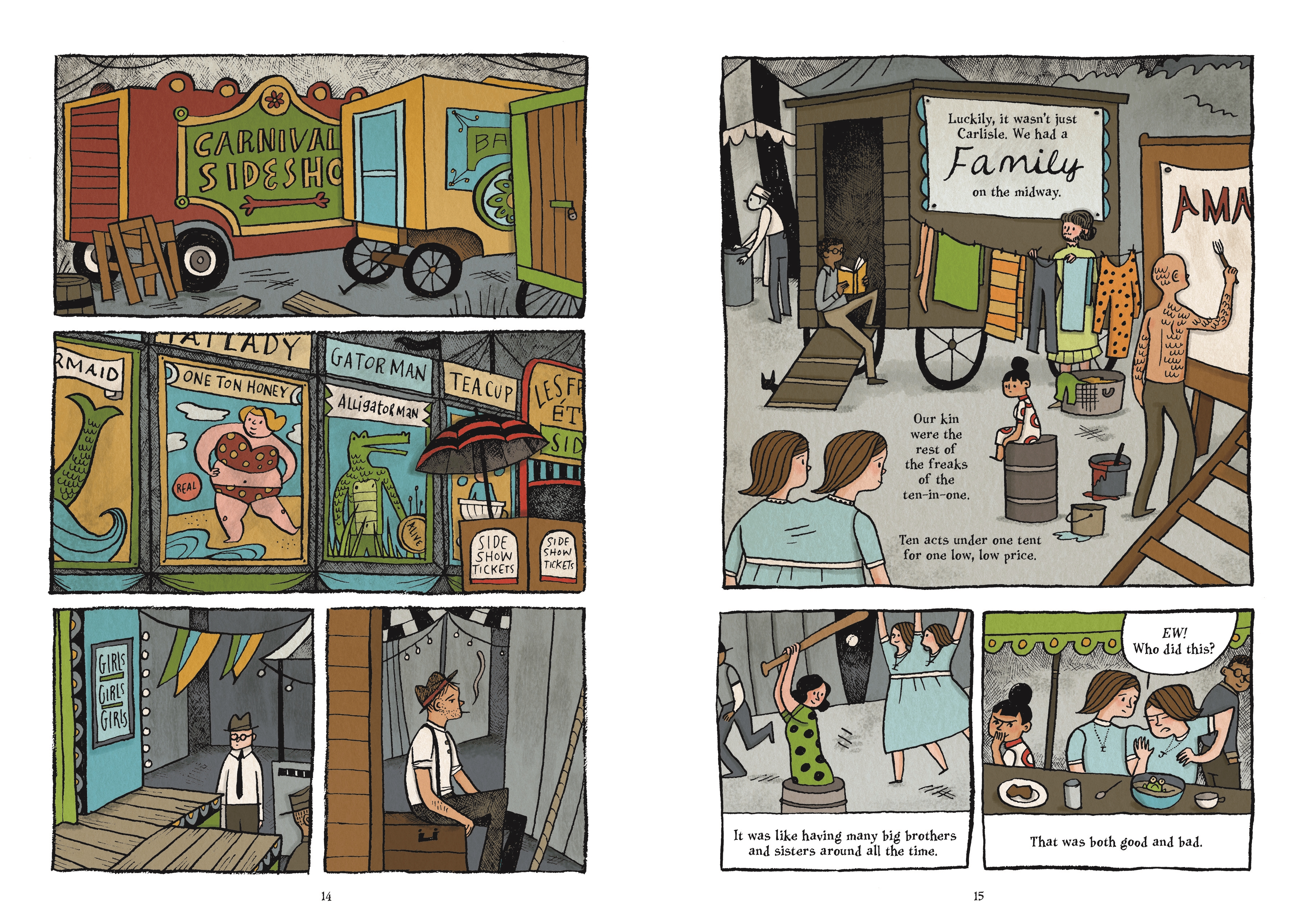
At the turn of the 20th century, Isabel and Jane are conjoined twins, sold to a sideshow by their family, where they find a family among the “freaks” in the freak show. The two sisters are opposites, with Jane being the dominant personality. Where Iss would rather stay home, Jane wants to go out, and since she has more motor control over their shared body, Iss finds herself dragged along. Jane starts dating a surgeon who wants to separate them; despite Iss’s misgivings, Jane agrees: but doesn’t survive the surgery. Iss is left to face life on her own, but feels the phantom of her sister ever-present, like a phantom limb. Iss returns to the carnival, desperate for familiarity and to rebuild her life. Jane, still the dominant personality, tries to assert herself, and Iss finds herself rebelling against her sideshow family and her sister’s memory, as she tries to negotiate a life on her own and free of others’ expectations.

The Phantom Twin is fabulously creepy with an upbeat twist. It’s a feminist tale and a story of life on the fringes as much as it’s a story of grief, loss, and starting over. Back matter includes an author’s note on sideshows, carnival lingo, and more resources for further reading.

Posted in Science Fiction, Teen, Young Adult/New Adult

A Song for a New Day has an interesting take on post-cataclysm life

A Song for a New Day, by Sarah Pinsker, (Sept. 2019, Berkley Publishing Group), $16, ISBN: 9781984802583

Ages 16+

Before, people gathered in public spaces to watch sporting events and live music shows. Before, we shopped in malls, gathered in groups out in public, like it was No Big Deal. Before, Luce Cannon was a young musician on the verge of making it big, on tour with her band and promoting her big song, “Blood and Diamonds”. But mass shootings, terror attacks, and deadly viruses unleashed in public spaces have led to life in the After, where public gatherings are illegal and people live in their homes, getting everything they need droned in from the big Superwally box superstores. Rosemary is a twenty-something who barely remembers Before; she remembers her time in the hospital, recovering from the pox, and she remembers “Blood and Diamonds” helping give her the determination to heal. Now, Rosemary spends her days in Hoodspace – interactive hoodies that connect wearers to a virtual world – as a customer service representative for Superwally, until the chance to view a concert through provider StageHoloLive introduces her to a new career as a talent scout. Working for StageHoloLive, she gets the chance to travel the country in search of those little places where people still find ways to gather, listen to live music, and celebrate human connection, but if something is too good to be true, it probably is.

Told in two stories: in the first person, by Luce Cannon and in the third person, from Rosemary’s point of view, A Song for a New Day is about the human spirit and revolution through positive change. Luce’s story begins in the Before, and leads us through the series of attacks that bring us to life After. Rosemary’s story picks up in the aftermath and stands as a contrast between the desire to be safe and the desire to live authentically. There is strong world-building and character development, with LGBTQ+ characters and a character-building plot point about an inclusive religious community.

While not written for YA readers, this would absolutely work for high school readers who enjoy sci-fi and dystopian fic. Sarah Pinsker is a Nebula Award-winning author and a songwriter. You can find audio on her website.

Posted in Science Fiction, Teen, Young Adult/New Adult

Space Opera: How Rory Thorne Destroyed the Multiverse

How Rory Thorne Destroyed the Multiverse, by K. Eason, (Oct. 2019, DAW), $26, ISBN: 978-0-7564-1529-7

Ages 14+

The first in a duology, How Rory Thorne Broke the Universe starts out with a hard fairy tale line: the new princess is born to the Thorne family line, and fairies come to bestow gifts on her. One fairy is pretty teed off that her invitation… got lost in the mail, let’s say, but there’s no spindle and no curse here. She bestows a dubious gift on the princess; the gift to see through lies of flattery and kiss-uppance. Rory is the first female baby to be born to the Thorne line for a while, so her birth throws things into a bit of a tizzy; it’s a tizzy that’s even more stirred up when a terrorist attack kills her father and the king of a neighboring planetary federation. Her mother gives birth to a male Thorne heir around the same time, which gives us an antagonist to watch out for in the next book.

Rory’s betrothed to the prince of the neighboring federation, and sent to live there while she waits to turn 18 and become his wife. Meanwhile, the Regent –  not her betrothed’s mother, since she also managed to get killed off – is a sleazy minister with his own power game at play. Rory, her body-maid (a badass half-cyborg named Grytt), her Vizier, Rupert, and two guards under Grytt, Thorsdottir and Zhang, keep an eye on things, because the Regent is up to no good. When the Vizier is arrested after trying to poke around and find out the Regent’s deal, Rory takes over and discovers a plot that will have major consequences for Rory, her family, and their corner of the universe. She enters her own Game of Thrones to outwit, outplay, and outlast the Regent.

Rory Thorne is a great character. She’s a smart, savvy teen princess who is ready to defend herself and throw down with anyone who gets in her way. But the book falls a little flat for me. There’s a great deal of worldbuilding, but tends to drone on at points and left me putting down the book to find something else to pique my interest between chapters. Is it YA? It’s definitely YA crossover material. Nothing too violent or overt for teen audiences, but it may not hold your usual readers’ attention. Talk this up with your space opera readers.

How Rory Thorne Destroyed the Multiverse has a starred review from Kirkus.

Posted in Graphic Novels, Non-Fiction, Teen, Uncategorized, Young Adult/New Adult

Open Borders presents the science and ethics of immigration

Open Borders: The Science and Ethics of Immigration, by Bryan Caplan/Illustrated by Zach Weinersmith, (Oct. 2019, First Second), $19.99, ISBN: 9781250316967

Ages 14+

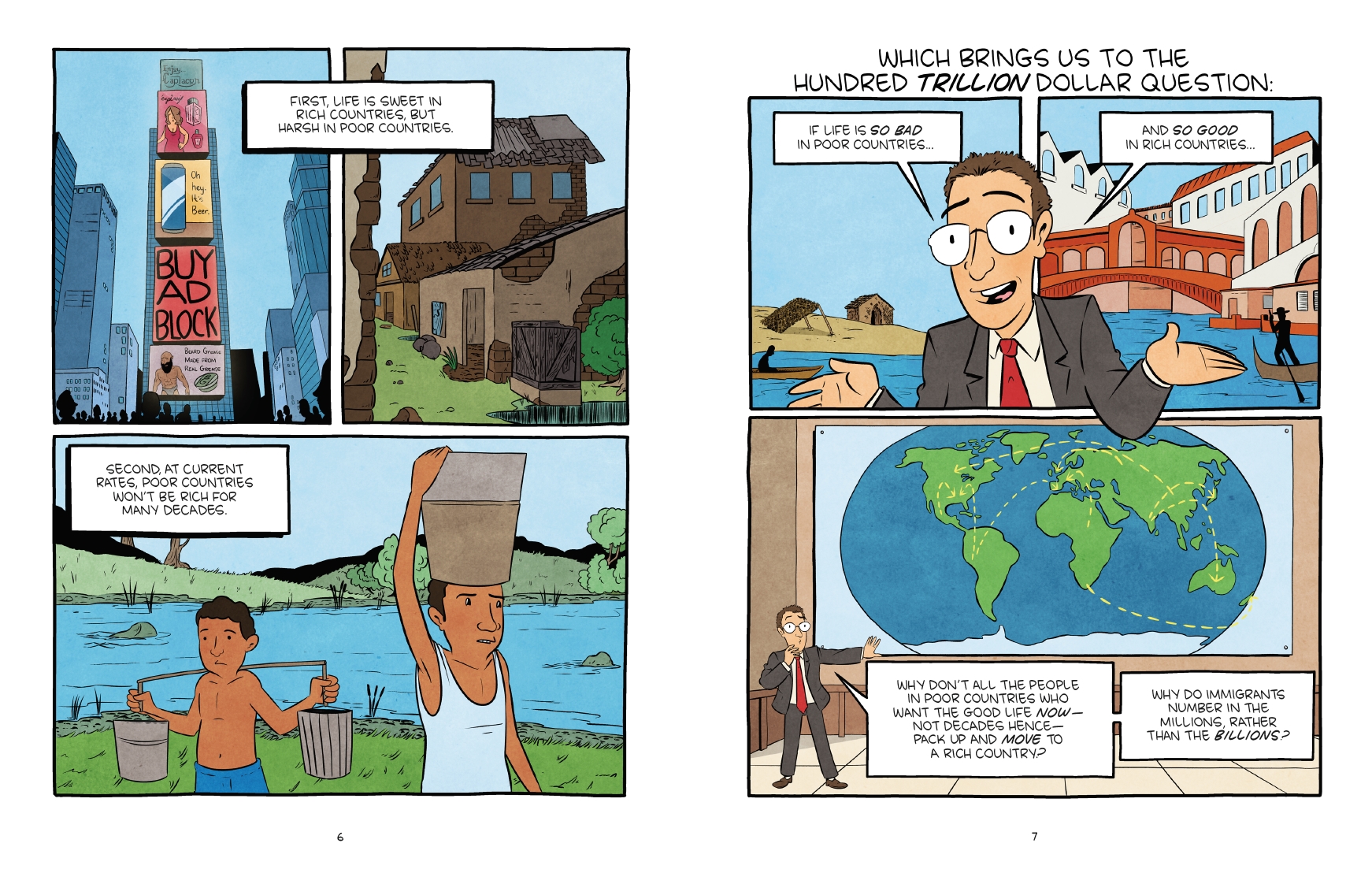
It’s no secret that immigration is a hot-button – one of the hottest button – topics in current events. One one side, we have those who would welcome new immigrants, for cultural and humanitarian reasons; on the other, those who want to restrict the flow of people into the country, whether to protect the current citizenry, the culture, or the economic status quo. Economist Bryan Caplan has written Open Borders: The Science and Ethics of Immigration as a proposal to both sides. He argues in favor of open borders, noting that doing so could eliminate poverty worldwide, not spiral us deeper into it; raise the global education and skill level, and lead us – as a whole – into a new age of prosperity for all.

The book, masterfully illustrated by Zach Weinersmith, presents Caplan’s argument using comprehensive research, communicated with a plain-English tone and artwork that’s colorful, multicultural, and translatable to audiences who don’t have a background in economics. The book is conversational and never preachy, and Caplan takes on reasons detractors have fallen back on time and again to argue against open borders, showing, using hard numbers, why open borders may be the next best way for us to advance.

This should be used in high schools and colleges: there are lists of resources and further reading; copious notes and references, and the straight-talk explanations, with clear illustrations, will really assist students, especially those who may stumble with pages of numbers, charts, and data. Once presented in the frame of a story, with a real-life, current events situation to anchor it, the numbers take on a life and meaning.

Open Borders has a starred review from Booklist. Author Bryan Caplan’s webpage is a treasure trove of articles and information, including cartoons and role-playing resources(!).

Posted in Non-Fiction, Teen, Young Adult/New Adult

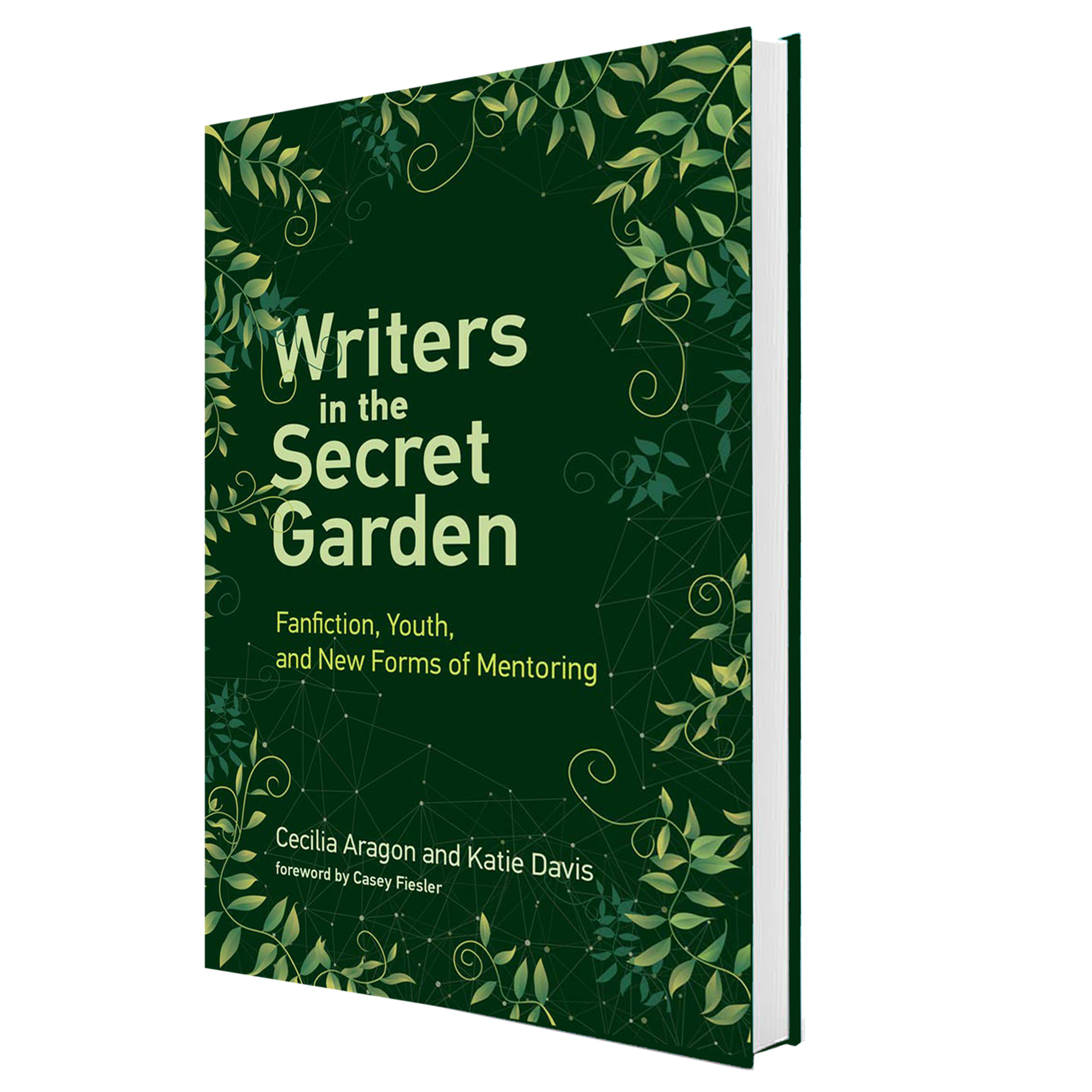
Blog Tour: Writers in the Secret Garden – Fanfiction, Youth, and New Forms of Mentoring

Who would have ever imagined that fanfiction would not only go mainstream, but be so popular? In the last 5 years since I’ve been librarianing, I’ve been to academic and pop culture panels on fanfic in the library; I’ve seen fanfic programs for middle graders and teens bring kids into the program room, I’ve seen novels like Carry On go meta and be about fanfic within a YA world, and I’ve seen my friends’ kids starting their own fanfic accounts so they could contribute to their fandom. It’s a wonderful thing to behold. One of my colleagues wrote her MLIS thesis on fanfiction. Now, University of Washington professors Cecelia Aragon and Katie Davis have given us Writers in the Secret Garden: Fanfiction, Youth, and New Forms of Mentoring; an in-depth exploration of how teens and tweens support and learn from each other through their participation in online fanfic communities like fanfiction.net and AO3.

Writers in the Secret Garden: Fanfiction, Youth, and New Forms of Mentoring, by Cecelia Aragon and Katie Davis,
(Aug. 2019, MIT Press), $25, ISBN: 978-0262537803
Ages 16+


Writers in the Secret Garden was sparked by a conversation in 2013, after a slew of news storied claimed young people couldn’t write/weren’t writing. Aragon and Davis extensively studied what was happening on fanfiction.net from both education and human-centered data science perspectives. Some of their findings include:

  • Most adults either have a negative view or are unaware of fanfiction, and the impact it is having on the lives of many young people today.

  • On Fanfiction.net alone, 1.5 million authors have published over 7 million stories and shared over 176 million reviews of those stories.

  • The median age of authors on the site is 16, with over 87% between the ages of 13 and 25.

  • 84% of authors on the site are female; and more fanfiction authors identify as gender-nonconforming (9%) than male (7%).

  • Young people are teaching each other how to write through the feedback they give. This new type of mentoring is unique to networked communities. Called “distributed mentoring,” it is described in detail in the book.

  • The quality of the writing improves in response to the amount of distributed mentoring the author received. (650 reviews predicts as much growth as one year of maturation).

  • Despite the fact that readers post reviews anonymously, comments are overwhelmingly positive, with less than half of one percent gratuitously negative.

The discovery of this vast and vibrant resource for kids who have something to say has been especially meaningful to Aragon as she recalls her own hidden efforts. When Cecilia Aragon was ten years old, she read The Lord of the Rings and fell in love with the world Tolkien created. But, in her opinion, there weren’t enough female characters, and she also had some ideas for scenes that should have been in the books. So, she sat down and wrote her own version in a spiral notebook that she kept hidden. No one ever saw it, and she never told anyone about it until recently, because she thought it wasn’t “real writing.”

“Fanfiction is a private universe — a secret garden — that has become a welcoming community, particularly for those from marginalized groups,” says Cecilia Aragon.  “In it, young people are mentoring each other to become skillful writers and thoughtful readers – and they are doing it entirely on their time and their own terms.”

The research group at the University of Washington maintains a Tumblr about their research.


Posted in Non-Fiction, Teen, Young Adult/New Adult

Playlist: The Rebels and Revolutionaries of Sound gives classical musicians rock star status

Playlist: The Rebels and Revolutionaries of Sound, by James Rhodes/Illustrated by Martin O’Neill, (Oct. 2019, Candlewick), $29.99, ISBN: 9781536212143

Ages 12+

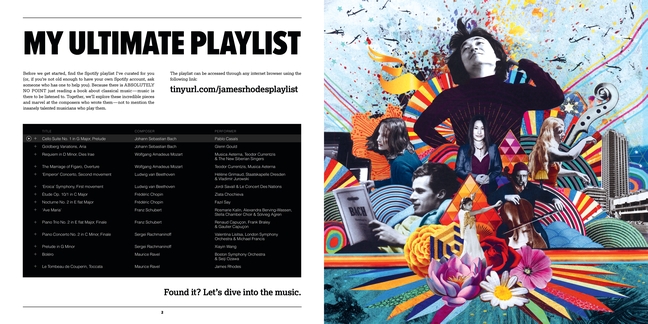
Concert pianist James Rhodes gives an introduction to the original rock stars: Bach, Mozart, Beethoven, Chopin, Schubert, Rachmaninoff, and Ravel. These forefathers of classical music are anything but fusty and boring. As Rhodes writes in his introduction, “…they were the original rock stars. They changed history, inspired millions, and are still listened to and worshipped all around the world today”. Rhodes starts off by providing his own Spotify playlist for readers to start exploring classical music, and creates profiles on each composer. The profiles are easily readable, laid out in magazine-type layout, and includes pop culture references to each composer’s music: Bach, for instance, has been referenced by or sampled in music by The Beatles, Zayn Malik, and Led Zeppelin, and used in The LEGO Batman Movie and Stranger Things. Each composer’s profile includes a profile on a word from the Spotify playlist, to give readers further context and understanding.

This crash course in Music Foundations is illustrated by artist Martin O’Neill, who creates vibrant collages using photos and mixed media, presenting a mind-blowing art installation to accompany Rhodes’ writing. Rhodes includes musical terminology in his “The Language of Music” section at the end, and there is an index.

This is a gorgeous coffee table book with a mission. It’s music history, and world history; it’s art history and a treatise on the evolution of pop culture. Don’t miss this one.

Playlist: The Rebels and Revolutionaries of Sound has starred reviews from Kirkus and Booklist.
Posted in Historical Fiction, Realistic Fiction, Teen, Young Adult/New Adult

Rebel Girls: YA turns back the clock

Rebel Girls, by Elizabeth Keenan, (Sept. 2019, Inkyard Press), $18.99, ISBN: 978-1-335-18500-6

Ages 12+

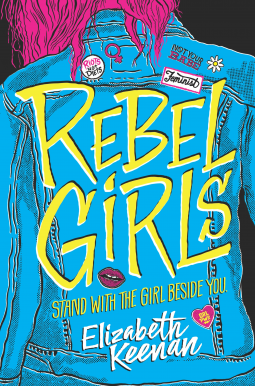
Taking place in the mid-1990s, Rebel Girls is about the riot grrl movement and the abortion debate. Athena Graves is a high school junior and a burgeoning riot grrl. Her younger sister, Helen, is a freshman who prefers Pearl Jam to Bikini Kill and is an aspiring model, while Athena dyes her hair red and eschews all things mainstream. The two sisters couldn’t be more different, but when a rumor makes the rounds at their Catholic high school that Helen had an abortion over the summer, Athena goes on the offensive. She knows that rumor came from Leah, an awful mean girl at school, and her cronie, Aimee. Leah can’t stand someone being as pretty and popular as she is; Helen poses a threat to her popularity. But Leah is dating Athena’s best friend, football player Sean. Pro-life Helen is devastated by the rumors, which get her removed from all extra-curricular activities – including the school’s pro-life club – and could get her expelled. As Athena tries to get to the bottom of the rumors and the bullying Helen endures at school, she starts dating new kid, Kyle, only to have Leah start flirting with him, too. Athena is going to have to lace up her Doc Martens and take on Leah and her mean girls, riot grrl style: which can be the toughest thing of all, because riot grrl culture encourages women to lift up other women, not put them down.

Rebel Girls presents a solid, realistic look at both sides of the abortion debate. Athena and her best friend, Melissa, are both riot grrls and pro-choice advocates, where Helen is firmly pro-life; in defending Helen, the two come up with a strategy that doesn’t preach, but does leave a lot of room for discussion. Riot Grrl culture is alive and well in this book, which resonates, because elements of that culture are experiencing a renaissance today: ‘zines, social causes, and the #MeToo culture have their roots in the ’90s and the riot grrl movement. Athena constantly checks herself through the book, reminding herself that even when things are difficult, she has to find a riot grrl way to handle things. That means not spreading vicious rumors about Leah or tearing her down to make Helen look or feel better. Athena and Melissa find ways to rebel against the faculty and student body persecution of Helen in a brilliant way that unites the school while still following (most of) the rules. As a Catholic schoolgirl from the late ’80s, Rebel Girls was like a trip back home. I loved the writing, the characters, and the smartly crafted story. The story touches on the ugly underneath the gloss in more ways than one, too: Melissa is half Vietnamese and half Cajun; Sean is African-American, and both characters experience racism in the book. It’s a small thread of a subplot, but a solid one to remind readers that the more things change, the more things stay the same. If you have readers who loved Moxie by Jennifer Mathieu, make sure to give them this one.

Rebel Girls has a starred review from Kirkus.


Posted in Fantasy, Teen, Young Adult/New Adult

JULIE MURPHY NEWS FROM VALIANT!

I just got this email, and literally dropped what I was doing (scheduling a dentist appointment, but still) to get this post out. See, I’m not at New York Comic Con this year (waving at my friend, Esti, my son, and his girlfriend who braved the morass of the Javits Center today), so I’m living for everyone’s e-mails, tweets and Facebook posts. THIS email from comics publisher Valiant made me SO HAPPY: Julie Murphy, author of one of my fave YA reads, Dumplin’, is writing a YA novel about Faith, a character from the Valiant Universe that I absolutely love. Check out this gorgeous cover!

From Valiant:

Valiant Entertainment and HarperCollins Publishers imprint Balzer + Bray announced today a new series of young adult novels featuring Valiant comics characters, kicking off in Spring 2020 with FAITH: Taking Flight by #1 New York Times bestselling author Julie Murphy.

“We are always looking for masterful storytellers to bring our stories and characters to life in new and exciting mediums,” said Russell Brown, Valiant President of Consumer Products, Promotions & Ad Sales. “Julie Murphy is one of the best. Having read several of her previous YA novels, we knew she was the perfect author to write about one of our most popular characters, Faith Herbert. Through this and more Valiant YA novels to be announced, we can’t wait to introduce a new generation of fans to the Valiant Universe.”

Julie Murphy is the #1 New York Times bestselling author of the books Side Effects May VaryDumplin’Ramona Blue, and Puddin’Dumplin’ was recently adapted into a Netflix original movie starring Danielle MacDonald and Jennifer Aniston.

“Collaborating with Valiant on FAITH: Taking Flight has been such a thrill! I’ve been able to write what I love—body positive stories about young people on the brink of self-discovery—while getting to stretch my legs and play in the world of comics and superheroes,” said Murphy. “Faith has come to mean quite a great deal to me as a plus-size icon and I’m so excited for longtime Faith fans to meet teenage Faith and for a whole new crop of readers to discover Faith and her world for the first time.”

FAITH: Taking Flight is the story of Faith Herbert, a regular teen, who, when she’s not hanging out with her two best friends, Matt and Ches, is volunteering at the local animal shelter or obsessing over the long-running teen drama The Grove. So far, her senior year has been spent trying to sort out her feelings for her maybe-crush Johnny and making plans to stay close to her Grandma Lou after graduation. Of course, there’s also that small matter of recently discovering that she can fly… and a super cool (to say the least!) new girl in town, one who Faith never in her wildest dreams ever thought she would get to meet.

“Julie Murphy’s books have helped change the conversation around body positivity in the YA industry,” stated Alessandra Balzer, VP, Co-Publisher, Balzer + Bray. “We are excited to partner with Julie and Valiant to bring this groundbreaking superhero’s story into the world.”

Faith, first created by Jim Shooter and David Lapham in 1992 for Valiant, received her first solo comic book series in January 2016 from writer Jody Houser and artists Francis Portela and Marguerite Sauvage and became an instant success, earning an Eisner Award nomination and praise from The Atlantic, Vox, NPR, Cosmopolitan, and many more. Today, she is one of Valiant’s most recognizable characters, and her adventures are published worldwide, available in 47 countries in 27 languages. Faith is also a key character in the Harbinger comics, a series about a group of enhanced individuals who band together to avoid being persecuted by government officials and exploited by large corporations. A Harbinger feature film is currently in development at Paramount Pictures under producers Neal H. Moritz and Toby Jaffe of Original Film and Dan Mintz, CEO of DMG Entertainment, the parent company of Valiant.

Valiant’s slate of forthcoming YA novels intend to feature younger versions of classic Valiant heroes as they learn to control their superpowers, battle evil elements, and deal with the trials of growing up. More announcements of the next books in the series will be made soon!
About Valiant Entertainment
Valiant Entertainment, a subsidiary of DMG Entertainment, founded by Dan Mintz, is a leading character-based entertainment company that owns and controls the third most extensive library of superheroes behind Marvel and DC. With more than 80 million issues sold and a library of over 2,000 characters, including X-O Manowar, Bloodshot, Harbinger, Shadowman, Archer & Armstrong, and many more, Valiant is one of the most successful publishers in the history of the comic book medium. For more information, visit Valiant on FacebookTwitterInstagram, and ValiantEntertainment.com. For Valiant merchandise and more, visit ValiantStore.com.

HarperCollins Children’s Books is one of the leading publishers of children’s and teen books. Respected worldwide for its tradition of publishing quality, award-winning books for young readers, HarperCollins is home to many timeless treasures and bestsellers such as Charlotte’s Web, Goodnight Moon, Where the Sidewalk Ends, Where the Wild Things Are, and The Hate U Give; series including The Chronicles of Narnia, Ramona, Warriors, A Series of Unfortunate Events, Pete the Cat, Fancy Nancy, Divergent, and Red Queen; and graphic and illustrated novels such as Nimona, Invisible Emmie, and New Kid.  Consistently at the forefront of digital innovation, HarperCollins Children’s Books delights readers through engaging storytelling across a variety of formats and platforms, including the largest young adult (YA) book community, Epic Reads.  HarperCollins Children’s Books is a division of HarperCollins Publishers, which is the second largest consumer book publisher in the world, has operations in 17 countries, and is a subsidiary of News Corp. You can visit HarperCollins Children’s Books at www.harpercollinschildrens.com and www.epicreads.com and HarperCollins Publishers at corporate.HC.com.


FOLKS, I AM BEYOND EXCITED. I love Julie Murphy’s writing style and her body confident characters. This is going to be a novel I keep an eye out for!


Posted in Fantasy, Science Fiction, Teen, Young Adult/New Adult

Crossover YA/Adult SFF: The Nobody People

The Nobody People, by Bob Proehl, (Sept. 2019, Del Rey), $27, ISBN: 978-1-5247-9895-6

Ages 16+

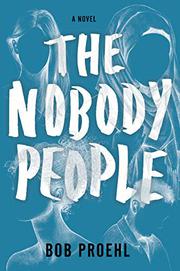
What starts with a horrifying killing spree turns into a story about specially powered teens and adults and their alienation from society in this hefty story by Bob Proehl. Avi is a reporter who’s always chasing the the big story, at the expense of his marriage and his faltering relationship with his young daughter, Emmeline. An assignment in Iraq cost him his leg, and while he recuperates at home, a phone call from a police contact starts Avi off on the hunt again: a teenage boy has seemingly disappeared a chunk of a shopping mall food court and a church. How? As Avi begins an investigation into the case, he discovers that superpowered people walk among us, and that his precocious Emmeline is one, too. From there, we get what reads like a dark X-Men alternate universe, complete with a school for Resonants (the name given to the special-powered) run by a benevolent gentleman named Bishop, and a rebellious group of by-any-means-necessary Resonants, with a shadowy player pulling strings behind the scenes. Avi becomes more of a backdrop character to history as the clash between Resonants and “Damps”, as non-powered folks are called, becomes more tense and leads to a violent conclusion.

There’s an incredible amount of character development and world-building in The Nobody People, and the cast is diverse, making characters of color and gender identity primary characters, rather than relegating them to background or “friends” parts. The first half of the book is by far the stronger half, as the second half of the book gets caught up in itself, changing up a strong subplot to rapidly switch gears and justify the inevitable conflict at the conclusion. Overall, I enjoyed The Nobody People and think dedicated SFF (Sci-Fi Fantasy) readers will like it.