Posted in Adventure, Espionage, Fiction, Fiction, Middle Grade, Tween Reads

Bridget returns in Spy to the Rescue!

bridgetwilderBridget Wilder: Spy to the Rescue, by Jonathan Bernstein, (May 2016, Katherine Tegen Books), $16.99, ISBN: 9780062382696

Recommended for ages 9-13

Middle school spy-in-the-making Bridget Wilder is not having a great re-entry to “normal” society after being recruited by her former super-spy biological father in Bridget Wilder: Spy-in-Training. The agency that recruited her? Fake. Her super spy dad? Retired, and wants a “normal” relationship with his daughter (read: BORING). Her obnoxious brother is dating someone even more annoying, her best friend has moved across the country, and she’s being framed by someone for stealing cheerleading secrets AND ruining the birthday party of the season! Bridget senses something amiss, though; her spy instincts kick in and she decides to investigate.

Just when you think you’re about to read a fun, fluff middle school drama about mean girls, though, Jonathan Bernstein hits you with the real story: Bridget’s dad goes missing, and she’s pulled back into the spy game. Mean girls have nothing on an international crime syndicate, and Bridget’s going to need all of her skills, plus some new ones, to save her dad, her family, and herself.

I LOVED this book. Written in the first person from Bridget’s point of view, we get a narrator who’s 100% tween/teen girl: smart, funny, sarcastic, and a good kid who cares about her often wacky, extended family. I also love that we get an adopted heroine – yay for adoptees! – who refers to her parents and her siblings as her parents and her siblings, not her “adoptive family” like we see ad nauseum (I’m looking at you, Olympic coverage of Simone Biles and her family). Bridget has her family, and when her long-last dad reappears, he wants a relationship with her, but it’s her choice, and it involves her whole family; it’s not this long last dad appears, daughter runs off with him like the family who raised her never existed scenario, and I am grateful to Jonathan Bernstein for giving us a great, positive portrayal of an adoptee’s relationship to her family. Her entire family. It’s a bit of a touchy spot, being an adoptee myself, so when I find good writing, I applaud it.

But back to the story. Spy to the Rescue is fast-paced and fun. There’s some intrigue, there’s a lot of action, great dialogue, and continued strong character development. I booktalked Bridget Wilder: Spy-in-Training to my Corona Kids during my Spy Week program at the library, and they loved it, especially coming off the Spy Kids movie day, when they were empowered to be spies and save the grownups for a change. Wait until I put this one on the shelves, and let them know that a third book will be coming next year.

If you have action fiction fans, spy fans, or kids who enjoy a good book with a nice dose of girl power, add Bridget Wilder to your collection. Check out Jonathan Bernstein’s author webpage for more about Bridget and her author, Jonathan Bernstein.

Check out the book trailer for Spy in Training right here:

Posted in Fiction, Middle Grade, Realistic Fiction, Tween Reads

Soldier Sister, Fly Home is quietly powerful

soldier sister_1Soldier Sister, Fly Home, by Nancy Bo Flood/Illustrated by Shonto Begay, (Aug. 2016, Charlesbridge), $16.95, ISBN: 9781580897020

Recommended for ages 10+

Thirteen year-old Tess is struggling with her identity. As someone who’s part white and part Navajo, she feels too white when she’s on the rez, but she’s called “Pokey-hontas” and “squaw” at the white school she attends in Flagstaff. Her older sister, Gaby, whom she adores, has joined the military in order to get money for college; when she comes home to tell Tess that she’s being deployed – shortly after Tess and her family have attended a memorial service for Lori Piestewa, a member of their community and the first Native American woman to fall in combat – Tess is devastated. Gaby asks Tess to take care of her stallion, Blue, while she’s gone; it’s a challenge, to be sure, as Blue is semi-wild and doesn’t gel with Tess, but over the course of the summer, Tess learns more about herself from Blue than she could have imagined.

Soldier Sister, Fly Home is a quietly tender novel about family, identity, and loss. Lori Piestewa, whose memorial service opens the story, was a real-life soldier who was killed in Iraq and was a member of the Hopi tribe. From Lori’s tale, Ms. Flood spins the story of Tess and Gaby and Native American identity. Their grandfather is a veteran, a World War II Code Talker; they live in a community of proud warriors, descended from warriors. Tess is frustrated as she tries to embrace a cultural identity: but which culture to identify with? Her grandmother is a guiding force here, as is Gaby, who loves and reassures her younger sister, even from a world away. Blue, the stubborn and half-wild horse, teaches Tess patience and helps her recognize her own inner strength throughout the book.

The book includes notes and a glossary on the Navajo language, a note honoring Lori Piestewa and her service, and a reader’s group guide. Writing prompts are available through the publisher’s website, as is a link to a seven-page excerpt.

Soldier Sister, Fly Home has received a starred review from Publishers Weekly. It is a beautiful story and an important addition to all bookshelves.

Nancy Bo Flood was a research psychologist and studied brain development at the University of Minnesota and the University of London before writing books for children. Additional books include recognized and award-winning titles, such as Warriors in the Crossfire (Boyds Mills) and Cowboy Up! Ride the Navajo Rodeo (WordSong).

Posted in Fiction, Historical Fiction, Middle School, Realistic Fiction, Teen, Tween Reads

In The Gallery, art speaks volumes – who’s listening?

galleryThe Gallery, by Laura Marx Fitzgerald, (June 2016, Dial Books), $16.00, ISBN: 9780525428657

Recommended for ages 10+

It’s 1929, and 12 year-old Martha has gotten herself thrown out of school for the rest of the school year. Her Ma certainly isn’t going to let her sit home and do nothing, so Martha ends up going to work as a maidservant for Mr. Sewell, the wealthy owner of a major New York newspaper, and his reclusive wife, Rose. Martha’s mother is in charge of the household and oversees all the staff, and Rose isn’t getting any favors by being Ma’s daughter: she’s put straight to work in the kitchen, scrubbing, sweeping, and mopping. She also hears a lot of talk from the servants in the house, who say that Rose is crazy, but Martha isn’t buying it: there’s more there than meets the eye, especially because Mr. Sewell gives her the creeps. When she discovers the Sewell gallery, a conversation with Alphonse – a servant who also seems to know more than he’s letting on – confirms Martha’s suspicions. By learning more about the art that Mrs. Sewell sends down from her locked room to be displayed in the gallery, Martha puts together the real story about what’s going on at the Sewell house.

The only thing better than the story taking place in The Gallery is the fact that it’s based on a true event. Ms. Fitzgerald’s captivating author’s note at the end of the story fills in some crucial details about the story, the true story that inspired it, and more information about events taking place at the time the story unfolds. The Jazz Age, on the brink of the stock market crash and ensuing Great Depression, had anarchists, performers both glitzy and outrageous, defined separation of classes, and a lot of backstabbing, both professionally and personally. It was a fascinating time, and The Gallery is a fascinating look into some of that era.

The Gallery is a metaphor for there being more than just face value to things. Martha sees past Mr. Sewell’s exterior, to be sure, but there’s also a touching subplot about a girl coming of age in the middle of this madness, and realizing that her father isn’t the person she thought he was, either.

Every single character in this book is interesting; the story’s pace is perfect, with just enough exposition, then a slow but consuming buildup to the big finale. The bookend story that frames the entire narrative is just so good, and brings readers full circle. This is a great book to introduce to middle schoolers who want something… more. You know the readers: they want something, but not what everyone else is reading. They aren’t really sure what they’re in the mood for, but they want a good book. This is that book. Suggested books I’ve seen are Chasing Vermeer and The Westing Game, neither of which I’ve read, but have heard great things about. As they’re art-related mysteries, display them together. I’d also suggest The Girls at the Kingfisher Club, an excellent Jazz Age re-imagining of the beloved fairy tale, The Twelve Dancing Princesses, and also includes an autocratic, wealthy male figure that wants to keep the girls in his life locked away so he doesn’t have to deal with them.

Definitely worth the add to your collections. I’m thinking of gifting this to the eldest’s girlfriend; she loves a good story. It’s lovely when there are readers all around you!


Posted in Early Reader, Fiction, Realistic Fiction

Blog Tour: What a Beautiful Morning

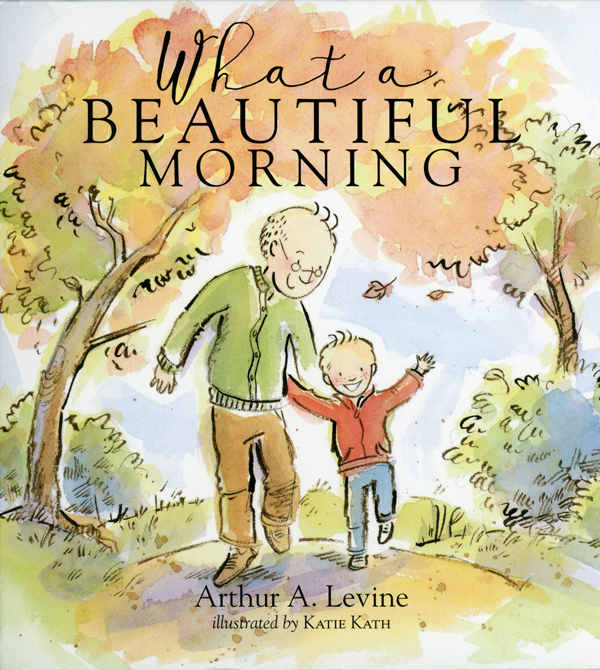
whatABeautifulWhat a Beautiful Morning, by Arthur A. Levine/Illustrated by Katie Kath (Aug. 2016, Running Press), $16.95, ISBN: 978-0-7624-5906-3

“Summer days at Grandpa’s house began with a booming song…”

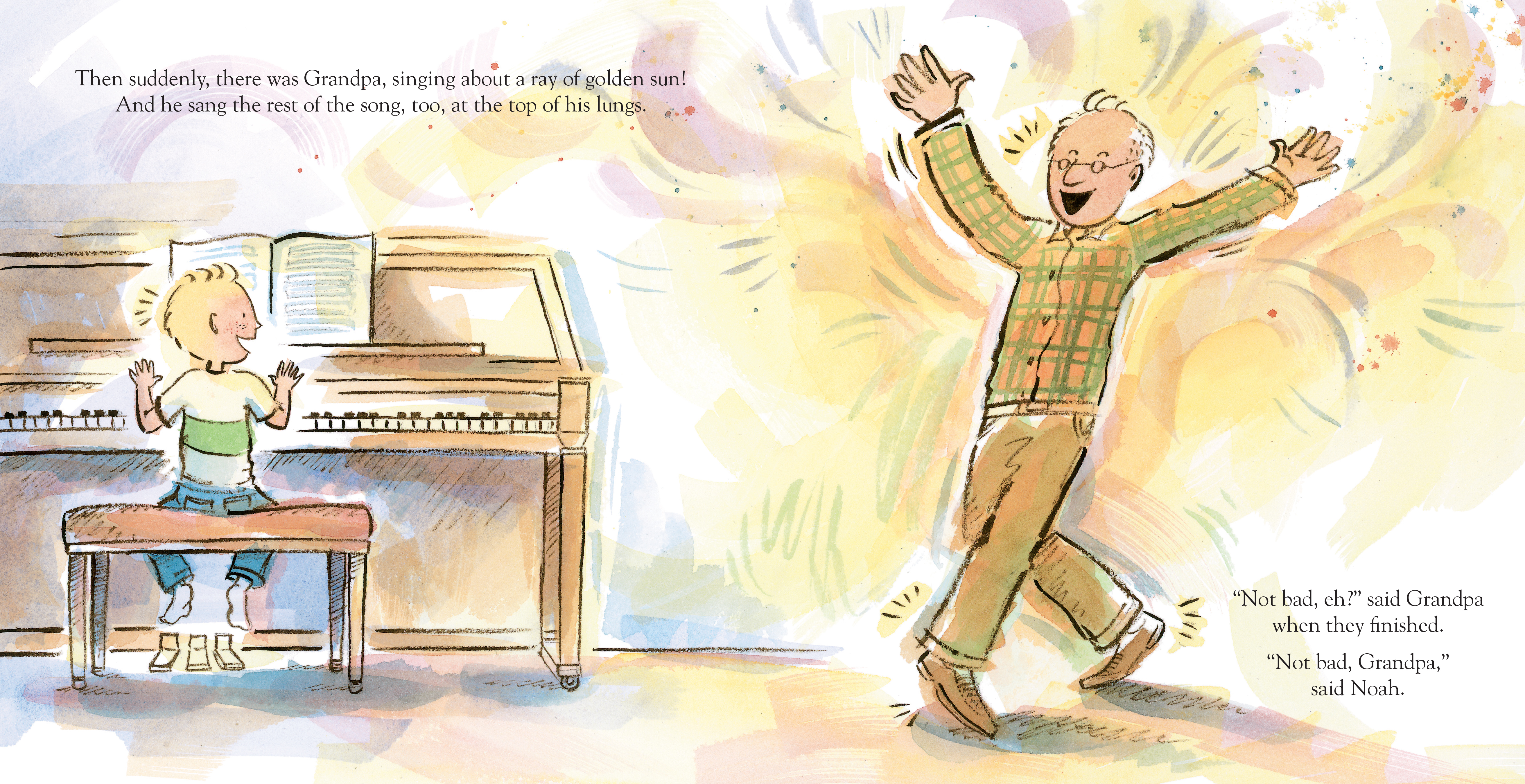
Noah and Grandpa wake up every morning and sing songs, go exploring, whatever was “on the docket” for the day. One year, though, Noah noticed that Grandpa began to forget things: to ask what was on the docket, how to cut his French toast, and once, even who Noah was. Grandma explains that sometimes, Grandpa gets confused, but still knows and loves Noah. After a little time to think, Noah discovers that he can still reach Grandpa through song. What a Beautiful Morning is the sensitive, touching story of how one family walks “down the road together… for as long as the song would last.”

There is no specific condition mentioned, but it’s something too many families know too well. When a relative, particularly an older relative, like a grandparent, experiences memory loss, it’s a hard thing to bear. I remember seeing it happen when my husband’s grandmother experienced it, and I remember seeing my own children struggle with their emotions when it happened. Arthur Levine, author of What a Beautiful Morning, writes with an empathy borne from understanding. Katie Kath’s uses her line and watercolor art to communicate the emotions in the story, with bright, happy color to emphasize the joy in Noah and his grandparents’ household, fading to shades of gray when Grandpa forgets. When Grandpa’s memory kicks in, she draws the color back to the page subtly and beautifully.

WABM_int.indd

What a Beautiful Morning is a beautifully written and illustrated book that reaches out to families going through a difficult time. It’s a strong addition to special topics in any collection; school, public, or, if needed, personal.

Arthur Levine was kind enough to write a special note to readers:

Dear Readers,

It’s estimated that 5.4 million Americans have Alzheimer’s disease. But millions more belong to families (many with young children) who have loved ones directly affected by it, and other forms of memory loss.

My dad suffered from Alzheimer’s. My family is one of those families. My son was one of those young children.

My dad was a joyful, vibrant, brilliant man.  It was unbelievably hard to watch those qualities fade before my very eyes. And I kept wondering how my son, just 7 and 8 at the time, was coping with it.

My little guy would be so kind. I quoted him in the book gently showing his grandpa where the fork was. And he would hold his grandpa’s hand, leading him to the bathroom, or to dinner.

Meanwhile friends told us to appreciate what he still had day by day and we tried to do that. But it was difficult when I could no longer even talk to him, really.  But then we discovered that singing was a way we could still connect – My father could reproduce lyrics to entire songs.  And the pleasure on his face when that happened was unmistakable. 

Singing songs like “What a Beautiful Morning” was almost like having a conversation again.

It gave us both pleasure and comfort as I hope this book will do for so many who are experiencing the same thing with a family member or neighbor or friend.

Thank you to all you parents/teachers/librarians and caring family members who are reading this blog.  If you want to know more about how to use my book to open discussions with kids about memory loss please visit http://bit.ly/2a2nIVY.

-Arthur A. Levine

Arthur A. Levine’s Scholastic imprint, Arthur A. Levine Books, publishes the Harry Potter series in the United States. Katie Kath illustrates children’s and middle grade books, including The Nora Notebooks series, and Unusual Chickens for the Exceptional Poultry Farmer.

Posted in Adventure, Animal Fiction, Fiction, Middle Grade, Tween Reads

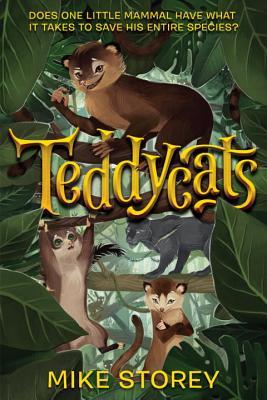
Teddycats: A coming of age animal adventure

teddycatsTeddycats, by Mike Storey (July 2016, Razorbill) $16.99, ISBN: 9781101998830

Recommended for ages 9-13

Bill Garra is a Teddycat – a unique jungle-dwelling mammal, living high up in the tallest trees; a community they call the Cloud Kingdom, far away from the other animals in the forest. The Teddycat elders want to keep Cloud Kingdom a secret; to remain separate, to keep outsiders out. Bill doesn’t always understand the rules the elders make; rules like keeping their extra sharp claws hidden unless they need to climb or get out of a life-or-death situation, and he definitely doesn’t understand why he has to keep his friend, Luke, an olingo, out of Cloud Kingdom. When he sneaks Luke into Cloud Kingdom for a look around, the problems seem to begin: predators, including humans, take notice and stalk the Teddycat community. When Bill’s best friend’s sister is trapped and taken by the humans, the Teddycat elders vote to go into hiding, but Bill sets out to rescue her, along with an old frenemy, Omar, a grizzled scout named Diego, a recuperating jaguar named Felix, and Luke. Bill and his group risk banishment from Cloud Kingdom as they face the dangers of the forest.

Wow. Look at this cover. I thought I was going to read a sweet animal adventure when I picked up Teddycats, but what I got was an emotional read about the dangers of deforestation and trophy hunting and a strong subplot about isolationism. Throughout the novel, Bill discovers the downside to the elders’ choice of isolation and the power of teamwork. The big danger here, though, does not come from other animals: it’s the humans, referred to as “Joe” by the Teddycats. They burn, kill, and leave devastation in their wake. They want to sell the Teddycat claws as trinkets, or figure out how to weaponize them, with no regard for the lives they impact. It’s a strong statement, and it may affect some more sensitive readers when animals die. It’s not over the top or gory, but the narrative is matter of fact in stating that these animals are at the mercy of humans and the havoc we wreak.

There are some strong characters in this book. Bill is the self-centered youth who comes of age on his journey; the elders are the frightened old men who are afraid of change; Felix is the wise old cat, and Diego is the grizzled voice of experience. There are more wonderful characters to meet here, and it’s a great opportunity to learn more about animals in the forests of the Andes. Yup, I looked it up. I didn’t see “teddycats” specifically listed, but I did find Olingos versus Olinguitos, which were much more recently discovered. I’m making a wild guess here, but I’m relating Olinguitos to Teddycats (since that’s also what came up in an initial Google search on “Teddycat”).

olingo olinguito
Left: Olingo; Right: Olinguito (images via Google Images)

Grab an atlas to booktalk this story! Explain where the Andes are, talk about some of the residents of the forest that they’ll encounter in the book, and use this opportunity to talk up conservation and preservation of our rain forests, our environment, and the folks we share this world with. Heck, show them the scene from the Spongebob Squarepants movie, when they discover Shell City, and see all the dried starfish and sea life that gets sold as souvenirs!

Talk about movies like Finding Nemo and Happy Feet, that also deal with human impact on the environment, and then talk about all the ways they can help make a difference. Whether it’s writing a letter to a politician, cleaning up after themselves, or being aware of the world around them, they count.

This is a solid animal adventure story with a message; animal fiction fans and kids that are on the lookout for environmentally conscious stories will love it.

Posted in Realistic Fiction, Teen, Young Adult/New Adult

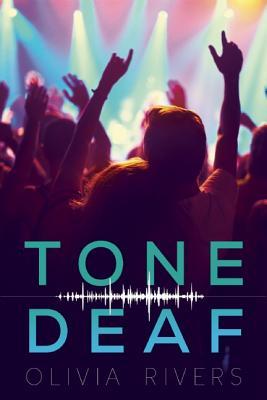
Tone Deaf: YA romance with a little extra

tone deafTone Deaf, by Olivia Rivers (May 2016, Sky Pony Press), $17.99, ISBN: 9781634507073

Recommended for ages 13+

When Ali Collins agrees to go to a concert with her best friend, Avery, she never expects her life to change, but that’s exactly what happens when she wins a backstage tour and meet and greet with Jace, the heartthrob lead singer of the band. Jace, however, is a moody, unpleasant jerk who flips her off when he discovers that she’s deaf. It’s only when Jace’s manager insists that he track Ali down to apologize – he doesn’t need any more bad press – that Jace sees the bruises. Ali lives her with father, a retired police chief, who abuses her, and Ali’s got a plan to run away. When Jace – who has demons of his own – offers Ali the chance to help her escape to New York, she takes him up on it and finds herself traveling cross-country with Tone Deaf, Jace’s band. Spending time together, the two learn that they have more in common than they could have imagined. Can Ali stay hidden while her father uses all of his resources to bring her home? And what happens after she reaches New York, and she and Jace part ways?

Tone Deaf is an interesting take on YA romance. There’s a little something in here for everyone: disability, LGBT characters, animal rescue, and child abuse. It sounds like a lot to throw into one book, but it flows nicely and all the elements come together to create a readable story. Jace is the brooding hero with the deep, tortured past; Ali is the EveryGirl that needs to take her life back. They can’t stand one another, but you know they’re going to fall in love, and it’s all good. Romance readers will enjoy the story, and additional resources provide information and links about the Deaf community.

A good additional add for your YA collections, especially where romance does well.


Posted in Fiction, Realistic Fiction, Teen, Young Adult/New Adult

The Cresswell Plot: Father doesn’t know best

creswellplotThe Cresswell Plot, by Eliza Wass (June 2016, Disney-Hyperion), $17.99, ISBN: 9781484730430

Recommended for ages 14+

Castella Cresswell is a 16 year-old living in rural upstate New York with her 5 siblings, her disabled mother, and her father, a religious zealot who believes that everyone except his family is evil and doomed to Hell. To keep the devil away from his family, he limits their interactions with other people; the kids go to public school, because they must, after a previous visit from Child Protective Services, and he insists that the siblings will marry one another in the afterlife. He’s even matched them up accordingly. I’ll let that sink in for a sec before I continue.

Castella is caught between loyalty to her family and the desire to be a normal teen, going to parties and having friends. She’s increasingly unsure about her father’s prophecies and revelations, and she just wants to save her siblings and break away from their controlling, abusive father. Her siblings have mixed emotions about Castella’s actions and ideas; whether they stem from truly being brainwashed by their father or being fearful of making waves, we never quite get: I expect it lies somewhere in between.

The Cresswell Plot is a book you sit down to read, and don’t move until you’re finished. It’s a fast read, it’s a disturbing read, but there were parts to the story that were missing; chunks that I feel could have made for an even more compelling read. I wanted more background on the Cresswell patriarch, and an entire suplot feels glanced over, really needing more development. The characters were all on the verge of being fully fleshed out, but missed nuances that really would create fully realized personalities. More conservative readers will find the subject matter – domestic violence, child abuse, references to incest – disturbing.

I enjoyed The Cresswell Plot, I just wanted more of it. I’ve heard this book compared to Flowers in the Attic, but I found more in common with Lisa Heathfield’s Seed.

Posted in Fiction, Realistic Fiction, Teen, Young Adult/New Adult

Whodunit? Secrets, Lies, and Scandals

secrets liesSecrets, Lies, and Scandals, by Amanda K. Morgan, (July 2016, Simon Pulse), $17.99, ISBN: 9781481449540

Recommended for ages 14+

A much-loathed teacher dies. Five students are in the room. What happened? Who’s responsible? Most importantly, can they all keep it a secret, or will one of them break? Secrets, Lies, and Scandals tells the stories of five teens – all of whom have their own private crosses to bear – who have to come together to keep the circumstances under which their teacher died secret.

We’ve got Ivy, the mean girl who finds herself on the outs after a relationship gone bad; Tyler, the bad boy whose exhausting his last chance; Kinley, the perfect student with her own secrets; Mattie, who’s only in town for the summer, and really didn’t expect to find himself in a situation like this, and Cade, a repressed rage case who’s always looking for someone else to take the blame. He’s the master manipulator, and all he needs is an opening.

This is one of those novels that I didn’t expect to enjoy as much as I did. None of these characters are really likable, but that adds to the story, rather than distances the reader. What do you do when there’s not one decent character in the book? You dig in for a salacious read. It’s schadenfraude at its finest – I couldn’t wait to see what these characters were going to do next. It’s a well-constructed, fast-moving read that pulls you in and doesn’t let you go until the last page, when you’re likely to yell, just like I did.

I’m going to put this one in my YA collection and booktalk the daylights out of it. Sell it like it’s How to Get Away With Murder set in high school, or an updated version of I Know What You Did Last Summer. (Then explain I Know What You Did Last Summer, because you know you’re going to get blank stares.)

Posted in Adventure, Fantasy, Fiction, Teen, Tween Reads

The Dark Crystal returns: Shadows of the Dark Crystal #1

dark crystalShadows of the Dark Crystal (#1), by J. M. Lee/Illustrated by Brian Froud & Cory Godbey, (June 2016, Grosset & Dunlap), $17.95, ISBN: 9780448482897

Recommended for ages 12+

Jim Henson’s The Dark Crystal is back, in a big way. Comic and graphic novel publisher BOOM!’s Archaia imprint has had a Dark Crystal series since 2014, and now, we’re getting a series of YA novels, set in the years before the events of the original Dark Crystal movie, to appeal to new and established fans.

Set in the world of The Dark Crystal, Shadow of the Dark Crystal introduces us to Naia, a young Gelfling girl who leaves her home and travels to the Castle of the Crystal to find out what’s happened to her brother, Gurjin. He’s being sought after by the Skeksis Lords, who want to charge him with treason; Naia refuses to believe it. As she journeys to the Castle, she learns a great deal about the Skeksis and the crystal, setting things in motion for the rest of the series and leading into events taking place in The Dark Crystal.

The book cover is illustrated by Brian Froud, the conceptual designer on the original The Dark Crystal film, as well as  Labyrinth, which makes my ’80s heart sing. Froud is also considered the preeminent faerie artist in the world and an authority of faerie lore.  Cory Godbey’s beautiful black and white illustrations throughout the book bring the story to life.

I have a long-standing admiration for The Dark Crystal, but the book just didn’t set me on fire like I hoped it would. If you aren’t well-versed in the movie’s lore, you may find yourself lost. The narrative plodded at parts, and I never really connected to the characters. It did pick up toward the end, so I’m hopeful that the world-building and exposition taking place in Book One will lead to more interesting adventures in Book Two, especially since most readers will know where the Skeksis are heading at that point.
Fantasy fans, particularly Dark Crystal fans, will want to read this. It’s suggested as a young adult series, but I think it would appeal more to middle schoolers, so I’d encourage my 6th-8th graders to discover this; the cover and internal fantasy art will appeal more to tweens and early teens. I’d also suggest making the original DVD available, along with the BOOM! graphic novels; there is a lot of mythology to this universe and it’s a good thing to provide a well-rounded reading experience for fans. Here’s a peek at some of the artwork and interiors:
dark crystal_1
dark crystal_3
Posted in Early Reader, Fiction, Preschool Reads, Realistic Fiction

The Branch gets a new lease on life after a storm

thebranchThe Branch, by Mireille Messier/Illustrated by Pierre Pratt (Sept. 2016, Kids Can Press), $16.95, ISBN: 9781771385640

Recommended for ages 3-7

A little girl’s favorite tree branch comes clattering down during an ice storm. A neighbor teaches her how to repurpose the branch, to create new memories.

What a great book to communicate so many ideas! First, we have the imagination of the tree branch. As the little girl says, the branch,”was my castle, my spy base, my ship…”, and she experiences the grief of losing the branch when she spies it on the sidewalk. She doesn’t want to part with it right away, so her mother allows her to hold onto it for a little while – long enough for the girl to encounter her neighbor, who tells her that the branch is “full of potential! …it means it’s worth keeping”, and we learn that he builds things from salvaged wood, and encourages the little girl to think about what the branch could become. When she uses her imagination and reaches into herself to reimagine the branch, she and the neighbor work together to give the branch new life.

In addition to imagination, we’ve got reusing/recycling, which is great for the environment; showing a child unwilling to discard a tree branch as a casualty of the storm, and finding ways to recreate it will get kids thinking about what they could create with objects in the world around them: cereal boxes could become robots or cities for superheroes to protect; old cans can become pencil holders; soda bottles can become terrariums. There are thousands of ideas on the Internet, so there’s no need to wait for Earth Day to come around again to make kids aware of the fun things they can make when they reduce/reuse/recycle.

Finally, we’ve got making: the whole creative process is here: sketching out plans, sawing, planing, drying the wood, waiting, waiting, waiting. It’s a great book to feature with The Most Magnificent Thing, HowToons, and fun nonfiction books, like those in the Make series. Encourage kids and parents to work together on anything from paper airplanes (great use of catalog paper) to repurposing a tree branch – large or small – of your own.

Mireille Messier is a Toronto-based author who’s had over a dozen books published in French. She’s also one of the French reviewers for the National Reading Campaign. Her website is available in English or French and offers information about her books, school visits, and her blog. Pierre Pratt is an award-winning illustrator of over 50 books for children. He lives and works in Montreal, Quebec, and in Lisbon, Portugal.