Posted in Fiction, Horror, Media, Middle Grade, Non-Fiction, Realistic Fiction, TV Shows, Tween Reads, Uncategorized

Part Lois Lane, Part Nancy Drew… Introducing Cici!

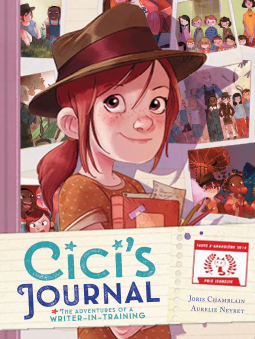
Cici’s Journal: The Adventures of a Writer in Training, by Joris Chamblain/Illustrated by Aurelie Neyret, Translated by Carol Burrell, (Nov. 2017, :01FirstSecond), $16.99, ISBN: 9781626722484

Recommended for readers 8-12

Cici’s dream is to become a novelist. She journals her thoughts and ideas, and constantly people watches, much to the chagrin of her mother and friends. Cici doesn’t see it as being nosy; she figures that you need to understand what’s inside of people in order to write about them. But when she starts digging further into people’s lives and expecting her friends to lie to her mother to cover up her “investigations”, they let her know that they’ve had enough. Can Cici learn to be a good friend and an attentive writer?

Originally published in France under the French title Les carnets de Cerise (2012), this is Cici’s first English translation and includes two stories. In the first story (title), Cici discovers an older man walking through the forest every Sunday, covered in paint and lugging cans of paint back and forth. In Hector’s Journal, she tries to get to the bottom of a mystery involving an older woman who takes the same library book out every week. Both times, Cici goes after her subject with gusto, but is often insensitive to her friends and mother. It isn’t until her mentor, a local author, steps in to have a heart to heart with Cici that she finally understands that she’s been using people, and starts taking others into consideration. Kids will recognize themselves and their friends in Cici, especially as she goes through the frustration of disagreeing with Mom and falling out with friends.

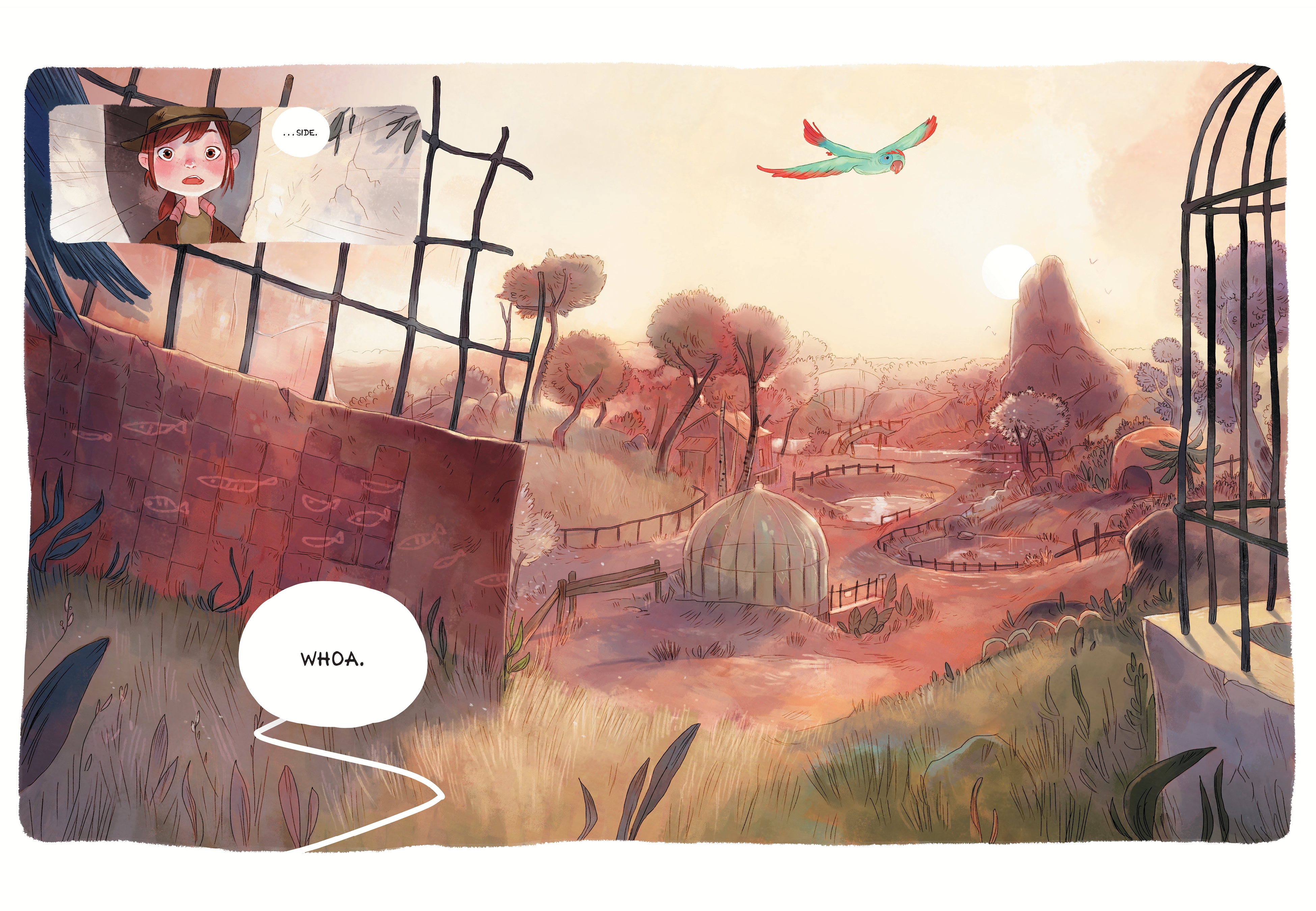
The graphic novel is a mix of graphic storytelling and journaling, with doodles, scrapbook pieces, comments, and notes throughout the book. The art is realistic with a soft touch, and Cici has a very fun and eclectic style that will appeal to middle graders. She complains about her friends throughout the book, and with seeming good reason: one girl is in a perpetually bad mood, and Cici herself can be exasperating (mind you, I say this as a 46 year -old mother of three, not a tween). In short, kids will identify with or see their friends in these characters, and dive into Cici’s adventures – and maybe start journaling on their own.

In my neverending quest to create programs that I can booktalk with, Cici’s Journal is a nice fit with a writer’s program I want to test out. Put this one with your Dork Diaries, Amelia’s Notebooks, Wimpy Kid books, My Dumb Diaries, Kate the Great, Origami Yodas, and Popularity Papers.

Posted in Adventure, Fantasy, Fiction, Science Fiction, Teen, Young Adult/New Adult

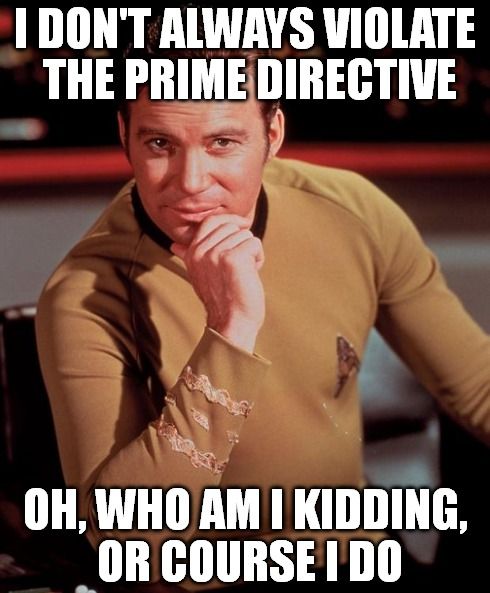
Invictus violates the Prime Directive and it’s brilliant!

Invictus, by Ryan Graudin, (Sept. 2017, Little, Brown Books for Young Readers), $17.99, ISBN: 9780316503075

Recommended for readers 13+

I’m a big Doctor Who fan, so when I saw Ryan Graudin talking about her then-upcoming book, Invictus, at BookExpo earlier this year – and talked about Doctor Who‘s influence on the show – I knew this was going on my TBR. I was not disappointed.

Farway Gaius McCarthy is born outside of time, the son of a time-traveling Recorder (think researcher with a video camera) and a Roman gladiator from 95AD. All Far’s wanted to do is explore history, but someone’s set him up, and he fails his final time-traveling exam. He’s contacted by a shady operation with a offer he can’t refuse: he gets his own ship, puts together his own crew, and gets to travel through history to steal treasures from the past. He recruits his cousin, Imogene, as historian: the brains of the operation, putting together costumes and researching historical eras; his girlfriend, Priya, as the medic; and his friend and game fiend, Gram, as navigator. They get a cut of the payday and vacations in between missions. It’s all good – until a mission on the Titanic puts Far up against the very woman that caused him to fail his final exam. Eliot is a woman with secrets, but she needs Far, for some reason. She cajoles her way onto his crew, leading them on a mission back in time that will have huge consequences not only for Far and his crew, but for the universe.

I loved Invictus! Not only is is loaded with amazing little Doctor Who references – don’t worry, if you’re not a fan, you won’t miss out on anything – it’s a space opera with humor, adventure, and a devil-may-care hero who could have DNA from Captain Kirk and Han Solo. Far is a brash swashbuckler who hates not having all the info, but he also knows how to play his cards right. He’s got his own demons: his mother’s disappearance haunts him, as does his expulsion from the academy, and he takes the responsibility of protecting and keeping his crew safe and happy very seriously. Eliot is a colossal monkey wrench thrown into his works, and he has no choice but to stick with her and get to the bottom of things. There are wibbly-wobbly, timey-wimey subplots (that’s a Doctor Who reference) and intrigue that will keep sci-fi fans turning pages. Prime Directive? (That’s a Star Trek reference.) Pfft, what’s that? That’s for academy kids.

History-hopping, time-jumping, big drama, a sense of humor, and a diverse cast of characters make Invictus such good sci-fi reading. More, please! Invictus has starred reviews from Publishers Weekly and VOYA.

Ryan Graudin is an award-winning YA author. Her Wolf by Wolf duology was a 2017 Carnegie Medal nominee and won the 2017 Sequoyah Book Award. Check out her author page for more information her books, her appearances, and sign up for her newsletter.

Posted in Realistic Fiction, Teen

Sports readers, check out the Blacktop series

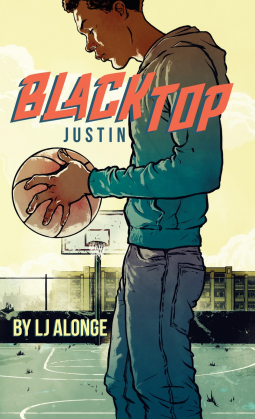
Justin #1 (Blacktop), by LJ Alonge, (June 2016, Grosset & Dunlap), $15.99, ISBN: 9780399542756

Recommended for readers 12+

Justin’s a teen having a rough summer in his Oakland, CA neighborhood. His alcoholic father shows up everywhere, challenging him to a game of hoops. His stepfather and mother are boring, and have spent way too much money on a pair of sneakers that he didn’t really want, but kind of made them think he did. He took on a crazy dare and ended up destroying a local business – literally – and now he’s got to defend his neighborhood basketball court against Ghosttown, a take-no-prisoners team. He pulls together a group of players and faces the upcoming game.

This isn’t just a story about a basketball game: Justin’s got plans for himself, and this first Blacktop book is all about letting us walk through his coming of age with him. He’s got a list of goals for himself, and he’s trying really hard to achieve them. He knows he’s going to be someone, someday, and he knows he needs time to “figure it out”. The narrative is fast-paced, and the basketball descriptions will appeal to fans of the game. I’d suggest this for teen audiences; more reluctant readers. There are four books in the Blacktop series.

Posted in Preschool Reads, Realistic Fiction

No Water No Bread delivers a powerful message

No Water No Bread, by Luis Amavisca/Illustrated by Guridi, (Oct. 2017, nubeOCHO), $15.95, ISBN: 978-84-945971-3-8

Recommended for readers 4+

Two groups of people live on either side of a barbed wire fence. One side has water. One side has bread. Neither will share their resources, flatly stating: “This is our water.” “This is our bread.” The children gather at the fence and trade bread and water, wondering, “Why are our parents like this?” They play ball over the fence, knowing that life would be much better “without the fence”. When a new group shows up, the barbed wire fence is sectioned off into yet a third area. Again, the adults hoard their resources while the children all approach the fence, ready to share, and wonder why their parents are like this.

In a day and age where some talk about building walls, No Water No Bread asks a simple, powerful question: Why are we like this? Seen through the eyes of a child, we live in a ridiculous society. We tell our children to share, yet decide that others don’t deserve basic needs if we find them lacking: if they’re from the wrong area of the world, if they’re the wrong faith, if they’re the wrong color.

Simple art and simple words deliver a powerful message that children will understand. Let’s hope that the adults do, too.

This book is a project created in Europe by NubeOcho with the support of Amnesty International Spain and Amnesty International Italy. It is also available in Spanish (ISBN: 978-84-946333-7-9).

Posted in Fiction, Historical Fiction, Middle Grade, Realistic Fiction, Tween Reads

Good for historical fiction readers: Great Escapes

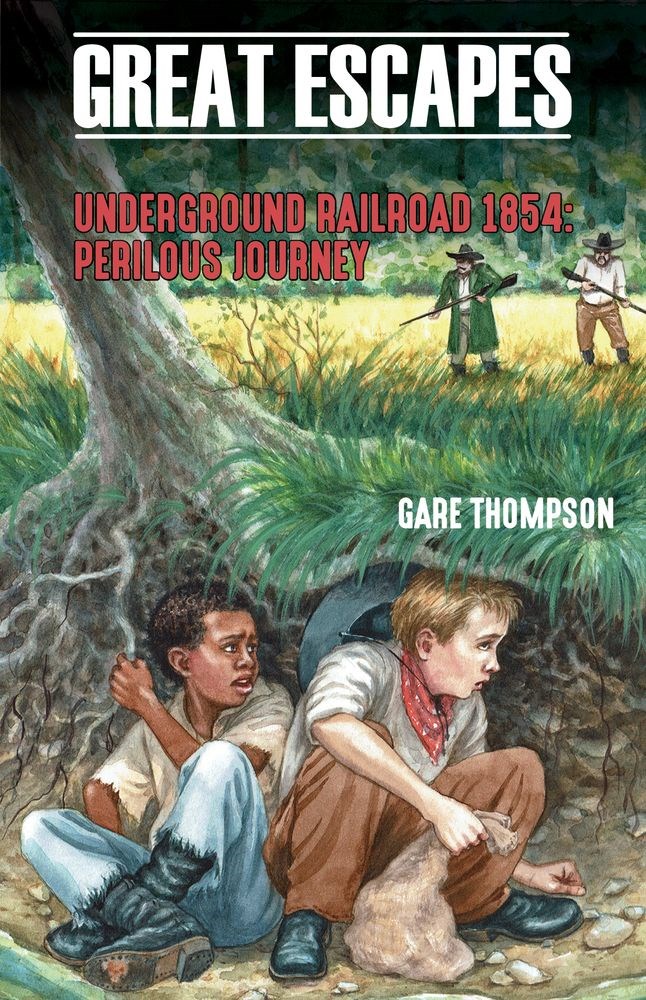
Underground Railroad 1854: Perilous Journey: Inspiring Tales of Courage and Friendship (Great Escapes), by Gare Thompson, (Oct. 2017, Barron’s Educational Series), $7.99, ISBN: 9781438009735

Recommended for readers 8-12

George is a plantation slave who dreams of being free. He’s singled out for abuse by the cruel overseer and threatened with being put on the auction block, like his father was. He can’t bear the thought of being separated from his sister, Ruth, and his mother, so he formulates a plan for the family to escape and seek out Moses, a mysterious woman who helps slaves to freedom. Moses – Harriet Tubman puts them in case of a white teenager, Nathan, who will take them from the deep South to New York, where they hope to find passage to Canada, but it’s not going to be easy. George doesn’t trust Nathan – he doesn’t trust anyone – and the bounty hunters are everywhere, tracking down escaped slaves. The four will have to work together and rely on the kindness of Underground Railroad stations to succeed.

Great Escapes is a fairly new historical fiction series by Barron’s Educational Series. Readers who enjoy the thrill of Lauren Tarshis’ I Survived books will dig into these readalikes, which are a little longer in page length (over 200 pages) and allow for more plot and character development. Stories emphasize working together for change while acknowledging that it’s not always an easy thing to do. Historical figures Harriet Tubman, William Still, and Frederick Douglass make appearances, and interesting facts about the Underground Railroad pop up within the narrative. My favorite? The coded messages communicated through song: songs like “Wade in the Water” told freedom seekers to get off the trail and into the water, so their scent wouldn’t be picked up by dogs. Sections on key terms, phrases used, songs sung, Underground Railroad profiles, and further resources make this a great next step for readers who are ready to take on longer books.

Underground Railroad is the second book in the Great Escapes series, the first being Mount St. Helens 1980: Fiery Eruption! I’ve been plumping up my library’s series fiction collection, and since the kids devoured my I Survived books the second they arrived, I think this will be a smart add to the collection. Like I Survived, readers can pick either Great Escapes book up never having read the other(s); they’re all separate moments in history starring different characters.

Posted in Adventure, Fantasy, Fiction, Fiction, Middle Grade, Tween Reads

The World’s Greatest Adventure Machine will take you on the ride of your life

The World’s Greatest Adventure Machine, by Frank L. Cole, (Aug. 20017, Delacorte Press), $16.99, ISBN: 9780399552823

Recommended for readers 9-13

Take a little bit of Charlie and the Chocolate Factory, toss in elements of Jurassic Park and The Matrix, and add a dose of Inception, and you have Frank L. Cole’s newest book, The World’s Greatest Adventure Machine. Four kids with varying physiological complexities – Trevor, the daredevil; Cameron, the genius; Devin, the video game master/burgeoning Internet sensation; and Nika, shy and sheltered by her overprotective grandfather – are chosen to test out The Adventure Machine, a ground-breaking new adventure ride from CastleCorp. They set out for the ride of their lives while their guardians watch, but no one expects what happens when the ride breaks down, and they discover that they’re stuck in the middle of a plot that threatens them and their families – or are they?

The World’s Greatest Adventure Machine is a big adventure for middle graders who love twisting plots, action, and a smidgen of conflict. As the kids’ adventure progresses, they grow as individuals and as a team; Trevor and Cameron learn to be aware of the impact their actions have on others, and they all learn the importance of self-advocacy.  It’s a fun read with characters that grow on you, with lots of thrills to keep pages turning.

Posted in Fiction, Historical Fiction, Middle Grade, Realistic Fiction, Tween Reads

Hispanic Heritage Reading: My Brigadista Year, by Katherine Paterson

My Bridgadista Year, by Katherine Paterson, (Oct. 2017, Candlewick), $15.99, ISBN: 978-0-7636-9508-8

Recommended for readers 10-14

It’s 1961, and Lora is a 13 year-old girl who signs up to be one of Fidel Castro’s Brigadistas – groups of students, some as young as 8, most between the ages of 10 and 16 – who went into the rural areas of Cuba to spend a year with families, teaching them to read and write. Lora sees this as an opportunity to grow as a student and a person; she wants to be a doctor, and she wants the space to learn and discover on her own. Her parents protest: she’s lived a comfortable life in Havana, why would she want to live in poverty for a year? With some help from her grandmother, Lora’s parents relent, and she joins the Brigadistas, promising to come home if it gets too hard. Lora is placed with a family to teach, and before she knows it, is teaching a neighboring family, too. The group becomes an extended family as she takes part in the daily chores, taking as much encouragement as she gives, but all is not easy: not everyone is in favor of the Cuban Literacy Initiative. Counter-revolutionaries have martyred those who would lift Cuba out of illiteracy in the past, and the Brigadistas know that risk is part of what they’ve signed on for.

This was the first I’ve read about the Cuban Literacy Initiative. It’s a little-talked about moment in history, and it’s fascinating. Lora is a wonderful character who we see coming of age with each turn of the page, and her students consist of parents, grandparents, and children. Things don’t come easily to Lora, but she never gives up, her larger goals in mind, and her determination at her back. This is a short but powerful book that I’d love to see on summer reading lists next year. An overview of the Cuban Literacy Initiative fills provides more information for readers who want to learn more.

Katherine Paterson is the Newbery award-winning author of Bridge to Terabithia and Jacob I Have Loved. You can visit her website to find her bio, information about her books, and interviews with the author.

As our relations with Cuba continue to open, I’d love to read more first-hand accounts from brigadistas and the rural families with whom they lived. Until then, Tulane University’s Roger Thayer Stone’s Center for Latin American Studies has some information on the campaign, and Al-Jazeera posted an interview with a former brigadista.


Posted in Fiction, Middle Grade, Realistic Fiction, Tween Reads

Little Women gets a middle grade update!

Littler Women: A Modern Retelling, by Laura Schaefer, (Sept. 2017, Simon & Schuster/Paula Wiseman Books), $16.99, ISBN: 9781481487610

Recommended for readers 8-12

The March sisters are back in this updated version of Louisa May Alcott’s classic, Little Women. Now, they’re coping with a dad who’s deployed overseas, and the girls are contending with school dances, sleepovers, and crushes. The characters are a little younger: Meg is 13 and a freshman in high school; Jo is 12; Beth is 10, and Amy is 9, and their overall personalities are wonderfully close to their original personas. Jo loves hockey, while Beth prefers to stay at home or visit their neighbors, the Lawrences, to play piano. Laurie and Demi are back in this update, too, with age-appropriate crushes on the March girls. Author Laura Schaefer sticks pretty close to the original story, with a happier resolution to Beth’s story. Each chapter contains a fun activity from one of the March sisters, including crafts and recipes. The sisters also create a family ‘zine, which I love – and tips on creating one – and I’m thrilled to see that ‘zines are becoming a thing again, popping up in books like Littler Women and Moxie.


Littler Women is such a good introduction to the classic for middle graders. It encourages creativity and emphasizes the bond between sisters, between family, and between friends; there are disagreements between characters, but they are able to work things out every time. Talk up the similarities and differences between Little Women and Littler Women (don’t forget to mention Little Men), and maybe even have a viewing of one of the several movie adaptations of the original. Definitely fun reading, worth adding to your shelves or giving to a classic-minded reader who loves a good story.

Author Laura Schaefer is also the author of The Tea Shop Girls series. Her website offers links to her blog and information about school visits.

Posted in Fiction, Historical Fiction, Realistic Fiction, Teen, Tween Reads

Lost Boys chronicles the Iran-Iraq War through a boy soldier’s eyes

Lost Boys, by Darcey Rosenblatt, (Aug. 2017, Henry Holt & Co), $16.99, ISBN: 9781627797580

Recommended for readers 9-14

Twelve year-old Reza is a musical prodigy living in 1982 Iran. He lives with his widowed, fundamentalist mother, and craves visits from his Uncle Habib; a member of the resistance, he also encourages Reza’s love of music by slipping him cassettes of artists from Stevie Wonder to Thelonious Monk. His mother pushes him to join the war effort, telling him she would be proud to have her son die in service of Allah. Reza wants nothing to do with the conflict, but when his uncle is killed and his best friend, Ebi, signs up to serve, Reza feels he has nothing left without his best friend, and signs on. He and Ebi receive their “keys to heaven” – plastic keys that serve as symbols that they will achieve paradise when they die in service to Iran and the Ayatollah – and are sent into battle. War is not the glorious battle that Ebi dreamed about; it’s not full of exciting moments like he and Reza have seen in the movies. The boys are fodder for the minefields – tied together and sent into battle to clear the way for older troops. Reza is injured and sent to a prisoner of war camp, where he meets other boys his age and desperately tries to learn Ebi’s fate as he endures abuse at the hands of a sadistic prison guard.

I couldn’t put Lost Boys down, choosing instead to disregard my normal sleep schedule until I finished the last page. Reza is a heart-achingly real character based on far too many child soldiers. He and his classmates are promised glory and fed lies; in the end, all he lives for is the hope that he’ll be reunited with his best friend and live to enjoy music again. Set in 1982, the story is more relevant now than ever, as children are still pressed into service all over the world. Booktalk Lost Boys with Marjane Satrapi’s Persepolis for tween and teen readers; booktalk with Child Soldier: When Boys and Girls Are Used in War, by Jessica Dee Humphreys and Michel Chikwanine to illustrate the worldwide epidemic of using children as combatants. This article from Global Citizen shines a light on seven countries that still use child soldiers, and what we can do to help stand against the practice.

Lost Boys is an important book that sparks outrage and empathy, and is a must-add for collections. I’d love to see this on next summer’s reading lists.

Posted in Realistic Fiction, Teen, Young Adult/New Adult

Momma, let your babies grow up to be feminists: A look at Jennifer Mathieu’s Moxie

Moxie, by Jennifer Mathieu, (Sept. 2017, Roaring Brook Press), $17.99, ISBN: 9781626726352

Recommended for readers 13+

This is one of the best books I will read this year. Vivian is a high schooler who is just DONE. She lives in a small Texan town that lets the football team run wild. They get away with chauvinist garbage all day long, from wearing explicit t-shirts, to telling girls to “make me a sandwich”, to groping in the hallways. The teachers – and the principal, whose son is the star player on the team – all dismiss the girls’ concerns. They have routine clothing checks to make sure the girls’ clothing doesn’t “tempt” the guys. This, my friends, happens every day in schools all over the U.S.

Vivian has had enough. The daughter of a 90’s Riot Grrl, she takes action by anonymously starting up a ‘zine called Moxie; initially, the ‘zine is her way of blowing off steam, but girls at school start responding. They answer Moxie’s call, whether it’s to identify one another by doodling stars on their hands, or showing up to protest dress code checks by wearing bathrobes and fuzzy slippers. Vivian isn’t the only one sick of the old guard. The girls’ soccer team has been wearing uniforms older than dirt, so Moxie Girls – as the girls name themselves – hold a bake sales and craft fairs to raise money for new uniforms. The girls at school unite thanks to Moxie, and before she realizes what’s happened, Vivian finds herself leading a movement from within.

I ADORE this book. It’s as empowering for women as it is for teens, who must read this book. I loved Viv’s mom as much as I did Viv, because I get that mom. She keeps her Riot Grrl stuff in a box labeled, “My Misspent Youth”; she’s working to pay the bills, relies on her parents probably a little more than she’d like, and she’s just damned tired. Riot Grrls don’t die; we’re still here, we just have a lot of stuff to do, man. But look to our kids. Viv may be the “good girl” at school, but once she’s fed up, she falls back on some solid third-wave feminism and makes a ‘zine while listening to Bikini Kill. It’s a call to action for every single person who picks up this book, and we’re not leaving the boys out this time: Viv’s boyfriend shows up for her, always supports her. But it’s Viv who is the strong character here, making him understand that the “not all guys” thinking is a cop-out, or even holding her relationship at arm’s length to figure things out.

Moxie is everything good and important about feminism and YA fiction, and if you haven’t added it to your TBR yet, you need to go do that right now. Go make a ‘zine while you wait; here’s a link to my meager Pinterest board so far. And if you can’t wait until Moxie hits shelves in a week, read an excerpt from feminist YA novel ‘Moxie’ from EW magazine.  Amy Poehler’s production company already has the film rights, so that should tell you volumes about the excitement behind this book.