Posted in Fiction, Fiction, Middle Grade, Realistic Fiction, Teen, Tween Reads

The Disaster Days is fantastic!

The Disaster Days, by Rebecca Behrens, (Oct. 2019, Sourcebooks), $16.99, ISBN: 978-1-4926-7331-6

Readers 9-13

Thirteen-year-old Hannah Steele lives in the Pelling Island community of Elliott Bay, right off the coast of Seattle. On the day she sets out on her first big babysitting assignment – the first one was just while her neighbor, Andrea, ran local errands – a major earthquake hits the Pacific Northwest. Hannah is stranded with her two younger charges, siblings Zoe and Oscar Matlock. And their pet guinea pig, Jupiter. Both kids are injured in the aftermath, and Hannah, who’s asthmatic, left her rescue inhaler at home. With the power out, cell phones down, and rescue uncertain, Hannah has to use all of her mental and physical resources to keep the kids, Jupiter, and herself alive and safe, especially when the Matlock’s house becomes an unsafe shelter.

Narrated by Hannah, The Disaster Days is a tense, consuming page-turner. By taking everything away from Hannah at the outset – adults, internet, cell phones, TV – Rebecca Behrens creates a survival story fraught with peril. The Zoe and Oscar’s home is not safe; food and medical supplies are almost nil; there’s a gas leak in the Matlock home, so Hannah moves the kids to a tent outside, where they narrowly miss an encounter with a bear. Aftershocks can hit at any moment. Hannah doesn’t know the fates of her parents; Zoe and Oscar’s mother, Andrea; or her best friend, Neha, with whom she had an argument minutes before the earthquake. Within the scope of the big disaster, Hannah copes with her world being upended, and the stress of keeping Zoe and Oscar as comfortable – which includes keeping a lot of their situation from them – as possible. She relies on a crank radio and the voice of a newscaster, Beth Kajawa, to get periodic updates that will help guide her decisions. An author’s note at the end touches on earthquakes, post-quake threats like sand volcanoes and liquefaction, and emergency preparedness. Rebecca Behrens’ author website includes free, downloadable resources for parents and educators and links to websites and online resources about earthquake science, and emergency preparedness.

The Disaster Days is reading you, and your readers, will not want to put down. Have readers who like Hatchet or Rodman Philbrick’s The Big Dark? Give them The Disaster Days. This one is a definite must-read, must-have.

Posted in Adventure, Fiction, Middle Grade, Realistic Fiction, Tween Reads

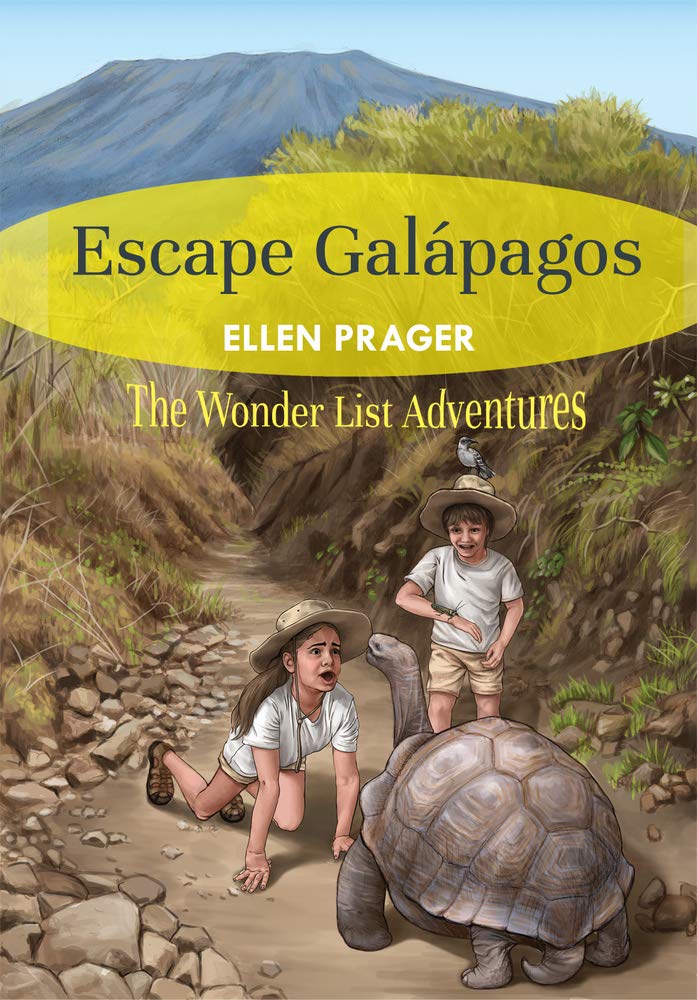
Ellen Prager’s got a new Conservation Adventure: Escape Galápagos!

Escape Galápagos, by Ellen Prager, (Oct. 2019, TumbleHome Learning), $13.95, ISBN: 9781943431557

Ages 8-12

I am so excited! I loved Ellen Prager’s Tristan Hunt and the Sea Guardians series (2015), so when she emailed me and told me she had a new book coming out, and wanted to send me a copy, I fangirled (just) a lot. I loved her combination of action/adventure and conservation in the Tristan Hunt books, so I dove into Escape Galápagos with glee; Dr. Prager is a scientist and an author, so she creates exciting stories and backs everything up with science and an understanding of nature and marine life, plus a genuine love and concern for our world that becomes contagious.

Escape Galápagos introduces readers to tween Ezzy Skylar, her younger brother, Luke, and their father, Dr. Skylar. Ezzy and her family are still reeling from their mother’s recent death, but their dad is determined to keep his promise: to take his children to all the places on his wife’s “wonder list”. First up: the Galapágos Islands. The problem? Ezzy is not a fan of animals out in nature. They’re too… wild. So a vacation roaming around in the Galapágos, with all its wild beauty and animals who just wander along freely, makes her very nervous. She won’t have long to worry about that, though; she’s got bigger problems when their cruise ship is hijacked by animal poachers. Ezzy, Luke, and Aiden, another boy on the cruise with his family, have to use their wits work together to save themselves, their families, and the animals on the Isabela Island.

Escape Galápagos is an exciting story with a conscience. As with the Tristan Hunt books, Dr. Prager shines a light on the villains we don’t always get to read about: those people whose main purpose is to get rich at the expense of the planet and its resources: in this case, the animals of the Galapágos. It’s a brilliant way of bringing conservation issues to light and making readers aware and engaged. Ezzy is a likable character who has to dig deep and overcome her fears and discomforts (which include tortoise poop. A lot of tortoise poop) to help save her father. Luke, her younger brother, is an interesting character to watch; he reminds me of Tristan Hunt, and I wonder (okay, I hope) if he has a similar “gift” to Tristan and his fellow Sea Guardians. How fantastic would it be if this were to take place in the Tristan Hunt universe?

In short, Escape Galápagos is a great new adventure for your realistic fiction readers and your fantasy readers that like reality-based fantasy. If you have any of Dr. Prager’s nonfiction books, display them and talk them up! Dr. Prager includes some real vs. made-up facts at the end of the book, which could make for a fun book discussion activity/Discovery Club activity.

Posted in Fiction, Humor, Middle Grade, Middle School, Realistic Fiction, Teen, Tween Reads

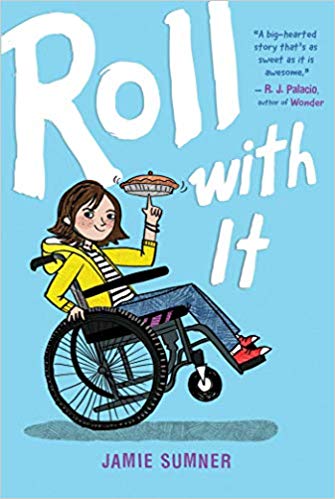
Jamie Sumner’s Roll With It gives life with CP a face and a story

Roll With It, by Jamie Sumner, (Oct. 2019, Atheneum), $17.99, ISBN: 9781534442559

Ages 10-14

Twelve-year-old Ellie loves to bake. She writes letters to famous chefs and cookbook authors, asking questions to make her own art better. She’s frustrated by her overprotective mom, having to go to the bathroom at school with the help of an aide, and her father, who exists in theory, not so much in practice. Ellie also has cerebral palsy, or CP, which keeps her wheelchair-bound, but never out of the game. After her grandfather, who has dementia, drives his car into a local supermarket, Ellie’s mom packs up and heads to Eufala, Oklahoma, to live with and help out. Ellie’s grandmother is thrilled to have her family for a visit, but makes it clear that she’s not putting her husband into a home. Ellie starts school and a new life in Oklahoma, befriending Coralee and Bert; schoolmates who have their own eccentric flairs, and taking on a school that isn’t ready for Ellie.

Inspired by her son, Roll With It is author Jamie Sumner’s first novel, and with it, she has given us a main character who is upbeat, smart, funny, and darned independent. She’s a tween on the verge of teenhood, coping with adolescent feelings and frustrations on top of family worries, like her grandfather’s increasing dementia, concern about her grandmother, and a father that she’s disappointed in and hurt by. On top of that, she has the struggles that come with being in a school ill-equipped to work with her needs, and being the new kid in the middle of a school year. How does she cope? She lets you know what’s going on! Her voice is strong and clear, in her fantastic tweenage snark and honesty. Her friends Coralee and Bert have fully-realized backstories, giving them life beyond being Ellie’s friends in the background. Ellie’s grandparents and mother emerge as realistic, three-dimensional characters with big concerns of their own: family health, an absent spouse, bills, bills, bills.

A story about fitting in and standing out, following a dream and making your own way, Ellie is a character you want to cheer for and your kids will want to hang out with. Hand this to any of your realistic fiction readers, especially the kids that love Aven’s adventures in Insignificant Events in the Life of a Cactus by Dusti Bowling or Sharon Draper’s Out of My Mind; for your baking aficionados, give to readers who loved Jessie Janowitz’s The Doughnut Fix/The Doughnut King, and Anna Meriano’s Love Sugar Magic books. Talk this up to your teacher visitors, and suggest they take a look at it (I’m always ready to push good Summer Reading list ideas).

Roll With It has starred reviews from Kirkus and Publisher’s Weekly. Check out Jamie Sumner’s author webpage, where you can sign up to receive her newsletter and download a free discussion guide.


Posted in Fiction, Graphic Novels, Middle Grade, Realistic Fiction, Tween Reads

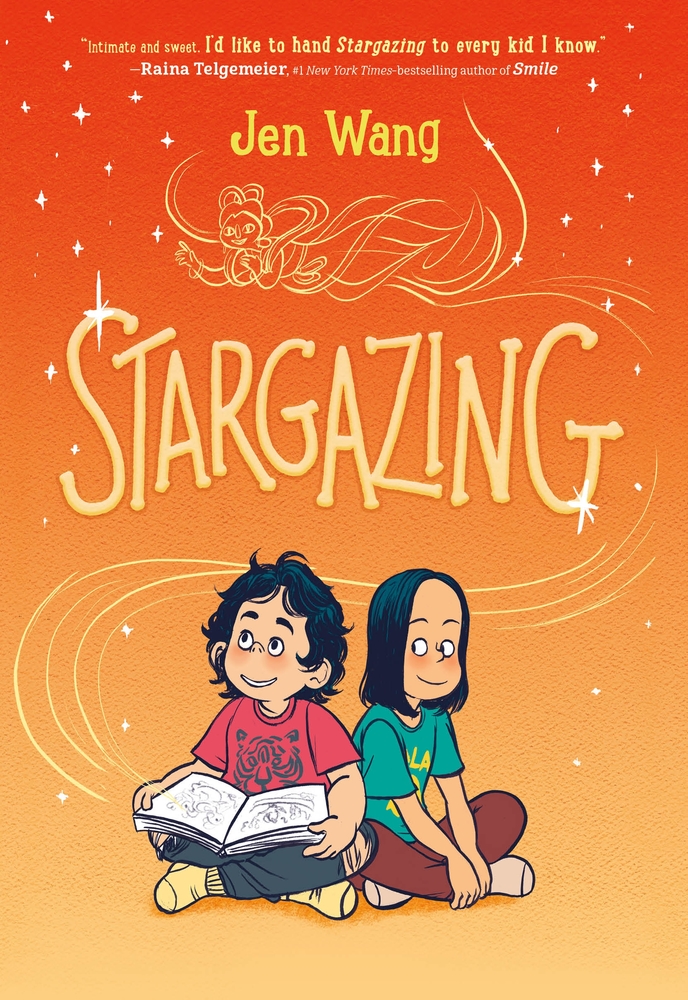
Jen Wang does it again with Stargazing!

Stargazing, by Jen Wang, (Sept. 2019, First Second), $12.99, ISBN: 9781250183880

Ages 9-13

Jen Wang’s given us cyberpunk fantasy with In Real Life (2014) and high fantasy with The Prince and the Dressmaker (2018). With Stargazing, readers get a more contemporary story with, as Kirkus notes, a true portrayal of the diversity within the Asian-American community.

Christine is a Chinese-American girl from a more traditional Chinese family. She is focused on school and her music, until her family moves YuWen Lin and her daughter, Moon, into the in-law apartment where Christine’s grandfather used to live. YuWen and Moon are a struggling family, and the hospitality offered by Christine’s family is much appreciated. Christine and Moon are encouraged to spend time together, but the two are polar opposites: Moon is a vegetarian Buddhist who loves K-Pop and is rumored to get into fights. Despite their differences, Christine and Moon grow close, with Moon introducing Christine to a lighter, more fun side of life, letting her relax and let her guard down. Moon confides in Christine, telling her that she belongs in outer space, and that beings from space speak to her. When Moon meets a Caucasian girl that shares many of her interests, Christine’s jealousy takes control, and she puts Moon into an embarrassing situation; Moon reacts with her fists, which leads to an episode that lands Moon in the hospital.

Jen Wang weaves an intricate story of family expectations, social groups, and the complexity of navigating friendships in Stargazing, giving us some of her best storytelling yet. Influenced by events in her childhood and growing up in an Asian-American family, the story has depth and incredible emotion. Whether she’s giving us cyber farmers (In Real Life) or a friendship between two schoolgirls who love K-Pop, Jen Wang always manages to make her character’s humanity the central focus of her stories. Christine and Moon are so real, so strong, that their voices come right off the page and speak to readers; telling them about their stories, their lives, their struggles. When Christine writes that she doesn’t consider Moon Asian, we see the conflict between a traditional Chinese household versus a more contemporary, Westernized Chinese-American household. Christine’s mother holds Chinese lessons in her home; YuWen runs a plant nursery and watches TV with her daughter at night. While Christine listens to more Westernized music, Moon embraces K-Pop and dance routines. The two families present a glimpse into the diversity of Asian-American families, both connected to the culture in different ways.

Stargazing is a definite must-read and has starred reviews from Kirkus and Publisher’s Weekly. Newsarama has an interview with Jen Wang that’s worth reading.


Posted in Adventure, Animal Fiction, Fiction, Intermediate

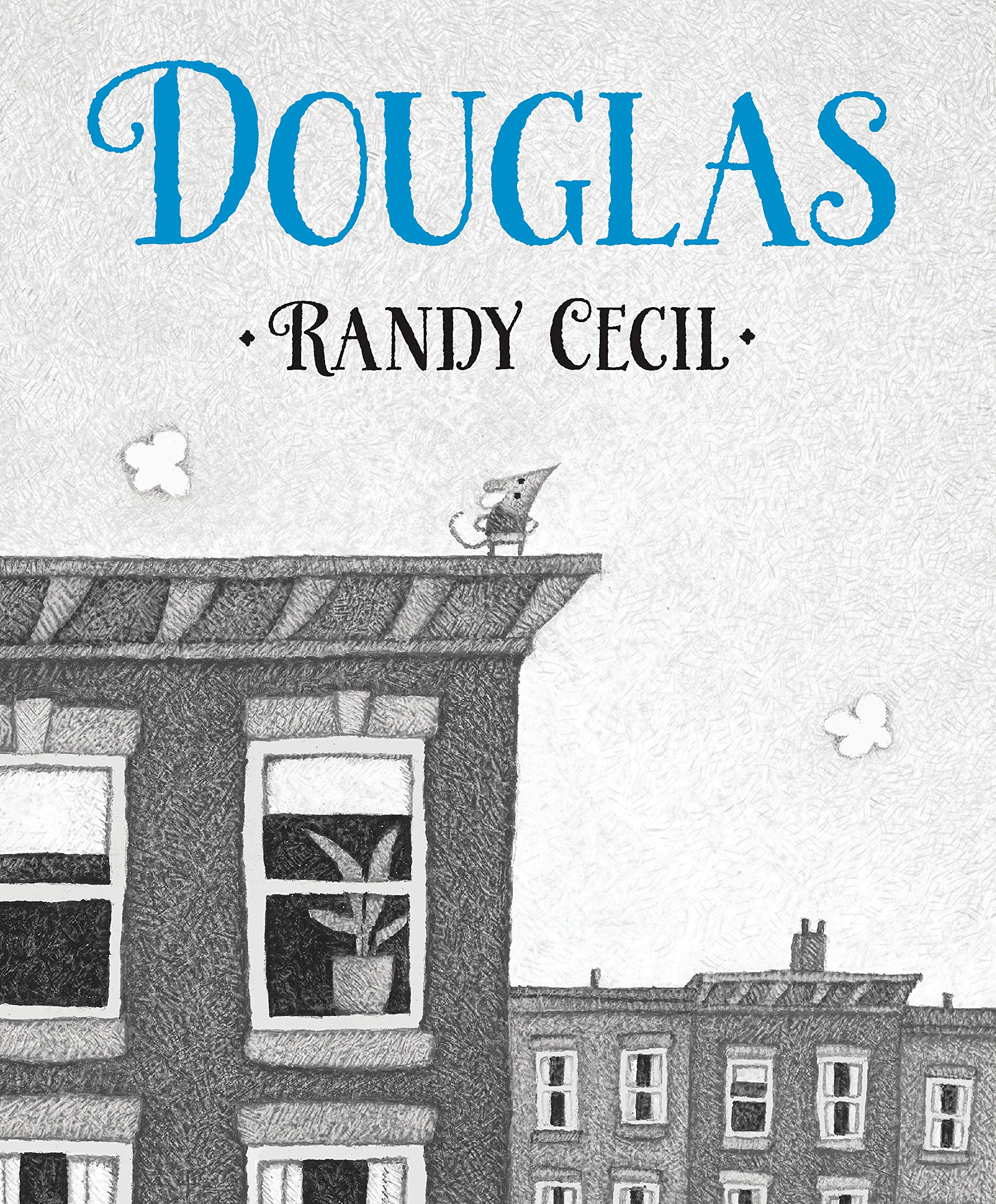
A little mouse has a big adventure in Douglas

Douglas, by Randy Cecil, (Sept. 2019, Candlewick), $19.99, ISBN: 9780763633974

Ages 5-8

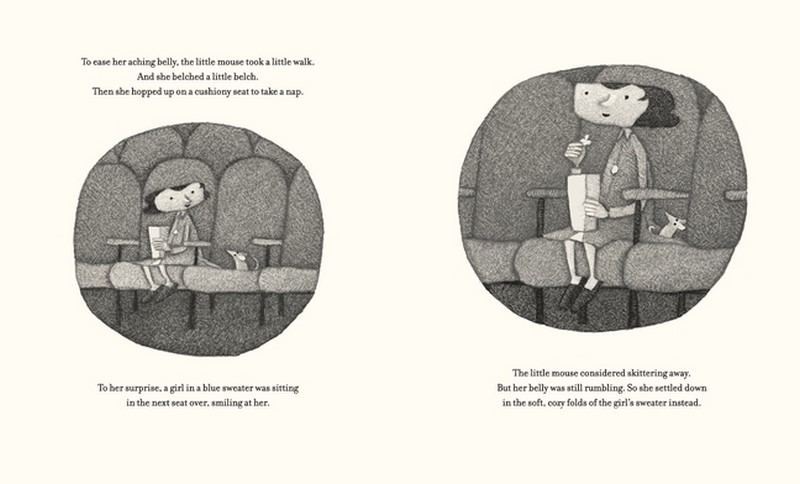
Iris Espinosa goes to the movies one day, and ends up taking a small mouse home with her when it curls up in her pocket to nap. She names the mouse Douglas, after her favorite actor, Douglas Fairbanks, and Douglas ends up having a big adventure on the way back home to the movie theatre! A companion to Randy Cecil’s Lucy (2016), Douglas is also told in four acts, and is an exciting adventure filled with cats, humans, chases, and escapes.

The black-and-white artwork gives a lovely, vintage feel to the artwork, especially when Randy Cecil places readers into a more specific time frame by recalling a screen star from Hollywood’s Golden Age (Fairbanks was active in the 1920s and 1930s). There are mini-stories throughout the main story that make this so much fun to read: Iris’ sister meeting her boyfriend’s mother, with Douglas tagging along for the ride; the vigilant six-toed cat; Everett Dunn, who desperately wants a pet of his own; Mrs. Pennington and her large hat. There’s so much to enjoy while reading Douglas, and it’s a book kids will want to come back to, because there’s something new to discover each time. As Douglas Fairbanks had his own swashbuckling adventures, so does Douglas.

Douglas has a starred review from Kirkus.

Posted in Fiction, Historical Fiction, Middle Grade, Realistic Fiction, Tween Reads

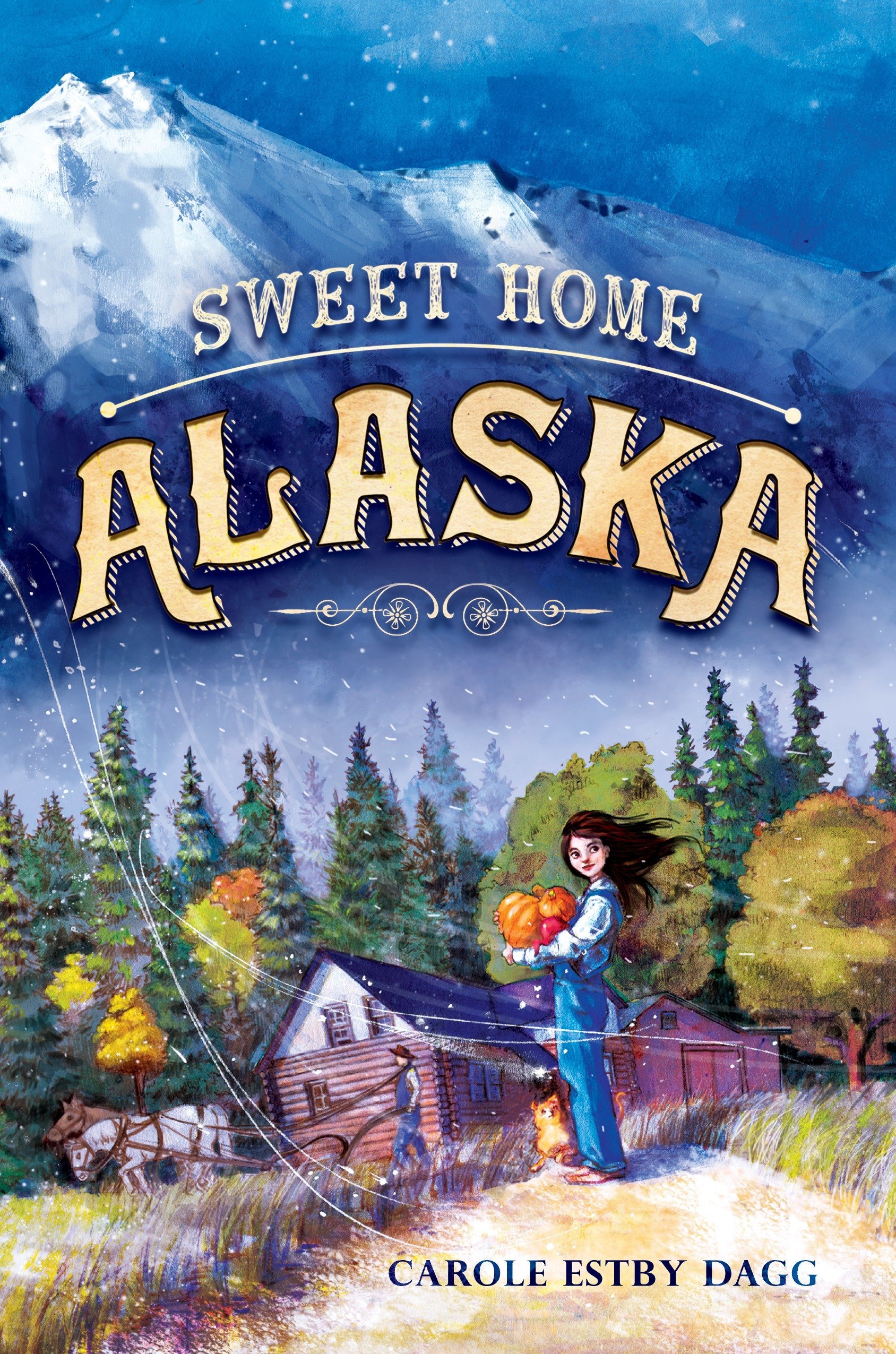
Sweet Home Alaska: Little House, up North

Sweet Home Alaska, by Carole Estby Dagg, (July 2019, Puffin), $8.99, ISBN: 9780147514202

Ages 9-13

Terpsichore Johnson’s family is just one of many families suffering through the American Great Depression in 1934. When the local mill in their Wisconsin town closed, the family relied on whatever they could grow in order to eat, and Terpsichore can make darn near anything out of a pumpkin. Her father is determined to take care of his family, and suggests taking President Franklin D. Roosevelt up on his New Deal offer: become an Alaskan pioneer in his Palmer Colony project! Terpsichore is at once unsure and excited: it’s a chance to be a pioneer, just like her hero, Laura Ingalls Wilder, but it’s so far from everyone and everything she knows. The family decides to give it a year, and they’re off. Life isn’t easy for that first group of colonists: there’s illness, and schedule and materials mismanagement leave a lot of folks living in tents when they should have had homes built, but slowly and surely, life in Alaska starts to grow on the Johnson family, except for Terpsichore’s mother. Can Terpsichore’s prize pumpkin win enough money at the Palmer Colony Fair so she can buy her mother a gift that will make her agree to stay?

I loved this book! Sweet Home Alaska is about the 1935 Matanuska Colony; one of FDR’s New Deal projects that would create jobs, investment in the country and infrastructure, and colonize part of U.S.-owned Alaska, which wasn’t a state just yet. The parallels between Sweet Home Alaska and Laura Ingalls Wilder’s Little House series are wonderful, and a good readalike for readers who enjoy the Wilder books, and Louise Erdrich’s Birchbark House books. (There are no interactions between the mostly white Palmer colonists and indigenous people in Sweet Home Alaska; a point discussed in the author notes at the end of the book.) Terpsichore – pronounced Terp-sick-oh-ree, named for the muse of dancing – even refers to Wilder’s book, Farmer Boy, when growing her pumpkin to show at the Palmer Colony Fair.

The book takes a deeper look into a moment in history I haven’t yet seen captured in historical fiction. While it takes place during the Great Depression, this is new territory, and worth the read. Terpsichore is the eldest child, with twin younger sisters and an infant brother, and handles much of the housework to help her mother out. She’s smart, enterprising, and determined. She and the two friends she makes in Palmer – Gloria, named for actress Gloria Swanson, and Mendel, named for the scientist who studied genetics – work together to start up a colony library and find ways to raise money for books and supplies. She experiences frustration, but always bounces back, stronger than before. The writing just flows from page to page, with adventure, emotion, and excitement throughout. There are wonderful mini-plots throughout, including the telegram to Eleanor Roosevelt that got our President’s attention; a visit from Will Rogers; and a Palmer resident with interesting ties to Terpsichore’s family. I loved spending time with this group.

An author’s note and further reading are included, and really make this a solid choice for kids seeking out historical fiction. There are also some recipes, including one for jellied moose nose. You know you’re curious.

Sweet Home Alaska was originally published in 2016, but I somehow missed it. Glad my friend Barbara over at Blue Slip Media told me I needed to read it now! Check out the free, downloadable discussion and activity guide, and find out about author visits, Skype visits, and contact info (including how to get an autographed bookmark!) at the author’s website.


Posted in Fiction, Middle Grade, Middle School, Realistic Fiction, Teen, Tween Reads

Middle School #MeToo: Maybe He Just Likes You

Maybe He Just Likes You, by7 Barbara Dee, (Oct. 2019, Aladdin), $17.99, ISBN: 9781534450158

Ages 9-13

It all starts with an unwanted hug that takes seventh-grader Mila by surprise, on the school playground, when the basketball boys decide to join in on a friend’s birthday celebration. It keeps going: unwanted hugs, comments, even touches; barely disguised chuckles and cheers among the basketball boys. Mila knows it’s wrong. She feels uncomfortable, she feels it in her skin, but her friends think she’s being dramatic. The teacher she tries to talk to brushes it off. And it keeps going, because she doesn’t want to mention it to her mom: she’s got enough problems, raising two kids on her own and having a lousy time at work. When Mila steps into a karate class, though, and makes an unexpected friend, she starts to recover her confidence and realizes that she owns her own power, and if no one will help her, she’s going to take matters into her own hands.

Maybe He Just Likes You. Who hasn’t heard this phrase, growing up? It’s been the excuse, as old as time, for behaviors from hair-pulling to unwanted brushes across parts of our bodies; smirks and hapless shrugs with half-chuckled, half-muttered, “Sorrrrrry” responses. It’s been the excuse, putting it on young girls and women to endure the snickers and comments as we walk down the halls of school, play outside, walk into the workplace. Barbara Dee’s book introduces us to Mila, a seventh grader who finds herself the object of a group’s attention; their power play. She asks for help, and gets brushed off. Her friend, Zara, seems almost jealous of the attention she’s getting, not understanding that attention like this is unwanted, unasked for. She’s gaslighted by her tormentors, who tell her to “lighten up”; that she blows things out of proportion; that she can’t take a joke. Just as Mila begins to withdraw into herself, she starts taking a free karate class, and discovers a classmate who notices that something’s been going on, and encourages Mila to stand up for herself. Karate practice, plus this new, unexpected friendship, gives Mila clarity and the ability to bring attention to the behavior, and discovers that she is not the only one the boys have targeted.

Mila is a strong, smart character in whom readers may see themselves. Barbara Dee creates a painfully real story with Maybe He Just Likes You; a story that has taken decades to come to light, but isn’t backing down anymore. Mila’s first person narration makes it much easier to envision ourselves in Mila’s shoes, and Barbara Dee’s strong, clear voice makes Mila’s creeping discomfort and anger palpable, causing us to curl our fingers and grit our teeth. I wanted to cheer for her, I wanted to scream for her, I wanted to yell and demand that her educators take notice of what was going on – and wanted to sink into my seat with relief when someone finally does.

Sexual harassment has spent too long feeding on our silence. With the #MeToo movement, and now, a #MeTooK12 movement, kids are learning about respect, consent, and boundaries. Let’s support them. I hope that Maybe He Just Likes You will come with an educator guide with sexual harassment resources and lesson plans for K-12 educators. I have found some on the Web: Institute for Humane Education; Equal Rights Advocates; Harvard University’s “Making Caring Common” Project; and Stop Sexual Assault in Schools.

This is a middle school/upper middle grade novel, and needs to be read by adults, teens, and tweens. Booktalk and display with books like Jennifer Mathieu’s Moxie, Laurie Halse Anderson’s Speak, and Saints and Misfits by S.K. Ali. There are more and more books available for YA on this topic; I’m glad that middle grade/middle school is getting their moment, too. School Library Journal has a great article from 2018, “Beyond “No Means No”: Resources on Consent“, and a Teen Librarian Toolbox article from 2014 spotlights two works by Jacqueline Woodson that can fall into either middle grade/middle school or YA. Author Barbara Dee writes about her inspiration in this Nerdy Book Club post.

Maybe He Just Likes You has a starred review from Publishers Weekly. Barbara Dee’s author webpage contains information about her books, school visits, and an FAQ.

Posted in Fiction, Middle Grade, Middle School, Realistic Fiction, Tween Reads

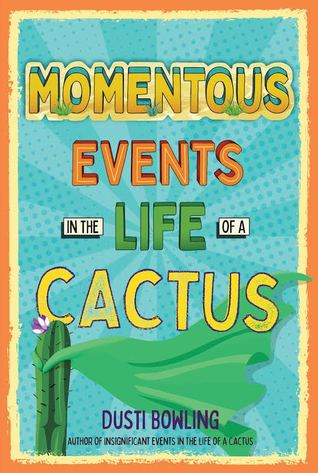
Aven’s back in Momentous Events in the Life of a Cactus!

Momentous Events in the Life of a Cactus, by Dusti Bowling, (Sept. 2019, Sterling), $16.99, ISBN: 978-1-4549-3329-8

Ages 9-14

Dusti Bowling gives readers more of the unsinkable Aven, her family, friends, and life at Stagecoach Pass in the follow-up to 2017’s Insignificant Events in the Life of a Cactus (which also happens to be one of my favorite middle grade books ever). Aven, a middle grader born with no arms; her best friends, Connor, a boy with Tourette’s and Zion, a boy with weight problems, formed a tight-knit group of kids who could lean on each other, strengthen one another, and – because what are friends for? – drive one another nuts. Insignificant Events is a brilliant novel with characters that become part of you the first time you meet them, so to learn that Dusti Bowling was giving us another book about Aven and Company was just the news myself, and so many other readers, needed.

Momentous Events in the Life of a Cactus changes the game on Aven and her friends once more. Just in time to start high school, Connor’s moved away and makes a new friend. A new female friend. Trying not to let jealousy get to her, she works on affecting indifference, but a cruel prank by some of of the Mean Boys (yep, they exist, and you know exactly who they are) in school devastates Aven, sending her into a PTSD-like spiral of anxiety and depression. Lando, Zion’s older brother, seems interested in Aven, but she can’t imagine – especially while continuing to be bullied by the creep that pranked her – that he’d be interested in her, which makes her more miserable. There’s a subplot where Aven wonders about her father while trying to find Henri’s – the ice cream man at Stagecoach Pass – family as his dementia gets worse, that put my emotions through the ringer.

There’s so much taking place in Momentous Events. Aven and her friends are struggling with adolescence and the things that come with it; namely, shifting friendships, crushes, and first relationships. Aging, death, and family – especially when you know there are family members “out there” somewhere – take up huge parts of Aven’s thinking and feelings here. A new friend on the scene introduces Aven to fictional punk rock band Screaming Ferret, which gives her a new outlet for her feelings and makes me very happy; each chapter begins with a Screaming Ferret lyric, giving readers a heads-up as to what Aven’s mood may be for that chapter.

There are no downsides to Momentous Events in the Life of a Cactus. Dusti Bowling gives readers – yet again – incredible characters with messy lives; lives that we recognize, challenges we can understand, sympathize with, and appreciate; and she does it with humor, care, and feeling.

Momentous Events in the Life of a Cactus has a starred review from Kirkus and is the follow-up to the award-winning book, Insignificant Events in the Life of a Cactus. Author Dusti Bowling’s website includes free downloads of cactus bookmarks, teaching resources, and activity guides. Educator Tara Bardeen has created an educator’s guide for Momentous Events, available as a free pdf.

Posted in Fiction, Realistic Fiction, Teen, Young Adult/New Adult

Get ready to SLAY!

Slay, by Brittney Morris, (Sept. 2019, Simon Pulse), $18.99, ISBN: 978-1534445420

Ages 12+

This is one of the most buzzed-about YA books of the year, and with excellent reason. Slay is phenomenal.

Keira Johnson is a 17-year-old high school senior, math tutor, and one of a small handful of students of color at her high school, Jefferson Academy. Keira is at her happiest, though, when she steps into her character, Emerald, in the VR game she created: Slay. Slay is at once a competitive game and celebration of black culture, with hundreds of thousands of players. Slay lets black players inhabit a world where they don’t need to be a spokesperson for their race; they don’t need to code-switch to move in a white world; they can be, together, while competing in arenas and using cards that praise and elevate notable black men and women throughout history, and touchstones – both weighty and humorous – without having to explain or defend their meaning. Keira can’t let anyone know she’s the one behind Slay, though – her boyfriend, Malcolm, thinks video games are a way to keep young black men and women distracted and off balance, and she worries that her parents wouldn’t approve. But when a Slay-er is murdered over a Slay coin dispute, Keira finds her game the target of the media, who wants to call out the game and its creator as racist, and a dangerous troll, who threatens to take Keira to court for discrimination.

Slay is just brilliant writing. Gamers will love it for the gameplay and the fast-paced gaming action. The writing is sharp, with witty moments and thought-provoking ideas, including how a game can unite a community on a worldwide basis. Told mostly through Keira’s point of view, chapters also switch up to introduce readers to people affected by Slay, including a professor in his 30s and a closeted player living in potentially unsafe circumstances. There’s a strong thread of white deafness here, too – how white friends can ask things like, “Should I get dreadlocks?”, or provoke their “black friend” into speaking for the POC community to get the “different” point of view. Keira and her sister, Steph, come from a solid family, and Keira’s boyfriend, Malcolm, who wants black men and women to rise up together, but whose more radical worldview conflicts with many of Keira’s ideals.

Breathtaking characters that live off the page and in the imagination, fast-paced dialogue and a plot that just won’t quit make Slay required reading for upper tweens, teens, and adults alike. Give Slay all the awards, please.

Slay isn’t out until September, but you can catch an excerpt here at EW’s website. Bustle has a great piece on Slay and another excerpt, if you’re dying for more. Publisher’s Weekly has an article about Black Panther‘s influence on author Brittney Morris, which comes through in a big way through the pages of Slay, and the Slay website has sample cards from the game that you’ll love.


Posted in Fiction, Middle Grade, Realistic Fiction

The Great TBR Read-Down Continues: Squint and Pie in the Sky

My middle grade TBR read-down continues with two more great books, both realistic fiction: Squint, by Chad Morris and Shelly Brown, the duo that gave us Mustaches for Maddie; and Pie in the Sky, by Remy Lai. Let’s dive in!


Squint, by Chad Morris & Shelly Brown, (Oct. 2018, Shadow Mountain Publishers), $16.99, ISBN: 978-1629724850

Ages 9-13

Flint is a middle schooler who loves to draw and loves superheroes. He’s creating a comic starring his kinda sorta superhero alter ego, Squint, who fights the villains who used to be his buddies, with the help of his rock dog. Flint’s been nicknamed Squint by his former best friend, because he has keratoconus, an eye disease that could leave him blind. Raised by his grandparents, Squint copes with his frustration through his comic, but when he meets McKell – a Filipina with a terminally ill brother who puts up YouTube challenges, daring others to live the life that he can’t – he may just have made a real friend again, after all.

Squint is a beautifully written book of grief, loss, and coping. It’s as much McKell’s story as it is Flint’s, and Chad Morris and Shelly Brown have created another sensitive, compelling story about kids coping with illness, and about the adults who are there to shepherd these kids through the heavy stuff. Flint’s grandparents have had to raise their grandson because their daughter couldn’t; they’ve given Flint the best they could with what they’ve had, and they’ve been the ones to see him through the multiple doctor appointments, and, now, surgery. McKell’s parents are working through grief and loss, and sometimes, that takes a toll on their daughter. Flint and McKell find in each other someone who may not understand, but who gets it, if that makes sense. They push each other to be their best, and when they combine their talents – Flint, with his art, and McKell, with her rhyming and songwriting – they shine.

Squint is a great addition to your middle grade fiction collections. It’s got realistic characters with strong backstories, and deals with real world issues like abandonment, grief, loss, illness, and navigating the aggravations of middle school.


Pie in the Sky, by Remy Lai, (May 2019, Henry Holt & Co), $21.99, ISBN: 978-1-250-31410-9

Ages 8-12

Twelve-year-old Jingwen, his younger brother, Yanghao, and his mother leave China for Australia, but this wasn’t the original plan. They were supposed to move to Australia with Jingwen’s and Yanghao’s father, so he could open his dream bakery, Pie in the Sky. But Jingwen’s father died in a car accident almost two years ago, and Jingwen is wracked with guilt over events leading up to his father’s death. When they arrive in Australia, he feels like everyone around him is speaking Martian, but that he’s the alien – especially with little Yanghao seems to fit right in, quickly learning English and making friends. To deal with his grief and his frustration with his new life in Australia, Jingwen decides he’s going to make all the cakes he and his father talked about making for Pie in the Sky. Yanghao is only too happy to have cake every night, and Jingwen sets to work while his mother works. After all, cake makes everything better, right?

I LOVED Pie in the Sky. It’s a graphic novel within a novel, with 2-color illustrations on almost every page, that keep the action moving and keep readers invested in the story. When Jingwen tells readers he feels like an alien, we see that he’s an alien! He’s drawn as an alien for every time someone can’t understand him; on the occasions where he successfully speaks a word or two of English, a fourth eye will disappear, or something else will make him slightly more human. But all around him, people speaking English – including his brother and mother – may as well be an alien language, something we see as Remy Lai brilliantly illustrates a single word here and there, surrounded by alien glyphs in speech bubbles. Remy Lai creates a moving story about a family working through grief and loss, but each seem to be in isolation, when they need to come together to move on. Jingwen’s fear and frustration at being in a new country, speaking an unfamiliar language, comes across through prose and illustration, making him even more likable and empathetic. Jingwen and Yanghao have an realistic sibling relationship, with ups and downs, general silliness, and the love the always manages to shine through. Kids will love how they call each other – and anyone who annoys them, really – a “booger”.  Pie in the Sky works as a humorous and touching look at a family working their way through a tragedy. The tasty recipe at the end encourages families to bake together – because cake really does make everything better.

Pie in the Sky has a starred review from Kirkus.