Posted in Graphic Novels, Middle Grade, Non-Fiction, Non-fiction, Tween Reads

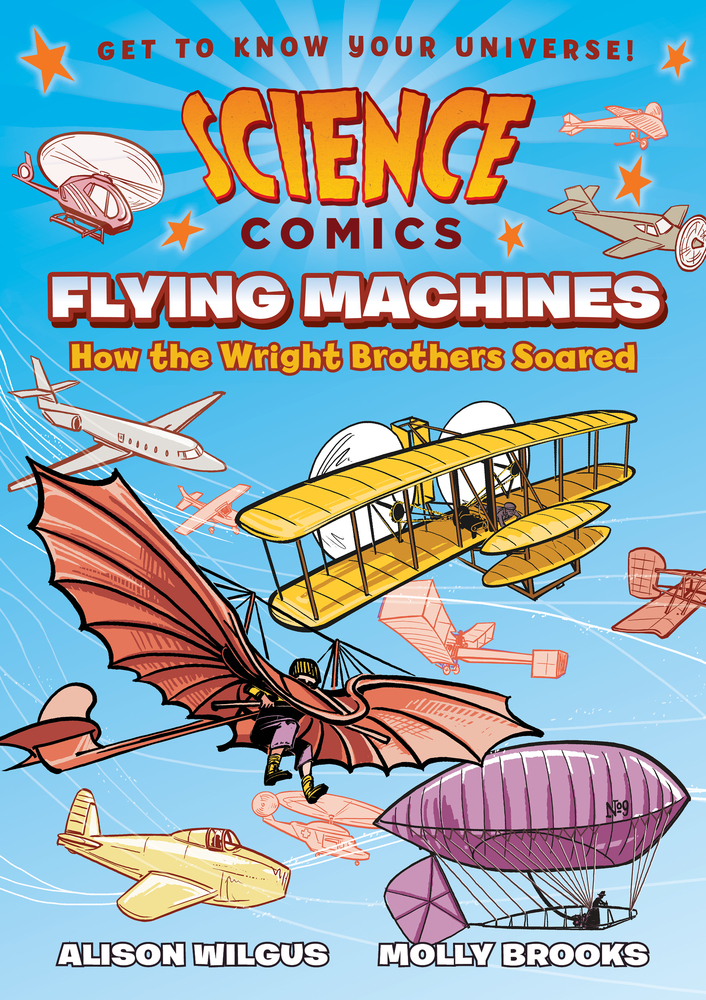
Science Comics takes to the skies with Flying Machines

Science Comics: Flying Machines, by Alison Wilgus/Illustrated by Molly Brooks, (May 2017, :01First Second), $12.99, ISBN: 9781626721395

Recommended for readers 8-12

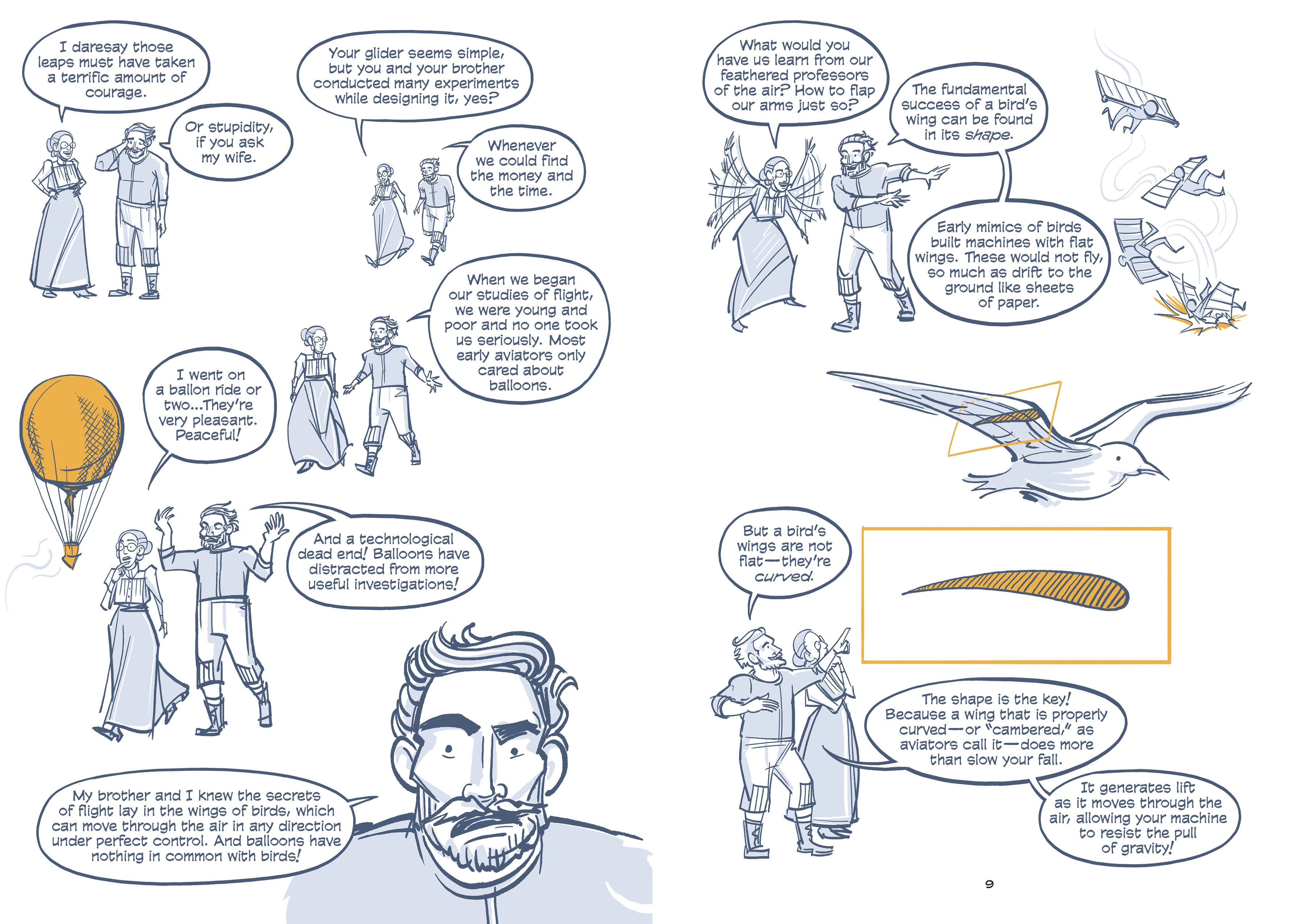
This latest installment of Science Comics introduces readers to Katharine Wright, sister to Wilbur and Orville Wright. When their mother died, Katharine stepped in to take over running the family household, which included corresponding with Wilbur and Orville as they traveled, both in the process of getting their first flight airborne and later, as they traveled through America and Europe. Here, she serves as the reader’s guide through the history of aviation. We learn about European aviation enthusiasts, and the race for funding and progress between the Wright Brothers – owners of a bicycle shop in Dayton, Ohio – and the titled European men working toward the same cause.

Readers gets detailed names and statistics on the Wright brothers’ flyers, and a look at the frustrating mechanical failures and serious injuries, including one fatality, leading up to that first historic flight. Readers also meet historic aviators who came after the Wright Brothers, including Frank Whittle, inventor of the turbojet engine, and who came There’s an incredible amount of detail in this volume- aviation enthusiasts will love it.

An appendix with short biographies on other aviation pioneers, a biography on Katharine Wright, a glossary of aviation terms, and a list of further reading round out this volume. Providing readers with a look into history and aviation technology, Science Comics: Flying Machines is a solid add to STEM collections and reinforces the fact that comic books DO belong in the classroom.


Posted in Adventure, Fantasy, Young Adult/New Adult

New fantasy YA brings a together a group of Royal Bastards

Royal Bastards (Royal Bastards #1), by Andrew Shvarts, (Jun 2017, Hyperion), $18.99, ISBN: 9781484767658

Recommended for ages 14+

This new fantasy series follows a group of Royal Bastards – illegitimate children of royals – as they try to save a royal princess’ life and prevent a war. Sixteen year-old Tilla is the bastard daughter of Lord Kent of the Western Province; she lives in comfortable accommodations, but her father has held her at arm’s distance ever since his legitimate wife bore him two daughters. Tilla’s half brother, Jax, from a different father, lives on Kent’s lands as a stablehand. While Jax is happy with life as it is, Tilla longs for legitimacy and a better relationship with her father; two things he’s withheld from her thus far. She’s invited to her father’s banquet honoring the visiting royal princess Lyriana, and sits at the bastard table with Miles, a bastard from neighboring House Hampsted, and Zell, a trueborn son-turned-bastard from the warrior Zitochi clan of the North. Lyriana insists on sitting with them and getting to know them, and ends up tagging along on what was supposed to be an evening out between just Jax and Tilla. While out at the shore, the group stumbles upon a horrific and treasonous episode that puts every one of their lives in danger: in Miles’ and Tilla’s cases, even from their own parents.

The group of teens is on the run, hoping to make it back to Lyriana’s kingdom before the combined forces of Lord Kent, Lady Hampsted, and the Zitochi clan can catch them. The bastards have to stay alive, prevent a mage slaughter, and a civil war that will claim thousands of lives – can they get along long enough to survive the journey?

There’s a lot of story to unpack in this first book. The biggest stumbling block for me was the contemporary language used in the high fantasy setting. It’s off-putting and took me out of the flow of the novel. Vernacular aside, Royal Bastards is a fast-paced adventure, loaded with intrigue, betrayal, and teen romance. I like the world-building: a fantasy world where bastards are recognized and can gain legitimacy if their parents choose to bestow it upon them; a major coup in the works, and plenty of intrigue and betrayal to keep things interesting. There’s rich character development, particularly in the relationship between Jax and Tilla and Tilla’s growth throughout the novel. There’s some diversity in the characters, although some fantasy tropes pop up here; most notably, the clueless royal who wants to meet “the little people” and the brooding, fur-wearing savage.

YA fantasy fans will dig in and enjoy this one. I’d booktalk Erin Bow’s The Scorpion Rules as an interesting counterpart that looks at the relationship between royals and their children and war. Talk up the Game of Thrones books to readers that may be familiar with the HBO series. Give a copy of Joshua Khan’s Shadow Magic and Dream Magic books to younger siblings who aren’t ready for this one yet.

Posted in Fantasy, Fiction, Middle School, mythology, Tween Reads

Loki’s daughter has her say in The Monstrous Child

The Monstrous Child, by Francesca Simon, (June 2017, Faber & Faber), $11.95, ISBN: 9780571330270

Recommended for ages 12+

Being the daughter of a giantess and the god of mischief is hard enough, but being born as a half-corpse on top of it? No wonder Hel, daughter of Loki and Angrboda, has a chip on her shoulder. Her older brothers are a snake and a wolf, her half-brothers are human – but they’re jerks, and her father’s no prize, whether or not he’s a Marvel and Tumblr heartthrob in another universe.

So goes the story of Francesca Simon’s The Monstrous Child. Narrated by Hel herself, it’s Neil Gaiman’s Norse Mythology for the middle school set. We read about her anger at Odin’s casting her into Niffelheim to rule over the dead, and the pain of her unrequited love for Baldr, the most beautiful of the Norse gods. We discover her friendship with a frost giant, condemned to oversee the bridge to Hel’s realm, and the despair that leads her to consider a role in Ragnarok: The Twilight of the Gods.

I loved this book. As a fan of Norse myth and YA, I enjoyed seeing the myths from Hel’s perspective: an outcast, literally cast away from her family; forced to make her way on her own. She suffers loneliness, the pain of loving someone unavailable, and the desire for revenge. This is a perfect addition to middle school libraries, and a great way to connect ancient myths to contemporary YA. Hel’s voice is clear and strong; supporting characters also have defined personalities and the dialogue – both Hel’s internal dialogue and the dialogue between characters, particularly between Hel and Loki, is delicious.

Francesca Simon has delved into Greek and Norse myth in the past. While I’m not sure if her books The Sleeping Army and The Lost Gods are part of The Monstrous Child‘s Universe, as they take place on Midgard (Earth), I’m still going to add them to my collection to stand next to Rick Riordan’s Magnus Chase series, because the kids at my library read any and all things fictional myth. The Monstrous Child stands on its own as a solid work of Norse myth and middle school-level fiction. Younger readers will be familiar with Ms. Simon’s Horrid Henry intermediate series.

Originally released in hardcover in May 2016, The Monstrous Child‘s paperback release is due out in a few short weeks. You can grab a copy from your library right now!

Posted in Fantasy, Graphic Novels, Science Fiction, Teen, Young Adult/New Adult

Alien invasion and rebellion: Shattered Warrior

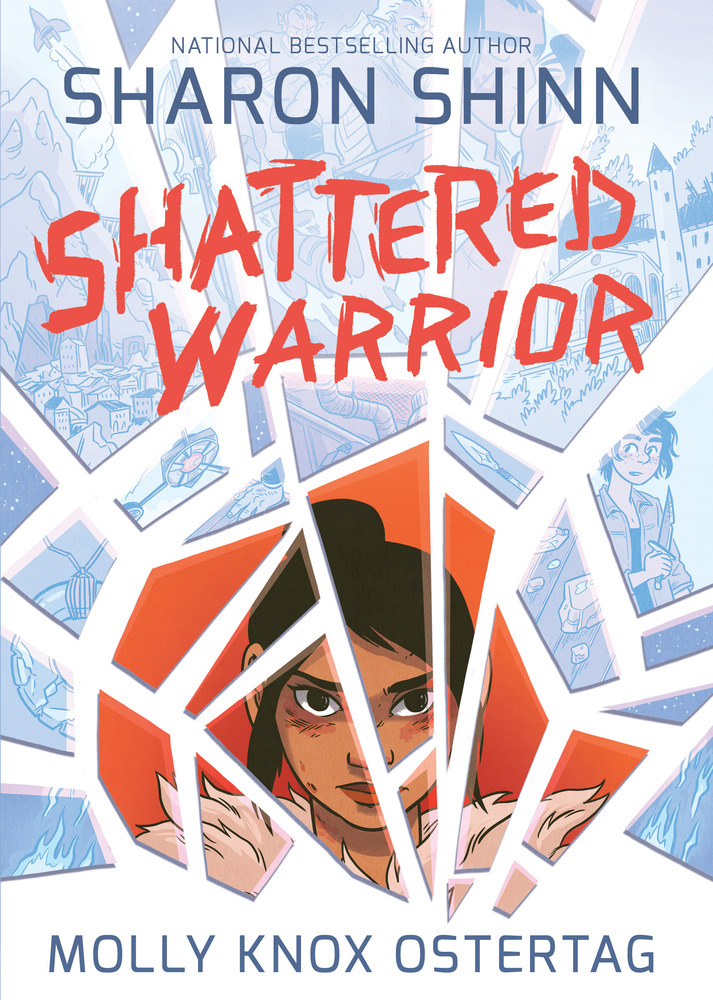
Shattered Warrior, by Sharon Shinn/Illustrated by Molly Knox Ostertag, (May 2017, :01FirstSecond), $17.99, ISBN: 9781626720893

Recommended for ages 14+

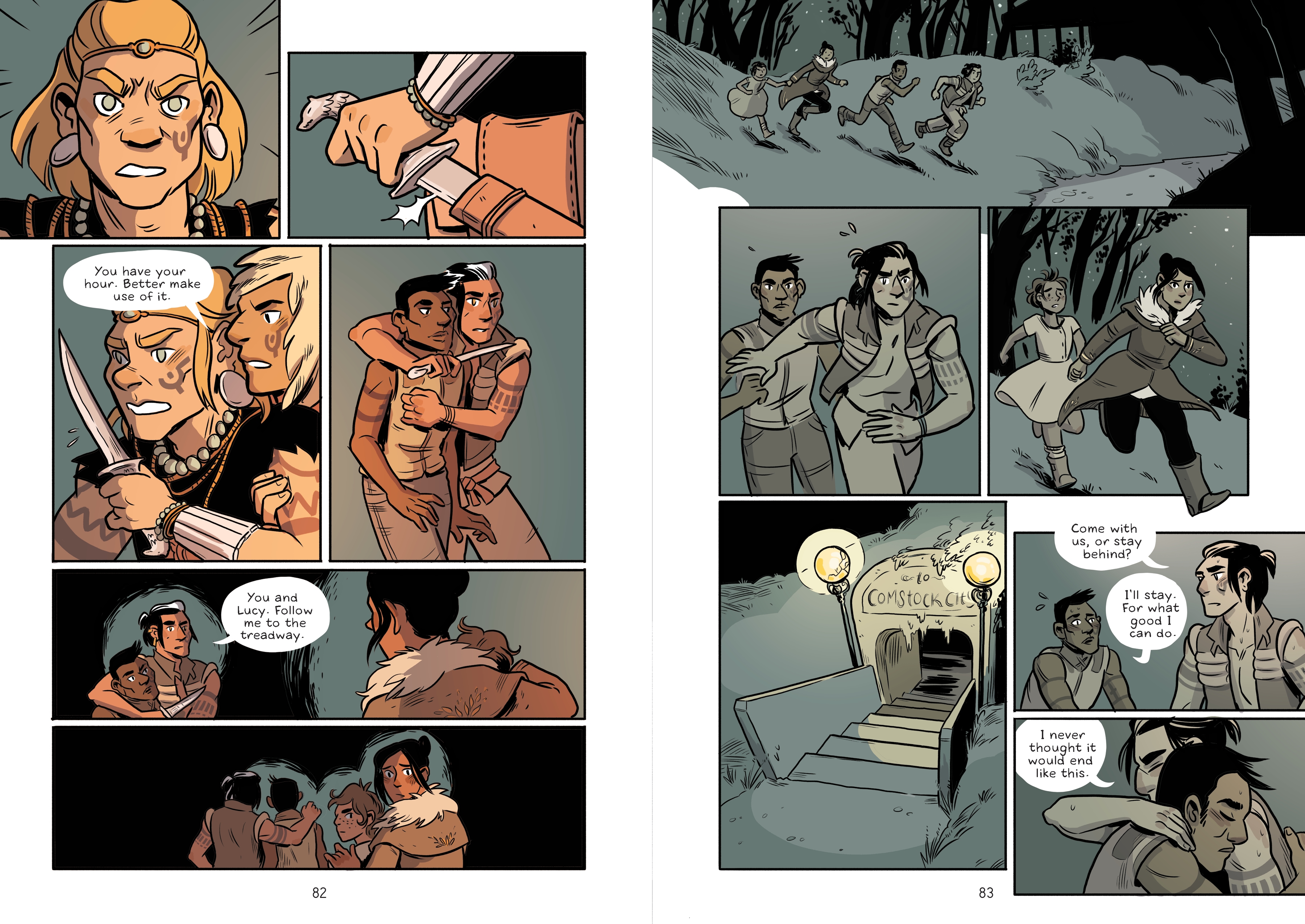
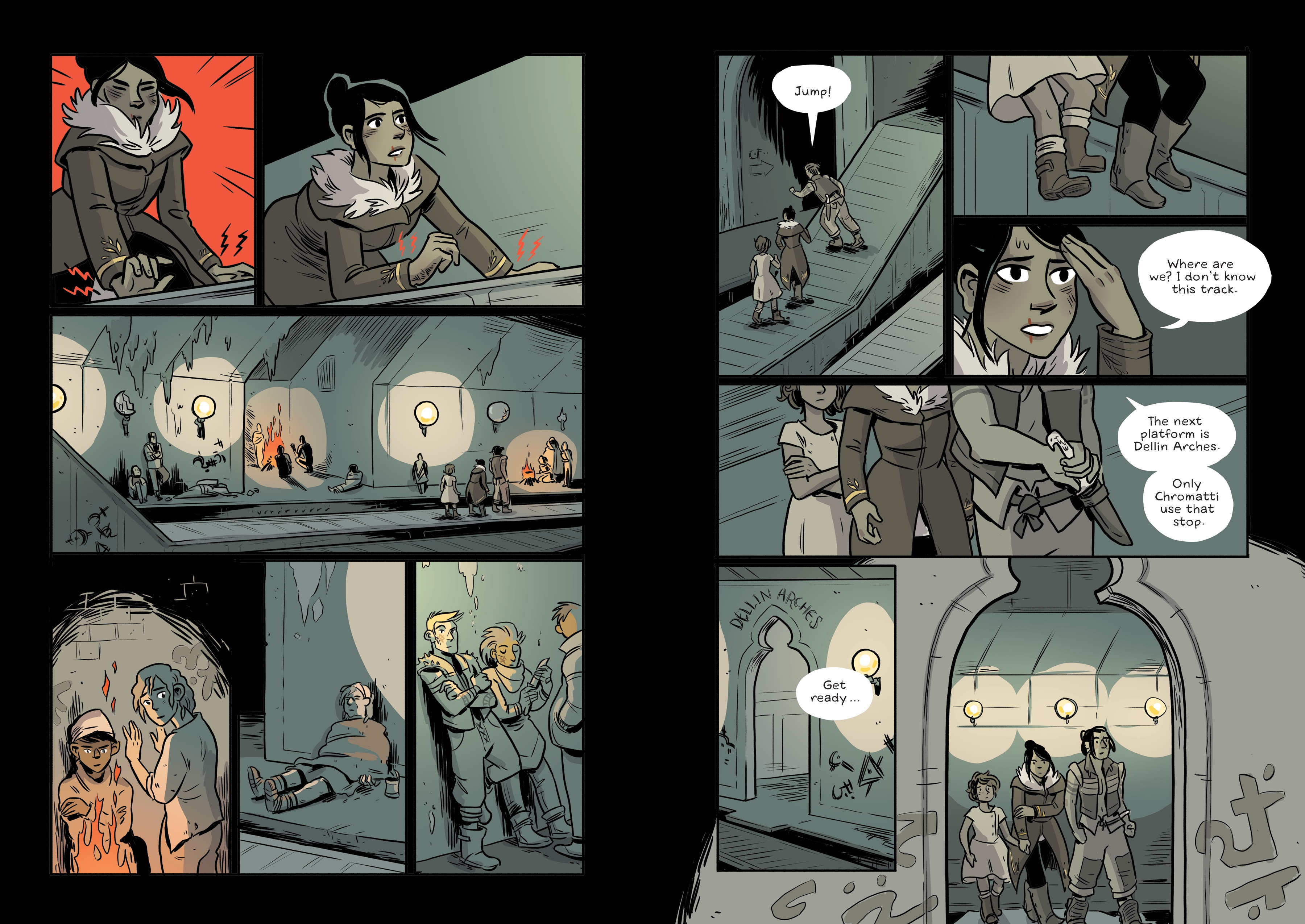
It’s been eight years since Colleen Cavanaugh’s world was invaded, her people enslaved. The Derichets, a warlike alien race, have human slaving in mines and factories, mining and refining minerals to power their weapons and their technology. Colleen, who lost most of her family in the invasion, discovers that her young niece, Lucy, is alive, and bribes the Derichets to get her back. Along with Jann, a member of a gang called the Chromatti, Colleen, Lucy, and Jann try to stay off everyone’s radar and live quietly, a small family of their own. But Colleen is also helping a rebel group that’s causing big problems for the Derichets. When a chance for a big strike against the aliens presents itself, Jann and Colleen have to take it – even if there are dire consequences.

Sharon Shinn is a bestselling sci-fi author; Shattered Warrior is her first graphic novel, illustrated by Molly Knox Ostertag, best known for her Strong Female Protagonist webcomic. Shattered Warrior is the first volume in this story of love amidst rebellion; Shinn and Ostertag certainly have come together to give us a strong female protagonist in Colleen. She’s strong, having endured the invasion of her world and enslavement of her race; the deaths of her family; and now, the discovery of her niece. She keeps her household going in the face of an utterly bleak future, but refuses to open herself to love because she can’t deal with the pain of losing. As the novel progresses, she ultimately realizes that love provides the power to keep going, and falls in love with Jann. The novel ends on a cliffhanger, ensuring that we’ll all be waiting for the next installment.

We don’t know much about the Derichets. We know they’re a warrior race that relies on Colleen’s world’s natural resources and that they appear to be brutal in their methods. We know that some of them have an eye for human women. The Chromatti are barely a step up from a street gang, attacking humans and Derichets alike. The Shattered Warrior characters live in a savage world where survival is the primary directive; everything else comes second, but the main characters still find a way to find small joys where they present themselves. It’s an interesting character study and a story that readers will enjoy. Booktalk this one with War of the Worlds for a new book/classic read pairing.


Posted in Fiction, Preschool Reads, Uncategorized

Size matters not: Just ask Little Captain Jack!

Little Captain Jack, by Alicia Acosta/Illustrated by Monica Carretero, (Apr. 2017, nubeOCHO), $15.95, ISBN: 978-84-945415-0-6

Recommended for readers 4-8

Once upon a time, there was a tiny pirate named Captain Jack. He was so tiny that he had to weigh himself down with a heavy sword in his belt, an iron telescope around his neck, and some rocks in his pockets, so he wouldn’t be blown away! Everyone called him Little Captain Jack. He was so little that his crew didn’t hear him when he yelled to them, and he was constantly in danger of being stepped on! One day, during a battle between Captain Jack’s crew and the bad pirate Badlock’s crew, Jack was taken prisoner and locked in a dark cellar. Although he was scared, he accepted an offer of help from a mouse… who got some help from a seagull… and Captain Jack learned, from that day forward, that “great things could come in all shapes and sizes, big or small!”

Captain Jack is fun reading and kids will appreciate the message that size doesn’t matter, especially when you work as a team! The tiny pirate still manages to command his own ship and crew (even if they don’t really hear him… or see him that often), and when he’s in trouble, his crew is frantic. He means a lot to his crew, whether he’s big or small – just like a family. Teamwork helps bring Jack back to his crew, sending a positive message about working together.

The cartoony art will appeal to readers, and the endpapers – drawn to look like a map of Penny Island, where we assume Captain Jack is spending time these days, has fun, eyecatching details like a giant squid, a whale, and a lake monster. A nicely detailed compass rose adds the opportunity to talk about directions. Plus, pirates are a home run with little ones: you can pick from any number of pirate adventure stories for little ones! You could pair these with any number of pirate books for little ones! Add a pirate hat craft to use up some old newspaper and you have a nice, environmentally friendly storytime activity.

Little Captain Jack was originally released in Spanish (Pequeño Pirata Serafin, ISBN: 978-4-945415-1-3), and is available in both Spanish and English.

Posted in Animal Fiction, Preschool Reads

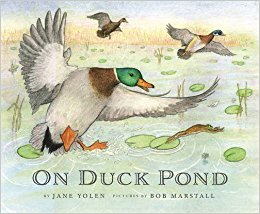
On Duck Pond, there is chaos… and then peace.

On Duck Pond, by Jane Yolen/Illustrated by Bob Marstall, (Apr. 2017, Cornell Lab Publishing Group), $15.95, ISBN: 978-1-943645-22-0

Recommended for readers 3-7

A boy and his dog walk by a duck pond in the morning, when nature is at peace; when a quack of ducks appear, they splash, they chitter and chatter, and the pond’s inhabitants scramble in the momentary chaos. The boy notes that even his reflection looks different in the disturbed water. When the ducks move on, the pond returns to its peaceful setting, the pond life resumes, and the boy, contemplative, heads home.

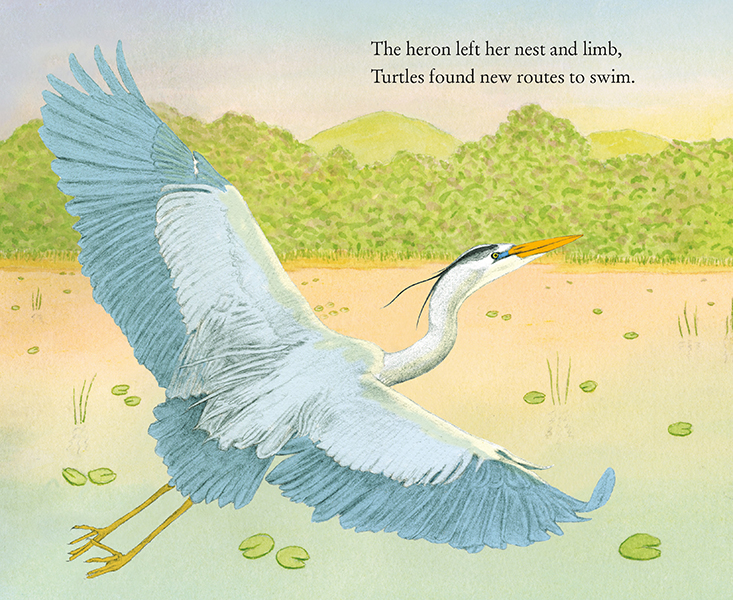
This rhyming tale is a sequel to On Bird Hill, but it’s not necessary to have read it to enjoy this quiet nature tale. Award-winning author Jane Yolen gives readers a wonderful rhyming tale of quiet and chaos, coming up with fun, descriptive terms like “a quack of ducks”, and evocative phrases like, “Old Duck Pond, once still and quiet/Now seemed battered by the riot”, and, of the boy’s reflection, “Every part of me was changed/I looked like I’d been re-arranged”. She captures the riot of noise and blunder of movement that disturbs the quiet  morning, and the gradual pace with which nature recovers when the ducks move on, all witnessed by the boy and his dog. We meet some of the pond’s inhabitants – turtles, herons, frogs, and tadpoles – during the course of the story; the realistic illustrations introduce us to even more wildlife. There are lovely, detailed drawing of the pond from various angles, from close-ups of lily pads to sweeping vistas. The ducks’ descent is beautifully rendered, with wings spread, water splashing, beaks open, communicating the movement and noise they bring to the scene. A section on pond habitats and birds, and information about the ducks and other birds and animals featured in the story, adds a nice non-fiction section to the book.

This is a great read-aloud for storytimes – the rhyming text provides a nice cadence for readers to listen to – and for introductions to habitats for younger readers. Kirkus captures the spirit of the narration by referring to it as a “sense of wonder” book.

Pair this with some of Jane Yolen’s  more nature-oriented books, like On Bird Hill or Owl Moon for an author study, or display with books like Denise Fleming’s In the Small, Small Pond and Henry Cole’s I Took a Walk.

Posted in Middle Grade, Non-Fiction, Non-fiction, Tween Reads

Shannon Hale Talks Cool Kids, Crybabies, and Real Friends

Real Friends, by Shannon Hale/Illustrated by LeUyen Pham, (May 2017, :01 First Second), $12.99, ISBN: 978-1-62672-785-4

Recommended for readers 8-13

How do I even start my gushing over Shannon Hale’s memoir about family, friendship, and growing pains? I’m a Shannon Hale fan and a LeUyen Pham fan; their collaborations – like on one of my favorite chapter book series, Princess in Black – work so well, visually and literally, it’s a treat for the eyes, the imagination, the whole reader is satisfied.

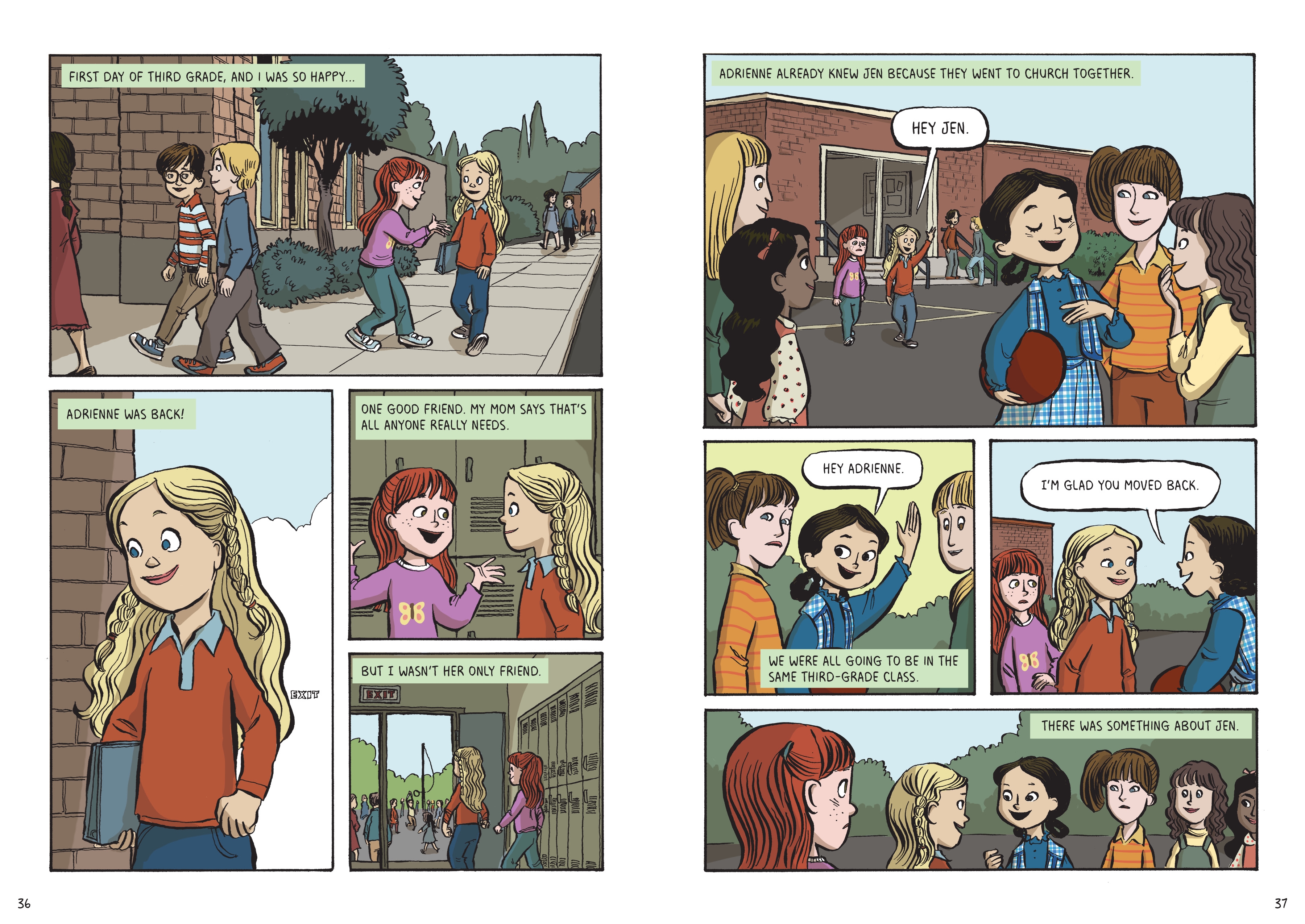
Here, we see young Shannon’s life from Kindergarten through fifth grade in terms of her relationships; with her mother, a series of friends, her troubled and sometimes abusive sister, and with God. Primarily, this is a story of how Shannon struggled with The Group. We all know The Group. Mean Girls was a story about The Group; just about every high school or middle school movie or TV show has a Group. It’s the in-crowd, the girls who make lives miserable for everyone that isn’t part of their group – and sometimes, even for the people in the group. Shannon desperately wants friends, but with friends comes the stress of being part of The Group and putting up with the mind games and backstabbing that is aimed at her by another jealous group member. At home, she tries to navigate relationships with her large family, trying to give her temperamental sister, Wendy, a wide berth.

We see the effects of stress on Shannon, who develops OCD-type behavior and manifests physical ailments often associated with anxiety. We also see how Shannon copes by creating her imaginary worlds – she’s a Wonder Woman, a Charlie’s Angel, a secret agent, and she brings her friends along for the ride. This book is powerful for a girl who, like Shannon, grew up in the ’70s, disappeared into my own imagination, and struggled for years with Groups and backstabbing. I’m an only child, but Shannon could have been writing about me – and that’s how readers will feel reading this book, just like readers do when they read literally anything by Raina Telgemeier.

Readers will know this is their story, whether they’re an 8 year old kid or a 46 year old librarian and book blogger; maybe there’s a boy out there who, like Shannon or Kayla, another character, hides in the bushes so no one will see them crying and make fun of them. Real Friends is painful, real, and beautiful.

Real Friends received a starred review from School Library Journal, and Kirkus offers an interview with Shannon and Dean Hale. Wander over to Shannon Hale’s author page for information on her other books, games and quizzes, and more; LeUyen Pham’s webpage is loaded with neat things to see, including a free, downloadable Love: Pass It On poster, and links to her illustration, Facebook, and book pages.

This one is a no-brainer for collections. Display with Victoria Jamieson’s Roller Girl, Raina Telgemeier’s Smile, and Sisters, and novels like Jennifer L. Holm’s Fourteenth Goldfish,  and Dana Alison Levy’s Family Fletcher books. If it’s a display or book talk on self-esteem and standing up to the crowd, make sure to include Kathryn Otoshi’s Zero, One, and Two.

Posted in Fiction, Fiction, Historical Fiction, Middle Grade

The Gray Twins reunite in The Whispers in the Walls

Scarlet and Ivy: The Whispers in the Walls, by Sophie Cleverly, (May 2017, Sourcebooks Jabberwocky), $7.99, ISBN: 9781492634065

Recommended for readers 8-12

When we left Ivy Gray at the dismal Rookwood School, she had just found her lost twin, Scarlet; hidden away in an asylum by the tyrannical headmistress, who told her family that Scarlet was dead. Masquerading as Scarlet, Ivy attended Rookwood and discovered the truth about a great many secrets. The Whispers in the Walls picks up just as Ivy reunites with Scarlet and they go home, only to have their spineless father and cruel stepmother send the two girls back. Back to the school that hid one daughter in an asylum and lie about her death. Their father drops them off with a “But it’s different now, it’s still a very good school with a new headmaster”, and has the nerve to tell them he loves them after that, securing a Father of the Year award sometime in the future, I’m sure.

Things aren’t wonderful back at Rookwood. Penny, Scarlet and Ivy’s tormenting nemesis, is still there, and she’s worse than ever. Violet, Penny’s best friend, and bullying accomplice, the girl who was also hidden away at the same asylum, is sent back to Rookwood, but is quiet, withdrawn, and now rooming with Ariadne. Scarlet is insufferable to such a degree, Ivy finds herself distancing from her twin. The headmaster, the sinister Mr. Bartholomew, is a fanatical disciplinarian whose punishments go beyond reason.

The girls are thrown back into this maelstrom, with most of the student body none the wiser. But there are new secrets discovered at Rookwood; secrets about Mr. Bartholomew himself; a secret group of students from the past that may include Scarlet and Ivy’s mother, and another girl rescued from the asylum, hiding in the school.

The Whispers in the Walls is a good follow-up to The Lost Twin, but Scarlet is nearly insufferable. She’s difficult for the mere sake of being difficult, and may put off readers as much as she does her twin sister. Ivy remains a strong character who continues developing through the story; I hope she rubs off on Scarlet for future adventures. The new headmaster, Mr. Bartholomew, continues the tradition of awful school management – Rookwood seems set to go through headmasters and headmistresses like Hogwarts goes through Defense of the Dark Arts professors. There are several story threads presented in The Whispers in the Walls, only a couple of which are resolved; I’m looking forward to seeing where the third book takes us.

Posted in Animal Fiction, Fiction, Middle Grade

Happy #Nocturnals Day!

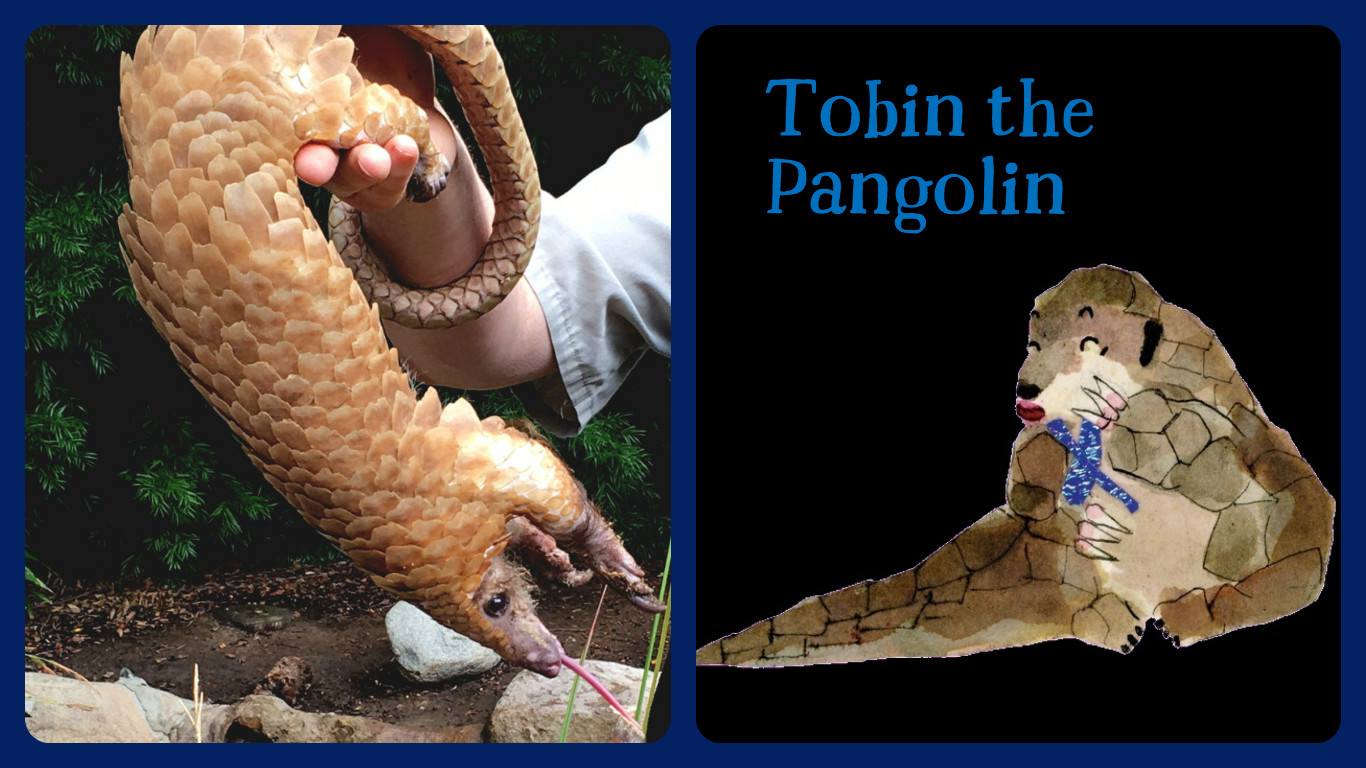
It’s the Nocturnals, Book 3: The Fallen Star‘s book birthday today, and I’d like to shine a (soft) spotlight on my favorite Nocturnal, Tobin! Fabled Films put together a little writeup about pangolins that I thought I’d share with you. Enjoy!

In The Fallen Star, the third installment of the non-episodic middle grade series, The Nocturnals, all of the forest’s pomelos have been inexplicably poisoned. Iris, a mysterious aye-aye, claims that monsters from the moon are to blame. When Tobin the pangolin falls ill, the Nocturnal Brigade must race to find answers, and the cure, before this possibly unearthly predicament threatens to harm them all.

Tobin is one of the main characters of The Nocturnals series, and many of our readers write to us saying that they have never heard of the critically endangered pangolin before reading our books. Here are some interesting facts about pangolins that help inform and develop Tobin’s character.

Pangolins are funny-looking creatures, but everything about them is designed to help them survive and protect themselves. All of their physical features perform a specific job.

Pangolins look like they wear an armor, and that’s because they are covered in scales made of keratin, which is the same thing that our human fingernails are made of. Just like our fingernails, the keratin on a pangolin is hard and forms a protective shell. Whenever Tobin is scared, he curls up as a way of protecting himself.

Not only does Tobin curl himself up for protection with his scales when he’s scared, but he also sprays something smelly to ward off predators. This smell comes from the scent glands on his tail end. Remember when Bismark complained how stinky Tobin was when they first met? That was because Tobin sprayed something because Bismark had startled him. When Tobin is afraid, he sprays an unpleasant smell from his scent glands. This reaction also helps deter the thing that he’s afraid of. Tobin is sometimes embarrassed by this bad smell, but he shouldn’t be, because spraying that smell helps him survive (especially if the smell has been enhanced by a poisoned pomelo, like in The Fallen Star!).

Pangolins have very poor eyesight. When Tobin first meets the bats in The Mysterious Abductions, he thinks that they’re the same creatures as Bismark because he can’t see very well. But Tobin has other senses like smell and hearing that compensate for his poor eyesight. His very long snout makes his nose very sensitive. Instead of seeing something, he can detect its presence by smelling it.

To read more about pangolins and their special features, check out these resources:

“Mammals.” Animal Encyclopedia: 2,500 Animals with Photos, Maps, and More! Washington, D.C.: National Geographic, 2012. 47. Print.

(http://www.iucnredlist.org/ ;

(http://animaldiversity.org/)

(Macdonald, David W. “Pangolins.” The Princeton Encyclopedia of Mammals. Princeton, NJ: Princeton UP, 2009. 476-77. Print.)