Posted in Fiction, Intermediate, Realistic Fiction, Uncategorized

Chow Mein and Potstickers brings global friends together

Chow Mein and Potstickers, by Liselotte Schippers/Illustrated by Monique van den Hout, (June 2017, Clavis Publishing), $16.95, ISBN: 978-1605373287

Recommended for readers 5-10

Chan is new to the neighborhood and wants to make some friends. The best way to go about it? Go door by door, of course! Told in the first person, we follow Chan along and meet the neighbor kids, who are from Bosnia, Indonesia, Poland, Afghanistan, Turkey, the Netherlands, Suriname, the U.K., South Africa, and Italy. Each new friend introduces Chan, and the reader, to a fun activity, food, and greetings in each language. The kids all gather together at the end for a celebration, where they share food and friendship.

Originally published in Belgium and Holland in 2015, Chow Mein and Potstickers is an initiative by Inclusive Works, a Dutch organization that promotes diversity and inclusiveness – and what better way to accomplish that than by having children serve as our example? Chan is our guide, as the new kid who wants to make friends. By playing together, Chan – and readers – learn about the ways kids all over the world have fun; we learn how to greet one another in global languages, and finally, we share food together. All great ways of promoting peace and togetherness. My son’s pre-k class had an international day where we did something similar; they sang “It’s a Small World” in 15 different languages and ate food that parents contributed from their native countries. This is a great story to read for a similar occasion; it’s a great story to read to our preschoolers and beyond to promote the global village we call our world.

Each 2-page spread features a new child Chan encounters; backgrounds are light, washed out, to bring the realistic artwork of the children to the forefront, with bright faces and clothing, surrounded by colorful toys. The vocabulary is set off with smiling icons for hello and good-bye, and a colorful sketch of each food the kids eat together.

This is a solid addition to diversity collections. It’s similar to How the Queen Found the Perfect Cup of Tea, in that it stars a character who travels the world (well, in this case, the world in a diverse neighborhood), meeting different people from different cultures, and sharing food together. Get some recipe cards together and hand them out with coloring sheets for a multicultural storytime!
Posted in Fiction, Intermediate, Realistic Fiction

Jasmine Toguchi is determined to make mochi!

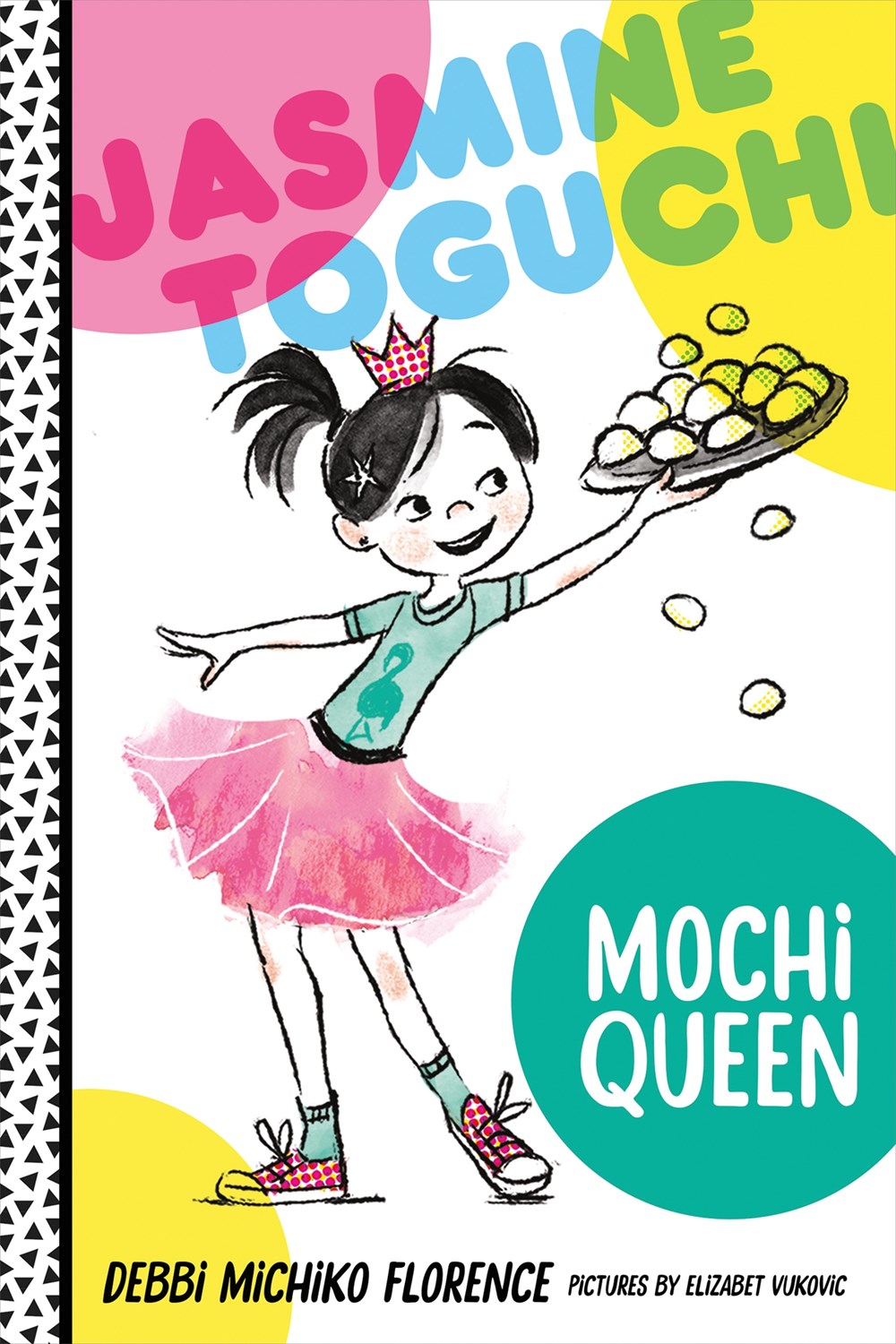
Jasmine Toguchi, Mochi Queen, by Debbi Michiko Florence/Illustrated by Elizabet Vukovic, (July 2017, Farrar, Straus and Giroux), $15.99, ISBN: 9780374304102

Recommended for readers 6-9

Jasmine Toguchi is an 8 year-old dynamo. She’s funny, smart, and loves her family, especially during the holidays, when Obaachan, her grandmother,  flies in from Japan and the family begins their mochi-tsuki ritual: mochi making!  – a Japanese rice cake, made from pounded rice. The whole family gets involved in the process – except, that is, for Jasmine, who’s still too young to help out. Her older sister, Sophie, helps the women by hand-rolling the mocha balls. Her mean, older cousin, Eddie, helps the men pound the mochi with the super cool mochi hammer. But Jasmine is not yet 10, so she has to wait. In the meantime, Sophie and her mother order her around, and Eddie mercilessly teases her. So Jasmine comes up with a plan: it’s time to break tradition! She’s going to convince her family to let her pound the mochi this year! But first, she’s got to build up her arm strength — that mochi hammer is heavy!

Jasmine Toguchi, Mochi Queen is a fun early chapter book for readers who are moving up from Easy Readers. We meet Jasmine, a spunky, Japanese-American girl who loves her family tradition of making mochi, but feels like it’s time for a change. She’s tired of her older sister getting to be the first to do everything, and she’s tired of her obnoxious cousin. She wants to make her own statement, her own mark in the family, and when she sets her mind to it, there’s no stopping her. Kids will enjoy learning about Japanese traditions and relate to the frustration that comes with being told “you’re too young”, when they feel perfectly ready and able to pitch in. An author’s note explains mochi-tsuki, and provides a microwave mochi recipe for kids and their adults to try together. Black and white illustrations bring Jasmine and her world closer to readers. There’s a second book coming in July, with  more activities at the end of the story.

Jasmine Toguchi is a good, new series to add to your intermediate collections – there’s some lovely diversity available for readalikes, including the Ruby Lu and Alvin Ho series, by Lenore Look; the Clara Lee series by Jenny Han; the Katie Woo and Pedro books by Fran Manushkin, and Ellray Jakes, by Sally Warner.

Get an early peek at the next Jasmine Toguchi titles (and covers) by navigating over to author Debbi Michiko Florence’s site, where you can also find info about author visits, with programs she conducts for each grade.

Posted in Fiction, Fiction, Historical Fiction, Horror, Middle Grade, Tween Reads

One for Sorrow mixes ghost stories with historical fiction

One for Sorrow, by Mary Downing Hahn, (July 2017, Clarion Books), $16.99, ISBN: 9780544818095

Recommended for ages 10-14

Annie is the new girl at her school. Desperate to make new friends, she’s thwarted when the school pariah, Ellie, latches onto her on the first day. Annie quickly discovers that there’s a reason the other girls don’t like Ellie: she’s a liar, a tattletale, and a thief who bullies her way into Annie’s life. When Ellie is out sick for a few days, Annie manages to befriend the other girls at school and becomes one of Ellie’s tormentors. When the 1918 flu epidemic reaches Annie’s town, it claims Ellie as one of its victims, but Ellie’s spirit won’t rest. She returns as a vengeful ghost, punishing all the girls who bullied her through Annie, thus ensuring that Annie will be as hated as Ellie was in her lifetime.

Mary Downing Hahn is one of the reigning queens of middle grade horror. I still can’t look at a doll in the same way after reading Took (2015), and she’s the first author I go to when my library kids ask me for a good, scary story. One for Sorrow, inspired by the 19th century nursery rhyme, seamlessly blends elements of an intense ghost story with historical fiction. Hahn addresses World War I and anti-German sentiment and the 1918 flu epidemic in a small American town while drawing on her own mother’s childhood for inspiration, having her characters visit various homes with funereal wreaths on the door in order to eat their fill of sweets and pastries put out for the wakes. Ellie’s vicious haunting will keep readers turning pages late into the night, feeling Annie’s helpless frustration as Ellie systematically destroys her reputation and her life.


Mary Downing Hahn has won many awards for her writing. You can find out more about her (like the fact that she’s a former children’s librarian!), her books, and her awards, through her publisher’s website.

Posted in Fantasy, Science Fiction, Teen

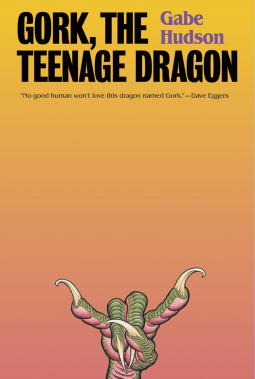
Gork the Teenage Dragon serves up scaly green goodness

Gork the Teenage Dragon, by Gabe Hudson, (July 2017, Knopf), $24.95, ISBN: 9780375413964

Recommended for readers 14+

Gork’s a dragon, but don’t even think about mentioning Smaug to him. He’s not happy at all with the way dragons are portrayed in Earth fiction, and he’s here to set the record straight. So begins the story of Gork: teenage dragon, student at WarWings Academy, orphaned on Earth during his parents’ mating mission and raised by his scientist grandfather, Dr. Terrible.

Starting off on Crown Day – the day dragon and dragonette cadets at the Academy agree to be mating partners – Gork has one goal in mind: to get the luscious Runcita Floop to wear his crown and agree to be his queen. The problem? His nickname is Weak Sauce, his Will to Power ranking is Snacklicious (if you’re a gamer, think of Will to Power as a CON/DEX/overall attractiveness level) and he’s got a bad habit of fainting when he’s scared. If Runcita says yes, she and Gork will go off in his spaceship and find a planet to conquer together. If Gork can’t sea the deal, he’s doomed to be a slave.

Gork has a heck of a day ahead of him: Dean Floop – his intended’s father – hates him; his sadistic grandfather is on the run from the Dean, he’s being hunted down by a group of WarWings cadets that have murder on their minds, and the Trenx, a fellow cadet who had similarly low ratings, has seemingly blossomed overnight. Before the day is out, Gork will have to survive and learn some hard truths about his family. He’d better keep his best friend – a robot dragon named Fribby – by his side.

Gork is an out-there novel. It’s a page-turner, and Gork is an endearing first-person narrator, if a bit single-minded in focus. He’s obsessed with mating, but he is a teenager, after all. He refers a lot to his “scaly green ass” a lot, which gets tedious. Gork’s story uses fantasy to tackle some very real points: bullying, friendship, self-esteem, and falling in love. It’s a much deeper novel than the title “teenage dragon”encompasses; it’s a fantasy, a YA romance, and a coming of age story.

Posted in Animal Fiction, Fiction, Graphic Novels, Middle Grade, Tween Reads

When Pigs Fly…

Pigs Might Fly, by Nick Abadzis/Illustrated by Jerel Dye, (July 2017, :01First Second), $9.99, ISBN: 9781250176943

Recommended for readers 9-13

Lily Leanchops is the daughter of famous inventor Hercules Fatchops, and she’s certainly inherited her father’s pioneering spirit. While the rest of the folks in Pigdom Plains scoff at the very notion of pigs flying, Lily’s been working on her own flying machine in secret. She’s seen her father’s flying machines fail, and she’s taking everything he’s doing into account as works to create her own flyer. Like her father, she embraces science, not magic (mostly), but when the dangerous Warthogs threaten to invade – flying their own machines, powered by magic, and led by someone very familiar with Lily and her dad – it’s up to Lily to save her home and her town. Even if that means pushing her experimental craft and herself to their limits.

The science versus magic dilemma takes center stage in this graphic novel, which will appeal to kids and, on a deeper level, to older readers who are aware of the science versus faith arguments that frequently occur splashed across social media. Although pigs are the main characters in the story, they are illustrated and given very humanlike qualities and dress – Lily could be another Amelia Earhart or Bessie Coleman in her pilot gear. An interesting parable for current events, with a plot that embraces diversity and working together. A good addition to middle school reading lists and libraries; invite readers to make comparisons between the story and what they see in the world around them and on the news.

Posted in Intermediate, Non-Fiction, Non-Fiction, Women's History

The Girl Who Ran: The Story of Bobbi Gibb

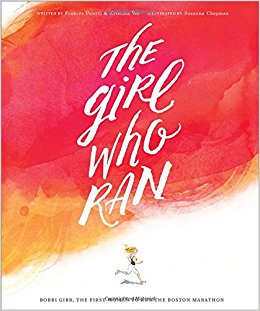
The Girl Who Ran: Bobbi Gibb, The First Woman to Run the Boston Marathon, by Frances Poletti & Kristina Yee/Illustrated by Susanna Chapman, (June 2017, Compendium), $16.99, ISBN:  978-1-943200-47-4

Recommended for readers 5-12

Believe it or not, there was a time not too long ago when women weren’t allowed to run marathons. The Boston Athletic Association, in fact, said women were “incapable” of running 26.2 miles. (But we can carry and give birth to children. That makes sense.) Bobbi Gibb set out to prove them wrong in 1966 – told you it wasn’t that long ago – and The Girl Who Ran, by Frances Poletti and Kristina Yee, tells her story in beautiful inks, prose, and poetry.

Starting with Bobbi’s childhood, we learn how she loved to run, as kids do. But one day, all of her friends stopped, and she kept going. Her father took her to see the Boston Marathon when she was older, and she was determined to do it. Susanna Chapman’s art is incredible, creating swirling tornadoes of negative words each time Bobbi is told why she can’t run: “girls can’t run marathons”, “what a strange idea”, “what if you injure yourself?”, and “rules are there for a reason”. Each time, Bobbi physically pushes those words away and endures; she trains where her parents can’t see her, running cross-country; she dresses in baggy clothes to hide her gender, and joins the Marathon, where she finds an outpouring of support for her fellow runners. When she reveals herself, the support reaches a crescendo, illustrated with vibrant reds and oranges. Wellesley girls support her with cheers and signs, and as she nears her last steps, the book opens into a gatefold to welcome Bobbi to the finishing line. After the race, Bobbi wonders what else could be proven wrong? And that, my friends, is the question we still need to ask.

Photos of Bobbi Gibb, with a brief biography and illustrated timeline of the Boston Marathon complete this gorgeous book. I’m always on the lookout for biographies that go beyond the usual names on our shelves; this is certainly one I want my Queensboro Kids to see. This fits in with the Build a Better World summer reading theme, too: ask your kids what else can be proven wrong as they look around their world today; and how did Bobbi Gibb contribute to building a better world in 1966 and beyond? Bring up Title IX, a federal law passed in 1972 which prevents gender discrimination in education programs and activities, and led the way to girls competing in school sports. Did Bobbi Gibb contribute to this landmark decision?

There’s a Bobbi Gibb website, and ESPN has a good article discussing Bobbi Gibb’s place in history and a statue that’s underway commemorating her historic run. The Girl Who Ran received a starred review from Kirkus and is an Amelia Bloomer Project nominee. It’s a strong addition to biographical, sports, and feminist collections.

Posted in Fantasy, Fiction, Graphic Novels, Middle Grade

Lint Boy – a graphic tale

Lint Boy, by Aileen Leitjen, (June 2017, Clarion Books), $16.99, ISBN: 9780544528604

Recommended for readers 8-12

A little lint boy is born in the back of a dryer. Shortly after, a lint bear joins him. The two are happy, living in the warmth of the dryer, when two scary hands reach in and snatch out Lint Bear! Lint Boy goes on an adventure to save his brother, which puts him in the hands of a mean old woman, Mrs. Pinchnsqueeze; formerly a young girl named Tortura, who has tortured and ruined dolls since she was a child. Lint Boy manages to rally the other imprisoned toys and fight for their freedom.

Told with washed-out colors and nonlinear storytelling, Lint Boy is a rousing tale of friendship. Lint Boy is willing to risk venturing into a scary, unknown world – and put himself at personal risk – to save his friend, to whom he refers to as his brother, Lint Bear. There are some scary moments for younger readers, particularly when readers see the hanging cages of imprisoned toys for the first time, and when readers witness Mrs. Pinchnsqueeze cutting up Lint Boy’s hair. He refuses to give up hope or give in to despair, and inspires his fellow prisoners to revolt and overthrow their tormentor.

Perfect for every reader who loves Neil Gaiman, Roald Dahl, and David Walliams, with its macabre-yet-adorable storytelling, Lint Boy is a good addition to graphic novel collections that enjoy a little dark fantasy. Booktalk this one with Coraline for extra fun.

Posted in Adventure, Fiction, Fiction, Middle Grade, Realistic Fiction, Tween Reads

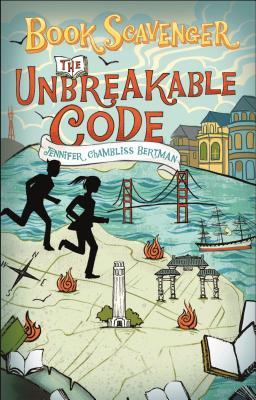
Can our favorite Book Scavengers figure out The Unbreakable Code?

The Unbreakable Code (Book Scavenger #2), by Jennifer Chambliss Bertman, (April 2017, Henry Holt & Co. BYR), $16.99, ISBN: 9781627791168

Recommended for readers 8-12

The sequel to Book Scavenger (2015) continues the adventures of friends, code breakers, and bookworms Emily and James. Emily’s parents have put a hold on their state-hopping, giving Emily a feeling of permanence she missed terribly. She and James find themselves in the middle of another mystery when they notice their teacher, Mr. Quisling, acting strangely; they follow a trail of encrypted messages in Book Scavenger-laid Mark Twain books. The messages are an attempt to break a legendary, historic puzzle known as the Unbreakable Code, which leads to either a treasure or a curse. As mysterious and suspicious fires pop up around them, Emily and James are worried that Mr. Quisling is the arsonist – unless they can figure out who his mysterious Book Scavenger messenger is.

The Unbreakable Code is loaded with the adventure, mystery, and code-breaking fun that made the first book so enjoyable. There are mysteries within mysteries, and a real sense of urgency as the tweens try to get to the bottom of the arsonist on their trail. There’s a very good subplot about the history of Chinese immigrants during the California Gold Rush that shines a light on a part of history that doesn’t get as much discussion as it should. Ms. Chambliss also presents a very different Mr. Griswold, changed by the events in Book Scavenger. He’s withdrawn, hesitant, apprehensive; his buoyant style is toned down, and he surrounds himself with his assistant, Jack, and the company of dogs to guard him. Emily and James’ secondary mission is to nudge Mr. Griswold back to his former self.

A fun follow-up and a fun accompaniment to coding and spy programs. Introduce kids to coding with Book Scavenger and Gene Luen Yang’s Secret Coders! Kids can play their own game of Book Scavenger at the Book Scavenger website and sign up for the newsletter.

Posted in Animal Fiction, Fiction, Middle Grade, Tween Reads

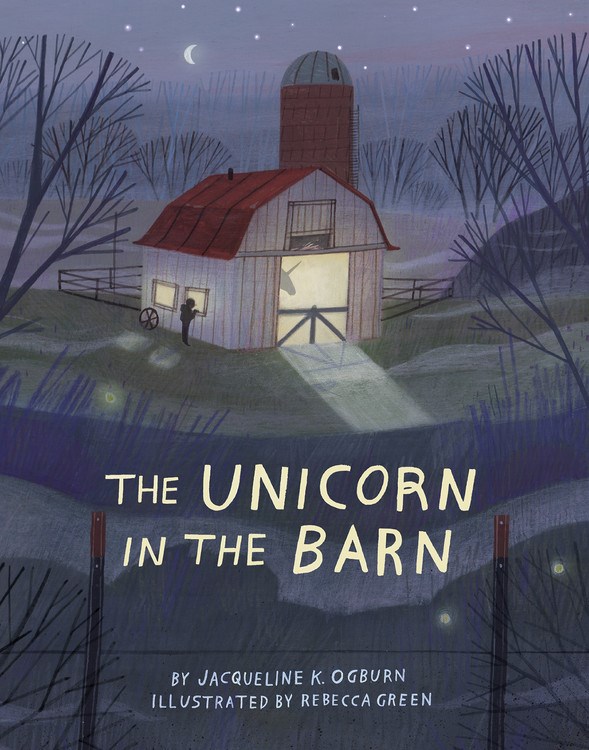
Magical Realism meets middle grade: The Unicorn in the Barn

The Unicorn in the Barn, by Jacqueline Ogburn/Illustrated by Rebecca Green, (July 2017, HMH Books for Young Readers), $16.99, ISBN: 9780544761124

Recommended for ages 10-12

Eric Harper lives with his dad and his brother on a farm near Chinaberry Creek. His grandmother lived in the house near theirs, too, but she’s gone into a rest home and now, a veterinarian and her brusque daughter, Allegra, live there. When Eric spots a unicorn in the woods one night, he and Allegra become partners in caring for Moonpearl – the name they give the unicorn – and the twins she’s carrying. Dr. B is no ordinary vet – she takes care of everyone’s pets, sure, but she also has a gift for magical creatures, and they seem to know how to find her. Eric adores Moonpearl and tries to spend every moment he can with her, but he is also too aware of the magical healing properties that unicorns possess; the temptation to use Moonpearl’s magic to make things better for his friends and family is strong.

The Unicorn in the Barn is magical. It’s a beautifully told story of love and loss; of friendship and new life, of beginnings and endings. The black and white illustrations throughout are soft and add an extra dimension to the story. Eric is so earnest, so passionate about making life better for everyone and so in love with Moonpearl, that he often finds himself at odds with the somewhat bossy and bullish Allegra, who would rather keep her mother and Moonpearl to herself. The story is as much about the evolution of their friendship as it is about Eric’s journey through a critical point in his life. A beautiful middle grade work of magical realism. Booktalk with Me and Marvin Gardens to add some magic into your audience’s reading.

Posted in Animal Fiction, Fiction, Fiction, Graphic Novels, Middle Grade, Tween Reads

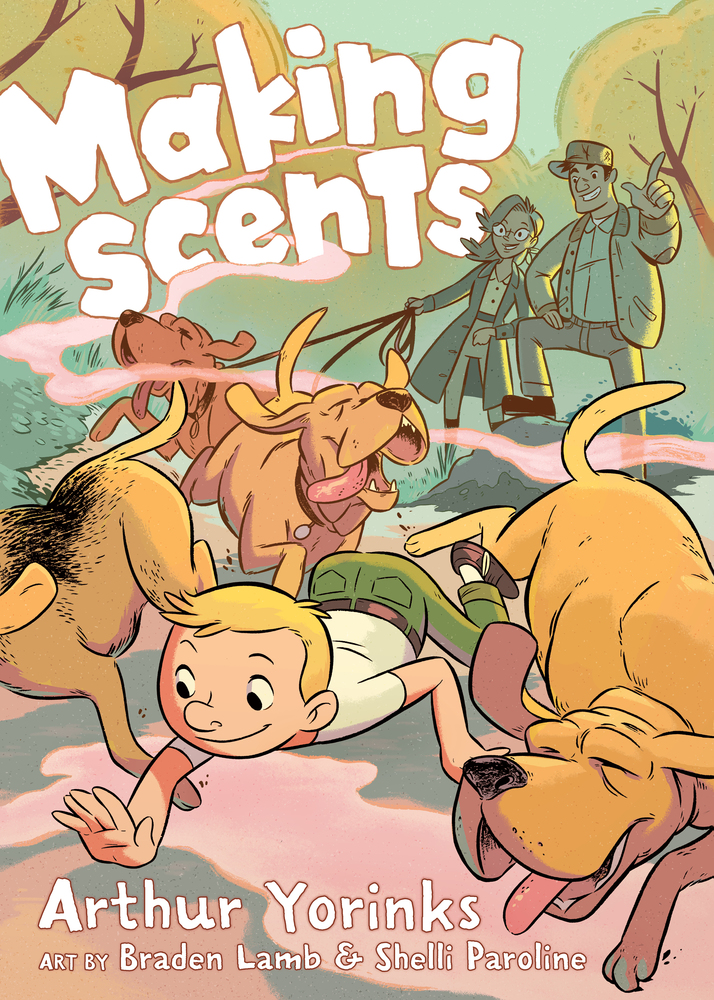
Arthur Yorinks’ Making Scents: A New Family Structure

Making Scents, by Arthur Yorinks/Illustrated by Braden Lamb and Shelli Paroline, (June 2017, :01 First Second), $15.99, ISBN: 9781596434523

Recommended for readers 8-12

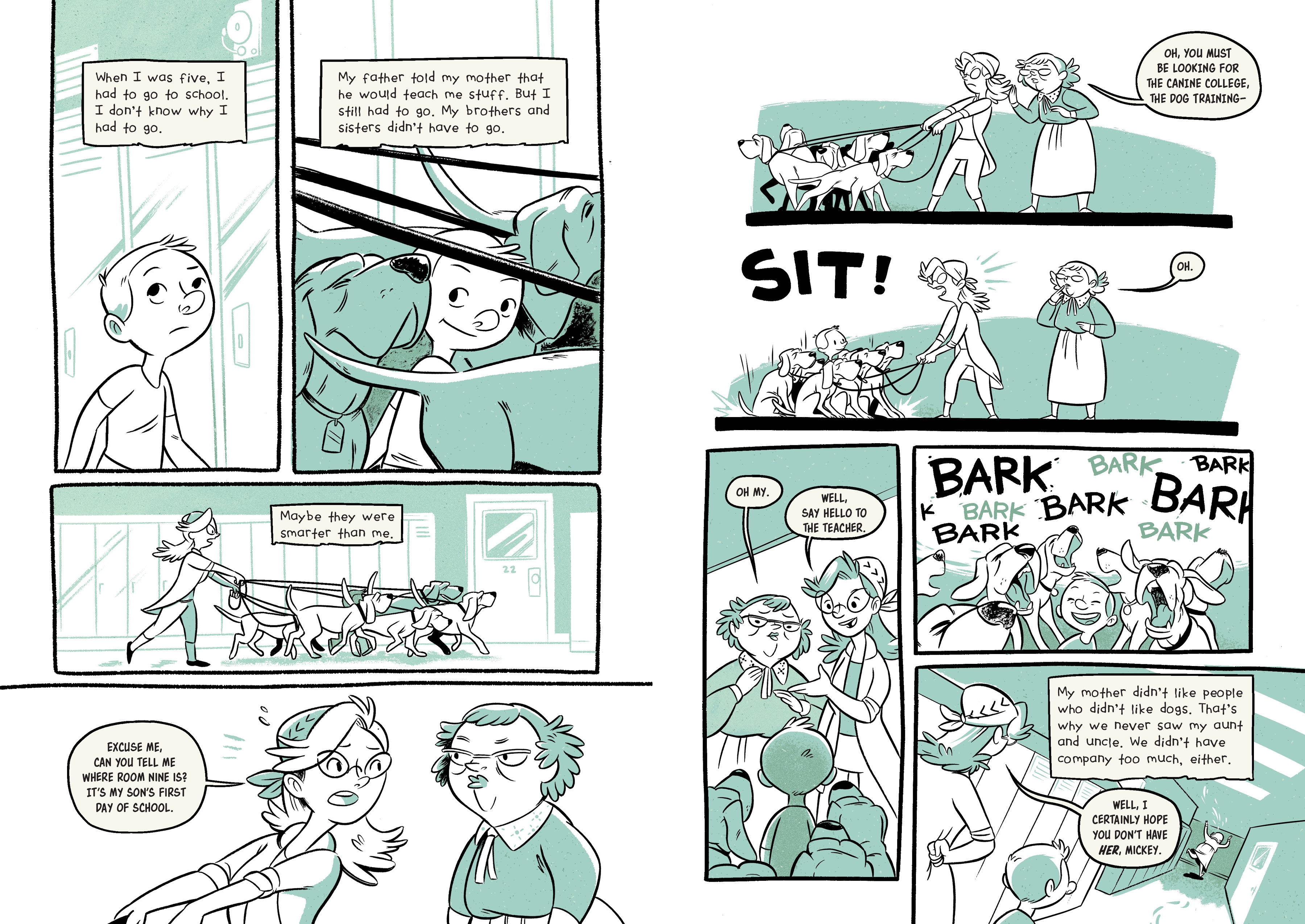
Mickey is a boy who’s been raised a little differently. His parents raised bloodhounds before he was born, and raised Mickey just like his “brothers and sisters”. Mickey doesn’t see anything different with his upbringing, even if other kids treat him like he’s weird. He wants to make his parents proud of him, so he’s working on developing his sense of smell, constantly sniffing and honing his senses. A tragedy strikes, and Mickey’s sent to live with his elderly aunt and uncle, who don’t like kids or dogs – but maybe Mickey can show them that he and his sniffer are more helpful than they realize.

This one was a wacky read. Making Scents reads like realistic fiction – it deals with grief and loss, extended families, and nontraditional families – but it does work on your suspension of disbelief. The opening scene, with baby Mickey being left in the woods for the dogs to find as a test/publicity gimmick sets the tone for the story: two dog-crazy grownups find themselves with a baby that they have no idea how to raise, but they do the best with what they’ve got. They love their human son as much as they do their canine sons and daughters, but I have to wonder what kind of parent-child relationship you can have if you see your child as equal to a pet that you “master”.

Regardless, Making Scents progresses to become a touching story of intergenerational relationships and family. Mickey, his mother’s older sister, and her husband have to create their own new family structure when an accident leaves Mickey orphaned. Once again, Mickey is thrust into a family that doesn’t know what to do with him, but this time around, he doesn’t have anyone or anything to take a social cue from; his aunt and uncle, like his parents, do their best with what they have and stumble along until Mickey’s abilities help reveal a potential health crisis.

Unexpected and sensitive, Making Scents is good for graphic novel collections that provide different perspectives.