Posted in Fantasy, Fiction, Middle Grade

More Thunder Girls! This time, it’s Sif story… and Loki’s in trouble again.

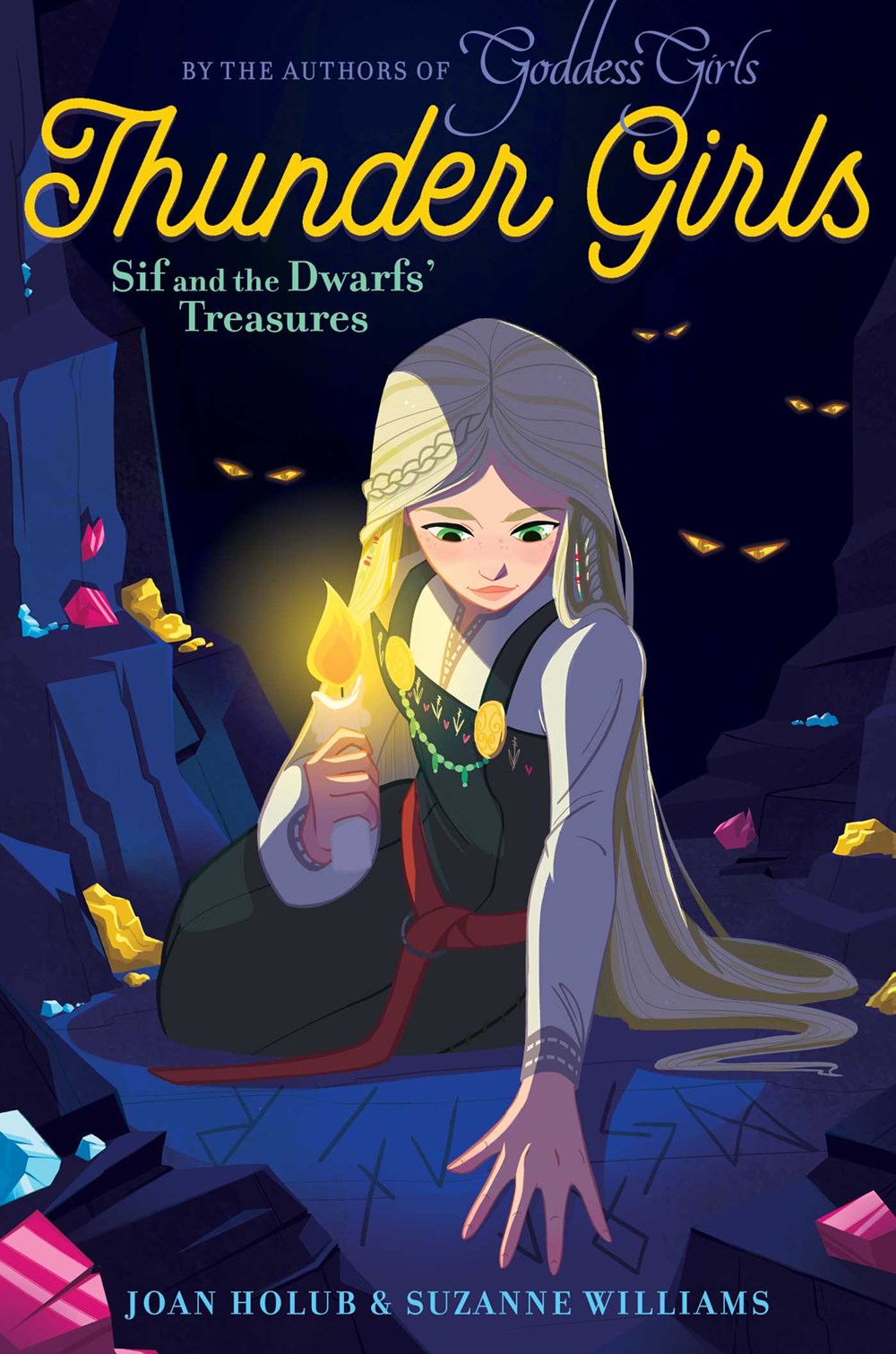
Sif and the Dwarf’s Treasures (Thunder Girls #2), by Joan Holub & Suzanne Williams/Illustrated by Pernille Ørum, (Oct. 2018, Aladdin), $16.99, ISBN: 9781481496438

Ages 8-12

The Thunder Girls are back! I loved the first Norse take on Joan Holub and Suzanne Williams’ middle grade mythology series, Freya and the Magic Jewel, so I was psyched to see another book hitting shelves so soon – and so were my library kids, who continue to gobble up the Greek counterpart to this series, Goddess Girls. Freya and the Magic Jewel was a hit, and I fully expect to have Sif and the Dwarf’s Treasures clear the shelves shortly after it arrives.

Sif, Goddess of the Harvest, has been toying with going public with her prophetic abilities. She’s a bit of a seer, but she doesn’t like to talk about it, ever since she had a mishap in second grade that cost her a friend. But messages in her Runes class come true when Loki – that troublemaker! – cuts off her hair in a prank that has horrible consequences for Midgard (that’s us, folks)! Sif’s ability to affect the harvest on Midgard lies in her beautiful, flaxen hair; without it, the crops begin withering and dying, giving the giants a big advantage. Sif demands that Loki fix the mess he caused, sending him to the dwarfs – skilled blacksmiths – to craft new hair for her. But with Loki, it’s never that easy – he’s going to attempt to play one set of dwarfs against the other, and chances of it backfiring on him? About 100%.

This is a fun, kid-friendly retelling of some of Norse mythology’s Loki- and Sif-related tales: Loki cutting Sif’s hair and journeying to the dwarfs to craft golden gifts; Loki’s getting into trouble with the dwarfs, and the origin of Thor’s hammer, Mjolnir. Set in Asgard Academy, fantastic Norse myth references abound and are made fun for middle graders. “Head” Librarian Mimir is a bouncing head that loves to bob around in fountains and finds an amusing way to repurpose Sif’s shorn locks; Frigga continues knitting on a scale that would make Mrs. Weasley cringe; and the warring Norse friezes in the Asgard cafeteria have a nightly food fight that takes no prisoners.

Way too much fun for middle grade readers who love a fun take on their mythology. Talk this series up with Joan Holub and Suzanne Williams’ Grimmtastic Girls, Goddess Girls, and Heroes in Training. Joan Holub’s website has links to printable activities for Goddess Girls and Heroes in Training. Suzanne Williams’ website has Goddess Girls downloadable goodies and quizzes.

Posted in Historical Fiction, Teen, Young Adult/New Adult

The Red Ribbon finds hope in the heart of despair

The Red Ribbon, by Lucy Adlington, (Sept. 2018, Candlewick Press), $17.99, ISBN: 9781536201048

Ages 12+

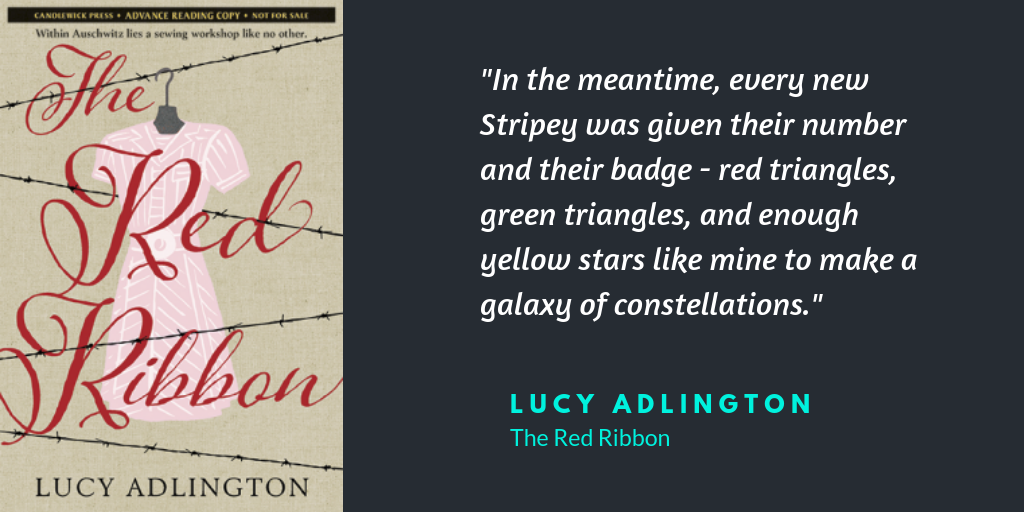
Ella is a 14-year-old young woman who lands in Auschwitz-Birkenau after being picked up on the way home from school. She lies about her age to be placed in the Upper Tailoring Studio; a dressmaking studio within the camp, where the skeletal women Ella calls “Stripeys”, referring to the prisoners’ striped uniforms, make dresses for their clients: the wives and girlfriends of the SS officers, and the female SS officers themselves. Ella has dreams of being a dressmaker and finds herself more than up to the task, but her friend Rose points out that there’s a fine line between doing what’s necessary for survival and collaborating with the enemy, no matter where one’s true passion lies.

The Red Ribbon looks at some big issues taking place during the Holocaust: there really was a dressmaking studio, where prisoners repurposed clothing taken from the arriving prisoners to make clothing for the SS wives, girlfriends, and officers. There were prisoners who acted as “prominents”: they oversaw other inmates and could be almost as cruel and demanding as their jailers. Ella’s talent for dressmaking gains her notice from one SS officer, an 18-year-old named Carla, who leaves her small gifts for trade and invites her to share birthday cake with her one time and viciously beats her another, calling her inhuman. Rose acts as Ella’s conscience, seeing through the illusion Ella desperately wants to create: an illusion where her grandmother is still safe at home and waiting to hear from her; an illusion where her dressmaking talent is valued, and the Auschwitz “Department Store” is a kind of thrift store and not a pile of stolen goods from stolen lives. Ella’s desperation to hone her dressmaking talent borders on collaboration, but she refuses to acknowledge it until a heartbreaking moment when her beloved grandmother’s sewing machine lands in front of her in the Studio. It smashes Ella’s naivete, but she and Rose bolster one another, and the women around them as they pray and wait for liberation.

There are some devastating moments in this story, and Lucy Adlington’s words weave beautiful, terrible visions. Prisoners tell each other to “Look down at your sewing, not up at the chimneys”. One prisoner is so desperate for news about her children that she asks about an SS officer’s son: “Tell us about the little boy –  how old?  My son was three when they took us.”

The book equally captures desperation and determination; hope and despair. It’s a good add where collections need YA fiction that discusses The Holocaust. Display and booktalk with Antonio Iturbe’s The Librarian of Auschwitz, The Diary of Anne Frank and John Boyne’s The Boy in the Striped Pajamas (I’ve seen this title in both Juvenile and YA collections); Elie Wiesel’s Night and Tatiana de Rosnay’s Sarah’s Key, and Art Spiegelman’s Maus. The Jewish Book Council has an excellent list of Holocaust-related YA books. There is a creative writing resource available for free download from The Hay Festival.

Posted in Fiction, Graphic Novels, Middle Grade, Science Fiction, Tween Reads

Sanity & Tallulah are a STEAM Dream Team!

Sanity & Tallulah, by Molly Brooks, (Oct. 2018, Disney-Hyperion), $21.99, ISBN: 9781368008440

Ages 8-12

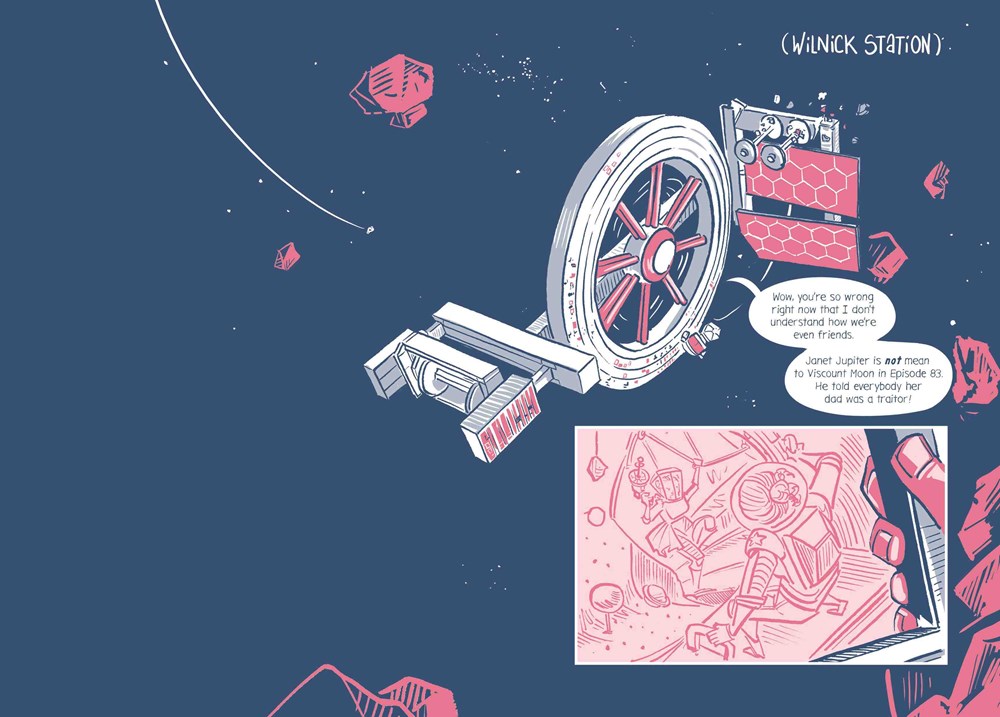
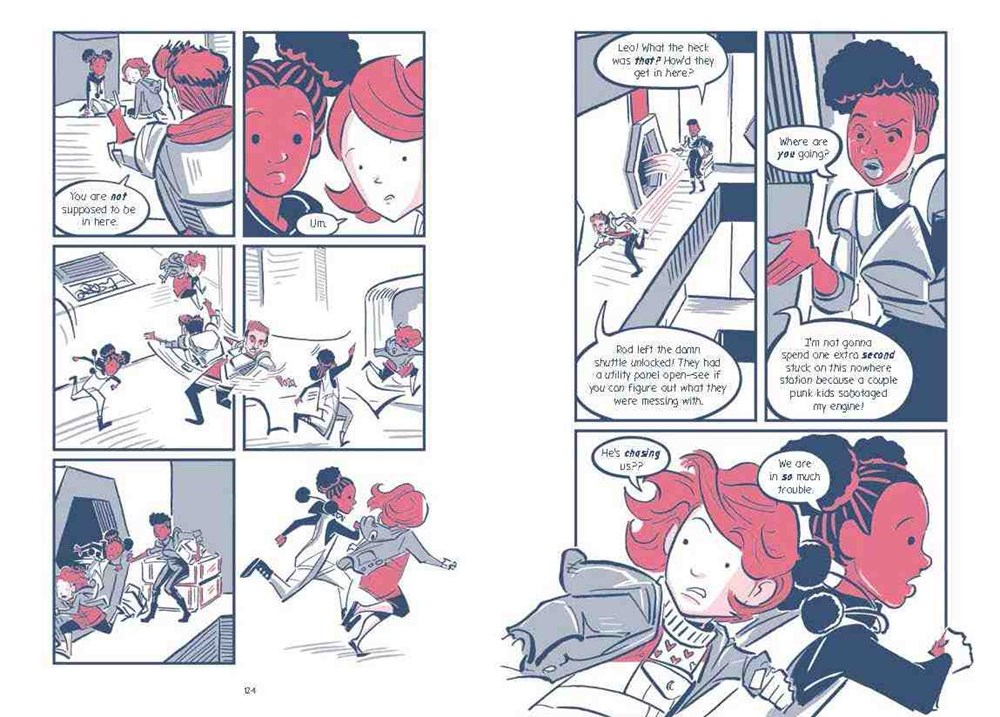
Life aboard a space station is never boring, especially when you have to cobble things together to keep things running. Sanity Jones, and her best friend, Tallulah Vega-Davisson, certainly know how to keep things interesting aboard Wilnick Station: their latest experiment is Sanity’s project; a three-headed kitten named Princess Sparkle Destroyer of Worlds (one name for each head, naturally!). Princess Sparkle is discovered, but the kitten escapes into the duct system. As the girls go on the search for their pet, before she can get hurt or caught, Dr. Vega, the station’s senior scientist and Tallulah’s mom, has bigger problems on her hands: Wilnick Station is experiencing some big-time glitches that could put the station at risk. While some of the crew point their fingers at Princess Sparkle Destroyer of Worlds, Sanity and Tallulah find evidence of something else in those ducts. They’ve got to solve the mystery and save their kitten, and they may just have to rescue the whole space station!

This is such a positive, fun read. The cast is diverse, with our two heroines coming from African-American and biracial (Latinx-white) families of prominence: Sanity’s dad is Wilnick’s station director, Tallulah is the daughter of the senior scientist. Her white dad rocks a man bun, prosthetic leg, and context clues allude to his being a celebrity heartthrob at some point in the past. There’s humor and technospeak that kids will love. The three-color white, purple, and pink artwork has bold lines and gives a real feel for the sheer size and scope of a space station.  Molly Brooks gives readers a vision of a diverse future where strong female characters are valued. A must-add to graphic novel collections – put this with your Zita the Spacegirl and Star Scouts books!

Sanity & Tallulah has starred reviews from Kirkus and Publisher’s Weekly.

Posted in Animal Fiction, Early Reader, Fiction, picture books, Preschool Reads

Stanley the Hamster heads off to school in his latest picture book adventure

Stanley’s School, by William Bee, (Oct. 2018, Peachtree Publishers), $14.95, ISBN: 9781682630709

Ages 3-7

It’s another busy day at Stanley’s school, as he and his assistant, Hattie, get ready to welcome their students. The children follow their morning routine of hanging up their hats, bags, and teddy bears, and sit on the carpet while Stanley calls attendance. At storytime, they dress up: Sophie as a dragon, Little Woo as a knight, and Benjamin, a princess, complete with blue crown and tutu. There’s playtime, time in the garden, lunch, nap, and art to end the day, and Stanley brings his busy day to a close with supper and a bath.

The Stanley books are a hit because they’re adorable. They’re provide children with introductions to different careers, the direct, concise text is great for newly confident readers and for storytime, and the digital artwork is simple, attractive, and fun, with bright colors and bold lines. William Bee doesn’t limit gender roles in Stanley’s School, putting a kid named Benjamin in princess garb. (Jessica Spanyol’s Clive series is another good series that bucks genderized norms.)

Stanley’s School was on shelves in time for back-to-school, but it’s a great choice for storytimes now, because younger kids will recognize the students’ daily routine. It won’t be new and exciting or nerve-wracking; it’ll be familiar and comfortable. Let the kids tell you what else their daily routines include, and tell them yours. Do you, like Stanley, get home, eat, and go to bed? Maybe you play with a pet, or eat dinner with your family, or read to your kids. Stanley’s School is all about comforting routines, and a good add to your shelves.

There’s a school supply activity sheet free for download on the Peachtree website; you’ll find other Stanley activity sheets there, too. Stanley fans can find out more about Stanley’s world on the Peachtree Stanley Fan Site.

Posted in Fantasy, Fiction, Middle Grade, Teen, Tween Reads

Blog Tour and Giveaway: The Turnaway Girls, by Hayley Chewins

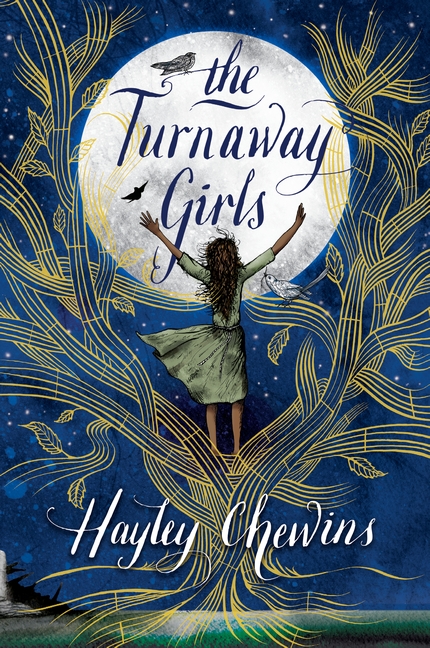
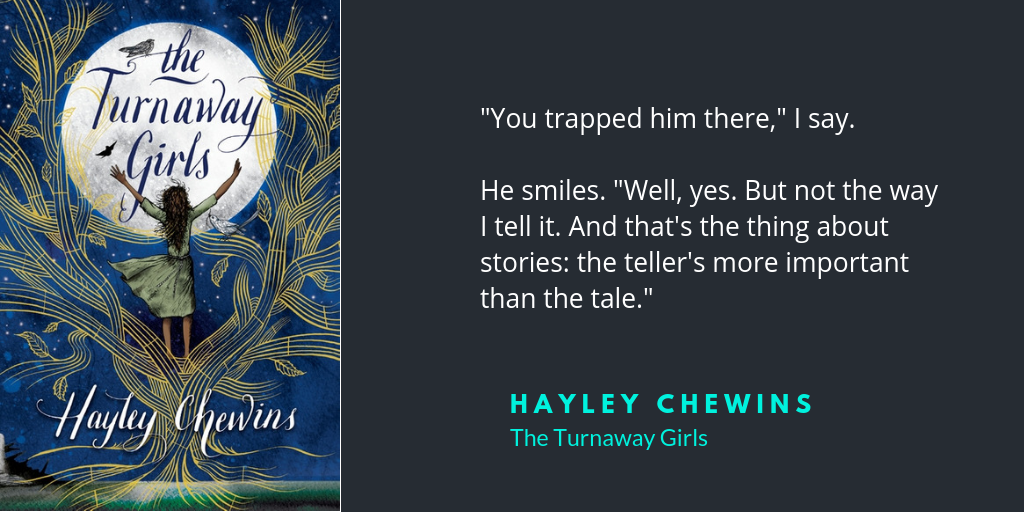
Raised in a shelter cloister with other young women, Delphernia Undersea is a 12-year-old Turnaway Girl: girls raised to be silent, invisible; to weave male Masters’ music into gold they call “shimmmer”. Delphina is well aware of her place in society – Mother Nine beats it into her regularly enough – but still has a rebellious streak in her. While she can’t make shimmer, she can sing; a forbidden action in this world. Girls are told that the sea waits to swallow girls with musical throats, but Delphernia must sing, so she does so in secret until the day a young Master named Bly comes to claim her. Once out of the cloister, Delphernia’s world opens up, befriending a trans girl named Linna, who calls herself a Master and wears a dress covered in bells. Delphernia spends time with Bly, discovering more about him and his sister, the Childer-Queen, and in so doing, discovers more about herself and the society she moves through. It’s time for rebellion, and Delphernia holds the key.

Wow. This book is high literary fantasy that has the gift of empowering readers. Delphernia is a strong, intelligent heroine who motivates those around her. This is a male-driven society that doesn’t want music, free thought, or questions. They twist the truth to suit their means, but this next generation of children is about to bring it all down. Hayley Chewins’ weaves gold – shimmer – with words that nearly brought me to tears as I read. I was Facebooking and texting passages from this book to my friends, family, and coworkers over the last two days, because I could not keep these words inside me.


This is how you talk to middle graders. This is how you write middle grade fantasy that makes a statement, always respecting your readers. This is fantasy that holds our society up to a mirror and lets readers see for themselves how change is theirs to make. Diverse and gender fluid characters, discussions about gender roles and corrupt leaders, and a tale of self-discovery, magic, and music put this firmly on my must-read, must-have list, and my Newbery and Hugo watch lists.

The Turnaway Girls has a starred review from Kirkus. Author Hayley Chewins has a playlist for the book available on her blog.

Want your own copy of The Turnaway Girls? Enter this Rafflecopter giveaway!


Blog Tour Roll Call! Visit these book bloggers for their The Turnaway Girl thoughts.

October 8 – Purple Readers

October 9 – YA Books Central

October 10 – Cheyenne Reads

October 11 – Mom Read It

October 12 – Wizard Library


The Turnaway Girls, by Hayley Chewins, (Sept. 2018, Candlewick Press), $16.99, ISBN: 9780763697921
Ages 10+

Posted in Intermediate, Middle Grade, Non-Fiction, Non-fiction, Non-Fiction, picture books, Preschool Reads, Tween Reads

Space… The Final Frontier…

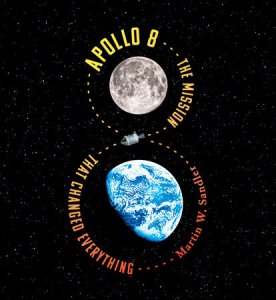
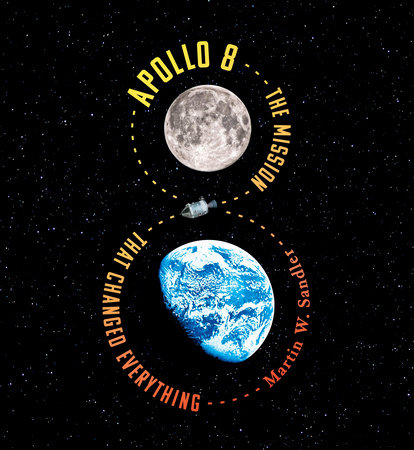
…these are the voyages of the starship Bibliomaniac. My continuing mission: to bring you the coolest books about space, while butchering a beloved TV show’s intro. This post has a books that should appeal to fiction and non-fiction lovers alike. Because it’s SPACE! Planets! Stars! Rocket ships! So whaddaya say? Join me! After all… Stardust Explores the Solar System (Stardust Science), by Bailey and Douglas Harris, (Apr. 2018, StoryBook Genius Publishing), $10.95, ISBN: 9781941434918 Ages 5-9 Stardust Science is a kids’ nonfiction series from a small-press publisher that I’ve just been turned onto. Bailey and Douglas Harris are a daughter-father team who write some pretty fun books starring a girl who loves science and is named named Stardust. Stardust Explores the Solar System is the second Stardust book, and here, Stardust takes readers on a tour of our solar system and its formation, and a trip to each planet. Spreads have a brief, informative paragraph and artwork placing Stardust on each planet, whether she’s driving an exploration craft across Venus or freezing atop Uranus. Extra fun facts focus on the possibility of extraterrestrial life, the Kuiper belt and dwarf planets, and the asteroid belt. Stardust Explores the Solar System was a successful 2017 Kickstarter (which is where I found the internal artwork for this post), and there’s a current Kickstarter for the next book, Stardust Explores Earth’s Wonders. You can pick up copies of My Name is Stardust and Stardust Explores the Solar System from the Stardust Science webpage. It’s a fun book, co-written by a 12-year old Neil DeGrasse Tyson fan, so how can you go wrong? It’s a nice additional book to big collections, and a sweet way to empower your younger readers. My 6-year-old loves this one and says he’s ready to write his own book.   The Universe Ate My Homework, by David Zeltser/Illustrated by Ayesha L. Rubio, (Aug. 2018, Carolrhoda Books), $17.99, ISBN: 978-1512417982 Ages 6-8 Abby’s a little girl who has homework to do, but UGH. She’d rather be stargazing with her dog, Cosmo, or talking to her physicist dad. He’s been thinking about universes, and how to make a baby universe, which gets Abby thinking. She sneaks into her dad’s study and works on making her own black holeout of the dreaded homework! It takes a lot of squeezing and a lot of energy, but Abby and Cosmo have done it! But what happens when a black hole’s gravity kicks in? HELP! This is an absolute fun way to explain the science of black holes to kiddos. What better way to get rid of your homework than by turning it into an actual science experiment? Kids will be squeezing the daylights out of their looseleaf for weeks to come, waiting for their own wee Big Bang. The artwork is too much fun, with something to see in every spread: the John Coltrane album and record player in the family living room; Dad’s study is loaded with things to see, including a framed picture of Marie Curie, family photo, Abby’s family drawing, and a postcard depicting a scene from  Georges Méliès’s 1902 A Trip to the Moon. The mini galaxy Abby creates unfolds for readers, starting first with swirls and stars, then with planets. It’s a fun book that makes for a great storytime, and a teacher’s note to Abby (you didn’t forget about the homework, did you?) at the story’s end will leave kids and adults alike laughing out loud. An author’s note gives a little more information about black holes and baby universes. Add this one to your collections and get your little ones contemplating astrophysics! Apollo 8: The Mission That Changed Everything, by Martin W. Sandler, (Oct. 2018, Candlewick), $24.99, ISBN: 978-0-7636-9489-0 Ages 10+ It was 1968, and the U.S. was about to make a huge gamble. America was deep into the Cold War with the USSR, and the country was fraying at the seams after the assassinations of Martin Luther King Jr. and Robert F. Kennedy; it was a country where the civil rights movement and the Vietnam War caused violent clashes. We needed something to unite us. Russia had already launched the first man-made satellite to orbit Earth, Sputnik I – in 1957, but now, they were getting ready to go to the moon. America was determined to get there first. But first, we had to get into space. Apollo 8: The Mission That Changed Everything is a brilliantly written chronicle of NASA’s mission to put a craft into orbit around the earth. Loaded with black and white and color archival photos and written by one of the most well-known names in children’s and young adult nonfiction, this is a must-have for your middle grade and middle school collections. With the 50th anniversary celebration of the Apollo 8 mission falling in December of this year, this is going to be an in-demand title in classrooms and libraries. Martin W. Sandler is an award-winning writer – a two-time Pulitzer nominee, five-time Emmy winner, and Boston Globe-Horn Book Honor winner – who makes nonfiction read as compulsively as solid fiction; There are extensive source notes and a bibliography for further reading and research.
Earthrise: Apollo 8 and the Photo That Changed the World, by James Gladstone/Illustrated by Christy Lundy, (Oct. 2018, OwlKids Books), $16.95, ISBN: 9781771473163
Ages 4-8
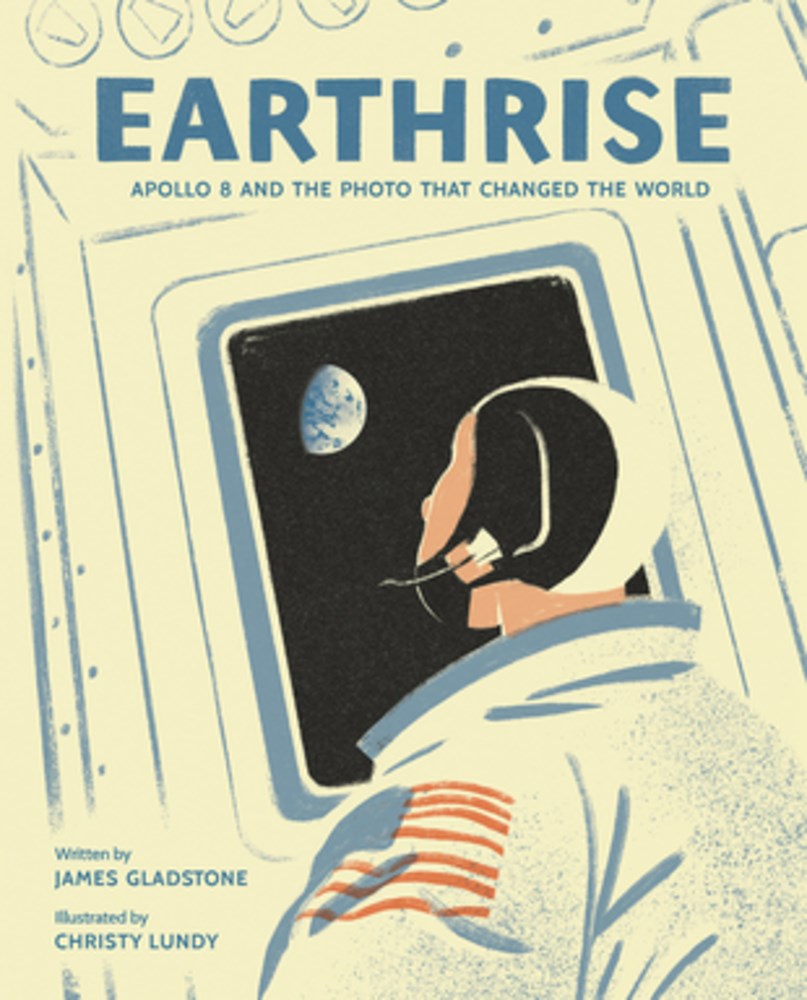
This is the year for Apollo 8 books! Earthrise is a gorgeous picture book that tells that story of Earthrise, the history-making photo of Earth, taken from lunar orbit, taken by astronaut Bill Anders. The story shows readers how this single photo took us from a planet full of conflict to a global community – if only for a moment. We see the story from shifting perspectives: the crowds gathered in anticipation, the men in Mission Control, and an African-American family, with a little girl who dreams of being an astronaut one day.
The text is just beautiful. James Gladstone creates a mood of wonder as he writes lines like, “Now the craft was coasting on a human dream, speeding the crew off to another world”, and “The astronauts saw the whole turning Earth – no countries, no borders – floating in the vastness of space”. Back matter includes a piece on how the Earthrise photo changed the world, and an invitation to readers to share what Earthrise means to them. It’s the perfect program in a book! Show the original Apollo 8 launch broadcast, this NASA Apollo 8 documentary, and/or the broadcast Apollo 8 Christmas Eve message and ask kids to talk about what seeing the Earthrise makes them feel, 50 years later. Paired with Christy Lundy’s vintage-inspired artwork, Earthrise is a necessity in your nonfiction collections. Earthrise has a starred review from Kirkus.
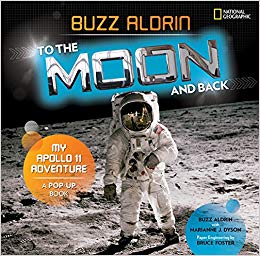
To the Moon and Back, by Buzz Aldrin with Marianne J. Dyson/Paper engineering by Bruce Foster, (Oct. 2018, National Geographic), $32, ISBN: 978-1-4263-3249-4
Ages 6+
How much fun is a pop-up book about SPACE? With ROCKETS?! Buzz Aldrin, Marianne J. Dyson, and Bruce Foster take readers on a trip through “humanity’s greatest adventure”. Learn Buzz Aldrin’s nickname on the mission; read about the launch and landing; souvenirs left on the lunar surface, and the astronauts’ return, all accompanied by amazing paper engineering: pop-up rockets, fold-out lunar landings, and side flaps that offer even greater information – and a few laughs. If you’re getting this for a library or classroom collection, put it in reference; it will get beaten up pretty quickly. The book also comes with a paper Apollo 11 lunar module kids can engineer on their own. (We haven’t built that one yet.) Want to make a space fan happy? Put this on your holiday and special occasion shopping lists. Read more about the 1969 Moon Landing on NatGeo’s webpage.
Whew! Okay, that’s all I’ve got for now, go forth and explore!
Posted in Intermediate, Non-Fiction, Non-Fiction, picture books

Sewing the Rainbow: The Story of a Flag and a Movement

Sewing the Rainbow: The Story of Gilbert Baker and the Rainbow Flag, by Gayle E. Pitman/Illustrated by Holly Clifton-Brown, (May 2018, Magination Press), $16.95, ISBN: 9781433829024

Ages 5-8

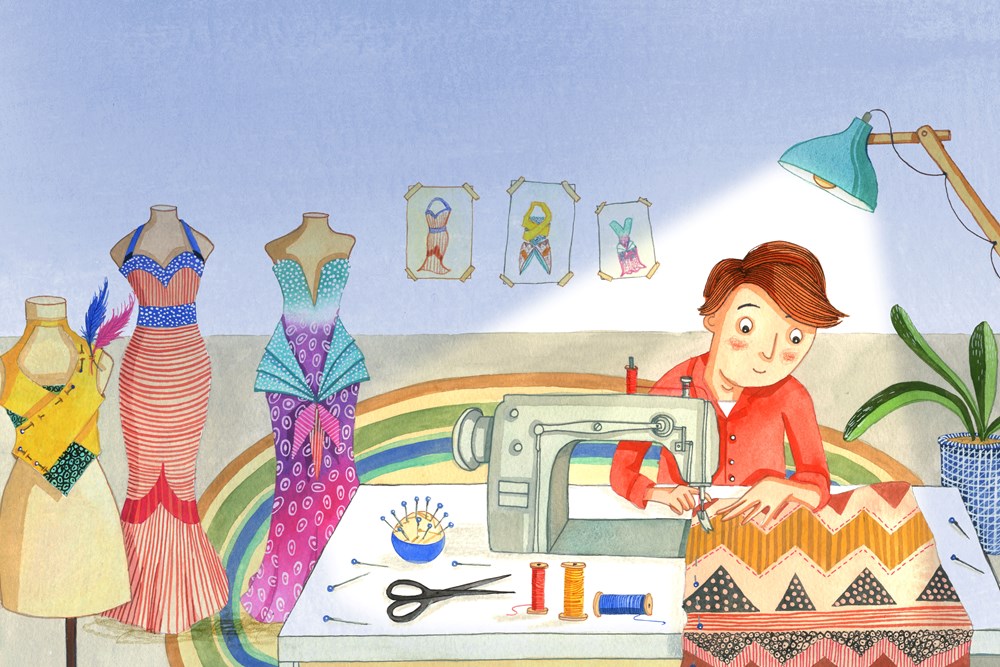
Artist and gay rights activist Gilbert Baker started out as a little boy in Kansas who “was full of color and sparkle and glitter”; a little boy who would draw gowns and costumes alongside his clothing store proprietor grandmother. But his father would destroy his drawings and push Gilbert toward more “manly” pursuits: slingshots, erector sets, and sports. Being drafted at the age of 18 made Gilbert more miserable as he suffered hazing from his fellow soldiers for refusing to carry a gun, but being arriving in San Francisco finally brought the sparkle back to Baker’s life. He taught himself to sew and began designing dresses, costumes, and banners for activists and entertainers. And then came his friend Harvey Milk, who asked him for Baker’s greatest undertaking: create a flag to unite the gay rights, or LGBT, movement.

The story of the rainbow flag is just as much Gilbert Baker’s story as it is the LGBTQ+ movement’s story. Dr. Gayle Pitman tells the story of a sensitive boy who loved art and grew up to unite the world. Holly Clifton-Brown’s colorful illustrations give us an apple-cheeked, sweet-faced boy who just wants to create; her artwork goes wonderfully hand-in-hand with Dr. Pitman’s prose to engender empathy in reader. I love and adore Dr. Pitman’s observation that our generation, and future generations, will see the flag and know that it’s okay to be your colorful, sparkly, glittery self.”

Back matter goes into more detail about Gilbert Baker and the rainbow flag (which, chosen by Baker, is in part inspired by a Bible quote: Genesis 9:13). This story pairs nicely with Rob Sanders and Steven Salerno’s book, Pride: The Story of Harvey Milk and the Rainbow Flag, which has a nice little cameo by a grown-up Gilbert. Sewing the Rainbow is a must-add to your biography collections.

Posted in Fiction, Fiction, Middle Grade, Tween Reads

The Bigfoot Files searches for Bigfoot and even mother-daughter ground

The Bigfoot Files, by Lindsay Eagar, (Sept. 2018, Candlewick Press), $16.99, ISBN: 9780763692346

Ages 10-13

Mirando Cho is tired of being the parent. The 12-year-old student council president is dead set on securing a spot in a leadership camp this summer that will get her out of the house and away from her cryptozoolist mom, Kat. Kat’s obsession with mythical monsters, especially the ever-elusive Bigfoot, has taken center stage in her life: bills have gone unpaid, the house is in danger of foreclosure, and neither her father nor her grandmother is interested in helping out. It’s time for Kat to grow up, and Miranda has a plan to make it happen. The two set off together for another Bigfoot hunt, where Miranda plans to confront her mother with everything; once she breaks her down, she’ll help her get back on track to being a responsible adult. But nature has a different plan, and Kat and Miranda end up lost in the woods together. Miranda may have a thing or two to learn about magic after all.

The Bigfoot Files is an interesting take on the “irresponsible single parent, stressed out smart kid” story. We’ve got a mom who still has that spark of magic in her, but she’s let it take over her life, to the detriment of her daughter and the family finances. She’s always ready for the big score: the picture of Bigfoot, the big research grant, the one moment where the proof will magically appear. Miranda has overcompensated for her mother’s flightiness by becoming an overachiever with compulsive tendencies – she pulls her hair out to soothe herself and obsessively focuses on her planning, research, and lists, lists, lists. Kat is frustrating, and Miranda isn’t always sympathetic, which – let’s be real – is spot on. Both parties need to give a little to get somewhere, hence the trip into the woods. And that’s where things get interesting. Miranda is the ultimate skeptic – and as readers, so are we – until a pivotal moment that threatens to turn everything upside down. We get a touch of the speculative in our realistic fiction, inviting readers to keep the faith; there is magic to be found out there, if you’re willing to find it. Ultimately, readers and our characters come to a compromise and understand that somewhere in the middle lies the best way to go: bills still need to be paid, and magic can still exist.

Posted in Animal Fiction, picture books, Preschool Reads

Hector’s Favorite Place shows kids how to face their fears

Hector’s Favorite Place, by Jo Rooks, (Aug. 2018, Magination Press), $16.99, ISBN: 9781433828683

Ages 4-7

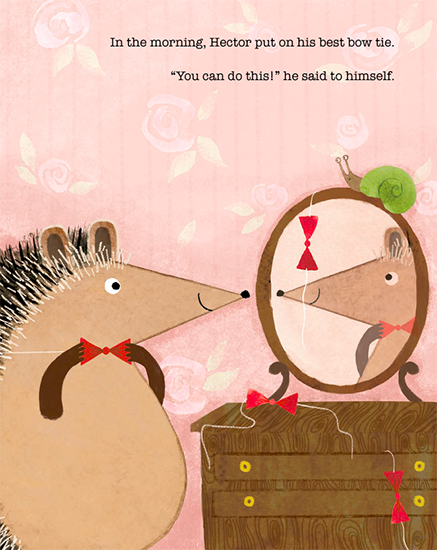
Hector is a hedgehog whose favorite place is home. He doesn’t go out that often, because everything he needs is home; home is “cozy and snuggly and safe”. At the same time, though, Hector wants to do things with his friends! He’s invited to the most exciting things: playing in the snow, ice skating, going to a party. But every time Hector accepts an invitation, he starts thinking about all the things that could go wrong, becomes anxious, and cancels plans. He decides to confront his anxiety, be brave, and head to the Winter party in the forest; when anxiety rears its ugly head again, he closes his eyes and imagines himself having fun and dancing at the party – and discovers that he’s having fun! After the party and some hot chocolate, Hector’ decides that he’s ready to take on new adventures outside of his home.

Hector’s Favorite Place is a child-friendly look at getting past fear. The author uses cute animals and age-appropriate text to communicate situations that may make kids nervous. Having Hector use creative visualization by imagining himself having fun is a great way to communicate this strategy to kids, giving them the tools to tackle worry and fear of everything from going to a friend’s party to starting the first day of school. Back matter gives parents some helpful advice on managing worry in kids and how to model helpful behaviors.

Magination Press is a publishing imprint of the American Psychological Association. The publisher’s website offers links to brochures and research from the APA, links to social media, and and links to the APA Book and APA Style blog. KidPsych is a kid- and parent-friendly site with games and activities.

I’ve been enjoying the Magination Press books for toddlers and kids. I like the topics the authors explore, and I love the way the authors and illustrators come together to create a story that appeals to kids and speaks to them in a way that respects and understands their feelings and challenges. So far, every book I’ve seen from Magination Press earns a spot in my library.


Posted in Non-Fiction, Teen, Young Adult/New Adult

Great crossover YA: You and I Eat the Same brings the world to the table

You and I Eat the Same, edited by Chris Ying & René Redzepi, (Oct. 2018, Artisan Books), $19.95, ISBN: 9781579658403

Ages 13+

MAD, the Danish word for food, is a cultural symposium founded by chef René Redzepi and editor of the food magazine, Lucky Peach, Chris Ying. You and I Eat the Same is the first in a series of MAD Dispatches the two plan to release, with essays on how food brings different cultures together and how we can work on making food better – better for the environment, better for the people who farm and curate it, better for all of us, because we consume it.

There are 19 essays in this first volume, each running anywhere from 2-12 pages, on such topics as sesame seeds, flatbreads and how every culture wraps their meat in some kind of one, and, my favorite, “Coffee Saves Lives”. Ask any of my coworkers, family, or friends, and they will heartily agree.

Each essay looks at culture and food’s role in those cultures. The writing is light and instantly readable, bringing diversity into our homes and our lives. Tienlon Ho’s “One Seed Rules Them All” says of sesame seeds that “a dish can feel of one place, while being from another”; really, the sesame seed can bring about world peace: “Humans have a remarkable ability to agree on hummus’s deliciousness while disagreeing about everything else.” Redzepi’s “If It Does Well Here, It Belongs Well Here” exhorts that “the day we can’t travel and move and learn from each other is the day we all turn into crazy nationalists” – a very timely statement. Did you know that there’s a Mennonite community in Mexico? Read Michael Snyder’s “Mennonite Cheese is Mexican Cheese” and learn the history of this colony’s move. “People Will Eat Anything” is an alphabetical rundown of culinary delights, from abalone and confused flour beetle to zebra.

There are gorgeous, full-color photos throughout, and the writing praises culinary and cultural diversity in the best ways: breaking bread together is great, but growing it and helping others do it is even better. As Redzepi says in his foreword that, “If we can share a meal, maybe we can share a conversation, too.”

I’d love to get this into my YA collection; I think teens will appreciate this message. We live in Queens, a community where we can travel the world by going outside and visiting a food truck, a dim sum house, and a mozzarepa vendor all within a 10-block radius. I’m looking forward to more MAD Dispatches and would love to see one of their symposiums. In the meantime, though, I’ll content myself with videos on their website.

You and I Eat the Same is a great add to any collection, any foodie fan’s bookshelf, and is a smart YA crossover bet.