Posted in Fiction, Humor, Middle Grade, Middle School, Realistic Fiction, Teen, Tween Reads

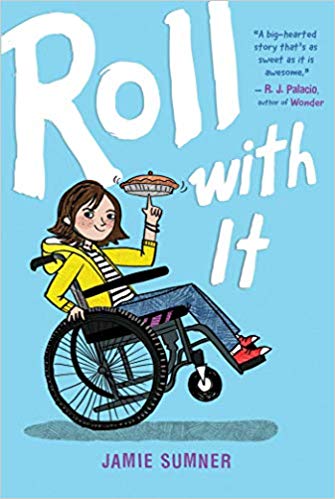
Jamie Sumner’s Roll With It gives life with CP a face and a story

Roll With It, by Jamie Sumner, (Oct. 2019, Atheneum), $17.99, ISBN: 9781534442559

Ages 10-14

Twelve-year-old Ellie loves to bake. She writes letters to famous chefs and cookbook authors, asking questions to make her own art better. She’s frustrated by her overprotective mom, having to go to the bathroom at school with the help of an aide, and her father, who exists in theory, not so much in practice. Ellie also has cerebral palsy, or CP, which keeps her wheelchair-bound, but never out of the game. After her grandfather, who has dementia, drives his car into a local supermarket, Ellie’s mom packs up and heads to Eufala, Oklahoma, to live with and help out. Ellie’s grandmother is thrilled to have her family for a visit, but makes it clear that she’s not putting her husband into a home. Ellie starts school and a new life in Oklahoma, befriending Coralee and Bert; schoolmates who have their own eccentric flairs, and taking on a school that isn’t ready for Ellie.

Inspired by her son, Roll With It is author Jamie Sumner’s first novel, and with it, she has given us a main character who is upbeat, smart, funny, and darned independent. She’s a tween on the verge of teenhood, coping with adolescent feelings and frustrations on top of family worries, like her grandfather’s increasing dementia, concern about her grandmother, and a father that she’s disappointed in and hurt by. On top of that, she has the struggles that come with being in a school ill-equipped to work with her needs, and being the new kid in the middle of a school year. How does she cope? She lets you know what’s going on! Her voice is strong and clear, in her fantastic tweenage snark and honesty. Her friends Coralee and Bert have fully-realized backstories, giving them life beyond being Ellie’s friends in the background. Ellie’s grandparents and mother emerge as realistic, three-dimensional characters with big concerns of their own: family health, an absent spouse, bills, bills, bills.

A story about fitting in and standing out, following a dream and making your own way, Ellie is a character you want to cheer for and your kids will want to hang out with. Hand this to any of your realistic fiction readers, especially the kids that love Aven’s adventures in Insignificant Events in the Life of a Cactus by Dusti Bowling or Sharon Draper’s Out of My Mind; for your baking aficionados, give to readers who loved Jessie Janowitz’s The Doughnut Fix/The Doughnut King, and Anna Meriano’s Love Sugar Magic books. Talk this up to your teacher visitors, and suggest they take a look at it (I’m always ready to push good Summer Reading list ideas).

Roll With It has starred reviews from Kirkus and Publisher’s Weekly. Check out Jamie Sumner’s author webpage, where you can sign up to receive her newsletter and download a free discussion guide.
 

Posted in Fantasy, Fiction, Fiction, Graphic Novels, Intermediate, Middle Grade, Tween Reads

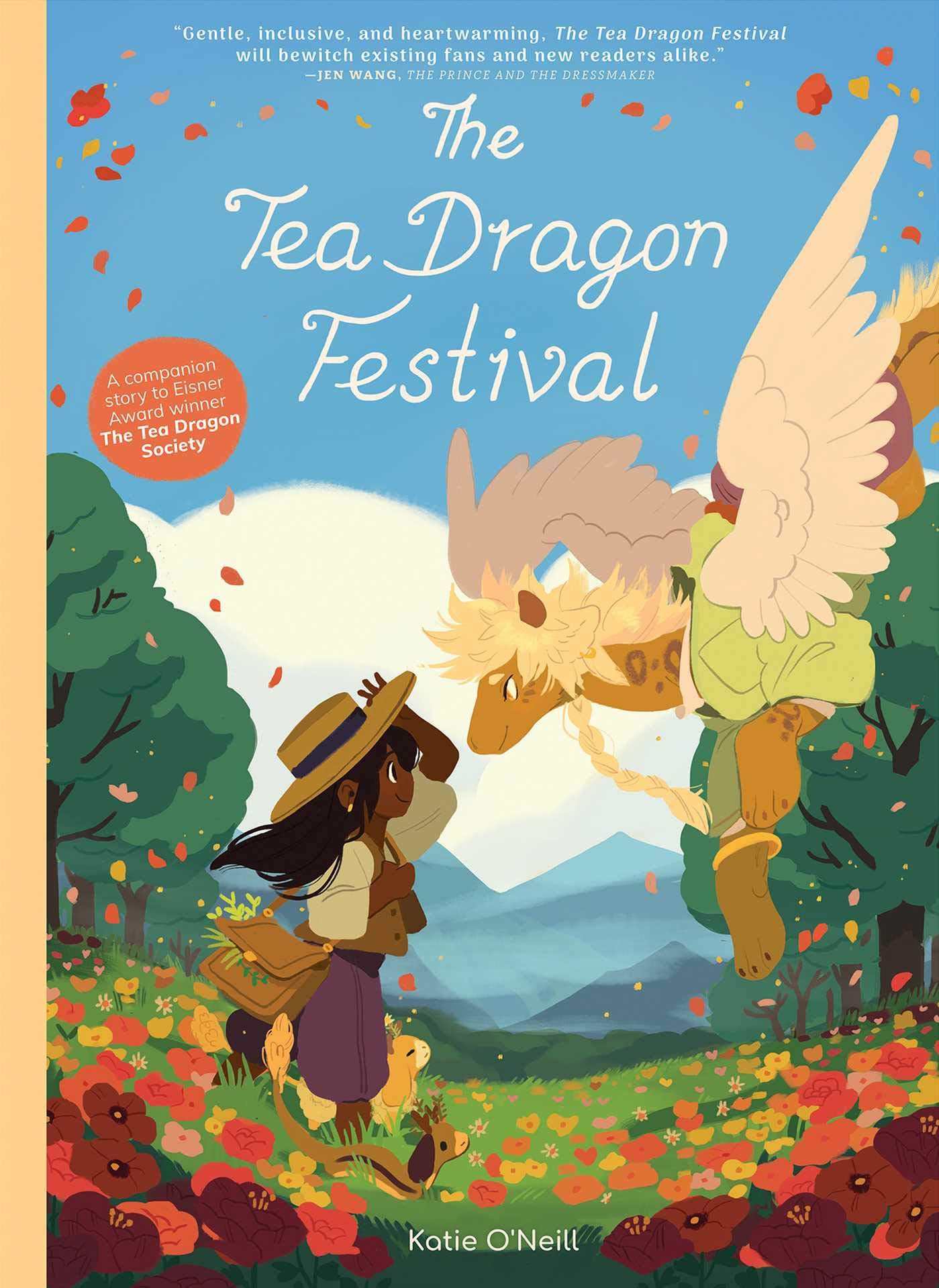
Katie O’Neill follows up The Tea Dragon Society with The Tea Dragon Festival

The Tea Dragon Festival, by Katie O’Neill, (Sept. 2019, Oni Press), $21.99, ISBN: 978-1-62010-655-6

Ages 8-12

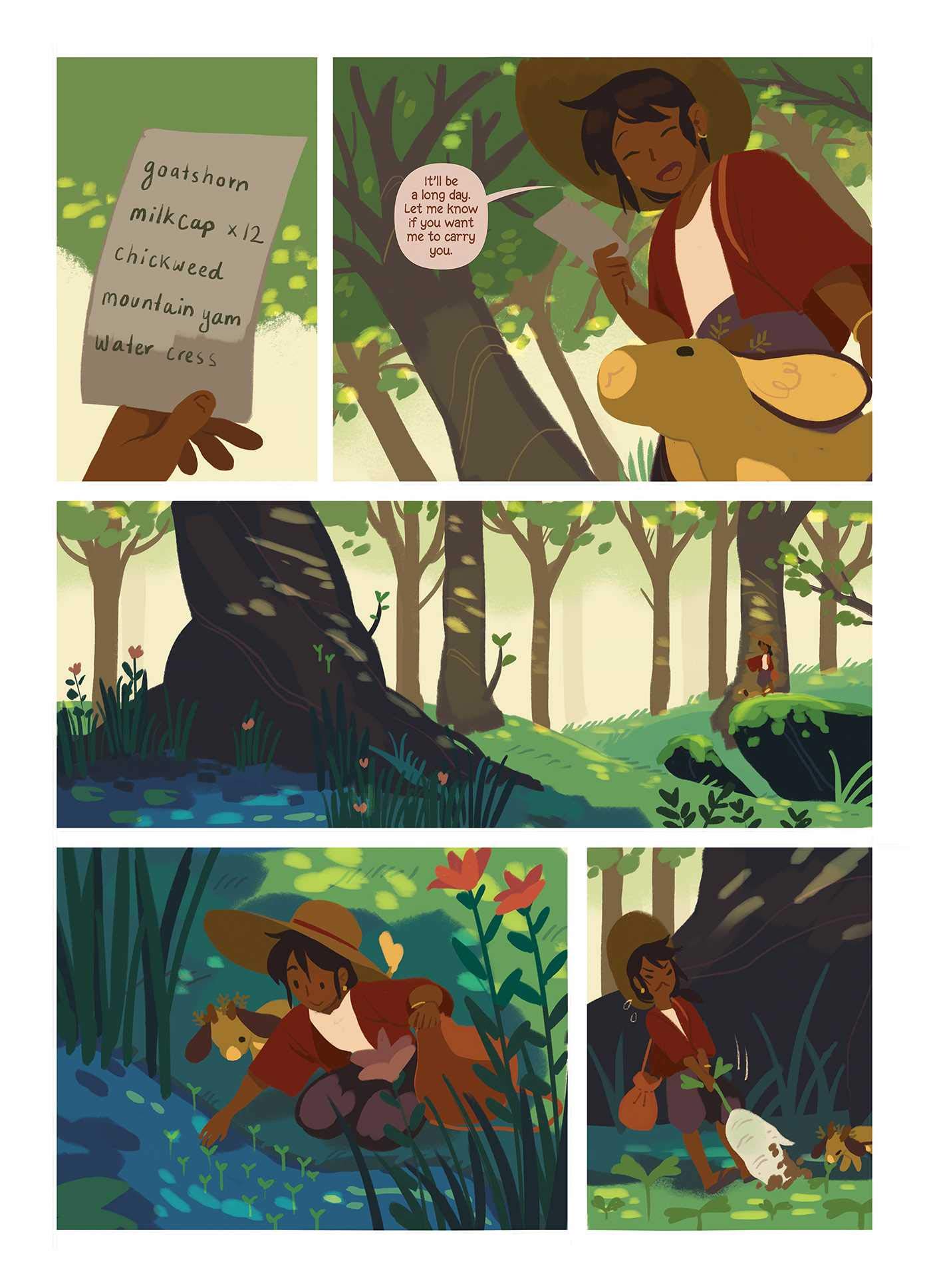
The Tea Dragon Festival takes place in the universe introduced in the Eisner-winning The Tea Dragon Society (2017) and is a prequel of sorts, featuring two characters from the first book. Taking place in a mountain village called Silverleaf, Tea Dragons are small dragons that live with the villagers; the villagers care for them, even pamper them, and harvest tea leaves that the dragons grow on their bodies. Each dragon is named for the teas they produce: we’ve previously met Jasmine, Roobios, and Chamomile, and The Tea Dragon Festival debuts some additional dragons: Fennel, Marshmallow, and Mountain Chamomile.

A girl named Rinn goes into the woods to gather ingredients and discovers a real dragon, fast asleep. Upon waking, Aedhan – the dragon – explains that he was sent to protect Silverleaf, but dozed off. But he’s ready for the barley tea celebrations at the next Tea Dragon Festival! The only problem is… the barley tea celebration happened 80 years ago. To lift Aedhan’s spirits, Rinn brings him back to the village and introduces him to everyone, including her Uncle Erik and his companion, Hesekiel, who previous Tea Dragon readers will remember. The couple are younger here, and are still in their bounty hunting days; they deduce that the bounty they are hunting – a mysterious forest creature who can put people to sleep for decades. While Erik and Hesekiel seek out the bounty, Rinn includes Aedhan in festival preparations, and endears him to the village – and vice versa.

This is just a lovely, uplifting story. Katie O’Neill once again gives us a world where diverse characters live and work together in harmony; we have fluid gender identities and diverse characters, even diverse species, living among one another in peace. It’s a visually beautiful story, with verdant forest colors and lush landscapes. Aedhan is a shape-shifting dragon who looks stunning, majestic, in flight and shifts into a softer, humanoid form to interact with the Silverleaf inhabitants. Back matter includes a note about tea dragons and dragons, and an Alpine Tea Dragon Handbook, introducing three new tea dragons from the story. A wonderful fantasy that will make readers happy.

The Tea Dragon Society webpage has a cast of characters, an almanac of tea dragons, and the tea dragon webcomic! Add to your friendly list of links for kids!

Katie O’Neill is an Eisner and Harvey Award-winning graphic novelist. Visit her webpage for more about her books and illustration.

Posted in Fiction, Graphic Novels, Middle Grade, Realistic Fiction, Tween Reads

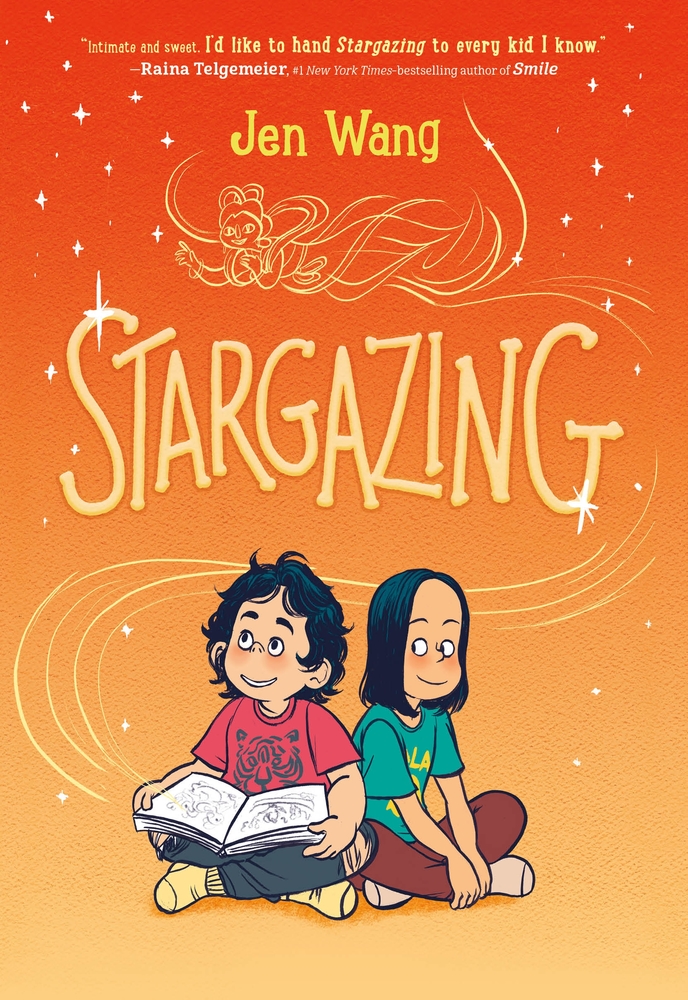
Jen Wang does it again with Stargazing!

Stargazing, by Jen Wang, (Sept. 2019, First Second), $12.99, ISBN: 9781250183880

Ages 9-13

Jen Wang’s given us cyberpunk fantasy with In Real Life (2014) and high fantasy with The Prince and the Dressmaker (2018). With Stargazing, readers get a more contemporary story with, as Kirkus notes, a true portrayal of the diversity within the Asian-American community.

Christine is a Chinese-American girl from a more traditional Chinese family. She is focused on school and her music, until her family moves YuWen Lin and her daughter, Moon, into the in-law apartment where Christine’s grandfather used to live. YuWen and Moon are a struggling family, and the hospitality offered by Christine’s family is much appreciated. Christine and Moon are encouraged to spend time together, but the two are polar opposites: Moon is a vegetarian Buddhist who loves K-Pop and is rumored to get into fights. Despite their differences, Christine and Moon grow close, with Moon introducing Christine to a lighter, more fun side of life, letting her relax and let her guard down. Moon confides in Christine, telling her that she belongs in outer space, and that beings from space speak to her. When Moon meets a Caucasian girl that shares many of her interests, Christine’s jealousy takes control, and she puts Moon into an embarrassing situation; Moon reacts with her fists, which leads to an episode that lands Moon in the hospital.

Jen Wang weaves an intricate story of family expectations, social groups, and the complexity of navigating friendships in Stargazing, giving us some of her best storytelling yet. Influenced by events in her childhood and growing up in an Asian-American family, the story has depth and incredible emotion. Whether she’s giving us cyber farmers (In Real Life) or a friendship between two schoolgirls who love K-Pop, Jen Wang always manages to make her character’s humanity the central focus of her stories. Christine and Moon are so real, so strong, that their voices come right off the page and speak to readers; telling them about their stories, their lives, their struggles. When Christine writes that she doesn’t consider Moon Asian, we see the conflict between a traditional Chinese household versus a more contemporary, Westernized Chinese-American household. Christine’s mother holds Chinese lessons in her home; YuWen runs a plant nursery and watches TV with her daughter at night. While Christine listens to more Westernized music, Moon embraces K-Pop and dance routines. The two families present a glimpse into the diversity of Asian-American families, both connected to the culture in different ways.

Stargazing is a definite must-read and has starred reviews from Kirkus and Publisher’s Weekly. Newsarama has an interview with Jen Wang that’s worth reading.


Posted in Adventure, Animal Fiction, Fiction, Intermediate

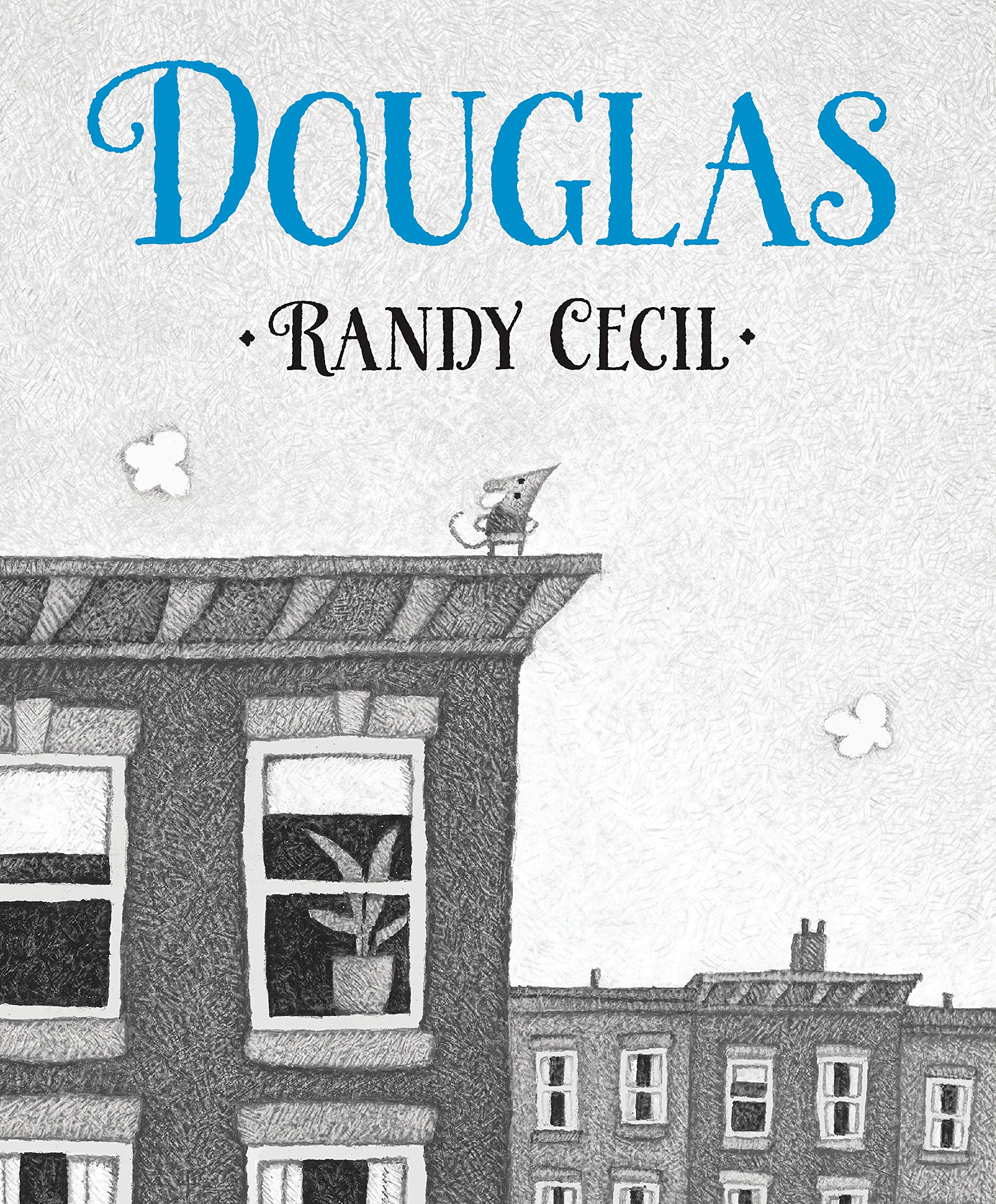
A little mouse has a big adventure in Douglas

Douglas, by Randy Cecil, (Sept. 2019, Candlewick), $19.99, ISBN: 9780763633974

Ages 5-8

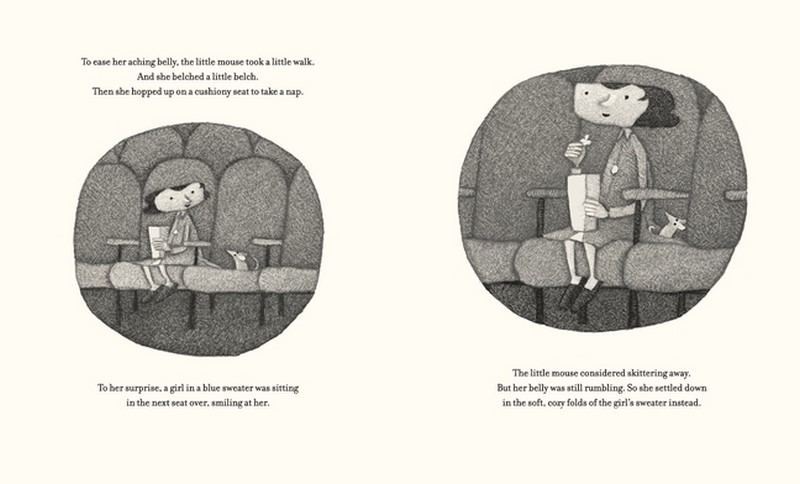
Iris Espinosa goes to the movies one day, and ends up taking a small mouse home with her when it curls up in her pocket to nap. She names the mouse Douglas, after her favorite actor, Douglas Fairbanks, and Douglas ends up having a big adventure on the way back home to the movie theatre! A companion to Randy Cecil’s Lucy (2016), Douglas is also told in four acts, and is an exciting adventure filled with cats, humans, chases, and escapes.

The black-and-white artwork gives a lovely, vintage feel to the artwork, especially when Randy Cecil places readers into a more specific time frame by recalling a screen star from Hollywood’s Golden Age (Fairbanks was active in the 1920s and 1930s). There are mini-stories throughout the main story that make this so much fun to read: Iris’ sister meeting her boyfriend’s mother, with Douglas tagging along for the ride; the vigilant six-toed cat; Everett Dunn, who desperately wants a pet of his own; Mrs. Pennington and her large hat. There’s so much to enjoy while reading Douglas, and it’s a book kids will want to come back to, because there’s something new to discover each time. As Douglas Fairbanks had his own swashbuckling adventures, so does Douglas.

Douglas has a starred review from Kirkus.

Posted in Fiction, Graphic Novels, Middle Grade, Tween Reads

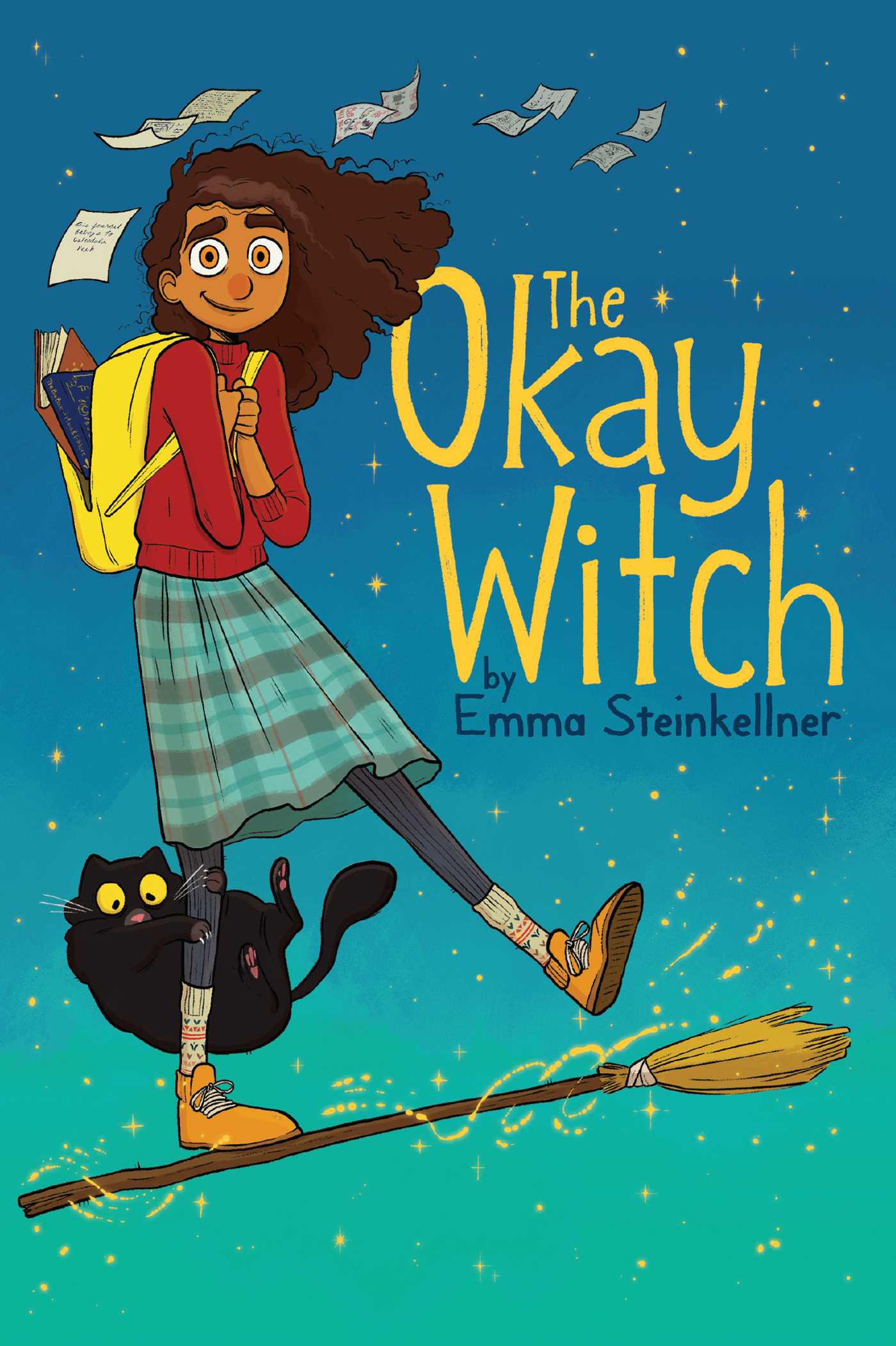
Blog Tour: The Okay Witch by Emma Steinkellner

I’m excited to be a stop on The Okay Witch blog tour! I picked up a copy of this graphic novel at BookExpo this year, and loved it. Now, without further ado…

Magic is harder than it looks.

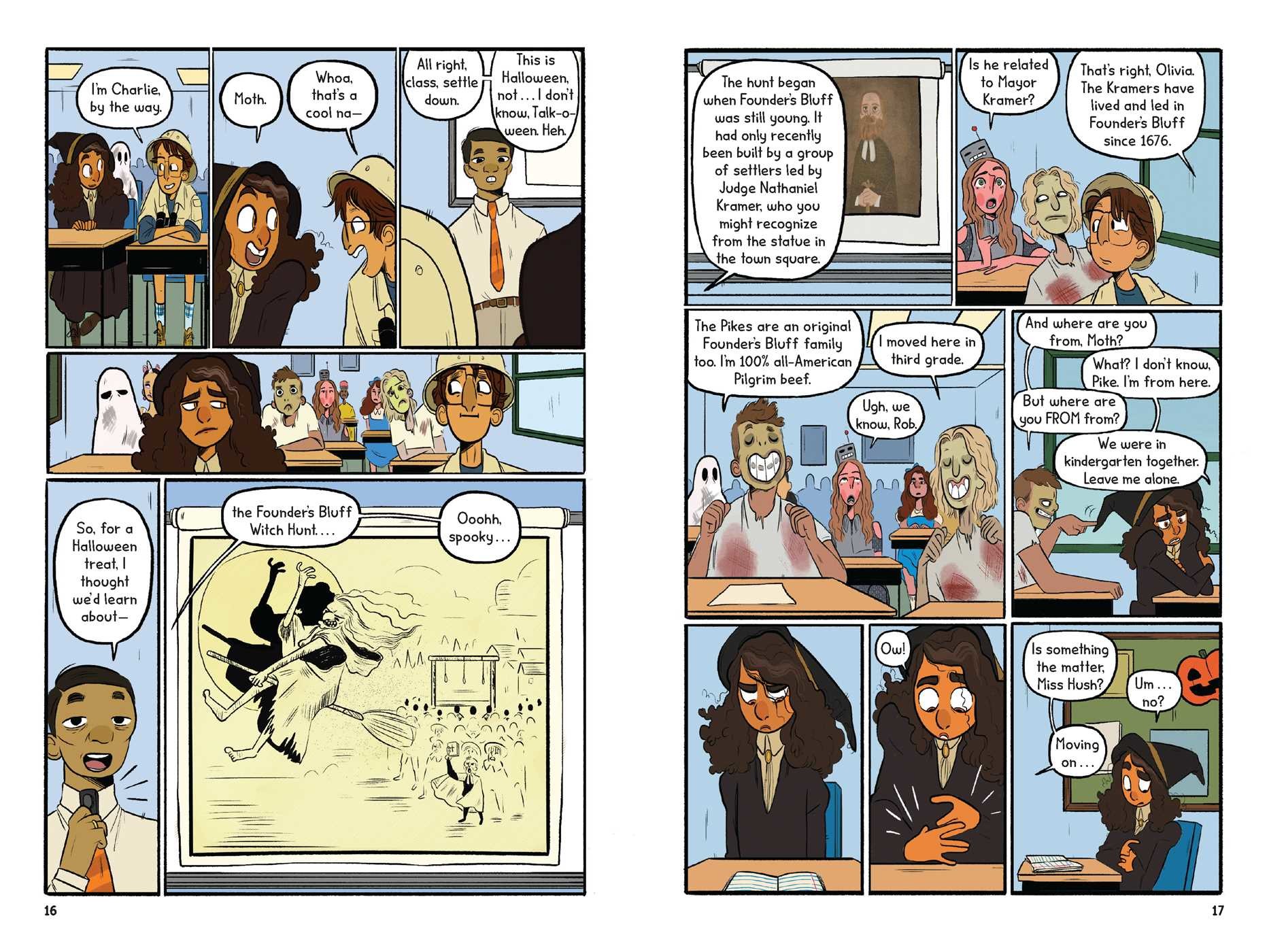
Thirteen-year-old Moth Hush loves all things witchy. But she’s about to discover that witches aren’t just the stuff of movies, books, and spooky stories. When some eighth-grade bullies try to ruin her Halloween, something really strange happens. It turns out that Founder’s Bluff, Massachusetts, has a centuries-old history of witch drama. And, surprise: Moth’s family is at the center of it all!

When Moth’s new powers show up, things get totally out-of-control. She meets a talking cat, falls into an enchanted diary, and unlocks a hidden witch world. With that revelation, Moth’s adventure truly begins – an adventure that spans centuries, generations, and even worlds – as she unravels the legacy at the heart of her life. (from the publisher)

Where to start gushing about The Okay Witch?

The story stars a heroine of color, and the main storyline addresses it from the beginning: Founder’s Bluff’s leader wanted, as Moth’s mother, Calendula states, “a town of sober, obedient, lily-white Pilgrims”. Women – especially women of color – who had any kind of independent spirit? Women of color? That didn’t fit into Judge Kramer’s mold, and it didn’t fit into colonial America’s mold, so they were hunted until Moth’s grandmother and her coven tore the fabric between worlds to create a safe space of their own: Hecate. Moth is a child of color in a mostly white town, where she’s bullied by young white men, one of whom happen to be a descendant of one of the founding families, who even asks Moth where “she’s FROM from”. Moth is a teen coming into her own power and struggling with the decision to embrace it or suppress it to “be normal” as her mother, who eschews magic and witchcraft, begs her to. When Sarah, Moth’s grandmother, shows up to see her granddaughter, there’s a power struggle on either side of Moth that represents her internal struggle.

We also get a sassy talking cat, Moth and Calendula’s friend reincarnated; who also happens to have the sweetest backstory (and gives the story an LGBTQ nudge, further establishing Moth and her family as awesome socially aware folks). Using witchcraft and witch hunts to address prejudice and racism, The Okay Witch makes history and current events equally relevant – and sadly, we see that not much has changed.

The Okay Witch is a fantastic coming-of-age story with characters you’ll love and return to long after you’ve finished the book. Give this to your Roller Girl readers, your BabyMouse readers that are ready to take on more challenging material, and your Raina Telgemeier readers.

The Okay Witch, by Emma Steinkellner, (Sept. 2019, Aladdin)
$12.99, ISBN: 978-1-5344-3146-1
Ages 8-12


About the Author

Emma Steinkellner is an illustrator, writer, and cartoonist living in Los Angeles, California. She is a graduate of Stanford University and the illustrator of the Eisner-nominated comic Quince. The Okay Witch is her debut graphic novel as an author. You can visit her webpage to see more of her illustration work.

Posted in Fantasy, Fiction, Humor, Middle Grade, Middle School, Tween Reads

All hail Doug, King of the Mole People!

King of the Mole People, by Paul Gilligan, (Aug. 2019, Henry Holt & Co.), $13.99, ISBN:  978-1-250-17134-4

Ages 8-12

Doug Underbelly just wants to be a normal seventh grader, but the fates are stacked against him: he and his dad live in a house that looks straight out of a scary movie, and the only meals his dad makes are from the eels that are plentiful around the house grounds; the weird girl at school follows him around, too. And it doesn’t help that he’s covered in mud and worms most of the time… but that’s what happens when one is king of the mole people, as Doug is. He doesn’t really want to be their king, but it was thrust upon him, and even though the throne is awfully uncomfortable and his royal advisor most definitely is plotting against him, he’s doing his best. But there’s trouble rumbling down below: the Slug People are getting fidgety and fussy, and it looks like the Mushroom Folk and the Stone Goons are going to get involved, too. What happens when giant worms start rising up and wrecking everything above ground? Doug has to get things under control, and quick – and maybe that weird girl will be more of a help than he expects.

This laugh-out-loud middle grade book is the first in a new series that kids are going to devour. It’s got gross-out humor, there’s some touching moments, and Doug is the underdog character that we all love to cheer for (and laugh at). He’s got a fatalistic yet snarky outlook on life, and his attempts to be normal – from signing up for sports and drama, to deciding he’ll crush on a popular girl, because everyone else does – are sweetly hilarious and painfully relatable. Magda, the “weird girl”, is a goth girl with brains and depth, and she keeps Doug on his toes. Doug’s royal entourage/mole people buddies are sweetly literal and not terribly bright, but loyal.

Kirkus says it best: “The Wimpy Kid’s got nothing on the King of the Mole People—he’s got more laughs and more mud”. Betsy Bird has a fun interview with author Paul Gilligan on School Library Journal, and you can find an excerpt, trailer, and downloadables – including your own crown – at the publisher’s King of the Mole People website.


From Macmillan’s website

Posted in Fantasy, Fiction, Graphic Novels, Middle Grade, Tween Reads

The team-up I’ve been waiting for: Mighty Jack and Zita the Spacegirl!

Mighty Jack and Zita the Spacegirl, by Ben Hatke, (Sept. 2019, First Second), $14.99, ISBN: 9781250191731

Ages 8-12

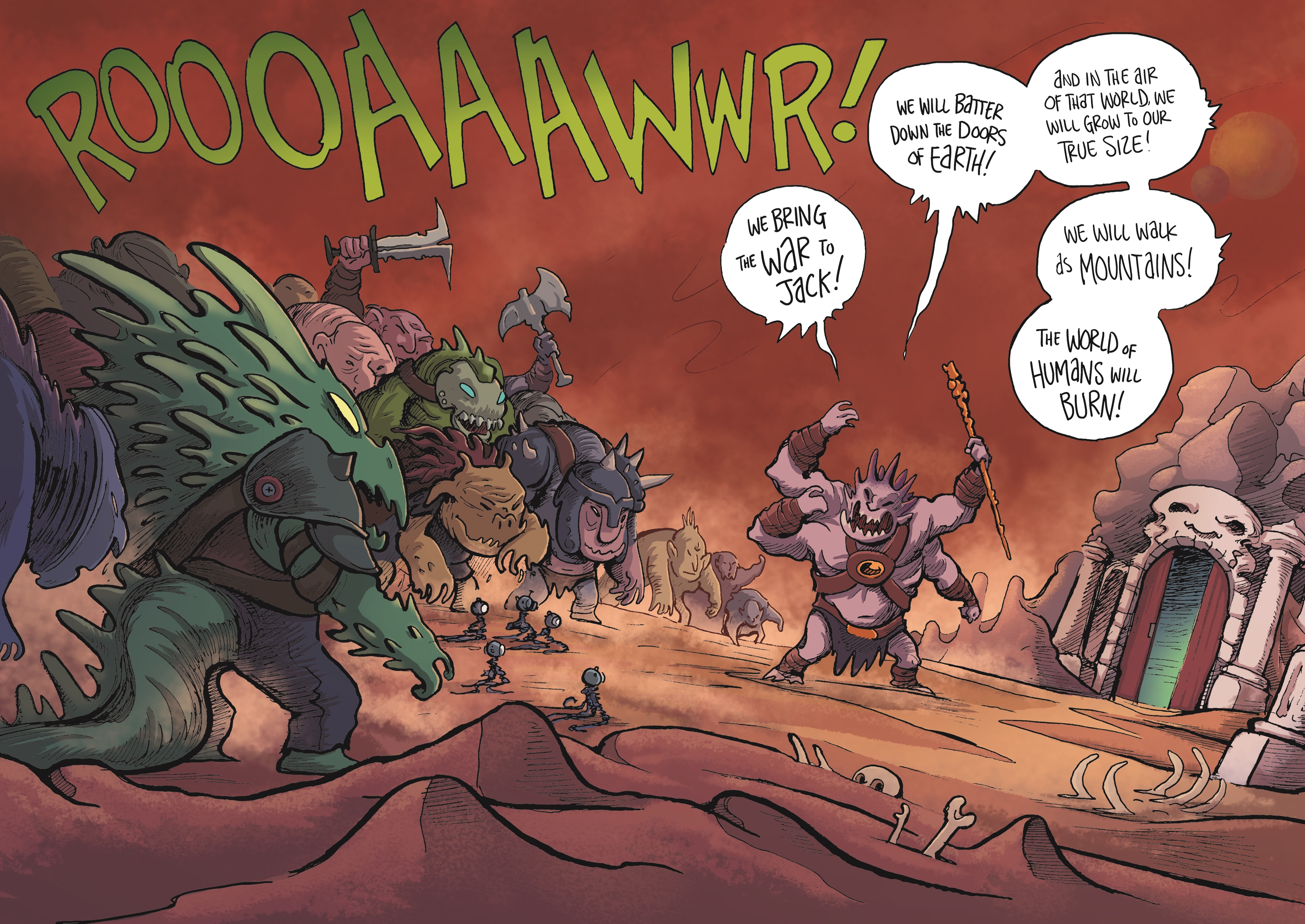
The latest Ben Hatke graphic novel brings together two of his best series: Zita the Spacegirl and Mighty Jack. It’s a team-up he teased in 2017’s Mighty Jack and the Goblin King, and I have been waiting patiently for two years to find out what was going to happen.

After Zita and her friends arrive from their space-hopping adventures, Jack and his family have been housing and feeding the group. Lily, Jack’s neighbor, who helped him fight the giants and rescue Maddy, his sister, is on edge, though. Is she jealous of Zita, or is there something more to it? Meanwhile, the giants are growing stronger and getting ready to invade above-ground: the gate between worlds is growing weaker, and they’re ready to use it to their advantage. Zita, Jack, Lily, and Maddy have to get ready to battle once more.

I’ve been a fan of Ben Hatke since 2012, when I first read Zita the Spacegirl. I love Hatke’s art, I love his storytelling and world-building, and I love sharing his books with the kids at my libraries. Hatke is a great storyteller, giving each of his characters a rich backstory and exciting quest. He also weaves the fantastic with the everyday, giving us robots, dragons, giants, goblins alongside a terrified mother, the complexity of navigating tween friendships, and the frustration of being “ordinary”.

Mighty Jack and Zita the Spacegirl is a wonderful chapter in the Zita/Jack saga. Is it the end? Well… you just have to pick it up and read it for yourself. Mighty Jack and Zita the Spacegirl has a starred review from Kirkus.

Posted in Intermediate, Middle Grade, Non-fiction, Non-Fiction, Teen, Tween Reads

Wild History! Books about prehistoric animals

Kids love dinosaurs. This is a known fact, and my groaning 567.9 section is proof positive of it, but I like to branch out a little and get kids checking out what other prehistoric animals there are to learn about. There are several great new books out that will give my 567 section a nice boost.

Forgotten Beasts: Amazing Creatures That Once Roamed the Earth, by Matt Sewell, (July 2019, Pavilion), $19.95, ISBN: 9781843653936

Ages 7+

Originally published in the UK in 2018, Forgotten Beasts contains over 45 illustrated portraits and profiles of birds and beasts that roamed the planet alongside and after the dinosaurs. There’s the Opabinia, a 2-inch arthropod from 508 million years ago through 1936, when the last Thylacine, a carnivorous marsupial, went extinct. There are some names kids will recognize, like the ginormous shark, Megalodon; the saber-toothed tiger, also known as the Smilodon Fatalis, and the Woolly Mammoth (for the Ice Age fans!). Each picture is skillfully rendered in muted watercolors, showing readers that prehistory wasn’t relegated to muddy greens, browns, and grays. Each profile includes the animal’s size, weight, time period, and diet, and a descriptive paragraph or two, and a timeline helps readers envision when these animals, alongside dinosaurs, roamed the Earth. Endpapers feature the stars of the book in miniature, parading across the pages. A nice book to beef up your non-dinosaur prehistoric collections.

Life: The First Four Billion Years (The Story of Life from the Big Bang to the Evolution of Humans), by Martin Jenkins/Illustrated by Grahame Baker-Smith, (Sept. 2019, Candlewick Studio), $24.99, ISBN: 978-1-5362-0420-9

Ages 10-14

The cover alone will make readers stop and give this book a look. Starting with the Big Bang, Life: The First Four Billion Years brings readers along on a journey through Earth’s first four billion years, ending right before we humans show up. Life starts off with foldout spreads that detail the beginning of Earth; from there, the book moves into the Ice Age, life’s beginnings in the water, its move to land, the ages of dinosaurs and of mammals, and the breakup of Pangea and formation of the continents, and the “Road to Us”: evolution of homo sapiens. Illustrations are the focal point of the book, and Kate Greenway Medal winner Grahame Baker-Smith is at the top of his game, creating landscapes both lush and stark, with black and white and color artwork of a prehistoric world. Award-winning author Martin Jenkins writes for upper middle graders and older, making the science of prehistory accessible to all ages. A glossary and illustrated timeline of the planet make this a stunning volume to have on your shelves.

Prehistoric: Dinosaurs, Megalodons, and Other Fascinating Creatures of the Deep Past, by Kathleen Weidner Zoehfeld/Illustrated by Julius Csotonyi, (Sept. 2019, What on Earth Publishing), $18.99, ISBN: 978-1-912920-05-1

Ages 7-11

Traveling backwards from present day to 541 million years ago, this slim volume is packed with illustrations, infographics, and easily digestible information about the earth through 17 eras. There’s information about climate change, ecosystems and extinctions. A running timeline at each right-hand page margin keeps readers up-to-date on the era and presents a visual representation of time covered as the book progresses.

Color illustrations are museum-quality; you can easily envision these bringing life to exhibits at any museum you may go to. Keeping in mind a younger and middle-grade audience, the information is broken up into short paragraphs, bold infographics, and callout facts. Back endpapers act as a visual table of contents. Keep Prehistoric in mind for your nonfiction sections; hand any of these books to your Apex Predators and Prehistoric Actual Size fans.

Prehistoric is produced in association with the Smithsonian’s National Museum of Natural History.

Posted in Middle Grade, Non-fiction, Tween Reads

The truth about cats and dogs (and gerbils, birds, fish, and other pets…)

Nat Geo Kids is all about the pets these days: they’ve just released Doggy Defenders, a series of books on working dogs, and they’ve also put out some great desk references about cats, dogs, and an Big Book to get younger readers excited about the world of animal companionship. Here’s a glimpse at some of the books out.

Cat Science Unleashed: Fun Activities to Do With Your Feline Friend, by Jodi Wheeler-Toppen/Photos by Matthew Rakola, (Aug. 2019, National Geographic Kids), $12.99, ISBN: 978-1-4263-3441-2

Ages 7-12

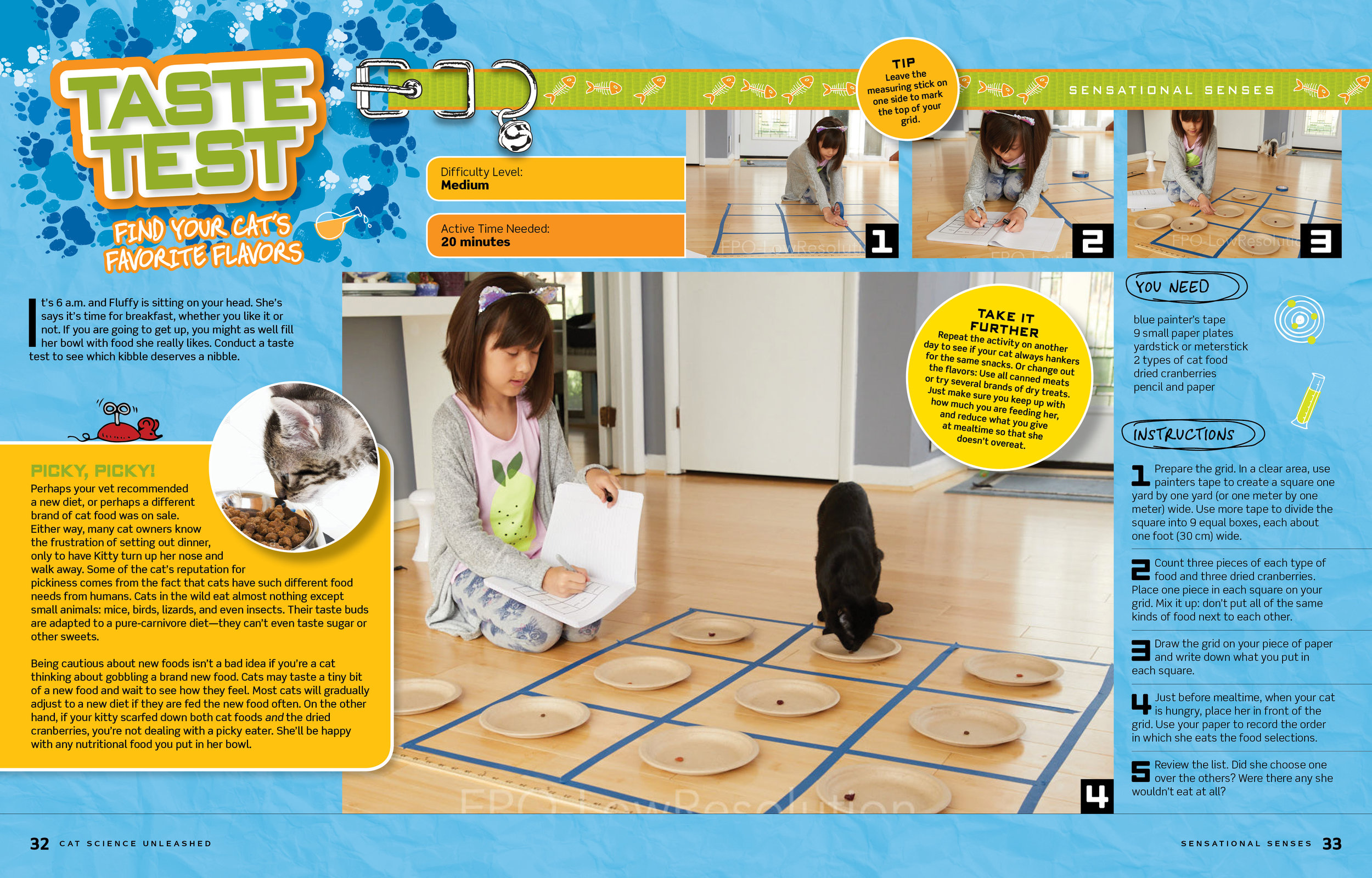
A companion to last year’s Dog Science Unleashed, Cat Science Unleashed is all about the cats, with a glimpse into cat biology and physiology, cat facts, and cat-tivities to engage the scientists in your life. Eleven kid scientists have tested their cats – you’ll meet them on a spread in the book – and invite readers to join them in discovering how cats see at night and how to discover their favorite smells. Activities include building a hiding spot for your cat’s toys (other than my living room floor? Have to get my kid on that) and making toys to test your kitty’s stalking prowess. There’s a glossary and list of further resources at the end A fun volume, and with a new science fair season on the horizon, this could be a fun way to give your kiddos’ cats the spotlight at school in addition to home.

Cat Breed Guide: A Complete Reference to Your Purr-Fect Best Friend, by Stephanie Warren Drimmer & Dr. Gary Weitzman, DVM, (Sept. 2019, National Geographic Kids), $19.99, ISBN: 978-1-4263-3439-9-

Ages 8+

This is a compact, thorough desk reference to cats, perfect for an animal lover, cat fan, and anyone either writing a report about felines or researching a new pet. The guide provides a look at feline history, with a cat family tree, a history of cats and how domesticated cats became household constants, even cat-related superstitions and folktales. There are profiles on more than 60 cat breeds, organized by short hair and long hair breeds, and each profile offers a quick “cat stats” box that provides notes on country of origin, size, coat, grooming, and “catitude”. There are gorgeous photos, fun facts, and general adorableness throughout, plus a section on cat-related careers, a glossary, and further resources. I’m always trying to keep my domestic animals/pets books stocked, so this one will be a nice add to my shelves.


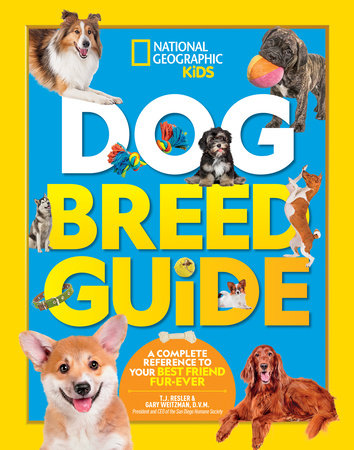
Dog Breed Guide: A Complete Reference to Your Best Friend Fur-Ever, by TJ Reser & Dr. Gary Weitzman, DVM, (Sept. 2019, National Geographic Kids), $19.99, ISBN: 978-1-4263-3445-0

Ages 8+

A companion desk reference to the Cat Breed Guide, Dr. Weitzman and TJ Reser team up to give readers a comprehensive guide to canines, from their wolfish origins to today’s modern breeds. Organized into 10 sections, dog profiles include full-color, squeal-worthy photos and stats-at-a-glance: country of origin, height, weight, coat, grooming, exercise needs, and K-9 qualities. There are sections on show dogs, canine senses, and how to talk to your dog, and a section on adopting and training a puppy. There’s a glossary and more resources.

Together, the Dog and Cat Breed Guides provide a handy reference for pet and animal lovers.


Little Kids First Big Book of Pets, by Catherine D. Hughes, (July 2019, National Geographic Kids), $14.99, ISBN: 978-1-4263-3470-2

Ages 4-8

I love the NatGeo Kids Little Kids First Big Book series! There are 17 books in the series now, and they’re great for pre-readers to look through, while emerging readers can more confidently navigate the pages. Words are bold, the pictures are big and bright, and there’s tons of fun facts, quizzes, and info to be found. The First Big Book of Pets is all about our favorite companions, from dogs and cats to birds, reptiles, fish, mice… you name it. Interactive questions throughout the book prompt discussion, games at the end of every chapter help reinforce concepts and give librarians like me an excuse to have fun, pet-related programming, and fact boxes give kids info at-a-glance about different pets. If you know a kiddo who wants a pet, but isn’t quite decided on what pet to get, hand them this guide – it’s geared toward educating kids about different pets’ needs, and our responsibilities to animals once we adopt them. A section for parents includes a recipe for baking dog biscuits, pet jokes and tips and ideas to engage kids about pets. There’s a glossary and list of additional resources. The Little Kids First Big Books are really popular with my library kids, so this one is another win for my shelves.

Posted in Non-Fiction, Teen, Young Adult/New Adult

Two YA nonfiction titles for the weird fact fans in your life

Next up, with the new school year upon us, I look for nonfiction that will inform and entertain. Sometimes, I find nonfiction that is just so out there, I have to suggest them because they’re freaky, fun, and will give readers who equate nonfiction with boring a nudge and a wink, and maybe – just maybe – make a nonfiction reader out of one or three.

History’s Weirdest Deaths, by James Proud, (June 2019, Portable Press), $12.99, ISBN: 978-1-68412-757-3

Ages 15+

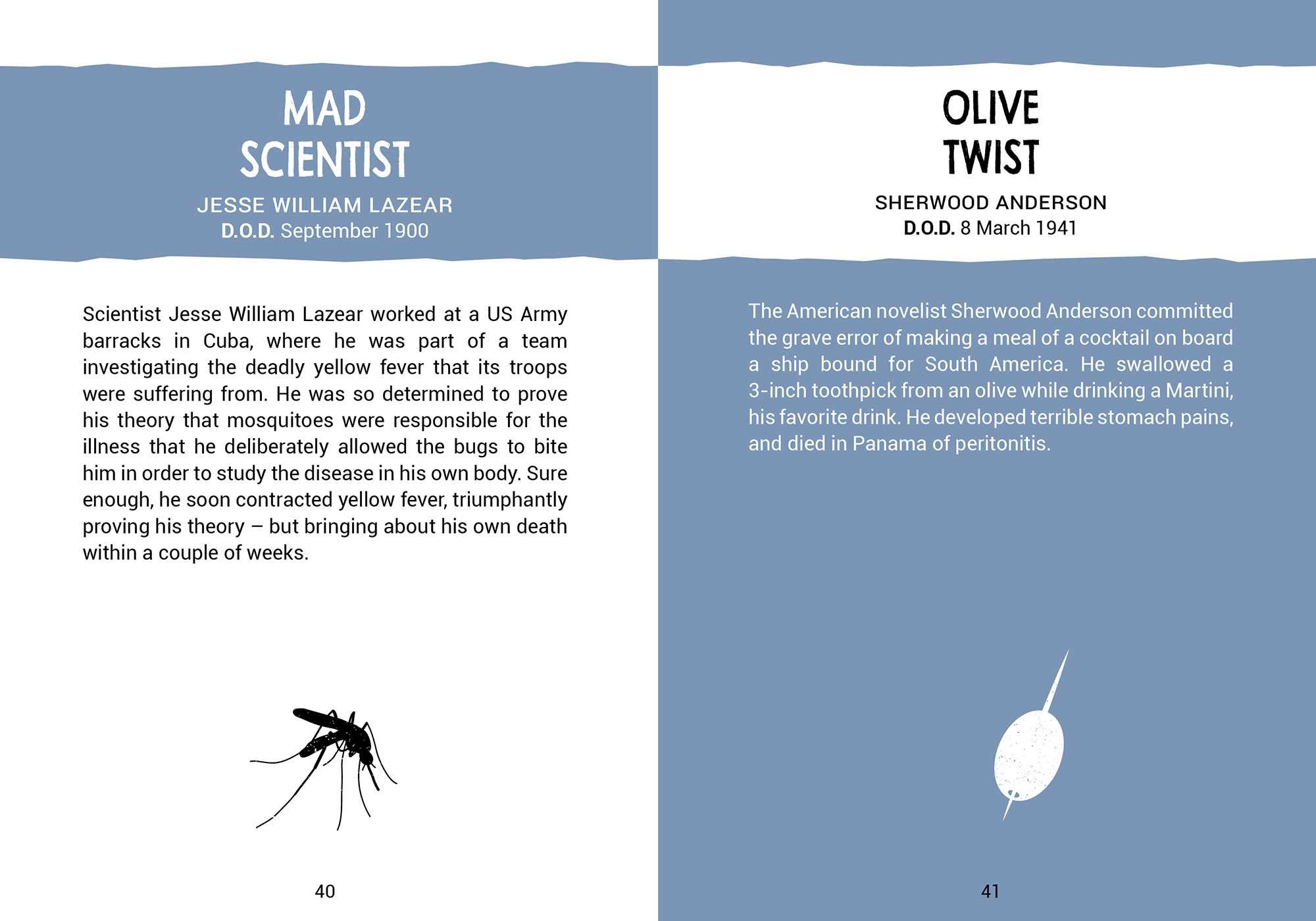
The title tells you all you need to know here: it’s a collection of stories and facts about freaky deaths throughout history. There are famous last words, unsettling statistics about Japanese pufferfish consumption, an unbelievable number of stories about people who went over Niagara Falls in a barrel, and unusual methods of execution. Each page has something new and bizarre to be discovered, like the story of 13-year-old William Snyder, who died in 1854 after “being swung around by the heels by a circus clown”. Or Joao Maria de Souza, who was crushed in 2013 when a cow wandered onto his roof and crashed through his ceiling, crushing him. There are also famous firsts: first death by robot, first death by auto accident, first spectator to die after being hit by a baseball during a game, and the first – and only known – jockey to win a race after dying. Illustrations add to the tongue-in-cheek morbid humor.

Strange Hollywood: Amazing and Intriguing Stories from Tinseltown and Beyond, by the Editors of Portable Press, (May 2019, Portable Press), $15.99, ISBN: 978-1-68412-677-4

Ages 15+

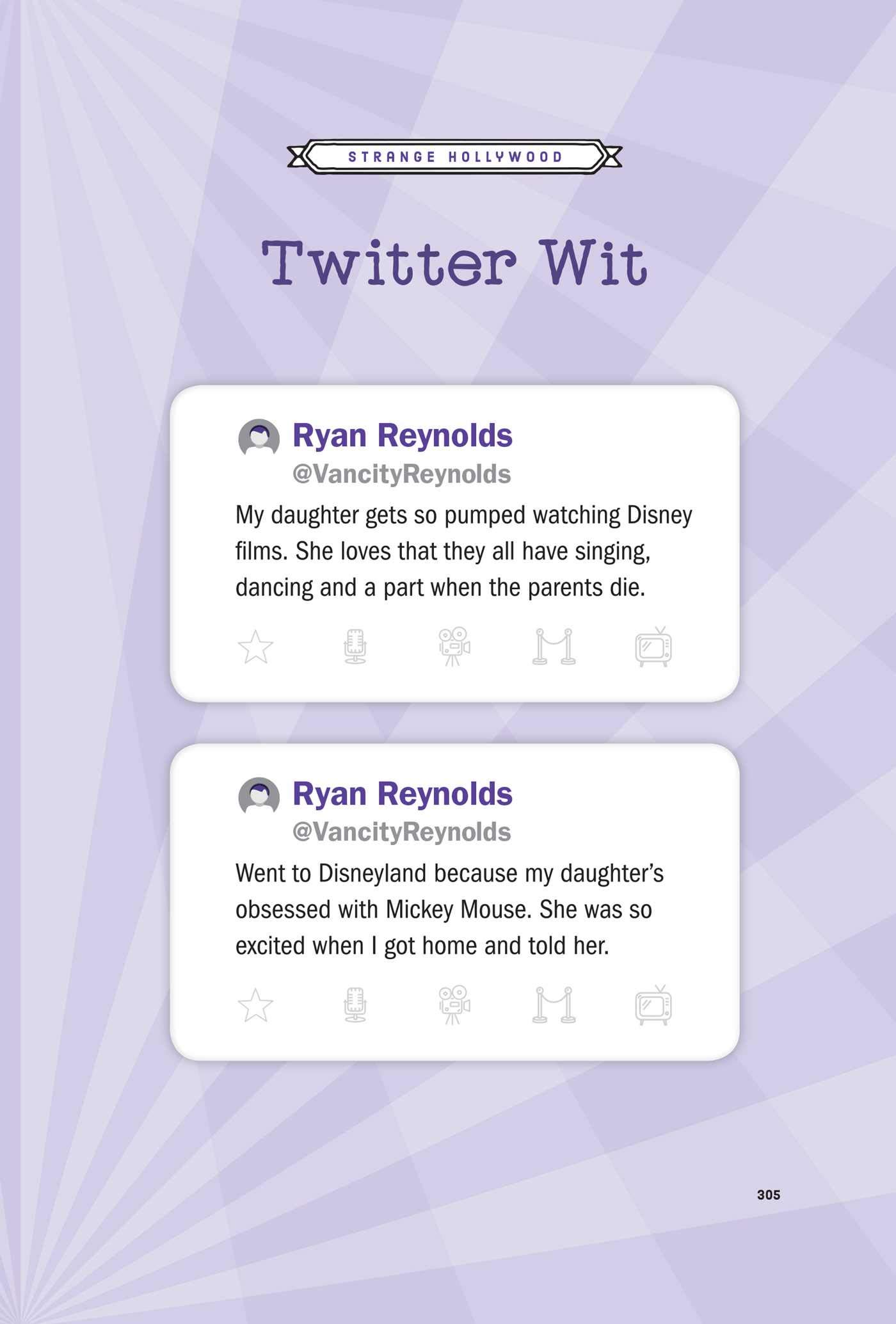
This is the latest in Portable’s Strange series and is loaded with stories about Hollywood, with a big emphasis on Hollywood’s Golden Age: stories about Rudolph Valentino, Charlie Chaplin, Judy Garland, Elvis, and Audrey Hepburn get a lot of page space; teens may not know the names, but the stories are a hook. There are quotes, Tweets, and facts in here, too, making this an easily readable book with tidbits to make readers laugh or wince. The recent Twitter feud between Armie Hammer and Jeffrey Dean Morgan is in here, and there are highlights called, “Putting the REAL in Reality TV” that squeal on the dubious verity of some of the more popular shows out there. Crazy lawsuits get touched on, too, like Hormel Foods, makers of canned meat Spam, suing Jim Henson Productions over naming a villainous Muppet Treasure Island character Spa’am. It’s morbid in some spots, head-shaking and wincing in others. An additional grab if you have nonfiction readers who love the gossip rags. Illustrated in two-color throughout.