Posted in Fiction, Historical Fiction, Middle Grade, Tween Reads

David Almond asks: Why should children be at war?

War is Over, by David Almond/Illustrated by David Litchfield, (May 2020, Candlewick Press), $16.99, ISBN: 9781536209860

Ages 9-12

Taking place in the UK in 1918, War is Over asks a timeless question: why do we expect children to fight our wars? Not having a child’s presence on the front, but the psychological war; the “us” and “them” mentality that permeates everything we do. John is a young boy whose father is fighting in the trenches of France while his mother works in a munitions factory. John’s teacher tells – bellows, really – that the students are fighting alongside the grownups, fighting the enemy in Germany that includes the children of Germany. But John certainly doesn’t feel like anyone is his enemy. When a classmate’s uncle tries to speak to the children, telling them that they are children and NOT at war with anyone, he’s attacked and taken away from the children, but he’s touched something in John,  who sees a sketch of a young boy among the man’s scattered papers. It’s a drawing of a German boy named Jan, the same age as John. John imagines he and Jan become friends, and dreams of a better world where children are children, not enemies, and create a peaceful world together.

This is a strong story of a sensitive boy trying to make sense of a world gone mad. It’s a story that’s as relevant today as it was in 1918, when the story takes place. David Litchfield’s black-and-white illustrations are moody, evocative, packing strong emotions. Visit his website to see some of his work from War Is Over. Poignant and ultimately hopeful, War is Over is a story that will resonate with kids and adults alike.

Posted in Guide, Non-Fiction, Teen, Young Adult/New Adult

Book Tour: College Student Health Handbook

Hi all! I’ve got a blog tour for our seniors to have on hand as they get read for college. Good health practices never go out of style, as we’ve certainly learned this year, and whether you’re home or (eventually) headed to a dorm, there’s some important info to be found here.


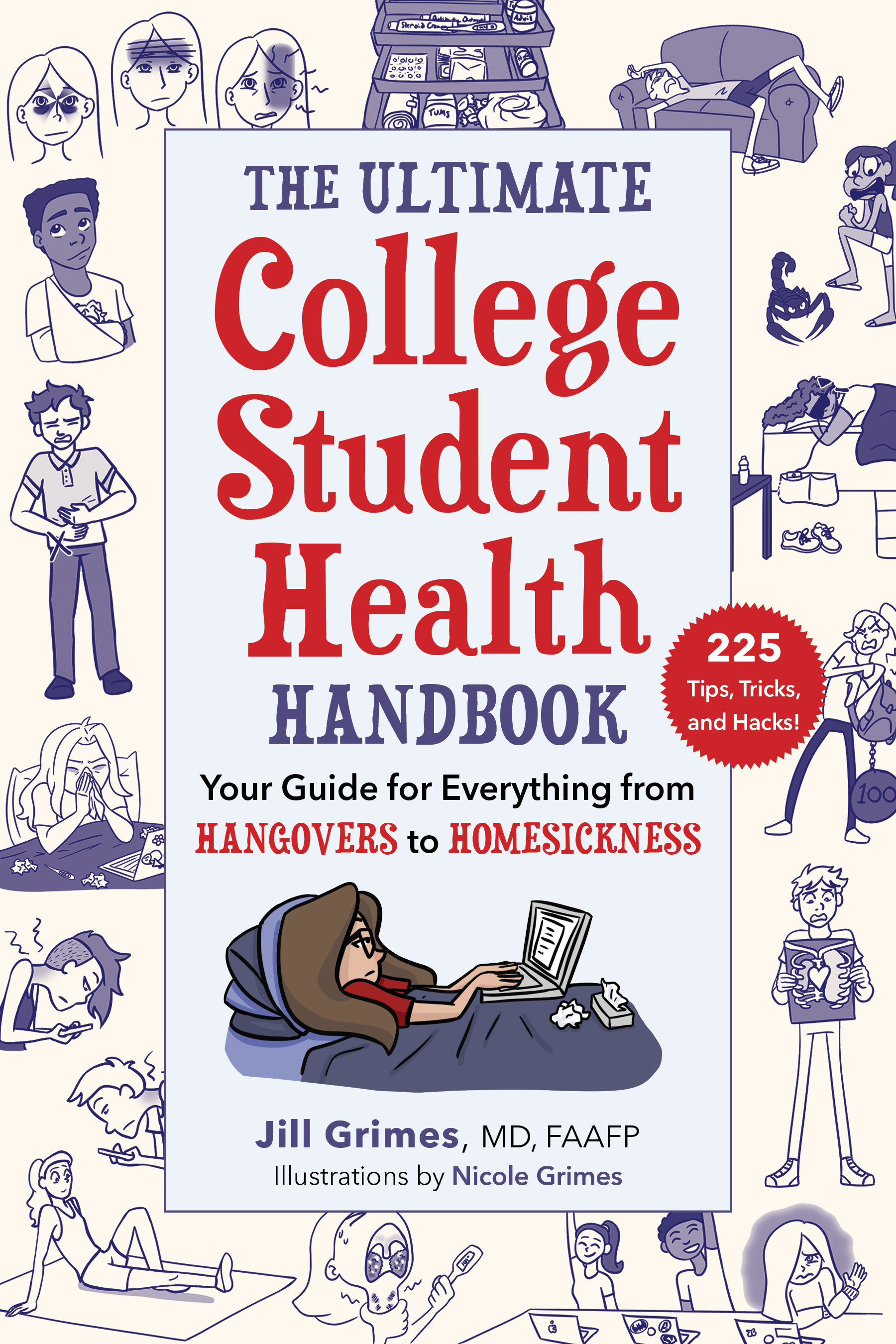
The Ultimate College Student Health Handbook: Your Guide for Everything from Hangovers to Homesickness,
by Jill Grimes, MD, GAPP/Illustrations by Nicole Grimes,
(May 2020, Skyhorse), $16.99, ISBN: 978-1510751033
Ages 16+

5 Must-Have Items for Your College Freshman

You’re making a list and checking it twice…because especially if this is your FIRST kid heading off to college, you want to be sure you’ve included every critical item.

  • Twin XL (Extra Long) Sheets?
  • Command Strips in every shape, size and strength? Check.

(Much bigger deal for girls vs. guys, but this is the only way to hang stuff on walls.)

  • Dorm Bed Risers? (I highly recommend the ones with extra outlets.) Check.

Chargers, fan, laundry bag, clothes, shoes, coats…the list goes on. And on. And ON. What could possibly be missing? From my perspective as a seasoned move-in mom and a university doctor, here ‘s my list of the top five forgotten items:

  1. Small Tool Kit: Hammer, screwdrivers, wrench set, pliers, scissors, tape measure and level. This should be last in, first out, because you’ll often need these immediately to assemble and disassemble dorm room furniture or fix a stuck drawer. Pro tip: Add in a couple garbage bags; trash piles up as soon as you start unpacking.
  2. Backup Prescription Glasses: especially for the kid that ALWAYS wears contacts! Why? Because if you get a bad stye or “pinkeye” (viral conjunctivitis), or more commonly, you accidentally fall asleep in your contacts or get something in your eye that scratches your cornea- you CANNOT wear contacts for several days to a week or more. And seeing clearly tends to help grades. If you always wear glasses, the backup pair is for when yours break or disappear. And inevitably, it happens during midterms or finals.
  3. Small Lock Box: If you take prescription medications for ADD, this is a must. These stimulant pills sell for $5-10 each (a felony if caught!!) and dorm rooms are rarely private and/or consistently locked. Please remove the temptation for others and keep your meds safe. Lock boxes also work well for pricey jewelry, your passport, and while we’re at it, your backup glasses.
  4. Heating Pad: Okay, not critical, but a great way to guarantee your popularity! Seriously, few students have these, but those that do tell me “EVERYONE borrows it” for aching muscles, back spasms and “cramps”. Bonus points: in cold climates they can double as an electric blanket (just don’t fall asleep on top of one, as this can cause burns.)
  5. Solid Air Freshener: Plug-ins are rarely allowed in dorms, but you can place a solid or gel freshener in your closet (by your shoes) and tuck another under your bed. Extra-strong odors? Bamboo charcoal bags are a pricey option, but they work incredibly well. Choose a neutral or “fresh” smell, not “flowery” or “citrus” as you don’t know your roommate’s sensitivity to different scents. Bodies, dirty clothes, third-hand smoke and old dorms all get very smelly. Unless you are moving into a brand-new dorm with a neat-freak roommate, these fresheners can be lifesavers. Or at the very least, roommate-savers.

Bottom Line: Add these five items to your list for a smoother move-in and a healthier, safer semester! (If you’re flying, pack the glasses & shop for the rest when you arrive.) Good Luck!

Posted in Fiction, Graphic Novels, Middle Grade, Teen, Tween Reads, Uncategorized, Young Adult/New Adult

Two more original DC graphic novels! Gotham High and My Video Game Ate My Homework

I missed the boat on this one when they pubbed on April 7th, but now, you have no excuse: two more DC original graphic novels have been out for a month now, and I am about to rave them. I picked up these advance copies at ALA Midwinter earlier this year, and had the best conversation with the folks at the DC Booth. I hope you’re all safe and sound, if you’re reading this, and trust me, I’m working my way through the stack o’graphic novels you were kind enough to send me home with.

Gotham High, by Melissa de la Cruz/Illustrated by Thomas Pitilli, (April 2020, DC Comics), $16.99, ISBN: 9781401286248

Ages 12-17

Melissa de la Cruz is a YA powerhouse: my middle graders can’t get enough of her Descendents novels, and my teens and YA readers devour her Alex and Eliza books. She can navigate complicated relationships between her characters, and who gets more complicated than the Joker, Catwoman, and Batman? Right? Gotham High is a YA take on Bruce, Selina, and Jack as teens – no capes, no superpowers, just the baggage they already come with (SO much baggage). Bruce is 17, just kicked out of boarding school, and has too many ghosts, in the form of memories, inhabiting stately Wayne Manor. Selina Kyle used to be the girl next door, now a Gotham High student that hangs out with Jack Napier, class clown with a heck of a mean streak. Bruce falls in with the two, and finds himself involved in a love triangle of sorts. But a kidnapping rocks Gotham High, and Bruce is thrust into the role of detective to get to the bottom of things.

Taking away the capes, gadgets, and makeup, Melissa de la Cruz gives us three incredibly complex, flawed characters, and brings us into their contentious friendship. She gives us chilling moments and dread realizations about the people each character will eventually become – with or without a costume. She makes them easily relatable and recognizable, and artist Thomas Pitilli gives us realistic characters with his artwork, with all the rah-rah high school spirit we expect to find in a high school hallway to the anger always simmering below the surface for each character. He captures the spirit of high school, in all its internal chaos, with style.


My Video Game Ate My Homework, by Dustin Hansen, (Apr. 2020, DC Comics), $9.99, ISBN: 9781401293260

Ages 8-12

This is a fandom-filled graphic novel that kids and grownups alike will love Dewey is a 13-year-old kid on the verge of flunking science when he and his friends gets sucked into a video game adventure that presents them with challenges, fights with digital monsters, and puzzles to solve. Loaded with sight gags and wink-nudges to video games, con life, and overall fandom, kids (and big kids, like me) will see themselves in Dewey and Co.

The book encourages readers to problem solve and emphasizes the importance of cooperation and teamwork. The cartoony-realistic style and fantasy monsters are so much fun – perfect story to introduce if you have Dungeons & Dragons fledgling fans. If you have Secret Coders readers, give them this book, which will continue challenging their problem-solving skills and captivating them with a fun storyline.

Dustin Hansen’s also written the Microsaurs series, which never stays on my library shelves. (Which means I probably need to order them for my kid, because he would LOVE them.) I got to talk to him at Midwinter, and he’s one of the nicest people ever.

Posted in Fiction, Middle Grade, Realistic Fiction, Tween Reads

More #Books from Quarantine: A Road Trip with Grandma in When I Hit the Road

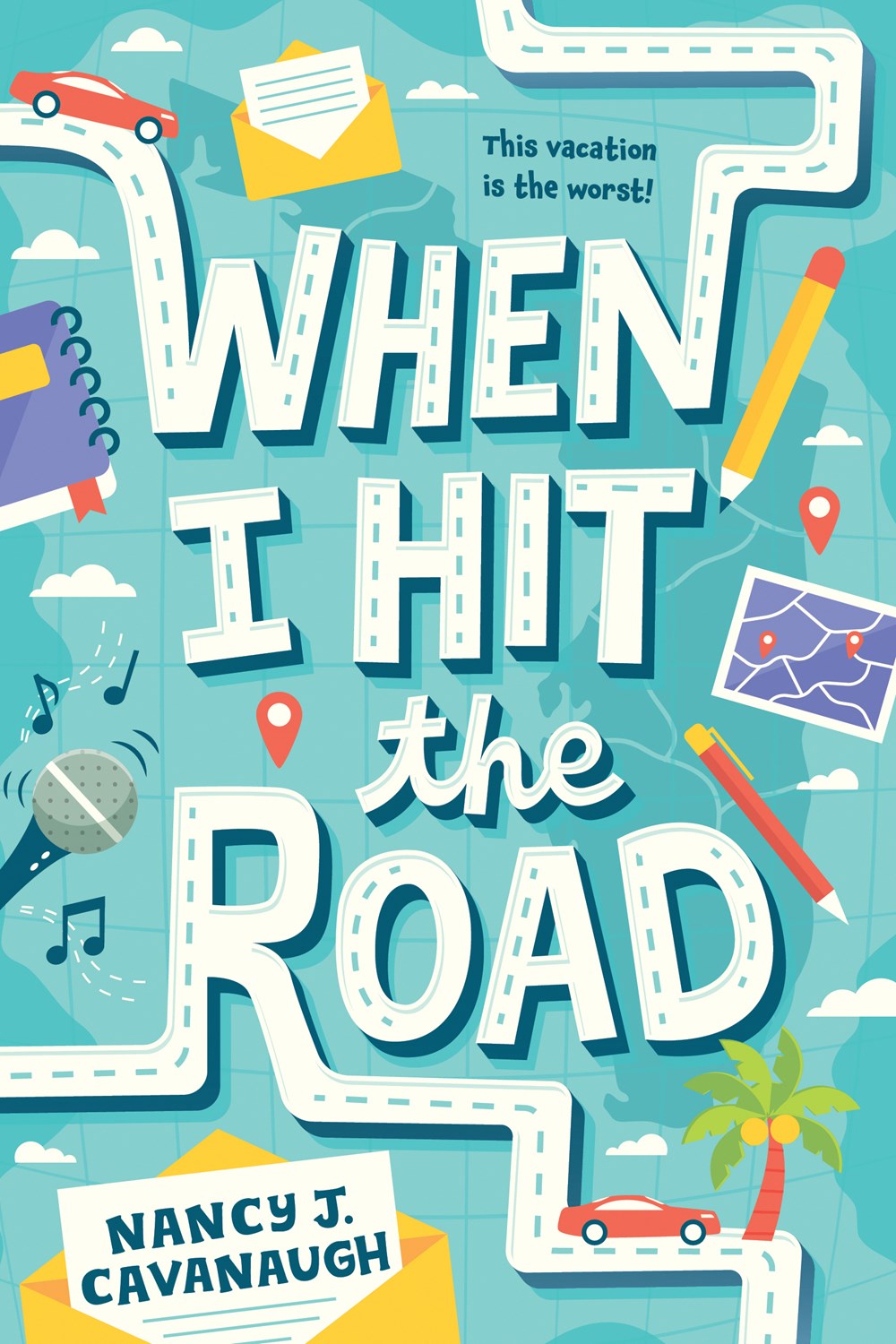
When I Hit the Road, by Nancy J. Cavanaugh, (May 2020, Sourcebooks Young Readers), $16.99, ISBN: 9781492640257

Ages 9-12

Samantha is about to be a seventh grader, has a mother and older sisters who are over-achievers, and desperately wants to make her own mark on something. She ends up with a summer vacation she wasn’t quite expecting: accompanying her workaholic mother to her grandmother’s Florida condo, and journaling in her “Dear Me” journal to promote her mom’s company. What ends up happening is even less expected: Mom has to rush home, leaving Sam in Florida, where she ends up on a karaoke road trip with her grandmother, her grandmother’s best friend, and a really, really cute boy.

I love Nancy J. Cavanaugh’s books because they’re created to read in easily readable, fun, descriptive bursts: journal entries, lists, letters; she has a gift for a tween voice, and writes with a light, funny voice that puts readers at ease and invites introspection. She plays with her multigenerational characters; in this case, giving readers a karaoke-loving senior citizen and a tween who feels the pressure to be someone, constantly measuring herself up against those around her. The road trip is wacky and wonderful – thrift store bowling shirts, a car full of Bibles, a tour of terrifying road stop bathrooms – and will make readers laugh out loud, especially if they’ve had the dubious honor of being on the dreaded Family Road Trip. Sam’s voice comes through clearly, and I loved her referencing her future self looking back and reading the entries.

Ms. Cavanaugh navigates complex mother-daughter relationships here, too: we have the relationship between Sam’s mother and grandmother, Sam and her grandmother, and Sam and her own overachieving mother, all of which are loaded with moments for deep discussion. This would be a great choice for a mother-daughter book club.

Turn up some karaoke (YouTube has dozens of pages, including Sing King), bake some cookies, and enjoy an evening with Sam and her family. This is a great read for tweens who want a fun read with a summery vibe.


Posted in Non-Fiction, Teen, Tween Reads, Young Adult/New Adult

Power to the People: We Are Power elevates nonviolent activism

We Are Power: How Nonviolent Activism Changes the World, by Todd Hasak-Lowy, (April 2020, Abrams Kids), $18.99, ISBN: 9781419741111

Ages 12+

A thought-provoking treatise on nonviolent activism, We Are Power presents six case studies throughout recent history: Gandhi, Alice Paul, Martin Luther King, Cesar Chavez, Václav Havel, and Greta Thunberg. Each section explores nonviolent resistance, the roots behind each advocate’s activism, and how the power of one person, exhorting nonviolence, can motivate thousands and create change. In an increasingly contentious world, the power of nonviolent activism, and placing this information in the hands of a generation of activists, is not only smart, it’s crucial.

Beginning with Gandhi and his theory of “soul force”, or satyagraha, each consecutive profile touches on how previous movements inspired one another. Martin Luther King in particular was influenced by Gandhi, while Alice Paul’s suffrage activism was a response to the more extreme suffagists in the UK, and her desire to be seen as calm, unflappable, and strong. Cesar Chavez understood that increasing awareness of migrant worker conditions was the best way to bring social justice to migrant workers and received a letter of encouragement from Martin Luther King, himself leading nonviolent resistance movements to bring civil rights to the country. Playwright-turned-Czech president Vaclav Havel used his art to protest; later, letters from prison, where he wrote about truth and opened people’s eyes by telling them that they were complicit in allowing their restrictive government’s rule by following the rules. Teenager Greta Thunberg began her climate change protest by being the sole student striking for climate change, and motivated a planet to take action.

A solid beginning for a discussion on social justice, activism, and civil disobedience, this is a must-have volume for middle school and high school collections. I can’t wait to put this in my order cart when my library, opens again. This would be a great Summer Reading choice, for educators who haven’t finished their lists yet. Photographs of protests and tense moments, like seeing schoolchildren attacked by dogs and being doused with hoses, make for great discussions on the use of violence against nonviolence – what stands to be gained? Comprehensive endnotes, bibliography, and index complete the book. Author Todd Hasak-Lowy’s author webpage has videos and resources for parents and educators.

We Are Power has starred reviews from School Library Journal, School Library Connection, and Kirkus.


Posted in Fiction, Historical Fiction, Intermediate, picture books

Blog Tour- Bear and Fred: A World War II Story

Inspired by the true story of a boy and his teddy bear, this story of survival during the Holocaust is achingly, lovingly translated into English for a new generation of readers.

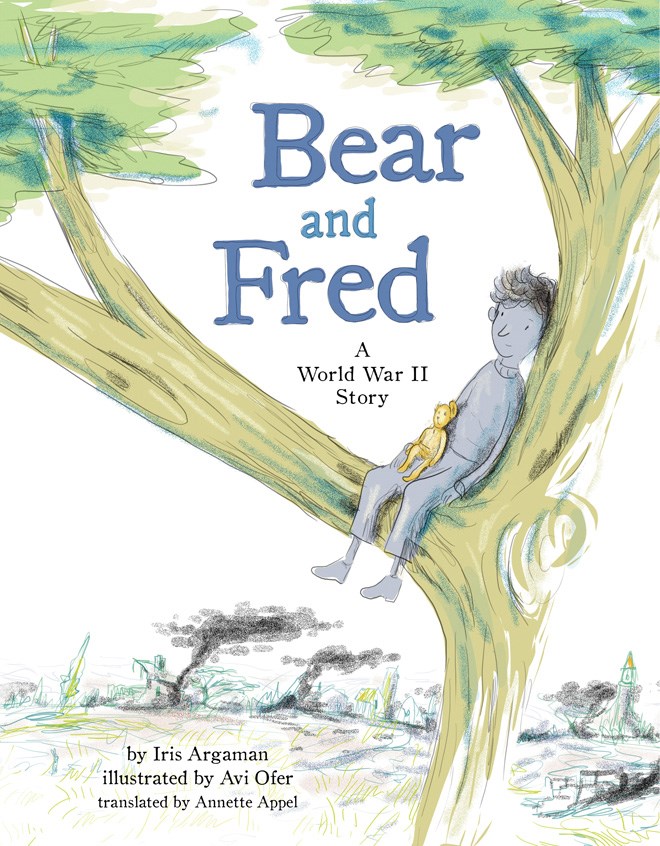
Bear and Fred: A World War II Story, by Iri Argaman/Illustrated by Avi Ofer/Translated by Annette Appel,
(May 2020, Amazon Crossing Kids), $17.99, ISBN: 978-1-542018210
Ages 7-10

Told by Bear, a stuffed toy bear belonging to a young boy named Fred, Bear and Fred tells the story of a young Dutch Jewish boy and his family when they go into hiding as the Netherlands fall under the Nazi shadow. Bear is the only toy Fred takes with him and provides comfort as Fred is shuttled first, to his grandfather, and then to a “nice lady” to stay with when his parents leave and go into hiding elsewhere. When the War ends, Fred and his family reunite, and Bear stays by Fred’s side, until Yad Vashem, Israel’s Holocaust museum, contacts Fred, having heard about his story, and asks to borrow Bear to teach children. In her author’s note, Iris Argaman describes how she discovered Fred Lessing’s story when she saw Bear at Yad Varshem and contacted him, asking to write his story. There’s a photo of the actual Bear.

Originally published in Hebrew in 2016, Bear and Fred tells the story of the Holocaust from a child forced into hiding, without his parents, with only his stuffed bear for company. Having Bear narrate Fred’s story adds a touching depth to the story; it’s the story of a best friend. Moments like having Bear’s paw dry Fred’s tears when he misses his family, or having Bear describe his own feelings of being scared in Fred’s backpack or, the fear of being left behind, provides relatable moments for kids to latch onto and create valuable moments for discussion. Annette Appel’s English translation reads beautifully, with all of the emotion intact. Avi Ofer’s digital illustrations rely on simple colors to tell the story: the characters are grey-blue, washed out figures, with bear’s yellow-brown coloring allowing him to stand out, designating him the narrator, and the family a memory.

A strong book to have in younger historical fiction collections.


Iris Argaman is the author of a number of books for children, including Bear and Fred, which was awarded the Yad Vashem Prize in Israel and the Giovanni Arpino Prize for Children’s Literature in Italy. She lives in Israel, where she is a lecturer on children’s literature, holds writing workshops, and writes activity books which promote museum education.

Avi Ofer is an illustrator and animation director born and raised in Israel and now based in Spain. His work has been exhibited in art shows and screened in festivals around the world.

Annette Appel is a translator of books for young readers and truly enjoys the challenge of making stories written in Hebrew accessible to English speakers.

“Translated from Hebrew, it reads seamlessly and beautifully presents a family caught up in war…Without in any manner diminishing the actual horrors of World War II or any current fighting, the author enables a child to grasp in some small manner the impact of conflict on a family. Moving and accessible.” —Kirkus Reviews

Amazon Crossing Kids aims to increase the diversity of children’s books in translation and encourage young reading from a range of cultural perspectives.

Posted in Fiction, Middle Grade, Realistic Fiction, Tween Reads

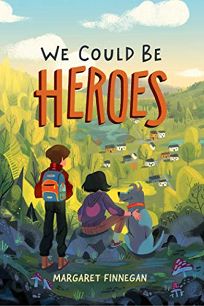
We Could Be Heroes: dogs, rocks, and adventures in friendship

We Could Be Heroes, by Margaret Finnegan, (Feb. 2020, Atheneum Books for Young Readers), $17.99, ISBN: 978-1-5344-4525-3

Ages 8-12

Hank Hudson is a boy who loves rocks and The Jungle Book. He does NOT like the very sad book his teacher is reading to the class: it gives him the a’a feeling, which is a geological term for lava flow which moves and cools at different rates. Hank has autism, and feels things, sees things, in a way that doesn’t always match his classmates. His classmate, Maisie Huang, notices him after a big incident lands Hank in some hot water. Her parents are geologists, so she invites him over to see their rock collection. It’s there that Hank discovers Maisie’s ulterior motive: she wants Hank to help her “rescue” her next door neighbor’s dog, Booler. Booler has seizures, and Mr. Jorgenson, his elderly owner keeps Booler tied to a tree outside, because it’s too dangerous for him to be indoors. Maisie has built up a vision of her neighbor that isn’t too flattering, and Hank, while happy to have a friend, is conflicted about a lot of Maisie’s “rescue” ideas. But the two kids become friendlier with Mr. Jorgenson, until he has an accident and his daughter comes to town. Hank and Maisie decide that Booler isn’t safe, after all, and revisit their initial rescue plan. Filled with cringeworthy, funny, and touching moments, We Could Be Heroes is a story about friendship, understanding, and feeling “less than”.

Hank and Maisie are complex characters that feel real. Readers may know kids like Hank and Maisie at school – they may be Hank or Maisie. Margaret Finnegan captures the feelings that go into a meltdown for a person with autism by linking Hank’s love of rocks and geology to the feeling that heralds a meltdown; the “a’a”, a Hawaiian word that, once defined, paints a picture for readers and opens the door to understanding. Maisie may frustrate some readers – this is a great character to talk about; find her motivation, and give pros and cons of her focus on saving Booler. The adults in the novel each have wonderful depth, too; they are all invested in our characters and important parts of the story throughout.

A strong choice for book discussions, We Could Be Heroes is a good realistic novel that delves into the complexity of emotions and friendships. Author Margaret Finnegan has epilepsy and autism resources available on her author webpage.

We Could Be Heroes is a Junior Library Guild selection.

Posted in Animal Fiction, Fiction, Fiction, Fiction, Intermediate, Middle Grade

Chapter books to take on a camping trip

I know, right now, camping is probably the furthest thing from your minds, but why not? My older boys loved “camping out” in our living room, spreading comforters on the floor for cushioning, and staying up all night giggling and falling asleep while talking into the wee hours of the morning. My eldest “camps” in his little brother’s room in the dog days of summer, when Gabe’s air conditioner is a lot cooler than Will’s. And Gabe and his buddies have had sleepovers where they camp out, sleeping bags all over the living room, and stuffed animals, action figures, and assorted iPads strewn about. So why not consider a camping trip for your kiddos now? Hike on over to a room that can fit you all, and settle in with some snacks, some games, and some good books.

McTavish Goes Wild, by Meg Rosoff/Illustrated by Grace Easton, (May 2020, Candlewick Press), $21.99, ISBN: 9781536203318

Ages 7-10

Originally published in the UK, this is the second book in the McTavish Stories series, starring a rescued dog and his adopted family – although, as McTavish would tell you, he’s the one who rescued them. The Peachey family is a little quirky, as most families are; in this second installment, the family frets over where to go on vacation. Young Betty Peachey wants to go camping, but Pa Peachey is convinced that nature is far too dangerous to be out and about in. Teenage brother Ollie just wants to be somewhere where there are dance clubs where he can find a girlfriend, and big sister Ava wants to stay home and read German philosophy. Thank goodness for Ma Peachey, who sides with Betty. Once out in nature, McTavish sees that it’s up to him to get this family acclimated to the Great Outdoors, in sweet and fun fashion. The story is gentle, moves at a leisurely pace with humor throughout. Black and white drawings give life to the text. Intermediate readers will get a kick out of this quirky family and their canine companion, who seems to be two steps ahead of the game. You won’t need to have read the first book, Good Dog McTavish, to jump right into this series, but animal fiction fans will want to – make sure you have both on the shelf.

The Infamous Ratsos Camp Out, by Kara LaReau/Illustrated by Matt Myers, (May 2020, Candlewick Press), $19.99, ISBN: 9781536200065

Ages 6-10

The fifth book in the Infamous Ratsos series Ralphie and Louie Ratso going on a camping trip with the Big City Scouts, with Grandpa Ratso as their guide. Even with Grandpa’s guidance and experience as a Scoutmaster, the Scouts learn that camping isn’t as easy as they think it is: pitching a tent, making a fire, and finding their way through the woods is hard! They have to learn to work together, and they have to learn that asking for help is the most important skill a Scout – or anyone – can have. With fun scout-meets-urban living references to badges like City Smarts and Cleanup, and scouting levels like Streets and Avenues instead of Cub and Weeblo, this is a cute addition to the series. Black and white cartoony illustrations of the Ratsos throughout the book really engage the reader. Enjoy a chapter sample from Candlewick’s page and consider adding this series to your intermediate collection if you haven’t yet.

Make some merit badges – all you need is paper, scissors, and imagination! Come up with fun merit badge ideas: ate a vegetable, read for 30 minutes, Kitchen Science, Minecrafter. The possibilities are endless, and we’re not going anywhere, anytime soon. Make it fun.

Posted in Adventure, Fiction, Horror, Teen, Young Adult/New Adult

Life imitates art in Girls Save the World in This One

Girls Save the World in This One, by Ash Parsons, (Apr. 2020, Philomel Books), $18.99, ISBN: 9780525515326

Ages 13+

Okay, imagine you’re going to a con where the cast of your favorite zombie-ridden post-apocalyptic show is appearing. You’ve hit the exhibit hall, taken pictures with the cosplayers, and are just sitting down to a panel with the whole cast… and the zombie apocalypse happens. For reals. That’s how it goes down for teens June, Siggy, and Imani, attending ZombieCon! in their little hometown. They’re sitting in on a panel with all the stars of their favorite zombie show, Human Wasteland, when all hell breaks loose. The girls have to put their zombie apocalypse skills to the test to survive, and June has to cope with the indignity of having her ex-BFF, Blair, who’s also at the con and on the run from the undead. DRAMA.

Girls Save the World in This One is FANTASTIC. I loved every single page of this hilarious action-adventure story, with relatable teens who are sick and tired of friendship drama, dumb boyfriends, and all of these freaking zombies! June, Imani, and Siggy are quick-thinking, smart, and their friendship bond is #squadgoals. June, in fabulous teen fashion, takes time to agonize over her damaged friendship with Blair while figuring out how to escape zombies and put up with obnoxious cable TV celebrities, and Blair – the friend on the outside looking in – is proof that desperate times can bring people closer. Fans of the other zombie show on cable TV will recognize some characters, and I love the fangirl’s dream come true that evolves throughout the book. Who will survive? You MUST read this to find out. Strong female characters, the power of friendship, and a burgeoning romance amidst the zombie apocalypse make this a must have.

Posted in Fiction, Middle Grade, Realistic Fiction, Tween Reads

Librarian Resistance! Don’t Check Out This Book by Kate Klise

Don’t Check Out This Book!, by Kate Klise/Illustrated by M. Sarah Klise, (March 2020, Algonquin), $16.95, ISBN: 978-1-61620-976-6

Ages 8-12

In this testament to the librarian resistance, new school librarian Rita B. Danjerous moves into the town of Appleton, Illinois, a town that’s been dwindling. Heck, Rita’s there because the school received a “When All Else Fails” grant, and by enrolling Rita’s daughter, May B Danjerous (you’ll notice there’s no period after the B), the school will hit their minimum enrollment of 20 students to be allowed to stay open. Appleton Elementary School is not quite ready for a librarian like Rita, or a kid like May, but they’ll be glad the two are there: this is a mother-daughter duo who see things a little differently than most of the folks in Appleton, and they’re going to have to lock horns with the school board president, Ivana Beprawpa, who has her own ideas about how the school should be run… and dressed!

I loved this fun story that puts us librarians in such a good light! Rita is smart, savvy, and ready to work with what she’s got to make her library – in this case, a custodial closet, and then an apple cart – work. She creates a scandalous “Green Dot Collection” for kids who may be a little embarrassed to ask for books about certain subjects (which totally has my brain wheels turning for when my library opens back up); she pushes back against silly bureaucrats who operate with their own special interests in mind; and she encourages her daughter, and her library kids, to question everything and think independently. Written as a series of emails, newspaper articles, memos, sketches, and other forms of written communication, kids will devour this awesome book about the power of one person who sees things differently. A great idea for a book club read, too.

Kate Klise is the award-winning author of the 43 Old Cemetery Road series, which is a big hit in my library. Her author website has info about her books – most of which are illustrated by her sister, M. Sarah Klise! – and links to her blog and workshop information.