Posted in Non-Fiction, picture books, Preschool Reads, Toddler Reads

A Laura Gehl two-fer!

I love Laura Gehl’s books: from Peep and Egg to One Big Pair of Underwear and beyond, her stories have been hits at my storytimes and they’re just fun to read. Now, I’ve got some nonfiction by Laura Gehl to rave about that’s every bit as fun and unputdownable as her fiction is. Join me!

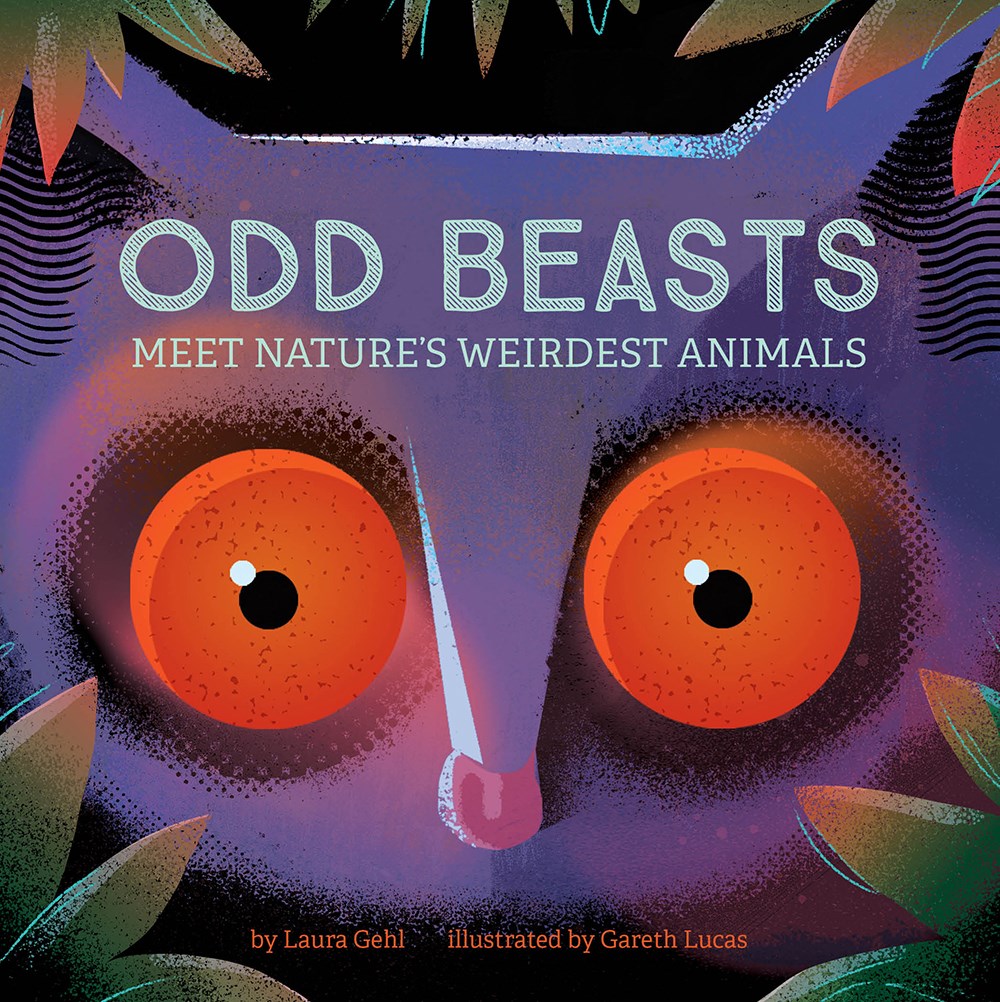
Odd Beasts: Meet Nature’s Weirdest Animals, by Laura Gehl/Illustrated by Gareth Lucas, (Nov. 2021, Abrams Appleseed), $8.99, ISBN: 9781419742224

Ages 2-4

A very happy book birthday to Odd Beasts! This rhyming board book introduces readers to some of nature’s wildest citizens: an armored pangolin, a frog with see-through skin, and a fish that weighs a ton are just a few of the animals waiting inside. This board book has back matter: two spreads include photos of each animal mentioned, with a brief factual paragraph. The artwork is incredible, offering colorful illustrations of each of the eight animals; they’re the perfect mixture of kid-friendly, expressive illustration and realism, making this a book readers will pick up and enjoy again and again. Sturdy pages hold up to multiple readings and definitely pass the “mom’s bag” test; I carried this one around with me for a couple of weeks. Great for an animal storytime.

Visit Laura Gehl’s author webpage for more info on her books, and great educator/caregiver resources, including coloring sheets for Odd Beasts!


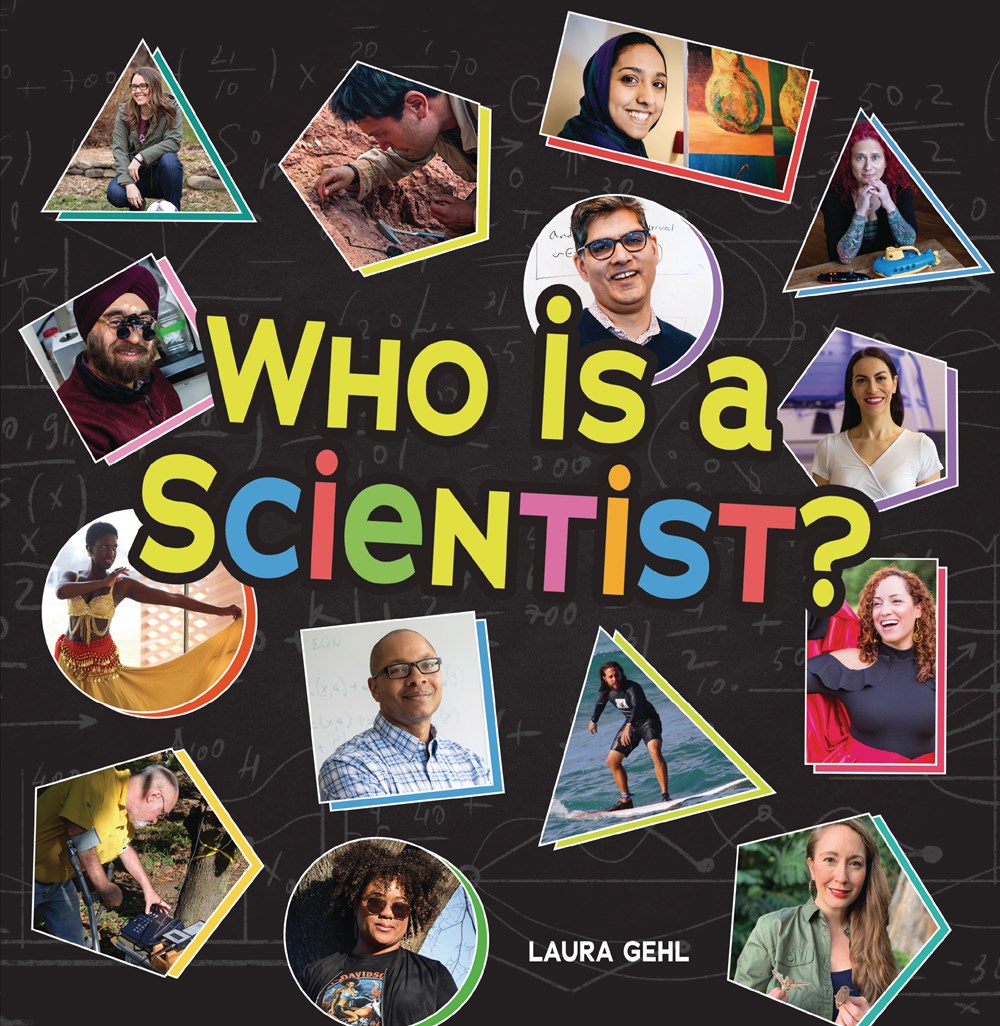
Who Is a Scientist?, by Laura Gehl, (Oct. 2021, Millbrook Press), $9.99, ISBN: 9781728441085

Ages 4-9

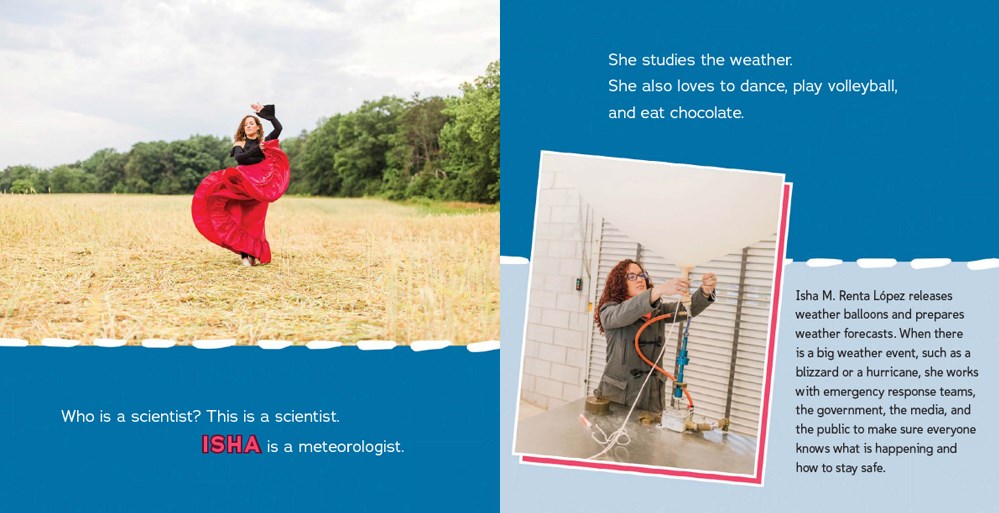
Scientists are people, too! Who Is a Scientist? humanizes the science providers by providing profiles on 14 different scientists; who they are, what they study and do, and what they like to do when they’re not science-ing. Isha is a meteorologist who studies the weather, and also enjoys dancing, playing volleyball, and eating chocolate. She’s photographed dancing in a flowing red skirt on one page and operating a weather balloon on another. Names appear in bright colors to personalize each scientist, and fun photos like Isha’s show readers that scientists like karate, surfing, cooking, and painting: just like they do. Each descriptive paragraph explains what the scientists study, introducing them to fields like astronomy, neuroscience, and mechanical engineering. The group is diverse, and really encourages kids to see themselves in this book, offering a QR code to learn more about the scientists, and a flow chart to help guide readers to a field of study that may be right for them, based on their own interests. What a great way to inspire the next generation of scientists, right? Who Is a Scientist? makes science playful and fun, like it should be. A guide to phonetic pronunciations at the end of the book help readers learn to pronounce Laura Gehl’s name, and the names of each scientist.

Visit Laura Gehl’s author page for a Who Is a Scientist? educator’s guide.

Posted in Graphic Novels, Realistic Fiction, Teen, Young Adult/New Adult

Himawari House: A glimpse of adjusting to life as an expat

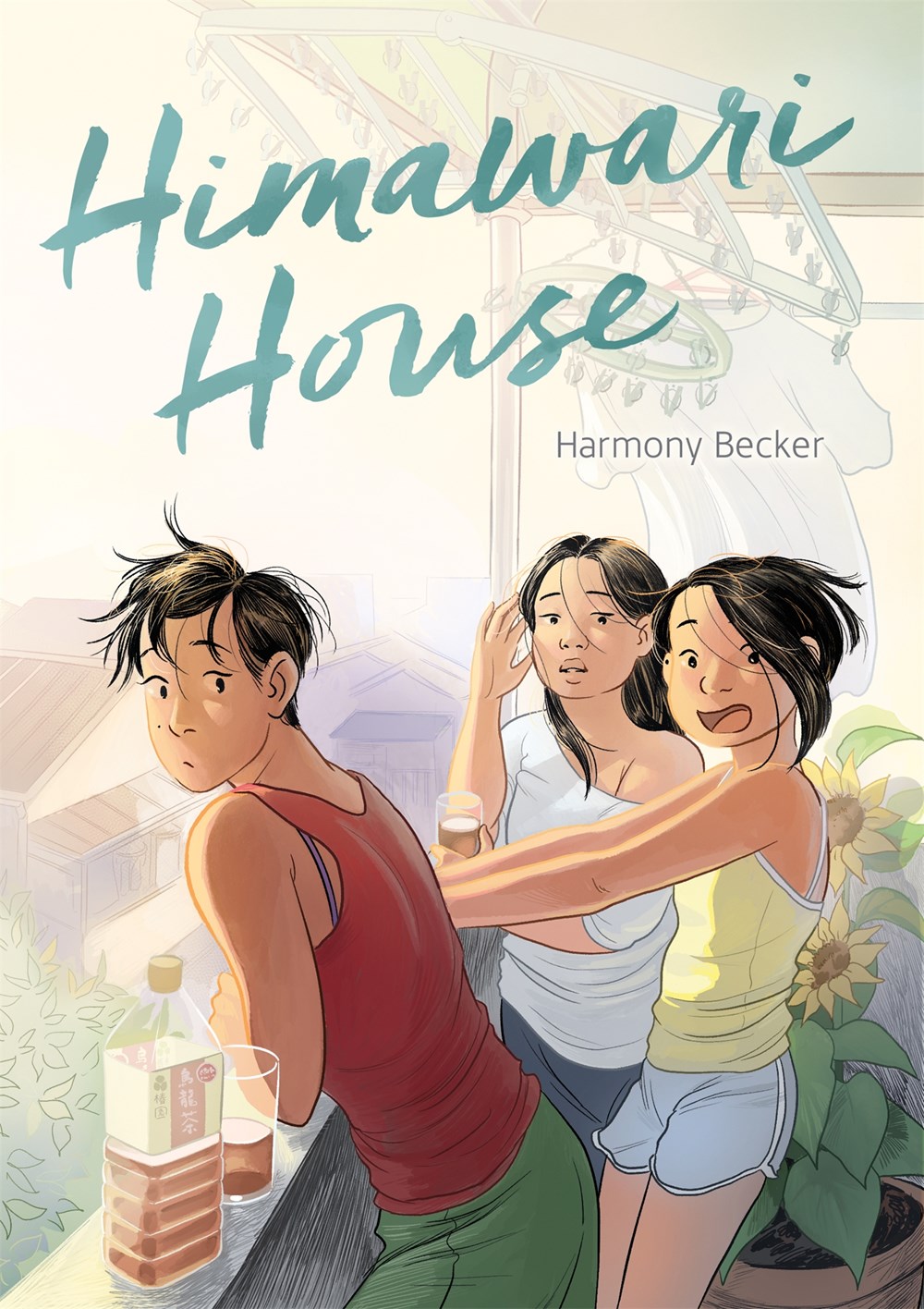
Himawari House, by Harmony Becker, (Nov. 2021, First Second), $17.99, ISBN: 9781250235572

Ages 14+

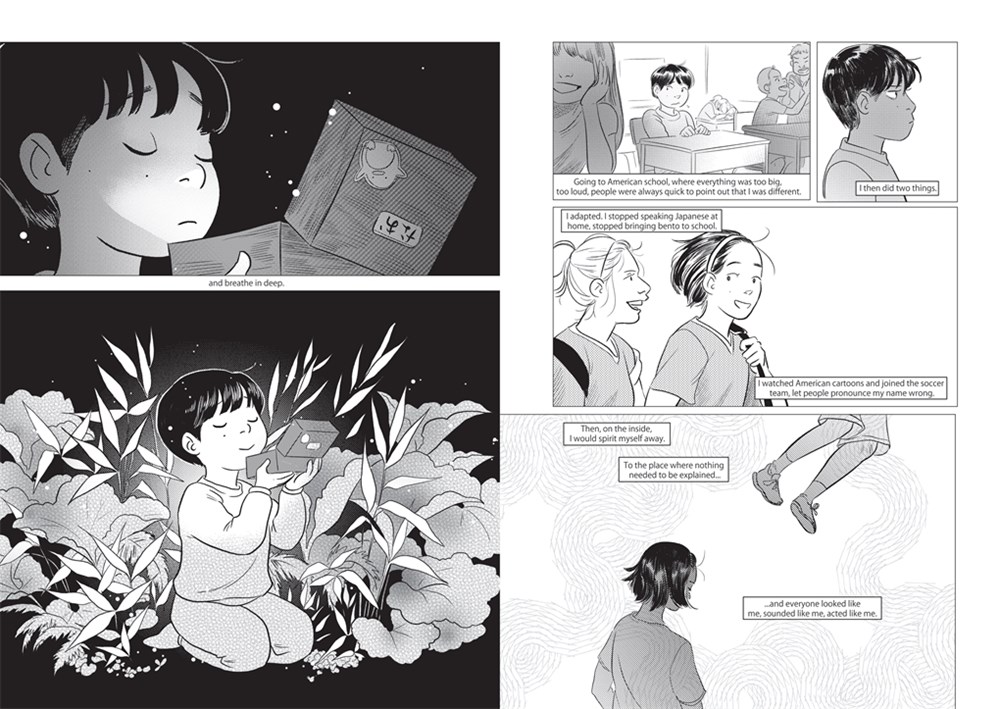
A glimpse into the lives of three exchange students living in Japan, Himawari House is about the friendships, frustrations, and adjustments that come with living in a new country: in this case, Japan. Nao, Hyejung, and Tina all move into Himawari House and attend the same Japanese school, but have different reasons for being there. Nao wants to reconnect to her Japanese heritage and worries about fitting in with Japanese culture. “Too Japanese” for her American life and “Too American” to Japanese classmates, she struggles with cultural identity. Hyejung, is Korean and moved to Japan to escape her overbearing parents and their unrelenting focus on her academic success. Tina is from Singapore and struggles with connection, preferring to lose herself in fandom. Although Nao’s story is the main driver, Hyejung and Tina have fully realized, moving backstories, all explored here, along with their roommates, two Japanese brothers with widely differing personalities. The group all come together and live here at Himawari House, and the story is a slice of life look into a year in their lives, as they all live and work side-by-side, eat, fall in and out of love, go to school, and talk late into the night. The language barriers are expertly illustrated here – largely bilingual, Japanese characters appear in many word bubbles; the dialogue has a blend of English, Japanese, Korean, and Singlish (the English Creole spoken in Singapore), with a brilliant explanation of the use of accents in the story at the end. Black and white artwork is largely realistic, with Chibi renderings to communicate extreme emotion. It’s a well-done character study and will be popular with teens and young adults.

Himawari House has starred reviews from Kirkus, Publisher’s Weekly, and School Library Journal.

Posted in Middle Grade, Non-Fiction, Non-fiction, Tween Reads

Break the monster codes with Sleuth & Solve: Spooky

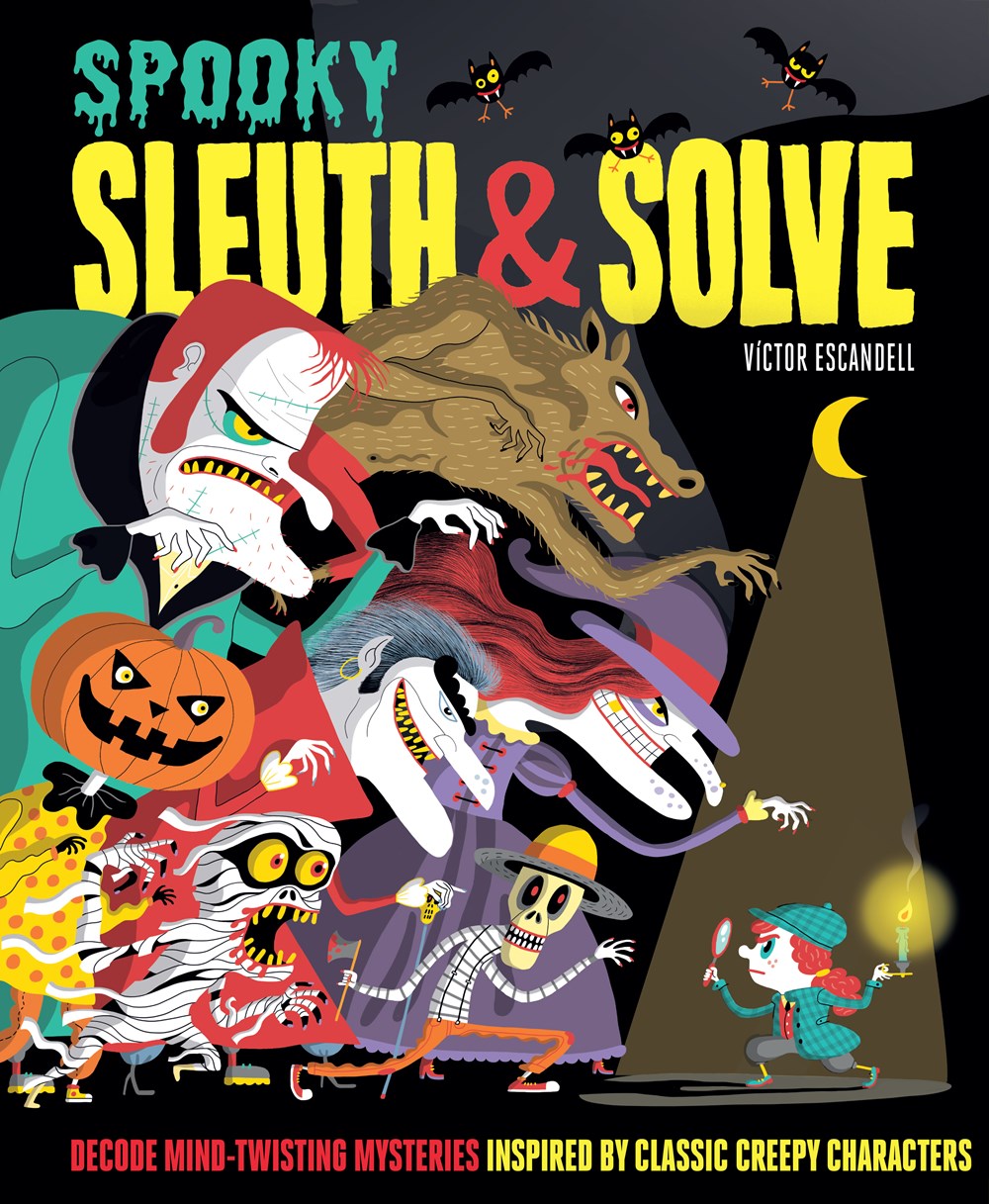
Sleuth & Solve: Spooky: Decode Mind-Twisting Mysteries Inspired by Classic Creepy Characters, by Ana Gallo/Illustrated by Victor Escandell, (Aug. 2021, Chronicle Books), $18.99, ISBN: 9781797205908

Ages 8-12

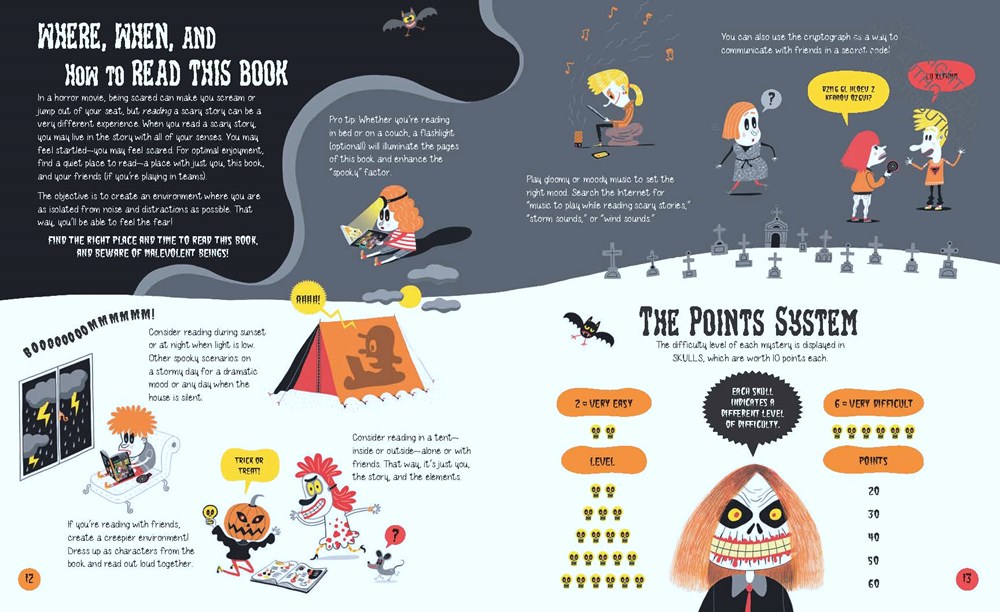
I do love a good code-breaking book, and this one is right in step with the season. Part of Chronicle’s Sleuth & Solve series, Sleuth & Solve: Spooky puts readers up against the creepiest characters to solve mysteries. Unlock a mummy’s hieroglyphics; discover the Frankenstein monster’s hideout; help a deceased aunt keep her promise to her niece. There are nine mysteries to solve, with a cryptograph available to help readers break the codes. Readers can use their problem-solving skills to unravel the mysteries, and it makes for a great addition to escape room challenges or spy school programs. The stories are told in entertaining comic book style, with characters wandering around the page offering prompts and thinking points. Each spooky creature gets a little factual bio at the beginning of the section, giving readers some context to the game as it unfolds. Great for cooperative gaming, the mysteries work best when teams can work together to solve the puzzles.

Display and booktalk with escape room books like the Escape Room Adventure series from Schiffer Books. Check out Sleuth & Solve and Sleuth & Solve: History for more code-breakers in the series.

Posted in Animal Fiction, Fiction, Horror, Middle Grade, Tween Reads

This Halloween, Zombert returns!

Return of Zombert, by Kara LaReau/Illustrated by Ryan Andrews, (July 2021, Candlewick Press), $16.99, ISBN: 9781536201079

Ages 8-12

Last summer, I read Kara LaReau and Ryan Andrews’s Rise of Zombert, and audibly squawked at the cliffhanger ending; needless to say, seeing Return of Zombert in my review box of goodies from Candlewick Press gave me a large amount of seasonal joy.

To catch you up: Lambert is a corporate town, with the YummCo corporation at the town’s heart. Everyone is employed by or affected by YummCo in some way, but it’s okay! Because YummCo is great! They have a catchy jingle, and the head of the company loves to give people the thumbs up! And they swear they don’t test on animals! Except they do. YummCo’s got their corporate fingers in a lot of pies, and some projects are shadowy and secret, and involve some awful animal testing. Zombert – known at the lab as Y-91 – is a cat that escaped from the lab with promises of revenge when he returns to liberate the other animals, but he’s found by a girl named Mellie, who cares for him, nurses him back to health, names him Bert, and doesn’t mind (too much) that he prefers to eat the heads of his live prey.

Zombert – as Mellie’s best friend Danny calls the “zombie cat” – has started easing into life with Mellie while haunted by nightmares of his mother, who never returned from a food run; his brother and sister, captured with him and brought to the lab, and the memories of Cold Hands, the cruel human at the lab who experimented on him. And YummCo hasn’t forgotten about Zombert, either: there are new plans afoot to get him back, and they have another inside man infiltrating Mellie’s and Danny’s lives to facilitate that. Mellie needs to earn some money to get Bert to the vet, and YummCo just happens to be holding a Best Pet contest. Is the contest legit? What do you think? This latest entry into the Zombert chronicles is even more compulsively readable than Rise of Zombert. It’s dark humor at its best, with poignant moments as we experience Zombert’s trauma through his memories. The ending will leave you yelling at the book yet again, and waiting not-so-patiently for the third part of the series, due in the Summer of 2022. Ryan Andrew’s black and white illustrations add the perfect touch of chiller to this story. Definitely grab this one.

Read a sample chapter of Return of Zombert here.

Posted in Animal Fiction, Fiction, Horror, Middle Grade, Teen, Tween Reads

Spooooktastic middle grade: SCARY STORIES FOR YOUNG FOXES

I can’t believe Halloween is THIS WEEKEND. I’ve been booktalking all the spooky books I’ve been reading year-round, in anticipation of this moment!

Scary Stories for Young Foxes, by Christian McKay Heidicker/Illustated by Junyi Wu, (July 2019, Henry Holt & Co.), $16.99, ISBN: 9781250181428

Ages 9-14

A Newbery Honor-winning collection of interconnected stories, Scary Stories for Young Foxes stole the show when it hit shelves in 2019, and it’s still going strong today. Framed by the setting of a storyteller spinning tales for a group of young foxes, the heart of each story involves two kits, Mia and Uly, separated from their litters, and fighting scary creatures to get back. It’s a great concept, because the stories are told for young foxes, putting readers into the mindset of a fox, not a person, and thinking about things that would terrify a young animal, rather than a person, and realizing that we share similar fears. These are stories for older kids – there are some moments that may be tough to read about, including domestic abuse, a witch who wants to wear the kits’ skins, and a very hungry zombie – not fare for kids who are still loving Goosebumps. Think of your Scary Stories to Tell in the Dark fans, maybe a year or two older. Junyi Wi’s illustrations add additional chills. As Kirkus writes, “Dark and skillfully distressing, this is a tale for the bold”.

Scary Stories for Young Foxes has starred reviews from Booklist and the Bulletin for the Center of Children’s Books. You can visit author Christian McKay Heidicker’s author webpage and learn more about his books and school visits, and read his blog.


Scary Stories for Young Foxes: The City, by Christian McKay Heidicker/Illustated by Junyi Wu, (Aug. 2021, Henry Holt & Co.), $17.99, ISBN: 9781250181442

Ages 9-14

The stories continue in the companion to Scary Stories for Young Foxes! Scary Stories for Young Foxes: The City is back with eight new stories, more gloriously horrifying illustration, and two new foxes. Fox kit 0-730 loves the “old stories” about Mia and Uly, and is desperate for an exciting, adventurous life away from the Farm and what he thinks are the safe, wire dens the foxes inhabit. He escapes his cage to discover the truth behind what’s going on at the Farm, and runs for his life. Cozy is a fox who lives in the suburbs with her skulk, forced to escape her den when a terrifying creature that hunts foxes arrives. Both foxes arrive in The City, a scary new world with scary new dangers awaiting them.

The book can be read on its own as a stand-alone, or as a companion to the first book. Either way, the stories are scary: the kind of scary that creeps like dread as you read, and the heart-pounding panic you experience when you have information that the characters just don’t know (yet). Fans who love Katherine Arden, Mary Downing Hahn and Holly Black will love Scary Stories for Young Foxes and Scary Stories for Young Foxes: The City.

Visit illustrator Junyi Wu’s website to see more amazing artwork.


Posted in Fantasy, Fiction, Middle Grade, Tween Reads, Uncategorized

Anne Ursu’s The Troubled Girls of Dragomir Academy is brilliant!

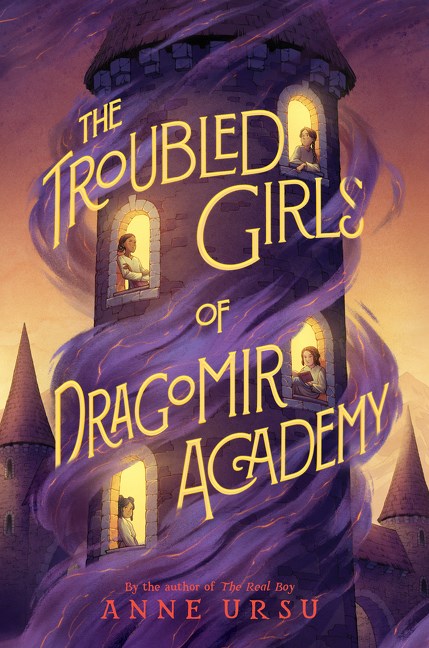
The Troubled Girls of Dragomir Academy, by Anne Ursu, (Oct. 2021, Walden Pond Press), $17.99, ISBN: 9780062275127

Ages 9-13

Anne Ursu is an undisputed champion of kidlit fantasy. I’ve devoured The Real Boy and Breadcrumbs and am in awe of how she creates these incredible worlds with characters that are so realistic, so well-written, that looking up and realizing I’m still in my living room, dog across my legs, with a book in my lap, can be a little jarring. Her latest story, The Troubled Girls of Dragomir Academy, is kidlist feminist fantasy at its best. Taking place in a fantasy world and time, Marya Lupu is a girl living in a kingdom under attack from an army called The Dread. Her parents are straight-up awful; they dote on her brother, Luka, because in this world, the young men are sent into service as sorcerers to fight the dread while, if they’re lucky, the girls and families get to live off the sorcerer’s reputation. This sets the siblings up against each other, which never ends well: sure enough, on the day Luka is to be evaluated by the sorcerers for his skill, chaos ensues and it leads right back to Marya. The next day, a letter from a school called the Dragmoir Academy shows up for Marya: it’s a school for wayward girls, and her parents can’t pack her off quickly enough.  What she discovers at the Academy, though, are a group of young women who are far more than just a bunch of “troubled” young women, and the Dragomir Academy has a darker history than they’re owning up to.

The Troubled Girls of Dragomir Academy is about women, power, and fear. It’s a school story, with different personalities and the conflict that comes with putting that many personalities together under stressful circumstances; it’s also a story of hidden women, hidden messages, and who really controls the dialogue, whether it comes to today’s news or a high-fantasy novel about a land under threat from a horrific enemy that devastates everything in its path. Brilliantly written, with characters that readers will love; Marya is a smart young woman who’s been beaten down for a long time; unlike many of the other girls in the novel, though, she refuses to second-guess or question herself when it’s time to take action, and she motivates her schoolmates to own their own power, too.

Anne Ursu is an award-winning, National Book Award-nominated fantasy author. Visit her website for more information about her books and teacher guides, and upcoming events.

The Troubled Girls of Dragomir Academy has a starred review from Kirkus and is an Indie Next pick.

Posted in Fantasy, Fiction, Graphic Novels, Middle Grade, Tween Reads

Garlic and the Vampire: An unlikely friendship story

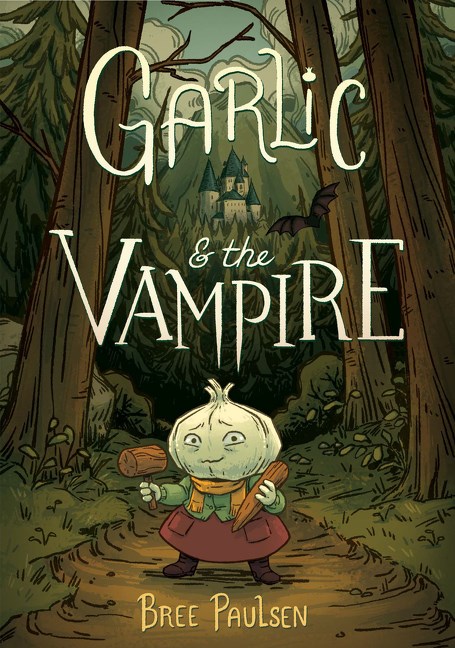
Garlic and the Vampire, by Bree Paulsen, (Sept. 2021, Quill Tree Books), $12.99, ISBN: 9780062995087

Ages 8-12

This very sweet graphic novel is one for the readers who never think they can do the thing… until they do. Garlic and her fellow vegetables live with friendly Witch Agnes, where they work on tending her garden. But rumors start spreading that a vampire lives in the neighboring castle! Oh, no! Celery, a surly member of the bunch, decides that Garlic should go confront the vampire. After all, garlic repels vampires, right? Scared but resolute, Garlic sets out to face the vampire… and learns that rumors and stereotypes are no match for meeting and talking to someone!

I love Garlic and the Vampire’s artwork, which is so warm and comforting, so cuddly and kind, that kids are going to love it. Garlic is a childlike, feminine character; a bulb of garlic with rosy cheeks, sporting a little red dress. Carrot, her best friend, offers sage advice and comfort, and sports a shirt, tie, and overalls. The vegetable characters are all anthropomorphic, with distinct personalities and expressive faces and gestures. Alice the Witch isn’t at all threatening, with a warm burgundy top, forest green skirt, and a white apron; she sports less of a witch’s black hat and more of a pilgrim’s hat, not pointed but squared off, with a brown band around the brim. The colors throughout the book are warm, natural colors; lots of greens, oranges, and reds. Even the so-called horrible vampire looks like a kindly gentleman who’d rather have a cup of tea than rampage through a town. The character interactions are as humorous as they are gentle. Have this ready as an alternative to kids who aren’t into the scary side of Halloween, but still want to feel a part of things.

Visit Bree Paulsen’s website to see more of her illustration work, and read her webcomic, Patrik the Vampire.

Garlic the Vampire has a starred review from the Bulletin of the Center for Children’s Books.

Posted in Fiction, Graphic Novels, Historical Fiction, Middle Grade, Realistic Fiction, Tween Reads

Stealing Home tells a story of the Japanese-Canadian Internment

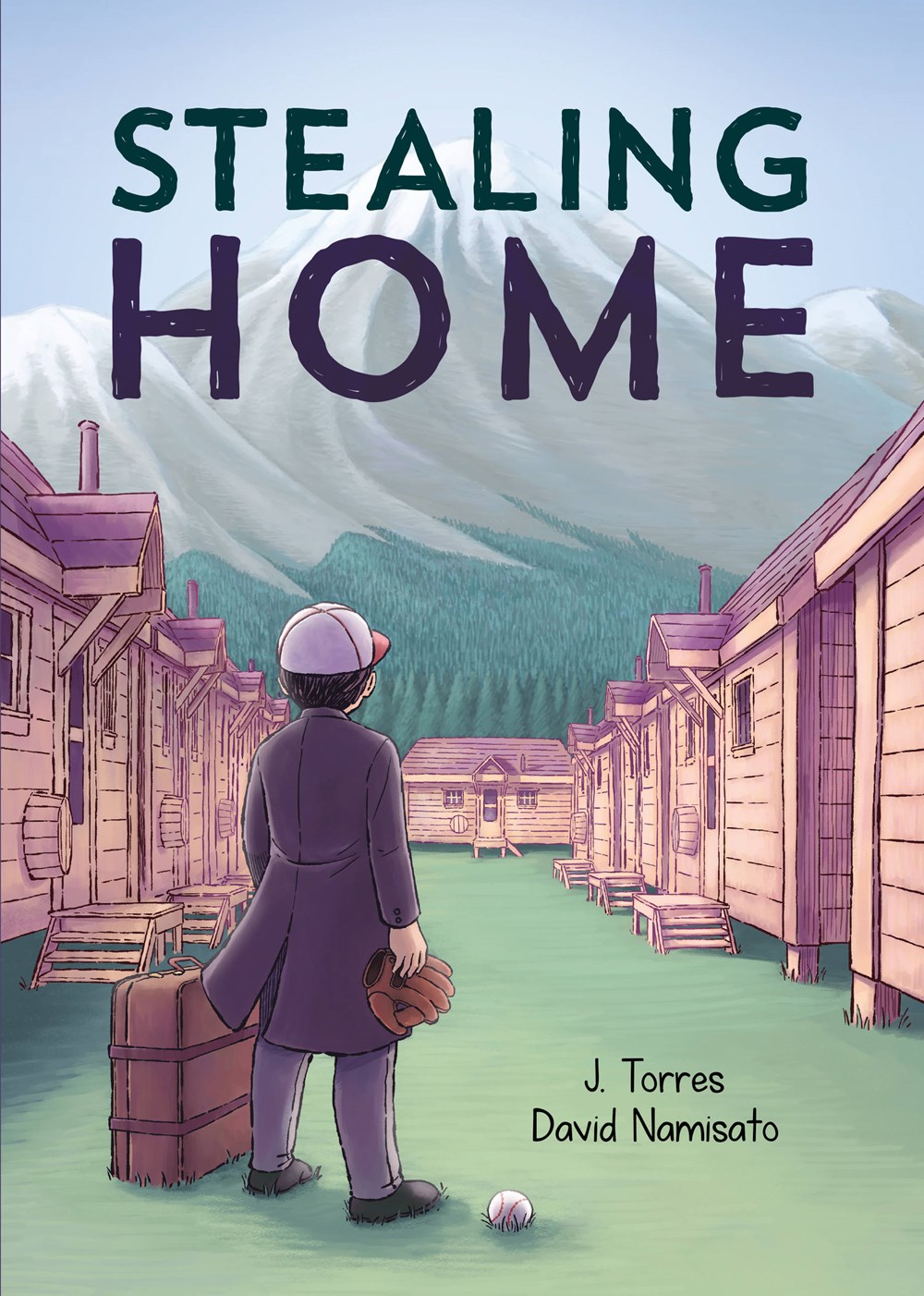
Stealing Home, by J. Torres/Illustrated by David Namisato, (Oct. 2021, Kids Can Press), $17.99, ISBN: 9781525303340

Ages 9-13

It’s 1941, and Sandy Saito is a happy Japanese boy, living with his family in Canada, and a big baseball fan. He obsessively follows the Asahi team, a Japanese-Canadian baseball team, and the pride of his community. But the Japanese attack Pearl Harbor in December, and Sandy’s life as he knows it is forever changed: he and his family are moved to an internment camp, and separated from their doctor father, who’s placed “where he needs to be”. As Sandy and his brother try to adjust to their new life, they find some comfort in their favorite sport; Sandy tries adopting the mindset of taking whatever pitch comes your way.

An emotional graphic novel, Stealing Home may be an awakening for some readers who thought that only Japanese Americans were put into internment camps; this was not the case. Canadian families were also separated more often than American families; males were often relocated to labor and POW camps. In Stealing Home, Doctor Saito was initially relocated to a camp where he could look after men at these labor camps; after being reunited his family, he continues working as a physician to the camp community. Hope and baseball intertwine throughout the story as Sandy tries to cope with his family’s new life, his mother’s grief, and his father’s continued distance from his children. Baseball is a beacon of hope and, ultimately, the great uniter. Sandy reflects, looking back, that “Baseball did not discriminate against us. It did not impose any limits on us. It helped us forget everything that was wrong in the world, even if just for one moment in time”.

Back matter by author and former internee Susan Aihoshi looks at the history of the camps, the racism Japanese Canadians endured, the Asahi, and further resources. An excellent graphic story and companion to novels like George Takei’s They Called Us Enemy.

The University of Washington has excellent resources available on the Japanese Canadian internment, as does the Canadian Encyclopedia. Curio.ca offers a lesson plan on the Asahi baseball team, and you can visit the Asahi Baseball Association’s website to learn more about the team.

Stealing Home is a first-round CYBILS middle grade graphic novel nominee.

Posted in Adventure, Fantasy, Fiction, Middle Grade, Tween Reads

Blog Tour and Giveaway! NEW NatGeoKids Explorer Academy: Dragon’s Blood!

I have been WAITING on this book! I’ve been absolutely hooked on the Explorer Academy series from book one, and finally, Dragon’s Blood is here – grab your copy!

Welcome back to the Explorer Academy! and…

The Explorer Academy: The Dragon’s Blood Blog Tour!

To celebrate the release of Explorer Academy: The Dragon’s Blood by Trudi Trueit on October 5th, blogs across the web are featuring exclusive guest posts from Trudi, as well as 5 chances to win all 6 books in the series so far! The 7th and final book in the series will be released in Fall 2022.


What a Character!
by Trudi Trueit

“How do you come up with interesting characters?”

It’s the question I got most often from writers. For me, it’s not a magical thing. Most of the time, characters don’t pop into my head fully formed. If you don’t base them on anyone you know (and I don’t) character building takes time. It’s like getting to know a new friend. The more time you spend together the more that person reveals to you.

I almost always start with a name. Until I have that, it’s hard to get into the writing. I tend to stay away from more common names. I also like to mix things up. I might name a villain something soothing, like Serene, or a timid boy, Rocco. Whenever I hear an interesting name, I write it down so I always have a long list to start with when I am creating a character. Once I choose a name, I start asking questions about that character to get a feel for who they are—and I ask A LOT of questions. I fill out a questionnaire for each major character. First, I cover the basics: name, age, physical description, ancestry, family details, pets, hobbies, sports. Next, I ask:

  • What’s in my character’s purse or pocket right now?
  • What’s my character’s most prized possession?
  • Describe my character’s personality in four words.

Then it’s time to go deeper. The answers to these questions will determine how the character will think and act throughout the story.

  • What’s my character’s biggest flaw?
  • What’s my character’s greatest hope?
  • What’s my character’s biggest problem or fear?
  • What’s my character’s most treasured secret?

And the most important question of all:

  • What does my character want more than anything in the world?

It’s the protagonist’s goal that will drive the plot, so this is a question that must be answered.

If I get stuck in the development phase, I try writing a letter to myself from the character’s point of view. This gets me out of my head and into theirs, where it belongs. I am free to be open and truthful. Once I am, it usually unlocks the character’s true personality and motivations.

Also, you don’t need to know everything about a character when you begin writing. In fact, it’s better if you don’t. Start with a name, a problem, and a goal. Go from there. The more you write, the more your character will share—just like a friend. And yes, I think of all of my characters as real people. They are, aren’t they?

Just for fun, if you’d like to find out what Explorer Academy character you are most like, take the quiz!

As for me, I am most similar to Emmett but then I already knew that!


Amazon | Bookshop | Goodreads

“a fully packed high-tech adventure that offers both cool, educational facts about the planet and a diverse cast of fun characters.” —Kirkus

“This exciting, fast-paced, far-flung story is full of science facts and James Bond-like gadgets, accompanied by colored illustrations.  The ending is guaranteed to keep readers eager for the next series installment.” –Booklist

Explorer Academy is exciting and smart.” —Karen Bokram, Editor-in-Chief, Girls’ Life

An explosive revelation and a familiar face heighten the mystery for Cruz and friends in the sixth book in this adventure-packed series.

Still reeling from the life-changing discovery he found buried in the mysterious archive, Cruz Coronado grapples with an important secret as the gang heads to China in search of the second-to-last piece of the cipher. Under the watchful eye of a new adviser, life on the ship returns to almost normal…Almost.

Just as things seem to be going smoothly, a familiar face shocks Cruz back into reality, and the final piece in this life-and-death scavenger hunt veers toward a dead end.

Check out the Explorer Academy website, featuring videos, comic shorts, games, profiles of real-life National Geographic Explorers, chapter excerpts and more. 

Follow Trudi: Website | Twitter | Facebook | Youtube

TRUDI TRUEIT has written more than 100 books for young readers, both fiction and nonfiction. Her love of writing began in fourth grade, when she wrote, directed, and starred in her first play. She went on to be a TV news reporter and weather forecaster, but she knew her calling was in writing. Trueit is a gifted storyteller for middle-grade audiences, and her fiction novels include The Sister Solution, Stealing Popular, and the Secrets of a Lab Rat series. Her expertise in kids nonfiction encompasses books on history, weather, wildlife, and earth science. She is the author of all the narratives for the Explorer Academy series, beginning with Explorer Academy: The Nebula Secret. Trueit was born and raised in the Pacific Northwest, and lives in Everett, Washington.


 GIVEAWAY

a Rafflecopter giveaway

  • One (1) winner will receive all 6 Explorer Academy hardcovers (The Nebula Secret, The Falcon’s Feather, The Double Helix, The Star Dunes, The Tiger’s Nest, and the NEW book The Dragon’s Blood)
  • US/Canada only
  • Ends 11/1 at 11:59pm ET
  • Check out the other stops for more chances to win!


Blog Tour Schedule

October 18thPragmatic Mom
October 19thImagination Soup
October 20thMom Read It
October 21stAlways in the Middle
October 22ndBookHounds

Posted in Adventure, Fantasy, Fiction, Middle Grade, Tween Reads

Witches of Orkney Super-Post!

‘Morning, all! I’ve been digging deeply into Alane Adams’s Witches of Orkney series, courtesy of SparkPress, and… WOW. I read the Legends of Olympus books earlier this year, so when Spark offered me the full Orkney set to get caught up in time for the newest book, The Mermaid Queen, I went for it. The big feedback: great reads for your fantasy readers; good crossover for your Rick Riordan readers. Let’s get into each book, shall we?

The Blue Witch, (Witches of Orkney #1), by Alane Adams, (Oct. 2018, SparkPress), $12.95, ISBN: 9781943006779

Ages 8-12

Abigail Tarkana is a 9-year-old witch with a big problem: her magic is different, and that’s not exactly prized at her school, the Tarkana Witch Academy. While everyone else’s witchfire is green, hers is blue, which could mark her as a traitor, which targets her for even more bullying than she’s already putting up with. Together with her friend, Hugo, they will strip away the secrets of Abigail’s past, including the identity of her parents. Is she the daughter of a notorious coven traitor? Abigail and Hugo confront monsters on a quest into the Netherworld that test both their powers. Rich with Norse mythology, Alane Adams excels at worldbuilding and character development. Black and white illustrations throughout help give readers extra context and keep interest high. There’s action and intrigue with solid fantasy storytelling, and the characters are kid-friendly. Themes of friendship, protecting and supporting one another, and teamwork run strong.

An excellent choice for book groups, you can touch on Norse mythology and its presence in the series. Alane Adams offers free book club kits on her author website for all of her series, including maps, posters, and challenges. Offer as a readalike to Riordan fans who loved the Magnus Chase and the Gods of Asgard series, or Kelley Armstrong and Melissa Marr’s Blackwood Pages series, and have nonfiction like NatGeo Kids’ Treasury of Norse Mythology or Mathias Nordvig’s Norse Mythology for Kids available. Readers are going to devour this series.

The Blue Witch received multiple awards, including the 2020 IPPY Awards Bronze Winner in Cover Design, and Moonbeam’s Gold Medal in Pre-Teen Fiction/Fantasy.


The Rubicus Prophecy, (Witches of Orkney #2), by Alane Adams, (Oct. 2019, SparkPress), $12.95, ISBN: 9781943006984

Ages 8-12

The second book in the Witches of Orkney series ratchets up the action. Abigail is back at Tarkana Witch Academy and studying for her classes. She’s still dealing with Endera, her bully, and to make matters worse, Endera’s mother is one of Abigail’s teachers. Hugo, meanwhile, is hearing rumors about war and a prophecy that sounds uncomfortably similar to Abigail and her abilities. There’s even more action in this installment, including visits from the Norse gods, and draugars – zombies! – to be read. Illustrator Jonathan Stroh returns, creating exciting, spooky black and grey artwork that adds to the mood of the book. Readers can pick up the story without having read The Blue Witch, but I’d let them know taht they’re going to miss quite a bit of exposition if they do: story arcs continue here that were set up in the first book, after all, and established characters took an entire book to develop. This is a good series to give to readers who are ready for slightly grittier storytelling, as Ms. Adams reminds us that the Vikings didn’t worship the Norse gods for their gentle natures. (And hello, zombies.) Not overly gruesome, but something to keep in mind for readers who may need a heads-up.

Alane Adams has a gift for fantasy storytelling, and loads the book with adventure, humor, and magic elements. Giving her stories a background in Norse myth gives it the “Riordan Appeal” that lets me start off a strong booktalk, because in my readers advisory elevator pitches, I have to move fast: I’m competing with Minecraft and Roblox on our library computers, after all!


Witch Wars, (Witches of Orkney #3), by Alane Adams, (Oct. 2020, SparkPress), $12.95, ISBN: 9781684630639

Ages 8-12

We’re two books in now, and the third book, Witch Wars, starts off with the Asgardian prologue we’ve grown accustomed to, which will set the tone for the story within, which leads into Tarkana, present day, where Abigail is beating herself up over the disasters from The Rubicus Prophecy. Now, Orkney is speeding toward war, an ancient power has been restored, and Hugo and Abigail set off to Jotunheim – land of the Frost and Rock Giants – to track down Thor and convince him to give them his hammer, Mjolnir, to help them set things right. No problem, right? Meanwhile, Endera and her friends are on Abigail’s trail, believing they’ll find proof that Abigail is truly a traitor, and their former friend Robert Barconian arrives on the scene with an army of dwarves to stop Abigail and Hugo. The characters are maturing and growing into themselves in this third book; Abigail, in particular, considers the fallout of her actions and has to contend with guilt and grief, while Hugo steps up to be the support that she needs as she works through some complex emotions. More gods and characters from Norse mythology make appearances, and the intrigue runs high. The action keeps readers turning pages, and the dialogue moves at an excellent pace. This series starts off strong and, three books in, maintains its forward motion.


The Mermaid Queen, (Witches of Orkney #4), by Alane Adams, (Oct. 2021, SparkPress), $12.95, ISBN: 9781684631131

The latest book in the saga, The Mermaid Queen, starts off with a major moment of foreboding in the Asgardian prologue. From there, we see that Abigail has fallen into a depression after putting her trust in the wrong ally during the events of Witch Wars. Capricorn, the mermaid queen, betrayed Abigail and her friends and unleashed Jormungand, the Midgard Serpent, and now Abigail and Hugo must cross the seas to find Odin and warn him that Jormungand is coming for him, and find a way to return the serpent to his underwater cell. Abigail discovers that her powers on their own aren’t enough, and may have to risk tapping into her dark magic. But can you use dark magic, even for a good cause, without being affected? It’s a choice she has to make. Big choices and the truth that life isn’t always black and white; good and evil, are the big themes here – perfect for a growing and maturing tween reader who is confronting similar quandaries (maybe no Midgard Serpent, but some moments sure feel as intimidating as one) in their own lives.

The Witches of Orkney series is the prequel to the Legends of Orkney series, so you can read this before you dig into Legends, and go straight through, or you can read Legends first, and then pick up Witches and get deeper context for events and characters in Legends. Either way, I really suggest you read the novels in order, so you can have a cohesive understanding of each series as it unfolds. It’s an excellent series that’s sure to have high interest. If you are new to Alane Adams’s universe, ask your big readers to give them a shot and get feedback before buying a set; I think it’s a purchase well made.