Posted in Intermediate, Non-Fiction, Non-Fiction, Women's History

The Girl Who Ran: The Story of Bobbi Gibb

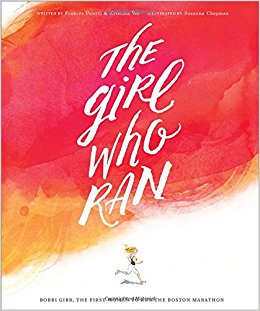
The Girl Who Ran: Bobbi Gibb, The First Woman to Run the Boston Marathon, by Frances Poletti & Kristina Yee/Illustrated by Susanna Chapman, (June 2017, Compendium), $16.99, ISBN:  978-1-943200-47-4

Recommended for readers 5-12

Believe it or not, there was a time not too long ago when women weren’t allowed to run marathons. The Boston Athletic Association, in fact, said women were “incapable” of running 26.2 miles. (But we can carry and give birth to children. That makes sense.) Bobbi Gibb set out to prove them wrong in 1966 – told you it wasn’t that long ago – and The Girl Who Ran, by Frances Poletti and Kristina Yee, tells her story in beautiful inks, prose, and poetry.

Starting with Bobbi’s childhood, we learn how she loved to run, as kids do. But one day, all of her friends stopped, and she kept going. Her father took her to see the Boston Marathon when she was older, and she was determined to do it. Susanna Chapman’s art is incredible, creating swirling tornadoes of negative words each time Bobbi is told why she can’t run: “girls can’t run marathons”, “what a strange idea”, “what if you injure yourself?”, and “rules are there for a reason”. Each time, Bobbi physically pushes those words away and endures; she trains where her parents can’t see her, running cross-country; she dresses in baggy clothes to hide her gender, and joins the Marathon, where she finds an outpouring of support for her fellow runners. When she reveals herself, the support reaches a crescendo, illustrated with vibrant reds and oranges. Wellesley girls support her with cheers and signs, and as she nears her last steps, the book opens into a gatefold to welcome Bobbi to the finishing line. After the race, Bobbi wonders what else could be proven wrong? And that, my friends, is the question we still need to ask.

Photos of Bobbi Gibb, with a brief biography and illustrated timeline of the Boston Marathon complete this gorgeous book. I’m always on the lookout for biographies that go beyond the usual names on our shelves; this is certainly one I want my Queensboro Kids to see. This fits in with the Build a Better World summer reading theme, too: ask your kids what else can be proven wrong as they look around their world today; and how did Bobbi Gibb contribute to building a better world in 1966 and beyond? Bring up Title IX, a federal law passed in 1972 which prevents gender discrimination in education programs and activities, and led the way to girls competing in school sports. Did Bobbi Gibb contribute to this landmark decision?

There’s a Bobbi Gibb website, and ESPN has a good article discussing Bobbi Gibb’s place in history and a statue that’s underway commemorating her historic run. The Girl Who Ran received a starred review from Kirkus and is an Amelia Bloomer Project nominee. It’s a strong addition to biographical, sports, and feminist collections.
Posted in Graphic Novels, Teen, Women's History

The life of a legend, through the eyes of those who knew her: California Dreamin’

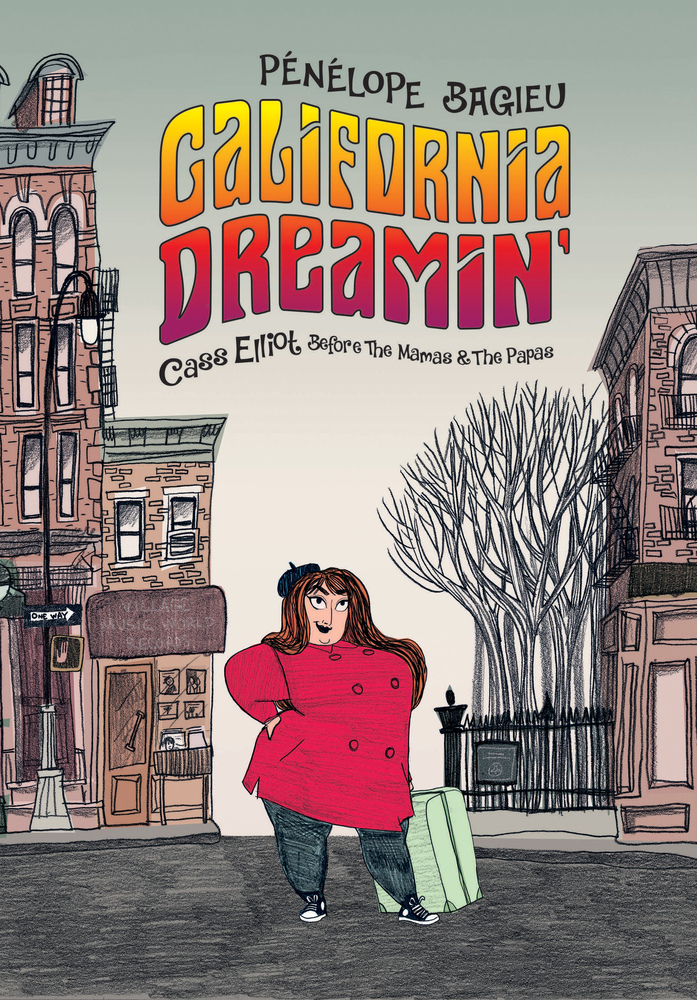
california_1California Dreamin’, by Pénélope Bagieu, (March 2017, First Second), $24.99, ISBN: 9781626725461

Recommended for ages 12+

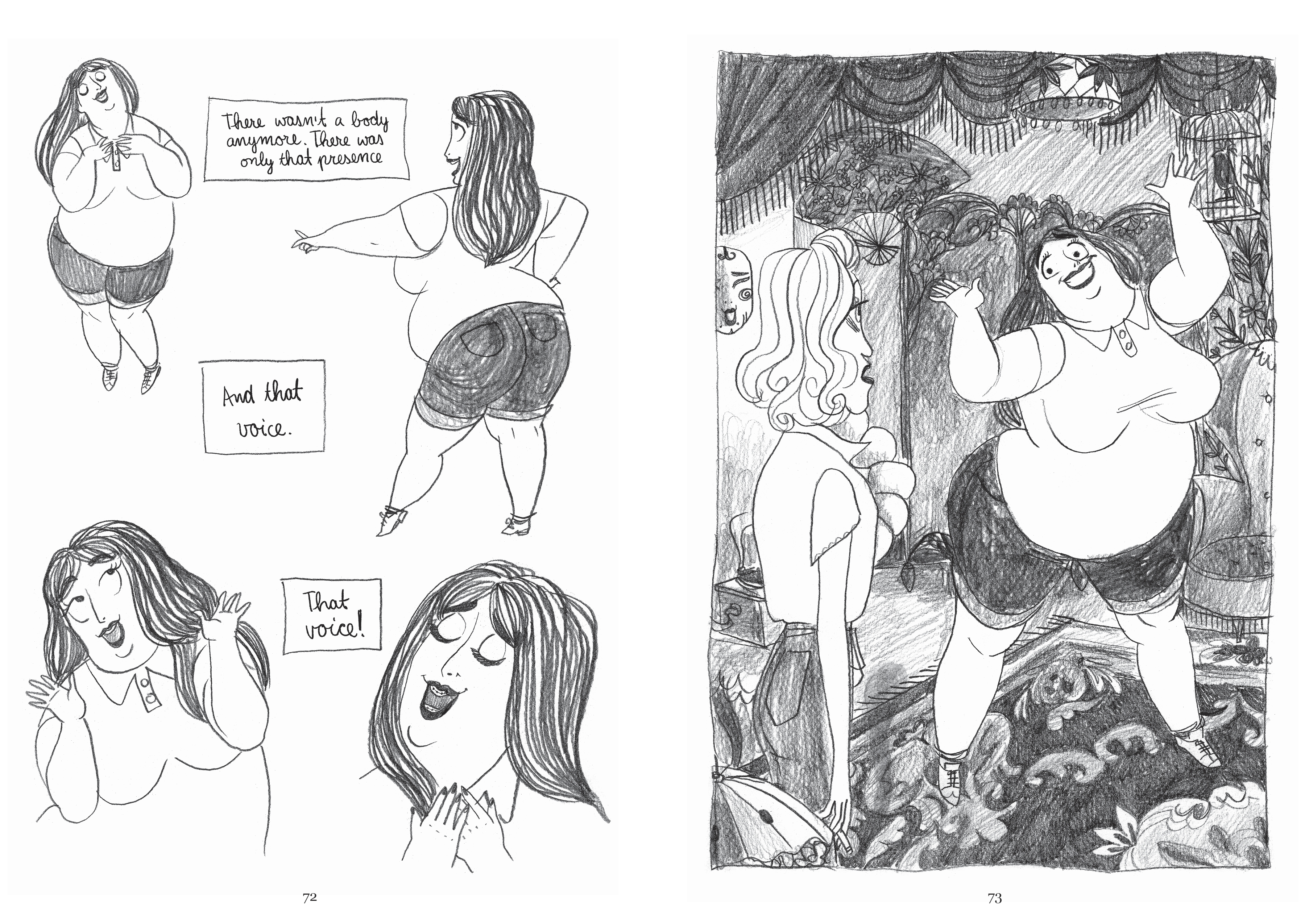
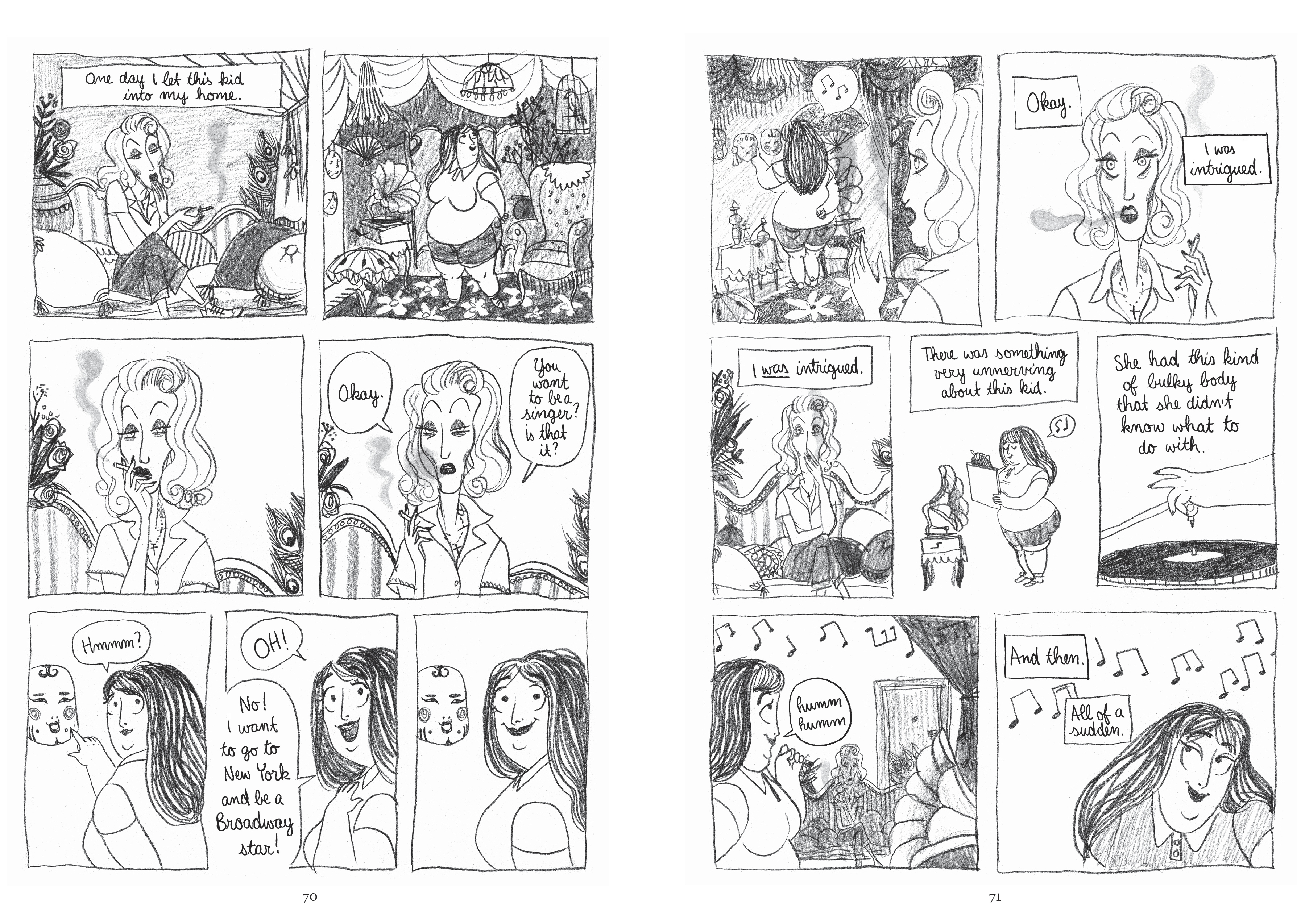
Mama Cass is a music legend. A member of The Mamas and the Papas folk group in the late 1960s, I grew up hearing the group bemoan Monday mornings and dream about California when the winters got too cold. There’s been a lot of ink spilled, writing about the dysfunctional group and its members, but Pénélope Bagieu pays homage to Cass by looking at her earliest years, before and leading up to the formation of the group, in her graphic novel, California Dream: Cass Elliot Before The Mamas and the Papas.

Beginning with her birth, California Dreamin’ tells Cass’ story through the eyes of the people in her life; her family, her friends, her band members. We learn something about each of them as they reveal their stories about life with Cass, and we get a glimpse into some of the singer’s defining moments: her work with Denny Doherty and the band, The Mugwumps; the group coming forming while performing in the Virgin Islands; Mama Cass joining The Mamas and the Papas despite John Phillips’ insistence that she was just providing “guest vocals”, and that the band was himself, Michelle Phillips, and Denny Doherty.

The art is expressive and touching; Bagieu makes her characters cartoony but real; touching and intense. Making Cass’ story a graphic novel will hopefully appeal to a younger audience who may not know the singer or her group, but will appreciate her ability to make things happen for herself and never take no for an answer.

Pénélope Bagieu’s first US graphic novel was 2015’s Exquisite Corpse..

california_2california_3

Posted in Middle Grade, Non-Fiction, Non-fiction, Tween Reads, Women's History

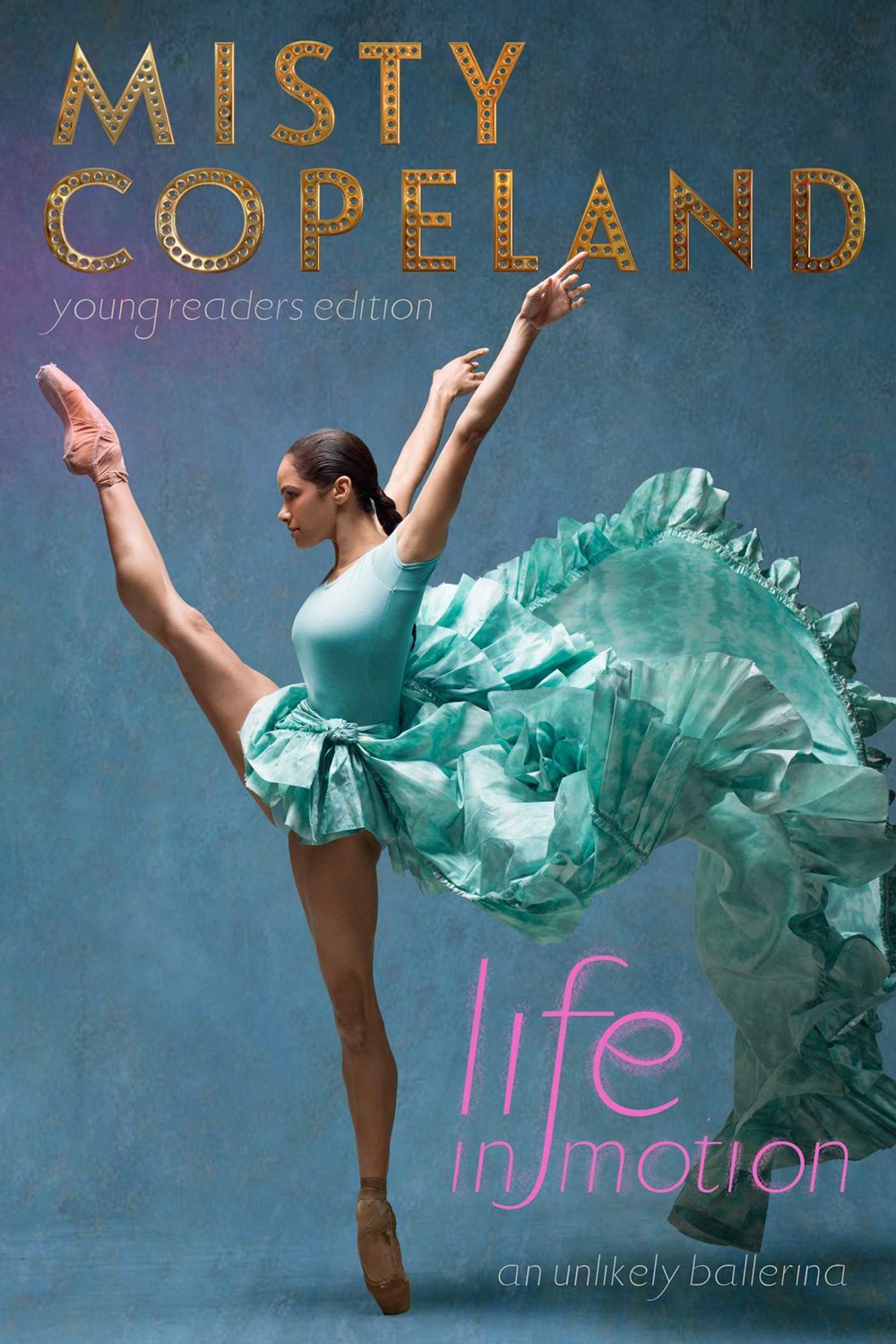
Life in Motion: Misty Copeland’s inspiring autobiography, edited for young readers

misty-copelandLife in Motion: An Unlikely Ballerina (Young Reader Edition), by Misty Copeland, (Dec. 2016, Aladdin), $17.99, ISBN: 978148147979

Recommended for ages 8-12

Misty Copeland is amazing. The first African-American principal dancer for American Ballet Theatre didn’t start ballet until her early teens and has faced poverty, racism, criticism, and injury to do what she loves. In this young readers edition of her autobiography, she tells readers about the trials and triumphs she’s lived, the hard work she’s put in, and the sacrifices she’s made to get where she is in the dance world. We read about the custody battle between her mother and ballet teacher when she was 15; the rampant racism she’s endured, and she holds up to the light the eating issues that run rampant in the ballet community. We also read about amazing achievements, like her dancing on tour with Prince and her joy at meeting the dancers that inspired her the way she inspires a new generation of children.

Misty does not shy away from diversity here: she embraces it, giving us the names of the African-American dancers that went before her. She also doesn’t hide the fact that she’s taken some heat for being “too mainstream”; that bringing ballet to the masses is looked down upon – thankfully, that’s something she disagrees with. Ballet and dance, the arts, are for all – if she can inspire another kid to put on a pair of toe shoes, or sign up for hip hop classes because it’s something they love, she’s done right. Copeland is all about embracing your passion. Her confidence and gratitude come through in equal measure, and she dispenses advice for living and building one’s self-esteem throughout the book. Embrace your strengths and never give up – these are the lessons that kids will come away with after spending some time with Misty Copeland.

There are photos in the finished book (I’ve got an egalley), and more on her home page. You can also find her on the American Ballet Theatre page, which also has a section on education and training for readers interested in learning more. Display and booktalk this with Copeland’s picture book (illustrated by Christopher Myers), Firebird.

This book is a must-add to biography collections. Booktalk and display this if, like me, you’ve got kids that need to see someone smashing stereotypes and making it to the top of her (or his) game. If you have dancers in your home or your life, give this book to them and let them watch this ABC Sunday Spotlight from 2014.

Posted in History, Non-Fiction, Teen, Tween Reads, Women's History

Women in the Old West: Frontier Grit

frontier-gritFrontier Grit, by Marianne Monson, (Sept. 2016, Shadow Mountain), $19.99, ISBN: 9781629722276

Recommended for ages 12+

Monson profiles 12 pioneer women who lived life on the frontier as America expanded into the West. From a freed slave who watched her husband and children sold in front of her to a woman who rescued Chinese girls from human trafficking, every woman profiled in this book withstood hardships, overcame obstacles, and thumbed their noses at nay-sayers to change the world. There are entrepreneurs, doctors, politicans, and activists, all here to inform and inspire a new generation.

Frontier Grit gives us a new batch of women in history that many of us would otherwise never have heard of; while the research is well done and comprehensive, the writing is simplified, more for a middle school audience than the 18+ age group suggested by the publisher. An author summary at end of each profile relates what each woman personally means to the author, detracting from the scholarship of the overall book and relegating it to the territory of history report. Each woman’s impact could more effectively be communicated by making it less personal, more definitive; the lasting impact of each woman on all women.

Each profile includes photos (or drawings, where applicable), notes and sources. A reasonable purchase if you need additional women’s biographies, particularly as they relate to the American frontier or women’s suffrage.

Posted in Non-Fiction, Teen, Tween Reads, Uncategorized, Women's History

Radioactive! The story of two women scientists and how they changed the world.

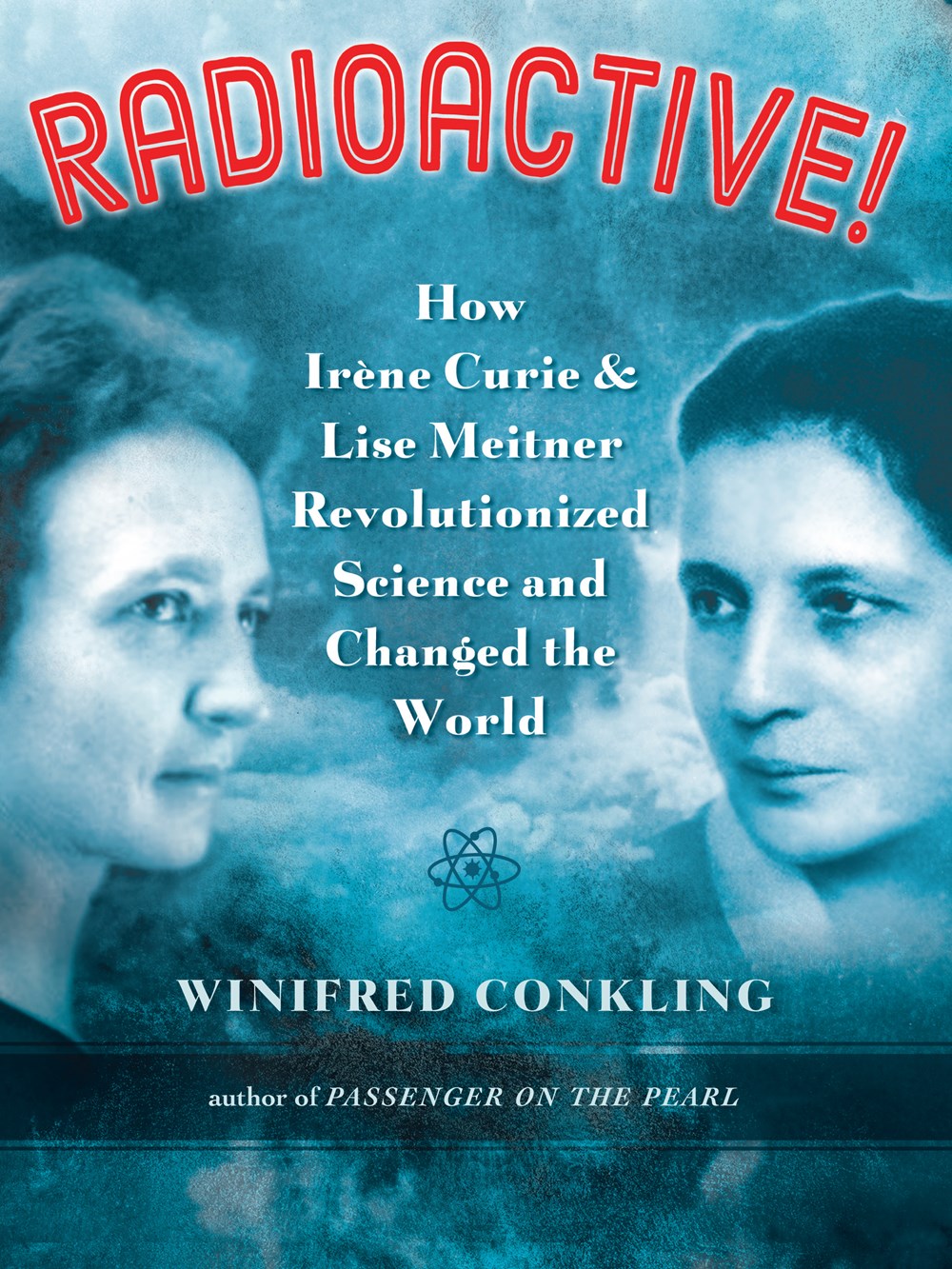
radioactiveRadioactive!: How Irène Curie and Lise Meitner Revolutionized Science and Changed the World, by Winifred Conkling (Jan. 2016, Algonquin Young Readers), $17.95, ISBN: 9781616204150

Recommended for ages 12+

Most of us know who Marie Curie was: the scientist who pioneered the study of radioactivity. But how many know that her daughter, Irène, was an accomplished scientist in her own right, whose studies on radioactivity, physics, and the transmutation of elements earned her a Nobel prize, shared with her husband? Have you heard of Lise Meitner, the physicist whose work in physics – often published in conjunction with her friend and research partner, Otto Hahn – led to the discovery of nuclear fission? She was passed over for a Nobel for several reasons, not the least of which involved her being straight-up robbed by a partner who took credit for much of her work during the World War II years, when she was exiled in Sweden.

Radioactive! tells the stories of these two very important women and their historical research. We learn Irène’s story from the beginning, as the daughter of celebrated scientist, Marie Curie. She worked by her mother’s side, operating an x-ray machine on World War I battlefields, eventually going on to further her mother’s work in radioactivity along with her chemist husband, Pierre Joliot. We learn about Lise Meitner, whose work put her in competition with Curie many times, but experienced more sexism and prejudice than Curie ever did. When Hitler rose to power in the 1930s, her Jewish heritage created problems at her research position, where former colleagues turned against her and demanded she resign; she was eventually forced her to flee Austria for Sweden or end up in a concentration camp. Although she continued to consult with Hahn on their nuclear fission research, he took credit for her work and took home the Nobel Prize for Chemistry in 1944.

I’ve been looking for biographies on women in science for my tweens and teens, and this certainly fits the bill. There are photographs throughout the book, and Ms. Conkling provides strong backgrounds on both Curie and Mietner, making them live again, making the reader care about them, and explaining physics, fission, and radioactive science in terms that we can all wrap our heads around. A valuable addition to libraries and classrooms, and a great book for anyone who wants to inspire the next generation of scientists – female OR male.

Winifred Conkling is an award-winning author of fiction and nonfiction for young readers, including Passenger on the Pearl: The True Story of Emily Edmonson’s Flight from Slavery and the middle-grade novel Sylvia and Aki, winner of the Jane Addams Children’s Literature Award and the Tomás Rivera Award. Her author website provides teacher guides for her books. There is no guide up for Radioactive yet, but I’m sure there will be one closer to the book’s publication date.

Posted in History, Middle Grade, Non-fiction, Tween Reads, Women's History

For the Right to Learn tells Malala’s story for younger readers

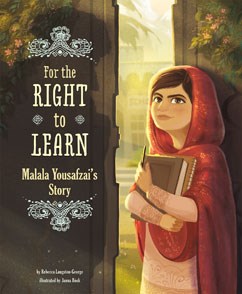
malalaFor the Right to Learn: Malala Yousafzai’s Story, by Rebecca Langston-George/Illus. by Janna Bock (Sept. 2015, Capstone), $15.95, ISBN: 9781623704261

Recommended for ages 9-14

There are some great books available on Malala Yousafzai, the Pakistani teenager that defied the Taliban by demanding education for girls and young women, and was shot for her activism. I have most of them in my library – I buy every book I can on Malala, because I want boys and girls alike to know her story and understand that education is a right that not every child enjoys in this world, and the lengths that children will go to in order to have that right.

Rebecca Langston-George’s book For the Right to Learn: Malala Yousafzai’s Story, illustrated by Janna Bock, is nonfiction that reads like fiction. We’ve seen Malala’s photos at the UN, of Malala in the hospital, Malala with her family, but illustrating a book on Malala allows us to see the events in her life that led to the present. Digitally created images, like Malala writing science formulas on her hands when other girls drew flowers are powerful and beautiful. The fear in her eyes and her friends’ eyes when a Taliban soldier boards her school bus, looking for her, grips readers who know what will happen – the drops of blood on a fallen book, set against a stark white background with the words, “Three shots shattered the silence”, is incredibly effective.

For visual middle grade learners, this is a great companion to any social studies/current events discussions. There is a glossary and an index in the back of the book, and there’s a great blog with Web resources that can round out any lesson plan on Malala.

Posted in History, Non-Fiction, Tween Reads, Women's History

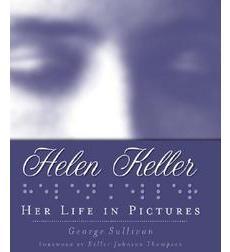
Book Review: Helen Keller: Her Life in Pictures (Scholastic, 2007)

Recommended for ages 8-12

As a little girl, I was captivated by Helen Keller’s life story. One can only imagine Helen Keller’s struggles, but even more amazing and inspirational are her triumphs: graduating college with honors at a time when women were still fighting for the right to vote. Learning to lip read while being blind and deaf, relying only on touch to communicate with the outside world. Becoming a political and social activist at a time when women were supposed to be seen and not heard. She was an amazing woman who was surrounded by amazing women; first, her beloved teacher Annie Sullivan and later Polly Thomson, and when I saw this book in my local library, I snatched it up.

I was not disappointed. Helen Keller: Her Life in Pictures is a gorgeous book filled with photos of Helen throughout her life. There are childhood pictures of her and pictures of her with Annie Sullivan; pictures throughout her college career at Radcliffe, and pictures of her with the many public officials she met throughout her life. Always mindful of her appearance so people would not look at her and see her handicap first, she is always dressed beautifully and perpetually smiling. There are some candid photos, including shots of her with her pets and even a shot of Helen, Annie, and Annie’s husband, John Macy.

Keller’s great-grandniece Keller Johnson-Thompson writes the foreward where she discusses asking her grandmother questions about her famous relative. Notes at the end of the book provide further reading on Helen Keller, including a link to Ms. Johnson-Thompson’s biography on the American Foundation for the Blind’s home page, where she serves as an Ambassador; there are many links to Helen Keller photographs and artifacts on this page. There is also a link to the Helen Keller birthplace museum.

Posted in History, Non-Fiction, Tween Reads, Women's History

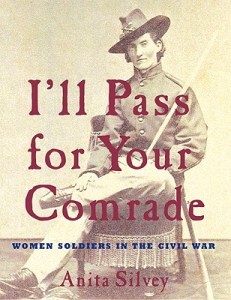
Book Review: I’ll Pass for Your Comrade, by Anita Silvey (Clarion, 2008)

Recommended for ages 9-12

I’ll Pass for Your Comrade is a line taken from a Civil War Ballad, “The Cruel War”; a woman is saying goodbye to her love, leaving to fight, and begs to join him in combat. She offers to “pass for his comrade” – something that, according to the National Archives, at least 250 women did during the Civil War. Many women fought to be with their husbands and fiances. Some women fought for revenge. Some women fought for the thrill of battle. Unfortunately, because they had to keep their stories silent, most of these stories have been lost. I’ll Pass for Your Comrade tells the stories of some of the women who donned men’s uniforms, cut their hair, and went to war.

We hear the words of the women who fought, like Loreta Janeta Velazquez, who wrote about her participation in the Battle of Bull Run as Lieutenant Harry T. Buford. We see photographs of women like Frances Clayton, featured in the book both dressed in her uniform and her dress. We learn about their lives after the War, and how some of them took their secrets to the grave, their families only discovering their truth after death.

The book has black and white photographs and primary documents reprinted throughout, offering students the chance to see history as they read about these women. The author also provides a bibliography for further reading. This would be a strong selection to use during Women’s History Month or during a Civil War unit.