Posted in Non-Fiction, Teen, Tween Reads, Young Adult/New Adult

Girl Power! Girl Code!

Girl Code: Gaming, Going Viral, and Getting It Done, by Andrea Gonzales and Sophie Houser, (March 2017, HarperCollins), $17.99, ISBN: 9780062472502

Recommended for readers 12+

Two teens attend NYC’s Girls Who Code Program, become friends, and create a viral video game that addresses the taboo of menstruation. It really happened, and they’re telling their story, hoping to inspire more girls to get involved in the tech space. More importantly, Andrea “Andy” Gonzalez and Sophie Houser talk frankly about the stress and the pressure of being in the spotlight; the sacrifices they made as they learned more about school, tech and entrepreneurship. They discuss the struggle to find a work-life balance. Girl Code is loaded with photos and includes an appendix with a glossary and coding exercises for both PC and Mac and is essential reading for anyone – particularly young women – interested in pursuing STEM careers.

I’ve been a big proponent of STEM for my library kids and for my own kids. I’ve run coding programs at my last library and am working on plans to bring one to my newest location. I urge the kids I see every day to get hands on, whether it’s toddlers playing with water tables to see what floats and what sinks, or tweens making BB-8 and R2D2 follow coding commands to move around a screen. Having two mentors like Sophie and Andy available on bookshelves is important, because they tell all: overcoming shyness and anxiety; encouraging kids to keep plugging away at code because it doesn’t always happen the first time, but perseverance gets results; and most importantly, that there are people out there that want you to succeed, but there are also people out there that will try to take the wind out of your sails once you do. Having two young women talk about their experiences is so much more important than me telling kids to stick two Scratch blocks together to run a command, because representation matters. I want readers to read these young women’s words and think, “I can do that.”

If you don’t have kids that are into code, give them this book anyway. Sophie and Andy take on the very taboo topic of being female in public. You read that right. Their game, Tampon Run, takes on the taboo of “icky girl stuff” – having periods – and puts it front and center, making it visible and real. It’s a big statement, and the thinking and reasoning behind the creation of this game is fascinating and inspiring reading.

Posted in Early Reader, Non-Fiction, Non-Fiction, Preschool Reads

Do you like to play? Animals do, too!

animals-doAnimals Do, Too!, by Etta Kaner/Illustated by Marilyn Faucher, (May 2017, Kids Can Press), $16.95, ISBN: 9781771385695

Recommended for ages 4-8

Do you like to dance? Do you like to play leapfrog? Play tag? Well, guess what: animals do, too! This fun book features pictures of families at play on one spread, and a corresponding spread on the next two pages, with a group of animals engaged in the same fun. The alternating question and answer format engages kids right away, and the activities that we humans do for fun, while animals do them to find food and care for their young will spark discussion with young learners.

Animals Do, Too! features animals that differ from the usual farm and jungle animals kids meet in their books. Sure, we’ve got bumblebees and frogs, but we also meet cattle egrets and marmosets, gazelles and leaf-cutter ants. A spread at the back of the book provides fast facts about each animal in the book.

There is some lovely watercolor work here, featuring lovely nature scenes. The families are enjoying one another, and the animals are playful while completing their everyday work. The parallels between humans and animals should engender interest and empathy in kids and will start some great conversations – ask the kids around you to think of animals they see every day: what does a cat do that a person does? (Stretching is a good one!) What does a dog do that a person does? (Jump and play!) You can create matching games that match the activity with the animal, for younger learners; bonus: they get to color.

The question and answer pattern of the text invites kids to interact with the text and gives them a chance to contribute before revealing the answer on the following spread. This is a good additional purchase for nature, life science, and animal collections.

Posted in Early Reader, Intermediate, Non-Fiction

Wild Animals of the South – beautiful animals, beautiful artwork

wild_1Wild Animals of the South, by Dieter Braun/Translated by Jen Calleja, (March 2017, Nobrow), $35, ISBN: 9781909263970

Recommended for ages 5+

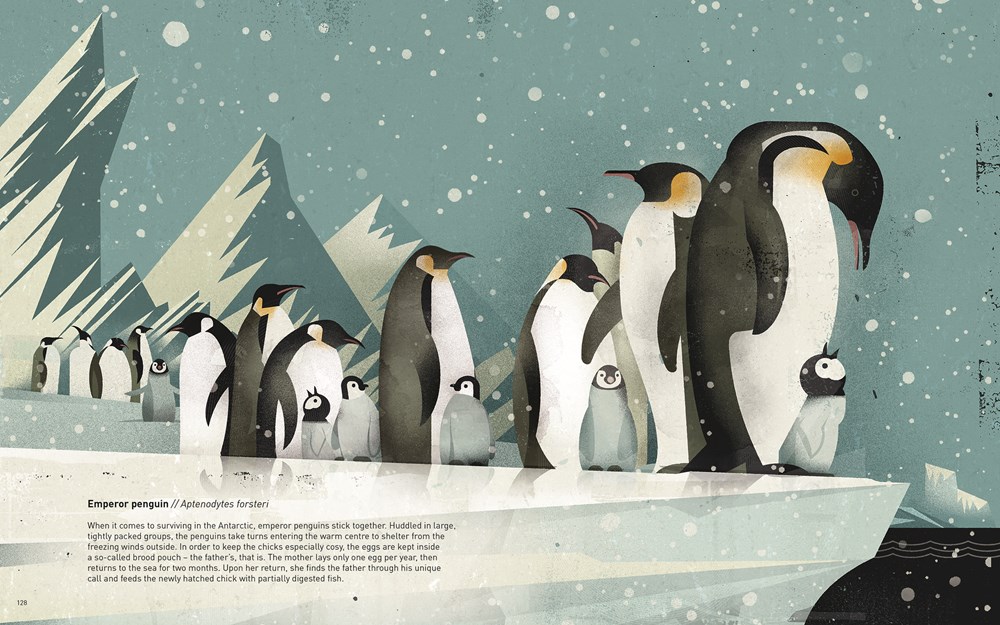
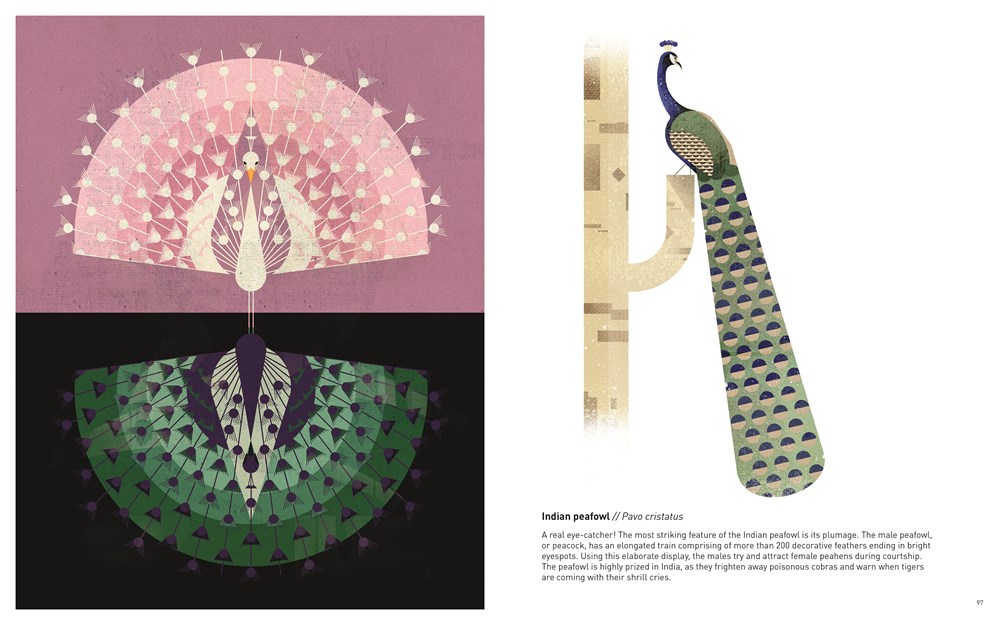
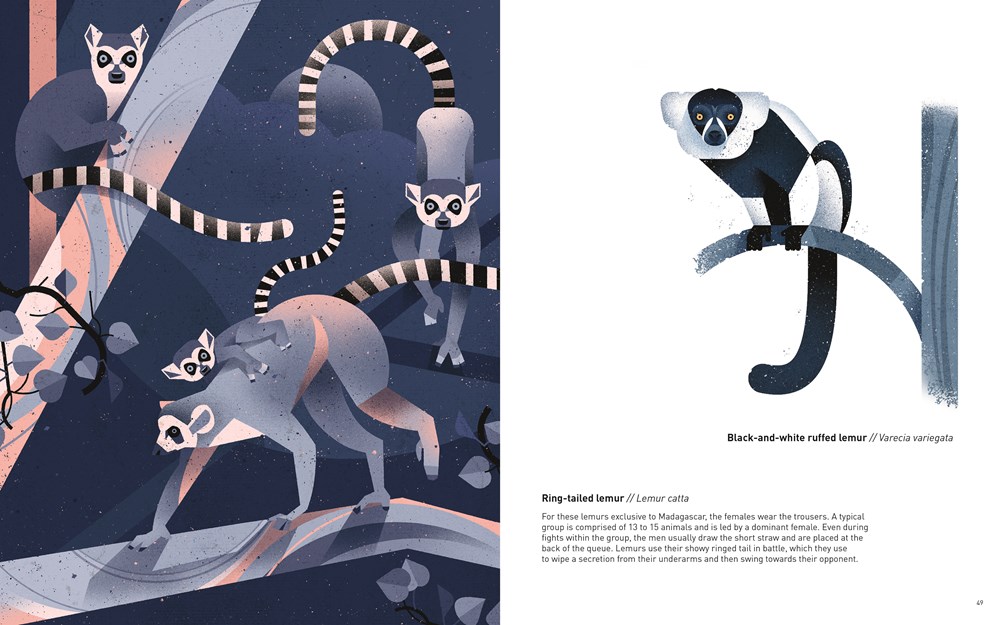
This gorgeous companion to Braun’s Wild Animals of the North (Nobrow, 2016) introduces readers to animals in the Southern hemisphere. Organized by continent: South America, Africa, Asia, Australia, and Antarctica, readers will enjoy the beautiful, colorful illustrations. The emphasis here is on the illustrations, making this a great starter book for younger children; caregivers can read the short passages on featured animals, which offer fun facts. For example, while most know that a male lion’s mane is his crowning glory, did you know that female lions prefer males with more beautiful and lustrous manes? And that other males will hold back when a male with a more impressive mane appears?

The art is stunning. Braun’s illustrations are geometric, with strong lines and rich colors. There is a wry sense of humor in some – the lion’s lush mane, for instance – while others, like the breaching humpback whale, are breathtaking. A waddle of penguins, under a snowy sky, stand in the stark shadow of glaciers. Braun captures habitats with the same beauty the he sees in the animals themselves.

wild_5

The $35 price tag may be a bit steep for some readers, especially those who are looking for more information than artwork (but that’s what libraries are for!), but this book is gorgeous for wildlife lovers and art lovers. For more of Dieter Braun’s illustrations, make sure to visit his website.

wild_4wild_3

wild_2


Posted in Intermediate, Non-Fiction, Non-Fiction

Black History Month: The Youngest Marcher, by Cynthia Levinson

youngest-marcherThe Youngest Marcher: The Story of Audrey Faye Hendricks, a Young Civil Rights Activist, by Cynthia Levinson/illustrated by Vanessa Brantley Newton, (Jan. 2017, Atheneum Books for Young Readers), $17.99, ISBN: 9781481400701

Recommended for ages 5-10

In May 1963, children in Birmingham, Alabama, trained in peaceful, civil disobedience, marched to protest segregation. Nine year-old Audrey Faye Hendricks was the youngest marcher, fully invested in civil rights and aware that she would likely go to jail. She spent a week in juvenile hall with flimsy blankets and no toothbrush, but she persevered and made history. Nonfiction author Cynthia Levinson tells the story of the youngest marcher, with illustrations by Vanessa Brantley Newton, here for younger audiences, assuring children that no one is too small, too young, to make a difference in the world.

I’ve been handing this book to kids coming in, looking for African-American biographies for their Black History Month reports for just this reason. I want children to see that they are important. They count. At a time when many feel marginalized, books like The Youngest Marcher, with its powerful words and images, offer representation and affirmation. Children have a voice, and with support and encouragement, they can use them and be heard.

Cynthia Levinson’s author website offers links to further resources, including curriculum guides and videos. Illustrator Vanessa Brantley-Newton was spotlighted by the WeNeedDiverseBooks initiative, for which she also created original artwork. For more information about the 1963 Birmingham Children’s Crusade, visit Biography.com or the Zinn Education Project, offering information about the award-winning documentary, Mighty Times.


Posted in History, Middle Grade, Non-Fiction, Non-fiction, Tween Reads

Black History Month: Shackles from the Deep, by Michael Cottman

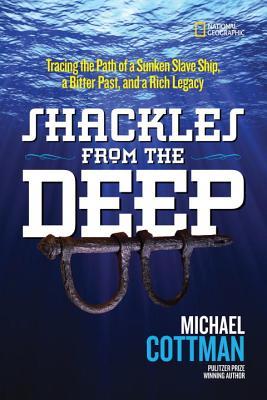
shackles-from-the-deepShackles from the Deep: Tracing the Path of a Sunken Slave Ship, a Bitter Past, and a Rich Legacy, by Michael Cottman, (Jan. 2017, National Geographic Society), $17.99, ISBN: 9781426326639

Recommended for ages 10-13

Pulitzer Prize-winning journalist Michael Cottman investigates the wreck of a 17-century slave ship, the Henrietta Marie, and goes on a journey that will take him from the Caribbean islands, where the Henrietta Marie docked to unload hundreds of kidnapped Africans to be sold into slavery, to Africa, to see Goree Island – location of the Maison des Esclaves; House of the Slaves, and the Door of No Return; the last glimpse enslaved Africans would have of their homeland – with his own eyes.

Cottman’s journey is as personal as it is professional. He struggles with anger at the slavers themselves, and with the manufacturers of the shackles, discovered by African-American diver Captain Demostenes “Moe” Molinar, in 1972. Cottman discovers that many of the men behind the Henrietta Marie were members of their parishes, even philanthropists in their own communities, and yet turned a blind eye to the suffering of countless men, women, and children caught up in the slave trade. He wonders if the spouses and children of these men knew that their comfortable lifestyle came at the expense of human misery, and he agonizes as he tries to understand, and forgive.

Adapted for younger readers from Michael Cottman’s 1999 book, The Wreck of the Henrietta Marie, Shackles from the Deep introduces readers to the aftereffects of slavery, centuries later. Entire families have been lost to history; people feel unrooted, to some degree, to this day. Imagine wondering your ancestors endured the brutal conditions of slavery, and never being able to find out the answer? By personalizing his story, Michael Cottman makes this already important book vital reading for middle school students and above.

We are still dealing with the fallout from centuries of slavery. It is personal, and by adding his story to the story of the Henrietta Marie, Michael Cottman invites readers to look at events that may seem so long past through different eyes. What we also get, unexpectedly, is a call to action for young divers of color to continue exploring the waters of our planet to learn more about our collective past, and our future.

An important book for libraries and nonfiction collections, Shackles from the Deep has received a starred review from Booklist. There are four pages of full-color photos; an index, and further resources on deep-water exploration, shipwrecks, and slave ships.

The West Virginia Division of Culture and History has a comprehensive booklet on the Henrietta Marie, from their 2000 expedition at the West Virginia State Museum. It would be an excellent companion to any social studies unit on slavery and an accompaniment to Shackles From the Deep.

Posted in Middle Grade, Non-Fiction, Non-fiction, Teen, Tween Reads

Say Cheese! teaches kids how to make their own yummy cheeses

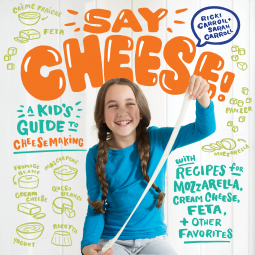
Say Cheese! A Kid’s Guide to Cheesemaking, by Ricki Carroll & Sarah Carroll, (Apr. 2018, Storey Publishing), $18.95, ISBN: 9781612128238

Recommended for kids (and grownups) 9+

I do love a good kids’ cookbook, and Say Cheese! is the goods. It’s an introduction to cheesemaking for kids – how cool is that? The book provides smart, everyday tips, like how to read a milk carton (the differences between raw, pasteurized, ultra-pasteurized, homogenized, and fortified milks); info about the ingredients that go into milk making, the different animals who provide the milk we drink, and a look at the history and science of cheese and cheesemaking. That all being said, there’s a rundown on the tools and utensils you’ll need, advice on how to clean and prep everything, and finally, without further ado, the recipes! Color photos and step-by-step instrucitons give kids all they need to know on making their first cheese, with an emphasis on adult supervision: they are using the stove and sharp knives, after all. Make a mascarpone or some yogurt, spread some home-made cream cheese on a bagel or skewer some feta onto a toothpick with some watermelon: there are great recipes and tips for snacking to be had. This may not be up every kid’s alley, but it’s a fun, nontraditional cookbook to have on shelves and great for kids who love to cook and are looking for something new to test their skills.

Posted in Middle Grade, Non-Fiction, Non-fiction, Tween Reads

Time For Kids Presidents is a good desk reference for middle graders

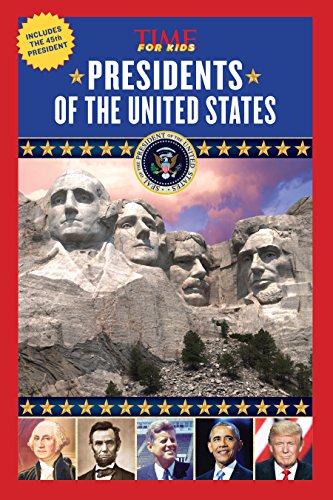
tfkpresidentsTime for Kids: Presidents of the United States, by Editors at Time for Kids, (Jan. 2017, Time for Kids), $15.95, ISBN: 978-1683300007

Recommended for ages 8-12

Time for Kids’ Presidents of the United States is a slim, backpack and desk-friendly reference guide for middle graders. Loaded with color photos and illustrations, there are facts about the Presidency, branches of government, political parties and why we have them, a spotlight on the First Ladies, and more. Each President receives a brief biography, fast facts, including birth and death dates, political party, Vice President, wife, children, key dates during his administration, and a Did You Know? fact. A 2016 election spotlight and President portrait gallery completes the volume, along with links to the White House website, Presidential homesteads and museums. The volume includes an index.

This is a helpful resource for middle graders – it will help with social studies and current events homework, and provides a quick, easy reading experience by chunking information into readable bites. A good buy for classroom libraries and social studies collections.


Posted in Graphic Novels, Teen, Women's History

The life of a legend, through the eyes of those who knew her: California Dreamin’

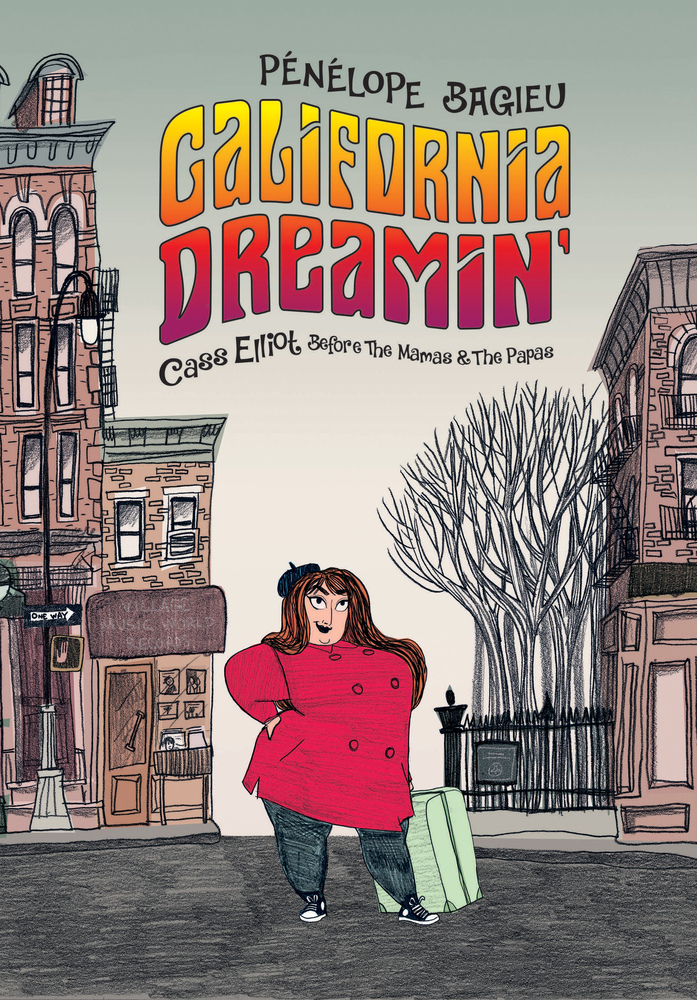
california_1California Dreamin’, by Pénélope Bagieu, (March 2017, First Second), $24.99, ISBN: 9781626725461

Recommended for ages 12+

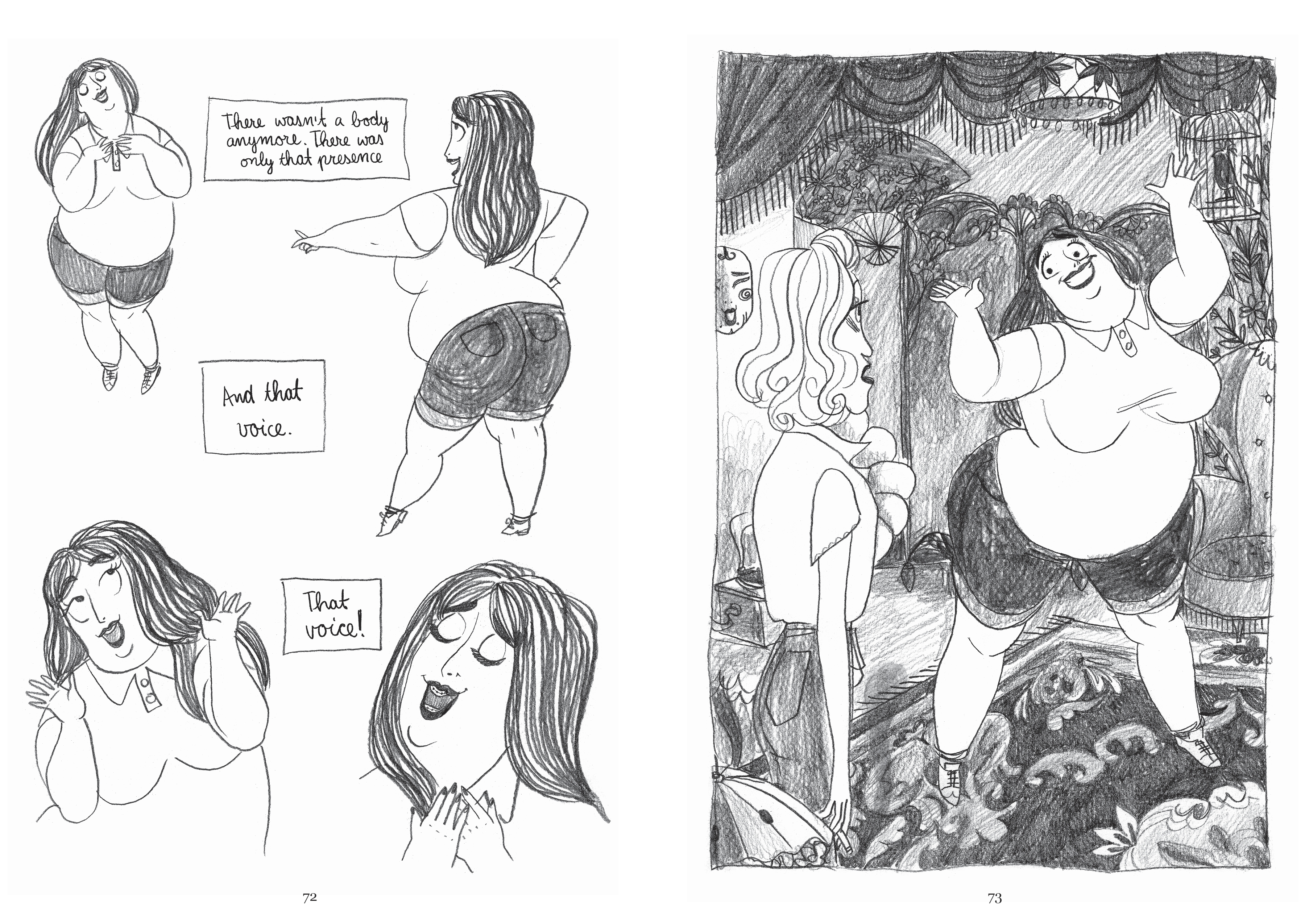
Mama Cass is a music legend. A member of The Mamas and the Papas folk group in the late 1960s, I grew up hearing the group bemoan Monday mornings and dream about California when the winters got too cold. There’s been a lot of ink spilled, writing about the dysfunctional group and its members, but Pénélope Bagieu pays homage to Cass by looking at her earliest years, before and leading up to the formation of the group, in her graphic novel, California Dream: Cass Elliot Before The Mamas and the Papas.

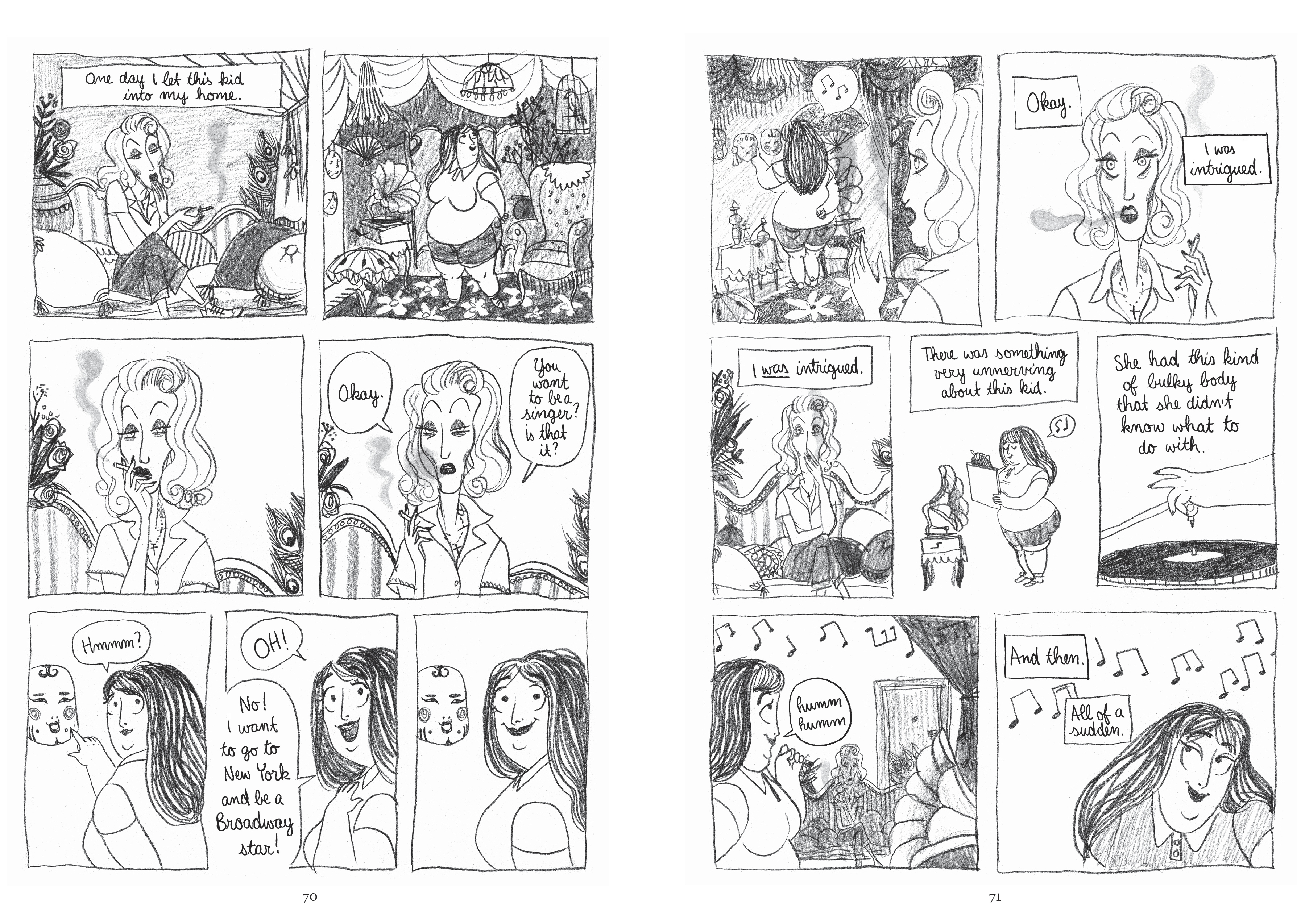
Beginning with her birth, California Dreamin’ tells Cass’ story through the eyes of the people in her life; her family, her friends, her band members. We learn something about each of them as they reveal their stories about life with Cass, and we get a glimpse into some of the singer’s defining moments: her work with Denny Doherty and the band, The Mugwumps; the group coming forming while performing in the Virgin Islands; Mama Cass joining The Mamas and the Papas despite John Phillips’ insistence that she was just providing “guest vocals”, and that the band was himself, Michelle Phillips, and Denny Doherty.

The art is expressive and touching; Bagieu makes her characters cartoony but real; touching and intense. Making Cass’ story a graphic novel will hopefully appeal to a younger audience who may not know the singer or her group, but will appreciate her ability to make things happen for herself and never take no for an answer.

Pénélope Bagieu’s first US graphic novel was 2015’s Exquisite Corpse..

california_2california_3

Posted in Guide, Middle Grade, Non-Fiction, Non-fiction, Tween Reads

Create your own Scratch games with Scratch Coding Cards!

scratchcodingcards_coverScratch Coding Cards, by Natalie Rusk, MIT Lab Scratch Team, (Dec. 2016, No Starch Press), $24.95, ISBN: 97-1-59327-774-1

Recommended for ages 8+

Better than flash cards, these Scratch coding cards teach users to design:

  • virtual pets that can eat, drink, and play;
  • games where you can catch things falling from the sky;
  • animated dance scenes with music and dance moves;
  • a bouncing ball game with sounds, points, and other effects;
  • characters that you can dress up with different clothes
  • stories, where you can choose characters, add conversations, and bring your story to life;
  • hide and seek games with characters that disappear;
  • a music program, where you choose instruments, add sounds, and press keys to play music;
  • a game where two characters race one another, and
  • a program that will animate the letters of your name.

Each activity comes with a set of cards, walking users through each action in the process. Every card is fully illustrated and includes screenshots and brief, clear text. I spent the better part of an afternoon creating Pong-type games with my 13 year old when I received my cards to review, and I’m going to start working with my 4 year-old on making up a story using Scratch. I’ve even gushed about these cards to the Collection Development group at my library system, because I love these cards so much.

Librarian or teacher? These cards are a class/program in themselves. Parent, or just interested in learning how to code? You can’t beat these cards for teaching and learning block coding.

Posted in Graphic Novels, Middle Grade, Non-Fiction, Non-fiction, Tween Reads

Science Comics Explores Bats

batsScience Comics: Bats – Learning to Fly, by Falynn Christine Koch, (Feb. 2017, First Second), $12.99, ISBN: 9781626724082

Recommended for ages 8-13

The latest volume of Science Comics introduces kids to bats. The information is pulled together with a story about a little brown bat whose wing is injured by humans on a nature hike. He’s taken to a rehabilitation center, where he meets bats of different species. Little Brown, as he’s called by the other bats, learns what the other bats eat, how they fly, live, and sadly, how their homes are invaded by humans. The information is comprehensive and there’s a call to conservation and preservation for kids, which I always appreciate.

I enjoy Science Comics because it’s easily an digestible, thorough introduction to a subject that doesn’t talk down to kids, nor does it speak over their heads. The illustrations are interesting and technically on point, and the fictional narrative that ties each volume together is interesting and fun, keeping the reader’s attention. I’ve got every issue of Science Comics (Coral Reefs, Dinosaurs, Volcanoes) so far, and Bats will join them on my shelves. I display mine with related series nonfiction, lest kids worry about a “comic book” not satisfying their research requirements, and I booktalk them every chance I get. If you’re a teacher, have these in your classroom and use them when you cover these topics – your kids will thank you.

bats_1bats_2bats_3bats_4