Posted in Middle School, picture books, Preschool Reads

Just Like Brothers teaches valuable lessons

Just Like Brothers, by Elizabeth Baguley/Illustrated by Aurélie Blanz, (March 2018, Barefoot Books), $16.99, ISBN: 9781782853459

Recommended for ages 3-7

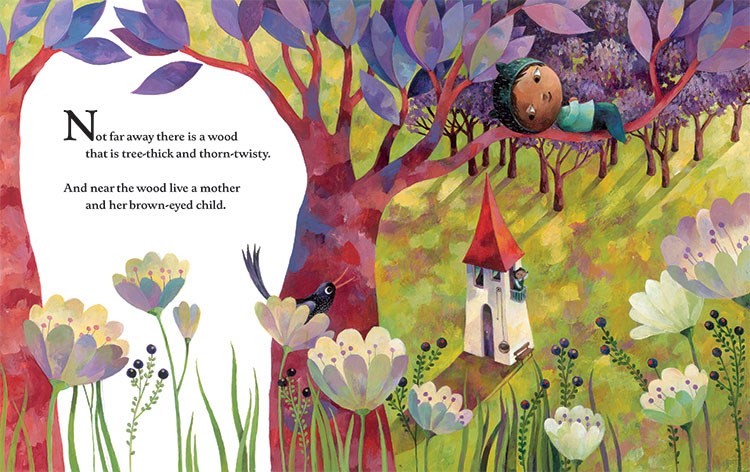
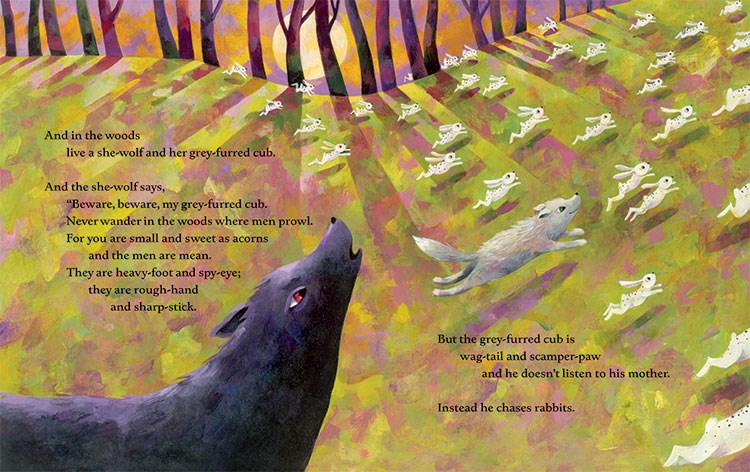
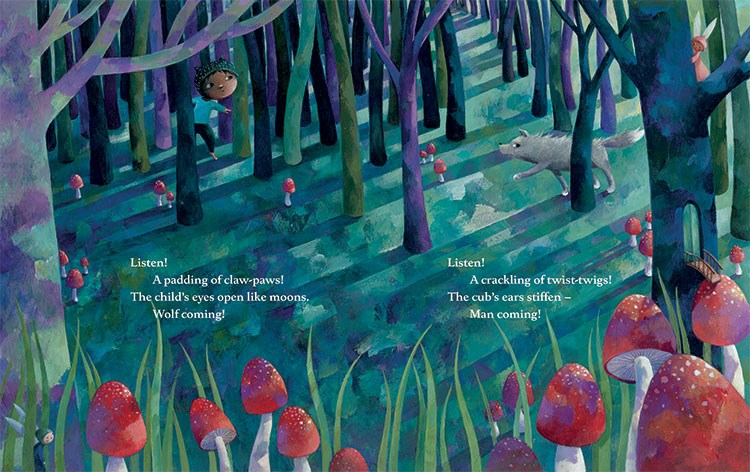
A young boy and a young wolf cub are each warned by their mothers. The boy’s mother warns of the wolves; the wolf’s mother, of men. The children listen, then go off and play, as children do. When each gets lost in the forest and come upon the other, their first reaction is fear; eventually, though, they discover that their similarities far outweigh their differences. And their mothers discover that they have a lot to learn from their children.

Told like a modern-day fable, Just Like Brothers teaches readers about the problems formed by prejudice and baseless judgement; it also teaches the value of empathy and trust. The innocence of children, both here and in real life, has no place for prejudice; it’s passed on at an early age. It’s a call to us as caregivers to be careful not to let our own fears make us irrational in what we teach our kids. It’s the start of a conversation, with lyrical descriptions like, “rough-hand and sharp stick” to describe humans, and “wag-tail and scamper-paw” to describe the playful cub. This makes for a good read-aloud and discussion about friendship and trust.

Posted in Fiction, Middle Grade, Middle School, Realistic Fiction, Tween Reads

Mush! A baker and a sled dog racer work together in Cookie Cutters & Sled Runners

Cookie Cutters and Sled Runners, by Natalie Rompella, (Nov. 2017, Sky Pony Press), $15.99, ISBN: 9781510717718

Recommended for readers 9-13

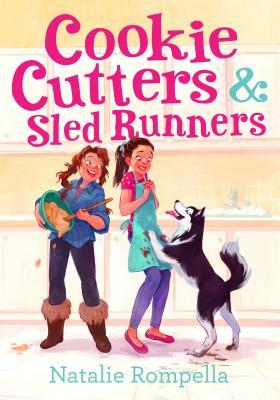
Ana and Lily are best friends, getting ready to start middle school together. They’re also burgeoning chefs, creating their own recipes with the goal of writing and selling their own cookbook one day. Things go awry when Ana and Lily discover that they’re not in one single class together, though; you see, Lily is the only person who understands Ana. The only person Ana wants as a friend. Lily understands Ana’s need to wash her hands and keep her cooking surfaces and food flawlessly clean; she knows that Ana can’t handle red food. She is Ana’s shield against the world. Ana ends up with the meanest teacher in sixth grade, too: Mr. Creed has a list of rules a mile long (“never use contractions in my class”) and decides that the big Exploration Project – the project Ana and Lily planned working on together – will be done in partnership with another person from class. Ana’s assigned Dasher, the new girl from Alaska, who dresses weird and wants to do a project on her favorite sport and hobby: sled dog racing!

I adore this book! I love the characters, and I love that in Ana, we get a positive portrayal of a character struggling with OCD. Cookie Cutters & Sled Runners gives us a central character that lives with a disorder, and incorporates that challenge into her daily living. Yes, we see Ana washing her hands and spraying down her surfaces; we read her internal struggle when she has to choose between cleaning and a critical moment in the story, but we also see her meeting with a therapist, being supported by her parents and friends, and working through her challenge through daily exercises and taking on new, exciting challenges. She’s not cured by the end of the story, but that’s not the point of the story: she’s growing, and she makes major gains here. Dasher is great fun to read, and I loved learning a little bit more about snow dog racing. Finally, I appreciated a middle grade novel that turns the “new friends” dilemma on its head by having the “rival friends” befriend one another and form a supportive group together.

A positive, upbeat story that introduces readers to characters with obsessive-compulsive behaviors and provides some insight on the challenges of daily life for those characters. have Wesley King’s OCDaniel on hand for readers who want to read and learn more.

Posted in Fiction, Middle Grade, Middle School, Realistic Fiction, Tween Reads

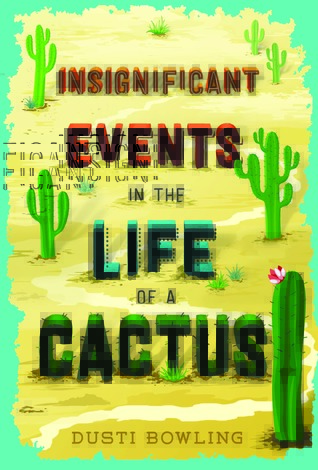
Insignificant Events in the Life of a Cactus is amazing!

Insignificant Events in the Life of a Cactus, by Dusti Bowling, (Sept. 2017, Sterling Children’s Books), $14.95, ISBN: 9781454923459

Recommended for readers 9-12

I was lucky enough to attend a children’s author dinner at BookExpo this past year, and got to hear several authors, including Dusti Bowling, talk about their upcoming books. As Ms. Bowling spoke about the work she put into her book, Insignificant Events in the Life of a Cactus, you could just see the passion she poured into her story of Aven, a kickass middle grade heroine of a new kind: she’s an adoptee, so, yay!; she’s headstrong, smart, focused, and she’s witty. And she happens to have been born without arms. She loves to tell people wild stories of how she lost her arms: an alligator wrestling match is my favorite, but she’s got a few doozies.

Aven starts the novel as the new kid in town. Her parents have moved to Arizona, where her dad accepted a job running a floundering western theme park called Stagecoach Pass. Now, Aven gets stared at. She’s different. She relies on her feet like most people rely on their hands. She’s eating lunch in the bathroom, because she can’t stand to have anyone stare at her eat with her feet. But she meets Connor, a boy with Tourette’s, and Zion, who’s shy about his weight, and things start looking up. The friends lean on one another, drawing and giving strength to each other.

That alone would be a great storyline, but throw in a mystery – a BIG mystery – at Stagecoach Pass that Aven is determined to unravel, and you have an incredible book in your hands. Aven, Connor, and Zion are kids that I want to know; Bowling breathes beautiful life into them and makes readers care about them. She provides positive, complex, realistic portrayals of kids living with disabilities and how they meet those hurdles every day, every hour, every minute. Insignificant Events in the Life of a Cactus has numerous accolades and received starred reviews from School Library Journal, Booklist, and Shelf Awareness.

I adored this book and can’t believe it took me this long to finally get to it. Give this to your Wonder fans, display and booktalk with books starring smart middle grade heroines, like Roller Girl by Victoria Jamieson, Rain Reign by Ann M. Martin, and of course, Beverly Cleary’s Ramona and Roald Dahl’s Matilda.

Check out Dusti Bowling’s author webpage for a free, downloadable discussion guide and to read up on news and updates.

Posted in Fiction, Fiction, Middle Grade, Middle School, Realistic Fiction, Tween Reads

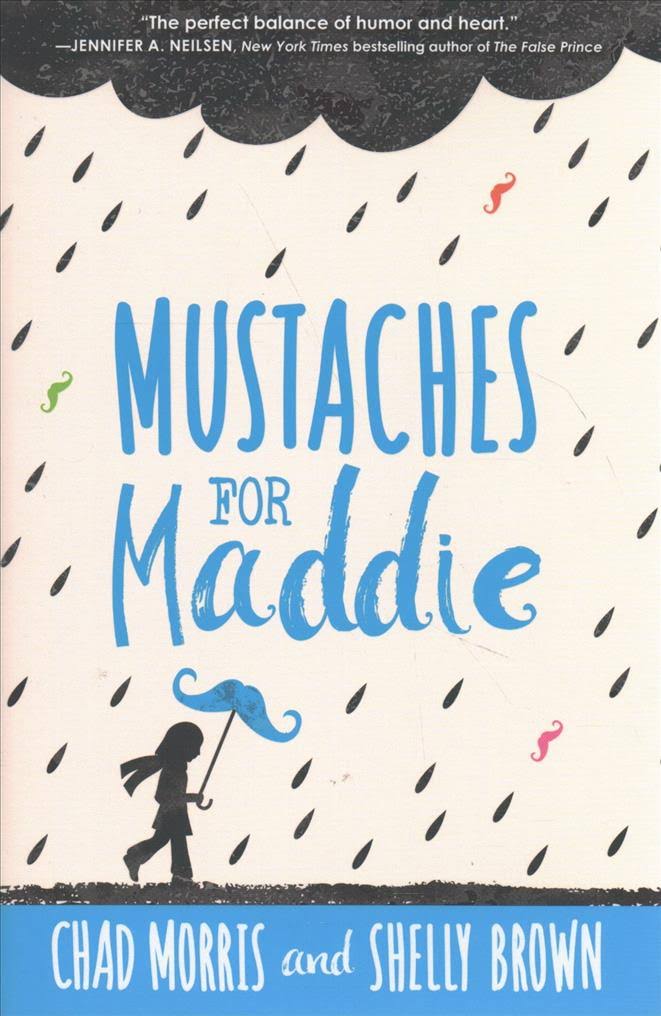
Choose Empathy. Choose Compassion. Read Mustaches for Maddie.

Mustaches for Maddie, by Chad Morris & Shelly Brown, (Oct. 2017, Shadow Mountain), $16.99, ISBN: 978-1629723303

Good for readers 9-12

Maddie’s a 12-year-old kid who loves to laugh and make people laugh, and there’s nothing better for that – at least according to Maddie – than a fake mustache. She carries them around with her, always ready to hand out and pop one on to make an uncomfortable situation better, to add some bravery when a situation calls for it, or just to make someone laugh. She’s also trying to secure her spot within the school queen bee’s clique; Cassie dictates who gets to hang out with her, and demands favors of her “friends” in order to stay in her favor. When she tells Maddie not to hang out with a perfectly nice classmate for no other reason than she said so, Maddie struggles with it, but ultimately – at first – sticks with Cassie. The thing is, Maddie’s noticing her body acting weird lately. Her arm isn’t acting right; it’s curling against her chest. She’s tripping over her own two feet quite often. But she tells her mom it’s just growing pains. It can’t be anything weird, right?

Wrong. When she finally goes to the doctor, she and her family learn that she has a brain tumor that will require surgery. And Maddie just landed the part of Juliet in the school production of Romeo and Juliet! Maddie learns to face her fears – including her fear of not being in Cassie’s orbit – and embraces real friendship with those around her. When Cassie turns into a bully, Maddie focuses on the bigger picture: surgery and recovery. Her friends and family rally around her, and there are plenty of mustache moments to look forward to.

This book is brilliant. Based on the true story of the authors’ daughter – who is okay now, thank goodness! – this story, told in the first person from Maddie’s POV, is engaging and heart-felt. Maddie has a great sense of humor and a big heart, and strives to see the good in everyone: even a bully. Despite wanting to be in Cassie’s orbit, she enjoys embracing her quirky sense of humor, making her a lovable heroine – even moreso, when you realize she’s an actual person. SLJ calls Mustaches for Maddie a good readalike for RJ Palacio’s Wonder and I have to agree. I’ve booktalked it exactly once, and that’s because the second I put it on the shelf and talked about the plot, it was gone and hasn’t stopped circulating yet. The book’s website offers a free, downloadable reading guide with Common Core Connections, activities for the classroom and beyond, and CIA (Compassion in Action) activities. There are also fantastic extras, including downloadable mustache posters and greeting cards. I’m considering a CIA program myself, where I provide the kids with mustache templates that they can decorate and we’ll display in the library, along with a list of CIA intentions. If I can get the kids to join in, I’ll make sure to blog it.

In the meantime, this is a great book for discussion, for gift-giving, for just about everything. It addresses the need for compassion that our society needs some help with these days, and take on a special importance during the holiday season and as we prepare for a new year.

Posted in Fiction, Middle Grade, Middle School, Realistic Fiction, Tween Reads

Click’d: Coding, apps and friendship drama!

Click’d (Code Girls #1), by Tamara Ireland Stone, (Sept. 2017, Disney-Hyperion), $16.99, ISBN: 9781484784976

Recommended for readers 8-12

Sixth grader Allie Navarro is SO excited about the friendship app she built at CodeGirls summer camp. Click’d collects data about user interests and sends users on a scavenger hunt to find other users with similar interests. It went over big at camp, and now Allie is going to show it to her BFFs at school. She’s also presenting her game at the big Games for Good competition, but she’s going up against her nemesis: Nathan Frederickson, who wins EVERY science fair and drives her crazy.

The app goes over in a big way, but it’s not as great as Allie thought it would be. People are upset about their standings on friendship leaderboards, and a technical glitch ends up embarrassing one of her best friends. Things start spiraling out of Allie’s control; even with Nathan’s help, she’s not sure if she can make things right in time for the competition.

I’m excited about the new coding fiction trend that’s emerging in light of Girls Who Code’s nonfiction/fiction releases! Click’d is great to hand to readers who may be ready to move on from the Girls Who Code series fiction, or readers who may not be ready for Lauren Myracle’s TTYL books just yet. There’s friendship drama for sure, as well as positive messages about resilience and friendship. Each chapter contains screenshots of the Click’d app, adding to the fun; readers can watch Allie’s user count change, and monitor different leaderboards to better envision how the app works (and maybe get some ideas of their own). Tamara Ireland Stone gives us realistic characters and an interesting storyline and builds an extended universe of CodeGirls – girls who all met through a Girls Who Code-type camp – that will work for future novels.

Make sure to check out the Click’d teacher’s guide on the author’s website!

Posted in Graphic Novels, Middle School, Teen, Tween Reads

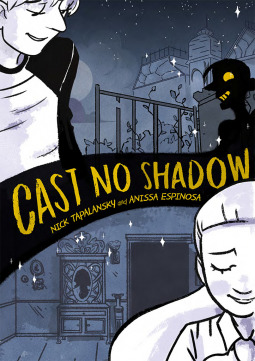
A boy deals with his grief in Cast No Shadow

Cast No Shadow, by Nick Tapalansky/Illustrated by Anissa Espinosa, (Oct. 2017, :01FirstSecond), $16.99, ISBN: 9781596438774

Recommended for ages 12+

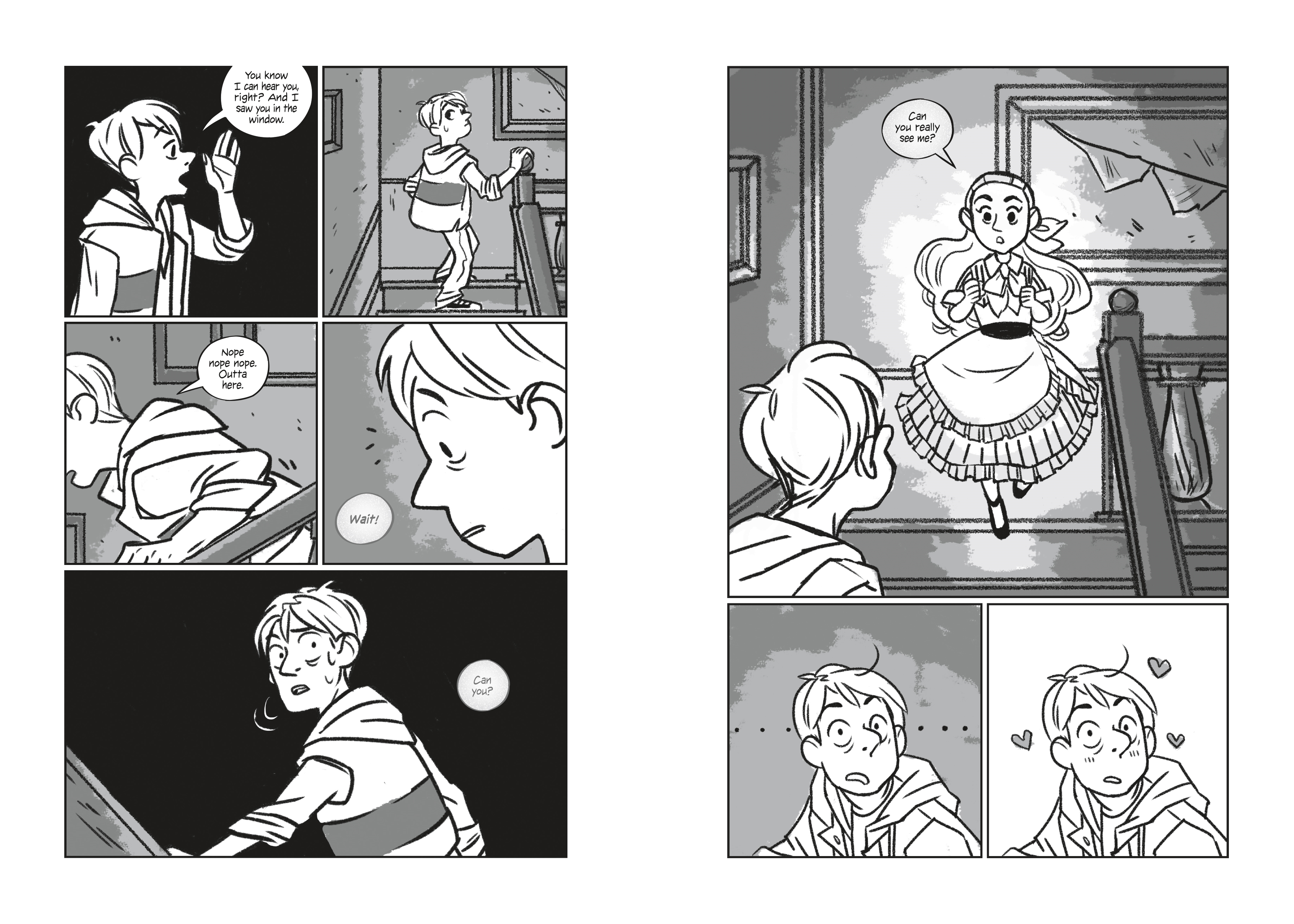
Greg and his friends live in Lancaster, in a town that’s lately become obsessed with tourist traps. This latest one is a giant hairball. No lie. Greg is kind of an attraction on his own: he was born without a shadow. He’s normal in every other way; he just doesn’t have a shadow, which just makes him one more quirky thing in a town full of quirks. When Greg explores an abandoned mansion just outside of town, he meets Eleanor, who could be the perfect girl for him – “smart, beautiful, funny, and man, she totally gets me” – if only she weren’t dead. Eleanor is a teenage ghost, living in her family’s old mansion, and chasing out the creepy living that go in and mess up her home, but she has a soft spot for Greg.

Greg’s got a lot going on in his home life, too: his dad’s girlfriend, Joyce, has just moved in, and Greg isn’t happy about it. He doesn’t want anyone taking his dead mother’s place. As he deals with the frustration of having a new person in the house, and a girlfriend who can’t leave her haunt, something is set in motion; Greg has unwittingly set a dangerous entity loose on his town. What are the chances he can save his town, smooth over his relationship with his father and Joyce, and have a happily ever after of his own?

Cast No Shadow is a touching exploration into grief and loss. Greg retreats from the world to cope with his mother’s loss and his father’s subsequent relationship; aside from his female best friend, the strongest relationship that emerges in the book is with a dead girl. Greg’s suppressed feelings find another way to emerge, causing destruction and danger for everyone around him. It’s a great story to put into older tweens’ and teens’ hands, helping them cope with feelings that may be too overwhelming to confront head-on. The black, white, and gray illustrations add a nice, ghostly feel to the story and come in handy when finer plot points fall into place.

A nice addition to middle school and teen graphic novel collections, and a good secondary reference for kids dealing with grief and loss. Find more of author Nick Tapalansky’s work at his website, and illustrator Anissa Espinosa’s work at her Tumblr.

Posted in Fiction, Graphic Novels, Humor, Middle Grade, Middle School, Realistic Fiction, Tween Reads

Victoria Jamieson’s Back! All’s Faire in Middle School

All’s Faire in Middle School, by Victoria Jamieson, (Sept. 2017, Dial Books), $12.99, ISBN: 978-0525429999

Recommended for ages 9-13

Newbery Honor winner Victoria Jamieson’s newest graphic novel, All’s Faire in Middle School, introduces readers to Imogene (Impy), an 11 year-old who’s about to start middle school after being homeschooled. She’s also a knight-in-training at the Renaissance Faire that her parents and extended family – the other RenFest players – run. She’s got a different lifestyle, but never really thought anything of it; it’s all she’s known. Once she gets to public school, though, she finds herself embarrassed by her family and RenFest friends, her thrift store clothing, and her small apartment. But will she be a noble knight and rise above her challenges?

Victoria Jamieson’s got a gift for telling middle grade stories about quirky heroines who buck tradition. Roller Girl introduced us to Astrid, a girl who found herself in the roller derby arena; with All’s Faire, she gives us Imogene, who finds herself in the RenFaire. She’s got a different upbringing, which she’s embraced up until now – she meets kids who think she’s weird because she’s different; for a moment, she falls prey to the self-doubt and fear of standing out that plagues tweens. She meets the Mean Girls, and she has to draw on her internal strength and the love of the RenFest family around her to be her authentic self. There’s great storytelling here, with memorable characters and fun moments at the Faire.

This will appeal to everyone who loves realistic fiction, and all the Raina Telgemeier fans who love authors who get them. A must-add to bookshelves everywhere. Check out an excerpt from All’s Faire in Middle School at Entertainment Weekly.

Posted in Middle School, Non-Fiction, Teen, Tween Reads

Summer of STEAM: Making Simple Robots

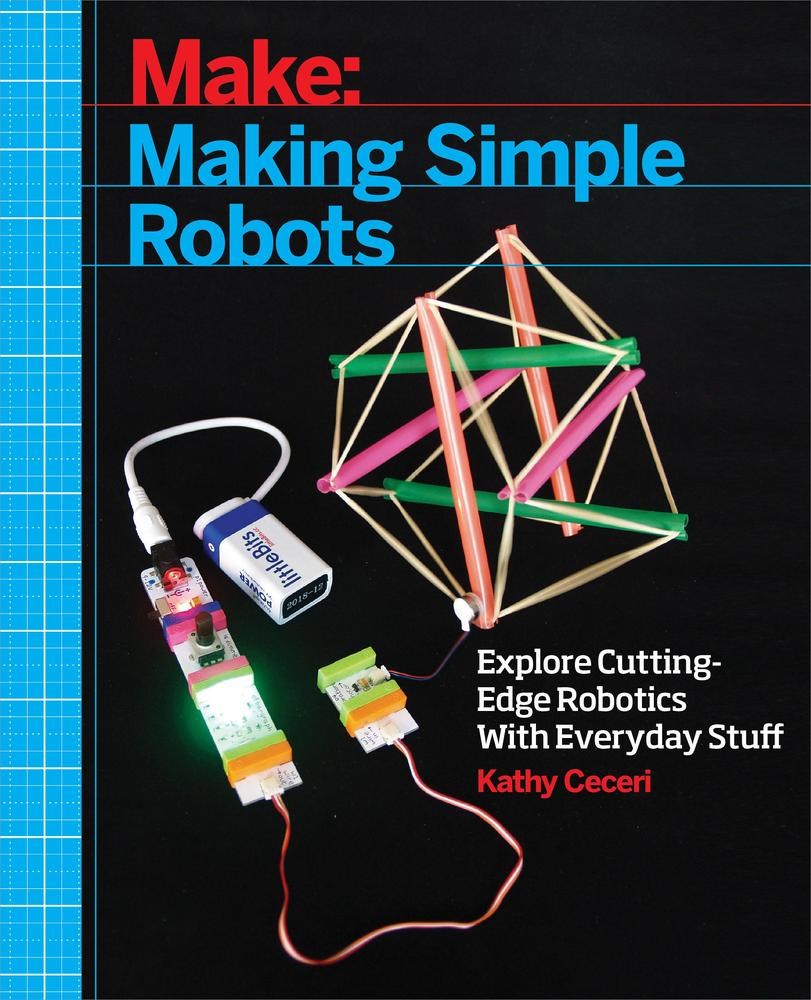
Making Simple Robots: Exploring Cutting-Edge Robotics with Everyday Stuff, by Kathy Ceceri, (March 2015, Maker Media), $24.99, ISBN: 9781457183638
Recommended for readers 11-17
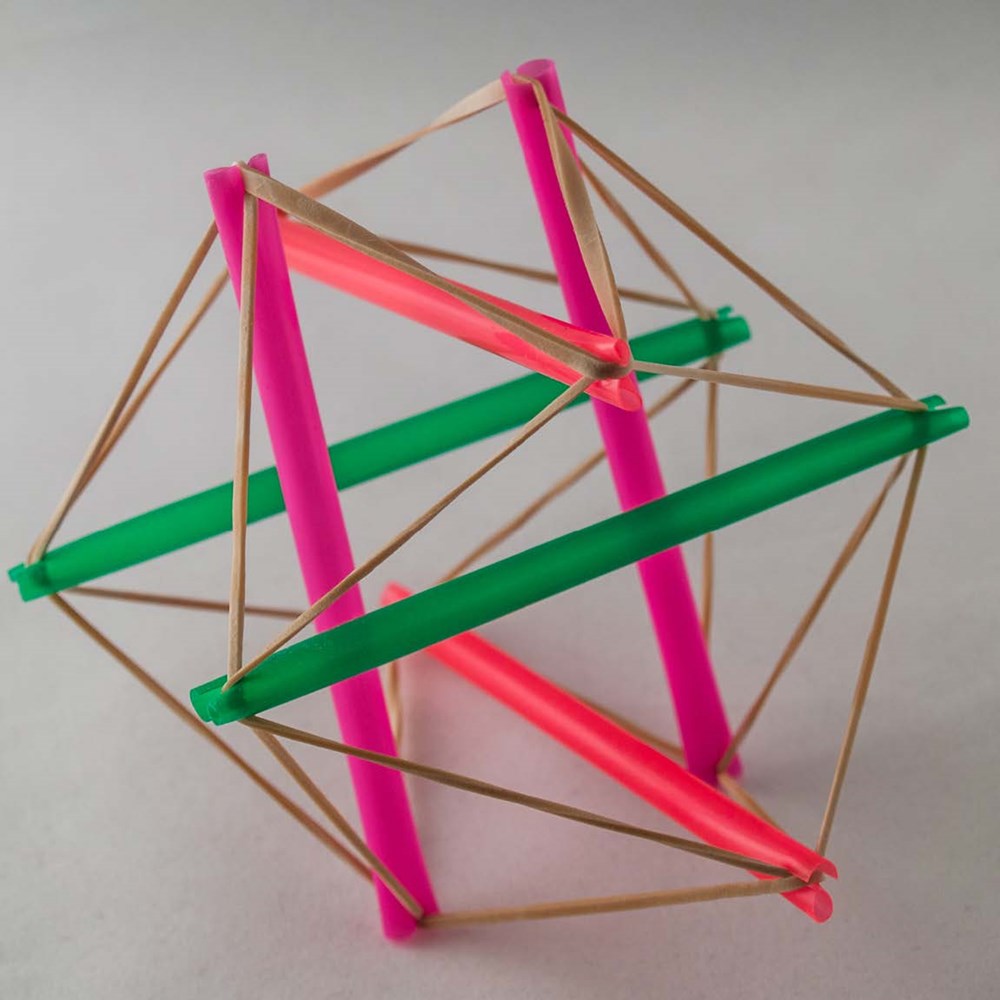
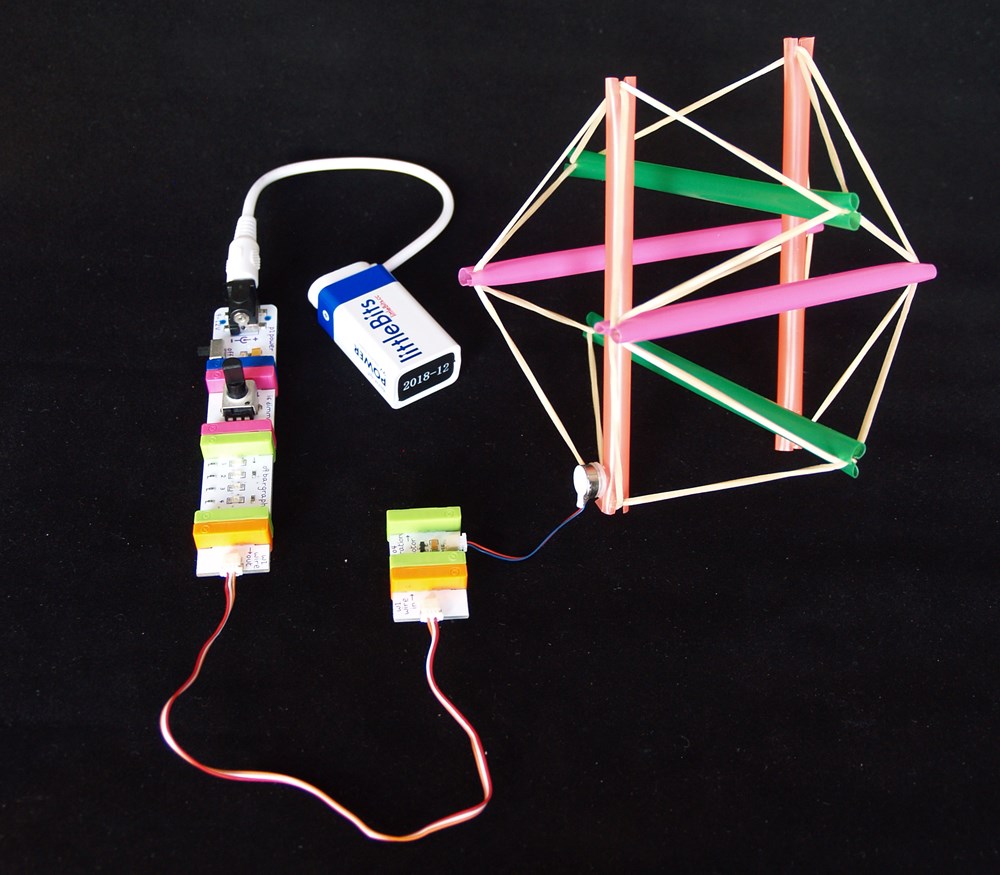
If you haven’t gotten into robotics because you think it’s too expensive to lay down the money for a LEGO Mindstorms set, this is the book for you. Combining plain-English engineering explanations with household materials (and a short list of goodies you can usually get online or at Home Depot), Making Simple Robots walks readers through making robots using paper, balloons (think Baymax, from Big Hero 6, but smaller and less sentient), drinking straws and rubber bands. Projects become more involved as the book progresses, and use more complex materials like Little Bits and 3-D printers. Each project walks readers through the design, building and testing a prototype, helpful troubleshooting suggestions, and ways to adapt and expand on the robots.
You know I love my “program in a book”, and this is another one. I could pull together a beginning robotics program, no sweat, with a small budget and some time to play around. My go-to project from this book? The Gliding Vibrobot, which is a tiny robot you can make for $10 or less, with a motor from an old cell phone or electric toothbrush, 1.5 to 3 volt batteries, foam tape, and gumball machine toy capsules. For a public librarian’s budget, this is a dream project! Have a coding program? Work that into the mix with a Chatbot, where you use Scratch to program your sprite to use a script to carry on a conversation with another user.
There are loads of helpful hints and “cheat sheets” to refer to throughout the book, and an index makes for handy, quick reference.

Every Make book that I’ve read so far has included such a broad range of projects, allowing all skill levels and wallets a chance to make something really cool. Making Simple Robots combines a maker guide with an intro to modern robotics that middle schoolers and older will love.

Posted in Fiction, Middle Grade, Middle School, Puberty, Realistic Fiction, Tween Reads

Things That Surprise You is touching, funny… giggles and tissues needed!

Things That Surprise You, by Jennifer Maschari, (Aug. 2017, Balzer + Bray), $16.99, ISBN: 9780062438928

Recommended for readers 10-13

Best friends Emily and Hazel are about to start middle school. They’ve done just about everything together, and Emily just wants things to stay the same. You can’t blame Emily; she’s had too much change over the last year, with her parents’ divorce and her sister , Mina, being treated for an eating disorder. But Hazel is changing. She’s already in with a new crowd at school – a crowd that isn’t into Emily at all – and she wants to be different. While Emily is still into their fandom, The Unicorn Chronicles, and crafting, Hazel is into lip gloss, clothes, and getting boys at school to notice her.

Things That Surprise You is a compulsively readable novel about growing up and moving on; negotiating change; making new friends, and most importantly, discovering oneself. Emily is so likable, you just want to defend her and comfort her. Older sister Mina is on her own painful journey; she could easily have become a bitter antagonist, but is written with care and compassion that will encourage readers to root for her, too. Their mother is doing the best she can with what she has, and their father just can’t cope, so he doesn’t. Each parent’s actions illustrate to kids that adults may not have all the answers, and that we make lousy decisions, too. I enjoyed reading about every character in this book, including the mean girls, who are vapid and awful and make us want to see Emily succeed even more.

This is a great book for discussion groups, because the subplots that support the main plot are all worthy discussion topics on their own: going with or against the crowd, eating disorders, self-acceptance, and navigating family relationships are just some of the things that come up. I’d love to see this on summer reading lists for next year. Nudge, nudge, teachers!

Jennifer Maschari is a classroom teacher and the author of The Remarkable Journey of Charlie Price and Things That Surprise You. She is hard at work on her next middle grade novel with Balzer+Bray/HarperCollins. Jennifer lives in Ohio with her husband and stinky (yet noble) English bulldogs, Oliver and Hank. To learn more, and to download a free guide, visit Jennifer’s author website.

GIVEAWAY!

One lucky winner will receive a copy of Things That Surprise You… PLUS, one grand prize winner will receive their very own Crafty Unicorn Kit! The prize includes a fun craft kit, a copy of Things That Surprise You, unicorn stickers, and puzzle cards! Enter here – don’t miss out!

Posted in Fiction, Intermediate, Middle Grade, Middle School, Non-Fiction, Non-fiction, Realistic Fiction, Tween Reads

Summer of STEAM: Girls Who Code Two-Fer!

I love coding and playing around with computer science-y type stuff. In my mind, I look like this:

When I create this.  (This is actually mine! I created it using Scratch.)

I do my best to get science in front of my own kids, and my library kids, at every opportunity. The kids here at my library are Minecrafters, so I feel like I’ve got an in and am working on building a nice, tech-friendly nonfiction section; the next additions on my list are from the organization, Girls Who Code.  If you aren’t familiar with Girls Who Code, they are a New York-based organization on a mission to close the gender gap in the tech industry and the classroom. They teach girls to embrace tech and to code, to create, and most importantly, not to fear science and math. Andrea Gonzalez and Sophie Hauser, two GWC grads, wrote Girl Code: Gaming, Going Viral, and Getting It Done, where they talk about their GWC experience.

Now, Reshma Saujani, Girls Who Code founder, is releasing her own book, Girls Who Code: Learn to Code and Change the World (Aug. 2017, Viking, $17.99, ISBN: 978-0425287538). It’s a coding beginner’s guide, a spotlight on women in the computer science industry, an empowering career guide, and introduction to STEM for girls, all rolled up into one volume. It’s fun and easy to read, with Reshma speaking to readers in a comfortable, friendly voice; she gets some help from a group of illustrated, diverse girls: Lucy, Erin, Sophia, Leila, and Maya. The illustrated group of friends (more on them later) explain concepts and act as a step-by-step example of different stages of coding and creating.

What sets Girls Who Code: Learn to Code and Change the World apart from all the other coding books out there? Glad you asked. The tone, for starters, is fun, light, and personal. Reshma and her group of illustrated friends are talking straight to readers. The two-color illustrations are fun, like those you’d find in a middle grade novel, and feature characters from different ethnicities; Leila rocks a hijab, Maya is an Asian fashionista with a sleek bob; Lucy is African-American, Sophia is Latina, and Erin is a blonde. The group of friends come together to create apps and problem solve their coding; we’re invited along for the ride. Not sure you want to go into computer science? That’s no problem, either: GWC points out how many careers and hobbies incorporate coding these days, from baking, to politics, to social justice, sports, and art.  You’ll learn new terms, like pseudocode – that’s when you write out the steps of your program in plain language, to brainstorm and go over your program before starting to code. There are further Web resources and a glossary to complete this trusty guide to STEM life. Trust me, you’ll never look at the mere making of a peanut butter and jelly sandwich again after you read this.

Also arriving the same day as Girls Who Code: Learn to Code and Change the World is the first in a new GWC series of fiction chapter books, starring the Girls Who Code we met in the previous book: Lucy, Erin, Sophia, and Maya (Leila’s arriving in the next book) come together thanks to a coding club in the new adventure, The Friendship Code, by Stacia Deutsch.

Girls Who Code: The Friendship Code, by Stacia Deutsch, (Aug. 2017, $12.99, ISBN: 9780399542510)


We get some background on each character: there’s been some past drama between Lucy and Sophia; Erin is an army brat who’s new in town; Maya is the fashionista who has a fashion column in the school newspaper; Sophia’s an athlete, and Lucy is fixated on learning to code so she can create an app to help her sick uncle remember to take his medicine. Thanks to the Coding Club, the girls learn that coding is more than just banging out numbers on computers (sometimes, to Lucy’s chagrin). With a fun mystery thrown in, the GWC series is like a Babysitter’s Club for a new group of tech-savvy kids. The series is great for intermediate-level readers; black and white illustrations and a quick pace make this novel a fun read that introduces younger middle graders to beginning coding terms and STEM. The mystery is even written in pseudocode – maybe a fun thing to introduce to your kids! Slip a pseudocode note into a lunchbox here, introduce a pseudocode scavenger hunt there… the possibilities stretch far and wide. Where Girls Who Code: Learn to Code, Change the World is best for your middle schoolers and upper middle graders, Girls Who Code: The Friendship Code is a great way to get younger middle graders familiar with the characters, the language of coding, and the fun of STEM.

In October, we’re getting another nonfiction/fiction GWC combo, when Code It! Create It! and Team BFF: Race to the Rescue! hit shelves. I’ll be waiting!