Posted in Graphic Novels, History, Tween Reads

Hidden: A Child’s Story of the Holocaust tells a powerful tale, gently for younger readers.

Hidden: A Child’s Story of the Holocaust, by Loic Dauvillier (First Second, 2014), ISBN: 978-1-59643-873-6, $16.99

Pub Date: April 1, 2014
hiddenRecommended for ages 8-12

Hidden is a graphic novel, tells the story of the Holocaust as it stormed through Vichy France, from a child’s eyes.

Elsa is a little girl who discovers her grandmother deep in thought one night. She curls up on her lap, and her grandmother tells her why she’s been feeling sad. Doumia, Elsa’s grandmother, has had a nightmare, and proceeds to tell Elsa about her life as a little girl.

Doumia was a happy child, living in France, going to school, and had friends and a loving family. One day, her father tells Doumia that they are to become “a sheriff’s family”, as her mother sews yellow stars on their clothing. She later learns, when her friends and her own teacher ignore her, that the yellow star is not a sheriff’s star, but the mark of being a Jew. Nazi soldiers harass people in the streets; Doumia’s father loses his job, and, fearing for her safety, Doumia leaves school to be homeschooled by her parents.

Doumia’s parents scramble to hide her when the Nazis come for them. She is discovered by a neighbor, who, with a network of the French Resistance, change her name and send her, along with her neighbor, to a farm to wait out the danger. When the War ends, we wait, as Doumia does, to learn her parent’s fate.

This is a powerful, emotional, story of the Holocaust because it is told through a survivor’s eyes, but the eyes of a child. We hear this story, as Elsa does, in the safe, warm embrace of a  grandparent, with Marc Lizano’s and Greg Salsedo’s gentle cartoon art, with subdued colors, easing younger readers into history. Where is difficult in parts, there are bright spots to keep younger readers interested and happy – Doumia living safely in the French countryside with women who care for her; the farm animals she helps care for, reunions with lost family members. It’s a safe place to talk about a horrific event.

An afterword by Hellen Kaufmann, the President of AJPN – an organization dedicated to telling the stories of rescue and solidarity during World War II – gives us an overview of Vichy France during World War II.

This is a fantastic pick for younger readers, particularly with the difficult task of finding interesting, captivating, non-fiction to fit with the Common Core Learning Standards. The book is a valuable teaching tool for parents and educators alike.
Posted in History, Non-Fiction, Tween Reads

Book Review: Chasing Lincoln’s Killer, by James L. Swanson (Scholastic Press, 2008)

Recommended for ages 12+

Chasing Lincoln’s Killer is the story of the plot to kill President Abraham Lincoln, the assassination and ensuing manhunt for John Wilkes Booth and his fellow conspirators. Author James L. Swanson based this YA version on his previous book, Manhunt: The 12-Day Chase for Lincoln’s Killer (William Morrrow, 2006).

A lifelong Lincoln aficionado who shares the 16th President’s birthday, the author wanted to bring his story to a younger audience. He never dumbs down the narrative to reach this audience; rather, he makes it more accessible by featuring over 70 photos of artifacts, newspapers and photos taken from various archives; he summarizes trial manuscripts and interviews, and moves the events along at a pace that younger, less patient readers will enjoy and stick with.

Scholastic’s website offers free teaching resources to use with the book including an audio book excerpt, video interview with the author, and printable Wanted! poster for Booth.

Manhunt received an Edgar Award for the best true crime book of the year in 2007; Chasing Lincoln’s Killer has received recognition as a Young Adult Library Services Association (YALSA) Best Book for Young Adults. Mr. Swanson holds a seat on the advisory council of the Ford’s Theatre Society. He has collected books and artifacts on President Lincoln since he was 10 years old and has written a photographic history, Lincoln’s Assassins: Their Trial and Execution.

Posted in Espionage, History, Non-Fiction, Tween Reads

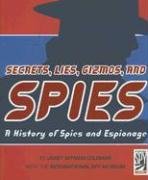
Book Review; Secrets, Lies, Gizmos and Spies, by Janet Wyman Coleman with The International Spy Museum (Abrams Books for Young Readers, 2006)

Recommended for ages 9-12

Kids like spies. Spies are cool, after all. James Bond is suave and rocks the coolest gadgets in the world, and Chuck is a computer store geek turned international man of mystery. There was Agent Cody Banks, and there are the Spy Kids movies. Fast food restaurants have give spy toys away as prizes in their kids’ meals. The romantic mystique of the spy appeals to all ages.

Secrets, Lies, Gizmos and Spies, written in conjunction with the International Spy Museum, is a visual history of spying. There are photos and artifacts, with the stories of real-life spies from all over the world and throughout recorded history. The book provides key terms and timelines and even an imagined interview with George Washington using actual quotes from the first President with regard to his spying operations during the Revolutionary War. The book has beautiful color and black and white photos on every page, and will interest both boys and girls interested in adventure or history.

The International Spy Museum’s website offers the usual museum fare including membership and ticket information. They also have a podcast (with new episodes roughly every two weeks) and a blog, both with RSS feed capability. They offer birthday parties, school field trips, and Spy City Tours where visitors will be briefed by former intelligence officers and learn how to be a master of disguise.
Posted in History, Non-Fiction, Tween Reads, Women's History

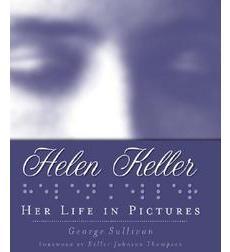
Book Review: Helen Keller: Her Life in Pictures (Scholastic, 2007)

Recommended for ages 8-12

As a little girl, I was captivated by Helen Keller’s life story. One can only imagine Helen Keller’s struggles, but even more amazing and inspirational are her triumphs: graduating college with honors at a time when women were still fighting for the right to vote. Learning to lip read while being blind and deaf, relying only on touch to communicate with the outside world. Becoming a political and social activist at a time when women were supposed to be seen and not heard. She was an amazing woman who was surrounded by amazing women; first, her beloved teacher Annie Sullivan and later Polly Thomson, and when I saw this book in my local library, I snatched it up.

I was not disappointed. Helen Keller: Her Life in Pictures is a gorgeous book filled with photos of Helen throughout her life. There are childhood pictures of her and pictures of her with Annie Sullivan; pictures throughout her college career at Radcliffe, and pictures of her with the many public officials she met throughout her life. Always mindful of her appearance so people would not look at her and see her handicap first, she is always dressed beautifully and perpetually smiling. There are some candid photos, including shots of her with her pets and even a shot of Helen, Annie, and Annie’s husband, John Macy.

Keller’s great-grandniece Keller Johnson-Thompson writes the foreward where she discusses asking her grandmother questions about her famous relative. Notes at the end of the book provide further reading on Helen Keller, including a link to Ms. Johnson-Thompson’s biography on the American Foundation for the Blind’s home page, where she serves as an Ambassador; there are many links to Helen Keller photographs and artifacts on this page. There is also a link to the Helen Keller birthplace museum.

Posted in History, Non-Fiction, Tween Reads, Women's History

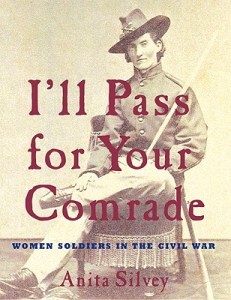
Book Review: I’ll Pass for Your Comrade, by Anita Silvey (Clarion, 2008)

Recommended for ages 9-12

I’ll Pass for Your Comrade is a line taken from a Civil War Ballad, “The Cruel War”; a woman is saying goodbye to her love, leaving to fight, and begs to join him in combat. She offers to “pass for his comrade” – something that, according to the National Archives, at least 250 women did during the Civil War. Many women fought to be with their husbands and fiances. Some women fought for revenge. Some women fought for the thrill of battle. Unfortunately, because they had to keep their stories silent, most of these stories have been lost. I’ll Pass for Your Comrade tells the stories of some of the women who donned men’s uniforms, cut their hair, and went to war.

We hear the words of the women who fought, like Loreta Janeta Velazquez, who wrote about her participation in the Battle of Bull Run as Lieutenant Harry T. Buford. We see photographs of women like Frances Clayton, featured in the book both dressed in her uniform and her dress. We learn about their lives after the War, and how some of them took their secrets to the grave, their families only discovering their truth after death.

The book has black and white photographs and primary documents reprinted throughout, offering students the chance to see history as they read about these women. The author also provides a bibliography for further reading. This would be a strong selection to use during Women’s History Month or during a Civil War unit.

Posted in History, Non-Fiction

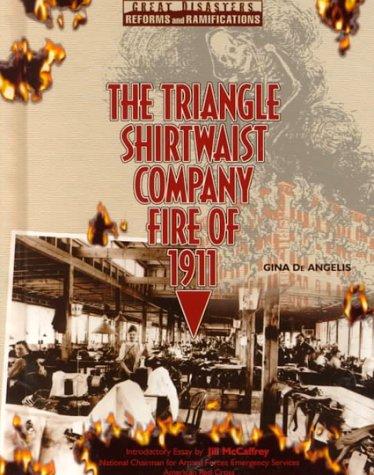
Book Review: The Triangle Shirtwaist Factory Fire of 1911, by Gina De Angelis (Chelsea House, 2001)

Recommended for ages 10+

The shirtwaist was a high-necked, long-sleeved blouse design popularized by the iconic Gibson Girl image in the early 1900s. At this time, New York boasted about 450 shirtwaist factories, but building codes and labor laws left a lot of room for interpretation. As a result, on March 25, 1911, a fire broke out in the Triangle Shirtwaist Company in the Asch Building in downtown Manhattan. Multiple factors – locked doors to prevent workers from leaving early or stealing materials; ineffective and too few fire escapes and elevators, and crowded office conditions among them – caused the deaths of 146 workers, mostly women, many recent immigrants. The fire and the ensuing trial – which exonerated the company’s owners – gave rise to movements pushing for stronger building safety standards and unionization of garment workers, which would help them lobby for better working conditions and better pay.

The Triangle Shirtwaist Company Fire of 1911 tells the story of the fire and the aftermath. Black and white photos taken at the scene and the makeshift morgue bring home the pain of the event and drive home the magnitude of the fire. Readers learn that the owners, Max Blanck and Isaac Harris, went on to continue business and continue the business violations that caused so many deaths at the Asch Building, having been cleared of any wrong doing because the Asch Building was legally sound. The owners made money after the insurance settlement, causing an outcry among the deceased’s family members. The book also details the story of the garment workers labor movement and takes the reader into present-day sweatshop conditions and the continued fight for safe working conditions and a living wage. 

Cornell University’s Kheel Center for Labor Documentation’s web exhibit with primary and secondary sources, a link to a transcript of Blanck and Harris’ trial, and a bibliography. Nonprofit organization Remember the Triangle Fire Coalition, seeking a permanent memorial to the victims, offers an open archive where contributors add their own modern-day remembrances and information and a names map which lists the name, country of origin, New York address, and final resting place of the identified victims.

Short PBS documentary on the Triangle Fire.

Posted in History, Non-Fiction, Tween Reads

Book Review: Little House in the Big Woods, by Laura Ingalls Wilder (HarperCollins, 1971)

Recommended for ages 8+

Most people know Laura Ingalls Wilder’s stories, if not through her books, then through the long-running television series, Little House on the Prairie. A a pioneer child who wrote down her experiences and later had them published, Ms. Wilder wrote nine Little House books, originally published between 1932 and 1943. The series resonated with girls and young women and is popular to this day.

Little House in the Big Woods is the first book in the Little House series, and introduces the reader to the Ingalls family: Laura, her older sister, Mary, baby sister, Carrie, and parents, Ma and Pa (Caroline and Charles). The family lives in the Big Woods in Wisconsin in the later part of the 19th Century, shortly after the Civil War. (Laura even mentions a family member who is “wild since he came back from the army”.)

We go through each of the seasons with the Ingalls family and learn how families lived, ate, and had fun. There are family dances and visits, trips to town, and encounters with bears and bees. There is always time for work, though, and this is where the book acts as a primer. Laura details the process of preserving meats and vegetables to keep the family fed through the lean winter months; how Pa prepares an animal skin to be used as leather goods; how to get sap from a tree, and how to smoke bees out of a hive to be able to get to the honey. It’s a fascinating look at a different time, and while it is written with a girl’s voice, this is should not be considered a “girl’s book”: boys and girls alike can learn much about the wildnerness life.

Laura writes in a clear voice, drawing her readers in because her stories are real. The love of family and nostalgia as she looks back on her life bring to mind the feeling a child gets when listening to a parent or grandparent talking about their childhood. Black and white drawings by Garth Williams add to the book.

There is a wealth of information about Laura Ingalls Wilder online. Wilder’s home in Rocky Ridge Farm in Mansfield, Missouri, where she wrote the Little House books, is now the Laura Ingalls Wilder Historic Home and Museum and word finds, quizzes and coloring pages. The Little House Books website features a family tree tracking the girls of the Little House series from Laura’s great-grandmother to her daughter, Rose. The site also offers games and craft ideas, as well as information for teachers interested in teaching the book.

Posted in History, Non-Fiction, Tween Reads

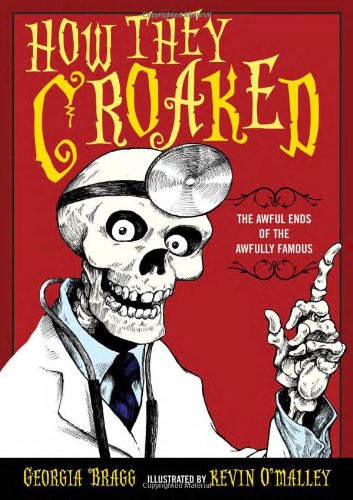
How They Croaked: The Awful Deaths of the Awfully Famous, by Georgia Bragg; illustrated by Kevin O’Malley (Walker Books for Young Readers, 2011)

Recommended for ages 10-13
 
Most school-aged kids know who King Tut, George Washington, and Napoleon were, but what they may not know is how they died. How They Croaked delivers the full-on details of how these historic figures and 16 others met their makers in gloriously gory detail.
 
Along the way, Bragg dispels famous myths – Cleopatra did not meet her doom at the fangs of an asp – and provides insight on how modern medicine may have saved a few of these famous lives. George Washington, for instance, could have survived if only he had access to antibiotics.
 
Bragg provides morality in her profiles. We learn that Pocahontas was exploited from the minute she saved Captain John Smith from the axe, and that Robert Carter, the “explorer” who discovered King Tut’s tomb, wasn’t much more than a grave robber on a grander scale. We also learn some amusing details along the way, including famous last words, what cupping was all about, and some gross information about Marie Antoinette’s three-foot hairdo.
 
Kevin O’Malley, writer and illustrator of children’s books such as Animal Crackers Fly the Coop! and Mount Olympus Basketball, gives the reader his macabre best while still keeping it on a level that younger readers won’t shy away from, including a a distended Henry VIII and a shrieking Julius Caesar.
 
For reluctant readers and kids (or grownups!) who just want a fun read that makes you squeal with squeamish delight, How They Croaked is a perfect addition to your history library.