Posted in Fiction, Science Fiction, Teen, Young Adult/New Adult

The Vault of Dreamers Trilogy closes with The Keep of Ages

The Keep of Ages (The Vault of Dreamers #3), by Caragh M. O’Brien, (Aug. 2017, Roaring Brook Press), $17.99, ISBN: 9781596439429

Recommended for readers 12+

The conclusion to The Vault of Dreamers trilogy sees Rosie on the run from Dean Berg and Ian, the vault of dreamers technician that took care of her while she was kept in the vault in the previous book, The Rule of Mirrors. When she discovers that Dean Berg has hold of her family, she follows clues to an abandoned amusement park to save them and bring down the vault of dreamers. It’s more complicated than even Rosie realizes, though – she discovers her sister is among the dreamers and that bigger plans are in motion for viewers of The Forge Show. Rosie has to risk everything to save her family and keep Thea – her seeded consciousness, now suffering migraines – safe while making sure Dean Berg can never harm anyone again.


There is a real sense of urgency running through The Keep of Ages, but the execution gets bogged down in multiple subplots. One character, Lavinia, is almost too good to be true: the theme park designer, offers access to a place to hide, serves as a conduit to connect Rosie with her family, and is a font of information on the secret network of tunnels beneath the Keep, where the dreamers are held. The final resolution neatly ties everything up, but left me wanting a little more. Get it if you need answers to questions left in the previous book.

Posted in Fiction, Historical Fiction, Realistic Fiction, Teen, Tween Reads

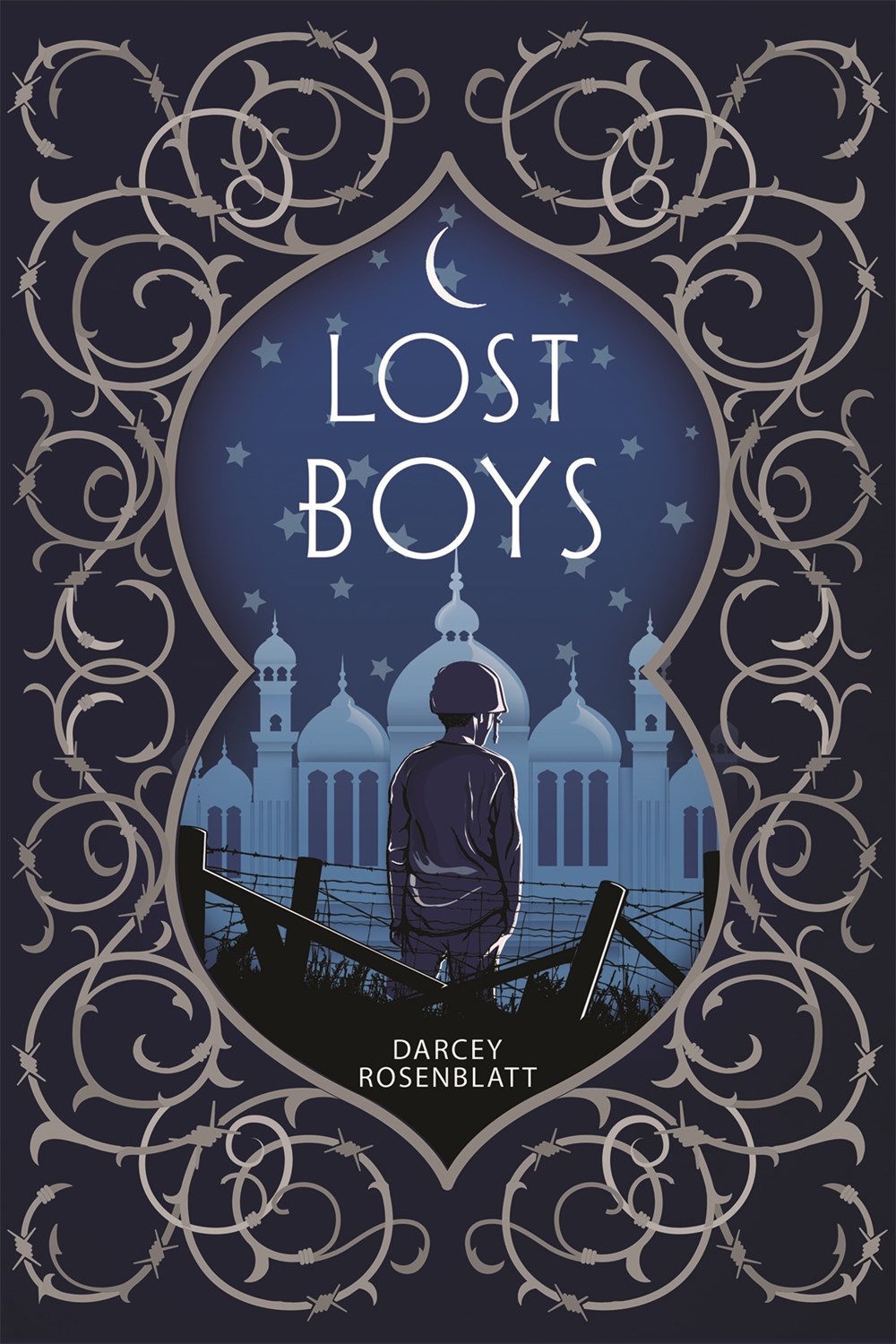
Lost Boys chronicles the Iran-Iraq War through a boy soldier’s eyes

Lost Boys, by Darcey Rosenblatt, (Aug. 2017, Henry Holt & Co), $16.99, ISBN: 9781627797580

Recommended for readers 9-14

Twelve year-old Reza is a musical prodigy living in 1982 Iran. He lives with his widowed, fundamentalist mother, and craves visits from his Uncle Habib; a member of the resistance, he also encourages Reza’s love of music by slipping him cassettes of artists from Stevie Wonder to Thelonious Monk. His mother pushes him to join the war effort, telling him she would be proud to have her son die in service of Allah. Reza wants nothing to do with the conflict, but when his uncle is killed and his best friend, Ebi, signs up to serve, Reza feels he has nothing left without his best friend, and signs on. He and Ebi receive their “keys to heaven” – plastic keys that serve as symbols that they will achieve paradise when they die in service to Iran and the Ayatollah – and are sent into battle. War is not the glorious battle that Ebi dreamed about; it’s not full of exciting moments like he and Reza have seen in the movies. The boys are fodder for the minefields – tied together and sent into battle to clear the way for older troops. Reza is injured and sent to a prisoner of war camp, where he meets other boys his age and desperately tries to learn Ebi’s fate as he endures abuse at the hands of a sadistic prison guard.

I couldn’t put Lost Boys down, choosing instead to disregard my normal sleep schedule until I finished the last page. Reza is a heart-achingly real character based on far too many child soldiers. He and his classmates are promised glory and fed lies; in the end, all he lives for is the hope that he’ll be reunited with his best friend and live to enjoy music again. Set in 1982, the story is more relevant now than ever, as children are still pressed into service all over the world. Booktalk Lost Boys with Marjane Satrapi’s Persepolis for tween and teen readers; booktalk with Child Soldier: When Boys and Girls Are Used in War, by Jessica Dee Humphreys and Michel Chikwanine to illustrate the worldwide epidemic of using children as combatants. This article from Global Citizen shines a light on seven countries that still use child soldiers, and what we can do to help stand against the practice.

Lost Boys is an important book that sparks outrage and empathy, and is a must-add for collections. I’d love to see this on next summer’s reading lists.

Posted in Fiction, Historical Fiction, Middle Grade, Realistic Fiction, Tween Reads

Mari’s Hope brings Odin’s Promise to a beautiful close

Mari’s Hope, by Sandy Brehl (Sept. 2017, Crispin Books), $14.95, ISBN: 978-1-883953-89-8

Recommended for readers 9-12

The conclusion of Sandy Brehl’s Odin’s Promise trilogy is finally here! Mari’s Hope continues the story of Mari, a Norwegian girl living under the German occupation during World War II. Mari, who was 11 when the story began, is approaching age 14 when the latest book begins. Her family is active in the resistance, and Mari’s involvement increases as she is older now, willing and able to take greater risks. She works with the local doctor to care for the sick and elderly in her village, Ytres Arna; travels to the city of Bergen to procure more medicine – and information – for her village, and tries to stay out of the way of the Nazi officers who live in her home; particularly the one she calls Goatman, who is a drunk and a thief.

Written in third-person narrative with first-person journal entries from Mari to her brother, Bjorn, Mari’s Hope is written with the same gentle strength as the previous two entries in the series. We see Mari grow over the three books from girl to young woman – a change that has come too quickly under the occupation – and deal not only with being a member of the Norwegian resistance, but with the stress of worrying about her brother; grieving her dog, Odin, killed by Nazi soldiers in the first book; struggling with a former friend who threw in his lot with the NS – Nasjonal Samling – Norway’s version of Hitler Youth. The family and neighbors stick together, sharing what little they have to provide for one another, whether it’s to have a birthday party for Mari or a holiday dinner for Jul. There are tense moments that kept me turning pages, sometimes biting my lip with concern, and there are moments where I just needed a moment to process my relief. Sandy Brehl never whitewashes the German’s devastation; rather, she states it quietly, eloquently, and leaves it there for Mari – and us – to process and move on.

The Odin’s Promise trilogy is a gorgeously written series of books that take us into a part of World War II history we don’t often hear about. Hitler invaded Norway with the lie that he was sending soliders to “protect” his “Viking brothers”, but proceeded to strip all freedoms from them and tried to supersede his vision of Aryan superiority over their rich culture. Odin’s Promise, Bjorn’s Gift, and Mari’s Hope tell this story through the experiences of one village, one family, one girl, who pushed back. I love spending time with Mari and her family; while I’m sad to see this story end, the beauty of books lies in knowing I can meet them again whenever I want to.

Odin’s Promise received the 2014 Midwest Book Award for Children’s Fiction. It was also noted as one of A Mighty Girl’s Best Girl-Empowering Books of 2014 and one of Foreword Magazine’s Ten Best Indie Middle Grade Novels of 2014.

Posted in Historical Fiction, Realistic Fiction, Teen

Radium Girls meets YA fiction with Glow

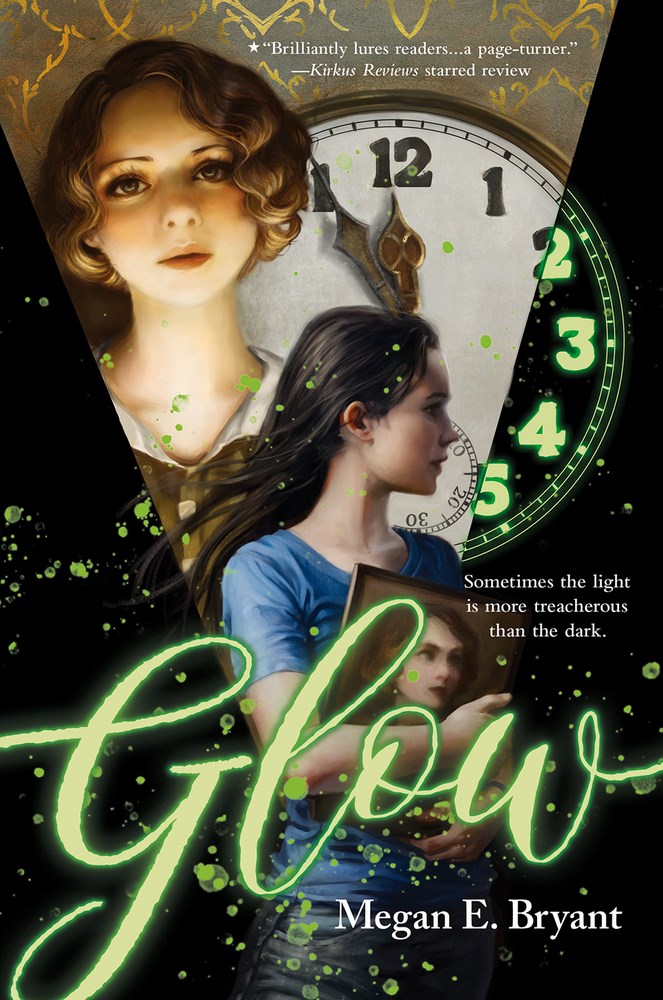
Glow, by Megan E. Bryant, (Sept. 2017, Albert Whitman), $16.99, ISBN: 9780807529638

Recommended for readers 12+

Julie should be starting college in the fall, but she used up all her savings to bail her mother out of debt. Frustrated and embarrassed, especially when her friend drops money on crazy shopping trips while Julie counts every cent. They wander into a thrift store where Julie discovers an antique painting that reveals a hidden, glowing image in the dark. Locating the rest of the paintings becomes Julie’s obsession; as she tracks down the paintings and the painter’s identity, she discovers that the paintings were made by and tell the story of the Radium Girls – young women who worked in factories, using radium paint to make glow-in-the-dark watches for the soldiers in the trenches of World War I.

The dual narrative keeps the novel moving at a fast pace, but it is Liza and Lydia’s story – the Radium Girls – that gripped me even more than Julie’s. If you haven’t yet read Kate Moore’s Radium Girls, I highly recommend it; the story of the women who were slowly poisoned over time is heartbreaking and infuriating, but so important to read and know. Glow is a great introduction to the subject on a middle school/YA level; the letters from Lydia to her betrothed, Walter, a World War I soldier, give readers the full horror of radium poisoning. These girls – some as young as 13 – were led to believe that the radium paint was safe, even beneficial – one floor manager brags about mixing some into his pudding for health reasons; girls paint their nails, their faces, even paint jewelry on their bodies before they go out on dates. Hindsight, for the reader, is 20/20; I wanted to shriek at them as Lydia described each detail.

That said, there are some moments I felt could have been stronger. I didn’t love the romance that felt pushed into the narrative to make it more attractive to teen readers, and the subplot tension between Julie and her mother feels like it’s there just to make readers understand why Julie would be shopping in thrift stores. The driving story here is Lydia and Liza’s story, though; that’s what will stay with you long after the story has ended and you’ve closed the book. An author’s note at the end talks about the Radium Girls and the indignities they suffered when they became ill and tried to come forward.

This one is going on the shelves at my library, and I’ve already told my son’s girlfriend that she has to read it the second it hits shelves. Glow has a powerful, heartbreaking story at its core that you should not miss.
Posted in Fiction, Horror, Middle Grade, Teen, Tween Reads

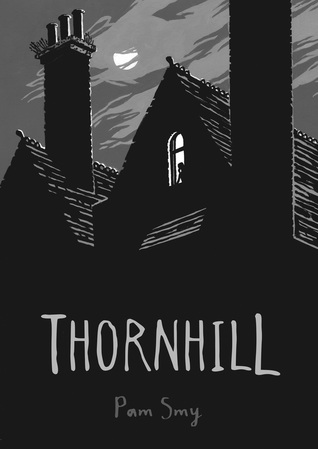
Thornhill is good haunted house creepiness

Thornhill, by Pam Smy, (Aug. 2017, Roaring Brook Press), $19.99, ISBN: 9781626726543

Recommended for readers 10-14

Two girls, two decades, one story: Thornhill is a story told in prose and pictures, switching back and forth to tell each character’s story. In 1982, Mary is a lonely orphan living in the Thornhill Institute for Children, relegated to her room where she makes puppets, for fear of the merciless bullying she suffers. The Institute is on the verge of closing, and the girls are being re-homed – except for Mary and her tormentor, who continues unabated by the social worker who prefers to victim blame. Mary’s story unfolds through journal entries, where we see the bullying turn her, desperately, to a plan for revenge that will echo for decades.

In 2016, Ella is the new girl in town, living in a home with a perfect view of the abandoned Thornhill Institute. As she looks out the window, she sees someone in the lonely attic window at Thornhill. Determined to discover who she is, Ella wanders onto the Thornhill property and unravels Mary’s – and Thornhill’s – story. Ella’s story is told through stark black and white artwork, leaving much for readers to discover. The narratives follow one another; Mary’s narrative enriches Ella’s story. The chilling ending will leave readers breathless.

Thornhill is captivating, urging readers to its conclusion. Mary and Ella are kindred spirits on their own journeys; while Ella’s story is relegated to what we see on the pages, there is a wealth of material there for sharp-eyed observers. It’s a great choice for suspense and thriller fans.

Posted in Horror, Middle Grade, Tween Reads

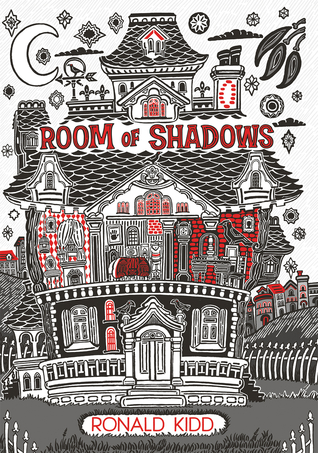
Dark middle grade fantasy: Room of Shadows

Room of Shadows, by Ronald Kidd, (Aug. 2017, Albert Whitman), $16.99, ISBN: 9780807568057

Recommended for readers 10-13

David finds himself with a lot of anger lately. I mean, it’s justified: his dad abandoned his mom, and they’ve been forced to move into this creepy old house. When a school bully messes with him on a bad day, David beats him up, earning some in-house grounding from his mom. That’s where he discovers the room: a secret room with an old desk and a carving of a Raven, signed, “EP”. The weird dreams start shortly after. When the incidents start at school, all involving people who David’s tangled with, everyone starts looking at him differently, including his mom and the police. How can David prove he isn’t The Raven – the person responsible for the incidents, who leaves a signed note each time? And how can he keep himself safe from The Raven, who’s fixated on him?

With a background in Edgar Allan Poe’s history, I dove eagerly into Room of Shadows. The author takes Poe into very dark territory here, for reasons that become clear as the story progresses. It’s an interesting concept, but one I had a hard time with. I didn’t really get to know David or his best friend, Libby; I felt like their character development took more of a backseat, allowing the Poe storyline to drive the plot. I did like the nod to some of Poe’s greatest hits in the story, including The Tell-Tale Heart, The Black Cat, and The Pit and the Pendulum; it’s always great to discover Poe in new fiction. This one wasn’t my book, but middle grade horror fans who are ready for something weightier than Goosebumps and Haunted Mansion may sit down with this one.

Posted in Fiction, Fiction, Humor, Middle Grade, Realistic Fiction

Meet two new middle grade heroines with big imaginations

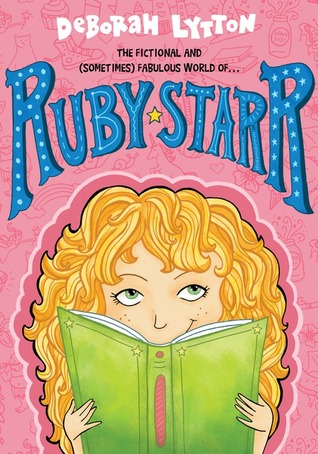
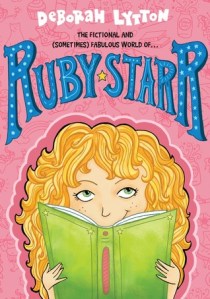
Ruby Starr, by Deborah Lytton, (Aug. 2017, Sourcebooks Jabberwocky), $7.99, ISBN: 9781492645771

Recommended for readers 8-12

Ruby Starr loves getting lost in a good book. She even has a lunchtime book group with her BFFs at school: The Unicorns! Things change when Charlotte, the new girl in school, shows up and starts making big changes: she scoffs at reading and wants to make The Unicorns a drama club, and she’s spending more and more time with Ruby’s best friend, Siri. Ruby needs to dig deep into her imagination to help bring things back to normal again.

Part Secret Life of Walter Mitty, part Dork Diaries, Ruby Starr is a lovable new protagonist for middle grade readers. She daydreams scenarios to help her cope with the everyday frustrations – or imagine exciting outcomes for upcoming events – and zones out while she’s doing it, making for some giggleworthy moments throughout the story. The imagination sequences are illustrated, letting readers in on the joke. The stress of friendship – and losing it – will resonate with middle graders, as will the fear of being the outsider in the group; Ruby handles these challenges with humor and style, even reaching out to her frenemy and offering a helping hand. I loved seeing a nice librarian-student relationship, too; maybe the author can give us a Ruby Starr/Unicorns reading list to promote to our kids!

Ruby Starr is a fun entry into the humorous journal fiction sub-genre. Give this to your Dork Diaries, My Dumb Diary, and Frazzled (by Booki Vivat) readers. Ask them to draw an imaginary scenario for themselves! There’s a reader’s guide on Deborah Lytton’s author webpage, along with an author Q&A and link to her blog.
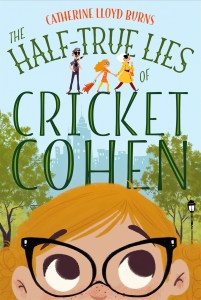
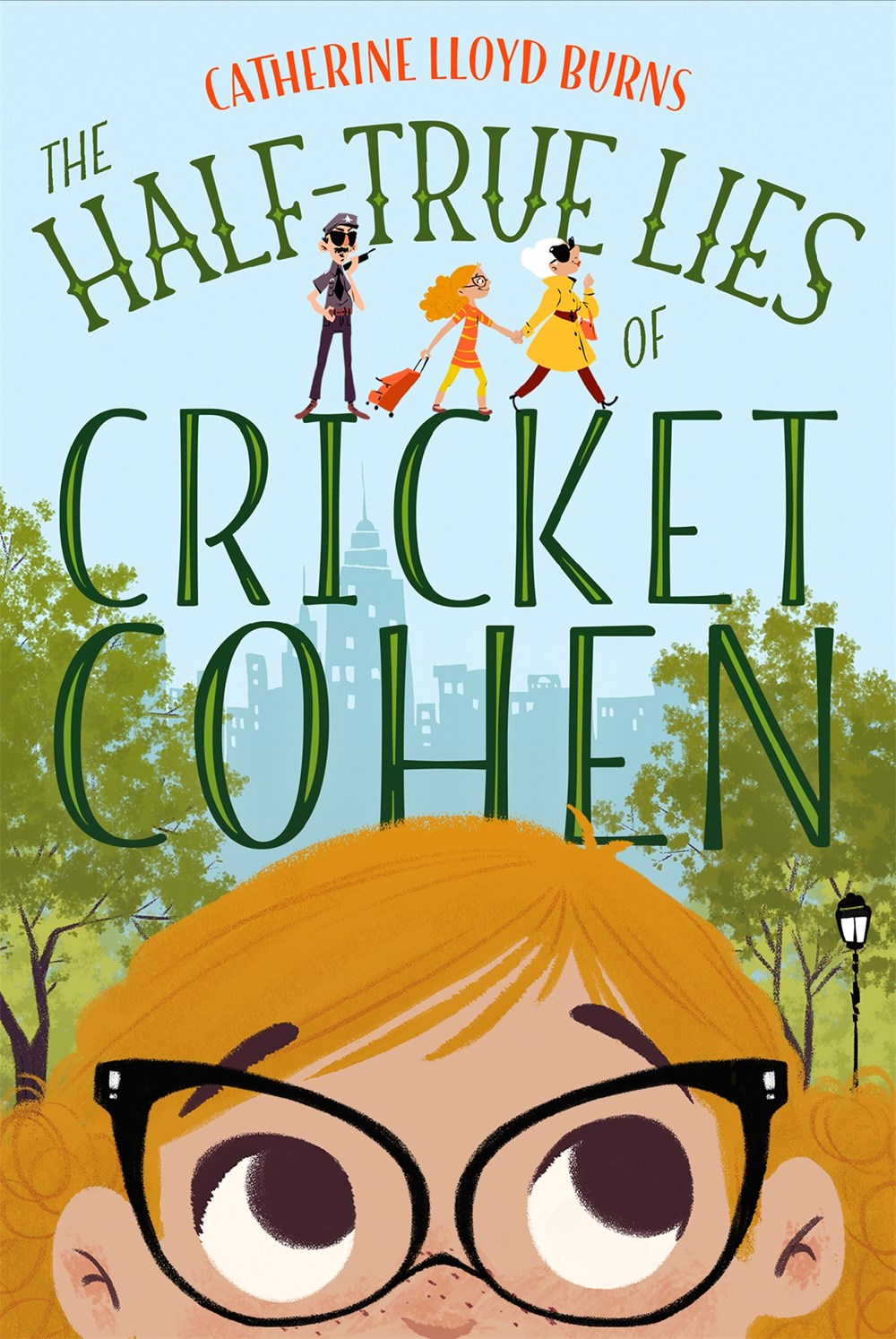
The Half-True Lies of Cricket Cohen, by Catherine Lloyd Burns, (Aug. 2017, Farrar, Straus & Giroux), $16.99, ISBN: 9780374300418

Recommended for ages 8-12

Cricket Cohen has a big imagination. Sometimes, it gets away from her – especially when she wants to impress someone, or just make a boring autobiography school assignment a little more exciting. After all, it’s fun when she and her grandmother pretend, right? Well… wrong, at least according to her schoolmates, who are tired of her making up stories, and her teacher, who wants her to redo her autobiography assignment with the truth this time. When her parents leave her alone with her grandmother, Dodo, while they go summer house-hunting in the Hamptons, Dodo convinces Cricket that they’re going to run away and have an adventure; Cricket’s all too happy to go. But Dodo starts becoming confused, and Cricket finds herself having to bail herself AND Dodo out of hot water when she’s the only one who knows what’s fact and what’s fantasy.

The Half-True Lies of Cricket Cohen is much more than a novel about a kid who likes to embellish the truth. It’s a story about grandparents and grandchildren, and it’s a story about what happens when children find themselves with the responsibility of caring for an adult: something that today’s kids sometimes find themselves managing.

Cricket finds herself disappearing into her imagination to deal with her boring classmates who prefer talking about clothes, shoes, and crushes to geology and stuffed animal brain surgery, but you can also argue that it’s an attention-seeking response to her parents, who are consumed with their nonprofit fundraising for the city’s public schools. They live above their means, and her mother – a control freak and perfectionist – treats her own mother like an inconvenience. Artsy free spirit Dodo pushes back against her daughter’s rules and regulations, and Cricket embraces her kindred spirit; but Cricket, previously unaware of her grandmother’s health struggles, finds herself in the position of being responsible for herself and her grandmother when her grandmother’s failing memory causes a problem in a department store.

The New York setting is fun – it’s got a touch of From the Mixed Up Files of Mrs. Basil E. Frankweiler to it. The story handles big issues like family relationships, aging grandparents, and embellishing the truth with a shot of fun and adventure. At the same time, the Dodo is the one character that remains truly likable throughout the story. Cricket and her family may be living above their means, but they are still an upper middle class family, living on New York’s Upper West Side and renting summer homes in the Hamptons. Her parents border on neglectful, putting the welfare of New York City’s public school children ahead of their own daughter’s. Cricket’s actions are understandable in the bigger picture, and she becomes a more sympathetic character as the story progresses.

Have The Half-True Lies of Cricket Cohen available, along with Death by Toilet Paper by Donna Gephart, and There Will Be Bears, by Ryan Gebhart, for readers who may be coping with an aging grandparent. Booktalk it with Mrs. Basil E. Frankweiler, Kay Thompson’s Eloise, Laura Marx Fitzgerald’s Under the Egg, and Nadja Spiegelman’s Lost in NYC graphic novel for a fun New York reading theme.
Posted in Fiction, Horror, Middle Grade, Tween Reads

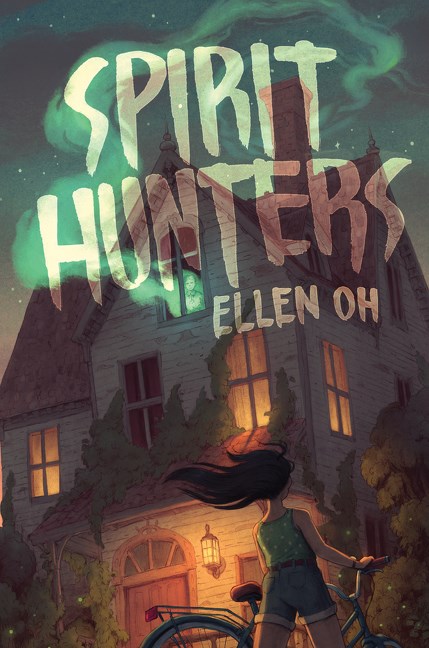
A spooky Book Birthday to Spirit Hunters!

Spirit Hunters, by Ellen Oh, (July 2017, HarperCollins), $16.99, ISBN: 9780062430083

Recommended for readers 9-13

Harper Raine is not happy about her parents’ decision to move them from New York to Washington, D.C. She can’t stand the creepy house they’ve moved into, especially when she hears the rumors about it being haunted. When her younger brother, Michael, starts talking about an imaginary friend and undergoes a radical personality change, Harper knows she has to act, even if no one else believes her. The thing is, some of Michael’s behaviors ring familiar bells for Harper, but she can’t put her finger on why. She’s missing chunks of memory from a previous accident – can things be connected?

Ellen Oh’s the founder of the We Need Diverse Books movement, and Spirit Hunters gives readers a wonderfully spooky story, rich in diversity. Harper and her siblings are half Korean; as the story progresses, subplots reveal themselves and provide a fascinating look at Korean culture, and the conflicts that can arise between generations. Harper’s new friend, Dayo, and a helpful spirit named Mrs. Devereux are African-American; Mrs. Devereux in particular provides a chance for discussion on race relations, and how racism doesn’t necessarily end with one’s life. Told in the third person, we also hear Harper’s voice through her “stupid DC journals”; journal entries suggested by her therapist, to help bridge her memory gaps, that show up between chapters. The characters are brilliant, with strong backstories, and two mystery subplots emerge that come together, with the main story, to give readers an unputdownable story that will dare them to turn the lights off at night.

I can’t say enough good things about Spirit Hunters, and neither can other reviewers: the book has starred reviews from Publishers Weekly and Booklist.


Posted in Fiction, Fiction, Historical Fiction, Horror, Middle Grade, Tween Reads

One for Sorrow mixes ghost stories with historical fiction

One for Sorrow, by Mary Downing Hahn, (July 2017, Clarion Books), $16.99, ISBN: 9780544818095

Recommended for ages 10-14

Annie is the new girl at her school. Desperate to make new friends, she’s thwarted when the school pariah, Ellie, latches onto her on the first day. Annie quickly discovers that there’s a reason the other girls don’t like Ellie: she’s a liar, a tattletale, and a thief who bullies her way into Annie’s life. When Ellie is out sick for a few days, Annie manages to befriend the other girls at school and becomes one of Ellie’s tormentors. When the 1918 flu epidemic reaches Annie’s town, it claims Ellie as one of its victims, but Ellie’s spirit won’t rest. She returns as a vengeful ghost, punishing all the girls who bullied her through Annie, thus ensuring that Annie will be as hated as Ellie was in her lifetime.

Mary Downing Hahn is one of the reigning queens of middle grade horror. I still can’t look at a doll in the same way after reading Took (2015), and she’s the first author I go to when my library kids ask me for a good, scary story. One for Sorrow, inspired by the 19th century nursery rhyme, seamlessly blends elements of an intense ghost story with historical fiction. Hahn addresses World War I and anti-German sentiment and the 1918 flu epidemic in a small American town while drawing on her own mother’s childhood for inspiration, having her characters visit various homes with funereal wreaths on the door in order to eat their fill of sweets and pastries put out for the wakes. Ellie’s vicious haunting will keep readers turning pages late into the night, feeling Annie’s helpless frustration as Ellie systematically destroys her reputation and her life.


Mary Downing Hahn has won many awards for her writing. You can find out more about her (like the fact that she’s a former children’s librarian!), her books, and her awards, through her publisher’s website.

Posted in Adventure, Fiction, Fiction, Middle Grade, Realistic Fiction, Tween Reads

Can our favorite Book Scavengers figure out The Unbreakable Code?

The Unbreakable Code (Book Scavenger #2), by Jennifer Chambliss Bertman, (April 2017, Henry Holt & Co. BYR), $16.99, ISBN: 9781627791168

Recommended for readers 8-12

The sequel to Book Scavenger (2015) continues the adventures of friends, code breakers, and bookworms Emily and James. Emily’s parents have put a hold on their state-hopping, giving Emily a feeling of permanence she missed terribly. She and James find themselves in the middle of another mystery when they notice their teacher, Mr. Quisling, acting strangely; they follow a trail of encrypted messages in Book Scavenger-laid Mark Twain books. The messages are an attempt to break a legendary, historic puzzle known as the Unbreakable Code, which leads to either a treasure or a curse. As mysterious and suspicious fires pop up around them, Emily and James are worried that Mr. Quisling is the arsonist – unless they can figure out who his mysterious Book Scavenger messenger is.

The Unbreakable Code is loaded with the adventure, mystery, and code-breaking fun that made the first book so enjoyable. There are mysteries within mysteries, and a real sense of urgency as the tweens try to get to the bottom of the arsonist on their trail. There’s a very good subplot about the history of Chinese immigrants during the California Gold Rush that shines a light on a part of history that doesn’t get as much discussion as it should. Ms. Chambliss also presents a very different Mr. Griswold, changed by the events in Book Scavenger. He’s withdrawn, hesitant, apprehensive; his buoyant style is toned down, and he surrounds himself with his assistant, Jack, and the company of dogs to guard him. Emily and James’ secondary mission is to nudge Mr. Griswold back to his former self.

A fun follow-up and a fun accompaniment to coding and spy programs. Introduce kids to coding with Book Scavenger and Gene Luen Yang’s Secret Coders! Kids can play their own game of Book Scavenger at the Book Scavenger website and sign up for the newsletter.