Posted in Fiction, Historical Fiction, Young Adult/New Adult

What makes a monster? Matthew J. Kirby explores in A Taste for Monsters

taste-for-monstersA Taste for Monsters, by Matthew J. Kirby, (Sept. 2016, Scholastic), $18.99, ISBN: 9780545817844

Recommended for ages 12+

Evelyn is a young woman left to fend for herself on the streets of Victorian London’s infamous East End. Orphaned and disfigured by her work in a matchstick factory, she seemingly has few prospects; she applies to London Hospital as a nurse, and is instead assigned to be the maid to the hospital’s most famous patient: Joseph Merrick, the Elephant Man. As she attends to Merrick, she finds a gentle, beautiful soul with whom she shares a love of Jane Austen, easy conversation, and sadly, pain.

And then the ghosts come. They visit nightly, terrifying Merrick and Evelyn, who stays with him to support him through the nightly terrors. Evelyn discovers that the ghosts are the restless spirits of women murdered by Jack the Ripper, whose work makes gruesome headlines. Evelyn takes it upon herself to help these spirits find peace so that they’ll leave Joseph alone, but are they really haunting him? And is Evelyn putting herself in the Ripper’s sights by getting involved?

This is my third Kirby book, and it’s safe to say I am hooked on his writing. His historical fiction places you right in the middle of the action, and his fantastic elements are so believable – especially in an age where spiritualists ran wild – that I had no problem believing that ghosts existed and sought out the kindness of a gentle man like Joseph Merrick. The character development is brilliant and complex; the characters had a depth to them that made we want to sit with them and share tea and conversation. There’s a thread of tension running through the book that will keep readers turning pages, whether it’s the tension between Evelyn and several key supporting characters in the novel, the tension of waiting for the spirits to arrive, and the gripping conclusion. Historical fiction fans that appreciate a touch of the supernatural will love this book; readers interested in the Jack the Ripper story or the Elephant Man will love this book. Conservative readers may shy away from some of the gory descriptions of the Ripper’s victims as read from the newspapers and sideshow attractions. There’s some excellent YA Ripper-related fiction available, including Maureen Johnson’s The Name of the Star; the graphic novel From Hell is another great booktalking and display choice. There is a children’s picture book about The Elephant Man by Mariangela Di Fiore that would be a good display choice. Get this book on your shelves and into hands.

Matthew J. Kirby is an Edgar Award-winning novelist.
 

Posted in Fiction, Graphic Novels, Historical Fiction, Teen, Tween Reads, Young Adult/New Adult

More manga classics! Jane Austen’s Sense and Sensibility

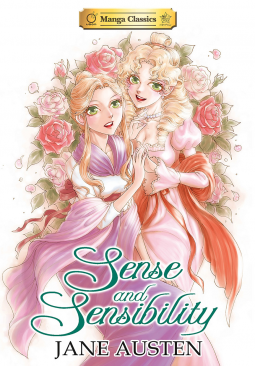
austenSense and Sensibility, by Jane Austen (adapted by Stacy King)/illustrated by Po Tse, (Udon Entertainment/Morpheus Studios, Aug. 2016). $19.99 ISBN: 9781927925638

Recommended for ages 12+

Udon’s Manga Classics line continues to put out the most popular literary classics in manga format, no doubt to the relief to high school and college students everywhere. This time out, I read Jane Austen’s Sense and Sensibility. When sisters Elinor and Marianne Dashwood’s father dies, their family is forced by family finances and turmoil to move to a cottage in Devonshire. Elinor has high hopes for her former romantic interest, Edward, while Marianne falls for John Willoughby – who seems to be hiding something. Colonel Brandon, an older man, also shows interest in Marianne, but she’s initially afraid that he’s too old for her. Similar to Pride and Prejudice, we have romantic entanglements and complicated relationships. Manga fans who also want some reinforcement of the Austen classic will appreciate this more visual layout of all the relationships in this story. Great for middle, high school, and college students.


Posted in Adventure, Fantasy, Historical Fiction, Middle School, Teen, Tween Reads, Young Adult/New Adult

Assassin’s Creed goes YA with Last Descendants

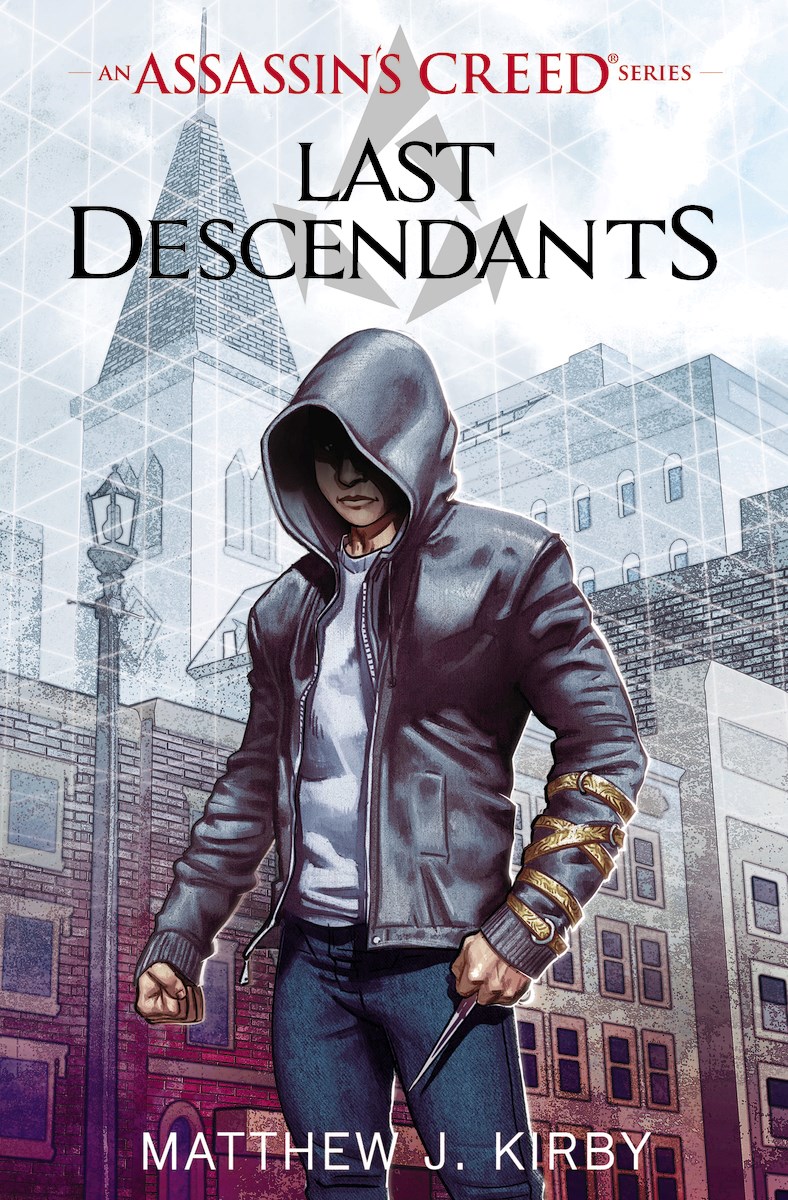
assassinLast Descendants: An Assassin’s Creed Novel, by Matthew J. Kirby, (Aug. 2016, Scholastic), $9.99, ISBN: 9780545855518

Recommended for ages 12+

Owen is going through some rough stuff. He and his mother live with his grandparents; they were forced to after his father was arrested for robbing a bank and died in prison. Owen believes he was innocent, but that doesn’t stop his grandparents from badmouthing his dad whenever they get a chance. His best friend, Javier, has been more distant lately, so he really feels alone until the school IT guy, Monroe, invites him to use his device called the Animus, which will help him explore memories buried in his DNA. He convinces Javier to come along and make sure things sound on the level, and Javier ends up having a shared genetic memory in the Animus with Owen. Use of the Animus sets off some kind of alarm, though, and Monroe brings the two teens to a hideout he’s established, where they meet four other teens who have used the Animus. Monroe explains that the group all have roots in one (or both) of two ancient orders: the Brotherhood of Assassins or the Templar Order. There’s a precious relic that needs to be found, and their group is the only group that can do it through a shared genetic experience. The teens find themselves in the bodies of their ancestors, transported into the 1863 New York City, on the even of the infamous Draft Riots.

This is the first book in a YA Assassin’s Creed series, based on the insanely popular video game. I’ve never played Assassin’s Creed – I think I’ve mentioned in the past that I’m fairly inept beyond a joystick and firing button – but I love the mythology behind the game, which my eldest has played for years. Having a YA series that follows teens descended from the Assassins and Templars, going through different eras in history? I loved it! We get a look at the Gangs of New York-era Lower East Side through an interesting fantasy perspective, with some nice groundwork about the two dueling factions in place for newbies to Assassin’s Creed (I double-checked some info with my son as I read). Being a Gangs of New York fan and a student of Lower East Side history, I was thrilled to see how Kirby worked the gangs into the main storyline. The story flows through multiple perspectives, yet he keeps everything together so readers shouldn’t be confused by whose voice they’re reading, especially appreciated when characters are in the Animus and living through their ancestors. There’s great character development, action, and he doesn’t flinch from the racism that fueled the riots. The ending leaves no doubt that there will be a sequel, and I can’t wait to read it.

I’ve liked Matthew Kirby’s writing since I devoured Icefall four years ago. He creates great characters and skilfully weaves historical fiction and fantasy. With an Assassin’s Creed movie hitting theatres in a little more than two weeks, this is a book you need front and center on your displays (and on your holiday lists – we all know someone who loves this franchise). Put this one on your purchase lists.

Posted in Fantasy, Fiction, Historical Fiction, Teen, Tween Reads

Folklore, myth, and memory: Merrow

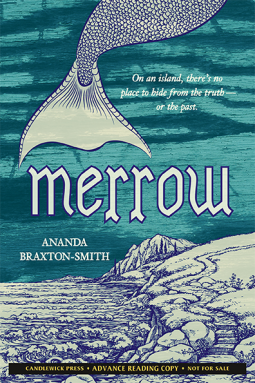
merrowMerrow, by Ananda Braxton-Smith, (NOv. 2016, Candlewick), $16.99, ISBN: 9780763679248

Recommended for ages 12+

Twelve year-old Neen Marrey lives with her Aunt Oshag on Carrick Island. Her father drowned and her mother disappeared when she was a baby; now, she and her aunt endure the town gossip – that her mother was a merrow, a mermaid, that returned to the ocean and her father drowned himself trying to reach her. Oshag dismisses the gossip as nonsense, but the myth keeps Neen going; she wants desperately to believe that her mother didn’t just desert her; that maybe even Neen herself has merrow in her, and can reconcile with her mother one day.

Merrow is beautiful and heartbreaking. Braxton-Smith spins a tale that weaves together historical fiction, Celtic folklore, and a coming of age story. Neen and Oshag are both incredibly constructed characters that come alive; characters that you come to ache for. The supporting cast are equally likable and believable, and having such a small group of characters adds to the intimacy of the novel.

This is a gorgeous novel that literary fiction readers, readers of magical realism, realistic fiction, and historical fiction alike will love. Merrow has received four starred reviews: Booklist, Publishers Weekly, Kirkus Reviews, and School Library Journal. Maybe the Printz committee will agree?

Posted in Fiction, Fiction, Historical Fiction, Middle Grade, Realistic Fiction, Tween Reads

The Last Cherry Blossom remembers Hiroshima

cherry-blossomThe Last Cherry Blossom, by Kathleen Burkinshaw, (Aug. 2016, Sky Pony Press), $16.99, ISBN: 9781634506939

Recommended for ages 10-14

Narrated in the first person by 12 year-old Yuriko, The Last Cherry Blossom tells the story of a family living in Hiroshima during the last year of World War II. Yuriko lives with her widowed father, her aunt Kimiko, and obnoxious 5 year-old cousin, Genji. She and her best friend Machiko stealthily listen to American Jazz records; Machiko’s father got rid of (almost) all of their records because the government wants to be rid of any American influence. She’s used to the air raid drills, even if they annoy her, but when her neighbor is called to fight for Japan, and then Machiko is called to leave school to work at the factory, Yuriko starts feeling the impact of war. She hears whispers from the neighborhood – and her father does run a newspaper – that Japan is not faring as well as the radio and newspapers would have you believe. When the true horror of war is brought to Yuriko’s door, we see, through her eyes, the devastation that the bombing of Hiroshima brought.

The Last Cherry Blossom is powerful. Even as an account of a family’s life during World War II, it’s a strong book, because it shows readers – in parallels we can make today – that the “enemy” isn’t an entire country; an entire group of people. The enemy were children teasing one another, rolling their eyes at annoying aunts and cousins, worried about their parents remarrying, and secretly listening to music that their parents may not approve of. The enemy loved eating sweet treats and held celebrations and cried when they lost people they loved in war, just like we did. Inspired by the author’s mother’s own life living as a child in Hiroshima, Ms. Burkinshaw writes so beautifully, yet packs a literary gut-punch that left me biting back tears.

There has been some strong World War II realistic/historical fiction for middle grade in the last couple of years, for which I am grateful. I’m very happy to see fiction that explores life outside the U.S. during World War II: we need perspective; reminders to look outside ourselves; to see the cost that war demands on everyone.

An author afterword tells readers about the author’s mother, and how her daughter’s class visits eventually led to the book being written. There’s also a bibliography, notes on the use of honorifics in the story, a glossary, and statistics about Hiroshima, complete with sources.

This is a good add to historical and realistic fiction collections. Booktalk with Sandy Brehl’s World War II books, taking place in Norway under the Nazi occupation; Sharon McKay’s End of the Line, taking place in Amsterdam, and most closely related to Burkinshaw’s work, Sadako and the Thousand Cranes (and please have tissues available).

Posted in Fiction, Historical Fiction, Middle Grade, Tween Reads

Bjorn’s Gift continues the story of a family under Nazi occupation

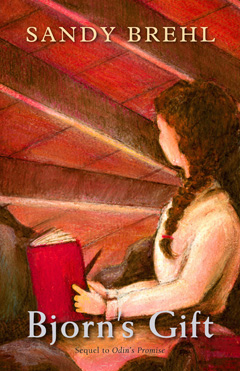
bjorns-giftBjorn’s Gift, by Sandy Brehl, (Oct. 2016, Crickhollow Books), $14.95, ISBN: 978-1-883953-84-3

Recommended for ages 9-13

A couple of years ago, I was a first round Cybils judge for Middle Grade realistic fiction, so I had the chance to read a lot of new, independent fiction that I never would have discovered otherwise. One of the books, Odin’s Promise by Sandy Brehl, is the story of a young girl and her beloved dog, Odin, living in Norway during the Nazi occupation during World War II. The sequel – the second in a planned trilogy! – continues the story of Mari and her family, living under the tightening yoke of the Nazi invasion.

We see Mari, her family and friends, staying strong as the Nazis move into Mari’s home and encroach on every facet of her life. Her friend, Leif, is thrilled to be a member of the Unghird – Norway’s answer to Hitler Youth – and insists on reminding Mari that she should be honored to receive his attention. The families are faced with increased rationing, book banning, and watching friends and neighbors disappear under the Nazi regime, yet engage in quiet acts of resistance; Bestemor still has her radio to receive BBC broadcasts, her father shelters refugees in the attic; and, most importantly, Mari’s brother Bjorn is a full-fledged member of the resistance. Although absent throughout the story, Bjorn’s presence is strongly felt through Mari’s journal, taking the form of letters to him, and his carved toys that give Mari and her friend, Per, the strength to carry on.

If you haven’t had the pleasure of reading Odin’s Promise yet, I highly recommend it. It’s a reminder that the Nazi occupation and their reign of terror against anyone of the Jewish faith or those who would dare to disagree with their policies was not limited to Germany. It’s an uplifting story about how everyone makes a difference in face of overwhelming odds. And Bjorn’s Gift is every bit as heart-rending and inspirational as its predecessor. I was so happy to revisit Mari and her family, and am so grateful to know that I will get to meet them again in one more novel.

Put this series in your classroom libraries and your historical fiction collections. Display and booktalk them with books that offer a wide range of information about children during World War II, like Susan Campbell Bartoletti’s Hitler Youth, The Boy in the Striped Pajamas by John Boyne, Sharon McKay’s End of the Line, Eleanor Coerr’s Sadako and the Thousand Paper Cranes, and Karen Levine’s Hana’s Suitcase.

Odin’s Promise was the winner of the 2014 Midwest Book Award for Children’s Fiction. You can find discussion guides for both Odin’s Promise and Bjorn’s Gift at author Sandy Brehl’s website.

Posted in Fiction, Historical Fiction, Middle School, Realistic Fiction, Teen, Tween Reads

In The Gallery, art speaks volumes – who’s listening?

galleryThe Gallery, by Laura Marx Fitzgerald, (June 2016, Dial Books), $16.00, ISBN: 9780525428657

Recommended for ages 10+

It’s 1929, and 12 year-old Martha has gotten herself thrown out of school for the rest of the school year. Her Ma certainly isn’t going to let her sit home and do nothing, so Martha ends up going to work as a maidservant for Mr. Sewell, the wealthy owner of a major New York newspaper, and his reclusive wife, Rose. Martha’s mother is in charge of the household and oversees all the staff, and Rose isn’t getting any favors by being Ma’s daughter: she’s put straight to work in the kitchen, scrubbing, sweeping, and mopping. She also hears a lot of talk from the servants in the house, who say that Rose is crazy, but Martha isn’t buying it: there’s more there than meets the eye, especially because Mr. Sewell gives her the creeps. When she discovers the Sewell gallery, a conversation with Alphonse – a servant who also seems to know more than he’s letting on – confirms Martha’s suspicions. By learning more about the art that Mrs. Sewell sends down from her locked room to be displayed in the gallery, Martha puts together the real story about what’s going on at the Sewell house.

The only thing better than the story taking place in The Gallery is the fact that it’s based on a true event. Ms. Fitzgerald’s captivating author’s note at the end of the story fills in some crucial details about the story, the true story that inspired it, and more information about events taking place at the time the story unfolds. The Jazz Age, on the brink of the stock market crash and ensuing Great Depression, had anarchists, performers both glitzy and outrageous, defined separation of classes, and a lot of backstabbing, both professionally and personally. It was a fascinating time, and The Gallery is a fascinating look into some of that era.

The Gallery is a metaphor for there being more than just face value to things. Martha sees past Mr. Sewell’s exterior, to be sure, but there’s also a touching subplot about a girl coming of age in the middle of this madness, and realizing that her father isn’t the person she thought he was, either.

Every single character in this book is interesting; the story’s pace is perfect, with just enough exposition, then a slow but consuming buildup to the big finale. The bookend story that frames the entire narrative is just so good, and brings readers full circle. This is a great book to introduce to middle schoolers who want something… more. You know the readers: they want something, but not what everyone else is reading. They aren’t really sure what they’re in the mood for, but they want a good book. This is that book. Suggested books I’ve seen are Chasing Vermeer and The Westing Game, neither of which I’ve read, but have heard great things about. As they’re art-related mysteries, display them together. I’d also suggest The Girls at the Kingfisher Club, an excellent Jazz Age re-imagining of the beloved fairy tale, The Twelve Dancing Princesses, and also includes an autocratic, wealthy male figure that wants to keep the girls in his life locked away so he doesn’t have to deal with them.

Definitely worth the add to your collections. I’m thinking of gifting this to the eldest’s girlfriend; she loves a good story. It’s lovely when there are readers all around you!


Posted in Fiction, Fiction, Graphic Novels, Historical Fiction, Humor, Intermediate, Middle Grade, Tween Reads

Sibling antics in the Wild West: Varmints

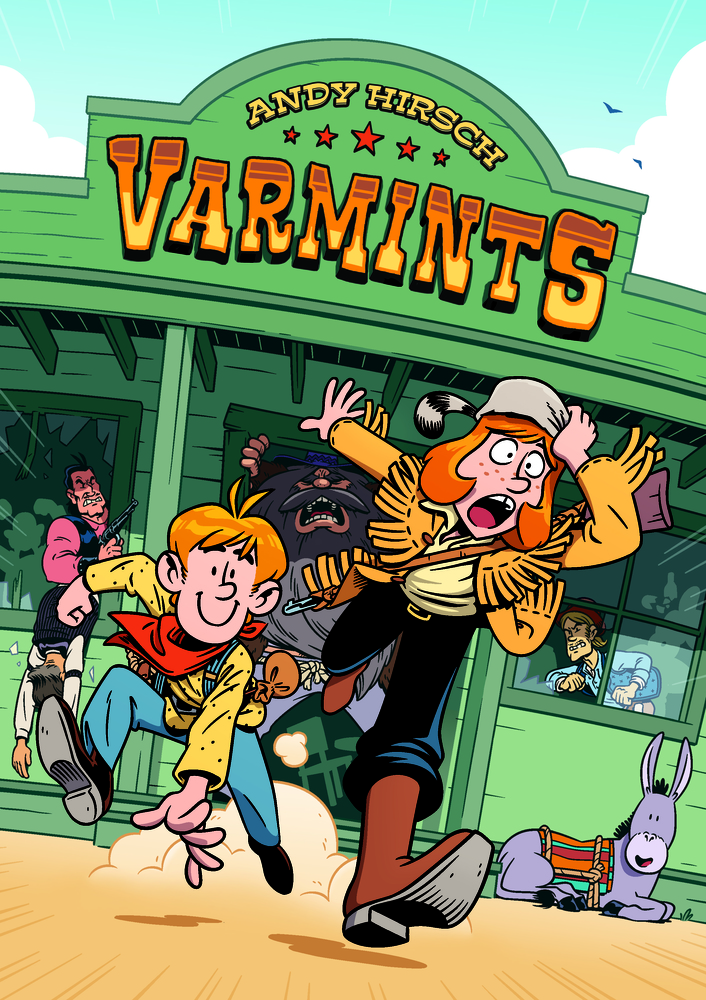
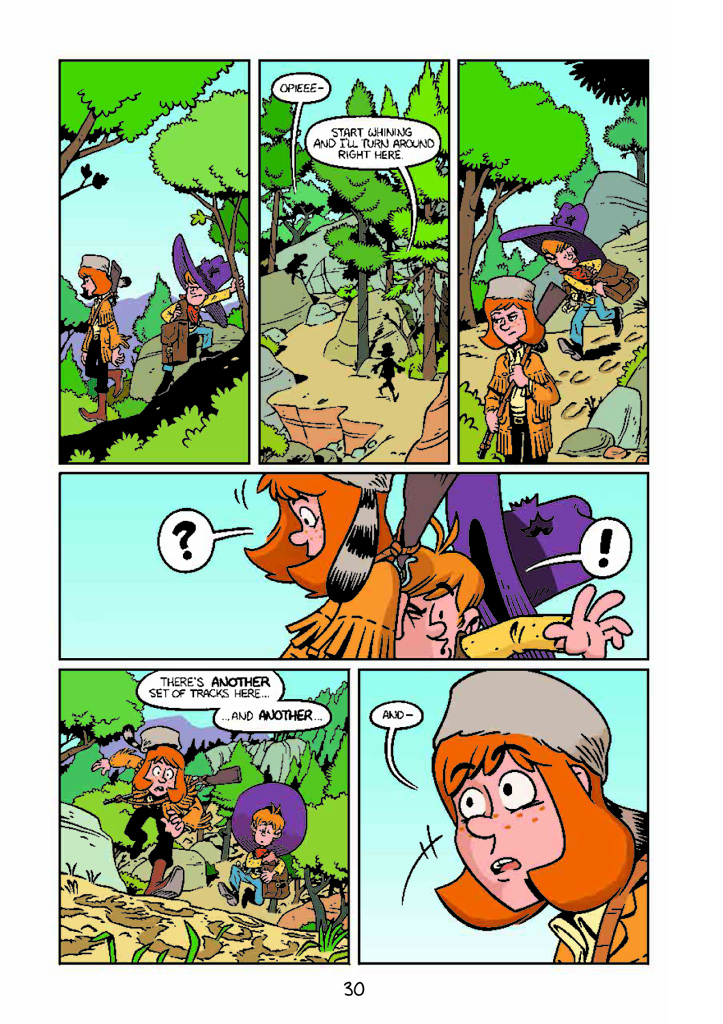
varmints_1Varmints, by Andy Hirsch (Sept. 2016, First Second), $16.99, ISBN: 9781626722798

Recommended for ages 7-12

Set in the Old U.S. West, Opie and her younger brother, Ned, are orphaned siblings searching for the man who shot their Ma. Problem is, their Pa is THE bad guy – the kingpin, the big bad, cue the dramatic music at the mere mention of his name kind of bad. And he’s expert at not being found. Opie and Ned are undeterred, though; they mean to find their Pa and have some words: if they can just stop arguing with one another long enough to stay out of trouble, that is.

There’s a lot of action and dialogue in this first volume of Varmints. The sibling squabbling provides some quick-witted entertainment, and the explosions and fights, not to mention the cartoony art and bright colors, will hold kids’ interests. It’s a very old-school type of storytelling, with humor, wit, and pathos.

Good addition to graphic novel collections, especially where Westerns are popular; otherwise, a good secondary purchase. There’s a 2013 Varmints story, “The Coonskin Caper”, on Andy Hirsch’s website, along with links to his other work, including The Baker Street Peculiars, for fellow Sherlock Holmes fans who love a touch of the supernatural in just about anything. Check out some of his work on Adventure Time, Garfield, and The Regular Show, too.

varmints_2 varmints_3


Posted in Early Reader, Fantasy, Fiction, Fiction, Historical Fiction, Intermediate

The power of stories: The Storyteller

storyteller-1The Storyteller, by Evan Turk (June 2016, Athenum), $18.99, ISBN: 9781481435185

Recommended for ages 5-10

Every now and then, you get an epic in storybook form. The Storyteller is such a tale. We sit down and listen to the storyteller: the narrator of the book, who tells us how the Kingdom of Morocco formed at the edge of the great, dry Sahara desert; how there were fountains of cool water, and storytellers to bring the people together. We also learn that as people forgot the perils of the desert, they forgot about the storytellers, too – except for a single boy, who happened upon a storyteller while in search of a drink of water. The storyteller spun tales for the boy, always leaving him thirsty for more stories.

Once a sacred duty to preserve a culture’s collective memory, the advent of television, movies, and the Internet whittled away at the practice of storytelling. What The Storyteller gives us is a beautifully complex, layered tale that illustrates the power of storytelling, an art that – according to the author’s note at the end of the book – is at long last making a comeback.

Mr. Turk’s art has an ancient feel to it, capturing the story’s spirit using a variety of instruments: water-soluble crayon, colored drawing pencils, inks, indigo, sugared green tea, a heat gun, and fire. The final product made me feel like I was holding a revered story scroll, reading tale straight from history.

storyteller-2

Evan Turk received the New Illustrator Honor from the Ezra Jack Keats Foundation for Grandfather Gandhi. Find more of his artwork at his author website. The Storyteller has received starred reviews from Publishers Weekly and School Library Journal.

This is a picture book more for school-age kids than little ones. The publisher suggests ages 4-8, but I’d bump it up to ages 5-10, because I feel like Kindergarteners would be better able to sit through the story and lose themselves in this tale. I also feel like this would be a great book to skew a little older with; for instance, upper elementary grades that have storytelling/fairy tales units would have great success introducing this book to classrooms.

storyteller-3


Posted in Fiction, Historical Fiction, Middle Grade, Realistic Fiction, Tween Reads

The Lost Twin: A boarding school whodunit

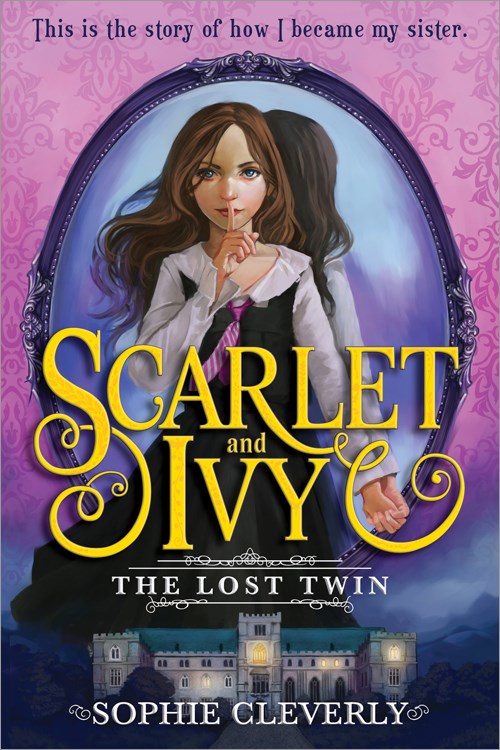
the lost twinScarlet & Ivy: The Lost Twin, by Sophie Cleverly, (May 2016, Sourcebooks Jabberwocky), $16.99, ISBN: 9781492633396

Recommended for ages 9-13

Ivy is still grieving the death of her twin sister, Scarlet, when the letter from the school comes: a spot has opened up, and she can expect to be picked up immediately. Ivy is indignant – how rude and cold, to be referring to her sister’s death as an “opening” – and it only gets worse once the imperious headmistress, Miss Fox, comes to collect her. Miss Fox tells her that Ivy’s expected to become Scarlet – a face-saving measure for the school. Once at the school, Ivy finds herself in the thick of a few mysteries, all having to do with Scarlet and her disappearance from the school. Can Ivy unravel all the mysteries surrounding the school and learn what really happened to her sister?

Scarlet and Ivy: The Lost Twin is a well-paced, consuming boarding school mystery, set in 1935 England. The characters are interesting and the intrigue keeps pages turning, while getting readers riled up at the injustices Ivy endures. There are so many little mysteries entwined with larger ones – once a thread gets pulled, you’ll be consumed with following it to see where it goes. Fox is an awful human being that loves corporal punishment a bit too much to be in charge of children; Ms. Cleverly has given us a truly hissable villain here (she and Professor Umbridge would get along swimmingly). You’ll root for Ivy and her friend, Ariadne, and the ending leaves you bouncing up and down with the knowledge that we’ll be getting more adventures in the future.

According to Sophie Cleverly’s Twitter, the third Scarlet & Ivy book is out – pretty sure it’s only out in the UK, but let’s be really, really nice to Sourcebooks Jabberwocky and Ms. Cleverly, so they’ll bring the further adventures of Ivy, Ariadne, & Co. to us here in the States.

The Lost Twin is a good summer reading choice for middle grade readers who enjoy a good mystery with a few well-placed plot twists. I’ve got a lot of kids asking me for good mysteries, so I’ll add this one to my booktalks, along with The Peculiar Haunting of Thelma Bee and Audacity Jones.