Posted in Fantasy, Fiction, Graphic Novels, Middle School, Science Fiction, Tween Reads

The Glorkian Warrior Delivers a Pizza: Middle-Grade Hilarity in a Graphic Novel Format

The Glorkian Warrior Delivers a Pizza, by James Kochalka (First Second, 2014), ISBN: 978-1-59643-917-7, $17.99
Pub Date: March 2014

Recommended for ages 8-12

Glorkian-Warrior_AdvanceBooks_FrontCover I first discovered James Kochalka a few years ago, when my son read and adored his book, Peanut Butter & Jeremy’s Best Day Ever. I loved the cartoony art and fun dialogue; when I saw this title available on NetGalley, I immediately requested it, knowing I’d be in for a fun read. I was absolutely right.

Not knowing about the successful Glork Kickstarter that Mr. Kochalka and PixelJam games had back in 2010, I came to Glork as a brand new audience. The book is hilarious and surreal on a level that middle schoolers can truly appreciate and adults will just laugh out loud looking on. The Glorkian Warrior is sitting at home with his Super Backpack, when the phone rings – it is destiny? Well… kind of – it’s a pizza order. While Backpack wants the Glorkian Warrior to disregard the obviously wrong number, the Warrior will not be put off – this is his mission! He grabs a partially eaten pizza from his fridge and sets off on a journey that will introduce him to alien babies and add strange and unusual toppings to the pizza, including ash, tears, and fire damage. Will the Glorkian Warrior fulfill his delivery destiny? Don’t look at me for answers, read the book!

The book, which hits bookshelves in late March, is great fun. The cartoony art is perfect for its middle grade audience, as is the goofy humor. The Warrior is hilariously oblivious, Backpack is the brains of the operation, and together, the two are responsible for bickering and laughs on the level of Star Wars’ C3P0 and R2D2.

I enjoy graphic novels for kids, for several reasons. The first reason? Reluctant readers. They may stare at a page full of words and shut their brains off, but how can you look at a brightly colored, fun adventure and say, “No thanks”? You can’t. This will draw in reluctant readers, who – sadly – also tend to be boys. Having an alien warrior delivery a pizza with his laser-powered sentient backpack will definitely help bring the boys to the reading table. The second reason? Graphic novels teach sequence. Sequential art – art that is broken up into panels, a sequence – gives kids a sense of pacing and “what happens next” – very important concepts in the Common Core these days.

I thoroughly enjoyed riding shotgun with the Glorkian Warrior, and look forward to seeing him again. Reserve this book for any young readers you may have – they’ll get a kick out of it. The book also opens itself up to some great reading group discussions, including drawing your own alien workshop/top your own alien pizza workshop, map out the mission mapmaking sessions, and make your own comic book programs.

Mr. Kochalka has a Tumblr, Kochalkaland, where he features some webcomics (not necessarily young child-appropriate, but then again, neither is Tumblr) and a webcomic at American Elf (again, not young reader-appropriate). You can follow Glorkian Academy on Twitter for news about the books.
 

Posted in Fantasy, Graphic Novels, Tween Reads

Jellaby: The Lost Monster – a story of friendship, in graphic form, from Kean Soo and Capstone

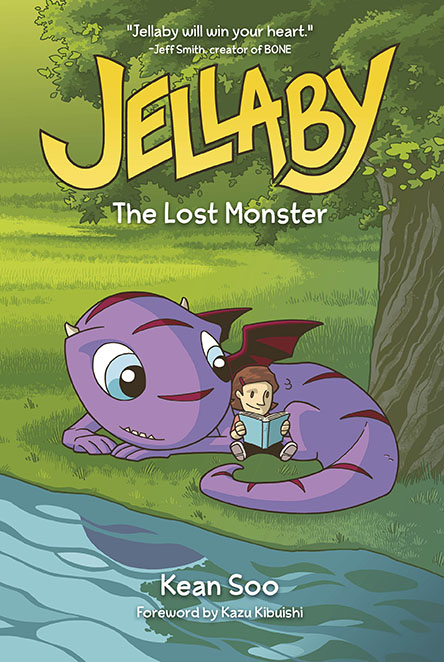
Capstone is bringing Kean Soon’s Jellaby back to print, and I couldn’t be happier. I came across the book on NetGalley, and am so happy that Capstone gave me the chance to read it. Jellaby: The Lost Monster is the first volume in the Jellaby series. The all-ages story about friendship also tackles some big issues within a safe space for kids.

jellaby

Read the rest of my review over at WhatchaReading!

Posted in Fantasy, Preschool Reads, Uncategorized

When You Wish Upon the Moon… Randy DuBurke’s Moon Ring Takes You on a Trip

Book Review: The Moon Ring, by Randy DuBurke, Chronicle Books 2002
Recommended for ages- 4-8

the moon ring

Maxine, a young girl, sits on the porch, with her grandmother, seeking relief from the summer heat, when a magic ring seemingly falls from the blue moon. Maxine is swept away on a magic ride around the world – to the South Pole, a wild savannah, and New York City, accompanied by some new friends. But what happens when she runs out of wishes?

The book is a fun fantasy tale about magic and the moon. We always hear about wishing on a star, but the moon is the star of the show here (no pun intended). Randy DuBurke gives readers a classic fairy tale elements – granting wishes, being transported to exciting adventures and locales, and the temporary scare – the wishes have run out!

Young readers will enjoy the close relationship Maxine and her wise grandma who knows that magic is out there. Maxine is drawn with a wonderfully expressive face – it makes for fun reading, with prompts to children learning about facial expressions and emotions. The exciting, changing landscapes are beautifully rendered in pen, ink, and acrylics on cold waterpress paper. The story uses its space well, alternating between full-bleed spreads and framed panels. I read the digital version of this book, so I can’t speak to the fonts, but I’m sure a read-aloud with the actual book will work better with a young group.

The Moon Ring is a playful, fun book that makes for a good read-aloud session. This would be a great addition to a read-aloud about magic, imagination, or the moon. There are many rhymes and fingerplays about the moon that would be good companions to this book – Hey Diddle Diddle would be a fun start!

Posted in Fantasy, Preschool Reads

Book Review: Doug Unplugged, by Dan Yaccarino (Knopf, 2013)

Recommended for ages 4-8

Doug Unplugged!-1

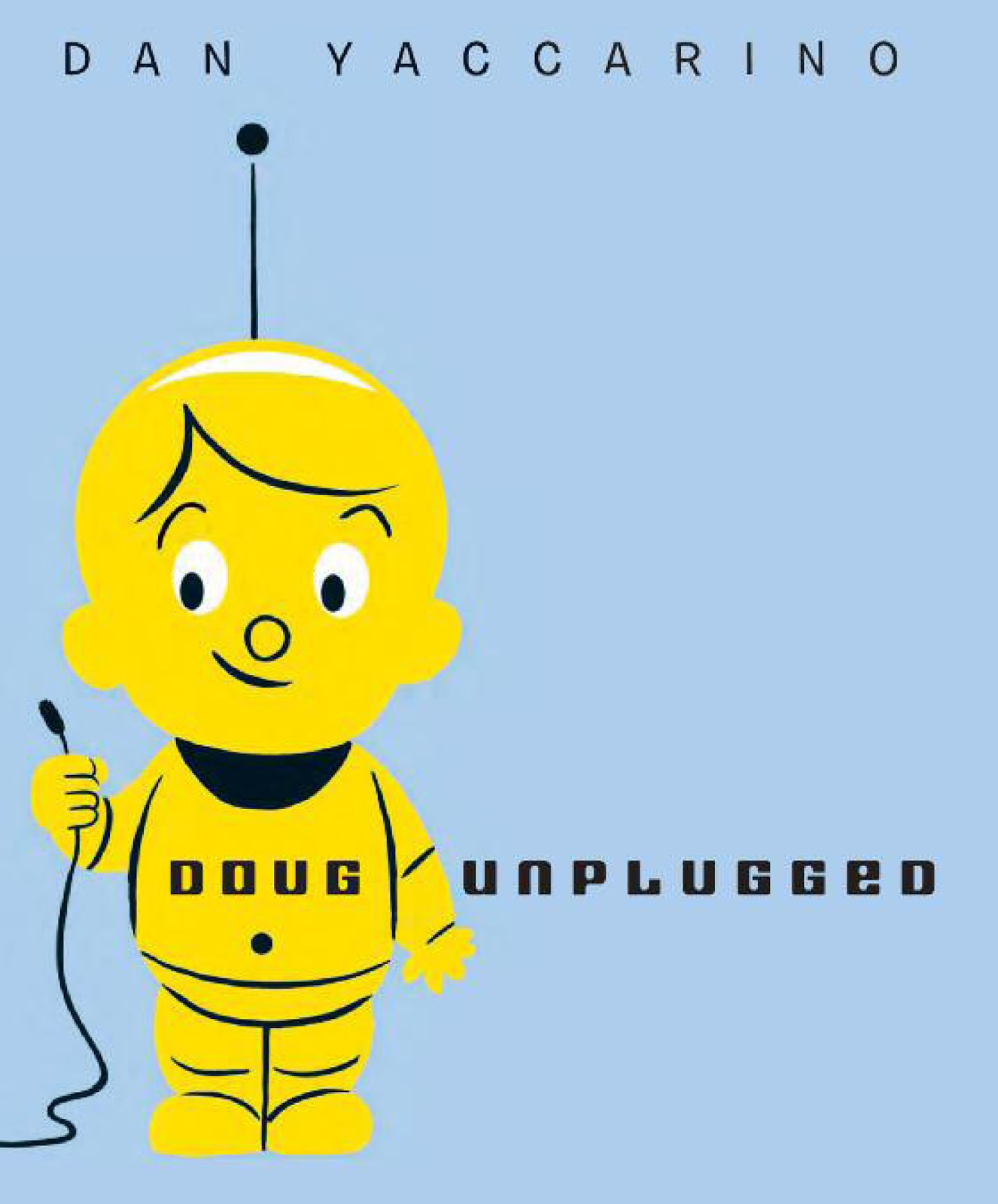
This fun, retro story by Dan Yaccarino tells the story of a little robot boy who decides to “unplug” one day and explore the world. Little Doug is a robot boy whose parents plug him in every day so that he can learn while they head to work. One day, while learning about the city, Doug spies a pigeon at his window, and he’s fascinated. He unplugs himself and heads off on a day of exploration where he rides the train, scales a skyscraper, and makes a friend. After reuniting his friend with his parents, Doug decides to head home and tell his parents about his exciting day.

The story is sweet and packs a powerful message in our highly technological society. When most of our kids spend their days behind their iPads and computer screens, this simple message – unplug and learn by getting outside and doing – is a welcome sigh of relief. Packed with Yaccarino’s fun, adorable retro-futuristic artwork, Doug is a little boy on a big adventure that kids will enjoy living through vicariously. He may be a robot, but he’s easily distracted – there are many kids who can relate to the excitement of a pigeon landing on the windowsill at school or while doing homework at home. He spends a day exploring the city, yet manages to find a friend, and knows that he must go home at the end of the day. The art consists primarily of blues, greens and yellows, with other colors showing up to punch up the landscape. I read the digital version of this book, but encourage adult readers to use the physical storybook, which has smaller black font (it’s a great read-aloud book), usually at the bottom of the page or individual pictures so as not to detract from the artwork.  There are whole spreads and chunked panels throughout the book, giving a fully-fleshed-out feeling to this story. 

This would be a fun addition to a storytime on robots and would provide a more human perspective on a robot read-aloud. There are many robot printables and crafts online, and the author’s website offers information about his books, blog, social media, and speaking engagements.

Posted in Adventure, Espionage, Fantasy, Fiction, Science Fiction, Steampunk

Book Review: Etiquette & Espionage, by Gail Carriger (Little, Brown, 2013)

etiquette and espionageRecommended for ages 13+

Gail Carriger, author of the Parasol Protectorate series, kicks off her YA Finishing School series, set in the same universe as the Parasol Protectorate series, with Etiquette & Espionage.

Fourteen year-old Sophronia is driving her society lady mother crazy. She climbs trees. She takes apart things to figure out how they work. She lines her books with rubber from a dumbwaiter in the house. Fed up with Sophronia’s antics, she sends her to finishing school – Mademoiselle Geraldine’s Finishing Academy for Young Ladies of Quality, to be precise.

What neither Sophronia nor her mother bet on, though, was that this is no ordinary finishing school – when they say “finish”, they mean “finish” – the students learn how to curtsey and flutter their eyelashes, but they also learn about poisoning, espionage, and weapons placement. Sophronia is learning to be a spy and an assassin in addition to being a lady. But she also stumbles into a mystery involving one of the students as soon as she boards the coach to school – what is really going on at Mademoiselle Geraldine’s, and what does her newfound nemesis have to do with it?

While I am a big fan of the Parasol Protectorate series and went into this series with high hopes, I was a little let down here. I understand that this is the first book in a new series, with much to be established, but I felt there was an overall lack of plot to drive the story forward. It seemed more a collection of “look what Sophronia’s got herself into now” moments, with some vague subplot surfacing to give her an archenemy in future books.

The dry humor is there, though, and that kept me reading. I love the way Ms. Carriger writes, and I enjoy her stubborn heroines who can lock horns with a werewolf and then stress about their state of dress and look for a cup of tea. I enjoy the Parasol Protectorate universe, and there’s paranormal and steampunk aplenty here, with werewolves, dirigibles, and automatons for all. There are a few pleasant surprises for Parasol Protectorate fans, too.

If you’re a fan of Carriger’s, you’ll at least enjoy the universe and references. I look forward to the next book in the series.

Posted in Fantasy, Tween Reads

Book Review; Breadcrumbs, by Anne Ursu (Erin McGuire, ill.) (Walden Pond Press, 2011)

Recommended for ages 9-12

Fifth graders Hazel and Jack are best friends until the day Jack decides he wants to be around boys more than a girl. Hazel is miserable at the loss of her friend, but when Jack disappears, she is the only one who ventures into the mysterious woods to find him, and get him back from the White Queen – whether or not he wants to come home.

Breadcrumbs is a trip through fairy tales and middle-grade stories that many readers will be familiar with, all surrounding a retelling of the classic tale of the Snow Queen. The characters are fifth graders who actually act their age; they are fully fleshed out with backgrounds that touch on issues that many readers will be familiar with – multiculturalism, adoption, divorce and remarriage, depression, and the pain of loss and how to move past it. There is a little bit of magic in every world, and Breadcrumbs brings that to life in the form of the main characters’ imaginations and in the more literal, magical forest sense. Erin McGuire’s black and white illustrations bring the chill of the cold forest, particularly the Snow Queen, to life and enhance the text. Compulsively readable, the book also provides numerous opportunities to enhance classroom discussions on topical issues or on a fairy tale unit.

Breadcrumbs is a 2011 Cybils award nominee for Middle Grade Science Fiction/Fantasy. Author Anne Ursu’s webpage offers information about Breadcrumbs and all of Ms. Ursu’s books, plus updated news and appearance information and links to social media.

Posted in Animal Fiction, Fantasy, Historical Fiction, Humor, Tween Reads

The Cheshire Cheese Cat: A Dickens of a Tale, by Carmen Agra Deedy & Randall Wright (Barry Moser, ill.) (Peachtree Publishers, 2011)

Recommended for ages 9-12

Skilley is a street cat who finds himself hired by Ye Olde Cheshire Cheese, a pub in Victorian London where writers like Charles Dickens find themselves inspired to write. Ye Olde Cheshire Cheese makes some of the best cheese in the kingdom, and they’ve got a bit of a mouse problem. It should be a dream job for Skilley, but he has a secret – he doesn’t like to eat mice. He prefers cheese, truth be told. Skilley and the mice of Ye Olde Cheshire Cheese, led by young Pip, work out an arrangement that should keep the staff at the Cheese fooled and Skilley’s belly fed until Pinch – a nasty street cat who’s had run-ins with Skilley before – shows up. Afraid that Pinch will discover his secret, Skilley finds his friendship with Pip at risk and Maldwyn, another guest of the Cheshire, in danger.

The Cheshire Cheese Cat is one of those stories that is just a fun, great read. The authors managed to create a morality tale and a story of friendship that has appeal to a huge age range. It would be a great read-aloud to younger grades, with anthropomorphic characters to keep them interested, and older readers will appreciate the dilemmas Skilley finds himself confronted with: unlikely friendships and looking “cool” in front of one’s peers among them. The characters, human and animal alike, are fleshed out and their interactions have depth. Inserting historical characters like Charles Dickens, who finds himself interested in the goings-on at the Cheese – goings-on that human patrons seem to miss – make the tale more fun, as does the visit from the “surprise guest” teased at the beginning of the book. Black and white illustations by Barry Moser add to the enjoyment and give the readers a little more grease for the imagination’s wheels.

The Cheshire Cheese Cat website offers information about Victorian London, Charles Dickens, The Cheshire Cheese, and more historical references found in the book. A fun page on Cheshire Cheese, thought to be the oldest cheese in England,  provides the history of the cheese and recipes and would be a fun addition to any classes reading the book. Author Carmen Agra Deedy maintains a blog where she also maintains a list of events and appearances, awards and nominations, and her other books.

Posted in Fantasy, Fiction, Tween Reads

Book Review: A Monster Calls, by Patrick Ness (Candlewick, 2011)

Recommended for ages 11-13

A Monster Calls is one of those books that will tear your heart out while you’re reading it, but when you’re done, you’re glad that you went through the experience. It’s that good.

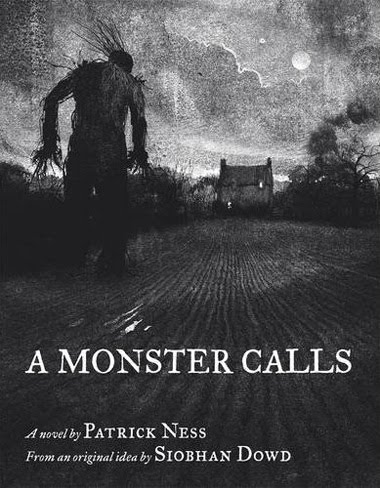
Conor is a 13-year old boy who lives in Britain with his single mother, has a strained relationship with his father, who has his own life and new family in the States, and is bullied at school. His mother is fighting a battle with cancer, and losing. Around this time, Conor starts receiving visits every night, just after midnight, from a monster in the guise of a yew tree in his backyard. The monster tells him stories – truths – whose outcomes really play with perspective, and he tells Conor that the fourth story will be Conor’s, telling the monster his own truth. It’s a truth that Conor doesn’t want to think about, but that gives him nightmares every night.

The story, originally an idea by author Siobhan Dowd, whose own life was cut short by cancer, is gorgeously written. Ness’ words bring the reader right into Conor’s fear, grief and anger at his mother’s battle, his grandmother’s fussiness, his father’s distance, and the numbness he feels as he endures the bullies at school. When the monster allows Conor’s rage an outlet, the reader feels it, viscerally. Jim Kay’s stark black and white illustations add to the moody feeling of Ness’ prose.
 
A Monster Calls has been shortlisted for several awards including the Galaxy British National Book Award, the Red House Children’s Book Award, and the Cybils Award in Middle Grade Fantasy. The author’s website features his blog, an FAQ, and information about his books and events.
Posted in Fantasy, Humor, Tween Reads

Book Review: Tuesdays at the Castle, by Jessica Day George (Bloomsbury, 2011)

Recommended for ages 9-12

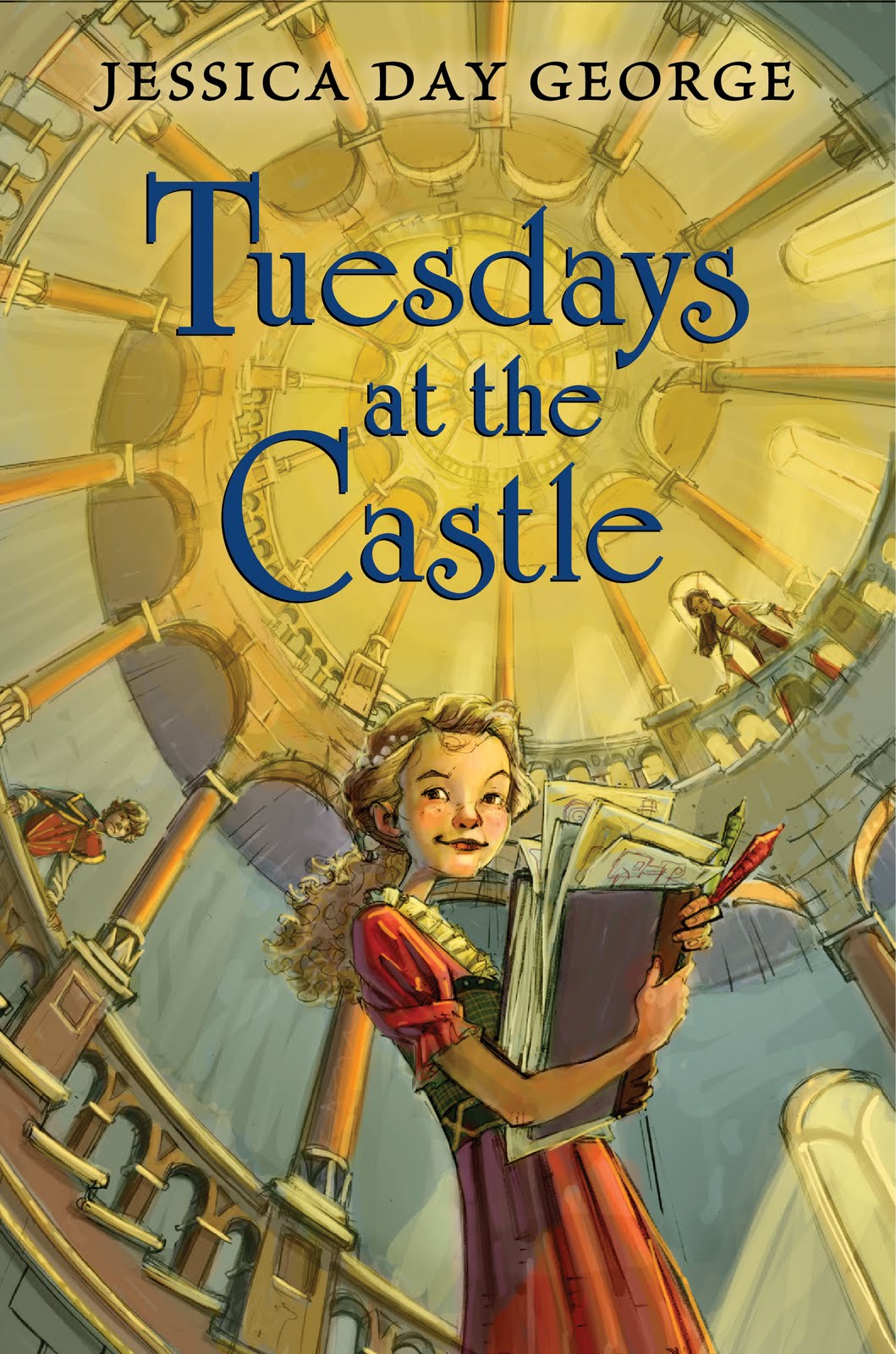
Princess Celie lives with her brother, sister and parents at Castle Glower, a castle that’s alive much in the way Hogwarts is – rooms crop up when they’re needed, and new staircases and passages appear seemingly at will. When her parents, King Glower and Queen Celina leave to attend their eldest son’s graduation from wizard school and are reported missing after their carriage is attacked, Councilors and foreign dignitaries show up and start ordering Celie’s brother Rolf – the heir to the throne – around. The Glower children, the castle staff, and Castle Glower itself all sense that something’s wrong, and work together to get rid of the evil prince that’s trying to take over Castle Glower – and bring their parents home safely.

Jessica Day George is great at writing princess books without all the saccharine included- her heroines are smart, funny, and can keep their heads about them when things are going crazy. Celie is no different, nor is her older sister, Lilah, which is a pleasant change from the “one beautiful and dumb, one smart and resourceful” sister that tends to pop up in YA and ‘tween literature. Their brother, Bran, is an intelligent boy who can defend himself verbally and allies with his siblings and staff to brainstorm solutions and make things happen. Ms. George provides good character development and the action is well-paced. While mostly girls will likely gravitate to this book, there are strong male and female characters for young readers to be inspired by.

Jessica Day George’s website has a section dedicated to Tuesdays at the Castle, in addition to her other books, appearances and news.

Posted in Fantasy, Historical Fiction, Tween Reads

Book Review: Icefall, by Matthew J. Kirby (Scholastic, 2011)

Recommended for ages 10-14

Reading Matthew Kirby’s Icefall is like reading an old Norse tale -there is suspense, there is heroism, there are storytellers, and there is battle. The author puts the reader in the banquet hall with the characters, invites you to take a seat and listen in.

Solveig, the middle daughter of a viking king, her older sister and younger brother, are in hiding at a frozen fortress while their father fights a war at home. The king’s warriors protect them, joined later by a group of berserker warriors that he sends as additional protection. Shortly after the berserkers arrive, though, things start going wrong – livestock disappears, food is poisoned, and it becomes all too clear that someone in the group is a traitor. Solveig and her siblings have to figure out how to survive the winter until the spring thaw, and Solveig works to discover who the traitor is before he – or she – destroys them all.

It is a compelling read with complex characters and a tense situation – a siege tale from within. Solveig is the middle daughter – she is plain, unlike her beautiful older sister Asa; she is not an heir, unlike her younger brother Harald; she is merely Solveig. But Solveig is smart and figures things out quickly. She strives to be a storyteller – a skald – like Alric, the skald in her father’s court, but she learns that being a skald means giving your loyalty to those who may not always warrant it. Solveig finds herself angry at Asa for doing nothing during their days in captivity and she protects Harald as if he is one of her own. The story is told in Solveig’s voice, interspersed with Solveig’s anecdotes involving different characters from before the time of the seige, to further flesh out the players. There are layers and layers to this story; as each layer peels back, the revelations keep the reader turning the pages to discover more.
 
This book crosses genres – it can be considered fantasy, it can be historical fiction, or it can be mystery (it was just nominated for an Edgar award). While the main character is female, there is plenty here to pique both boys’ and girls’ interests: battle, complex relationships, and the frustration of family ties are only part of what this well-written tale has to offer all readers.
 
Matthew J. Kirby’s blog, Kirbside, offers information about his books (with hyperlinked titles to bring you directly to points of interest) and contact information. The Scholastic site for Icefall allows readers to download a sample chapter.
 
Icefall has also been nominated for a Cybils award in Middle Grade Fantasy.