Posted in Animal Fiction, Fiction, Preschool Reads

Ten Birds Meet a Monster teaches us to count and describe things around us.

tenbirds meet amonsterTen Birds Meet a Monster, by Cybèle Young. Kids Can Press (2014), $18.95, ISBN: 9781554539550

Recommended for ages 4-8

Ten little birds discover a scary shadow outside their door – what can they do? One by one, the birds rally together to create different beasts using the clothes in the closet, each shape becoming more amorphous than the last, with increasingly wild names to accompany their shapes: we have Vicious Polka-dactyls, a Gnashing Grapplesaurus, a Frightening Vipper-Snapper, and more. Will the monster be more scared of them than they are of him and leave the birds alone?

Ten Birds is a concept book meant for a slightly older child, due to the more elevated language. We go beyond counting here, althoug counting from one to ten is certainly the basis for the story, and delve into adjectives and wordplay. Every bird is described with an adjective as he or she jumps in to help: “always resourceful”; “always diligent”; “always creative”. Each concoction the birds come up with is also defined with an adjective, allowing the opportunity for a good discussion about adjectives and describing words. This would be a fun enhancement to an English lesson in addition to a Math lesson.

The story is repetitive,which appeals to younger readers. The black and white ink and paper artwork is spare and beautiful, with beautiful detailing on the birds’ faces and bodies. The white background and framed pages make this an art book almost as much as it is a concept book for children. The font is a simple, black font on the white background, giving the sign that this is a read-aloud book – no fancy or fun fonts to distract the reader or the audience.

Ms. Young has written and illustrated an earlier Ten Birds book – Ten Birds – where the birds encounter a problem and have to solve it with their own wits, much like they do in Ten Birds Meet a Monster. Ten Birds received the 2011 Governor General’s Award for Illustration. The Birds series is a good one for young readers and I look forward to seeing what other predicaments Ms. Young can find for these birds. Maybe a board book for little hands and minds next?
Posted in Animal Fiction, Media, Preschool Reads, Toddler Reads

In Which I Explore an An Animated Book: Hondro & Fabian

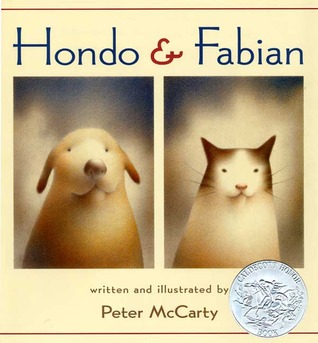
Hondo & Fabian. Written and Illustrated by Peter McCarty. 6 minutes. DVD. Weston Woods. 2006. $ 59.95 ISBN 0-439-84909-8

Suggested for ages 3-6

When I saw the animated books at my local library, I have to admit I wasn’t sure what to expect. Was I just going to be staring at a static series of pictures with a voiceover laid over the whole business? I decided to give it a shot with Peter McCarty’s Caldecott Honored-story, Hondo & Fabian. I am very happy to say I was delighted by what I watched.

hondo & fabian

Hondo & Fabian is the 2003 Caldecott Award-winning story of Hondo & Fabian, a dog and cat who live in the same household and have very different experiences one day, when one goes to the beach and one stays home with the family baby. Who has the better day?

Weston Woods produced this animated version of the book for schools and libraries, and author Peter McCarty’s soft, grey pencil on watercolor paper illustrations come to life as narrator Jeff Brooks tells the tale of the two friends who spend their day in two different ways. The illustrations are animated, allowing viewers to see Hondo’s ears blowing in the breeze as he hangs out a window, and Fabian putting his claws to work, shredding toilet paper. The story is brief, and Joel Goodman and David Bramfitt’s music adds to the beauty of the artwork, bringing with it a relaxing feeling as the story’s events unfold. Readers will enjoy viewing this story about pet friends; the option to use English subtitles will allow for new readers to read along with the narration. A study guide comes with the DVD that provides pre- and post-viewing activity ideas that can be incorporated into a storytime session, such as a discussion about pets and which animals are pets versus which are not.

This would be an interesting addition to a pet-related storytime. The DVD could break up the routine of a traditional read-aloud and attract renewed attention from attendees. The Perry Public Library’s Parade of Pets storytime theme has pet-related songs and fingerplays, and having a sing-along to an animal song-related CD, like Raffi’s Animal Songs, would make for an interactive and fun time.

The Hondo & Fabian animated book has received numerous accolades, including designation as an ALA Notable Video; Honorable Mention from the Columbus International Film & Video Festival; and was an Official Selection at the Kids First Film Festival.

The Hondo & Fabian series of books by Peter McCarty also includes Fabian Escapes.

Posted in Animal Fiction, lift-the-flap, Toddler Reads

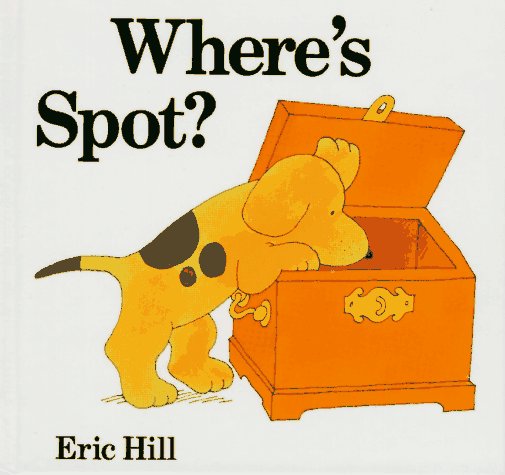
Book Review: Where’s Spot? by Eric Hill (G.P. Putnam’s Sons, 1980)

where's spot

Recommended for ages 0-4

It’s supper time, and Sally the Dog is looking for her puppy, Spot. She looks for him behind doors, under stairs, inside clocks, and other hiding spots and encounters his friends on her search. But where’s Spot?

Part of the popular “Spot” series of books by Eric Hill, Where’s Spot? offers toddlers and preschoolers familiar characters and cartoon-like art with bold, black lettering for sight-word learners.  For printables and online games, parents can point their browsers to http://www.funwithspot.com/us/.  For the youngest Spot fans, make sure to check out his board books!


Posted in Animal Fiction, Fantasy, Historical Fiction, Humor, Tween Reads

The Cheshire Cheese Cat: A Dickens of a Tale, by Carmen Agra Deedy & Randall Wright (Barry Moser, ill.) (Peachtree Publishers, 2011)

Recommended for ages 9-12

Skilley is a street cat who finds himself hired by Ye Olde Cheshire Cheese, a pub in Victorian London where writers like Charles Dickens find themselves inspired to write. Ye Olde Cheshire Cheese makes some of the best cheese in the kingdom, and they’ve got a bit of a mouse problem. It should be a dream job for Skilley, but he has a secret – he doesn’t like to eat mice. He prefers cheese, truth be told. Skilley and the mice of Ye Olde Cheshire Cheese, led by young Pip, work out an arrangement that should keep the staff at the Cheese fooled and Skilley’s belly fed until Pinch – a nasty street cat who’s had run-ins with Skilley before – shows up. Afraid that Pinch will discover his secret, Skilley finds his friendship with Pip at risk and Maldwyn, another guest of the Cheshire, in danger.

The Cheshire Cheese Cat is one of those stories that is just a fun, great read. The authors managed to create a morality tale and a story of friendship that has appeal to a huge age range. It would be a great read-aloud to younger grades, with anthropomorphic characters to keep them interested, and older readers will appreciate the dilemmas Skilley finds himself confronted with: unlikely friendships and looking “cool” in front of one’s peers among them. The characters, human and animal alike, are fleshed out and their interactions have depth. Inserting historical characters like Charles Dickens, who finds himself interested in the goings-on at the Cheese – goings-on that human patrons seem to miss – make the tale more fun, as does the visit from the “surprise guest” teased at the beginning of the book. Black and white illustations by Barry Moser add to the enjoyment and give the readers a little more grease for the imagination’s wheels.

The Cheshire Cheese Cat website offers information about Victorian London, Charles Dickens, The Cheshire Cheese, and more historical references found in the book. A fun page on Cheshire Cheese, thought to be the oldest cheese in England,  provides the history of the cheese and recipes and would be a fun addition to any classes reading the book. Author Carmen Agra Deedy maintains a blog where she also maintains a list of events and appearances, awards and nominations, and her other books.

Posted in Animal Fiction, Fantasy, Tween Reads

Book Review: Kenny and the Dragon, by Tony DiTerlizzi (Simon & Schuster Books for Young Readers, 2008)

Recommended for ages 9-12

This adorable book teaches children the power of not judging someone (or something) on gossip, and illustrates the potentially destructive power of gossip.

Kenny is a young, bookish rabbit. His parents are farmers, but he’s always got his nose in a book. His only real friend at the book’s beginning is the old badger, George, who runs the bookshop in the nearby village. Kenny visits George to play chess and read in the bookshop, and George often lets Kenny borrow books to take home and read.

One day, Kenny’s father comes home with the news that there is a dragon in his meadow. Kenny runs to his bookshelf and grabs his bestiary, on loan from George, and learns that dragons are vicious, fire-breathing, maiden-devouring beasts. Creating a suit of armor for himself fashioned from pots and pans, he sets out to take a look at the dragon, who ends up being a perfect gentleman named Grahame (“like the cracker, but with an e on the end”) and quickly dispels all myths set forth in the bestiary – in fact, he asks Kenny if he can borrow it, because he loves reading good fiction. Grahame is something of an epicure, enjoying good poetry, music, and food. He spent years trapped in the earth after falling through a fault line, but he never saw the point in chasing maidens and killing knights – his fellow dragons died out because of their taste for terror, and he just wants to enjoy life.

Kenny introduces Grahame to his parents, who also include the dragon in such family activities as picnic dinners where they cook delicious meals just for him. Kenny and Grahame’s friendship is put at risk when other villagers, fearful of the rumored dragon in the land, call for the king to take action. The king calls his retired dragonslayer into service – Kenny’s friend, George Badger. Kenny’s two best friends may have to do combat because no one bothers to learn the truth about dragons – what can Kenny do to save the day?

Tony DiTerlizzi is one half of the duo behind The Spiderwick Chronicles. Kenny and the Dragon, based on the 1898 story The Reluctant Dragon by Kenneth Grahame, introduces readers to a new group of memorable characters as he peppers tributes to the original story throughout the book. Aside from the tribute to Kenneth Grahame, he names George the bookstore owner/dragonslayer after St. George, who features in the Grahame story; other characters from the original story also find a place in DiTerlizzi’s world.

Placing the story in a fantastic, anthropomorphic world is a wonderful way of bringing this story to a new audience. DiTerlizzi expands on the original tale as a way of getting big ideas across to little people – the town mob, pitchforks and all, is riled up by the mere presence of a dragon, but no one bothers to try and get to know him – all they have is rumor to go on, and that’s good enough for them.

DiTerlizzi illustrates Kenny and the Dragon in the same line sketch format as Spiderwick, bringing Grahame, Kenny, and the rest of their world to life. The sketches bring old fairy tale stories to mind.

DiTerlizzi’s website, Never Abandon Imagination, provides more information about his books and includes links to his artwork, blog and social media connections (YouTube, Wikipedia, Facebook).

Posted in Animal Fiction, Fantasy, Tween Reads

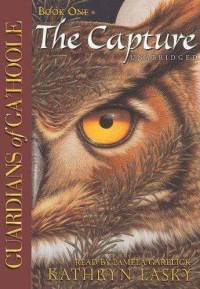
Book Review: The Guardians of Ga’Hoole Book One: The Capture by Kathryn Lasky (Scholastic, June 2003)

Recommended for ages 9-12

Newbery Award winning author Kathryn Lasky’s Guardians of Ga’Hoole series has been hugely popular since the publication of the first book in the series, The Capture. In 2010, Warner Brothers released a movie based on the first three books in the series and its companion website offers quizzes, games and book facts. A Guardians of Ga’Hoole wiki offers exhaustive information about characters and storylines. The series has taken on a life of its own in many ways, similar to such literary touchstones as Harry Potter and The Lord of the Rings.
The book begins with Soren, a young barn owl born into a loving family in the forest of Tyto. He has a cruel older brother, Kludd, a sweet younger sister, Eglantine, and a beloved snake nursemaid, Mrs. Plithiver. One day, Soren falls out of his nest and is kidnapped, taken to the St. Aegolius Academy for Orphaned Owls, where he meets Gylfie, a small Elf Owlet.

St. Aggie’s, as the Academy is referred to, is a thinly veiled deprogramming center/work camp for owls where they are subjected to sleep deprivation and corporal punishment in order to break them down and create a blank slate upon which the St. Aggie’s owls can build and create an army for owl domination. By sticking together and focusing on their families, each other, and the mythical stories of the Ga’Hoole, the guardians of owlkind, Soren and Gylfie defy the odds and retain their individuality. They ultimately escape St. Aggie’s with some help on the inside and head out in search of the Great Ga’Hoole Tree, where they hope to find help to save the owls from the St. Aggie’s army. They meet two other escapees, Digger and Twilight, who join them in their search.

I found myself having trouble enjoying The Capture. I vacillated between being taken aback at the brutality of a book written for a relatively young audience and just not connecting with the story. The book is graphic in its depiction of the punishment heaped on the younger owls and Lasky does not shy away from writing about murder and cruelty. The terror of losing one’s own identity, coupled with cold-blooded murder, make for a potentially terrifying read to some readers on the younger half of the age range, and I’d recommend parents reading the book with their children to address any fears that may come up. The book speaks to the fear of being taken, the terror of not knowing how to get back to one’s family, and the sense of hopelessness that can overpower someone in that situation.
Other times, I was frustrated with the use of owl jargon – the owls have their own phrases and terms, and it appeared haphazard in its usage – and bored with some of the more plodding scenes at St. Aggie’s. I wanted more from the book than it was ready to give me – perhaps reading further into the series will help me connect at a later point.

Kathryn Lasky has written over 100 books for children and has a great website that offers video messages for her fans, a section detailing her awards and information about her upcoming books. Naturally, there is a section devoted to the Guardians series, and she even features fan art dedicated to the series. I really liked that Lasky, who exhaustively researches both her fiction and nonfiction writing, shares her research and links for books she’s working on.

Posted in Animal Fiction, Humor, Tween Reads

Book Review: Dragonbreath, by Ursula Vernon (Dial Books, 2009)

Book Review: Dragonbreath, by Ursula Vernon (Dial Books, 2009)
 
Recommended for ages 8-12

Ursula Vernon’s first book in her Dragonbreath series introduces readers to Danny Dragonbreath, a young dragon who happens to be the only mythical creature in a school filled with reptiles and amphibians. He’s a little rebellious, not a fan of schoolwork, and really wants to be able to breathe fire (if for no other reason, than to stop hearing his father’s motivational speeches). His best friend, Wendell, is an iguana who finds himself sucked into Danny’s crazy schemes when he’d rather be doing something safer, like getting Danny to do his homework.

In Dragonbreath, Danny flunks his paper on the ocean after writing it the morning it’s due and making it up from his own imagination. Luckily for him, he’s got a sea monster cousin named Edward, who he can visit and from whom he can get an ocean tour, so off he goes, dragging Wendell along with him. Can they survive the deep ocean, where giant squids are known to show up without notice? Will Danny pass his Science paper?
 
Dragonbreath is a great book for younger readers that are still getting used to chapter books; the book is written in a half-chapter, half-graphic novel format that readers will find user-friendly, and Vernon provides a copious amount of nonfiction information about ocean life through Danny’s and Wendell’s eyes that will show the kids that learning can be fun.
 
Vernon’s website provides summaries of all the Dragonbreath novels as well as her other titles, as well as updates on author appearances and her artwork.
Posted in Animal Fiction, Fantasy, Fiction, Tween Reads

Book Review: The Tale of Desperaux, by Kate DiCamillo (Candlewick, 2008)

Recommended for ages 9-12

I picked this book up post-hype and after not really watching more than about 10 minutes of the movie (there really is something to be said for the movie-going experience over the at-home one). My expectations were tempered with the worry that comes when a book has been so talked about and featured in the media as Desperaux, but I needn’t have worried.

Desperaux is a story with many layers. It’s a cute animal fable with an adorable hero. It’s a love story between our hero and a princess. It’s a story that addresses hate and it addresses the darker side of nature, and how even the darkest creatures can crave the light. I wasn’t expecting the depth of character that DiCamillo invested in her characters, and I wanted to keep reading.

Desperaux is the only surviving mouse in his mother’s final litter. Born small and with his eyes open, his mother and father both write him off, but he survives. He’s tinier than his siblings and is different from the start, preferring to read books rather than eat them. He falls in love with the Princess Pea. She is enchanted with the tiny mouse, but her father, who hates rats – and equates all rodents with them – chases him away. For allowing himself to be seen by and talk to humans, the mouse council – members of whom include Desperaux’s own father and brother – decide to punish him with a death sentence, and they send him to the dungeon, ruled in darkness by the rats.

In the basement, we meet Chiaroscuro, a rat who loves the light but is forced to live in the darkness after a brief trip up to the castle living area ended with a terrible accident. He seethes and plans his revenge in the darkness, using a slow-witted servant girl with her own tragic past as a pawn in his game.

This book won the Newbery Award in 2004, and as you delve into the book, you can see why. For a children’s book, the characters’ backgrounds are incredible in their detail and complexity. I was amazed at DiCamillo’s ability to create characters with such depth and yet still make them accessible to children. The story moved along at a pace that kept me turning pages; I wanted to know what was going to happen next. Timothy Basil Ering’s illustrations were stark and beautiful, adding more depth to the story by adding to the vision the author’s words painted in my imagination.

There are some very good teaching guides for Desperaux available. Candlewick Press offers an illustrated discussion guide. Scholastic’s reader’s guide considers the movie and includes some illustrations from the animated feature. Reading is Fundamental (RIF) also has a free, downloadable Teacher’s Guide.