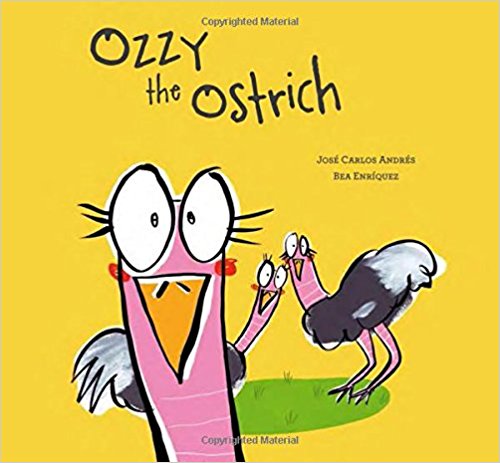
Ozzy the Ostrich, by José Carlos Andrés/Illustrated by Bea Enríquez, (June 2017, NubeOCHO), $15.95, ISBN: 978-8494541599
Recommended for readers 3-6
Ozzy Ostrich and two friends trot across the plain, munching on flowers, until three lions threaten to eat them! Ozzy – who also has an egg to defend – stands up to the bullies, scaring the so badly that one loses his teeth, one loses all of his fur, and one turns completely white. The former bullies befriend the ostriches, but what happens when another pride of lions shows up to menace the group?
Ozzy the Ostrich is a good introduction to the concepts of bullying and standing up for oneself and others. When the first group of lions bullies Ozzy, she stands up for herself and the bullies back down. When the next group comes along, Ozzy sees that her actions resonate. The art is bright, vibrant, and bold; both lions and ostriches have exaggerated facial expressions that readers will enjoy and laugh at (especially when the chastised lions react).
Originally published in Spanish under the title Un avestruz con much luz (2016), Ozzy the Ostrich makes a good social issues read-aloud for storytime. Pair with Kathryn Otoshi’s One for an anti-bullying storytime message.
Adele in Sandland, by Claude Ponti, (June 2017, TOON Books), $12.95, ISBN: 978-1-943145-16-4
Recommended for readers 3-7
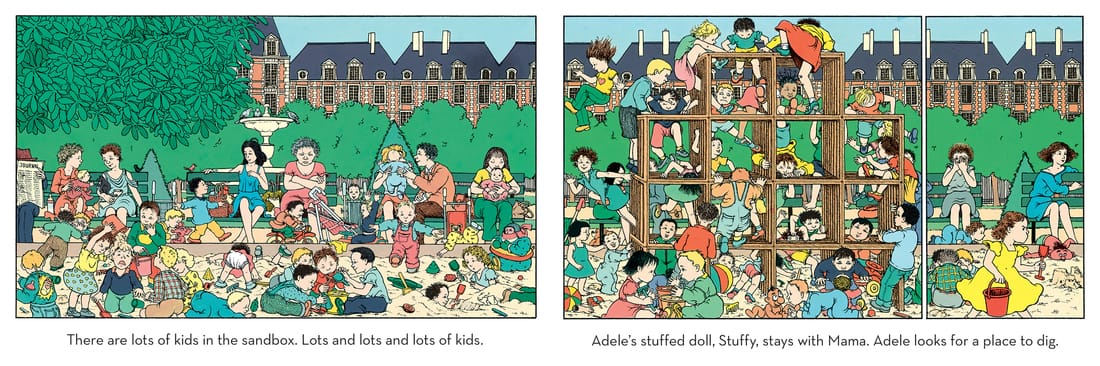
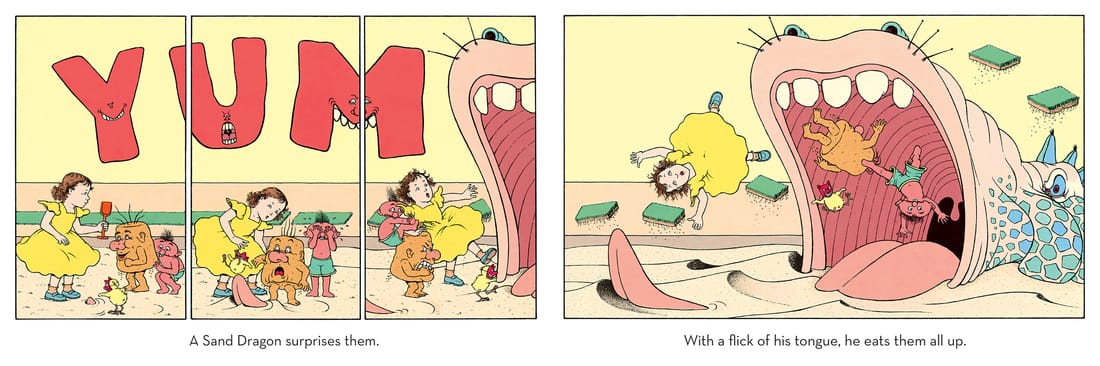
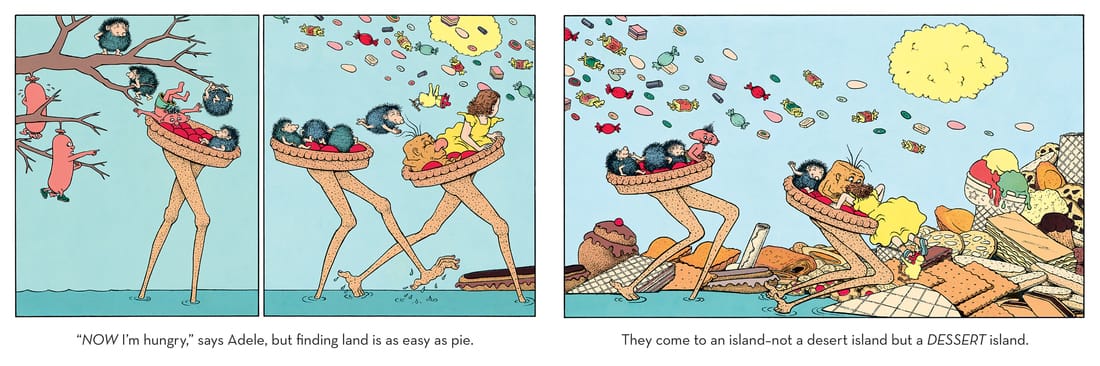
Little Adele’s mother takes her to the park. While Mama chats with a friend, Adele begins to dig and sets off on an adventure with her doll, Stuffy, and Sandy – a creature from her sand pail – where they’re eaten by a sand dragon, she meets a tree of hot dogs, a king who likes to walk, barefoot, on his subjects’ heads, and ventures forth to a tasty dessert island.
Adele in Sand Land is surreal fun for readers who’ve become more comfortable with slightly longer sentences than those introduced in early readers. The book is TOON Level 1, which is about a Kindergarten reading level and corresponds to Guided Reading Levels E-J. TOON includes all of this information in the back of each book, and on their website, which is a great resources for parents and educators alike. The story is a fun storytime selection for younger audiences, too: kids will easily envision themselves on a magical adventure while playing at the park.
The surreal art makes this a great choice when introducing young readers to graphic novels, too. While the overall story is sequential, the dreamlike quality of the art allows kids to let their imaginations run wild. Let your kids draw their own surreal adventure for a fun accompanying activity, or introduce stories like Alice in Wonderland or Harold and the Purple Crayon for more adventures with a touch of the surrealistic. Teacher’s Resources are forthcoming for this title.
Adele in Sand Land received a starred review from Kirkus. An early Adele story, Adele’s Album (1988), is out of print but can be found for varying prices through third party sellers online.
Cheer Up, Ben Franklin!, by Misti Kenison, (July 2017, Sourcebooks Jabberwocky), $9.99, ISBN: 9781492652472
Recommended for ages 0-3
Poor Ben Franklin is sad! No one has time to fly kites with him today. George Washington’s rallying his troops, Betsy Ross is sewing a flag, Sam Adams is throwing a tea party in Boston, and Alexander Hamilton is too busy counting money. What’s a Founding Father to do? Ben’s friends are sure to pull through in the end, with a signing of the Declaration and a big fireworks party to cheer him up in this fun, adorable book by Misti Kenison.
This is the cutest book for budding historians (and the adults who love them: one of my best friends is an historian who wrote her thesis on Franklin, and she loves this book). It’s great for toddlers who understand what a drag it is when no one can play with them, and the artwork is adorable. Ape this book up in storytime! Ben’s giant, mournful eyes will get sympathy from anyone, and the big fireworks party at the end is a great way to celebrate with an Independence Day storytime. Thanks to Ms. Kenison for, to paraphrase Abigail Adams, remembering the ladies! Including Betsy Ross and Abigail Adams is important, to illustrate to readers that women were indeed a big part of founding the United States of America.
A timeline at the end of the book goes from 1773, when Sam Adams organized the Boston Tea Party, through 1801, when Jefferson became President. Each historical figure mentioned in the book is briefly profiled here, too. A must-add to libraries, schools, and personal collections, and also a perfect gift for the Hamilton fans in your life.
Misti Kenison is a web/graphic designer and author/illustrator of the Tiny Traveler series. Visit Misti at her Tiny Traveler site to learn more about her books, and download some fun printables!
The Thank You Dish, by Trace Balla, (March 2017, Kane Miller), $9.99, ISBN: 978-1-61067-644-1
Recommended for readers 3-8
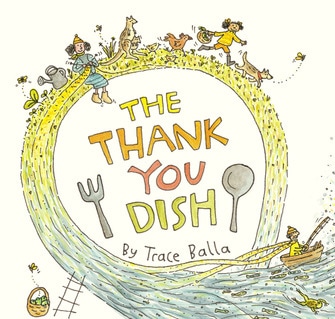
Grace, a young girl, and her mother sit down to dinner. Mama thanks the rain, soil, and sunshine; Grace is thankful to the kangaroos. Why the kangaroos? For not eating the carrots! From there, Grace goes on to thank a multitude of people and animals that made Grace and her mother’s dinner possible, leading up to thanking Mom for making her such a yummy dinner. With a comfortable repetition – Grace is thankful, Mama asks why, Grace explains – The Thank You Dish is a sweet exploration of gratitude and of community. We don’t live in a vacuum; The Thank You Dish takes an amusing look at everyone and everything responsible for getting one family’s dinner on the table, from alpacas whose yarn went into the scarf that kept Uncle Fred warm while fishing, to a flower tree responsible for a fortuitous meeting. Grace and her mother eat dinner together at a dining table, emphasizing the family connection. Grace is a child of color; her mother is lighter-skinned.
I adore this book. This is a great storytime selection – see if kids can think of all the contributions made to their dinner tables! – and a great classroom circle time book. Remembering to say thank you when someone is directly interacting with you is one thing; being grateful for the unseen is just as important and essential to mindful living. A good book for classroom discussions!
Sunday is Mother’s Day! Happy Mother’s Day to all the moms, grandmothers, godmothers, and caregivers! I’ve come up with a short list of cuddle-worthy books to snuggle and read with your little ones.
Counting Kisses, by Karen Katz Baby is cranky and tired! Mom knows the way to soothe baby: with kisses! Ten little kisses on teeny, tiny toes, nine laughing kisses on busy, wriggly feet… leading all the way to the last sleepy kiss on baby’s head. Kiss along with this one and watch your little ones giggle and squirm, especially when you throw a tickle or two in for good measure.
Mama Mama, by Jean Marzollo/Illustrated by Laura Regan “Mama, Mama/Play with me/Carry me/So I can see”. One of the sweetest, beautifully illustrated baby books I’ve ever read, Mama Mama pairs animal babies and their loving mothers. This has been one of my favorites since my eldest was a baby; I can still feel my chin on his cheek as I’d read it to him.
Mummy’s Always Right, by Joe Mulvey Never let it be said that we don’t have a sense of humor in my home. I backed this Kickstarter last year and my youngest and I still read it all the time. A little mummy named Gaws (get it? Gauze!) plays with his monster friends while his Mummy provides rhyming advice about hygiene, nutrition, and safety always reminding her little lovey that Mummy’s always right. There are lots of laughs to be had here, especially when meeting some of Gaws’ friends: the cranky Frankenmine, the tentacular Cthu-Lou, and the ghostly Ghoulia. There’s nothing scary about this book – Sesame Street has monsters that are cute; so does Joe Mulvey.
Someday, by Alison McGhee/Illustrated by Peter H. Reynolds It’s every mother’s dream for her little ones to live their life to the fullest; to have everything good come to them, to grow, explore, and live. I’m not going to promise you that you’ll finish this book dry-eyed, but you will hug your sweetie a bit longer than usual. The child in the story is female, but you can easily talk to your sons about their milestones they will reach, with you cheering them on every step of the way.
Mamasaurus, by Stephen Lomp Babysaurus and Mamasaurus are eating tender leaves in the jungle one day, when whoops! He slips off her back and finds himself alone. Similar to PD Eastman’s classic Are You My Mother, Babysaurus meets other dinosaurs on his search for Mamasaurus: Does she run fast? Does she have a long horn, or have wings? No, but she knows how to find her Babysaurus, and she’s the best Mamasaurus in the whole jungle. This is my little guy’s and my favorite cuddle book; it’s perfect for reading and snuggle time.
Runaway Mummy: A Petrifying Parody, by Michael Rex Margaret Wise Brown’s Runaway Bunny is (deservedly) on so many lists, I thought I’d give a little love to the equally sweet and very funny Runaway Mummy. A little monster tries on different monster personas to get away from Mummy, but just like the Bunny’s mother in Runaway Bunny, Mummy is never too far behind, even when he transforms into the unthinkable: A BOY. This book gets as much love during a Mother’s Day storytime as it does during a Halloween storytime; give it a shot.
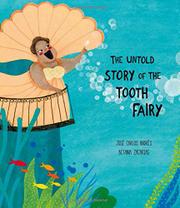
The Untold Story of the Tooth Fairy, by José Carlos Andrés/Illustrated by Betania Zacarias, (May 2018, nubeOCHO), $16.95, ISBN: 978-84-944446-1-6
Recommended for readers 3-8
Related as a folktale, this take on the Tooth Fairy’s origins makes things more of a team effort. It all starts underwater, when Lady Oyster – depicted as a fabulous, brown-skinned diva – loses her pearl. She’s very, she means very, so very sad! Word goes out among Lady Oyster’s underwater friends: octopus tells French sardine; the sardine tells a crab, who relates the story to a mouse on land, who comes up with a solution that works for everyone.
Based on the French, Spanish, and South American version of the Tooth Fairy myth, where a small mouse – not a fairy – takes a newly dispatched tooth and leaves a gift, kids will love this original take on the tooth fairy – especially kids in the 5-8 age category who are getting visits from the Tooth Fairy. I love the idea of the Tooth Fairy’s assistants helping her, too – it makes sense! It sends a nice message about teamwork, too.
Betania Zacarias’ paint and cut-paper collage artwork is beautiful. I love her gorgeous, over the top Lady Oyster; she’s a diva of color, she’s got curves, and she’s dramatic! The texture of the artwork is beautiful, and her color choices are bright, most primary colors, and eye-catching. This is a story I could read to the kids in my Queens Library storytimes and have the kids say, “I see myself here.” The bright orange endpapers are filled with fish of all different colors, giving kids an idea of where this story is going to start.
Little Captain Jack, by Alicia Acosta/Illustrated by Monica Carretero, (Apr. 2017, nubeOCHO), $15.95, ISBN: 978-84-945415-0-6
Recommended for readers 4-8
Once upon a time, there was a tiny pirate named Captain Jack. He was so tiny that he had to weigh himself down with a heavy sword in his belt, an iron telescope around his neck, and some rocks in his pockets, so he wouldn’t be blown away! Everyone called him Little Captain Jack. He was so little that his crew didn’t hear him when he yelled to them, and he was constantly in danger of being stepped on! One day, during a battle between Captain Jack’s crew and the bad pirate Badlock’s crew, Jack was taken prisoner and locked in a dark cellar. Although he was scared, he accepted an offer of help from a mouse… who got some help from a seagull… and Captain Jack learned, from that day forward, that “great things could come in all shapes and sizes, big or small!”
Captain Jack is fun reading and kids will appreciate the message that size doesn’t matter, especially when you work as a team! The tiny pirate still manages to command his own ship and crew (even if they don’t really hear him… or see him that often), and when he’s in trouble, his crew is frantic. He means a lot to his crew, whether he’s big or small – just like a family. Teamwork helps bring Jack back to his crew, sending a positive message about working together.
The cartoony art will appeal to readers, and the endpapers – drawn to look like a map of Penny Island, where we assume Captain Jack is spending time these days, has fun, eyecatching details like a giant squid, a whale, and a lake monster. A nicely detailed compass rose adds the opportunity to talk about directions. Plus, pirates are a home run with little ones: you can pick from any number of pirate adventure stories for little ones! You could pair these with any number of pirate books for little ones! Add a pirate hat craft to use up some old newspaper and you have a nice, environmentally friendly storytime activity.
Little Captain Jack was originally released in Spanish (Pequeño Pirata Serafin, ISBN: 978-4-945415-1-3), and is available in both Spanish and English.
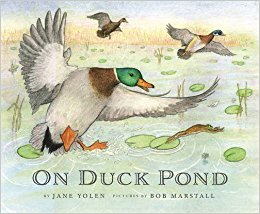
On Duck Pond, by Jane Yolen/Illustrated by Bob Marstall, (Apr. 2017, Cornell Lab Publishing Group), $15.95, ISBN: 978-1-943645-22-0
Recommended for readers 3-7
A boy and his dog walk by a duck pond in the morning, when nature is at peace; when a quack of ducks appear, they splash, they chitter and chatter, and the pond’s inhabitants scramble in the momentary chaos. The boy notes that even his reflection looks different in the disturbed water. When the ducks move on, the pond returns to its peaceful setting, the pond life resumes, and the boy, contemplative, heads home.
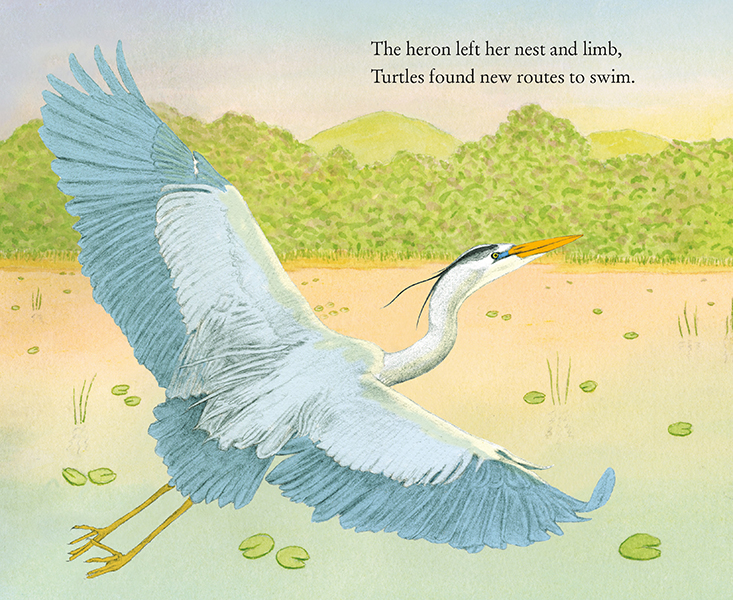
This rhyming tale is a sequel to On Bird Hill, but it’s not necessary to have read it to enjoy this quiet nature tale. Award-winning author Jane Yolen gives readers a wonderful rhyming tale of quiet and chaos, coming up with fun, descriptive terms like “a quack of ducks”, and evocative phrases like, “Old Duck Pond, once still and quiet/Now seemed battered by the riot”, and, of the boy’s reflection, “Every part of me was changed/I looked like I’d been re-arranged”. She captures the riot of noise and blunder of movement that disturbs the quiet morning, and the gradual pace with which nature recovers when the ducks move on, all witnessed by the boy and his dog. We meet some of the pond’s inhabitants – turtles, herons, frogs, and tadpoles – during the course of the story; the realistic illustrations introduce us to even more wildlife. There are lovely, detailed drawing of the pond from various angles, from close-ups of lily pads to sweeping vistas. The ducks’ descent is beautifully rendered, with wings spread, water splashing, beaks open, communicating the movement and noise they bring to the scene. A section on pond habitats and birds, and information about the ducks and other birds and animals featured in the story, adds a nice non-fiction section to the book.
This is a great read-aloud for storytimes – the rhyming text provides a nice cadence for readers to listen to – and for introductions to habitats for younger readers. Kirkus captures the spirit of the narration by referring to it as a “sense of wonder” book.
Pair this with some of Jane Yolen’s more nature-oriented books, like On Bird Hill or Owl Moon for an author study, or display with books like Denise Fleming’s In the Small, Small Pond and Henry Cole’s I Took a Walk.
Big Bear has a big pail of yummy blueberries! His friends would like some, too, but Big Bear seems to be a bit clueless. The old oak tree tells him to SHARE, BIG BEAR, SHARE!, but Bear is so enamored of his blueberries, he’s not really listening – and hears something different each time! Will he finally realize that a good friend shares, and invite his pals to have some berries?
Share, Big Bear, Share!, by Maureen Wright/Illustrated by Will Hillenbrand, (Apr. 2017, Two Lions), $17.99, ISBN: 978-1503951006. Recommended for readers 3-7
Share, Big Bear, Share! is a great story for preschoolers and kindergarteners, who are developing social skills and learning to share and work together. Big Bear is a nice bear, he’s just a little unaware; when the Old Oak Tree tells him – multiple times – to share, Big Bear – who’s not really listening; he’s got an entire bucket of blueberries! – half-hears the message, with hilarious results. The message for readers is twofold: sharing is important, but so is paying attention! I think a round of the old game, Telephone is a perfect accompaniment to this story: a teacher, parent, or educator whispers something into one child’s ear and has the message go around the group, until the last player states what he or she heard, which is usually something very different from the original statement!
The story makes it point in a sweet, funny way that appeals to young readers. Will Hillenbrand’s graphite pencil artwork, fleshed out with digital media, gives Bear and his woodland friends a cuddly quality that kids will love. Old Oak Tree looks wonderfully wise and his facial expressions are perfect and accurate. Kids will have seen that face on their caregivers many times!
Share, Big Bear, Share! is the third Big Bear book by Maureen Wright and Will Hillenbrand (Sleep, Big Bear, Sleep! and Sneeze, Big Bear, Sneeze!) Display this one with books like Anna Dewdney’s Llama Llama, Time to Share and Leo Lionni’s It’s Mine! for readalikes; build a social skills library by adding Beth Ferry’s Stick and Stone, Rowboat Watkins’ Rude Cakes, and Julie Gassman’s You Get What You Get.
GIVEAWAY! Want a chance to win your own copy of Share, Big Bear, Share? Enter here!
WILL HILLENBRAND has written and/or illustrated over 60 books for young readers including Down by the Barn, Mother Goose Picture Puzzles and the Bear and Mole series. He has lived almost all of his life in Cincinnati, Ohio, where he grew up as the youngest of four boys. He now lives in Terrace Park and was recently honored as Author/Illustrator in Residence at Kent State University.
Bow-Wow-Meow, by Blanca Lacasa/Illustrated by Gómez, (May 2017, nubeOCHO), $16.95, ISBN: 978-84-94515-7-5
Recommended for readers 4-8
Fabio’s a dog that really isn’t into doggish things. He doesn’t play fetch, he doesn’t roll over to have his belly tickled, he doesn’t wag his tail, and he doesn’t bark. His family tries to teach him how to act like a dog: they throw sticks, they roll around on the floor, and they bark at him. Fabio is uninterested. One night, Max, a little boy in the family, discovers that Fabio is going out at night, and follows him: right into a group of cats engaging in very catlike behavior, from coughing up hairballs to playing cards (hey, are you with your cat 24/7?). Max can’t believe how happy Fabio is as he sharpens his claws, climbs drainpipes, chases mice, and bow-wow-meows along with his feline friends. The next morning, when Max’s parents try to get Fabio to act like a dog, Max quietly acknowledges Fabio, making him the happiest member of his family.
Recognition and visibility are important. When Max acknowledges Fabio, when he sees Fabio for who he really is, Fabio’s whole world changes; Max’s world widens that much more. Bow-Wow-Meow sensitively handles identity and diversity for young readers. By telling Fabio’s story using dogs and cats, kids are entertained and enlightened in a sweet, fun way that leaves the pathways open for discussion again and again. Gómez’s bold artwork is fun and expressive and will appeal to storytime audiences. Younger readers may struggle with some pages, where the black text is superimposed over a dark background.
I’d love to read this with Jules Feiffer’s Bark, George, for a good storytime on diversity and animals. You can also display and pair this with books like Morris Micklewhite and the Tangerine Dress, by Christine Baldacchino, or Jacob’s New Dress, by Sarah and Ian Hoffman. Mothering.com has a good article with recommendations for kids’ books that defy gender.