Annie Aardvark, Mathematician, by Suzie Olsen/Illustrated by Davina “Viv” Kinney, (Jan. 2017, STEAM Publishing), $9.99, ISBN: 9780998433707
Recommended for readers 3-6
This cute counting book stars Annie, an aardvark mathematician. She loves math! She decides to count everything she finds, and takes readers on a 1-10 feast for the senses where she enjoys sniffing and tasting cucumbers, rocks, assorted bugs, berries, and plants. Each spread features a white page with black text for easy storytime reading, and a full-color page featuring Annie and her latest discovery. Kids can count along with the repetitive text, which features written numbers, illustrated things to count, and – most fun – the sounds Annie makes as she explores and investigates each treasure. She gulp, gulp, gulps beetles, slurp, slurp, slurp, slurps sticks, and has a whole bunch of snorts for leaves!
This is a cute concept book that would work really well with flannels – nature flannels are easy enough to make or find. It fits in well with a nature storytime; I’d pair this with Sue Williams’ I Went Walking. Make fun sound effects to get the kiddies giggling! The art is cute; Annie has a friendly smile and expressive eyes that will draw readers’ attention. Explain what an aardvark is, and more importantly, what a mathematician is. Pronounce the kids mathematicians and have them count!
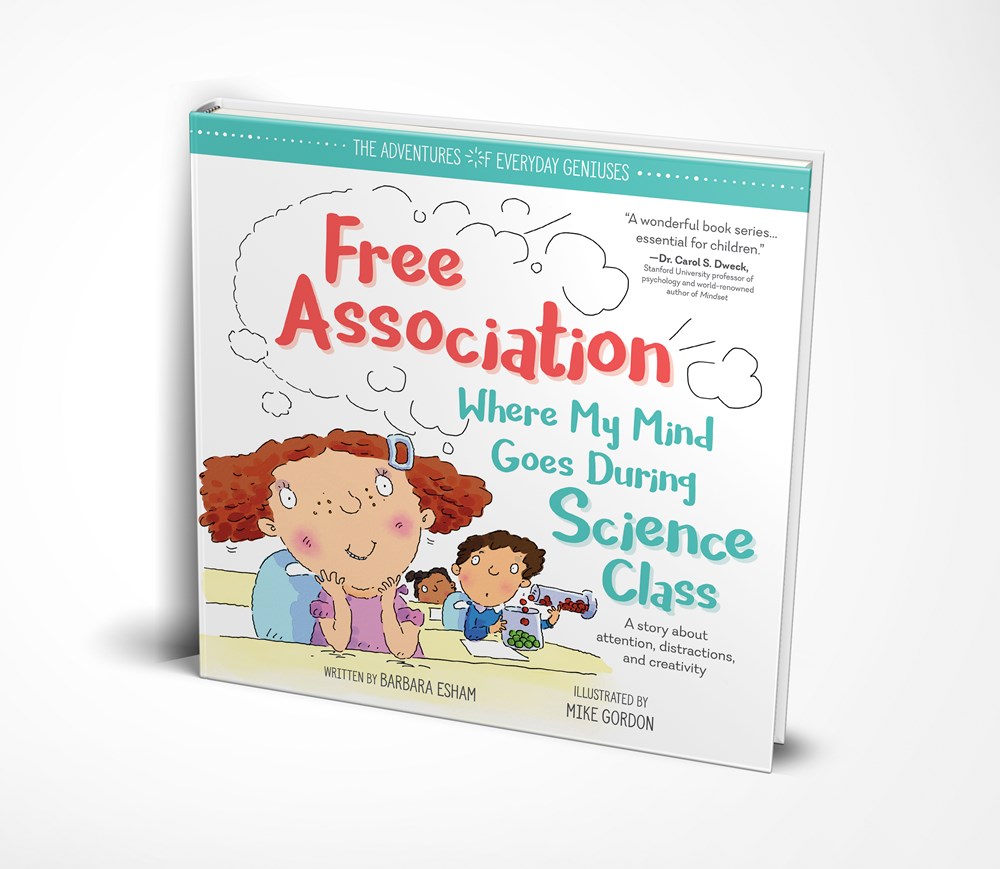
Free Association: Where My Mind Goes During Science Class (Adventures of Everyday Geniuses), by Barbara Esham/Illustrated by Mike Gordon, (May 2018, Sourcebooks), $17.99, ISBN: 9781492669951
Recommended for readers 4-8
Emily is a young student who loves doing science: the hands-on stuff, not the rote memorization that comes with the routine school day, which tends to set her mind off, wandering. Emily wants to be like Albert Einstein, setting her off into a daydream where Einstein climbs out of a classroom poster; he ends up sticking around as a quiet mentor throughout the book. After catching Emily daydreaming again, her teacher gives her a science journal – a way to be mindful of when she’s paying attention, versus when her mind is about to wander. Emily discovers that the journal is just what she needed, and the teacher, impressed with a theory Emily comes up with in her journal, encourages the whole class to keep science journals and use their imaginations.
The Adventures of Everyday Geniuses is a series of books for kids who may learn in nontraditional ways. Where My Mind Goes During Science Class addresses everyday boredom in class – come on, we all know it happens – as well as how to reach students with ADHD. The teacher embraces creativity and imagination, and understands that journaling can lead to some pretty exciting work – bravo, teacher! Emily speaks for most kids when she grouses, “It seems like the only thing we do in science is memorize information from a book”. Who hasn’t felt like that at some point? Emily is relatable to all kids (and a heck of a lot of grownups). Back matter talks to readers who are “everyday geniuses” and offers tips for focusing and centering themselves when their minds wander. The story font is set in OpenDyslexic, a font specifically designed for readability with dyslexia; an impressive commitment by the publishers to readers. Kids may recognize illustrator Mike Gordon’s artwork – he illustrates the super-popular Robin Hill School Easy Reader series.
Find out more about the Everyday Geniuses at the series website. This looks like a good series to have in classroom and library collections, to introduce kids to different ways of learning. I’m going to request other titles in the series from my libraries, to get to know this set better. The Adventures of Everyday Geniuses series is Reading Rockets Recommended, a Parents Choice Award Winner, and an ALA Booklist Pick.
Snail Mail, by Samantha Berger/Illustrated by Julia Patton, (May 2018, Running Press), $17.99, ISBN: 978-0-762462-51-3
Recommended for readers 4-6
This adorable story celebrates the special touches that correspondence sent by “snail mail” – mail sent (GASP!) without electronic communication. Real letters! Birthday cards! Letters to Santa, postcards, and love letters! In Samantha Berger’s latest book, four snails (Dale Snail, Gail Snail, Colonel McHale Snail, and Umbérto) trek across the country to deliver a special letter from a Girl to her friend, a Boy. As they travel, they take the time to explore the country; the deserts, canyons, rainbows and sunsets, experiencing beautiful and not-so-great weather, until they arrive in a giant city and find the Boy.
Snail Mail is a love letter (wink) to slowing down and enjoying life. It’s about a handwritten letter and why they’re so much nicer than emails and texts; it’s about taking the time to write a letter, see a sunset, road trip across the country and experience life. As the author writes, “Although it took much longer, everyone agreed that some things were just A LITTLE more special when they were delivered by Snail Mail.” The snails each have their own personality, and work together to bring the Girl’s letter on a journey to its recipient, always uttering their Snail Mail Promise, “Neither rain, nor snow, nor heat, nor hail will stop a snail from bringing the mail.” Letter delivered, the snails are rewarded with their own mail: medals and a congratulatory letter; “something they could have only gotten through Snail Mail.”
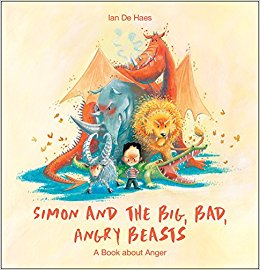
Simon and the Big, Bad, Angry Beasts: A Book About Anger, by Ian De Haes, (Apr. 2018, Flyaway Books), $16, ISBN: 9780664263553
Recommended for readers 4-7
Simon is a little boy with a BIG temper. And when his temper flares, he feels like different animals: a ramming goat, a roaring lion, even a giant dragon! At first, it feels wonderful to have that kind of control over people’s reactions, but eventually, who wants to worry about someone’s bad temper? Simon finds himself feeling pretty lonely until he learns how to tame some of those big, bad, angry beasts.
Simon and the Big, Bad, Angry Beasts is a smart, visual way to start a discussion about anger and anger management. Simon’s anger manifests as exceedingly larger animals as his temper runs unchecked, and his anger gives him a feeling of power: “It was great, it was marvelous, it was magical…” until his anger alienates everyone around him. Kids will enjoy and understand the powerful feelings that come with anger, and the illustrated beasts help with visualization, and can help kids communicate their feelings when tempers flare. Repetitive phrases like “it was great…” reinforces understanding – anger can make someone feel big and powerful, especially a child who may feel otherwise powerless – while leading into the moment where “it” is no longer great, marvelous, or magical, it is lonely; the story encourages readers to seek out meditation and relaxation practices to help, like Simon, control the beasts. A section for parents and educators at the end discusses anger management in children.
Simon and the Big, Bad, Angry Beasts is a nice addition to books on emotions and feelings. Similar books include Molly Bang’s When Sophie Gets Angry-Really, Really Angry and Rachel Vail’s Sometimes I’m Bombaloo.
Bathroom Boogie, by Clare Foges/Illustrated by Al Murphy, (May 2018, Faber & Faber), $16.95, ISBN: 9780571340453
Recommended for readers 3-7
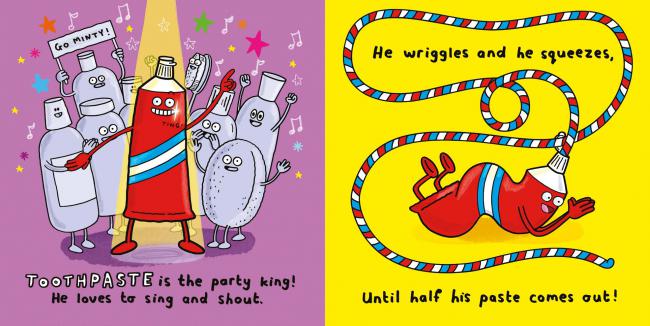
Bathtime becomes funtime in this rhyming companion to 2015’s Kitchen Disco! When we go off to school and work everyday, do we really know what’s going on at home? Bathroom Boogie assures us that there’s a party in the bathroom as DJ Shampoo gets the beats thumping, Toothpaste gets funky, and Mouthwash busts a move. It’s funny, it’s fun, it’s just like one of my kiddo’s favorite books, Food Fight! by Carol Diggory Shields (2002). The toiletries and accessories go wild, make a mess, and clean it all up before we get home – whew!
There’s great rhyme and repetition: “It’s called the BATHROOM BOOGIE/And everyone’s invited!/So blow your whistles/Shake your bristles/Let’s get all excited!” and the drawings a bold, cartoony, and have big googly eyes and silly facial expressions that kids will love. The font looks almost marker-written, with bold, outlined words for emphasis and add to the fun, and the endpapers sport assorted bathroom graffiti (no phone numbers or limericks, this is a family book). This book is hilarious and fun, perfect for storytime reading and rapping – there’s even a book trailer to get kids raring to go:
Perfect fun for storytime reading, bedtime reading, anytime reading. Originally published in the UK, Bathroom Boogie debuts here in the States on May 15th.
I’ve been loving the books that publisher Walter Foster Jr. has put out the last several months. They’ve been promoting writers, artists, and concepts that introduce kids to different ways of looking at life: different colors, languages, and songs, for a few. There are two more books out this month that speak to young readers once more; this time, addressing mental and physical health. Let’s take a look.
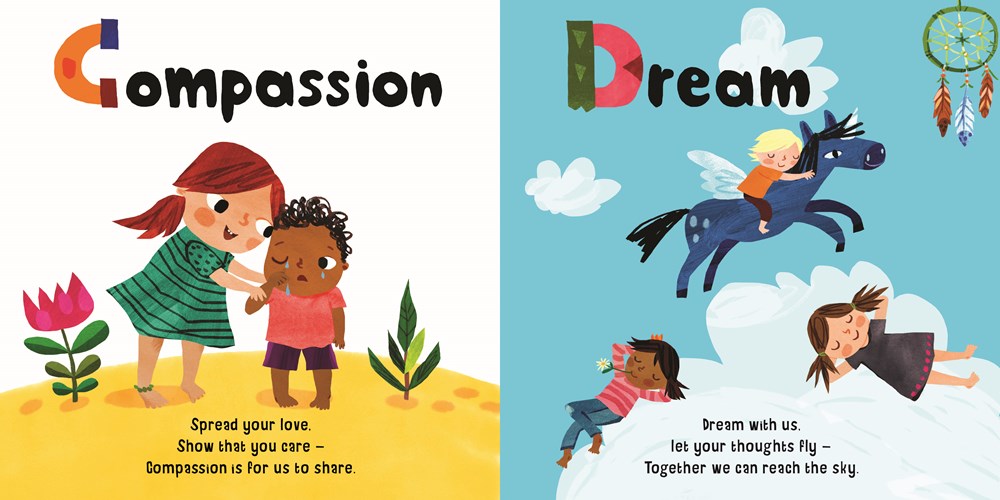
ABC: Mindful Me (ABC for Me), by Christiane Engel, (March 2018, Walter Foster Jr.), $16.95, ISBN: 9781633225107
Recommended for readers 3-6
Christiane Engel’s ABC for Me series is so good for young readers and listeners. Her Baby Signs book illustrates the ABCs by introducing readers to simple sign language words that parents and children can use to communicate together; with ABC: Mindful Me, children learn the ABCs of being present and aware of themselves and the world around them. Using rhyme and child-friendly illustration, little ones learn about compassion and Zen; yoga and mandalas. There are even activities for caregivers and kids to work on together: make a mandala using found objects; make a gratitude tree, engage in some deep breathing and meditation. An index at the end helps us grownups refer to the 26 different “mindfulness pillars” introduced throughout the book. It’s a nice addition to young reader collections, and could be a good add to storytimes (especially yoga storytimes) and social discussions about empathy and kindness to ourselves and others.
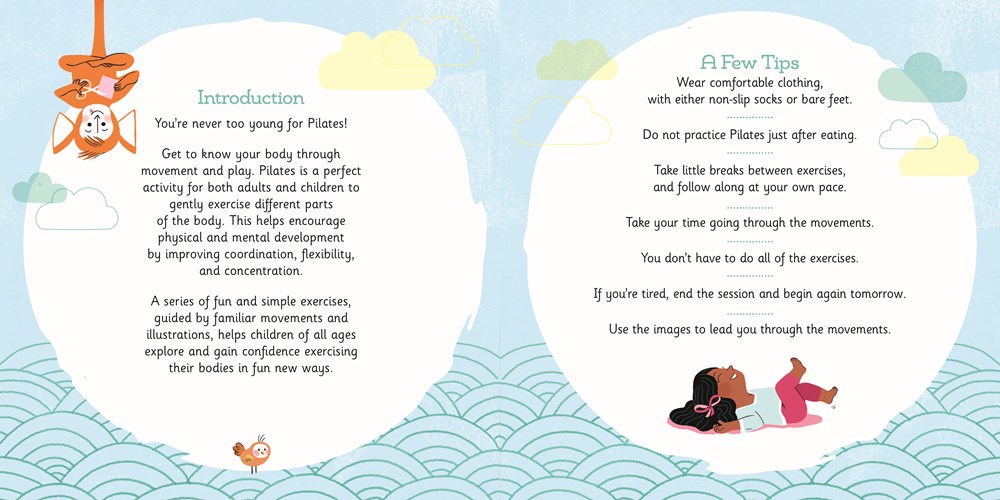
My First Book of Pilates: Pilates for Children, by Rida Ouerghi/Illustrated by Elsa Fouquier, (May 2018, Walter Foster Jr.), $16.95, ISBN: 9781633225893
Recommended for readers 3-6
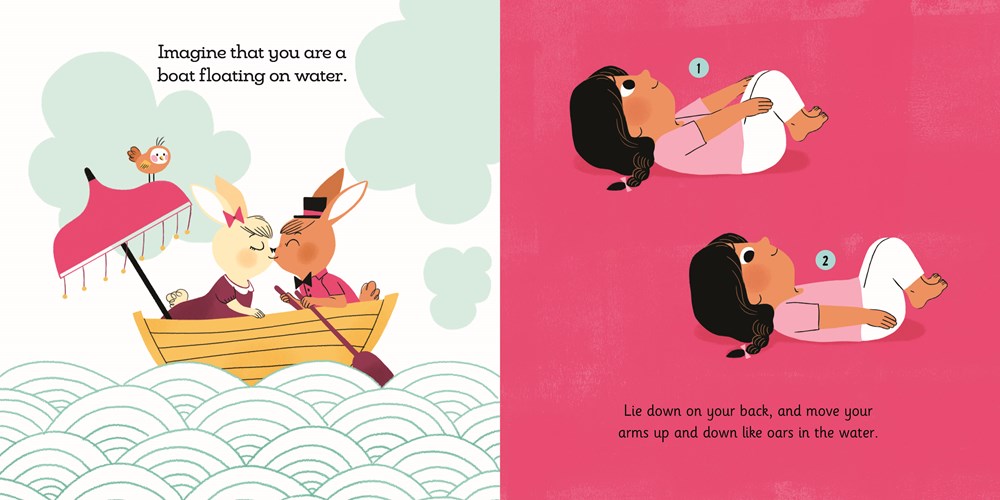
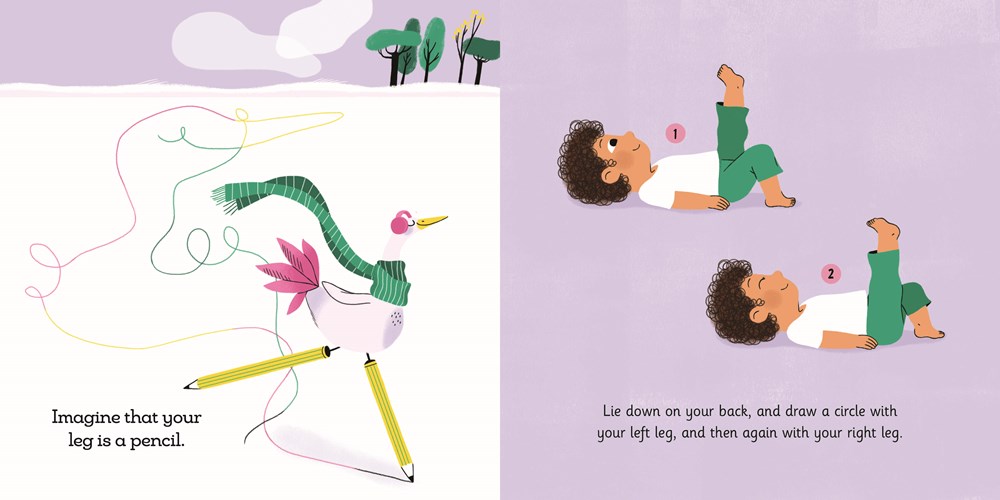
This is SO cute, and so perfect for my toddler/preschool yoga kids. An introduction to Pilates, this fits right in with books like Downward Dog with Diego, where kids learn simple yoga poses through animal illustrations. My First Book of Pilates offers a little more information, introducing readers to 12 Pilates poses, one per spread. On the left hand page, Rida Ouerghi and Elsa Fouquier use creative visualization to show us anthropomorphic explanations that make perfect sense to kids – imagine being a boat floating on the water; imagine rolling around like a hedgehog – and on the right hand page, an illustrated child recreating the Pilates pose, with simple instructions. There are some helpful tips at the beginning of the book to get your kiddos started. Absolute fun, and absolutely adorable! During a storytime, you can easily add some mindfulness practice in with the imagines, too: ask the kids to close their eyes and envision themselves floating on the water, rolling like a ball, or feeling their legs become strong, like trees.
I Say OOH, You Say AAH!, by John Kane, (March 2018, Kane Miller), $12.99, ISBN: 978-1-61067-7110
Recommended for readers 3-7
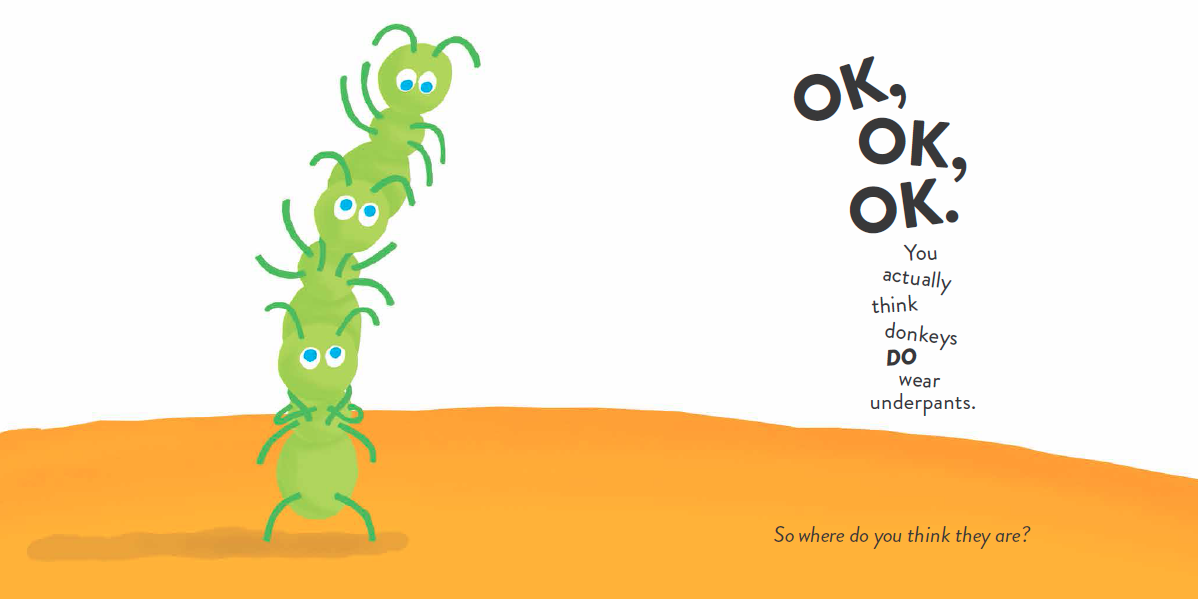
I am having way too much fun with this laugh-out-loud picture book! I Say OOH, You Say AAH plays with words and ideas in the most fun ways; you’re the narrator, speaking to your audience, and leading them through seemingly simple requests. The pictures, however, make your audience say otherwise! If you see an ant, you must say underpants. Which will, of course, happen at the most inopportune moments, like when a shy donkey named OOH (yup, now you’ve scared him) shows up with an ant on his nose.
The book is bold and bright, and is made for read-alouds where you want to be as silly as possible (and isn’t that what read-alouds should be?)! The digital artwork is colorful and fun, and the fonts are bold, often in caps, and easy to read. It’s great for sharpening verbal cues and teaching reading comprehension in the best way: the fun way! As Kirkus says, it’s an “invitation to silliness” complete with instructions. I have a well-known love for underpants-related picture books and storytimes, and this one is solidly in the collection.
I read this with my 5-year-old, and we needed frequent giggle breaks. And then… I read it to my colleagues as part of a Guerilla Storytime at the recent Urban Librarians Unite conference! (It’s so gratifying, reading a book like this to a group of librarians who are totally on board with your wackiness, by the way.) The librarians were thrilled – a few approached me and asked where they could buy the book. Success!
I Say OOH, You Say AAH is perfect storytime and funtime reading. Put it in libraries, classrooms, and homes where kids love sillytime!
My Little Small,by Ulf Stark/Illustrated by Linda Bondestam, Translated by Annie Prime, (March 2018, Enchanted Lion Books), $15.95, ISBN: 9781592702091
Recommended for readers 4-7
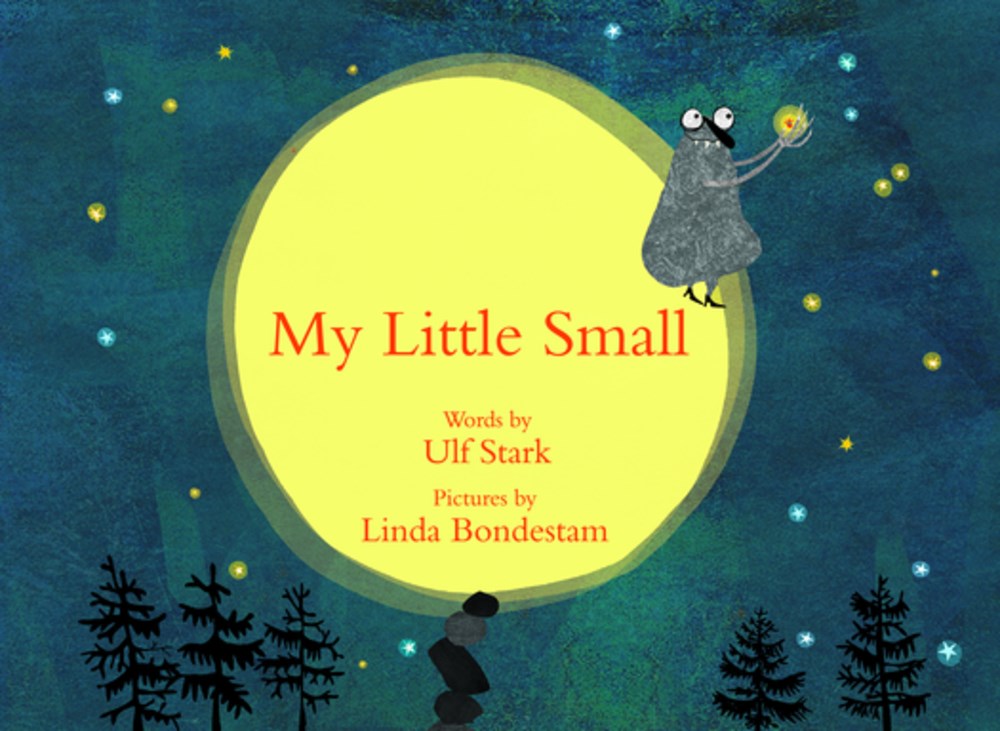
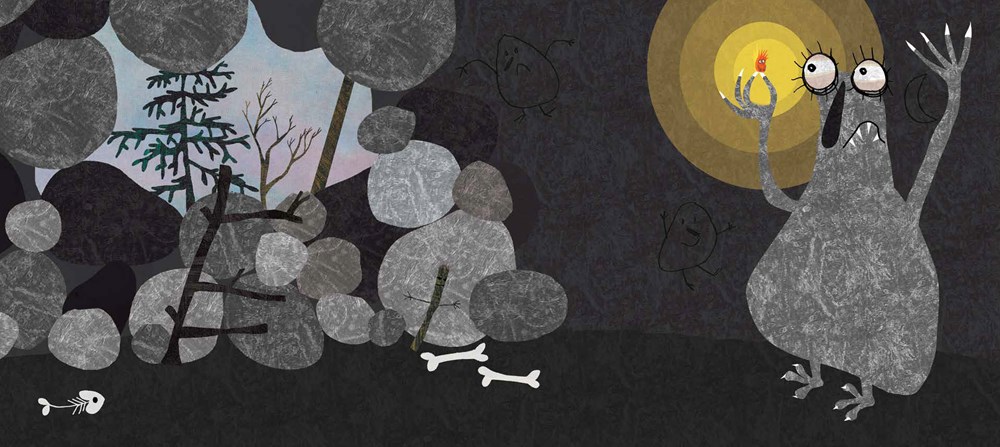
Originally published 2014 in Swedish as Min Egen Lilla Liten, this is a touching story about a lonely Creature that allows for some interpretation with readaloud audiences. A lonely gray Creature lives inside a mountain cave, living in darkness because the sun will hurt her; possibly kill her. She longs for something to love and care for: “someone small to sing to and care for”. She tries to share her affection with the moon, whose rays shatter when she attempts an embrace. But one ay, a stray spark from the sun finds its way into her cave, and her heart soars. The spark tells her stories about the sun, and the colors visible in the daylight: the blue ocean; the yellow deserts; the green forests; the animals and birds that live above. While the Creature is enchanted by the spark, calling it her Little Small, the spark must hurry back to the sun before dark.
The Creature in this story is gendered female in the text, but this is open to interpretation: The Creature can easily take on any preferred pronoun the reader wishes; it’s a gray, amorphous shape with large, expressive eyes, a bulbous, black nose, and sharp white teeth. It’s nowhere near scary; rather, it’s kind of cute. Creature’s story is the big thing here: the desire to love and care for a Little Small; the same desire that fuels parents and caregivers; the same desire that moves children to attach themselves to a Lovey. My Little Small is also a reminder that our time together is short, and to fill those moments with joy – a nice nod to us adults to stop sweating the small stuff. The artwork is bold, with textured grays giving life to Creature and her environs, and bold, bright colors populating the spark’s tales of life outside. The spark itself is tiny and bright, giving off rings of warm, yellow light.
Words Without Borders calls My Little Small a “sweetly eccentric book”, and that seems about perfect, so I’ll leave it at that. It may not appeal to every reader, but it does reach down and get to the heart of the desire to love and protect. Sunrise, 2013 comic by Heather L. Sheppard, from a few years ago, makes a good readalike with absolutely adorable artwork. If you can find it (it’s a digital comic, available through Comixology), give it a read.
The Grand Expedition, by Emma Adbåge/Illustrated by Anne Prime, (Apr. 2018, Enchanted Lion), $16.95, ISBN: 9781592702459
Recommended for readers 3-7
Two siblings head to their backyard for an adventure! They take the time to prepare food (coffee and pickles) and provisions (blankets, tent, jump rope). They head out, set up camp, and… eat all the pickles. And sit. And then the mosquitoes come out. And then one sibling has to poop, which seals the deal: they’re heading back inside. They end the evening cozy, with their dad, indoors.
This is the stuff of childhood. Originally published in Sweden, this is the kind of story that appeals to kids of all kinds: the campout. I grew up in an apartment, and my kids spent their early years in one, so living room campouts were the answer (who doesn’t love a sturdy blanket and pillow fort?) The kids pack like kids – minus the snacks, because they’ve only got pickles, but you get the point – and head out to an adventure that is greater in the imagination than in actuality. Once they get out there, there’s not a whole lot to do, and the lack of indoor plumbing is a dilemma. The adventure continues into the home, where the boys end the evening still on an adventure, this time, in the comfort of home. This is a fun story for a pajama readaloud – can you build blanket forts in your library, classroom, or living room? Bring the stuffed animals, sit in your PJs, and enjoy a comfy campout. The illustrations lend to the imaginary feel, with muted watercolor and line drawings giving a hazy, dreamlike feel to the story.
Is anyone else thrilled that Sesame Street is still going strong? It gives me something to share with my kids at home and my kids at the library. Until you’ve taught other parents to sing along to Ladybug Picnic and driven your own children crazy with Manamana, you just haven’t lived. One of my best friends and I have been known to Elmo-Bomb one another with “Number of the Day/Letter of the day (Clap-Clap)” gifs, just to keep us on our toes. We never really outgrow Sesame Street, so whenever I see the chance to talk up the show and its characters, I’m on it.
5 Little Rubber Duckies, by Matt Mitter/Illustrated by Tom Brannon, (Feb. 2018, Studio Fun), $11.99, ISBN: 9780794441197
Recommended for 2-5
Ernie still loves his rubber duckies, and this adorable book invites readers to join Ernie and his Sesame Street friends as they seek out five of them! The rhyming story is very similar to the nursery song, “5 Little Ducks”: Ernie plays hide and seek with five of his little rubber ducks, but one less duckie comes back each time Ernie calls them. Will Ernie get his duckies back in time for bathtime?
This book is loaded with interactive fun for toddlers and preschoolers alike. There are five little rubber duckies at the top of the book that little fingers can slide back and forth to count and play. Each spread has a highlighted box inviting readers to count the duckies, and trace the die-cut numbers from 5 to 1.
The pages are sturdy and will hold up to multiple readings and counting play, and all the Sesame Street royalty is here: Elmo; Abby Cadabby; Oscar the Grouch; Big Bird and his teddy bear, Radar; Cookie Monster; Prairie Dawn; Rosita, and even Bert, feeding his pigeons up on the roof. (I’m assuming Super Grover was off, patrolling the city.) Also available in Spanish (5 Patitos de Hule), this is absolute storytime, classtime, kidtime fun.
Kindness Makes the World Go ‘Round, by Sesame Workshop, (Apr. 2018, Sourcebooks Jabberwocky), $10.99, ISBN: 9781492660569
Recommended for readers 3-6
Elmo wakes up one morning to discover that his mommy has left him a gift! She’s given him a camera for World Kindness Day and asks him to take photos of Sesame Street neighbors being kind to one another! Elmo is so excited, and why wouldn’t he be? Everyone’s nice to each other on Sesame Street! Sure enough, he’s snapping pictures right and left, creating a scrapbook to share with Mommy at the end of the day!
Another great book from the Sesame Workshop group, teaching kids about empathy and kindness. From holding doors for the little twiddle bugs, to playing with Julia at the playground, Elmo sees his friends all being kind to one another. This is a great book – and so timely – to have now, and to read for World Kindness Day (November 3). Play Elmo’s Kindness Bingo with the kids – there’s a free printable on Sesame Workshop.
Want to show them some Elmo? Here’s the Elmo’s World segment on kindness.