Posted in Preschool Reads, Toddler Reads

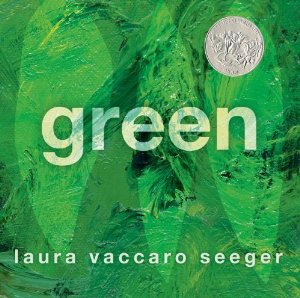
Book Review: Green, by Laura Vaccaro Seeger (Roaring Brook Press, 2012)

greenRecommended for ages 2-6

This award-winning concept book provides an illustrated explanation of the many shades of the color green, with  beautifully depicted scenes in painted oils interpreting the color’s many nuances. The text, written in rhyme, explains the shade illustrated in each spread: “forest green, sea green, lime green, pea green”. There are references to what is “never green”, like a stop sign, and there are “wacky” greens like a green zebra. Die cuts on each spread add a level of complexity and playfulness, making the leaves in the “forest green” spread the outlines of the fish in the “sea green” spread. The white and black bold text simply describes each scene. Little hands will enjoy exploring the pictures and diecuts, but it could lead to accelerated wear and tear on the book.

Green received 2013 Caldecott Honors and has been designated as a Kirkus Best Children’s Book of 2012 and a Booklist Editor’s Choice for Youth.

This would be a great addition to a color-related read-aloud. Bright Hub Education’s and Preschool Express’ websites offer songs about color, many sung to the tunes of popular nursery rhymes, which children will enjoy. Printing out pictures of various objects – an apple, a leaf, a banana – and letting children color them in would be a fun coloring craft. Enchanted Learning has free printable color books that children can color in and take home.

The author’s website offers information about the author and her books, with some interviews and book trailers.
 

Posted in Preschool Reads, Toddler Reads

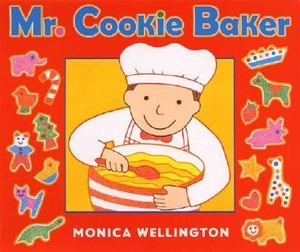
Book Review: Mr. Cookie Baker, by Monica Wellington (Dutton, 2006)

cookie bakerRecommended for ages 2-4

Every day, Mr. Baker makes cookies for his crowded store. When the day is done, he gets to have one, himself.

The story takes the reader through Mr. Baker’s day, most of which is devoted to baking cookies. He counts and measures his ingredients, mixes the dough, rolls out the dough and cuts shapes with cookie cutters, bakes the cookies, takes them out and decorates them, and greets his customers. When the customers go home and all of the cookies are gone, his day ends and he enjoys a cookie. It’s a simple story that features gouache and colored pencil artwork. The flat, bright colors and clean lines, along with the fun shapes of the cookies framing the text page of each spread, adds interest to the page. Ms. Wellington’s pages are busy – there are cooking utensils and ingredients, children, sprinkles, and cookies on every page, giving the eye many places to look. The font changes color to contrast with its backgrounds – white for darker backgrounds, brown and red for lighter backgrounds.  There are four recipes at the end of the book for any parents and/or guardians interested in baking.

This book would be part of a fun cooking and baking read-aloud. With permission, parents and guardians could receive copies of the four recipes included in the back of the book. A fun storytime craft would allow children to “make” their own cookies by using precut cookie shapes and “sprinkles” (stickers).

The author’s website offers some printable activities and recipes.


Posted in Preschool Reads, Toddler Reads

Book Review: Circle Dogs, by Kevin Henkes/illus. by Dan Yaccarino (Greenwillow Books, 1998)

circle dogsRecommended for ages 2-5

Circle dogs live with their family in a square house with a square yard, eat circle snacks, and dig circle holes. Created by popular children’s author/illustrator duo Kevin Henkes and Dan Yaccarino, Circle Dogs provides a fun lesson in shapes wrapped within a story about two fun-loving dachshunds, referred to as “circle dogs” because they twist themselves into circles when they sleep. The story takes place over a day in the life of the circle dogs and their family: they wake up in the morning, along with the sun, alarm, baby and birds; kiss their family members; play; eat; nap; eat, and go to bed for the night. Dan Yaccarino’s artwork has shades of Lane Smith’s retro feel here; his brightly colored gouache pictures look like cutouts on white space and will attract a young reader’s attention with his contrasting colors. The bold text is black on lighter spaces and white against black spaces, standing out and making reading easy.

This concept book provides a great opportunity for a read-aloud on shapes. The book invites interactive reading by using repetitive sounds to communicate the dogs’ day: their tags go clink-clank, their tails flip-flap and swish, swoosh, and they eat their dog food with a kibble-clatter, kibble nibble.   Circles, squares and triangles are easily identifiable and plentiful throughout. This would be a great opportunity to use a felt board with shapes for young audiences to identify and create pictures with – a square can be a house, a sandwich, a window; a circle can be a sun, a face, or a table; a triangle can be an ice cream cone, a hat, or a dog’s ear, as in Circle Dogs. The DLTK website offer a Shapes Buddies webpage with printables including a Shapes Bingo game and Buddy Shapes to color.

The author’s webpage offers information about more of his books, plus downloadable guides and printables for parents and teachers.


Posted in Preschool Reads

Book Review: Dim Sum for Everyone, by Grace Lin (Dell Dragonfly, 2003)

Dim-Sum-for-EveryoneRecommended for ages 2-5

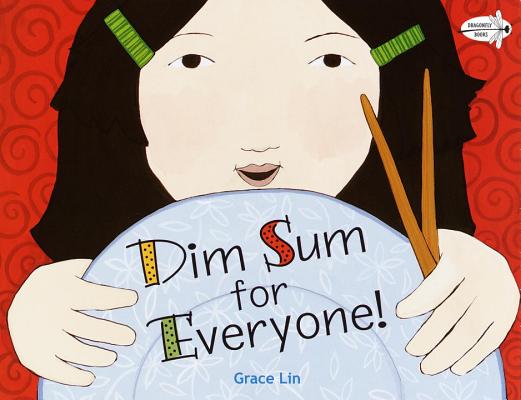
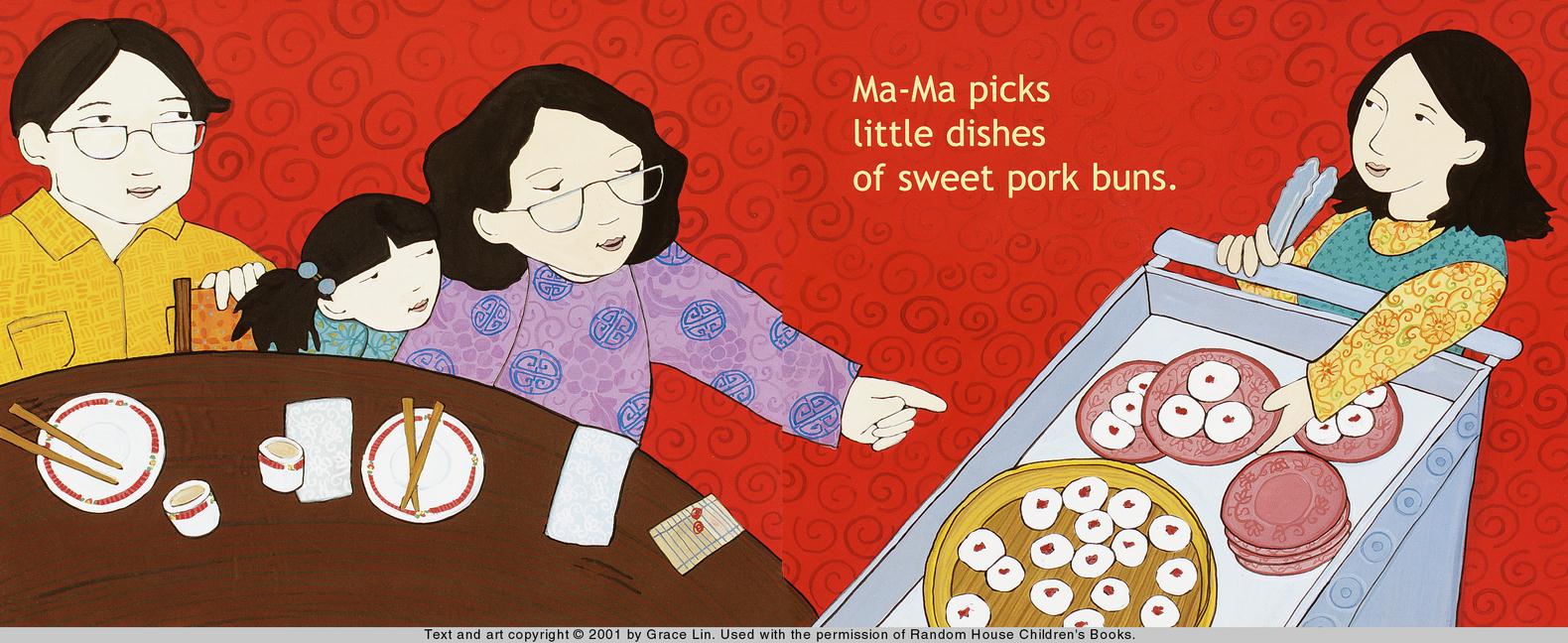
A child describes her dinner at a dim sum restaurant with her family, explaining what dim sum is – little dishes of different foods – and what each member of her family chooses from the little carts that bring food to the tables. Perspective changes to feature each family member as they choose a different food. Multicultural audiences will appreciate learning about new and different foods, and many families will identify with the experience. The illustrations are brightly colored, with the restaurant’s red carpet serving as the background for each spread; the bright silver carts and vibrantly colored foods and clothing add to the visual interest. The front endpapers feature food, condiments and tableware against a bright green background and the back endpapers illustrate almost two dozen dim sum dishes.  The bright yellow font creates a nice contrast from the red background, and occasionally, the text curves around the picture, adding to the visual appeal.

dim sum image

This would be a strong addition to a multicultural read-aloud or a Chinese New Year read-aloud. Preschoolers will be intrigued by the bright colors and names of the characters (Ma-Ma, Ba-Ba, Jie-Jie, Mei-Mei); the interesting new foods could start a fun discussion on other types of ethnic foods. If space permits and the food is available, perhaps there could be a small selection of foods available for audiences to sample. A Chinese New Year read-aloud could also offer printables of the Chinese astrological signs, with explanations for each sign.  Oriental Trading’s website offers many affordable Chinese New Year crafts for little hands, and there are free lantern crafts available online that parents/guardians could help children create.

The author’s webpage offers printables, crafts, Chinese lessons, and recipes.

Posted in Preschool Reads

Book Review: All You Need for a Snowman, by Alice Schertle/illus. by Barbara LaVallee (Harcourt, 2002)

all-you-need-for-snowmanRecommended for ages 3-5

A group of children list all the important materials you need to create a snowman, beginning with the first snowflake.

The process of building a snowman takes on a life of its own in cadence and rhyme in this story, which builds excitement as it goes along, teasing the reader with each spread. “One small snowflake/fluttering down—/that’s all you need/for a snowman” begins the first spread, but the word EXCEPT on the lower right hand corner of the page tells the reader there’s more to come. The next spread brings the next adds more snowflakes: “two more snowflakes…/three flakes… four…/five… six… seven thousand…/eight million more…”, followed by the rolling of the snow into a ball, then two smaller balls, then choosing a hat, until the snowman stands,  towering over the group. The word EXCEPT shows up on every other spread, pushing the reader to continue the story and building anticipation in the listener. The artwork brings an interesting look at a multicultural group of children by emphasizing the children’s profiles and shadowing one half of each face as if the children possess both light and dark skin. Ms. Lavallee’s watercolor and gouache paintings use light blue snowflakes as a background to the children’s snowman building activity, and  she  changes perspective from close-ups to full scenes that work with the pace of the text. The plain black font plays with the space, never interfering with the story and yet becoming part of it as it stacks to the side of the artwork or teases at the bottom of a page.

This would be a great story to read during a winter/snow read-aloud. The rhyme and cadence of the text would be soothing to listeners even as they became excited to learn what comes next in the snowman-building process. There are many printables and fingerplays available featuring snowmen, and a fun craft would allow children to create their own snowmen with cutout shapes that mirror some of those mentioned in the story: big snowballs, smaller snowballs, hats, “bottle caps” for eyes, “carrots” for noses, scarves, earmuffs, boots and belts. The Perry Public Library has many suggestions for Winter read-alouds.

The Children’s Literature Network offers an author webpage for Ms. Schertle with a biography and featured covers of some of her works.

Posted in Preschool Reads, Toddler Reads

Book Review: Minerva Louise, by Janet Morgan Stoeke (Puffin, 2012 edition)

minerva louiseRecommended for ages 2-5

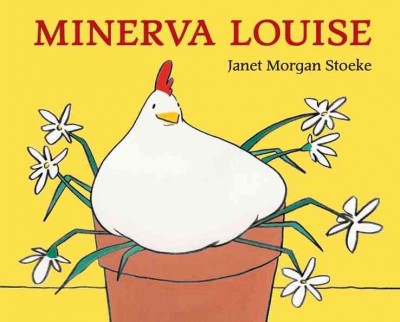
First published in 1988, Minerva Louise is the story of an inquisitive hen who goes exploring and finds a house with all sorts of interesting things to see. The book speaks to toddlers’ and preschoolers’ natural curiosity about the world around them; they can follow her as she wanders into new situations and sees things from her own unique point of view. In this first Minerva Louise adventure, she explores a farmhouse and sees a perfect nest for her (a fireplace), a comfortable chair (a flowerpot), friendly cows (a sleeping cat), a tractor (a tricycle), and more. She encounters a rubber duck in a bathtub, which she sees as a new friend inviting her to play in a pool, but decides to go play in the yard with her friends instead. The artwork is uncluttered; simple but eye-catching: Ms. Stoeke uses a crayon-like line, drawn onto heavy vellum paper and traced onto watercolor paper, filled in with gouache paints and occasional watercolor washes. She uses large, simple shapes and bold, flat colors inside soft black outlines, against a white background. The plain, black font makes for a good read-aloud book that will keep audiences interested in the pictures.

This would be part of a fun animal read-aloud. For a slightly older audience, I would also suggest an Amelia Bedelia companion story, as Minerva Louise tends to see things with her own unique point of view, similar to Amelia Bedelia. There are many farm animal printables that children can color, and there are many farm animal songs and fingerplays.

The author’s website offers links to more of Ms. Stoeke’s books, her art, and information about school visits. The Minerva Louise series includes A Hat for Minerva Louise; Minerva Louise on Halloween; Minerva Louise on Christmas Eve; A Friend for Minerva Louise; Minerva Louise at the Fair; Minerva Louise and the Red Truck. Minerva Louise won the Dutton Picture Book Contest (1988).

Posted in Preschool Reads

Book Review: The Snowy Day, by Ezra Jack Keats (Viking Press, 1962)

snowydayRecommended for ages 3-5

In Keats’ beloved classic, a little boy enjoys the wonder of his first snowfall. Peter wakes up to see snow covering everything as far as the eye can see. After breakfast, he ventures outside and plays in the snow, making snow angels, playing with footprints, making a snowman, and climbing a mountain. He goes home and tells his mother about his day, takes a warm bath, discovers that the snowballs he saved in his pockets are gone, and  goes to sleep, only to wake up to another snowy day. The groundbreaking book was the first picture book to feature an African-American child as the hero of his own story and is still popular with audiences of all cultures and backgrounds today; it is the story of a child enjoying a snowy day – preschoolers will enjoy thinking about their favorite snowy day and appreciate moments that Peter experiences that may be familiar to them: the feeling of snow hitting him on the head, getting hit with a snowball when he tries to play with older boys, and the feeling of a  nice, warm bath  when he gets home.

Mr. Keats used illustrations consisting of cut-outs, varied textures, strong watercolors, geometric shapes, and collages, was also considered an artistic breakthrough. The images are not outlined, giving making for a softer appearance and will keep young audiences interested while the plain black font allows for a read-aloud that will keep audiences interested in the pictures while the reader weaves the tale. The endpapers provide a comfortable lead-in and phase-out to the story, with multi-colored snowflakes on a sponge-like background. Peter also appears in Keats’ books Peter’s ChairA Letter to Amy; and Goggles!

The Snowy Day has won numerous awards and accolades over the last 50 years, including the Caldecott Medal (1963) and the Child Study Children’s Book Committee (1995).

This would be a great anchor story for a winter/snowy day read-aloud. There is a board book version available for even younger audiences; it may be a good idea to have copies on hand for toddlers who want to follow along. Multicultural audiences will appreciate the African-American main character. The author’s website has an interactive version of the story with narration and a soundtrack that should be accessible on library computers. The Perry Public Library’s Snow & Winter storytime offers ideas, fingerplays and songs; children can talk about their favorite snow days and could color snow-related printables available on many children’s websites. Children could use precut shapes to make and decorate their own snowmen.

Posted in Preschool Reads, Toddler Reads

Book Review: T is for Terrible, by Peter McCarty (Henry Holt, 2004)

t is for terribleRecommended for ages 2-4

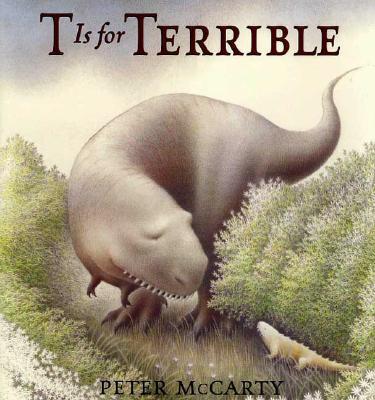
A T-Rex feels badly about being a “terrible lizard” and wonders if he would be less terrible if he were pink or blue. He is like other creatures, being hatched from an egg and having a mother. If he had the choice, he would be a vegetarian, but that is not in his nature. There is humor to the dinosaur just as there is a healthy dose of understanding what it is that makes him terrible: animals run from him, the ground shakes when he walks, and he has large, sharp teeth. Mr. McCarty’s illustrations, muted pencil-on-watercolor-paper drawings make the dinosaur look soft, not very threatening at all, even sensitive. The textured lines and soft shading give a beautiful sense of depth to the animals and their surroundings. The plain black font on a white background is brief, allowing readers to pay more attention to the beautiful pictures and making this a very good read-aloud choice.

This would be a great choice for a dinosaur read-aloud. This could be a great unconventional dinosaur read-aloud, with stories about dinosaurs who don’t just rampage and eat whatever is in their way. There are many dinosaur songs and fingerplays. The Perry Public Library has I Love Dinosaurs storytime suggestions with stories and songs, and there are dinosaur printable sheets on many websites. The author’s website information about his other books, plus links to his blog and events.

Posted in Preschool Reads, Toddler Reads

Book Review: If You Take a Mouse to School, by Laura Numeroff/illus. by Felicia Bond (HarperCollins, 2002)

if you take a mouse to schoolRecommended for ages 2-4

A mouse accompanies his human friend to school, and things snowball from there. The Mouse, first introduced in Ms. Numeroff’s If You Give a Mouse a Cookie, is back, and he is still pushing his boundaries with his human friend; this time in school. Mouse discovers new friends and activities, which include writing a book, playing basketball, riding a skateboard, and performing a science experiment. Visual cues link If You Take a Mouse to School to the original story: there are chocolate chip cookies on the boy’s pajamas; they show up in a lunch box, and as a refrigerator magnet. Felicia Bond’s watercolors are bright and crisp and stand out against the stark white background, inviting readers to look closely at the action featured on every page. There is a lot of action to see, too; Mouse is in constant motion, popping up in a lunchbox, kicking a soccer ball, or running with a group of children. Preschoolers will enjoy imagining a fun day at school with a tiny visitor of their own.

This would be a fun read-aloud for preschoolers preparing for Kindergarten. There are many back-to-school songs to sing in a school-related read-aloud. There is also a Mouse plush doll available; a fun read-aloud could include Mouse “sitting” with attendees, and asking each attendee how they would spend a school day with Mouse.

The Mouse series includes If You Give a Mouse a Cookie, which is the first Mouse story, and If You Take a Mouse to the Movies. The books are part of the larger “If You…” series, which includes titles such as If You Give a Moose a MuffinIf You Give a Pig a Pancake; and If You Give a Cat a Cupcake.

The author’s website offers coloring pages and resources for teachers and parents.


Posted in Preschool Reads, Toddler Reads

Book Review: Mama Mama by Jean Marzollo/illus. by Laura Regan (HarperFestival, 1999)

mama mamaRecommended for ages 0-4

The bond between mothers and babies is strong, as illustrated by different animals. Seven different animal babies tell their mothers, in rhyme, how they love them. Each spread features a realistic illustration of an animal mother and baby – lions, leopards, chimpanzees, koalas, pandas, elephants, and sea otters – and a four-line rhyme celebrating their love: “Mama, Mama,/Nuzzle, hug,/I’m your little/golden cub”. The font is simple and black, meant for mothers to read to their children during cuddle time. The book is a sweet tribute to mothers and their babies and should be a popular board book selection in any library.

This would be a good read-aloud for a family-related lapsit or a Mother’s Day lapsit. The Perpetual Preschool website offers many Mother’s Day songs and fingerplays that would work well with this type of lapsit.

The author’s website offers free ebooks and activities using her other books. She has written a companion book to Mama Mama called Papa Papa.