Posted in Graphic Novels, Middle Grade, Non-Fiction, Non-fiction, picture books, Preschool Reads, Tween Reads

Books to inspire your young scientists!

This is an incredible year for children’s books! There’s something for everyone available or coming soon, with wonderful artwork and text that draws readers right in. This time around, I’m looking at some fun science books for readers – and caregivers will like them, too.
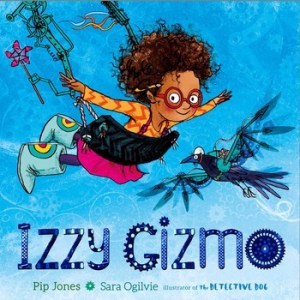
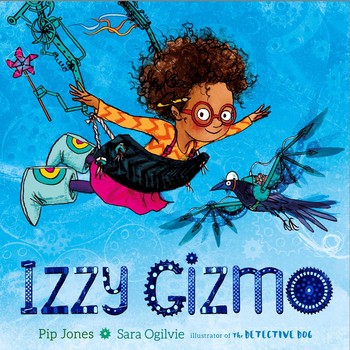
Izzy Gizmo, by Pip Jones/Illustrated by Sara Ogilve,
(March 2018, Peachtree Publishers), $16.95, ISBN: 978-1-68263-021-1
Recommended for readers 4-7
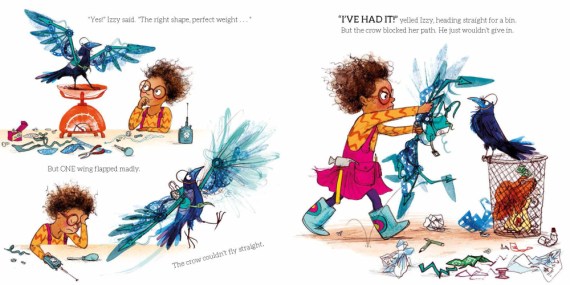
 

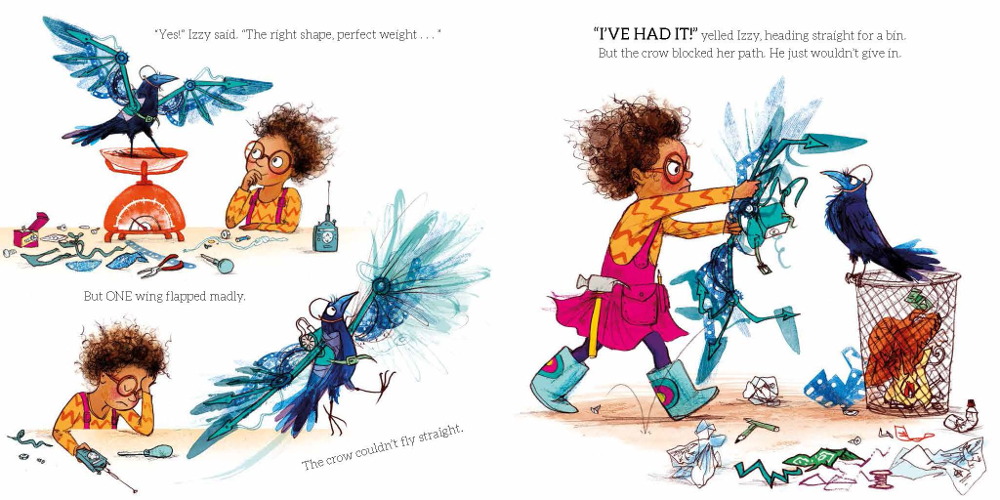
Izzy Gizmo is a curious little girl of color who loves to invent, tweak, and discover. Her inventions don’t always work, but she discovers that she has to put her frustrations aside when she rescues a crow with a broken wing. He wants her to help him fly again, and he’s willing to stick with her through trial and error, until she can get it right. I love the bright colors and chaotic art in this story; it lets readers know that creativity is often messy and wild; the story assures readers that mistakes are just opportunities to filter out what isn’t working and concentrate on what will work; and I love the story of endurance and perseverance. Izzy’s grandfather and her crow friend have faith in Izzy; she just has to find her faith in herself. The gray and white endpapers feature different gears and mechanical parts, letting readers know they’re going to put on their engineering hats to help Izzy out, and the art – a mix of pencil, ink, oil pastel, monoprint, and digital technique – create a busy background that provides a glimpse into the mind of a scientist. Originally published in the UK in 2011, Izzy’s just arrived here in the U.S. and her rhyming story would be a great addition to collections where Andrea Beaty’s Iggy Peck, Architect, Rosie Revere, Engineer, and Ada Twist, Scientist are popular.
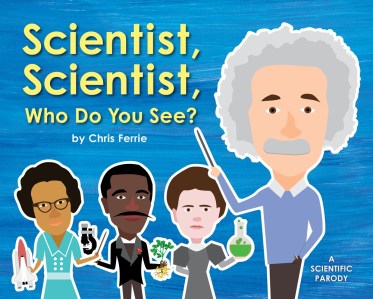
 

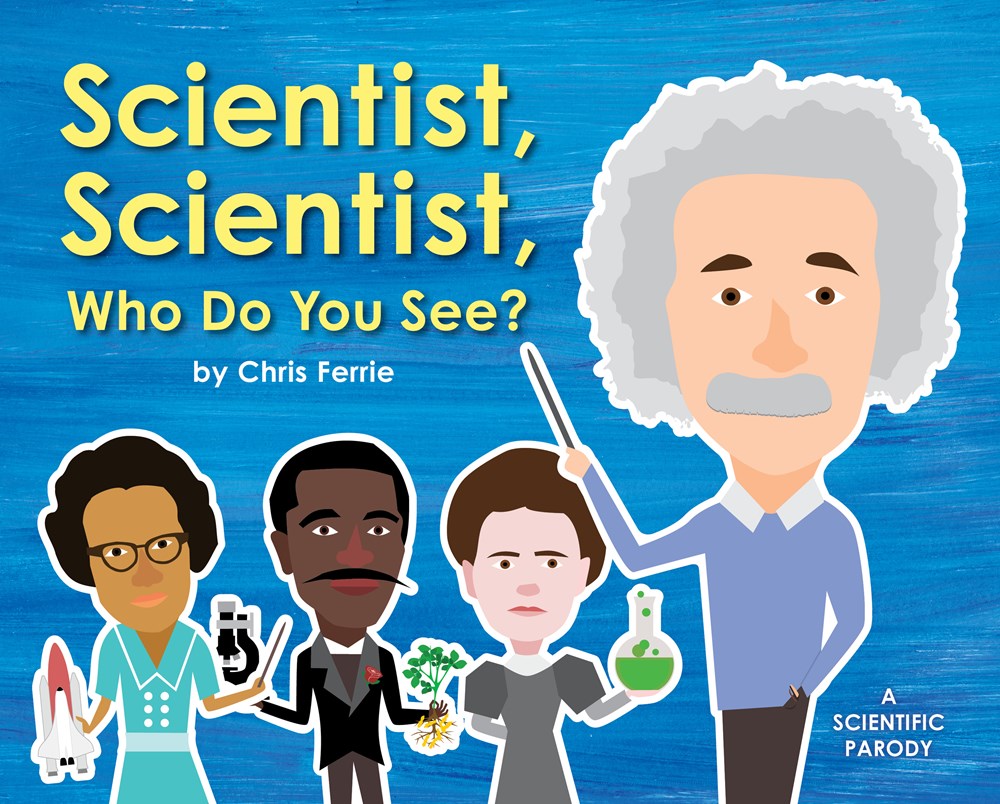
Scientist, Scientist, Who Do You See?, by Chris Ferrie,
(Apr. 2018, Sourcebooks Jabberwocky), $17.99, ISBN: 9781492656180
Recommended for readers 3-6
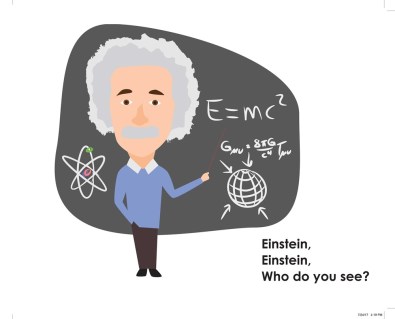
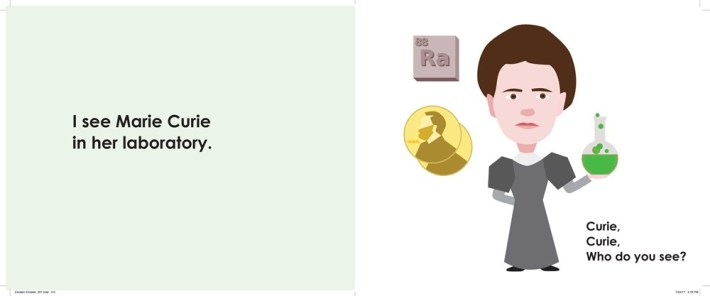
 

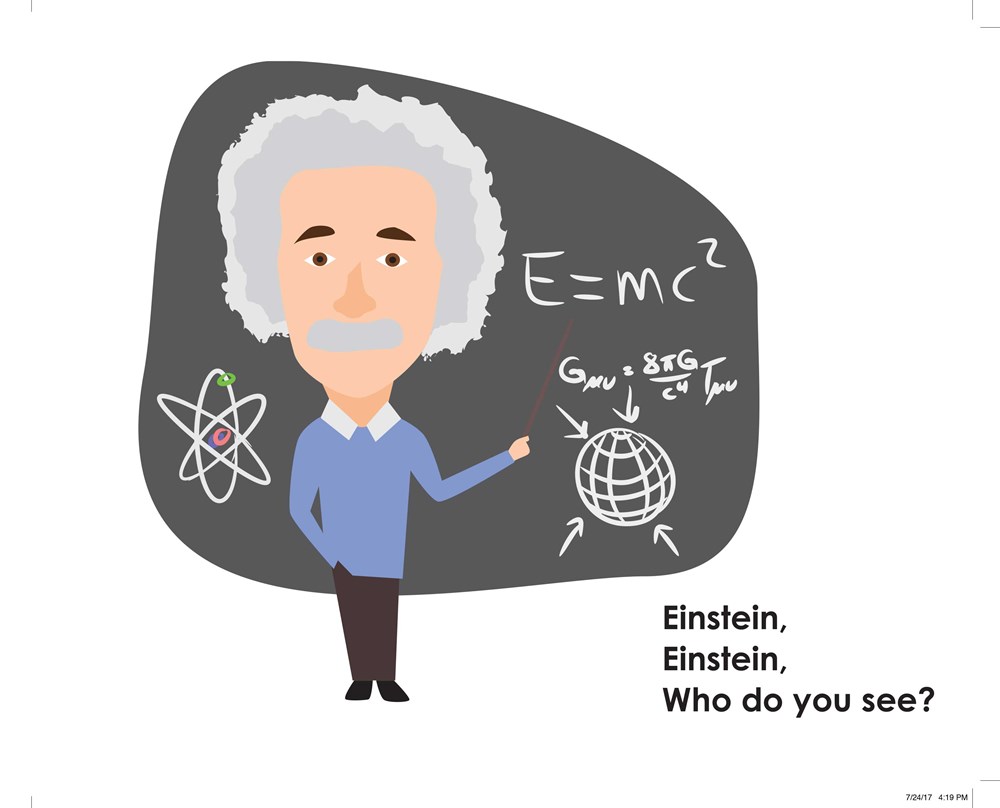
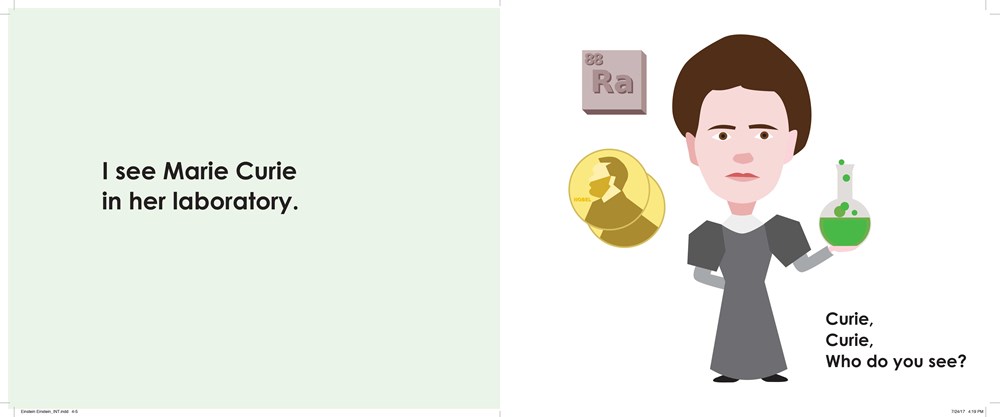
Set to the cadence of the classic, Brown Bear, Brown Bear, What Do You See?, scientist and dad Chris Ferrie introduces little readers to some of history’s greatest minds with Scientist, Scientist, Who Do You See? There is a strong mix of disciplines and diversity represented here, with Einstein sharing space with Grace Hopper, Ahmed Zewail, George Washington Carver, Katherine Johnson, and more. It’s noted as a “scientific parody”, and it certainly is a fun book that will make everyone smile, but kids are introduced to names and ideas, and that’s just great. Starting off with the question, “Einstein, Einstein, Who Do You See?” and the response, “I see Marie Curie in her laboratory”, the story goes on, introducing scientists and their accomplishments, in the soothing rhyme style we’ve grown up hearing and enjoying. Chris Ferrie has given us Baby Science board books and a fun take on Goodnight, Moon with Goodnight, Lab; let’s hope he keeps finding new, fun ways to make science lovers out of our kids.
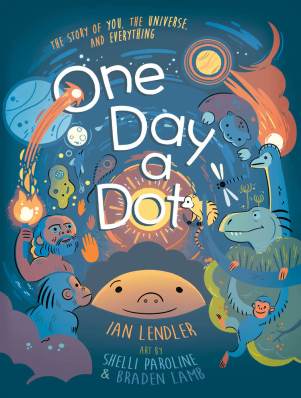
 

One Day a Dot: The Story of You, the Universe, and Everything, by Ian Lendler/Illustrated by Shelli Paroline & Braden Lamb,
(Apr. 2018, First Second Books), $17.99, ISBN: 9781626722446
Recommended for readers 7-10
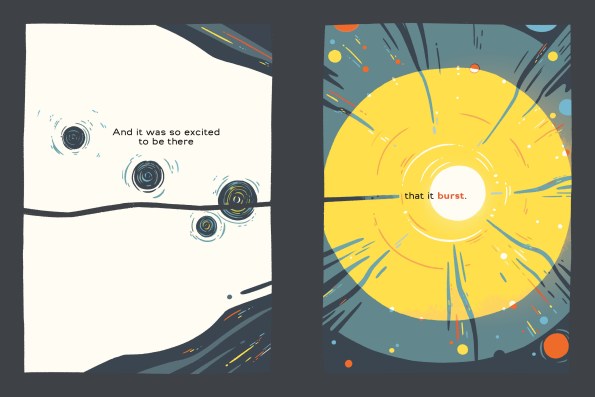
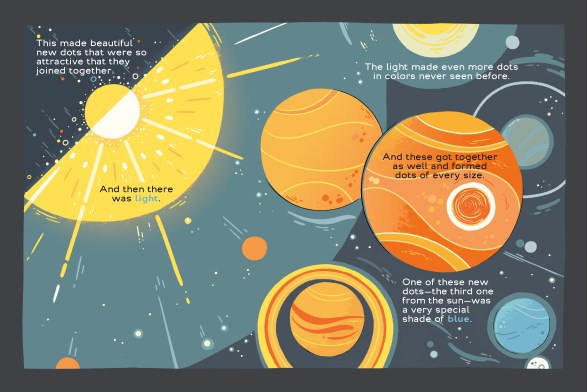
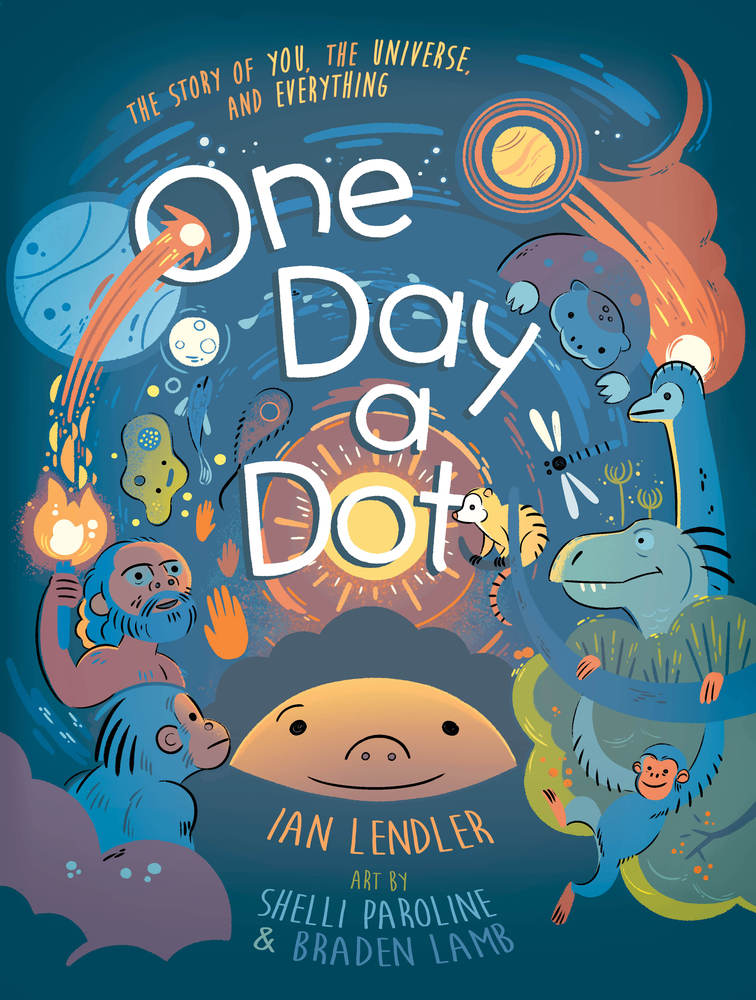
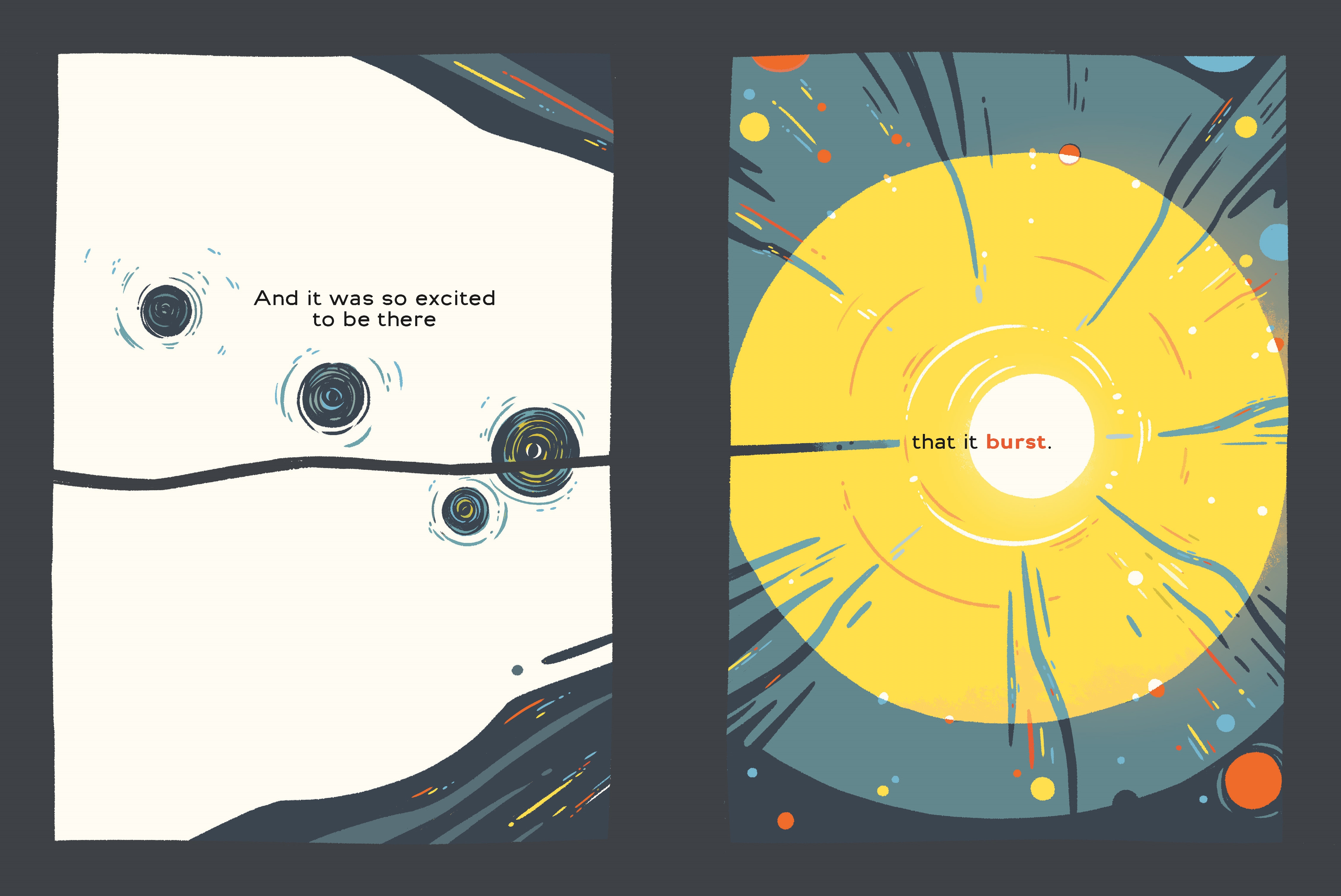
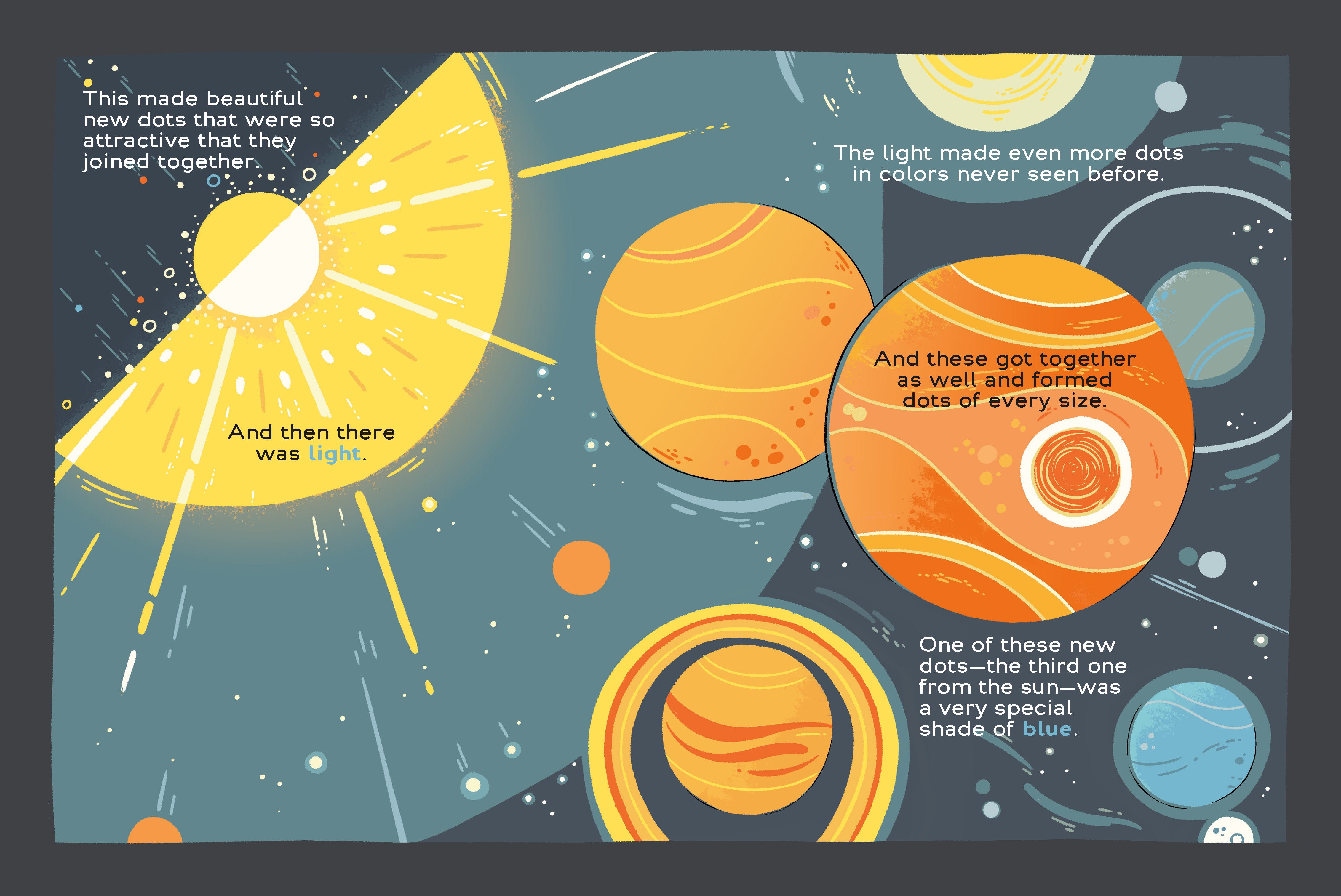
This one’s one of my standout favorites. Author Ian Lendler and illustrators Shelli Paroline and Braden Lamb drill down the history of everything to one humble dot. From one dot’s excited burst of joy comes the Big Bang, bringing new dots together to form planets and, eventually, life. The dots are animated, dancing, playing, even running away from other dots that want to eat them! The artwork is bright with a retro feel and uses the dot theme as a focal point through the story, gently leading readers on a trip through time and space. It’s a simplified look at the formation of the universe, but works nicely for younger readers. Give this one to kids who like Stacy McAnulty’s Earth: My First 4.5 Billion Years, and Dominic Walliman’s Professor Astro Cat books, published by Nobrow.
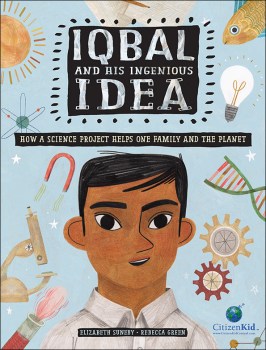
 

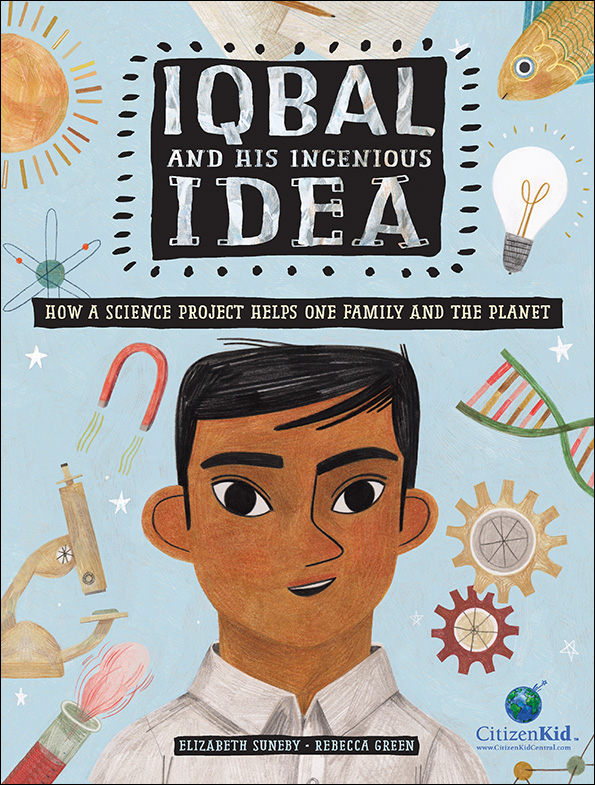
Iqbal and His Ingenious Idea: How a Science Project Helps One Family and the Planet, by Elizabeth Suneby/Illustrated by Rebecca Green,
(May 2018, Kids Can Press), $19.99, ISBN: 9781771387200
Recommended for readers 7-10

The latest from Kids Can Press’ Citizen Kid imprint, Iqbal and His Ingenious Idea is a fictional story about a Bangladeshi boy named Iqbal, who comes with a clean, solar-powered cookstove for his science fair project. He sees his mother force to cook the family’s meals indoors during monsoon season, but the family has no stove: she cooks over an open fire, which produces smoke that makes breathing difficult, especially for his mother and baby sister. He learns about solar energy cooking, wins first place in the science fair, and introduces a sustainable and healthier way for families to prepare meals. The artwork illustrates everyday life in Bangladesh and communicates the closeness Iqbal shares with his family and his hard work to create a science fair project that accomplishes the dual purpose of getting him a good grade and helping his family. The story shows readers that kids can make a difference, and that healthier living doesn’t depend on expensive gadgets – a little research, and you can make the world a better place with tools right in front of you. The book includes more information on cookstoves, a glossary, and instructions for making a DIY solar cooker. Great for class projects and science fair ideas!
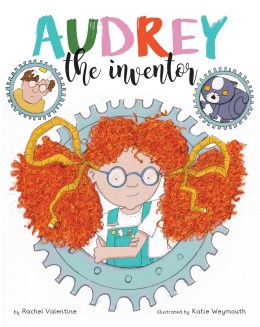
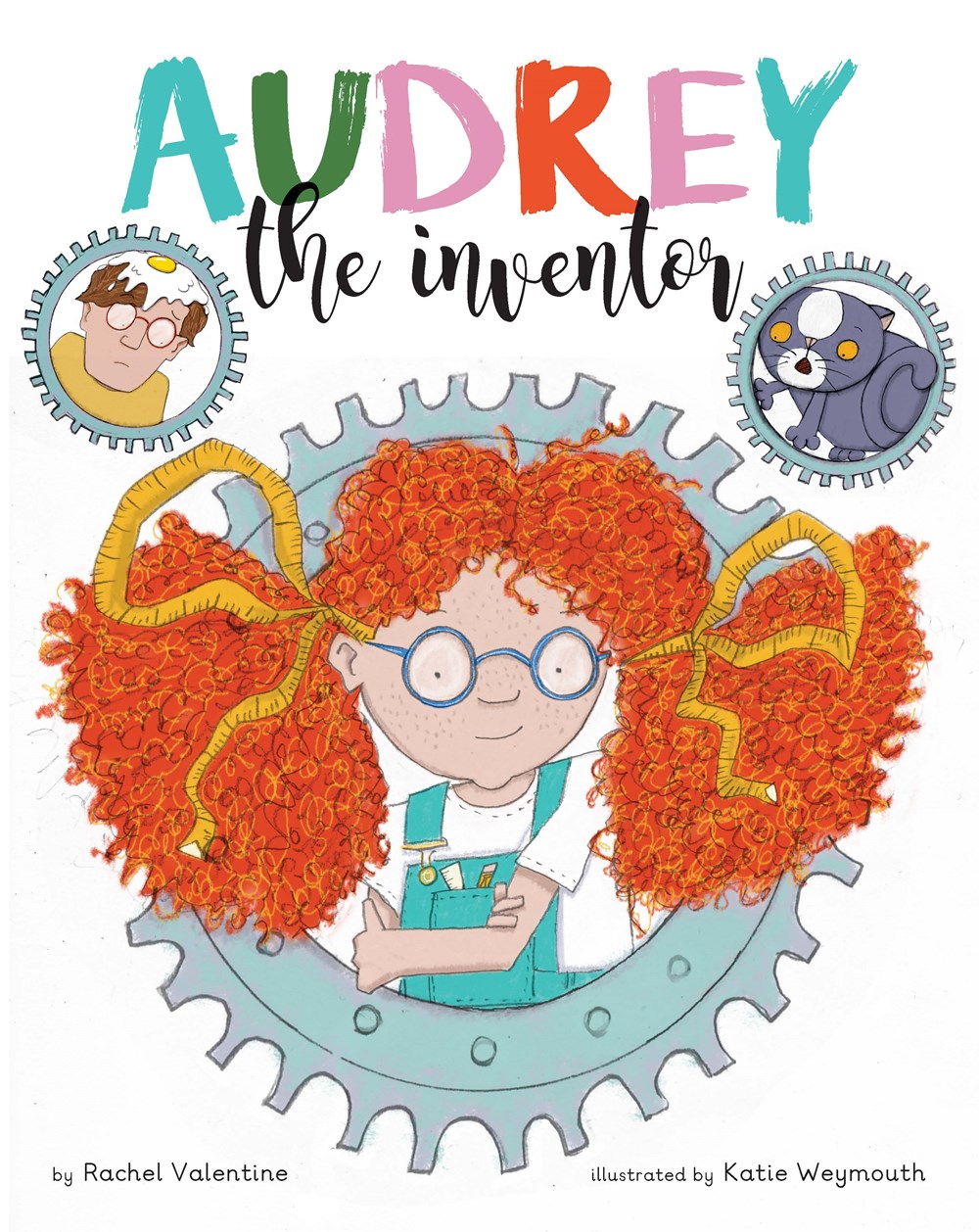
Audrey the Inventor, by Rachel Valentine/Illustrated by Katie Weymouth,
(May 2018), words & pictures, $17.95, ISBN: 9781910277584
Recommended for readers 4-7
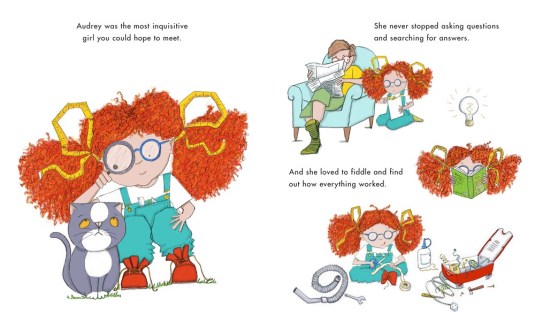
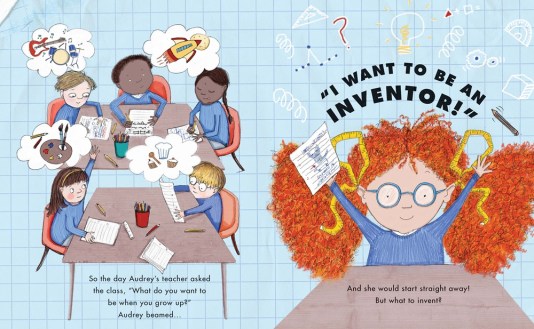
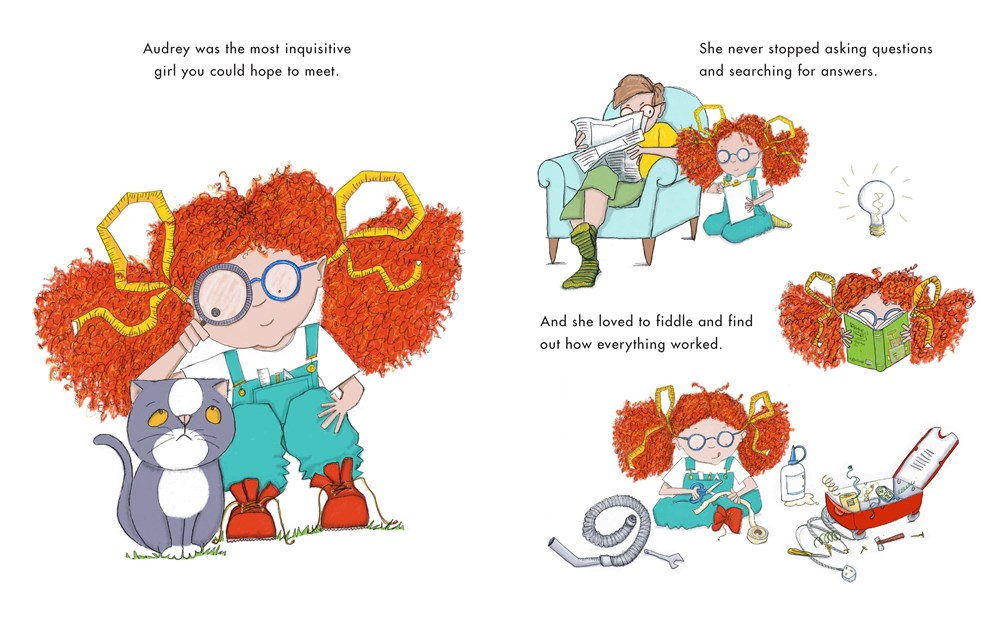
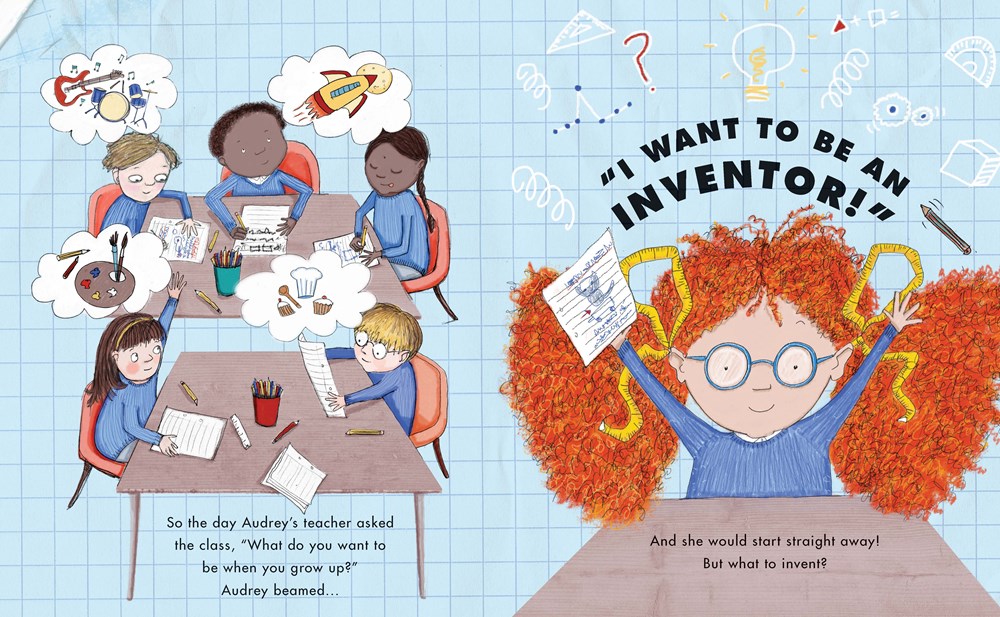
Audrey could hang out with Izzy (first book) and Andrea Beaty’s gang. A wild-haired, redheaded little girl who uses measuring tape for ribbons, Audrey is a curious kid who wants to be an inventor – but she doesn’t know what to invent! She sets off on a host of different ideas, some involving her poor cat, Happy Cat, all of which end up in the “rework” pile. She’s ready to throw in the towel, but decides to give it one last try after getting some encouragement. Little touches, like featuring a graph paper background and visualizing Audrey’s thought process and her doodles, invite kids to share their own ways of working out ideas. The collage, watercolor, and pen artwork comes together to create a busy story about a busy mind. A fun add to creative collections.

These books offer a great way to introduce the scientific method, even for younger grades. Little Bins for Little Hands has a good article, with tips on using the scientific method – and including links to experiments – for preschoolers.
Posted in Fiction, Graphic Novels, Middle Grade, picture books, Preschool Reads, Realistic Fiction, Tween Reads

Upcoming books to get kids excited for summer

I know, I know, we’re not even heading into Spring yet, and here I am, talking about Summer-themed books. Honestly, though, can you think of a better time to imagine grains of sand running through your fingers, the warm sun on your back, or the smell of the woods after a summer rain? Here are a few upcoming books to whet your readers’ appetites for the longer, warmer days of summer.

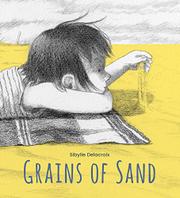
Grains of Sand, by Sibylle Delacroix, (Apr. 2018, OwlKids Books), $16.95, ISBN: 9781771472050
Recommended for readers 4-7

A young girl and her brother come back home after a family vacation; her shoes are filled with sand. What to do with all of it? Should they plant a field of umbrellas to wave at the sun? How about a forest of windmills, or a castle fort? The possibilities are as endless as a child’s wish for the summer to stay. As the girl falls asleep in her father’s arms, she extracts a promise that they’ll return for more sand, next year. This sweet love letter to summer and family uses grainy gray and white artwork, with splashes of yellow and blue, and will enchant young readers and make us adults smile and remember our own summer vacations. You’ll feel the sand run through your fingers and smell the ocean as you turn each page. It’s the perfect way to greet a summer full of possibilities. Originally published in 2017 in French, this English translation of Grains of Sand has a starred review from Kirkus.


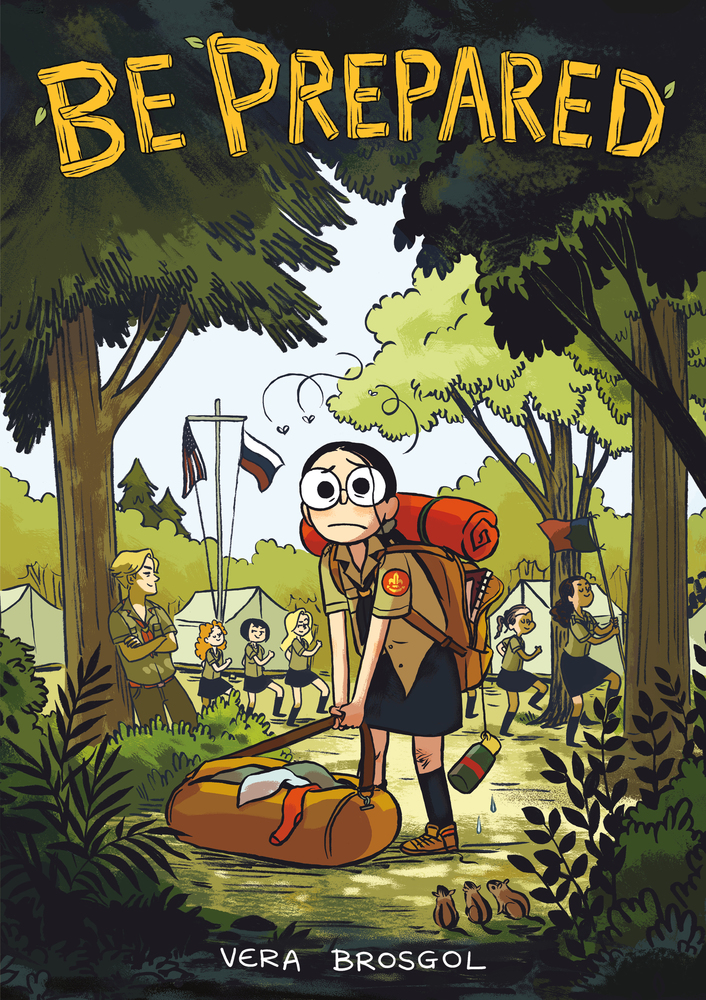
Be Prepared, by Vera Brosgol, (April 2018, First Second), $12.99, ISBN: 9781626724457
Recommended for readers 10-14

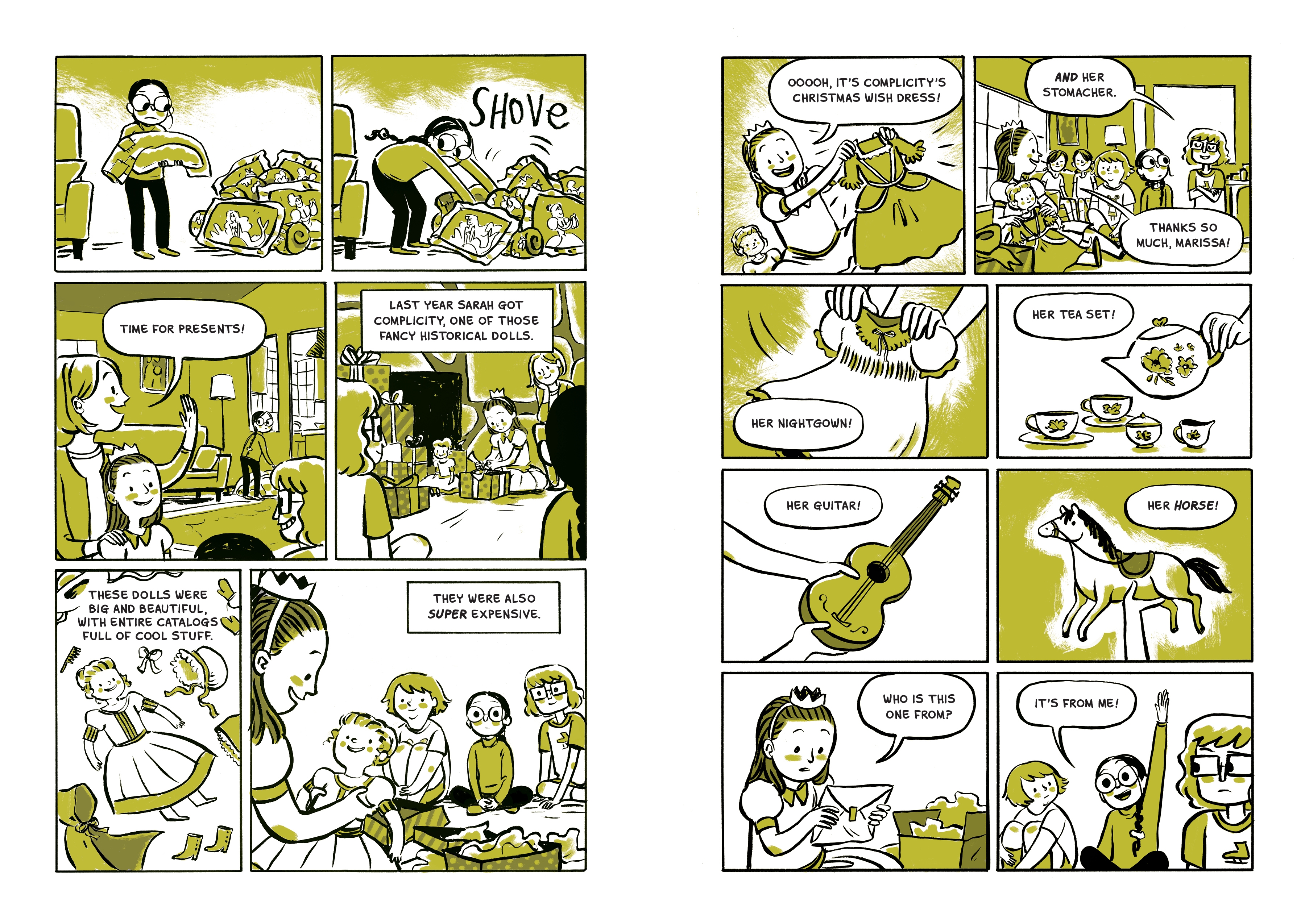
A semi-autobiographical graphic novel about author/illustrator Vera Brosgol’s life, Be Prepared tells the story of Vera, a girl who desperately wants to fit in, but she doesn’t have the money that her fancier suburban friends have, and her Russian household doesn’t quite match her schoolmates’ WASP-y upbringing. When the girls start talking about the lavish summer camps they’re heading to for the summer, Vera does some research and finds an option even her single mom can afford: a Russian summer camp.  How can Mom say no? She’ll be able to make friends and learn more about her Russian heritage. Mom gives in, and Vera and her brother are off to camp – but it’s nothing like Vera expects. She’s got history lessons and tests?! Awful outhouses? And mean girls in Russian camp, too?! This hilarious look back at summer camp is great for tweens and young teens who know just what it feels like not to fit in. I really enjoy Vera Brosgol’s cartoon art, especially those giant, expressive eyes that communicate volumes. Vera Brosgol’s picture book, Leave Me Alone! is a Caledecott Honor book and her graphic novel Anya’s Ghost is a Cybils, Harvey, and Eisner Award winner. See more about her books and artwork at her website.

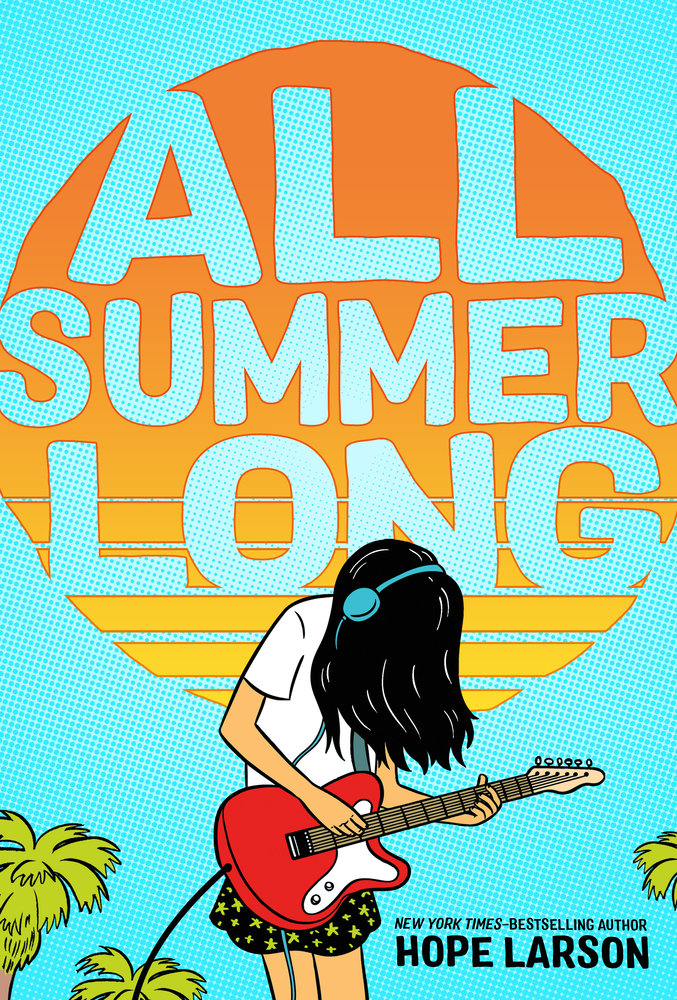
All Summer Long, by Hope Larson, (May 2018, First Second), $12.99, ISBN: 9780374310714
Recommended for readers 10-13

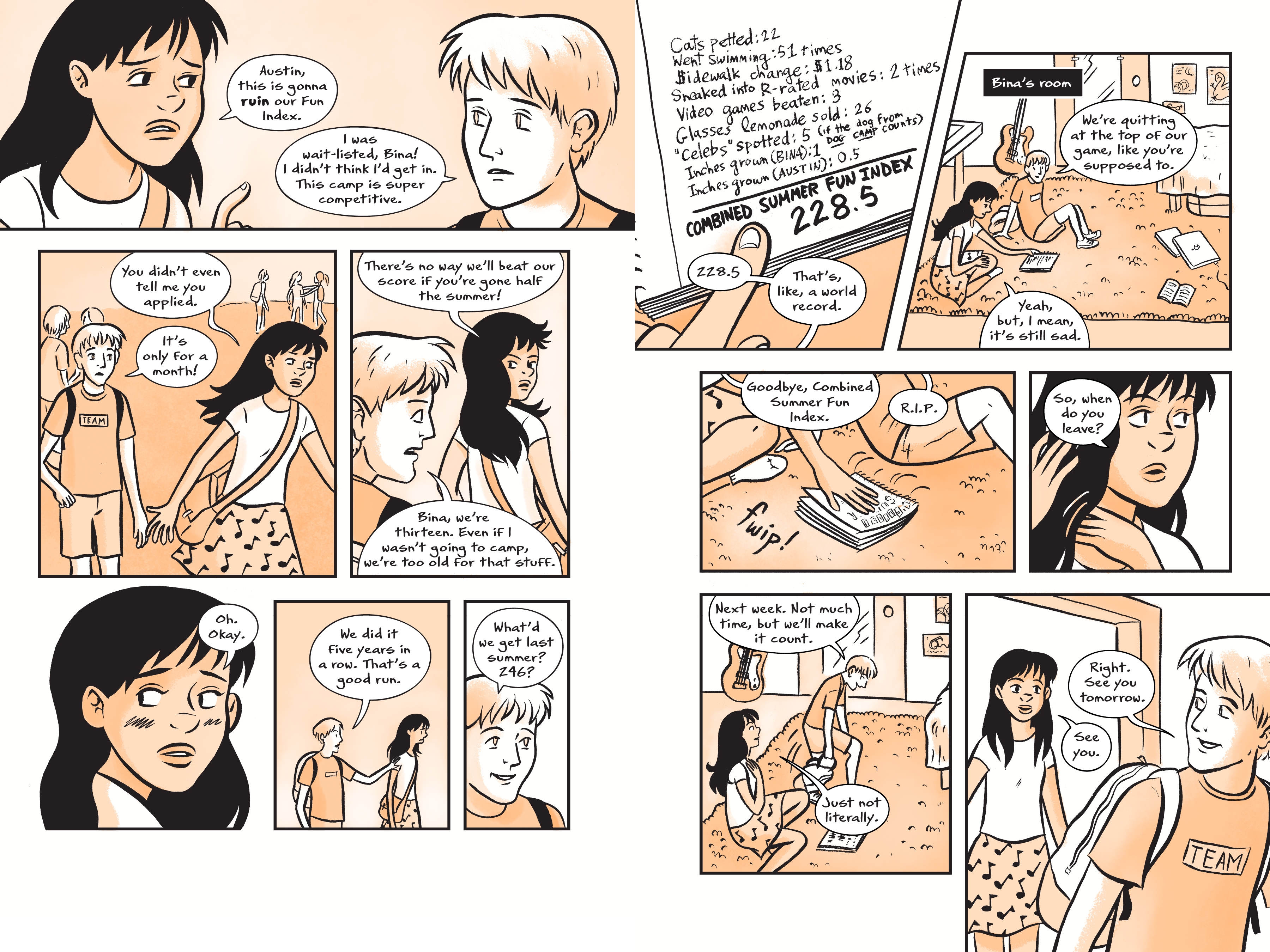
Thirteen-year-old Bina is not looking forward to this summer. Not only is her best friend, Austin, heading off to soccer camp this summer, but he doesn’t even seem interested in keeping up their Summer Fun Index anymore! Bina consoles herself by getting lost in music and finding an unlikely friendship with Austin’s sister, who has similar taste. When Austin comes home, he’s acting more distant and weirder than ever. Can Bina and Austin ever get their friendship back on an even keel? This great graphic novel will resonate with tweens who are navigating their own growing pains and the evolution so many friendships go through in that summer space between middle and high school. It’s funny and touching, loaded with understanding. An A+ summer read. Hope Larson is an Eisner Award-winning comic and graphic novel artist whose books include Chiggers (2008), Goldie Vance (ongoing), and Compass South (2016). Her 2012 adaptation of A Wrinkle in Time earned her a second Eisner.

Posted in picture books, Preschool Reads

March picture book roundup

There are some adorable picture books publishing in March and April! Let’s take a look at some – there are some great storytime reads to be found!

A Fire Truck for Chuck, by Annika Dunklee/Illustrated by Cathon,
(March 2018, OwlKids), $16.95, ISBN: 9781771472852
Recommended for readers 3-6

A little boy named Chuck visits a yard sale with his mom, where he sees it: a fire truck! And it’s only a buck! What luck! Mom buys Chuck the truck, who proceeds to play with it everywhere. Including the mud. Yuck! Chuck is afraid his fire truck is lost forever, but joyfully finds out otherwise. Thanks, Mom! This adorable story of a boy and his truck is perfect for kids who love their vehicle stories – and there are many! You don’t need to be a car and truck fan to love this story, too – toddlers and preschoolers will all empathize and understand the love between a kid and his or her favorite toy. While not exactly a rhyming story, A Fire Truck for Chuck uses the easily rhyming word to weave humor and fun into the story. Cartoony illustrations are bold and bright and will get kids’ attention.


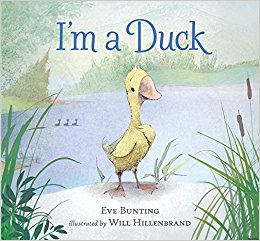
I’m a Duck, by Eve Bunting/Illustrated by Will Hillenbrand,
(March 2018, Candlewick Press), $15.99, ISBN: 978-0-7636-8032-9
Recommended for readers 3-6
This adorable rhyming tale about overcoming fears is especially great for pre-K 3 and 4-year-olds. A little duck recounts the tale of falling into the lake as an egg; saved by his mother, he’s grown up too scared to go swimming, “…and that is bad. A landlocked duck is very sad”. With some encouragement from family and friends, and a little bit of practice in safe, shallow puddle, little Duck is ready to face his fears – and succeeds! I’m a Duck illustrates the importance of encouragement and positive reinforcement in addition to the power of facing one’s fears (and the emphasis on safety is a relief for caregivers). Mixed media illustrations give a snuggly, cuddly feel to the animals in the story. I love Eve Bunting’s books, and am thrilled to add this one to my shelves.

George is a happy old hound dog who just wants a nap. Farmer Fritz, his human, heads off to a retirement cabana and leaves George in charge: and that means helping the new family navigate life on the farm! Poor George; these folks are hapless, which means George is herding cows, finding lost siblings, and generally saving the day. Not only can he not get his nap in, he can’t get these folks to figure out his name, which goes through several name changes throughout the story. Full-panel artwork alternates with graphic novel-like panels to provide a fun romp. Short, concise sentences and farm animal shenanigans make this a fun read-aloud choice. Ask the kids what they’d like to call George – or how he could finally get his new family to figure out his name! A fun story for animal fans.
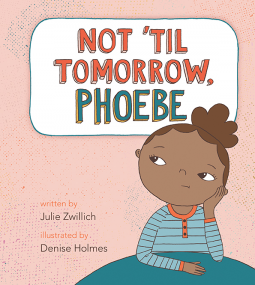
Not ‘Til Tomorrow, Phoebe, by Julie Zwillich,
(March 2018, OwlKids), $16.95, ISBN: 9781771471725
Recommended for readers 4-7
The second book in the Phoebe series (the first, Phoebe Sounds It Out, was published in March 2017) introduces kids to the concepts of yesterday, today, and tomorrow, and just as importantly, patience. Phoebe’s day is full of “tomorrows”: Mama will make her pancakes tomorrow; she’ll get ice cream after her haircut tomorrow; musicians will visit her class – you guessed it – tomorrow. Frustrated, Phoebe turns to her grandmother, who bakes cookies and teaches Phoebe the best way to turn today into tomorrow: get a good night’s sleep. Kids will understand Phoebe’s frustration, for sure; you can even introduce the story by asking kids, “Who’s tired of hearing about all the good things that will happen TOMORROW?” As with Phoebe Sounds It Out, the illustrations are bold and expressive, with soothing colors to put kids in the mind to listen and learn. There’s a lovely relationship between grandparent and grandchild here. Phoebe is a child of color.
Posted in Non-Fiction, Non-Fiction, picture books

The Boo-Boos That Changed the World: An accidental invention!

Kids love Band-Aids, right? My kids have all come to me, asking for a fistful of Band-Aids for some nearly invisible wound. I remember covering my own teddy bears with Band-Aids when I played with my doctor kit. Working around books and paper as much as I do, I can tell you that there have been days where I’m walking around with two or three of the suckers on various fingers, especially when I’m doing program prep and put literal blood, sweat, and tears into a project I’m working on for the kids. Whether they’re the original plain, or decorated with Transformers, Band-Aids are a great example of an invention that fills a need and became so much more – so how did this happen?

The Boo-Boos That Changed the World: A True Story About an Accidental Invention (Really!),
by Barry Wittenstein/Illustrated by Chris Hsu,
(Feb. 2018, Charlesbridge), $16.99, ISBN: 978-1-58089-745-7

Recommended for readers 6-10

In the 1920s, a cotton buyer for Johnson & Johnson named Earle Dickson married Josephine, settled in New Brunswick, New Jersey, and started their lives together. But Josephine was a bit accident-prone; she’d cut herself while cooking, bumped and bruised herself going about her daily business, you get the drift. (C’mon, though: who hasn’t grated knuckles, fingernails, and the occasional fingertip on those savage cheese graters?) Poor Josephine was going through dishrags at an astonishing rate, and Earle, being the loving husband he was, started looking for solutions. He took a long piece of adhesive tape and stuck sterile gauze to them every few inches: voila! The Band-Aid prototype was born! The bandages evolved for easier and quicker application and were made easier to apply and reached worldwide usage, going overseas during World War II to the soldiers fighting in Europe, even as kids were testing their limits with scratches and cuts at home. The End. (Really.)

I enjoy a good nonfiction book I can give to younger readers; I’ve had big success with everyday inventions like hot chocolate and earmuffs, thanks to Easy Readers on the topics, and Boo-Boos is a great addition to younger nonfiction collections. Big enough to spotlight the mixed media and Photoshop artwork, all of which is sepia-toned to give a real vintage-y feel to this story. I love the Band-Aid endpapers that bring you in and escort you out of the story, and the sweet love story at the heart of this invention story is just adorable. I love the kid-like narration, which starts and stops with each major moment: “The End. Actually, no, wait…” It’s like listening to my own 5 year-old, or any of my library kiddos, describing a movie, big happening at school, or family event. There’s an author’s note, Earle Dickson time line, a timeline of medical inventions from the 1920s and 1930s, and a list of further resources for anyone who wants to learn more.

The Boo-Boos That Changed the World is good reading, and just good fun. Hand out some Band-Aids (licensed characters, please, we’re not cruel) at a storytime, or raffle off a box of them for a great reader report! There’s a downloadable curriculum guide on the way, and you can listen to a Charlesbridge podcast interview with author Barry Wittenstein right here. The book has a starred review from Kirkus.

Giveaway!

Want a shot at your own copy of Boo-Boos? Enter this Rafflecopter giveaway! (US addresses only, please.)
Author Barry Wittenstein has always been involved with writing, from contributing to his high school and college newspapers, to writing and performing poetry on stage in San Francisco, songwriting, sports writing, and now picture books. He has worked at CBS Records, CBS News, and was a web editor and writer for Major League Baseball. He is now an elementary-school substitute teacher and children’s author.

Barry particularly likes nonfiction, and profiling mostly unknown people and events whose stories have never been told in children’s literature. He is the author of Waiting for Pumpsie and The Boo-Boos That Changed the World. He lives in New York City. To learn more, visit his website: https://onedogwoof.com/ or on Twitter: @bwittbooks


Praise for THE BOO-BOOS THAT CHANGED THE WORLD

★”Appealingly designed and illustrated, an engaging, fun story about the inspiration and inventor of that essential staple of home first aid.” — Kirkus Reviews (starred review)

Posted in picture books, Preschool Reads

Valentine’s Day Reading: Valensteins

Valensteins, by Ethan Long, (Dec. 2017, Bloomsbury USA), $16.99, ISBN: 9781619634336

Recommended for readers 4-7

The latest book starring Ethan Long’s Fright Club friends sees Fran – Frankenstein, to you – intently working on something. The rest of the gang has to find out what’s going on, naturally, and when Fran’s secret gets out – he’s working on a valentine! The mere thought of having a crush gives the rest of the group the heebie jeebies, so Fran heads off to get some alone time… and ends up having a sweet moonlight meeting with his Valentine.

How adorable is this book? It’s a sweet little Valentine’s Day story that talks about crushes, with all the perfect kid-like reactions: the heart looks like a bat, a pair of fangs, or – my favorite – a little butt – to the other kids, and when the Easter Bunny regales the group about all the mushy-smushy details about love, they shriek in terror. If you’ve ever been around kids giggling and squealing over kissing and crushes, you know what I’m talking about. Fran’s crush’s reaction to her valentine is adorable and sweet, and Ethan Long sums up a crush perfectly with the sentence, “It’s about something you feel in your real heart, even if it does feel a little funny sometimes.”

The graphite pencil artwork provides a nice, classic monster-movie base that the digital coloring takes to and gives a classic monster movie sort of feeling to the whole story. The cover font, with its monster movie marquee font and hot pink drop shadow, is eye-catching. I always enjoy Ethan Long’s books; this one is an adorable add to picture book collections and makes for a sweet Valentine’s Day read-aloud.

Posted in Early Reader, Fiction, Non-Fiction, picture books

Science for Kindergarteners!

I’m always looking for ways to get more science in my kids’ days: my QBH Kids and my own Kindergartener alike. I’ve had some great successes and some that fell a little flat. At my previous library, I had a phenomenal early learning assistant who helped create amazing Science Storytimes, using popular storybooks to demonstrate simple science concepts for little ones: using Ellen Stoll Walsh’s Balancing Act to teach balance, while showing them a simple balance board that kids were invited to place small objects on and discover what balanced, and what tipped the sides.

I also look to fellow librarian and teacher bloggers for hints. Pinterest is a great resources, as is Education.com and Teachers Pay Teachers. Science In Storytime is one of my more recent go-tos, with loads a great book and activity ideas, and The Show Me Librarian has some fantastic programming for Pre-K and elementary programs.
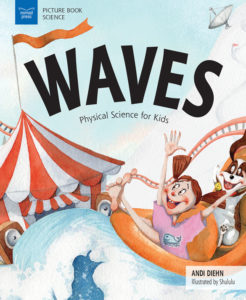
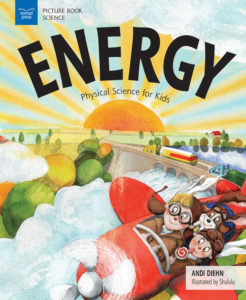
I’ve just received some new books from Nomad Press’ Picture Book Science series, too. These are a lot of fun: color artwork on every page, a fun poem to kick off each book, and my favorite part: an explanation of the scientific term, with all the uses of the term. Take, for instance, the book Waves: it starts off with the simplest interpretation of the word; a way to say hello. The book goes on to include ocean waves in that explanation, then the motion of a wave, and finally, a discussion of waves: energy, light, sound, all using questions to provoke thought, discussion, and understanding. Each book “Try This!” boxes, with simple activities kids can easily do at home or in the classroom (or during Science Storytime). Glossaries are handy to define terms that come up. There are currently four books in the Picture Book Science series: Waves, Forces, Matter, and Energy, all written by Andi Diehn and illustrated by Shululu; at $9.95 each, it’s a good and reasonable investment for our home, school, and public shelves. (Waves: 978-1-61930-635-6; Forces: 978-1-61930-638-7; Matter: 978-1-61930-644-8; Energy: 978-1-61930-641-7)


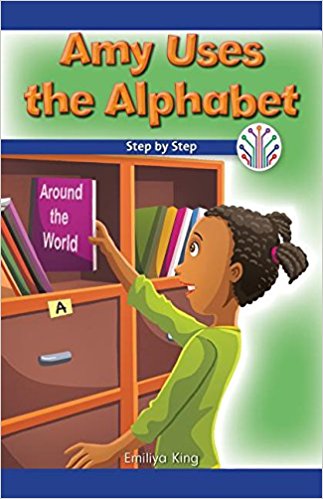
Rosen Classroom has a new series of easy readers called Computer Science for the Real World. They’re not attempting to teach Python or Scratch to the little ones (yet): these readers break the concepts needed to study computer science down for beginning readers. The three readers I received use everyday concepts – morning routines, alphabetizing books, building a birdhouse – to introduce activities that will help learn computer science; in this case, repetition and doing things step by step.
 

The books are leveled and contain instructional guides with include new vocabulary words, background knowledge for the specified concept, and text-dependent questions. There are independent and class activities to help kids learn through experience, and are available in English and Spanish. I really like these readers; there aren’t that many “just right books” (as my son’s school calls them) explaining science like this, and I’d love to have them in my library, but this is more of a Central library purchase, at least in my system, because you’re going to want to buy these by the collection; you can certainly buy them as single books, but having a whole set will better benefit your readers. The pricing is pretty reasonable, so I’ll be slipping this into an interoffice envelope bound for my collection development department tomorrow morning.
Posted in Intermediate, Non-Fiction, picture books

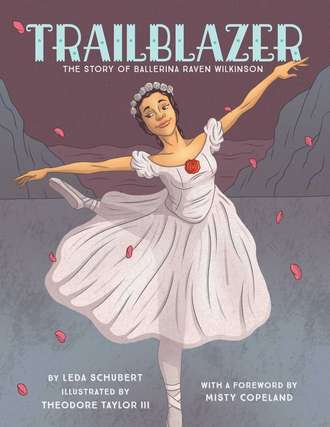
Black History Month: Trailblazer – The Story of Ballerina Raven Wilkinson

Trailblazer – The Story of Ballerina Raven Wilkinson, by Leda Schubert/Illustrated by Theodore Taylor III, (Jan. 2018, little bee books), $17.99, ISBN: 9781499805925

Recommended for ages 6-9

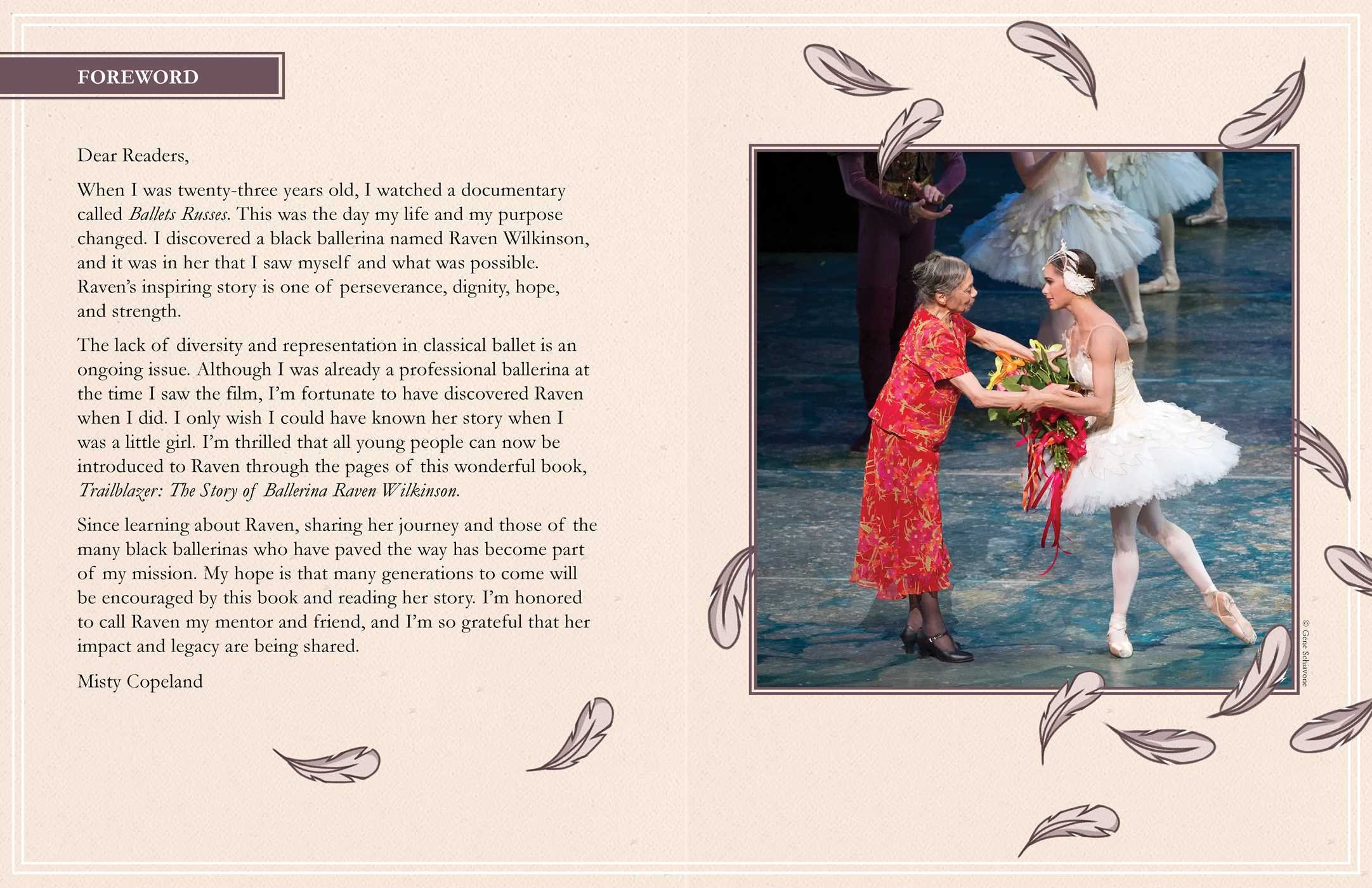
Born in New York City in 1935, Raven Wilkinson was a little girl who fell in love with ballet and grew up to become the first African American ballerina to tour with a major American touring troupe. She faced racism at every turn; she auditioned three times for the Ballet Russe de Monte Carlo before they finally accepted her into the touring company. When they toured the American South in the 1950s, she faced adversity from hotels who wouldn’t allow her to stay, fearing repercussions from the Ku Klux Klan; ignorance in the form of racists running onto the stage to protest the “nigra in the company”; and dining in hotels where families left their Klan sheets in a pile in the back while they ate dinner together. She persisted, even when she was passed over time and again for the starring role in Swan Lake, finally achieving the spot in 1967 with the Dutch National Ballet of Holland. She later joined the New York City Opera, dancing until she was 50. She’s inspired countless dancers, including Misty Copeland, who became the first African American principal dancer with the American Ballet Theater in 2015 AND danced in Swan Lake. Copeland has said of Raven Wilkinson, “She was a mentor in my life before I met her.”

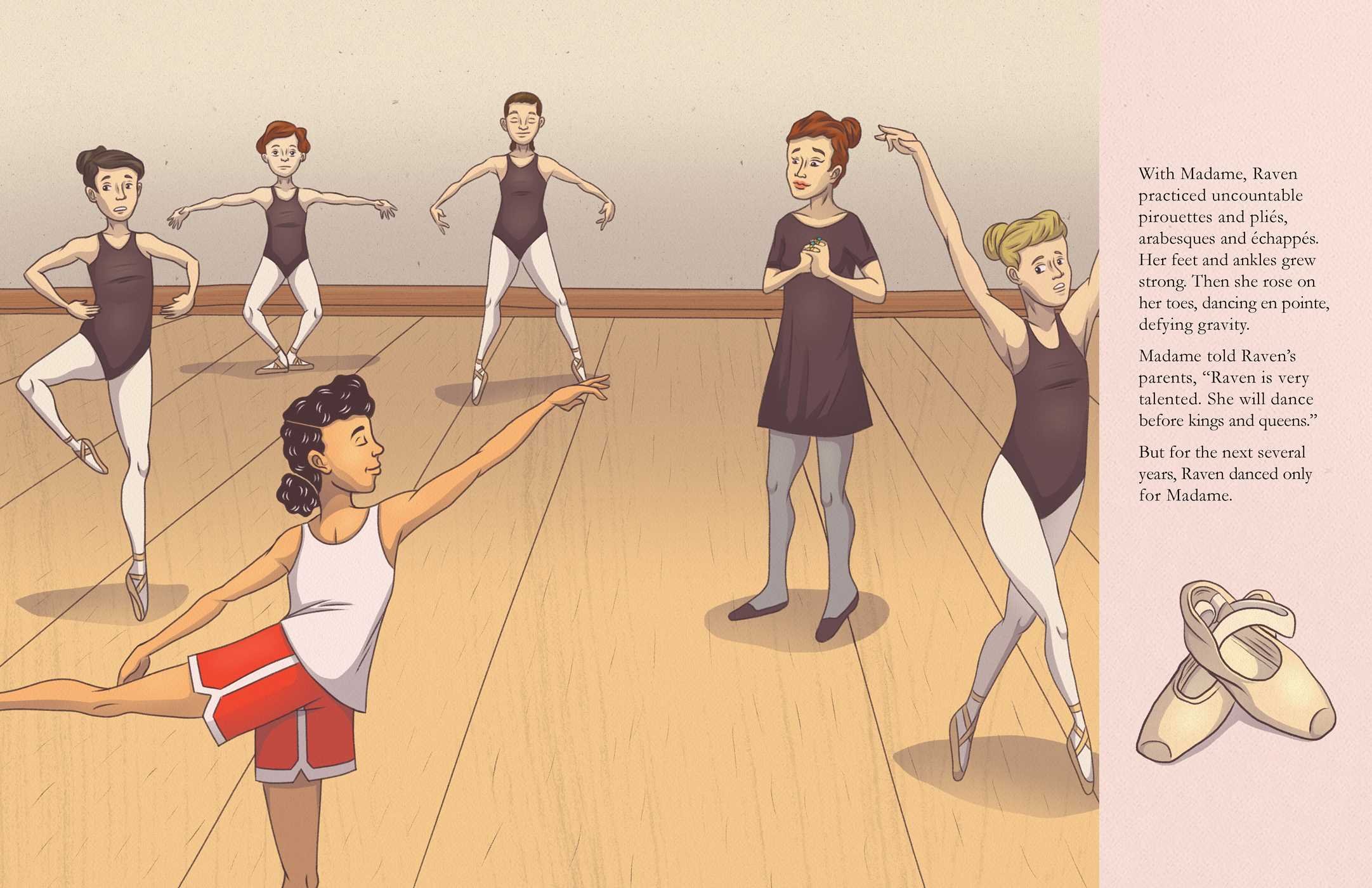
This is a lovely look at Raven Wilkinson’s life and career, especially relevant in our racially charged society – the more things change, the more things stay the same, it would sadly seem. When Raven eats dinner in a hotel surrounded by families who leave their Klan sheets strewn across seats while they eat, it’s horrifying because it normalizes hate. The indignity of Raven Wilkinson having to endure this indignity is like a gut punch to an older reader, and we need to use that nausea, that anger, that outright disgust, as a teaching opportunity to de-normalize this for younger readers. The illustrations are soft, almost comic book-like, while retaining a realistic quality, that will appeal to younger readers.

This is a beautifully illustrated picture book biography of an African American pioneer few people may be familiar with. Let’s change that. If you ask kids to name African American role models, you’ll likely hear the big names, but let’s make MORE big names. Let’s put books like Trailblazer in our displays, showing kids that there are pioneers everywhere. Neil Degrasse Tyson, Mae Jemison, and Katherine Johnson? Heck yes, get them in front of kids. STEM and the sciences are important. And let’s show them Trailblazer and Firebird; Radiant Child and When Marian Sang, DJ Kool Herc and the Creation of Hip Hop and Muddy to remind readers everywhere that there are pioneers in the arts, too. Children need to see inspiration everywhere, and that there are advocates in every walk of life.

This 2015 video features Raven Wilkinson and Misty Copeland when Dance/USA, the national association for professional dance, recognized Raven Wilkinson, the 2015 Dance/USA Trustees Awardee, at the Dance/USA Annual Conference in Miami on June 17, 2015.

Leda Schubert’s most recent picture book biography, Listen, was about singer and activist Pete Seeger. Her website offers more information about her books, including downloadable activity guides and discussion questions. Illustrator Theodore Taylor III is a Coretta Scott King John Steptoe New Talent Award Winner. See more of his artwork and learn about his other books at his website.

Posted in picture books, Preschool Reads

Explore the Starry Skies!

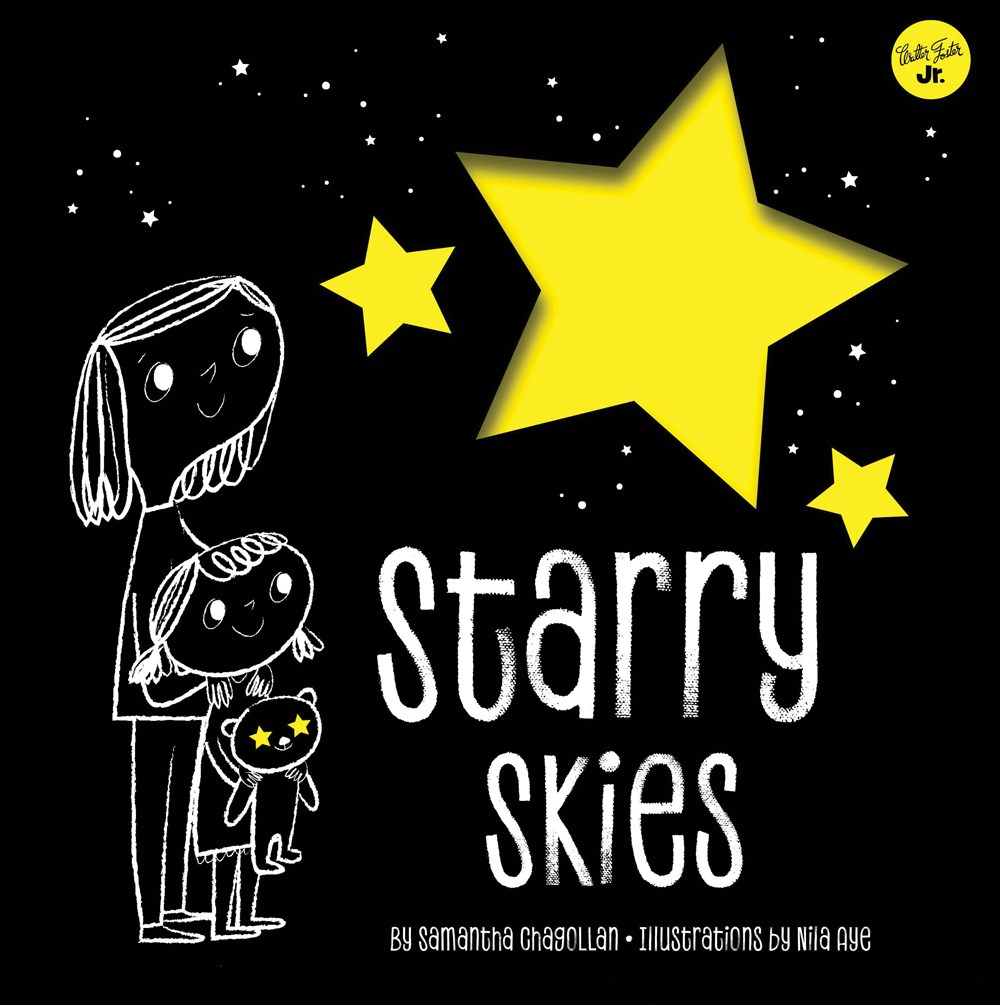
Starry Skies: Learn About the Constellations Above Us, by Samantha Chagollan/Illustrated by Nila Aye, (April 2018, Walter Foster Jr.), $16.95, ISBN: 9781633225091

Recommended for readers 4-6

I remember my first book on constellations. It’s still around today: Find the Constellations, by H.A. Rey (the Curious George author!); and it endures because it’s diligently updated (5 updates, including a 2017 version) and because constellations are fascinating. They’re pictures in the sky; they’re maps in the sky; they’re stories, waiting to be revealed. Starry Skies is a great companion – an introduction to constellations for the preschool set – to the well-loved Rey book.

Beginning with the sentence, “Every night, the sky is filled with stars that tell a thousand stories,” Starry Skies launches into spreads features a different individual starring in his or her own story: a boy battles a dragon (Draco); a cat sees herself as Leo, the lion; a girl gets ready to fly on Pegasus. Each spread features a black sky, dotted with stars, and a white line drawings of the dreamers and their constellations. It’s a preschool-friendly entry to stargazing, astronomy, and mythology. Readers enjoy 14 constellations in all, plus a star map of the for the Spring/Summer and Fall/Winter seasons.


Posted in Middle School, picture books, Preschool Reads

Just Like Brothers teaches valuable lessons

Just Like Brothers, by Elizabeth Baguley/Illustrated by Aurélie Blanz, (March 2018, Barefoot Books), $16.99, ISBN: 9781782853459

Recommended for ages 3-7

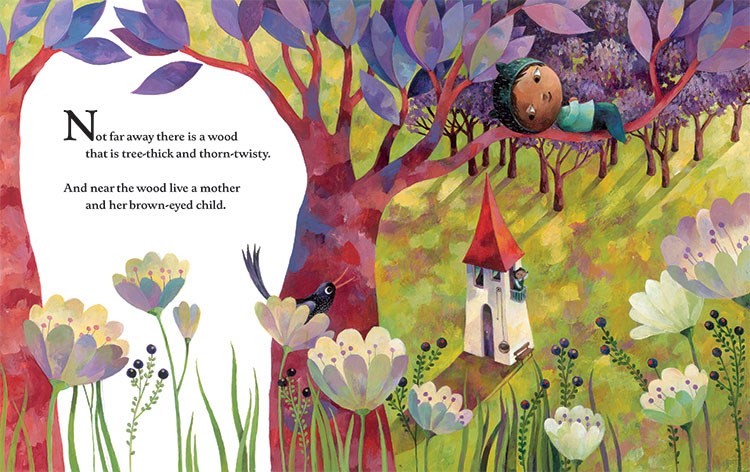
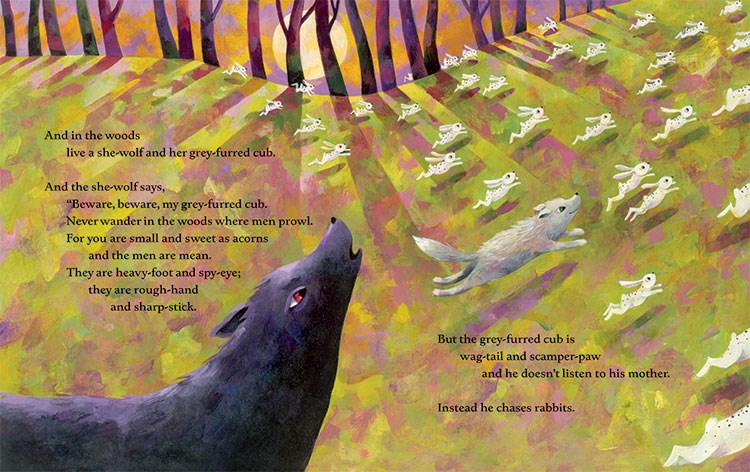
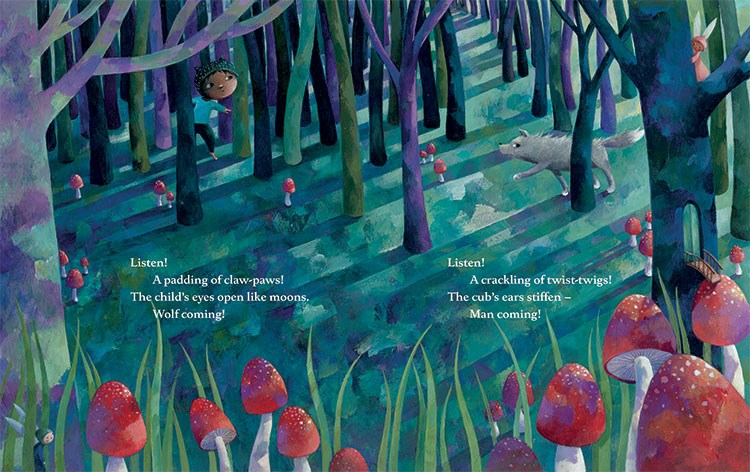
A young boy and a young wolf cub are each warned by their mothers. The boy’s mother warns of the wolves; the wolf’s mother, of men. The children listen, then go off and play, as children do. When each gets lost in the forest and come upon the other, their first reaction is fear; eventually, though, they discover that their similarities far outweigh their differences. And their mothers discover that they have a lot to learn from their children.

Told like a modern-day fable, Just Like Brothers teaches readers about the problems formed by prejudice and baseless judgement; it also teaches the value of empathy and trust. The innocence of children, both here and in real life, has no place for prejudice; it’s passed on at an early age. It’s a call to us as caregivers to be careful not to let our own fears make us irrational in what we teach our kids. It’s the start of a conversation, with lyrical descriptions like, “rough-hand and sharp stick” to describe humans, and “wag-tail and scamper-paw” to describe the playful cub. This makes for a good read-aloud and discussion about friendship and trust.

Posted in Fiction, Intermediate, picture books, Realistic Fiction

Black History Month: As Fast as Words Could Fly

As Fast As Words Could Fly, by Pamela M. Tuck/Illustrated by Eric Velasquez, (Apr. 2013, Lee and Low), $18.95, ISBN: 9781600603488

Recommended for readers 6-10

I had to start my Black History Month reviews off with this gorgeous book by Pamela M. Tuck. As Fast As Words Could Fly is inspired by Ms. Tuck’s father, who – along with his brothers – integrated a North Carolina school, and by her grandfather, who was active in the Civil Rights movement. Mason Steele is a 14 year-old who helps his father’s civil rights group by writing letters for them, shining light on injustices. Mason’s father brings home a manual typewriter, transforming Mason’s life and letting his words fly across the pages. At the same time as Mason receives his typewriter, his father tells him and his brothers that they will integrate the local high school rather than continue busing to one twelve miles away. Integration is tough on Mason and his brothers: buses drive right by them and teachers and students alike make it known that the boys aren’t welcome there, but Mason endures and uses his typewriter to increase his skill and earn some money. He also uses his typewriter to make a change: he defies racism to keep his job at the local library and to represent his school in a typing contest. For Mason, the words on the paper speak loud and clear.

This was Pam Tuck’s first published story, which won the Lee & Low New Voices Winner. I was lucky enough to see her speak about her experience, and her family’s experience, at KidLitCon back in November, and I got my own copy of As Fast As Words Could Fly signed for my kiddo. Pam’s voice comes through so clearly in her story; I can hear her, even now, telling me about her grandfather and father’s story. I mentioned that I was a fan of her illustrator, Eric Velasquez, and she sat with me; as we went through the book together, she pointed out her favorite pieces of artwork. I mentioned that I loved Mr. Velasquez’s books, Grandma’s Records and Grandma’s Gift, and his talent for creating warm, loving family artwork, and she told me that the spread where Mason’s father tells his boys that they are going to a new school was perfectly recreated: she pointed out areas of her grandparents’ kitchen that she remembered, and said that Pa’s posture and hands were spot-on; the artist had given life to her grandfather.

As Fast As Words Could Fly is a strong story about a family during the Civil Rights movement, and it’s the story of a young man who was determined to make a change on his own terms. I love this story, and would love to see it on more bookshelves. Find a teacher’s guide and interviews on the Lee & Low website, and learn more about Pamela Tuck here. See more of award-winning illustrator Eric Velasquez’s artwork at his website.