Posted in Non-Fiction, picture books, Preschool Reads

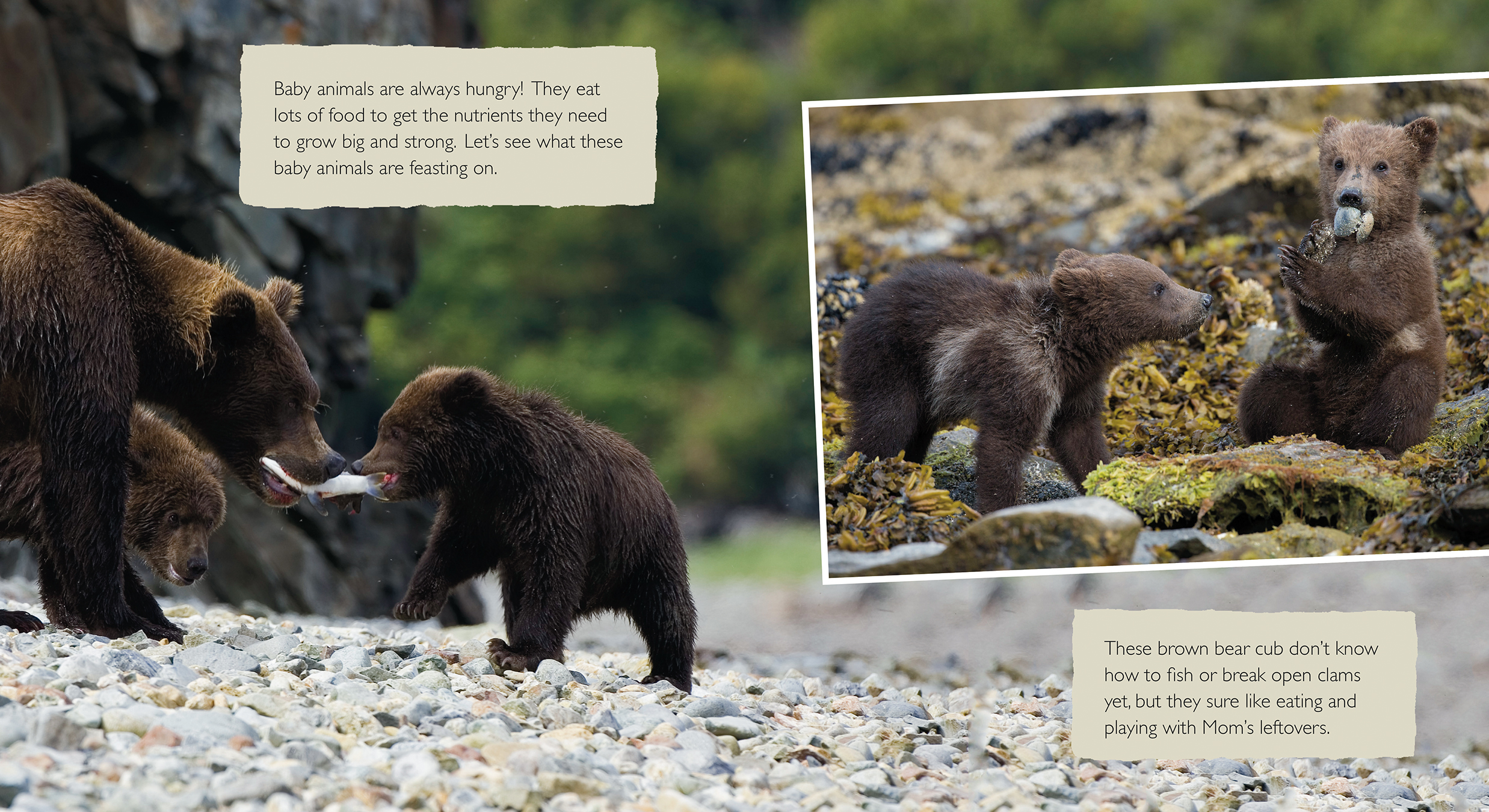
Baby Animals Eating is the cutest book you will read today.

Baby Animals Eating, by Suzi Eszterhas, (Aug. 2018, OwlKids), $14.95, ISBN: 9781771473170

Ages 3-7

Wildlife photographer Suzi Eszterhas’ third Baby Animals book, Baby Animals Eating, spotlights more adorable baby animals, and their parents, enjoying foods from eucalyptus leaves to mother’s milk. The pictures are vibrant, and the text teaches readers about animal behavior and differing food needs. The previous books, Baby Animals Moving and Baby Animals Playing, come together to form a great introduction to natural science for early learners, and can lead to a good discussion on nutrition. Ask kids what they like to eat; ask for similarities and differences (Bears like to eat clams and fish; do you? Koalas eat eucalyptus leaves; what leaves do you like to eat?) Notice the relationships between parents, siblings, and babies: does your grownup carry you? Do you and your siblings like to eat the same things? Back matter includes more information about Suzi Eszterhas and some behind-the-scenes photos.

This is a great book for storytime, and the crisp pictures allow for early and pre-readers to explore independently. A nice series to add to early nonfiction collections, and a great book to give little ones who love animals. (Go around the room and point out different toys and stuffed animals, and see how many kids can point out from the book.)

Keep Suzi Eszterhas’ webpage on your list of reference links. She’s got a fantastic amount of information on the page, including her books, newsletter, tours and workshops, and a gallery with some of the most incredible wild animal photos you’ve ever seen (perfect for animal reports!). There’s also a link to Girls Who Click, an organization founded by Eszterhaus, empowering young women to enter the field of nature photography and further global conservation efforts.

Posted in picture books, Preschool Reads

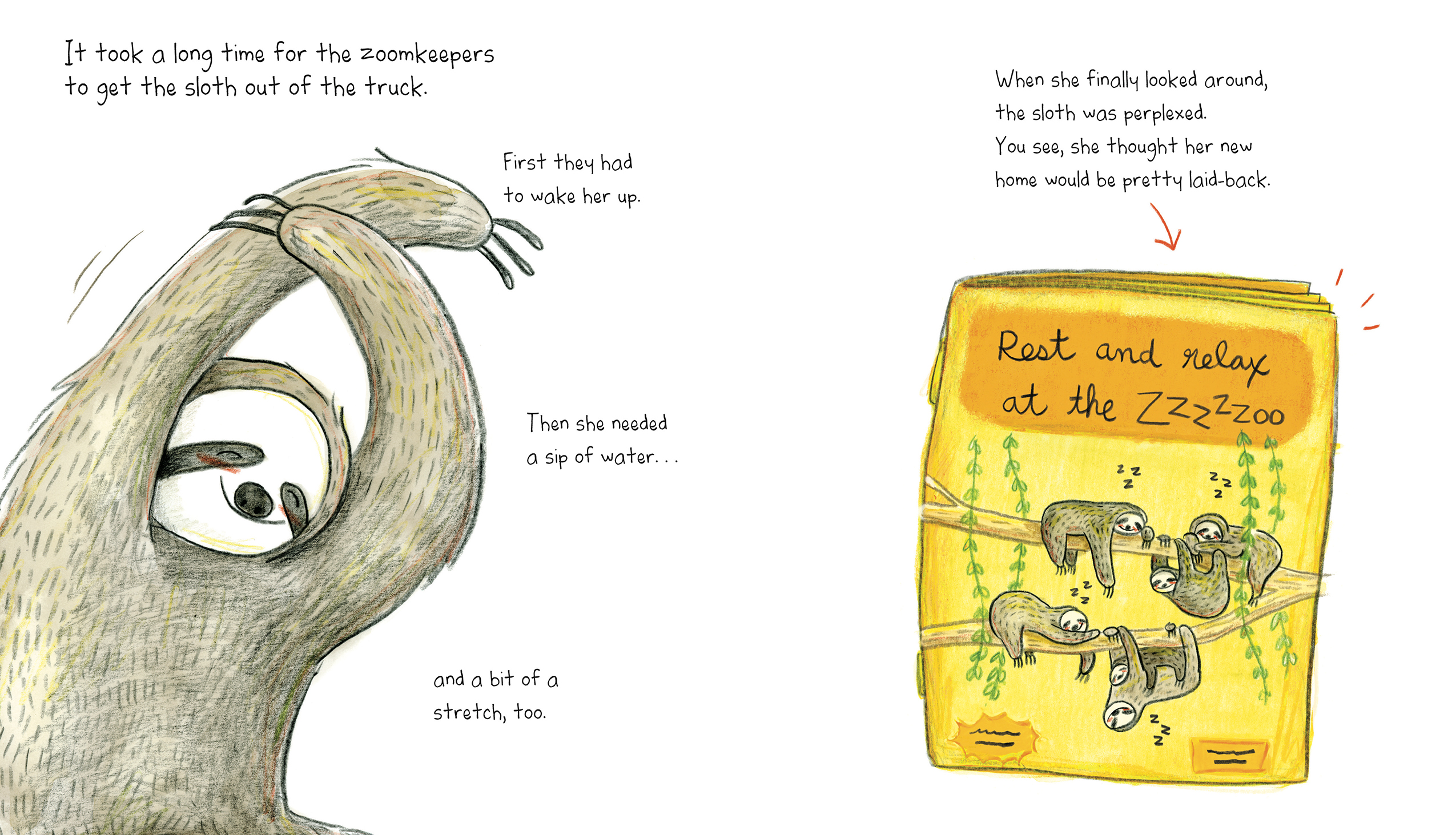
Take it Slow! Sloth at the Zoom shows you how

Sloth at the Zoom, by Helaine Becker/Illustrated by Orbie, (Aug. 2018, OwlKids), $17.95, ISBN: 9781771472494

Ages 3-7

Poor Sloth! She thought she was being dropped off at the Zzzzzoo, but something must have gone wrong with the paperwork: she’s been brought to the Zoom! It’s a very big difference, you see. At the Zzzzzoo, life moves along at a gentle pace; there’s time for naps in the sun, it’s relaxing, it’s all good. But at the Zoom? Whoosh! Zebras run by so fast, they leave their stripes in puddles! Parrots fly so fast, their tails draw rainbows across the sky! It’s VERY stressful, especially for poor Sloth, who wants to make friends, but no one has the time to give her. Finally, she meets Snail. Snail has time! Snail becomes Sloth’s friend, and the next thing you know, the Zoom is becoming a much nicer place to be. Sometimes, you just have to slow down and enjoy life, right?

It’s so nice to read a story that encourages life in the slow lane, isn’t it? I feel like we’re overscheduled and stressed out, our kids are overscheduled and stressed out, everyone’s got extracurricular activities, work, school, and deadlines seem to pop up everywhere, like neon signs. Kids are racing around like zebras, leaving their stripes behind, and so are we. Seeing two friends meet in the middle of this chaotic atmosphere, and bond over their shared moment of slowing down, gives hope to the rest of us, doesn’t it? Sloth at the Zoom shows readers that it’s in our hands to just stop, just slow down, and to discover the wonderful things that we often miss when we’re running by them. Slow living is contagious, too – if you slow down, someone else may, too. And that’s a good thing.

Sloth at the Zoom celebrates the Slow Living Movement, a lifestyle that puts the importance on mindfulness and embracing the slower aspects of life. There are blogs and websites dedicated to the movement, and there are books for adults and kids alike. One of my current favorites is The Slowest Book Ever, by April Pulley Sayre, which celebrates the science of slow in our world. But to start, all you really need to do is just take a deep breath and slow down.

Cuddle up with your little ones and enjoy a nice, slow read.

Posted in Fiction, Intermediate, picture books, Preschool Reads

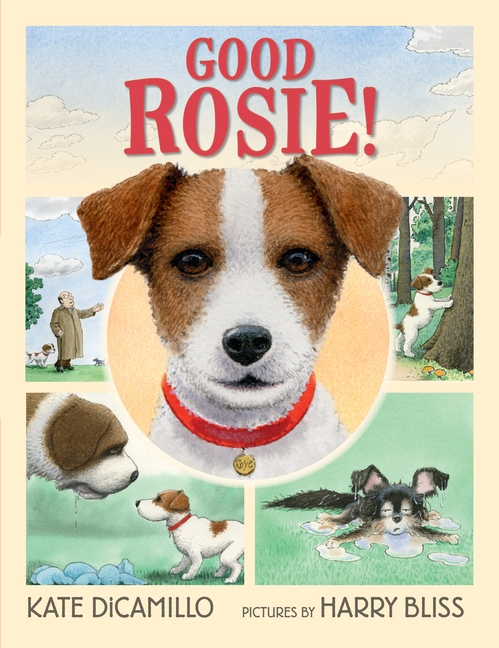
Good Rosie!: New Kate DiCamillo and Harry Bliss!

Good Rosie!, by Kate DiCamillo/Illustrated by Harry Bliss, (Sept. 2018, Candlewick Press), $16.99, ISBN: 9780763689797

Ages 4-7

Rosie is a sweet-faced Jack Russell terrier who lives with her human friend, George. She and George have a quiet life together, and Rosie feels lonely as the two go through their daily routine. George decides to shake things up a bit, and brings Rosie to a dog park, but Rosie’s a bit nervous, overwhelmed by all the new, strange dogs there. When a big St. Bernard named Maurice lumbers over to her with his stuffed bunny, Rosie is immediately on guard. How can Rosie make some new friends?

Kate DiCamillo has the gift of words, and Harry Bliss creates hilarious and poignant moments in this comic panel-styled story about making new friends. Rosie looks into her water bowl and sees her reflection, which she thinks is another dog; when she barks at the dog, she feels lonely, because “the other dog never answers”. Later, on her walk, she barks at a dog-shaped cloud; its lack of response makes Rosie “feel lonely in an empty-silver-bowl sort of way”. It’s just wonderful writing that speaks directly to the reader, eliciting that same disappointed, lonely feeling that Rosie experiences. And then, there are moments when the art and words come together to produce moments of sheer delight, as when Maurice introduces himself to Rosie: “‘My name is, uh, Maurice,’ says a very big dog. ‘And I have a bunny.'” The words are adorable, and the size difference between Maurice and Rosie make the full-page panel come to life.

The story addresses social skills when new friends come together: Rosie is lonely, but overwhelmed when thrust into a new social setting; Maurice needs a little bit of help with his social skills (and understanding his size in relation to other dogs), and Fifi, another small dog with a sparkly collar, is excitable and jumpy, which confuses Rosie and Maurice, who don’t immediately know how to react to her. With a little help from the grownups, and some get-to-know-you time between the pups, the day at the park ends with a group of new friends who look forward to playing together again.

This is a great back to school story for kids, especially for new Pre-K or Kindergarteners, who are starting school for the first time. I love this sweet story, and so will your readers (and you). Know a kid who’s starting school, or starting a new school, soon? Cuddle up with them and let them know that if Rosie can do it, so can they. Good Rosie! has starred reviews from Publisher’s Weekly, School Library Journal, and Kirkus.

Posted in picture books, Preschool Reads

Liven up storytime with Play This Book and Pet This Book!

I love using interactive books in my storytimes. They get the kids involved, engage their minds and their bodies, and they’re just a load of fun. I’ve just received two new interactive books from Bloomsbury that will be big fun for pre-k and Kindergarten readers, and that can easily be applied to lessons incorporating music time or a sensory storytime. Let’s read on.


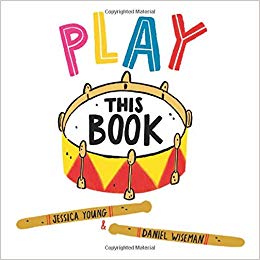
Play This Book!, by Jessica Young/Illustrated by Daniel Wiseman,
(May 2018, Bloomsbury USA), $15.99, ISBN: 9781681195063
Ages 4-7

A group of friends is getting ready to put on a show, but they need some extra hands to play in their band! This rhyming story invites kids to try out their musical skills on each spread: strum a guitar, bang on a drum, tickle the ivories on a piano, or shake some maracas! Every instrument has its own sound in bold, expressive fonts. Pass the book around and let your readers take a turn on the instruments in the book, or lead a band of your own with toy instruments! A diverse group of children march across the stage playing their song, and invite readers to make their own music: take the book up on that offer, and lead your little band on a march around the room. It’s absolute fun to read, and the art is big and eye-catching. Endpapers get into the fun, with a stage bearing a “Welcome” banner in front, and a custodian cleaning up afterward.


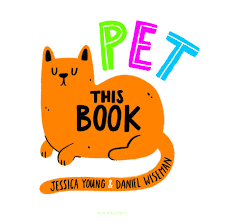
Pet This Book!, by Jessica Young/Illustrated by Daniel Wiseman,
(May 2018, Bloomsbury USA), $15.99, ISBN: 9781681195070
Ages 4-7

Bust out the stuffed animals and get cuddly for this fun book about the senses. A child of color (reminiscent of Doc McStuffins) invites readers right into her world, where she’s getting ready to take care of pets. Readers can pet a cat, scrub a pup in a tub, and feed a lizard a tasty treat. Each spread features a bright, boldly illustrated animal and a bold animal sounds. As with Play This Book, there’s time for a break, where kids can count to three and continue. There are no textures here for the kids to touch, but the book provides a perfect opportunity to ask kids what they think a cat, bird, or a lizard feels like. Have some textured toys available for kids to touch and explore! The rhyming text moves the book along at a fun pace, and a there’s good advice about the responsibility of caring for a pet built into the rhyme. A diverse group of kids line up with their animals to sound off. Endpapers open with a daytime scene on a farm, and close with the same group of animal friends sleeping, moon and stars in the sky.

Each book has digital art created with “Photoshop, custom brushes, and a lot of bright colors”, and kids will thoroughly enjoy it. Author Jessica Young has free, downloadable resources, including printable activity sheets for both Play This Book and Pet This Book, at her website, so make sure to visit.

These are big fun for storytimes bookshelves. Check them out.


Posted in picture books, Preschool Reads, Toddler Reads

Concept Fun: Big Box, Little Box… perfect for a cat box!

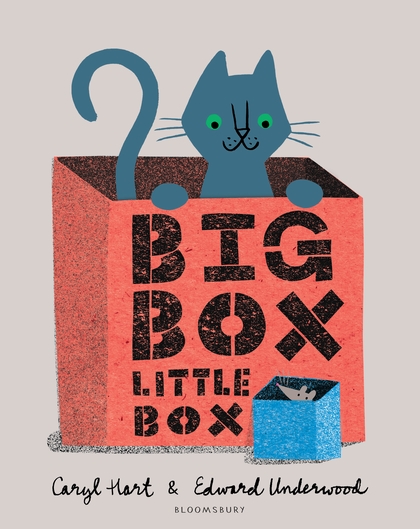
Big Box Little Box, by Caryl Hart/Illustrated by Edward Underwood, (July 2018, Bloomsbury USA), $17.99, ISBN: 9781681197869

Ages 2-6

What’s the best way to illustrate the many words to describe a box? Put a cat in the story! Big Box Little Box stars a curious cat who investigates all sorts of boxes: big and little boxes; brown and blue. The descriptive words take a fun turn when the cat stands on a box (cat box?), which immediately squashes under its weight (flat box), or when human hands designate “my box” versus “YOUR box”. As our inquisitive friend wanders through the boxes, it spies a hole in a box – and a mouse! The two run and play together, providing readers with some more fun words like “tickle”, “purr”, and “warm fur”. The endpapers show a cat and mouse romp through all sorts of boxes.

This book is a fun way to introduce adjectives to beginning readers, and ways to explore objects with younger readers. The pencil, ink, and computer-assisted collage work makes for fun, angular art, vividly colored and textured, almost inviting readers to feel the rough cardboard of the boxes under their fingertips. Lois Ehlert fans will find some similarities to the artwork, and the text is repetitive with occasional rhyme, inviting interaction.

Originally released in the UK, Big Box Little Box is a companion to Hart and Underwood’s upcoming One Shoe Two Shoes, and a fun addition to toddler and preschooler collections and concept bookshelves.

Posted in picture books, Preschool Reads

Book Birthday: Who Eats Orange?

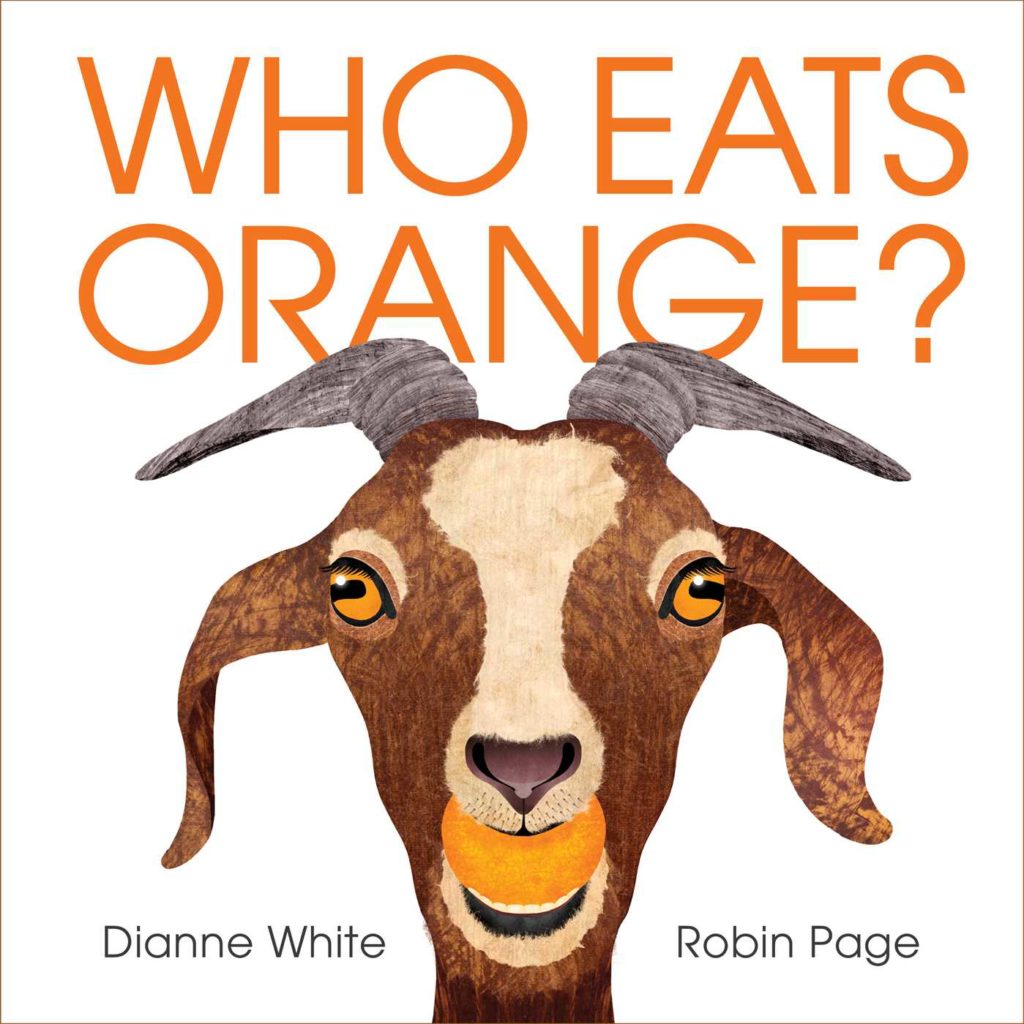
Who Eats Orange?, by Dianne White/Illustrated by Robin Page, (Aug. 2018, Simon & Schuster Kids), $17.99, ISBN: 9781534404083

Ages 3-6

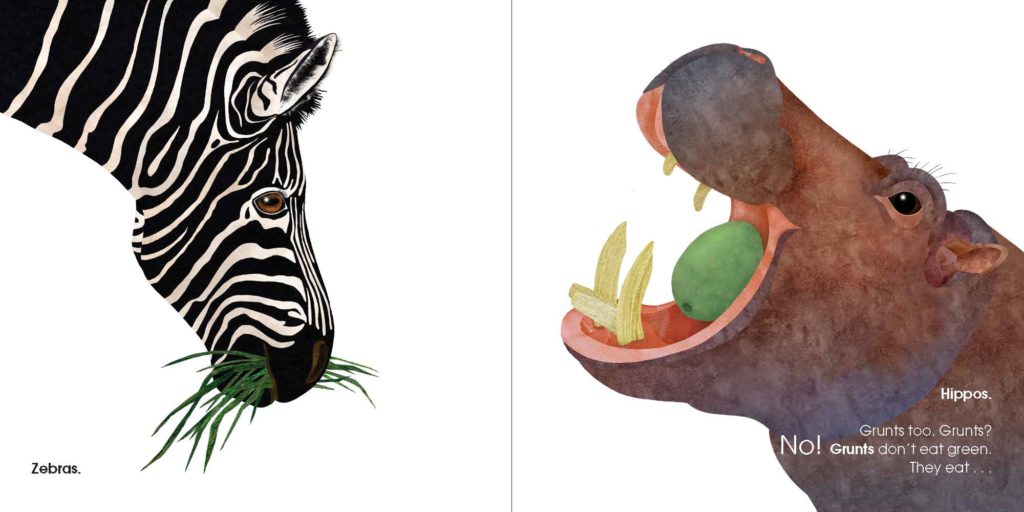
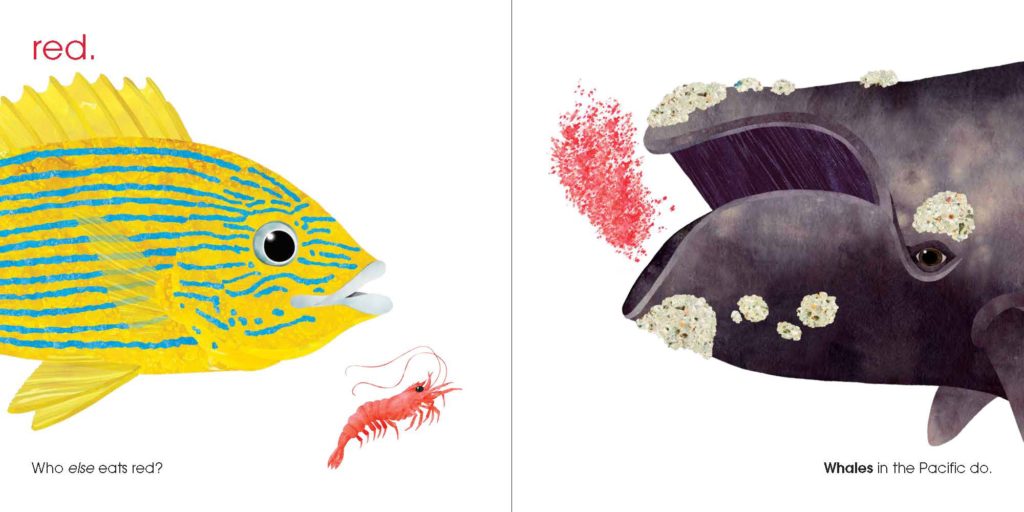
Need a fun, new concept book on your shelves? Who Eats Orange looks at the eating habits of animals from bunnies to bears. Four animals eat one color, and the fifth doesn’t – but eats a different color, which brings us into the next group of animals. There’s quite a bit of information, broken down into simple, easily understandable bites, to be found here: colors, animals and what they eat, and their habitats: “Who eats orange? Bunnies in their hutches do. / Chickens in the henhouse too. / Who else eats orange? Goats. / Pigs. Gorillas too. Gorillas? NO! The repetitive text pattern gets kids ready; they’ll learn quickly who doesn’t eat a chosen color, and join in with a hearty “NO!” when the time comes. The text brings things right back to kids, encouraging them to eat the rainbow, with a colorful spread of fruits and vegetables. The back matter organizes the animals, and their foods, by habitat (farm, Africa, ocean, forest, rainforest, tundra) and provides more information on animals and their culinary tastes.

The digital art is wonderful; reminiscent of one of my favorite realistic animal artists, Steve Jenkins. (Robin Page also dedicates the book to Steve Jenkins, which was pretty great to see.) The vivid artwork stand out against stark white backgrounds, inviting readers to imagine the roughness of a hippo or the bushy fur of a fox and marmot. The faces are gentle, with expressive eyes that will draw storytime fans right in. It’s such an interactive book, with opportunities to get the kids talking about animals, food, and color. There’s an activity kit available for download that comes with animals masks to cut out, a rainbow recipe, and writing activities.

I read Who Eats Orange, along with one of my old favorites, Who Hops?, to my 6-year-old. Who Hops? works in a similar manner, introducing different animals who hop, swim, crawl… and then one animal that obviously cannot! Anyway, we had big laughs, he pronounced Who Eats Orange “so much fun”, and laughed at me when I suggested he start eating the rainbow with me. Hey, I tried.

Who Eats Orange is way too much fun for toddlers and preschoolers! A fun add to concepts and animal collections, and a good gift book for rising preschoolers and kindergarteners.

Posted in picture books, Preschool Reads

Dexter Dino takes on show & tell! Plus, a giveaway!

He’s back! My favorite neurotic toy dinosaur is back in his second adventure!!

Sorry, Rex, it’s not you.


It’s… DEXTER DINO!

It’s Show and Tell, Dexter!, by Lindsay Ward, (Aug. 2018, Two Lions),
Ages 3-7


Dexter’s fully recovered from his experience in the pediatrician’s waiting room, and he and Jack are back together to take on a new adventure: SHOW AND TELL. But Dexter’s worried again… he wants to wow the class! Should he wear a costume? Learn an exciting new routine? OH NO! WHAT IF HE’S THE… BORING TOY? Dexter’s latest story takes on performance anxiety and worries about self-image. Thankfully, the omniscient reader is there to let Dexter know that being himself is the best way to go: and sure enough, the Dexter Dino chant makes him the most popular dino in the class and on the bus!

I have such love for this fun series and for author Lindsay Ward. Dexter is adorable, neurotic, and totally relatable. He worries about being cool enough to hang with his buddy, Jack; he worries about not being exciting enough to hold a kids’ attention, and he works through his anxiety for everyone to see, letting kids (ahem… and some adults) know that we’re not alone. By pointing out physical manifestations of what nerves can do to us: pit in the stomach, fidgety claws, awkward smiles, and all, Dexter lets readers know that we all get anxious about something, and that it’s okay. Being oneself is the best solution.

Dexter’s bright color and body postures make him awkward and lovable, and his empowering Dexter Dino chant gets an entire room up and stomping, making this PERFECT for storytimes. I tested this one out with a pre-k Kindergarten visit (they’d had a test run with Don’t Forget Dexter!), and they all jumped up and joined me for some chomping and stomping. I had a couple of kids let Dexter know it was okay, too: leave room for kid reactions when reading it out loud and watch empathy in action. My own 6-year-old was so excited to get the book in the mail, he had his own stomping party! Have a show and tell storytime, and encourage kids to talk about their cool things. Have some toys on hand for anyone who shows up empty-handed, and encourage some imagination by asking kids about what they like most about their toys and objects. Maybe you’ll get a new rhyme or two out of the experience, and don’t forget to have Dexter coloring sheets on hand!


Lindsay Ward is the author of the Dexter T. Rexter book Don’t Forget Dexter! Though she never got to bring an orange dinosaur to Show and Tell Day, she did once take all four albums of her sticker collection. She is also the author and illustrator of Brobarians, Henry Finds His Word, and When Blue Met Egg. Her book Please Bring Balloons was also made into a play.  Most days you can find Lindsay with her family, writing and sketching at her home in Peninsula, Ohio. Learn more about her at www.LindsayMWard.com or on Twitter: @lindsaymward.


Praise for It’s Show and Tell, Dexter!

“Ward’s gentle art features cut-paper forms with residual pencil outlines, providing an ad hoc quality to the spreads. Readers prone to anxiety over big events should be tickled by the idea that a toy has concerns too.” —Publishers Weekly

“Ward’s illustrations, made with printmaking ink, colored pencil, and cut paper, wonderfully capture Dexter’s every emotion and over-the-top ideas.” —Kirkus Reviews


One lucky winner will receive a copy of both Dexter T. Rexter books–Don’t Forget Dexter! and It’s Show and Tell, Dexter!, courtesy of Two Lions (U.S. addresses). Enter the Rafflecopter giveaway.

Posted in picture books, Preschool Reads

Fables and Fairy Tales from Henry Herz

I fell in love with author Henry Herz’s book, Mabel and the Queen of Dreams, back in 2016. It was a wonderful way to introduce some magic to bedtime, and a nod to The Bard himself. Mr. Herz has two more books coming out this September; one is a fun fable about a selfish squid, and the other, another nod to magic, this time, courtesy of a little girl named Alice.

How the Squid Got Two Long Arms, by Henry Herz/Illustrated by Luke Graber, (Sept. 2018, Pelican Publishing), $16.99, ISBN: 9781455623884

Ages 3-7

Once upon a time, a squid had a splendid silvery scarf knitted for him by his mother, but he was still cold. Rather than go home and bundle up, our little cephalopod decides to steal an octopus’ sweater and a fiddler crab’s mitten; when he tries to snatch an eel’s hat, though, he discovers that taking things without asking can only end one way: trouble! The eel grabbed one of the squid’s 10 arms, and the octopus and crab catch up to get hold of his other arm and get their clothes back! When all is said and done, the squid is still cold, and now he has two really long arms: and a sneaky fish sneaking up to steal his scarf! The straightforward story is a gentle way to reinforce that taking things that aren’t yours is wrong; a nice morality tale set in the friendly ocean. The artwork brings a dose of fun to the story, with wide-eyed marine life and exaggerated expressions (and an eel in a hunter’s cap is pretty fantastic). An author’s note provides a photo and a little bit of background on squid.

My little guy thoroughly enjoyed this story; he had a big-eyed laugh when the squid got his comeuppance, and pointed out all the animals we’d seen at the aquarium a couple of weeks before. It’s a nice add to your shelves, and a fun add to fables, stories about empathy, and books with marine life.  And here are some squid coloring sheets, to enhance the storytime!


Alice’s Magic Garden, by Henry Herz/Illustrated by Natalie Hoopes, (Sept. 2018, Familius), $16.99, ISBN: 9781641700320

Ages 5+

Alice in Wonderland fans, get ready: the subtitle here, “Before the rabbit hole”, lets you know what’s going on. Once upon a time, there was a young girl named Alice, who went to the dreariest school in all of England. While escaping her awful headmistress and cruel classmates, Alice happens upon a small, walled garden, and begins tending it, caring for a few of the inhabitants: a caterpillar and a lory bird; she even chases a smiling cat away from a rabbit. Her kindness is paid back at school, when her benefactors leave her tasty treats and take care of those bullies, telling Alice that they are friends “now and forever”. There are wonderful references to the classic tale throughout the story, and readers will fall in love with the magical realism of the garden. The artwork is colorful and calming, delightful for fairy tale fans, and the story itself is all about the power of paying it forward. This one is great storytime reading, and may nudge Mabel aside as my favorite Henry Herz book. Print out some Alice in Wonderland coloring sheets, have a mad tea party, and read this one to your littles.

Posted in picture books, Preschool Reads

Blog Tour and Giveaway: What If EVERYBODY Said That?

What If Everybody Said That?, by Ellen Javernick/Illustrated by Colleen Madden, (Aug. 2018, Two Lions), $14.99, ISBN: 9781503948952

Ages 4-7

A young girl learns that words can hurt in this companion book to author Ellen Javernick’s 2010 book, What If Everybody Did That?The girl tells boys they can’t play at the park with her; makes fun of her classmates’ artwork, and refuses to share her lunch with a hungry classmate, among other incidents, each prompting an adult to admonish, “What if EVERYBODY said that?” Reaction pages illustrate similar abrasive acts and the painful fallout, including hurt feelings and damaged self-esteem. After some introspection, the girl reaches out to a new neighbor, prompting the final sentence, with a different affect: “What if everybody said THAT?”

Ellen Javernick shows readers what would happen if everyone stopped being kind, resulting in hurt feelings and chaotic environments. She also creates a narrative that shows readers the power of words to hurt or to heal, and the difference just one voice can make. Each spread presents a different scenario, and allows readers to see both actions and consequences play out. The mixed media artwork provides a diverse group of children, and there are little hints within each spread to reinforce the bad feelings that stem from bad behavior: one girl sports a frowning flower on her sweater; broken hearts and astonished faces scrawled on a bench react to a hungry classmate.

What If Everybody Said That? is a great starting point for discussions on empathy, kindness, the power of words, and the consequences can that come from them. It’s a smart addition to your collections on feelings, emotions, and actions.


Ellen Javernick is the author of more than twenty books for children, including the Children’s Choice Book Award finalist The Birthday Pet, illustrated by Kevin O’Malley, and the bestselling picture book What If Everybody Did That?, illustrated by Colleen Madden. She has been an elementary school teacher for more than twenty years and currently teaches second grade. She lives in Loveland, Colorado.

Colleen Madden is the illustrator of numerous children’s books, including the picture book adaptation of All I Want for Christmas Is You by Mariah Carey and the bestselling picture book What If Everybody Did That? by Ellen Javernick. She lives in the Philadelphia area with her husband and two sons. To see more of her work, visit: http://www.mbartists.com/cgi-bin/iowa/artists.html?artist=77


Enter a Rafflecopter giveaway for a chance to win your own copy of WHAT IF EVERYBODY SAID THAT? (U.S. and Canada addresses only, please!)


Posted in Early Reader, Fiction, picture books

In First Laugh Welcome, Baby!, a family waits…

First Laugh Welcome, Baby!, by Rose Ann Tahe and Nancy Bo Flood/Illustrated by Jonathan Nelson, (Aug. 2018, Charlesbridge), $16.99, ISBN: 9781580897945

Ages 5-8

A Navajo family waits for baby’s first laugh. Who will be the first to hear it? Will nima-sami (grandmother) hear it, as she tucks Baby in for a nap? Will it be big sister (nadi), who cooks Baby a tasty meal? Maybe it will be nima (mama), who sits weaving while Baby rests in a papoose. Or will it be cheii (grandpa), who splashes Baby with water? Everyone in the family is waiting, kissing, tickling, hugging, and singing, as Baby squirms, yawns, frowns, until… suddenly… a smile! Let the First Laugh celebration begin!

First Laugh Welcome, Baby is a beautiful look at a Navajo tradition; the First Laugh Celebration is a child’s first formal welcome into a family and clans. The lyrical story is filled with Navajo words and glimpses of Navajo life, woven into a story about the joy of a baby’s first laugh and the celebration it brings to families and communities. Jonathan Nelson’s pencil, acrylic, and Photoshop artwork create a loving portrait of a family that spends time together both in the city and on a Navajo reservation; they eat together, enjoy nature together, and socialize together in settings primarily illustrated with earthy tones and bold lines.

Back matter includes author’s notes from the late Rose Ann Tahe and Nancy Bo Flood, and an illustrator’s note from Jonathan Nelson; a note about the First Laugh Celebration, and ceremonies in other cultures, including Muslim, Nigerian, and Jewish families.

Nancy Bo Flood’s Soldier Sister, Fly Home is a powerful middle grade story about a Navajo family; First Laugh is a wonderful picture book that introduces younger readers to First Nation families. Please, please, please, put these and other books by indigenous authors and illustrators in your bookshelves and in front of your readers.