Posted in picture books, Preschool Reads

Friendship has been around since the beginning: Cavekid Birthday

Cavekid Birthday, by Cathy Breisacher/Illustrated by Roland Garrigue, (March 2019, Charlesbridge), $16.99, ISBN: 9781580898768

Ages 4-8

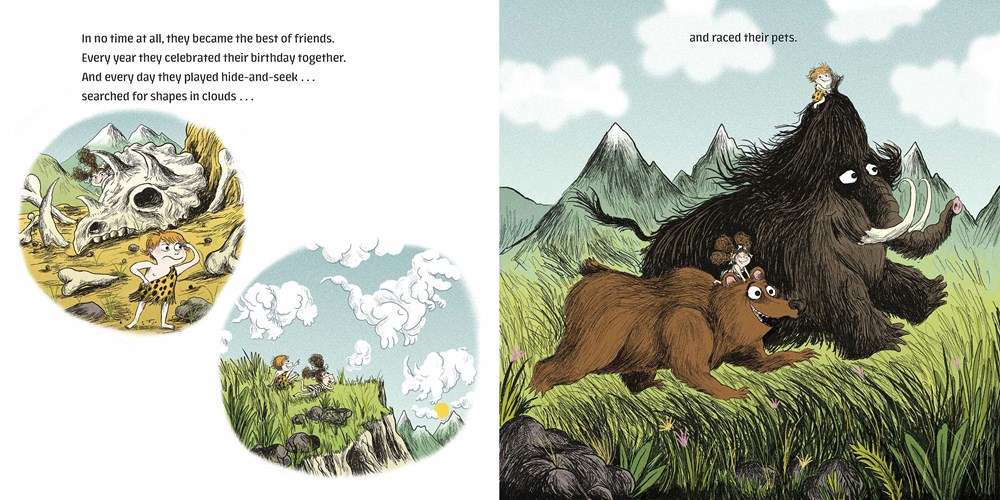
Caveboy and Cavegirl are best friends, born on the same day in side by side caves. Caveboy loves rocks, while Cavegirl enjoys working with tools and painting on cave walls. One birthday, each wants to give the other a gift, but what to get? They each visit Caveman’s Collectibles, separately, and find the perfect gifts. Caveboy trades his rock collection to get a box for Cavegirl to put her tools and paintbrushes in; Cavegirl trades her tools and paintbrushes to get a box for Caveboy to store his rock collection. When they exchange gifts, they figure out ways to put their new gifts – and existing talents – to work.

An updated, kids’ version of O’Henry’s The Gift of the Magi, Cavekid Birthday is a story about friendship, and it’s a story about creative thinking. Caveboy and Cavegirl’s friendship means so much to the other that they’re willing to trade their prized possessions away to get each other the perfect gift – and once they have those perfect gifts, they put them to creative use. But as they start to miss their rock and tool collections, they use their creative talents in another way in order to barter and get them back. Cavekid Birthday has a message about resourcefulness that encourages kids to think outside… well, the box.

The cartoon artwork is mostly earth-toned, with tonal greens and browns, and bright yellows and oranges that perk up the landscape. The characters are expressive and cute, and will keep readers interested. The storytelling leaves room for discussion throughout; ask the kids what they predict will happen when each Cavekid goes to the store, and what will happen when they unwrap each other’s gifts. A nice add to storytime collections.
Posted in picture books

Left-handers: This is a secret society worth knowing about!

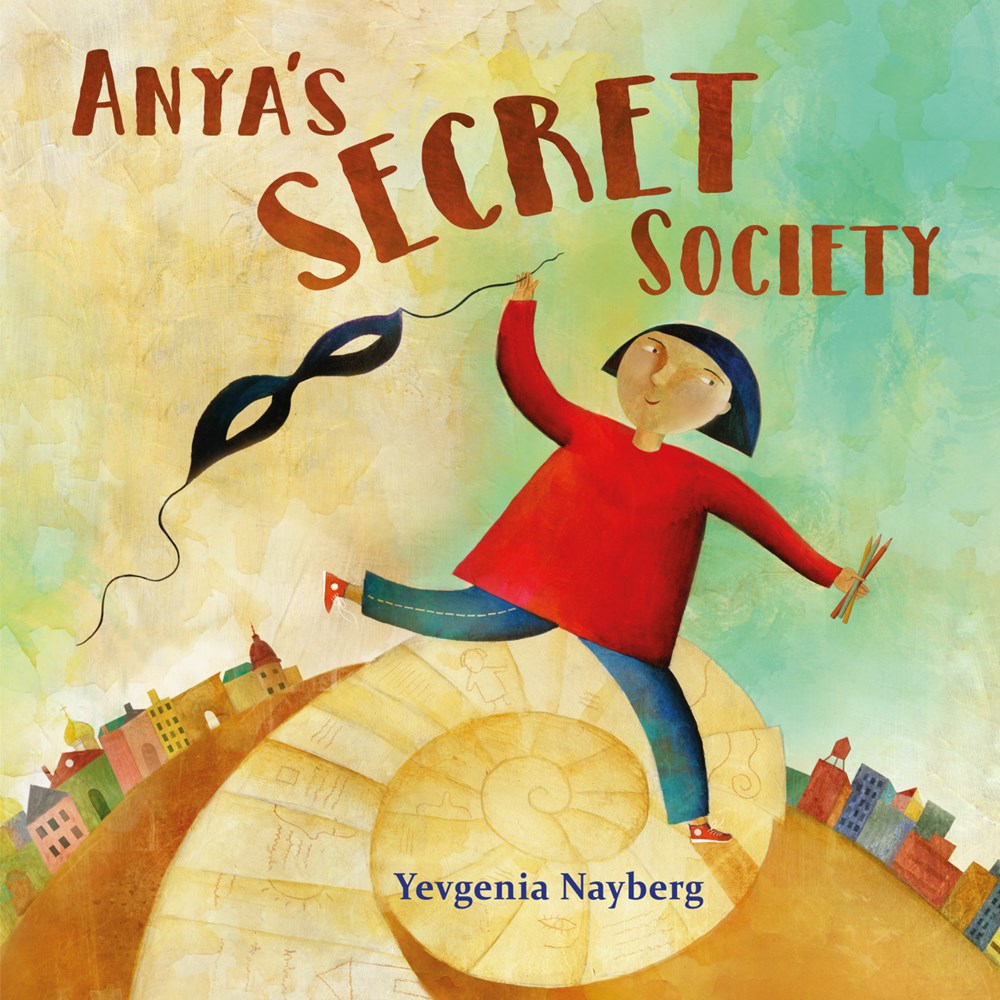
Anya’s Secret Society, by Yevgenia Nayberg, (March 2019, Charlesbridge), $17.99, ISBN: 9781580898300

Ages 4-8

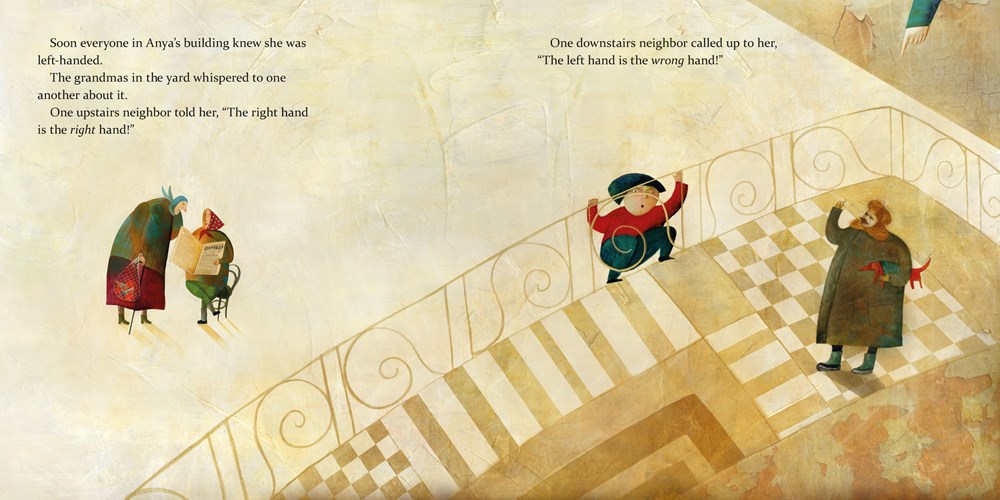
Anya is a young Russian girl who favors her left hand from an early age. She loves to create; she draws and paints, but she’s under constant scrutiny over her left-handedness. Even her neighbors correct her, saying things like, “The right hand is the right hand!” Under social and school pressure, Anya begins using her right hand to write, but she just can’t create with that hand. Her creativity, her art, flows from her left hand. Anya discovers a secret world of left-handed creators, including Leonardo DaVinci and Michaelangelo; she imagines herself part of their secret society, wearing masks to hide their identities as they flout conformity and use that sinister hand. When Anya’s family moves to America, though, she discovers that there is no stigma about which hand to use. She uses her left hand in public, and no one even notices! Her teacher doesn’t correct her! Anya is, at last, free to create.

Anya’s Secret Society uses beautiful language to communicate the desire to create art while lamenting the crushing conformity that threatens to squelch it. Anya draws, left-handed, in secret, and the text reveals that “…the right hand could not draw. Only the left hand could draw”, and “The right hand took care of the world outside Anya. The left hand took care of the world inside Anya”.

With mixed media artwork that’s reminiscent of Pamela Zagarenski, Anya’s Secret Society has bold, bright colors mixed with earth tones to illustrate Anya’s bright spirit; her “secret society” meetings take on a clandestine, almost candelit look. An author’s note discusses the author/illustrator’s own childhood, growing up left-handed in Russia. Anya’s Secret Society is good for picture book collections and carries a nice message of empowerment.

Posted in Non-Fiction, picture books, Preschool Reads

It’s Spring… time to raise the butterflies!

Butterflies in Room 6, by Caroline Arnold, (March 2019, Charlesbridge), $16.99, ISBN: 9781580898942

Ages 3-7

Spring is getting closer and closer, and that means that science classrooms all over the place are going to introduce their little ones to the life cycle of a caterpillar/butterfly. We’ve done it in my home, and each of my kids has done it in school, and it’s exciting every time. Butterflies in Room 6 revisits the Kindergarten students of Room 6 – a new group, since Hatching Chicks in Room 6 was published in 2017 – as they raise butterflies, starting from teeny, tiny caterpillar eggs.

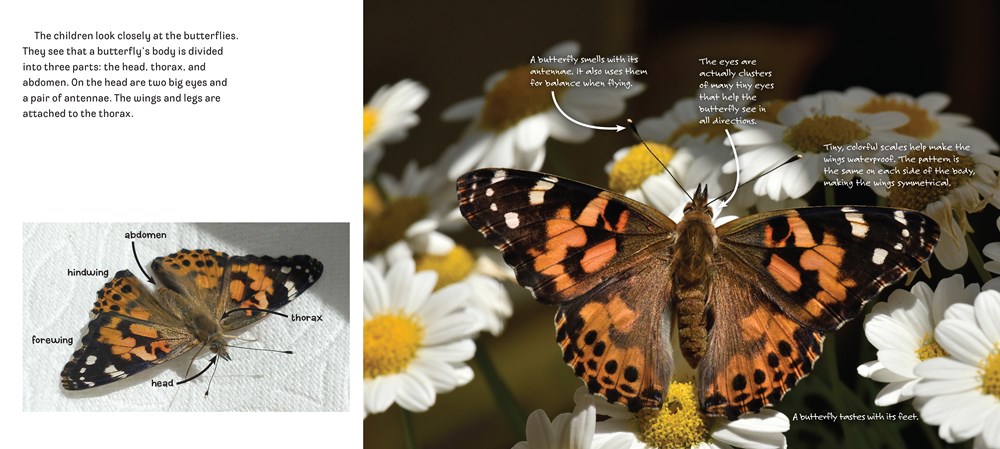
Full-color photographs and informative text take this STEM/STEAM story through the step-by-step process by which the class observed and cared for their caterpillars; feeding them, observing the stages of life, moving the chrysalises to a larger, netted environment, the exciting emergence of the painted lady butterflies from their cocoons, and their release into the world! Leaf-shaped callouts throughout the book provide additional caterpillar and butterfly facts, and back matter provides butterfly questions, vocabulary, and a nice list of online and print resources for further reading.

Butterflies in Room 6 brings a real-world look into a primary classroom – it’ll get kids excited about science, especially if this is one of your classroom projects. Pair this with The Very Hungry Caterpillar and the classic that my kids all read in their kindergarten classes, Deborah Heiligman’s From Caterpillar to Butterfly.

Posted in picture books, Preschool Reads

A boy learns to live between Here and There

Here and There, by Tamara Ellis Smith/Illustrated by Evelyn Daviddi, (March 2019, Barefoot Books), $16.99, ISBN: 9781782857419

Ages 4-8

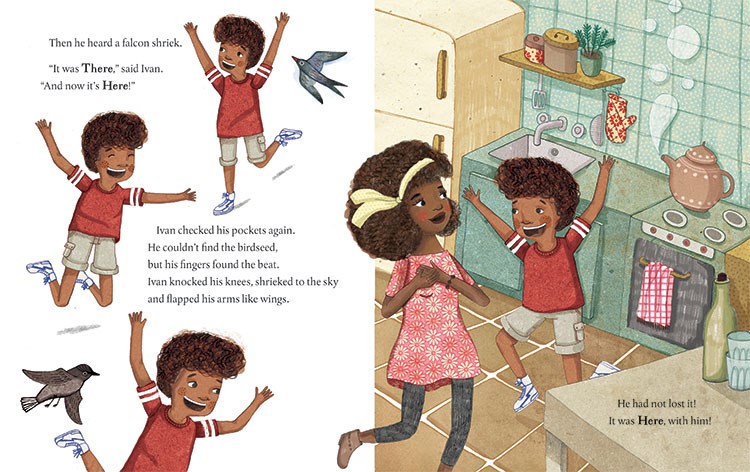
Ivan is a biracial child who splits his time between his two homes: Here, where he lives with his mother, and There; his father’s new home. Here, Ivan is comfortable; he sits in a tree and chatters with the birds. There, he curls into a chair, pulled into himself, ignoring his father’s attempts to engage him. Dad knows how to reach his son, though: he starts playing a song on his guitar, and Ivan can’t stop the good feelings from flowing through him. As Ivan negotiates living Here and There,  he knows there is music, there are birds, and there are people who love him at each place.

Here and There is a touching story about living as a child in a divorced family. Being taken out of his comfort zone; his home, makes Ivan feel off-balance. He isn’t Here, with the familiar; he’s There. He may even feel different around his father, bein gin this different place, with his father not where he’s supposed to be. But music builds a bridge between father and son: Ivan has an affinity for music, as we s

ee early on, when he chatters with the birds in his mother’s home. Once his father’s guitar music opens the door to conversation, Ivan reaches a new comfort zone, and finds himself discovering new birds in his father’s neighborhood, too. He’s building a new life for himself, understanding and working through feeling guilty for being happier in one place or another.

Here and There will speak to many kids who split their time between two households. The text uses the concepts of “Here” and “There” to explain Ivan’s familiarity and initial discomfort  as he learns to navigate between his mother’s and father’s home.  The pencil, acrylic paint, and collage artwork presents multiracial characters with soft, gentle facial features. Back matter includes 12 different birdcalls, with phonetic pronunciation, for kids to try out. Display and booktalk with The Mirror in Mommy’s House/The Mirror in Daddy’s House by Luis Amavisca, which uses a mirror to connect a child with two households.


Posted in picture books, Preschool Reads, Toddler Reads

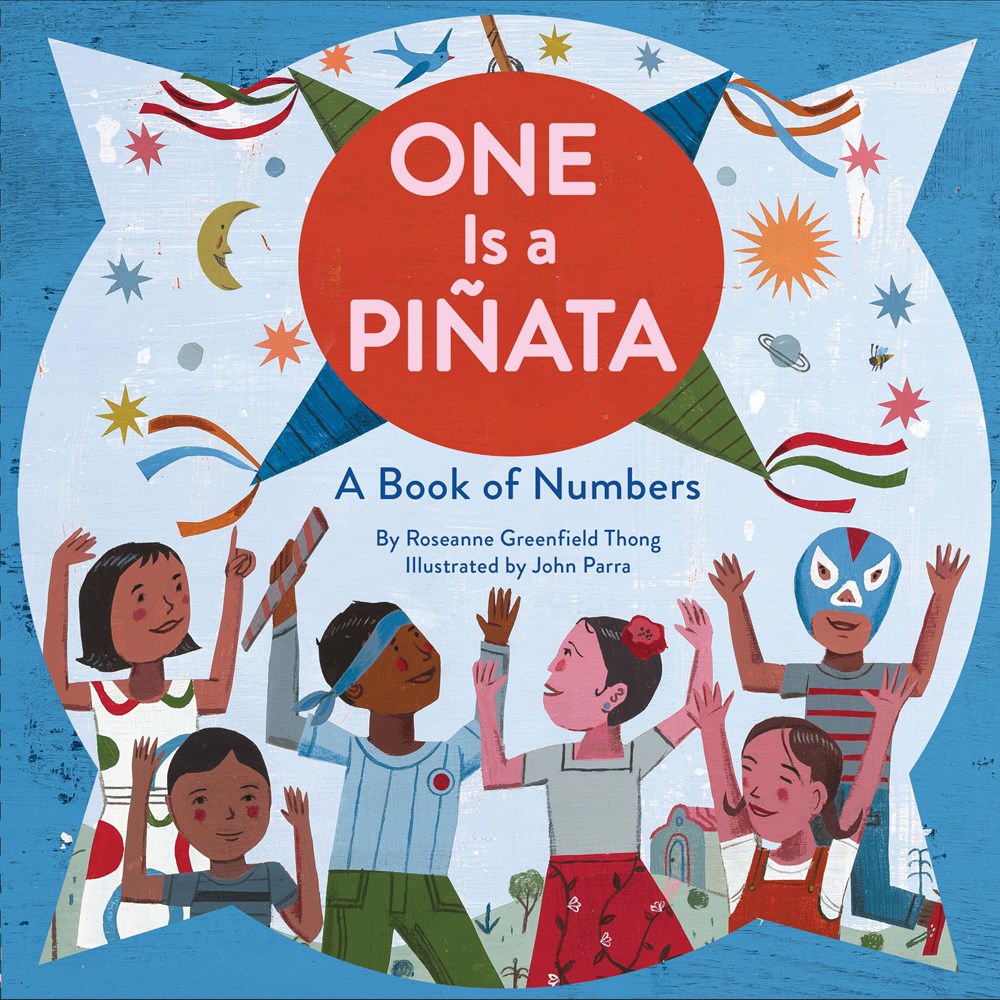
Storytime Fiesta: One is a Piñata!

One is a Piñata, by Roseanne Greenfield Thong/Illustrated by John Para, (March 2019, Chronicle Books), $16.99, ISBN: 9781452155845

Ages 3-5

The duo behind concept books Round is a Tortilla and Green is a Chile Pepper are back with a counting book! This rhyming, bilingual English/Spanish concept book takes readers through the preparation for a fiesta, with maracas, calaveras, salsas, and plenty of sonrisas! The illustrations’ rich colors and the story’s lively, upbeat text will have readers counting down to a part of their own. There are wonderful Latinx touches to the artwork, including luchador masks and caleaveras; papel picado decorates the background, and a string of twinkling lights dangle across the endpapers. Count from 1 to 10, uno al diez, with your storytime group.

I love Roseanne Greenfield Thong’s multicultural concept series, and am so happy to see a counting book join her shapes and colors books. Invite your school-age kids to make their own papel picado to display, and let the little ones color some Sesame Street Spanish/English flash cards. Back matter includes a glossary with phonetic pronunciation of the Spanish-language words used in the book.

So… does this mean Roseanne Greenfield Thong and Grace Lin will team up on a counting book to accompany Round is a Mooncake and Red is a Dragon?

Roseanne Greenfield Thong is an award-winning author of over a dozen children’s books, including ‘Twas Nochebuena, Día de Los Muertos, and her multicultural concept books, Round is a Mooncake, Red is a Dragon, Round is a Tortilla, and Green Is a Chile Pepper.  John Parra is an award-winning illustrator who has three Pura Belpré Illustrator Honor awards, including one for Green is a Chile Pepper.

Posted in Early Reader, Non-Fiction, picture books, Preschool Reads

Natural world nonfiction for young learners: See to Learn: Forest

See to Learn: Forest, by Kate Moss Gamblin/Illustrated by, Karen Patkau, (March 2019, Groundwood Books), $16.95, ISBN: 9781554988792

Ages 4-7

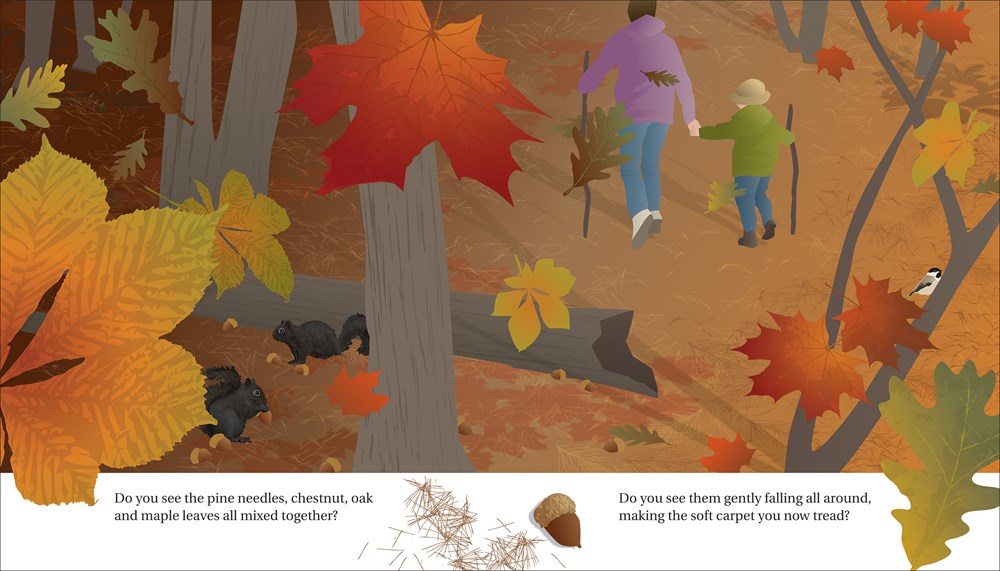
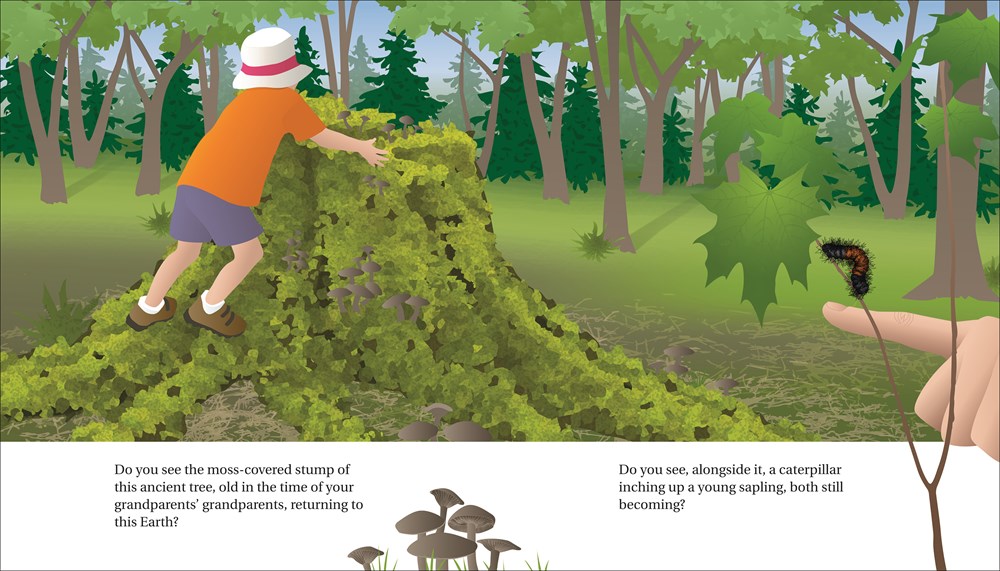
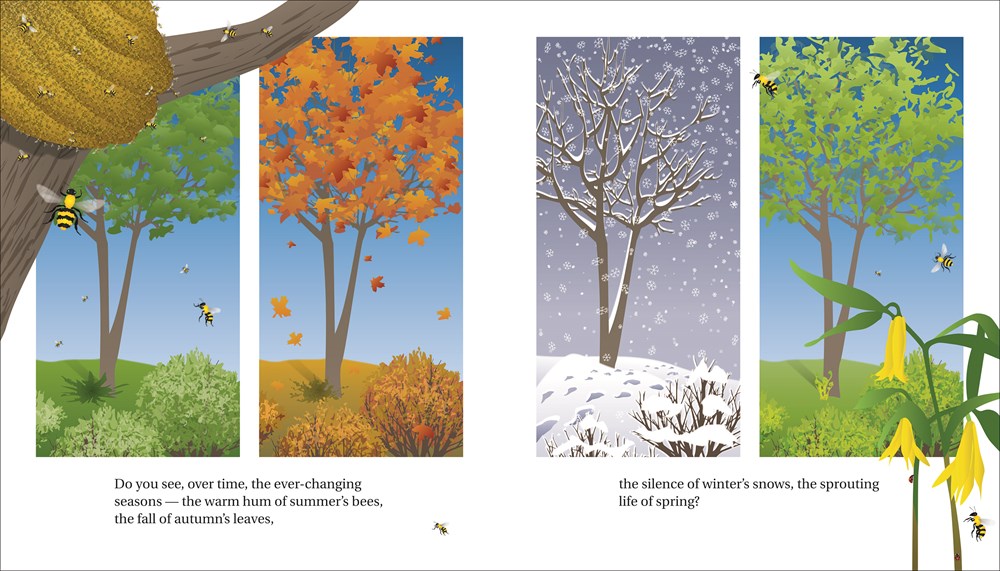
This first book in a new nonfiction picture book series encourages little learners to look at a location – in this case, a forest – and really see: see different footprints that travel the forest floor; the different leaves carpeting the ground; moss covering a stump. Forest encourages readers to think: is that moss older than your grandparents? What changes do seasons bring with them? What happens during the passage of day to night?

The quiet text promotes introspection, curiosity, and presence, and the interrelationships between nature – trees are referred to as our “cousins” – and our planet. Everything here exists for readers to observe and ponder, and Forest encourages them to think of nature, the world, and their place in it.

This is a great way to talk about the natural world and basic concepts with kids: talk about colors, talk about different functions, talk about different stages of life, whether you’re a human grandparent or a young caterpillar. We all age; we all exist; we all interact with the natural world. Let kids see themselves in nature, and they’ll respect it and care for it. Further reading provides additional resources for younger and middle grade readers. An author’s note explains the rationale and thinking points for the series.

I’m looking forward to more books in this series. See to Learn: Forest is a great addition to primary and elementary science collections and programming. This will fit nicely with Kate Messner’s nonfiction books, Over and Under the Snow, Over and Under the Pond, and Up in the Garden and Down in the Dirt, for elementary readers; for primary readers, you can’t miss with Laura Vaccaro Seeger’s books, Green and Blue; and Denise Fleming’s In the Tall, Tall Grass, and In the Small, Small Pond.

Posted in picture books, Preschool Reads

Your heart cannot handle the adorableness of Tiny T. Rex!

Tiny T. Rex and the Impossible Hug, by Jonathan Stutzman/Illustrated by Jay Fleck, (March 2019, Chronicle Books), $15.99, ISBN: 9781452170336

Ages 3-7

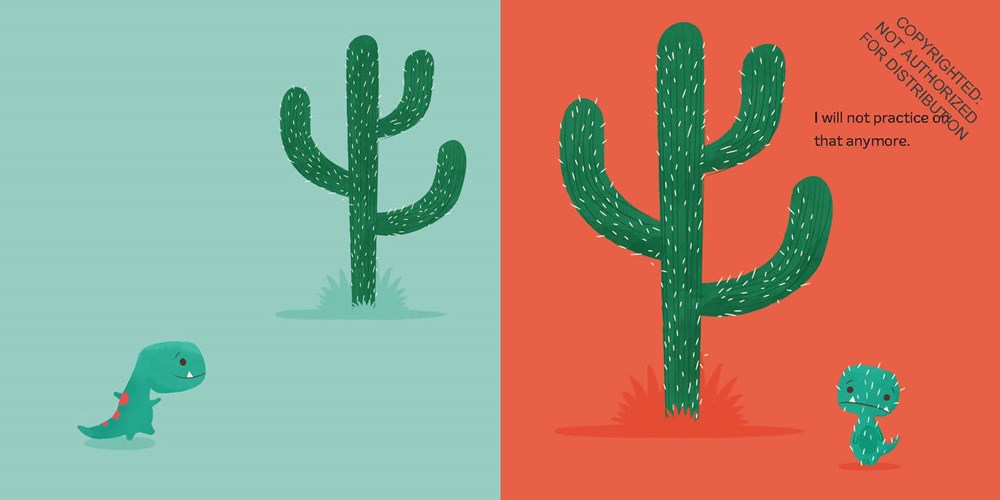
Tiny T. Rex wants to hug his sad friend, Pointy the Stegosaurus, but there’s one problem: he has very tiny arms! He seeks advice from his parents, aunt, and siblings, and ultimately decides that practice makes perfect: but it’s sometimes precarious!

I have been squealing about this book since I first saw it at a Book Buzz a couple of months ago. A combination of smart writing and adorable cartoony artwork makes Tiny T. Rex one of the cutest, funniest books I’ve ever read. Tiny T. Rex is every kid, from preschool age on up, who has to contend with weird adult responses to big childhood dilemmas. When he asks his new age-y Aunt Junip for hugging advice, she recommends “balance and freshly squeezed cucumber juice”, to which T. Rex responds, “That is disgusting. I will ask my mother for help instead”. Mom’s advice isn’t much more helpful; she falls back on the traditional mom answer (which I’ve used quite a few times, myself): “It’s okay if you can’t hug. You are good at many other things… You are tiny, but your heart is big!” You can almost see his little eyes roll when he responds, “I cannot hug with my heart, mother”. When T. Rex decides to take his siblings’ advice and practice, he creates a hug strategy blackboard that kids will love: he’s considering being shot out of a cannonball, parachuting into the hug, and several other hilariously adorable ways to accomplish the hug. As he starts putting his ides into practice, he learns that trial and error can be a little painful, but ultimately, that the best hugs are the ones given with all the love you have to give. The artwork is heart-exploding levels of adorable. T. Rex and his fellow family and friends are bright and bold, with bright, cheerful foliage all around them.

It’s impossible not to squeal when you first lay eyes on this book: I have a dining room full of librarians and educators that backed me up, when Chronicle debuted this at the book buzz. With a sweet storyline about compassion and determination, eye-catching graphics that kids and adults alike will love, and text that was made for storytime reading, Tiny T. Rex and the Impossible Hug is a home run. Now, we wait for another adventure…

Illustrator Jay Fleck has a video on drawing Tiny T. Rex – invite your storytime kiddos to give it their best!

Posted in Early Reader, Non-Fiction, picture books

A math concept book with NO WRONG ANSWERS? Sign me up!

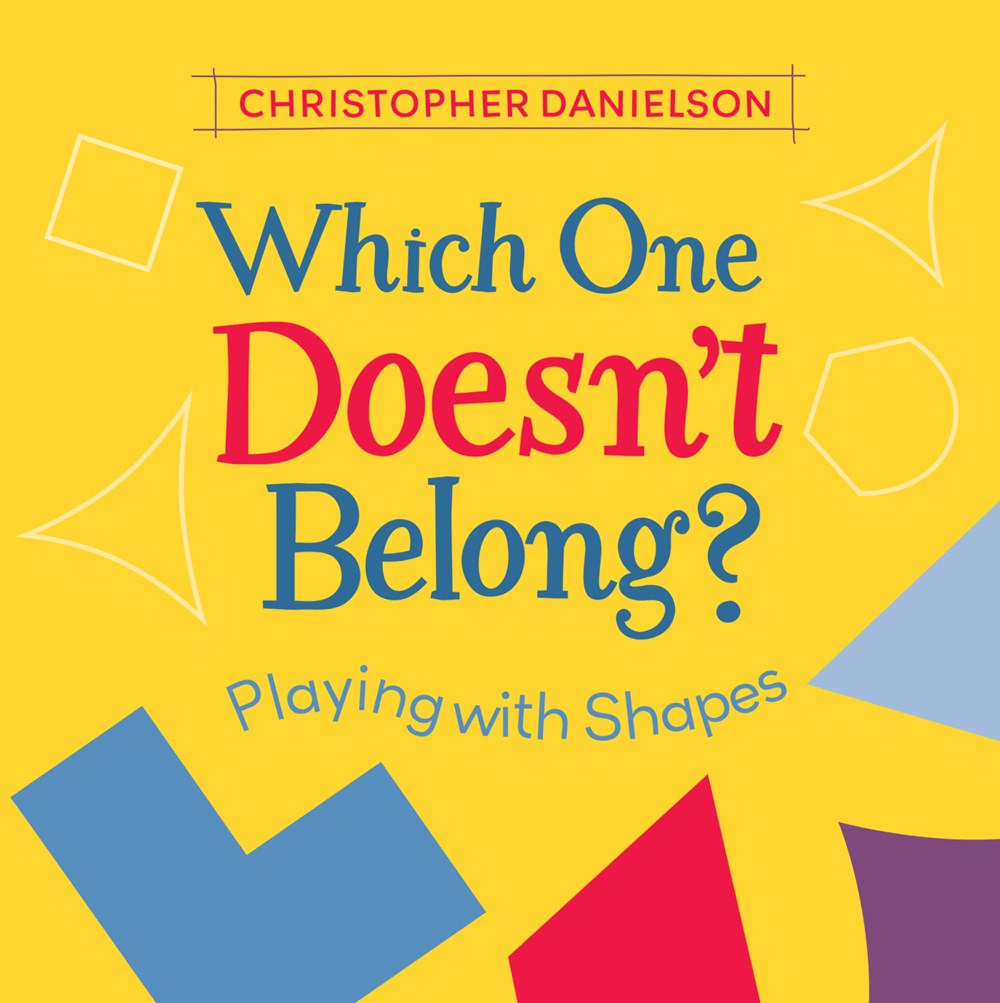
Which One Doesn’t Belong? Playing with Shapes, by Christopher Danielson, (Feb. 2019, Charlesbridge), $15.99, ISBN: 9781580899444

Ages 4-8

Math educator Christopher Danielson came up with a creative new way to get kids thinking about mathematical concepts: give them groups of shapes, and ask them, “What doesn’t belong?” The best part: NO WRONG ANSWERS. As the beginning explanation details, it’s all about the process, about critical thinking. One color could be different. A shape could be more squished, smooshed, or just look weirder than the others. It’s all in the eye, the mind, of the beholder here! Spreads alternate between layouts with shapes, and explanations on how every answer is correct, with supporting information like shapes, color, and other properties.

This is such a great way to make mathematics accessible to readers (kids and adults alike!). It doesn’t discourage anyone; it doesn’t make anyone’s answer, or rationale, wrong. Which One Doesn’t Belong shows readers how easy it is to approach things in a mathematical way: and this is coming from the lady who tells kids “the best way to do well in math is to not ask me for help with it”. Like the author himself says, “All properties count here; all ideas matter…”. Add this one to your nonfiction collections, build some programs around it for different age groups, and start making math more friendly to your readers!

Which One Doesn’t Belong? has a starred review from Kirkus and is the Winner of the Mathical Book Prize.

Posted in picture books, Preschool Reads

Josh Funk’s latest fractured fairy tale takes on Hansel and Gretel! Plus, a Giveaway!

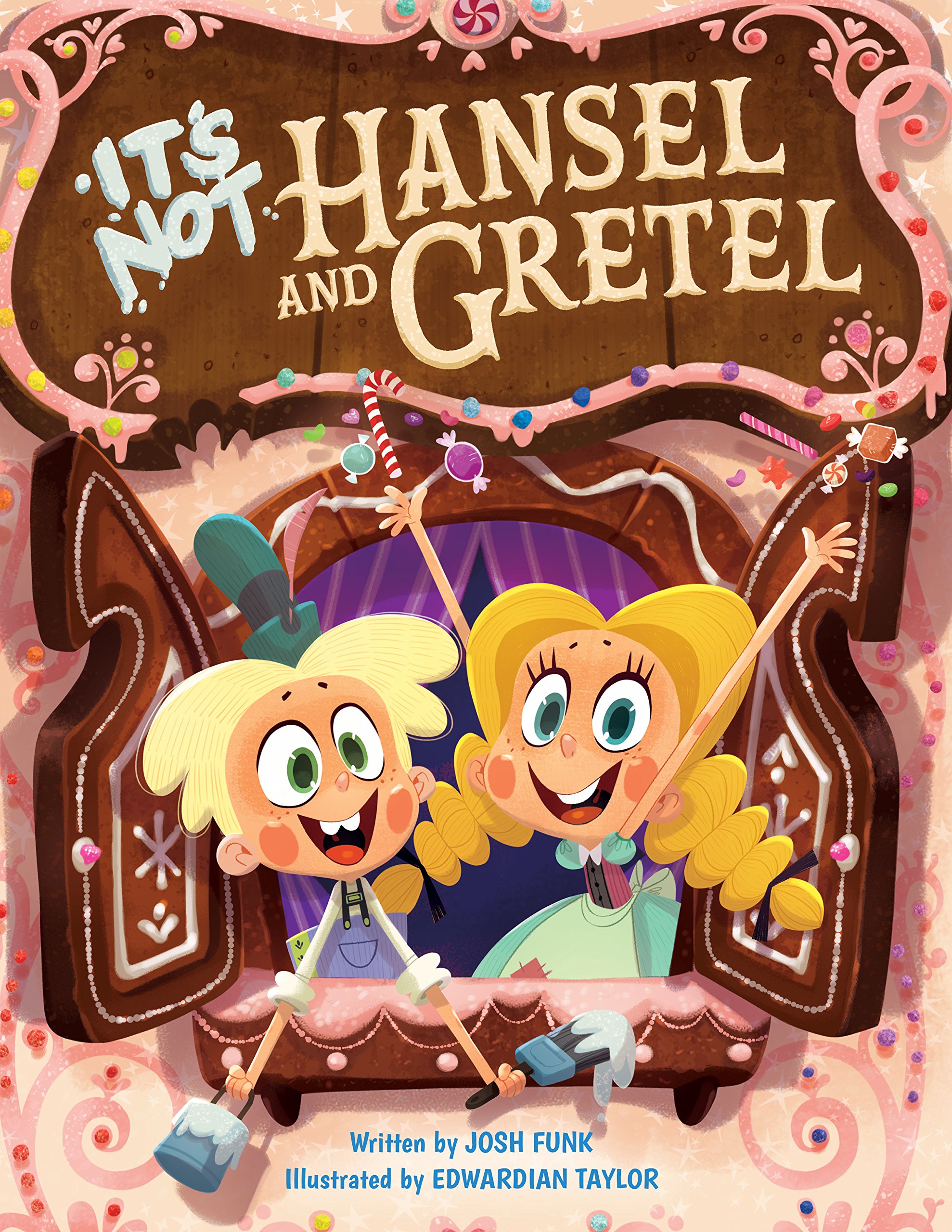
It’s Not Hansel & Gretel, by Josh Funk/Illustrated by Edwardian Taylor, (March 2019, Two Lions), $17.99, ISBN: 9781503902947

Ages 4-8

One of my favorite picture book people, Josh Funk – seriously, have you followed him on Twitter? – has another entry into his fractured fairy tales “It’s Not…” series. This time, he’s setting his sights on Hansel and Gretel, who just can’t believe their loving parents would hatch an evil plot to leave them in a dark forest all alone, or that a sweet old lady who’s doling out candy could possibly be an evil witch!

Set up as a back and forth between our omniscient narrator and the characters, the story is set in motion. The narrator has a lot more information about the story handy than do our characters, and the back and forth between them is laugh out loud funny. Gretel chastises the narrator for making Hansel cry at the very insinuation that their parents have an evil plot to get rid of them; the narrator is exasperated when the kids go to town on all the candy that the witch puts out for them. Gretel adds a smart, feminist slant to the story, asking why it’s always “Hansel and Gretel”, when Gretel clearly comes first alphabetically; she also points out that Hansel gets to sit around and gorge himself while she, the girl, has to cook and clean, exclaiming, “Get with the times-this is the fifteenth century!” There’s a wink, nudge nod to jokes about food allergies, a fabulous unicorn makes a guest appearance, and a Happily Ever After that will satisfy and amuse readers.

Sharp-eyed readers will spot some great fairy tale cameos (was that a flying monkey I saw), and the endpapers are loaded with enough candy and treats to tempt any reader into sampling what lies inside. Josh Funk’s got a gift for snappy, fun dialogue, and Edwardian Taylor’s bright, digital art is fun and explodes with the energy Josh Funk loads his story with. I read this with my 6 year old; he voiced the characters, I voiced the narrator, and we had a blast together. A perfect add to your fractured fairy tales shelves!


Want a shot at winning your own copy of It’s Not Hansel and Gretel? Try this Rafflecopter giveaway!


Like Hansel and Gretel, Josh Funk doesn’t like being told how stories should go—so he writes his own. He is the author of a bunch of picture books, including the popular Lady Pancake & Sir French Toast series, illustrated by Brendan Kearney, and recently, How to Code a Sandcastle, illustrated by Sara Palacios, and Lost in the Library: A Story of Patience & Fortitude, illustrated by Stevie Lewis. He lives in New England with his wife and children. Learn more about him at www.joshfunkbooks.com and follow him on Twitter @joshfunkbooks.


Edwardian Taylor has worked as a visual development artist and character designer in the game and animation industry. He illustrated the picture book Race!, written by Sue Fliess and the chapter book Toy Academy: Some Assembly Required, written by Brian Lynch. He lives in Texas with his partner and their four dogs. Learn more about him at www.edwardiantaylor.com and follow him on Tumblr, Instagram, and Twitter @edwardiantaylor.


Posted in picture books, Preschool Reads

A search for the Biggest Puddle in the World and a lesson on the water cycle!

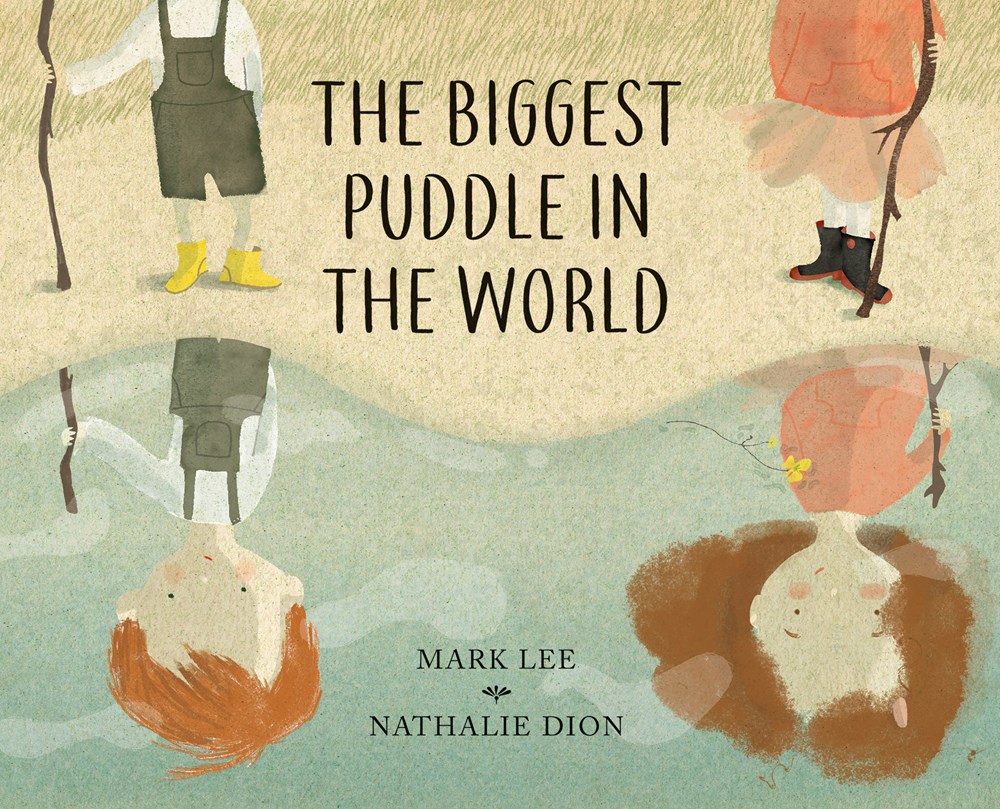
The Biggest Puddle in the World, by Mark Lee/Illustrated by Nathalie Dion, (March 2019, Groundwood Books), $18.95, ISBN: 9781554989799

Ages 4-7

Siblings Sarah and Charlie go to stay with their grandparents for six days; at first, it rains, allowing the two to explore the old house, but they’re itching to get outside and wander. Finally, the weather lets up, and they head out, with their grandfather, on a nature walk. Big T, their grandfather, promises to show them the biggest puddle in the world, and encourages Sarah to keep a puddle map; all the while, explaining the water cycle: the rain comes down and collects in the puddles; the water in the air become the clouds in the sky. The clouds are made up of water from ponds and rivers and the biggest puddle in the world, which, the kids discover, is the ocean!

This is a great way to lead in to a discussion and/or lesson about the water cycle. The story and illustrations are all about the joy of being a kid: they enjoy spending time with grandparents; jump in puddles; explore nature, and find ways to keep themselves occupied when stuck inside on rainy days. Big T gives them a simple, illustrative way to understand the water cycle and how puddles collect, form bigger puddles, and eventually, become part of the clouds, which bring the rain. He encourages learning, and invites the kids to use hands-on learning by exploring and mapping their day.

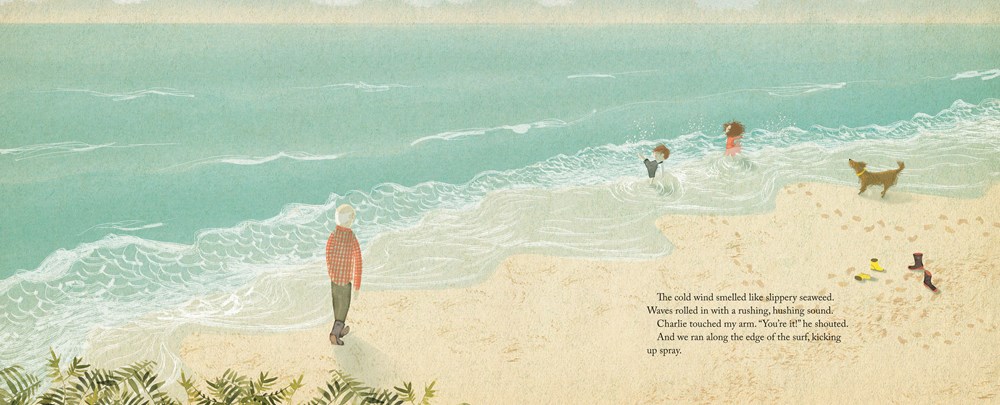
The real and digital watercolor artwork is soft, with earth tones and faded colors, allowing nature to calmly take its place as the focal point of the story. Grasses gently move in an imagined breeze; the ocean stretches across a spread as Big T watches his grandchildren and their dog play, boots left on the sand.

A nice bridge between fiction and nonfiction, and a good addition to science storytime.