Posted in Non-Fiction, picture books, Preschool Reads

Three great books about space!

The Summer Reading theme for this year is all about Space, and I am psyched. I love outer space, and I’ve got a growing list of books to add to my own readers advisory lists (I’ll put that together in the next week or two for a post). Meanwhile, Sourcebooks and Barefoot Books have three great books about space that are staggered throughout the year, and perfect for your space-faring STEM fans. Let’s check them out, shall we?
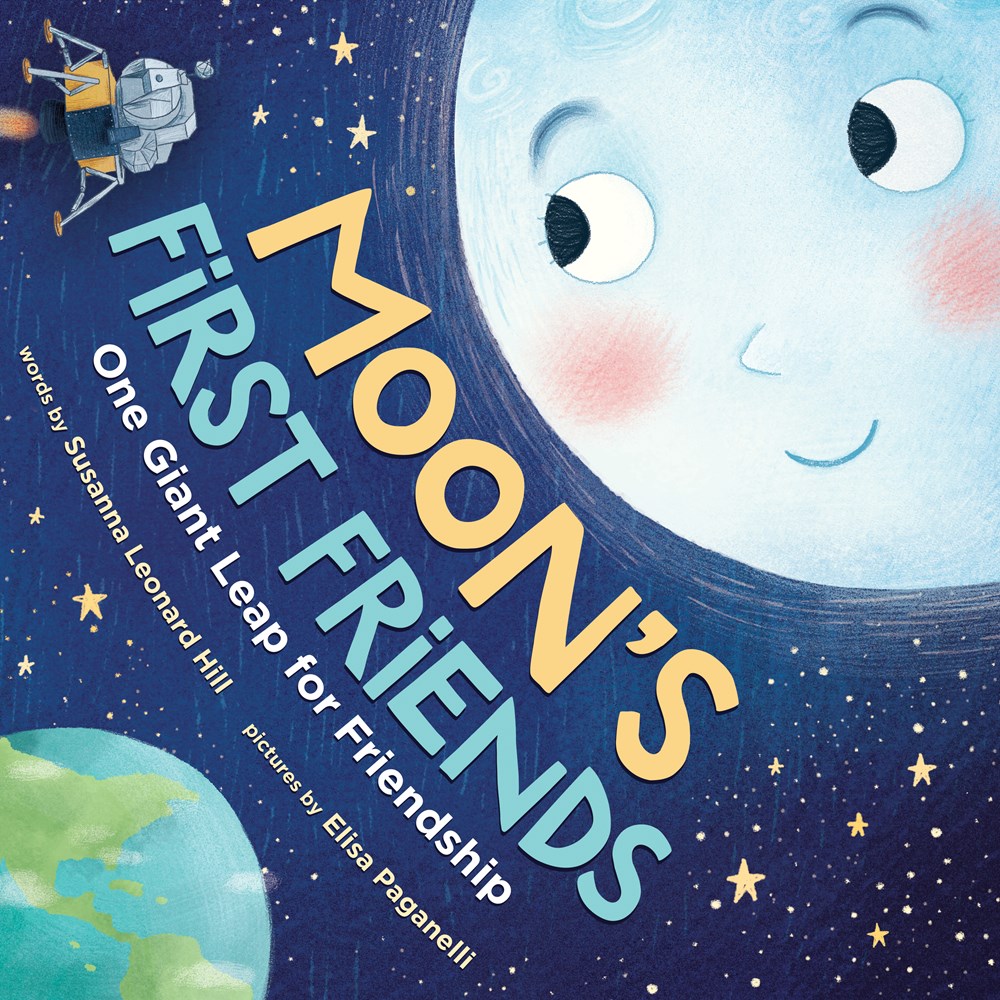
 

Moon’s First Friends: One Giant Leap for Friendship, by Susanna Leonard Hill/Illustrated by Elisa Paganelli, (June 2019, Sourcebooks Wonderland), $17.99, ISBN: 9781492656807

Ages 4-8

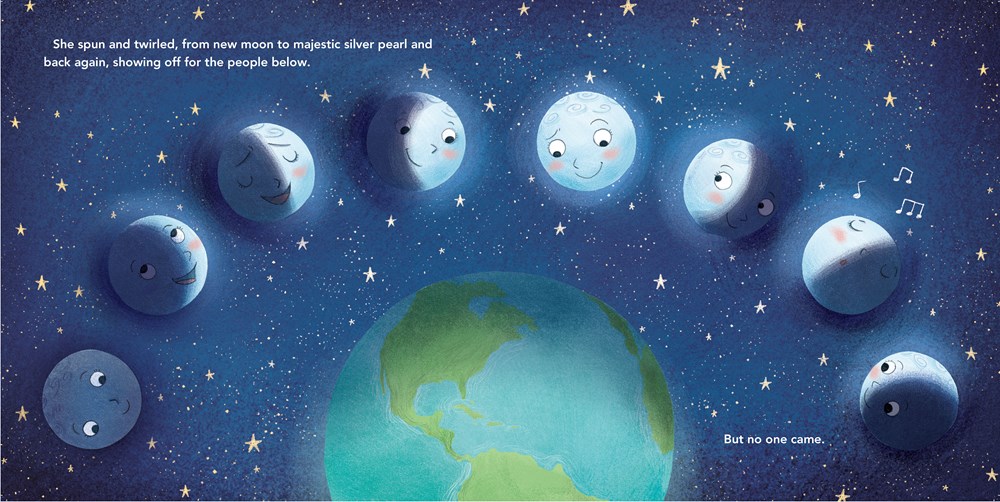
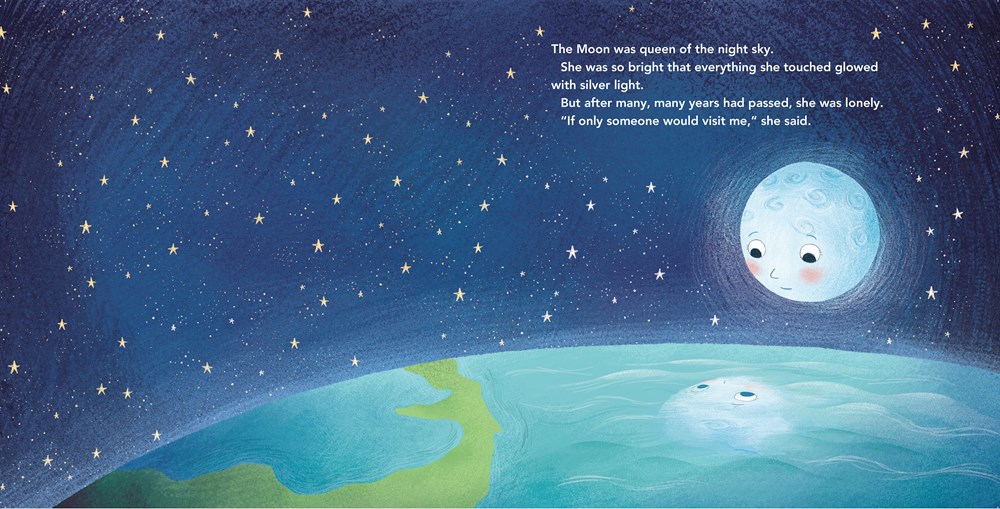
The Moon was so lonely, up in the night sky by herself. When she sees life developing on Earth, she patiently waits for someone to notice and visit her. It takes a while: the dinosaurs don’t notice; early people build pyramids and structures that just aren’t high enough. Eventually, though, she gets some visitors, and she is thrilled! She gives them presents of rocks and dust to take back to Earth, and they give her a beautiful flag and a plaque. Now, Moon is in the sky, happy and waiting for more visitors. Will you be her next guest?

This is the sweetest story I’ve read yet on the Apollo 11 mission to the Moon. The Moon is illustrated as a softly shining, opalescent sphere with kind eyes, rosy cheeks, and a sweet smile; readers are treated to a quick history of Earth’s development as the Moon quietly observes, waiting for a friend to reach out – or up – and say hello. She even dances around the planet, showing off her phases! The actual Apollo mission takes up a brief part of the story, making this sweet book about a lonely satellite who just wants a friend an adorable storytime read for younger kids, and a fun book with solid facts for school-age kids. There’s a brief bibliography on the verso page, and back matter includes several pages dedicated to Mission Moon, the Apollo 11 voyage; moon facts, and moon phases, along with a running timeline of Earth’s formation and development. Endpapers are starry nights, where kids can imagine sailing through the stars to visit their favorite moon. Readers can also scan a QR code to hear Neil Armstrong’s historic first words from the 1969 moon landing. Gentle storytelling and adorable illustration make this a great Summer Reading addition! Display and booktalk with Stacey McAnulty’s Moon, Earth, and Sun trilogy.
 

There Was a Black Hole That Swallowed the Universe, by Chris Ferrie/Illustrated by Susan Batori, (Sept. 2019, Sourcebooks Explore), $17.99, ISBN: 9781492680772

Ages 3-8

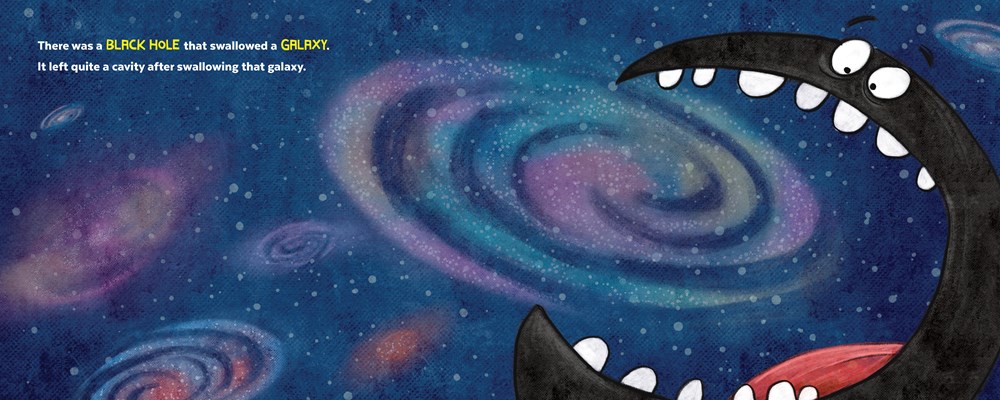
You know if Chris Ferrie is writing a book, I’m reading it. This STEM-errific take on There Was an Old Lady Who Swallowed a Fly is about a giant black hole that swallows… well, everything. He starts with a universe… it couldn’t get worse! But oh, it does: the black hole swallows planets, stars, galaxies, and atoms, molecules, and quarks along with it. Yikes!

I read this to my first grader this morning and he immediately smiled and said, “This is like The Old Lady story!”, so kids familiar with the classic tale (and all of its spin-offs) will immediately jump in and know what’s coming; how the story will progress. With each chomping, the black hole gets bigger, and the planets and heavenly bodies look hilariously terrified as they try to get away from its maw. The storytelling is fun and loaded with humor; it’s cumulative and rhyming storytelling at its scientific funniest. The illustrations are goofy, with exaggerated facial expressions that make the storytelling more dramatic and humorous as you go. Bone up on your keyword knowledge for kids who will ask during the story (neutrons, atoms, quarks, oh my!). Scientific terms are highlighted in bold yellow, and capitalized to stand out and give your readers a nice working STEM vocabulary. Shine a blacklight on the pages from back to front, and you’ll reveal a super-cool, hidden history of the universe’s creation!

Absolute fun and a must-get for your storytime collections. Be a rock star at Science Storytime! Pair this with The Universe Ate My Homework by David Zelster for more black hole-related fun.

 

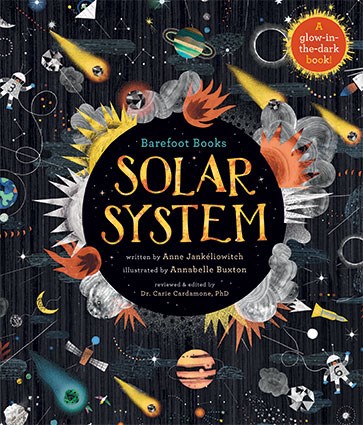
Barefoot Books Solar System, by Anne Jankéliowitch/Illustrated by Annabelle Buxton, Translated by Lisa Rosinsky, $19.99, ISBN: 9781782858232

Ages 8-12

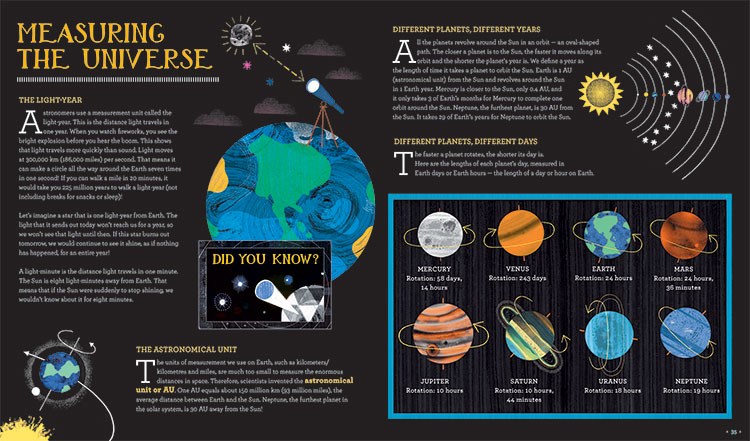
Riding high on the post-Summer Reading wave, middle grade kids can go back school and check out Barefoot Books Solar System, a glow-in-the-dark, interactive guide to our Milky Way, complete with lift the flap booklets, a pull-out map, and beautiful artwork. Originally published in French, the book has been reviewed, edited, and updated by Dr. Carie Cardamone, professor of STEM education and Boston Museum of Science teacher and educator. The text is written with a tongue-in-cheek sense of humor while delivering solid nonfiction goods to middle graders. The book covers each planet, with nicknames like :Saturn: The Space Diva”, and “Uranus and Neptune: The Icy Sisters”; the asteroid belt; differences between solid and gas planets; measuring the universe, and famous outer space voyages. The artwork is bright and bold, seeming to explode off the black pages to grab the reader’s attention.

In keeping with Barefoot’s mission of diversity and inclusivity, there is information about space exploration from around the world, making this a truly global effort. Back matter includes a comprehensive glossary of scientific terms and a note on the units of measurement used in the book. Don’t pass this one up; your 520s will shine a little brighter with Barefoot Books Solar System on your shelf.

Posted in picture books, Preschool Reads

Patience is hard: Now? Not yet!

Now? Not Yet!, by Gina Perry, (June 2019, Tundra), $17.99, ISBN: 9781101919521

Ages 3-6

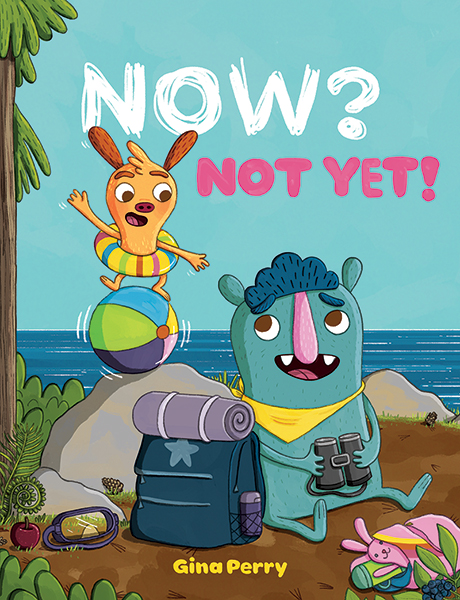
Peanut and Moe, the two monster friends from Too Much! Not Enough! are back in another story of negotiation. The two buddies are on a camping trip, and Peanut wants to go swimming. Moe has other plans, though; thus begins the back and forth of “Now?” and “Not yet”. Peanut is dying to get in the water, but Moe is methodical: Moe wants to hike; snack; set up camp, all while Peanut bounces up and down, asking the same question, until finally, in a burst of frustration, yells, “NOW! NOW! NOW!” Moe, just as frustrated, yells back, “NOT YET!” The two friends take a break from one another, during which Peanut gets camp set up, and Moe dashes by, ready for a swim. The two finish their day by a campfire, happily enjoying one another’s company over s’mores.

Now? Not Yet! beautifully captures toddler and preschooler (okay, and many, many adults) behavior. I can’t tell you how many times I’ve been out with my kids, having this same scenario play out. Every parent and caregiver will see themselves and their little ones in this story, and every kid will empathize with Peanut’s desire to do what he wants, only to be made to wait. Frustration? Kids and adults feel it, so the meltdown spread will resonate with your storytime group for sure. I’ve asked the kids in my storytime how many times they’ve felt like Peanut, and gotten loads of hollers and stomps; when I’ve asked parents if they have ever felt like Moe, I’ve gotten knowing nods and smiles. The moral of the story? Patience and compromise pay off.

Gina Perry’s books are popular with my storytime crowd: Small is still in high demand, and Now? Not Yet! really got through to kids and caregivers alike. The artwork is adorable, bright, and cherry. Peanut is small, peanut-shaped, and has floppy ears; Moe is big, blue, kind of boxy, with a long pink nose. They both have big, expressive eyes. The endpapers look like layouts of the camping excursion, each laid out by one of the duo: the front papers is more orderly, with defined art and a dotted line path to show the duo’s trip; the back papers are a hand-drawn memory of the day, with dotted lines, circling birds, campfires, s’mores, and a big lake with flippers, a beach ball, and a life preserver.

I love Now? Not Yet!, and will be putting this into regular storytime rotation. If you have toddlers and preschoolers are regular storytimes, consider adding this one. There’s a free, downloadable activity kit that includes a fun nature scavenger hunt, coloring sheets, and fun instructions to make your own indoor camping site, which I need to do with my kiddo, stat. Gina Perry’s author page has more free printables, including instructions on how to draw both Moe and Peanut.

Want more Peanut & Moe? Of course you do. Check out this adorable trailer!

Posted in picture books, Preschool Reads

Squishy McFluff is off to tea with the Queen

Squishy McFluff: Tea with the Queen, by Pip Jones/Illustrated by Ella Okstad, (May 2019, Faber & Faber), $16.95, ISBN: 9780571337279

Ages 3-7

Squishy McFluff, the Invisible Cat, meets the Queen for tea in his first picture book! He and his favorite human, Ava, are off to London with Ava’s family for some sightseeing, but Squishy – and therefore, Ava – have other plans. Slipping into Buckingham Palace, they happen upon the Queen herself, who’s looking over a grocery list for her corgi. Ava boldly introduces herself and Squishy (still invisible) to HRH, who insists they both stay for tea, and sends her home with invisible crowns for herself and Squishy.

Squishy McFluff is the star of a British chapter book series that looks absolutely adorable (can we get these in the States?); Tea with the Queen is the first Squishy picture book in the series. Told in rhyme from Ava’s point of view, the story is charming and perfect for tea party storytime. The story will appeal to kids’ imaginations – ask them if they’ve ever had imaginary friends or pets! – and get the creative juices flowing. Endpapers are dotted with crowns and cat paws, and Ella Okstad’s artwork is sweet and colorful, with Squishy being a dominant character, albeit a transparent one.

I love a good tea party book, and this will join my shelf. Pick this one up for yours if you have readers who love animal stories, tea parties, and stretching their imaginations. Enhance a storytime activity with some of the suggestions and downloadables on the Squishy McFluff website, including coloring pages and a dot-to-dot activity.


Posted in picture books, Preschool Reads

Two new Pout-Pout Fish adventures!

Pout-Pout Fish: Back to School, by Wes Adams/Illustrated by Isidre Monés, (May 2019, Farrar Straus Giroux), $5.99, ISBN: 9780374310479

Ages 3-6

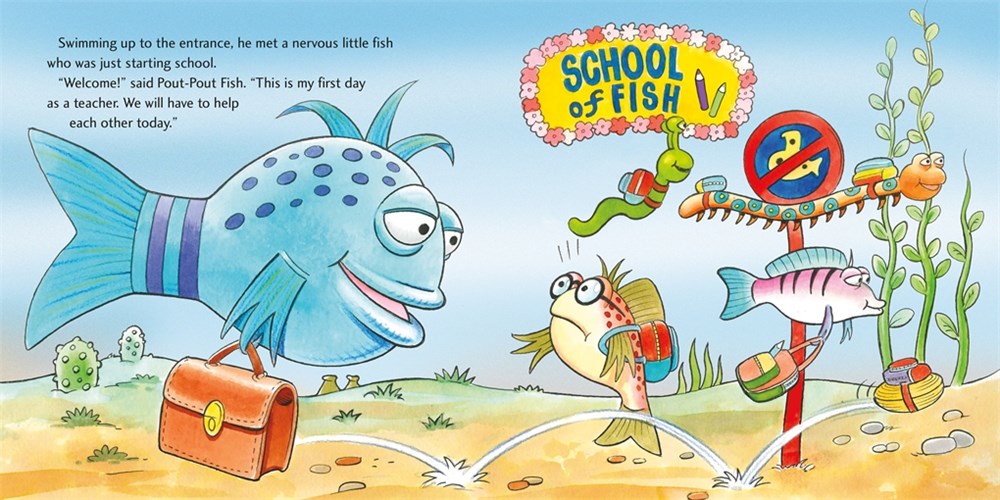
The Pout-Pout Fish is off to school! This time, he’s a substitute teacher, subbing for his favorite teacher, Miss Hewitt, who’s down with a cold. On the way to school, he meets a nervous new student and helps him feel comfortable with his new school and new classmates. When Pout-Pout – Mr. Fish here – feels a little overwhelmed in front of his first class, the little fish is there to return the favor, giving Mr. Fish the confidence to carry the class. TAt the end of the day, Pout-Pout gets a sweet drawing from his new student and a warm reception from his new students. What a way to start a school year!

Pout-Pout Fish: Back to School is a Pout-Pout Fish story by Wes Adams and illustrator Isidre Monés. I admit I miss the rhyme scheme and repetition that Deborah Diesen traditionally uses, but the emphasis on kindness present in Pout-Pout Fish stories is here. Isidre Monés uses calming blues for Pout-Pout and bright primary colors for the classroom, all of which will appeal to readers. And there are stickers at the end of the book, making this a great back-to-school gift for kids (and if you’re putting this on your library shelves, hold onto those stickers, or your books won’t last the day – hand them out to your kiddos as welcome back gifts).


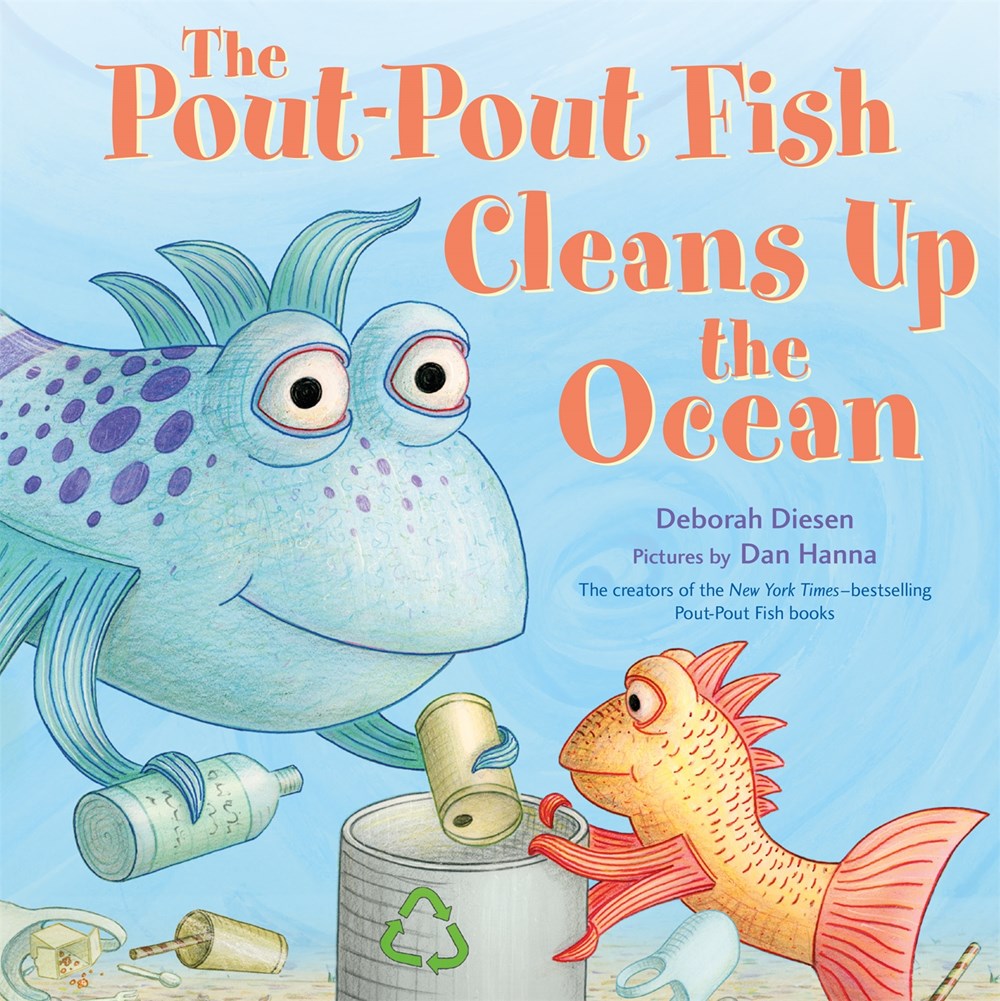
The Pout-Pout Fish Cleans Up the Ocean, by Deborah Diesen/Illustrated by Dan Hanna, $17.99, ISBN: 9780374309343

Ages 3-6

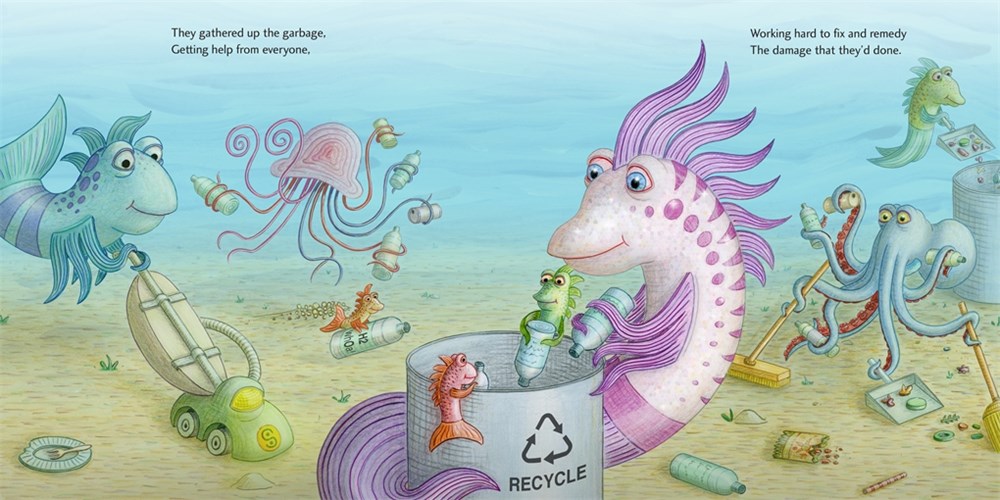
Pout-Pout and friends are cleaning up the ocean! Mr. Fish and his friends love the ocean’s beauty, but when he looks around and sees a giant mess, he and his friends investigate and find out that THEY are the cause of the mess! That simply won’t do, so the group team up to clean up in this rhyming story by original writer and illustrator Deborah Diesen and Dan Hanna.

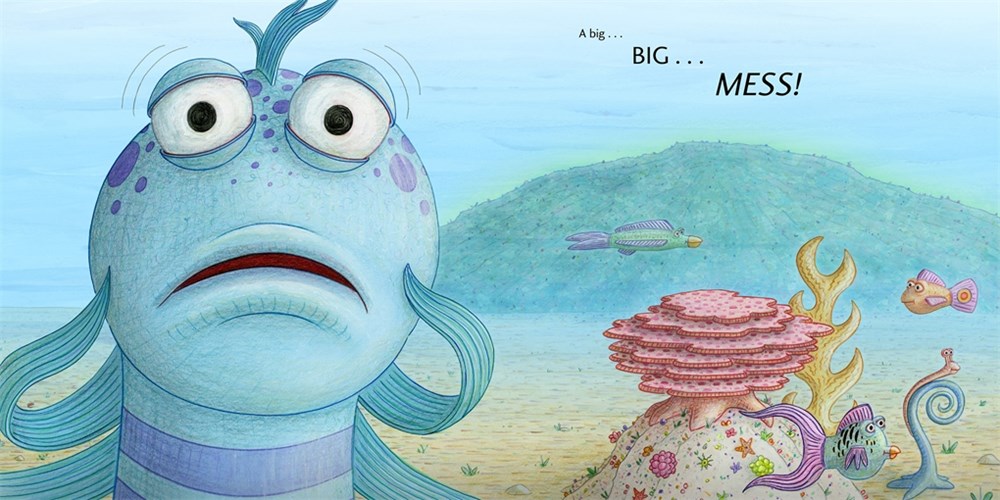
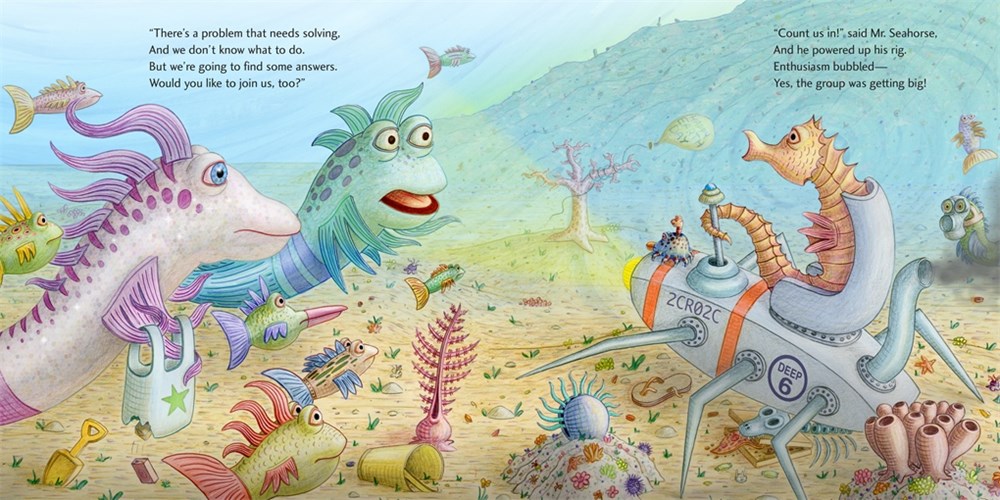
Kids (and grownups) familiar with Pout-Pout stories will fall right into the rhyme and repetition of the story. There’s always a phrase or two that sets the plot moving; here, it’s “There’s a problem that needs solving/And we don’t know what to do/But we’re going to find some answers/Would you like to join us, too?” Old boxes of junk, food waste, plastic bags, all of it has to go, because it’s “a big… BIG.. MESS!” The friends come together to pitch in and clean up; even sorting their recyclables from their garbage. Once they’ve cleaned the ocean floor, they feel good about themselves, and extend the invitation to the reader to join them! An author and illustrator note encourages readers to clean up and protect the ocean, encouraging everyone to take action and learn more. It’s a great way to introduce conservation to kids.

The Pout-Pout website has lots of printable activities, and the website is way too much fun! (There are floating bubbles and fish!)


Posted in picture books, Preschool Reads

Big moves, big thoughts in A New Home

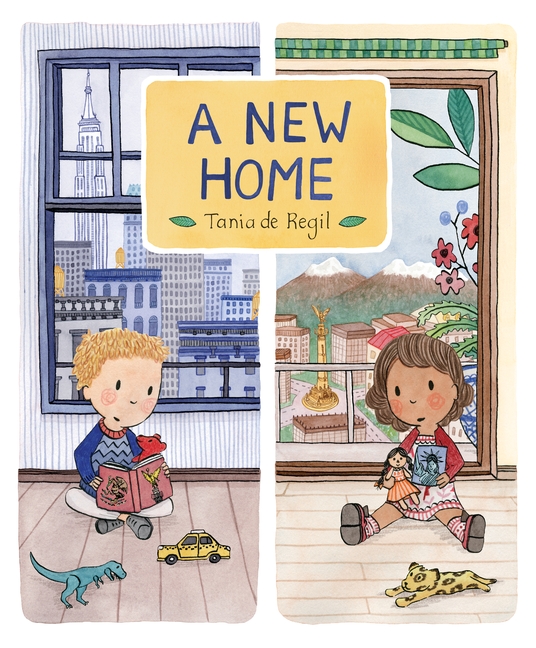
A New Home, by Tania de Regil, (April 2019, Candlewick Press), $16.99, ISBN: 9781536201932

Ages 4-7

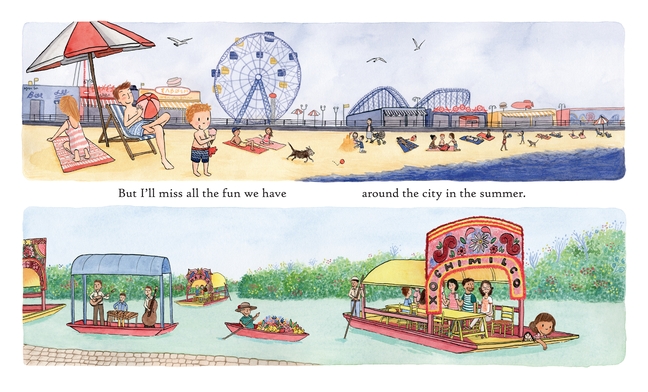
A boy from New York City and a girl from Mexico City are each moving, and nervous about their new home. Readers quickly understand that the kids are swapping places: the boy is moving to Mexico, and the girl, to New York. They voice their worries about everyday things they will miss: an after-school snack on the way home; cheering on a local sports team; having places to play. Optimistically, they also think about the new friends they will meet, and hope they enjoy their new home.

A New Home speaks to kids’ concerns and fears over leaving the familiar and starting over somewhere new, as it reassures those fears by illustrating another child enjoying those same things. The boy from New York stands under a T-Rex skeleton in the American Museum of Natural History as the girl from Mexico City stands in front of the Sun Stone in the Museo Nacional de Antropología, each hoping there will be places for their classes to explore their past. The book touches on some of the challenges of city life, including homelessness and poverty. Back matter provides more information about the places and images that come up in the book; everyday images like hot dog carts and street music all get their moment here. Soft, yet bright illustrations make big city living a little less overwhelming.

A New Home is a good addition to your books about moving. Brightly and Moving.com offer reading lists with further book suggestions. There’s a free, downloadable activity kit available through the publisher.

Posted in picture books, Preschool Reads

When Mom and Dad say no, Baby takes matters into his own hands… Baby’s First Bank Heist

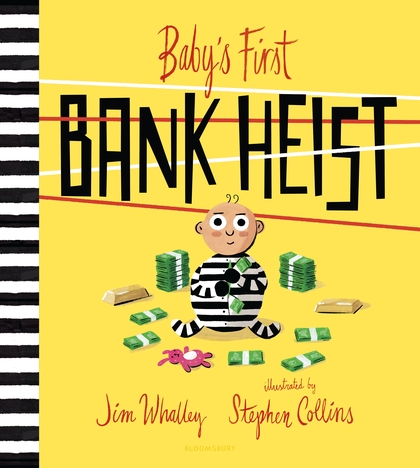
Baby’s First Bank Heist, by Jim Whalley/Illustrated by Stephen Collins, (March 2019, Bloomsbury), $17.99, ISBN: 9781547600625

Ages 3-7

Baby Frank is a cute little baby who loves animals and would love to have a pet, but Mom and Dad each say no. This doesn’t sit well with Baby Frank, who devises his own moneymaking scheme: he’s going to rob a bank. Hey, he’s already rocking black and white striped pajamas! He’s little, so he can crawl his way through laser beam alarm systems and past dozing guards. One Frank starts raking in the cash, he amasses quite the animal collection – but how much longer can he hide things from his parents? Frank’s cover is blown, and his parents devise a suitably adorable plan to repay the banks and put Frank to work.

Originally published in the UK, Baby’s First Bank Heist is a cute rhyming story that preschoolers and kindergartners will enjoy; they’ll appreciate Frank’s taking matters into his own hands, and they’ll get a laugh out of the different ways he tries to hide his growing menagerie from his parents. Cartoony gouache, ink, and Photoshop artwork is appealing, and makes for a fun pet storytime. Put some stuffed animals around the room and let the kids gather a few wild pets of their own.

YouthLitReviews, Imagination Soup, and Pre-Kinders all have really good pet picture book lists – add some to your pet storytime! Boss Baby is a good readalike, for stories about babies who are more than meets the eye. I also like Crackerjack Jack for a fun rhyming story about a robber waylaid by his duck. Hey… he kinda looks like Frank, come to think of it…

Posted in picture books, Preschool Reads

Babymoon celebrates that magical bonding time with a new baby

Babymoon, by Hayley Barrett/Illustrated by Juana Martinez-Neal, (March 2019, Candlewick Press), $16.99, ISBN: 9780763688523

Ages 3-7

“We’ll invite the world in soon, but for now – we’re on our babymoon”.

When new parents bring home their little bundle for the first time, there’s usually a line of well-wishers waiting to get in the door and visit, cuddle, and gush over the new arrival(s), but those days are also a big adjustment, too. Sometimes, you just want – need – some more time in that intimate bubble; more time to cuddle, gaze, and enjoy your new family, before letting the outside world in. It’s a time many refer to as The Babymoon, and Hayley Barrett and Juana Martinez-Neal have come together to create a gorgeous book celebrating that magical time.

Told in a gentle rhyme, this story of a mom, dad, and new baby is just gorgeous. It’s a celebration of discovery as a family; of “delighting in each small surprise”; of cuddly naps; of nursing; of lullabies and yawns; of connecting and figuring out one another. I adore award-winning illustrator Juana Martinez-Neal’s artwork – her book, Alma, is a beautiful look at the origin of a child’s name, and here, she uses warmly colored, soft, acrylic, colored pencil, and graphite artwork on handmade textured paper to capture the sheer wonder – and sleepiness, and even confusion – of this exquisite moment in time. Ms. Martinez-Neal creates illustrations that speak to readers; reaching up through the page and drawing them in, heart-first, to the story.

Babymoon is a lovely read-aloud and gift to new siblings, and assures kids (and adults alike) that it’s okay to keep the world outside for just a little bit longer, as they navigate this new little person. It’s a perfect baby shower gift, inviting new parents and parents-to-be to relax and enjoy this new time: everyone else can, and will, wait.

Babymoon has a starred review from Booklist.

Posted in picture books

Year One with Type One works on demystifying Type 1 diabetes

Year One with Type One: A True Story of a Boy with Type 1 Diabetes, by Mike Suarez/Illustrated by Olsi Tola, (Dec. 2018, Independently published), $11.99, ISBN: 978-1730703492

Ages 4-7

Inspired by the author’s son, Andrew, this rhyming story takes some of the mystery out of Type 1 diabetes (T1D) for children and families. Beginning with the big symptoms: excessive thirst and bathroom use – Andrew’s parents take him to the doctor and discover that he has Type 1 diabetes. But what does that mean? Author Mike Suarez explains a big word in easier to understand language. He soothes parents’ potential worries, too – Andrew’s parents wonder if they allowed their son too many sweets, but the medical staff quickly lets them know that Type 1 diabetes is nobody’s fault: Andrew’s pancreas has stopped producing insulin, but there are ways to live a happy, healthy, active life. Andrew’s family gets on board with technology, using apps, alarms, and emails to keep up to date on his blood sugar and keep his medical staff notified. He has healthy food, labeled with nutritional info (10g sugar each or a juice box and for a yogurt) and an emergency kit for when his blood sugar drops (lollipops). Andrew and his family also learn about the supportive community they’ve become part of: there are T1D camps and events, where kids and families can come together.  Andrew says it best when he sums up his first year with Type 1: “Diabetes is work from shots to blood samples/But there’s still time for fun/There’s lots of examples”.

The cartoony artwork is kid-friendly and helps mitigate some of the scary feelings a diagnosis may come with. The hospital is depicted as a bright, friendly place, with silly roommates, visiting therapy dogs, and giant fish tanks to see. The page with Andrew’s foods is laid out clearly, so families can see, and perhaps emulate, packing lunchboxes, travel snacks, and emergency sweets. A handwritten thank you note from the real-life Andrew concludes the story.

I loved seeing Andrew active and having fun. My niece was diagnosed with T1D as a preschooler; she’s now a junior in high school and a competitive gymnast. Going to a T1D camp was a fantastic experience for her. I’m so proud of her, I could burst. She – and her family – have come a long way from those first scary days. Books like Year One with Type One go a long way in dispelling myths and giving families a starting point after a diagnosis. It’s important to read these stories to all kids, too, so there’s no unknown to fear.

There are some good T1D resources online for kids and families. The American Diabetes Association has links to information about food and fitness, advocacy, awareness programs, and a chat line. They also have education resources for grades K-6 and 7-12. Endocrine Web has information for parents of children’s with T1D, including how to manage sick days, meal planning, and working with schools. There are also a number of e-alerts available for subscription.

Posted in picture books

Blog Tour: You Can Call Me Katelyn

Ever wish you could change your name? A young girl decides to do exactly that in Keri T. Collins’s new picture book, You Can Call Me Katelyn.


You Can Call Me Katelyn, by Keri T. Collins/Illustrated by Marcia Adams Ho, (May 2019, Purple Butterfly Press),
$19.99, ISBN: 978-1948604185
Ages 5-7

Inspired by Collins’s daughter and told in the first person from Katelyn’s point of view, readers learn that Katelyn was never thrilled with her name. Her parents didn’t even have a first named picked out for her in the hospital! Her parents settled on Carly, which she is NOT a fan of – and even less of a fan when she discovers that people can’t spell her name right. Katelyn decides to take charge of her happiness, which means changing her name: she likes Katelyn; a mashup of her two best friends’ names, and starts telling everyone around her to call her by her chosen name. Don’t want to call her Katelyn? She doesn’t want to answer you. She’s upbeat and enthusiastic, and lets readers know that all it takes is some determination and a little bit of sparkle to make the world a better place.

At some point, most kids aren’t in love with their names. It’s not like we have a choice when we’re born, after all. You Can Call Me Katelyn delivers a big message in a little story: overcome your fear and make changes where you can. It’s an inspiring message, and I’m sure this will be a popular read-aloud. I enjoyed the bigger message in this story – overcome fear and look within yourself for the power to effect change – and the author’s tips, available at the end of the book, for taking action and moving past fear. There’s a crown coloring sheet that kids can cut out and color; if you don’t want to damage your book, you can receive a coloring sheet via email at the author’s website.

The artwork is colorful and the pages are loaded with activity, always giving readers somewhere to look. There are humorous moments that kids will get a kick out of: Katelyn’s mother, holding her new baby in the hospital, covered with sticky notes scribbled over with baby names; baby Carly’s pacifier popping out of her outraged mouth as she sees her name misspelled on the sign welcoming her home from the hospital.

Pair this with some books and activities on the importance of names. Brightly has a great list and ideas here.


Posted in Intermediate, Non-Fiction, picture books

Picture Book Nonfiction in May: Spirit Bears and Teddy Bears

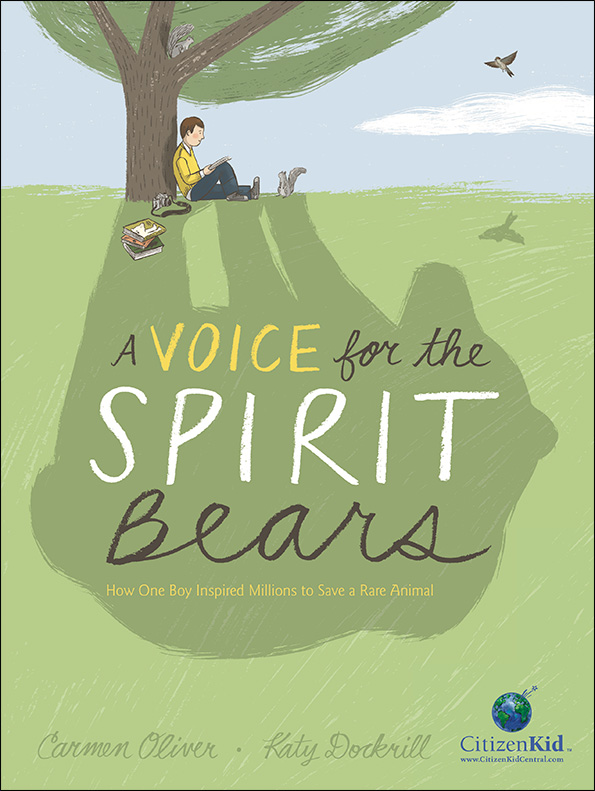
A Voice for the Spirit Bears: How One Boy Inspired Millions to Save a Rare Animal, by Carmen Oliver/Illustrated by Katy Dockrill, (May 2019, Kids Can Press/CitizenKid), $18.99, ISBN: 978-1-77138-979-2

Ages 7-10

Simon Jackson doesn’t quite fit in with the other kids as a child; he was bullied over his stutter, and found himself most at home in the woods, exploring, photographing, and learning about wildlife. As a teen, he found himself fascinated by a rare subspecies of black bear called a Spirit Bear and became an advocate and activist for the bears when their habitats were threatened with deforestation. Jackson founded the Spirit Bear Coalition, met Dr. Jane Goodall, and hiked the Great Bear Rainforest, always using his activism to educate others and advocate for the Spirit Bears. A Voice for Spirit Bears tells Jackson’s story, and shows kids that one is never too young to advocate for change. The book is an inspiring call to action for young activists (suggest a letter-writing exercise for a cause they believe in!). I would have liked to see a little more on the indigenous T’simshian people, for whom the Spirit Bear is sacred, but all in all, A Voice for Spirit Bears is a good biography on a young activist, with lovely, muted artwork. There are discussions to be had on overcoming obstacles, environmentalism and conservation, and activism, and would be a good STEM read-aloud. Check out the downloadable educator guide for discussion questions and an activity.

The Spirit Bear Coalition concluded its mission in 2014, after 20 years of advocacy. Their website is still active and offers education and information.


Teddy: The Remarkable Tale of a President, a Cartoonist, a Toymaker and a Bear, by James Sage/Illustrated by Lisk Feng, (May 2019, Kids Can Press), $18.99, ISBN: 9781771387958

Ages 6-10

Teddy brings together the story of the teddy bear in three parts. First, we have the legend: President Theodore Roosevelt refused to kill a “scruffy, no-account cub” while hunting. This story spread, and the Washington Post ran a political cartoon by Clifford Berryman, entitled, “Drawing the Line in Mississippi“, which led to husband-and-wife toymakers Morris and Rose Michtom creating a bear doll to honor “the President’s big warm heart”. They received permission from President Roosevelt to feature “Teddy’s Bears” in their shop, and an iconic toy was born. The book tracks the evolution of the teddy bear from those first bears, stuffed with wood shavings and with sewed on buttons for eyes, through today and notes how the teddy bear endures. It’s a happy, warm story, and the digital illustrations lend a realistic yet warmly colored feel to the tale. An author’s note mentions the differing versions of the Teddy Roosevelt story. It’s a cute book to have in your nonfiction collections, and would make a nice display with the Caldecott Medal-winning Finding Winnie.

For readers interested in learning more about Clifford Berryman’s political cartoons, the National Archives has a wonderful Clifford Berryman collection, which includes a great piece featuring Berryman drawing a bear, while a black bear stands next to him. The Theodore Roosevelt Center at Dickinson State University has an interesting blog entry on the origin of the teddy bear, and a link to Berryman’s artwork in their digital library.