Posted in History, Middle Grade, Non-Fiction, Non-fiction, Teen, Tween Reads

Important Reading: Fault Lines in the Constitution

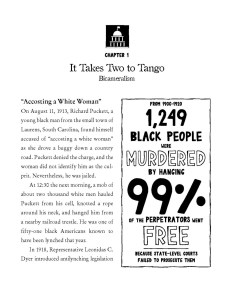
Fault Lines in the Constitution: The Framers, Their Fights, and the Flaws that Affect Us Today, by Cynthia Levinson and Sanford Sanford, (Sept. 2017, Peachtree Publishers), $19.95, ISBN: 9781561459452

Recommended for readers 10-14

You don’t need a political science degree to see that it’s been a pretty tumultuous year for our country. You don’t even need to watch the news: stick a toe into the social media waters or just go out in public, and you’ll hear all about our current political climate. What tweens and teens may not realize is that a lot of the political issues we’re struggling with today have their roots in the U.S. Constitution. Husband and wife scholars Cynthia and Sanford Levinson examine this document in detail, from its creation to the present, to point out fault lines – cracks in our foundation – how other countries may deal with similar issues, and suggestions for how to address the flaws.

Big-ticket takeaways include the Electoral College and state-by-state representation: how it’s great to be a tiny state, not so much a big state. An honest, no-holds barred look at our governing document, Fault Lines in the Constitution is an important book to have in libraries and classrooms today, tomorrow, and for years to come. Includes a timeline, extensive notes, bibliography, and index. Fault Lines in the Constitution received starred reviews from School Library Journal, Kirkus, and Booklist.


Cynthia Levinson holds degrees from Wellesley College and Harvard University and also attended the Lyndon B. Johnson School of Public Affairs. A former teacher and educational policy consultant and researcher, she is the author of the award-winning and critically-acclaimed We’ve Got a Job: The 1963 Birmingham Children’s March. Sanford Levinson is an American legal scholar and a professor at the University of Texas Law School. He holds degrees from Duke, Stanford, and Harvard universities and is the author of several adult works of nonfiction.

Posted in Fiction, Horror, Middle Grade, Teen, Tween Reads

Thornhill is good haunted house creepiness

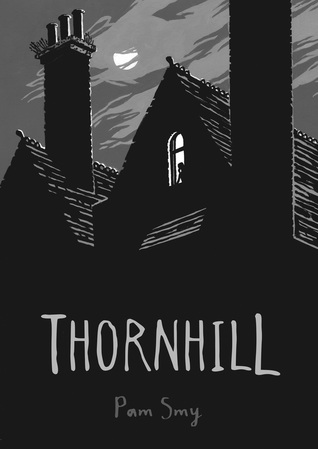
Thornhill, by Pam Smy, (Aug. 2017, Roaring Brook Press), $19.99, ISBN: 9781626726543

Recommended for readers 10-14

Two girls, two decades, one story: Thornhill is a story told in prose and pictures, switching back and forth to tell each character’s story. In 1982, Mary is a lonely orphan living in the Thornhill Institute for Children, relegated to her room where she makes puppets, for fear of the merciless bullying she suffers. The Institute is on the verge of closing, and the girls are being re-homed – except for Mary and her tormentor, who continues unabated by the social worker who prefers to victim blame. Mary’s story unfolds through journal entries, where we see the bullying turn her, desperately, to a plan for revenge that will echo for decades.

In 2016, Ella is the new girl in town, living in a home with a perfect view of the abandoned Thornhill Institute. As she looks out the window, she sees someone in the lonely attic window at Thornhill. Determined to discover who she is, Ella wanders onto the Thornhill property and unravels Mary’s – and Thornhill’s – story. Ella’s story is told through stark black and white artwork, leaving much for readers to discover. The narratives follow one another; Mary’s narrative enriches Ella’s story. The chilling ending will leave readers breathless.

Thornhill is captivating, urging readers to its conclusion. Mary and Ella are kindred spirits on their own journeys; while Ella’s story is relegated to what we see on the pages, there is a wealth of material there for sharp-eyed observers. It’s a great choice for suspense and thriller fans.

Posted in Fiction, Middle Grade, Realistic Fiction

Join the resistance: BAN THIS BOOK

Ban this Book, by Alan Gratz, Sept. 2017, Starscape), $15.99, ISBN: 9780765385567

Recommended for readers 8-12

Fourth grader Amy Anne Ollinger isn’t one to speak up. When her parents tell her to let her sisters get their own way, she listens. All she wants to do is read her books and stay off anyone’s radar, but that all changes when her favorite book, From the Mixed-Up Files of Mrs. Basil E. Frankweiler, is pulled from the library shelves after a classmate’s mother finds it inappropriate. Amy Anne is shocked when the school board carries the motion, but it gets worse when her classmate’s mom returns to the library with a list of MORE books. And the administration refuses to call it banning! Amy Anne launches into action: she starts her own banned book library, run out of her locker. As the battle of the books escalates, Amy calls some friends in for backup. They’re going to challenge every book in the library. The dictionary? You can find bad words, like “stupid”, in there. Goodnight Moon? That cute little mouse is a health violation! Math textbooks? Imaginary numbers don’t exist!

Ban This Book is wonderful, first and foremost, because it gives kids a voice. Amy Anne finds hers as the novel progresses, and defending her beloved books gives her the power to assert herself in other areas of her life. Alan Gratz gives us a protagonist of color who goes on her own hero’s journey in the course of this novel; from mouse (as drawn by her classmate) to advocate – and assistant librarian! Mr. Gratz also shows a valuable part of librarianship that most people don’t always associate with our little profession: defenders of the right to read. Ms. Jones, Amy’s school librarian, is portrayed as a knowledgable, dedicated professional – and one who notably does not “shush” her library kids – who fights for her books and her readers, challenging the school board over their decision to take her – the professional – out of the review and reconsideration process.

Amy Anne and her friends learn how to assemble as a group and use their strengths to form their own library, to organize their own challenge to the status quo, and to make decisions for themselves. Every character is a winner here, and extra kudos to the author for not making the board and PTA mom classic mustache-twirling villains here: Amy recognizes that they are good people who want to believe they are doing what’s best for their kids.

Every single book that the PTA mom challenges in Ban This Book can be found on the American Library Association’s list of frequently banned and challenged books.

An absolute must-add to reading lists and collections. Make this one the center of your Banned Book Week Display!

Posted in Fiction, Middle Grade, Middle School, Puberty, Realistic Fiction, Tween Reads

Things That Surprise You is touching, funny… giggles and tissues needed!

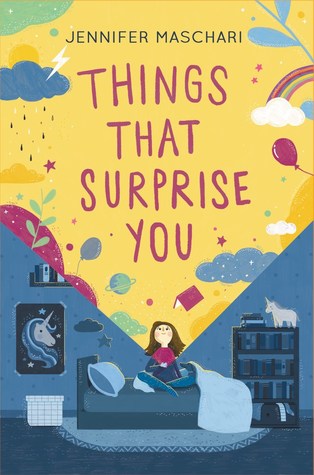
Things That Surprise You, by Jennifer Maschari, (Aug. 2017, Balzer + Bray), $16.99, ISBN: 9780062438928

Recommended for readers 10-13

Best friends Emily and Hazel are about to start middle school. They’ve done just about everything together, and Emily just wants things to stay the same. You can’t blame Emily; she’s had too much change over the last year, with her parents’ divorce and her sister , Mina, being treated for an eating disorder. But Hazel is changing. She’s already in with a new crowd at school – a crowd that isn’t into Emily at all – and she wants to be different. While Emily is still into their fandom, The Unicorn Chronicles, and crafting, Hazel is into lip gloss, clothes, and getting boys at school to notice her.

Things That Surprise You is a compulsively readable novel about growing up and moving on; negotiating change; making new friends, and most importantly, discovering oneself. Emily is so likable, you just want to defend her and comfort her. Older sister Mina is on her own painful journey; she could easily have become a bitter antagonist, but is written with care and compassion that will encourage readers to root for her, too. Their mother is doing the best she can with what she has, and their father just can’t cope, so he doesn’t. Each parent’s actions illustrate to kids that adults may not have all the answers, and that we make lousy decisions, too. I enjoyed reading about every character in this book, including the mean girls, who are vapid and awful and make us want to see Emily succeed even more.

This is a great book for discussion groups, because the subplots that support the main plot are all worthy discussion topics on their own: going with or against the crowd, eating disorders, self-acceptance, and navigating family relationships are just some of the things that come up. I’d love to see this on summer reading lists for next year. Nudge, nudge, teachers!

Jennifer Maschari is a classroom teacher and the author of The Remarkable Journey of Charlie Price and Things That Surprise You. She is hard at work on her next middle grade novel with Balzer+Bray/HarperCollins. Jennifer lives in Ohio with her husband and stinky (yet noble) English bulldogs, Oliver and Hank. To learn more, and to download a free guide, visit Jennifer’s author website.

GIVEAWAY!

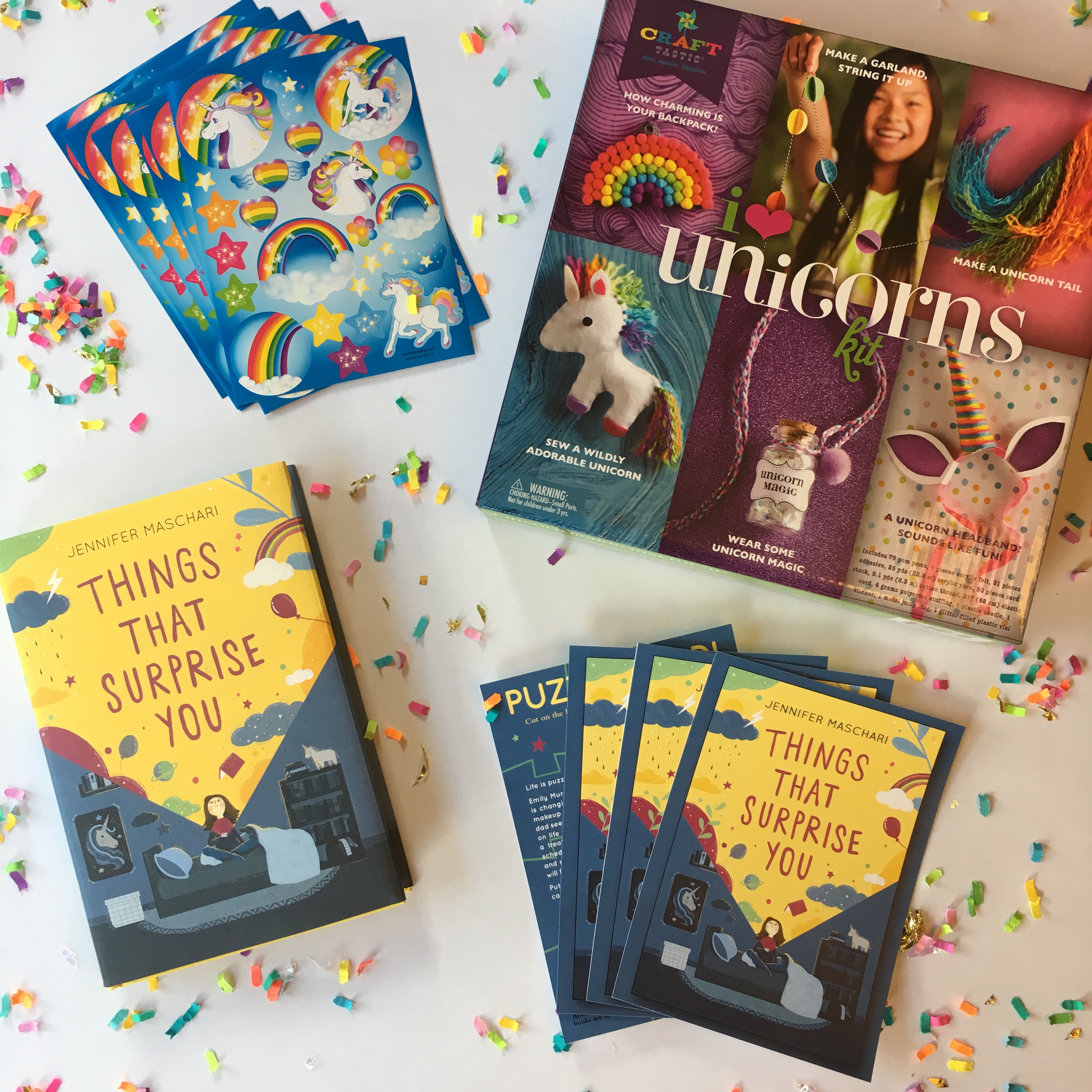
One lucky winner will receive a copy of Things That Surprise You… PLUS, one grand prize winner will receive their very own Crafty Unicorn Kit! The prize includes a fun craft kit, a copy of Things That Surprise You, unicorn stickers, and puzzle cards! Enter here – don’t miss out!

Posted in Intermediate, Middle Grade, Non-fiction, Non-Fiction

Andrew Carnegie, The Man Who Loved Libraries

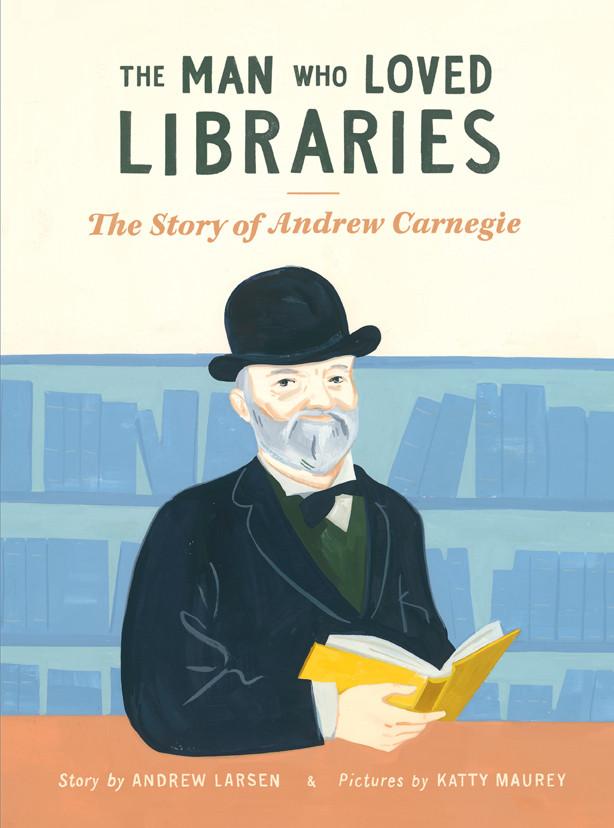
The Man Who Loved Libraries: The Story of Andrew Carnegie, by Andrew Larsen/Illustrated by Katty Maurey, (Aug. 2017, OwlKids Books), $16.95, ISBN: 9781771472678

Recommended for readers 8-10

Andrew Carnegie started out in life in Scotland, the son of a weaver. He and his family came to the United States, where he went to work; first, in a cotton mill, then as a messenger boy. He knew the key to success was in learning, and took advantage of the opportunities afforded by a local businessman, who made his private library collection available. As he became wealthier, he considered it his duty to help others help themselves: he built libraries. He built a library in the Scottish village where he was born, and went on to build over 2500 public libraries worldwide.

Andrew Larsen gives readers a concise biography of a premier industrialist and philanthropist, with a strong emphasis on the power of education and philanthropy. Award-winning illustrator Katty Maurey creates beautiful artwork to accompany Larsen’s text, framing her subjects with buildings and storefronts, and creating depth with her full-page art to show us a young Carnegie, standing on a library ladder as he explores Colonel Anderson’s private collection, and an older Carnegie in front of a map of the Americas (and Greenland), basket of yellow flags on one arm, surrounded by books and his dog as he maps out his library plans.

Andrew Larsen is an award-winning children’s author. Find more about his books and link to his blog by visiting his author website.

Posted in Horror, Middle Grade, Tween Reads

Dark middle grade fantasy: Room of Shadows

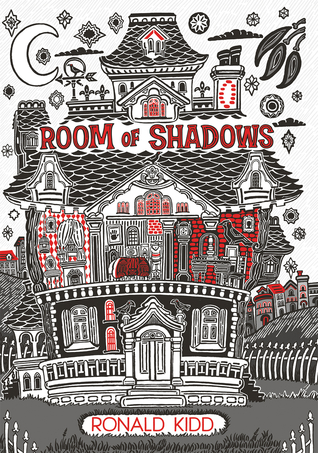
Room of Shadows, by Ronald Kidd, (Aug. 2017, Albert Whitman), $16.99, ISBN: 9780807568057

Recommended for readers 10-13

David finds himself with a lot of anger lately. I mean, it’s justified: his dad abandoned his mom, and they’ve been forced to move into this creepy old house. When a school bully messes with him on a bad day, David beats him up, earning some in-house grounding from his mom. That’s where he discovers the room: a secret room with an old desk and a carving of a Raven, signed, “EP”. The weird dreams start shortly after. When the incidents start at school, all involving people who David’s tangled with, everyone starts looking at him differently, including his mom and the police. How can David prove he isn’t The Raven – the person responsible for the incidents, who leaves a signed note each time? And how can he keep himself safe from The Raven, who’s fixated on him?

With a background in Edgar Allan Poe’s history, I dove eagerly into Room of Shadows. The author takes Poe into very dark territory here, for reasons that become clear as the story progresses. It’s an interesting concept, but one I had a hard time with. I didn’t really get to know David or his best friend, Libby; I felt like their character development took more of a backseat, allowing the Poe storyline to drive the plot. I did like the nod to some of Poe’s greatest hits in the story, including The Tell-Tale Heart, The Black Cat, and The Pit and the Pendulum; it’s always great to discover Poe in new fiction. This one wasn’t my book, but middle grade horror fans who are ready for something weightier than Goosebumps and Haunted Mansion may sit down with this one.

Posted in Fantasy, Fiction, Middle Grade, Science Fiction, Tween Reads

Gamer Squad takes on video game monsters in the real world!

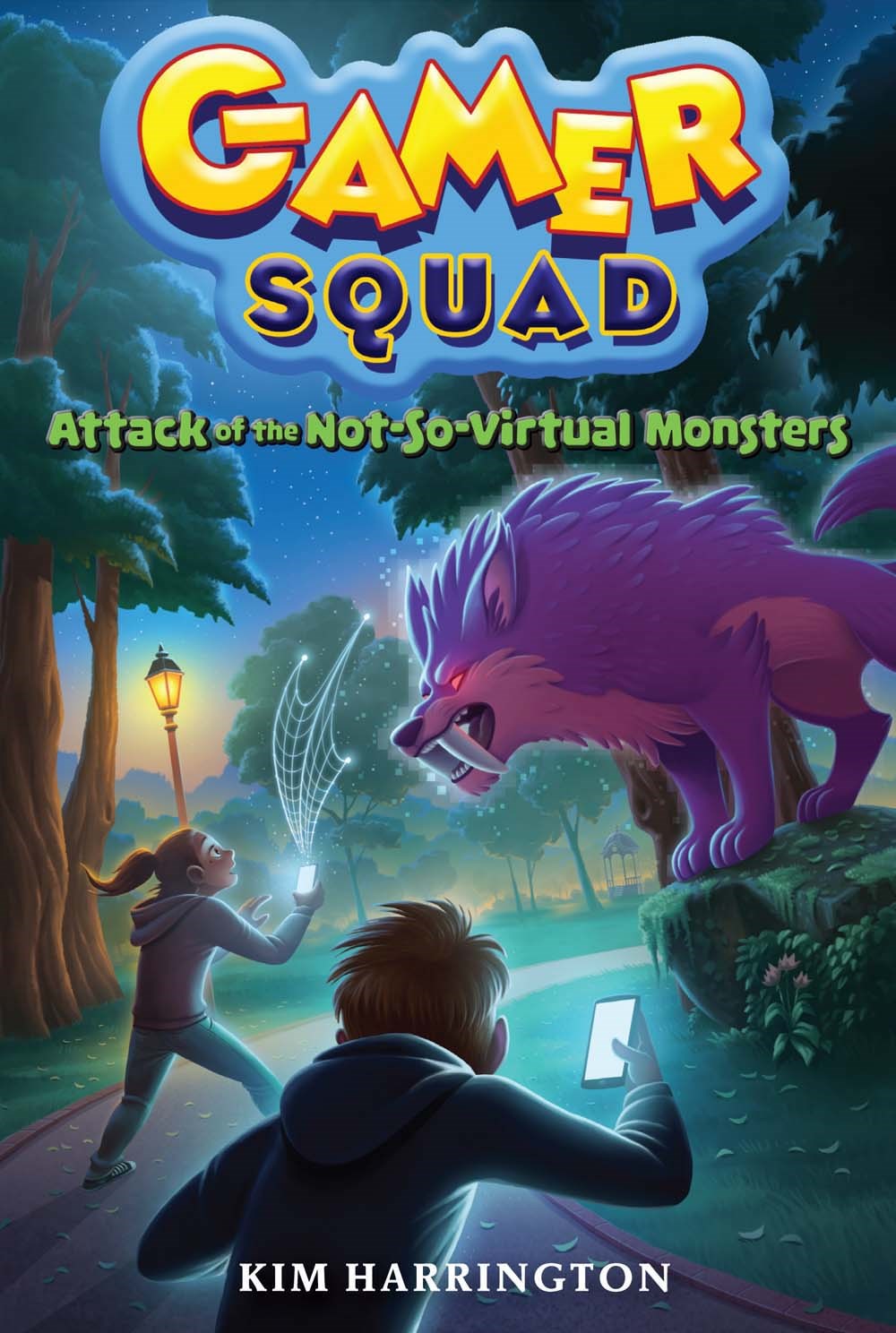
Gamer Squad: Attack of the Not-So Virtual Monsters, by Kim Harrington, (Aug. 2017, Sterling), $6.95, ISBN: 9781454926122

Recommended for readers 8-12

Bex is a gamer, and her game of choice is Monsters Unleashed: an augmented reality game where you hunt and capture monsters using your smartphone and the game app. (Pokemon Go players, you got this.) She and her best friend, Charlie, love playing the game until a mishap with a strange machine at Charlie’s grandfather’s place causes a WiFi gitch and empties Bex’s monster catalog… into the real world! Now, it’s up to Bex, Charlie, and a frenemy Willa to track them all down and get them back before the monsters overrun their town.

Gamer Squad is one of those series you just know the kids are going to swarm when you get them on the shelves. It brings handheld gaming to middle grade fiction with fun and adventure, and author Kim Harrington manages to give us a strong female protagonist, a story about friendship, and addresses bullying all at once. It’s a fast-moving story with likable characters, excitement, and leaves you ready for the sequel, which in this case, released on the same day.

Gamer Squad: Close Encounters of the Nerd Kind, by Kim Harrington,
(Aug. 2017, Sterling), $6.95, ISBN: 9781454926139

A no-brainer for your gamer kids and a nice fiction-y wink to add to your STEM program displays. I’ve just ordered both for my library; the third book hits shelves this Fall.

Posted in Fiction, Intermediate, Middle Grade, Middle School, Non-Fiction, Non-fiction, Realistic Fiction, Tween Reads

Summer of STEAM: Girls Who Code Two-Fer!

I love coding and playing around with computer science-y type stuff. In my mind, I look like this:

When I create this.  (This is actually mine! I created it using Scratch.)

I do my best to get science in front of my own kids, and my library kids, at every opportunity. The kids here at my library are Minecrafters, so I feel like I’ve got an in and am working on building a nice, tech-friendly nonfiction section; the next additions on my list are from the organization, Girls Who Code.  If you aren’t familiar with Girls Who Code, they are a New York-based organization on a mission to close the gender gap in the tech industry and the classroom. They teach girls to embrace tech and to code, to create, and most importantly, not to fear science and math. Andrea Gonzalez and Sophie Hauser, two GWC grads, wrote Girl Code: Gaming, Going Viral, and Getting It Done, where they talk about their GWC experience.

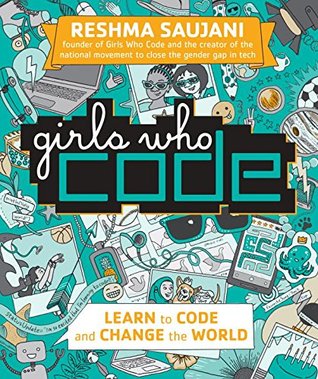
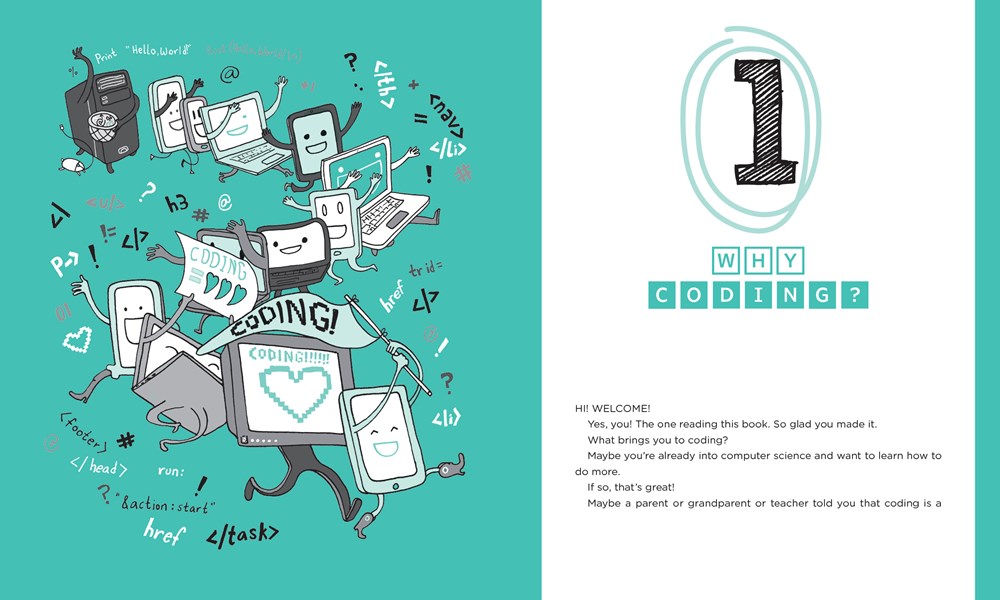
Now, Reshma Saujani, Girls Who Code founder, is releasing her own book, Girls Who Code: Learn to Code and Change the World (Aug. 2017, Viking, $17.99, ISBN: 978-0425287538). It’s a coding beginner’s guide, a spotlight on women in the computer science industry, an empowering career guide, and introduction to STEM for girls, all rolled up into one volume. It’s fun and easy to read, with Reshma speaking to readers in a comfortable, friendly voice; she gets some help from a group of illustrated, diverse girls: Lucy, Erin, Sophia, Leila, and Maya. The illustrated group of friends (more on them later) explain concepts and act as a step-by-step example of different stages of coding and creating.

What sets Girls Who Code: Learn to Code and Change the World apart from all the other coding books out there? Glad you asked. The tone, for starters, is fun, light, and personal. Reshma and her group of illustrated friends are talking straight to readers. The two-color illustrations are fun, like those you’d find in a middle grade novel, and feature characters from different ethnicities; Leila rocks a hijab, Maya is an Asian fashionista with a sleek bob; Lucy is African-American, Sophia is Latina, and Erin is a blonde. The group of friends come together to create apps and problem solve their coding; we’re invited along for the ride. Not sure you want to go into computer science? That’s no problem, either: GWC points out how many careers and hobbies incorporate coding these days, from baking, to politics, to social justice, sports, and art.  You’ll learn new terms, like pseudocode – that’s when you write out the steps of your program in plain language, to brainstorm and go over your program before starting to code. There are further Web resources and a glossary to complete this trusty guide to STEM life. Trust me, you’ll never look at the mere making of a peanut butter and jelly sandwich again after you read this.

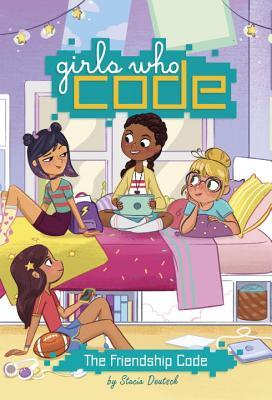
Also arriving the same day as Girls Who Code: Learn to Code and Change the World is the first in a new GWC series of fiction chapter books, starring the Girls Who Code we met in the previous book: Lucy, Erin, Sophia, and Maya (Leila’s arriving in the next book) come together thanks to a coding club in the new adventure, The Friendship Code, by Stacia Deutsch.

Girls Who Code: The Friendship Code, by Stacia Deutsch, (Aug. 2017, $12.99, ISBN: 9780399542510)


We get some background on each character: there’s been some past drama between Lucy and Sophia; Erin is an army brat who’s new in town; Maya is the fashionista who has a fashion column in the school newspaper; Sophia’s an athlete, and Lucy is fixated on learning to code so she can create an app to help her sick uncle remember to take his medicine. Thanks to the Coding Club, the girls learn that coding is more than just banging out numbers on computers (sometimes, to Lucy’s chagrin). With a fun mystery thrown in, the GWC series is like a Babysitter’s Club for a new group of tech-savvy kids. The series is great for intermediate-level readers; black and white illustrations and a quick pace make this novel a fun read that introduces younger middle graders to beginning coding terms and STEM. The mystery is even written in pseudocode – maybe a fun thing to introduce to your kids! Slip a pseudocode note into a lunchbox here, introduce a pseudocode scavenger hunt there… the possibilities stretch far and wide. Where Girls Who Code: Learn to Code, Change the World is best for your middle schoolers and upper middle graders, Girls Who Code: The Friendship Code is a great way to get younger middle graders familiar with the characters, the language of coding, and the fun of STEM.

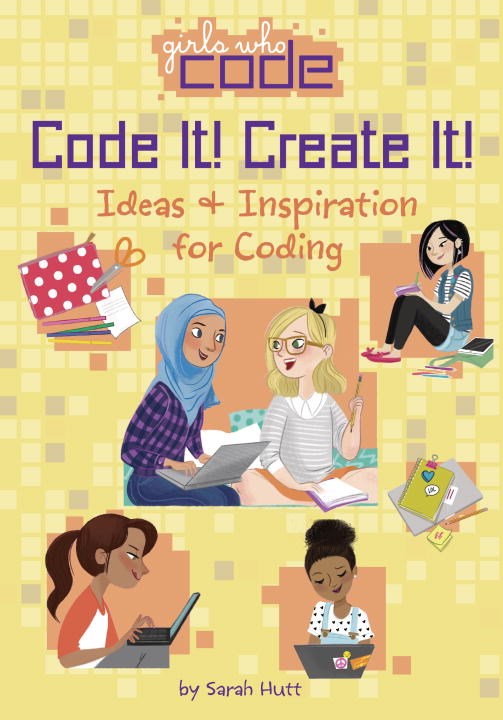
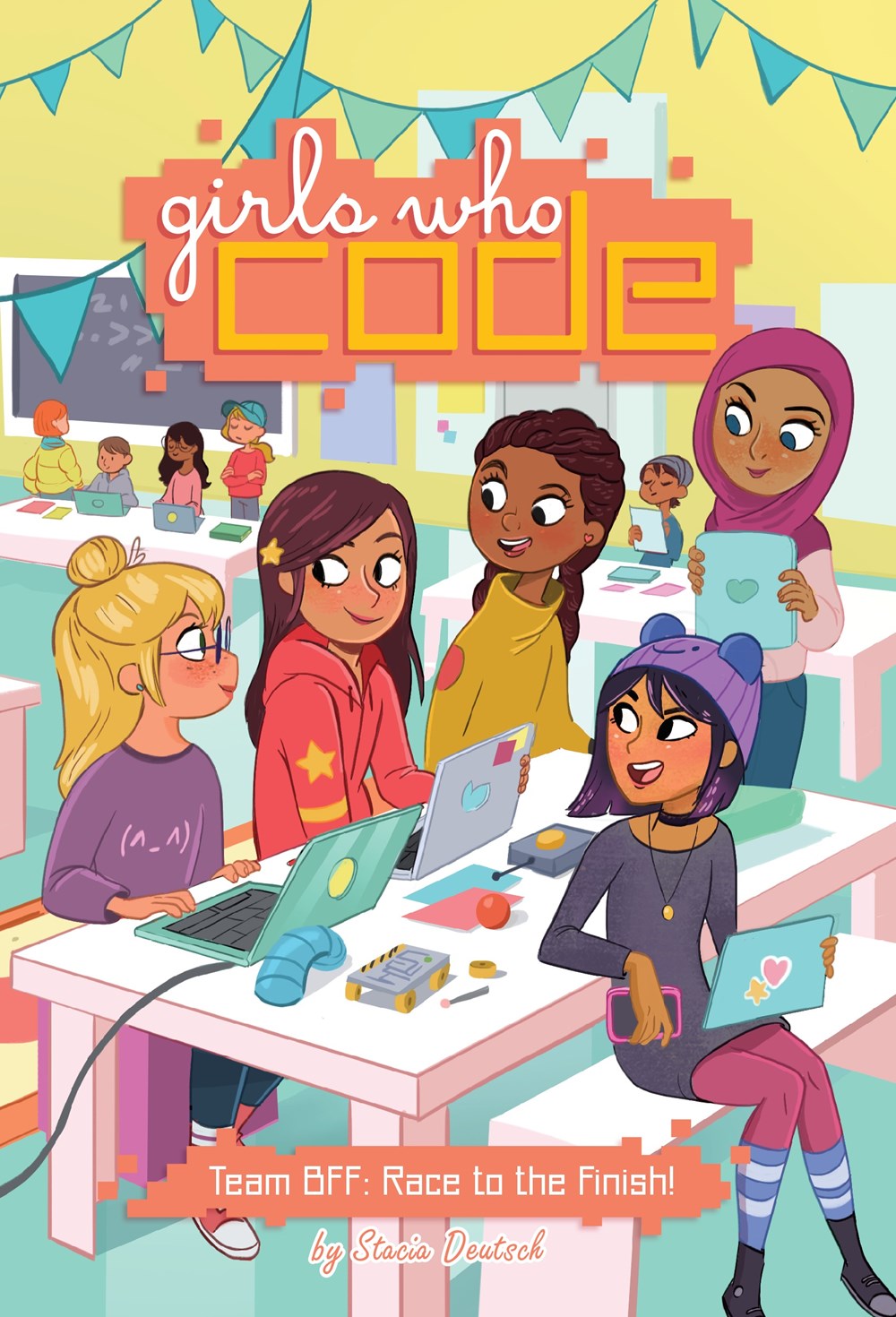
In October, we’re getting another nonfiction/fiction GWC combo, when Code It! Create It! and Team BFF: Race to the Rescue! hit shelves. I’ll be waiting!


Posted in Fiction, Fiction, Humor, Middle Grade, Realistic Fiction

Meet two new middle grade heroines with big imaginations

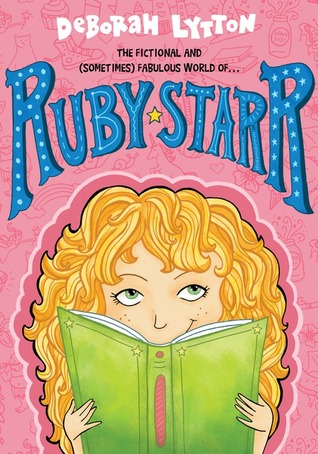
Ruby Starr, by Deborah Lytton, (Aug. 2017, Sourcebooks Jabberwocky), $7.99, ISBN: 9781492645771

Recommended for readers 8-12

Ruby Starr loves getting lost in a good book. She even has a lunchtime book group with her BFFs at school: The Unicorns! Things change when Charlotte, the new girl in school, shows up and starts making big changes: she scoffs at reading and wants to make The Unicorns a drama club, and she’s spending more and more time with Ruby’s best friend, Siri. Ruby needs to dig deep into her imagination to help bring things back to normal again.

Part Secret Life of Walter Mitty, part Dork Diaries, Ruby Starr is a lovable new protagonist for middle grade readers. She daydreams scenarios to help her cope with the everyday frustrations – or imagine exciting outcomes for upcoming events – and zones out while she’s doing it, making for some giggleworthy moments throughout the story. The imagination sequences are illustrated, letting readers in on the joke. The stress of friendship – and losing it – will resonate with middle graders, as will the fear of being the outsider in the group; Ruby handles these challenges with humor and style, even reaching out to her frenemy and offering a helping hand. I loved seeing a nice librarian-student relationship, too; maybe the author can give us a Ruby Starr/Unicorns reading list to promote to our kids!

Ruby Starr is a fun entry into the humorous journal fiction sub-genre. Give this to your Dork Diaries, My Dumb Diary, and Frazzled (by Booki Vivat) readers. Ask them to draw an imaginary scenario for themselves! There’s a reader’s guide on Deborah Lytton’s author webpage, along with an author Q&A and link to her blog.
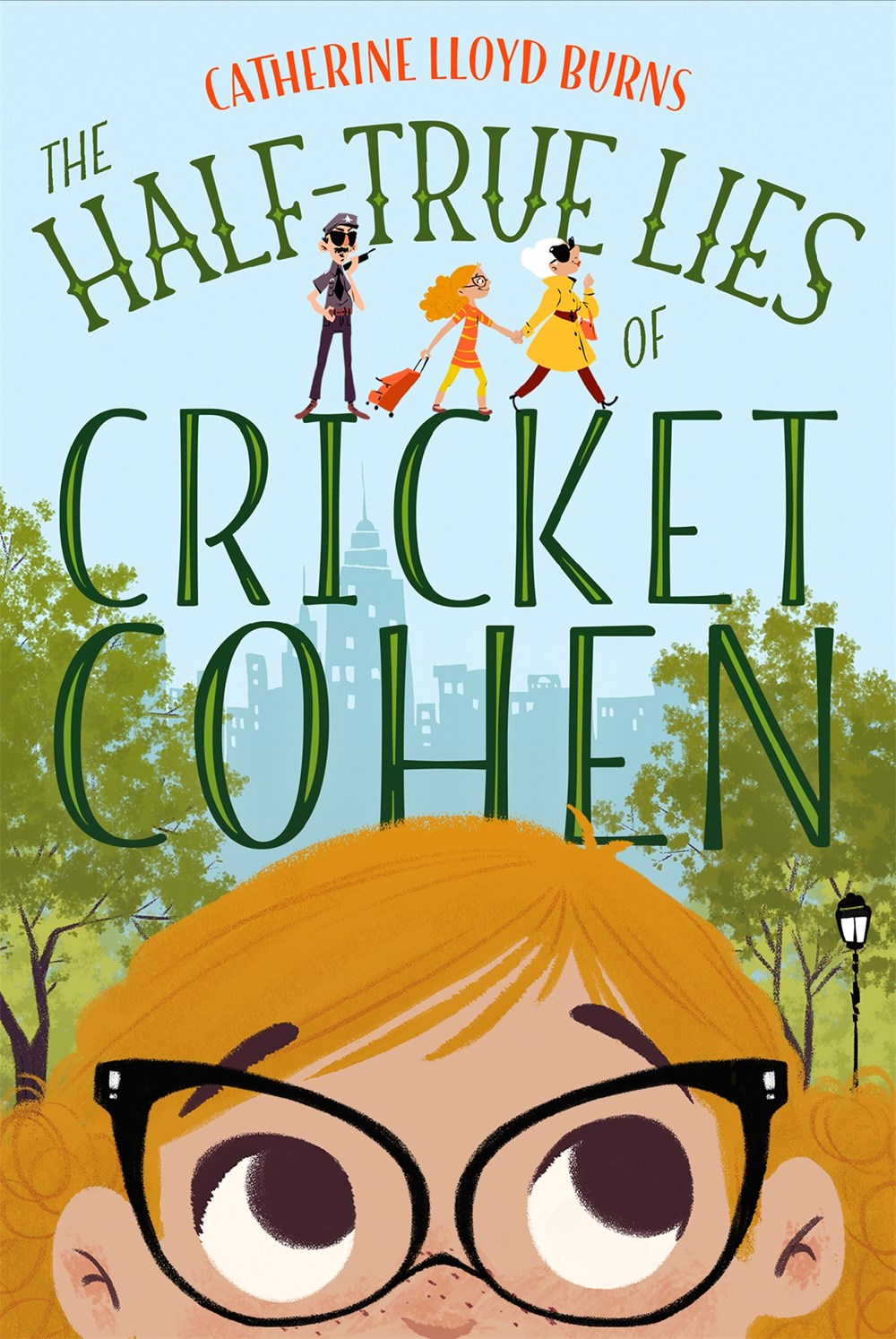
The Half-True Lies of Cricket Cohen, by Catherine Lloyd Burns, (Aug. 2017, Farrar, Straus & Giroux), $16.99, ISBN: 9780374300418

Recommended for ages 8-12

Cricket Cohen has a big imagination. Sometimes, it gets away from her – especially when she wants to impress someone, or just make a boring autobiography school assignment a little more exciting. After all, it’s fun when she and her grandmother pretend, right? Well… wrong, at least according to her schoolmates, who are tired of her making up stories, and her teacher, who wants her to redo her autobiography assignment with the truth this time. When her parents leave her alone with her grandmother, Dodo, while they go summer house-hunting in the Hamptons, Dodo convinces Cricket that they’re going to run away and have an adventure; Cricket’s all too happy to go. But Dodo starts becoming confused, and Cricket finds herself having to bail herself AND Dodo out of hot water when she’s the only one who knows what’s fact and what’s fantasy.

The Half-True Lies of Cricket Cohen is much more than a novel about a kid who likes to embellish the truth. It’s a story about grandparents and grandchildren, and it’s a story about what happens when children find themselves with the responsibility of caring for an adult: something that today’s kids sometimes find themselves managing.

Cricket finds herself disappearing into her imagination to deal with her boring classmates who prefer talking about clothes, shoes, and crushes to geology and stuffed animal brain surgery, but you can also argue that it’s an attention-seeking response to her parents, who are consumed with their nonprofit fundraising for the city’s public schools. They live above their means, and her mother – a control freak and perfectionist – treats her own mother like an inconvenience. Artsy free spirit Dodo pushes back against her daughter’s rules and regulations, and Cricket embraces her kindred spirit; but Cricket, previously unaware of her grandmother’s health struggles, finds herself in the position of being responsible for herself and her grandmother when her grandmother’s failing memory causes a problem in a department store.

The New York setting is fun – it’s got a touch of From the Mixed Up Files of Mrs. Basil E. Frankweiler to it. The story handles big issues like family relationships, aging grandparents, and embellishing the truth with a shot of fun and adventure. At the same time, the Dodo is the one character that remains truly likable throughout the story. Cricket and her family may be living above their means, but they are still an upper middle class family, living on New York’s Upper West Side and renting summer homes in the Hamptons. Her parents border on neglectful, putting the welfare of New York City’s public school children ahead of their own daughter’s. Cricket’s actions are understandable in the bigger picture, and she becomes a more sympathetic character as the story progresses.

Have The Half-True Lies of Cricket Cohen available, along with Death by Toilet Paper by Donna Gephart, and There Will Be Bears, by Ryan Gebhart, for readers who may be coping with an aging grandparent. Booktalk it with Mrs. Basil E. Frankweiler, Kay Thompson’s Eloise, Laura Marx Fitzgerald’s Under the Egg, and Nadja Spiegelman’s Lost in NYC graphic novel for a fun New York reading theme.

Posted in Middle Grade, Non-Fiction, Non-fiction, Tween Reads

Catch up on U.S. History with NatGeo Kids

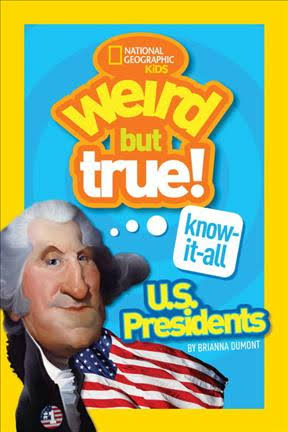
Weird But True! (Know-It-All) U.S. Presidents, by Brianna Dumont, (July 2017, National Geographic Kids), $12.99, ISBN: 978-1426327964

Recommended for readers 8-12

I love these NatGeo Kids’ facts-at-a-glance books. I learn something new every time, and I have a good time reading them. I’m pretty sure my library kids agree with me, because these books fly off the shelves. In this latest Weird But True, NatGeo gives readers a quick rundown of the U.S. Presidency: fun facts, a renovation timeline, an overview of the three branches of government and the powers of the Supreme Court, Congress, and the President; from there, we get a profile of each President, from Washington through to 45. Profiles run between 2 and 8 pages, outlining high points (Oval Awesome), low points (Oval Awful), and fun facts (Why He’s Weird!). It’s a fun read, loaded with caricature art and photos. Also a nice little supplement for reports and projects down the line.


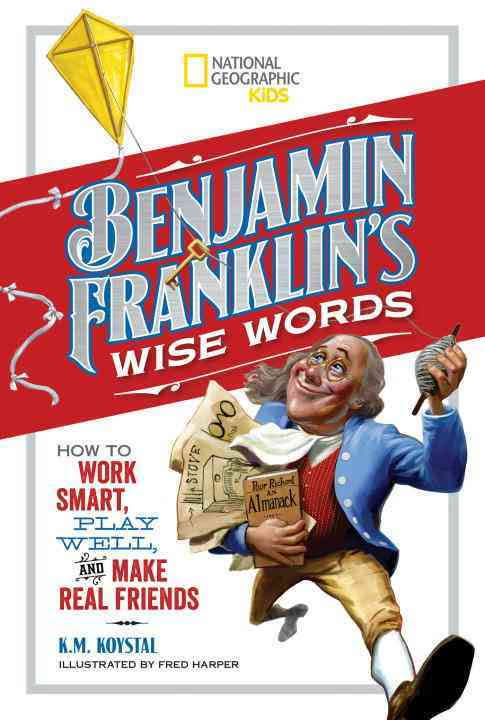
Benjamin Franklin’s Wise Words: How to Work Smart, Play Well, and Make Real Friends, by K.M. Kostyal/Illustrated by Fred Harper, (Jan. 2017, National Geographic Kids), $16.99, ISBN: 978-4263-2699-8

Recommended for readers 8-12

Think of this as a “Life’s Little Instruction Book” for middle grade history fans. Ben Franklin’s sage advice is organized into quotes on tranqulity, industry, order, humility, resolution, sincerity, and moderation. Readers may be surprised at how many sayings they’re familiar with: “there are no pains without gains”, “haste makes waste”, and “honesty is the best policy”. There are 50 of Franklin’s quotes in this book, each with an accompanying caricature illustration with loads of physical comedy to appeal to middle graders. Quotes receive a more modern, accessible translation and a story about Franklin’s life, which may cause a disconnect to anyone who expects the story to illustrate the quote. It’s a fun look at one of U.S. history’s more fascinating characters, but unless you have a dedicated Franklin fan or two, it’s a supplemental or secondary add to your collection.