Posted in Fantasy, Fiction, Middle Grade, Tween Reads

What memories does YOUR door hold?

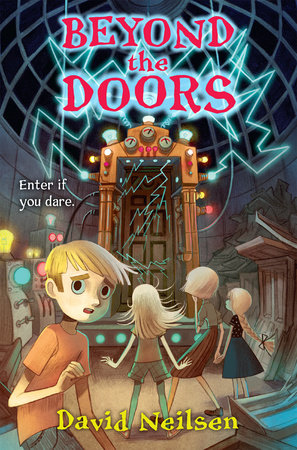
Beyond the Doors, by David Neilsen, (Aug. 2017, Crown), $16.99, ISBN: 978-1-101-93582-8

Recommended for readers 8-13

Four siblings have the weirdest, worst day of their lives when they’re pulled out of class to learn that their father is in a coma after a fire consumed their home. As their mother disappeared years ago, there’s a sobbing social worker, ready to split them up to horrors unknown, until a mystery aunt is located. Janice, Zack, Sydney, and Alexa Rothbaum are quickly shuttled off to this mysterious, scatterbrained aunt. Once the kids start exploring and settling in, they learn the bizarre secret behind their aunt’s fortress home: she’s got a machine that allows her to use doors to access the memories contained within them, and she’s searching for her father: their grandfather.

Remember Monsters, Inc? How the Monsters would go through different doors to reach different kids’ rooms? Think of it like that, but instead of using the doors to get into kids’ rooms, you stepped into the memories of the person most identified with the door. If you stepped through the door to my room from 1986, for instance, you’d see me, sprawled on my bed reading a copy of Bop! Magazine, in a room papered with Duran Duran posters, and talking to my best friend on the phone. The memories are sepia-tinged, and while you can interact to a degree with the memories, too much interaction has… consequences.

It’s a madcap adventure, with a wacky aunt, an off-the-walls social worker with a penchant for the melodramatic, and loads of family secrets to discover, but character development and world-building aren’t as rich as I’d have enjoyed. There’s quite a bit of humor and a climactic battle that’s both gruesome and thrilling, and readers will never look at a bowl of Cheerios without groaning again. Black and white illustrations keep readers invested in the story. Beyond the Doors will appeal to Series of Unfortunate Events and Mysterious Benedict Society fans; display and booktalk with The Problim Children for some fun discussions about weird siblings and families. Ask kids what doors they would like to wander into – or what their doors would have to say. It’s a great creative writing or art exercise!

Posted in Adventure, Fiction, Middle Grade, Science Fiction, Tween Reads

Art takes on a new dimension in The Maker

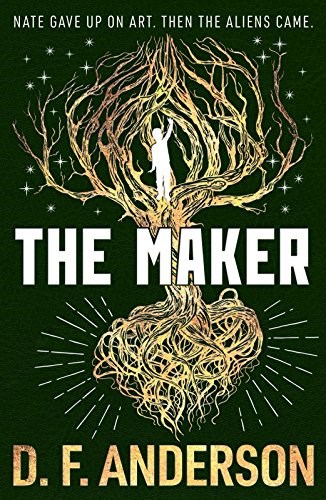
The Maker, by D.F. Anderson, (Jan. 2018, Underdog Books), $14.95, ISBN: 9780991800346

Recommended for readers 9-13

Thirteen-year-old Nate loves to draw. It’s one of his lasting connections with his father, who’s been gone for months, with no word. His mother’s boyfriend, Ted, goes at Nate whenever he gets a chance, insulting his artwork and attacking his grades; his mother is no comfort. Things change rapidly for Nate when a group of aliens show up at his window one night, telling him that he and his father are Makers: artists with the talent to bring their drawings to life. Nate’s father hasn’t abandoned them, he’s been kidnapped, and the aliens from the planet Meer are relying on Nate to help them save his father and the other kidnapped Makers before a cruel alien race wipes them out – and then heads for Earth.

The Maker has a great concept: using living beings as 3-D printers, when you think about it. By channeling their talents, Makers can give life to their drawings to create starships, cities… the sky’s the limit. The Makers connect with an energy source, mica, to give shape to their ideas; they can collaborate on large projects, or work individually to create small, detailed pieces. Readers will get into the sci-fi adventure story and relate to Nate, a kid who’s been put down to the point where he doesn’t believe in his own talent until put to the test – and then exceeds his wildest dreams. The evil parent/boyfriend situation is addressed in a neatly wrapped-up plotline. There are warring alien races, planet-eating machines to stop, and strong relationships that sci-fi and fantasy fans will enjoy, plus some moments of humor, including an evil alien who can be tortured… by pulling on his toe. Made you smile!

Add this to collections where you have sci-fi readers. Display this with some maker titles, and have a booktalk ready when kids come over and ask why it’s there.


Posted in Fantasy, Fiction, Middle Grade, Tween Reads

Aru Shah and the End of Time: Rick Riordan Presents with a strong debut!

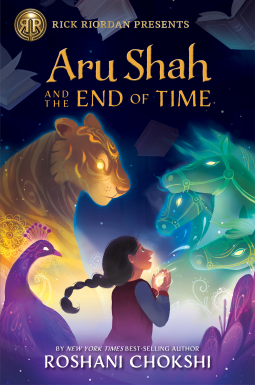
Aru Shah and the End of Time, by Roshani Chokshi, (March 2018, Disney Book Group), $16.99, ISBN: 9781368012355

Recommended for readers 8-12

Rick Riordan introduces his new imprint with Aru Shah and the End of Time, author Roshani Chokshi’s adventure through Indian mythology.

Aru Shah is a 12-year-old Indian girl who has a hard time fitting in at school, so she… embellishes the truth… to keep up with her wealthy classmates. The thing is, they all know she lies, and she’s become a target of derision over it. She lives with her archaeologist mother in the Museum of Ancient Indian Art and Culture, and tells her friends that there’s a cursed lamp in the exhibits. Naturally, they show up, demanding her to prove it. Ignoring her mother’s advice to never touch the lamp, Aru lights it and unwittingly releases The Sleeper – an ancient demon – who’s going to awaken the Shiva, the god of destruction, if Aru can’t make things right in time. After discovering that Aru is the reincarnation of one of the legendary heroes, the Pandava brothers, she sets off on a mythological adventure where she’ll learn more about herself and her mother than she could ever have imagined.


I was so excited to read Aru Shah, especially after finishing Sayantani Dasgupta’s brilliant The Serpent’s Secret a couple of weeks ago. Indian mythology is an area I’ve never read much about, and it’s time that was remedied. Aru is on a quest to save her family and friends, and she’s not alone: she’s got a Pandava sister she meets on the way, and a disgraced god-turned-pigeon to guide her as she seeks out the weapons that will stop the Seeker. There’s great world-building, with humor and a sense of wonder as Aru meets gods and goddesses she thought existed only in myth; the character development is great for people unfamiliar with Indian mythology, as each god, goddess, and demon gets enough of an explanation to keep readers in the story. There’s a glossary at the end to help readers with the origin tales of Indian myths featured in the book.

You know who to give this to: the Percy Jackson/Kane Chronicles/Magnus Chase/Riordan readers who love world mythology; the kids who read Serpent’s Secret and wanted more? Now you can give them Aru Shah and tell them that Rick Riordan Presents has Mayan and Korean mythology coming up next. Aru Shah and the End of Time has starred reviews from School Library Journal, Publisher’s Weekly, and Kirkus.

Posted in Fantasy, Fiction, Humor, Middle Grade, Tween Reads

The Problim Children: Seven kids, seven days of the week, and an age-old mystery

The Problim Children, by Natalie Lloyd/Illustrated by Julia Sarda, (Jan. 2018, Katherine Tegen Books), $16.99, ISBN: 9780062428202

Recommended for readers 8-12

The Problim Children is the first in a new middle grade series about seven… different siblings, each born on a different day of the week, and their adventures. We have Mona, Monday’s child, who may be fair of face, but she’s a bit macabre… Toot, Tuesday’s toddler, who has a catalog of farts for all occasions; Wendell and Thea, twins born on Wednesday and Thursday, who spend all of their time together; Friday’s child, Frida, speaks in rhyme; Sal, Saturday’s child, loves to work in his garden; and Sundae is the eternal optimist. Their parents are away, and the Problims manage to blow up their bungalow in the Swampy Woods, necessitating a move to their Grandpa Problim’s abandoned mansion in Lost Cove. The only problem? The Problims have a history with Lost Cove, and neighborhood busybody Desdemona O’pinion is determined to keep them out at all costs.

Are the Problims magic? Maybe. Are they a family with secrets? Definitely! There’s a history between the O’pinions and the Problims, and the kids get caught up in the shenanigans – while planning plenty of their own. The Problim Children is funny enough – Toot’s ability to communicate solely by fart will make this a home-run with some readers – and readers will love the idea of being left to their own devices as their parents travel the world for work. There are circus spiders, a pet pig, an intriguing mystery, and a villainess who’s right up there with the best of the mustache-twirlers. It’s a little over the top at times, but it’s fun and silly and readers who like a lighter Lemony Snicket will like this one. The Problim Children received a starred review from Booklist.

Posted in Fiction, Middle Grade, Realistic Fiction, Tween Reads

Beth Vrabel’s newest: Bringing Me Back

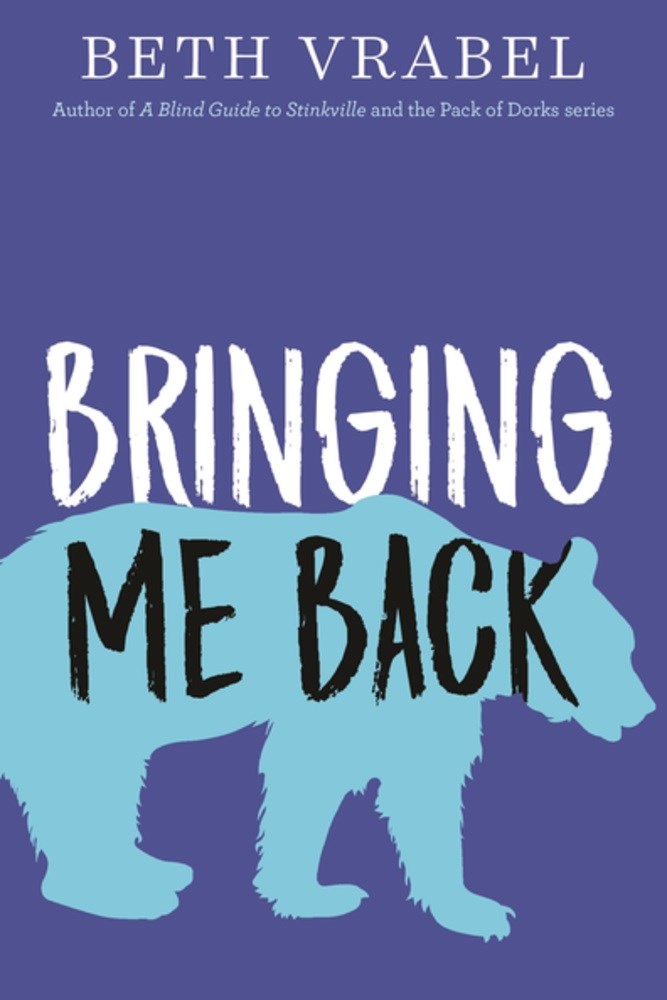
Bringing Me Back, by Beth Vrabel, (Feb. 2018, Sky Pony Press), $16.99, ISBN: 9781510725270

Recommended for readers 8-12

Seventh-grader Noah is having a bad year. His mother was arrested on a DUI and is serving a six-month sentence in prison; he lashed out on the football field, getting his school’s football program shut down. To say he’s persona non grata at school is putting it likely. Jeff, his mother’s boyfriend, has taken him in while Noah’s mom serves her sentence, and is trying to reach out to Noah, but Noah just sees himself as yet another burden on everyone. He’s taunted and bullied at school; even his former best friend, Landon, has joined the crowd in leaving garbage in his locker and making snide remarks during class, in the halls, wherever they see an opportunity.

And then, the bear shows up. Not much older than a cub, Noah notices the bear wandering around near the school. The school begins a fundraiser to bring back the football team, dumping buckets of Gatorade on themselves and donating money to the cause, and the bear gets her head caught in a bucket. Noah has a cause: he wants to save the bear. He’ll risk even more bullying and ridicule to do it, because now it’s him against the entire school, desperate to bring back that football team. Thankfully, he’s got a friend or two on his side. Noah’s desire to save the bear gives him a reason to keep going; the bear is bringing him back from the brink.

I’ve said it before and I’ll say it again, I’m a Beth Vrabel fangirl. She knows how to write for tweens. She tackles bullying, addiction, dysfunctional families, and social justice in Bringing Me Back, and makes it all flow seamlessly. Kids can empathize with all of the kids in this story: kids who live in areas where school sports are just as important as schoolwork; kids living with a single parent or stepparent; kids being bullied; kids who need a reason to keep going. She subtly addresses teacher bullying and the frustration of an education system that appears to be dialing it in to some students – what do you do when you’ve grown beyond your school? Bringing Me Back is a solid addition to realistic fiction shelves.

Posted in Middle Grade, Non-fiction, Tween Reads

Need a shot of creativity? Go on a Jabber Walk!

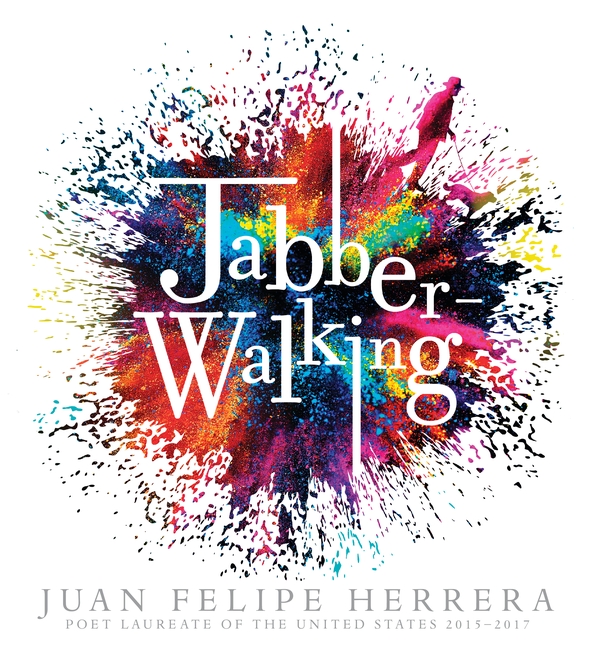
Jabberwalking, by Juan Felipe Herrera, (March 2018, Candlewick), $22.99, ISBN: 9781536201406

Recommended for readers 7-12

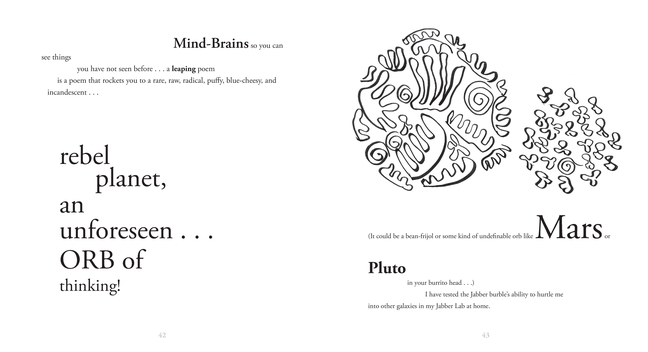
Juan Felipe Herrera, the first Mexican-American Poet Laureate in the U.S.A., encourages readers to spark their creativity by going on a Jabber Walk. Part biography, part writing guide, Jabber Walking is an effusive, silly, excitable look inside a creative mind. Herrera wants to show kids that it’s easy to get the creative juices flowing by getting moving: go Jabber Walking, and let your imagination go wild! Herrera’s Jabber Walk takes readers with him on a walk to the Library of Congress, accompanied by his Chinese Pit Bull Shar-Pei, Lotus, who loves getting into her own blue-cheesy, crazy adventures. Black and white scrawled pictures are proof that creativity and Jabber Walking aren’t limited solely to words. He asks questions to prompt thought: Do you remember a family story? How far back in time do your familiar stories take you? and introduces us to his story, starting with his father’s great escape from Mexico in the early 20th Century. We learn that Jabber poems aren’t supposed to be “too clean”: they’re “fast poems… wild poem… an unkempt, dirty, poem. A scribble, gooey, cuckoo, sweaty, puffy, blue-cheesy, incandescent poem!”

Throw the idea that you need to be linear out the window – this is the kind of book that embraces the creative process, with all of the crazy, fun, random thoughts that go into it. I’d love to see this used to teach creative writing; I’d love to start a Jabber Writing program at my library. Hmmm… Give this to kids that love to write, and give this to kids that need a gentle nudge to unleash their inner Jabber writer. Jabber Walking is too much fun, and it’s one of those books that begs for more than one reading; there’s just too much to take in on one read. Jabber Walking received a starred review from Publisher’s Weekly.

Posted in Non-fiction, Non-Fiction

Make #science even cooler with Adventures in Science

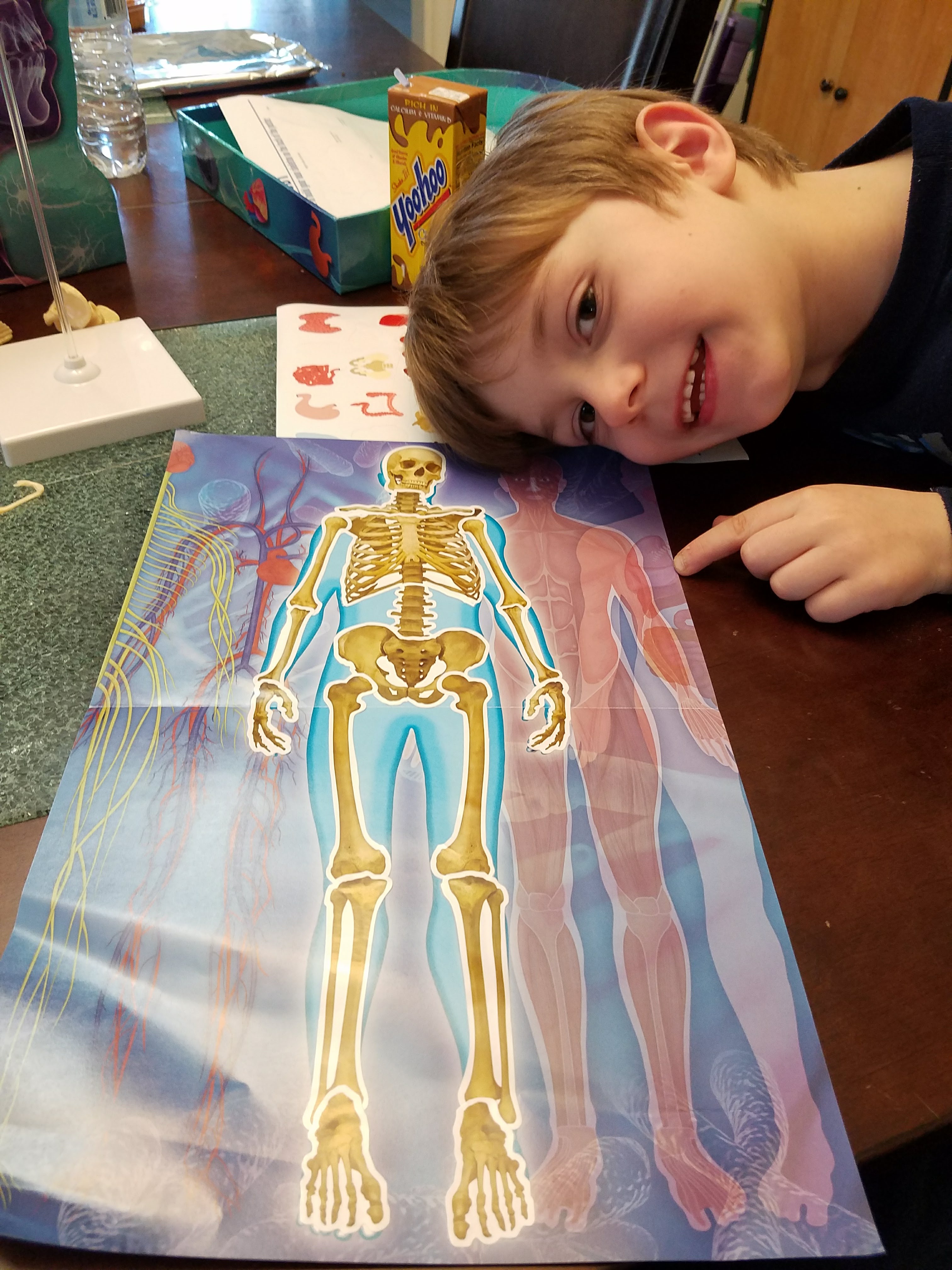
My Kindergartener and I like to hang out and relax on the weekends, but I like to make sure that doing something fun doesn’t always involve endless hours of watching Minecraft videos on YouTube (his current obsession). Thankfully, I remembered that I received an Adventures in Science: Human Body kit from the kind folks at Silver Dolphin, so out it came. The first cheer came from me, when I realized that it’s a 6+ kit, not an 8 or 10+ kit, like most of them are: my kiddo could do this! The second cheer came from the kiddo, who saw a skeleton, because I’ve got that kid. (And I’m that mom.) We cracked open the box and went to it.

Adventures in Science: The Human Body, by Courtney Acampora, (Dec. 20017, Silver Dolphin Books), $21.99, ISBN: 978-1684121298

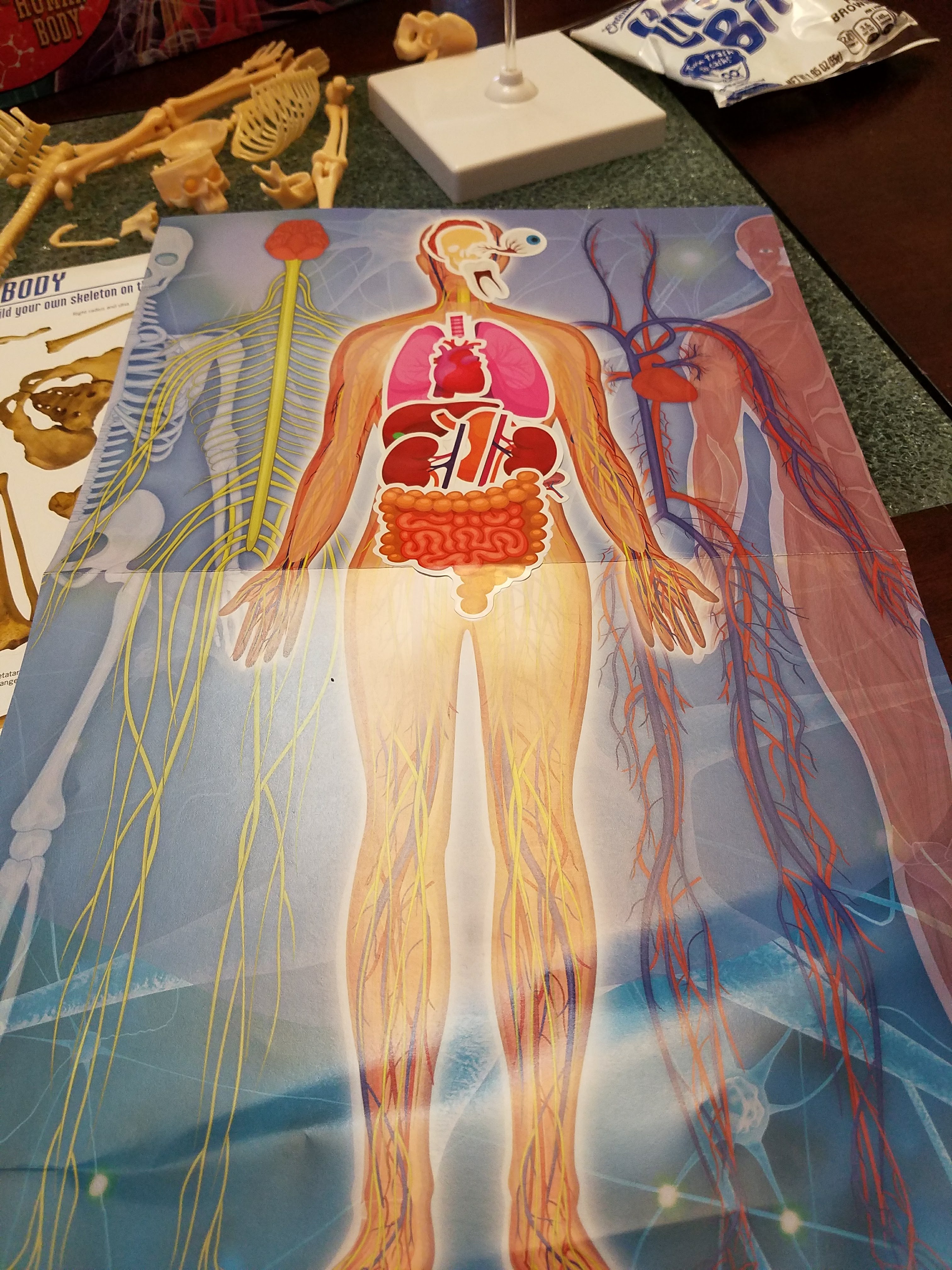
The box was full of stuff that would appeal to kids from ages 5(ish, my kiddo is going to be 6 in June) to about 10 or 11. There are two sheets of stickers; one sheet of bones, the other, of internal organs, including a set of “free play” stickers. The stickers go on a two-sided sheet with an outline of the human body; one side accommodates the organ stickers, one, the bones. There’s a separate bag for a snap-together skeleton model, playing card-sized flash cards about the body, and a booklet on the human body. Kiddo went to work on the sticker sheet, ASAP. The outlines are clear enough that he didn’t need my help at all! The only fiddly part came with the organ stickers, because so many overlap one another. We moved stuff around, covered some stuff up, and were pretty happy with the results.


I tried to read some of the flash cards to him as he was stickering, but realized that I was interested, but he was just sticking his little heart out, so I read them to myself and pointed out any cool stuff I came across. That worked for him.


Okay, next up, was the big guy: the skeleton. It’s a snap-together, and he got the skull, pelvis, and legs together pretty quickly. The really fiddly part came with the rib cage, spine, and arms. The rib cage is delicate, and the little spokes were giving us a hard time getting them in. We ultimately called in the big guns (Daddy), who made it work.


Overall, it was a fun hour spent with two cool hands-on crafts. He learned a couple of things, reinforced some facts he already knew, and ended up with a fun new skeleton to put in his room. I really like the flash cards and accompanying book, which gives a nice introduction to the human body for school-age kids; ideal for maybe around 7 or 8 years old. Younger kids will like the full-color pictures and graphics, and the book is loaded with fast fact Did You Know? boxes you can read to them. At $21.99, it’s a good gift for a curious kid. If you can get some fundraising money or program budget money together, this would be a great project for a small science group at your library; two or three kids can easily work together on one model and the posters. And they’d be pretty awesome to display.


Posted in Animal Fiction, Fantasy, Fiction, Middle Grade, Tween Reads

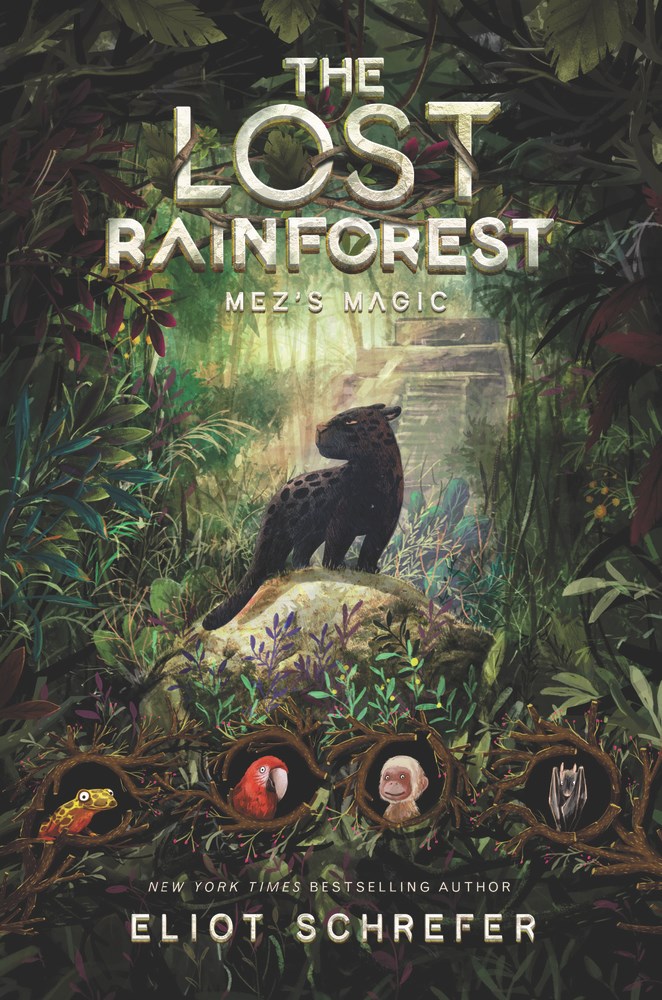
Rainforest, magic, and mystery: The Lost Rainforest – Mez’s Magic

The Lost Rainforest: Mez’s Magic, by Eliot Schrefer/Illustrated by Emilia Dziubak, (Feb. 2018, HarperCollins), $16.99, ISBN: 9780062491077

Recommended for readers 8-13

Mez is an orphaned young panther living with her sister, under the care of their aunt in the rainforest of Caldera. Panthers are nightwalkers – primarily nocturnal, they prowl in the evenings and sleep during the day. Except for Mez. Born during the eclipse, she can cross the Veil – the sleep that overcomes the animals during the day hours – and explore the daytime world. She meets a snake who tells her that she and he are gifted, eclipse-born, and they must discover other animals like them in order to save the world. Banished by her aunt after discovering Mez’s secret, she joins the search for other shadowwalkers in their quest to defeat the Ant Queen. But the Queen isn’t the only one they have to defend themselves against. They’ll encounter animals that mistrust the shadowwalkers, and cope with betrayal and mistrust even among one another.


Mez’s Magic is the first book in what looks like an exciting new animal adventure. There’s plenty for readers to love here: intrigue, adventure, and ancient magic are just a few of the ingredients. It’s a satisfying standalone, yet leaves readers waiting for more answers. There’s an animal friend for everyone here; Mez, the star of the show, is burdened with responsibility and largely naïve to the rainforest at large; Rumi is a lovable, nerdy tree frog and Lima is a talkative, sweet bat; Gogi is a capuchin monkey with an inferiority complex; Auriel is a wily snake who seems to have all the answers. The book weaves a story that addresses racism, intolerance and ignorance through the individual animal species and the concept of the shadowwalker. Black and white chapter illustrations give the reader an idea of what’s coming up, and an author’s note at the end discusses the beauty and importance of the rainforest.

Mez’s Magic received a starred review from Kirkus.


Posted in Middle Grade, Non-fiction, picture books, Tween Reads

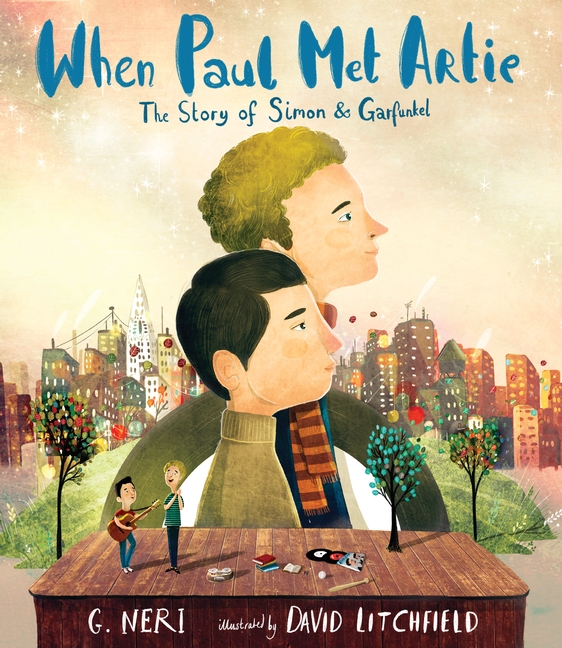
Musicians, poets, activists: When Paul Met Artie

Simon and Garfunkel are two of the most famous names in music history. The names of their songs are less titles now, more legends: The Sound of Silence; Bridge Over Troubled Water; The Boxer… think of one, and you immediately find yourself closing your eyes and listening to the haunting melodies, the perfect union of the two singers’ voices.

When Paul Met Artie: The Story of Simon & Garfunkel, by G. Neri/Illustrated by David Litchfield,
(March 2018, Candlewick), $17.99, ISBN: 9780763681746
Recommended for readers 8-12

How else could the story of Simon & Garfunkel be told, but in verse? G. Neri, whose books Chess Rumble, Tru & Nelle, and Ghetto Cowboy combine free verse with prose storytelling, shines here, giving readers the rise, fall, and rise of the duo, beginning with their 1981 reunion concert in Central Park, then tracing their lives together from the beginning, as two boys in Queens who discover their love of music and their voices together. Each spread is a different song title, evoking a different period in their lives: “My Little Town” describes the Queens neighborhood where they grew up; “Last Night I Had the Strangest Dream” looks at their early success as Tom & Jerry. “Bleecker Street” looks at Paul’s life in Greenwich Village, and Art’s in Berkeley, where they both discover folk singers and activism; “Bookends” sees the two in a car, on New Year’s Day, 1966, listening to their number-one song, “The Sound of Silence”, on the radio. There’s an Afterword, discography, bibliography, and Musical Connections section, a chronological timeline of song influences.

G. Neri manages to fit a lifetime – into 48 pages. We learn that Paul Simon loves baseball and Art Garfunkel was going to be a math teacher; we discover that they were famous and potential has-beens by age 18; that they dreamed of making it big, and when fame failed them, wanted to just make music for the sake of making music. The digital artwork captures the Kew Gardens, Queens, neighborhoods as easily as it captures a small street in Paris, and the crowd at Central Park. This isn’t a picture book for beginning readers; it’s a beautifully illustrated volume of a moment in music history, in verse.

I’m a Queens girl, and you can’t be from Queens (or be a Queens College graduate) without Simon & Garfunkel being part of your DNA. My eldest went to the same high school as the duo; there’s an auditorium named for Art Garfunkel when you walk in the door. Reading When Paul Met Artie took me on a wonderful trip back to a Queens that I remember as a little girl, when I’d sit in the backseat of my uncle’s car as he listened to Simon & Garfunkel on the radio. Music fans and those of us who grew up listening to Simon & Garfunkel’s music will love this beautiful book.


Posted in Graphic Novels, Middle Grade, Non-Fiction, Non-fiction, picture books, Preschool Reads, Tween Reads

Books to inspire your young scientists!

This is an incredible year for children’s books! There’s something for everyone available or coming soon, with wonderful artwork and text that draws readers right in. This time around, I’m looking at some fun science books for readers – and caregivers will like them, too.
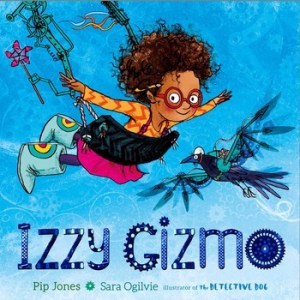
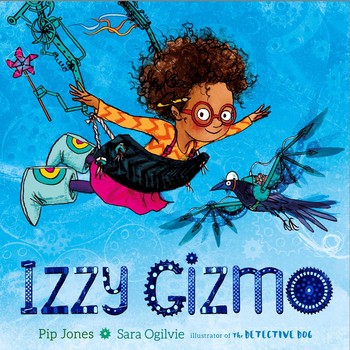
Izzy Gizmo, by Pip Jones/Illustrated by Sara Ogilve,
(March 2018, Peachtree Publishers), $16.95, ISBN: 978-1-68263-021-1
Recommended for readers 4-7
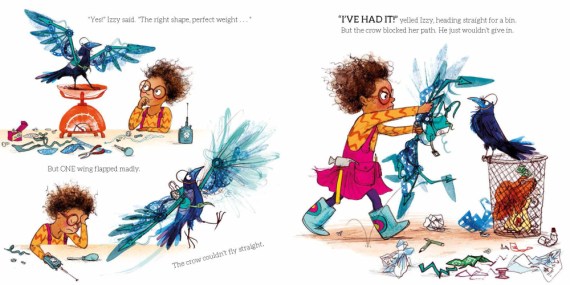
 

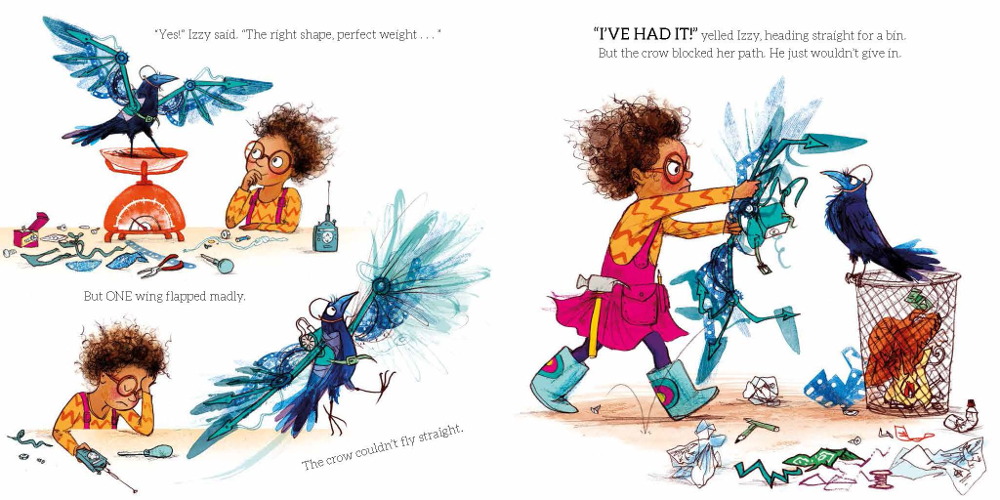
Izzy Gizmo is a curious little girl of color who loves to invent, tweak, and discover. Her inventions don’t always work, but she discovers that she has to put her frustrations aside when she rescues a crow with a broken wing. He wants her to help him fly again, and he’s willing to stick with her through trial and error, until she can get it right. I love the bright colors and chaotic art in this story; it lets readers know that creativity is often messy and wild; the story assures readers that mistakes are just opportunities to filter out what isn’t working and concentrate on what will work; and I love the story of endurance and perseverance. Izzy’s grandfather and her crow friend have faith in Izzy; she just has to find her faith in herself. The gray and white endpapers feature different gears and mechanical parts, letting readers know they’re going to put on their engineering hats to help Izzy out, and the art – a mix of pencil, ink, oil pastel, monoprint, and digital technique – create a busy background that provides a glimpse into the mind of a scientist. Originally published in the UK in 2011, Izzy’s just arrived here in the U.S. and her rhyming story would be a great addition to collections where Andrea Beaty’s Iggy Peck, Architect, Rosie Revere, Engineer, and Ada Twist, Scientist are popular.
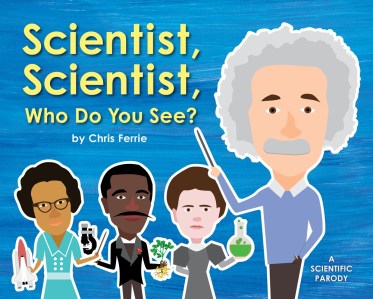
 

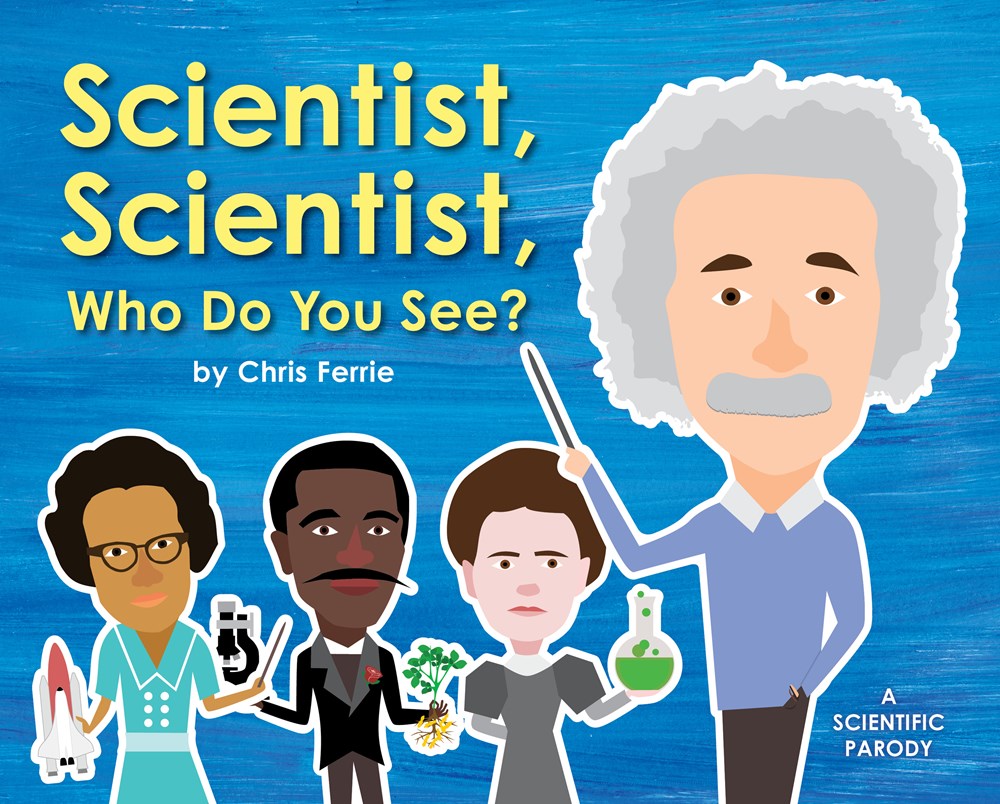
Scientist, Scientist, Who Do You See?, by Chris Ferrie,
(Apr. 2018, Sourcebooks Jabberwocky), $17.99, ISBN: 9781492656180
Recommended for readers 3-6
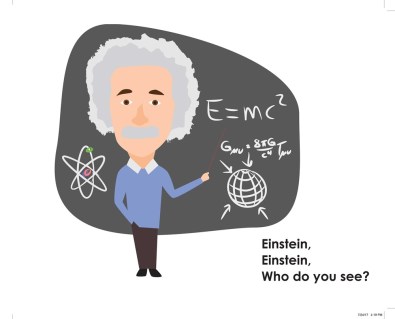
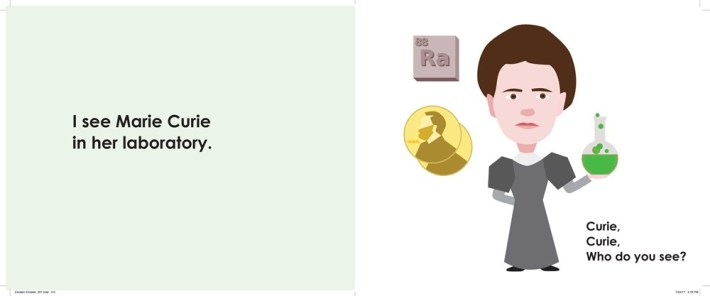
 

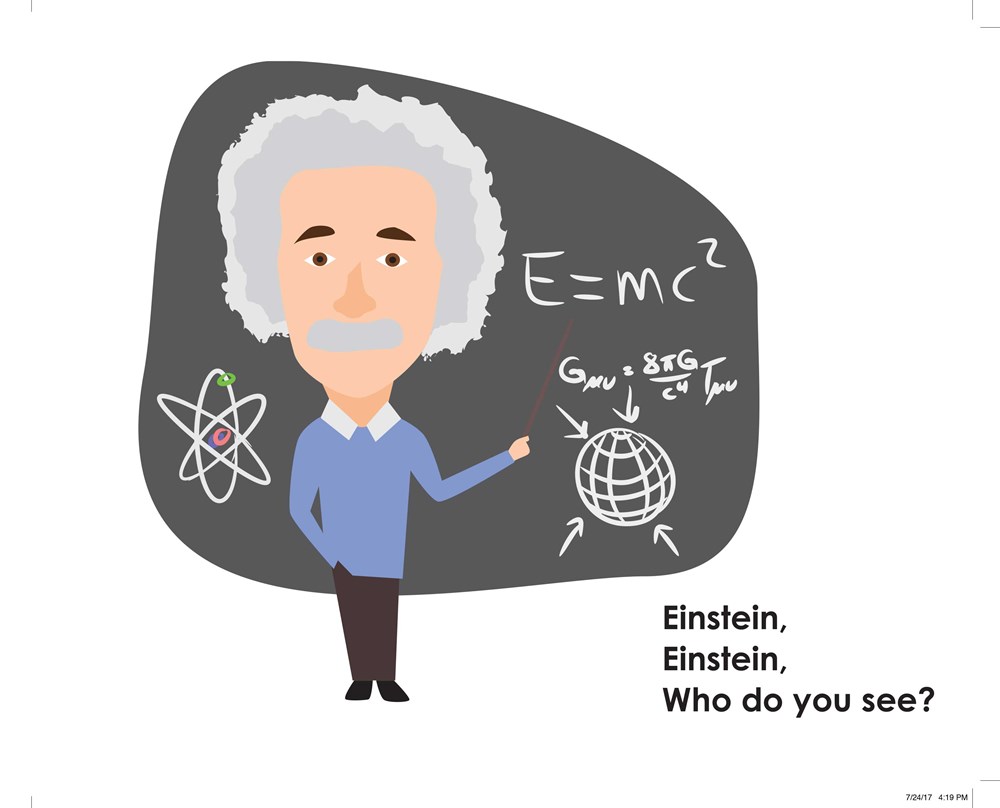
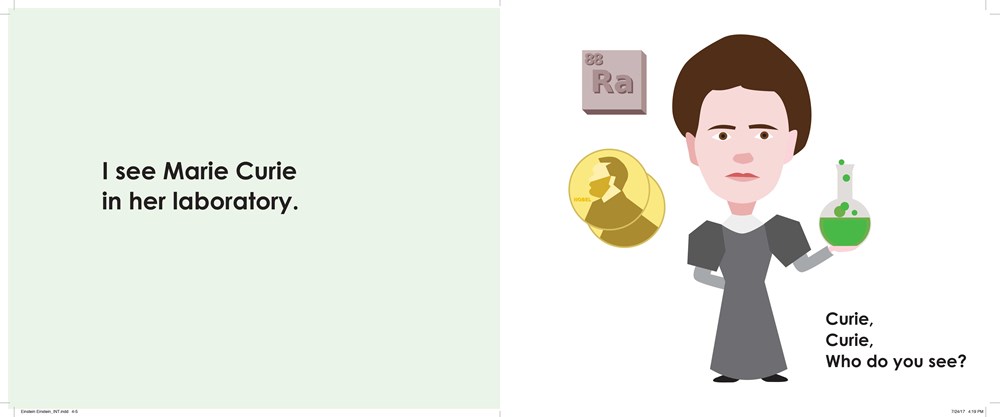
Set to the cadence of the classic, Brown Bear, Brown Bear, What Do You See?, scientist and dad Chris Ferrie introduces little readers to some of history’s greatest minds with Scientist, Scientist, Who Do You See? There is a strong mix of disciplines and diversity represented here, with Einstein sharing space with Grace Hopper, Ahmed Zewail, George Washington Carver, Katherine Johnson, and more. It’s noted as a “scientific parody”, and it certainly is a fun book that will make everyone smile, but kids are introduced to names and ideas, and that’s just great. Starting off with the question, “Einstein, Einstein, Who Do You See?” and the response, “I see Marie Curie in her laboratory”, the story goes on, introducing scientists and their accomplishments, in the soothing rhyme style we’ve grown up hearing and enjoying. Chris Ferrie has given us Baby Science board books and a fun take on Goodnight, Moon with Goodnight, Lab; let’s hope he keeps finding new, fun ways to make science lovers out of our kids.
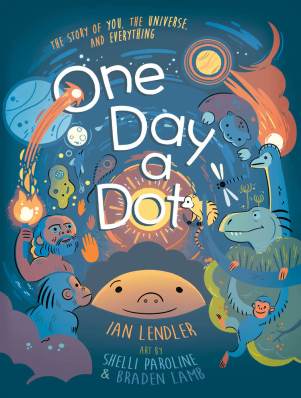
 

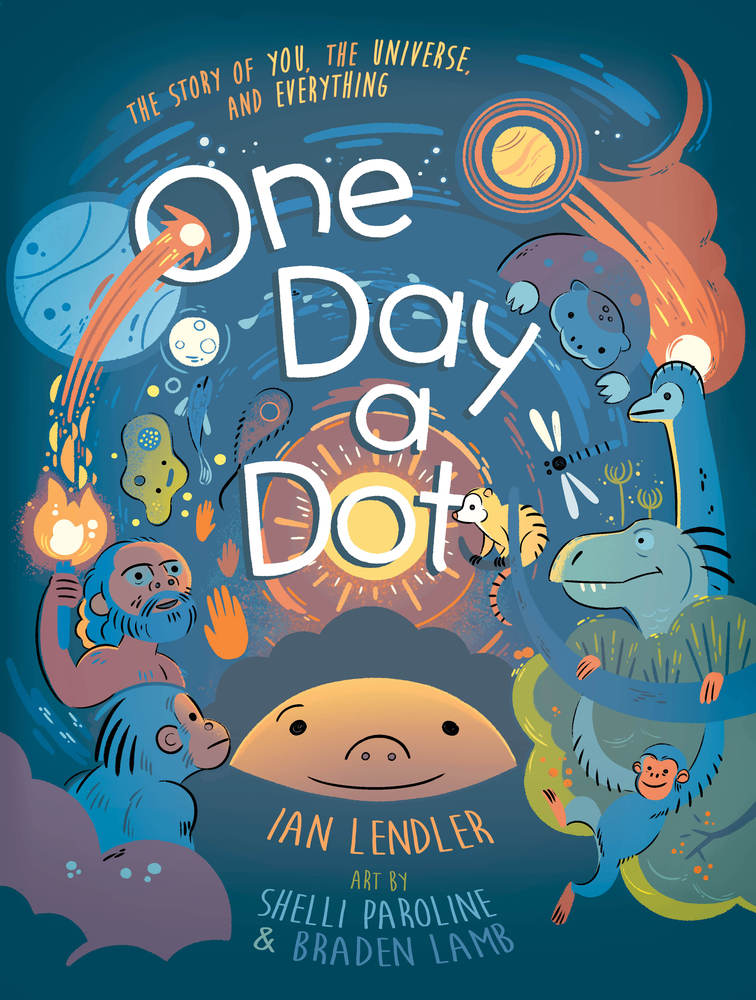
One Day a Dot: The Story of You, the Universe, and Everything, by Ian Lendler/Illustrated by Shelli Paroline & Braden Lamb,
(Apr. 2018, First Second Books), $17.99, ISBN: 9781626722446
Recommended for readers 7-10
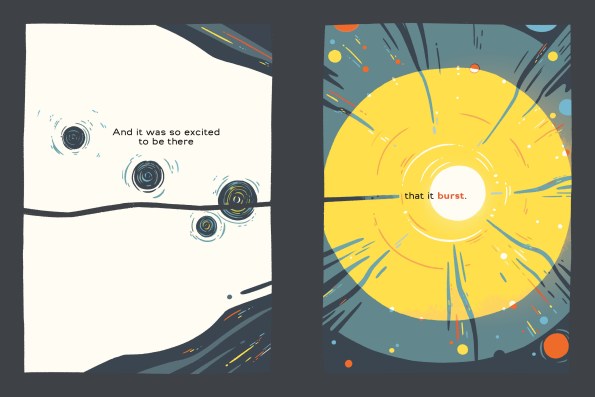
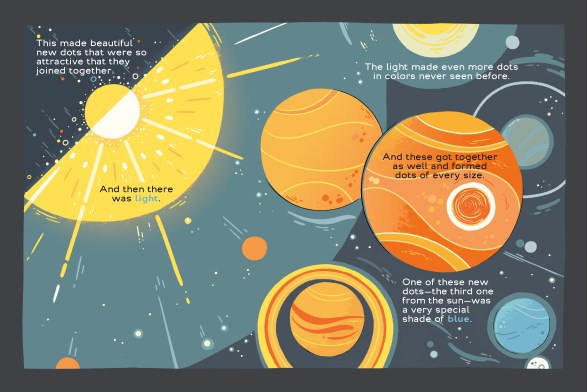
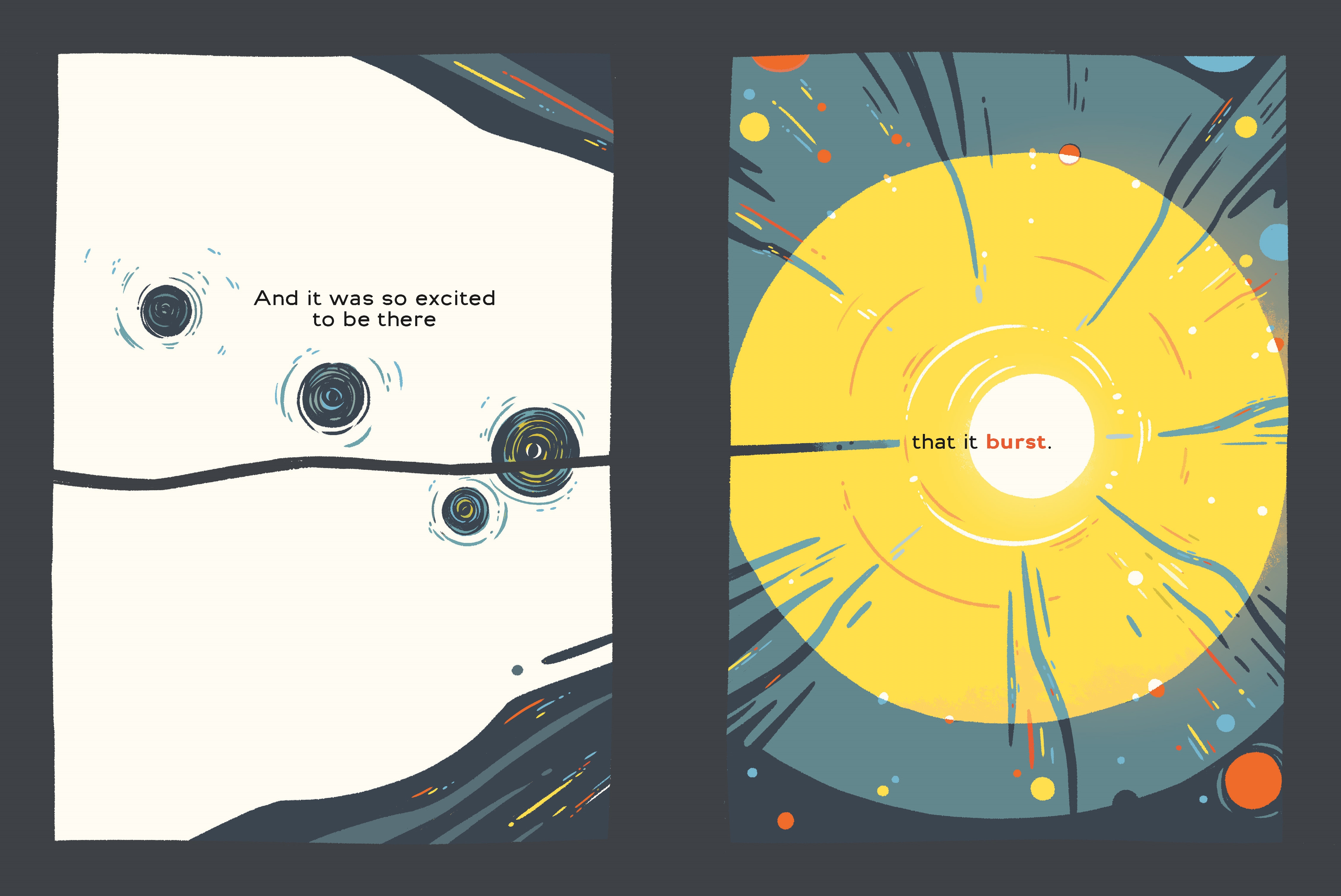
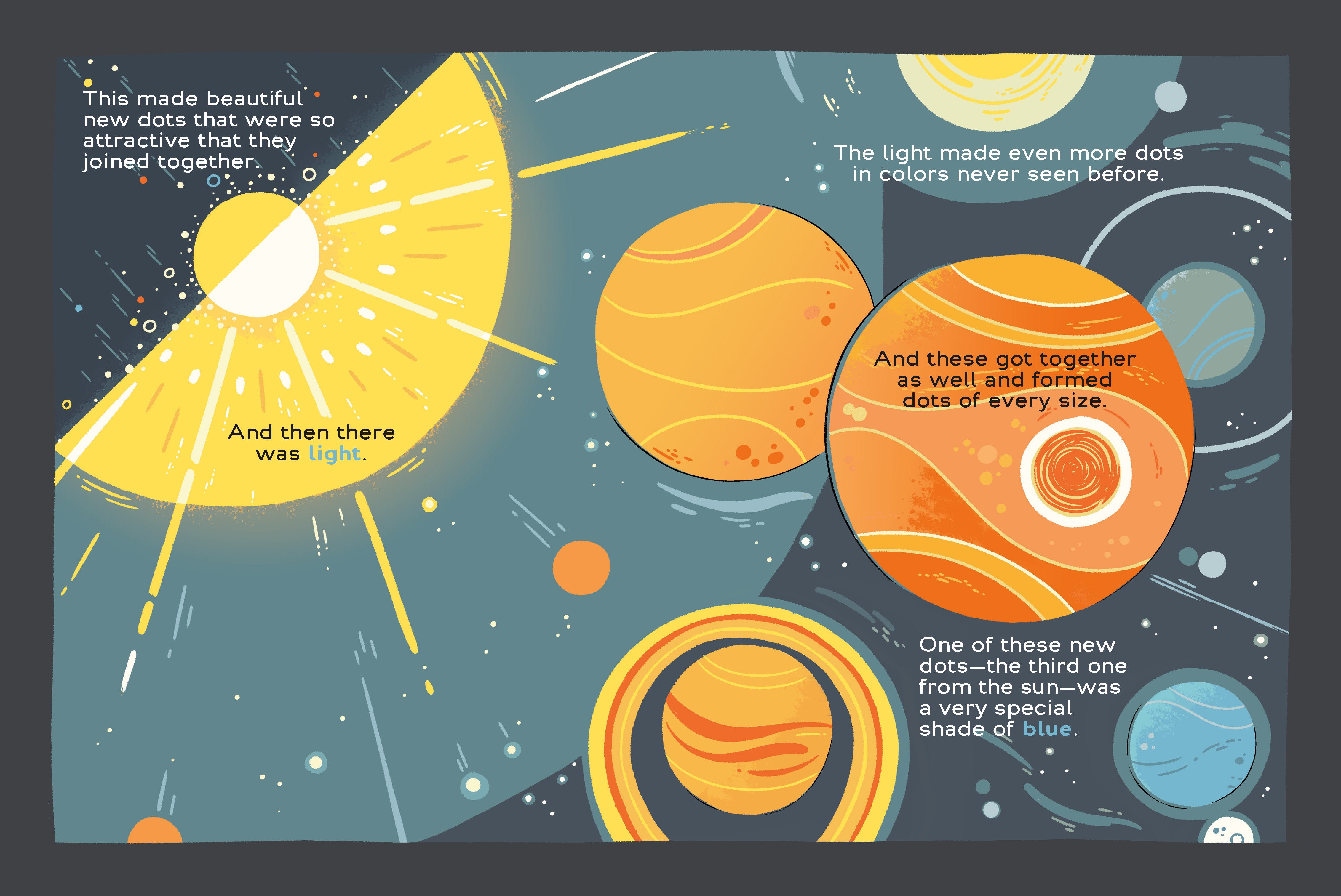
This one’s one of my standout favorites. Author Ian Lendler and illustrators Shelli Paroline and Braden Lamb drill down the history of everything to one humble dot. From one dot’s excited burst of joy comes the Big Bang, bringing new dots together to form planets and, eventually, life. The dots are animated, dancing, playing, even running away from other dots that want to eat them! The artwork is bright with a retro feel and uses the dot theme as a focal point through the story, gently leading readers on a trip through time and space. It’s a simplified look at the formation of the universe, but works nicely for younger readers. Give this one to kids who like Stacy McAnulty’s Earth: My First 4.5 Billion Years, and Dominic Walliman’s Professor Astro Cat books, published by Nobrow.
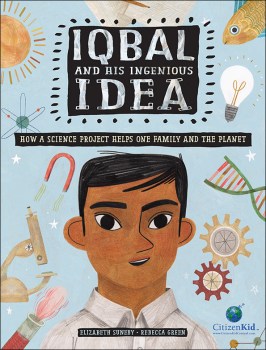
 

Iqbal and His Ingenious Idea: How a Science Project Helps One Family and the Planet, by Elizabeth Suneby/Illustrated by Rebecca Green,
(May 2018, Kids Can Press), $19.99, ISBN: 9781771387200
Recommended for readers 7-10

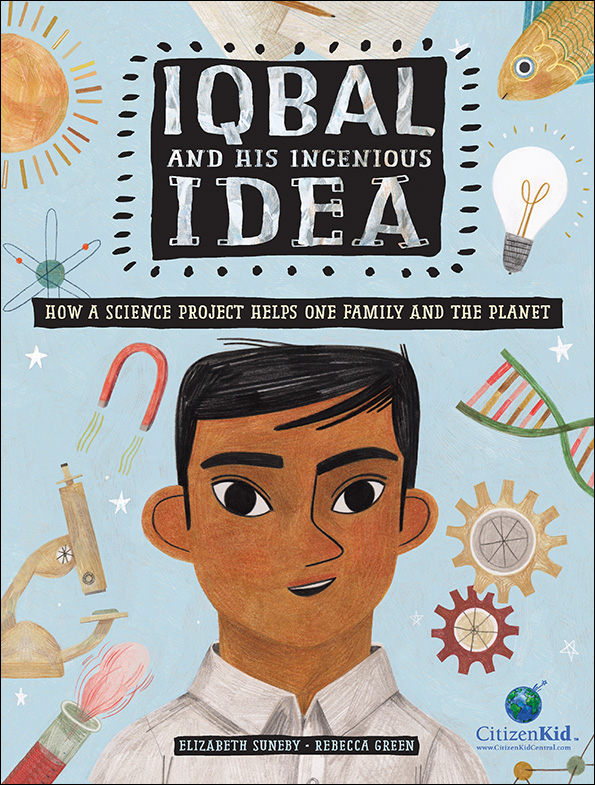
The latest from Kids Can Press’ Citizen Kid imprint, Iqbal and His Ingenious Idea is a fictional story about a Bangladeshi boy named Iqbal, who comes with a clean, solar-powered cookstove for his science fair project. He sees his mother force to cook the family’s meals indoors during monsoon season, but the family has no stove: she cooks over an open fire, which produces smoke that makes breathing difficult, especially for his mother and baby sister. He learns about solar energy cooking, wins first place in the science fair, and introduces a sustainable and healthier way for families to prepare meals. The artwork illustrates everyday life in Bangladesh and communicates the closeness Iqbal shares with his family and his hard work to create a science fair project that accomplishes the dual purpose of getting him a good grade and helping his family. The story shows readers that kids can make a difference, and that healthier living doesn’t depend on expensive gadgets – a little research, and you can make the world a better place with tools right in front of you. The book includes more information on cookstoves, a glossary, and instructions for making a DIY solar cooker. Great for class projects and science fair ideas!
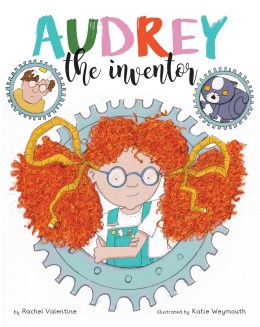
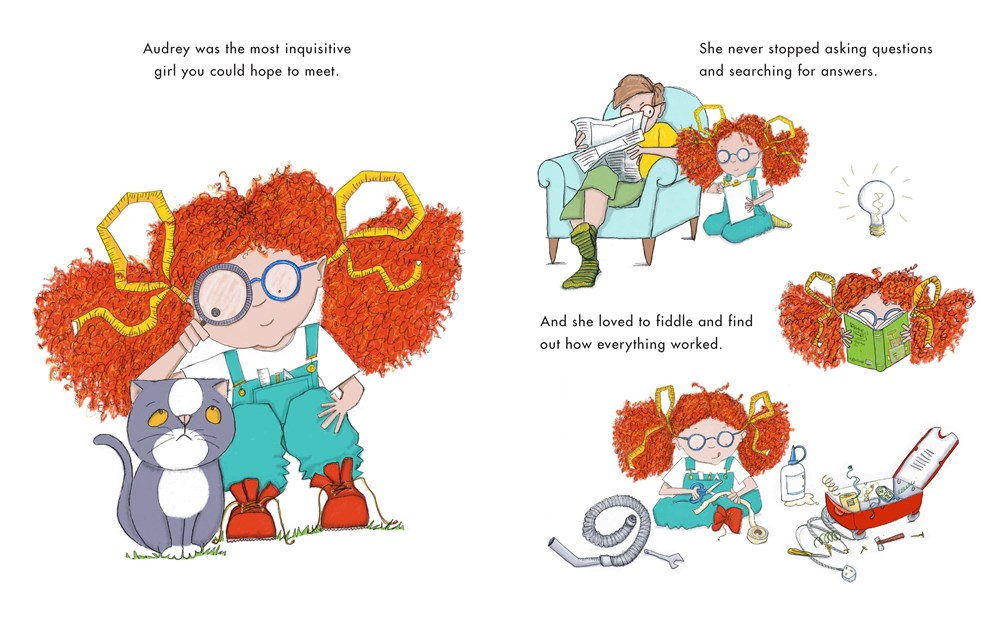
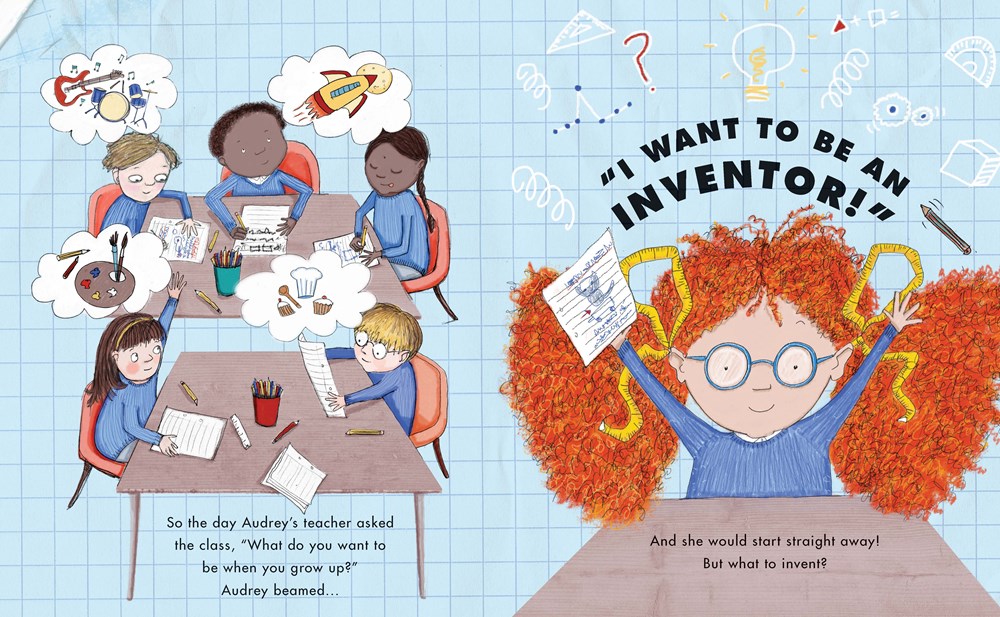
Audrey the Inventor, by Rachel Valentine/Illustrated by Katie Weymouth,
(May 2018), words & pictures, $17.95, ISBN: 9781910277584
Recommended for readers 4-7
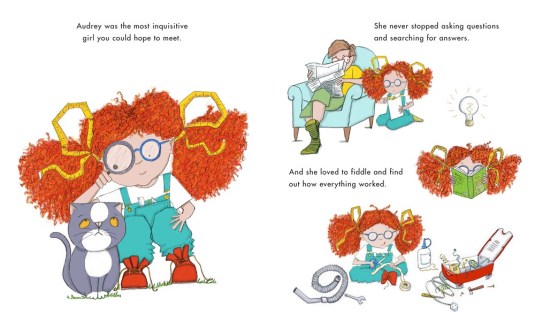
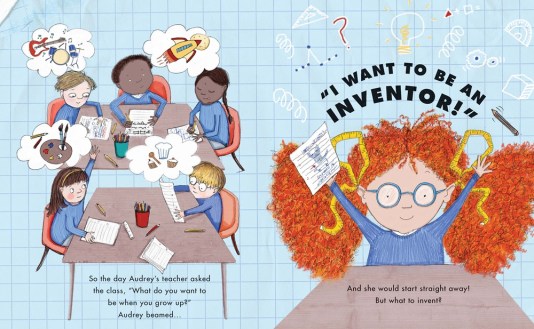
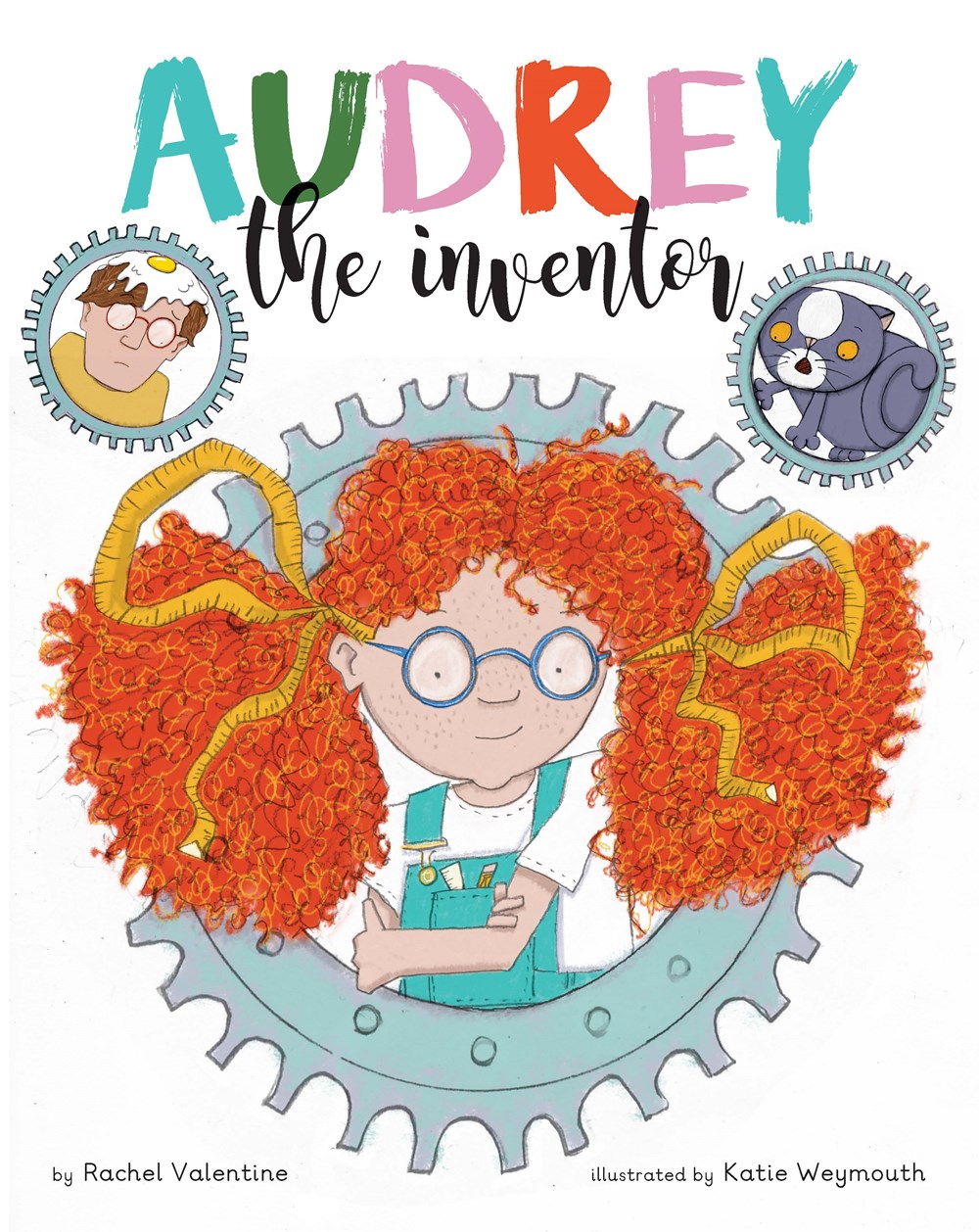
Audrey could hang out with Izzy (first book) and Andrea Beaty’s gang. A wild-haired, redheaded little girl who uses measuring tape for ribbons, Audrey is a curious kid who wants to be an inventor – but she doesn’t know what to invent! She sets off on a host of different ideas, some involving her poor cat, Happy Cat, all of which end up in the “rework” pile. She’s ready to throw in the towel, but decides to give it one last try after getting some encouragement. Little touches, like featuring a graph paper background and visualizing Audrey’s thought process and her doodles, invite kids to share their own ways of working out ideas. The collage, watercolor, and pen artwork comes together to create a busy story about a busy mind. A fun add to creative collections.

These books offer a great way to introduce the scientific method, even for younger grades. Little Bins for Little Hands has a good article, with tips on using the scientific method – and including links to experiments – for preschoolers.