Posted in Fantasy, Fiction, Graphic Novels, Middle Grade, Tween Reads

The team-up I’ve been waiting for: Mighty Jack and Zita the Spacegirl!

Mighty Jack and Zita the Spacegirl, by Ben Hatke, (Sept. 2019, First Second), $14.99, ISBN: 9781250191731

Ages 8-12

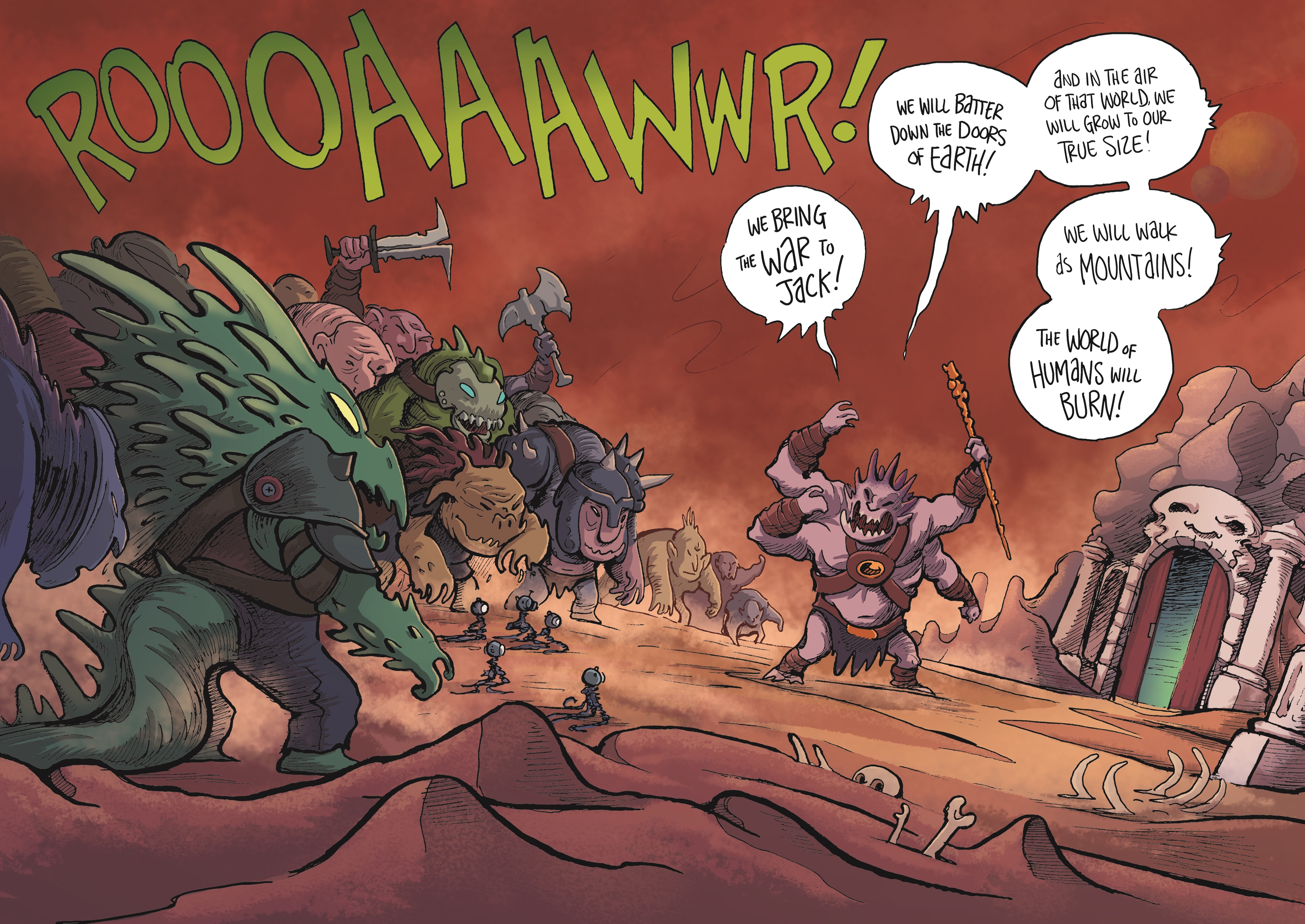
The latest Ben Hatke graphic novel brings together two of his best series: Zita the Spacegirl and Mighty Jack. It’s a team-up he teased in 2017’s Mighty Jack and the Goblin King, and I have been waiting patiently for two years to find out what was going to happen.

After Zita and her friends arrive from their space-hopping adventures, Jack and his family have been housing and feeding the group. Lily, Jack’s neighbor, who helped him fight the giants and rescue Maddy, his sister, is on edge, though. Is she jealous of Zita, or is there something more to it? Meanwhile, the giants are growing stronger and getting ready to invade above-ground: the gate between worlds is growing weaker, and they’re ready to use it to their advantage. Zita, Jack, Lily, and Maddy have to get ready to battle once more.

I’ve been a fan of Ben Hatke since 2012, when I first read Zita the Spacegirl. I love Hatke’s art, I love his storytelling and world-building, and I love sharing his books with the kids at my libraries. Hatke is a great storyteller, giving each of his characters a rich backstory and exciting quest. He also weaves the fantastic with the everyday, giving us robots, dragons, giants, goblins alongside a terrified mother, the complexity of navigating tween friendships, and the frustration of being “ordinary”.

Mighty Jack and Zita the Spacegirl is a wonderful chapter in the Zita/Jack saga. Is it the end? Well… you just have to pick it up and read it for yourself. Mighty Jack and Zita the Spacegirl has a starred review from Kirkus.

Posted in Intermediate, Middle Grade, Non-fiction, Non-Fiction, Teen, Tween Reads

Wild History! Books about prehistoric animals

Kids love dinosaurs. This is a known fact, and my groaning 567.9 section is proof positive of it, but I like to branch out a little and get kids checking out what other prehistoric animals there are to learn about. There are several great new books out that will give my 567 section a nice boost.

Forgotten Beasts: Amazing Creatures That Once Roamed the Earth, by Matt Sewell, (July 2019, Pavilion), $19.95, ISBN: 9781843653936

Ages 7+

Originally published in the UK in 2018, Forgotten Beasts contains over 45 illustrated portraits and profiles of birds and beasts that roamed the planet alongside and after the dinosaurs. There’s the Opabinia, a 2-inch arthropod from 508 million years ago through 1936, when the last Thylacine, a carnivorous marsupial, went extinct. There are some names kids will recognize, like the ginormous shark, Megalodon; the saber-toothed tiger, also known as the Smilodon Fatalis, and the Woolly Mammoth (for the Ice Age fans!). Each picture is skillfully rendered in muted watercolors, showing readers that prehistory wasn’t relegated to muddy greens, browns, and grays. Each profile includes the animal’s size, weight, time period, and diet, and a descriptive paragraph or two, and a timeline helps readers envision when these animals, alongside dinosaurs, roamed the Earth. Endpapers feature the stars of the book in miniature, parading across the pages. A nice book to beef up your non-dinosaur prehistoric collections.

Life: The First Four Billion Years (The Story of Life from the Big Bang to the Evolution of Humans), by Martin Jenkins/Illustrated by Grahame Baker-Smith, (Sept. 2019, Candlewick Studio), $24.99, ISBN: 978-1-5362-0420-9

Ages 10-14

The cover alone will make readers stop and give this book a look. Starting with the Big Bang, Life: The First Four Billion Years brings readers along on a journey through Earth’s first four billion years, ending right before we humans show up. Life starts off with foldout spreads that detail the beginning of Earth; from there, the book moves into the Ice Age, life’s beginnings in the water, its move to land, the ages of dinosaurs and of mammals, and the breakup of Pangea and formation of the continents, and the “Road to Us”: evolution of homo sapiens. Illustrations are the focal point of the book, and Kate Greenway Medal winner Grahame Baker-Smith is at the top of his game, creating landscapes both lush and stark, with black and white and color artwork of a prehistoric world. Award-winning author Martin Jenkins writes for upper middle graders and older, making the science of prehistory accessible to all ages. A glossary and illustrated timeline of the planet make this a stunning volume to have on your shelves.

Prehistoric: Dinosaurs, Megalodons, and Other Fascinating Creatures of the Deep Past, by Kathleen Weidner Zoehfeld/Illustrated by Julius Csotonyi, (Sept. 2019, What on Earth Publishing), $18.99, ISBN: 978-1-912920-05-1

Ages 7-11

Traveling backwards from present day to 541 million years ago, this slim volume is packed with illustrations, infographics, and easily digestible information about the earth through 17 eras. There’s information about climate change, ecosystems and extinctions. A running timeline at each right-hand page margin keeps readers up-to-date on the era and presents a visual representation of time covered as the book progresses.

Color illustrations are museum-quality; you can easily envision these bringing life to exhibits at any museum you may go to. Keeping in mind a younger and middle-grade audience, the information is broken up into short paragraphs, bold infographics, and callout facts. Back endpapers act as a visual table of contents. Keep Prehistoric in mind for your nonfiction sections; hand any of these books to your Apex Predators and Prehistoric Actual Size fans.

Prehistoric is produced in association with the Smithsonian’s National Museum of Natural History.

Posted in Middle Grade, Non-fiction, Tween Reads

The truth about cats and dogs (and gerbils, birds, fish, and other pets…)

Nat Geo Kids is all about the pets these days: they’ve just released Doggy Defenders, a series of books on working dogs, and they’ve also put out some great desk references about cats, dogs, and an Big Book to get younger readers excited about the world of animal companionship. Here’s a glimpse at some of the books out.

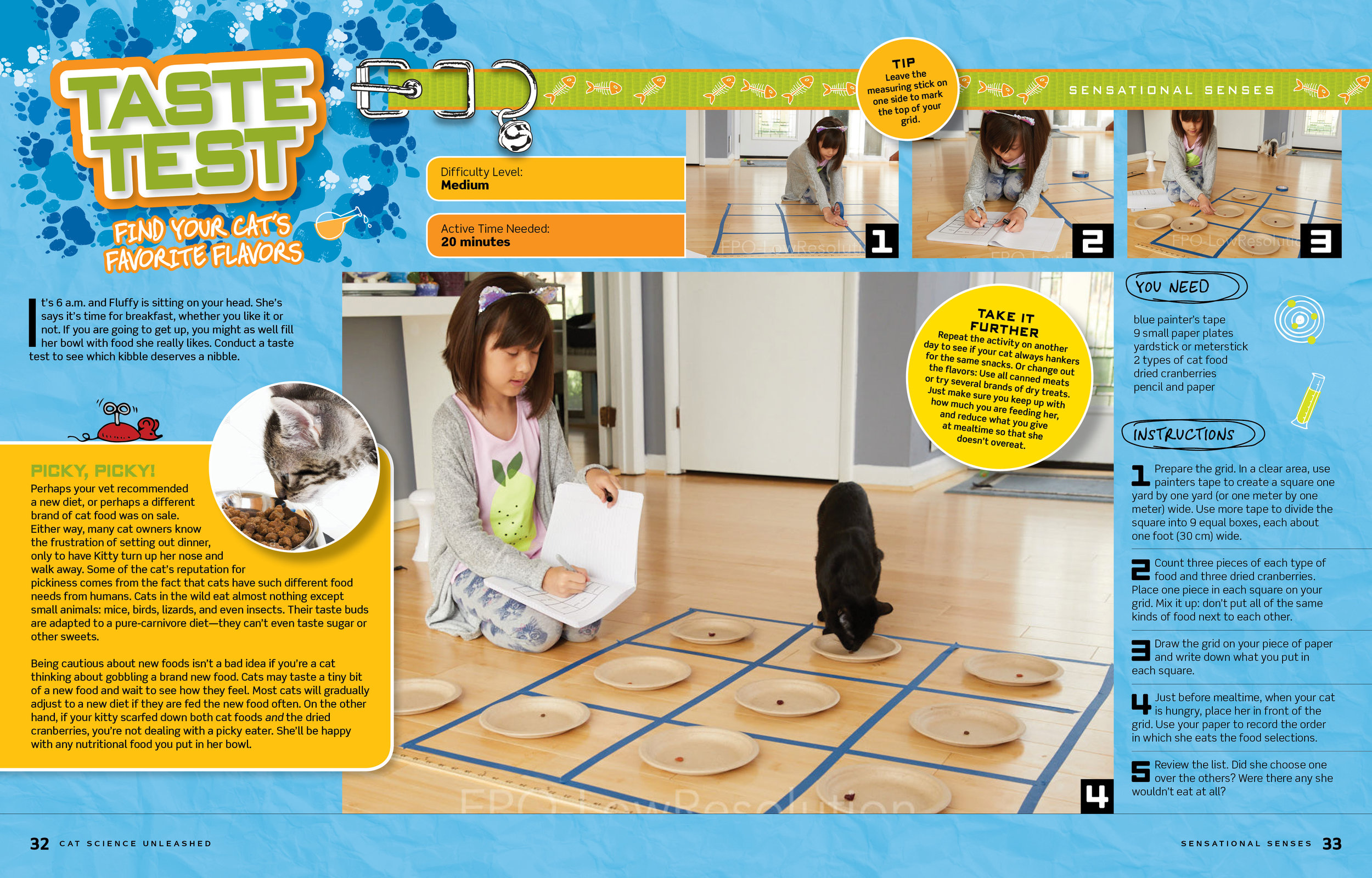
Cat Science Unleashed: Fun Activities to Do With Your Feline Friend, by Jodi Wheeler-Toppen/Photos by Matthew Rakola, (Aug. 2019, National Geographic Kids), $12.99, ISBN: 978-1-4263-3441-2

Ages 7-12

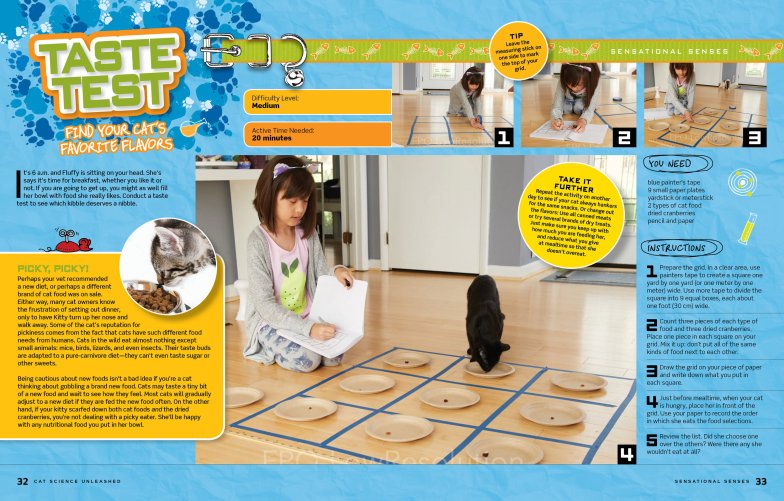
A companion to last year’s Dog Science Unleashed, Cat Science Unleashed is all about the cats, with a glimpse into cat biology and physiology, cat facts, and cat-tivities to engage the scientists in your life. Eleven kid scientists have tested their cats – you’ll meet them on a spread in the book – and invite readers to join them in discovering how cats see at night and how to discover their favorite smells. Activities include building a hiding spot for your cat’s toys (other than my living room floor? Have to get my kid on that) and making toys to test your kitty’s stalking prowess. There’s a glossary and list of further resources at the end A fun volume, and with a new science fair season on the horizon, this could be a fun way to give your kiddos’ cats the spotlight at school in addition to home.
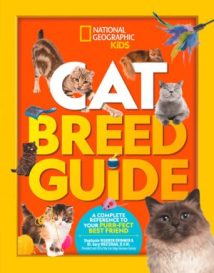
Cat Breed Guide: A Complete Reference to Your Purr-Fect Best Friend, by Stephanie Warren Drimmer & Dr. Gary Weitzman, DVM, (Sept. 2019, National Geographic Kids), $19.99, ISBN: 978-1-4263-3439-9-

Ages 8+

This is a compact, thorough desk reference to cats, perfect for an animal lover, cat fan, and anyone either writing a report about felines or researching a new pet. The guide provides a look at feline history, with a cat family tree, a history of cats and how domesticated cats became household constants, even cat-related superstitions and folktales. There are profiles on more than 60 cat breeds, organized by short hair and long hair breeds, and each profile offers a quick “cat stats” box that provides notes on country of origin, size, coat, grooming, and “catitude”. There are gorgeous photos, fun facts, and general adorableness throughout, plus a section on cat-related careers, a glossary, and further resources. I’m always trying to keep my domestic animals/pets books stocked, so this one will be a nice add to my shelves.
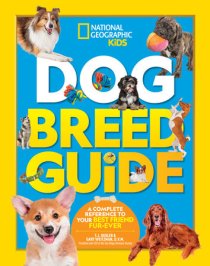
 

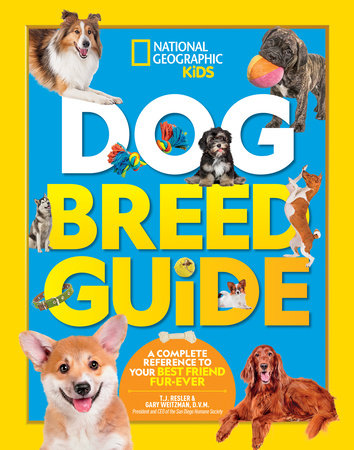
Dog Breed Guide: A Complete Reference to Your Best Friend Fur-Ever, by TJ Reser & Dr. Gary Weitzman, DVM, (Sept. 2019, National Geographic Kids), $19.99, ISBN: 978-1-4263-3445-0

Ages 8+

A companion desk reference to the Cat Breed Guide, Dr. Weitzman and TJ Reser team up to give readers a comprehensive guide to canines, from their wolfish origins to today’s modern breeds. Organized into 10 sections, dog profiles include full-color, squeal-worthy photos and stats-at-a-glance: country of origin, height, weight, coat, grooming, exercise needs, and K-9 qualities. There are sections on show dogs, canine senses, and how to talk to your dog, and a section on adopting and training a puppy. There’s a glossary and more resources.

Together, the Dog and Cat Breed Guides provide a handy reference for pet and animal lovers.


Little Kids First Big Book of Pets, by Catherine D. Hughes, (July 2019, National Geographic Kids), $14.99, ISBN: 978-1-4263-3470-2

Ages 4-8

I love the NatGeo Kids Little Kids First Big Book series! There are 17 books in the series now, and they’re great for pre-readers to look through, while emerging readers can more confidently navigate the pages. Words are bold, the pictures are big and bright, and there’s tons of fun facts, quizzes, and info to be found. The First Big Book of Pets is all about our favorite companions, from dogs and cats to birds, reptiles, fish, mice… you name it. Interactive questions throughout the book prompt discussion, games at the end of every chapter help reinforce concepts and give librarians like me an excuse to have fun, pet-related programming, and fact boxes give kids info at-a-glance about different pets. If you know a kiddo who wants a pet, but isn’t quite decided on what pet to get, hand them this guide – it’s geared toward educating kids about different pets’ needs, and our responsibilities to animals once we adopt them. A section for parents includes a recipe for baking dog biscuits, pet jokes and tips and ideas to engage kids about pets. There’s a glossary and list of additional resources. The Little Kids First Big Books are really popular with my library kids, so this one is another win for my shelves.

Posted in Middle Grade, Non-Fiction, Non-fiction, Teen, Tween Reads

Monstrous brings the science of monsters to you

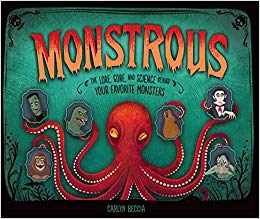
Monstrous: The Lore, Gore, and Science Behind Your Favorite Monsters, by Carlyn Beccia, (Sept. 2019, Carolrhoda Books), $19.99, ISBN: 978-1-5124-4916-7

Ages 10+

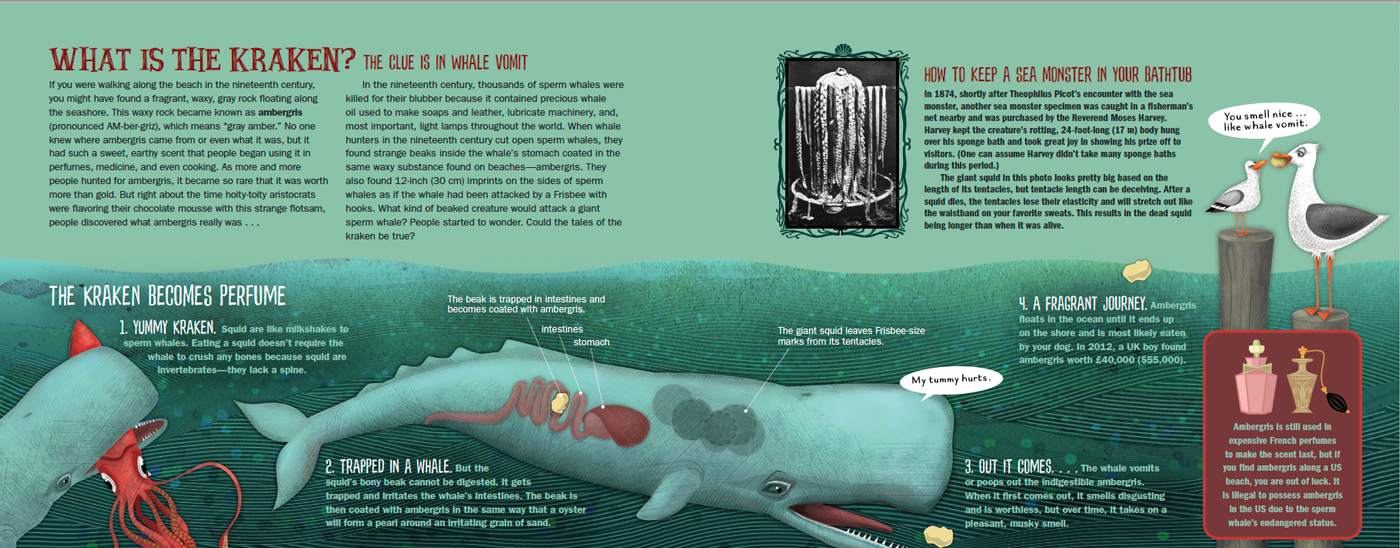
Okay, this is one of the best nonfiction reads I’ve read this summer. Eight movie monsters come together with witty writing, solid science and history, pop culture and myth, and amazing artwork to bring readers the “Science of the Monstrous”. Talk about electricity with Frankenstein’s Monster; whether or not science can make us immortal with Dracula (also, a spirited discussion on sparkly vampires); look at the zombie brain and pack a zombie preparedness kit while reading about zombie viruses; learn about math and whether or not you’re stronger than a dung beetle with King Kong; learn how to avoid – or, failing that, survive – a werewolf attack and read about the science behind the legend of werewolves; check out the ocean zones to figure out where the kraken dwells (and learn whether or not you’re about to be eaten by a giant octopus); talk evolution with Bigfoot while you scan a map of the US to see where your best chance of spotting him is; and, last but NEVER least, find out what kind of dinosaur Godzilla, King of All Monsters, is (hint: the awesome kind).

That’s the short of it. There is so much great stuff in here, I’d be here all day long if I tried to gush about how much I loved this book. I chuckled and snickered out loud behind the reference desk reading it, which brought some of my Library Kids over (the section on Why You Should Never Stress Your Mom Out made them laugh, which garnered a librarian look over the glasses from me). Everything in here is just pure gold, from the timelines like “The Monstrous History of Electricity”, where you learn that Thomas Edison used electricity on dolls to experiment with recorded sound (SO CREEPY), and a real list of radioactive creatures, like the wolves of Chernobyl and the cows of Fukushima. Carlyn Beccia’s writing is informative and whip-crack smart and funny – if I had a book like Monstrous available to me when I was in the middle grades, I’d probably be making freaky dolls talk to people in a lab today. Instead, I’ll figure out how to hold a program to let my Library Kids do it.

My Library Kids love the grossest history and science stuff out there, which I challenge myself to find on a regular basis; one of their favorites is Carlyn Beccia’s They Lost Their Heads!, along with Georgia Bragg’s How They Croaked and How They Choked, so I predict this book will disappear shortly after I say, “Hey, guys! Look what I’ve—“.

Long story short, Monstrous is a guaranteed win for your science collections, your STEM collections, and for your horror/monster/burgeoning goth fans. Check out author Carlyn Beccia’s webpage for more about her books, her art, and her social media links. Monstrous has a starred review from Kirkus.

Posted in Animal Fiction, Fiction, Fiction, Intermediate, Middle Grade

A story about trust: The Dog Who Lost His Bark

The Dog Who Lost His Bark, by Eoin Colfer/Illustrated by PJ Lynch, (Sept. 2019, Candlewick), $16.99, ISBN: 9781536204421

Ages 7-11

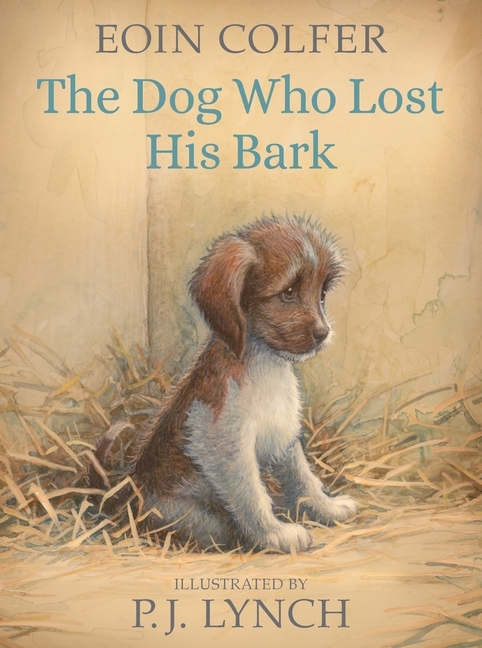
A puppy is taken from his mother, purchased as a birthday gift for a cruel boy from his equally cruel parents. Abandoned at a dump, wrapped in linoleum tile, he is rescued, and chosen by another boy – a boy named Patrick. But Oz, as Patrick names the pup, is afraid of humans. He’s never met a kind one, and he doesn’t want to be hurt again. Patrick, ever patient, sits with Oz, talks to Oz, and waits for Oz to warm up to him. But Patrick’s life is about to undergo upheaval, too: his parents are splitting up… is it because his father is allergic to dogs? Patrick swears that he will make the painful sacrifice and send Oz back to the shelter if it means having his father back home.

The Dog Who Lost His Bark is a sensitive, sometimes painful, ultimately soothing story about trust, betrayal, and family. Eoin Colfer creates wonderfully memorable characters, both canine and human, and PJ Lynch’s black and white illustrations give them form. Oz’s playful innocence is so harshly broken by his first family that it becomes painful; Lynch’s illustrations give us a sweet dog that just wants to be loved, but is terrified of opening himself up to that possibility ever again. It’s all there, right on the cover image. Illustrations introducing us to Patrick, the boy who adopts Oz, give us a sensitive boy who wants to reach his pup.

The Dog Who Lost His Bark reads like classic kidlit. I’ll be recommending this one along with my EB White favorites and Kate DiCamillo’s books, for sure. Beautifully written, wonderfully illustrated, and an absolute must for your reading lists next year, educators. I’m putting this one on my Newbery watch list.

The Candlewick website offers a free, downloadable discussion guide.

Posted in Animal Fiction, Fantasy, Fiction, Fiction, Historical Fiction, Intermediate, Middle Grade

At the Heels of History, where the goodest pups make history, too – and a giveaway!

Filigree’s Midnight Ride (At the Heels of History #1), by Pam Berkman & Dorothy Hearst/Illustrated by Claire Powell, (Aug. 2019. Simon & Schuster), $17.99, ISBN: 978-1534433335

Ages 8-11

The story of Paul Revere and his daughter’s Pomeranian, Filigree, kick off the first in the At the Heels of History series, where kids get to read about major moments in history as seen through the eyes of the dogs that were there.

Filigree wasn’t always Paul Revere’s dog, but his Loyalist human was shipped back to England and he was adopted by Paul Revere for his daughter, Frances. Poor Filigree is looked down on by the other colonists’ dogs: Sam Adams’s Newfoundland, Jove, bullies him, and even the Revere family cat, Anvil, has complete disdain for the little dog. But Frances loves him, and wants him to protect her father when he leaves home for a secret mission that could put him in danger with the British troops. Is Filigree just going to be in the way, or will he play a major part in a pivotal moment in American history?

This is such a cute book and an enjoyable new historical fiction/What If series! Kids will get a kick out of reading the “real story” behind historical moments like Paul Revere’s famed midnight ride and the American Gold Rush (coming in the next book), witnessed by the loyal canines who stood by their humans as history happened. There are black and white drawings throughout, making this extra fun and giving readers visual context of the time periods and the characters. Filigree’s Midnight Ride’s subplot involves the rough (ruff?) relationship between Jove, Sam Adams’s giant Newfoundland, and little Filigree, so the artwork demonstrating the vast difference in size just adds to the amusing read. Back matter points out some important information about the famed Midnight Ride, which didn’t really happen the way that Schoolhouse Rock taught me that it did (but I’m still going to sing along to the song). There’s a word about marginalized voices, particularly the enslaved, and their support of the patriots against the British.

There’s a website for the series where you can find free, downloadable curriculum guides, fun facts, and downloadable mazes, puzzles, and more for everyone to enjoy.

A cute add to your intermediate/middle grade fiction sections, and a nice additional way to generate interest in history units. At the Heels of History has a second book in the series, Bo-Bo’s Cave of Gold, coming in April 2020.

Hear ye! Hear ye! Enter this Rafflecopter giveaway for a chance to win your own copy of Filigree’s Midnight Ride! (U.S. addresses only, please!)

Posted in Fiction, Historical Fiction, Middle Grade, Realistic Fiction, Tween Reads

Sweet Home Alaska: Little House, up North

Sweet Home Alaska, by Carole Estby Dagg, (July 2019, Puffin), $8.99, ISBN: 9780147514202

Ages 9-13

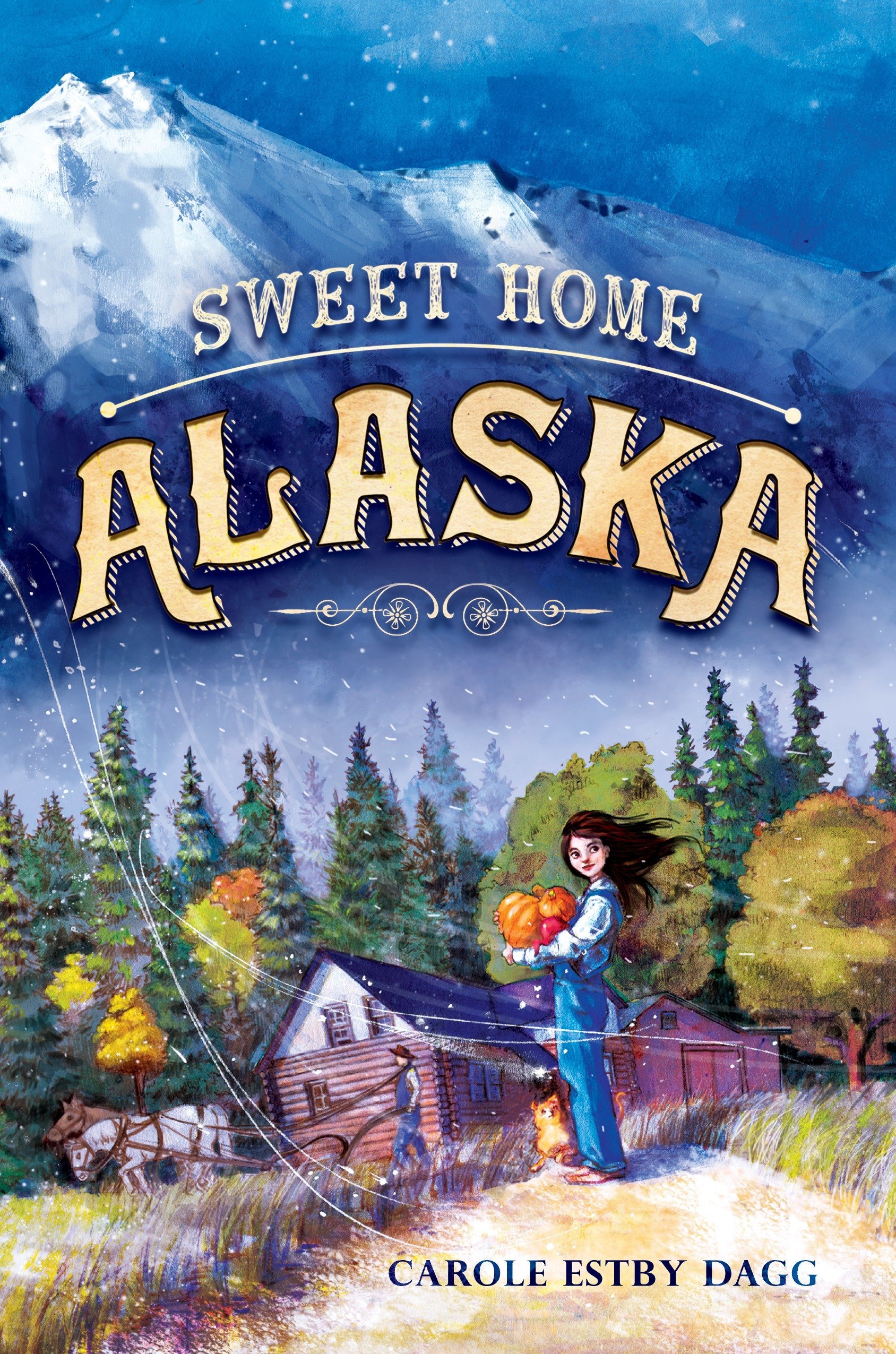
Terpsichore Johnson’s family is just one of many families suffering through the American Great Depression in 1934. When the local mill in their Wisconsin town closed, the family relied on whatever they could grow in order to eat, and Terpsichore can make darn near anything out of a pumpkin. Her father is determined to take care of his family, and suggests taking President Franklin D. Roosevelt up on his New Deal offer: become an Alaskan pioneer in his Palmer Colony project! Terpsichore is at once unsure and excited: it’s a chance to be a pioneer, just like her hero, Laura Ingalls Wilder, but it’s so far from everyone and everything she knows. The family decides to give it a year, and they’re off. Life isn’t easy for that first group of colonists: there’s illness, and schedule and materials mismanagement leave a lot of folks living in tents when they should have had homes built, but slowly and surely, life in Alaska starts to grow on the Johnson family, except for Terpsichore’s mother. Can Terpsichore’s prize pumpkin win enough money at the Palmer Colony Fair so she can buy her mother a gift that will make her agree to stay?

I loved this book! Sweet Home Alaska is about the 1935 Matanuska Colony; one of FDR’s New Deal projects that would create jobs, investment in the country and infrastructure, and colonize part of U.S.-owned Alaska, which wasn’t a state just yet. The parallels between Sweet Home Alaska and Laura Ingalls Wilder’s Little House series are wonderful, and a good readalike for readers who enjoy the Wilder books, and Louise Erdrich’s Birchbark House books. (There are no interactions between the mostly white Palmer colonists and indigenous people in Sweet Home Alaska; a point discussed in the author notes at the end of the book.) Terpsichore – pronounced Terp-sick-oh-ree, named for the muse of dancing – even refers to Wilder’s book, Farmer Boy, when growing her pumpkin to show at the Palmer Colony Fair.

The book takes a deeper look into a moment in history I haven’t yet seen captured in historical fiction. While it takes place during the Great Depression, this is new territory, and worth the read. Terpsichore is the eldest child, with twin younger sisters and an infant brother, and handles much of the housework to help her mother out. She’s smart, enterprising, and determined. She and the two friends she makes in Palmer – Gloria, named for actress Gloria Swanson, and Mendel, named for the scientist who studied genetics – work together to start up a colony library and find ways to raise money for books and supplies. She experiences frustration, but always bounces back, stronger than before. The writing just flows from page to page, with adventure, emotion, and excitement throughout. There are wonderful mini-plots throughout, including the telegram to Eleanor Roosevelt that got our President’s attention; a visit from Will Rogers; and a Palmer resident with interesting ties to Terpsichore’s family. I loved spending time with this group.

An author’s note and further reading are included, and really make this a solid choice for kids seeking out historical fiction. There are also some recipes, including one for jellied moose nose. You know you’re curious.

Sweet Home Alaska was originally published in 2016, but I somehow missed it. Glad my friend Barbara over at Blue Slip Media told me I needed to read it now! Check out the free, downloadable discussion and activity guide, and find out about author visits, Skype visits, and contact info (including how to get an autographed bookmark!) at the author’s website.


Posted in Fantasy, Fiction, Fiction, Horror, Intermediate, Middle Grade, Tween Reads

The Great TBR Readdown: Hello, Neighbor and The Land of Broken Time

My Great TBR Readdown continues!

Hello Neighbor: Missing Pieces (Hello Neighbor, Book 1), by Carly Anne West/Illustrated by Tim Heitz, (Sept. 2018, Scholastic), $7.99, ISBN: 978-1-338-28009-8

Ages 10-14

Based on the horror video game, Hello Neighbor, this is the first book in a middle school-and-up series introducing Nicky Roth, a new kid in the town of Raven Brooks, and their neighbors, the Petersons. Nicky and Aaron, the Peterson’s son, become friends over their shared interest in tinkering, but when Nicky visits Aaron’s home, he’s uncomfortable. Aaron’s father makes him uneasy, and Nicky notices that Aaron, his mother, and sister are equally uncomfortable around him. The kids at school seem afraid of Aaron, and secrets and rumors about his father run wild. What’s the Peterson family’s dark secret, and why does Nicky feel like Aaron’s father is stalking him?

Knowing nothing about the Hello Neighbor game, I picked this book up and discovered a quietly creepy, light horror novel for tweens. If you have horror fans, this should be a good book to hand them. There are three in the series so far; the characters have a good background to build on, and the suspense builds nicely throughout the book. Illustrations throughout keep the pages turning.


In the Land of Broken Time, by Max Evan/Illustrated by Maria Evan, (Aug. 2016, self-published), $7.99, ISBN: 978-1520569291

Ages 8-10

A self-published novella by husband-wife team Max and Maria Evan, we’ve got a time-traveling fantasy starring a boy, a girl, and a talking dog, taking place in a fantasy land ruled by time – or the lack of it. Christopher sneaks out of his house to go to a nearby traveling circus, meets a girl named Sophie, and ends up hijacking a hot-air balloon, where the two meet a talking circus dog named Duke. They end up in a land where sibling scientists work at opposite ends: one seek to help them repair time, while the other wants to use time to manipulate his own power struggle.

The books is only about 50 pages, and is a quick enough read. I’d like to see something a little more fleshed out, because the world-building felt a little rushed, but was promising. Where is this land? What are the origin stories for the scientists, gnomes, and townspeople who waited for the prince? How did this power struggle between the two scientists begin? There are Narnian influences here that I enjoyed spotting, and there’s obviously more backstory to draw on; the story’s end leaves a sequel – or a prequel? – open to possibility. Maria Evan’s illustrations are beautiful, bright, and colorful, and brought the land and its characters to life. I’d like to see more. Let’s hope we get it.

Posted in Fantasy, Fiction, Middle Grade, Teen, Tween Reads

Folk and Fairy Tales from Across the Pond: Between Worlds

Between Worlds: Folktales of Britain and Ireland, by Kevin Crossley-Holland/Illustrated by Frances Castle, (Oct. 2019, Candlewick Press), $17.99, ISBN: 9781536209419

Ages 10+

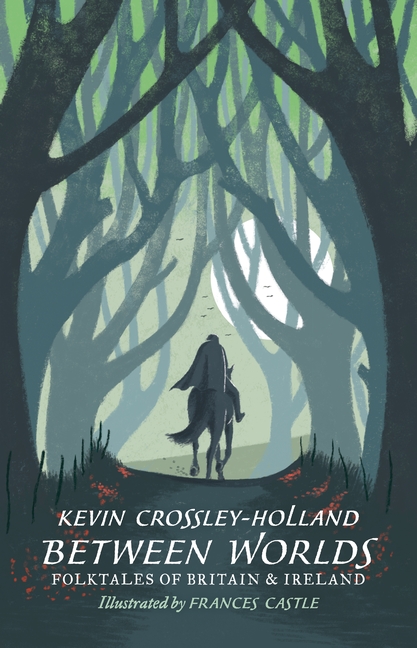
Forty-eight folk and fairy tales from Britain and Ireland; some you’ve heard before, most will be new to you. The tales are organized by Magic and Wonder; Adventures and Legends; Power, Passion, and Love; Wits, Tricks, and Laughter; and Ghosts. This is a wonderful tome for your fantasy and fairy/folk tale collections; especially, if, like me, you love having a collection of tales from all over the world. Some are short enough to read aloud, others are longer and invite readers to sit down, have a nice cup of hot chocolate, and imagine a storyteller leading you back through time for  stories about fairy rings, boggarts, and changelings. Frances Castle’s stark black-and-white illustrations set a mood for each story and each section. An afterword on “Why Everyone Needs to Be Able to Tell a Story” is told as a final folktale, infusing the entire volume with a bit of magic. Comprehensive source notes identify each story’s source(s) and original titles, if any.

A definite add to your folk and fairy tale shelves, and a gorgeous gift for readers. Keep a copy at your Reference desk, too, if you have it in the budget.


Posted in Fiction, Middle Grade, Middle School, Realistic Fiction, Teen, Tween Reads

Middle School #MeToo: Maybe He Just Likes You

Maybe He Just Likes You, by7 Barbara Dee, (Oct. 2019, Aladdin), $17.99, ISBN: 9781534450158

Ages 9-13

It all starts with an unwanted hug that takes seventh-grader Mila by surprise, on the school playground, when the basketball boys decide to join in on a friend’s birthday celebration. It keeps going: unwanted hugs, comments, even touches; barely disguised chuckles and cheers among the basketball boys. Mila knows it’s wrong. She feels uncomfortable, she feels it in her skin, but her friends think she’s being dramatic. The teacher she tries to talk to brushes it off. And it keeps going, because she doesn’t want to mention it to her mom: she’s got enough problems, raising two kids on her own and having a lousy time at work. When Mila steps into a karate class, though, and makes an unexpected friend, she starts to recover her confidence and realizes that she owns her own power, and if no one will help her, she’s going to take matters into her own hands.

Maybe He Just Likes You. Who hasn’t heard this phrase, growing up? It’s been the excuse, as old as time, for behaviors from hair-pulling to unwanted brushes across parts of our bodies; smirks and hapless shrugs with half-chuckled, half-muttered, “Sorrrrrry” responses. It’s been the excuse, putting it on young girls and women to endure the snickers and comments as we walk down the halls of school, play outside, walk into the workplace. Barbara Dee’s book introduces us to Mila, a seventh grader who finds herself the object of a group’s attention; their power play. She asks for help, and gets brushed off. Her friend, Zara, seems almost jealous of the attention she’s getting, not understanding that attention like this is unwanted, unasked for. She’s gaslighted by her tormentors, who tell her to “lighten up”; that she blows things out of proportion; that she can’t take a joke. Just as Mila begins to withdraw into herself, she starts taking a free karate class, and discovers a classmate who notices that something’s been going on, and encourages Mila to stand up for herself. Karate practice, plus this new, unexpected friendship, gives Mila clarity and the ability to bring attention to the behavior, and discovers that she is not the only one the boys have targeted.

Mila is a strong, smart character in whom readers may see themselves. Barbara Dee creates a painfully real story with Maybe He Just Likes You; a story that has taken decades to come to light, but isn’t backing down anymore. Mila’s first person narration makes it much easier to envision ourselves in Mila’s shoes, and Barbara Dee’s strong, clear voice makes Mila’s creeping discomfort and anger palpable, causing us to curl our fingers and grit our teeth. I wanted to cheer for her, I wanted to scream for her, I wanted to yell and demand that her educators take notice of what was going on – and wanted to sink into my seat with relief when someone finally does.

Sexual harassment has spent too long feeding on our silence. With the #MeToo movement, and now, a #MeTooK12 movement, kids are learning about respect, consent, and boundaries. Let’s support them. I hope that Maybe He Just Likes You will come with an educator guide with sexual harassment resources and lesson plans for K-12 educators. I have found some on the Web: Institute for Humane Education; Equal Rights Advocates; Harvard University’s “Making Caring Common” Project; and Stop Sexual Assault in Schools.

This is a middle school/upper middle grade novel, and needs to be read by adults, teens, and tweens. Booktalk and display with books like Jennifer Mathieu’s Moxie, Laurie Halse Anderson’s Speak, and Saints and Misfits by S.K. Ali. There are more and more books available for YA on this topic; I’m glad that middle grade/middle school is getting their moment, too. School Library Journal has a great article from 2018, “Beyond “No Means No”: Resources on Consent“, and a Teen Librarian Toolbox article from 2014 spotlights two works by Jacqueline Woodson that can fall into either middle grade/middle school or YA. Author Barbara Dee writes about her inspiration in this Nerdy Book Club post.

Maybe He Just Likes You has a starred review from Publishers Weekly. Barbara Dee’s author webpage contains information about her books, school visits, and an FAQ.