Posted in Middle Grade, Middle School, Non-Fiction, Non-fiction, Teen, Tween Reads

Bridge to the Wild: Zoos connect people and animals

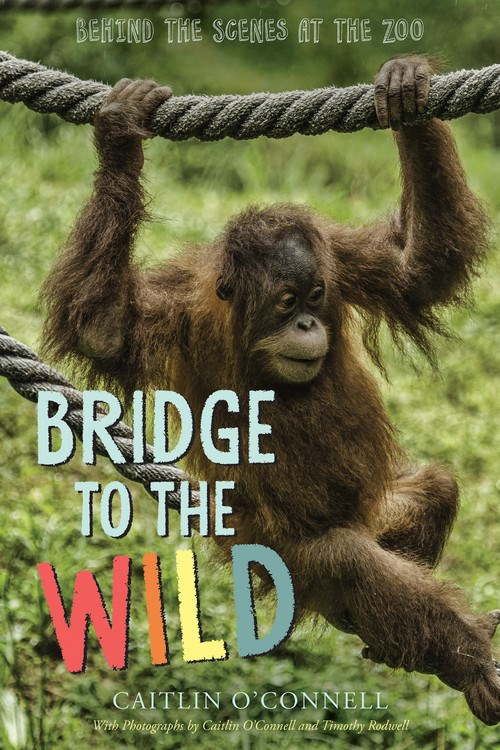
bridge-to-the-wildBridge to the Wild, by Dr. Caitlin O’Connell/Photographs by Timothy Rodwell, (Aug. 2016, HMH Books for Young Readers), $18,99, ISBN: 9780544277397

Recommended for ages 10 and up

I’m about to gush here. If you read my reviews often enough, you probably have guessed that I love any nonfiction book about animals, conservation and preservation, and even better when the ideas are combined. In Bridge to the Wild, Dr. Caitlin O’Connell begins by recalling a childhood visit to the zoo – back when animals were still largely kept in cages (I remember it well), and saw a gorilla, seemingly in deep despair over living in a cage not much bigger than he was.

Thankfully, those days are (mostly) over. Zoos are more like natural preserves now, offering many animals larger spaces to roam; conservation and preservation is the order of the day, with zoo staff rescuing and caring for animals all over the world. As more animals face extinction at the hands of poachers, habitat devastation, and pollutants that contaminate their environment, zoos are playing a bigger part in keeping our wildlife alive, and conducting valuable research on improving their conditions and our world. Bridge to the Wild is Dr. O’Connell’s manifesto, where she lays out the valuable ways zoos are a bridge for humans, to the wild outside our doors.

Dr. O’Connell spent a week working with the staff at Zoo Atlanta –  a private, nonprofit wildlife park and zoo – to observe the relationships between animals and caretakers, to help strengthen this bridge. After all, what we see as observers is only the tip of the iceberg; many, many loving and brilliant people are behind the scenes, learning about and learning from the animals, caring for them, loving them. From the Dawn Chorus – the morning symphony conducted by the tenants as the day begins, to the Dusk Chorus, when they start winding down for the night, Dr. O’Connell and Tim Rodwell introduce us to the inhabitants of Zoo Atlanta, from the pandas, to the hornbills, meerkats, gorillas, tigers and more.

There are anecdotes and beautiful photographs, a “Keeper Feature” that profiles the different keepers at Zoo Atlanta, and a fantastic note on ignorance and extinction, which is a real call to action to end senseless poaching of animal parts for talismans and “remedies” that simply don’t work. A full bibliography and sources are available and provide more research opportunities, and data sheets encourage budding zoologists to do some research on their own, guided by Dr. O’Connell, who lays out simple experiments to observe and record behaviors.

Animal books are hugely popular with my Corona Kids, and I’ve been stacking my collection with plenty of rescue, preservation, and conservation titles for them, to drive home the point that this planet doesn’t only belong to us. Bridge to the Wild is going to be one of those books I talk endlessly about, especially since my library is about a stone’s throw away from the Queens Zoo. I may even slip copies of this book into teachers’ hands during class visits, with a “hint, hint” nudge for a class trip activity (sorry, kids!). That’s how important this book is to me.

Bridge to the Wild has received a starred review from School Library Journal. Learn more about Dr. O’Connell’s work and books at her author website.

Take a peek at a chapter excerpt on meerkats, then go order this book for your animal lovers!
meerkat_1


Posted in Middle Grade, Non-Fiction, Non-fiction, Teen, Tween Reads

You want football stats? SI Kids has them! 1st and 10 is loaded with lists, stats, and photos!

sikidsfootballSports Illustrated Kids 1st and 10: Top 10 Lists of Everything in Football (Revised & Updated), by the Editors of Sports Illustrated for Kids, (July 2016, Sports Illustrated, $19.95, ISBN: 978-1-61893-173-3

Recommended for ages 8+

Do you love lists? Do you love stats? Do you love football? There’s something for everyone in this updated edition of Sports Illustrated for Kids’ book, 1st and 10: Top 10 Lists of Everything in Football. There are loads of Top 10 lists, sure: Top 10 Rivalries, Nicknames, Fantasy Performers, Stadiums, and more, but each of these lists is loaded with stats: dates, scores, major games, players, you name it. There are 36 lists in all, with some great career highlights for longtime football fans and new ones who want to learn some of the history behind the sport.

Since I’m not well-read or conversant in sports, I’ve been trying to beef up some of that knowledge so I can guide the kids at my library to books that will interest them; 1st and 10 is a great book for me to lead them to. I can easily booktalk it, because it’s quick bites of information. There are things I can focus on, like the Top 10 Artifacts (the first Super Bowl ring! A football from 1895! My inner archivist and history nerd is rejoicing!), Movies (The Replacements is a long guilty pleasure of mine), and Hairstyles (My hair on the most humid of days has nothing on Troy Polamalu).  Add in the stunning photography that you’d expect from Sports Illustrated, and you have a book that collectors of any age will enjoy.

1st and 10 is part of a series of Top 10 lists for each sport: you can also add Full Count: Top 10 Lists of Everything Baseball, Slam Dunk! Top 10 Lists of Everything Basketball, Face-Off! Top 10 Lists of Everything Hockey, and The Top 10 of Everything Sports. I’ll be putting these books on my shelves, now that I know about them. They’re great go-to resources for any library that has sports fans coming through the doors.

Posted in Intermediate, Middle Grade, Non-fiction, Non-Fiction

Mystery & Mayhem: New nonfiction middle grade series

Survival_CoverMystery & Mayhem: Survival, by Tom McCarthy, (Oct. 2016, Nomad Press), $9.95 (softcover)/$19.95 (hardcover), ISBN (softcover): 978-1-61930-480-2, ISBN (hardcover): 978-1-61930-476-5

Recommended for ages 8-12

Five stories of survival against all odds: Antarctic explorer Ted Shackleton and his men, fighting for their lives in the ice; legendary Mutiny on the Bounty Captain William Bligh and his men, set adrift in the Pacific Ocean; a young man and his companions struggle to travel through Death Valley to reach California during the gold rush; a young girl is one of the survivors of a shipwreck and then a trek through the Sahara Desert; and young Eliza Donner, one of the survivors of the Donner party’s fateful journey to the American West. Five stories, all terrifying, and all true.


PiratesAndShipwrecks_CoverMystery & Mayhem: Pirates and Shipwrecks, by Tom McCarthy (Oct. 2016, Nomad Press), $9.95 (softcover)/$19.95 (hardcover), ISBN (softcover): 978-1-61930-475-8, ISBN (hardcover): 978-1-61930-471-0

If it’s pirates ye be wantin’, pirates you’ll get here! Stories of the unlucky crew of the Betsey, shipwrecked and met by pirates; the 1857 recovery mission to discover what happened to an Arctic expedition that never came home; the story of Mary Read, one of the bloodthirstiest pirates ever to set sail – and a female!; the crews of two shipwrecks try to stay alive in a land populated by cannibal tribes, and the story of Barbarossa, the most feared pirate in the Mediterranean.  There are five stories of pirates and shipwrecks here, all true. Pirate fans, brandish your cutlasses, put on your eyepatch, and have a seat; these are the stories of the real Pirates of the Caribbean (and then some)!

These books read like the adventure and scary true tales I read when I was a kid. Does anyone else remember Dynamite Magazine’s book series? They had ghost stories and stories about famous disappearances (like Amelia Earhart and Judge Crater), and I devoured them. They gave me just enough of a jump scare, without venturing (too much) into “sleep with your lights on” territory. Kids who love Lauren Tarshis’ I Survived series will be all over these, but again – my brilliant nonfiction choices go unnoticed, so I’d have to display them, loud and proud, with the I Survived books and make sure the kids know where they are.

The beginning of each story in each book provides a map with details on the story’s location, and each story ends with a look at other events that took place in the same year as the current adventure. While Barbarossa was terrorizing the seas in 1504, for instance, Leonardo da Vinci was hard at work, painting the Mona Lisa, and Michelangelo’s famous statue, David, was displayed in Florence. In 1849 – the same year that William Lewis Manly led his companions out of Death Valley – Elizabeth Blackwell became the first female doctor in the United States, and Minnesota became a territory of the USA! Glossaries and resources complete each book.

While each book carries a Guided Reading level of V, the text skews a bit younger, which makes this a good series to introduce struggling and reluctant readers to. You can also suggest further reading, including Mystery in the Frozen Lands, a Hi-Lo reader from Lorimer, with Pirates and Shipwrecks: Mystery in the Frozen Lands is the full story of the Arctic mission to discover the fate of the Franklin expedition 12 years previous.

These are a fun series that will appeal to adventure readers. I’ve got a few fourth grade class visits booked for October (already!), so I may see how a read-aloud from one of these books goes.

Posted in Intermediate, Middle Grade, Non-Fiction, Non-fiction, Non-Fiction, Tween Reads

Need to know about sports? NatGeo’s got you covered.

sportsNational Geographic Kids: Everything Sports, by Eric Zweig with Shalise Manza Young, (March 2016, National Geographic Kids), $12.99, ISBN: 9781426323331

Recommended for ages 8-12

I am not a big sports girl, often to my husband’s chagrin. Don’t get me wrong, I love watching the Olympics, and there are sports I enjoy watching, like fencing and gymnastics, but it’s not often that I get to watch those (usually, just during the Olympics). Many of the kids in my library are big sports fans, though, so I need to become better versed in some general sports books, so I can booktalk and show them books that may appeal to them. As always, I start with NatGeo Kids, because 1) their books fly off my shelves; 2) they’re comprehensive, with beautiful photos, and 3) they have little fact tidbits that always help with a booktalk or party talk.

Everything Sports is a great go-to for general sports info, especially for newbies who want to learn more, like me. The book is only 64 pages – not a huge commitment to a history of every sport ever played – and written by two sports journalists who also have a gift for making their complete understanding of sports readable and digestible to all. Sharlise Manza Young shares her knowledge throughout the book in her “Explorer’s Corner” feature, providing a little more background info on some of our most popular sports. There are fun activities and quizzes throughout -kids can make their own sports cards, which opens up a world of program possibilities for me, especially during World Cup season, because my Corona Kids are also devoted soccer (ahem… “football”) fans.

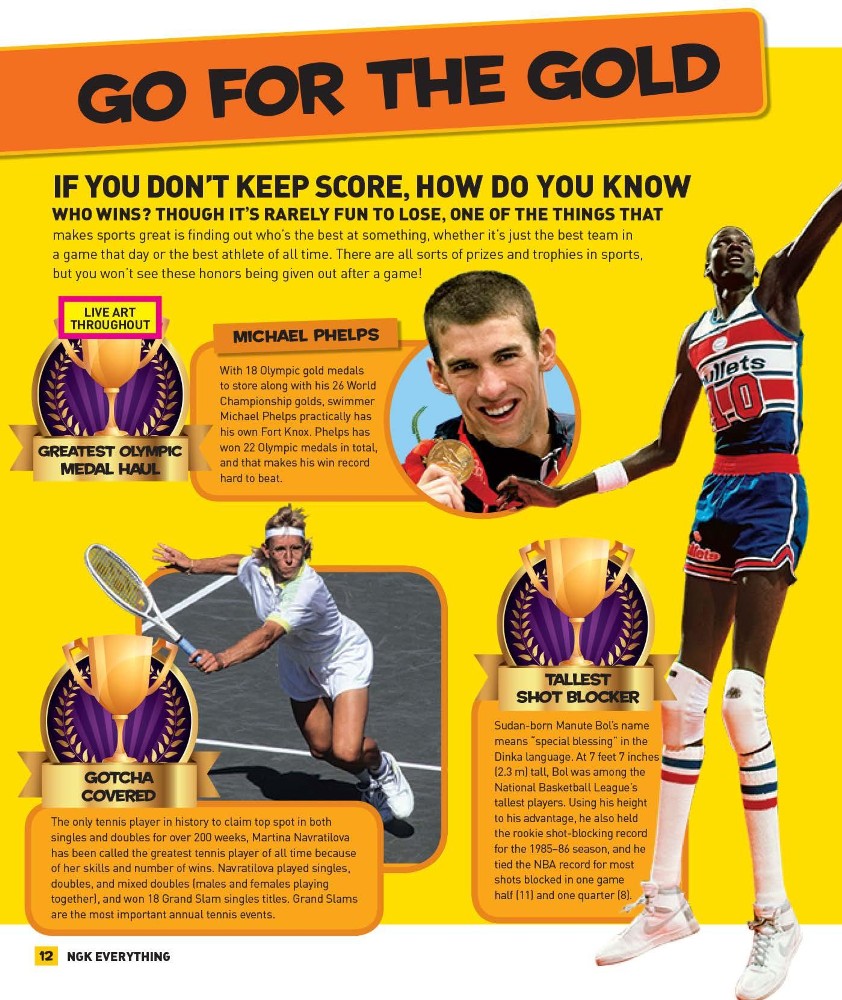
Everything Sports is a great add to where you’re building a strong sports collection. Display with David Stabler’s Kid Athletes and your seasonal sports books, plus any biographies on popular atheletes in your community. Just coming off of a fantastic Olympics showing, you can display from gymnastics books and talk up recent Olympians, including the Fabulous 5 (also a great opportunity to talk up the amazing diversity on this season’s team), Olympic swimmers Simone Manuel, Katie Ledecky, and Michael Phelps, and since yes, there is fencing in the book (yay!), let’s talk about Ibtihaj Muhammad, who set the strip on fire in Rio!

sports_1sports_2

Photos courtesy of DogoBooks.com
Posted in Intermediate, Middle Grade, Non-Fiction, Non-fiction, Non-Fiction, Tween Reads

Ocean Animals: Who’s Who in the Deep Blue!

big blueOcean Animals: Who’s Who in the Deep Blue, by Johanna Rizzo (May 2016, National Geographic Kids), $12.99, ISBN: 9781426325069

Recommended for ages 8-12

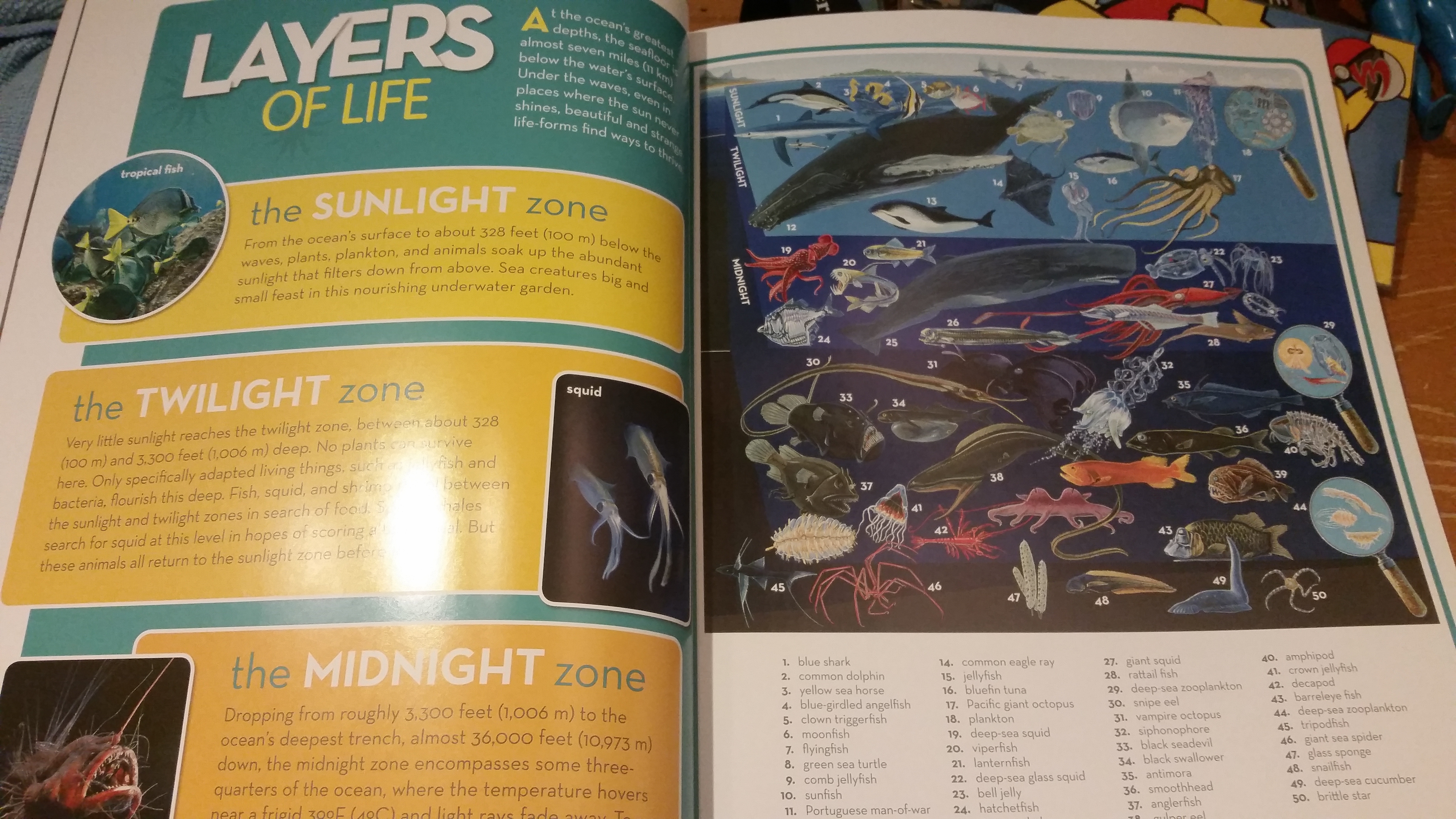
When you have a book featuring real life Dory on the cover and a Nemo on the first page of a book, you know NatGeo is paying attention to what kids like. Ocean Animals: Who’s Who in the Deep Blue is another home run from NatGeo Kids, combining breathtaking photos of ocean life (blobfish and anglerfish are breathtaking, if a bit in that gasp of “WHOA!” kind of way, after all) with interesting facts, information, and advocacy. Chapters are broken down by oceans of the world; the three layers the ocean, and the animals that inhabit them, featuring a great infographic; sharks and rays; marine mammals; a separate chapter on whales and dolphins; marine birds; ocean habitats; the Pristine Seas Project, and 20 Ways You Can Protect the Ocean. A glossary and index complete the volume.

I used this book as a companion to my ocean storytime today; it was great to be able to show the kids a beluga whale and an orca after we sang our song about whales. Saying the name over and over is one thing; seeing a picture of the real animal is another. I love NatGeo’s focus on advocacy, and how the organization empowers kids to take action to preserve their planet.

20160825_104603Sorry for the photo glare! Love this detailed infographic.

You all know I love NatGeo books, and now you know this copy’s already in my library. My little guy loves his copy; even though he’s only 4 years old, he loves looking at the photos, and I modify/paraphrase some of the information when he wants me to read it to him. This one’s a great selection for middle grade nonfiction collections and animal lovers.

20160825_104615Beautiful photo of a sea anemone

Posted in Intermediate, Middle Grade, Non-Fiction, Non-fiction, Non-Fiction

Animal Planet’s Animal Atlas is a passport to the world’s habitats

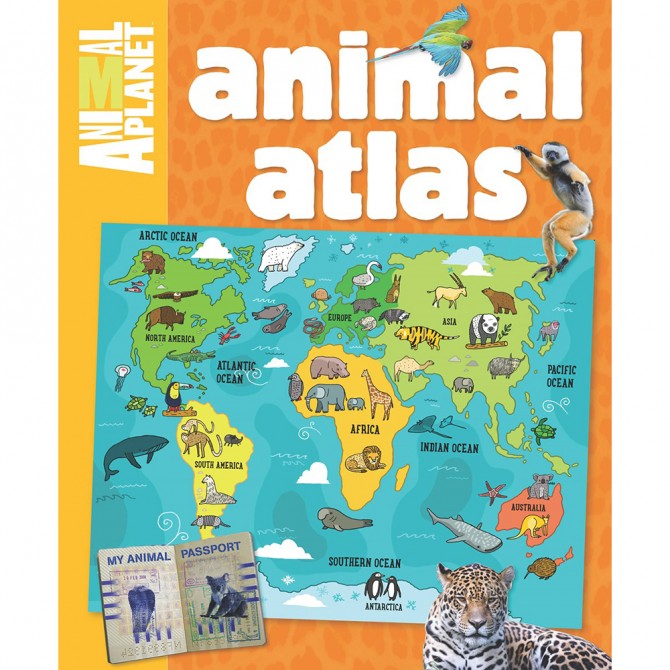
animal-planet-animal-atlas-hardcover-book-658_670Animal Planet Animal Atlas, by Animal Planet (May 2016, Animal Planet), $17.95, ISBN: 978-1618931658

Recommended for ages 7-10

I have tons of animal nonfiction books in my library, and I have a bunch of really good books on habitats, too.  What Animal Planet’s Animal Atlas does it bring together explanations of different biomes/habitats, and the animals who live in them on each continent and in the oceans of our world.

The atlas begins with a map to present the major biomes of the world, and describes each biome: alpine, desert, marine, grassland, rain forest, temperate forest, tundra, and taiga. Animal tour guides for each continent take readers through a look at different animals that inhabit each biome on each continent, and features like ROAR (Reach Out. Act. Respond.) – Animal Planet’s initiative, dedicated to improving the lives of animals worldwide – empower kids with knowledge about how humans are working to change the world for the better through conservation and protective measures. Surprisingly Human boxes provide facts about the similarities between animals and people. Each continent section ends with a spotlight on an animal from the area, giving readers a close-up look at animals like the bald eage, anaconda, or Sumatran tiger. Spotlights include a Where in the World section, where maps detail the animals’ living areas; Animals Facts, and information on what they eat and how animals adapt best to their environments.

Combining colorful illustration and full-color photographs of over 200 animals, the atlas is a great resource for young readers. It’s got information ready at a glance for my Corona Kids, who come in asking for books about various habitats and then, what animals live in those habitats. It’s a strong companion book for slightly bigger kids, who will need more in-depth books to complete a report, but it’s a great starting point for anyone who wants a little more info on different habitats, and who may not realize that different continents have so many different biomes. A brief glossary and index round it all out.

This is a good addition to primary nonfiction collections if you have strong books that provide more detail that kids can jump to if they want to go further into a topic. Or, if you’re like me, and your kiddo just loves learning about different animals, where they live, and what they eat, it’s a nice add to your bookshelf. The passport and guide animal features add a cute touch that brings something different and fun to learning. Hmmm… now, I’m thinking of an animal program for my Discovery Club… learning about a new animal each week, and stamping a “passport” with an animal sticker or stamp… I’ve got to talk to my Discovery Team!

Posted in Intermediate, Middle Grade, Non-Fiction, Non-fiction, Non-Fiction, Tween Reads

Kid Artists is a great addition to Quirk’s “Kid” series

kidartists_1Kid Artists, by David Stabler/Illustrated by Doogie Horner (Aug. 2016, Quirk Books), $13.95, ISBN: 9781594748967

Recommended for ages 8-12

The third outing in Stabler and Horner’s “Kid” series, following Kid Presidents and Kid Athletes, introduces kids to artists. Before the museum exhibitions, every artist was a kid, shaped by his or her circumstances. Kid Artists organizes 17 artist profiles into three sections: Call of the Wild, focusing on artists who grew up with a love of the outdoors; It’s a Hard-Knock Life, featuring artists who overcame obstacles like discrimination, war, poverty, and extreme shyness; and Practice Makes Perfect, where artists who had a teacher, friend, or family member cheering them on to practice, perfect, and succeed.

There are funny stories and inspirational stories, all illustrated in full-color. We learn that Claude Monet had a lucrative caricature business as a kid, and that Leonardo da Vinci’s painting of Medusa, on a shield was so terrifying that his father almost ran away from it! Kids will meet artists like Keith Haring and Jean-Michel Basquiat, whose graffiti art on the streets of New York garnered them fame, and Jacob Lawrence, whose Migration Series tells the story of the migration of African-American families from the rural, southern United States up north, in search of a better life.

I enjoy this series, because it introduces kids to a wide range of people under one umbrella term. They’ll be exposed to new people, cultures, and ideas, in a kid-friendly atmosphere with a bite-sized biography that shows them that no only do we all start out as kids, but we all have challenges to overcome.


Posted in Middle Grade, Non-Fiction, Non-fiction, Tween Reads

NatGeo’s 2017 Almanac is jam-packed!

almanac_coverNational Geographic Kids Almanac 2017 (May 2016, National Geographic), $14.99, ISBN: 978-1426324178

Recommended for ages 8-13

NatGeo’s 2017 almanac is packed with content from their kids’ magazine, their collection of books, and their NatGeo Kids website. It’s chock full of articles, facts, games, and digital extras, including an invitation to the Newsmaker Challenge, where kids can submit their own time capsule artifact photos to be featured in next year’s almanac. Features on animals encourage kids to get involved in the Summer Mission Animal Rescue Challenge, increasing awareness about endangered species and how they can play a part in helping do their part toward conservation and protection.

Information is broken out into 10 sections, covering current events, animals, going green, world cultures, adventure, fun and games, science and nature, history, and geography. Each section is loaded with breathtaking photos, top 10 lists, homework help and research ideas, and a quiz.

These books are a great idea for kids who love trivia, and they’re great for introducing readers to the world outside their doors. Like I’ve said before, NatGeo books are a win with the kids in my library, my own kids, and the kids in my extended family. There’s so much to love!

Posted in Intermediate, Middle Grade, Middle School, Non-Fiction, Non-fiction, Non-Fiction, Tween Reads

Inside Your Insides puts you under a microscope

inside your insidesInside Your Insides: A Guide to the Microbes That Call You Home, by Claire Eamer/Illustrated by Marie-Eve Tremblay, (Sept. 2016, Kids Can Press), $17.95, ISBN: 9781771383325

Recommended for ages 8-12

This interesting nonfiction book takes a look at the microbes that live on our bodies: in our hair, on our skin, and the ones we pick up everywhere we go. We’re microbiomes: a walking, talking collection of microbes, and Inside Your Insides introduces us to some of the most common microbes we share our surroundings with. We learn about bacteria, archaea, viruses, fingu, protists and mites; their preferred environments; and all the places they live on and around us. Complete with brightly colored, cartoony illustrations, makes this a good introduction or companion for middle grade science students.

There are some good callout facts and groan-worthy jokes scattered throughout the book, and a glossary and index round everything out. Kids will learn that not all bacteria are bad for you: you don’t need everything antibacterial, and it may be doing more harm than good, anyway! A section dedicated to saving our microbes goes into detail on how to take care of ourselves to attract the “good” microbes: play outside, eat lots of fruits and vegetables, and explore your world. The combination of clear, instructional writing with a humorous bent, and the eye-catching illustrations, kids will get a kick out of this intro to microbiology. It’s a good additional purchase for collections where science books circulate.

You can also direct kids to the Genetic Science Learning Center’s Human Microbiome site. There are teacher resources, interactive simulators, informative videos, and information that’s written in a clear, interesting way to get kids excited about learning more.


Posted in Middle Grade, Non-Fiction, Non-fiction, Tween Reads

Could Dracula make it in today’s world? Monster Science gives you the scoop.

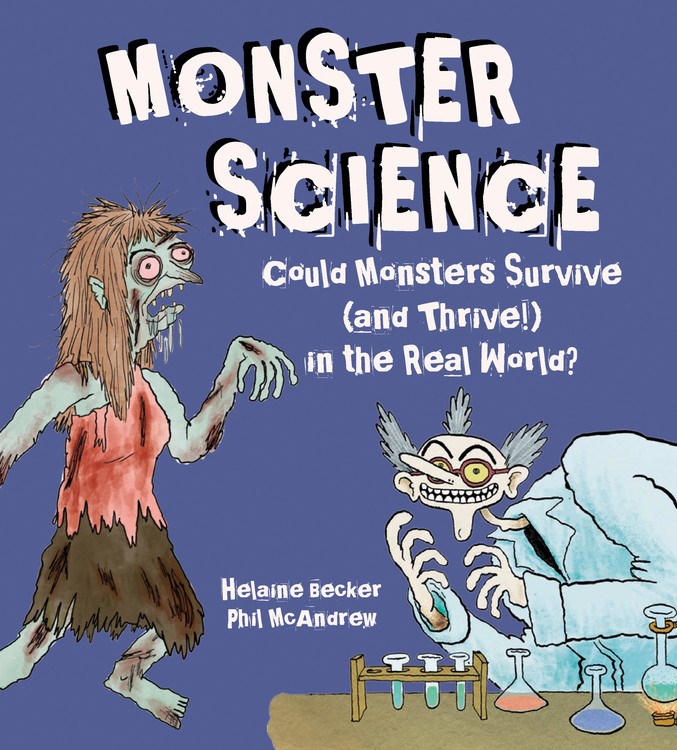
monster scienceMonster Science, by Helaine Becker/Illustrated by Phil McAndrew, (Sept. 2016, Kids Can Press), $18.95, ISBN: 9781771380546

Recommended for ages 8-12

Monster Science takes a look at some of our favorite monsters – Frankenstein’s Monster, vampires, Bigfoot, werewolves, zombies, and sea monsters – and, using science smarts, discusses the plausibility of these monsters’ ever being able to exist in our world. If you’ve ever wondered whether or not you should really start stockpiling food and weapons for the upcoming zombie apocalypse, or stared for a little too long at those blurry pictures of Bigfoot and Nessie, the Loch Ness Monster,  you’ll love this book.

The book devotes a chapter to each monster, provides background info, incorporating the history of the monsters, and using science, history, literature, myths and legends, helps readers work through whether or not these creatures could have ever existed or could exist today. There are colorful, cartoony illustrations, seriously groan-worthy jokes, and pop up facts throughout the book, and a quiz tests finishes up each chapter and challenges readers to remember what they’ve just read. There are enough gross facts – the stages of decay; electric shock bringing making dead body parts jerk and move, dead people who sat up at their own funerals – presented with a humorous bent, to delight middle graders who want something fun and gross to read, yet will also give them some cool facts to bring to their science class.

This is the kind of book I love booktalking to kids, because my awesome nonfiction selections are sadly underappreciated. When I put a coding book out, I get interest, because I have a library full of Minecraft mouse potatoes, but when I try to get them excited about science, I usually get eyerolls, or – zounds! – blank stares. A book like this will help me explain how wonderful and gross science can be! We can talk about The Walking Dead (no, they’re not old enough to read the comics, but you know they’re watching it at home), we can talk about Dracula and Frankenstein, and I can terrify them with repeated viewings of Mad Monster Party and the Groovie Ghoulies, because ’70s monster claymation and cartoons are aces with me, but they leave the kids bewildered. They don’t know what they’re missing.

In all seriousness, the book is fun leisure reading and a good companion to science, history, or ELA classes. There’s so many interesting facts, presented in a fun, light, manner, that kids will end up reading and remembering more information than they can imagine. Add it to your library collections, or make it a fun gift for a monster fan you know and love.