Posted in Intermediate, Middle Grade, Non-Fiction, Non-fiction, Non-Fiction, Tween Reads

Holiday Shopping: Nature

First tech, now nature. This latest round of holiday gift ideas looks at science and nature books. These are perfect for the kid who loves to be outdoors and wants to know more about our world and the animals he or she shares it with.
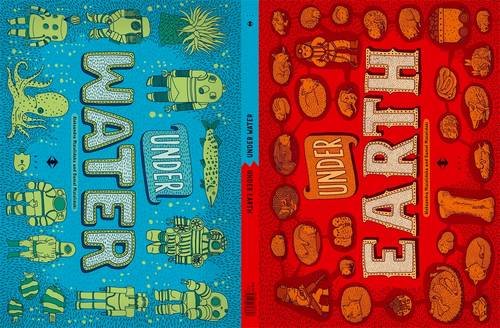
underwater_2Under Earth, Under Water, by Aleksandra Mizielinska and Daniel Mizielinski, (Oct. 2016, Candlewick Press), $35.00, ISBN: 978-0-7636-8922-3

Recommended for ages 7-12

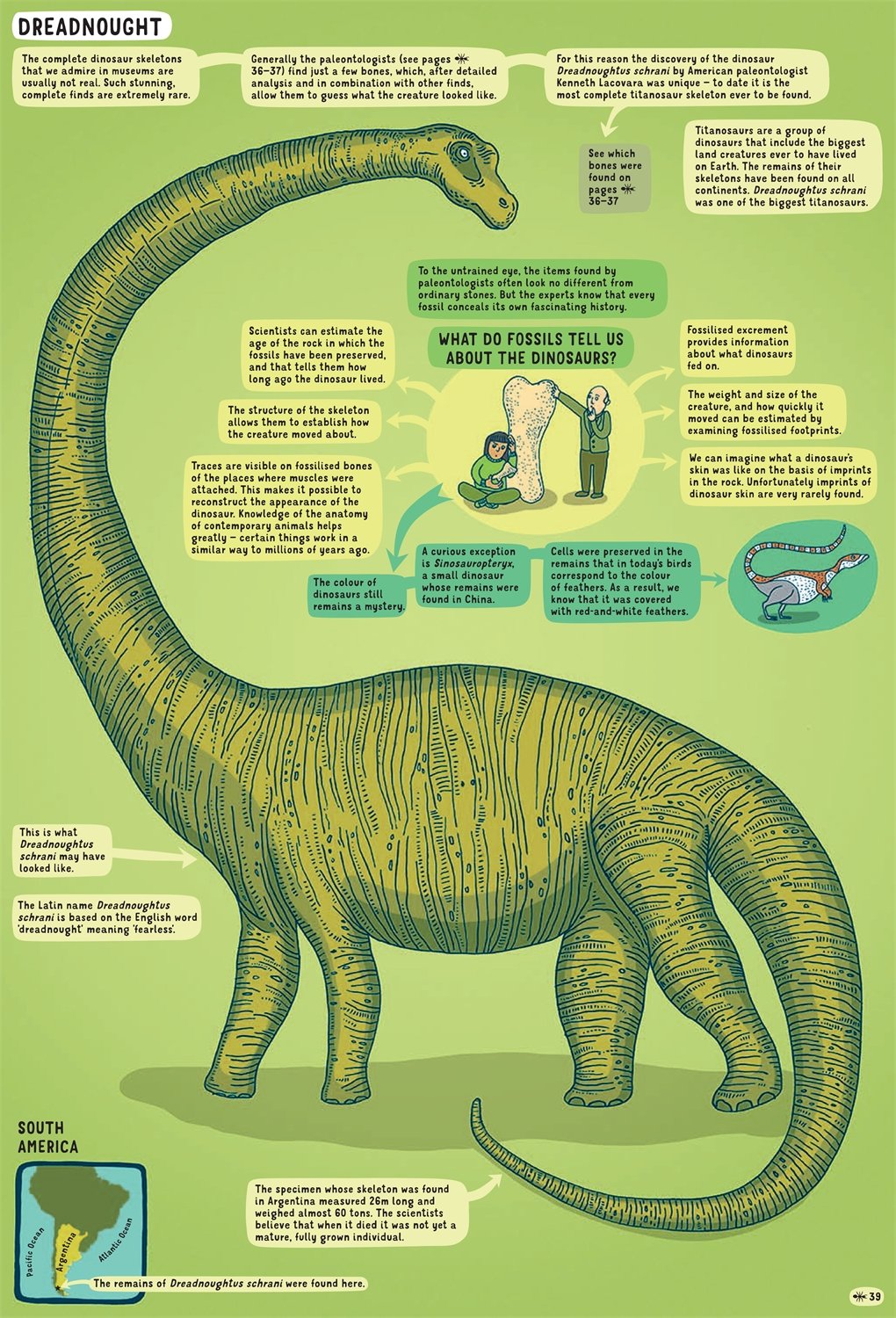
This book is stunning. It’s two books in one, each examining our worlds just below the surface: water and earth. The illustrations are amazing, and kids will flip as they see the inside of an anthill, take a look at an archaeological dig, check out a history of submarines, or tag along for a tour of the Mariana Trench. I can’t get enough of this book, and kids who love natural science won’t, either. Check out this spread on a Dreadnoughtus schrani!
underwater_5


aliens-from-earthAliens From Earth: When Animals and Plants Invade Other Ecosystems, by Mary Batten/Illustrated by Beverly J. Doyle, (March 2016, Peachtree Publishers), $16.95, ISBN: 978-1-56145-900-1

Recommended for ages 9-12

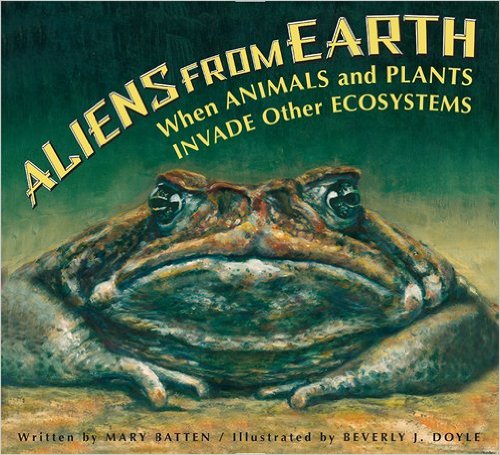
Aliens From Earth takes a fascinating look at what happens when animals or plants invade a new habitat, upsetting an ecosystem’s balance. Fire ants, gypsy moths, even the cute little starlings that I see every morning when I head to work are all in here. Introducing an invasive species into an ecosystem unprepared for it can be responsible for the spread of disease, loss of habitat for current inhabitants, and reduction of natural resources for an area. This volume is beautifully illustrated by artist Beverly J. Doyle, whose acrylic paintings make me feel like I’m walking through a museum exhibit as I read. Previously published in 2006, Aliens from Earth is an Izaak Walton League of American Conservation Book of the Year. Give this to kids who are interested in environmentalism, preservation, and conservation.


oceanpediaUltimate Oceanpedia, by Christina Wilsdon, (Nov. 2016, National Geographic Children’s Books), $24.99, ISBN: 978-1426325502

Recommended for ages 7-13

Know a kid who would live in the aquarium if she or he could? Fascinated by fish, crazy for sea turtles, smart about sharks? The Ultimate Oceanpedia is the book for them. Stunning photos accompany entries on earth’s oceans, sea life, exploration, weather, the coast, and conservation of our underwater habitats and saving sea life. There are fast facts, stats, food webs, and maps galore. Sections on climate change and offshore drilling take on today’s big issues and present the facts without bias, letting readers form their own opinions. A call to action provides simple ways kids can help make the world a better, cleaner, healthier place to live. A glossary and in-depth resources encourage kids to keep learning and changing the world around them for the better.

These books are all available right now and are dying to go home with you! Shop your local bookseller, or click on over to Amazon, Barnes & Noble, Books-a-Million, or Indie Bound to buy.
Posted in Fiction, geek, Guide, Non-Fiction, Non-fiction, Tween Reads

Holiday Book Shopping: Science and Tech

Books make fantastic holiday gifts! Need a stocking stuffer or are stumped by a kid who has seemingly everything? Try one of these!

I am guilty of favoring books in the STEM/STEAM areas, because that’s what I love evangelizing to my own kids and the kids at my libraries. Take a look – you don’t need to be a Stephen Hawking-in-the-making to enjoy these.

scratch-playgroundScratch Programming Playground, by Al Sweigart, (Oct. 2016, No Starch Press), $24.95, ISBN: 978-1593277628

Recommended for Ages 8-12

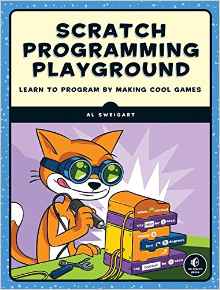
I love working with Scratch for young coders. It’s all about teaching kids how to computer code using interconnecting blocks of code, and the Scratch program, developed at MIT, is free and available online. Scratch Programming Playground walks kids (and grownups – I used this book extensively while putting together programs for this coming winter) through the process of learning Scratch by making cool games, like Fruit Slicer (a Fruit Ninja clone), Brick Breaker (where my ’80s friends at?), and Asteroid Breaker (Asteroids! Remember that one?). There are tons of full-color visuals and step-by-step breakdowns that will have kids programming in no time. I buy No Starch books for my libraries all the time – they’re great to have on hand.


how-things-workHow Things Work, by T.J Resler (Oct. 2016, National Geographic Kids), $19.99, ISBN: 978-1-4263-2555-7

Recommended for ages 7-12

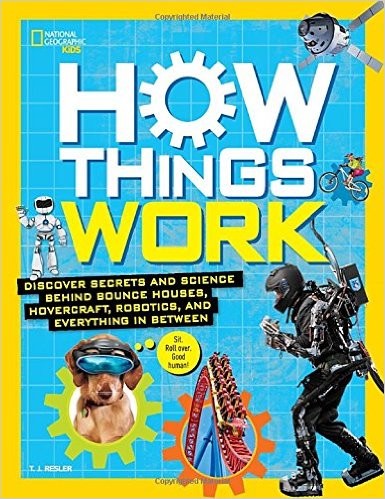
Know a kid who’s constantly taking everything apart to see how it works? This is the book for her or him. It’s loaded with gadgets and how they work; fun facts; in-depth pieces on technology and how it works; profiles of scientists and innovators, and yes, experiments that are totally safe to try at home (with adult supervision, please). Learn how a tablet really works, how an aquarium works to keep fish healthy and happy, even how a toilet works, complete with diagram. Design a roller coaster with your kids – it’s easier than you think! Because it’s a NatGeo Kids book, you know the writing is great; it speaks to kids in easy, clear, fun language that educates and never talks over their heads or down to them. The photos are amazing, and the dog on a surfboard (page 131) is worth the cost of the book all on its own.

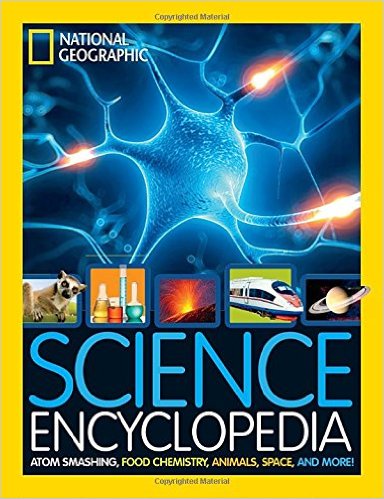
science-encyclopediaScience Encyclopedia: Atom Smashing, Food Chemistry, Animals, Space, and More!, by National Geographic Kids, (Oct. 2016, National Geographic Kids), $24.99, ISBN: 978-1-4263-2543-4

Recommended for ages 8-13

I know, it’s a NatGeo Kids lovefest right now, but it’s well-deserved. The Science Encyclopedia is info-packed with everything kids need to know about physical and life sciences, covering matter, energy, electronics, the universe, and more. There are record breakers, key dates in atomic science, and activities to try at home. Information is presented in 2-page spreads broken out into subject-specific blocks, with stunning photos, fun facts, and hilariously bad jokes (Where does bad light go? A prism!) A glossary, index, and additional resources round this volume out. Fantastic gift for any tween who wants to know more about everything.


These are all available now, either in your local bookstore or online through Amazon, Barnes & Noble, Books-a-Million, or IndieBound.

Posted in Middle Grade, Non-Fiction, Non-fiction, Tween Reads, Women's History

Life in Motion: Misty Copeland’s inspiring autobiography, edited for young readers

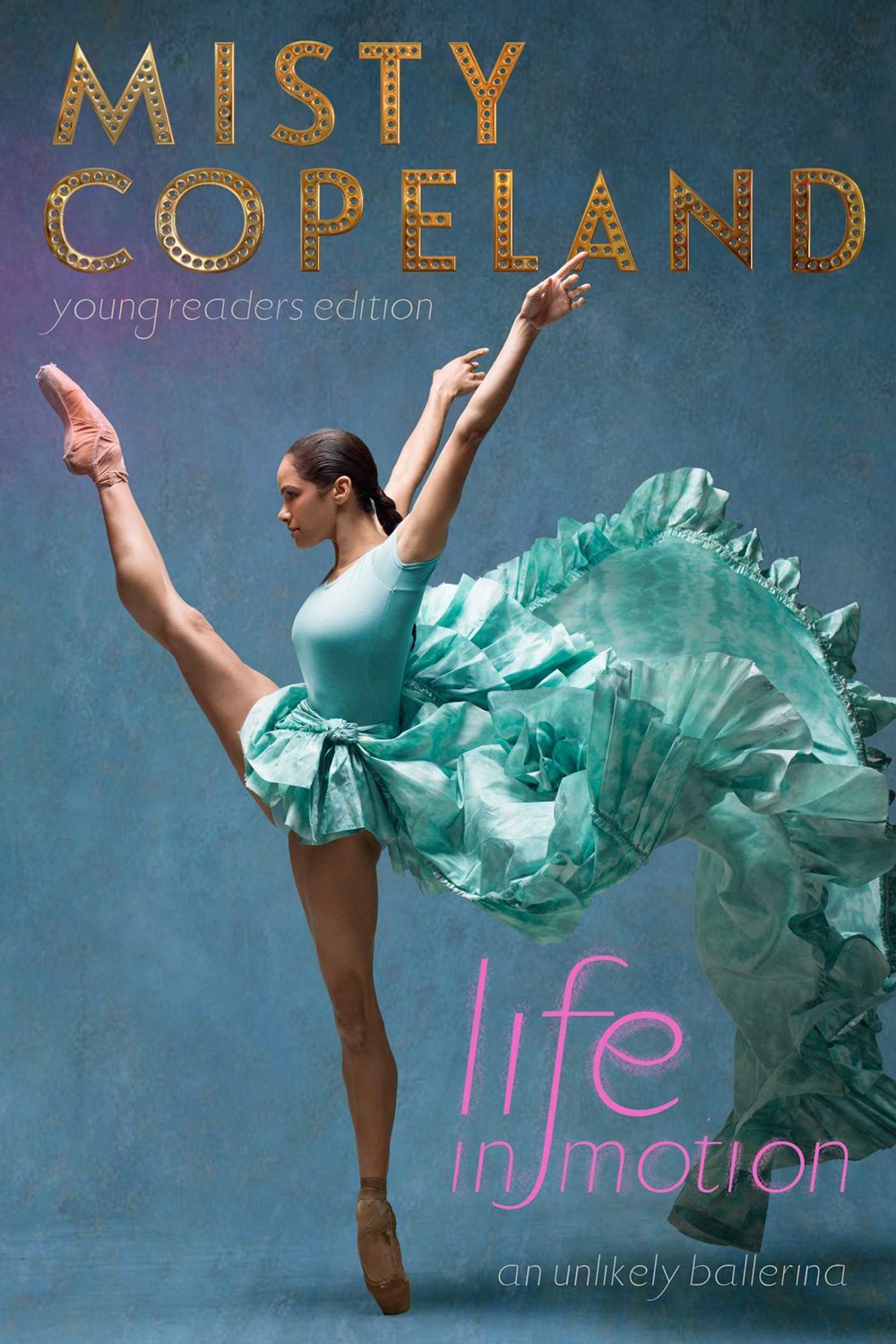
misty-copelandLife in Motion: An Unlikely Ballerina (Young Reader Edition), by Misty Copeland, (Dec. 2016, Aladdin), $17.99, ISBN: 978148147979

Recommended for ages 8-12

Misty Copeland is amazing. The first African-American principal dancer for American Ballet Theatre didn’t start ballet until her early teens and has faced poverty, racism, criticism, and injury to do what she loves. In this young readers edition of her autobiography, she tells readers about the trials and triumphs she’s lived, the hard work she’s put in, and the sacrifices she’s made to get where she is in the dance world. We read about the custody battle between her mother and ballet teacher when she was 15; the rampant racism she’s endured, and she holds up to the light the eating issues that run rampant in the ballet community. We also read about amazing achievements, like her dancing on tour with Prince and her joy at meeting the dancers that inspired her the way she inspires a new generation of children.

Misty does not shy away from diversity here: she embraces it, giving us the names of the African-American dancers that went before her. She also doesn’t hide the fact that she’s taken some heat for being “too mainstream”; that bringing ballet to the masses is looked down upon – thankfully, that’s something she disagrees with. Ballet and dance, the arts, are for all – if she can inspire another kid to put on a pair of toe shoes, or sign up for hip hop classes because it’s something they love, she’s done right. Copeland is all about embracing your passion. Her confidence and gratitude come through in equal measure, and she dispenses advice for living and building one’s self-esteem throughout the book. Embrace your strengths and never give up – these are the lessons that kids will come away with after spending some time with Misty Copeland.

There are photos in the finished book (I’ve got an egalley), and more on her home page. You can also find her on the American Ballet Theatre page, which also has a section on education and training for readers interested in learning more. Display and booktalk this with Copeland’s picture book (illustrated by Christopher Myers), Firebird.

This book is a must-add to biography collections. Booktalk and display this if, like me, you’ve got kids that need to see someone smashing stereotypes and making it to the top of her (or his) game. If you have dancers in your home or your life, give this book to them and let them watch this ABC Sunday Spotlight from 2014.

Posted in Intermediate, Middle Grade, Non-Fiction, Non-fiction, Non-Fiction

Extreme Wildfire takes kids to the front lines of fire fighting!

extreme_wildfire_coverExtreme Wildfire: Smoke Jumpers, High-Tech Gear, Survival Tactics, and the Extraordinary Science of Fire, by Mark Thiessen, (Aug. 2016, National Geographic Kids), $12.99, ISBN: 9781426325304

Recommended for ages 8-12

It can go from a spark to a flame in almost no time. It can devour homes and forests alike, leaving destruction and devastation in its path. NatGeo Kids brings readers to the front lines of wildfires, and the people – largely volunteers – who fight them, in Extreme Wildfire.  Author Mark Thiessen is a NatGeo photographer and certified wildland firefighter has photographed countless fires over the last 20 years; Extreme Wildfire represents part of a lifelong project: to create a visual record of what these firefighters do.

Extreme Wildfire discusses the science behind wildfire; how firefighters battle the flames and how lookouts spot potential fires on the horizon; the equipment used in combating fire, the devastation – and nature’s adaptation – that fire leaves in its wake, and how communities come together to help one another. Chock full of facts and call-out boxes with more information, plus an emphasis on fire safety and prevention to finish up the book, this a good addition to nonfiction collections. There’s a glossary, list of resources, and index.

The kids in one of my library’s neighborhood schools have a unit on natural disasters every year. I’ve ordered two copies of this book – my Corona Kids know how much I love NatGeo books – to have available for them when the time comes around this year. It’s also a good book to have on display if you have fire safety talks. There are some good fire safety and education resources online, including Science for Kids Club and The Kids Should See This.

extreme_wildfire_14-151Photo courtesy of Chat With Vera.


Posted in History, Intermediate, Middle Grade, Non-Fiction, Non-fiction, Non-Fiction, Tween Reads

Great desk reference for kids: Time for Kids 2017 Almanac

tfkTime for Kids 2017 Almanac, by the Editors of Time for Kids, (May 2016, Time for Kids), $12.99, ISBN: 978-1618934154

Recommended for ages 8-12

The latest TFK Almanac presents facts, news, current events, and information, curated from previous issues of Time for Kids magazine in one fun, interactive volume that’s a great desk reference for middle graders. The almanac covers the following subject areas: A Look Back (covering the previous years’ current events); Animals; Arts; Body and Health; Books; Calendars and Holidays; Computers and Games; Countries; Energy and the Environment; Entertainment; Geography; History; Inventions and Technology; Science; Space; Sports, and The United States. There are over 600 photos, quizzes and activities at the end of each section, and maps and timelines throughout the book. Kids will get a kick out of the year’s entertainment and world events wrap up and benefit from reference resources like the breakdowns of the world’s countries, which includes literacy rates, languages, currencies, and capitals; a breakdown of the branches of our government, listing of the states and Presidents, and walkthrough of the scientific method.

This is one of those references that deserves space on students’ desks, right next to their dictionary and thesaurus. It’s a big homework help, with a little extra fun to keep things interesting. I’ll keep one copy in Reference and one or two on the shelves here at the library.

Posted in Fiction, Fiction, Graphic Novels, Intermediate, Middle Grade, Non-fiction, Non-Fiction, Tween Reads

Science Comics explores Volcanoes

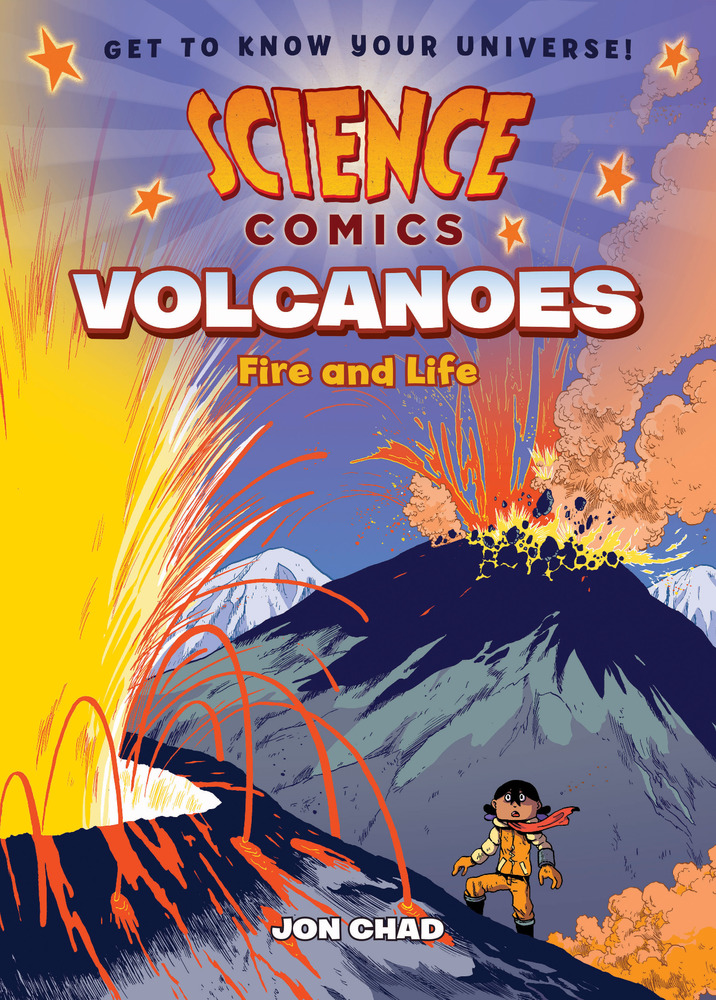
volcanoesScience Comics: Volcanoes-Fire and Life, by Jon Chad, (Oct. 2016, First Second), $12.99, ISBN: 9781626723603

Recommended for ages 8-12

Earlier this year, we got a look at First Second’s two Science Comics, Coral Reefs and Dinosaurs. There’s great science and fun art wrapped up in each of these comics, so I was super-psyched when I met a First Second rep at the PLA Conference this year, and she told me that there were more Science Comics coming. True to her word, we’re getting Volcanoes in just a couple of weeks.

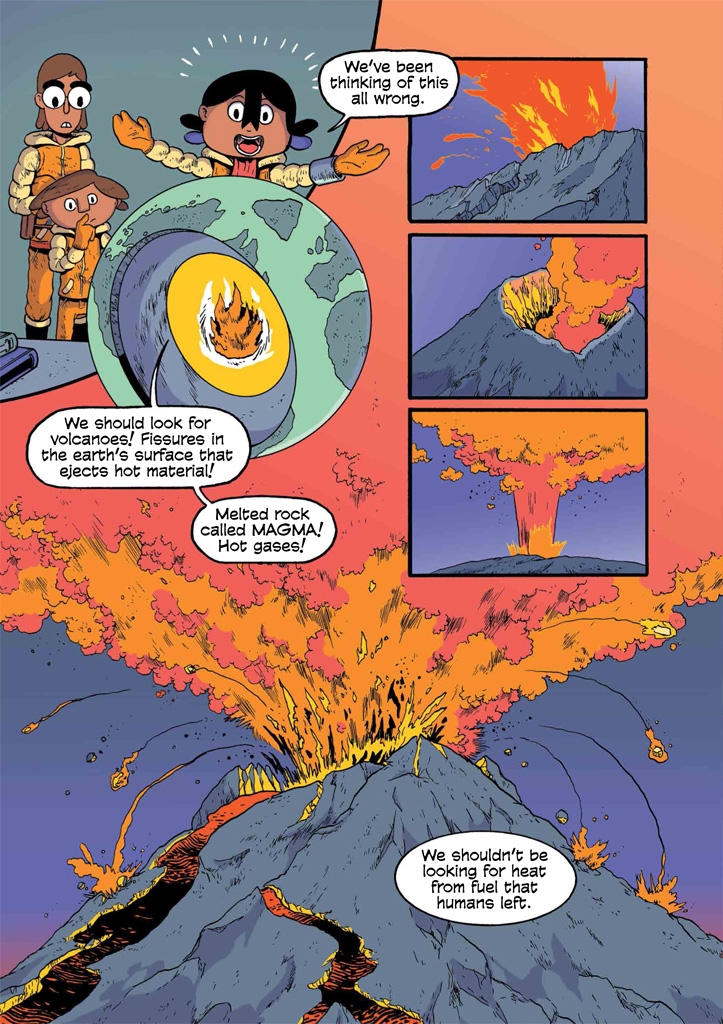
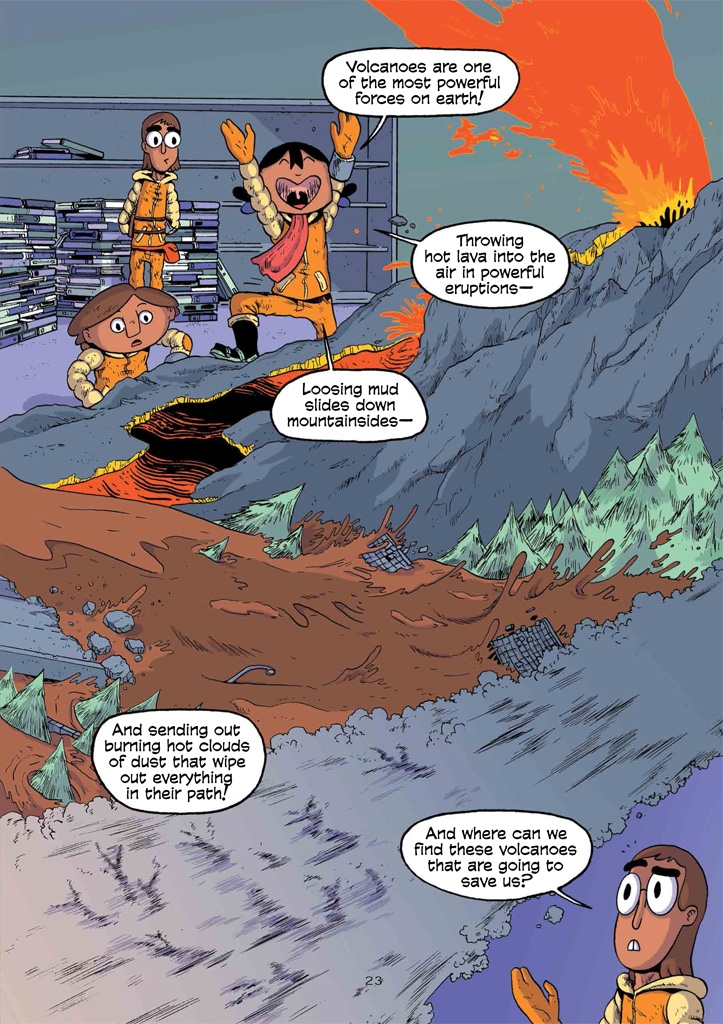
Similar to Coral Reefs, Volcanoes wraps information about volcanic activity into a story: there’s been some sort of environmental cataclysm, and Earth is freezing. A tribe is scanning books when Aurora, one of the kids, discovers a book about volcanoes; she is HOOKED. She’s saved her tribe! The power to warm the planet is right underneath their feet!

From there, Aurora becomes the reader’s guide through a look into the activity bubbling under the earth’s crust: there are magma vents, shifting tectonic plates, and volcanic eruptions. Volcanoes create just as much as they destroy: there are entire land masses that owe their existence to a volcanic eruption, just as there are entire cities that have been wiped out by them.

Posted in Animal Fiction, Fiction, Fiction, Intermediate, Middle Grade, Non-fiction, Non-Fiction

What Dog Knows

what-dog-knowsWhat Dog Knows, by Sylvia Vanden Heede, (Sept. 2016, Gecko Press), $16.99, ISBN: 9781776570362

Recommended for ages 7-10

Wolf is tired of his cousin, Dog, always knowing more than he does, so he checks a book out of the library (never mind that he can’t read), and tries to outsmart Dog with his new knowledge about mummies, knights, and dinosaurs.

Mixing facts into the fictional tale of the Dog and Wolf, this seems like it’s geared toward younger readers, but then throws in the process of mummification, and a plotline where Wolf intends to mummify Cat, his antagonist, and suddenly, things take a little bit of a weird turn. This wasn’t really my book, and I don’t see the kids in my library really catching on with this one because it’s a bit disjointed and quirky. The art is very sweet, and I did love that Cat struck fear into Wolf’s heart, but overall, it didn’t work for either age group (4-7 vs 8-12) for me.

This is the second Dog and Wolf book from Gecko. Wolf and Dog was published in 2013.

Posted in Intermediate, Middle Grade, Non-Fiction, Non-fiction, Non-Fiction, Tween Reads

Road Trip, Part Deux: NatGeo’s 125 Wacky Roadside Attractions

wacky125 Wacky Roadside Attractions, by National Geographic Kids, (May 2016, National Geographic Kids), $12.99, ISBN: 9781426324079

Recommended for ages 8+

Maybe your road trips tastes run a little more… unique. National Parks are beautiful, but what if you want to drive through a giant tree or see a giant boxing crocodile? If that’s the case, then NatGeo Kids’ 125 Wacky Roadside Attractions is just for you.

Part of the “125” series that includes 125 Cute Animals, 125 Cool Inventions, and 125 Amazing Pets, Wacky Roadside Attractions brings readers the craziest, wildest roadside hotels, statues, and other landmarks from all over the world. A world map labels and numbers all the attractions, should you want to start sticking pins in the places you want to go. Features cover anywhere from 1/2 a page to 2-page spreads, providing a brief description, location, and fast facts about each landmark. I was excited to see Wisconsin’s House on the Rock, which I first encountered in Neil Gaiman’s American Gods, and seeing Pedro from South of the Border brought me back to the road trips down to Florida that I’d take with my parents.

This book is just too much fun. It’s a crazy, fun road trip around the world that families will love to take together. Great photos and fun text against bright backgrounds make every page an eyecatcher. Add this to your collections, and vote on future attractions at NatGeo’s site.

south-of-the-border_1Me, my dad, and a gorilla at Fort Pedro, South of the Border, mid-80s


south-of-the-borderPedro welcomes you South of the Border! (image courtesy of The Dillon Herald)

This book is doing gangbusters at my library! The kids think it’s hilarious (the giant water fountain and the T-Rex you can hang out in are big favorites). I’m trying to think of a fun program – because that’s what I do with good books – that would incorporate the road trip mentality with a staycation budget. Maybe the kids and I will armchair travel every week, and put a pin in a different attraction on the map? Maybe we’ll find some new, wacky attractions along the way, or make up some of our own? I’ll let you know when we figure it out.

Posted in Intermediate, Middle Grade, Non-Fiction, Non-fiction, Non-Fiction, Tween Reads

Road Trip! Ranger Rick’s Travels: National Parks

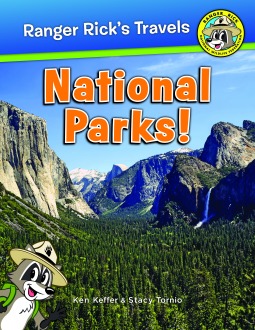
ranger-rickRanger Rick’s Travels: National Parks!, by Stacy Tornio & Ken Keffer, (Aug. 2016, Muddy Boots), $14.95, ISBN: 9781630762308

Recommended for ages 8+

In a fabulous love letter to the National Parks of America and the National Park Service, the folks at Ranger Rick Magazine – remember them? They have books now! – put together this beautiful book, featuring each one of the 58 National parks across America. Ranger Rick and his best friend, Deputy Scarlett, appear throughout the book to join readers on a countrywide sightseeing tour.

The book opens with a map of the United States, including Hawaii, Alaska, and the US Virgin Islands. Each park is numbered and corresponds to the Table of Contents, which organizes the parks into 9 groups: Eastern Parks, Midwest Parks, Mountain West Parks, Southwest Parks, Utah and Nevada Parks, California Parks, Pacific Northwest Parks, Pacific Island Parks, and Alaska Parks. Each park’s profile includes stunning photos and facts that will make readers want to pack their bags and take a month or six off from work or school!

rangerrick-rickandscarlettEach park feature provides information in quick bites that read like a tourism guide. About the Park provides a quick overview and basic facts; What to Watch For are Ranger Rick’s top nature picks on what plants and animals to keep an eye out for. Ranger Rick’s Top Things To Do is a bucket list for each park – don’t leave without seeing Old Faithful in Yellowstone Park, naturally, but also make sure not to miss out on a hike through the park! Finally, Ranger Rick’s Amazing Facts are the “WOW” factor for each park: did you know that you can only reach Northwest Alaska’s Kobuk Valley National Park by foot, dogsled, snowmobile, or air taxi? Now you do!

This is a great book to have in collections and to have available when you’re talking about the U.S. There’s 100 years of history in the National Parks Service, but there are far more years in the history of these parks; there are petrified trees, dinosaur footprints and bones, and formations carved out of rock thousands of years ago, here for all to enjoy. Families planning a vacation or two can use this as a jumping off point (I know I am).

Don’t forget to head to the Ranger Rick website, where kids can read more about nature and the environment, play some games, and get craft ideas. Educator resources included lesson plans and webinars.

Ranger Rick and Scarlett image courtesy of Photobucket.
Posted in Middle Grade, Non-Fiction, Non-fiction, Tween Reads

Give your brain a workout with NatGeo Kids’ MASTERMIND!

mastermindMastermind, by Stephanie Warren Drimmer/Puzzles by Julie K. Cohen, (May 2016, NatGeo Kids), $12.99, ISBN: 978-1-4263-2110-8

Recommended for ages 8-12

Loaded with over 100 games, tests, and puzzles designed to “unleash your inner genius,” Mastermind is huge fun – and you learn stuff, too.

Guided through the book by cartoon characters Ima Genius and her canine sidekick Astro, Mastermind is all about the brain: each section is devoted to a different part of our brains and features sections like How it Works, where readers are guided through a step by step process of each part of the brain makes operations like sight, muscle movement, smell, and memory happen; fun facts and wild photos help break it all down for readers. Time Trials challenge readers to solve puzzles while timing themselves, and a final quiz in each chapter, called Test Your S.M.A.R.T.S. (Superior Mental Acuity and Rationality Testing System), pop up in each section, so budding geniuses can witness themselves becoming smarter with each section. A fun Mastermind Meter lets you track the progression of your genius through the book.

I had a great time reading and playing the games in Mastermind. The facts and real-life stories are interesting and fun, and there’s a ton of information to be learned here. Each section of the book looks at a different part of the brain and how we use them, from our senses, to identifying sounds, to mental map making and memory. Beginning with a maze through a highlighted part of the brain (to get your brains ready, naturally), readers learn how animals use their brains for similar purposes, and Weird Science introduces us to people living with brain issues that make them see things differently; for instance, hemospatial neglect causes someone to ignore things on one side – imagine only shaving half your face?

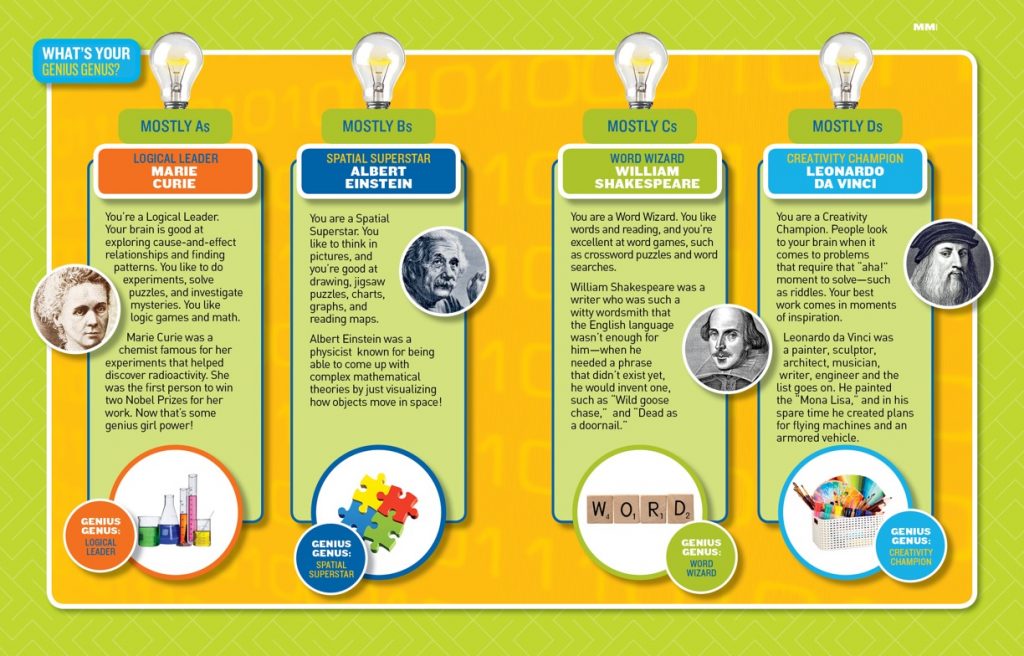
This will be destroyed in circ, because kids are meant to write in this book, but it won’t stop me from adding it as a great birthday or holiday gift to a few budding geniuses on my list. There are tons of ideas in this book for teachers and librarians, though; you can get the kids fired up with your own timed code challenges or have them figure out which genius they gel best with. The Mastermind website offers two downloadable puzzles, and a genius personality quiz kids can take online. All in all, Mastermind provides some fun and makes you think, which is really what learning should be all about.

mastermind_1