Posted in Middle Grade, Non-fiction

Get Ready for STEM Summer!

Sure, many libraries are doing the “Libraries Rock!” theme for Summer Reading, but that’s no reason to leave science out of the fun! I’ve got a bunch of STEM books that you’ll want to get in front of (or create programs using) your readers to have fun with this summer. Careers, facts, bios, and, most fun of all, experiments, await!
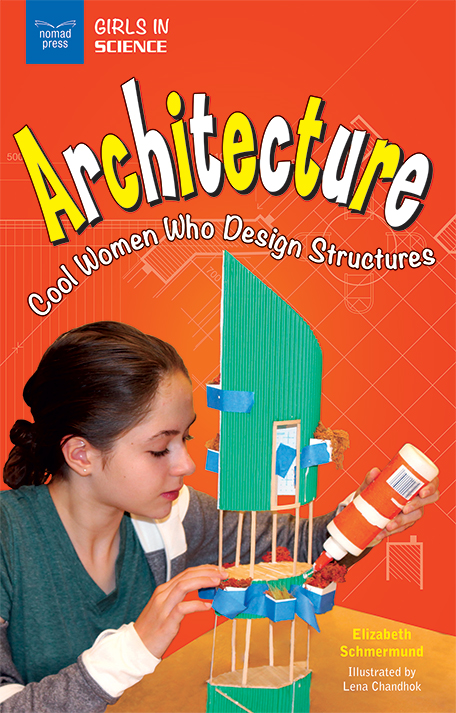
Architecture: Cool Women Who Design Structures (Girls in Science series), by Elizabeth Schmermund/Illustrated by Lena Chandhok, (Aug. 2017, Nomad Press), $9.95, ISBN: 9781619305465

Recommended for readers 9-13

I’m always looking for good career books, because I weeded my current section when I first got to my library. I really liked this book, and I’m looking forward to reading and putting more of the Girls in Science series in my book cart for future purchases. Architecture is divided into four color-coded sections: the first, a general overview of architecture; the history, styles, what the profession is like today and how to prepare for study in architecture, and women in the profession. The next three sections are devoted to profiles of a diverse group of women architects: Patricia Galván, a Project Manager; Farida Abu-Bakare, an intern architect who’s in the process of writing her exams and works with science and technology; and Maia Small, who owns and operates her own small architecture firm. In addition to the profiled female architects, there are brief bios on other women in the field. Ask & Answer sections provide thought-provoking questions, many beyond the basic material, for readers to consider. QR codes in callout sections provide links to more information. The overall narrative, and each profiled professional, addresses the gender gap and even larger diversity gap in the industry. Back matter includes a timeline of the profession, all the Ask & Answer questions in one place, a glossary, further resources, including written-out links to the QR code sections, and an index.
Try This! Extreme: 50 Fun & Safe Experiments for the Mad Scientist in You, by Karen Romano Young/Photographs by Matthew Rakola, (Sept. 2017, National Geographic Kids), $16.99, ISBN: 9781426328633

Recommended for readers 8+

The best part about science, I tell the kids in my programs and class visits, is making a mess, yet, no one gets mad at you (mostly). What better time to be a mad scientist than in the summer, when it’s beautiful out and you can open those windows to offset any stinky experiements? The book starts off with safety instructions and photos of the kid (and dog) scientists who tested out the 50 experiments waiting to be discovered in Try This! Extreme. Each experiment has a safety rating, a who you need rating (i.e., an adult, just you, or maybe grab a friend), and supervision rating; each experiment also lays out concepts explored, approximately how long it will take, what you need, and a step-by-step guide through the process, accompanied by full-color photos. There are callout facts, questions to ask yourself, and key terms defined throughout. Conduct a bioblitz (exploration) in your yard or a park, learn physics using marshmallow Peeps, or check the weather forecast and aim for a game of masking tape hopscotch when there’s rain predicted. There are bonus mini-experiements, Science Fair experiment prompts and guidance, K-12 science standards and how each experiment corresponds to them, an index, and metric conversion tables. Enjoy!

The STEM Quest Series from Barron’s Educational is a brand new series broken out into four books, loaded with facts and experiments:
STEM Quest Science: Astonishing Atoms and Matter Mayhem, by Colin Stuart/Illustrated by Annika Brandow, (May 2018, Barron’s Educational), $10.99, ISBN: 9781438011363

Recommended for readers 8+

This volume looks at the organic side of things: biology, chemistry, physics, earth and space sciences, biochemistry, biomedicine, and biotechnology. Each section guides readers through full-color illustrated discussions on each area and includes experiments to ramp up the fun. Kids will LOVE the Marshmallow Molecules – you need a bag of marshmallows, a box of toothpicks or wooden skewers (me? I’d go with the toothpicks, but I’m in a public library), and some compound formulas. Let kids make their own formulas up and watch the fun begin! I’ll save you the search: this is where you can find the chemical compounds for farts. It’s the American Council on Science and Health’s website, so they did this for science. You’re welcome. Littler ones can make their own sundial, or spot a constellation. There are scientist profiles and fantastic facts throughout, plus a glossary and an index.
 

STEM Quest Technology: Tools, Robotics, and Gadgets Galore, by Nick Arnold/Illustrated by Kristyna Baczynski, (May 2018, Barron’s Educational), $10.99, ISBN: 9781438011370

Recommended for readers 8+

This volume looks at the techy side of life: construction, power and energy, agriculture and biotechnology, manufacturing, information and communication, medical and biomedical, and transportation. Learn about the evolution of tools, from the earliest hand tools to robots and space suits. Learn how a blast furnace works, and make your own plastic (adult helpers necessary), and learn how it works. Get your Project Runway on, with a section on textiles: you’ll learn to weave, tie dye, and ink print. For your more tech-inspired readers, there’s an easy Try This at Home experiment that teaches (with adult help) how to build a circuit, or how to magnetize a nail. There are great programming ideas in here: I think I’m going to look into building a planet and designing a space station, all of which can be done on a shoestring and with adult help. And since I’m the closest thing resembling an adult in the room… well, I guess that falls to me. The same format applies here (and to all of the STEM Quest books): bios on prominent scientists, loads of facts and illustrations, a glossary, and an index.
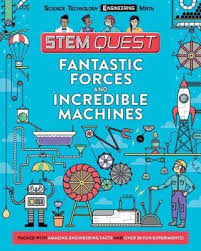
 

STEM Quest Engineering: Fantastic Forces and Incredible Machines, by Nick Arnold/Illustrated by Kristyna Baczynski, (May 2018, Barron’s Educational), $10.99, ISBN: 9781438011349

Recommended for readers 8+

Next up, engineering: systems and mechanics; materials and processes; biology, medical, agriculture and chemistry; structures; and sustainability engineering. Get the kids learning about forces and energy with experiments like Superhero Paper Clips, where they’ll make a paper clip float; a material scavenger hunt, inviting them to look around for everyday items made out of different materials; get out the old reliable straws and pipe cleaners and let them create 3-D shapes to see how they hold up under pressure, or that summer staple, the pinwheel. (The book suggests dowels; I’m here to tell you that chopsticks are a lot cheaper and just as easy to use.) There’s a great section on environmental engineering that will have you and your readers figuring out how to clean up our environment and a nuclear power lesson that has the simplest of experiments: use the sun’s nuclear energy to test your sunscreen on a piece of construction paper.
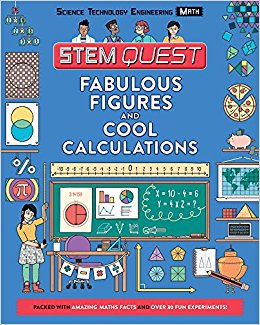
 

STEM Quest Math: Fabulous Figures and Cool Calcuations, by Colin Stuart/Illustrated by Annika Brandow, (May 2018, Barron’s Educational), $10.99, ISBN: 9781438011356

Recommended for readers 8+

I’m trying to get more math-related fun in front of my library kids, because it scares the bejesus out of me and I don’t want to pass that on. The parents love a good math program, too, so I know I’ll get buy-in from the community on this one. Here, we’ve got numbers and operations; measurement; problem-solving, logic and reasoning; geometry; algebra; advanced math; data, analysis and probability; and communication. I will admit that just looking at that section scared the life out of me, but once I started reading, I quickly warmed up. There are great explanations of each concept in here, addressing the quick and easy stuff like place value and column addition and subtraction, and heading all the way into bigger ideas like proofs and binary. Fun experiments and activities include a pirate treasure challenge, where, as a pirate captain, you need to use math to calculate the best place to bury your treasure; creating 3-D art and making pyramids, and averaging Olympic judge scores.

That’s a start for some STEM summer fun, but make sure to get your STEM sections and displays up and running to give readers readalikes and ways to expand on what they’re learning. The Secret Coders graphic novel series by Gene Luen Yang and Mike Holmes is great for Math and Tech fans, who want to play with coding. Science Comics has books about rockets and robots that will fit nicely with STEM displays, and I’m a big fan of the Junk Drawer Science series by Bobby Mercer. There are tons of fun STEM-related books out there!

Posted in Graphic Novels, Intermediate, Middle Grade, Non-fiction, Non-Fiction

Join Elise Gravel’s Mushroom Fan Club!

The Mushroom Fan Club, by Elise Gravel, (May 2018, Drawn & Quarterly), $17.95, ISBN: 978-1-77046-322-6

Recommended for readers 6-12

Artist and author Elise Gravel’s newest book, The Mushroom Fan Club, is its own little science comic! Elise Gravel and her family love going mushroom hunting, and The Mushroom Fan Club shares that sense of fun and adventure with readers. Beginning with an illustration of Gravel, her daughters, and cats heading out to explore, Gravel narrates why she’s fascinated with mushrooms: they look like aliens from outer space! They come in all different sizes and shapes! She proceeds to teach readers what she’s learned about mushrooms, from biology (parts, reproduction, environment) to the different types of mushrooms. She exercises caution, exhorting readers NOT TO EAT mushrooms they may encounter on their own, as many are poisonous; even illustrating mushrooms warning readers that they can “make you very, very sick! And even worse!” The Mushroom Fan Club is loaded with fun facts, bright illustrations in Elise Gravel’s immediately recognizable style, and fun mushroom-related art activities.

I’m a big Elise Gravel fan, so if she illustrated a box of cereal, I’d eat it and suggest it for literary honors. I love this fun twist on earth science nonfiction; she makes graphic nonfiction interesting and memorable. If you haven’t read her biography on The Great Antonio, I highly recommend it. Check out an excerpt of The Mushroom Fan Club on the Drawn and Quarterly website, and visit Elise Gravel’s author webpage for free printables of all sorts. Read The Mushroom Fan Club in a science program, read it at dinner time, just read it and have fun with it!

Posted in Graphic Novels, Non-fiction

Two more Science Comics coming your way this Summer!

Science Comics is adding two more titles to their line this summer, just in time for Summer Reading!

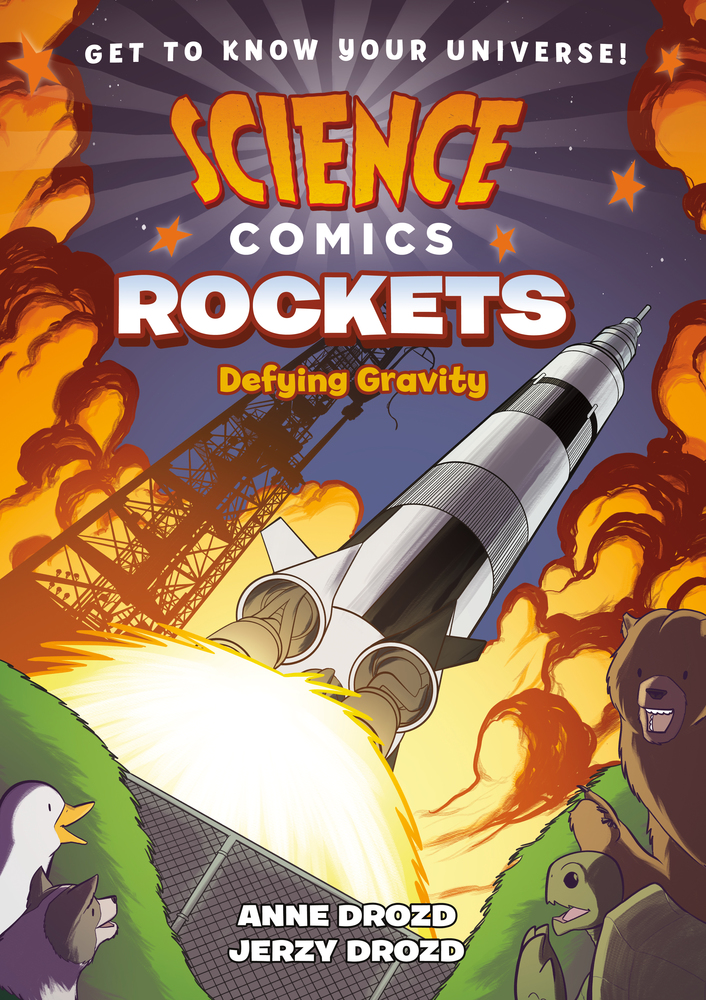
Science Comics: Rockets – Defying Gravity, by Anne Drozd & Jerzy Drozd, (June 2018, First Second), $12.99, ISBN: 9781626728257

Recommended for readers 8-12

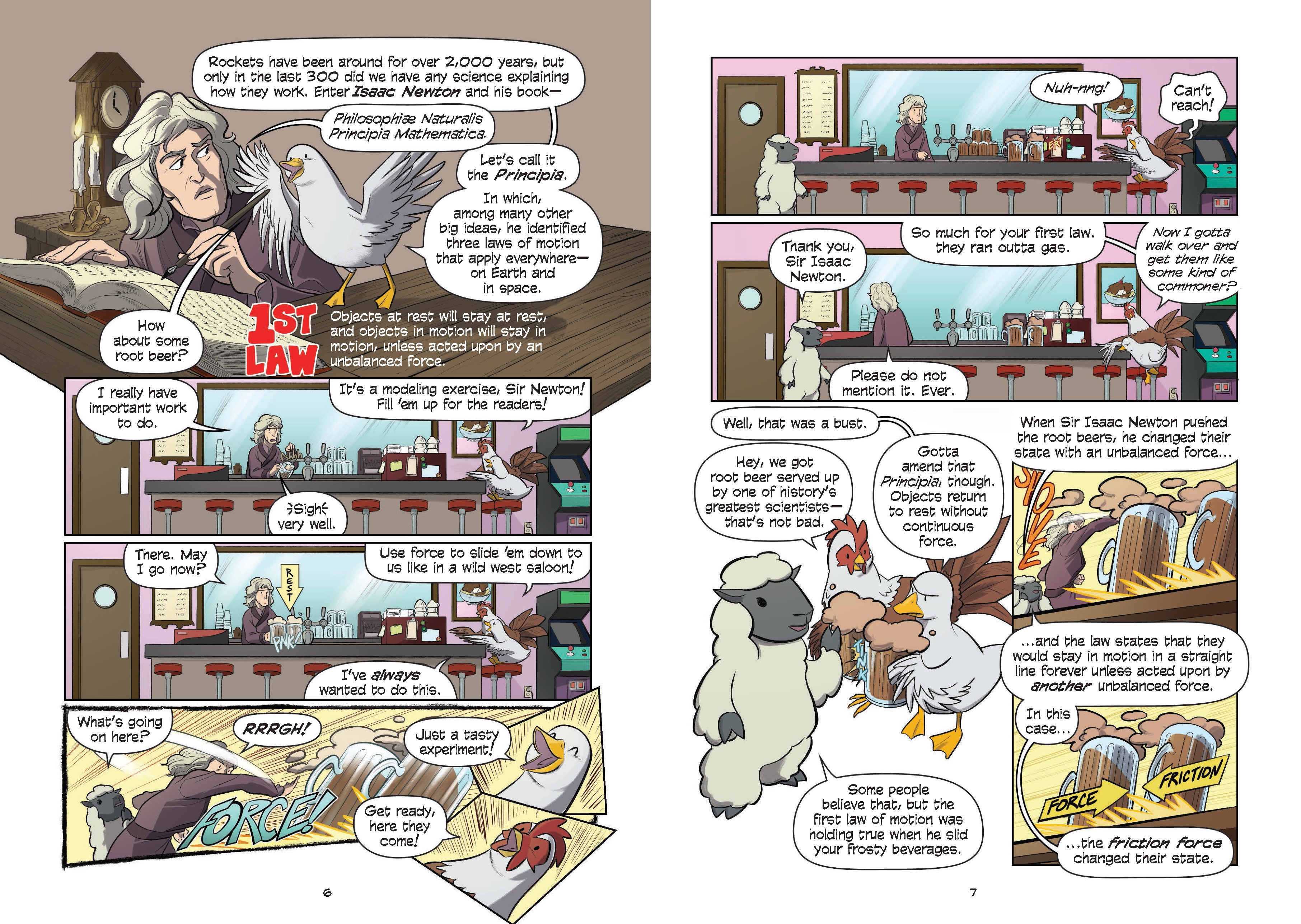
In June, we get a deeper look at Rockets. Readers get a guided tour by an early rocket prototype in the form of a pigeon (nope, no joke) and take a trip through the history of gravity, force, acceleration, Newton’s Laws of Motion, and the history of rockets past, present, and possible future. Readers are going to love seeing the evolution of rockets from steam-powered to jet-fueled and beyond. The many animals that have been part of our space programs get their say, here, too: from bears, to chimpanzees, to dogs, and more, there are full-color spreads loaded with colorful illustrations and packed with information. Resources at the end of the book are ready to guide interested readers.

If you haven’t enjoyed Jerzy Drozd’s comics before, you are in for a treat. His work for the Marvel Superhero Squad game is great, and he’s got a kid-friendly webcomic, Boulder and Fleet, on his page. Anne Drozd is a librarian and space enthusiast, so you know she’s got the goods.


Science Comics: Trees, by Andy Hirsch, (Aug. 2018, First Second), $12.99, ISBN: 9781250143105

Recommended for readers 8-12

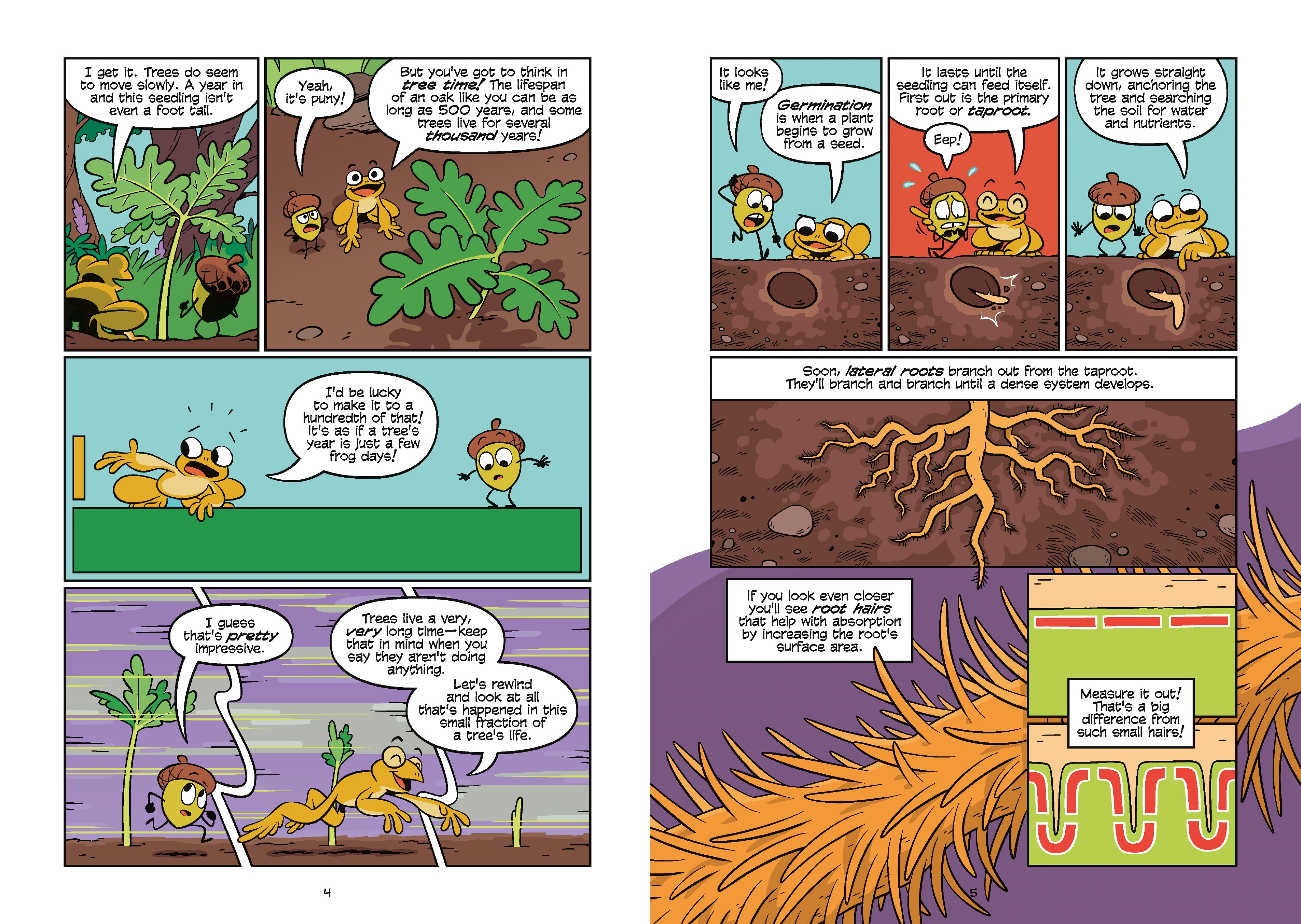
In August, we meet a little acorn on his journey to become a mighty oak in Trees. Kids interested in nature and ecology will love this brightly illustrated, fact-filled journey through nature, learning about different types of trees and how they are living, breathing beings that work with and contribute to their environment. This volume has a fun sense of play about it, with a spunky little friend to follow through nature. I just wish this one were out earlier, so I could feature it when I start my planting program in a few weeks – the illustration and discussion on how seeds always know which way to grow is amazing!

If you enjoyed the Dogs Science Comic, or read Varmints, you may recognize Andy Hirsch’s work. You can also visit his website, A for Andy, for more illustrations.


Posted in Intermediate, Middle Grade, Non-fiction, Non-Fiction, picture books

Inspector Croc helps kids manage their emotions

Inspector Croc’s Emotion-O-Meter, by Susanna Isern/Illustrated by Mónica Carretero, (May 2018, NubeOCHO), $22.95, ISBN: 9788417123079

Recommended for readers 7-10

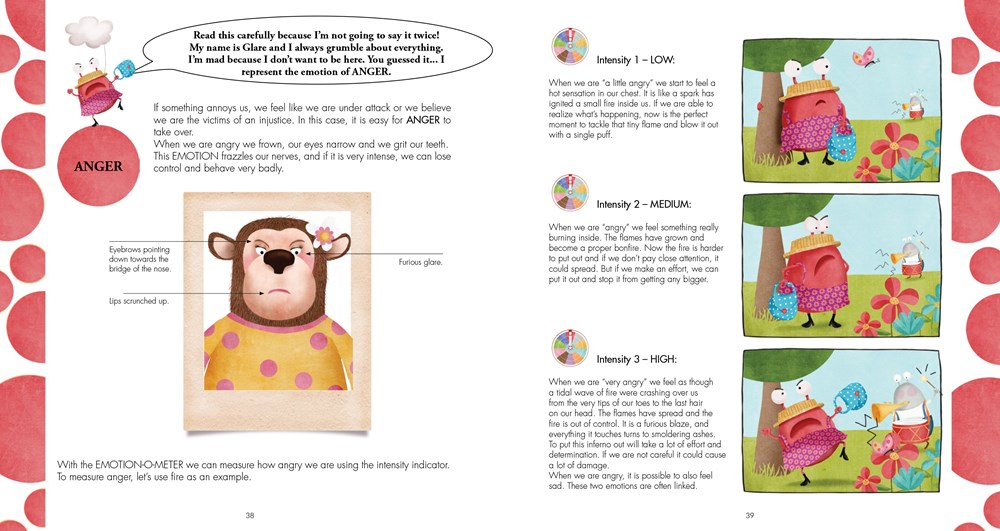
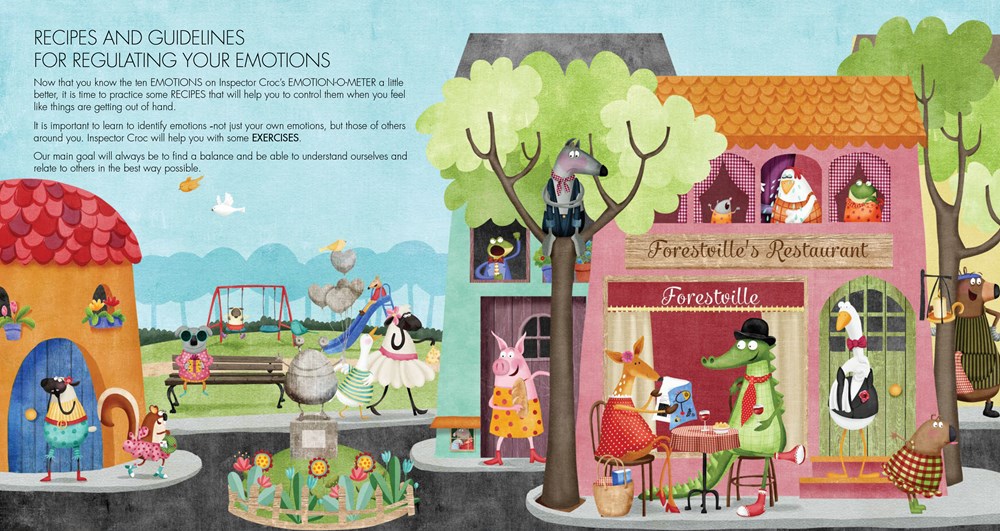
Inspector Croc, the great emotion inspector, is here to help kids identify and manage their emotions in this entertaining and insightful book from NubeOCHO. Accompanied by Yippee, an Emi (emotion) from a large family of emotions, kids will learn what an emotion is, how to identify behaviors associated with emotions, and read through Inspector Croc’s case files; 10 cases where emotions came into play. He introduces his Emotion-O-Meter, allowing kids to identify whether they are feeling emotions on a low, medium, or high level of intensity, and gives kids the ability to put their feelings into words. Finally, we get “recipes” for working with both good and bad emotions, and the Inspector explains that sometimes, emotions like sadness are good and right for us to feel, but that we also have to learn how to let them go when it’s time.

It’s a smart book that addresses ideas that can be tough for kids to identify and express; author Susanna Isern respectfully talks to readers and uses empowering language to promote understanding and courtesy. Mónica Carretero’s animal artwork is cartoony and light, but don’t dismiss that: she illustrates, in detail, various emotions and uses facial expressions to illuminate the physical changes our emotions bring about. It’s a very mindful book, and encourages self-exploration. The book has a dust jacket with an emotion-o-meter on the back cover, but if this book is used in a classroom or library setting, it’s not going to last: do yourselves a favor, and make this a great class project/library program. This would go wonderfully with a viewing of Pixar’s Inside Out (2015).

Inspector Croc’s Emotion-O-Meter is also available in Spanish.

Posted in Non-fiction, picture books

Nature is the artwork in Drawn from Nature

I think I can finally put away my winter coat, which has me embracing Spring and Spring-like books! I think I’ll devote today’s posts to nature-related artwork and storytelling.

Drawn from Nature, by Helen Ahpornsiri, (March 2018, Candlewick), $22.00, ISBN: 9780763698980

Recommended for readers 6-10

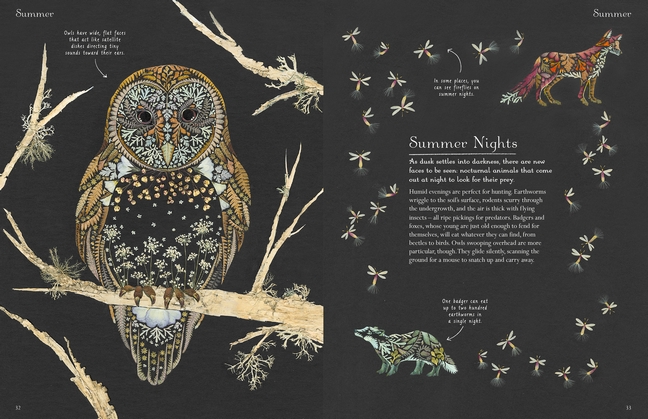
This look at the seasons is just stunning. The artwork is created using hand-pressed flowers and foliage (responsibly grown or foraged in the wild, as the artist/author’s note takes care to mention). Flowers and leaves create bird feathers and beaks; eggs and nests, ladybugs and butterflies. Helen Ahpornsiri takes readers through each season, making sure we notice the beautiful little notes from nature; from building a nest in Spring, to swooping swallows and chirping crickets in the Summer; from the fragile dandelion puffs of Autumn to the bare branches of Winter, each season reveals itself through delicate and exquisite art.

The endpapers delight with colorful garden scenes and each season’s nature maintains its color palette: Spring is verdant and green, bright and bold; Summer is deeper, vibrant, with an emphasis on fireflies and nocturnal animals who hunt by night; Autumn colors become more yellow and red, crisping at the edges, and Winter is spare, fragile, with clustered and hibernating animals and bare branches; evergreen leaves holding onto their leaves.

As Booklist notes, Drawn from Nature is a beautiful blend of art and science and is a wonderful inspiration for art classes as well as nature and earth science classes. A glossary includes terms mentioned throughout the book. Get those leaves, twigs, and stones for the kids, then let them have at it! Drawn from Nature has a starred from Kirkus.

Posted in Middle Grade, Non-fiction, Preschool Reads

NatGeo Kids is going to the dogs!

NatGeo Kids has two books on dogs out, and they are ADORABLE. We’re in the Lunar Year of the Dog, May is National Pet Month, and today is National Pet Day – so what better time to celebrate our best friends? (Full disclosure: My cat scoffed at me as I ran this by her. But she’s a cat, so…)

Dog Days of History: The Incredible Story of Our Best Friends, by Sarah Albee, (March 2018, NatGeo Kids), $19.99, ISBN: 978-1-4263-2971-5

Recommended for readers 8-13

Dogs have been our companions from the beginning: humans have had canine companions for more than 15,000 years. Dog Days of History is a kid-friendly look at that relationship through time; author Sarah Albee starts with the origins of the dog, from wolf to domesticated companion, to mixed breeds, and then takes us through an illustrated history of this long-lived relationship: from dogs in the ancient world, through the Middle Ages and Renaissance, to the present day and the future. We learn about dogs as pampered companions and hard workers; dogs like Balto, the famous sled dog who braved the Alaskan snow to bring medicine to the people of Nome, Alaska, and Laika, the canine cosmonaut who went to space in 1960.

There are great photos – it’s a NatGeo book – and fun facts aplenty throughout the book. One of my favorites is the list of common names for dogs in Ancient Egypt, which include “Good Herdsman”, “Grabber”, and “Blackie”. There are Algonquin names, too; my favorites are “Where’s That?” and “Ask Him”. Top Dog callouts highlight famous dogs in history, like Stubby, a stray bull terrier found by an American soldier in 1918, smuggled into France, and who went on to win medals of valor after warning a sleeping sergeant about a gas attack, locating wounded soldiers on the battlefield, and capturing a German spy. Want to translate dogspeak in other languages? There’s a list of how other dogs say “Bow-wow” in other languages. A comprehensive biblidography (that is not a typo) and list of rufferences (that’s not one, either), index, and further sources and places to visit make this slim volume a perfect gift for dog fans or an addition to your domestic animals collections.


It’s a Puppy’s Life, by Seth Casteel, (March 2018, NatGeo Kids), $16.99, ISBN: 978-1-4263-3069-8

Recommended for readers 3-6

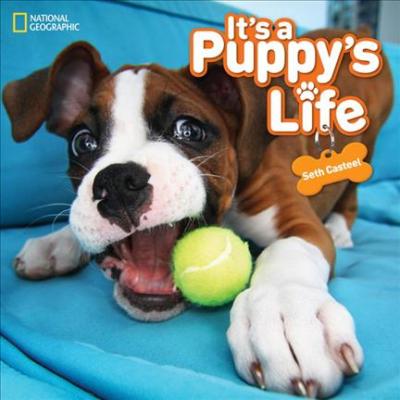
Join the cutest group of puppies ever in this easy-to-read, fully illustrated chronicle of a puppy’s day! Join these pups on a daily routine of adventure as they wake up, explore and play, nap, have a nighttime treat, and get ready for bed. Is it ruff to be a pup? You be the judge.

This is one of those books I still haven’t been able to get through without squealing. Several times. My kiddo and I will be cuddling and reading, and I’ll just squeal, “LOOK AT THIS PUPPY FACE!”, which leads to my son looking at me and saying, “Mom. You SAY THAT ALL THE TIME.” But I digress.

There are spreads and standalone pages of full-color photos of puppies eating, playing, cuddling, and sleeping. The simple text is big, easy to read and great for storytime, and has colorful backgrounds to set them apart from the rest of the page. It’s a great way to talk about daily routines: ask the kids what they have in common with puppies!

I’m currently building up my pets and domesticated animals collection at my library, so these will be a nice, eye-catching add to my shelf. Make a nice doggie display with Science Comics’ volume on Dogs, and put some fun picture books and fiction on the shelf, too. Mainstays like Clifford and Carl books are great, as are books like Peter McCarty’s Hondo and Fabian, Jane Yolen’s Henry and Mudge and Puppy Mudge Easy Readers,  Beverly Cleary’s classic, Ribsy, Ann M. Martin’s Autobiography of a Stray, and Because of Winn-Dixie. If you’re like me and don’t want to read doggie tearjerkers, From the Mixed-Up Files has a suggested “No Dead Dogs” reading list.

Posted in Middle Grade, Non-fiction, Teen, Tween Reads

To Explore Strange New Worlds…

Pop quiz! We know that outer space is still largely unexplored, but did you know that we’ve explored less than five percent of the world’s oceans? There are some great new books on space and sea exploration for middle graders to dive into (see what I did there?). Read on!

Dr. E’s Super Stellar Solar System, by Bethany Ehlmann with Jennifer Swanson, (Jan. 2018, National Geographic Kids), $12.99, ISBN: 978-1-4263-2798-8

Recommended for readers 8-12

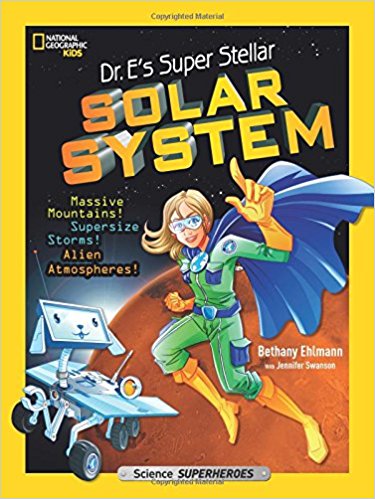
Planetary geologist Dr. E (Bethany Ehlmann) and her sidekick, Rover, take readers on a trip around the universe, filled with activities, photos, facts, and comics. Readers will learn about space exploration and how our big blue dot fits in with our cosmic neighbors: who else has volcanoes and sand dunes; how plate tectonics work; how craters are formed. There’s information about robots and rovers; space exploration and technology; and how learning about space helps us learn more about Earth. Each chapter begins with a 2-page comic spread, following Dr. E and Rover on an adventure related to chapter material. There are scientist profiles throughout the book, thought-provoking questions to generate discussion, and incredible photos. A glossary, list of book and web resources, and index makes this a solid book to have in space collections and a fun gift for kids who love science.


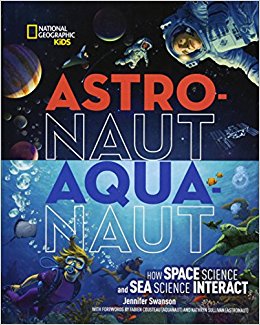
Astronaut-Aquanaut: How Space Science and Sea Science Interact, by Jennifer Swanson, (Jan. 2018, National Geographic Kids), $18.99, ISBN: 978-1-4263-2867-1

Recommended for readers 8-12

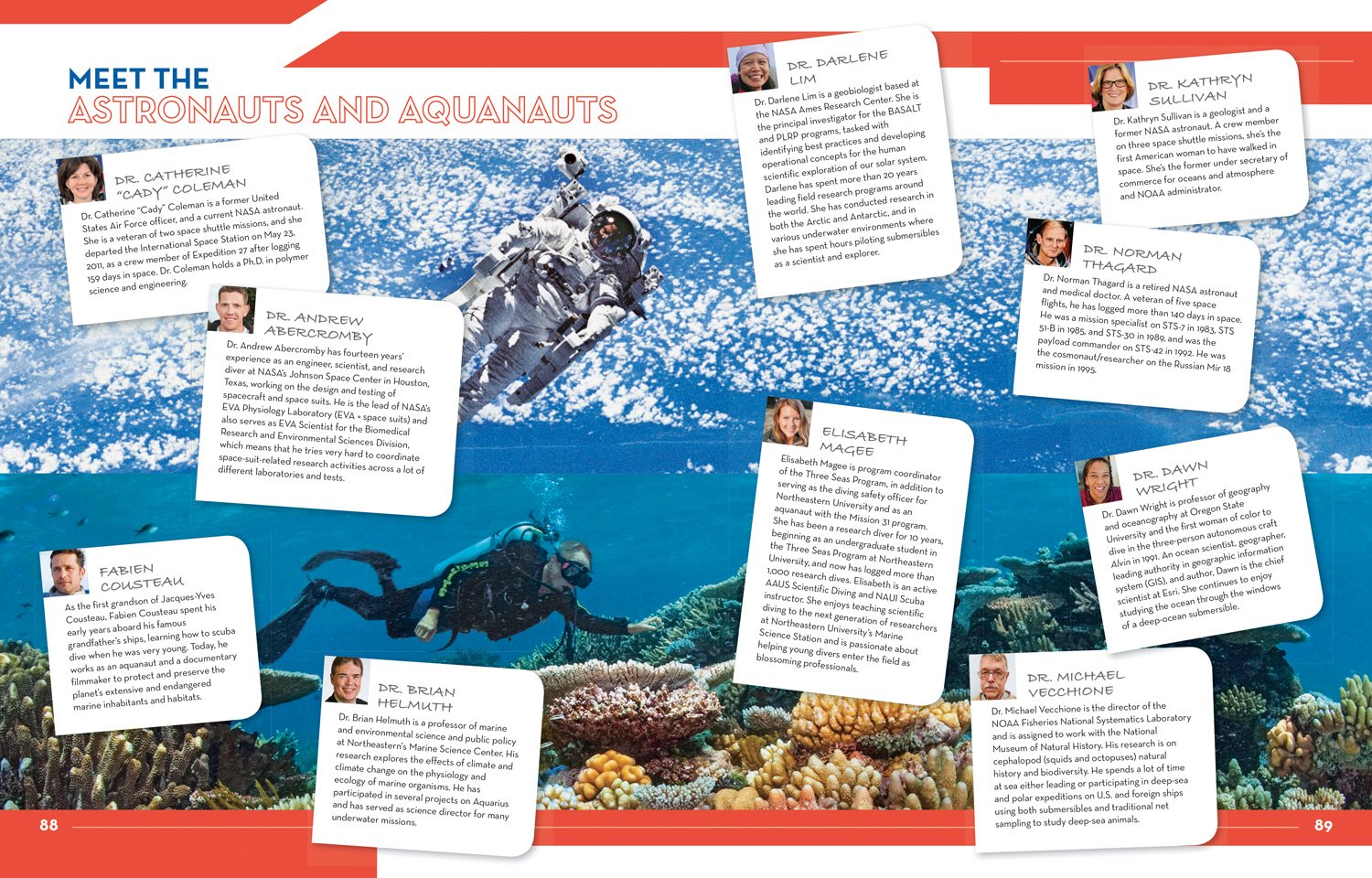
What do space and the ocean exploration have in common? SO much. There’s a reason we’re still trying to figure out how to explore both. Extreme pressure, temperatures and climates are all considerations scientists have to make when planning missions up above or far below. Author Jennifer Swanson (she’s co-author on Dr. E’s book, above!) gets a new generation of explorers ready for action with discussions about buoyancy and gravity; the shapes used in space and sea exploration (shape counts!); creating livable habitats; similarities and differences in each form of travel, and more. There’s consideration given to preservation and conservation for both sea and space: we leave a lot of garbage behind, and we need to stop that. Explorer’s Notebook callouts give readers a quick run-down on different topics, like training for a trip and how to create successful living and working environments – ideas that readers can apply to their daily lives while getting ready to be explorers. Activities give readers hands-on opportunities to learn about concepts like docking the International Space Station. There are detailed illustrations and color photos throughout, astronaut and aquanaut profiles, fun facts, resources, a glossary, and an index. NatGeo never disappoints: I love how Jennifer Swanson brings these two areas of exploration together; maybe it will inspire kids to become both astronauts AND aquanauts!


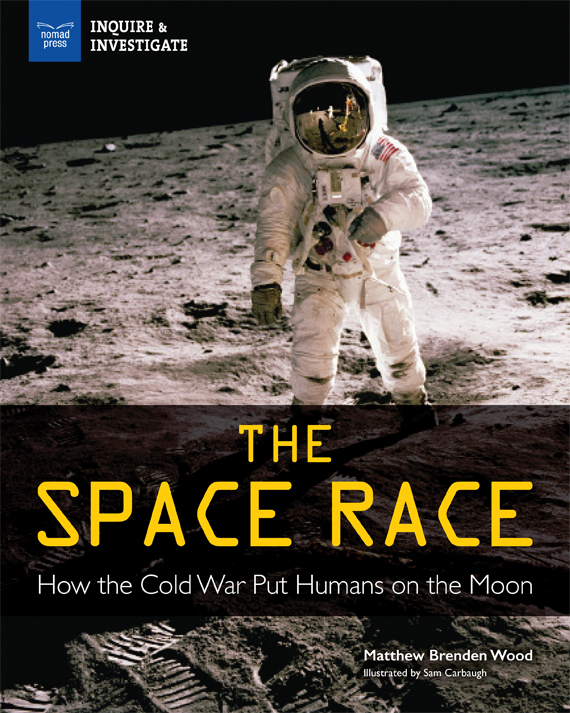
The Space Race: How the Cold War Put Humans on the Moon, by Matthew Brenden Wood/Illustrated by Sam Carbaugh, (May 2018, Nomad Press), $17.95, ISBN: 978-1-61930-663-9

Recommended for readers 12-15

The Cold War between the U.S. and Soviet Union led to a race for dominance, and space was best place to push for that dominance. Matthew Brenden’s book, The Space Race, is an interactive chronicle of this pivotal point in history. Beginning with a timeline to give readers background, Brenden takes us from the 1917 Russian Revolution, through World War II (when Russia was our ally) and the Cold War, to July 20, 1969: the date Neil Armstrong and Buzz Aldrin became the first people to walk on the moon.

A  comic strip running throughout the book illustrates and encapsulates the big ideas in the book, adding a little mental break for readers. There are loads of callout boxes, enhanced with QR codes that lead to historical reference and further learning; some topics include McCarthyism, duck-and-cover nuclear war drills, and the first anniversary of the Berlin Wall. Blast Fact callout boxes provide quick facts, and Inquire and Investigate sections provide rich inspiration for projects and research. Questions throughout the text challenge readers to think deeper about the material and would provide a great jumping-off point for book group or class discussions, and Vocab Lab sections offer new words to learn, all defined in the glossary at the end of the book. There are black-and-white and color photos throughout, providing a strong connection to history. Thankfully, there’s a metric conversion table, since science is metric and I’m not; there are additional resources, source notes, and an index.

I love Nomad Press’ books; there are so many entry points for students in each book. This one is a valuable reference for Science or History: in fact, The Space Race is one in a set of four Nomad books exploring great events of the 20th Century (others include Globalization: Why We Care About Faraway Events; The Vietnam War; and World War II: From the Rise of the Nazi Party to the Dropping of the Atomic Bomb).

The Space Race skews slightly older than the NatGeo books above: Nomad recommends this one for ages 12-15, but I think it can go a year or two younger, especially in my children’s room, where it will see more circ than in our teen section. Your library’s mileage, and your kids’ reading interests may vary. It’s a Guided Reading level Z, which can go as young as 9; I’d suggest at least 10 or 11.


Posted in Middle Grade, Non-fiction, Tween Reads

Need a shot of creativity? Go on a Jabber Walk!

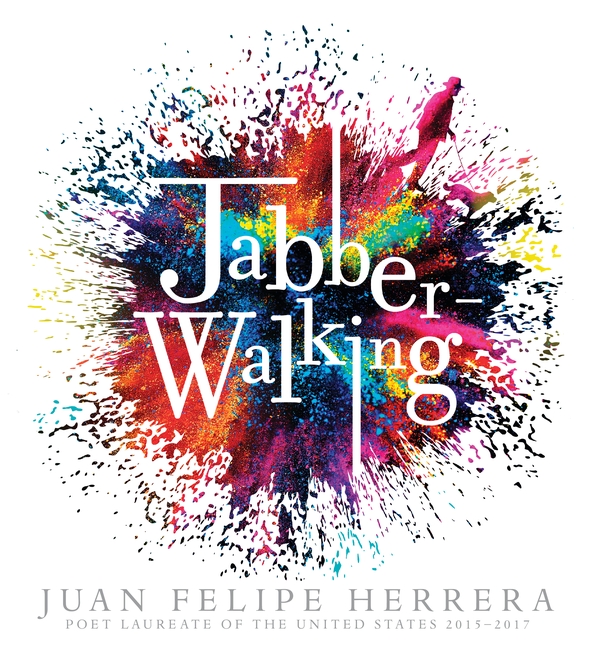
Jabberwalking, by Juan Felipe Herrera, (March 2018, Candlewick), $22.99, ISBN: 9781536201406

Recommended for readers 7-12

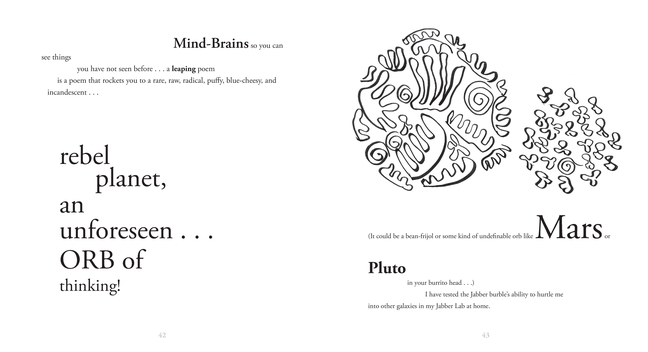
Juan Felipe Herrera, the first Mexican-American Poet Laureate in the U.S.A., encourages readers to spark their creativity by going on a Jabber Walk. Part biography, part writing guide, Jabber Walking is an effusive, silly, excitable look inside a creative mind. Herrera wants to show kids that it’s easy to get the creative juices flowing by getting moving: go Jabber Walking, and let your imagination go wild! Herrera’s Jabber Walk takes readers with him on a walk to the Library of Congress, accompanied by his Chinese Pit Bull Shar-Pei, Lotus, who loves getting into her own blue-cheesy, crazy adventures. Black and white scrawled pictures are proof that creativity and Jabber Walking aren’t limited solely to words. He asks questions to prompt thought: Do you remember a family story? How far back in time do your familiar stories take you? and introduces us to his story, starting with his father’s great escape from Mexico in the early 20th Century. We learn that Jabber poems aren’t supposed to be “too clean”: they’re “fast poems… wild poem… an unkempt, dirty, poem. A scribble, gooey, cuckoo, sweaty, puffy, blue-cheesy, incandescent poem!”

Throw the idea that you need to be linear out the window – this is the kind of book that embraces the creative process, with all of the crazy, fun, random thoughts that go into it. I’d love to see this used to teach creative writing; I’d love to start a Jabber Writing program at my library. Hmmm… Give this to kids that love to write, and give this to kids that need a gentle nudge to unleash their inner Jabber writer. Jabber Walking is too much fun, and it’s one of those books that begs for more than one reading; there’s just too much to take in on one read. Jabber Walking received a starred review from Publisher’s Weekly.

Posted in Non-fiction, Non-Fiction

Make #science even cooler with Adventures in Science

My Kindergartener and I like to hang out and relax on the weekends, but I like to make sure that doing something fun doesn’t always involve endless hours of watching Minecraft videos on YouTube (his current obsession). Thankfully, I remembered that I received an Adventures in Science: Human Body kit from the kind folks at Silver Dolphin, so out it came. The first cheer came from me, when I realized that it’s a 6+ kit, not an 8 or 10+ kit, like most of them are: my kiddo could do this! The second cheer came from the kiddo, who saw a skeleton, because I’ve got that kid. (And I’m that mom.) We cracked open the box and went to it.

Adventures in Science: The Human Body, by Courtney Acampora, (Dec. 20017, Silver Dolphin Books), $21.99, ISBN: 978-1684121298

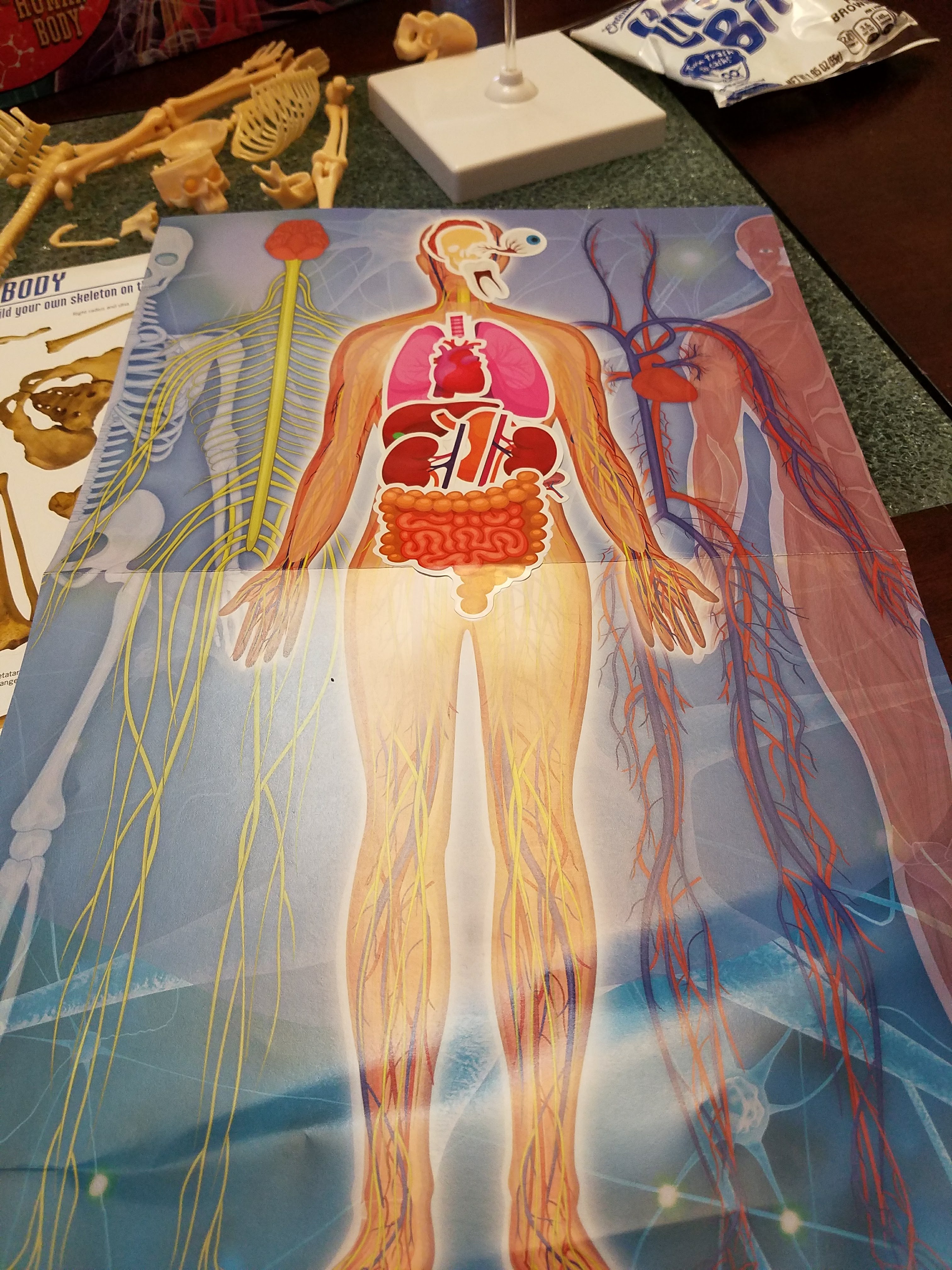
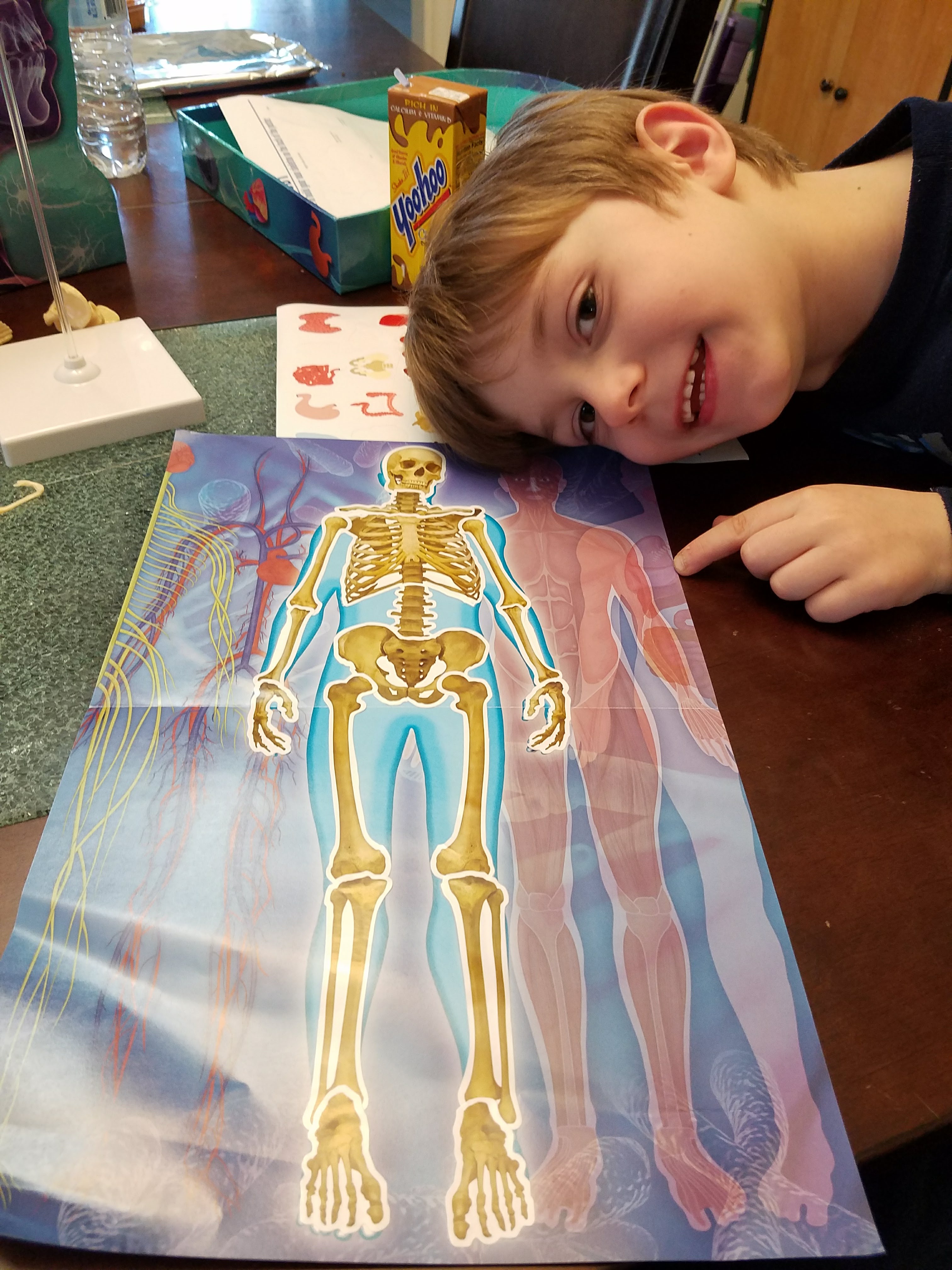
The box was full of stuff that would appeal to kids from ages 5(ish, my kiddo is going to be 6 in June) to about 10 or 11. There are two sheets of stickers; one sheet of bones, the other, of internal organs, including a set of “free play” stickers. The stickers go on a two-sided sheet with an outline of the human body; one side accommodates the organ stickers, one, the bones. There’s a separate bag for a snap-together skeleton model, playing card-sized flash cards about the body, and a booklet on the human body. Kiddo went to work on the sticker sheet, ASAP. The outlines are clear enough that he didn’t need my help at all! The only fiddly part came with the organ stickers, because so many overlap one another. We moved stuff around, covered some stuff up, and were pretty happy with the results.


I tried to read some of the flash cards to him as he was stickering, but realized that I was interested, but he was just sticking his little heart out, so I read them to myself and pointed out any cool stuff I came across. That worked for him.


Okay, next up, was the big guy: the skeleton. It’s a snap-together, and he got the skull, pelvis, and legs together pretty quickly. The really fiddly part came with the rib cage, spine, and arms. The rib cage is delicate, and the little spokes were giving us a hard time getting them in. We ultimately called in the big guns (Daddy), who made it work.


Overall, it was a fun hour spent with two cool hands-on crafts. He learned a couple of things, reinforced some facts he already knew, and ended up with a fun new skeleton to put in his room. I really like the flash cards and accompanying book, which gives a nice introduction to the human body for school-age kids; ideal for maybe around 7 or 8 years old. Younger kids will like the full-color pictures and graphics, and the book is loaded with fast fact Did You Know? boxes you can read to them. At $21.99, it’s a good gift for a curious kid. If you can get some fundraising money or program budget money together, this would be a great project for a small science group at your library; two or three kids can easily work together on one model and the posters. And they’d be pretty awesome to display.


Posted in Middle Grade, Non-fiction, picture books, Tween Reads

Musicians, poets, activists: When Paul Met Artie

Simon and Garfunkel are two of the most famous names in music history. The names of their songs are less titles now, more legends: The Sound of Silence; Bridge Over Troubled Water; The Boxer… think of one, and you immediately find yourself closing your eyes and listening to the haunting melodies, the perfect union of the two singers’ voices.

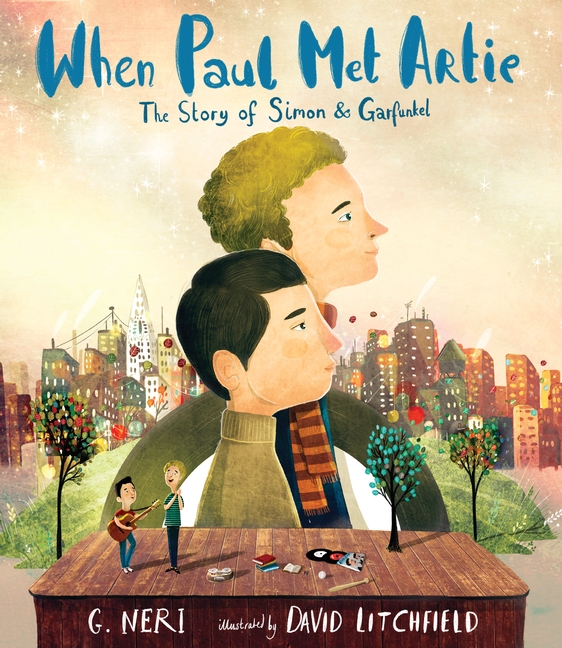
When Paul Met Artie: The Story of Simon & Garfunkel, by G. Neri/Illustrated by David Litchfield,
(March 2018, Candlewick), $17.99, ISBN: 9780763681746
Recommended for readers 8-12

How else could the story of Simon & Garfunkel be told, but in verse? G. Neri, whose books Chess Rumble, Tru & Nelle, and Ghetto Cowboy combine free verse with prose storytelling, shines here, giving readers the rise, fall, and rise of the duo, beginning with their 1981 reunion concert in Central Park, then tracing their lives together from the beginning, as two boys in Queens who discover their love of music and their voices together. Each spread is a different song title, evoking a different period in their lives: “My Little Town” describes the Queens neighborhood where they grew up; “Last Night I Had the Strangest Dream” looks at their early success as Tom & Jerry. “Bleecker Street” looks at Paul’s life in Greenwich Village, and Art’s in Berkeley, where they both discover folk singers and activism; “Bookends” sees the two in a car, on New Year’s Day, 1966, listening to their number-one song, “The Sound of Silence”, on the radio. There’s an Afterword, discography, bibliography, and Musical Connections section, a chronological timeline of song influences.

G. Neri manages to fit a lifetime – into 48 pages. We learn that Paul Simon loves baseball and Art Garfunkel was going to be a math teacher; we discover that they were famous and potential has-beens by age 18; that they dreamed of making it big, and when fame failed them, wanted to just make music for the sake of making music. The digital artwork captures the Kew Gardens, Queens, neighborhoods as easily as it captures a small street in Paris, and the crowd at Central Park. This isn’t a picture book for beginning readers; it’s a beautifully illustrated volume of a moment in music history, in verse.

I’m a Queens girl, and you can’t be from Queens (or be a Queens College graduate) without Simon & Garfunkel being part of your DNA. My eldest went to the same high school as the duo; there’s an auditorium named for Art Garfunkel when you walk in the door. Reading When Paul Met Artie took me on a wonderful trip back to a Queens that I remember as a little girl, when I’d sit in the backseat of my uncle’s car as he listened to Simon & Garfunkel on the radio. Music fans and those of us who grew up listening to Simon & Garfunkel’s music will love this beautiful book.