Posted in Middle Grade, Non-Fiction, Non-fiction, Tween Reads

The National Geographic Kids Almanac Turns 10! Plus, a major giveaway opportunity!

Every year, the NatGeo Kids Almanac hits my library shelf, and I don’t see it for a couple of months after I put it out. It’s a little bit of everything: a desk reference; a current events recap; a guide to conservation and preservation efforts around the world; it’s loaded with gorgeous pictures of animals and amazing places all over the world, and a hilarious joke book – and that’s just for starters.

National Geographic Kids Almanac 2020, (May 2019, National Geographic Kids),
$14.99, ISBN: 9781426332814
Ages 8-12

The 2020 Almanac offers all the usual facts and figures, games, and pop culture/technology/extreme exploration and conservation efforts that we’ve come to expect from NatGeo Kids, plus some new features: there are interviews with NatGeo scientists and explorers in each chapter, a special section on how the world has changed between that first NatGeo Almanac in 2010 and today, and the results of the 2019 Lions Forever Poster Contest. There’s also a new 20/20 Visionary Challenge for kids, inviting them to be futurists and imagine what the world will be like 10 years from now. It’s positive and it inspires and empowers kids to see themselves as the changemakers.

There are quizzes, homework hacks, and a section on Crafts Around the Globe that you can easily incorporate into your summer reading activities; the Space and Earth chapter fits perfectly with this year’s Universe of Stories theme, and includes a sky calendar that gives readers the heads-up on what’s happening in the coolest live show on earth: just look up to see lunar eclipses, meteor showers, supermoons, and even the International Space Station!

To celebrate the Almanac’s 10th Anniversary, NatGeo is hosting a Summer on the Go Almanac 2020 Grand Prize Giveaway — a GO-PRO!

Don’t miss your chance at winning your own GoPro, to capture your own extreme exploration! Enter this Rafflecopter giveaway today! (U.S. and Canada addresses only, please!)

Good luck!
Posted in Intermediate, Middle Grade, Non-fiction, Non-Fiction

New York City gets a park: A Green Place to Be

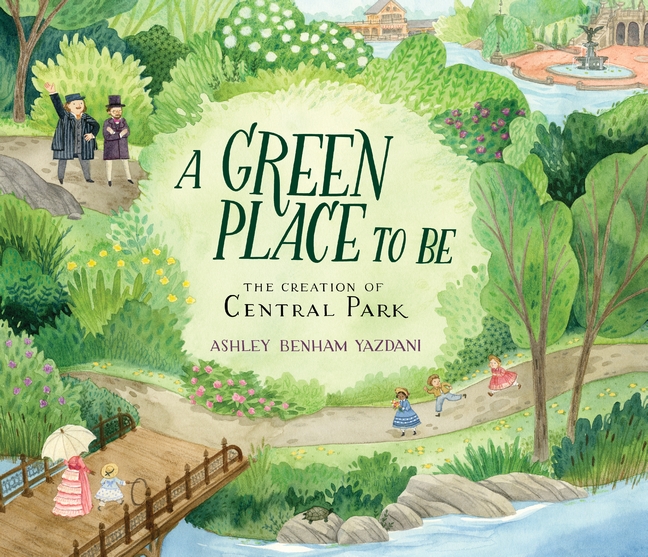
A Green Place to Be: The Creation of Central Park, by Ashley Benham Yazdani, (March 2019, Candlewick Press), $17.99, ISBN: 9780763696955

Ages 7-10

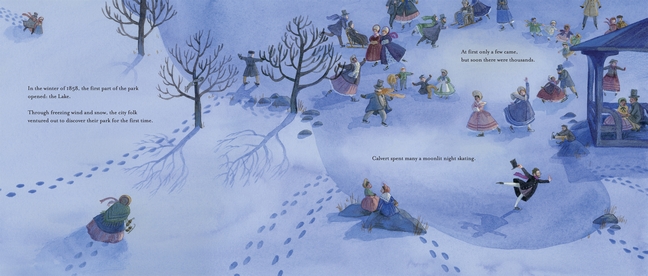
This beautiful and lushly illustrated history of Central Park starts with the land’s beginnings, as a barren area where farm animals and industrial waste left much to be desired, and the design contest devised by architect Calvert Vaux – a contest that he also entered with every intention of winning. A Green Place to Be follows Vaux’s and park superintendent Frederick Law Olmsted’s vision, focusing on their planning, execution, and invitation to artists to join in the effort. The winter of 1858 saw the first park of the park, the Lake, open for visitors; in the summer of 1859, the woodsy Ramble joined the landscape, followed by the Children’s District.

Illustrated in watercolor and pencil, this is a loving tribute to an iconic green space and the men and women who created it. Back matter includes profiles of both Olmstead and Vaux, and a Q&A on spaces within the park. Sharp-eyed readers will love returning to the illustrations again and again to find squirrels, bridges, and other affectionately placed details. There is an author’s note and bibliography for further reading.

A Green Place to Be is a love letter to New York’s green spaces and creativity. Central Park’s website has extensive information about the park, including a calendar of events and links to social media. Planetizen has a good article on teaching urban planning to preschoolers; this could be a fun activity where kids can learn and create their own green spaces! National Geographic has a fun Design a Park activity for middle grade kids, and the STAR Library Network has a printable Design a Park activity that will work with large groups of kids. It’s a fun springtime program!

Posted in Espionage, Middle Grade, Non-fiction, Tween Reads

Can You Crack the Code? makes codebreakers out of your readers

Can You Crack the Code? A Fascinating History of Ciphers and Cryptography, by Ella Schwartz/Illustrated by Lily Williams, (March 2019, Bloomsbury USA), $21.99, ISBN: 9781681195148

Ages 10-13

Three years ago, I held a great, week-long Spy program at my library for Summer Reading. The kids went berserk for it; I had a blast planning and running it, and books like Can You Crack the Code? make me think it might be time to hold a program like that again. Ella Schwartz has come up with a nice history of codes, code names, and cryptography for middle graders, with loads of pictures, informative sidebars, and activities to keep readers on their toes. Famous moments in cryptography history include the Caesar Cipher, invented by Julius Caesar, the Arnold Cipher, used by the infamous Benedict Arnold, and the Enigma machine, used by the Germans during World War II; the machine that gave them the upper hand until a team of British codebreakers at Bletchley Park finally broke the code (shout-out to computer scientist and codebreaker Alan Turing). Want to know why you have to generate a strong password, obnoxious as it may be? Check out the “Can You Hack the Bank?” activity and you’ll be changing all of your passwords. A final challenge has readers going through the book to solve one last cipher. There’s a comprehensive bibliography and the book is indexed, making this a nice volume to have on your shelves.

Display this with the Book Scavenger series, the Mr. Lemoncello’s Library books, the Secret Coders graphic novels, and – naturally! – the Girls Who Code books, both fiction and nonfiction. Brightly has a good post on fiction with puzzles and codes.

Now, if you’ll excuse me, it’s time to revisit some of my old Summer Reading plans… I know this year’s theme is A Universe of Stories; maybe I’ll just use some codes to send them into space! Great escape room ideas in here, too. All around fun for your brain-teaser-loving readers.

Posted in Intermediate, Middle Grade, Non-fiction, Non-Fiction

To Infinity and Beyond! The Day the Universe Exploded My Head

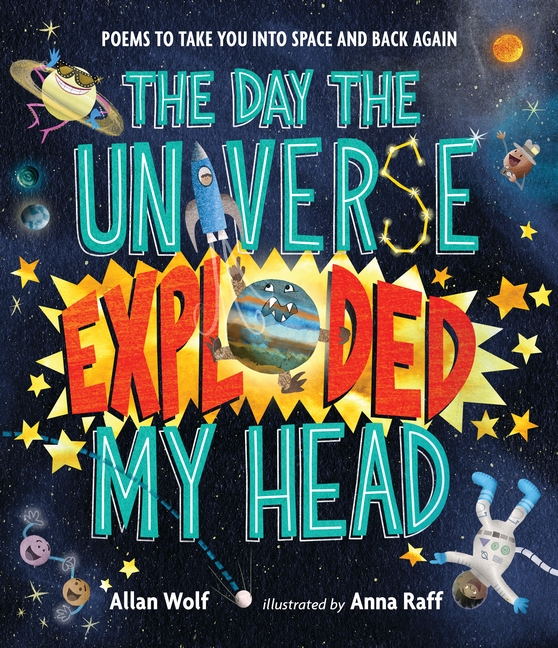
The Day the Universe Exploded My Head: Poems to Take You Into Space and Back Again, by Allan Wolf/Illustrated by Anna Raff, (March 2019, Candlewick Press), $17.99, ISBN: 9780763680251

Ages 7-12

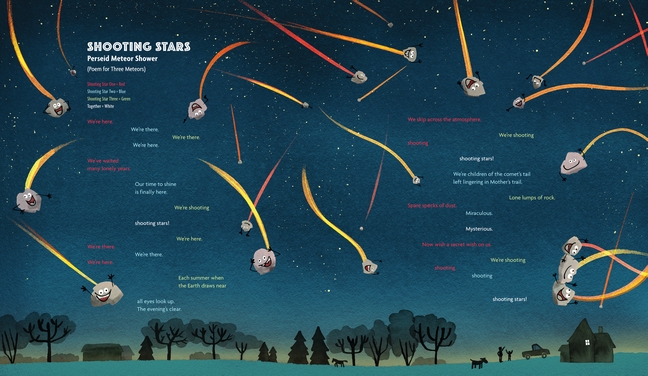
This is one of the best kids’ poetry books I’ve come across in a while! The Day the Universe Exploded My Head contains 29 poems, all about the wonder of space. Each planet gets a poem here, as do the outliers (Planet X, Charon, Pluto). There are nods to pivotal moments in space history (the 2013 meteorite over Cheylabinsk, Sputnik) natural phenomena (black holes, lunar and solar eclipses), and notable scientists (Ivan Ivanovich, Children of Astronomy). The poems are upbeat, factual, and, quite often, very funny, as with the poem, “Planet X”: “I’m one part supercilious/Another part mysterious/One part you-can’t-be-serious/They call me Planet X”. There are a wealth of poems for readers to read out loud, too: “Going the Distance” is a rap for two voices, color-coded for each speaker. The artwork: digitally assembled color collage, made from sumi ink washes, salt, pen, and pencil, explode off the page, with texture that will entice kids to see the swirls of light curling off a star and a fuzzy rings of moons around Neptune.

Non-fiction that informs and excites is aces with me, and The Day the Universe Exploded My Head is a great way to kick off and conclude a space storytime, a STEM program, or a fun read-aloud. Have some printable space coloring sheets ready to hand out, or check out illustrator Anna Raff’s webpage for super-cool activities (I like the Little Card printable for a library visit). Author Allan Wolf’s webpage also has activities, including poetry jokes.

The Day the Universe Exploded My Head has starred reviews from Kirkus and Booklist.


Posted in Middle Grade, Non-Fiction, Non-fiction, Teen, Tween Reads, Women's History

Taking Cover: Growing up during the Iranian Revolution

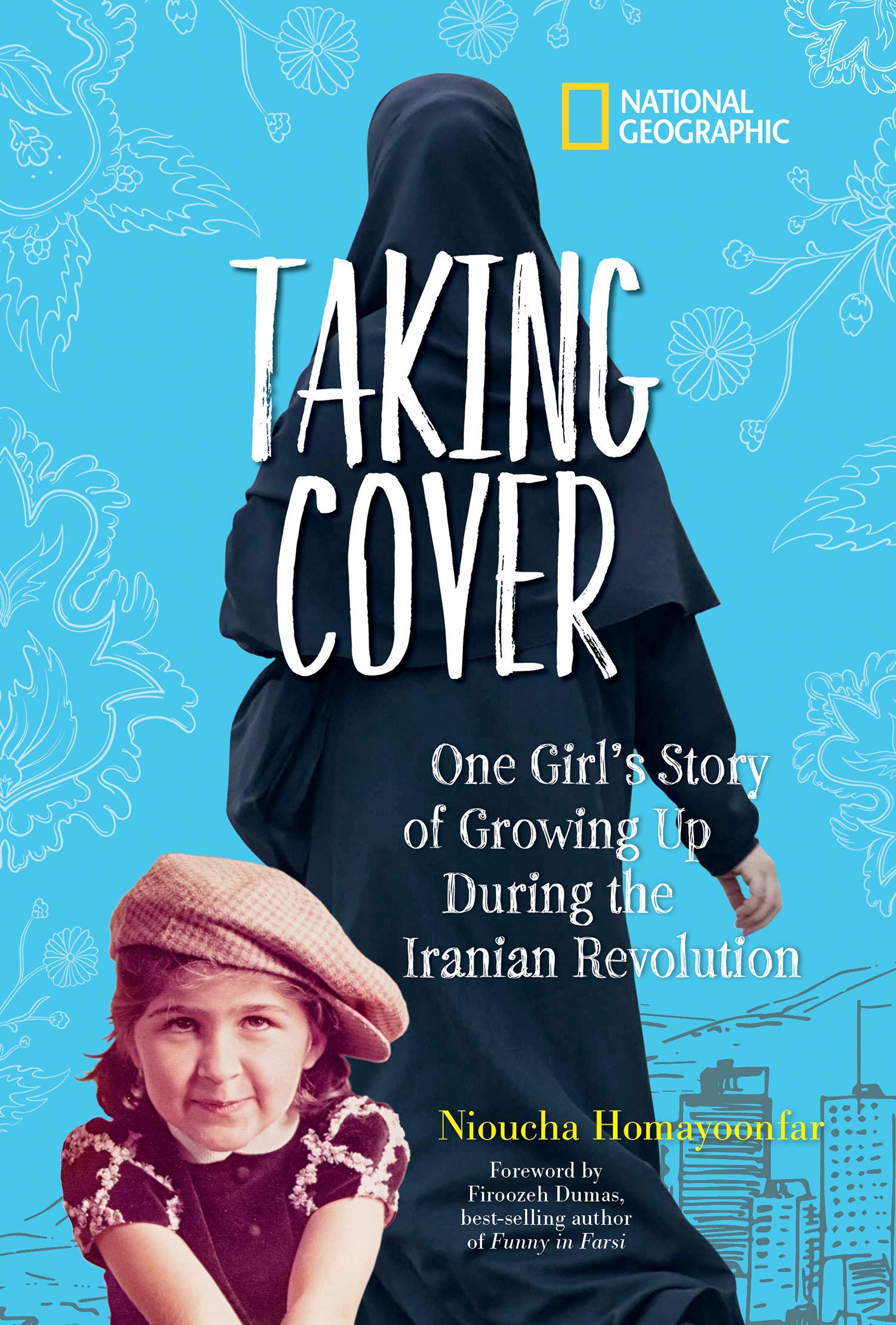
Taking Cover: One Girl’s Story of Growing Up During the Iranian Revolution, by Nioucha Homayoonfar, (Jan. 2019, National Geographic Kids), $18.99, ISBN: 9781426333668

Ages 10-14

Nioucha Homayoonfar’s memoir of life in Iran during the Iranian Revolution is equal parts joyful and heartbreaking. In 1976, at the age of 5, her family moves from Pittsburgh to Iran, where her father can be with his family again. For several years, Nioucha and her expat friends are educated in a progressive French-Persian school and enjoy the things most kids do, including listening to music, dancing, and swimming. But the revolution changes all that. Nioucha and her friends are segregated; they have to wear robes and hoods that cover their hair (and are threatened with burning in Hell, hanging on every visible thread of hair), and live in fear of being kidnapped by the Moral Police: a group called the Zeinab Sisters. Nioucha refers to them as The Black Crows, which brings a colorful, tongue in cheek image to mind, but these women are anything but humorous. The women patrol the streets in a van, capturing women and teens they deem immoral, hiding them in prisons, and beating them until they feel redemption is earned.

But there are wonderful moments of family and friendship in Taking Cover, too. Nioucha recalls her first Iranian Christmas, when she hopes Santa Claus will remember that she’s moved to Iran, so she’ll get her presents, and her family decorates her aunt’s house with a beautiful tree and presents. She talks about her relationship with her grandparents, who adore her and comfort her during her first sleepover away from her parents; going to concerts and driving around with her cousin, Sara, even learning French in an underground school run by her mother and her best friend’s mother. In the midst of explosions and oppression, Nioucha and her family managed to take joy where they found it.

Parallels to Persepolis are expected, and should be encouraged. Taking Cover is an excellent memoir and lead-in to Persepolis, allowing middle graders to expand their worldview and start a conversation on how the Iranian Revolution changed the world. The book includes a map of Iran and surrounding areas, and a timeline of Iranian history. There is a free, downloadable Educator’s Guide available.

Posted in Graphic Novels, Guide, Middle Grade, Non-fiction, Tween Reads

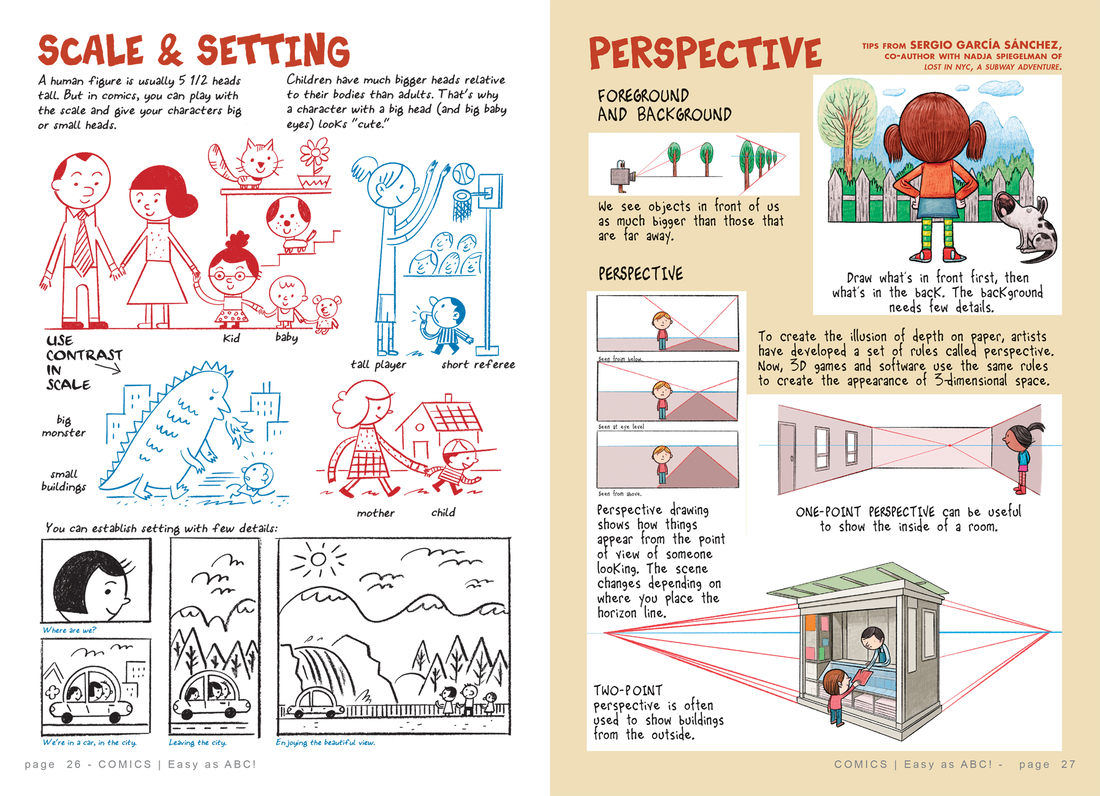
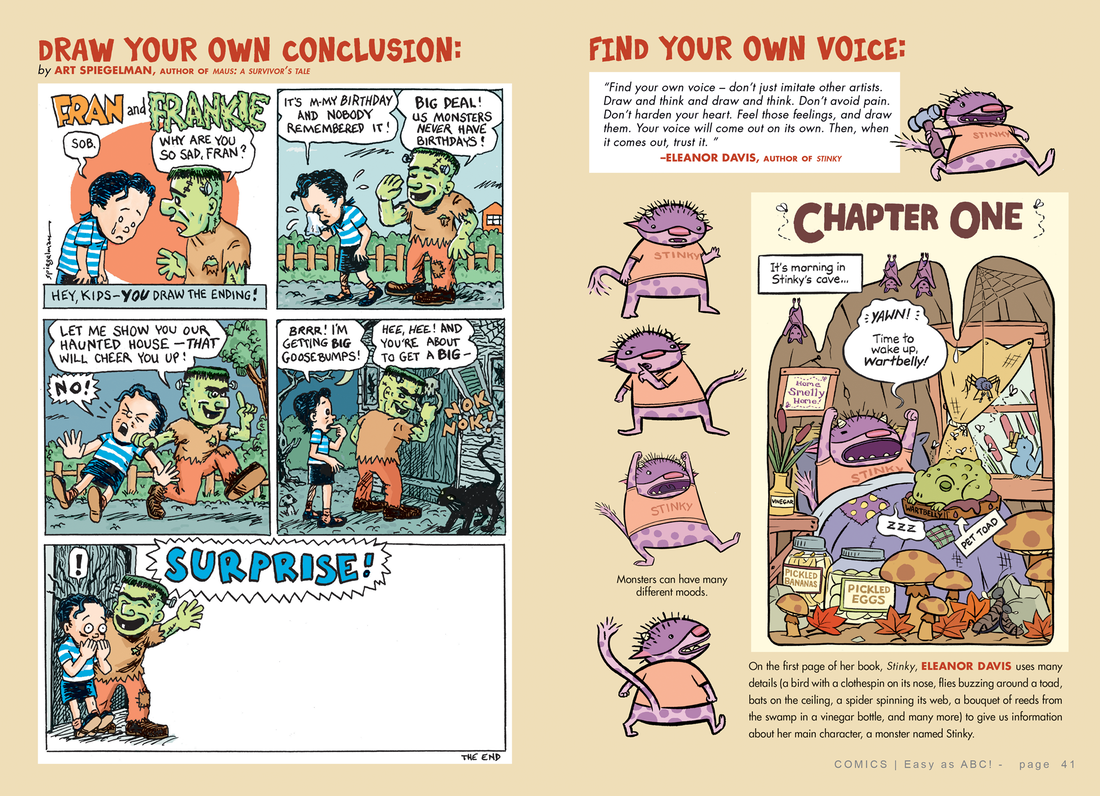
Comics: Easy as ABC! is essential kid and grownup reading!

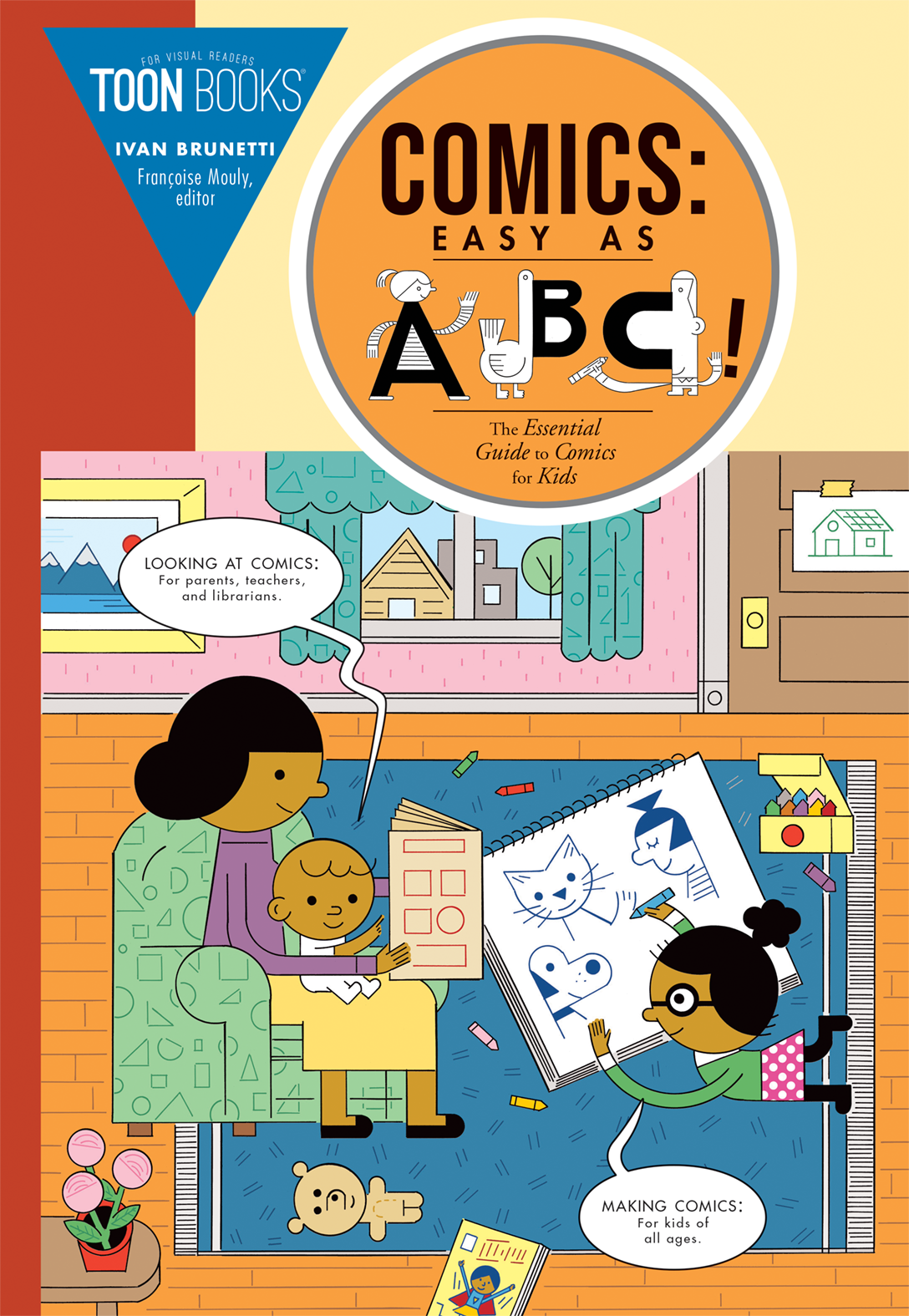
Comics: Easy as ABC! The Essential Guide to Comics for Kids, by Ivan Brunetti, (Apr. 2019, TOON Books), $16.95, ISBN: 9781943145447

Ages 8-12

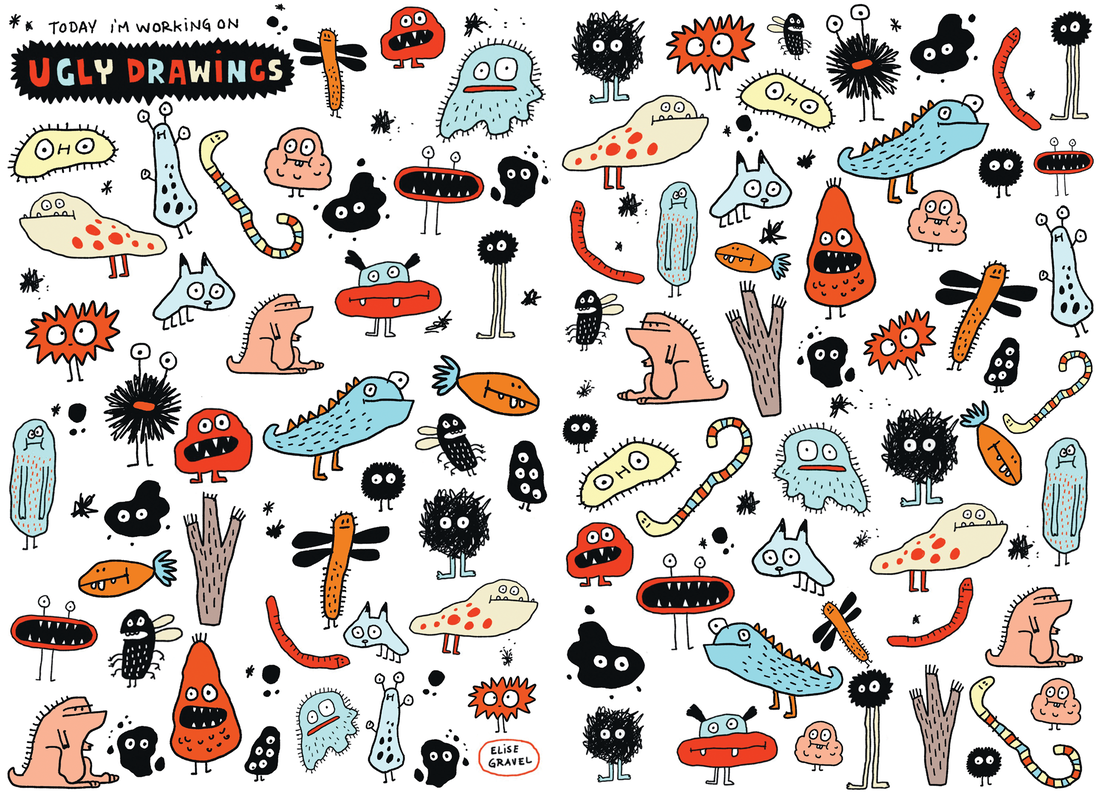
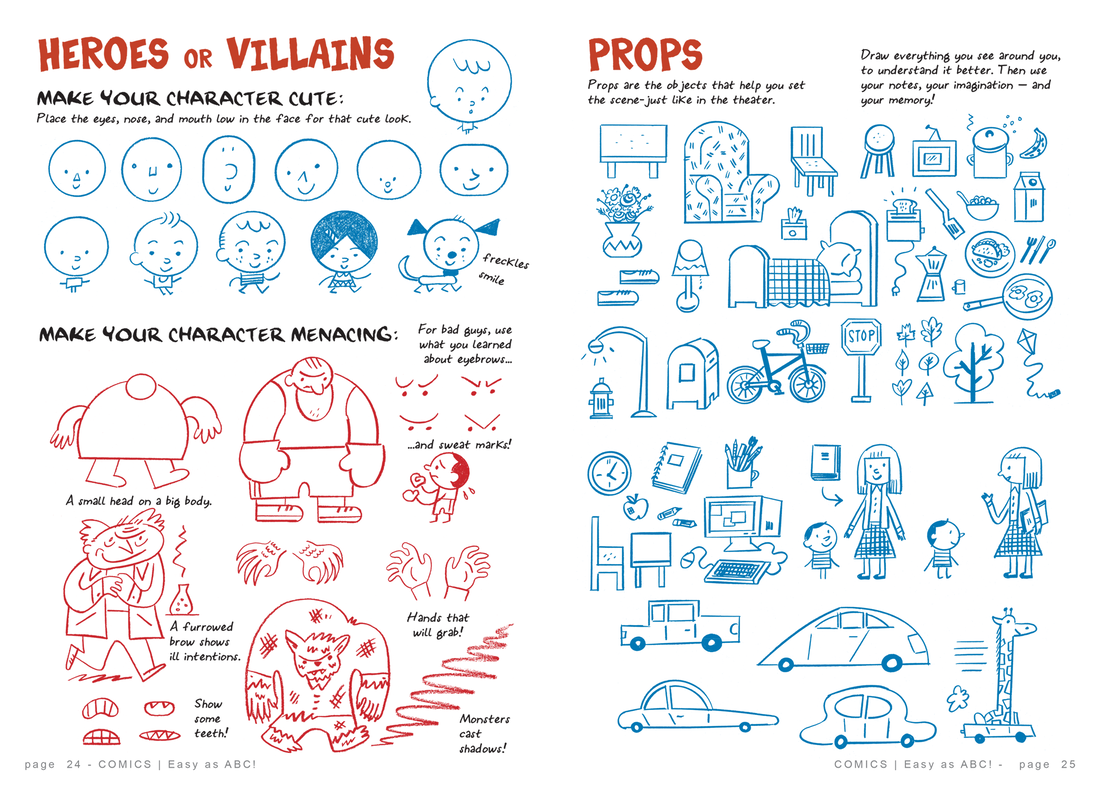
Ivan Brunetti and an all-star cast of comics luminaries put together a compulsively readable guide to cartooning and comics for kids and grownups alike. An Understanding Comics for younger readers, Comics: Easy as ABC! introduces kids to the joy of cartooning and doodling; drawing characters whose faces and body language communicate emotion and personality; perspective; point of view; lettering, and so much more. There are quotes and excerpts of comic panels and drawings by such comics and graphic novel notables including Neil Gaiman, Elise Gravel, Liniers, and Jeff Smith. TOON Editorial Director and New Yorker art editor Françoise Mouly notes, in her introduction, that she hopes Comics: Easy as ABC! encourages more people to fall in love with comics and to inspire budding cartoonists.

This is such a great volume to have as a desk reference for librarians, parents, and educators, because it’s a crash course in understanding comics. It gives a language to the artwork, letting us look at all art – comic books, naturally, but picture books and illustrated chapter books, too – and explain to readers how to read art; how to decipher facial expressions and body language, how to read a landscape and understand a setting for a panel or spread. The book encourages readers to “draw their own conclusions” by letting them fill in the ending of a comic strip drawn by Pulitzer Prize-winning author and artist Art Spiegelman, and “find their own voices”, with guidance from author Eleanor Davis. A section dedicated to parents, teachers, and librarians guides us grown-ups through the process of how to read comics with kids, with examples, advice, and callout tips like, “The child who makes informed guesses is reading. Enjoy, and hold back from correcting”. Information about the TOON Into Reading Program explains TOON’s leveled reading (also broken further into Lexile, Guided Reading, Reading Recovery, and grade levels). An index, further resources, and a bibliography round out this information-packed guide to the world of comics and graphic novels.

TOON! does it again. This is an essential volume for your graphic novels shelves, and for your desk reference. There’s a 7-page free, downloadable Teacher’s Guide available on the website.

Posted in Middle Grade, Non-fiction, Tween Reads

Middle grade entrepreneurial books kids will want to read: From an Idea to…

I had a bit of business book success a few years ago when I put Notch’s – the creator of Minecraft – bio on the shelves at my first library, but books about successful businesses aren’t always easy to come by for a middle grade audience. This new series from Case Marketing founder Lowey Bundy Sichol tries to fill some of that gap, taking brands that are uber-popular with tweens and breaking down the companies’ histories, successes, and setbacks.

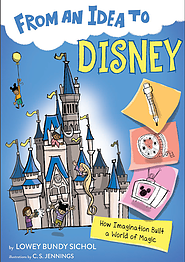
From an Idea to Disney: How Imagination Built a World of Magic, by Lowey Bundy Sichol/Illustrated by C.S. Jennings, (Feb. 2019, Houghton Mifflin Harcourt), $15.99, ISBN: 978-1-328-45361-7

Ages 10-12

From an Idea to Disney is part bio on Walt Disney, part bio on his empire, from Mickey Mouse and Steamboat Willie to Disneyland, Disney World, and all of Disney’s acquisitions. The chapters are quick, explain business practices in plain language and include callout boxes with definitions for specific business terms. Disney’s story focuses on the development of the family-friendly, inclusive brand, Walt Disney’s desire to create full experiences for families at his parks, and how the Disney family pushed back at what they perceived an over-merchandising of the brand in the 1990s, bringing about a management change that brought Disney back to Walt’s original vision.

Inspirational quotes from Walt himself run throughout the book, and black and white line drawings add visual interest. A Walt Disney Company timeline, bibliography, and source notes round out the volume.


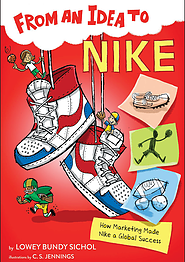
From an Idea to NIKE: How Marketing Made Nike a Global Success, by Lowey Bundy Sichol/Illustrated by C.S. Jennings, (Feb. 2019, Houghton Mifflin Harcourt), $15.99, ISBN: 978-1-328-53062-2

Ages 10-12

Global athletic shoe giant NIKE began as high school athelete Phil Knight’s grad school project for an entrepreneurship class. Despite pushback from his critical father, he made a go of it, bringing his high school track coach, Bill Bowerman, into the fold. Bowerman would go on to create the “waffle iron soled” sneaker that would grip surfaces better – and ruined his wife’s waffle iron in the process. From an Idea to NIKE concentrates on the value of marketing in NIKE’s success, from athletic endorsements, to the Just Do It campaign, to running different sales channels, including NIKETown stores and the ability to order customized shoes online. The book mentions NIKE’s struggle to survive shortly after going public, when Reebok rose to popularity in the early ’80s; their quest to gain footing in Europe and the soccer market, and dealing with endorsed athlete scandal.

As with From an Idea to Disney, From an Idea to NIKE is loaded with fun facts, business term callouts, quotes from Phil Knight, and black and white line drawings. There’s a NIKE timeline, a list of the brand’s top endorsement deals, a bibliography, and source notes.

If you have nonfiction readers that have an interest in how business or brands work, stick a toe into the water and put a few of these into your collection. They’re quick reads and offer a beginning look into the business world. Focusing on entrepreneurs can be inspirational for readers – consider a book club or program where kids can come up with their own entrepreneurial idea? Have books like Jessie Janowitz’s The Doughnut Fix and Jacqueline Davies’s The Lemonade War handy. Other titles in the series include From an Idea to Lego and From an Idea to Google.


Posted in Middle Grade, Non-fiction, picture books

Two picture book biographies: Charlie Chaplin and Gloria Steinem

Smile: How Young Charlie Chaplin Taught the World to Laugh (and Cry), by Gary Golio/Illustrated by Ed Young, (March 2019, Candlewick Press), $17.99, ISBN: 9780763697617

Ages 8-12

This picture book bio on silent screen giant Charlie Chaplin starts with Chaplin’s early life in London and his life in a poorhouse; covers his early performing years in London and his discovery by American filmmaker Mack Sennett, and Chaplin’s success in creating his classic Little Tramp. Using verse with occasional moments of rhyme, this is a fantastic way to bring Charlie Chaplin’s movies and life to an audience that, as Kirkus notes, “grow ever more distant”. I remember watching Chaplin’s movies on TV when I was growing up, and later on, as a cinema student in college; I loved his humor, and I loved his social commentary that came across loud and clear. Smile touches on these concepts and Chaplin’s talent to make viewers laugh and cry, sometimes at the time.

Ed Young’s collage and ink artwork is incredible. The collage endpapers are populated with silhouette cutouts; spreads are created using torn paper, fabrics, newsprint, and murky colors. Little Tramp silhouettes show up on almost every spread. The story ends with a photo of Chaplin as Little Tramp, and the beginning and end of the book appear as a silent film title cards.

Back matter includes quotes from Chaplin’s writing, an afterword from the author, facts about Charlie Chaplin, and a list of resources. The author includes a suggested Chaplin viewing list that I’d love to run here at my library. I’ll have to see if I can generate some interest. In the meantime, here’s a clip from The Kid (1921).

Smile has starred reviews from Kirkus and Publishers Weekly. Gary Golio is an award-winning author of children’s nonfiction; Ed Young is a Caldecott-winning artist.

Gloria Takes a Stand: How Gloria Steinem Listened, Wrote, and Changed the World, by Jessica M. Rinker/Illustrated by Daria Peoples-Riley, (March 2019, Bloomsbury), $17.99, ISBN: 9781681196763

Ages 8-12

Feminist activist and icon Gloria Steinem’s story is told in narrative text and mixed media art, beginning with her early years as she traveling with her parents and learned in the back of their car. She goes to college, shakes off the “when are you going to get married?” expectations, opting to travel to India. Inspired by the the 1963 March on Washington, she decided to join fight for equality, eventually co-founding Ms. magazine in 1971.

The text is a bit dense, making it a better choice for middle grade readers; short sentences summarize every few spreads to reinforce Steinem’s actions throughout her life: “Gloria watched. She learned. And helped”; “Gloria thought. She questioned. And learned”. The mixed media artwork shows Steinem’s intersectionality, standing alongside people of color at marches and protests. There’s a nice tribute to Steinem’s influence on later generations of young women, with a diverse group holding signs including “Black Lives Matter”, “Where are you going to college?”, and “Resist! Persist!” An author’s note and illustrator’s note each touch on Steinem’s personal influence, and additional back matter includes a timeline of important events in U.S. women’s history, and a bibliography of further resources. The endpapers are renderings of Ms. magazine covers.

A nice addition for Women’s History Month collections and research.

Posted in Middle Grade, Non-fiction

Survival nonfiction: Lost in the Antarctic (and a giveaway!)

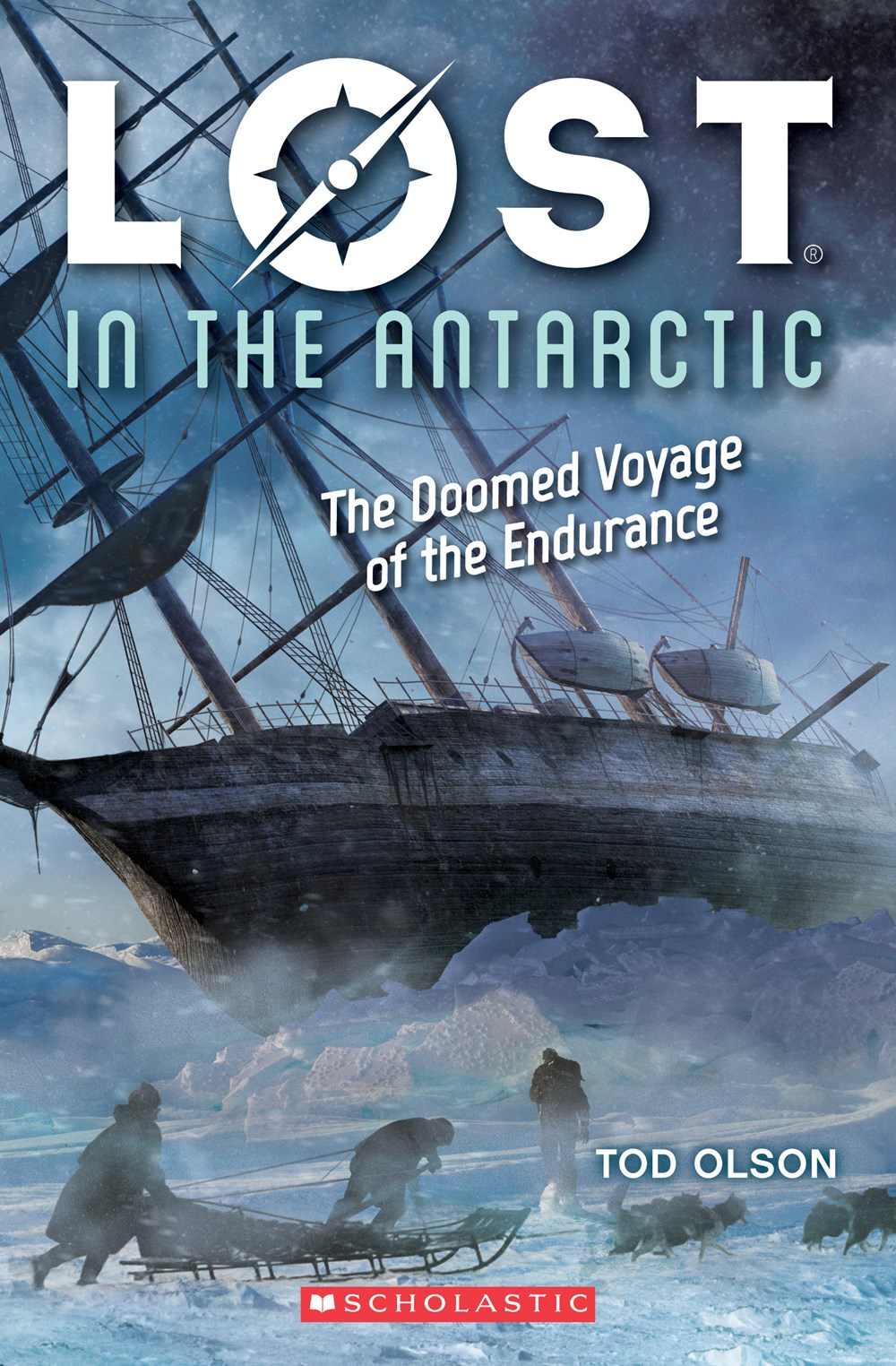
Lost in the Antarctic: The Doomed Voyage of the Endurance, by Tod Olson, (Jan. 2019, Scholastic), $7.99, ISBN: 978-1-338-20734-7

The latest entry into Tod Olson’s Lost series takes a deeper look into Ernest Shackleton’s 1914 voyage to the Antarctic aboard the fated ship, the Endurance. Shackleton and a full complement of 28 men and a few dozen sled dogs boarded the ship, ready to attempt the first crossing of the Antarctic continent; nature had different ideas as the ship and crew endured oceans of ice that trapped and eventually crushed the ship, leaving the men to fend for themselves on the ice.

This is not a gentle story. Tod Olson writes of desperate men trapped in horrific conditions, fighting to survive; the story has riveting, gritty moments that will make the brutal world of the Antarctic come alive. Photos and details from primary sources, including Shackleton’s own journal, make the story come alive for readers. Have readers who love Lauren Tarshis’ I Survived series (seriously, who doesn’t)? This is the next step. Want to make fiction readers love nonfiction just as much? This is the series for you and them.

I don’t know how I wasn’t aware of this series before: there are four books so far, and each book comes with incredible resources, including free, downloadable discussion guides and supplemental information – including multimedia resources – on Tod Olson’s author site. You can go directly to the Lost in the Antarctic resources here.

Get this series on your shelves now! You’ll be happy you did, and so will your readers.

Tod Olson is the author of the historical fiction series How to Get Rich and the four books in the Lost series–Lost in the Pacific, 1942; Lost in Outer Space;  Lost in the Amazon; and Lost in the Antarctic. He has written for national magazines on the Columbine school shooting, homeless teens, the murder of Matthew Shepard, and many other stories of interest to children and young adults. Tod holds an MFA from Vermont College of Fine Arts and lives in Vermont with his family, his mountain bike, and his electric reclining chair. To learn more, and to download free teaching resources, visit his website: todolson.com.
 
Praise for previous titles in the Lost series
 
★”A riveting, completely engrossing true survival story.” —Kirkus Reviews (starred review)
 
“Engaging… A great choice for collections.” —School Library Journal
 
One lucky winner will receive Lost in the Antarctic, courtesy of Scholastic, Inc. (U.S. addresses). Enter this Rafflecopter giveaway for your chance!
Posted in Middle Grade, Non-Fiction, Non-fiction, Tween Reads

Makers… Get Tinkering!

Forgive the stretch between updates, all; I’m home this week, with my little guy, who’s on Midwinter Recess. He’s currently got a Lego stronghold of army men fighting across two rooms, so I used the break to get some writing in.

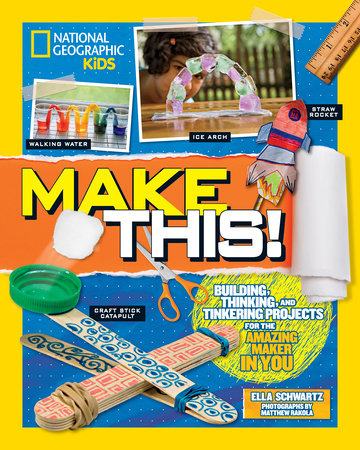
Did you know that this week is National Engineers Week? It is, and with many of us facing looming Science Fair deadlines, I’ve got a book for you. NatGeo, lifesaving publisher of all the things my own kids and library kids have needed for reports and projects, now has a book called Make This! Building, Thinking, and Tinkering Projects for the Amazing Maker in You

Make This! Building, Thinking, and Tinkering Projects for the Amazing Maker in You,
by Ella Schwartz/Photos by Matthew Rakola,
(Feb. 2019, National Geographic Kids), $16.99, ISBN: 9781426333248
Ages 8-12

This is a perfect book to start off a basic maker program, or a book to add to an already robust program. Most of the materials needed are already in your home: I did three projects today with my first grader! (Pencil Pusher, Silly Noisemaker, and Kazoo, if you’re curious.) The basics of tinkering are here; you can take all of these projects to different levels with questions about the process of making and considering results (we talked briefly about the scientific method as we made predictions about using pencils as wheels, for instance, to propel a pile of books across a table).

Projects are broken down into 8 areas: Simple Machines; Materials; Systes; Optics; Energy; Acoustics; Forces; and Motion. Each area has a spread explaining the concept, followed by several projects further exploring each area. There are questions to consider, fast facts, a list of materials, and a step-by-step of what to do to complete your project. Each project also has a difficulty level and maximum number of people to work on each project.

A foreword explains the nature of making, and sections on makers and makerspaces assure every kid that there is no “maker profile”: you make something, you’re a maker! There are some handy suggestions on materials to keep handy if you want making to be a regular activity in your home, library, or classroom, and there are some spreads dedicated on using the book and starting with a toy challenge. Safety is always paramount, so there’s cautionary messages about having an adult nearby to help out; really, we’re just window dressing, though: kids can easily make these great projects. Afterwords have some info on more complex, advanced making (3-d printers and robotics), and introduce readers to real-life makers: scientists, conservationists, and photographers are makers, too!

This one is yet another win for my Science Projects section and a guaranteed “program in a book” add to my STEM shelf.