Posted in History, Middle Grade, Non-fiction, Tween Reads, Uncategorized

Big nonfiction roundup!

I have been curating a pile of nonfiction over the last several weeks, ready to do a back to school post, but all these other great books started coming out, too… so, before this pile crushes me, let’s do this!
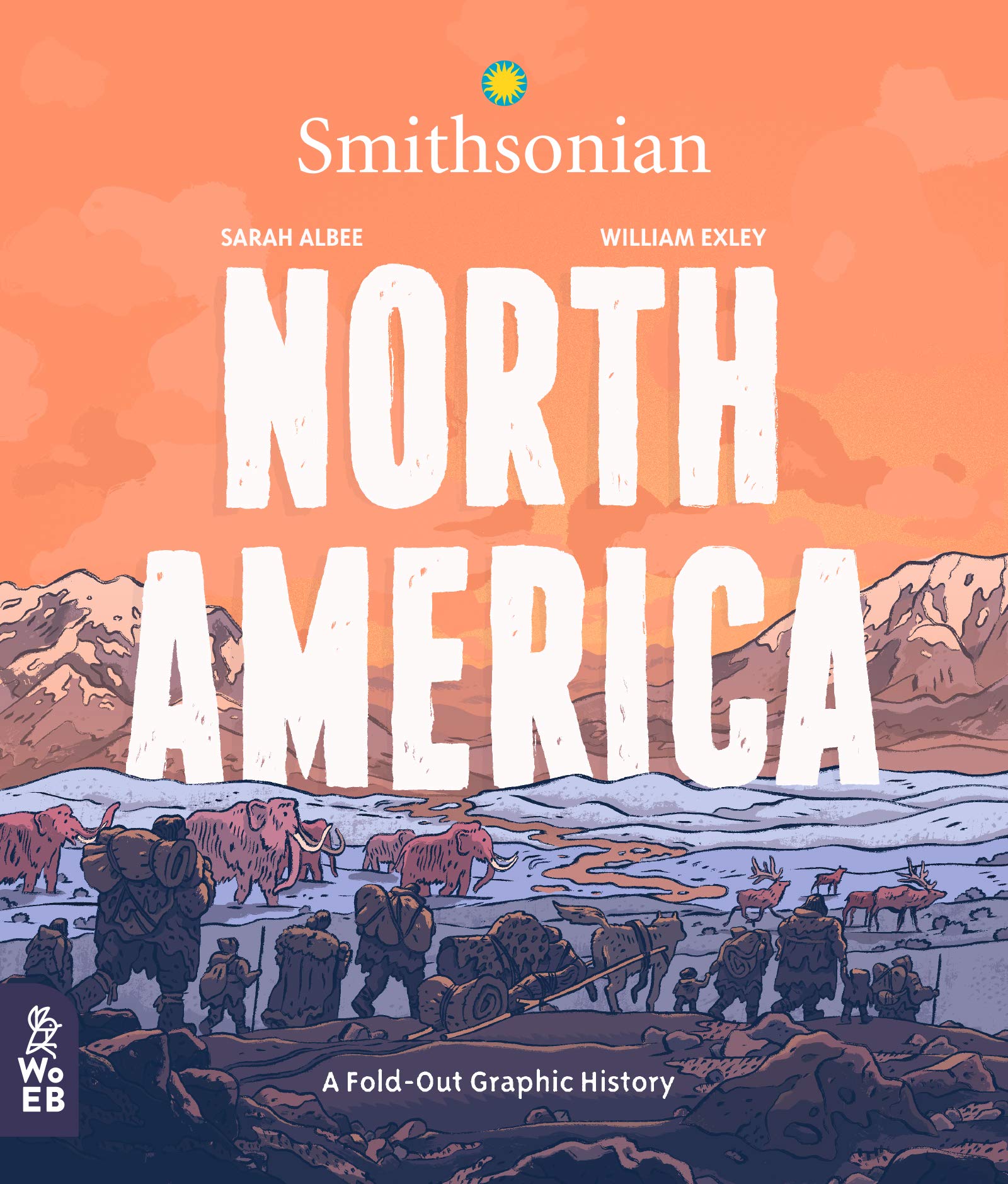
North America: A Fold-Out History, by Sarah Albee/Illlustrated by William Exley, (Oct. 2019, What on Earth Books), $19.99, ISBN: 978-1999967925

Ages 8-14

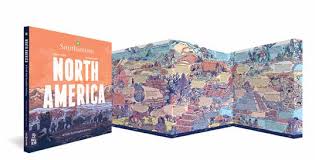
That What on Earth Books fold-out are so much fun! This time, we’ve got a fold-out graphic timeline of Canada, the United States, Mexico, and the Caribbean islands, going from 11,000 BCE to 2017. It’s fully illustrated and offers a wealth of history on early indigenous peoples, including the Olmecs, Maya, Taino, and Aztec. European invasions are covered – first the Vikings; later, Columbus and the conquistadors – and American history covers much of the book’s second half. History is captured with dates and a brief blurb about standout moments, and callout boxes call attention to larger happenings, like the spreading out of humans across the land, and how European conflicts played out in North America. Back matter includes facts; glossary; source notes, and an index.

Not one for circulation – it’ll sustain damage quickly – but it’s a good reference tool and darn fun to have at home. My little guy loves these books.
Source: Bounce Marketing UK


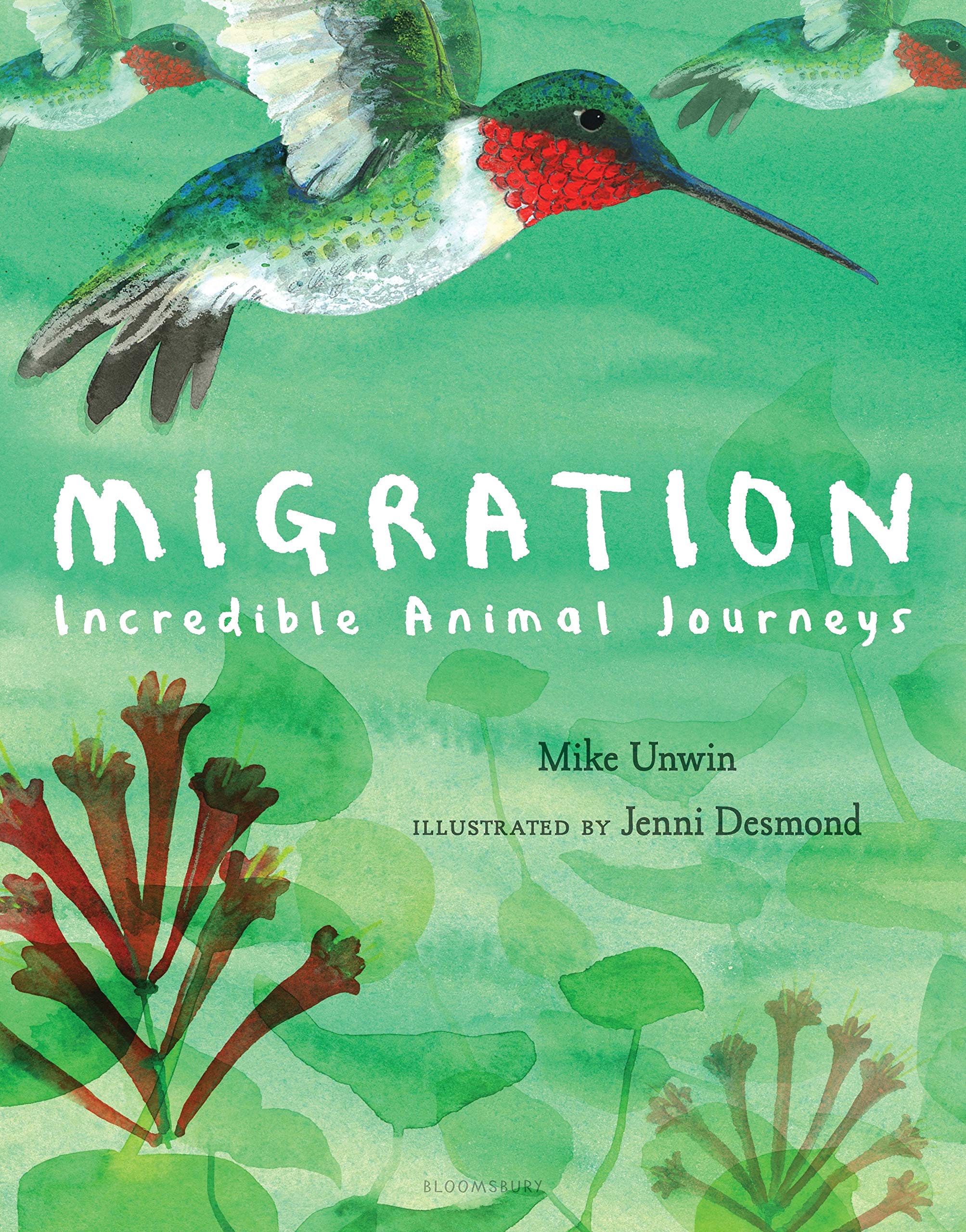
Migration: Incredible Animal Journeys, by Mike Unwin/Illustrated by Jenni Desmond, (Aug. 2019, Bloomsbury USA), $18.99, ISBN: 9781547600977

Ages 9-13

Originally published in the UK, Migration profiles 20 different migrating animals, including the humpback whale; emperor penguin; ruby-throated hummingbird; blue wildebeest, and green turtle. Each spread contains acrylic, watercolor, ink, pencil and crayon illustrations of these animals, captured in the progress of their journeys. Some artwork gives an incredible breadth of scale, like the spread dedicated to the Christmas Island red crabs, which form a “river of crabs” as they march to the sea. Others, like the humpback whale, are a more personal journey shared between a mother and her calf. Each spread provides a migration story, which reads like an I Survived novel: crossing rivers; digging through snow for food; flying for miles to reach their destination; marching across an icy landscape. Each spread also offers a quick animal fact. Back matter includes a migration map and notes on making the world safer for migrating animals.

Animals of all shapes and sizes make epic journeys across our planet, through harsh weather, avoiding hungry predators, in their efforts to survive. Travel around the globe with some of the world’s most incredible animals and discover their unique migration stories. A nice addition to your nonfiction collections, especially if your books on migration are spare.

Mike Unwin is a UK Travel Writer of the Year, and Jenni Desmond is a winner of the New York Times Best Illustrated Children’s Book, The Polar Bear. Migration: Incredible Animal Journeys has a starred review from Publisher’s Weekly.
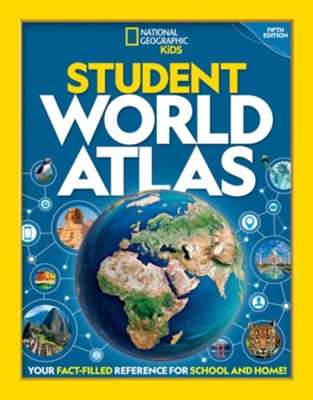
 

National Geographic Kids Student World Atlas (Fifth Edition), (July 2019, National Geographic Kids), $12.99, ISBN: 978-1426334795

Ages 8-12

This latest edition of this handy-dandy student reference has a wealth of facts, figures, and maps at your fingertips. There are over 100 maps, 70 incredible color photos, 50 charts and graphs with the latest data on climate change, the human footprint on our world, and most populous urban areas. Back matter includes an updated flags of the world section; a list of important websites on world resources, religions, languages, and quality of life; a glossary, thematic and place-name indexes, and more. If your budget allows for you to order two of these, do it: I like to keep one on hand at reference and put one into circulation. Along with the NatGeo Kids Almanac, you can’t go wrong with having these available for homework help.
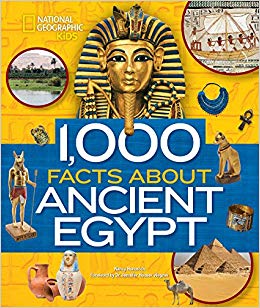
 

1000 Facts About Ancient Egypt, by Nancy Honovich (February 2019, National Geographic Kids), $14.99, ISBN: 978-1426332739

Ages 8-12

The 1000 Facts series from NatGeo Kids is almost as popular as the digest-sized Weird/Gross/Silly Facts books in my library. These are the books that prove that kids LOVE nonfiction! There are fast, bite-sized facts all about Ancient Egypt in this book: facts about the Egyptian gods and goddesses; facts about the Nile River; about making mummies and about the most famous mummy of them all, Tutankhamun; facts about inventions and temples; facts about hieroglyphics. There’s so much here, presented in compulsively readable, memorable chunks and illustrated with photos of artifacts. Back matter includes a glossary, a look at a tomb excavation, a timeline of Ancient Egyptian civilization, an index, and further resources. Have history fans? Is Ancient Egypt on the schools’ report list this year? Get this book on your shelf.

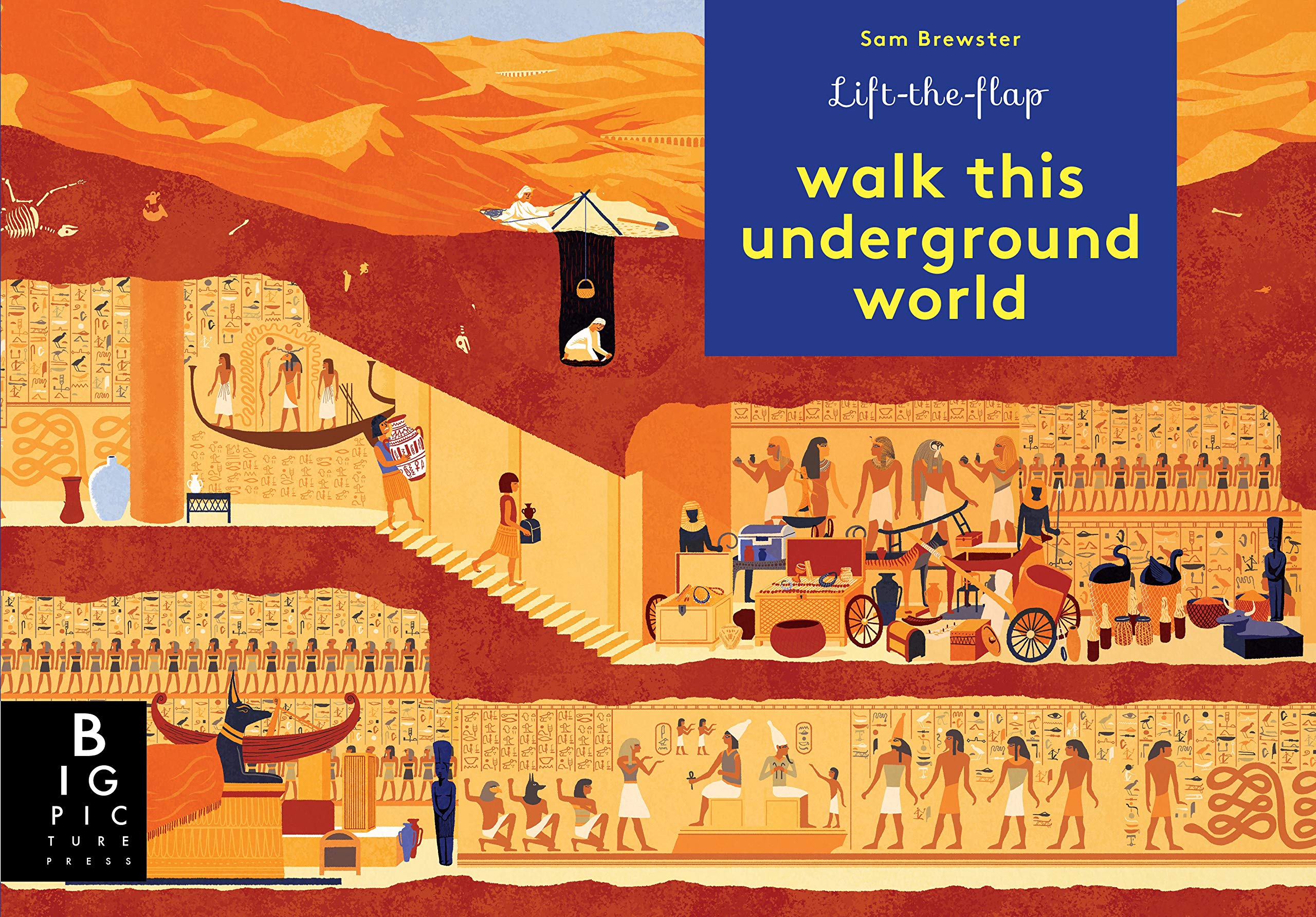
 

Walk This Underground World, by Kate Baker/Illustrated by Sam Brewster, (Oct. 2019, Big Picture Press), $19.95, ISBN: 978-1536208566

Ages 5-8

Lift the Flap fun! Readers can wander through underground worlds, from Montreal’s famous underground city to the ancient, underground tombs of Ancient Egypt. Wander the hidden natural world and see prairie dog dens, ant cities, and naked mole rat burrows. See Australian fortune hunters and Poland’s salt-rock mines; the bustling London Underground and the sleek underground train stations in Tokyo. There are 12 spreads with over 80 flaps to discover, making this a great gift book for the kiddos in your life. Definitely not going to last in circulation, but you could score a few copies for a program on underground ecosystems or travel.
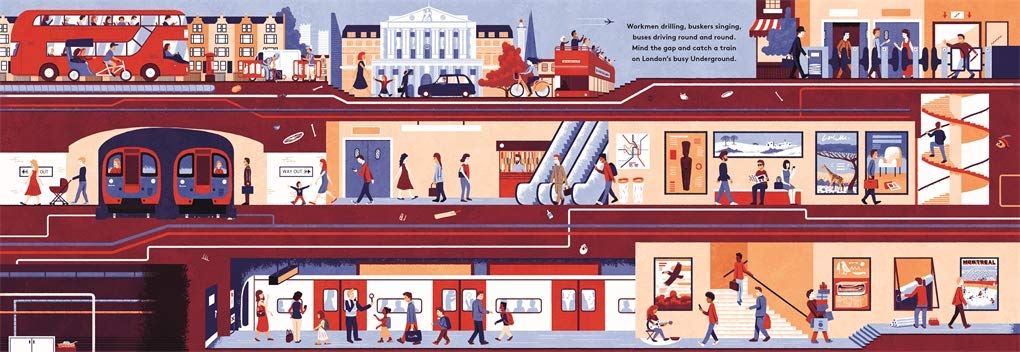
That’s all for now – I have to get this copy of Walk This World back into my son’s room before he notices it’s gone!

Posted in Intermediate, Middle Grade, Non-fiction, Non-Fiction, Teen, Tween Reads

Wild History! Books about prehistoric animals

Kids love dinosaurs. This is a known fact, and my groaning 567.9 section is proof positive of it, but I like to branch out a little and get kids checking out what other prehistoric animals there are to learn about. There are several great new books out that will give my 567 section a nice boost.

Forgotten Beasts: Amazing Creatures That Once Roamed the Earth, by Matt Sewell, (July 2019, Pavilion), $19.95, ISBN: 9781843653936

Ages 7+

Originally published in the UK in 2018, Forgotten Beasts contains over 45 illustrated portraits and profiles of birds and beasts that roamed the planet alongside and after the dinosaurs. There’s the Opabinia, a 2-inch arthropod from 508 million years ago through 1936, when the last Thylacine, a carnivorous marsupial, went extinct. There are some names kids will recognize, like the ginormous shark, Megalodon; the saber-toothed tiger, also known as the Smilodon Fatalis, and the Woolly Mammoth (for the Ice Age fans!). Each picture is skillfully rendered in muted watercolors, showing readers that prehistory wasn’t relegated to muddy greens, browns, and grays. Each profile includes the animal’s size, weight, time period, and diet, and a descriptive paragraph or two, and a timeline helps readers envision when these animals, alongside dinosaurs, roamed the Earth. Endpapers feature the stars of the book in miniature, parading across the pages. A nice book to beef up your non-dinosaur prehistoric collections.

Life: The First Four Billion Years (The Story of Life from the Big Bang to the Evolution of Humans), by Martin Jenkins/Illustrated by Grahame Baker-Smith, (Sept. 2019, Candlewick Studio), $24.99, ISBN: 978-1-5362-0420-9

Ages 10-14

The cover alone will make readers stop and give this book a look. Starting with the Big Bang, Life: The First Four Billion Years brings readers along on a journey through Earth’s first four billion years, ending right before we humans show up. Life starts off with foldout spreads that detail the beginning of Earth; from there, the book moves into the Ice Age, life’s beginnings in the water, its move to land, the ages of dinosaurs and of mammals, and the breakup of Pangea and formation of the continents, and the “Road to Us”: evolution of homo sapiens. Illustrations are the focal point of the book, and Kate Greenway Medal winner Grahame Baker-Smith is at the top of his game, creating landscapes both lush and stark, with black and white and color artwork of a prehistoric world. Award-winning author Martin Jenkins writes for upper middle graders and older, making the science of prehistory accessible to all ages. A glossary and illustrated timeline of the planet make this a stunning volume to have on your shelves.

Prehistoric: Dinosaurs, Megalodons, and Other Fascinating Creatures of the Deep Past, by Kathleen Weidner Zoehfeld/Illustrated by Julius Csotonyi, (Sept. 2019, What on Earth Publishing), $18.99, ISBN: 978-1-912920-05-1

Ages 7-11

Traveling backwards from present day to 541 million years ago, this slim volume is packed with illustrations, infographics, and easily digestible information about the earth through 17 eras. There’s information about climate change, ecosystems and extinctions. A running timeline at each right-hand page margin keeps readers up-to-date on the era and presents a visual representation of time covered as the book progresses.

Color illustrations are museum-quality; you can easily envision these bringing life to exhibits at any museum you may go to. Keeping in mind a younger and middle-grade audience, the information is broken up into short paragraphs, bold infographics, and callout facts. Back endpapers act as a visual table of contents. Keep Prehistoric in mind for your nonfiction sections; hand any of these books to your Apex Predators and Prehistoric Actual Size fans.

Prehistoric is produced in association with the Smithsonian’s National Museum of Natural History.

Posted in Middle Grade, Non-fiction, Tween Reads

The truth about cats and dogs (and gerbils, birds, fish, and other pets…)

Nat Geo Kids is all about the pets these days: they’ve just released Doggy Defenders, a series of books on working dogs, and they’ve also put out some great desk references about cats, dogs, and an Big Book to get younger readers excited about the world of animal companionship. Here’s a glimpse at some of the books out.

Cat Science Unleashed: Fun Activities to Do With Your Feline Friend, by Jodi Wheeler-Toppen/Photos by Matthew Rakola, (Aug. 2019, National Geographic Kids), $12.99, ISBN: 978-1-4263-3441-2

Ages 7-12

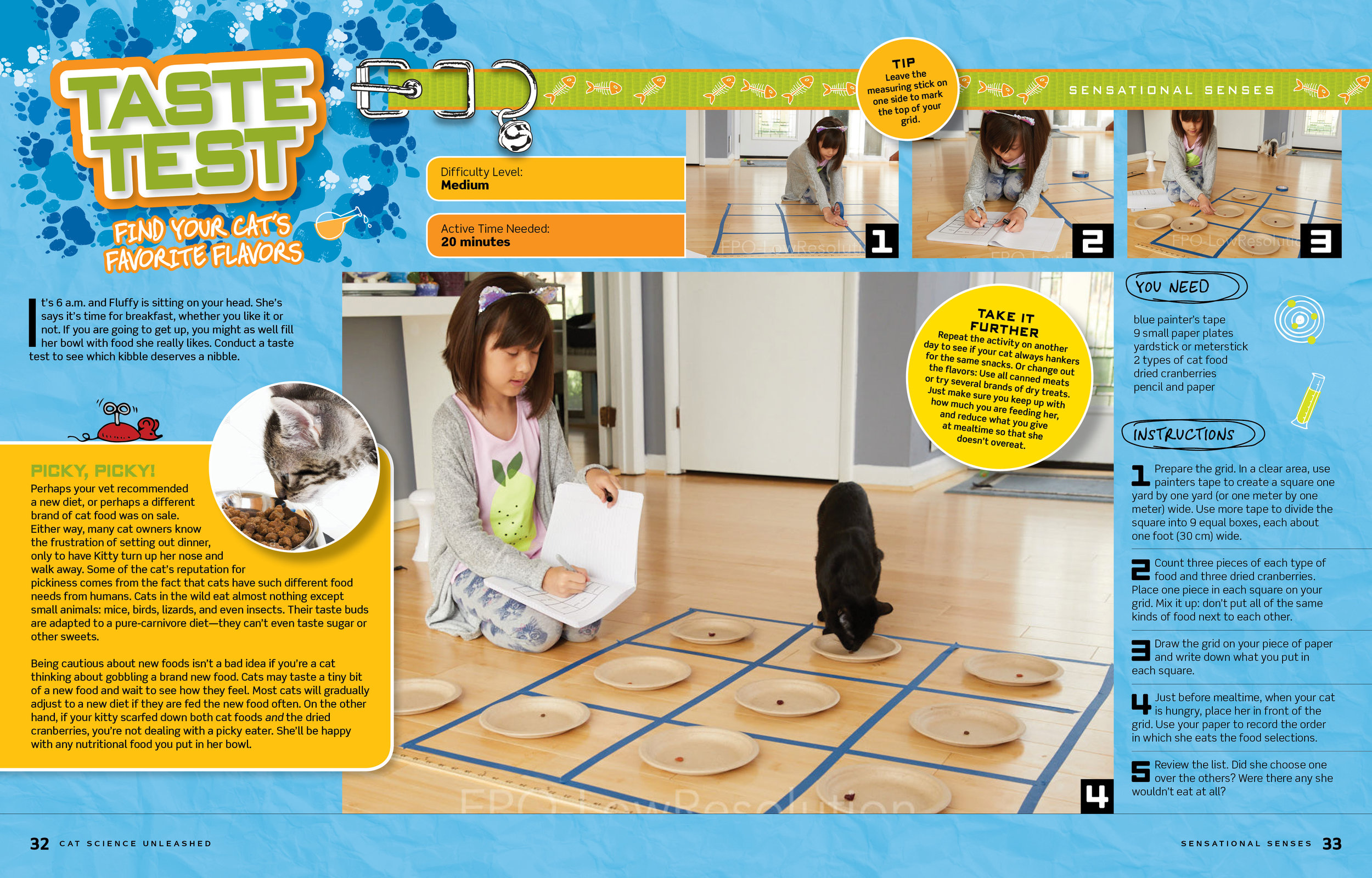
A companion to last year’s Dog Science Unleashed, Cat Science Unleashed is all about the cats, with a glimpse into cat biology and physiology, cat facts, and cat-tivities to engage the scientists in your life. Eleven kid scientists have tested their cats – you’ll meet them on a spread in the book – and invite readers to join them in discovering how cats see at night and how to discover their favorite smells. Activities include building a hiding spot for your cat’s toys (other than my living room floor? Have to get my kid on that) and making toys to test your kitty’s stalking prowess. There’s a glossary and list of further resources at the end A fun volume, and with a new science fair season on the horizon, this could be a fun way to give your kiddos’ cats the spotlight at school in addition to home.

Cat Breed Guide: A Complete Reference to Your Purr-Fect Best Friend, by Stephanie Warren Drimmer & Dr. Gary Weitzman, DVM, (Sept. 2019, National Geographic Kids), $19.99, ISBN: 978-1-4263-3439-9-

Ages 8+

This is a compact, thorough desk reference to cats, perfect for an animal lover, cat fan, and anyone either writing a report about felines or researching a new pet. The guide provides a look at feline history, with a cat family tree, a history of cats and how domesticated cats became household constants, even cat-related superstitions and folktales. There are profiles on more than 60 cat breeds, organized by short hair and long hair breeds, and each profile offers a quick “cat stats” box that provides notes on country of origin, size, coat, grooming, and “catitude”. There are gorgeous photos, fun facts, and general adorableness throughout, plus a section on cat-related careers, a glossary, and further resources. I’m always trying to keep my domestic animals/pets books stocked, so this one will be a nice add to my shelves.


Dog Breed Guide: A Complete Reference to Your Best Friend Fur-Ever, by TJ Reser & Dr. Gary Weitzman, DVM, (Sept. 2019, National Geographic Kids), $19.99, ISBN: 978-1-4263-3445-0

Ages 8+

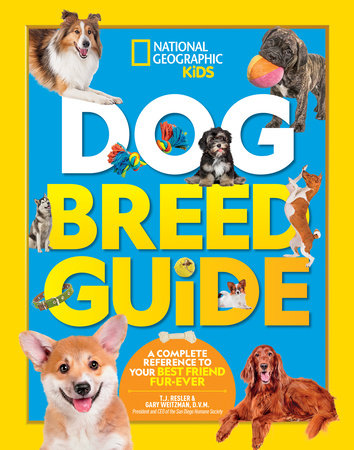
A companion desk reference to the Cat Breed Guide, Dr. Weitzman and TJ Reser team up to give readers a comprehensive guide to canines, from their wolfish origins to today’s modern breeds. Organized into 10 sections, dog profiles include full-color, squeal-worthy photos and stats-at-a-glance: country of origin, height, weight, coat, grooming, exercise needs, and K-9 qualities. There are sections on show dogs, canine senses, and how to talk to your dog, and a section on adopting and training a puppy. There’s a glossary and more resources.

Together, the Dog and Cat Breed Guides provide a handy reference for pet and animal lovers.


Little Kids First Big Book of Pets, by Catherine D. Hughes, (July 2019, National Geographic Kids), $14.99, ISBN: 978-1-4263-3470-2

Ages 4-8

I love the NatGeo Kids Little Kids First Big Book series! There are 17 books in the series now, and they’re great for pre-readers to look through, while emerging readers can more confidently navigate the pages. Words are bold, the pictures are big and bright, and there’s tons of fun facts, quizzes, and info to be found. The First Big Book of Pets is all about our favorite companions, from dogs and cats to birds, reptiles, fish, mice… you name it. Interactive questions throughout the book prompt discussion, games at the end of every chapter help reinforce concepts and give librarians like me an excuse to have fun, pet-related programming, and fact boxes give kids info at-a-glance about different pets. If you know a kiddo who wants a pet, but isn’t quite decided on what pet to get, hand them this guide – it’s geared toward educating kids about different pets’ needs, and our responsibilities to animals once we adopt them. A section for parents includes a recipe for baking dog biscuits, pet jokes and tips and ideas to engage kids about pets. There’s a glossary and list of additional resources. The Little Kids First Big Books are really popular with my library kids, so this one is another win for my shelves.

Posted in Middle Grade, Non-Fiction, Non-fiction, Teen, Tween Reads

Monstrous brings the science of monsters to you

Monstrous: The Lore, Gore, and Science Behind Your Favorite Monsters, by Carlyn Beccia, (Sept. 2019, Carolrhoda Books), $19.99, ISBN: 978-1-5124-4916-7

Ages 10+

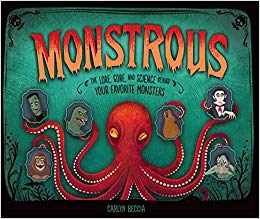
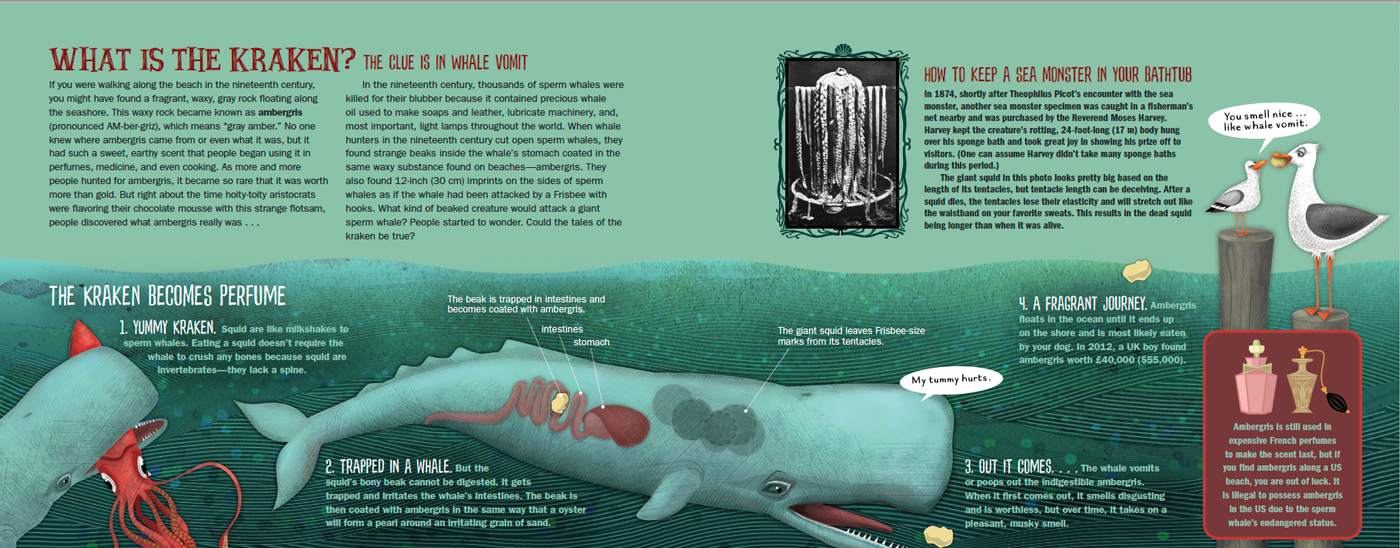
Okay, this is one of the best nonfiction reads I’ve read this summer. Eight movie monsters come together with witty writing, solid science and history, pop culture and myth, and amazing artwork to bring readers the “Science of the Monstrous”. Talk about electricity with Frankenstein’s Monster; whether or not science can make us immortal with Dracula (also, a spirited discussion on sparkly vampires); look at the zombie brain and pack a zombie preparedness kit while reading about zombie viruses; learn about math and whether or not you’re stronger than a dung beetle with King Kong; learn how to avoid – or, failing that, survive – a werewolf attack and read about the science behind the legend of werewolves; check out the ocean zones to figure out where the kraken dwells (and learn whether or not you’re about to be eaten by a giant octopus); talk evolution with Bigfoot while you scan a map of the US to see where your best chance of spotting him is; and, last but NEVER least, find out what kind of dinosaur Godzilla, King of All Monsters, is (hint: the awesome kind).

That’s the short of it. There is so much great stuff in here, I’d be here all day long if I tried to gush about how much I loved this book. I chuckled and snickered out loud behind the reference desk reading it, which brought some of my Library Kids over (the section on Why You Should Never Stress Your Mom Out made them laugh, which garnered a librarian look over the glasses from me). Everything in here is just pure gold, from the timelines like “The Monstrous History of Electricity”, where you learn that Thomas Edison used electricity on dolls to experiment with recorded sound (SO CREEPY), and a real list of radioactive creatures, like the wolves of Chernobyl and the cows of Fukushima. Carlyn Beccia’s writing is informative and whip-crack smart and funny – if I had a book like Monstrous available to me when I was in the middle grades, I’d probably be making freaky dolls talk to people in a lab today. Instead, I’ll figure out how to hold a program to let my Library Kids do it.

My Library Kids love the grossest history and science stuff out there, which I challenge myself to find on a regular basis; one of their favorites is Carlyn Beccia’s They Lost Their Heads!, along with Georgia Bragg’s How They Croaked and How They Choked, so I predict this book will disappear shortly after I say, “Hey, guys! Look what I’ve—“.

Long story short, Monstrous is a guaranteed win for your science collections, your STEM collections, and for your horror/monster/burgeoning goth fans. Check out author Carlyn Beccia’s webpage for more about her books, her art, and her social media links. Monstrous has a starred review from Kirkus.

Posted in Middle Grade, Non-Fiction, Non-fiction, Tween Reads

Learn about these Awesome Achievers in Technology!

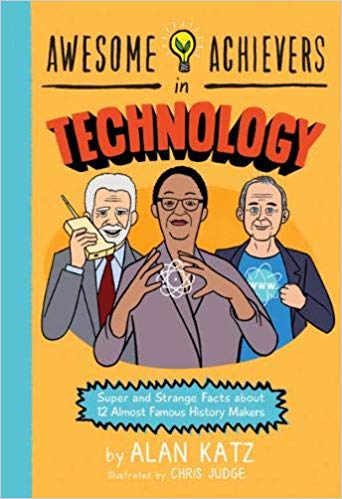
Awesome Achievers in Technology, by Alan Katz/Illustrated by Chris Judge, (Aug. 2019, Running Press), $11.99, ISBN: 9780762463367

Ages 8-12

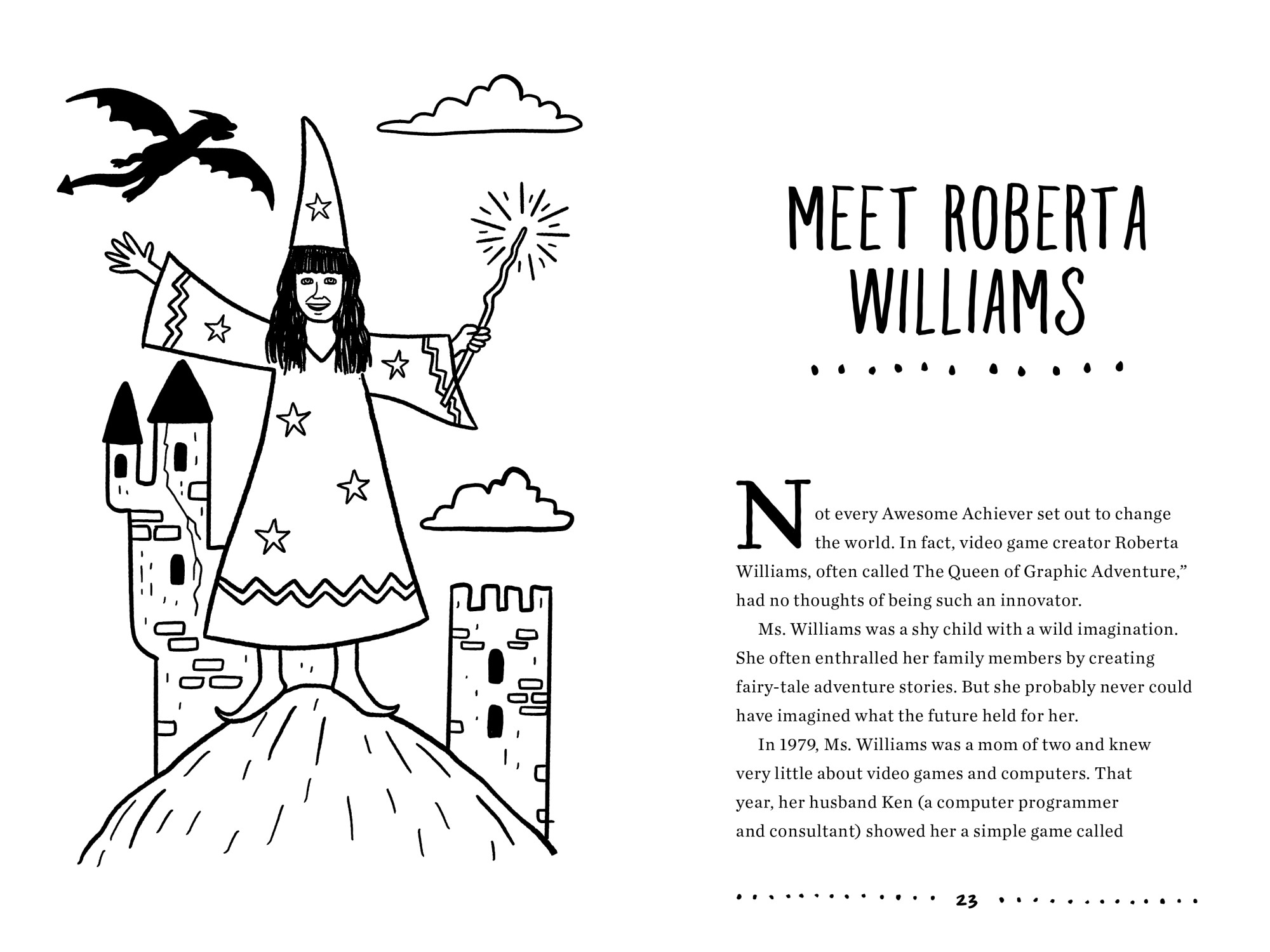
Kids have heard of the big names in Technology: Steve Jobs, Bill Gates, and, lord knows, Markus Persson (also known as Notch; Minecraft’s creator). But have they heard of Sir Tim Berners-Lee, the particle physicist who invented the World Wide Web as a way to share information with other scientists? Or Marie Van Brittan Brown, the nurse from Queens who devised the first closed circuit TV system, in conjunction with her engineer husband? Awesome Achievers in Technology is a series of short bios on some of the lesser-heralded names in technology. The book is part biography compilation, part wacky facts and silly stories, and a sprinkling of dad jokes. There are 12 profiles and 13 biographies – Adam Cheyer and Dag Kittlaus, the developers who created Siri, are included together – with black and white illustrations throughout. There are fun asides, including a “Get the couch potato back where he belongs” maze, remote control pop quiz, and wacky poems and stories from Katz’s memories.

All in all, a fun addition to biography shelves, and a good way to introduce kids to even more figures in STEM history. Awesome Achievers is going to be an ongoing series, with Awesome Achievers in Science hitting shelves on the same day as Awesome Achievers in Technology.

Posted in Middle Grade, Non-Fiction, Non-fiction, Tween Reads

Ocean: Secrets of the Deep is STEM fun!

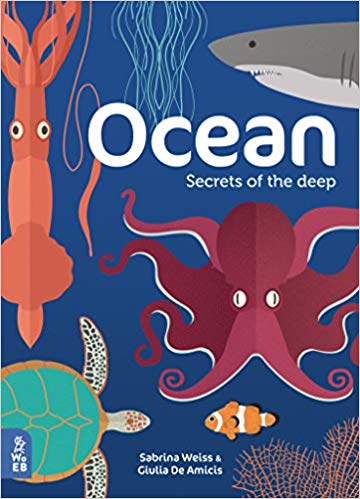
Ocean: Secrets of the Deep, by Sabrina Weiss/Illustrated by Giulia De Amicis, (April 2019, What on Earth Books), $19.99, ISBN: 97-1-9999680-7-6

Ages 7-12

We’re heading to Florida on the first road trip we’ve had in ages, so I’m all over the beachy reading right now. My little guy is excited, because his grandpa lives right by the ocean, so we’ve been enjoying this book immensely.

Ocean: Secrets of the Deep is loaded with facts and figures about the underwater world, and I am in love with the bright, bold illustrations and infographics! The information is presented in bite-size chunks that kids can easily enjoy and digest, and the minimailst artwork is bold and gorgeous. Not just a fact book, there is info about myths and legends (including one of my faves, the Kraken); sections on each of the ocean’s zones, with numbered renderings of each form of life living in each zone; animals who work together in the deep; animal sizes and sounds, and migration patterns. There are sections on environmental concerns and challenges, including overfishing, pollution, and climate change, and a call to action that encourages and empowers kids to act. A glossary and index complete this beautiful volume.

Natural history and environmental studies units would benefit from adding this book to shelves, and you can easily use Ocean in your library STEM programming. When we had our Discovery Club at my library, we did a unit on the ocean, and had the kids create their own ocean zones display on a wall in our meeting room. Print out pictures of different fish featured in Ocean, and invite the kids to color and stick their own marine life to the zones in your library or classroom! It’s a great multi-week project, if you want to spend time creating the monochromatic zones, then working on the marine life.

Ocean is absolute fun and absolutely gorgeous.

Posted in Early Reader, Intermediate, Middle Grade, Non-fiction, Non-Fiction, Non-Fiction, Preschool Reads

Read, Learn & Create: The Nature Craft Book is great for kids!

Hi, all! I know my posting schedule has been off the last several weeks, and I ask you all to bear with me. I’ve received a promotion and am getting into the swing of things at my new library (actually one of my first; I went back to my home away from home in Corona). I’ve been reading and furiously scribbling notes, though! More on the new digs shortly. For now, it’s back to my reviews!

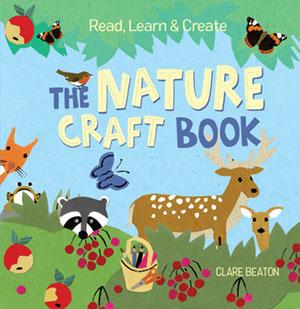
The Nature Craft Book, by Clare Beaton, (May 2019, Charlesbridge), $17.99, ISBN: 978-1-58089-843-0

Ages 3=

I LOVE nature crafts, and I love easy nature crafts. My first grader has a real love for wandering the neighborhood, collecting various leaves, snail shells, sticks, rocks… anything that strikes his fancy, and we’ve gone on some great nature walks in our neighborhood and local parks. I even brought home acorns from Rochester, NY for him when I was there for a library conference. He loved them!

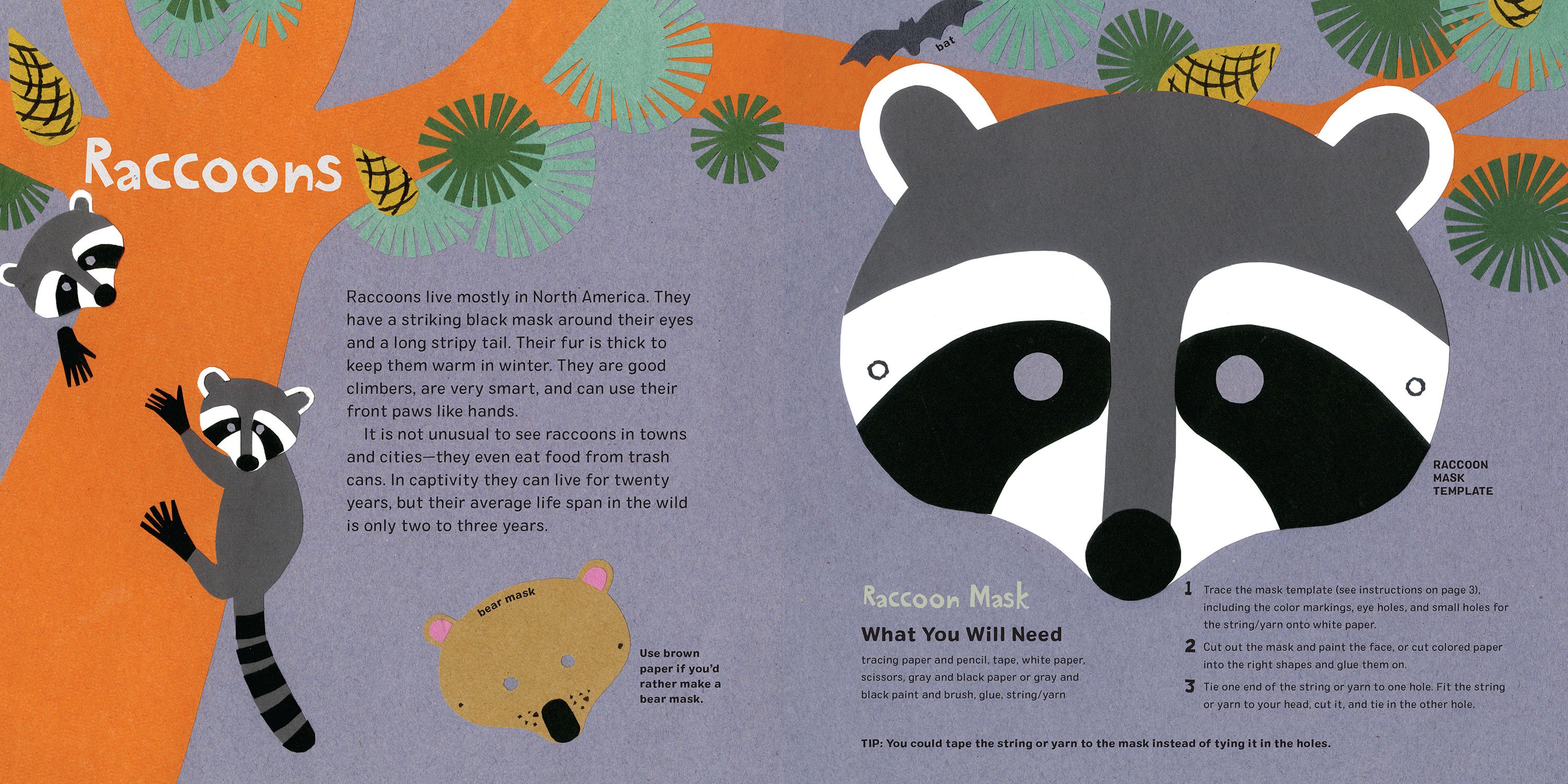
The Nature Craft Book is part of Charlesbridge’s Read, Learn & Create series (there’s an Ocean Craft Book, too!) is is loaded with ideas, templates, and facts for you and your kids to enjoy. Every craft is created with a respect for nature and our environment; a note at the beginning mentions that “it’s hard for some plants and creatures to survive where factories or farms have replaced wild places”, and encourages kids to “attract wildlife” by planting wildlife-friendly plants and flowers, putting water out for birds, and keeping nature journals. It fosters a real love and respect for our world. Activities include different bird feeders, toilet paper tube owls, leaf printing, animal finger puppets. The crafts give us a chance to reuse household objects like yogurt containers, hangers, and tissue boxes, and to create with found objects like pine combs and twigs. Even little crafters can get in on the fun, coloring and creating simple, enjoyable art.  Facts about birds, freshwater wildlife, raccoons, and other wildlife give readers a quick, overall idea of different animals and plants. The crafts are easy and can be done on a budget, which makes this spot-on for me at home or at work. My kiddo and I have already created a couple of craft projects from here and are planning winter bird feeders for our backyard. The collage artwork is adorable and labeled to introduce kids to different kinds of animals, trees, and leaves.

Grab this series for your shelves. I know I will.

Posted in Intermediate, Middle Grade, Non-fiction, Non-Fiction

More Weird But True Facts for all those barbecue conversations!

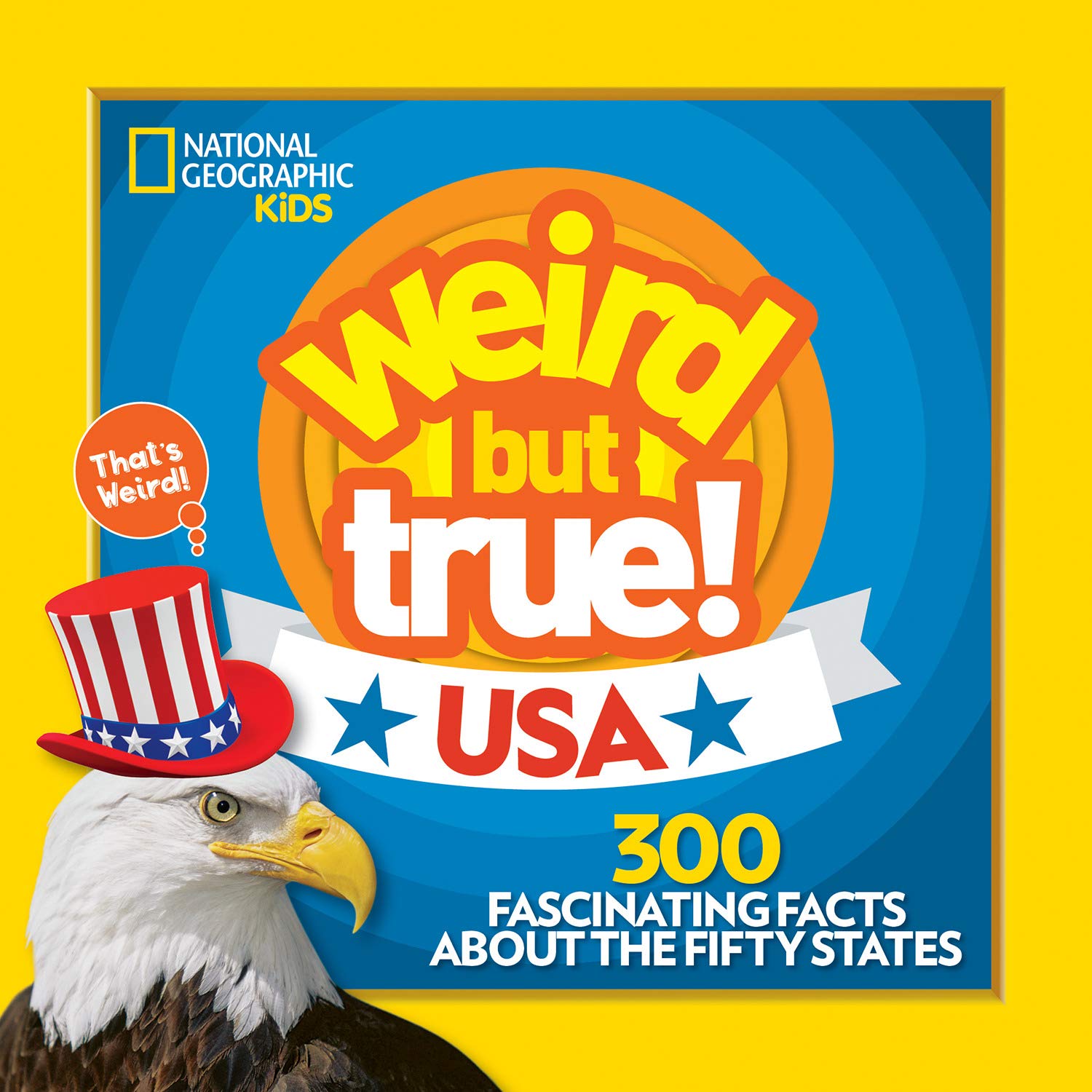
Weird But True! USA: 300 Fascinating Facts About the 50 States, by National Geographic Kids, (March 2019, National Geographic Kids), $8.99, ISBN: 9781426333712

Ages 7-12

You’ve got a lot of barbecues to hit this summer. Family, friends, someone’s having a BBQ, somewhere, and you’re invited. What better way to keep a conversation going than to bust out some weird – but true! – facts about the US of A? NatGeo Kids has kids (and grownups, too: you know you love these books) covered with their latest digest-sized Weird But True facts, easily carried in your favorite tote.

Dazzle friends and family with goodies about our states! Did you know that the average driver in New York City spends more than 100 hours a year looking for a parking spot? (I did, just ask my husband.) Or the Pledge of Allegiance was written for a magazine to help sell subscriptions? How about one of my favorites: the Washington National Cathedral has a Darth Vader gargoyle? Seriously, this this knowledge has made my day.

The NatGeo books just get better. Where do they find all these wacky facts? I hope they keep doing whatever they’re doing, because I love them, my own kids love them, and the kids in my library can’t get enough of them. Add these to your NatGeo collections and just sit at the reference desk and wait for them to come at you with their favorite facts.

Posted in Middle Grade, Non-fiction, Tween Reads

STEAM into Summer!

Summer Reading is the best – and craziest – time for librarians. We’re planning intense levels of programming, ordering books and putting lists together like mad, and just waiting for that last day of school, when the kids will storm the library like… well, let the Avengers tell you.

It’s real.

NatGeo Kids was kind enough to send some books my way to check out and talk up for my STEM programs this summer. Let’s take a look!


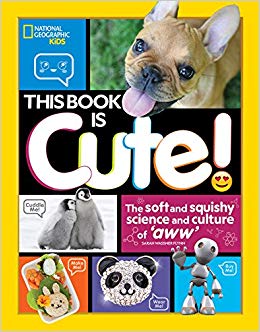
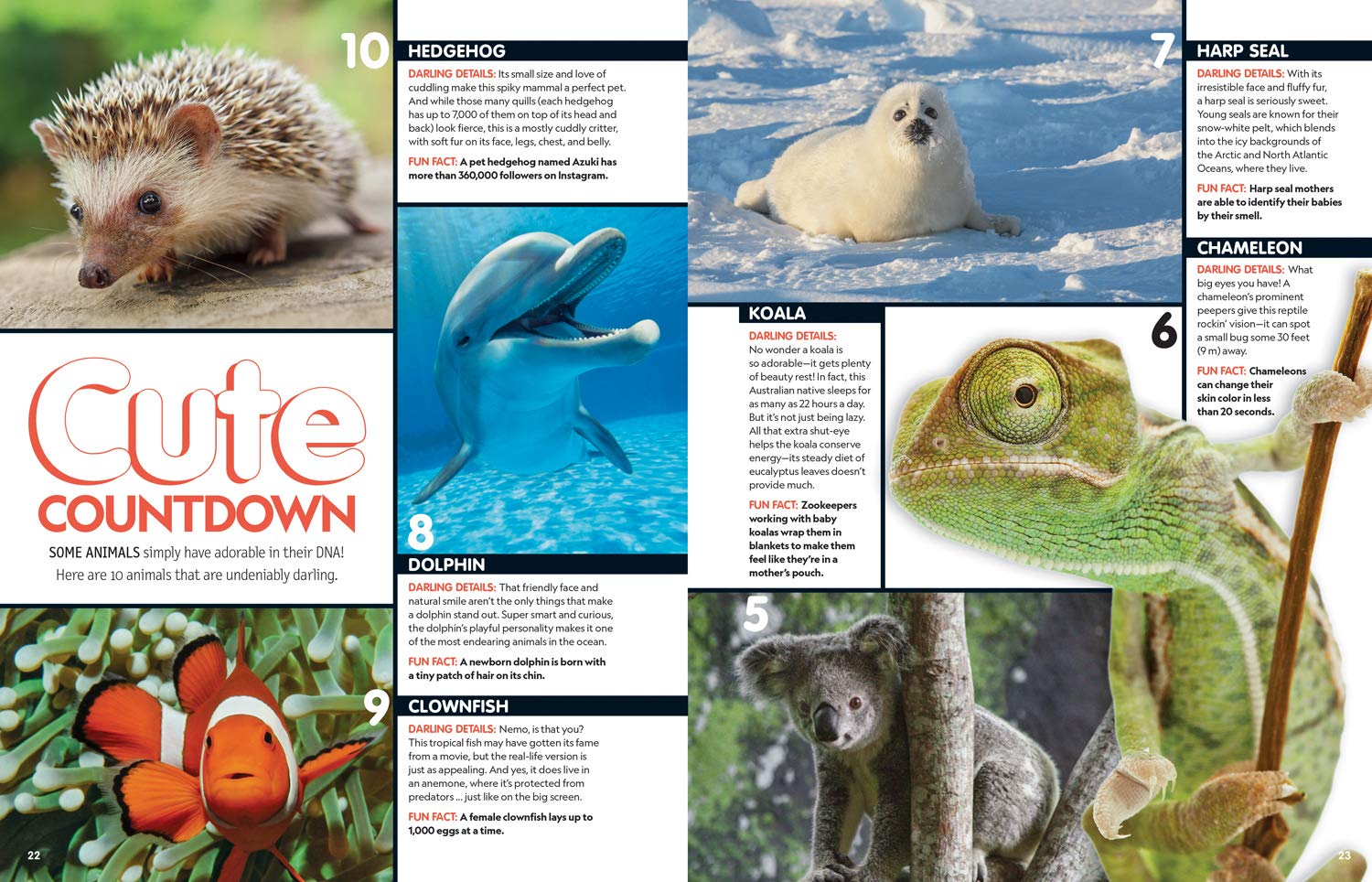
This Book is Cute! The Soft and Squishy Science and Culture of Aww, by Sarah Wassner Flynn,
(March 2019, National Geographic Kids), $12.99, ISBN: 9781426332944
Ages 5-12

Can you believe there’s a science to cuteness? Of course NatGeo Kids would get to the bottom of this! Cute foods! (More attractive to eat!) Cute (human and animal) babies! (Trigger emotions in us that make us protect and care for them!) Cute clothes and toys! (We can’t get enough of ’em!) This Book is Cute is 112 pages of high-pitched squealing, science, and lists of cute animals, cutest jobs ever (I would like to apply for the Cat Cuddler spot, please), even appliances. Put up a bulletin board and see how many cute animals or food your kids can identify, or test their Cute IQ using the quiz in the book. This Book is Cute! is absolutely adorable; kids will go crazy for it and so will you.

Ages 8-12
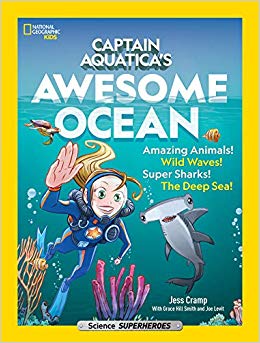
A companion to Dr. E’s Super Stellar Solar System and Dirtmeister’s Nitty Gritty Planet Earth, Awesome Ocean takes readers underwater exploring with cartoon superhero Captain Aquatica and her hammerhead shark sidekick, Finn. Shark researcher and marine conservationist Jess Cramp is the real-life version of Captain Aquatica, and leads readers through chapters on the ocean; waves, tides, and water; sharks and marine life; underwater technology; ecosystem engineering, and the critical importance of conservation. Moving back and forth between a comic book adventure and factual explanation, the book is loaded with incredible photos, fact boxes, and easy experiments that kids and families can do at home. There are scientist profiles – I love these, because they introduce readers to even more scientists than they’ll meet in our biography aisles – a glossary, index, and book and website resources for more exploration. NatGeo books are amazing because they always make sure to empower kids to make the world a better place, providing ways to get involved and start making changes. Their photos are consistently fantastic, and I love having as many of their books as possible in my library. If a parent or kid comes in looking for nonfiction about the natural world or animal book suggestions, I bring them to NatGeo books first. Display this set together, if you have them, and direct your readers to a series that looks at the big picture: earth, ocean, and space.
Luna: The Science and Stories of Our Moon, by David A. Aguilar,
(June 2019, National Geographic Kids), $17.99, ISBN: 9781426333224
Ages 8-12
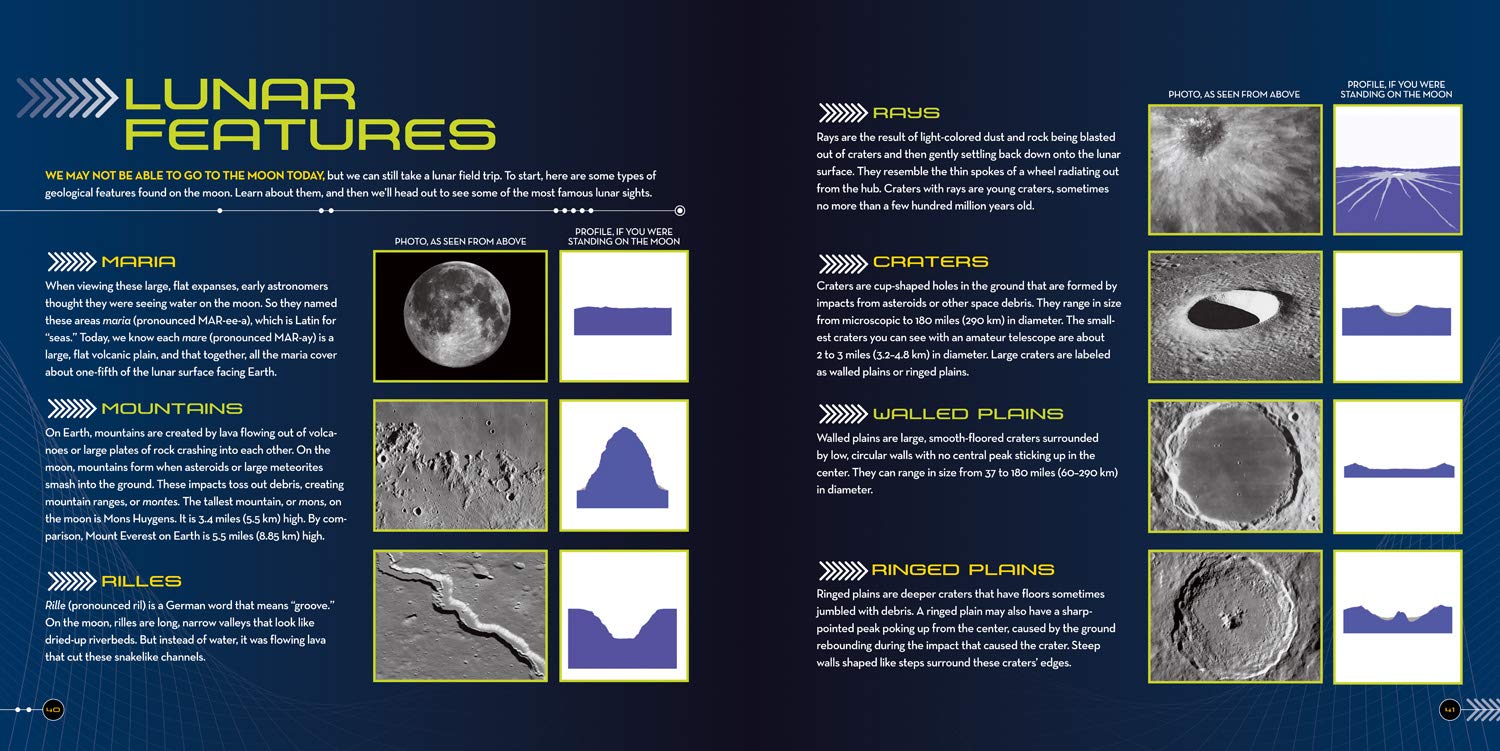
NatGeo wouldn’t let a Summer Reading theme go by without a book for us to give to the kiddos! Luna is all about our friendly satellite, the Moon. It’s a compact volume, at 64 pages, packed with all the info a middle grade space enthusiast could want. There are beautiful photos, callout quotes and facts, and full-color diagrams, and thought-provoking chapters cover topics including moon myths and hoaxes; the famous “dark side” of the moon; how our moon stacks up against other moons; lunar phases, and – naturally! – the 1969 lunar landing. There’s a fun make the moon activity (get your old t-shirts on; this one involves Plaster of Paris), a viewing guide, and tips on drawing the moon. There’s an index and a list of additional resources. This is one of the best middle grade volumes on the moon that I’ve read since Elaine Scott’s Our Moon (2015), and a solid add to your 520s. Mine are always in high demand (along with my dinosaurs), and with the outer space theme for this year’s Summer Reading, I imagine I’ll need a second copy of my own to use for programming.
Thanks again to NatGeo for always keeping nonfiction interesting and fun!
Posted in Middle Grade, Non-Fiction, Non-fiction, Teen, Tween Reads

20 Recipes Kids Should Know is delicious!

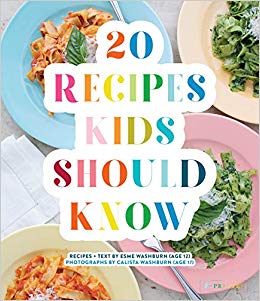
20 Recipes Kids Should Know, by Esme Washburn/Photos by Calista Washburn, (April 2019, Prestel), $16.95, ISBN: 9783791385075

Ages 8+

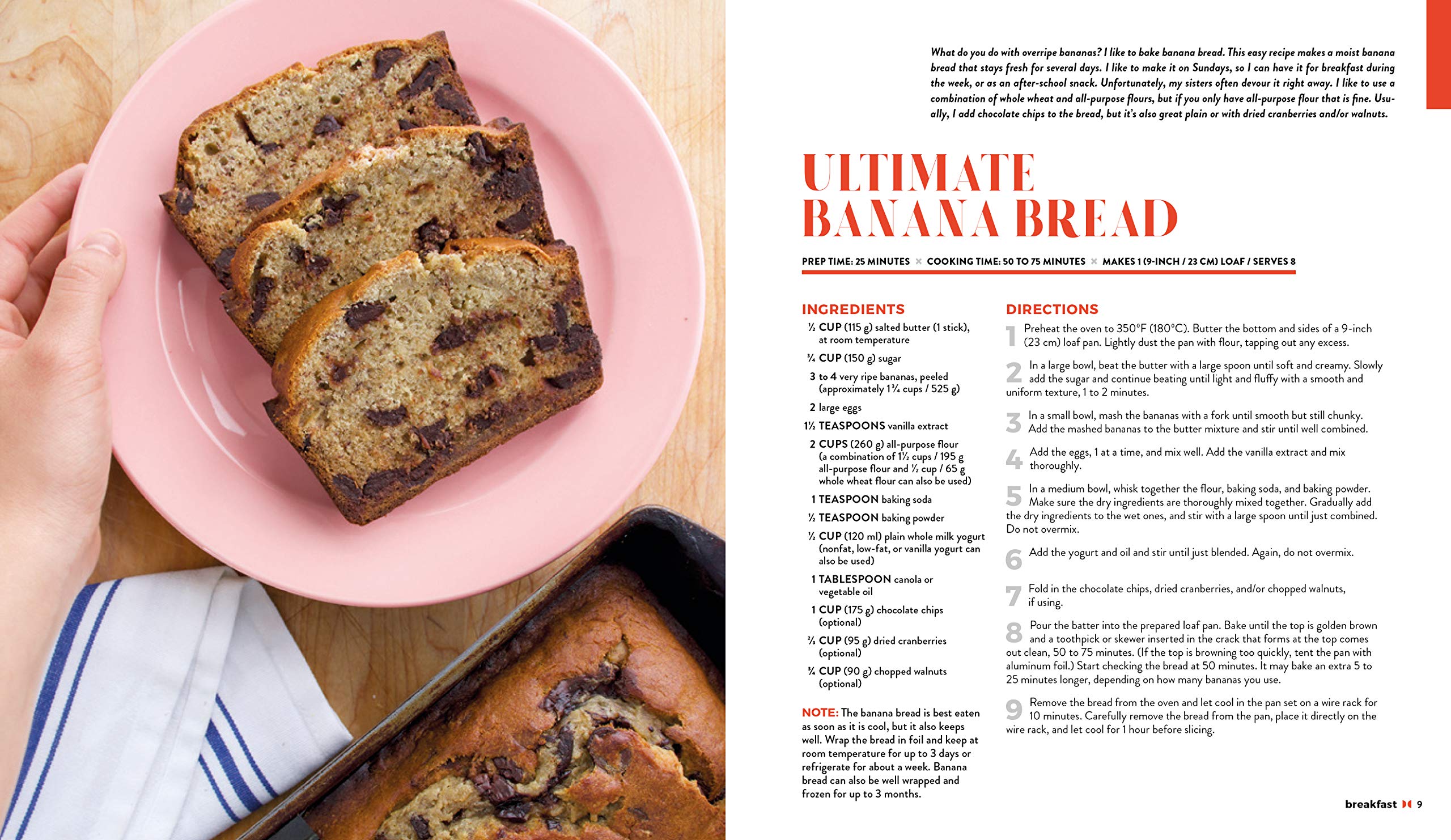
Esme Washburn is a 12-year-old cooking enthusiast. Her sister Calista is a 17-year-old photographer. Together, the two sisters have come up with a delicious book of easy-to-make recipes for kids. These 20 recipes provide a nice variety for a burgeoning chef: there’s a choice of breakfasts, lunches, dinners (called Mains here), appetizers, sides, and desserts, plus two extra recipes for “Back to Basics Bread” and “Popovers That Pop”. There’s something for everyone here, from meat-based dishes to vegetarian fare. Ingredients are easily attained at your local grocery store, and the directions are numbered, step-by-step, and written out in short, simple sentences that allow readers to have the book propped open, ready to follow along with a glance as needed.

The photos are just beautiful. I’m assuming that Esme Washburn, as the cook, plates her food for photos, and does a scrumptious job; Calista Washburn creates lovely foodscapes on pastel dishes, with culinary flourishes like dishcloths, measuring spoons, and fresh foods to add to the visual appeal. The Quintessential Grilled Cheese Sandwich is begging me to take a bite out of it, with its crispy, textured bread and melted cheese sitting on a plate; the Creamiest Mac and Cheese would be the perfect accompaniment to it, with gooey, melty cheese peeking through the wagon wheel pasta. (Yes, I’m a cheese fanatic.)

An introduction provides the important stuff to go over: weights and measurements, safety tips, guidelines for prep and cleanup, and a glossary/cooking techniques section are all here to help get new cooks up and running. Esme writes an introduction before each recipe.

20 Recipes Kids Should Know is a nice addition to a young cook’s bookshelf. There’s no firm minimum age noted here, so I’d say that, as a parent or caregiver, you know when your kids are ready – and require guidance. I’ve got a 15-year-old who I still keep an ear out for, and I’ve got a 7-year-old who I stand at the stove with while he cooks up his own scrambled eggs. (My oldest is 20 and has a pretty firm hand on cooking, but he’s been cooking with me since he was 3.) Bottom line? Use your judgement and err on the side of caution, but encourage them to try some cooking with the Washburn sisters and lend a hand. It’s science!