Posted in Fantasy, Fiction, Graphic Novels, Middle Grade

Lint Boy – a graphic tale

Lint Boy, by Aileen Leitjen, (June 2017, Clarion Books), $16.99, ISBN: 9780544528604

Recommended for readers 8-12

A little lint boy is born in the back of a dryer. Shortly after, a lint bear joins him. The two are happy, living in the warmth of the dryer, when two scary hands reach in and snatch out Lint Bear! Lint Boy goes on an adventure to save his brother, which puts him in the hands of a mean old woman, Mrs. Pinchnsqueeze; formerly a young girl named Tortura, who has tortured and ruined dolls since she was a child. Lint Boy manages to rally the other imprisoned toys and fight for their freedom.

Told with washed-out colors and nonlinear storytelling, Lint Boy is a rousing tale of friendship. Lint Boy is willing to risk venturing into a scary, unknown world – and put himself at personal risk – to save his friend, to whom he refers to as his brother, Lint Bear. There are some scary moments for younger readers, particularly when readers see the hanging cages of imprisoned toys for the first time, and when readers witness Mrs. Pinchnsqueeze cutting up Lint Boy’s hair. He refuses to give up hope or give in to despair, and inspires his fellow prisoners to revolt and overthrow their tormentor.

Perfect for every reader who loves Neil Gaiman, Roald Dahl, and David Walliams, with its macabre-yet-adorable storytelling, Lint Boy is a good addition to graphic novel collections that enjoy a little dark fantasy. Booktalk this one with Coraline for extra fun.
Posted in Adventure, Fiction, Fiction, Middle Grade, Realistic Fiction, Tween Reads

Can our favorite Book Scavengers figure out The Unbreakable Code?

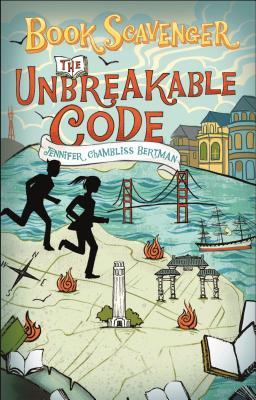
The Unbreakable Code (Book Scavenger #2), by Jennifer Chambliss Bertman, (April 2017, Henry Holt & Co. BYR), $16.99, ISBN: 9781627791168

Recommended for readers 8-12

The sequel to Book Scavenger (2015) continues the adventures of friends, code breakers, and bookworms Emily and James. Emily’s parents have put a hold on their state-hopping, giving Emily a feeling of permanence she missed terribly. She and James find themselves in the middle of another mystery when they notice their teacher, Mr. Quisling, acting strangely; they follow a trail of encrypted messages in Book Scavenger-laid Mark Twain books. The messages are an attempt to break a legendary, historic puzzle known as the Unbreakable Code, which leads to either a treasure or a curse. As mysterious and suspicious fires pop up around them, Emily and James are worried that Mr. Quisling is the arsonist – unless they can figure out who his mysterious Book Scavenger messenger is.

The Unbreakable Code is loaded with the adventure, mystery, and code-breaking fun that made the first book so enjoyable. There are mysteries within mysteries, and a real sense of urgency as the tweens try to get to the bottom of the arsonist on their trail. There’s a very good subplot about the history of Chinese immigrants during the California Gold Rush that shines a light on a part of history that doesn’t get as much discussion as it should. Ms. Chambliss also presents a very different Mr. Griswold, changed by the events in Book Scavenger. He’s withdrawn, hesitant, apprehensive; his buoyant style is toned down, and he surrounds himself with his assistant, Jack, and the company of dogs to guard him. Emily and James’ secondary mission is to nudge Mr. Griswold back to his former self.

A fun follow-up and a fun accompaniment to coding and spy programs. Introduce kids to coding with Book Scavenger and Gene Luen Yang’s Secret Coders! Kids can play their own game of Book Scavenger at the Book Scavenger website and sign up for the newsletter.

Posted in Animal Fiction, Fiction, Middle Grade, Tween Reads

Magical Realism meets middle grade: The Unicorn in the Barn

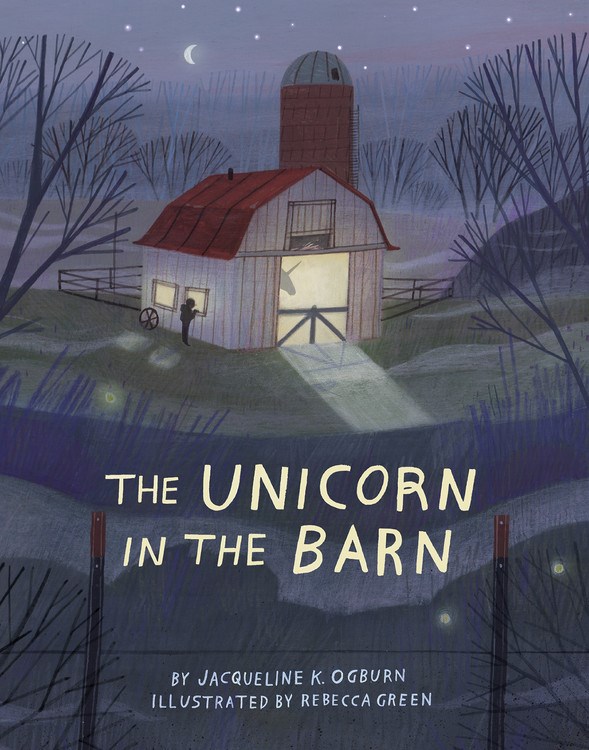
The Unicorn in the Barn, by Jacqueline Ogburn/Illustrated by Rebecca Green, (July 2017, HMH Books for Young Readers), $16.99, ISBN: 9780544761124

Recommended for ages 10-12

Eric Harper lives with his dad and his brother on a farm near Chinaberry Creek. His grandmother lived in the house near theirs, too, but she’s gone into a rest home and now, a veterinarian and her brusque daughter, Allegra, live there. When Eric spots a unicorn in the woods one night, he and Allegra become partners in caring for Moonpearl – the name they give the unicorn – and the twins she’s carrying. Dr. B is no ordinary vet – she takes care of everyone’s pets, sure, but she also has a gift for magical creatures, and they seem to know how to find her. Eric adores Moonpearl and tries to spend every moment he can with her, but he is also too aware of the magical healing properties that unicorns possess; the temptation to use Moonpearl’s magic to make things better for his friends and family is strong.

The Unicorn in the Barn is magical. It’s a beautifully told story of love and loss; of friendship and new life, of beginnings and endings. The black and white illustrations throughout are soft and add an extra dimension to the story. Eric is so earnest, so passionate about making life better for everyone and so in love with Moonpearl, that he often finds himself at odds with the somewhat bossy and bullish Allegra, who would rather keep her mother and Moonpearl to herself. The story is as much about the evolution of their friendship as it is about Eric’s journey through a critical point in his life. A beautiful middle grade work of magical realism. Booktalk with Me and Marvin Gardens to add some magic into your audience’s reading.

Posted in Animal Fiction, Fiction, Fiction, Graphic Novels, Middle Grade, Tween Reads

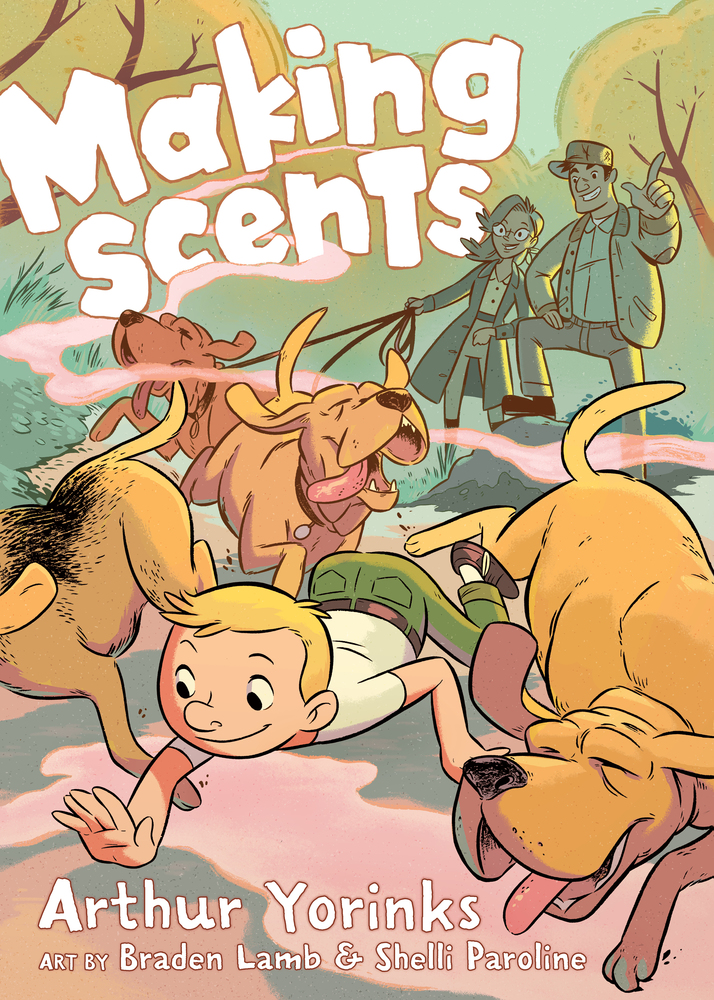
Arthur Yorinks’ Making Scents: A New Family Structure

Making Scents, by Arthur Yorinks/Illustrated by Braden Lamb and Shelli Paroline, (June 2017, :01 First Second), $15.99, ISBN: 9781596434523

Recommended for readers 8-12

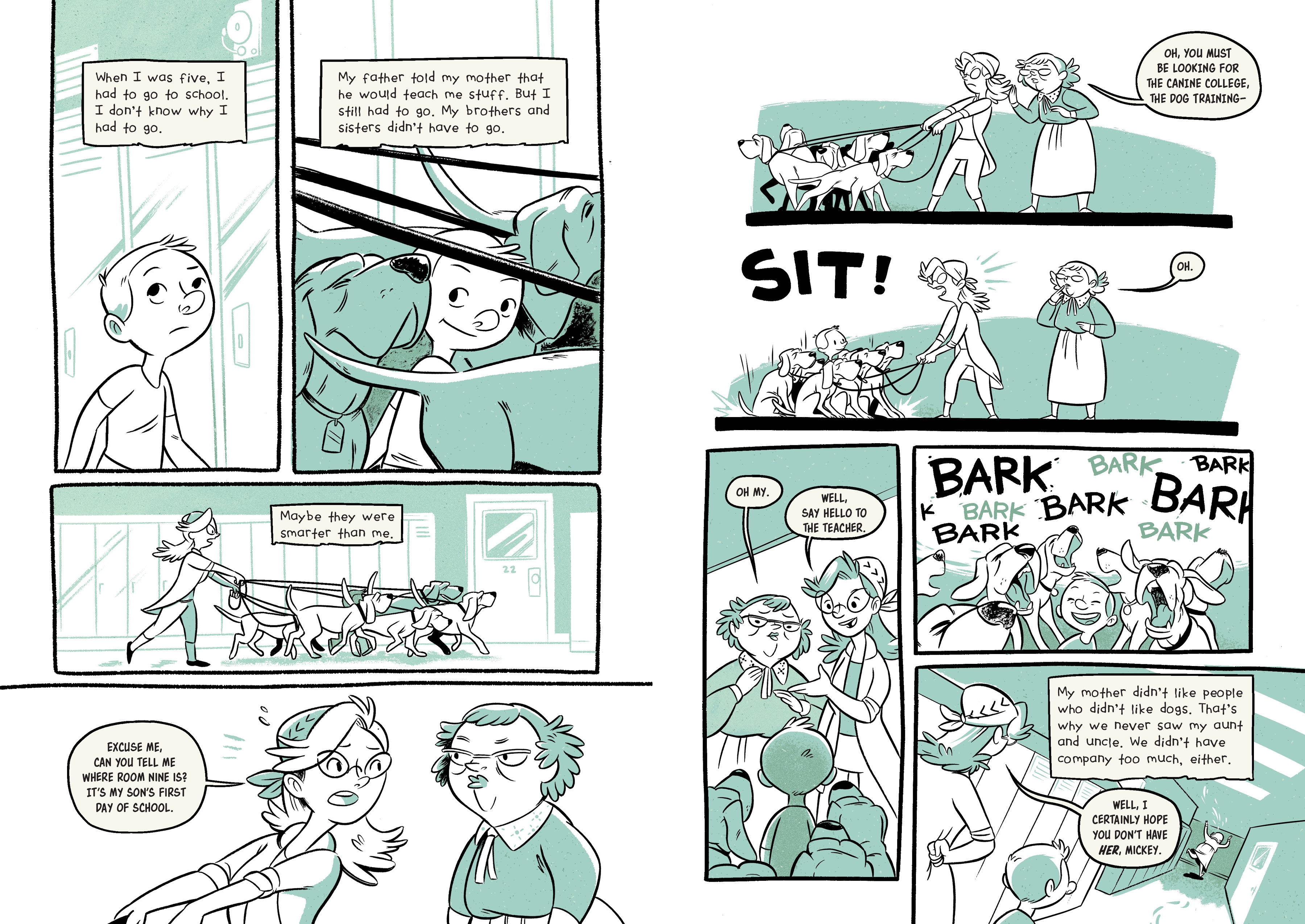
Mickey is a boy who’s been raised a little differently. His parents raised bloodhounds before he was born, and raised Mickey just like his “brothers and sisters”. Mickey doesn’t see anything different with his upbringing, even if other kids treat him like he’s weird. He wants to make his parents proud of him, so he’s working on developing his sense of smell, constantly sniffing and honing his senses. A tragedy strikes, and Mickey’s sent to live with his elderly aunt and uncle, who don’t like kids or dogs – but maybe Mickey can show them that he and his sniffer are more helpful than they realize.

This one was a wacky read. Making Scents reads like realistic fiction – it deals with grief and loss, extended families, and nontraditional families – but it does work on your suspension of disbelief. The opening scene, with baby Mickey being left in the woods for the dogs to find as a test/publicity gimmick sets the tone for the story: two dog-crazy grownups find themselves with a baby that they have no idea how to raise, but they do the best with what they’ve got. They love their human son as much as they do their canine sons and daughters, but I have to wonder what kind of parent-child relationship you can have if you see your child as equal to a pet that you “master”.

Regardless, Making Scents progresses to become a touching story of intergenerational relationships and family. Mickey, his mother’s older sister, and her husband have to create their own new family structure when an accident leaves Mickey orphaned. Once again, Mickey is thrust into a family that doesn’t know what to do with him, but this time around, he doesn’t have anyone or anything to take a social cue from; his aunt and uncle, like his parents, do their best with what they have and stumble along until Mickey’s abilities help reveal a potential health crisis.

Unexpected and sensitive, Making Scents is good for graphic novel collections that provide different perspectives.

Posted in Adventure, Fantasy, Fiction, Humor, Middle Grade

Magic, madness, and a cow-ostrich romance!

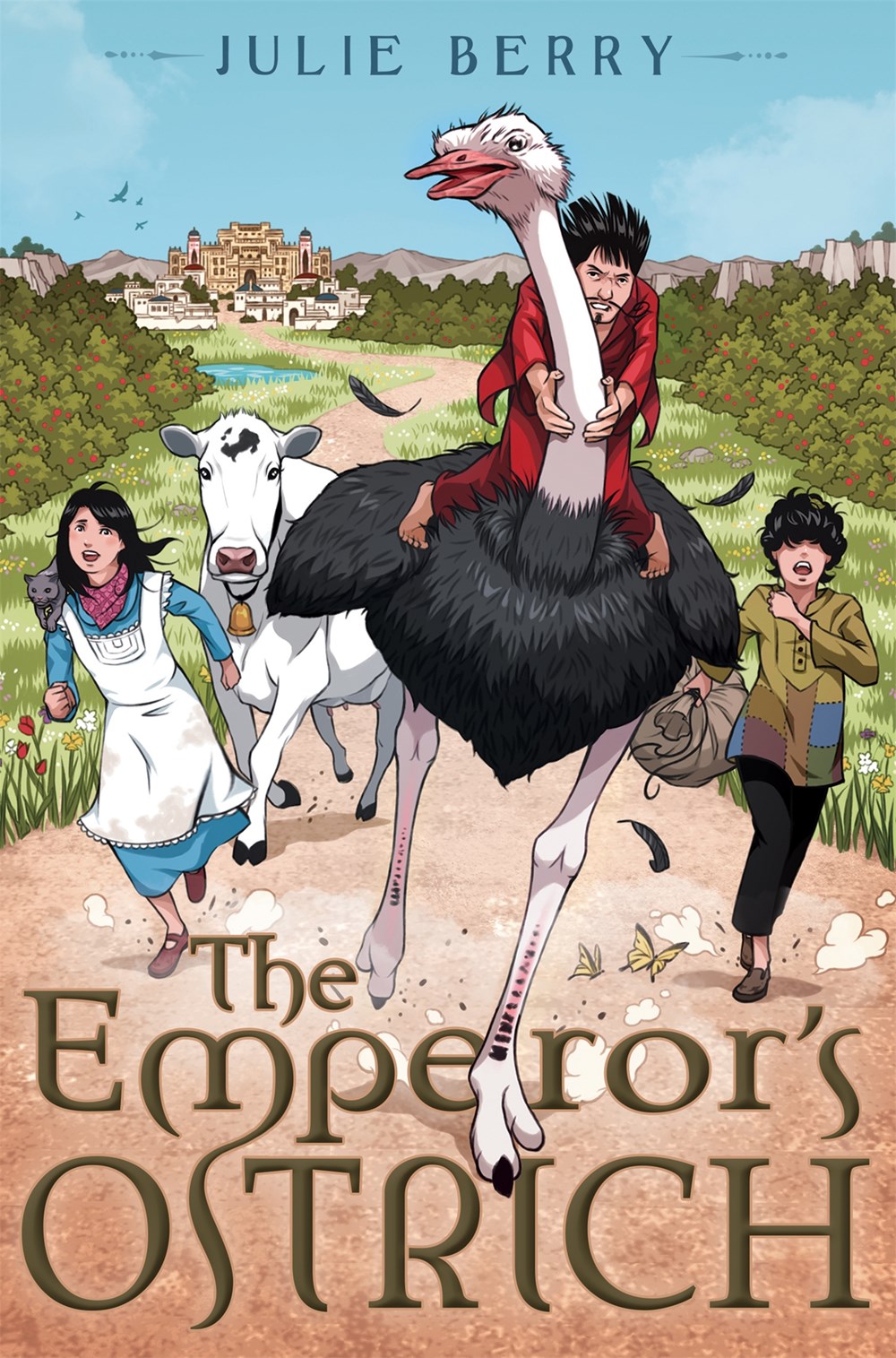
The Emperor’s Ostrich, by Julie Berry, (June 2017, Roaring Brook Press), $16.99, ISBN: 9781596439580

Recommended for readers 8-12

A zany fantasy romp with a dairy maid in search of her lost cow puts readers on the path to an adventure that will introduce them to a self-described romantic hero, a spoiled emperor on the run, and his ostrich, who forms a bond with the runaway cow. Begonia, the dairy maid, is a responsible young woman who helps her mother care for the family farm and her younger sister; when her cow, Alfalfa, meanders away, Begonia sets out to find her and ends up on a magical quest that will put the responsibility for saving the emperor and the kingdom squarely on her shoulders. Thank goodness she has help from Key, a wandering young man who describes himself as a romantic hero; and two magical beings, who oversee the adventure from a distance.

The story is a fun fantasy adventure with nods to magic, corruption, feminism, and commentary on overindulged wealth. Readers will enjoy the lovestruck cow and ostrich, the banter between Key and Begonia, and the host of characters they encounter on their adventure. Booktalk this with Lloyd Alexander’s fantasy novels: author Julie Berry calls The Emperor’s Ostrich her love letter to his books.

Julie Berry’s book, The Passion of Dolssa, is a 2017 Printz Honor title. The Emperor’s Ostrich received starred reviews from Booklist and School Library Journal.

Posted in Animal Fiction, Fiction, Fiction, Graphic Novels, Humor, Intermediate, Middle Grade, Tween Reads

Parenting ain’t easy for The Big Bad Fox

big-bad-foxThe Big Bad Fox, by Benjamin Renner, (June 2016, First Second), $15.99, ISBN: 9781626723313

Recommended for ages 7-12

The Fox really isn’t that big or that bad… at least, no one at the barnyard seems to think so. The chickens beat up on him every time he shows his face, and he’s really getting hungry! Together with the Wolf, the two predators hatch a plan: steal some eggs, wait for them to hatch, then eat the chicks while they’re still young and defenseless! Failproof, right? Sure: for the Wolf, anyway; he goads Fox into doing all the work.

The Fox manages to steal some eggs, and sits on them until they hatch, but the unexpected happens when the chicks think he’s their Mommy – and he ends up falling in love with the little ones! Meanwhile, back at the barnyard, Momma Hen is sick and tired of the lazy barnyard dog who’s supposed to be protecting them, so she gathers a group of hens and forms a Fox Extermination Club!

big-bad-fox_1big-bad-fox_2

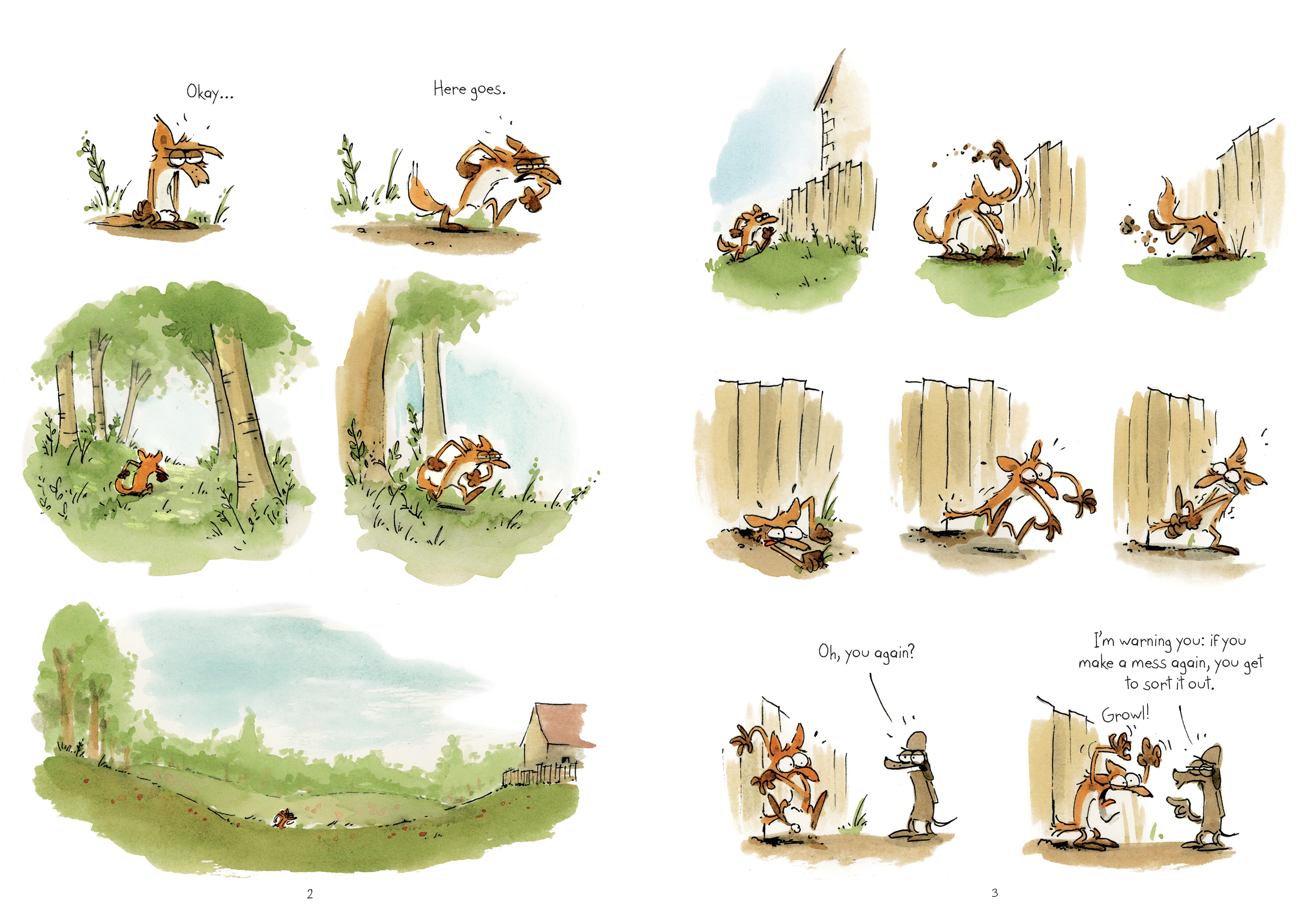
This is a laugh-out loud, adorable story for intermediate and middle grade readers. Parents will get a kick out of this one, too – Fox learns some real lessons in parenting here: he doesn’t get much sleep, and they’re all over him all the time. We see Fox grow as a parent and a character – he never really had it in him to be a bad guy, after all. This book is straight out of Foghorn Leghorn-era Looney Tunes, and I loved every second of reading it. Benjamin Renner’s watercolors are adorable, giving the characters a soft, cartoony look, with giant google eyes. The wolf is dour and narrrow-eyed, but never too harsh for little ones.

big-bad-fox_3big-bad-fox_4

This one’s great for your humor loving readers, your animal fiction fans, and your graphic novel fans. A definite add to the shelves.

Posted in Fiction, Middle Grade, Realistic Fiction, Tween Reads

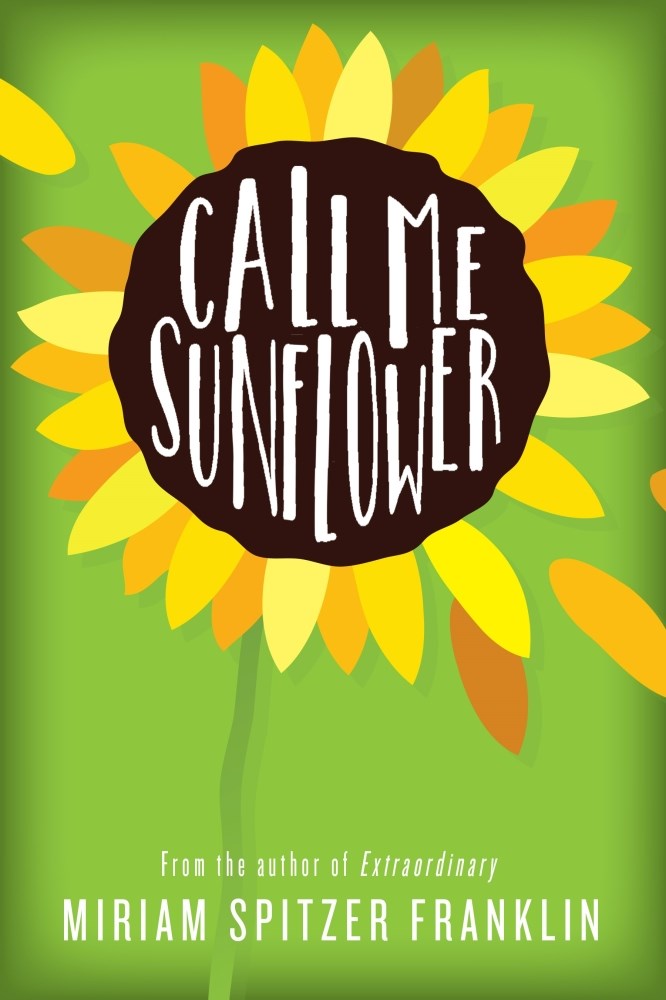
Call Me Sunflower explores alternative families

Call Me Sunflower, by Miriam Spitzer Franklin, (May 2017, Sky Pony Press), $15.99, ISBN: 9781510711792

Recommended for ages 9-13

Sunflower Beringer can’t stand her first name, so she has everyone call her Sunny. And she really can’t stand that her mother uprooted her and her sister, and left their dad, Scott, back in New Jersey to run his bookstore while she attends grad school in North Carolina. Now they’re living with a grandmother they barely know, and she’s the new kid in school. Ugh. Sunny has to do something, so she creates Sunny Beringer’s Totally Awesome Plan for Romance”: a can’t-miss list of ways to bring her mom and Scott back together, including making playlists of Scott’s favorite songs and getting her mother a makeover. While she works on a family album that will remind Scott and Mom of when they were in love all over again, though, she discovers a picture that changes everything. A strong subplot involving animal rights activism and Sunny’s relationship with her grandmother really gives Call Me Sunflower depth.

I’m becoming a Miriam Spitzer Franklin fangirl. I loved Extraordinary (2015); in Sunny, I found many similiaries to Pansy, Extraordinary‘s protagonist. Both stories are realistic fiction, told in the first person, about girls dealing with big life changes. They have complicated friendships and they have both There are humorous moments, and each has a unique voice, a unique point of view; Ms. Franklin captures the frustrations, the fears, and the unique experience of being a tween in a relatable voice that readers will gravitate to. I love that she created an alternative family structure with an adoptive family outside the traditional husband-wife setting and gave us a family unit that is working it all out. I admit to being a little confused with Sunny’s birth story – she is adopted, but has pictures of her mother holding her at the hospital – but that’s likely because my own adoption experience happened differently. All in all, a bittersweet, tender look at families. Pair with realistic fiction like Death by Toilet Paper by Donna Gephart, Full of Beans by Jennifer L. Holm, and Some Kind of Happiness by Claire Legrand.


Posted in Fiction, Fiction, Historical Fiction, Middle Grade

The Gray Twins reunite in The Whispers in the Walls

Scarlet and Ivy: The Whispers in the Walls, by Sophie Cleverly, (May 2017, Sourcebooks Jabberwocky), $7.99, ISBN: 9781492634065

Recommended for readers 8-12

When we left Ivy Gray at the dismal Rookwood School, she had just found her lost twin, Scarlet; hidden away in an asylum by the tyrannical headmistress, who told her family that Scarlet was dead. Masquerading as Scarlet, Ivy attended Rookwood and discovered the truth about a great many secrets. The Whispers in the Walls picks up just as Ivy reunites with Scarlet and they go home, only to have their spineless father and cruel stepmother send the two girls back. Back to the school that hid one daughter in an asylum and lie about her death. Their father drops them off with a “But it’s different now, it’s still a very good school with a new headmaster”, and has the nerve to tell them he loves them after that, securing a Father of the Year award sometime in the future, I’m sure.

Things aren’t wonderful back at Rookwood. Penny, Scarlet and Ivy’s tormenting nemesis, is still there, and she’s worse than ever. Violet, Penny’s best friend, and bullying accomplice, the girl who was also hidden away at the same asylum, is sent back to Rookwood, but is quiet, withdrawn, and now rooming with Ariadne. Scarlet is insufferable to such a degree, Ivy finds herself distancing from her twin. The headmaster, the sinister Mr. Bartholomew, is a fanatical disciplinarian whose punishments go beyond reason.

The girls are thrown back into this maelstrom, with most of the student body none the wiser. But there are new secrets discovered at Rookwood; secrets about Mr. Bartholomew himself; a secret group of students from the past that may include Scarlet and Ivy’s mother, and another girl rescued from the asylum, hiding in the school.

The Whispers in the Walls is a good follow-up to The Lost Twin, but Scarlet is nearly insufferable. She’s difficult for the mere sake of being difficult, and may put off readers as much as she does her twin sister. Ivy remains a strong character who continues developing through the story; I hope she rubs off on Scarlet for future adventures. The new headmaster, Mr. Bartholomew, continues the tradition of awful school management – Rookwood seems set to go through headmasters and headmistresses like Hogwarts goes through Defense of the Dark Arts professors. There are several story threads presented in The Whispers in the Walls, only a couple of which are resolved; I’m looking forward to seeing where the third book takes us.

Posted in Animal Fiction, Fiction, Middle Grade

Happy #Nocturnals Day!

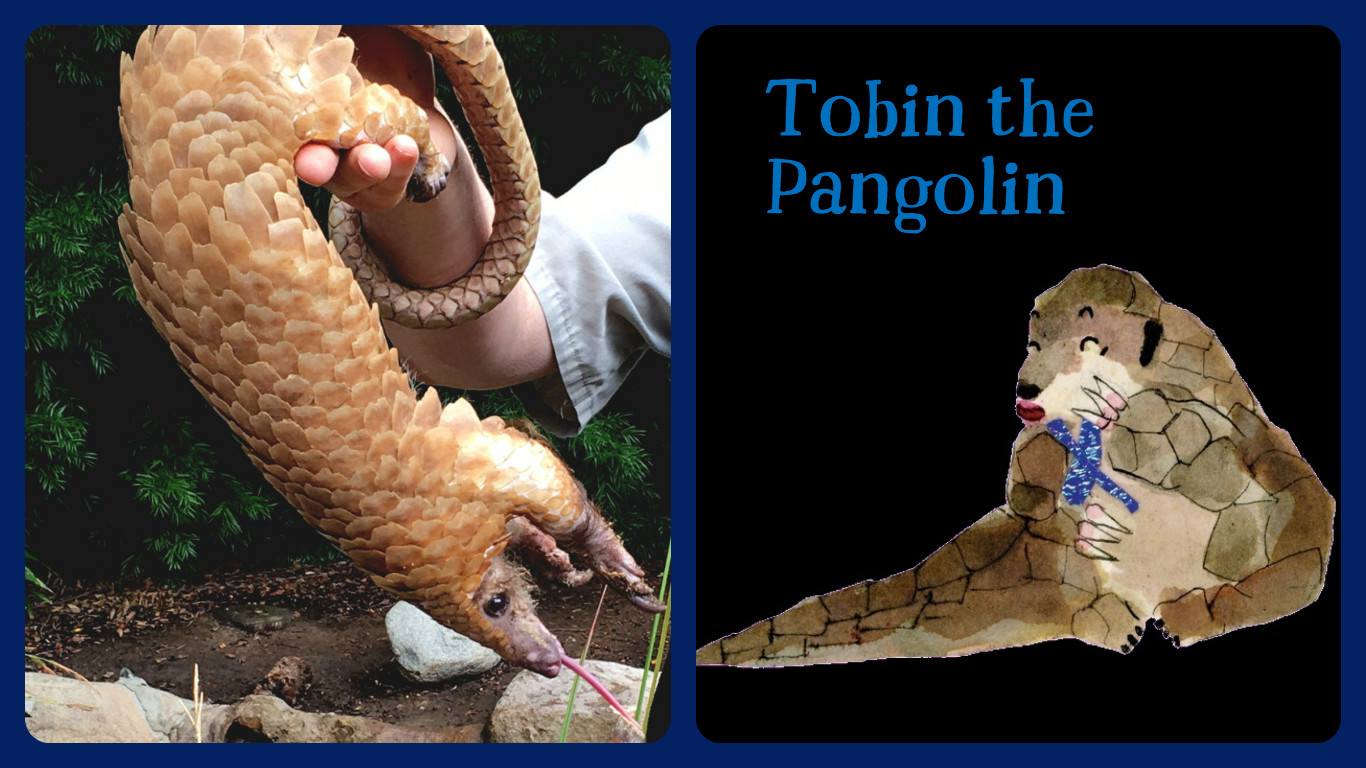
It’s the Nocturnals, Book 3: The Fallen Star‘s book birthday today, and I’d like to shine a (soft) spotlight on my favorite Nocturnal, Tobin! Fabled Films put together a little writeup about pangolins that I thought I’d share with you. Enjoy!

In The Fallen Star, the third installment of the non-episodic middle grade series, The Nocturnals, all of the forest’s pomelos have been inexplicably poisoned. Iris, a mysterious aye-aye, claims that monsters from the moon are to blame. When Tobin the pangolin falls ill, the Nocturnal Brigade must race to find answers, and the cure, before this possibly unearthly predicament threatens to harm them all.

Tobin is one of the main characters of The Nocturnals series, and many of our readers write to us saying that they have never heard of the critically endangered pangolin before reading our books. Here are some interesting facts about pangolins that help inform and develop Tobin’s character.

Pangolins are funny-looking creatures, but everything about them is designed to help them survive and protect themselves. All of their physical features perform a specific job.

Pangolins look like they wear an armor, and that’s because they are covered in scales made of keratin, which is the same thing that our human fingernails are made of. Just like our fingernails, the keratin on a pangolin is hard and forms a protective shell. Whenever Tobin is scared, he curls up as a way of protecting himself.

Not only does Tobin curl himself up for protection with his scales when he’s scared, but he also sprays something smelly to ward off predators. This smell comes from the scent glands on his tail end. Remember when Bismark complained how stinky Tobin was when they first met? That was because Tobin sprayed something because Bismark had startled him. When Tobin is afraid, he sprays an unpleasant smell from his scent glands. This reaction also helps deter the thing that he’s afraid of. Tobin is sometimes embarrassed by this bad smell, but he shouldn’t be, because spraying that smell helps him survive (especially if the smell has been enhanced by a poisoned pomelo, like in The Fallen Star!).

Pangolins have very poor eyesight. When Tobin first meets the bats in The Mysterious Abductions, he thinks that they’re the same creatures as Bismark because he can’t see very well. But Tobin has other senses like smell and hearing that compensate for his poor eyesight. His very long snout makes his nose very sensitive. Instead of seeing something, he can detect its presence by smelling it.

To read more about pangolins and their special features, check out these resources:

“Mammals.” Animal Encyclopedia: 2,500 Animals with Photos, Maps, and More! Washington, D.C.: National Geographic, 2012. 47. Print.

(http://www.iucnredlist.org/ ;

(http://animaldiversity.org/)

(Macdonald, David W. “Pangolins.” The Princeton Encyclopedia of Mammals. Princeton, NJ: Princeton UP, 2009. 476-77. Print.)