Posted in Fiction, Fiction, Intermediate, Middle Grade, Realistic Fiction

Welcome to Planet Omar!

Planet Omar: Accidental Trouble Magnet, by Zanib Mian/Illustrated by Nasaya Mafaridik, (Feb. 2020, G.P. Putnam), $13.99, ISBN: 9780593109212

Ages 7-10

Meet Omar! He’s a young Muslim boy living in the UK, and has just moved to a new neighborhood and school so his mom could accept her dream job. He’s got an imaginary dragon for a friend and pet, he’s creative and imaginative, and… he finds himself the target of the school bully. Originally published in abroad in 2018 as The Muslims, Planet Omar: Accidental Trouble Magnet is hilarious, sweet, and brilliantly tackles Islamophobia, all from a kid’s point of view.

Written from Omar’s point of view and illustrated a la Wimpy Kid, Accidental Trouble Magnet introduces us to Omar’s family: his parents, his siblings, the bully who becomes enraged at the idea of Muslims, and the sweet little old lady next door who constantly talks to someone one the phone about what “The Muslims” are doing. Omar’s parents handle the next door neighbor with grace and aplomb, always extending the hand of friendship. Omar is informative about Muslim traditions – we learn about Eid and Ramadan; his excitement about attempting to take part in the fast (so he can be up in the middle of the night to eat), and about the hijab his mother wears (no, she doesn’t shower with it). Zanib Mian convincingly writes with Omar’s voice and introduces us to a friendly kid who wants to let you know about him – and wants to let you know that he can’t wait for his holiday gifts; he loves sweets, and he loves his culture and wants to share it with you, too. Planet Omar: Accidental Trouble Magnet is an upbeat, fun intermediate story that serves as a wonderful introduction to Muslim culture. It encourages empathy, compassion, and understanding. It promotes patience with others who make rash judgements, and encourages all of us to be the best versions of ourselves that we can be.

Have readers who love Saadia Faruqi’s Yasmin books and are ready to take on a longer chapter book? Introduce them to Omar! I’d love to see this on Summer Reading Lists this year, nudge nudge.

Accidental Trouble Magnet received the 2018 Little Rebels Award, was nominated for the 2019 Carnegie Medal, and longlisted for the 2019 UKLA Award. See more about the book on Muslim Children’s Books UK.


Posted in Intermediate, Middle Grade, Non-fiction, Non-Fiction, Tween Reads

Two stocking stuffers from NatGeo Kids: Brain Candy and Surprising Stories Behind Everyday Stuff

NatGeo Kids has two digest-sized, chunky little books loaded with fun facts and pictures that will be perfect for a stocking stuffer or last-minute gift!


Brain Candy: Seriously Sweet Facts to Satisfy Your Curiosity, by National Geographic,
(Oct. 2019, National Geographic Kids), $8.99, ISBN: 9781426334375
Ages 7-13

Brain Candy is so much fun because it’s loaded with facts, but it also connects facts together. Each spread presents one big fact – “A million is a lot”, for instance – and then connects other facts to that main fact: “A million days ago, the first Olympics were taking place in Ancient Greece”; “A million ants weight as much as one human”; “If you live a million hours, you will be 114 years old”. Taste buds, birthdays, pizza, animals, and trash are only a few of the subjects covered in this jam-packed book that will give kids endless things to think about, and tons of fun facts to spout off during dinner time. These little digest-sized books are great to stick in your bag, and they’re good for hours of entertainment. My second grader has a growing collection of them that he loves; he’ll just slip one off his shelf, curl up on the couch, and start reading them, because the facts are presented in bright, bold color and they’re easily read. Fun fact: One of my library kids once stood next to me with a NatGeo Kids joke book and read jokes to me for 30 minutes. He loved it, I had a good laugh, and other kids immediately wanted in on where he found the book. Reading is contagious!


Surprising Stories About Everyday Stuff, by Stephanie Warren Drimmer,
(Sept. 2019, National Geographic Kids), $9.99, ISBN: 9781426335297
Ages 7-13

Ever wonder how blue jeans became so popular? Or where soap came from? Surprising Stories is all about how things we use everyday found their ways into our homes and our lives. Organized into 10 chapters, readers can see where the most popular toys, food, fashion, tools, household objects, holidays, and more came to be. Each chapter has a spotlight on fads throughout the years, and there are loads of callouts with even more quick facts. You know that Slinky jingle? It’s the longest-running jingle in the history of TV advertising. Cowboy boots have heels for guys and gals alike, because those heels keep a cowpoke’s foot from slipping through the stirrups. Once again, NatGeo Kids creates a quick-take book loaded with absolute fun.


Posted in Fiction, Fiction, Fiction, Historical Fiction, Intermediate, Middle Grade

American Girl Trio: Melody, Nanea, and Julie

Everyone is pretty aware of American Girl, the toy and book phenomenon that sent kids running to the stores for an experience – tea party, clothing selection, matching outfits – before Build-a-Bear got involved. The American Girl novels have big fans in every library where I’ve worked, but I never thought to pick up and read any of them for myself. But I received three from the publisher, so I figured, what the heck? Let’s see what these are about. I have to say, I’m pretty happy with them.

The three books that I received seem to be a repackaging of American Girl’s BeForever line of historical novels. The original books look to have been published in 2016-2017; these new releases have updated cover art and the interiors are very emerging reader friendly, with both color photos and artwork throughout, making it even more appealing and reader-friendly to emerging chapter book readers.
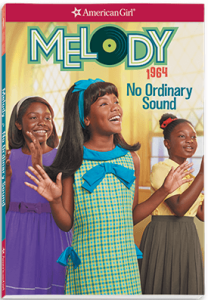
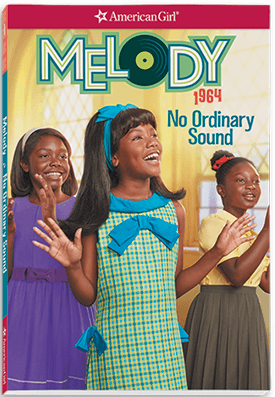
Melody: No Ordinary Sound (American Girl: Melody), by Denise Lewis Patrick, (Aug. 2019, American Girl), $7.99, ISBN: 9781683371403

Ages 8-12

It’s 1963 in Detroit, Michigan, and 9-year-old Melody just found out that she’s going to be singing her first church solo for the Youth Day celebration. Her older brother wants to be a Motown star, while their dad wants him to go to college and pick a more stable career; her older sister comes home from college with stories of protests, marches, and registering Black voters, and her cousin’s family arrives in Detroit, because racial tension in the American South has made it almost impossible to earn a living. As Melody and her family awaken to activism, a horrific church bombing in Birmingham, Alabama takes the lives of four children and leaves Melody speechless. She has to find her voice and sing for those who can’t.

No Ordinary Sound is such powerful historical fiction for intermediate and middle grade readers. I’ve enjoyed Denise Lewis Patrick’s books in the past, so I read this American Girl book first, and am so glad I did. Her characters experience three pivotal events in civil rights history – the Detroit Walk to Freedom; the March on Washington, where Dr. Martin Luther King, Jr. gave his “I Have a Dream” speech, and the church bombing in Birmingham, Alabama – and encourage readers to see these events from a personal point of view, developing a deeper understanding of more than just the facts. Denise Lewis Patrick provides a slice of life story, where readers experience the everyday racism Melody and her family and friends experience; from being banned from buying a soda at a soda machine to being shadowed by store security at stores where they’ve been longtime customers.

No Ordinary Sound was a great introduction to the American Girl historical fiction series of books, and I’ll be sure to include this series in booklists and booktalks about civil rights and historical fiction. Melody’s books have their own page on the American Girl website, where you can read first chapter excerpts.

Civil Rights Teaching has lesson plans and resources about teaching the Civil Rights Movement, as does Facing History and Ourselves. The Grammy Museum has a lesson plan on teaching the impact of Motown. Education.com has a free, downloadable worksheet on the History of Motown, and TeachRock.org has a lesson Assembling Hits at Motown. PBS Learning Media has a teaching guide and primary source materials on The Great Migration, and National Geographic has an educator’s guide.
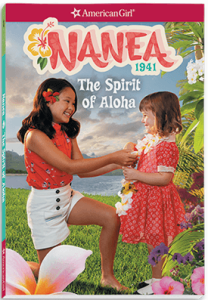
 

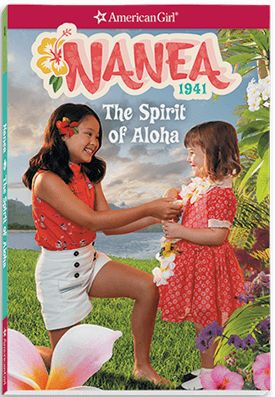
Nanea: The Spirit of Aloha (American Girl: Nanea), by Kirby Larson, (Aug. 2019, American Girl), $7.99, ISBN: 9781683371380

Ages 8-12

Nanea is a 9-year-old Hawaiian girl; she’s the youngest in her family, and feels frustrated that she can’t do grown-up things, like help in her family’s store. When Pearl Harbor is attacked by Japanese aircraft on December 7, 1941, Nanea discovers that she has to grow up quickly. Her father is a mechanic at Pearl Harbor, and rushes to help out; her older brother is an Eagle Scout, and heads to the site to hand out food and provide aid. Nanea’s Uncle Fudge is taken into custody because he’s Japanese, and Nanea is thrust into a different world with blackouts, curfews, and fear. She and her two best friends work to make themselves useful, especially when “nonessential personnel” must leave the island, which puts her friend at risk. With the spirit of aloha – love, understanding, and compassion – Nanea focuses on kokua – good deeds – to help everyone around her.

The Spirit of Aloha was another strong historical fiction piece. Kirby Larson has written likable, relatable female protagonists, and she’s done historical fiction before, so I was confident I was going to read a good story. Here, we have the main event, the bombing of Pearl Harbor, as a means to show how war makes children grow up overnight. Nanea sees her life change in moments: the bombing itself; the rounding up of Japanese people and the detention center; her fears for her father and brother as they head into the middle of the disaster to help; curfews and blackouts curtains, and the overall loss of a relatively peaceful, carefree existence. At the same time, she focuses on her culture’s principles of love, compassion, and good deeds. Kirby Larson adds touches of Hawaiian culture here, like the meaning of hula and tossing leis into the water to assure a return to Hawaii, and there’s a glossary of terms at the end. Nanea is biracial, with a Hawaiian mother and a Caucasian father, and this adds an additional facet to Nanea’s story, as she communicates with her mainland grandparents to let them know what’s going on in Hawaii.

The Spirit of Aloha is a good introduction to World War 2 historical fiction for younger readers. You can find excerpts and more about Nanea on the American Girl website.

Scholastic has a teaching guide on the attack on Pearl Harbor; Teachers Pay Teachers has some free, downloadable resources developed by fellow educators; the Pearl Harbor Aviation Museum has a lesson plan on developing visual literacy by analyzing photos from December 7, 1941. The New York Times has a lesson plan on using primary sources to teach the Japanese Internment, as does the Library of Congress.
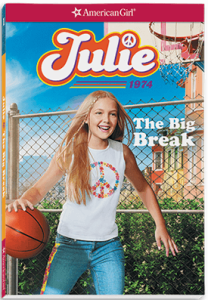
 

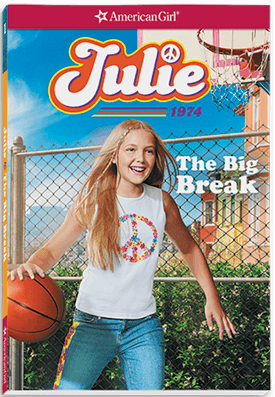
Julie: The Big Break (American Girl: Julie), by Megan McDonald, (Aug. 2019, American Girl), $7.99, ISBN: 9781683371328

Ages 8-12

Nine-year-old Julie has just moved to a new neighborhood and started at a new school after her parent’s divorce; she, her mother, and older sister live in an apartment above her mother’s new store. She starts at a new school and hears they have a basketball team, which is great! She loves basketball! The coach, however, makes no bones about it: the team is boys only, and he’s never going to let a girl play on his team. Julie, empowered by her tennis-playing older sister who tells her about tennis star Billie Jean King and Title IX, the law prohibiting gender discrimination in any educational programs receiving Federal financial assistance (read: public schools can’t refuse any boy or girl from playing on an athletic team). Julie embraces her newfound activism and takes to the streets, getting people to sign a petition to let her play.

The Big Break is a snapshot of the 1970s, when the second wave feminist movement was still pushing for equal rights in the workplace and in our schools. An interesting subplot with a Vietnam vet, who helps focus Julie’s activism by petitioning against the closing of a veteran’s hall, reminds readers that the ’70s were also about coping with the fallout from the Vietnam War and the vets who returned to homelessness, and a lack of necessary mental and physical health services. Julie’s sister is a burgeoning feminist who follows the Bobby Riggs-Billie Jean King Battle of the Sexes and tells Julie about Title IX, which opened the doors to school athletics for girls. At the same time, Julie is coping with her parent’s divorce – much more scandalous in the 1970s than it is today – and her feelings of grief and frustration with both her parents. Her mom appears to be a free spirit, with a ’60s-early ’70s flower child aesthetic; she’s a divorced woman entering the workplace and starting her own business venture: a store dedicated to handcrafted clothing and items, often repurposed. Julie’s pilot father often misses school events because he’s called to fill in for another pilot, and doesn’t initially support her bid to play on the boys’ basketball team.

The Big Break is by Megan McDonald, who everyone also knows as the author of the Judy Moody and Stink series! Here, she gives readers a glimpse into the 1970s, where things are so different, and yet, still the same. Girls still get grief from boys in the athletic sphere. Homeless veterans are still not getting the services they need. People now use Title IX to protect transgender and nonbinary students. And girls are still discovering and embracing their voices in activism. You can read more about Julie on her American Girl page, including first chapter excerpts.

TedEd has a lesson plan on Title IX that’s friendly to younger students. NEA Today has a good article on ways Title IX has helped women and girls; PBS has a video on Title IX; Scholastic Kids Press has an article on how Title IX changed girls’ sports. Teaching History has resources on teaching the Vietnam War.


Each book comes with a peek into each girls’ life: maps of their neighborhood, pictures of their families, a glimpse at someone’s room. Back matter includes overall information about each American Girls’ moment in history. American Girl makes teachers guides, readers guides, and printable activities available.


Posted in Fiction, Fiction, Humor, Intermediate, Middle Grade, Middle School

KidLit in Translation: My Life as Lotta – A House Full of Rabbits

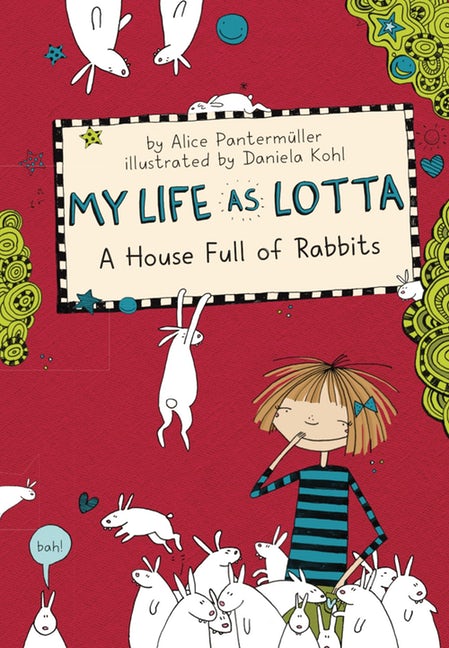
My Life as Lotta: A House Full of Rabbits, by Alice Pantermüller/Illustrated by Daniela Kohl, (Oct. 2019, Sterling Publishing), $12.95, ISBN: 9781454936244

Ages 7-10

Lotta is a fifth grader who has younger twin brothers, a mother with a shopping problem, a father who doesn’t seem to like much, and who desperately wants a dog (or a small sheep), but will settle for one of her best friend’s many, many rabbits. Originally published in Germany, My Life as Lotta is similar to Diary of a Wimpy Kid: the book is written as Lotta’s diary entries, is loaded with scribbles and notes, and stars a protagonist who finds herself in the wackiest situations.

Maybe I’ve got Wimpy Kid burnout, but My Life as Lotta didn’t do much for me. Lotta’s parents seem pretty awful – maybe they get funnier with subsequent books? Her best friend, twin brothers, and teacher are all pretty run-of-the-mill supporting characters, with Lotta taking center stage for all the wackiness. That said, I’m definitely not the intended audience for this book, and can see my intermediate-level readers enjoying it. If you have the extra dollars in your book budget and Wimpy Kid/Dork Diaries/Timmy Failure books do well for you, give My Life as Lotta a shot.

Posted in Fantasy, Fiction, Fiction, Intermediate, Middle Grade, Uncategorized

Polly and Buster prove that witches and monsters should be friends

Kane Miller sent me a middle grade fantasy trilogy about Polly & Buster, a young witch and a young monster who are best friends despite monster and witch society not always seeing eye to eye.

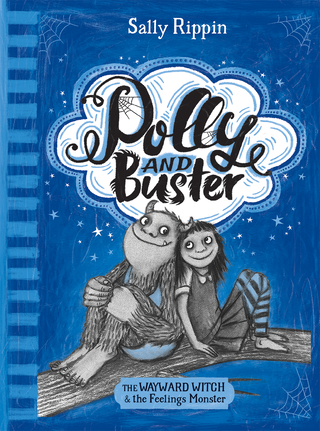
Polly and Buster: The Wayward Witch and the Feelings Monster (Book 1), by Sally Rippin, (Sept. 2019, Kane Miller), $6.99, ISBN: 978-1-61067-926-8

Ages 7-11

The first book in the series introduces us to Polly, a 9-year-old witch who just can’t seem to get her witching schoolwork right. Her older sister, Winifred, is the star sibling, and her widowed mother is often frustrated by Polly’s inability to excel like Winifred, and by her friendship with Buster, the monster next door. Polly and her family are still reeling from her father’s death in the mines a few years ago, which seems to be the tipping point for witch-monster tensions. When Polly casts a powerful spell while trying to protect Buster from bullies, her actions are misinterpreted, and the relationship between witches and monsters grows dangerous. Polly and Buster have to work together to salvage their own relationship and keep one another safe as witches and monsters choose sides in what could be a brewing war.

I was pulled right into this easily readable adventure. Polly exhibits some ADHD, dyslexic, and OCD tendencies, which could be linked to her burgeoning witch power: think Percy Jackson and the similar issues exhibited by demi-gods in that series. Buster is a kind-hearted monster who tries to hide his sensitivity from other monsters; his feelings manipulate his size and color, leaving him open to bullying. Witch and monster society in this series is symbolic of our own society: racism, intolerance, and exclusion abounds in witch society, while monsters grow increasingly tired and angry of being considered second-class citizens. Throw in a mean girl bully, and her equally mean, manipulative mother, and Polly and Buster goes from being a sweet story about acceptance and friendship to a powerful look at inequality and revolt.


Polly and Buster: The Mystery of the Magic Stones (Book 2), by Sally Ripkin, (Sept. 2019, Kane Miller), $6.99, ISBN: 978-1-61067-927-5

Ages 7-11

The second book in the Polly and Buster series brings the action and the tension up several notches as readers witness the breakdown of relations in witch-monster society. Polly and Buster are on the run from witches who have determined that Buster is dangerous and needs to be taken prisoner (or worse); Polly turns to her favorite teacher, the sympathetic Miss Spinnaker, for help. Meanwhile, a handful of mysterious stones that Polly’s father left to her start to glow and feel warm to the touch; Polly feels them beckoning her… to the mines where her father died?

The Mystery of the Magic Stones brings the action on quickly – witch and monster society are breaking down, and the story has a very Harry Potter feel as a group of vigilante witches start taking policing matters into their own hands as monsters form gangs to protect one another and defend themselves against witches. There’s a feeling of urgency throughout the story, as Polly tries to unravel the mystery of the stones while she and Buster are running and hiding for their lives. No sophomore syndrome here; the second book in the Polly and Buster series will leave readers waiting to find out how this is all going to shake out: make sure you have that third book ready to give them.


Polly and Buster: The Seach for the Silver Witch (Book 3), by Sally Ripkin, (Sept. 2019, Kane Miller), $6.99, ISBN: 978-1-68464-095-9

Ages 7-11

The third book in the Polly and Buster series brings things to a big close. Polly and Buster have been on the run through all of the second book as relations between witches and monsters threaten to descend into violence. Polly has made discoveries about herself that will change how others see her – if she can stay safe long enough! Seeking out her aunt – an outcast from witch society – for answers, Polly hopes to unload the burden the stones have put on her. Meanwhile, there’s a dark power brewing in Polly and Buster’s neck of the woods, and it’s making everything worse!

In this third book, Polly learns that she’s far stronger than she ever dreamed – her inner strength will give her the power she and Buster need to make things right between their two communities, and will help her defend everyone she loves against the biggest danger that her village has ever faced. Polly has her hero’s journey across these three books, but Buster also comes into his own as a monster who accepts his feelings and can put aside his own fear to jump in and help when he’s needed.

The whole series, originally published in the UK, is great for emerging readers who are ready for a little more of a challenge in terms of book content and length. It’s an intermediate-level series with more heft and big social issues to unpack. There’s fantastic world-building, solid character development, and sympathetic heroes and villains alike. Black and white illustrations throughout will keep readers interested, and help with pacing and imagining. This series will be super-popular with your fantasy readers. U.S. publisher Kane Miller has a bunch of extras, including a free word search, discussion questions and activities, and some discussions points from the author herself.

Posted in Fiction, Fiction, Graphic Novels, Intermediate, Middle Grade, Tween Reads

DC Zoom is bringing it to young graphic novel readers!

I have been loving the two DC original graphic novel lines. DC Ink, for YA, has been one hit after the next with Mera, Harley Quinn, and Raven, for starters; DC Ink’s lineup so far – Superman of Smallville, Dear Justice League, and The Secret Spiral of Swamp Kid – have rivaled the until-now unchallenged Dog Man on his bookshelf. I received a handful of new and upcoming DC Ink titles recently, wrestled them back from my kid (he’s got them back now, it’s fine), and dove in.

Black Canary: Ignite, by Meg Cabot/Illustrated by Cara McGee, (Oct. 2019, DC Zoom), $9.99, ISBN: 978-1-4012-8620-0

Ages 8-12

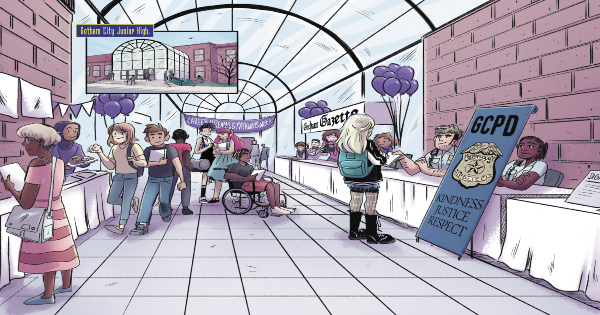
In DC Comics, Black Canary is a formidable metahuman whose Canary Cry is a sonic screech that brings bad guys to her knees. She’s also a pretty awesome fighter, and a musician. In Ignite, she’s 13-year-old Dinah Lance, daughter of a detective with an interest in police work, and lead singer and guitarist in a band. All she wants to do is win the battle of the bands at school and get her dad’s permission to join the Gotham City Junior Police Academy, but a mysterious person shows up in her neighborhood and starts causing trouble for Dinah. Dinah’s voice is also getting in the way, causing havoc when she laughs, yells, or sings too loud, and it’s landing her in the principal’s office. A lot. When the mystery figure attacks her as she works in her mother’s florist store, yelling about a “Black Canary”, Dinah discovers there’s more to her – and her family – than meets the eye, and it’s time for her to take charge of her voice and channel her inner superhero.

One of the great things about the DC young readers and YA books is that they’re bringing on authors kids know, or I know and can talk up to my kids. The Princess Diaries is HUGE here, and her Notebooks of a Middle School Princess books make her a Very Big Deal in the kids’ room here at the library. Having her take on one of my favorite DC women was a treat.Meg Cabot gives Dinah a realistic teen voice, giving her real-world problems to balance out the fact that she’s a metahuman with power: she’s always in hot water with her principal; her dad wants to keep her safe and tries to squash her interest in police work; she has trouble with her friends; she wants to be a rock star! There’s a nice nod to the Black Canary legacy, and I love the illustrations: Cara McGee even manages to include the famous Black Canary fishnets, making them part of Dinah’s punk teen look. Together, Meg Cabot and Cara McGee capture the spirit of an enduring DC character and make her accessible to younger readers. (Now, go watch Arrow, kiddies!)


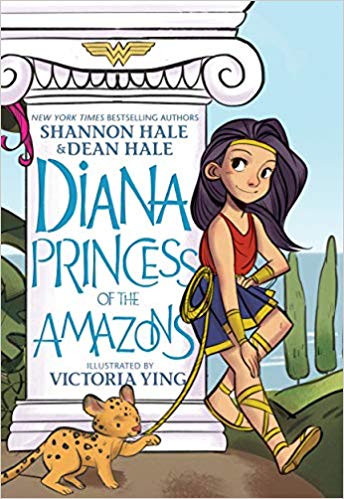
Diana, Princess of the Amazons, by Shannon & Dean Hale/Illustrated by Victoria Ying, (Jan. 2020, DC Zoom), $9.99, ISBN: 978-1401291112

Ages 8-12

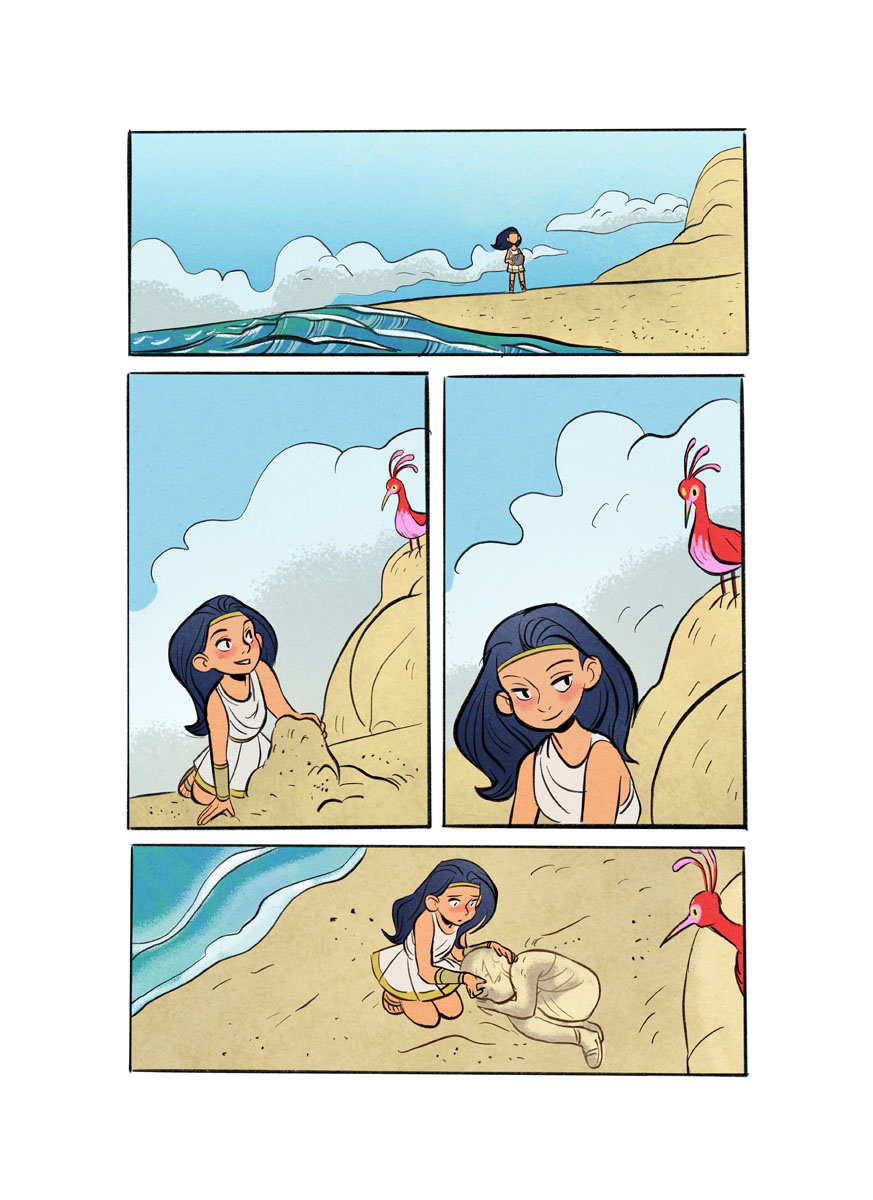
Diana of Themyscira is growing up in an island paradise where she’s surrounded by loving “aunties” and her mother. But, at age 11, she’s also the only child on the island, and she’s lonely. She decides to take matters into her own hands and forms a child from clay – just like the story of Diana’s own birth – and prays that the gods will give her a friend. Imagine her surprise when she discovers that her wish has come true, and Mona, the friend she dreamed of, is in front of her and ready to take on the world! But Mona doesn’t have the same idea of fun that Diana does, and starts leading Diana toward more destructive, mean-spirited fun. Mona starts putting some ideas in Diana’s head that could have disastrous consequences for Themyscira – can she reign herself and Mona in before catastrophe?

Shannon Hale and Dean Hale are literary powerhouses. They’ve created graphic novels (Rapunzel’s Revenge and Calamity Jack; most recently, the Best Friends and Real Friends autobiographical graphic novels); they’ve had huge success with their Princess in Black series of intermediate books, and Shannon Hale is a Newbery Medalist for her 2006 book, Princess Academy. They’ve written books in the Ever After High and Marvel’s Squirrel Girl series; they’ve written picture books: in short, they are rock stars. Asking them to write a Wonder Woman story for kid, you know you’re going to get something good. They deliver. Diana, Princess of the Amazons isn’t about Wonder Woman; it’s about a lonely 11-year-old girl who is so excited to have a friend, that she’ll follow anything that friend says or does, even when it puts her at odds with her mother and the adults around her. She’s frustrated because she can’t get the adults to listen to her; she feels clumsy and like she can’t measure up; she’s a self-conscious young teen. It’s an entirely relatable story that kids will read, see themselves in, and read again. I loved this book, and I loved the cute little nods to Wonder Woman throughout, like her being concerned about the cheetah population (one of Wonder Woman’s main foes is Cheetah) and having familiar characters like Antiope appear. Victoria Ying’s illustration will instantly appeal to Raina Telgemeier, Victoria Jamieson, and Shannon and Dean Hale fans. It’s colorful, with beautiful landscapes and cartoony artwork. Add this one to your graphic novel stacks, without question. Introduce your realistic readers to Wonder Woman!

One last note: While this is – as most of the DC Zoom books are – suggested for readers ages 8-12, you can go a little lower on this one. My 7-year-old gobbled this one up quite happily.

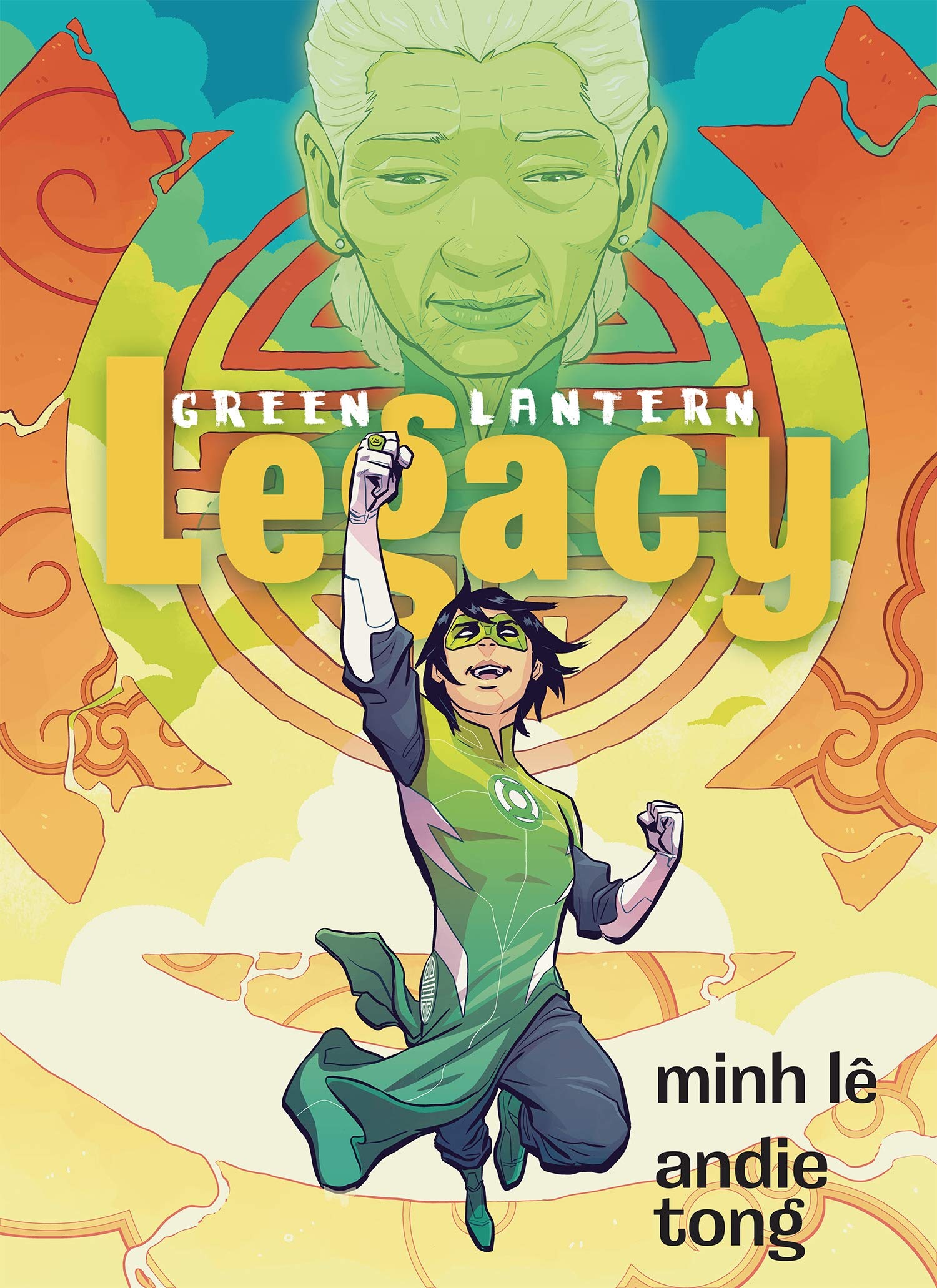
Green Lantern: Legacy, by Minh Lê/Illustrated by Andie Tong, (Jan. 2010, DC Zoom), $9.99, 978-1-4012-8355-1

Ages 8-12

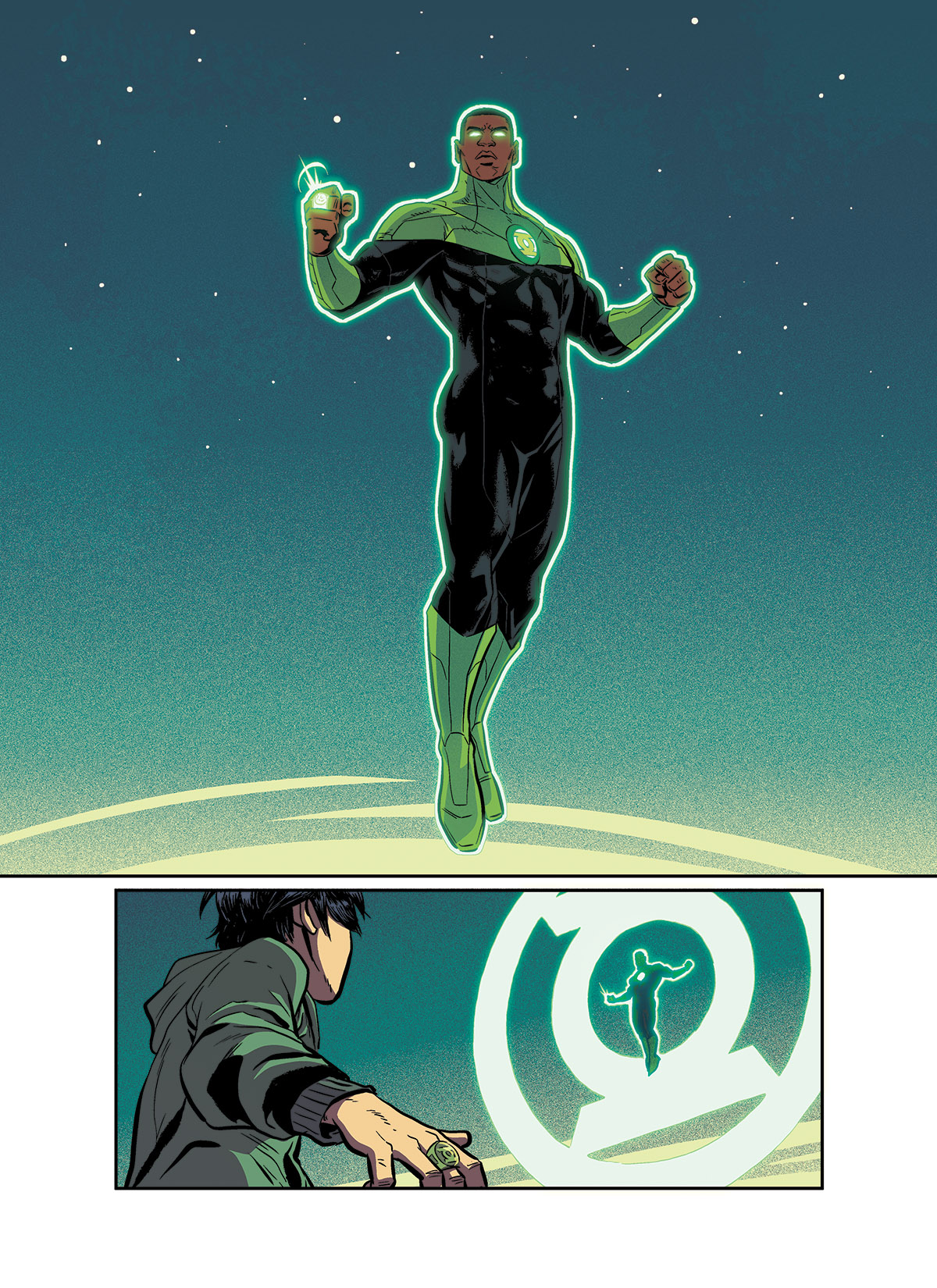
What a fantastic new Lantern story! Tai Pham is a 13-year-old child of Vietnamese immigrants, living in an apartment with his family, above his grandmother’s grocery store, The Jade Market. (Ahem.) The store is the target for vandals; the front plate window continues to be smashed as the neighborhood deteriorates, but his grandmother will not consider closing the store or selling, saying, “We will not let fear drive us from our home. Not again”. When Grandmother dies, Tai inherits her jade ring… and discovers that there was a lot more to her than she let on, when he learns about the power behind the ring, and meets John Stewart, from the Green Lantern Corps. As Tai tries to understand the weight his grandmother carried, keeping her neighborhood safe, and come to terms with his new status as a Green Lantern, he also discovers that there are those out there who would do him harm, and that not everyone who approaches him in the wake of his grandmother’s death is a friend.

This is a great new Green Lantern origin story, with a fantastic multicultural cast and mission. Author Minh Lê authored one of my favorite picture books from  last year, the award-winning Drawn Together; also a multi-generational tale of a grandparent and grandchild coming together through their different experiences of American and Vietnamese culture. He creates a solid, relatable story about growing up in an immigrant community under siege by crime and the threat of gentrification, and creates a superhero story where a hero, imbued with the power of the universe in his hand, makes the welfare of his cultural community a priority. Tying Tai Pham’s grandmother’s story as a Lantern into the family’s flight from Vietnam is incredible: Minh Lê’s story, powered by Andie Tong’s powerful images, are unforgettable. Even the Lantern costume both Tai and his grandmother wear are culturally influenced and I can’t wait to read more.

Zatanna and the House of Secrets: A Graphic Novel, by Matthew Cody/Illustrated by Yoshi Yoshitani, (Feb. 2020. DC Zoom), $9.99, ISBN: 978-1-4012-9070-2

Ages 8-12

I love that characters like Swamp Thing (well… Swamp Kid) and Zatanna are getting in front of younger audiences with DC Zoom. Zatanna and the House of Secrets is the origin story for Zatanna, a magician who can actually wield real magic. A young teen, she lives in a rambling house – “a certain house on a certain street that everyone talks about” – with her stage magician father and their rabbit, Pocus. Sick of the bullies at school, Zatanna – much like Black Canary in Ignite – loses her temper, with interesting consequences that change everything. When Zatanna comes home and finds her father mysteriously gone, she learns that her house is much, much more than a home, and she’s much, much more than a kid with a pet rabbit.

Matthew Cody can write superheroes; he’s written middle grade novels Powerless, Super, and Villainous, and he’s written graphic novels. He gives Zatanna so much more depth than “that magician chick who says things backwards”; something I’ve heard her referred to by people who don’t really know much about the character or the comic. As with the most successful superhero books, Matthew Cody makes Zatanna relatable: a kid who fends of bullies; who experiences upheaval with the Mean Girls over who to be seen with versus who’s social poison; a kid who’s grieving the loss of her mother and who loves her father, who’s doing the best he can. There’s an unlikely friendship that two characters have to learn to navigate, and a sidekick that kids will immediately love. Yoshi Yoshitani’s artwork is bold, cartoony fun. This one can skew a little younger than 8-12, too. Enjoy.

Posted in Intermediate, Middle Grade, Non-fiction, Non-Fiction, picture books

Unhinged History, where the oddest of couples change the world: The Bathysphere Boys

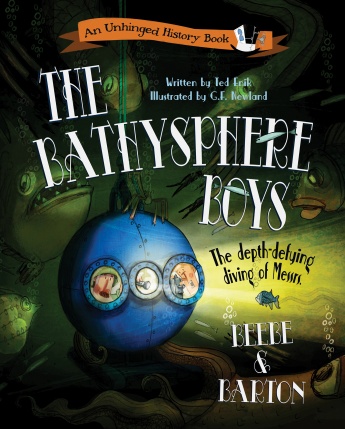
The Bathysphere Boys: Beebe & Barton (Unhinged History), by Ted Enik/Illustrated by G.F. Newland, (Sept. 2019, Schiffer Books). $16.99, ISBN: 9780764357930

Ages 7-10

This second book in Schiffer’s Unhinged History series brings together William Beebe and Otis Barton, who came together to create the bathysphere, an invention that sent the two underwater explorers more than half a mile underwater in 1930. The two were able to sees, close-up, underwater sea life that redefined deep-sea exploration. The story, written in slant rhyming, tells the story of the two very different personalities, who clashed throughout the invention process and, in 1934, split up for good after their historic dive. The story mentions the sphere’s return to life in 1994, when a renovation to the New York Aquarium gave the sphere a facelift, and where it proudly stands today. Back matter includes drawings of some of the sea life discovered during the deep sea dives, Bathysphere schematics, a timeline of human diving, and a profile on explorer Gloria Hollister, who worked with Beebe and Barton and who made her own deep sea dive in 1934.

Cartoon illustrations and a rhyme scheme outside of the norm make this an interesting choice for intermediate and middle grade readers who have an interest in science and underwater exploration. I like the idea of bringing together people who may not always have the most harmonious relationship, but who work together to affect great change: it’s a good way to show kids that you may not always get along, but there’s a value in putting aside differences to work together. A note on slant rhyming (also called “lazy rhyme”) will help readers ease into reading the story, which may feel off at first.


Posted in Humor, Intermediate, Middle Grade, Non-fiction, Tween Reads

Learn how to tell the perfect joke: The Joke Machine

The Joke Machine, by Theresa Julian/Illustrated by Pat Lewis, (Oct. 2019, Odd Dot), $8.99, ISBN: 978-1-250-31864-0

Ages 7-12

The Joke Machine is one of those books that’s kind of a no-brainer for my library purchases. Joke books are huge in my library community. A book that teaches you how to build the perfect joke, and manages to squeak in some English lessons while it’s at it? That’s a book my kids need.

Set up like as a trip through a fictional Laugh Lab, The Joke Machine takes readers through 16 “rooms”, each where they’ll learn a new strategy and meet a new joke specialist. They’ll also get to know LOLA, a joke machine whose name stands for Laugh Out Loud Apparatus. There are chapters on such joke techniques as contrast, specifics, being literal, and personalizing jokes to your own sense of humor (“twizzling”), all with dozens of examples. The book contains over 500 family-friendly jokes, many of which have been tested by my second grader and me, with varying degrees of success (everything from a chuckle to “MOM, STOP” – that one was from my too-cool-for-me college student), plus quick and easy ideas for creating your own jokes.

Teaching kids the subtle art of playing with words and helping them fine-tune the magic of exaggeration? Priceless. A note on sarcasm cautions kids about hurt feelings, and encourages them to be positive and respectful when joking. Black and white line illustrations get a dose of orange to liven things up throughout.

Get ready to hear these jokes over and over again – and have some of your own ready to answer with. This one will be a popular selection.


ollow a cast of fictional funny experts into the Laugh Lab, a hilarious joke-building factory that teaches middle-grade readers how to create their own jokes, puns, silly one-liners, and more. Each chapter explores a different style of joke making, such as surprise, understatement, and exaggeration, and includes hundreds of hilarious examples.

By the end of the book, readers will have a set of tools in their joke belt to make their friends and family actually LOL.

The book includes more than 500 family-friendly jokes—plus zillions that you can create on your own!

 
Posted in Early Reader, Intermediate

Spooky Halloween Activities – A spooky wipe-clean doodle pad

Spooky Halloween Activities, by Priddy Books, (July 2019, Priddy Books), $6.99, ISBN: 9780312528836

Ages 4-7

A quick Halloween goodie to crow about: Spooky Halloween Activities is a fun activity book from Priddy Books, that comes with wipe-clean pages and a dry-eraase pen. Kids can complete scary mazes, decorate a door and design a Halloween monster, or use the included stickers to design a costume and fill a witch’s cupboard. The book is spiral-bound and sturdy, and you can use any dry-erase pen if the one that comes with it goes missing, or if two kids want to work together on a creation (and since the book is spiral, it can be laid out flat to let two kids work on a page simultaneously). If you are able to invest in a few of them, are a nice, reusable handout to kids at the reference desk, classroom for quiet time, or your living room. It’s a fun, creative way to get the Halloween vibes flowing.

Posted in Intermediate, Middle Grade, Non-Fiction, Non-fiction, Non-Fiction, Tween Reads

Humanimals demonstrates ways animals and humans are similar

Humanimal: Incredible Ways Animals are Just Like Us!, by Christopher Lloyd/Illustrated by Mark Ruffle, (Nov. 2019, What on Earth Books), $19.99, ISBN: 978-1-912920-01-3

Ages 7-13

Christopher Lloyd‘s latest nonfiction introduces readers to all the ways we’re not that unique: animals are just like we are. Breaking down big areas like Community, Feelings, and Intelligence into finer points like teamwork, showing off, love, grief, self-awareness and invention, Humanimals reminds us not to discount the animals we share the planet with: we have as Lloyd writes in his introduction, “we need a new word, one that helps us understand how much we have in common”.

Christopher Lloyd gives readers a blend of animals and behaviors we know – honeybees work together; termites create vast cities; cats arch their backs and stiffen their tails to show aggression – and introduces behaviors readers may not be aware of: ravens roll down hills for fun; fish and leafcutter ants are farmers; orcas, baboons, and elephants all experience grief and mourning; chickens can communicate with one another. With bold, colorful artwork by Mark Ruffle, and easy-to-read sentences for more confident readers, this is a nice nonfiction add for your animal fans and natural history readers. It builds bridges to understanding animals, and encourages kids (and adults) to pay attention to the world they share.

Humanimal is a good choice for STEM and Discovery Clubs, too; encourage kids to talk about animal behaviors they’ve observed that remind them of human behavior. I love telling kids about seeing lizards that do push-ups to show off when I was in Florida.