Posted in Intermediate, Middle Grade, Non-fiction, Non-Fiction

Books from Quarantine: Civil War Hero Robert Smalls

The Story of Civil War Hero Robert Smalls, by Janet Halfmann/Illustrated by Duane Smith, (Feb. 2020, Lee & Low Books), $9.95, ISBN: 9781643790169

Ages 7-11

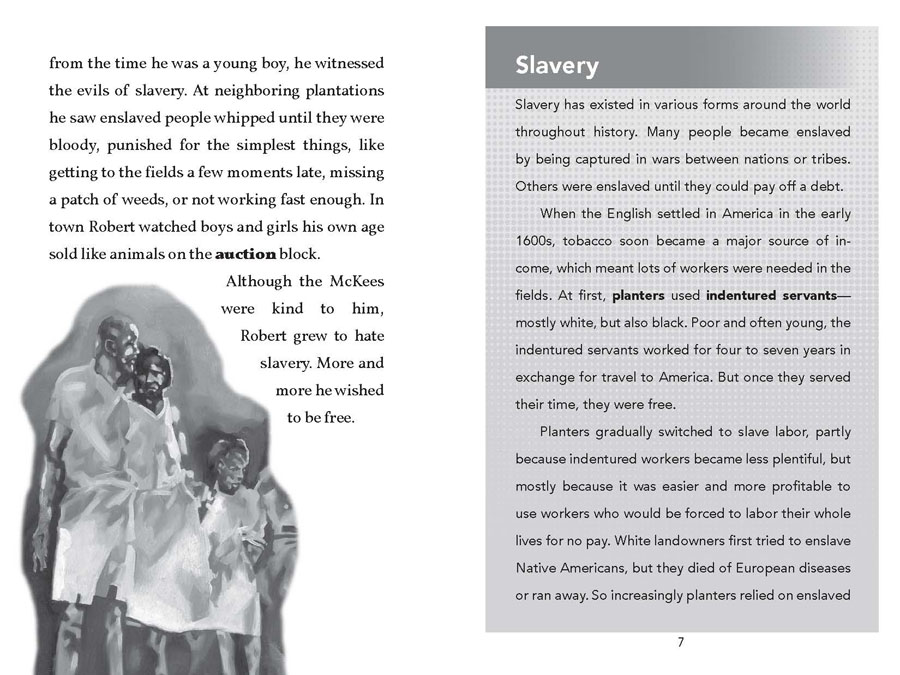
I really like Lee and Low’s “The Story of…” series: for me, it’s easily a companion series to the more well-known “Who Was…?” series from Penguin Random House, and the subjects of the “Story of” books shine spotlights on people of color that we may not hear about as often. The biography of Civil War Hero Robert Smalls, by Janet Halfmann (The Midnight Teacher) and illustrated by Duane Smith (Seven Miles to Freedom), is a concise, thorough biography of Robert Smalls, an enslaved steamboat wheelman who saved his family and crew when he used the captain’s hat and cover of darkness to commandeer a Confederate ship and steer it directly to the Union – and freedom. Filled with illustrations and photos, readers get a great picture of Robert Smalls and his nighttime ride through Confederate waters, and his life afterward, including his further actions in the Civil War, where he took part in 17 battles, and his post-War life, when he founded the Republican Party i South Carolina and helped write the new democratic state constitution and a proposal on education, his activity in the state militia, where he attained the rank of major general, and his political life, winning seats in both the South Carolina house and senate. The book includes a timeline of of Smalls’s life and a glossary of terms, plus references and a list of further reading.

Treat yourself to this book, and this series, and treat yourself to more books about Robert Smalls, including Janet Halfmann and Duane Smith’s picture book, Seven Miles to Freedom, also published by Lee & Low, and Be Free or Die, by Cate Linberry, is available for teens and adults. Smithsonian Magazine has an excellent article on Smalls.

Posted in Non-Fiction, picture books, Uncategorized

A future President’s best friend: Honey, the Dog Who Saved Abe Lincoln

Honey, the Dog Who Saved Abe Lincoln, by Shari Swanson/Illustrated by Chuck Groenink, (Jan. 2020, Katherine Tegen Books), $17.99, ISBN: 978-0-06269900-8

Ages 5-8

Based on a story remembered by President Abraham Lincoln’s childhood friend, Honey, The Dog Who Saved Abe Lincoln is a nonfiction picture book story of the 16th President and the dog he rescued and named Honey; and how Honey repaid the favor by rescuing Abe Lincoln. One day, while picking his family’s corn up from the mill, Lincoln discovered and cared for an injured dog, who followed him home. He convinces his parents to let him keep the dog – who he names Honey – and she joins him everywhere he goes. While exploring a cavern one day, Abe gets jammed between two boulders and Honey sets out to find help, finding Abe’s mother and Mr. John from the corn mill, and leading them to the cavern, where they are able to rescue young Mr. Lincoln.

A sweet story about our animal companions and the special relationship we have with our dogs, Honey, the Dog Who Saved Abraham Lincoln is an uplifting nonfiction story about an early chapter in the life of one of our most popular Presidents. There’s a timeline of Abraham Lincoln, who famously loved animals, and his “Animal Encounters”, chronicling key points in the former President’s life, including his many pets and moments of caring for animals. An author’s note goes into more detail about the origin of the story behind Honey, The Dog Who Saved Abraham Lincoln, and the many pets Lincolns populating the Lincoln White House. The digital artwork is kid-friendly, with gentle-faced, softly realistic characters and muted greens and browns. The endpapers display a map of the area of Hodgen’s Mill, where Abe Lincoln grew up, circa 1816, when Lincoln found Honey.

A nice addition to picture book nonfiction collections. Think about reading this one on April 11, National Pet Day!

Posted in Early Reader, Intermediate, Non-Fiction, Non-Fiction

NatGeo Readers shine a spotlight on Women’s History

March is Women’s History Month – do you have your displays up? I feel like I’m a hundred years behind, but thankfully, my saving grace is that I merchandise as I go, so I’ll pull a few books out as I wander my room, make sure they’re face-out, and pique the kids’ interest as they wander the stacks. Teachers Pay Teachers has me covered again, thank goodness, as does Education.com. I’ve got printables galore thanks to these two sites; everything from trading cards to coloring sheets, for which I’m hugely grateful.

Biographies are always good to have on hand, especially when those research projects come up. NatGeo Kids’s leveled Easy Reader series is a big help for collections geared toward younger readers.
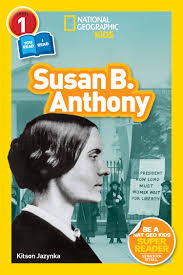
Susan B. Anthony, by Kitson Jazynka, (Dec. 2019, National Geographic Kids), $4.99, ISBN: 9781426335082

Ages 5-7

The Level 1 Co-Readers also provide a nice bonding opportunity, with a “You Read/I Read” format that lets a grownup read a page with denser text, but with fact boxes and color photos and illustrations that allow for discussion. The “I Read” page has bigger, bolder text, simpler vocabulary, and repeated new vocabulary words that let a new reader try out words they’ve just read with their grownup.

Susan B. Anthony’s biography introduces readers to the feminist pioneer, with information about her upbringing, her background as a teacher, her friendships with Frederick Douglass and work with Elizabeth Cady Stanton, with whom she traveled, speaking about women’s suffrage. Five “Your Turn!” sections present discussion questions and invite readers to come up with their own viewpoints on causes they believe in, differences between school in Susan B. Anthony’s time versus the present, and how to hold an election (voting on artwork, they start the kids off gently!). Loaded with photos from primary sources and helpful, quick call-out fact boxes, this is a nice introduction to women’s history for readers becoming more comfortable with informative text. There’s a Susan B. Anthony coloring page available for free on Education.com, which will make a nice addition to a reading.
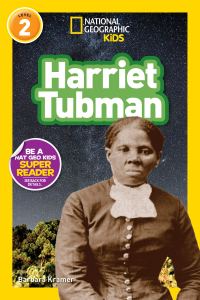
 

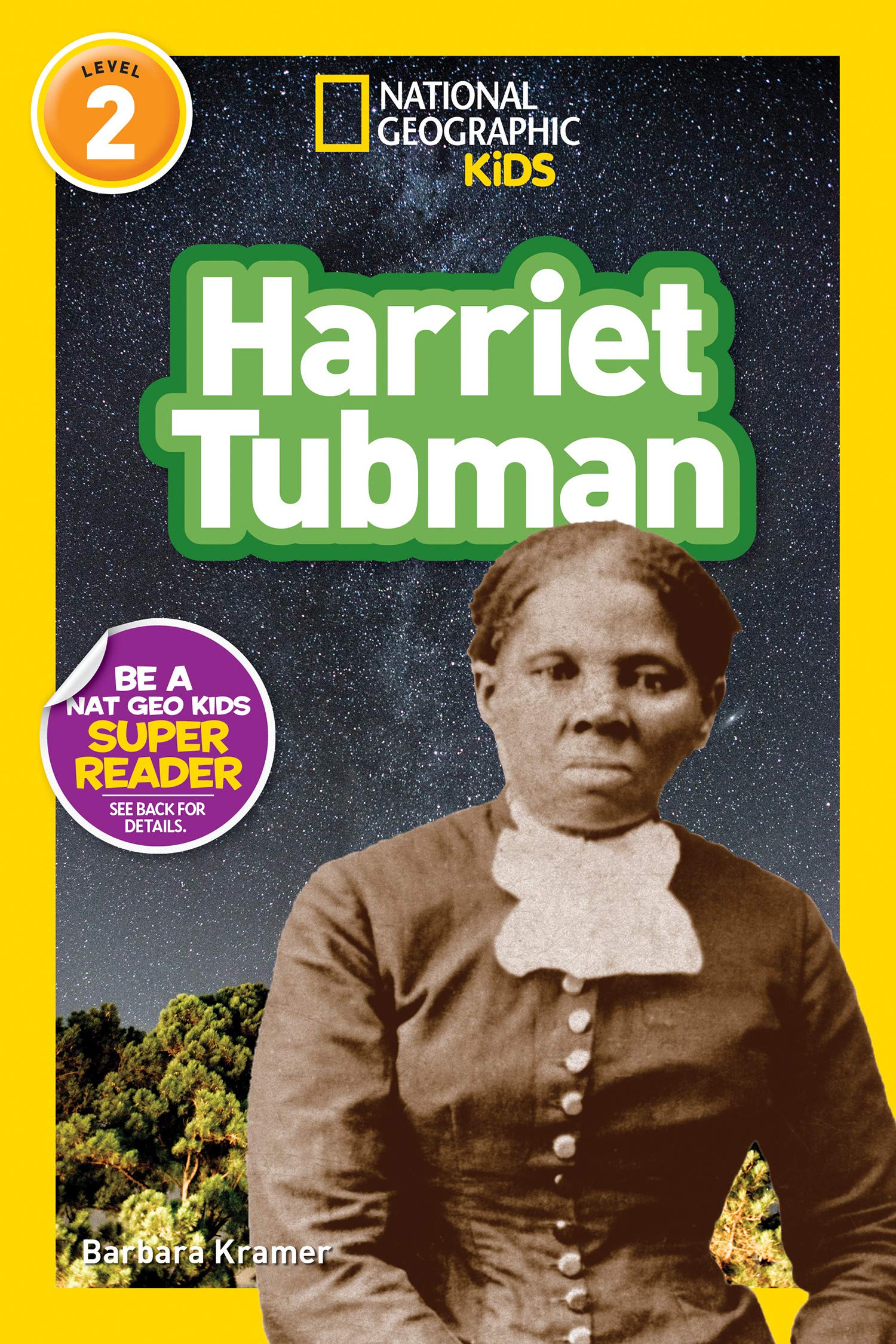
Harriet Tubman, by Barbara Kramer, (Dec. 2019, National Geographic Kids), $4.99, ISBN: 9781426337215

Ages 6-8

Level 2 readers are the next Easy Reader step, good for kids ready to work on greater informational text, with more vocabulary. There are fact boxes, “Words to Know” boxes that define new vocabulary words, and a timeline of the subject’s life; in this case, abolitionist, spy, and activist Harriet Tubman.

Harriet Tubman’s biography begins with her childhood as a slave named Araminta; her escape via the Underground Railroad and continued work in leading slaves to freedom along the Railroad, her work as a Northern spy during the Civil War, and her postwar life and work with the African American elderly. Spaced between the denser text about Harriet Tubman’s life are spreads with chunked facts like, “In Her Time”, where readers can learn facts about life as a slave in 1820s America, “6 Cool Facts About Harriet Tubman”, and a quiz. Readers can discover Ms. Tubman’s own words with “In Her Own Words” quote boxes throughout the text. There are incredible photos of Harriet Tubman and primary sources (newspapers, Tubman’s hymnal), maps, and artwork.

Great for newly confident independent readers, perfect for a circle time or history readaloud, this Harriet Tubman biography is a brilliant, compact introduction for readers to an iconic figure in history. Education.com has a free, downloadable Harriet Tubman coloring sheet to have handy, too.
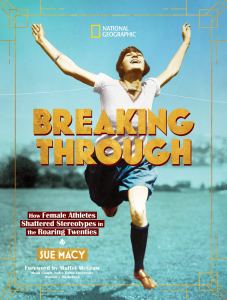
 

Breaking Through: How Female Athletes Shattered Stereotypes in the Roaring Twenties, by Sue Macy, (Feb. 2020, National Geographic Kids), $18.99, ISBN: 9781426336768

Ages 8-12

Welcome to the Roaring Twenties! A hundred years ago, things were very, very different: we didn’t have Title IX protecting girls’ and women’s rights to compete in school sports, for starters, but women found ways to get it done. Breaking Through travels through the original Roaring Twenties, a decade where women, having just secured the right to vote, are ready to take on more. But women in athletics? Perish the thought! Each chapter takes on a different year in the 1920s and profiles the women who fought their way into the athletic arena and the critics who opposed them. There are reprints from news stories, black and white photos and full-color artwork, and historical events that place readers fully in the context of each year. While Bessie Coleman, the first African-American woman to earn a pilot’s license, was making headlines in 1922, for instance, the National Women’s Party began their campaign for an Equal Rights Amendment (and we’re still waiting, folks); archaeologist Howard Carter discovered King Tutankhamun’s tomb, and the Charleston was the dance rage. Each year profiles a Trailblazer whose dedication to the sport opened the door for generations to come. An epilogue looks at where women in sports are now, from Wilma Rudolph to Billie Jean King to Megan Rapinoe. A timeline, Defining Moments in Women’s Sports, looks at 15 major highs and lows of women’s athletics. Resources are available for further research. Breaking Through is a needed history of women’s athletics, perfect for middle graders.

Posted in Intermediate, Middle Grade, Non-fiction, Non-Fiction, Tween Reads

Two stocking stuffers from NatGeo Kids: Brain Candy and Surprising Stories Behind Everyday Stuff

NatGeo Kids has two digest-sized, chunky little books loaded with fun facts and pictures that will be perfect for a stocking stuffer or last-minute gift!


Brain Candy: Seriously Sweet Facts to Satisfy Your Curiosity, by National Geographic,
(Oct. 2019, National Geographic Kids), $8.99, ISBN: 9781426334375
Ages 7-13

Brain Candy is so much fun because it’s loaded with facts, but it also connects facts together. Each spread presents one big fact – “A million is a lot”, for instance – and then connects other facts to that main fact: “A million days ago, the first Olympics were taking place in Ancient Greece”; “A million ants weight as much as one human”; “If you live a million hours, you will be 114 years old”. Taste buds, birthdays, pizza, animals, and trash are only a few of the subjects covered in this jam-packed book that will give kids endless things to think about, and tons of fun facts to spout off during dinner time. These little digest-sized books are great to stick in your bag, and they’re good for hours of entertainment. My second grader has a growing collection of them that he loves; he’ll just slip one off his shelf, curl up on the couch, and start reading them, because the facts are presented in bright, bold color and they’re easily read. Fun fact: One of my library kids once stood next to me with a NatGeo Kids joke book and read jokes to me for 30 minutes. He loved it, I had a good laugh, and other kids immediately wanted in on where he found the book. Reading is contagious!


Surprising Stories About Everyday Stuff, by Stephanie Warren Drimmer,
(Sept. 2019, National Geographic Kids), $9.99, ISBN: 9781426335297
Ages 7-13

Ever wonder how blue jeans became so popular? Or where soap came from? Surprising Stories is all about how things we use everyday found their ways into our homes and our lives. Organized into 10 chapters, readers can see where the most popular toys, food, fashion, tools, household objects, holidays, and more came to be. Each chapter has a spotlight on fads throughout the years, and there are loads of callouts with even more quick facts. You know that Slinky jingle? It’s the longest-running jingle in the history of TV advertising. Cowboy boots have heels for guys and gals alike, because those heels keep a cowpoke’s foot from slipping through the stirrups. Once again, NatGeo Kids creates a quick-take book loaded with absolute fun.


Posted in Intermediate, Middle Grade, Non-fiction, Non-Fiction, picture books

Unhinged History, where the oddest of couples change the world: The Bathysphere Boys

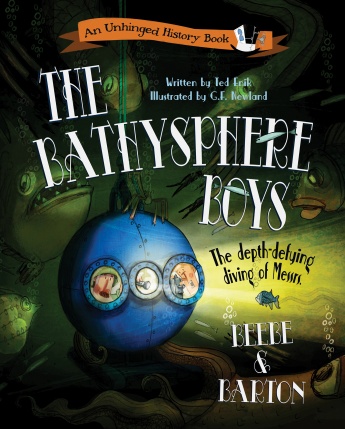
The Bathysphere Boys: Beebe & Barton (Unhinged History), by Ted Enik/Illustrated by G.F. Newland, (Sept. 2019, Schiffer Books). $16.99, ISBN: 9780764357930

Ages 7-10

This second book in Schiffer’s Unhinged History series brings together William Beebe and Otis Barton, who came together to create the bathysphere, an invention that sent the two underwater explorers more than half a mile underwater in 1930. The two were able to sees, close-up, underwater sea life that redefined deep-sea exploration. The story, written in slant rhyming, tells the story of the two very different personalities, who clashed throughout the invention process and, in 1934, split up for good after their historic dive. The story mentions the sphere’s return to life in 1994, when a renovation to the New York Aquarium gave the sphere a facelift, and where it proudly stands today. Back matter includes drawings of some of the sea life discovered during the deep sea dives, Bathysphere schematics, a timeline of human diving, and a profile on explorer Gloria Hollister, who worked with Beebe and Barton and who made her own deep sea dive in 1934.

Cartoon illustrations and a rhyme scheme outside of the norm make this an interesting choice for intermediate and middle grade readers who have an interest in science and underwater exploration. I like the idea of bringing together people who may not always have the most harmonious relationship, but who work together to affect great change: it’s a good way to show kids that you may not always get along, but there’s a value in putting aside differences to work together. A note on slant rhyming (also called “lazy rhyme”) will help readers ease into reading the story, which may feel off at first.


Posted in Intermediate, Middle Grade, Non-Fiction, Non-fiction, Non-Fiction, Tween Reads

Humanimals demonstrates ways animals and humans are similar

Humanimal: Incredible Ways Animals are Just Like Us!, by Christopher Lloyd/Illustrated by Mark Ruffle, (Nov. 2019, What on Earth Books), $19.99, ISBN: 978-1-912920-01-3

Ages 7-13

Christopher Lloyd‘s latest nonfiction introduces readers to all the ways we’re not that unique: animals are just like we are. Breaking down big areas like Community, Feelings, and Intelligence into finer points like teamwork, showing off, love, grief, self-awareness and invention, Humanimals reminds us not to discount the animals we share the planet with: we have as Lloyd writes in his introduction, “we need a new word, one that helps us understand how much we have in common”.

Christopher Lloyd gives readers a blend of animals and behaviors we know – honeybees work together; termites create vast cities; cats arch their backs and stiffen their tails to show aggression – and introduces behaviors readers may not be aware of: ravens roll down hills for fun; fish and leafcutter ants are farmers; orcas, baboons, and elephants all experience grief and mourning; chickens can communicate with one another. With bold, colorful artwork by Mark Ruffle, and easy-to-read sentences for more confident readers, this is a nice nonfiction add for your animal fans and natural history readers. It builds bridges to understanding animals, and encourages kids (and adults) to pay attention to the world they share.

Humanimal is a good choice for STEM and Discovery Clubs, too; encourage kids to talk about animal behaviors they’ve observed that remind them of human behavior. I love telling kids about seeing lizards that do push-ups to show off when I was in Florida.

Posted in Conferences & Events, Early Reader, Graphic Novels, Intermediate, Non-Fiction, Non-Fiction

Kevin McCloskey, Giggle & Learn, Ants and Pigeon Poop: It’s all good here!

Kevin McCloskey is one of my favorite graphic novelists. What does he draw, you ask? Spidey? The Avengers? X-Men?

Nope. He creates science graphic novels for the little ones, examine such subjects as snail goo, pigeon and worm poop, and foot-long goldfish. Sometimes, he paints his pictures on recyclable grocery bags, because he believes in recycling. Most importantly, he creates nonfiction that speaks to young learners in a way that engages their minds and their funny bones, talking about the funny, gross, and awesome parts of nature and making them equally… amazing.

Ants Don’t Wear Pants!, by Kevin McCloskey, (Sept. 2019, TOON Books), $$12.95, ISBN: 9781943145454

Ages 4-7

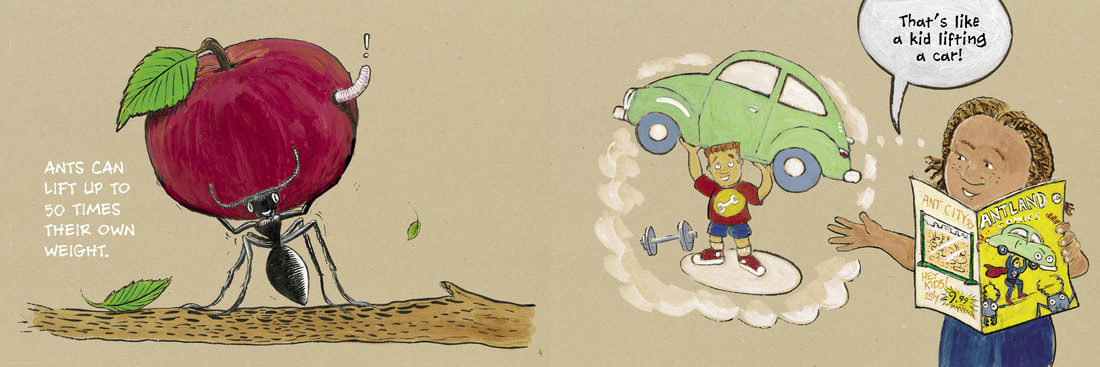
Who here hasn’t been told, “You have ants in your pants!” while growing up? With that phrase, Kevin McCloskey sets readers off on the study of ants: biology and physiology, life cycle, food, kinds of ants, and what they eat. The book is loaded with fun facts and illustrations, like the one of an ant bench pressing an apple, combined with a picture of a child lifting a car, to bring home the fact that an ant can lift up to 50 times its own weight, and what that would mean to us human folk. The front endpapers have hundreds and hundreds of ants, with one magnified under a magnifying glass, greeting readers and inviting them to come and learn. This is the newest in Kevin McCloskey’s Giggle and Learn series of graphic novels for young learners, published by TOON, and I love it. My kiddo’s first McCloskey book was We Dig Worms (2015), which I read to him when he was barely out of the toddler years, and he loved it, because the material is accessible and fun. A lesson plan is coming soon!


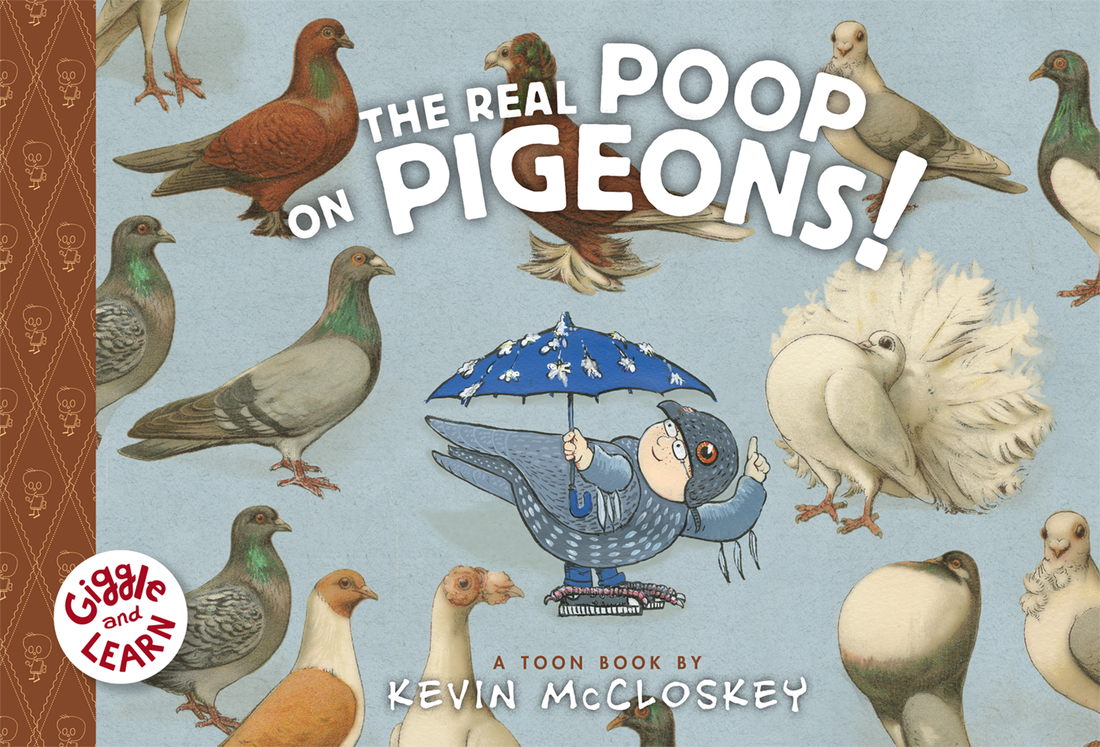
The Real Poop on Pigeons!, by Kevin McCloskey, (Sept. 2019, TOON Books), $6.99, ISBN: 9781943145430

Ages 4-7

Originally published in 2016, The Real Poop on Pigeons! is coming to paperback. When a man sitting on the park bench starts shooing pigeons away, a group of children, dressed as pigeons, show up to school him – and us readers – on pigeon history – they carried the first airmail! – and biology, breeding, and pigeon milk. (Read the book. You can’t buy this in Stop & Shop.) There are some great pigeon family tree revelations here, like the fact that the Dodo was a member of the pigeon family. A three-foot pigeon! Ever wonder why you haven’t seen a baby pigeon? Read the book! The Real Poop on Pigeons is yet another win from Kevin McCloskey, and another win for young readers.


Posted in Intermediate, Middle Grade, Non-fiction, Non-Fiction, Teen, Tween Reads

Wild History! Books about prehistoric animals

Kids love dinosaurs. This is a known fact, and my groaning 567.9 section is proof positive of it, but I like to branch out a little and get kids checking out what other prehistoric animals there are to learn about. There are several great new books out that will give my 567 section a nice boost.

Forgotten Beasts: Amazing Creatures That Once Roamed the Earth, by Matt Sewell, (July 2019, Pavilion), $19.95, ISBN: 9781843653936

Ages 7+

Originally published in the UK in 2018, Forgotten Beasts contains over 45 illustrated portraits and profiles of birds and beasts that roamed the planet alongside and after the dinosaurs. There’s the Opabinia, a 2-inch arthropod from 508 million years ago through 1936, when the last Thylacine, a carnivorous marsupial, went extinct. There are some names kids will recognize, like the ginormous shark, Megalodon; the saber-toothed tiger, also known as the Smilodon Fatalis, and the Woolly Mammoth (for the Ice Age fans!). Each picture is skillfully rendered in muted watercolors, showing readers that prehistory wasn’t relegated to muddy greens, browns, and grays. Each profile includes the animal’s size, weight, time period, and diet, and a descriptive paragraph or two, and a timeline helps readers envision when these animals, alongside dinosaurs, roamed the Earth. Endpapers feature the stars of the book in miniature, parading across the pages. A nice book to beef up your non-dinosaur prehistoric collections.

Life: The First Four Billion Years (The Story of Life from the Big Bang to the Evolution of Humans), by Martin Jenkins/Illustrated by Grahame Baker-Smith, (Sept. 2019, Candlewick Studio), $24.99, ISBN: 978-1-5362-0420-9

Ages 10-14

The cover alone will make readers stop and give this book a look. Starting with the Big Bang, Life: The First Four Billion Years brings readers along on a journey through Earth’s first four billion years, ending right before we humans show up. Life starts off with foldout spreads that detail the beginning of Earth; from there, the book moves into the Ice Age, life’s beginnings in the water, its move to land, the ages of dinosaurs and of mammals, and the breakup of Pangea and formation of the continents, and the “Road to Us”: evolution of homo sapiens. Illustrations are the focal point of the book, and Kate Greenway Medal winner Grahame Baker-Smith is at the top of his game, creating landscapes both lush and stark, with black and white and color artwork of a prehistoric world. Award-winning author Martin Jenkins writes for upper middle graders and older, making the science of prehistory accessible to all ages. A glossary and illustrated timeline of the planet make this a stunning volume to have on your shelves.

Prehistoric: Dinosaurs, Megalodons, and Other Fascinating Creatures of the Deep Past, by Kathleen Weidner Zoehfeld/Illustrated by Julius Csotonyi, (Sept. 2019, What on Earth Publishing), $18.99, ISBN: 978-1-912920-05-1

Ages 7-11

Traveling backwards from present day to 541 million years ago, this slim volume is packed with illustrations, infographics, and easily digestible information about the earth through 17 eras. There’s information about climate change, ecosystems and extinctions. A running timeline at each right-hand page margin keeps readers up-to-date on the era and presents a visual representation of time covered as the book progresses.

Color illustrations are museum-quality; you can easily envision these bringing life to exhibits at any museum you may go to. Keeping in mind a younger and middle-grade audience, the information is broken up into short paragraphs, bold infographics, and callout facts. Back endpapers act as a visual table of contents. Keep Prehistoric in mind for your nonfiction sections; hand any of these books to your Apex Predators and Prehistoric Actual Size fans.

Prehistoric is produced in association with the Smithsonian’s National Museum of Natural History.

Posted in Intermediate, Non-Fiction

I Speak Peace talks mindfulness and respect for all

I Speak Peace, by Kate Carroll/Illustrated by Rainer M. Osinger, (March 2016, Ferne Press), $10.95, ISBN: 978-1-938326-46-2

Ages 6-8

I Speak Peace is a message to all from a first grade teacher who promotes peace, respect, and understanding in her classroom and wants to see that good in the world. The story is narrated by a young blond girl who talks about what peace means, and emphasizes that peace starts from within – “a feeling we have when we are calm and happy” – and how those feelings affect our outlook and how we work with others. Letting go of angry thoughts and mindful breathing come up here, teaching kids the importance of staying in touch with their own feelings. We live in a world where we may look different, speak different languages, and hold different beliefs, but we have just as much in common: we all need love; we all want to be happy; we all live on this planet, and we all need to work together to make it a better place. Kate Carroll promotes different ways of spreading peace that kids will easily recognize: smiling and listening to others; standing up for others; and being considerate are messages kids learn in their homes and classrooms, and go a long way toward making the world a better place. It’s an upbeat, positive message and it’s not that hard a message to spread. An author’s note explains how author Kate Carroll promotes peace in her classroom, and how she was moved to share her message in this contentious, high-strife society today. Kids can take a Peacemaker Pledge (nice library or classroom idea) and an original song, Peace Begins with Me, rounds out the book.

The artwork features children from different cultures and with different abilities working and playing together. The art is bright and positive, with primary colors and full-bleed pages.

I Speak Peace emphasizes an important message and makes for a good classroom, storytime, or cuddle time readaloud. I really like the Peacemaker Pledge and may put that up in my children’s room at the library at the start of the school year. You can visit Kate Carroll’s I Speak Peace page to learn more about the author and contribute your own I Speak Peace stories.

Posted in Early Reader, Intermediate, Middle Grade, Non-fiction, Non-Fiction, Non-Fiction, Preschool Reads

Read, Learn & Create: The Nature Craft Book is great for kids!

Hi, all! I know my posting schedule has been off the last several weeks, and I ask you all to bear with me. I’ve received a promotion and am getting into the swing of things at my new library (actually one of my first; I went back to my home away from home in Corona). I’ve been reading and furiously scribbling notes, though! More on the new digs shortly. For now, it’s back to my reviews!

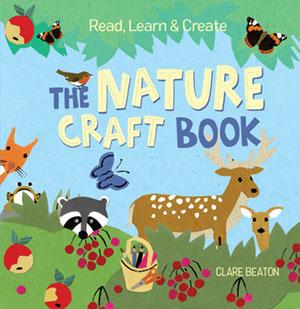
The Nature Craft Book, by Clare Beaton, (May 2019, Charlesbridge), $17.99, ISBN: 978-1-58089-843-0

Ages 3=

I LOVE nature crafts, and I love easy nature crafts. My first grader has a real love for wandering the neighborhood, collecting various leaves, snail shells, sticks, rocks… anything that strikes his fancy, and we’ve gone on some great nature walks in our neighborhood and local parks. I even brought home acorns from Rochester, NY for him when I was there for a library conference. He loved them!

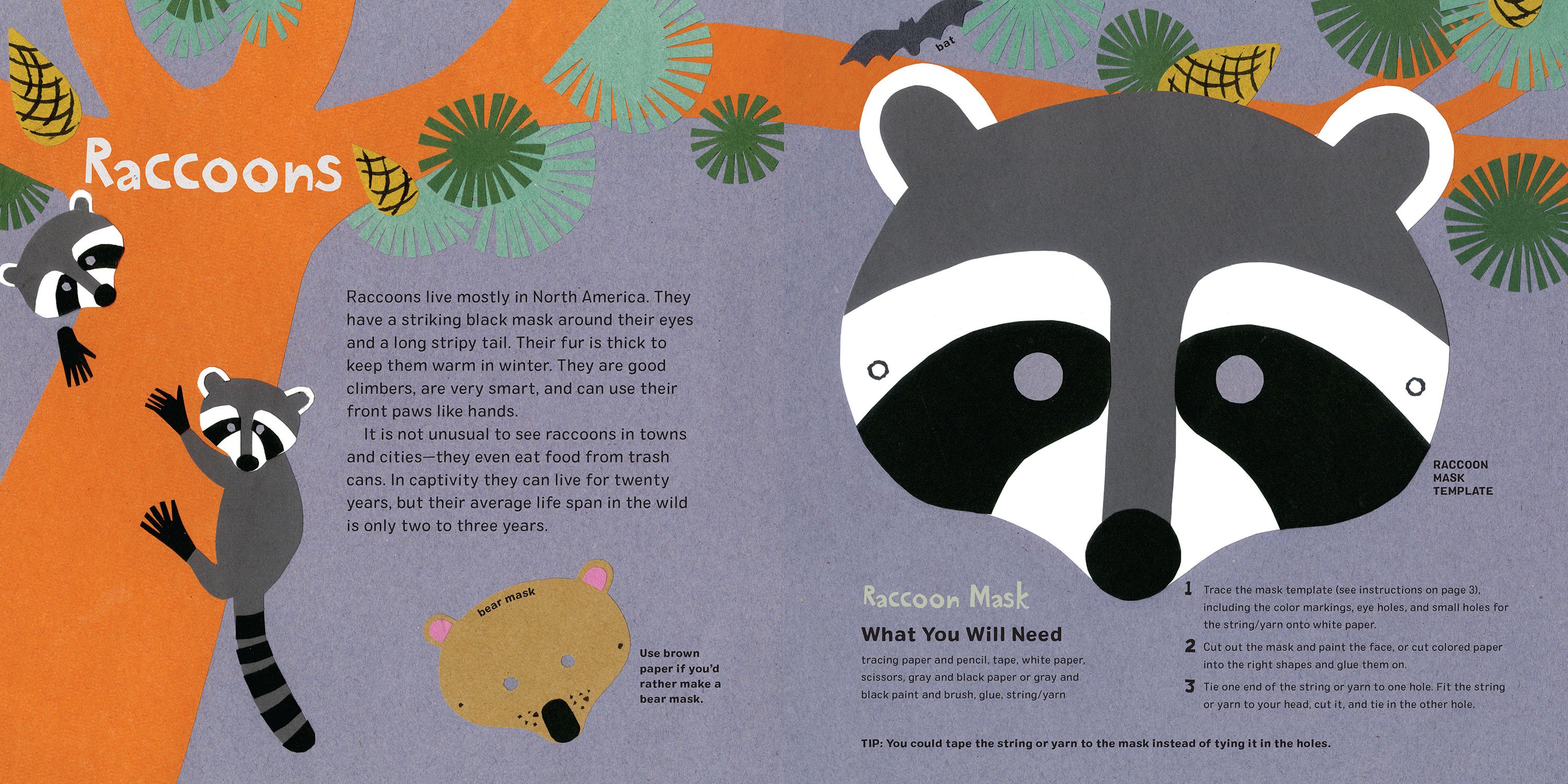
The Nature Craft Book is part of Charlesbridge’s Read, Learn & Create series (there’s an Ocean Craft Book, too!) is is loaded with ideas, templates, and facts for you and your kids to enjoy. Every craft is created with a respect for nature and our environment; a note at the beginning mentions that “it’s hard for some plants and creatures to survive where factories or farms have replaced wild places”, and encourages kids to “attract wildlife” by planting wildlife-friendly plants and flowers, putting water out for birds, and keeping nature journals. It fosters a real love and respect for our world. Activities include different bird feeders, toilet paper tube owls, leaf printing, animal finger puppets. The crafts give us a chance to reuse household objects like yogurt containers, hangers, and tissue boxes, and to create with found objects like pine combs and twigs. Even little crafters can get in on the fun, coloring and creating simple, enjoyable art.  Facts about birds, freshwater wildlife, raccoons, and other wildlife give readers a quick, overall idea of different animals and plants. The crafts are easy and can be done on a budget, which makes this spot-on for me at home or at work. My kiddo and I have already created a couple of craft projects from here and are planning winter bird feeders for our backyard. The collage artwork is adorable and labeled to introduce kids to different kinds of animals, trees, and leaves.

Grab this series for your shelves. I know I will.