Posted in geek, geek culture, Graphic Novels, Guide, Intermediate, Middle Grade, Non-Fiction, picture books, Preschool Reads

Find gift ideas here!

It’s another roundup: you’ll find a few more ideas here, I hope, if you’re in “just one more person… gift… book” mode, or, if you’re like me, you’re eyeballing your December book budgets and in “I’ve got a little bit more left, I can fit one more book in this cart” mode. Either way, I hope you enjoy.
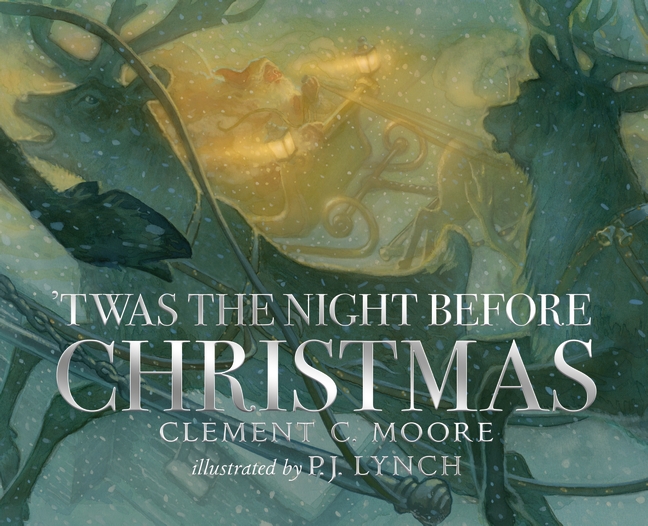
‘Twas the Night Before Christmas, by Clement C. Moore/Illustrated by PJ Lynch, (Nov. 2021, Candlewick Press), $17.95, ISBN: 9781536222852

Ages 3+

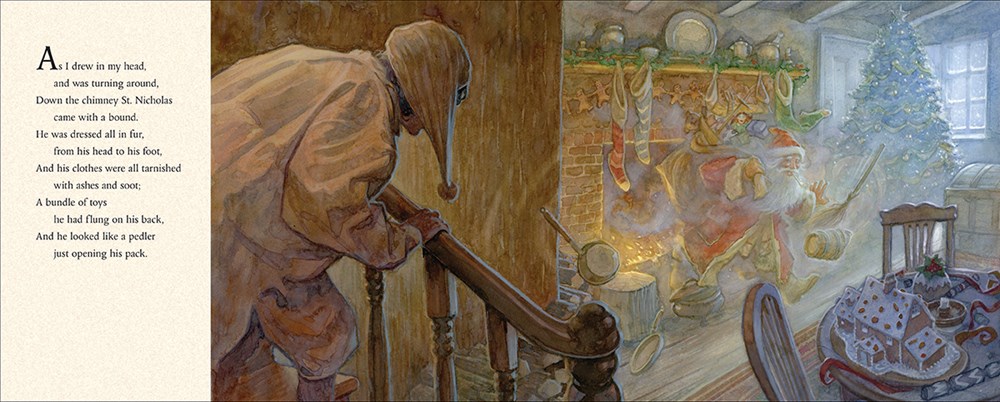
The latest release of Clement C. Moore’s classic 1823 Christmas poem, PJ Lynch imagines a sweeping Christmas tale, with watercolor and gouache illustrations rendered in shades of greens and blues to set the sleepy, evening mood. Saint Nick arrives on the scene, bringing warm reds and oranges. Lifelike artwork brings the team of reindeer to life, with texture and movement as they dance across the sky, carrying Santa and his sleigh full of toys. This telling of Moore’s A Visit from St. Nicholas is set in what looks like pre-Victorian England, in the time the poem was written. The artwork beautifully captures the stillness of Christmas Eve and St. Nicholas’s Christmas magic.

Every Christmas Eve, I read two stories to my own kiddos (yes, one is 22 and one is 18, but they still humor me): Chris Van Allsburg’s The Polar Express and Clement Moore’s A Visit from St. Nicholas. I’m looking forward to reading PJ Lynch’s version this year.
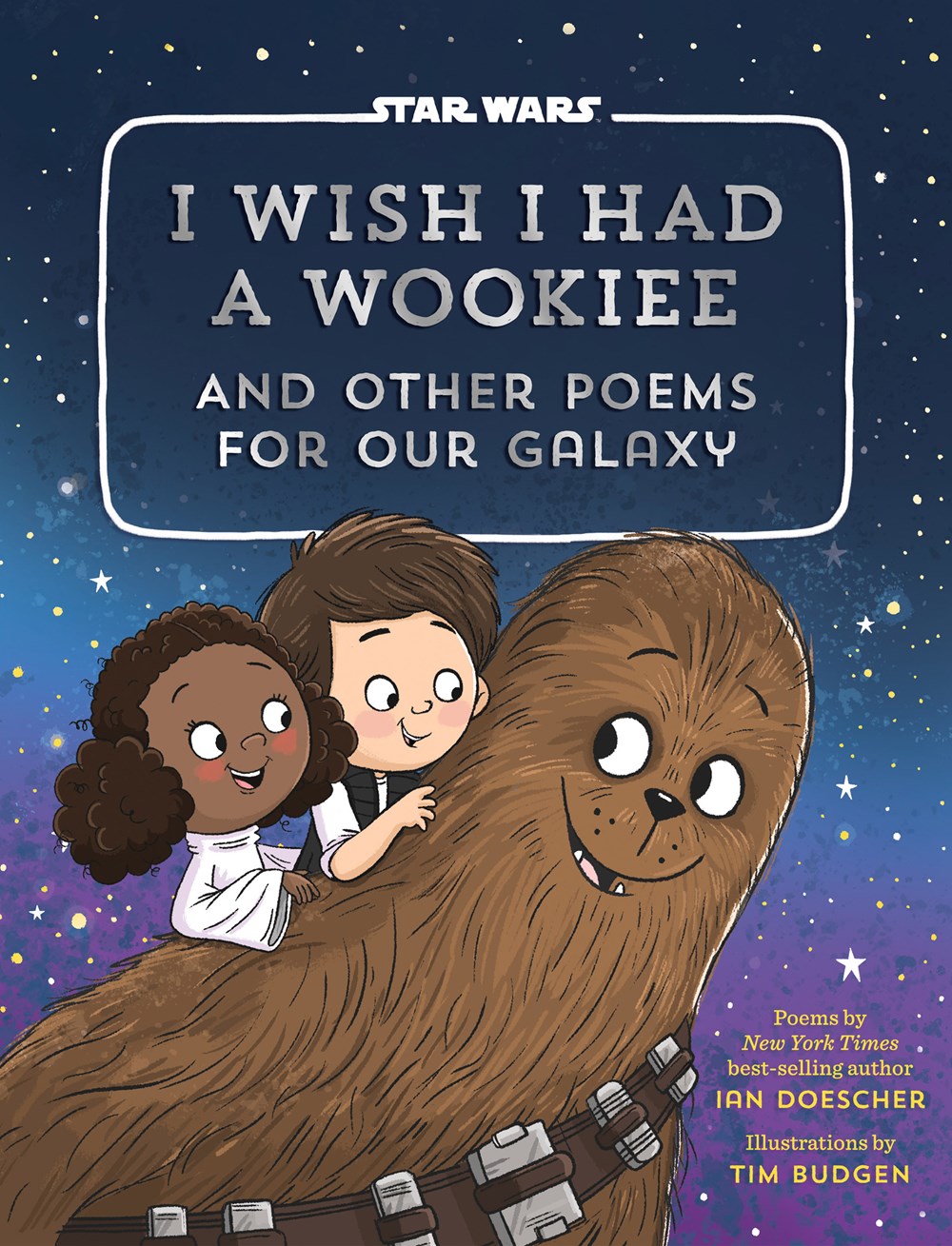
 

I Wish I Had a Wookiee And Other Poems for Our Galaxy, by Ian Doescher/Illustrated by Tim Budgen, (Sept. 2021, Quirk Books), $19.99, ISBN: 9781594749629

Ages 6+

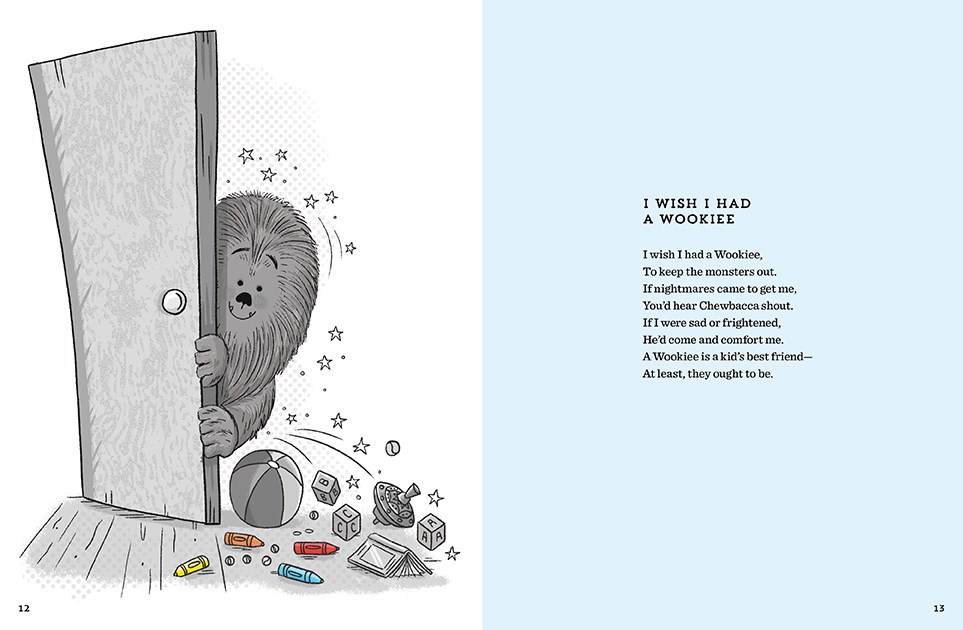
Ian Doescher – Star Wars fans will recognize the name as the scribe of William Shakespeare’s Star Wars saga – is here to delight readers with his Star Wars poems created especially for kids (of all ages). He celebrates fandom with over 100 poems, complete with illustrations by Tim Budgen, whose artwork will appeal immediately to readers familiar with Jeffrey Brown’s Jedi Academy graphic novel series. He covers each of the three trilogies and embraces all the characters – and fans – of the Star Wars Universe, with poems like “Resourceful Sith”, where a child gets hold of supplies to make themselves into Darth Maul; “Snow Day on Hoth”, where kids enjoy a snow day in the greatest of ways: “My sister was a rebel leader, / And I was Luke in my snowspeeder. / The neighbor twins were Empire troops, / Approaching us in AT-AT groups”. He remembers us parents with poems like “Dad’s Luke Skywalker Figurine”, “Mom, the Medic Droid”, and “Old Mr. Jones and His Star Wars Collection”. Illustrations in black, white, and color are on almost every page. Put this right next to your Shel Silverstein and Jack Prelutsky books, and make sure to have some fun Star Wars coloring pages available. For all of us who imagined their rooms as the Millennium Falcon’s cockpit, this book’s for you.
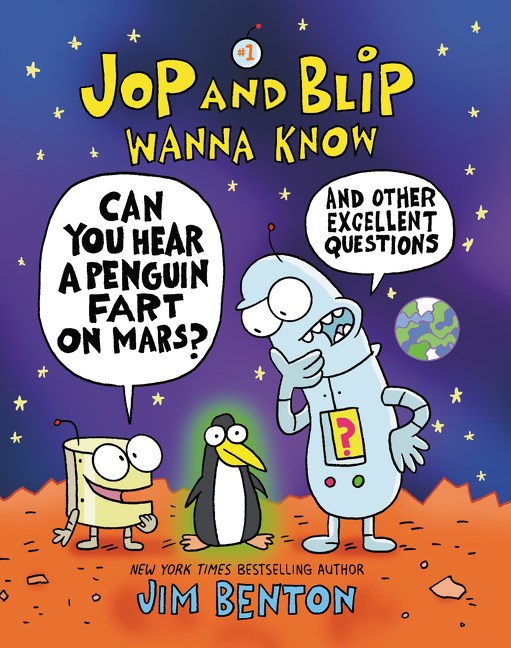


Jop and Blip Wanna Know #1: Can You Hear a Penguin Fart on Mars?: And Other Excellent Questions, by Jim Benton, (June 2021, HarperAlley), $12.99, ISBN: 9780062972927

Ages 6-10

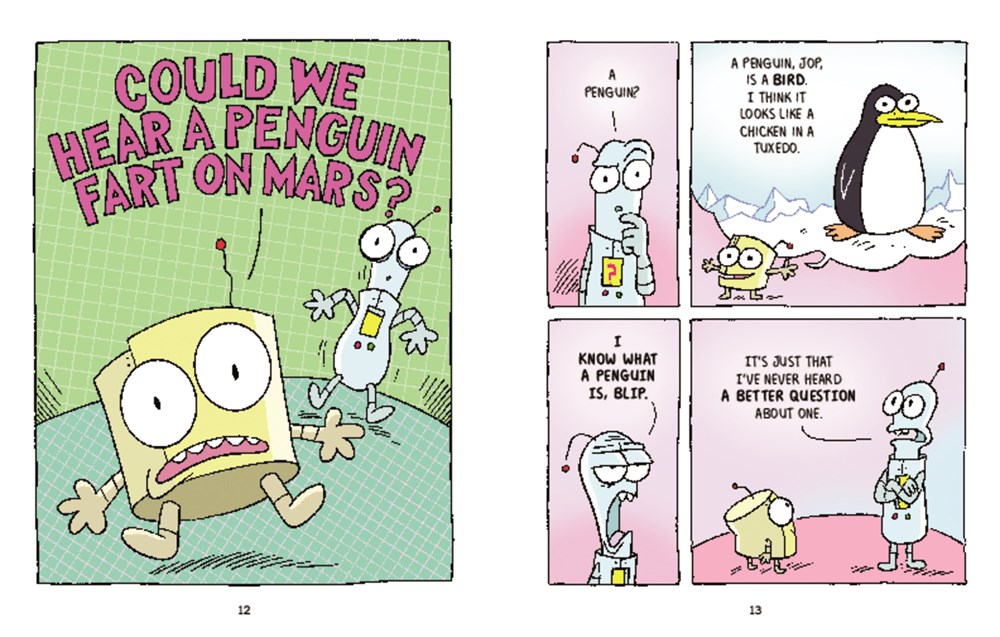
Jop and Blip are two robots with an insatiable thirst for knowledge. They have the deep questions here in this first volume of Jop and Blip Wanna Know, a new series from graphic novelist Jim Benton. Here, they take the science apart to learn whether or not we could hear a penguin fart on Mars; if one could eat a dragon sandwich, and why we have two of sensory organs like nostrils, eyes, and ears. Panels are vibrant and the back-and-forth dialogue is fun to follow: kids who love the Elephant and Piggie books will jump right in here. The sillier side of science inspires these questions, sure, but the reasoning is solid and there’s so much to learn packed in here, including the origin of the sandwich, what dinosaurs really looked like, and yes – whether or not we can hear a penguin farting on Mars. This first book is organized into three chapters, each exploring a different question, with an activity at the end of each. Like Blip says, “…everything is worth knowing”! Think of this as a Science Comics series for your newly independent readers, and add it to your collections.

Fun learner-led program: If you have access to World Book Online through your library, check out the Webquests in the Educator Tools area. They’re printable activities on different topics that challenge readers to follow step-by-step directions to navigate the database and learn about the topic by watching videos, seeing images, and reading the text (which can also be read out loud via the database). While there are no “farting penguins” Webquests (yet), it’s a fun way to introduce research and navigating databases. This Dinosaurs Webquest is a good place to start.

Jop and Blip Wanna Know: Can You Hear a Penguin Fart on Mars? has a starred review from Kirkus.
Where’s Waldo? Santa Spotlight Search, by Martin Handford, (Sept. 2021, Candlewick Press), $18.99, ISBN: 9781536220131

Ages 5-9

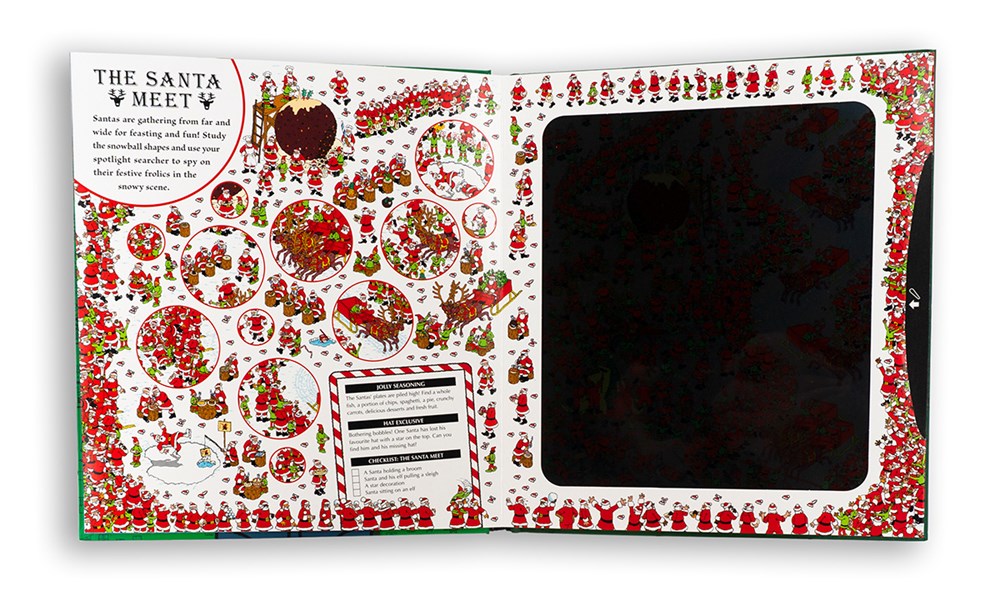
The holiday season brings a new Waldo adventure. The Spotlight books are fun because they add a little more detective work into the mix; dark plastic “winter scenes” on each spread call for a special Spotlight Searcher to slip in and shed a white background against the searching area. There are 6 scenes (including the one on the opening spread) to search, and every challenge calls for readers to search the crowds for Santa, Waldo and friends, and a changing list of objects, from a hatless Santa Claus to solving a jumble by finding letters on building blocks. Visit a Santa Meet and Santa’s Workshop; go Christmas Shopping; enjoy some Festive Baking; join a Jolly Jamboree, and get ready for Christmas Eve. A great learner-directed book to have in a Waldo Corner in your children’s room, and a great way to keep kids busy during Christmas gatherings.

Brightly has Where’s Waldo? printables available, and Nerd Craft Librarian, whose blog I miss, had a great Where’s Waldo? Scavenger Hunt that you can still be inspired by here.
 

Do You Know? Space and Sky, by Virginie Loubier/Illustrated by Robert Barborini, Audrey Brien, Hélène Convert, Christian Guibbaud, & Cristian Turdera (Oct. 2021, Twirl Books), $16.99, ISBN: 9782408029166

Ages 5-8

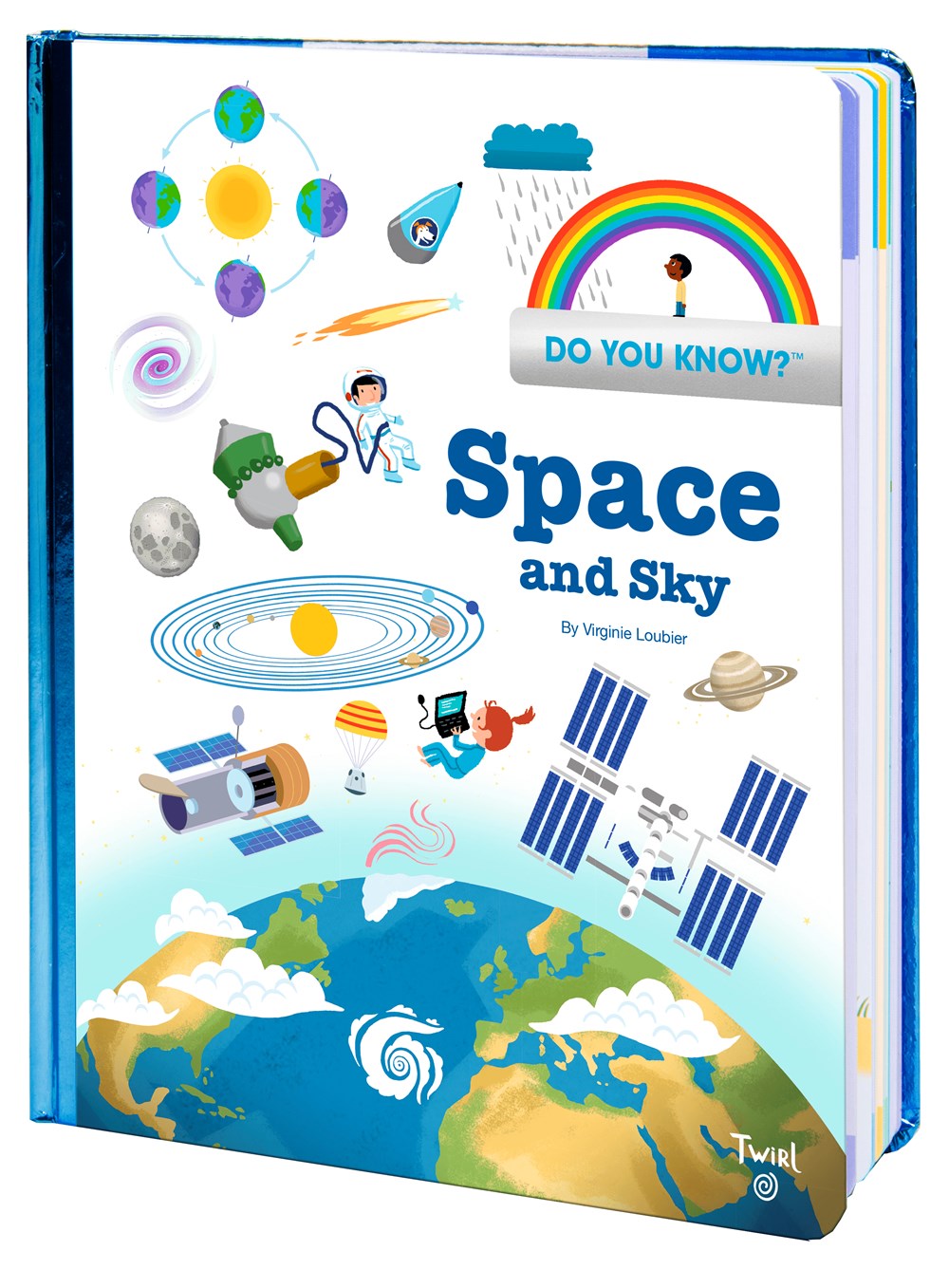
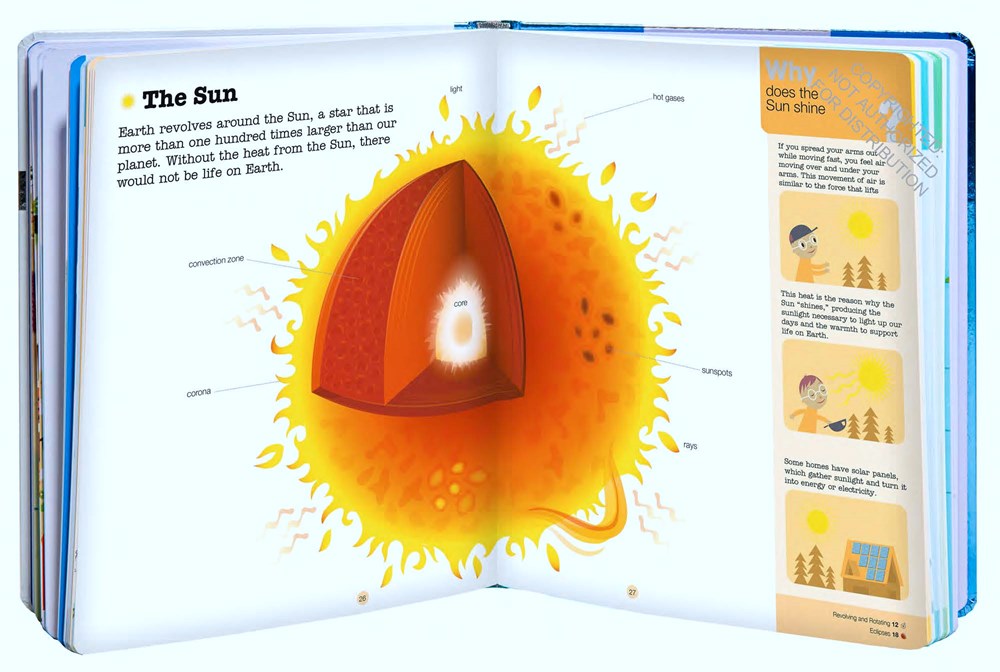
I really enjoy this Do You Know? series for intermediate and middle grade readers, and Space and Sky – the latest – is another hit. Organized into four areas – The Sky, The Solar System, Studying the Universe, and Exploring Space – Space and Sky takes a lot of information and makes it readable and organized for younger learners. Space and Sky covers everything from Earth’s water cycle, weather, and seasons to the planets, space exploration, and how we use technology to study the earth. It’s a funnel type of learning, going from the small to the large, and it helps readers understand where we are in relation to our universe. Let’s Review pages at the end of every section provide learning activities, and colored boxes at the bottom of right hand pages direct readers to related topics in the book. Colorful artwork throughout provides fun images of people and nicely detailed maps and infographics. A full index helps readers locate what they’re looking for.

If you have a puzzle area in your children’s room, consider a Space Day and display Space and Sky along with books like Stacy McAnulty’s planets and space series, Nat Geo Kids’s Space Encyclopedia, and a fun puzzle, like the NASA puzzles (if you have the space) or Melissa & Doug’s Solar System puzzle (we use a lot of Melissa & Doug at my library – so sturdy!).


Posted in Fiction, Fiction, Intermediate, Middle Grade, Non-fiction, Non-Fiction

A gift for every learner!

It’s that time of year, expect the gift guides to be coming at you fast and furious. Let’s see what’s making my lists this year.

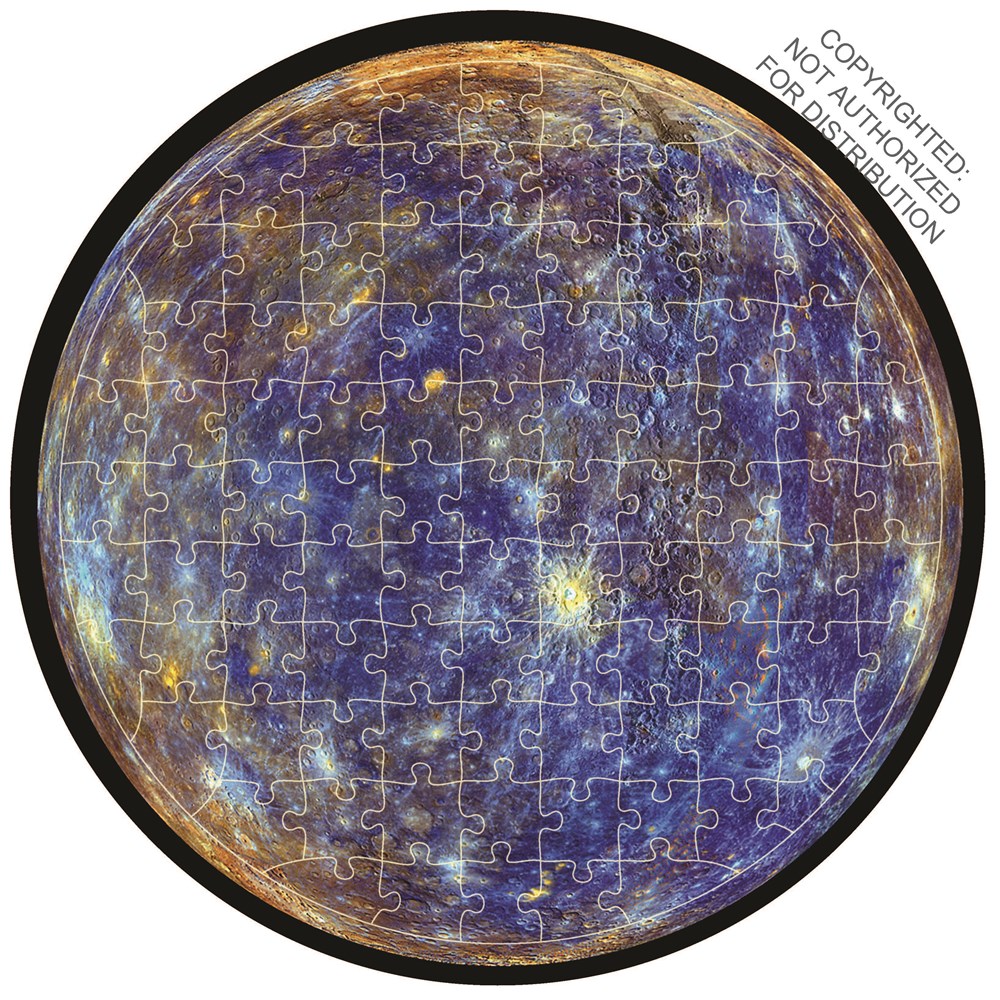
Mercury: 100 Piece Puzzle (Featuring Photography from the Archives at NASA), (Aug. 2021, Chronicle Books), $19.99, ISBN: 9781797210346

Ages 6+

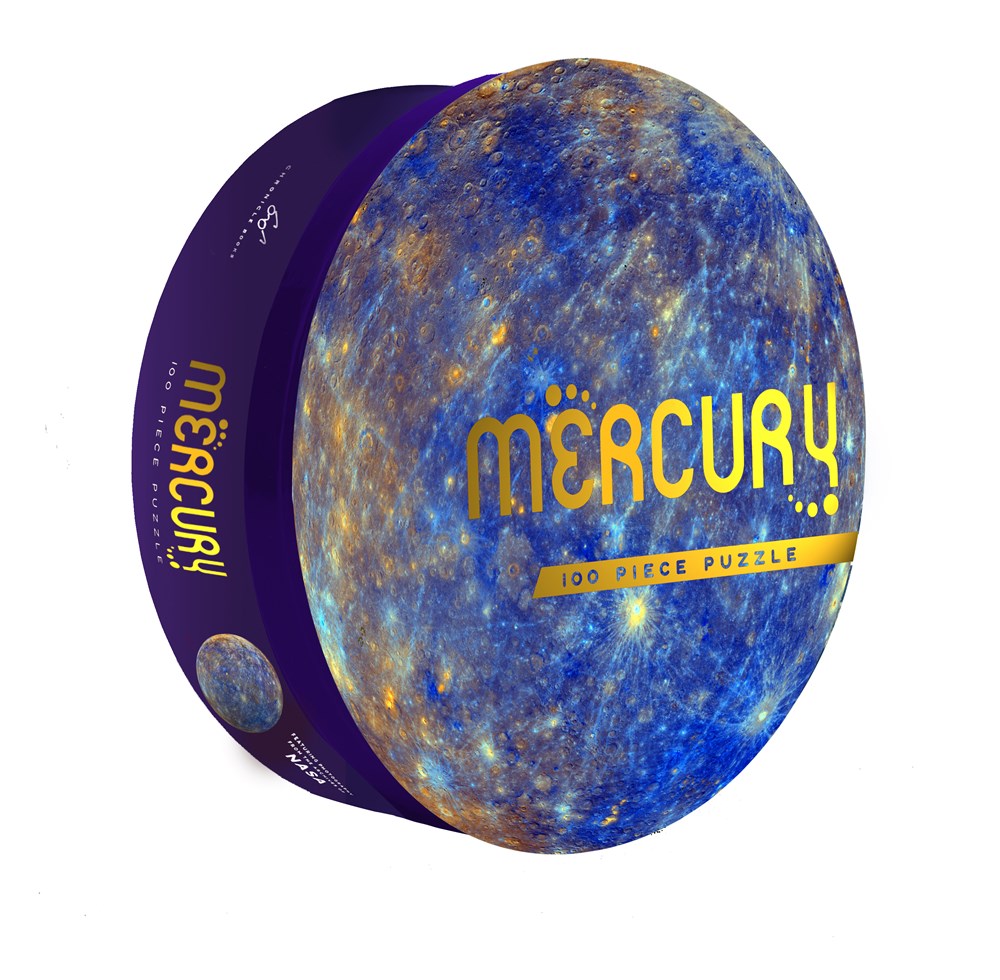
Puzzle fans, astronomy fans, science fans, everyone will love the next planetary puzzle from Chronicle Books. Mercury is the newest 100-piece puzzle using photography from the Archives at NASA, a follow-up to April’s Earth puzzle (which my kid and I still haven’t solved). It’s a beautiful photo of Mercury, and it is huge: 2 1/2 feet in diameter, so clear off a table for Thanksgiving/holiday gatherings and let the family and friends have at it. Puzzle pieces are sturdy, and they’re a good size, inviting little hands to help out, too. It’s a round puzzle, so you can somewhat figure out the outside of Mercury, but don’t forget: it’s a photo, so have fun trying to figure out which crater is goes where (G, my kiddo, and I are still arguing over them).


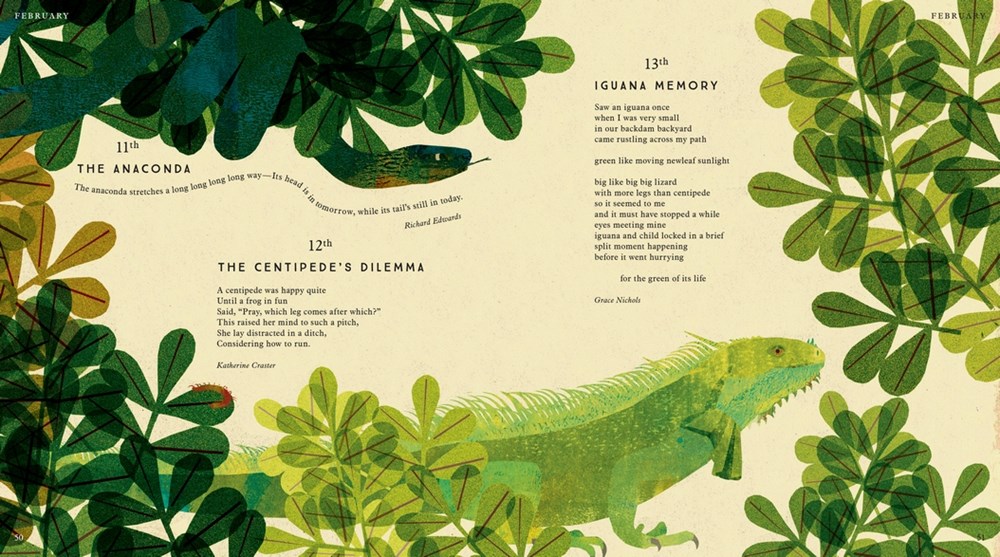
Tiger, Tiger, Burning Bright! An Animal Poem for Each Day of the Year, selected by Fiona Waters/Illustrated by Britta Teckentrup, (Oct. 2021, Nosy Crow), $40.00, ISBN: 9781536217186

Ages 3-8

This is a beautiful collection of animal poems for readers, poetry fans, and animal lovers. There are 366 poems – one for every day, including Leap Year – organized by month. Each month begins with a table of contents that lays out each poem and author by day. The spreads are beautiful and the poems are related on each spread, giving a feeling of cohesion. January 1-3 have poems about polar bears; 4-5 about whales; the action moves through the days, with spreads turning to sheepdogs on guard, wolves, and more. Britta Teckentrup’s artwork is just beautiful, with cold, quiet winter spreads moving into warm, home interiors; crocodiles lurk on one spread, gazelles leap through grass in another. Colorful, not overwhelming, the artwork brings the ideas in each poem to life. Endpapers offer lush, green leaves, inviting us in, and closing their doors behind us. Read a few a time, or savor them day by day.


The Wind in the Willows, by Kenneth Grahame/Illustrated by Grahame Baker-Smith, (Nov. 2021, Templar Books), $19.99, ISBN: 9781536219999

Ages 7-12

The classic children’s novel gets a gift hardcover release just in time for the holidays! If you’ve never read The Wind in the Willows, you’re missing out. The adventures of Mr. Toad, Mole, Ratty, and Badger have been delighting readers since its publication in 1908. This hardcover gift version has illustrations from Kate Greenway Medal winner Grahame Baker-Smith that give gorgeous life to the story; some are sepia-toned, some rendered in shades of blue, green, or brown, some in rich, warm, earth colors. The cloth cover looks like a copy of the book I found on my own public library’s shelves a lifetime ago; just running my hand over the cover brought back memories of sitting down with it and wandering into Mr. Toad’s magic world. Give this to a younger reader, give it to a grownup who needs to go back in time, even if just for a moment.

Posted in Early Reader, Intermediate, Non-Fiction, Non-Fiction

Jurassic Pets! Dr. Dean Lomax and Mike Love gives us Preshistoric Pets

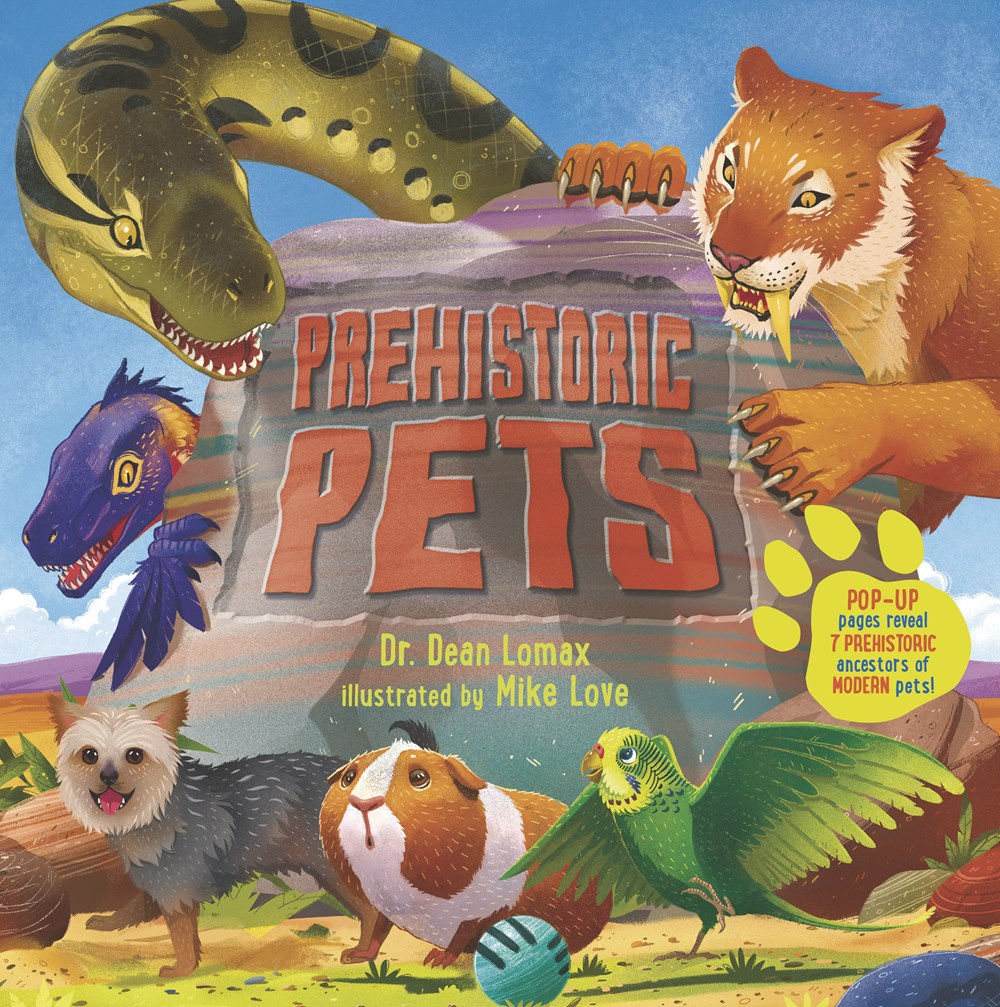
Prehistoric Pets, by Dr. Dean Lomax/Illustrated by Mike Love, (Sept. 2021, Templar), $17.99, ISBN: 9781536217148

Ages 5-9

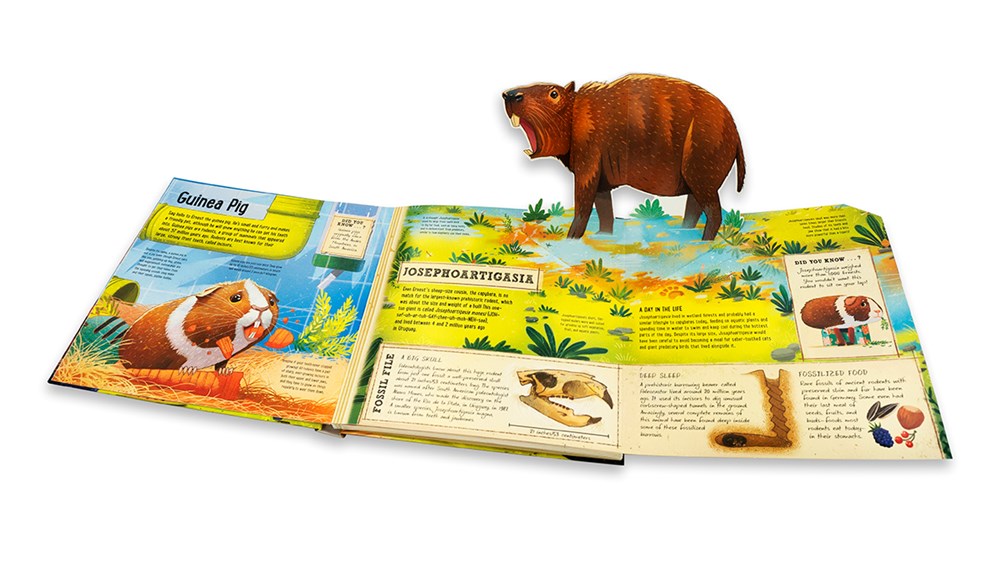
Cat people all know that our little furballs think of themselves as savage, saber-toothed tigers on the hunt, whether they’re stalking a daydreaming dinosaur or a dust bunny. But did you ever imagine what your guinea pig’s ancestors may have looked like? Paleontologist Dr. Dean Lomax has you covered. Prehistoric Pets looks at the evolution of seven favorite kinds of pets: guinea pigs, parakeets, corn snakes, cats, goldfish, dogs, and horses. Using the fossil record to trace each pet’s lineage, Dr. Lomax goes back through the family trees of each of these popular pets to give us an idea of their prehistoric parentage. That chatty parrot likely descended from the Velociraptor; your corn snake can trace its heritage back to the giant Titanoboa. Each spread folds out into a pop-up gatefold, with the prehistoric beast rising up from the pages. Loaded with facts about both the modern animal and its primeval counterpart, and filled with colorful artwork, this is a home run for your prehistory collections. Display and talk up with one of my favorite read-alouds, Steve Jenkins’s Prehistoric Actual Size. The pop-ups are going to seal the deal for readers on this book – get a couple if your budget permits.


Posted in Intermediate, Middle Grade, Non-fiction, Non-Fiction

Ducks Overboard! The story behind the story that inspired Eric Carle

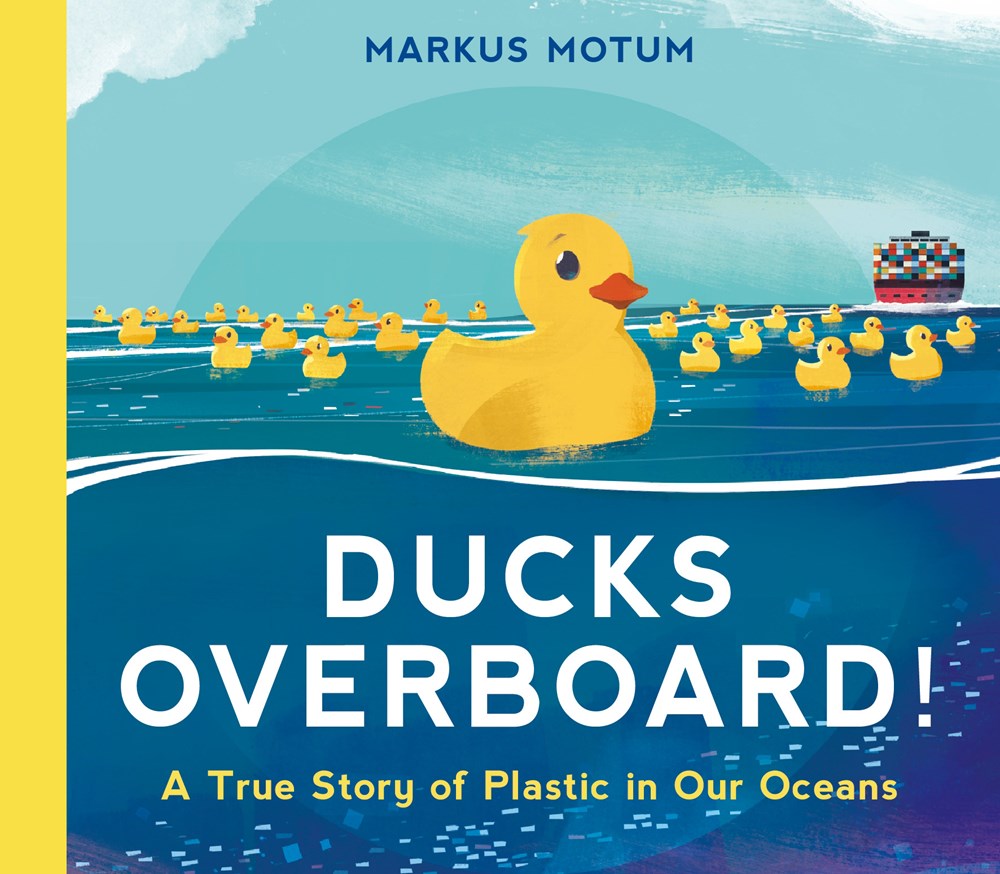
Ducks Overboard!: A True Story of Plastic in Our Oceans, by Markus Motum, (Sept. 2021, Candlewick Press), $17.99, ISBN: 9781536217728

Ages 7-10

In 2005, Eric Carle wrote Ten Little Rubber Ducks, a story about a shipping carton that leaked dozens of plastic rubber ducks into the sea, and their adventures after landing in the water. The book is based on a true story that took place in 1992; Ducks Overboard! is about the environmental impact of that accident, and about the pollution crisis facing our oceans. Narrated by one rubber duck, the story is part narrative – the duck’s story – and part nonfiction text. As the duck tells its story, smaller font provides factual information about plastic, its uses, and its the environmental impact. As the ducks bobs in the water, it sees pollution all around it: a plastic bag here; discarded fishing nets there; all creating problems for the animals in the water. Getting caught in a trash whirlpool, the duck spends years tossed around the ocean, until arriving on a beach shore during an environmental cleanup. The mixed media artwork is bright and colorful, and creates strong statements with its imagery: hundreds of dots in the ocean look like the shape of a continent, until one realizes that it’s a depiction of the shipping containers that get lost in the sea every year; a sea turtle swims underwater, dragging a fishing net wrapped around its neck; a spread illustrates the Great Pacific Garbage Patch. The message is clear: plastic is choking our oceans. Back matter includes more about the 1992 shipping container that spilled ducks and other plastic toys into the ocean; how trash moves along ocean currents; facts about plastic, and how kids can help protect the waters. Great for storytime, great for STEM and Earth Day stories, great to read before a beach or neighborhood cleanup project.

Science Friday has a Great Pacific Garbage Patch teacher’s guide; Better Lesson and Siemens STEM Day have free downloadable lesson plans and activities.

Posted in Intermediate, Non-Fiction, picture books

Fearless: Daphne Caruana Galizia’s story

Fearless: The Story of Daphne Caruana Galizia, Defender of Free Speech, by Gattaldo, (Sept. 2021, Candlewick Press), $17.99, ISBN: 9781536219180

Ages 7-10

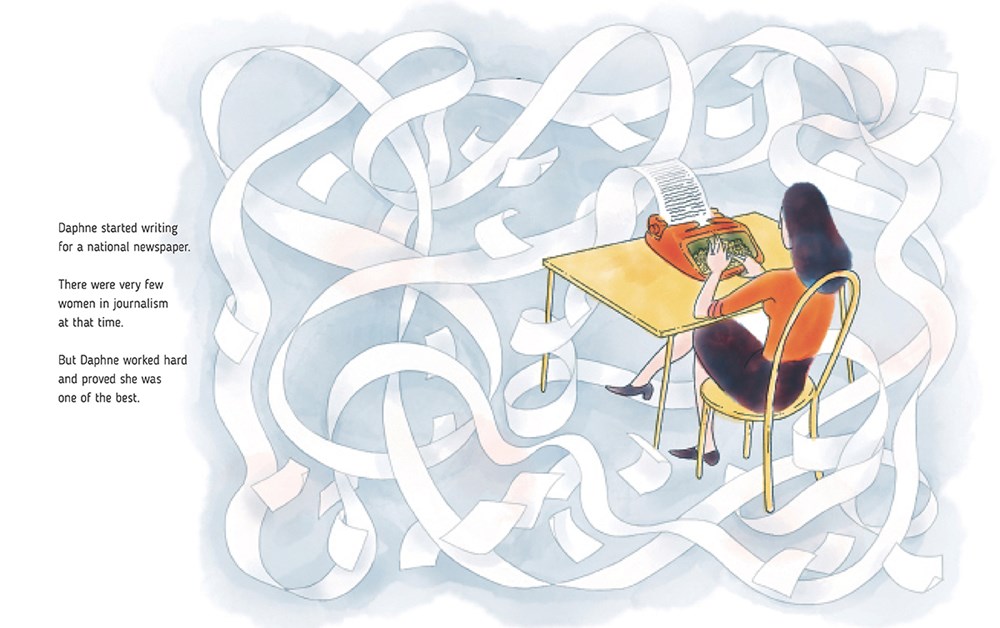
Daphne Caruana Galizia, a Maltese journalist who exposed corruption at all levels of government and organized crime, gets her moment in this powerful picture book biography by one of her close friends, award-winning creative director and illustrator Gattaldo. Fearless introduces readers to Caruana Gallizia, whose love of books inspired her to think for herself and the courage to speak out through protest. The story follows her career in journalism, depicting her as a warrior fighting a many-headed hydra of corruption; her headlines proving that the pen is mightier than the sword. Gattaldo uses soft mixed media illustration to create powerful images: Daphne, in colorful clothing, clutching a fountain pen, stands out in a dreamlike sea, illustrating her determination to stand out among those too fearful to speak up. Later, she stands proudly among a group of protestors inspired by her voice and her work. Endpapers feature bay laurels; symbols of strength and victory, and known as “daphne” in ancient Greece. An author’s note includes photos of Caruana Galizia and discusses her assassination, with a touching note about the author’s friendship with her.

Strong words about a strong figure who wouldn’t be silenced, this is a necessity for your biography shelves. You can view Daphne Caruana Galizia’s Running Commentary blog here, where she pulled no punches with her commentary. You can read about her death here, and can follow the latest news on bringing her murderer(s) to justice here.

Posted in Intermediate, Non-Fiction

Intermediate Nonfiction to love!

I’ve got some great middle grade nonfiction here, if you’re shopping for your back-to-school carts. My library kids tend to be nonfiction readers, so I’m always looking for fun, interesting books for them, and I think these will fit the bill nicely. Take a look, see what appeals to you!

What a Wonderful Phrase: A collection of amazing idioms from around the world, by Nicola Edwards & Many Montoya, (Sept. 2021, Kane Miller), $14.99, ISBN: 9781684642991

Ages 7-10

This collection of phrases and idioms from all over the world is a great little resource. Kids will easily recognize some phrases, like “buttering a person up”, and “raining cats and dogs”, but will they know where “seeing a peacock dance in the jungle” comes from? How about “peeing in your shoes will only keep you warm for a little while”? The origins of these phrases are interesting and amusing, and this little collection contains explanations, a phrase in its native language and phonetic pronunciations, and colorful illustrations. There’s no cow on the ice here (Swedish for “no rush”), but consider this one for your quirky readers who enjoy playing with language. What a Wonderful Phrase is a companion to What a Wonderful Word (2018).


Is There Life on Your Nose? Meet the Microbes, by Christian Borstlap, (Sept. 2021, Prestel Junior), $17.95, ISBN: 9783791374970

Ages 6-10

This is going to be huge with my library kids. Microbes make up every part of our day-to-day life, and this book is all about those microbes and where they live: on your nose, in boiling water or the arid desert, even underground. Filled with fun facts and entertaining illustrations, Is There Life on Your Nose? is all about microbes: how they breed, how they contribute to our lives (we wouldn’t have pickles, cheese, or bread without them!), how they can generate clean energy, and even how they can make us sick, in the form of viruses. It’s a great introduction to a timely subject, explained with humor and smart facts that will help kids understand – especially now – those little, microscopic creatures we share our world with. Are you doing STEM activities again, either in-person or virtually? Pair a reading of this with some of these experiments from Go Science Girls – I’m thinking of the hand-washing one in particular for my kiddos!


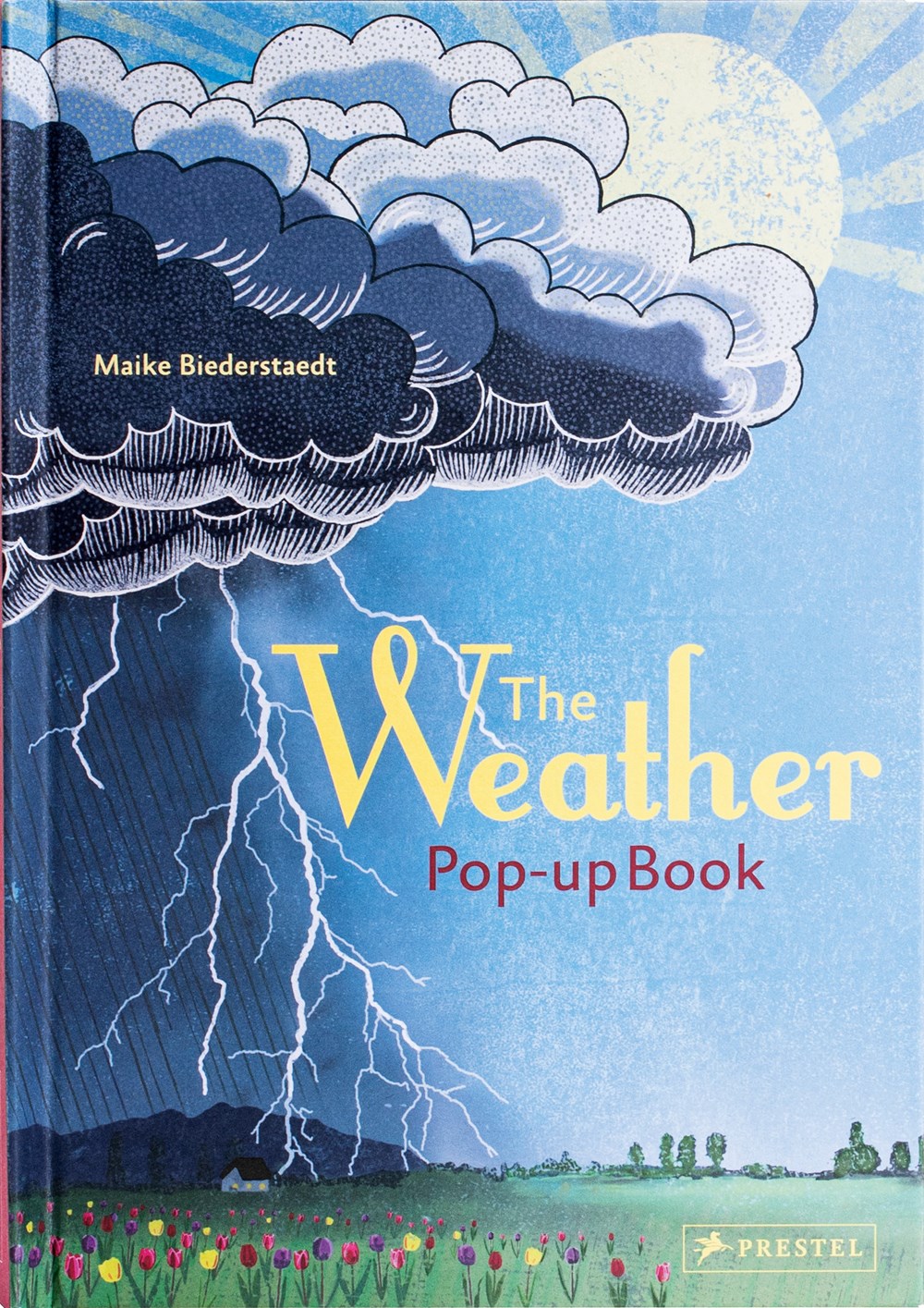
The Weather Pop-Up Book, by Maike Biederstadt/Illustrated by Michael Prestel, (Sept. 2021, Prestel Junior), $25, ISBN: 9783791373935

Ages 7-10

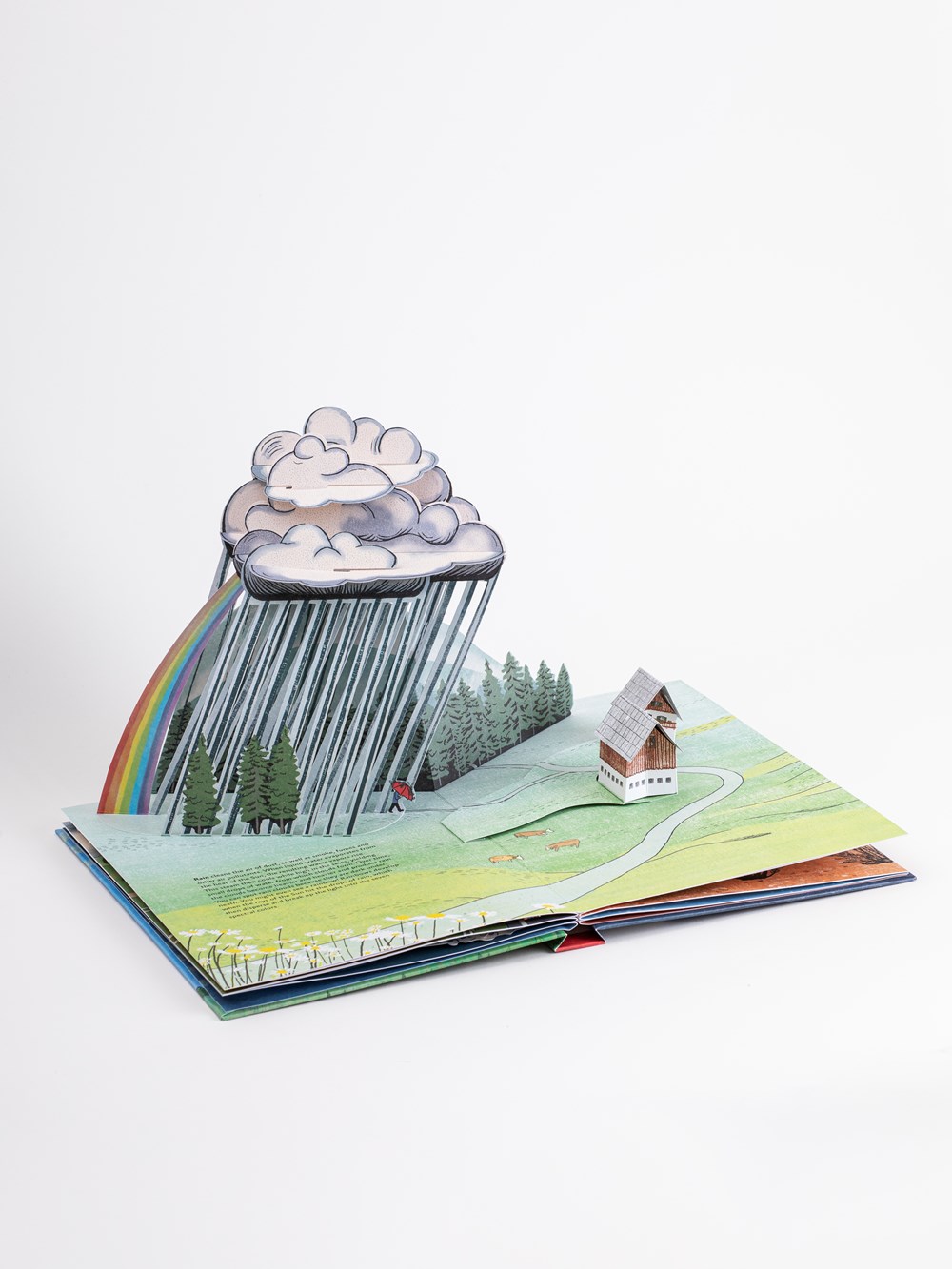
Just because kids are getting older doesn’t mean they can’t appreciate a good pop-up book! This book on weather is a great way to communicate the power of weather and the devastating influence of climate change. Spreads on storms, rain, tornadoes, heat, and snow fold out into 3-D landscapes, with paragraphs on each weather phenomenon. The opening spread explains “why weather is the way it is”, and the final spread on climate change explains how it affects weather, and what we can expect as weather patterns are further affected. A good addition to your reference section – if you’re putting this into circulation, it may wear out pretty quickly, but it will be a popular choice.


Explore! America’s National Parks, by Krista Langlois/Illustrated by Hannah Bailey, (June 2021, Kane Miller), $18.99, ISBN: 9781684641932

Ages 7-12

Who’s up for a road trip? This voyage through America’s 61 National Parks will have readers ready to pack their backpacks and head out with this book as their guide. Beautifully illustrated, laid out by geographic region (West Coast, Alaska, Rocky Mountains, Southwest, Central, East, and Tropics), and with a strong message of environmental respect and care, this is a treasure trove. United States maps highlight each region and its parks; a descriptive paragraph on states covered and activities to discover entices readers to turn the pages and dive in. Fact files give the statistics for each park, including size, state, founding date, and one fun fact; ranger tips help readers plan for a safe and exciting visit. Want to help scientists estimate how many bears live in Denali? Want to learn where the best place is to listen for the Mexican spotted owl? You’ll find all the answers in here. Armchair explorers and travelers, natural world fans, anyone who loves NatGeo books. Need a program idea? Take virtual tours through each of the parks using this book as your guide.

The Book of Labyrinths and Mazes, by Silke Vry/Illustrated by Finn Dean, (Sept. 2021, Prestel Junior), $19.95, ISBN: 9783791374741
Ages 7-10
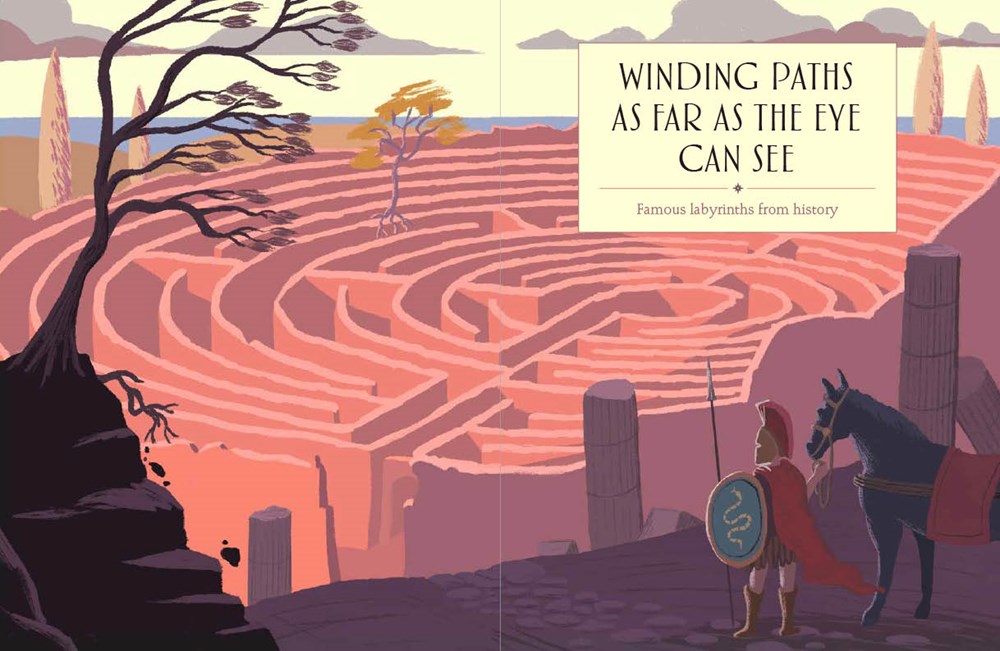
Part activity book, part reference guide, this book on mazes and labyrinths will send puzzle fans over the moon. Organized into four sections: I Think I’m Going Crazy! explains the differences between a maze and a labyrinth, how detours can lead us to our goals, and mazes and labyrinths within our bodies and our lives; Winding Paths as Far as the Eye Can See spotlights famous labyrinths from history; To The Center, Please! looks at the journey to the center of a labyrinth – and how to get back out, and Strange Paths! leads readers to mazes all around the world. From Theseus and the Minotaur’s labyrinth of legend to the quiet contemplation of walking a labyrinth in n nature, beautifully illustrated spreads include mazes and activities for readers to complete and ideas to mull over. A guide to solving mazes will help readers before they wander into a maze (hey, Fall’s coming… corn mazes!). Back matter includes more information about famous labyrinths worldwide and a glossary. Great for reference collections. History fans and brain buster fans will devour this one.
Posted in Intermediate, Non-Fiction, picture books

Take a month-by-month tour through the hemispheres with North & South

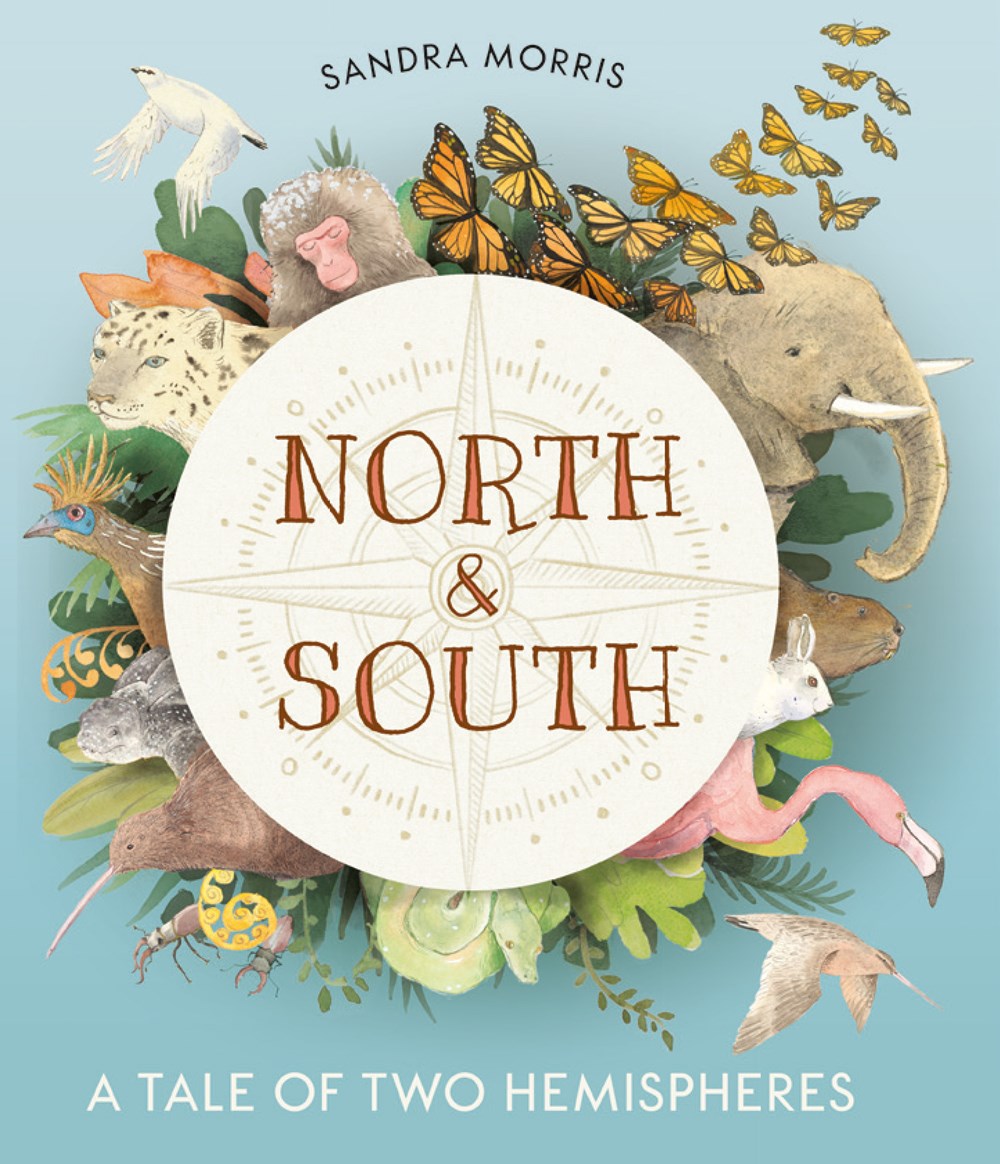
North and South: A Tale of Two Hemispheres, by Sandra Morris, (July 2021, Candlewick Press), $17.99, ISBN: 9781536204599
Ages 5-8
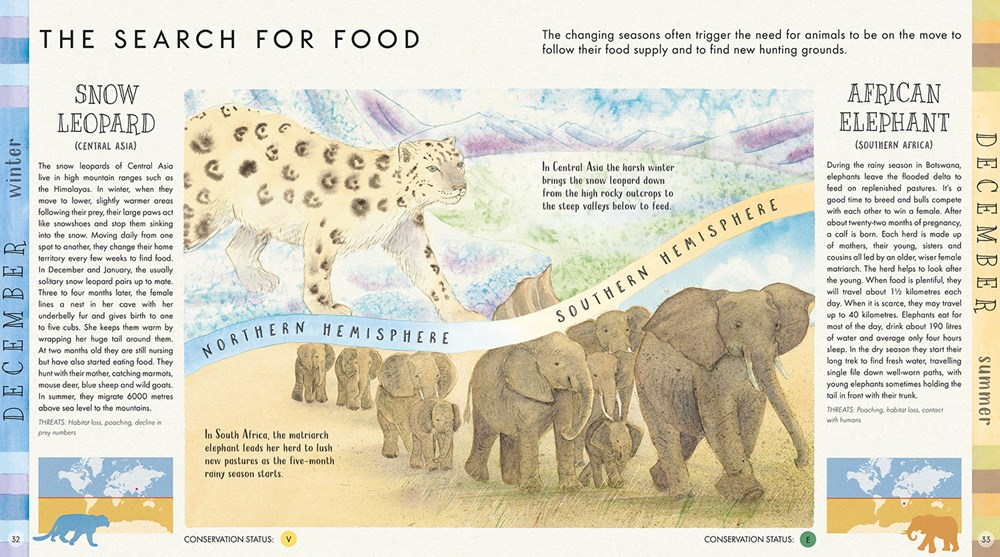
Month by month, Sandra Morris takes readers through the habitats and animals that live in the North and South hemispheres. In January, a Scottish Ptarmigan and Mountain Hare camouflage themselves to stay safe from hungry predators; meanwhile, in Northern Australia, a Green Tree Python, also camouflaged to blend with her surroundings, guards and warms her eggs by coiling herself around them. Side by side, readers can see how animals across each hemisphere adapt to their habitats with engaging factual writing. Watercolor and salt artwork makes each spread an attractive reading experience. Maps on each spread help place readers in each habitat, and an overview of the seasons across each hemisphere will delight readers when they realize that one animal’s summer is another’s cold winter. Conservation status color codes also call attention to the dangers our plants and animals face all over the world. Profiles on 25 animals across both hemispheres give readers a natural world tour they’ll never forget, and copious back matter includes a glossary, index, and extra information for further reading. Endpapers feature a world map, labeled with animals profiled in the book. An essential desk reference for young and emerging readers, conservationists, and animal lovers.
North and South: A Tale of Two Hemispheres has a starred review from School Library Journal.
Posted in Graphic Novels, Intermediate, Middle Grade, Non-fiction, Non-Fiction

Join The Bug Club!

The Bug Club, by Elise Gravel, (Aug. 2021, Drawn & Quarterly), $17.95, ISBN: 9781770464155

Ages 6-10

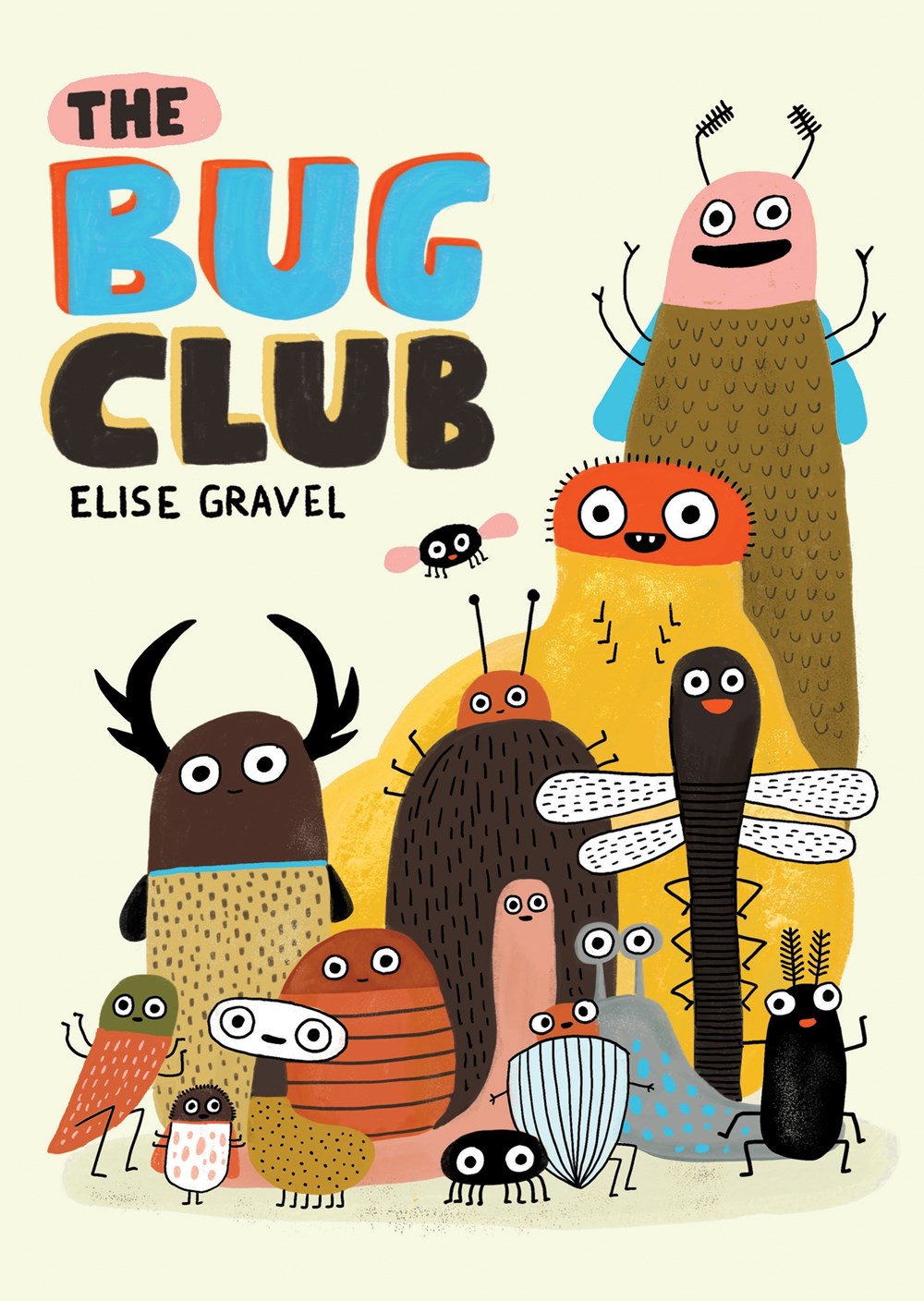
I adore Elise Gravel’s graphic novels. Her latest, The Bug Club, is part autobiography, part STEM study; just like her Mushroom Fan Club (2018). We learn that Elise Gravel has always been fascinated by bugs, and, using her friendly, cartoon style, presents a wide range of fascinating and adorable bugs for readers to enjoy with her. It’s a good introduction to etymology; she gives an overview of invertebrates and what makes them members of that club; she illustrates wing shapes, antenna shapes, provides an overview of life cycles, and offers illustrations of baby vs. adult types of bugs, like wasps, ladybugs, and dragonflies. We even get profiles on some of her favorite bugs, with full-page illustrations and a brief discussion of tardigrades, dung beetles, and others. Loaded with fun facts, Ms. Gravel encourages kids to use their imaginations and think about bugs as cool aliens. Her writing is easy to read, easy to understand, and makes the science of bug-watching just plain fun. Great for young readers, you can go over colors, count numbers of bugs, wings, eyes, horns, or legs. Get creative! Encourage your own kiddos to start their own nature journals (you know I love my nature journals) and sketch pictures of the bugs they may discover in books or in the park (remember; take only pictures, leave only footprints).

Visit Elise Gravel’s page on Drawn and Quarterly for more about her graphic novels; visit Elise Gravel’s webpage for fun activities and downloadables for your kiddos and your libraries and classrooms.

Posted in Intermediate, Middle Grade, Non-fiction, Non-Fiction, Preschool Reads

Reading Takes you Everywhere: Nature!

I’m going to stick to my library’s Summer Reading theme, Reading Takes You Everywhere, for this post; in this case, reading takes you into the Great Outdoors!

Weird but True! Ocean: 300 Fin-Tastic Facts from the Deep Blue Sea, by National Geographic Kids, $8.99, ISBN: 9781426371813

Ages 7-12

I have said this before, and I’ll say it again: these chunky, digest-sized NatGeo books MOVE. I refresh my collection throughout the year, every year, because the kids in my library love them. They love the wild collection of facts across all sorts of subjects, they love that they’re small enough to shove in their schoolbags (or mom’s bag), and they’ll pull them out anywhere (ANYWHERE) to rattle off facts to anyone (ANYONE) who will listen. It’s just great. This volume has loads of facts about the ocean: did you know that otters keep rocks under their arms to help them crack open clams? Or that feeding cows seaweed helps them burp less? Maybe you didn’t know this, but a sea cucumber can expel its organs to distract predators, and grow them back later. There are tons of great and fun facts here, accompanied by incredible color photos. Just add it to your cart; the kids will take care of the rest.


Out of the Blue: How Animals Evolved from Prehistoric Seas, by Elizabeth Shreeve, Illustrated by Frann Preston-Gannon, (May 2021, Candlewick Press), $17.99, ISBN: 9781536214109

Ages 6-9

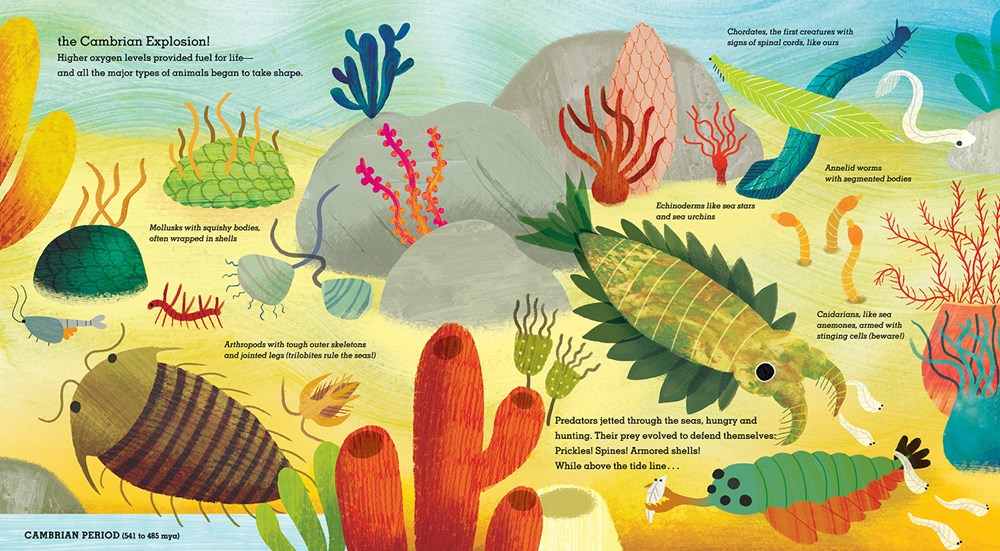
I love this gorgeous book! It’s a “story from out of the blue” about how animals evolved from microbes in the ocean to land creatures through Earth’s timeline. Spread by spread, readers travel through the planet’s history, from the Archean Eon (4-2.5 billion years ago) through the Cenzoic Era (66 million year ago to the present), with colorful illustrations as life evolves from sea-dwelling single-celled organisms, to athropods and echinoderms, to mollusks, dinosaurs, and finally, humans. It’s a compulsively readable history that describes the different types of organisms and illustrates the evolution from single- to multi-celled creatures; the development of fins to limbs, and how we are always connected to the water.  Readers learn how animals (and people!) compare to those that came before, and the informative text is chunked into readable paragraphs that respect and never overwhelm readers. Perfect for STEM/STEAM collections.

Out of the Blue has starred reviews from Kirkus and School Library Journal.
Wild is the Wind, by Grahame Baker-Smith, (May 2021, Templar), $18.99, ISBN: 9781536217926
Ages 4-8
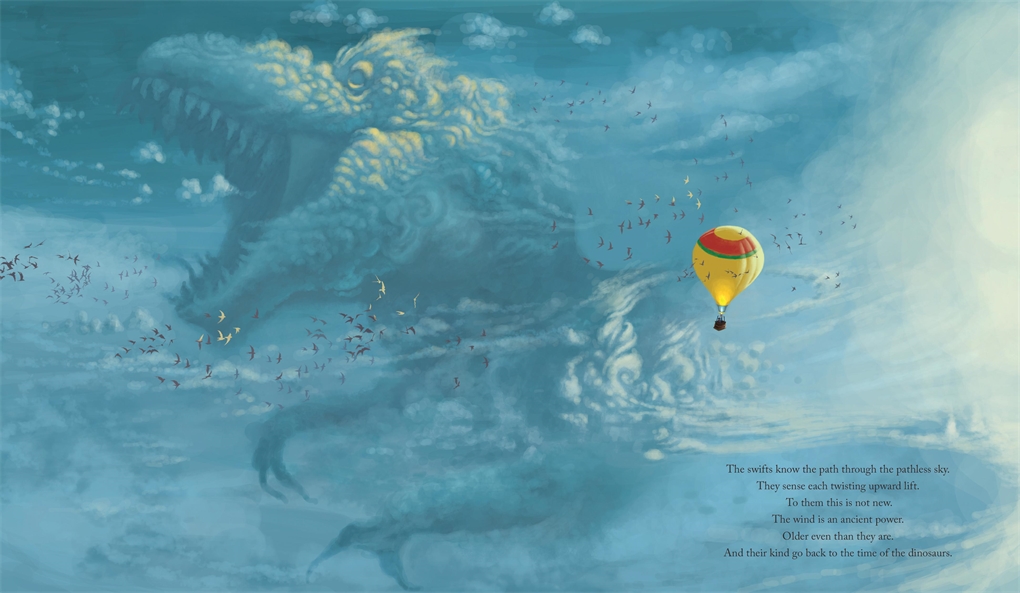
A girl named Cassi watches over a small bird, a swift, that she’s cared for. It’s time to let the bird go; the swifts soar around them, hearing the call of the wind, and Cassi knows that “They are wild and belong to the wind”. This breathtaking book is alternately a story about a girl letting her bird rejoin the world that brought it to her, and a story about the wonder of the wind. Across the world, winds whip into the sky, as ancient as the dinosaurs; they power turbines and give us power; they “howl with power” as storms. Every spread is a gorgeous revelation, with the ever-present swifts traveling the currents. Deep colors and incredible visions in the sky make this a fantasy to sweep readers away and return them, where they’ll never think of an ordinary breeze in the same way again. Grahame Baker-Smith is a Kate Greenaway Award-winning illustrator, and his companion book, The Rhythm of the Rain, is an excellent companion to Wild is the Wind. Have these available for your nature readers and display this with Aaron Becker’s Journey Trilogy.
Wild is the Wind has a starred review from Kirkus.
Little Kids First Big Book of Rocks, Minerals & Shells, by  Moira Rose Donohue & National Geographic Kids, (July 2021, National Geographic Kids), $14.99, ISBN: 9781426372223
Ages 4-8
The “Little Kids First Big Book” is another great series from NatGeo Kids. They introduce younger learners to science concepts in a fun, accessible way. It’s NatGeo, so you know the photos are amazing, and the information is organized into easily readable sections of interest. Here, kids will learn how rocks are formed, the difference between rocks and minerals, and how they’re used in just about every facet of our lives. Chapters are organized into Rocks, Minerals, and Seashells, and activities and map-reading activities at the end of every chapter help kids put their thinking caps on and sharpen new and developing skills. Fact boxes and cool callout boxes throughout keep kids turning pages, almost feeling like they’ve got that fun, small digest (see up above, Weird But True) handy, where they can tell everyone cool bits of info (The Great Sphinx in Egypt was carved from limestone!).  A Parent Tips section offers fun and safe ways to join your kids in learning about rocks, minerals, and seashells (ahem… STEM program in a book!). There are additional resources, including a Bill Nye video on the rock cycle, and a glossary, and the book is indexed. What a great resource to have handy!
Posted in Early Reader, Intermediate, Non-Fiction, Non-Fiction

Go Wild! With Nat Geo Kids!

Hope everyone had a restful Fourth, and if you’re off today, enjoy. I’m working on getting caught up, on getting my library together for a July 12th opening, and basically just working on keeping my head together in the middle of a year and a half that is just bananas. Anyway, join me as I escape into a great new nonfiction series by National Geographic Kids.

Go Wild! Pandas, by Margie Markarian & National Geographic Kids, (June 2021, National Geographic Kids), $9.99, ISBN: 9781426371608

Ages 4-8

This is such a cute new nonfiction series for younger readers! The Go Wild! series introduces readers to different animals, in this case, the panda. The book has a conversational, informative tone, inviting readers to “visit the world of pandas”. Readers learn about their habitat, where in the world they are found, their size, anatomy, related animals (like the Sun Bear, Spectacled Bear, and Sloth Bear), food, socialization, and more. The author addresses the need for conservation and addresses a major threat to the panda – deforestation – and offers tips for ways kids can get involved to protect pandas. A fun Name That Animal activity and parent tips on building enthusiasm close out this fun book, which also includes a glossary. Loaded with fast, fun facts and beautiful color photos, this is such a great new series that I know my kiddos will snap up. They already devour my NatGeo Kids Easy Readers (like this Panda book), and this hardcover 8×8 series will fit nicely on my shelves and look great in my displays.

Go Wild! Sea Turtles, by Jill Esbaum & National Geographic, (May 2021, National Geographic Kids), $9.99, ISBN: 9781426371585
Ages 4-8
How adorable is this Go Wild! volume on sea turtles? SO ADORABLE. Color photos and informative, friendly text have lots to say about sea turtles. Did you know that the smallest sea turtle is only about two feet long, but can weigh about as much as four car tires (between 70 and 100 lbs)? Or that a leatherback turtle can hold its breath for nearly an hour and a half? There are great facts to be discovered here, along with photos of the “run for life” to the ocean by hatchlings. A section on threats focuses on the problem of our polluted waters, and offers ways kids can help be part of the solution. Fun activities and parent tips, plus a glossary, make this another win from NatGeo Kids. Their Parent Tips can easily transition into virtual or in-person library programming for anyone interested – my library system is having a sea turtle STEM session at the end of July, and I’d like to put together a little sea turtle bundle with some of these ideas. Stay tuned!