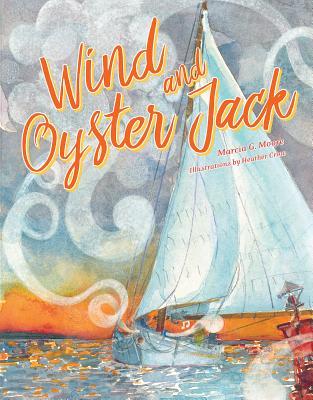
Wind and Oyster Jack, by Marcia G. Moore/Illustrated by Heather Crow, (Nov. 2017, Schiffer Publishing), $14.99, ISBN: 9780764354229
Recommended for readers 6-10
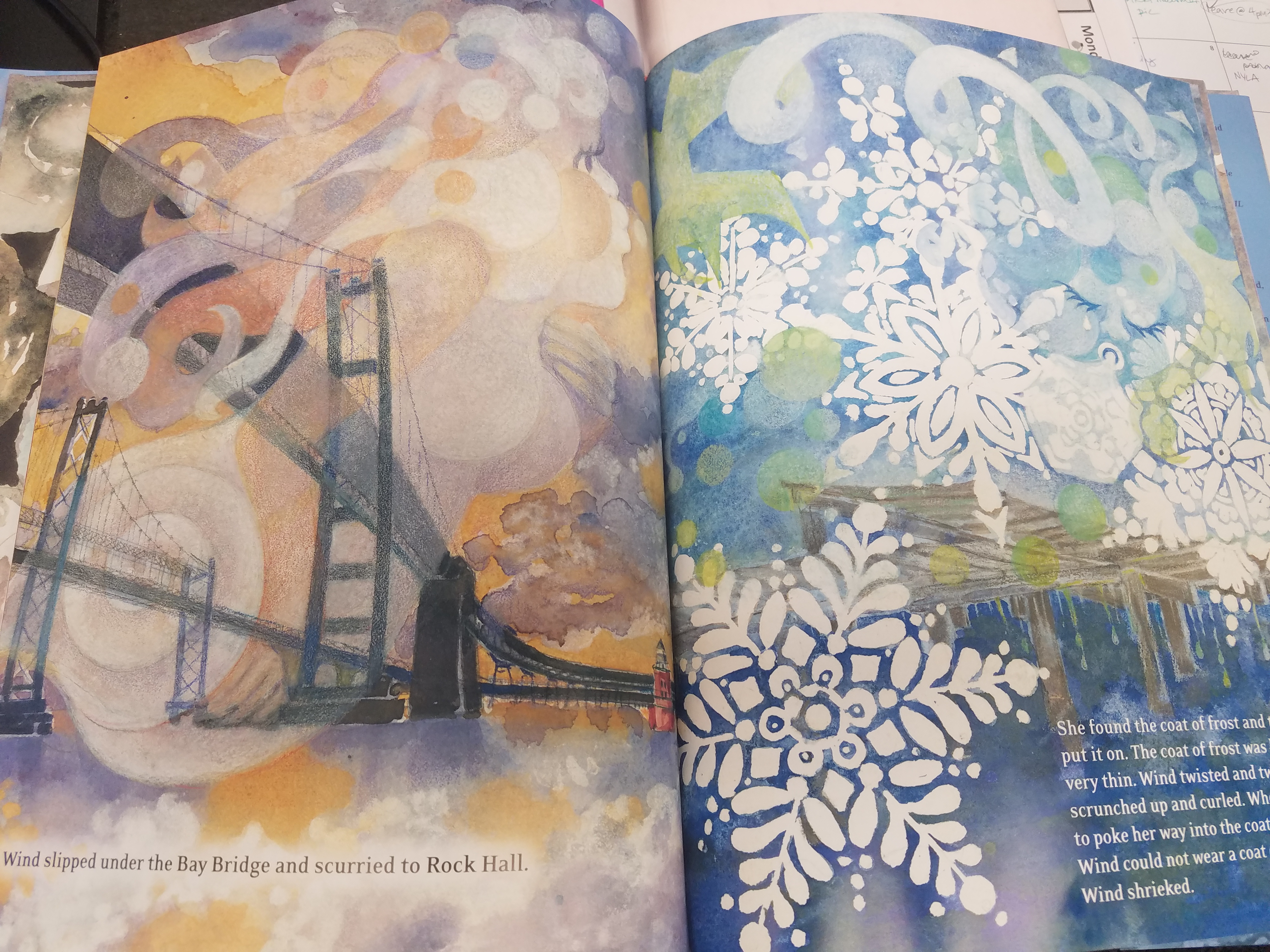
Oyster Jack is a Chesapeake Bay waterman, out on his boat, Dinah, harvesting oysters. Their friend, Wind, helps them by lifting Dinah’s sails and allowing the boat to move. The weather is getting chilly, though, and Wind is cold. She asks Oyster Jack to share his coat and his blanket, but he can’t – he needs them for himself! – so Wind goes off to find a coat of frost, and a blanket of snow, that she hears about on Jack’s radio. They don’t fit Wind, and Oyster Jack and Dinah are stuck without Wind. Finally, Oyster Jack comes up with a solution that will make everyone happy.
This sweet story, set in the Chesapeake Bay area, is a nice way to introduce different areas of the States to readers, and a good way to talk about the different careers that flourish in different areas and environments. There’s an explanation of the skipjack – the type of boat watermen use when they go out harvesting – at the end, and the Chesapeake Bay Foundation has a good section on the area’s geography and facts; the Maryland Sea Grant website has a section on the oyster trade and current restoration efforts. The narrative sounds much like a modern-day fable, with the Wind interacting as a living being with Oyster Jack; the resolution explains the windsock’s origin.
This is a text-heavy story, making it a good choice for older readers who can process deeper and longer text. The artwork appears to be watercolor and has an Impressionist feel. The wind has a visible face, and breathes in swirls that cascade through each spread. The light glimmers on the water, and the snow softly blankets the town. Most pages are full-bleed; a few exceptions for large blocks of text are plain, bright white. Bunches of oysters set the tone on the endpages.
If you want to introduce readers to the Chesapeake Bay area, this is a good place to start.
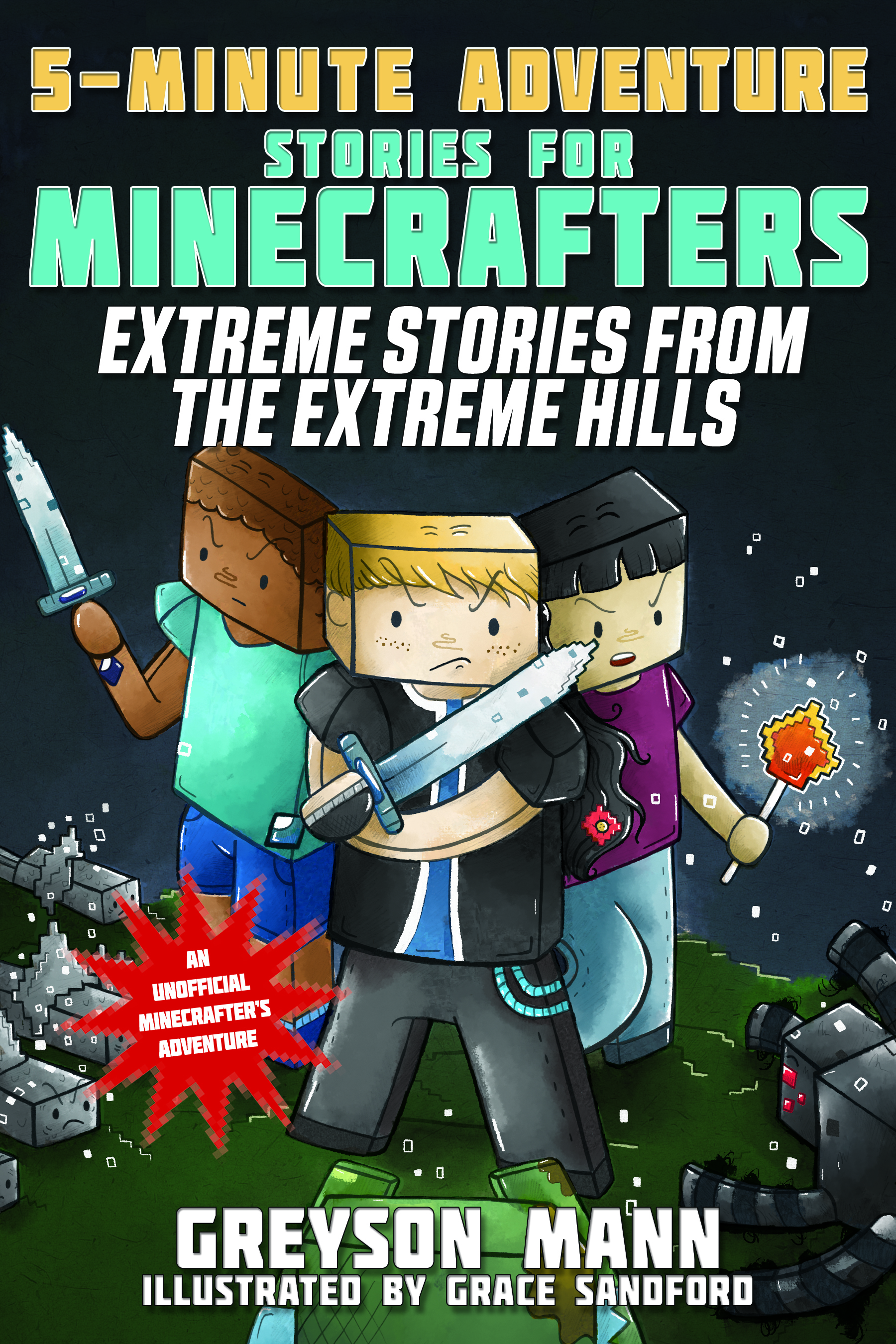
5-Minute Stories for Minecrafters: Extreme Stories from the Extreme Hills, by Greyson Mann/Illustrated by Grace Sandford, (Sept. 2017, Sky Pony Press), $7.99, ISBN: 978-1-5107-2370-2
Recommended for readers 7-10
Buddies Zack, Sophia, and Anthony are Minecraft adventurers on the hunt for treasure. Over the course of eight short stories (or short chapters, since they do follow one adventure), the friends encounter zombies, spiders, exploding Creepers, and a dreaded Enderman! Written for a more intermediate audience, these are fun for a quick read-aloud during a circle time or for kids who are in the mood for something fast that doesn’t require a lot of commitment; something they can pick up during a homework or study break. Themes of working together and friendship frame the relationship between characters and influence choices they make while adventuring. Illustrations throughout the text keep kids in the story’s world, holding their interest.
Overall, a fun book to have available for Minecrafters. My library is loaded with them.
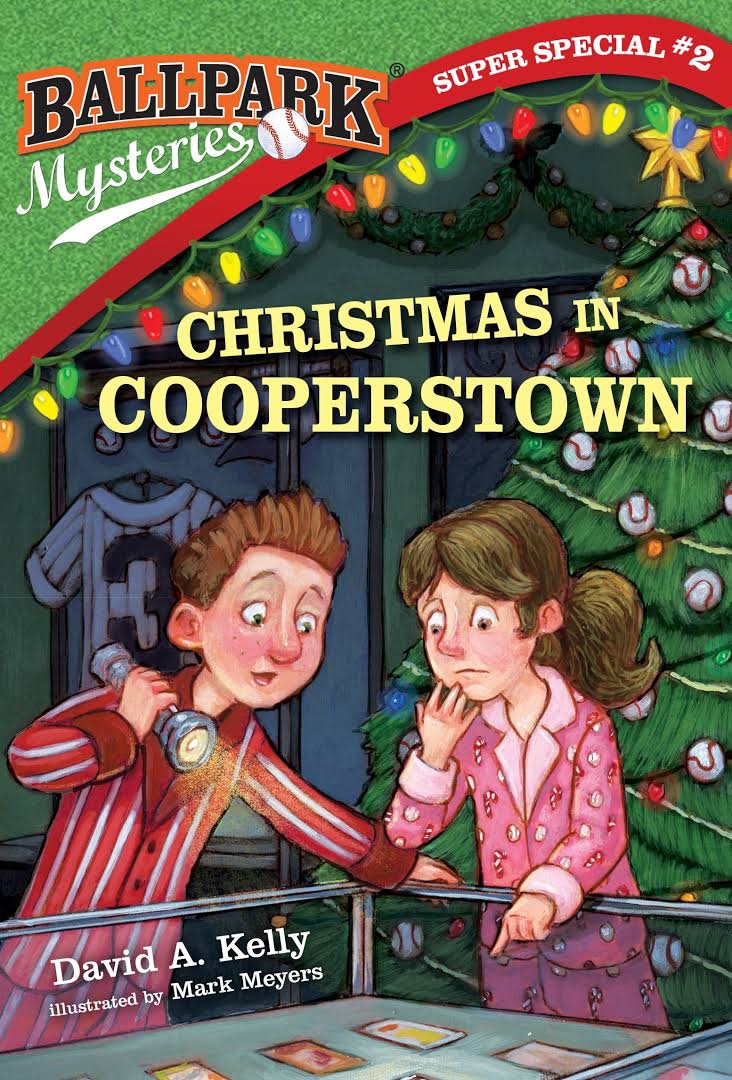
Ballpark Mysteries: Christmas in Cooperstown (Super Special #2), by David A. Kelly/Illustrated by Mark Meyers, (Sept. 2017, Random House), $5.99, ISBN: 978-0-399-55192-5
Recommended for readers 6-9
Confession time: While I steer a lot of my readers toward the Ballpark Mysteries books, I hadn’t read one until Christmas in Cooperstown. I’m really glad I did read it, though; despite not being much of a sports fan, I do enjoy a fun mystery, and Christmas in Cooperstown was just what I needed.
Best friends Mike and Kate are volunteering to wrap presents for a charity, Cooperstown Cares, at the Baseball Hall of Fame. As a thank you, they and their friends are invited to a sleepover at the Hall of Fame, which is pretty fantastic. It’s a good thing, too – Mike notices that the Honus Wagner card – a rare baseball card that can go for millions of dollars at auction – has been stolen and replaced with a fake! He and Kate have to track down the clues, find the card and the culprit, and deliver the charity’s gifts on time. Pretty big order!
Sports fans will really enjoy the tidbits of sports history here. I was interested in the science behind discovering the fake card, and using his dad’s business as a baseball card dealer opens the door to some fun trivia and facts throughout the book. “Dugout Notes”, a regular feature in the Mysteries, on Cooperstown and the National Baseball Hall of Fame finish up the book, along with a recipe for All-Star Blue Chip Muffins, which have a little cameo in the story.
Readers can pick up Christmas at Cooperstown without having read other Ballpark Mysteries; there’s enough exposition that you can easily get into the groove of things. Black and white illustrations by Mark Meyers keep things interesting and moving along.
I got to meet David Kelly at KidLitCon this past weekend and he is the nicest guy! It’s always a bonus when you find out that an author is pretty darn cool on top of being a good writer. He was kind enough to pass on a set of his MVP series for my library kids, too!
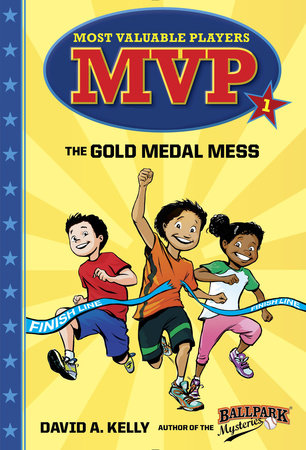
MVP – Most Valuable Players – is another sports mystery series for intermediate readers; like Ballpark Mysteries, you can dive into each one separately, with no stress. In the first story, The Gold Medal Mess, we meet the MVPs on the opening spread, where we get their “stats” via an illustration and quick character description: Max is a great athlete and detective; Alice is an archery ace and animal lover; Nico can’t wait to practice and play; Luke loves to exercise his funny bone, and Kat, Luke’s twin sister, captures the best game-day moments on camera. The kids are getting ready for their annual school Olympics, but someone is leaving threatening letters, telling the school to cancel the Olympics or else. When things start going wrong on the big day, it’s up to the five friends to figure out who’s causing the trouble and save the day before someone gets hurt.
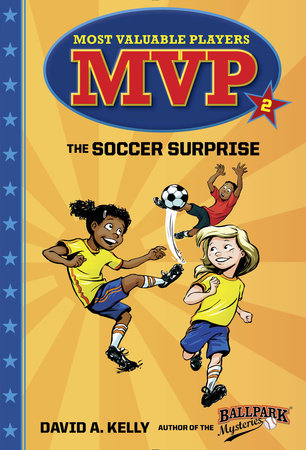
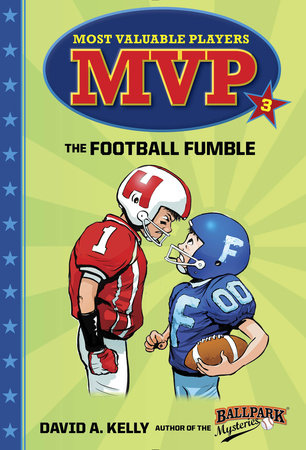
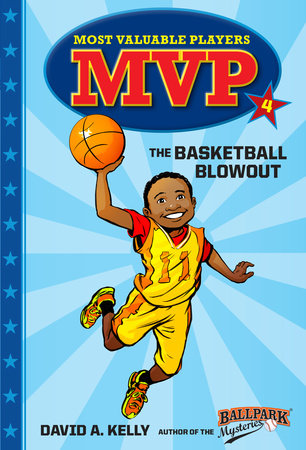
Each MVP book covers a different sport and features black and white illustration. The cast is a diverse, all-star group of kids with different interests and talents, and who work together to solve mysteries, help others, and take on bullies. Each book includes bonus facts on each featured sports: The Gold Medal Mess has Olympics facts and photos; other books have terms and diagrams. I’m putting these up on the “NEW” shelf tomorrow, and I expect they’ll be gone just as quickly as I get them up there. A good add to sports fiction and mystery collections!
Claude on the Big Screen, by Alex. T Smith, (Oct. 2017, Peachtree Publishers), $12.95, ISBN: 978-1-68263-009-9
Recommended for readers
Claude the Dog and his best friend, Mr. Bobblysock, are back for another adventure: this time, they wander onto a movie set, save the day by filling in for the two stars, and save a classically trained gorilla actor who’s afraid of heights! Written and illustrated by Alex T. Smith, the Claude series is a fun, early chapter book series that sports two-color illustrations and a quirky sense of style. The characters and writing are flamboyant fun, with exaggerated fonts, gigantic wigs, a gorilla in a smoking jacket, and a dog in a beret. It’s dry wit for the elementary school set.
There are seven Claude books out right now. Give these to your readers that appreciate humor with a twist. Introduce them in a read-aloud, letting kids hear the tongue-in-cheek manner of the narrative. Dress up socks and have the kids make berets – have fun with Claude!
Phew! I may have overextended myself just an eensy bit with my own summer reading list, but it was all worth it. There are some great books out this Fall. Here’s a quick rundown of some graphic novels and illustrated nonfiction out this month (and one from June… it was a busy summer!).
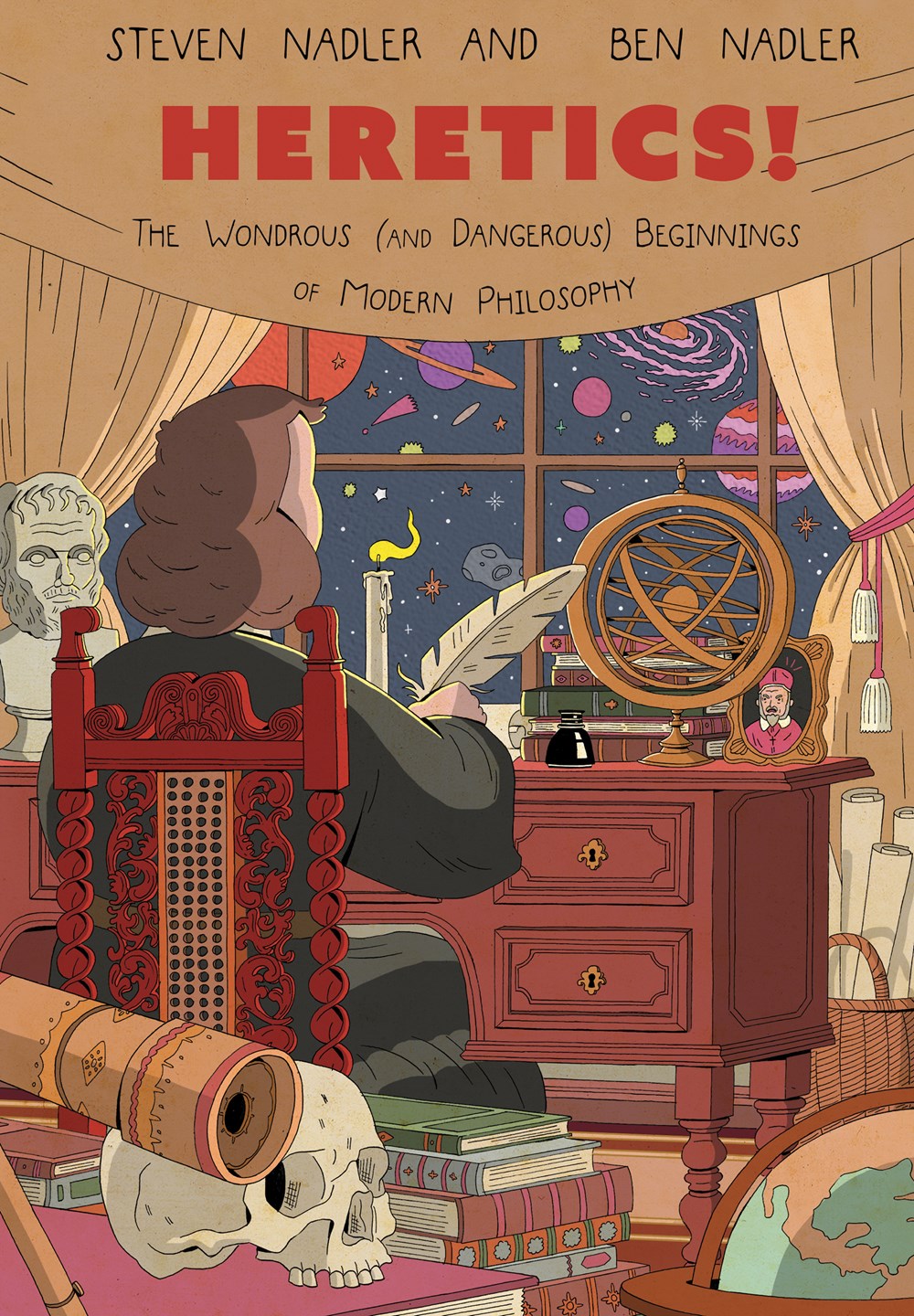
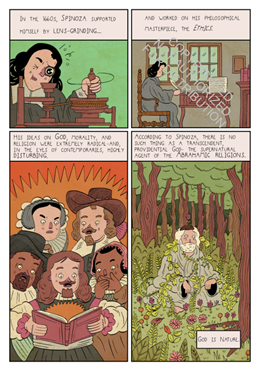
Heretics!: The Wondrous (and Dangerous) Beginnings of Modern Philosophy, by Steven & Ben Nadler, (June 2017, Princeton University Press), $22.95, ISBN: 9780691168692 / Ages 16+
This nonfiction graphic novel tells the story of the 17th-century thinkers – Galileo, Descartes, Locke, Newton, and more – who fundamentally changed the way mankind saw society and ourselves. These philosophers and scientists challenged the church’s authority to prove that Earth was not the center of the universe; that kings were not divinely chosen to rule; that neither God nor nature makes choices: sometimes, things just happen. Period. The reader-friendly, cartoony drawings, combined with simple explanatory text helps readers understand the scandalous nature of these thinkers. Booktalk and display with the Action Philosophers collection.
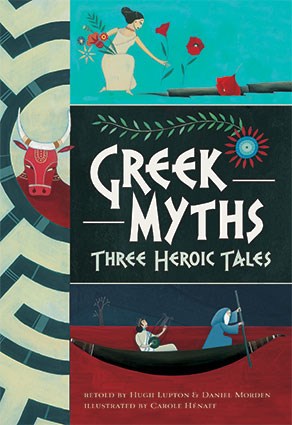
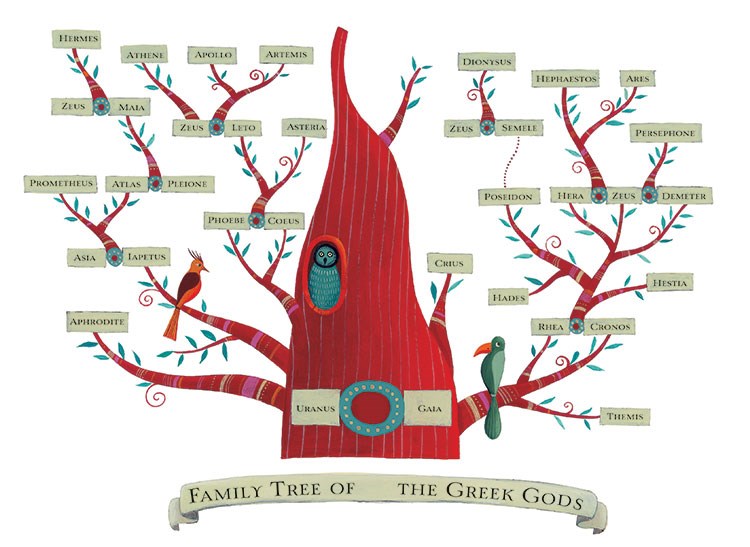
Greek Myths: Three Heroic Tales, by Hugh Lupton and Daniel Morden/Illustrated by Carole Henaff, (Sept. 2017, Confident Readers), $12.99, ISBN: 9781782853497 / Ages 8-12
Three of the most famous Greek myths: Demeter and Persephone, Theseus and the Minotaur, and Orpheus and Eurydice – get the illustrated treatment here. Award-winning French illustrator Carole Hénaff uses a palette of deep and bright colors to create beautiful illustrations that would be as beautiful in a frame as they are in this book.
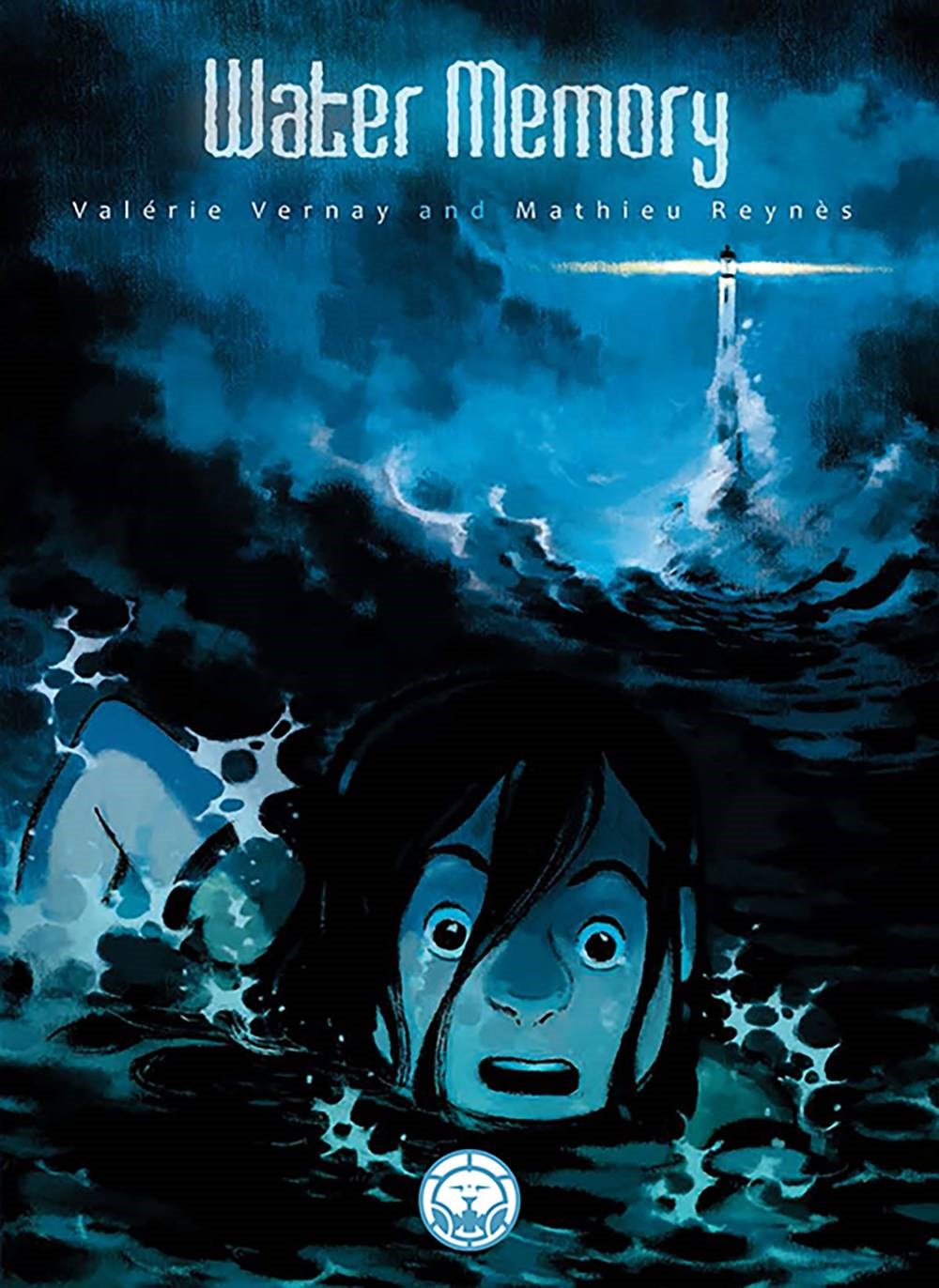
Water Memory, by Mathieu Reynes/Illustrated by Valerie Vernay, (Sept. 2017, Lion Forge), $14.99, ISBN: 9781941302439 / Ages 13+
I love a good, spooky story, and if it’s a good, spooky graphic novel that I can share with my library kiddos, even better. Marion’s mom inherited an old family house. It’s got a private beach and overlooks the ocean. It’s too good to be true, right? Right. Marion discovers some strange rock carvings and that a chilling local legend may be coming to life. The artwork is beautiful, and the translation from the original French to English is seamless.
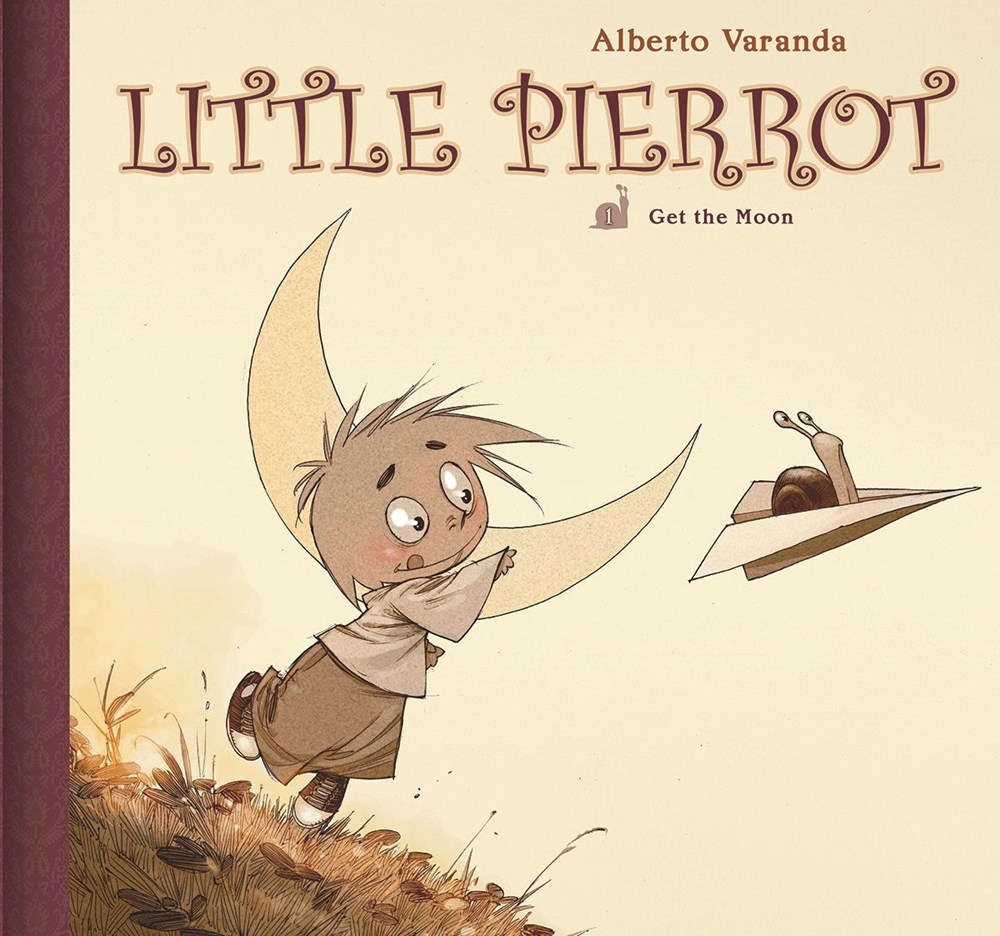
Little Pierrot Vol 1: Get the Moon, by Alberto Varanda, (Sept. 2017, Lion Forge), $14.99, ISBN: 9781941302590 Ages / 4-8
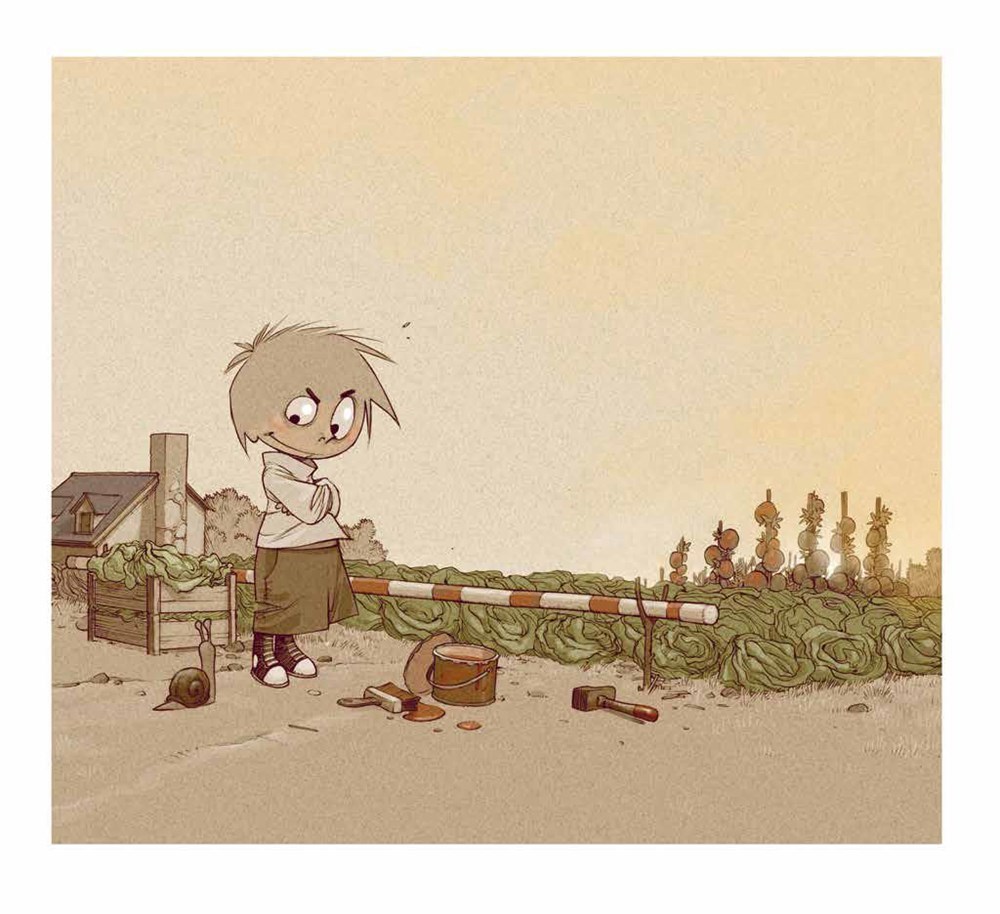
This is the first in a new graphic novel series, translated from French, and perfect for young readers. Little Pierrot is a little boy with a big imagination. He and his snail buddy – Mr. Snail, naturally – have surreal adventures and end their day together, like best buddies do. Give this to your TOON Books readers; it’s got a similar look and feel. The artwork is sweet and whimsical, and kids will identify with Pierrot in terms of imagination and having a best buddy at one’s side, whether it’s a snail, a dog, or a stuffed plush. Booktalk with Calvin and Hobbes and Garfield, who never likes to be without his teddy bear, Pooky.
Animal adventure books are guaranteed fun for readers, and mice are a consistently popular choice. Look at some of the most beloved, enduring children’s books: Stuart Little, Mrs. Frisby and the Rats of NIMH,The Rescuers, The Tale of Desperaux, and Babymouse, who’s growing up with her readers, having started with an elementary school character whose moved to middle school. There’s even a picture book that introduces younger readers to a young Babymouse. Mice are cute, tiny enough to get into places we can’t even fathom, for exciting adventures – and yet, small enough to be defenseless in a dangerous world. Kids can identify.
That said, we’ve got a giveaway for two books in a fun new series: The Adventures of Henry Whiskers! One lucky winner will receive copies of both Henry Whiskers books by Gigi Priebe–book 1, THE ADVENTURES OF HENRY WHISKERS, and book 2, THE LONG WAY HOME. (U.S. addresses). Enter a Rafflecopter giveaway today – ends September 7th! (Edit: The link was showing the contest had expired, so I’ve extended the deadline to September 7th and updated the link.
The Adventures of Henry Whiskers, by Gigi Priebe/Illustrated by Daniel Duncan, (Jan. 2017, Simon & Schuster Kids), $5.99, ISBN: 978-1-4814-6574-8
Recommended for readers 7-10
Henry Whiskers is a fun intermediate series starring a family of mice living in the drawers at the base of Queen Mary’s Dollhouse in Windsor Castle: quite possibly, the most famous dollhouse in the world. When the tourists are gone for the day, the mouse families wander the castle; for 25 generations, the Whiskers family have been caretakers of the dollhouse, and Henry Whiskers, son of the last caretaker, takes his job very seriously. He may be young, but has a deep sense of duty to the Whiskers legacy, living up to his father’s reputation. Henry can often be found reading the miniature classics in the dollhouse library when he’s not helping his mother take care of his family. In this first story, Henry and his cousin, Jeremy, set out in search of Henry’s sister, Isabel, who goes missing when the dollhouse is sent for cleaning. They’ll face off against Titus, the castle cat, and meet the rats who live in Rat Alley and aren’t fond of the mice at all. Henry shows bravery, a strong sense of justice and equality, and not only saves the day, and works to foster understanding between his own community and the rats.
The Adventure of Henry Whiskers: The Long Way Home, by Gigi Priebe/Illustrated by Daniel Duncan, (Aug. 2017, Simon & Schuster Kids), $5.99, ISBN: 978-1481465779
Recommended for readers 7-10
Henry’s latest adventure takes him outside the castle walls and into the city of London itself! He discovers an old map in the library, but he and Jeremy are caught by the palace cook, who believes she’s doing a good deed by sending them far away from the castle, so they won’t find their way back. Yikes! Henry learns more about his father and meets new animals on his latest escapade, while Mother worries about her son at home.
The Henry Whiskers books are just right for more confident chapter book readers who have a sense of adventure. Henry is a good little role model that readers can identify with, overcoming obstacles while making sure to look out for others as he goes. Daniel Duncan’s black and white illustrations add to the enjoyment of the narrative, and a photo of Queen Mary’s Dollhouse gives kids an idea of how big the dollhouse (and drawers) really is.
Check out this video, which provides a peek into the dollhouse. Stunning, isn’t it?
Gigi Priebe is the mother of three, the founder of Stepping Stones, an award-winning children’s museum in Norwalk, Connecticut and the author of The Adventures of Henry Whiskers, the first in her middle grade series. When she is not writing–or rewriting–she is a philanthropic advisor and community volunteer in Fairfield County, Connecticut, where she lives with her husband, a cat named Tigger, a dog named Clover, and probably some mice. To learn more and to download a free curriculum guide, visit gigipriebe.com.
Crafty Cat and the Crafty Camp Crisis, by Charise Mericle Harper, (Aug. 2017, 01FirstSecond), $13.99, ISBN: 9781626724853
Recommended for readers 6-9
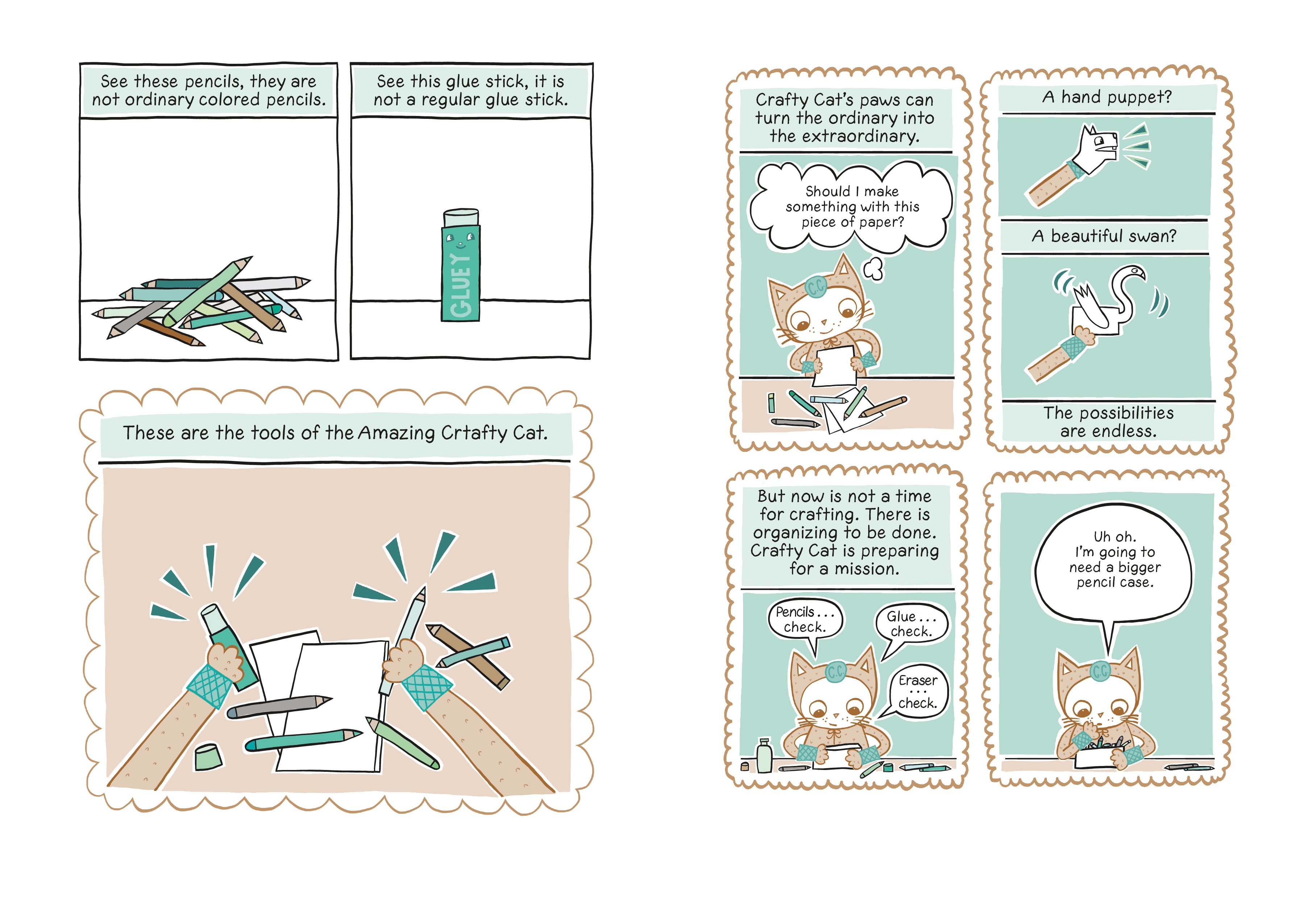
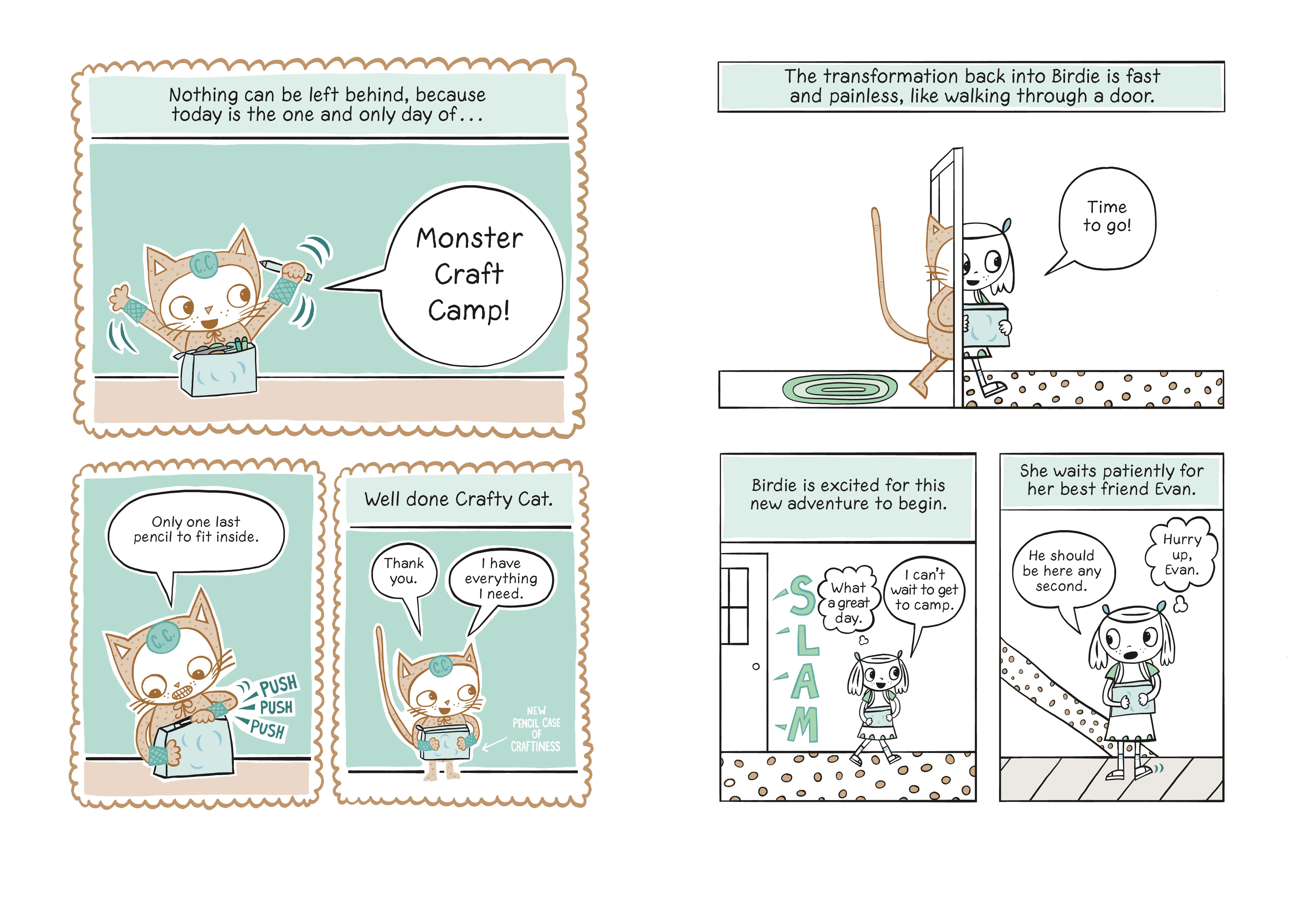
Birdie is headed to Monster Craft Camp! It’s a day of crafting at school, headed up by the custodian, but it’s a day of crafting, and Birdie – who’s alter ago is Crafty Cat – is prepared! Now, if only her best friend, Evan would show up on time… and oh, Anya, the meanest girl in school, is here today, too. Looks like this may be a job for Crafty Cat!
This latest installment of Crafty Cat tackles handling a difficult member of a group project how to make the best out of a situation when things don’t go as planned. Monster Craft Camp isn’t exactly what Birdie thought it would be, and Anya is being her rude, mean self, but just when Birdie finds herself getting frustrated and sad, Crafty Cat takes over and saves the day! It’s a fun way to communicate resiliency, optimism, and working with difficult partners.
As with the previous Crafty Cat adventure, there are crafts and at the end of the book. A handy supply list tells readers what they need, and step-by-step directions walk little crafters through their own monster crafts. There are templates available for photocopying.
This is such a fun little series for younger readers! A definite add to the graphic novel shelf.
I love coding and playing around with computer science-y type stuff. In my mind, I look like this:
When I create this. (This is actually mine! I created it using Scratch.)
I do my best to get science in front of my own kids, and my library kids, at every opportunity. The kids here at my library are Minecrafters, so I feel like I’ve got an in and am working on building a nice, tech-friendly nonfiction section; the next additions on my list are from the organization, Girls Who Code. If you aren’t familiar with Girls Who Code, they are a New York-based organization on a mission to close the gender gap in the tech industry and the classroom. They teach girls to embrace tech and to code, to create, and most importantly, not to fear science and math. Andrea Gonzalez and Sophie Hauser, two GWC grads, wrote Girl Code: Gaming, Going Viral, and Getting It Done, where they talk about their GWC experience.
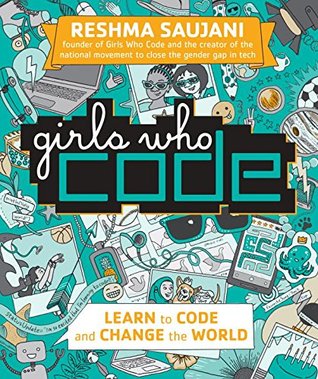
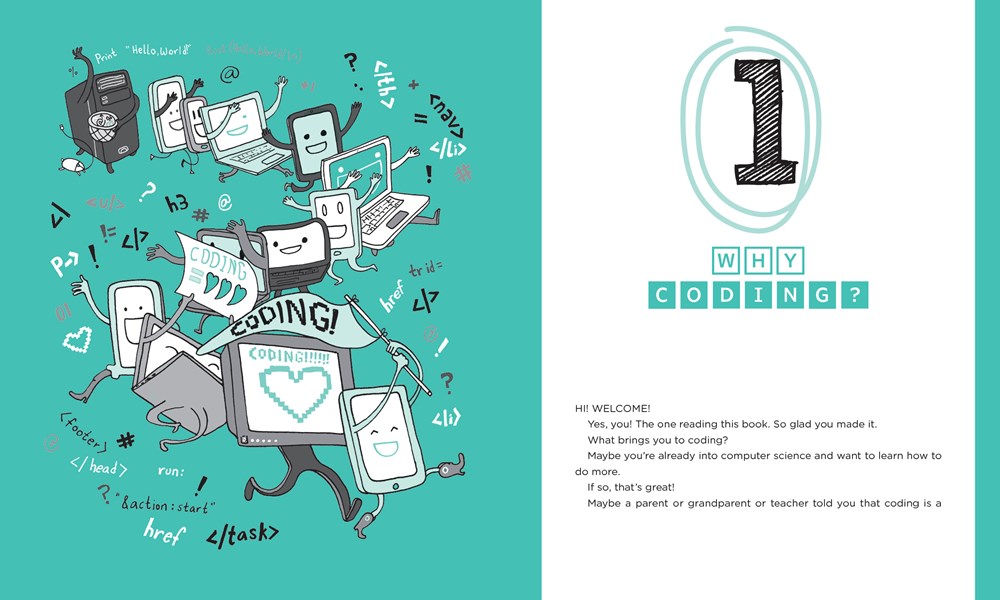
Now, Reshma Saujani, Girls Who Code founder, is releasing her own book, Girls Who Code: Learn to Code and Change the World (Aug. 2017, Viking, $17.99, ISBN: 978-0425287538). It’s a coding beginner’s guide, a spotlight on women in the computer science industry, an empowering career guide, and introduction to STEM for girls, all rolled up into one volume. It’s fun and easy to read, with Reshma speaking to readers in a comfortable, friendly voice; she gets some help from a group of illustrated, diverse girls: Lucy, Erin, Sophia, Leila, and Maya. The illustrated group of friends (more on them later) explain concepts and act as a step-by-step example of different stages of coding and creating.
What sets Girls Who Code: Learn to Code and Change the World apart from all the other coding books out there? Glad you asked. The tone, for starters, is fun, light, and personal. Reshma and her group of illustrated friends are talking straight to readers. The two-color illustrations are fun, like those you’d find in a middle grade novel, and feature characters from different ethnicities; Leila rocks a hijab, Maya is an Asian fashionista with a sleek bob; Lucy is African-American, Sophia is Latina, and Erin is a blonde. The group of friends come together to create apps and problem solve their coding; we’re invited along for the ride. Not sure you want to go into computer science? That’s no problem, either: GWC points out how many careers and hobbies incorporate coding these days, from baking, to politics, to social justice, sports, and art. You’ll learn new terms, like pseudocode – that’s when you write out the steps of your program in plain language, to brainstorm and go over your program before starting to code. There are further Web resources and a glossary to complete this trusty guide to STEM life. Trust me, you’ll never look at the mere making of a peanut butter and jelly sandwich again after you read this.
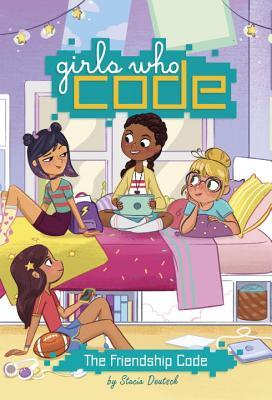
Also arriving the same day as Girls Who Code: Learn to Code and Change the World is the first in a new GWC series of fiction chapter books, starring the Girls Who Code we met in the previous book: Lucy, Erin, Sophia, and Maya (Leila’s arriving in the next book) come together thanks to a coding club in the new adventure, The Friendship Code, by Stacia Deutsch.
Girls Who Code: The Friendship Code, by Stacia Deutsch, (Aug. 2017, $12.99, ISBN: 9780399542510)
We get some background on each character: there’s been some past drama between Lucy and Sophia; Erin is an army brat who’s new in town; Maya is the fashionista who has a fashion column in the school newspaper; Sophia’s an athlete, and Lucy is fixated on learning to code so she can create an app to help her sick uncle remember to take his medicine. Thanks to the Coding Club, the girls learn that coding is more than just banging out numbers on computers (sometimes, to Lucy’s chagrin). With a fun mystery thrown in, the GWC series is like a Babysitter’s Club for a new group of tech-savvy kids. The series is great for intermediate-level readers; black and white illustrations and a quick pace make this novel a fun read that introduces younger middle graders to beginning coding terms and STEM. The mystery is even written in pseudocode – maybe a fun thing to introduce to your kids! Slip a pseudocode note into a lunchbox here, introduce a pseudocode scavenger hunt there… the possibilities stretch far and wide. Where Girls Who Code: Learn to Code, Change the World is best for your middle schoolers and upper middle graders, Girls Who Code: The Friendship Code is a great way to get younger middle graders familiar with the characters, the language of coding, and the fun of STEM.
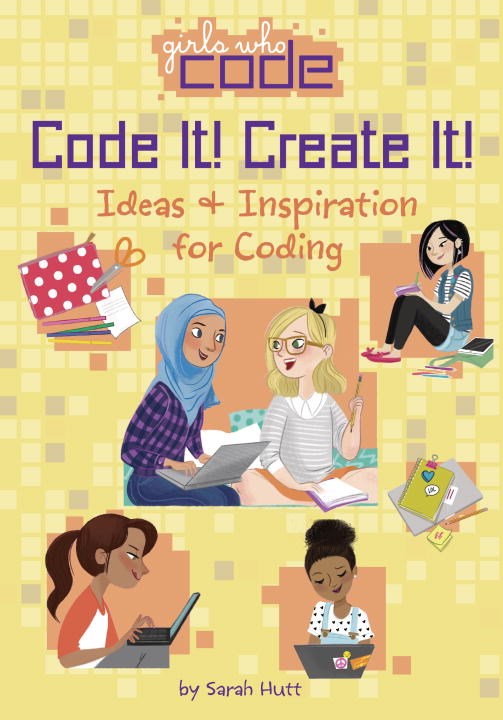
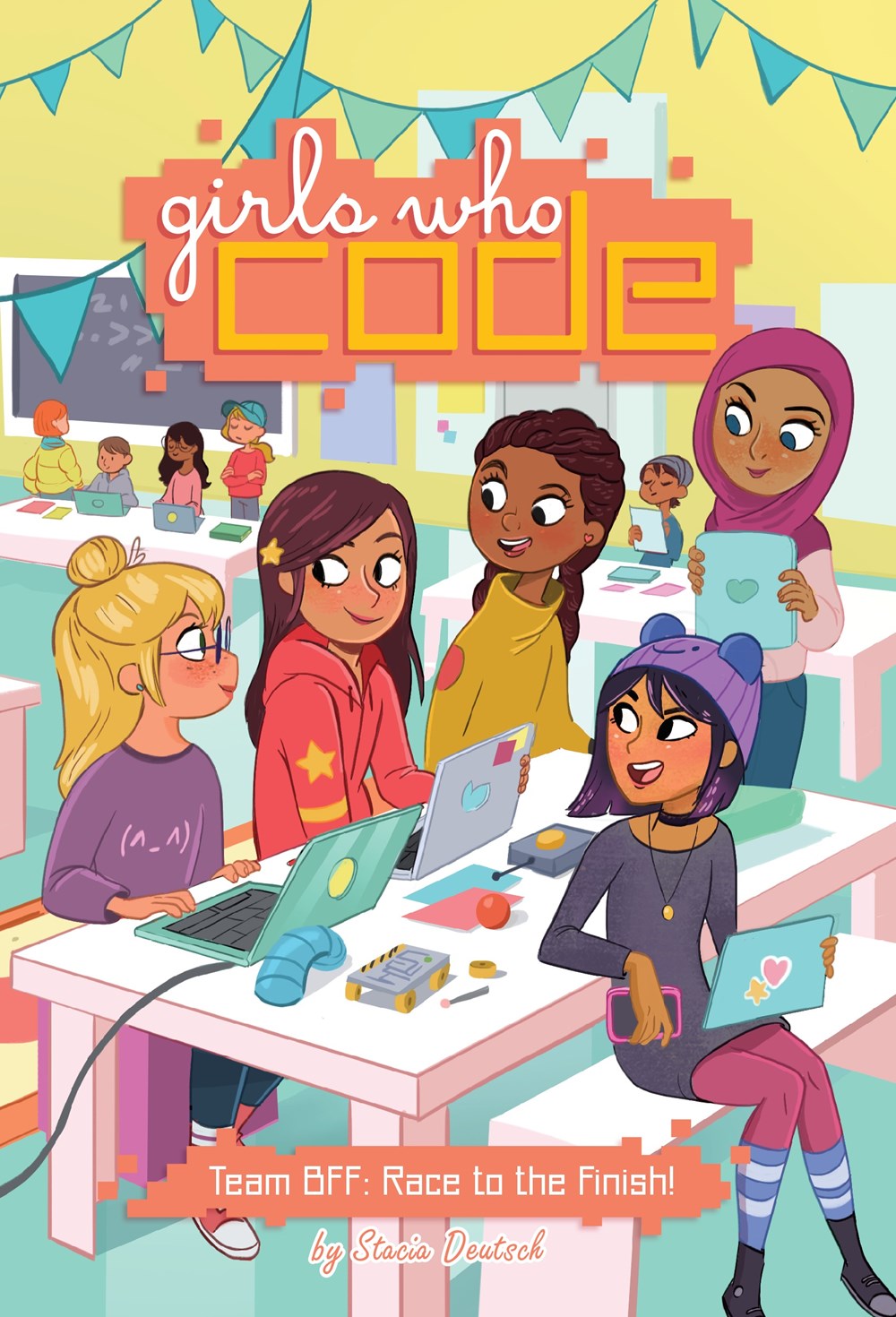
In October, we’re getting another nonfiction/fiction GWC combo, when Code It! Create It! and Team BFF: Race to the Rescue! hit shelves. I’ll be waiting!
Chow Mein and Potstickers, by Liselotte Schippers/Illustrated by Monique van den Hout, (June 2017, Clavis Publishing), $16.95, ISBN: 978-1605373287
Recommended for readers 5-10
Chan is new to the neighborhood and wants to make some friends. The best way to go about it? Go door by door, of course! Told in the first person, we follow Chan along and meet the neighbor kids, who are from Bosnia, Indonesia, Poland, Afghanistan, Turkey, the Netherlands, Suriname, the U.K., South Africa, and Italy. Each new friend introduces Chan, and the reader, to a fun activity, food, and greetings in each language. The kids all gather together at the end for a celebration, where they share food and friendship.
Originally published in Belgium and Holland in 2015, Chow Mein and Potstickers is an initiative by Inclusive Works, a Dutch organization that promotes diversity and inclusiveness – and what better way to accomplish that than by having children serve as our example? Chan is our guide, as the new kid who wants to make friends. By playing together, Chan – and readers – learn about the ways kids all over the world have fun; we learn how to greet one another in global languages, and finally, we share food together. All great ways of promoting peace and togetherness. My son’s pre-k class had an international day where we did something similar; they sang “It’s a Small World” in 15 different languages and ate food that parents contributed from their native countries. This is a great story to read for a similar occasion; it’s a great story to read to our preschoolers and beyond to promote the global village we call our world.
Each 2-page spread features a new child Chan encounters; backgrounds are light, washed out, to bring the realistic artwork of the children to the forefront, with bright faces and clothing, surrounded by colorful toys. The vocabulary is set off with smiling icons for hello and good-bye, and a colorful sketch of each food the kids eat together.
This is a solid addition to diversity collections. It’s similar to How the Queen Found the Perfect Cup of Tea, in that it stars a character who travels the world (well, in this case, the world in a diverse neighborhood), meeting different people from different cultures, and sharing food together. Get some recipe cards together and hand them out with coloring sheets for a multicultural storytime!
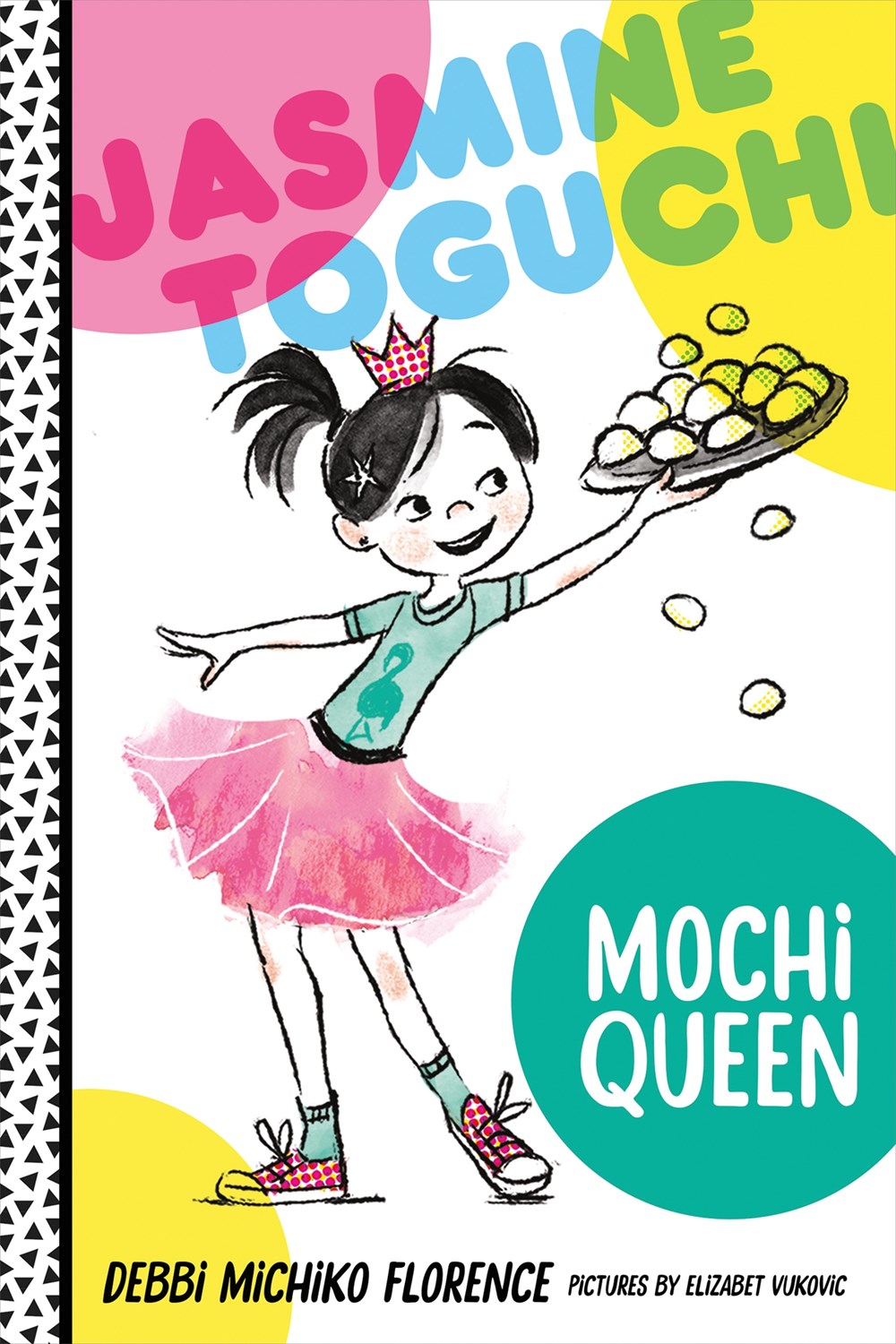
Jasmine Toguchi, Mochi Queen, by Debbi Michiko Florence/Illustrated by Elizabet Vukovic, (July 2017, Farrar, Straus and Giroux), $15.99, ISBN: 9780374304102
Recommended for readers 6-9
Jasmine Toguchi is an 8 year-old dynamo. She’s funny, smart, and loves her family, especially during the holidays, when Obaachan, her grandmother, flies in from Japan and the family begins their mochi-tsuki ritual: mochi making! – a Japanese rice cake, made from pounded rice. The whole family gets involved in the process – except, that is, for Jasmine, who’s still too young to help out. Her older sister, Sophie, helps the women by hand-rolling the mocha balls. Her mean, older cousin, Eddie, helps the men pound the mochi with the super cool mochi hammer. But Jasmine is not yet 10, so she has to wait. In the meantime, Sophie and her mother order her around, and Eddie mercilessly teases her. So Jasmine comes up with a plan: it’s time to break tradition! She’s going to convince her family to let her pound the mochi this year! But first, she’s got to build up her arm strength — that mochi hammer is heavy!
Jasmine Toguchi, Mochi Queen is a fun early chapter book for readers who are moving up from Easy Readers. We meet Jasmine, a spunky, Japanese-American girl who loves her family tradition of making mochi, but feels like it’s time for a change. She’s tired of her older sister getting to be the first to do everything, and she’s tired of her obnoxious cousin. She wants to make her own statement, her own mark in the family, and when she sets her mind to it, there’s no stopping her. Kids will enjoy learning about Japanese traditions and relate to the frustration that comes with being told “you’re too young”, when they feel perfectly ready and able to pitch in. An author’s note explains mochi-tsuki, and provides a microwave mochi recipe for kids and their adults to try together. Black and white illustrations bring Jasmine and her world closer to readers. There’s a second book coming in July, with more activities at the end of the story.
Jasmine Toguchi is a good, new series to add to your intermediate collections – there’s some lovely diversity available for readalikes, including the Ruby Lu and Alvin Ho series, by Lenore Look; the Clara Lee series by Jenny Han; the Katie Woo and Pedro books by Fran Manushkin, and Ellray Jakes, by Sally Warner.
Get an early peek at the next Jasmine Toguchi titles (and covers) by navigating over to author Debbi Michiko Florence’s site, where you can also find info about author visits, with programs she conducts for each grade.
 Wind and Oyster Jack, by Marcia G. Moore/Illustrated by Heather Crow, (Nov. 2017, Schiffer Publishing), $14.99, ISBN: 9780764354229




 Source: NicolTallis.com






 Mom Read It