Posted in Early Reader, Non-Fiction

Clavis non-fiction picture book series: Want to Know

Clavis Books’ non-fiction picture book series, Want to Know, introduces non-fiction concepts for younger readers, providing information in a light-hearted, fiction-meets-non-fiction way. With cut-out pages, foldout illustrations, and facts and quizzes throughout each book, each topic provides opportunities to learn and do.

This season’s additions to the Want to Know series include The Romans, by Suzan Boshouwers and illustrated by Boshouwers and Veronica Nahmias, and Traveling by Train, by Pierre Winters and illustrated by Tineke Meirink.

The Romans, by Suzan Boshouwers/Illustrated by Boshouwers and Veronica Nahmias, (Apr. 2017, Clavis), $16.95, ISBN: 978-1605373195

Recommended for readers 6-8

The Romans falls under Want to Know’s History category. We meet Theo and his little sister, digging a deep hole in hopes of finding Roman artifacts. Suddenly, Theo, his sister, and we readers are transported back in time to the Low Countries – part of the Roman Empire, where we now call the Netherlands, Belgium, and the Rhine, Meuse, Scheldt, and Ems rivers. We learn where the Romans lived, how they celebrated, the story of Romulus and Remus, and about the Roman gods. Endpapers include a map of the Roman Empire un der Emperor Trajan, and a look at some Roman artifacts recovered near the Netherlands.

The book provides a wealth of information for younger readers, but while the author doesn’t shy away from slavery being a part of Roman life, the slaves are depicted more like servants; they’re pretty happy around their captors. There are other books available, like books by DK and the Step Into Reading series, but if you’re looking for a more picture book-based introduction to Ancient Rome, this is an additional add to collections.
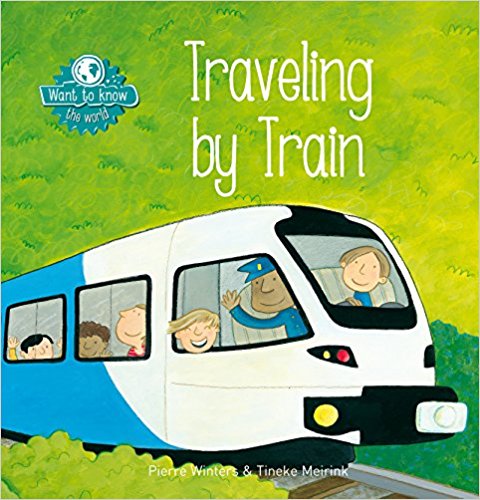
 

Traveling by Train, by Pierre Winters and illustrated by Tineke Meirink, (Apr. 2017, Clavis), $16.95, ISBN: 978-1605373409

Recommended for readers 4-7

Traveling by Train, from Want to Know’s The World section, is a fun addition for transportation fans. From learning about the first trains to trains in other countries, this book is loaded with fun information, quizzes, activities, and rhymes for young readers. Wrapped around the story of a boy named Sam’s first train trip, readers journey through the book, learning fun facts and discovering the story behind how trains run: who works for the railroad, and who does what; what trains look like on the inside; what schedules and connections are, and what a modern train station looks like. Endpapers feature artwork depicting an overcrowded train in India. The artwork kid-friendly, fun, and nicely detailed for its age group. I’d gladly add this one to my train books, and introduce it during a vehicle storytime.

Make this one a centerpiece with Thomas the Tank Engine books, or a host of vehicle-related books, for your readers to love.


Posted in Early Reader, Non-Fiction, Preschool Reads, Toddler Reads

Cultivate your little scientist with Baby University’s books

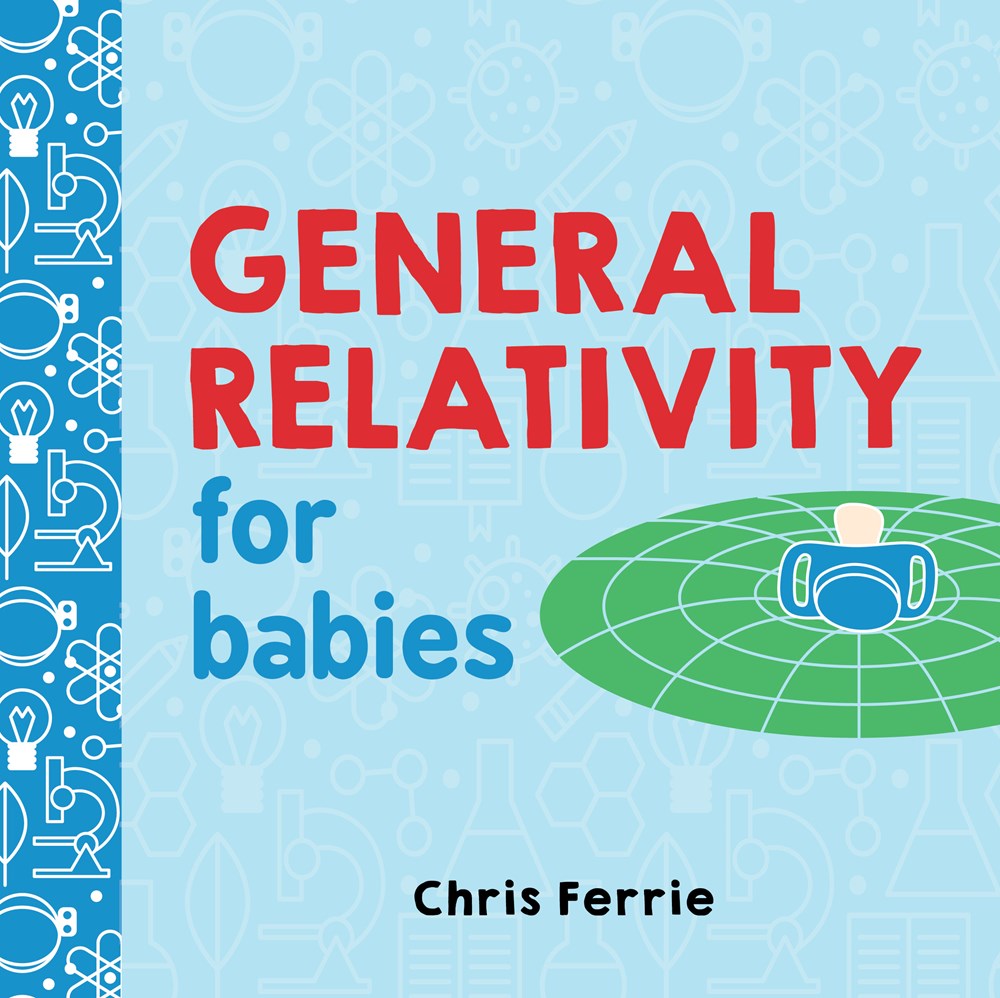
Baby University, from Sourcebooks Jabberwocky, are a cute series of board books that break down principles of science for little ones. Written by quantum theorist and dad Chris Ferrie,  the first four books: Newtonian Physics for Babies, General Relativity for Babies, Rocket Science for Babies, and Quantum Physics for Babies all use the example of a child’s toy – a ball – to explain science to the littlest scientists in training. The covers are adorable, incorporating pacifiers into the scientific art.

newtonian

Newtonian Physics for Babies (May 2017, Sourcebooks Jabberwocky, $9.99, ISBN: 9781492656203) introduces babies to a bouncy ball, explaining in short, bolded sentences how gravity affects the ball, which leads to an exploration of mass, acceleration, and force. Being Newtonian Physics, we also see the apple, and gravity’s effect on the apple and Sir Isaac Newton. The ending proudly exclaims that the reader is understands Newtonian physics.

relativity

General Relativity for Babies (May 2017, Sourcebooks Jabberwocky, $9.99, ISBN: 9781492656265) uses the ball to explore mass, black holes, and gravitational waves. Babies are pronounced experts in general relativity at the end.

rocket-science

Rocket Science for Babies (May 2017, Sourcebooks Jabberwocky, $9.99, ISBN: 9781492656258) looks at the ball, but changes the ball’s shape to a wing to explain air movement, lift, and thrust. From there, we learn how to put wings on a rocket to make it move, and how a rocket requires an explosion to propel it forward. Readers are affirmed rocket scientists at the book’s end.

quantum

Quantum Physics for Babies (May 2017, Sourcebooks Jabberwocky, $9.99, ISBN: 9781492656227) demonstrates energy and atoms – starring the neutrons, protons, and electrons – by using the ball. Readers learn about movement within the atom, and are bestowed with the quantum phycisist title at the end.

The books are simple and fun, with clean, computer-generated art and simple explanatory text. Are my toddlers at storytime going to get this? No, but it’s not going to stop me from handing out small rubber balls to parents to let the kids play with and get a feel for as I read the books. It’s exploring scientific topics early, introducing babies to the words and letting them become household names, words that maybe won’t frighten them when they get older, if they grow up hearing them. I’d read these with preschoolers, too, when they can grasp ideas a bit more.

I love STEM, and I love helping young children fall in love with science, especially the sciences (and their accompanying mathematics) that scared me away when I was a kid. These are fun, bright books to get in front of babies, toddlers, and preschoolers now, if just to introduce exciting new words to their vocabularies. At least, your little one learns that Sir Isaac Newton was beaned on the head by an apple. At most, you get a Nobel Prize winner who thanks you in his or her speech.

Posted in Early Reader, Fiction, Preschool Reads, Toddler Reads

The jungle heat begs for The Perfect Siesta

The Perfect Siesta, by Pato Mena, (June 2017, NubeOCHO), $15.95, ISBN: 978-84-945415-3-7

Recommended for readers 3-7

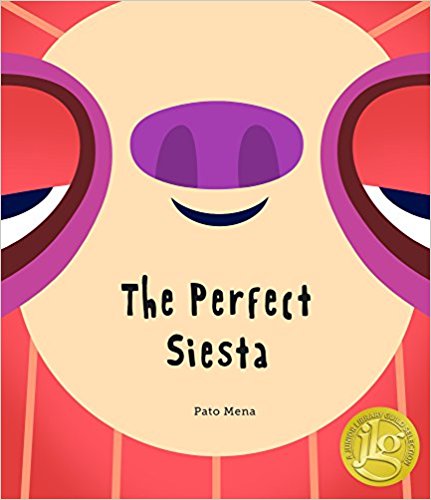
It’s a hot day in the jungle, so when a lovely, cool breeze blows through, a jaguar seizes the moment to take a nap. He has things to do, though, so he asks a coati to wake him in 10 minutes. The coati doesn’t want to say no to a jaguar, out of a healthy sense of self-preservation, but that breeze is just sooo nice… so he asks a cockatiel to wake him up in 10 minutes, who then goes on to ask a sloth. The poor sloth feels the pressure to stay awake, but can’t fight it anymore and lets out a giant SNORE that keeps everyone’s promise!

The Perfect Siesta has entered regular storytime reading at home, and I’m planning a great nap-centric read-aloud to debut this one at my library. It’s hilarious and I love the art, especially the giant, sleepy sloth’s eyes (shown on the cover). Snoring is up there with farts in terms of read-aloud humor, so let your loudest snore rip when you’re reading – the text will support you!

The collage-style artwork will catch readers’ attention and makes for a great read-aloud to large groups as well as small groups. The animals are native to South America, so this also makes for a good rainforest storytime, with extra fun if you have plush or flannels to add to the atmosphere.

Originally published in Spanish, The Perfect Siesta translates hilariously into English and makes for a fun bedtime, naptime, anytime read. The Perfect Siesta is a Junior Library Guild selection.

Posted in Early Reader, Fiction, Preschool Reads

A mother’s love letter to her daughter: When I Carried You In My Belly

When I Carried You In My Belly, by Thrity Umrigar/Illustrated by Ziyue Chen, (Apr. 2017, Running Press Kids), $16.99, ISBN: 978-0-7624-6058-8

Recommended for readers 3-7

A mother explains where all of her daughter’s wonderful qualities were born: as she grew in her mother’s belly. Her mother laughed so hard that baby laughed, too; that’s why she has a great laugh today. Her grandmother’s loving hands built her crib, and grandfather made sweets to eat; that’s why she dreams softly at night and is so sweet. Her mother sangs joyful songs in different languages, and that’s why the girl feels at home anywhere in the world. It’s a sweet love story between mother and daughter, but also illustrates the love and importance of family.

This is a first picture book for author Thrity Umrigar, who hopes that children will come away understanding the importance of family and the importance of being kind and generous. Her text – a mother lavishing praise on her daughter while reminiscing about her pregnancy – combined with Ziyue Chen’s joyful illustrations featuring multicultural characters, invites children to laugh and play together, part of a world community.

This is a great baby shower gift: the story embraces motherhood, empowers mothers to love their bodies (mom happily belly dances with a beautiful bare midriff), and encourages mother-child interaction from the womb. I remember the little tickles and wiggles I felt with each of my boys even now. I remember playing with them, pushing on my belly in one spot and the delight in seeing a little hand (or foot) push back in response. It’s also a good reading choice for a discussion group, to get moms talking with one another, and their children, about their own pregnancies and what they love about their children. When I Carried You in My Belly is a love letter from mother to child, and a love letter to mothers everywhere.

Display this with books on family and individuality. I like Mary Ann Hoberman’s All Kinds of Families, Everywhere Babies, by Susan Meyers, The Family Book, by Todd Parr, and What I Like About Me, by Allia Zobel-Nolan.

Thrity Umrigar is the bestselling author of a memoir and six novels, including The Space Between Us, If Today Be Sweet, and The Story Hour. Her books, articles, and more information is available via her website. Ziyue Chen’s work has been recognized in the 3×3 Picture Book Show (2014), SCBWI’s SI Scholarship (2013), the Society of Illustrators’ Student Scholarship Show (2013), and Creative Quarterly (2012). You can see more of her illustration at her website.

Posted in Early Reader, Fiction, Preschool Reads

The Blue Songbird discovers her song

The Blue Songbird, by Vern Kousky, (Apr. 2017, Running Press Kids), $22.49, ISBN: 9780762460663

Recommended for readers 4-8

A young blue songbird wishes that she could sing like her sisters. She wants to sing along with them, but she can’t seem to sing like they do. Her mother encourages her to go and find a special song that only she can sing, and the little bird sets off in search of her special song. She meets other birds and experiences the world, only to discover that, upon reaching home again, her song was inside of her all along.

The sweet story of self-awareness also shows readers that your experiences help make you who you are. The songbird’s song is influenced by her travels and who she met; the music was inside of her all along, but venturing out – and returning home – helped shape the music into a song.

The watercolor artwork is beautiful to look at. The colors are soft and the depiction of the music, as a spray of notes and color, is lovely and stirring. The text encourages kids to explore their world, even if, at a young age, that world is their backyards, their playgrounds, their friends’ homes. At the same time, it reassures kids that they can always return home.

There are so many ways to enjoy and extend the lessons put forth in this story. The little birds can be recreated with thumbprint art. Have little readers make their own songbird families by using watercolor paint, dipping their thumbs into a color, and giving their own songbirds adventures in finding their songs. Encourage kids to go on scavenger hunts – I love this idea for scavenger hunt bags and plan to go on an adventure with my little guy once this crazy NYC weather lets up – to explore the world around them.

Good readalikes for this book include A Song for Papa Crow, by Marit Menzin, and the classic Over in the Meadow. Over the Meadow also makes a good singalong and flannel play.

Vern Kousky is an adjunct professor of English for Touro College and the author of the award-winning book, Otto the Owl Who Loved Poetry. You can see more of his artwork, including some interior art from The Blue Songbird, at his website.

Posted in Early Reader, Fiction, Fiction, Graphic Novels, Intermediate, Preschool Reads

Have visual vocabulary fun with Wordplay!

Wordplay, by Ivan Brunetti, (May 2017, TOON Books), $12.95, ISBN: 978-1-943145-17-1

Recommended for readers 3-8

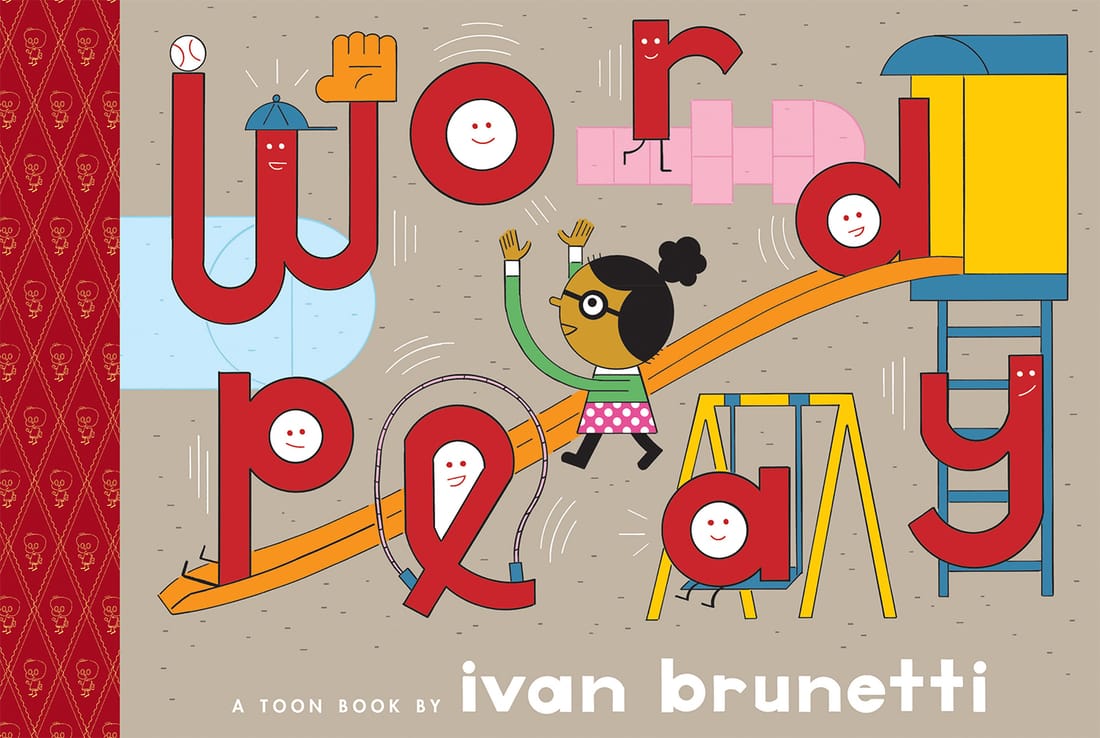
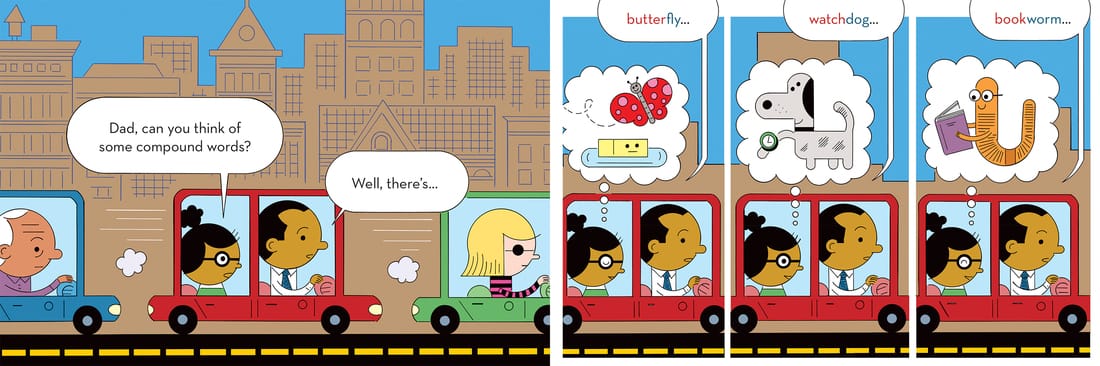
Kids learn about compound words – two words that come together to form a whole new word, like housework – in this visual feast for the eyes. Ever see a house vaccuming? A moon in an easy chair, reading under a bright light? You will here, as the kids in the story think up and visualize compound words that will make kids (and you) laugh and think.

This book is made for classrooms and programs. Ask your kids what compound words they can come up with – then draw it! Make a bookmark for one of the easiest compound words: Bookworm! The fun, bold art leaps off the page, and bright white word balloons make for dialogue that you can ask kids to read out loud, turning the book into a performance. Display Wordplay with other fun word books, like Lynne Truss’ younger readers’ version of Eats, Shoots and Leaves and Patricia Byers’ One Sheep, Two Sheep: A Book of Collective Nouns. Wordplay is a TOON Level 1; Levels E-J in Guided Reading. Teachers’ Resources are forthcoming.

Wordplay received a starred review from Kirkus.


Posted in Early Reader, Non-Fiction, Non-fiction, Non-Fiction, Preschool Reads

Welcome #NationalPoetryMonth with Animal Ark

Animal Ark, created by photographer Joel Sartore/text by Kwame Alexander, (Feb. 2017, National Geographic), $15.99, ISBN: 978-1-4263-2767-4

Recommended for ages 3+

Newbery Award winning author Kwame Alexander lends his voice to award-winning National Geographic photographer Joel Sartore’s beautiful book of wild animals. Animal Ark is inspired by the National Geographic Photo Ark: a project between Sartore and the National Geographic Society to document every species in captivity, with the goal of raising awareness and protecting these animals for future generations.

Kwame Alexander writes amazing verse. If you’ve read The Crossover or Booked, you know this. His Animal Ark verse is at once playful and a call to action; paired with Sartore’s visually stunning photos, they pack a powerful punch to the psyche. A full-page photo of a wolf’s face in profile proclaims, “Howl like you mean it… the world is listening”; brightly colored beetles stand out against a black background, reading “Color me ancient and sacred”. The words placement is also playful, winding across the page and around the animals, to create a full visual experience for the reader. Several gatefolds throughout the book surprise the reader with a “chorus of creatures”, collages of photos. Here, the text reminds us of what we have and not to squander our gifts: “There are too few remaining/in the rain forest/in the big blue sea/in the whole wide world/because of you and me”.

Joel Sartore has photographed more than 6,000 species for the PhotoArk project, more than 100 of which are featured in Animal Ark. A companion adult book, National Geographic The Photo Ark: One Man’s Quest to Document the World’s Animals (March 2017) includes more photographs and a foreword by Harrison Ford.

This is a perfect book to read and display for National Poetry Month (starting April 28), and for Earth Day (April 22nd). It’s a beautiful photo book with lovely verse that will draw readers in. Animal Ark received a starred review from School Library Journal and the companion adult book received a starred review from Publisher’s Weekly.

Have a look at the blooper reel – photographing animals isn’t always easy!

Posted in Early Reader, Fiction, Preschool Reads

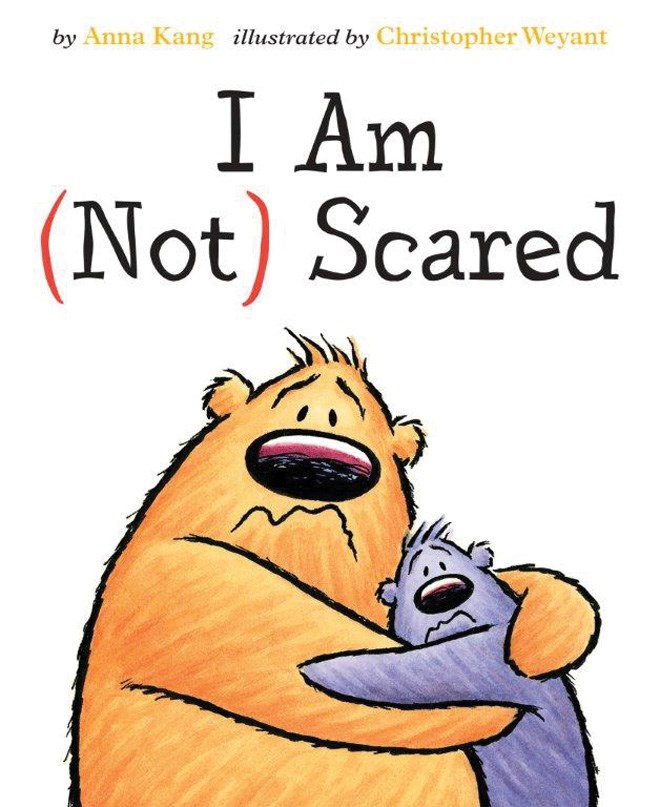
Blog Tour and a Giveaway: I Am (Not) Scared

How many times have you heard (or said) that famous boast? Anna Kang and illustrator Christopher Weyant bring their fuzzy buddies back for a third installment of fun and friendship. This time, the friends are at an amusement park, psyching one another up to brave a ride on a roller coaster. What’s scarier than a roller coaster? Lots of things: Snakes, a tub of hairy spiders, or a pan of fried ants, for starters!

I Am (Not) Scared, by Anna Kang/Illustrated by Christopher Weyant,
(March 2017, Two Lions/Amazon), $17.99, ISBN: 978-150-3937-45-1

I Am (Not) Scared is perfect for preschoolers and young readers because kids will see themselves in the two friends who learn that there are fun ways to be scared – especially when you’re with a friend. The friends brave a roller coaster with a newfound friend, and let themselves admit to being scared, which brings a giggly kind of relief, doesn’t it? Once the group has conquered their fear, they’re ready to go back and enjoy the thrill of being scared all over again.

Christopher Weyant’s ink and watercolor illustrations are bold, expressive and sweet. The bears are cuddly and friendly, inviting kids to join them on their adventures. The art, along with the bold, black text, makes this a great read-aloud, too. Invite kids to tell you what they think is scarier than fried ants or snakes on roller coasters and watch the wacky responses roll on in. There’s a great activity kit available via Anna Kang’s website, complete with discussion questions, a roller coaster-y maze, courage bracelets to give out, and more!

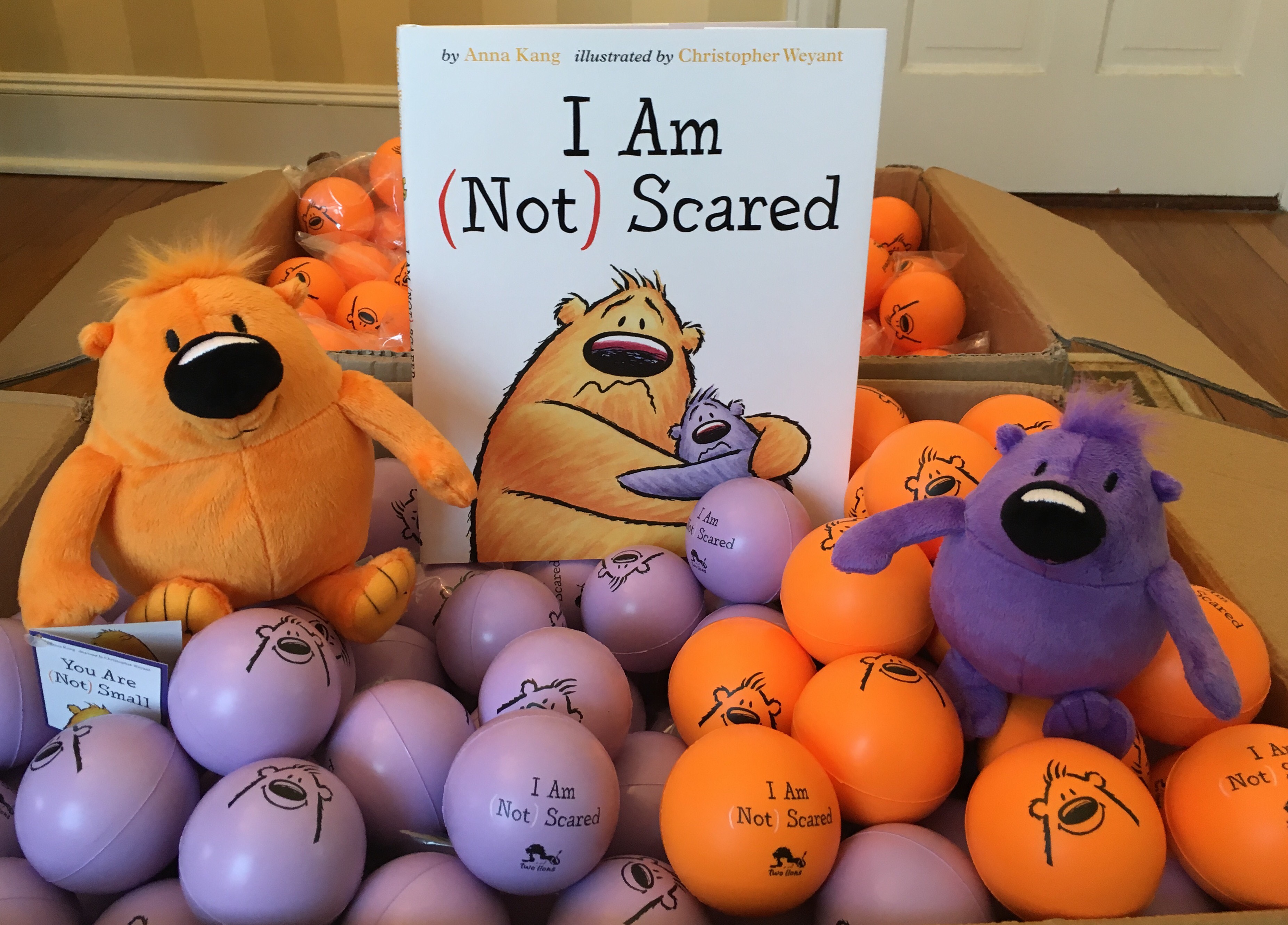
Get in on the fun with an I Am (Not) Scared giveaway! One winner will receive an I Am (Not) Scared gift pack: a set of squeezable stress balls, two adorable plush characters, and a copy of I AM (NOT) SCARED courtesy of Two Lions (U.S. addresses). Enter this Rafflecopter giveaway for your chance!

Wife and husband team Anna Kang and Christopher Weyant are the creators of two other books featuring these characters: Theodor Seuss Geisel Award winner You Are (Not) Small and That’s (Not) Mine. Christopher’s work can be seen regularly in The New Yorker magazine and his cartoons are syndicated worldwide. This husband-and-wife team lives in New Jersey with their two daughters and dog, Hudson. Visit them at www.annakang.com and www.christopherweyant.com.


Posted in Early Reader, Fiction, Fiction, Intermediate

Mapping My Day brings back the lost art of mapmaking

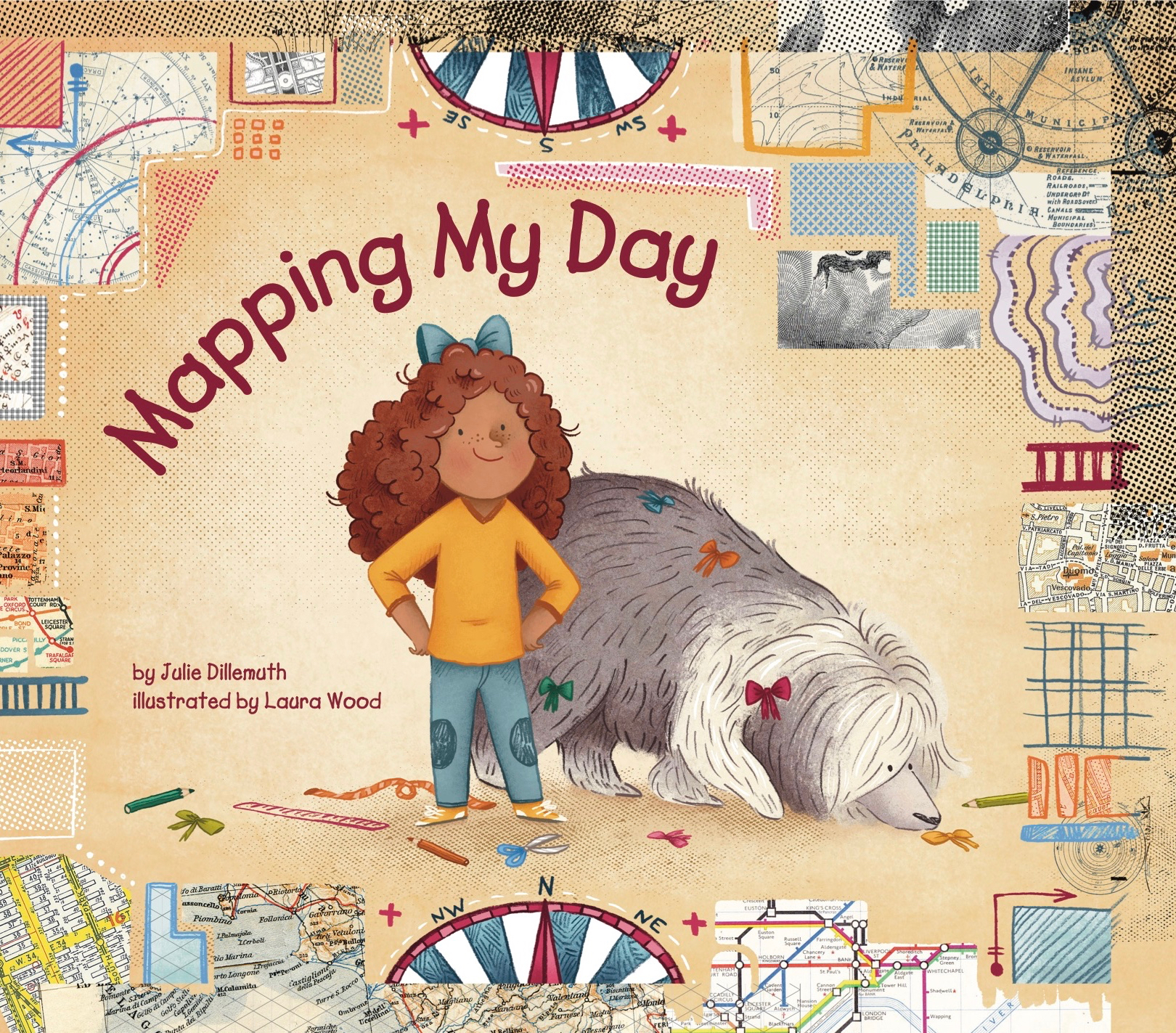
Mapping My Day, by Julie Dillemuth/Illustrated by Laura Wood, (March 2017, Magination Press), $15.95, ISBN: 978-1-4338-2333-6

Recommended for readers 5-10

Flora is a girl who loves making maps. From sun-up to sundown, Flora maps her day and invites readers to see how she does it! Starting with an early morning wake-up thanks to the sun streaming through her bedroom window, Flora explains and illustrates terms like cardinal directions, map scales, landmarks, even seating plans.

I remember when I was a kid and learning about maps in Social Studies. That whole one inch = 1 mile thing made me want to bang my head against the desk in frustration. If I’d had a book like Mapping My Day to start me off, things would have gone a lot easier with those issues of Scholastic News. The book brings readers right into Flora’s circle. It’s like having a friend show you her journal, where she writes out how she watches her grandmother’s show poodles train on their obstacle course, or map out her school playground, or how she manages to beat her brother to the bathroom in the morning.

There are no frustrating measurements, no rulers necessary. It’s a great invitation to start mapping out our world – something that may be seen by some as a dying art in this age of GPS, but is a critically important skill to have. We should all know how to lay out a space; what our cardinal directions are and how to find them, and the importance of landmarks when you’re finding your way. For librarians and teachers, this is a lesson or a program in a book: the activities at the end of the book are even available for download so you can get a head start on planning. A note to parents, caregivers, and professionals explains the importance of mapping, diagramming, and understanding spatial relations, and includes ideas for incorporating them into kids’ play.

The art is friendly and fun. Flora is a biracial child from a multiethnic family. The family eats at the table together and enjoys time with extended family members. Spreads move between Flora’s story – driving in a car with family, eating at the table with family, playing at school – and Flora’s maps, which have a hand-drawn/handwritten appearance. Key words appear bolded.

Julie Dillemuth was mystified by maps until she figured out how to read them and make them, and it was a particularly difficult map that inspired her to become a spatial cognition geographer. She lives with her family and writes children’s books in Santa Barbara, California, where the west coast faces south. Visit her at her website: http://juliedillemuth.com.

One lucky winner will receive a copy of MAPPING MY DAY (U.S. addresses). Enter this giveaway for your chance!

https://goo.gl/forms/yiZyHr8CNDC7iVWg1